Valle del Lunarejo
Valle del Lunarejo, Uruguay
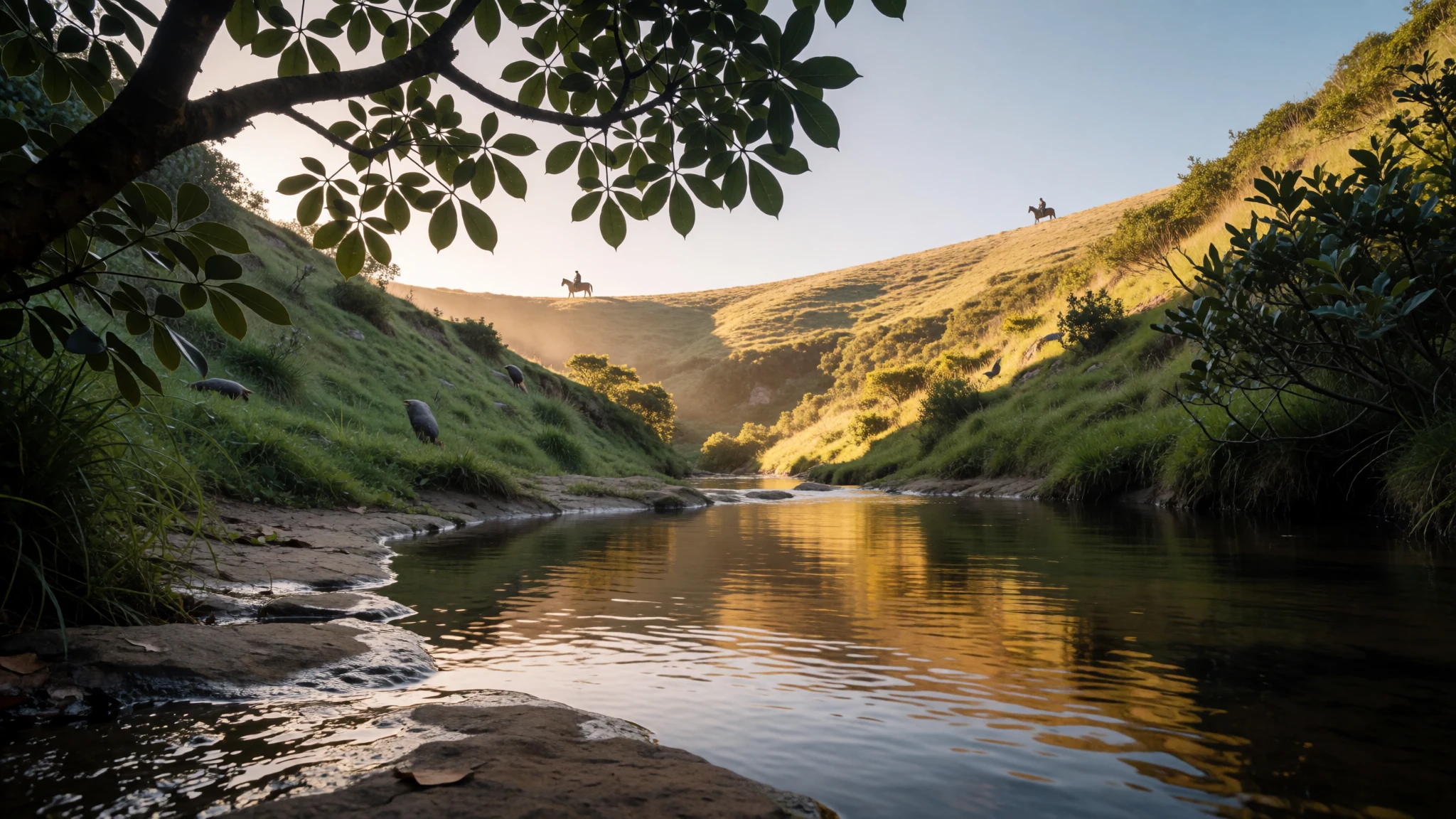
Valle del Lunarejo is a wooded quebrada in northern Uruguay where dawn sends birds off a lagoon and the walking stays quiet.
The place
Valle del Lunarejo lies in the north of Uruguay, in Rivera department, close to the border with Brazil. A stream of the same name has worn a long quebrada into the high ground, so the visit is a descent from open grassland into a narrower, greener cut. On the ridges the land is the familiar pampa of cattle country: grass, fences, a big sky and wind. Inside the valley the slopes hold native woodland, and the Lunarejo runs between pools, small falls and a lagoon where birds gather. Chal-chal trees, with their glossy divided leaves, stand in that woodland, and the understorey is thick enough that a walk stays in shade and birdsong for long stretches. Mornings often sit cool and misty in the hollow until the sun clears the rim; by the middle of the day the northern sun is strong. Everyday services sit outside the valley, in rural settlements and in Tranqueras, with the city of Rivera farther off on the regional roads. The approach is by car along farm tracks, and working estancias still occupy the land around the protected core, so gates and cattle are part of the scene. People come to walk, to watch birds leave the water at first light, and to spend an unhurried day in a landscape that feels tucked away from Uruguay's beaches and capital. The ground can be muddy after rain, the mobile signal patchy, and the pleasure of the place is quiet rather than spectacle.
Its story
Valle del Lunarejo takes its name from the stream that made it. Water working on the northern ground opened a quebrada and left woodland in the folds, while grass took the flatter ridges above. For generations the people of this borderland have lived by cattle: estancias on the uplands, horses, and the calendar of round-ups and winter care. The towns that supply the valley grew as frontier settlements. Rivera faces Brazil across a line that families, work and shopping have long treated as a neighbour's fence, even when politics did not. The forest in the cut was timber, shade and drinking water long before it was a place to visit. The newer chapter is a choice to hold that quebrada as a protected landscape, so stream, trees and birds would not simply become more pasture. The record of the place is local and practical, and what a walker meets is continuity: a damper, wooded Uruguay inside a grassy one, and estancias that still use the land around the paths. Visitors come with binoculars, often before sunrise, because the lagoon gives up its birds at first light and the valley is easiest to read then. Plaques are few. The account is the water, the cattle and the habit of leaving the cut standing.
What to see
- Dawn at the lagoon — valley floor
Valle del Lunarejo's lagoon holds a roost that empties at first light. Birds lift in groups and cross the rim while the hollow is still grey. The bank is best kept quiet, with binoculars doing the work of a closer approach. The departure is brief. Afterwards the same path leads into the woodland, the water settling and the day just warming.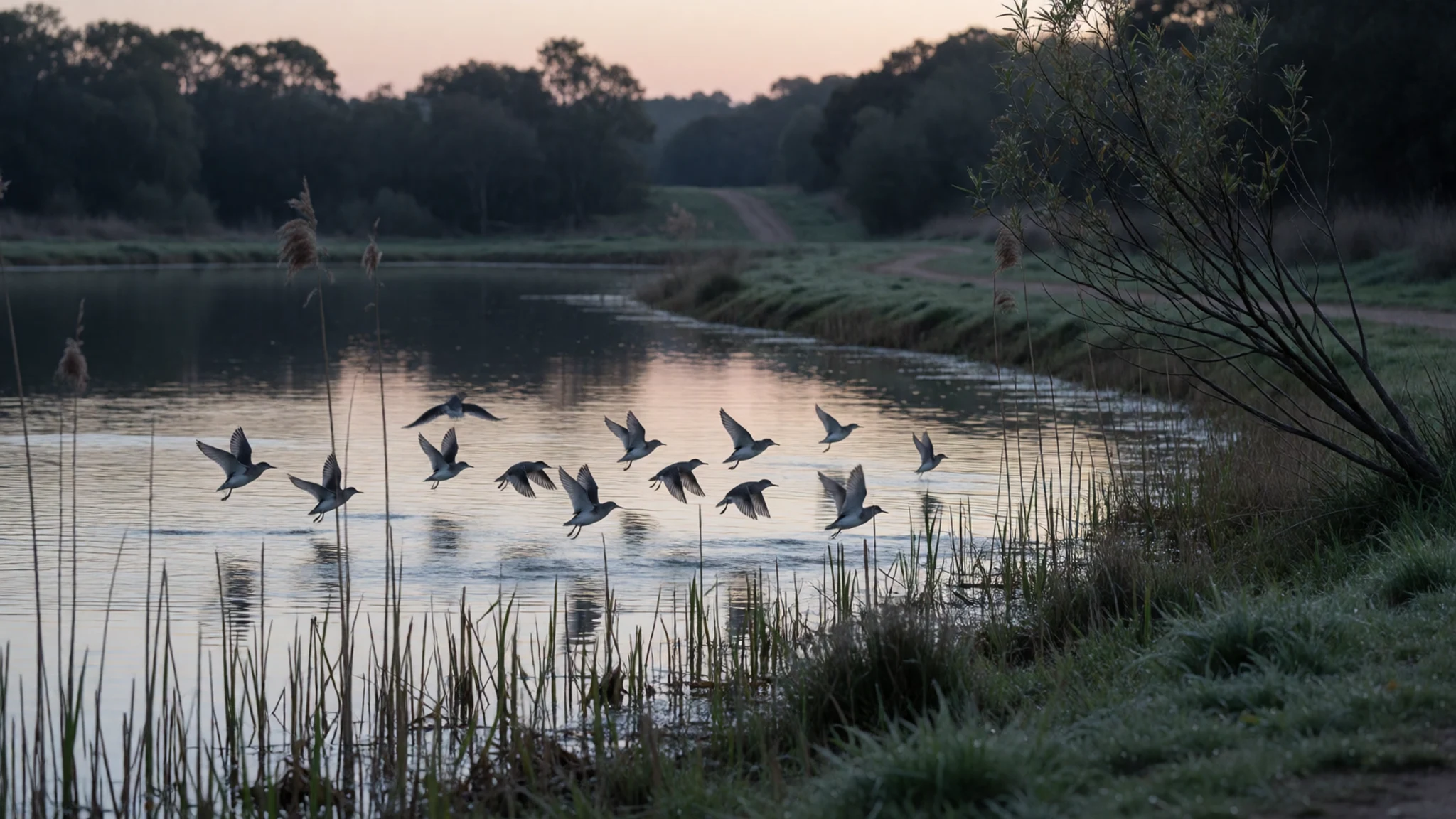
- Chal-chal woodland — wooded slopes
The slopes of Valle del Lunarejo carry native woodland, and chal-chal is a tree a walker can learn by its glossy, divided leaves. This stretch is about shade: the path stays under the canopy, the stream stays audible, and the grass of the ridges feels far above. Small birds work the leaves. The quebrada here is greener and damper than the country at the gate, and the ground is soft.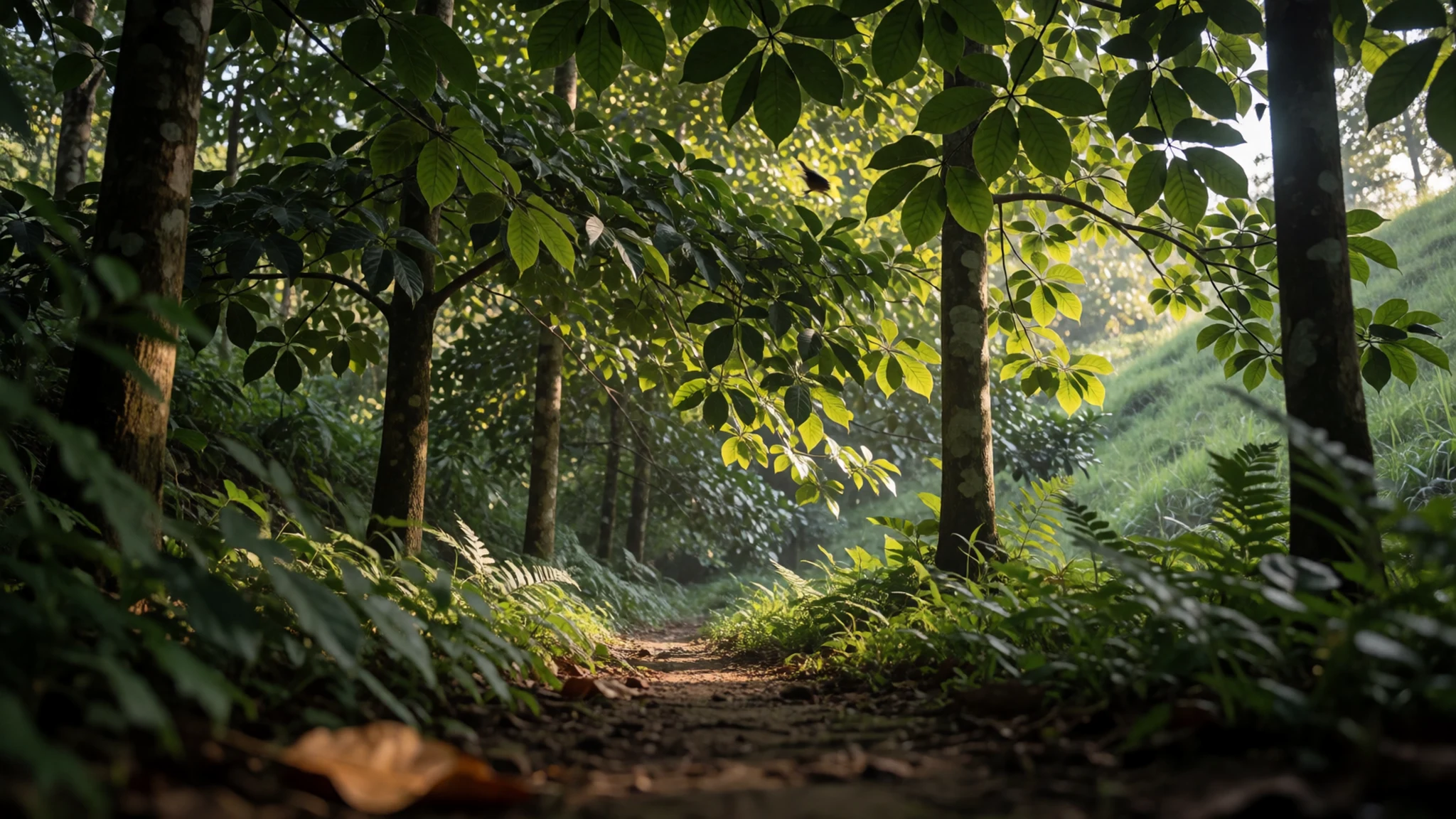
- The rim at sunrise — valley rim
From the rim of Valle del Lunarejo, sunrise sorts the quebrada into dark woodland below and pale grass on the far ridge, mist sometimes pooled in the cut. It is the wide view before a descent, and it shows the walk: down to water and shade, then back up into wind. The colour fades quickly. The ridge is the colder of the two, and a jacket earns its place.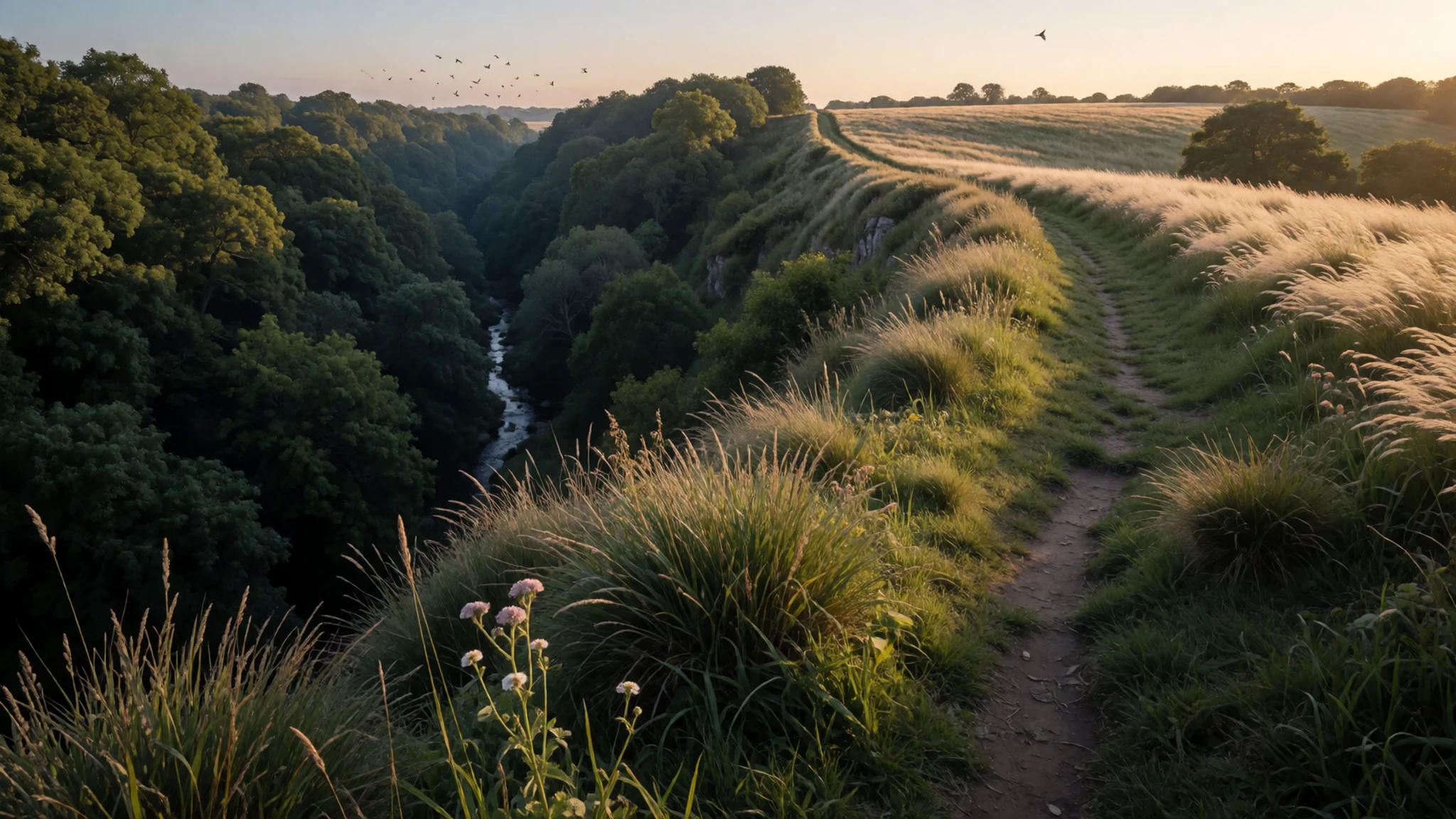
- The entrance sign — valley entrance
The indicative sign for Valle del Lunarejo marks where a rural road becomes a named visit. It is the place to match the board to the tracks, because the valley is paths and farm edges rather than one promenade. The board is a landmark for arrivals by car. Past it, signs thin out, so water carried from town matters more than a city-style map.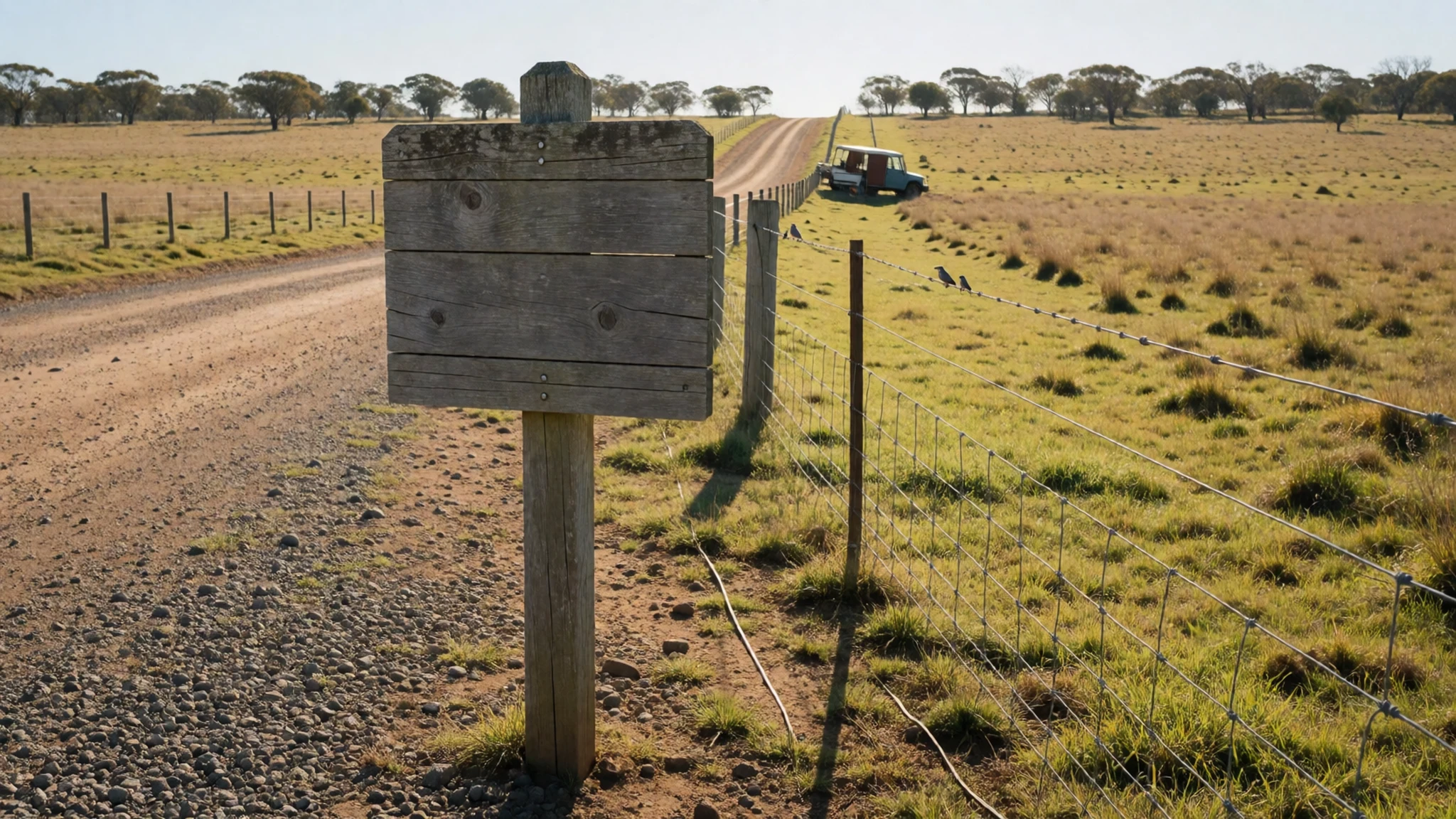
- Stream and falls — along the Lunarejo stream
Small falls and rock pools break the stream as it threads Valle del Lunarejo. They appear as a drop, a cold pool or a shelf of stone, without railings or a ticket window. The flow is why woodland stands in the cut, and why boots slip. The walk is a sequence of forest and water. After rain the rock is slick and the stream sounds louder.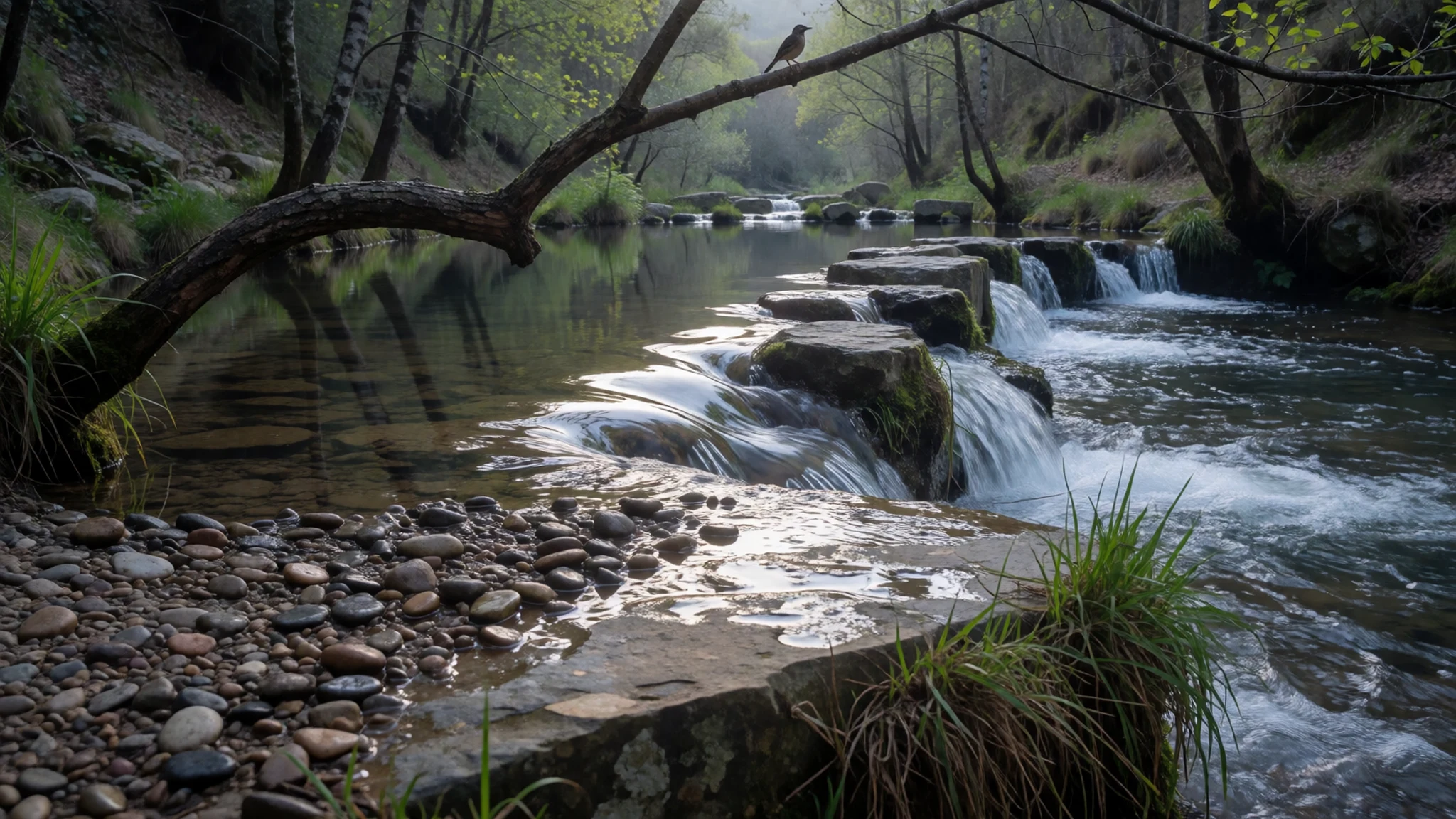
Culture
Valle del Lunarejo sits inside the rural culture of northern Uruguay, where a working day still runs on cattle, horses and a thermos of mate. Rivera department shares a borderland habit with Brazil: Portuguese turns up in talk, and family, music and errands cross at the city of Rivera as a matter of course. Inside the valley the tone is quieter than that city. Estancia manners apply on the tracks — a greeting at a gate, patience when a herd is moving, and the understanding that a path crosses someone's livelihood. Mate is the social drink, passed from hand to hand and often the first gesture at a fence or a kitchen door. Birdwatching has joined this older pattern without replacing it. Dawn at the lagoon is a visitor's hour set over a place that was never built as a resort, and the people who live nearby remain farmers and small-town neighbours first. Visitors should stay on the paths, close every gate behind them, and keep voices low at the lagoon so the morning flight is not pushed off the water early.
What to wear
Traditional dress around Valle del Lunarejo is gaucho working clothes, still worn for jobs on horseback and for festivals in Rivera department. Bombachas, loose trousers tucked into boots, a wide belt, a chambergo or beret, and a woollen poncho or a lighter cloth against sun and wind are the pieces people recognise. Leather is equipment: boots, reins and belts take real use. Wool and cotton are the older textiles, and fleece now sits beside them on a cold ridge. In town, everyday clothes are the same as elsewhere in Uruguay — jeans, T-shirts, trainers, a jacket when winter asks — and the gaucho outfit comes out for work or a fiesta, not as ordinary streetwear. A visitor's kit for the valley is walking clothes. Closed shoes with grip belong on wet stone and muddy tracks; sandals do not. Layers matter because dawn on the rim can be cool while noon in the quebrada is hot. Long sleeves and trousers cope better than bare skin where insects and rough undergrowth line the path. Festival bright colours belong in town. On the trail a hat and quiet cloth are the useful choice.
What to eat
- Asado — estancia tables and parrillas in Tranqueras and on the Rivera road
Asado is beef grilled slowly over wood embers and shared with bread and salad. Around Valle del Lunarejo it is the long lunch of estancia tables and of parrillas in Tranqueras and on the road towards Rivera. The meal is unhurried, and the fire matters as much as the plate.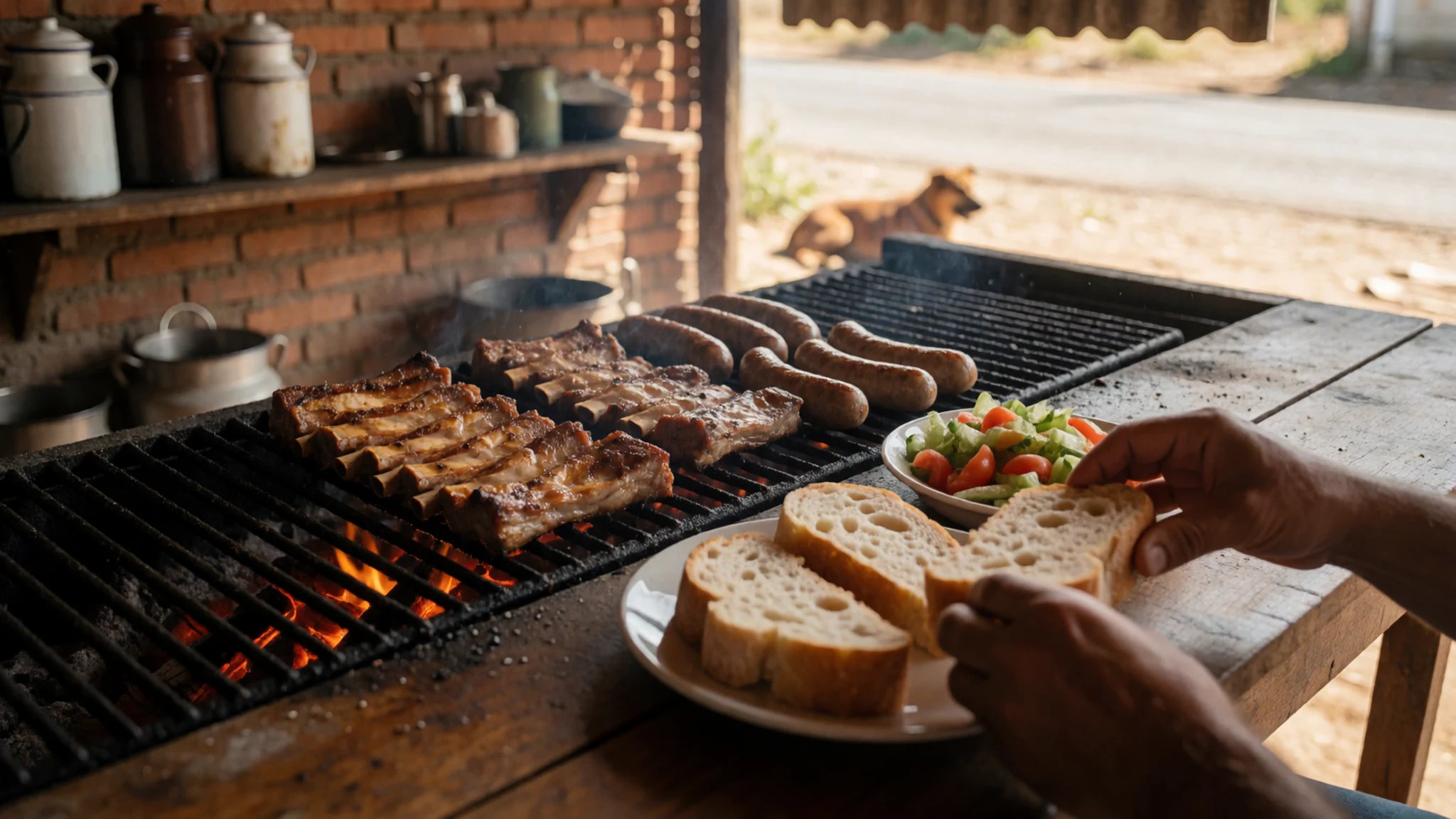
- Empanadas — bakeries and small eateries in Tranqueras and Rivera
Empanadas are the road food of a Valle del Lunarejo day: baked or fried pastries filled with beef, or with ham and cheese. Bakeries and small eateries in Tranqueras and Rivera sell them early. They suit a dawn start, because the valley itself has no café at the trail.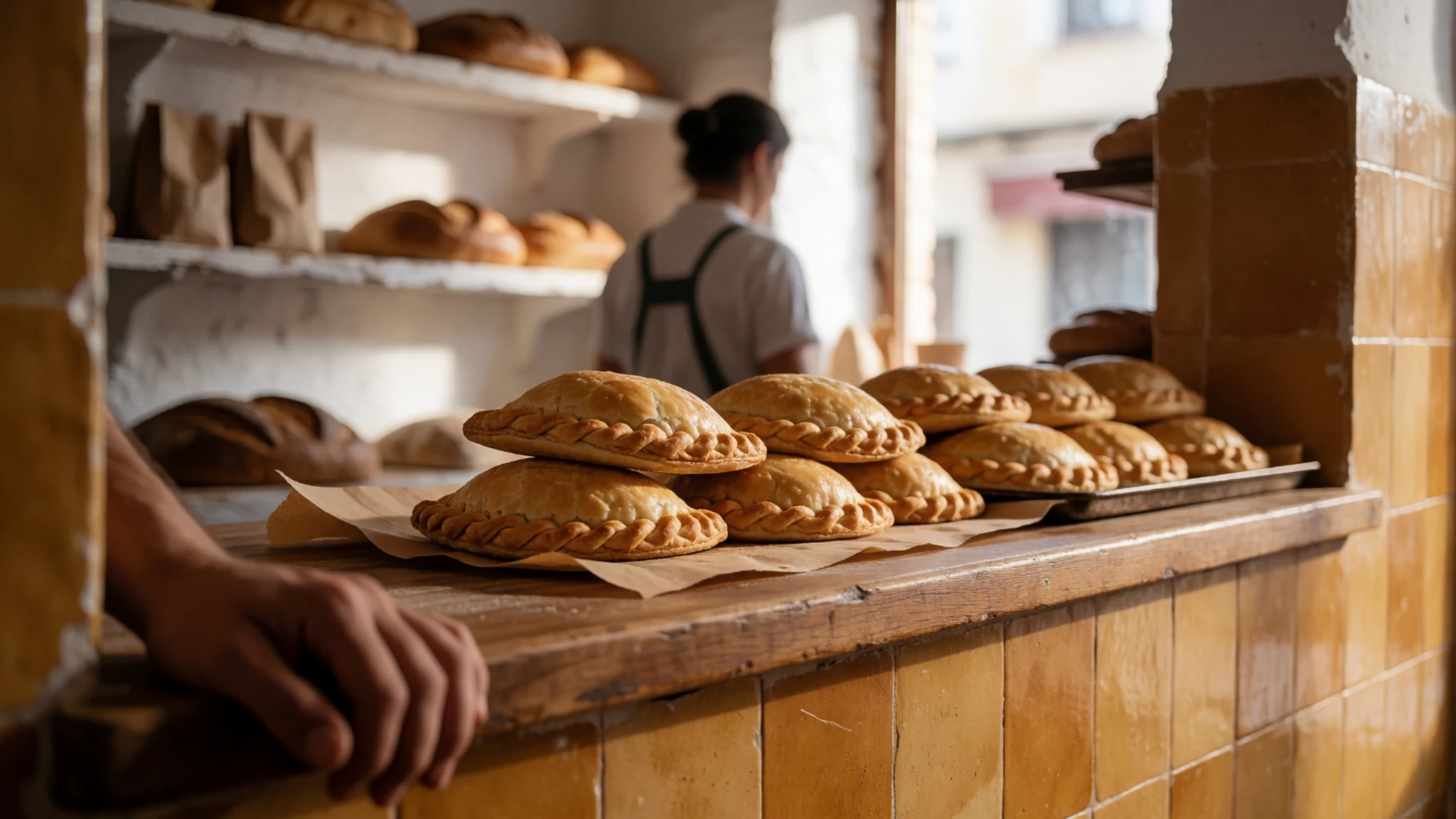
- Torta frita — home tables and small-town kitchens around the valley
Torta frita is plain fried dough, eaten hot from a rural kitchen on a wet or cold day. Around Valle del Lunarejo it belongs to home tables and small-town pans rather than a formal menu. Salty or sugared, it goes with mate after a damp walk in the quebrada. - Chivito — parrillas and fuel-station eateries in Rivera or Tranqueras
The chivito is Uruguay's steak sandwich: thin beef in a roll with ham, egg, cheese and salad. Near Valle del Lunarejo it turns up at a parrilla or fuel-station eatery in Rivera or Tranqueras, not on the valley floor. Kitchens stack it differently. - Mate and bizcochos — a bakery in Tranqueras, or offered at a gate
Mate structures a day around Valle del Lunarejo: yerba in a gourd, hot water in a thermos, and a shared bombilla. It is offered at a gate or taken with bizcochos from a Tranqueras bakery before the drive. A short sip is the usual courtesy when the gourd comes round.
Plan it
Best time. March to May and September to November suit walking in Valle del Lunarejo, with milder days than high summer. December to February brings heat and humidity in the quebrada and a hard midday sun. June to August is cooler, with shorter days and tracks that turn muddy. In every season the birds leave the lagoon at dawn.
How long. 2–3
Getting there. Most journeys reach Valle del Lunarejo via Montevideo's Carrasco airport, then a long-distance bus or a hire car north to Rivera. From Rivera or Tranqueras, a rural road and farm tracks cover the last stretch. No railway serves the valley, and rain can slow the unpaved approach.
Budget. low
Tips
- Set off in the dark if the lagoon flight is the aim; the birds leave early.
- Carry drinking water from town; there is no shop in the valley.
- Use a car for the last stretch, and think twice about the tracks after heavy rain.
- Bring cash; small eateries and rural fuel stops may not take cards.
- Leave the route with someone at your lodging; the signal in the quebrada is poor.
Etiquette
- Close every gate that was found closed.
- Do not feed or crowd wildlife at the lagoon.
- Ask before photographing people at work.
- Carry all rubbish out of the valley.
Nearby
Sources
- Wikidata (CC0)
- Wikipedia (CC BY-SA 4.0)
- Wikivoyage (CC BY-SA 4.0)