Iguazú Falls
Iguazú Falls, Argentina
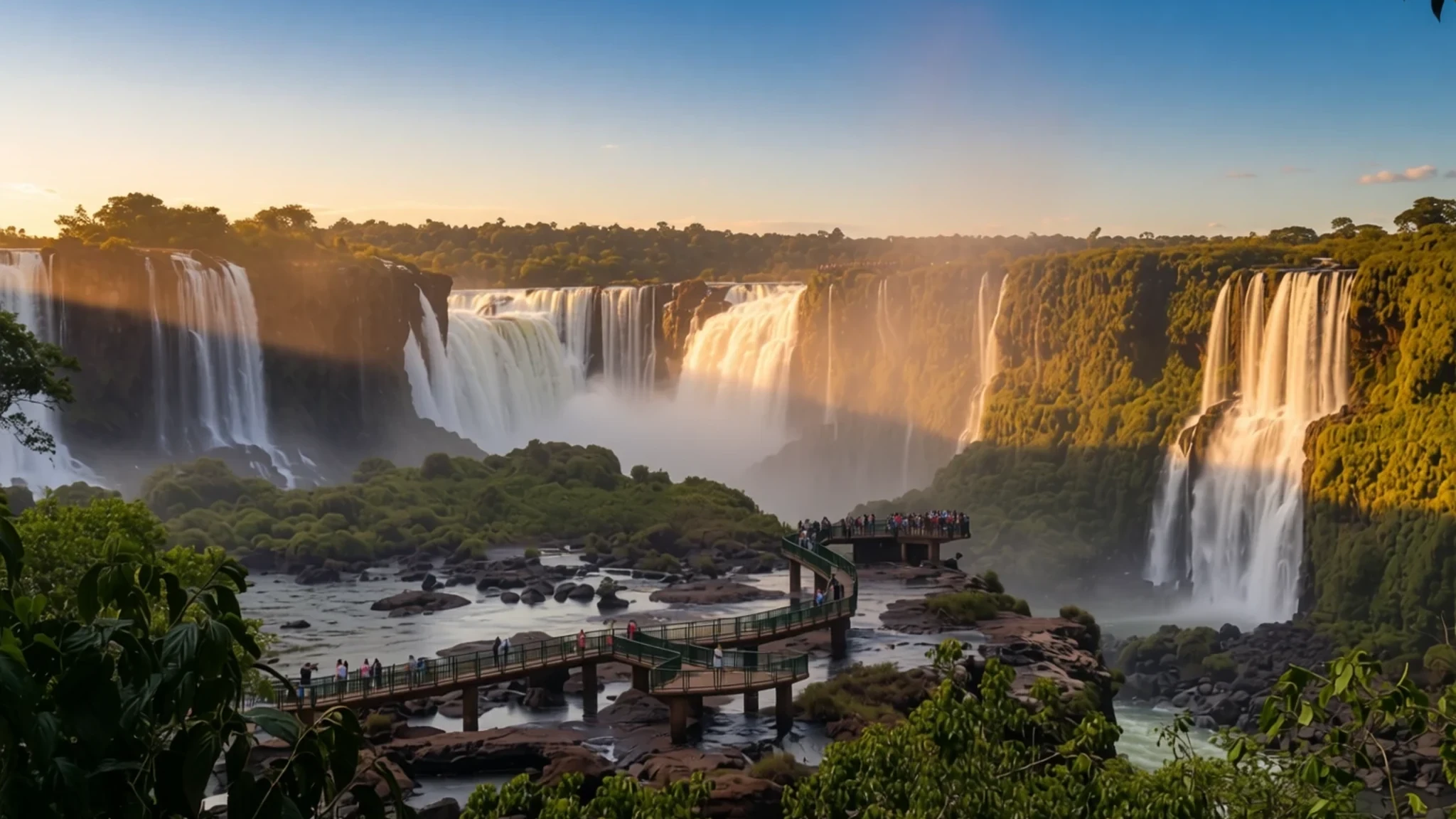
Witness the planet's vastest waterfall system where thousands of tonnes of roaring water plunge into mist-wreathed subtropical jungle ravines.
The place
Iguazú Falls spans the frontiers of Argentina and Brazil, cutting a colossal chasm across the course of the winding Iguazu River. The rushing waters divide into upper and lower sections, flowing across layered basalt shelves formed long ago by volcanic activity. Numerous islands fragment the broad crest into hundreds of distinct cataracts and drops, creating an astonishing aquatic labyrinth surrounded by lush subtropical forest. This stunning natural wonder is shared by the Brazilian state of Paraná and the Argentine province of Misiones. Both nations have set up protected national parks on their respective sides to safeguard the delicate rainforest ecosystems and native wildlife. Visitors exploring the paths encounter towering spray plumes, dense vegetation, and constant rainbows arching over the churning river gorges below. The surrounding landscape experiences warm temperatures and abundant rainfall throughout the year, nourishing the thick jungle canopy where toucans, coatis, and colourful butterflies thrive alongside rare orchids and ancient trees. Navigating between the viewing platforms requires traversing steel walkways suspended right above the rushing currents, offering panoramic vistas that capture the sheer scale and raw acoustic power of the cascading torrents.
Its story
Iguazú Falls carries ancient indigenous heritage within its very name, derived from local words for water and magnitude. According to regional folklore, a powerful deity intended to marry a mortal maiden named Naipí, who instead fled down the river in a canoe with her human lover Tarobá. Enraged by the defiance, the deity sliced the river channel apart, forming the roaring drops and trapping the lovers in an eternal plunge. Spanish conquistador Álvar Núñez Cabeza de Vaca became the first European to document the location during his expeditions through the South American interior. Over subsequent centuries, the surrounding territory transitioned from remote wilderness into protected parkland, eventually earning international recognition through prestigious preservation listings on both national frontiers. Geological forces continue to shape the site slowly as rushing currents erode the hard basalt ledges year after year, ensuring the configuration of the roaring cataracts evolves continuously across generations. Conservationists and park rangers now manage the heavy influx of international travellers, balancing public access with the ecological preservation of the surrounding rainforest habitats and safeguarding the diverse wildlife populations that call the riverbanks home.
What to see
- Parque das Aves — Foz do Iguaçu, Brazil
Located just outside the Brazilian park entrance, this expansive wildlife sanctuary shelters rescued macaws, toucans, and even large ratites amid dense Atlantic rainforest trails.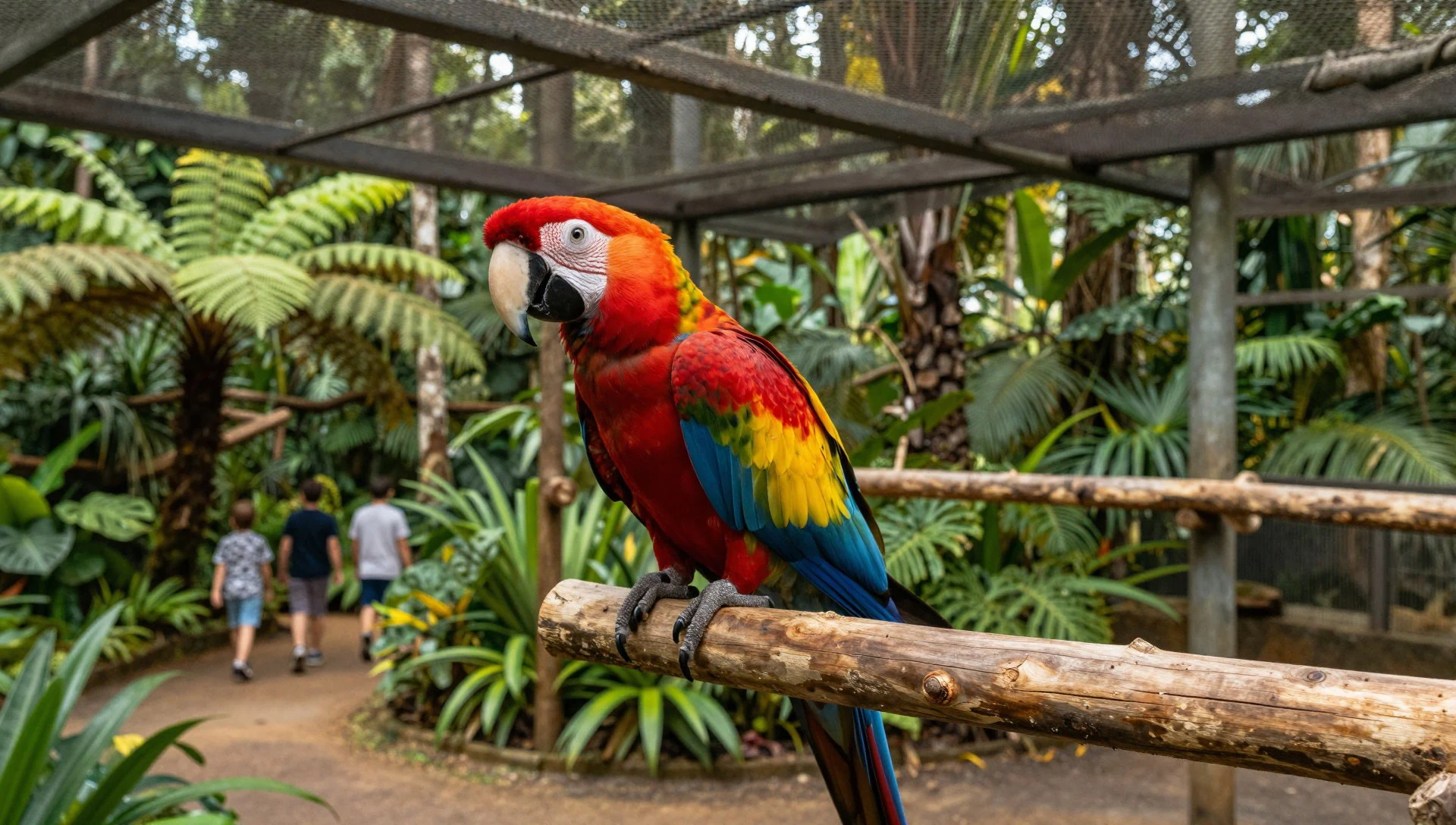
- Garganta del Diablo — Argentine Side
Known as the Devil's Throat, this U-shaped abyss receives half of the river's entire discharge, producing deafening roars and thick veils of rising spray.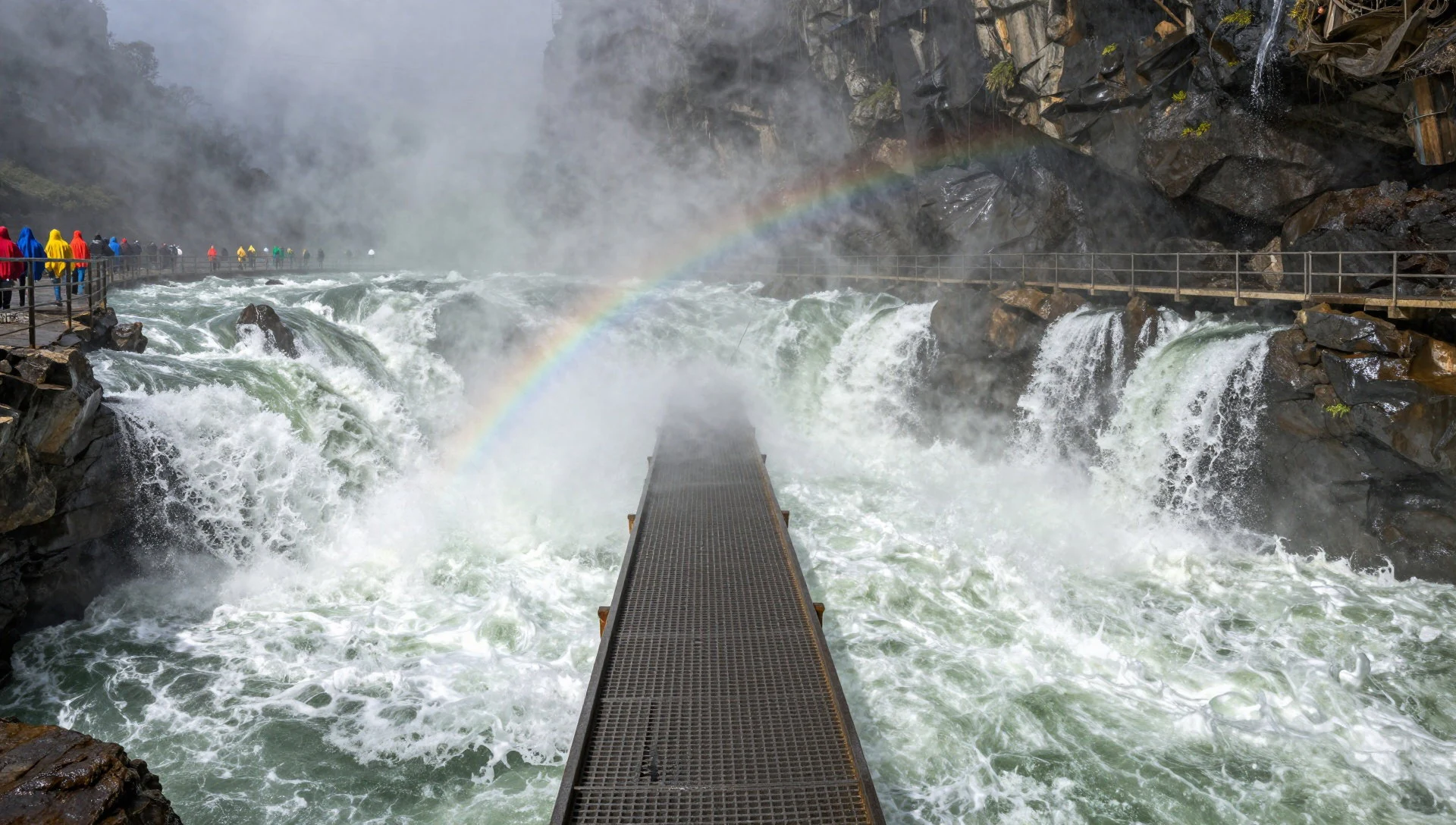
- Circuito Superior — Argentine Park
An elevated walkway network on the Argentine side that grants dramatic top-down perspectives looking straight down over the precipice of the major cataracts.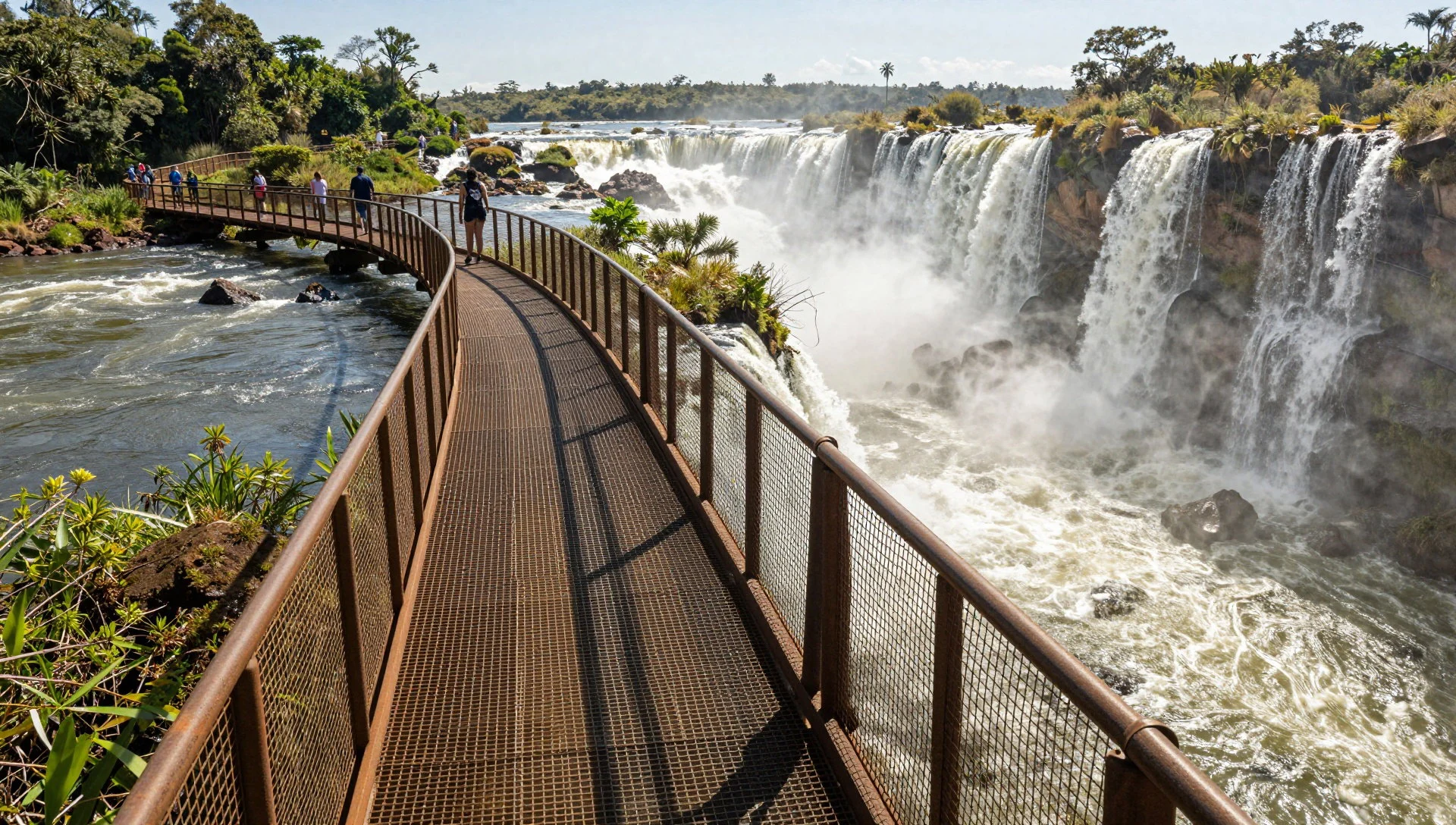
- Macuco Safari — Brazilian Park
An adventurous boat excursion that boards sturdy zodiac vessels to charge directly up to the crashing base of the roaring cascades.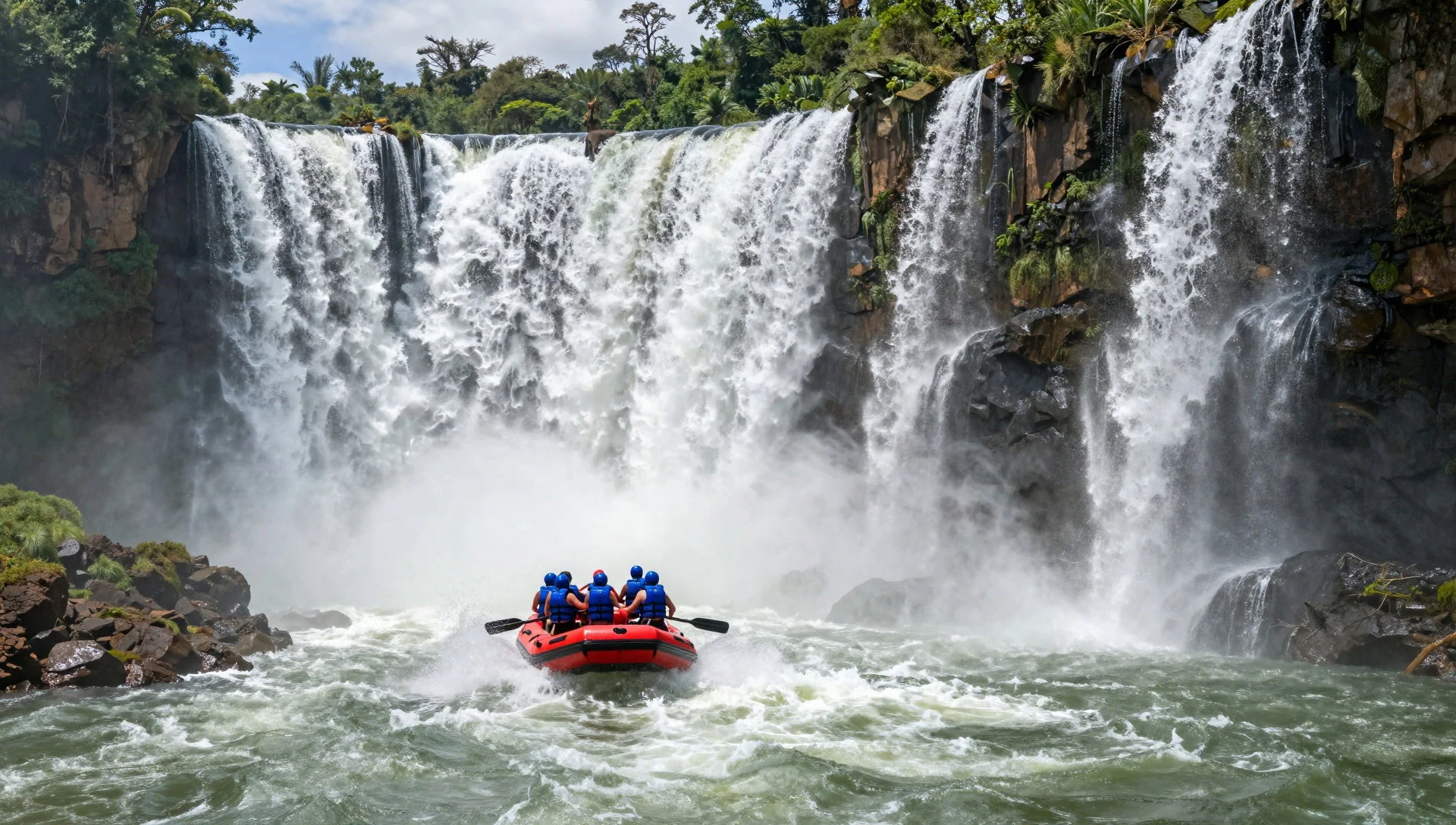
Culture
Iguazú Falls sits at a vibrant cultural crossroads where Argentine, Brazilian, and Paraguayan influences blend seamlessly across friendly border communities. Local traditions reflect a deep connection to the surrounding Misiones rainforest and the Guaraní heritage embedded in the regional vocabulary, music, and daily life. Residents in the nearby towns of Puerto Iguazú and Foz do Iguaçu maintain a relaxed, welcoming atmosphere shaped by tourism and cross-border commerce, while regional markets showcase handmade crafts, local artwork, and herbal mate drinking rituals shared across generations. Travellers crossing between the national sectors encounter bilingual signage, easy border formalities, and a shared pride in protecting their spectacular natural borders. Always remember to step off transport buses at international border crossings to obtain proper passport stamps before continuing your journey.
What to wear
Clothing in the Iguazú Falls region is shaped by the subtropical rainforest of Misiones and Paraná, where heat and humidity matter more than any traditional costume. Today, everyday attire worn by local residents and urban workers in nearby towns prioritises comfort in the humid subtropical climate, consisting of lightweight linen shirts, breathable denim, and practical walking shoes. Visitors exploring the park trails should dress for high heat, intense humidity, and frequent soaking from waterfall mist. Quick-drying synthetic fabrics, breathable shorts, secure sandals or grip-soled trainers, and wide sunhats are essential for outdoor exploration. Waterproof jackets or disposable ponchos help protect personal cameras and electronics from the heavy moisture near the viewing decks, while swimsuits are widely worn underneath during the hottest summer months.
What to eat
- Porto Canoas Buffet — Porto Canoas station, Brazilian park
Located near the river edge on the Brazilian side, offering hot dishes and local salads for R$40, though the food is not especially good and the draw is the surreal view of the rising jungle mist.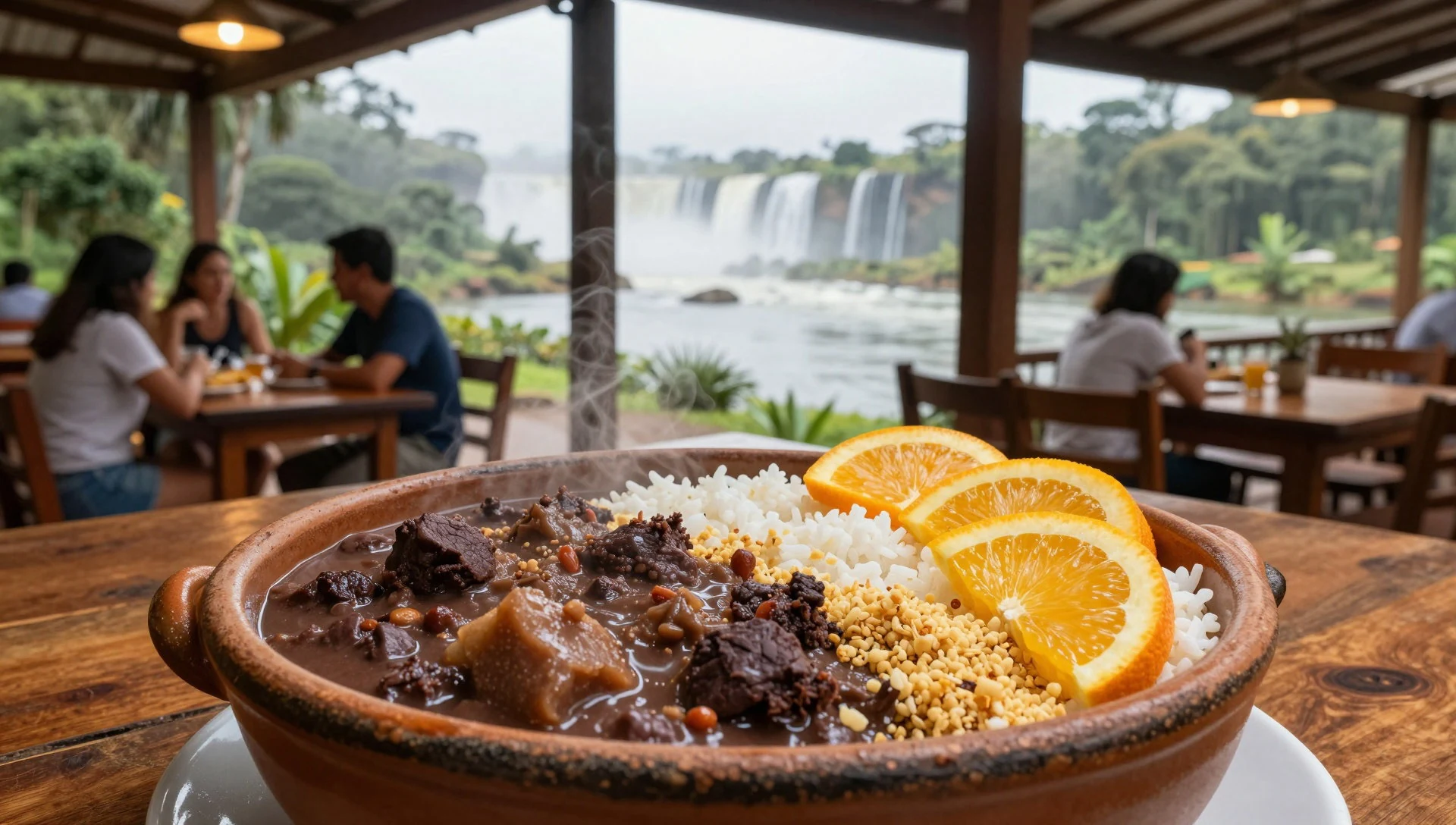
- Park Terrace Asado — Meliá terrace area, Argentine park
Open-air dining terraces nestled within the Argentine park grounds, serving grilled meats and empanadas while wild toucans occasionally fly past overhead.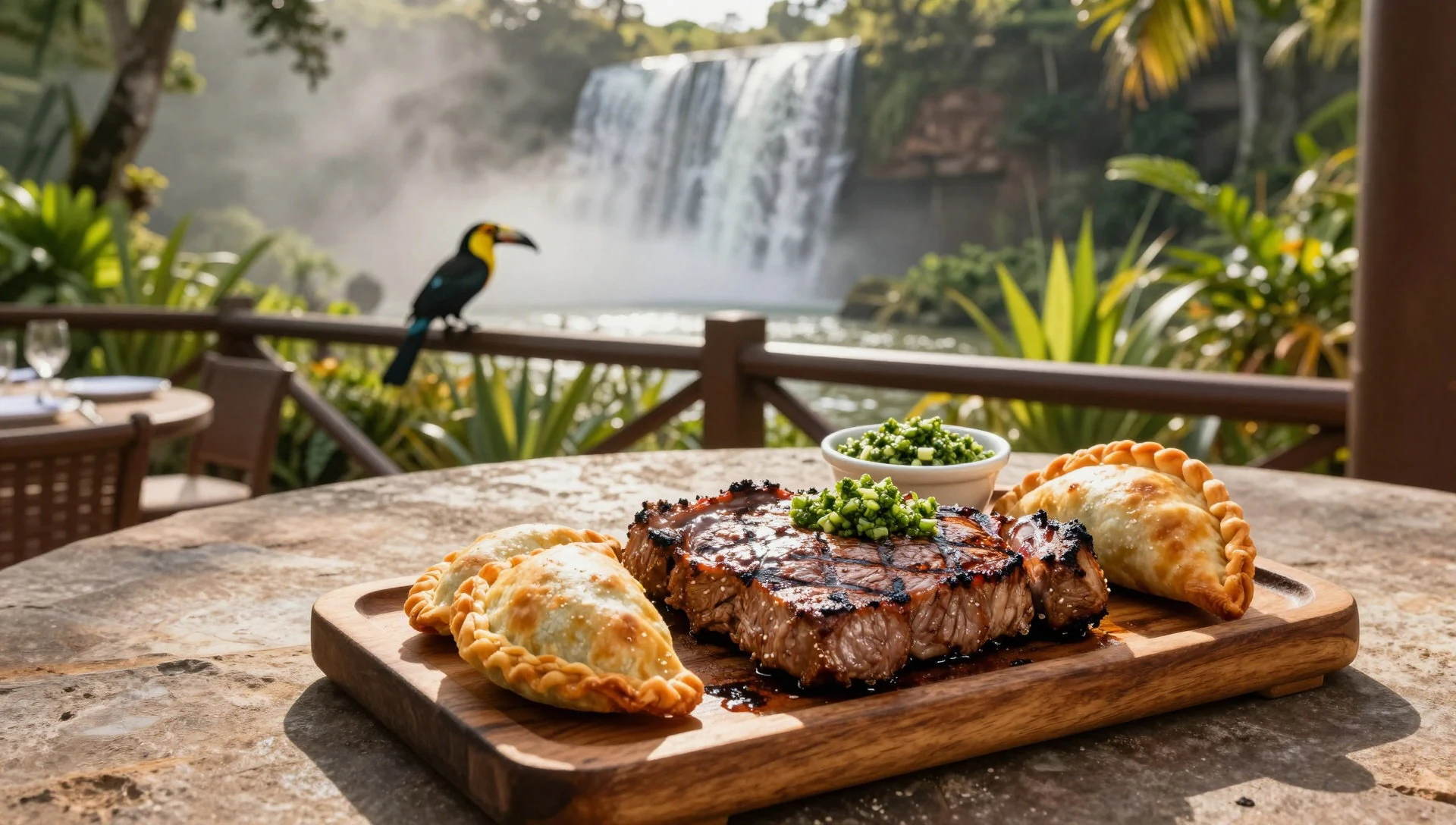
- Chipá Snack Breads — Local bakeries in Puerto Iguazú and Foz do Iguaçu
Chewy, warm cheese rolls made from cassava flour, commonly sold by street vendors and small bakeries across the tri-border towns for a quick energy boost. - Empanadas from Town Cafés — Downtown Puerto Iguazú
Flaky baked or fried pastry turnovers stuffed with seasoned minced beef, ham and cheese, or vegetables, found in small downtown eateries.
Plan it
Best time. October to December brings the heaviest rain and fullest falls, while May to August offers the most comfortable, cooler days, with the driest weather in June and July.
How long. 2–3
Getting there. Fly into Cataratas del Iguazú International Airport on the Argentine side or Foz do Iguaçu International Airport on the Brazilian side, then take airport shuttles or taxis to your accommodation.
Budget. mid
Tips
- Dedicate one full day to explore the Argentine side and a second day for the Brazilian panoramic circuits
- Arrive at the park gates before opening time to avoid heavy tour bus crowds
- Carry cash in both Argentine Pesos and Brazilian Reais for small purchases and park transport
- Protect your camera gear and phone with waterproof cases before stepping onto the lower spray walkways
- Check visa requirements and bus stop procedures in advance when crossing international bridges
Etiquette
- Always step off public buses at border checkpoints to get your passport stamped
- Do not feed wild coatis or monkeys within the national parks
- Respect marked walking trails and do not cross safety barriers near cliff edges
Nearby
Sources
- Wikidata Q36332 (CC0)
- Wikipedia (rev 1380002654) (CC BY-SA 4.0)
- Wikivoyage (rev 5388382) (CC BY-SA 4.0)
- Photo photos/01-aerial-foz-de-igua-u-26-nov-2005.jpg (CC BY-SA 4.0)
- Photo photos/02-iguazu-national-park-falls.jpg (CC BY 3.0)
- Photo photos/03-parque-nacional-do-igua-igua-u-national-park-bilheterias-tic.jpg (CC BY 2.5)
- Photo photos/04-iguazu-d-cembre-2007-panorama-7.jpg (CC BY 3.0)
- Photo photos/05-cataratas-iguazu-vista-general.jpg (CC BY 3.0)
- Photo photos/06-cataratas-del-iguazu-garganta-del-diablo.jpg (CC BY-SA 4.0)
- Photo photos/07-iguazu-d-cembre-2007-panorama-1.jpg (CC BY 3.0)
- Photo photos/08-iguazu-falls-brazilian-side-2019.jpg (CC BY-SA 4.0)


