Casapueblo
Casapueblo, Uruguay
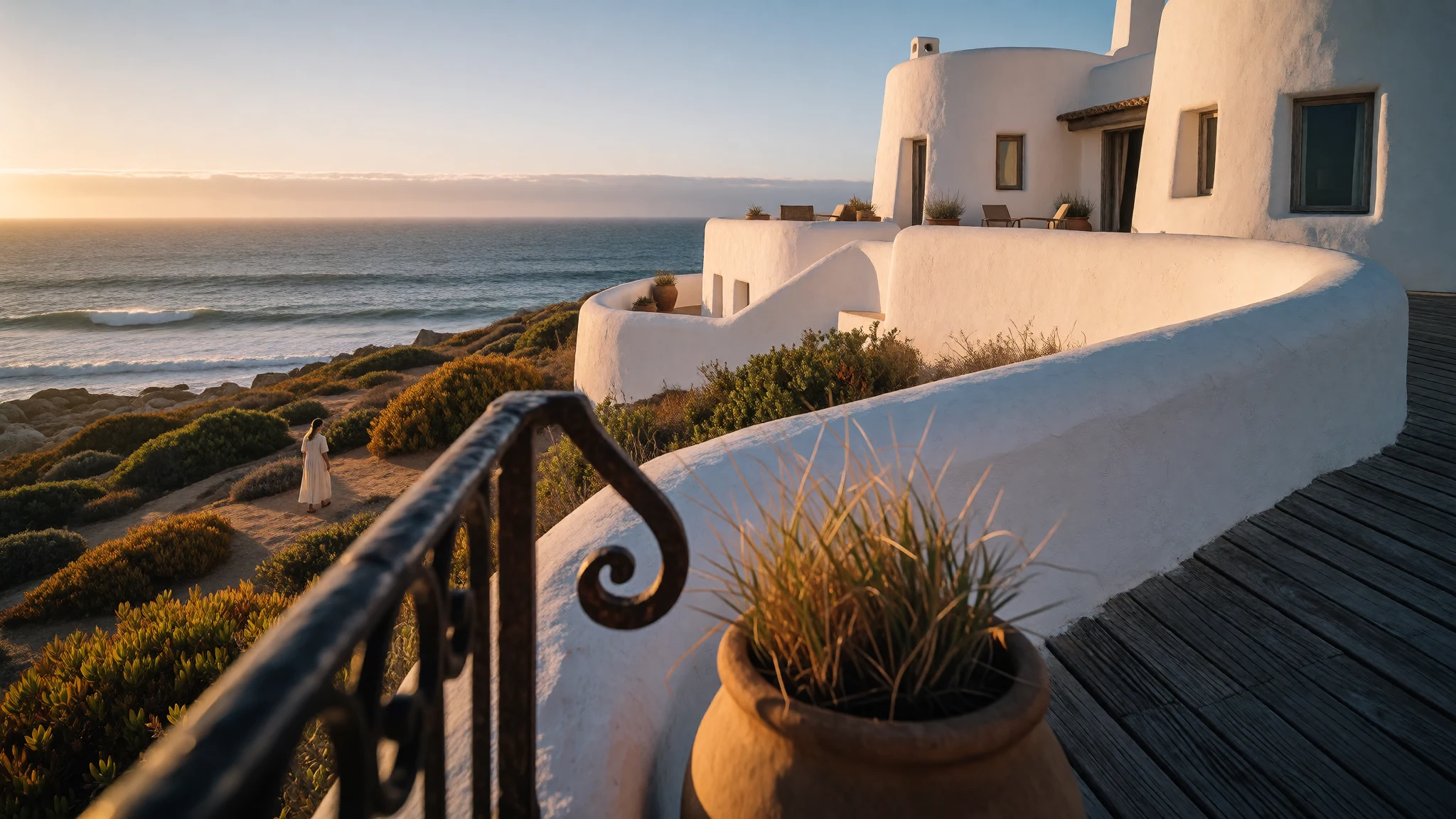
Casapueblo is a whitewashed, maze-like sculpture of a house on a Uruguayan headland, built by hand by an artist and made for watching the sun set.
The place
Casapueblo stands on the headland of Punta Ballena, on the Uruguayan coast about 13 km from Punta del Este. It is a white, many-levelled building that tumbles down the rock towards the Atlantic, with rounded walls, uneven rooflines and windows placed wherever the maker wanted light. Carlos Páez Vilaró, a Uruguayan painter, ceramicist and sculptor, built it as a summer home and workshop. Over the years it grew to include a museum, an art gallery, a café and a hotel. He later lived here permanently and spent his final days in the house. Seen from the road it reads less as a building than as one large sculpture, a pale mass against green coastal scrub and open water. Inside there are no straight lines, and corridors double back on themselves like a maze. White dominates, so the colour comes from the sky, the sea and the artist's paintings and ceramics. The country around it is small, calm and secular, sometimes nicknamed the Switzerland of South America for its stable democracy and social benefits rather than for any mountains. This stretch of coast is the national summer playground, busy in the warm months and much quieter in winter. Casapueblo works as somewhere to eat, look at art, stay overnight, or simply sit and watch the light change. Punta del Este is the nearest large resort, and Montevideo, the capital, lies further west along the same shore.
Its story
Casapueblo began in 1958 with a small wooden box called La Pionera (The Pioneer), which Carlos Páez Vilaró assembled from planks found along the shore. That box was his first studio, and everything else grew around it. There were no architectural plans. He added rooms by hand, in whitewashed cement and stucco, shaping the walls by eye, and the work took 36 years to finish. The result has thirteen floors, with terraces angled so that the sun sets over the Atlantic. Visitors often compare the look to the Greek island of Santorini, but the artist preferred another image: the nest of the hornero, a bird typical of Uruguay, which is also put together gradually, piece by piece, from whatever is to hand. The house carries a personal chapter too. It includes a memorial to Carlos Miguel, the son of the artist, who was among the Uruguayan survivors of an Andes plane crash—an event that bound the family to a story recognized far beyond Uruguay. Over time Páez Vilaró received writers, artists and public figures here, among them the novelist Isabel Allende and the Brazilian Vinícius de Moraes. What started as a work shed on a bare headland became a home, a gallery and a hotel, and it still reflects one person's habits of building: improvised, curving, whitewashed and slowly finished.
What to see
- The whitewashed façade — Punta Ballena
Seen from the approach road or from the water, Casapueblo's stacked white volumes look moulded rather than built, with rounded edges and uneven openings. The best view of the whole form is from a distance, before going in. Afternoon light turns the stucco warm, and the shadows make the maze-like layout easier to read.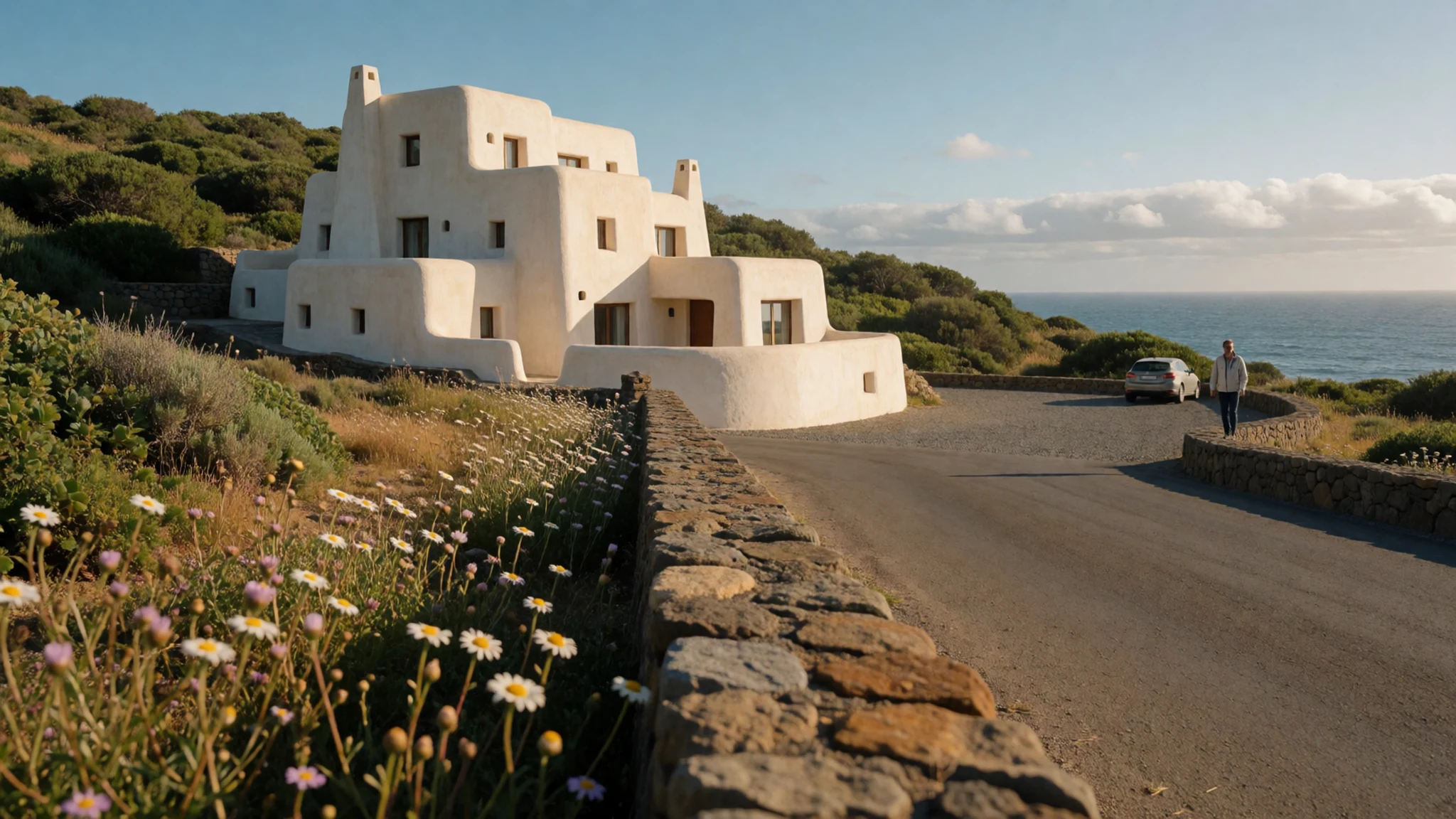
- The terraces at sunset — Casapueblo, upper levels
The terraces are angled to face the Atlantic sunset, which is the main reason many people come. Several levels give different vantage points, from enclosed corners to open decks. Evenings in the warm months get crowded, so arrive early, claim a spot, and expect a breeze coming off the water.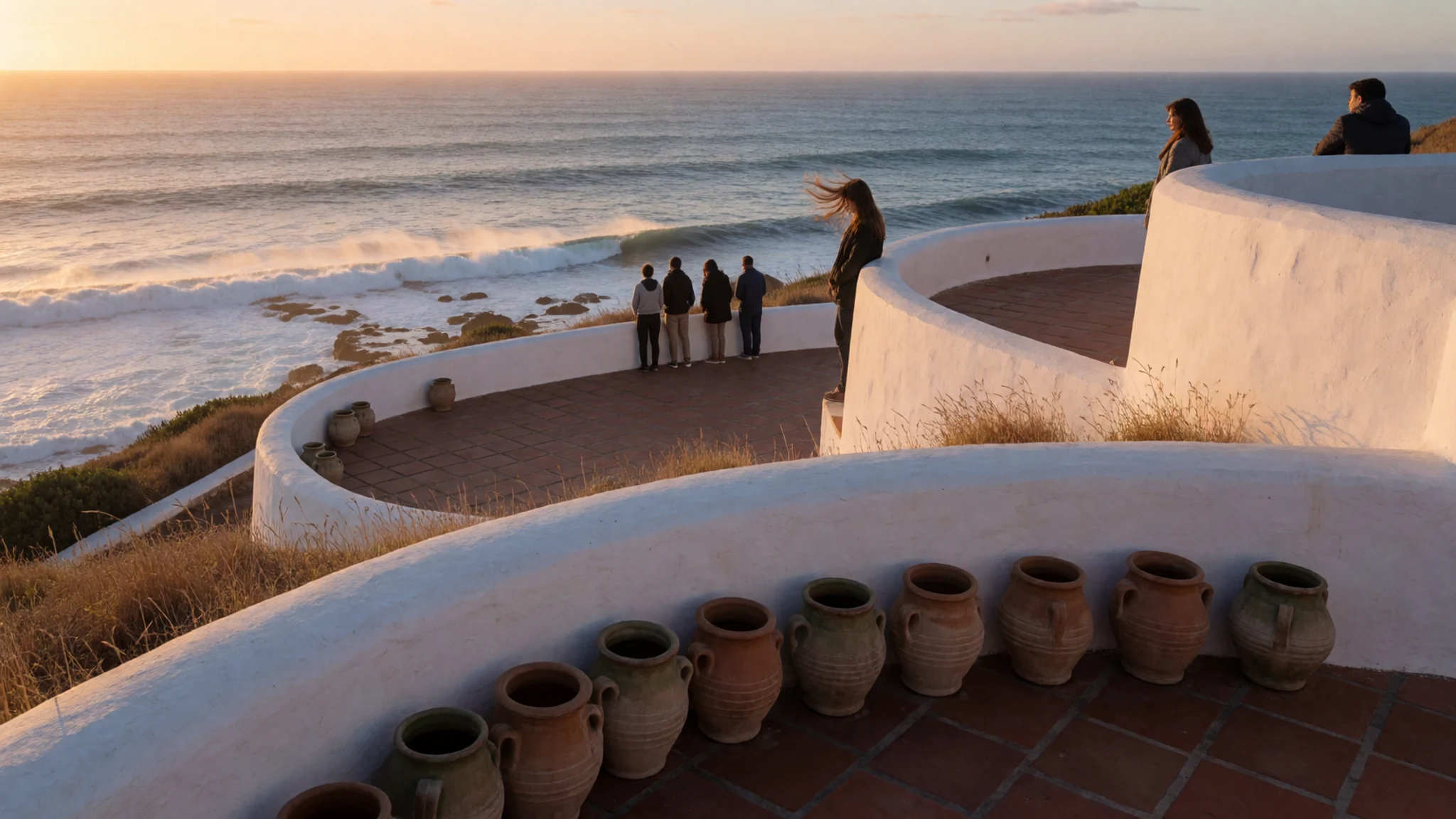
- The gallery and museum rooms — Inside Casapueblo
Inside, the museum and gallery spaces show Páez Vilaró's paintings, ceramics and objects in rooms with curved walls and no right angles. The tribute to his son is part of the house. Opening arrangements and any entry charges change, so check the official site, casapueblo.com.uy, before planning a visit.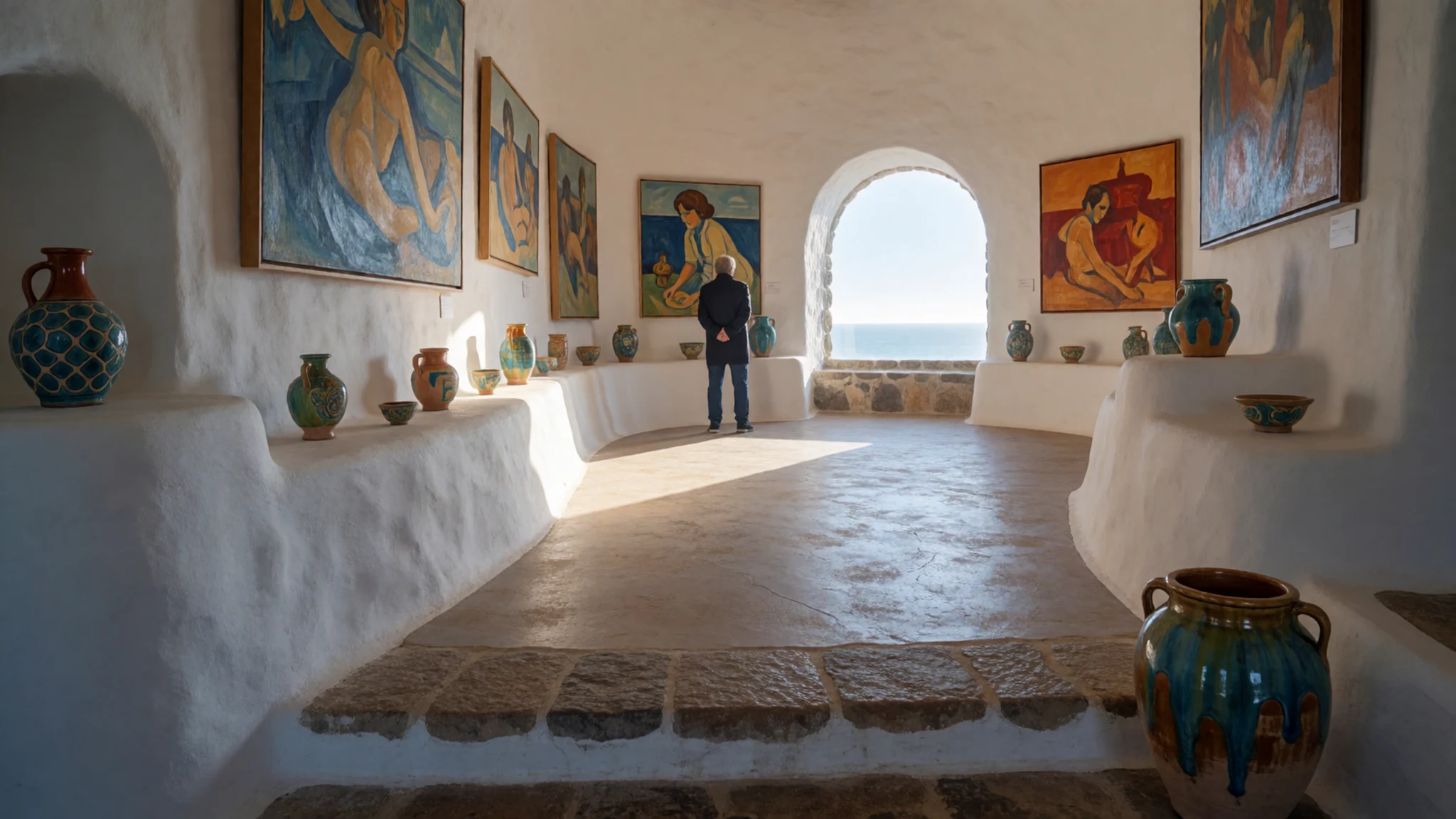
- Punta Ballena headland — Punta Ballena coast
The headland around Casapueblo is rocky, scrubby coastline with long views over the water. Walking the roads and lookouts nearby shows how the building sits against the land and why the artist chose this exposed point. Wind can be strong here, so bring a light layer even on sunny days.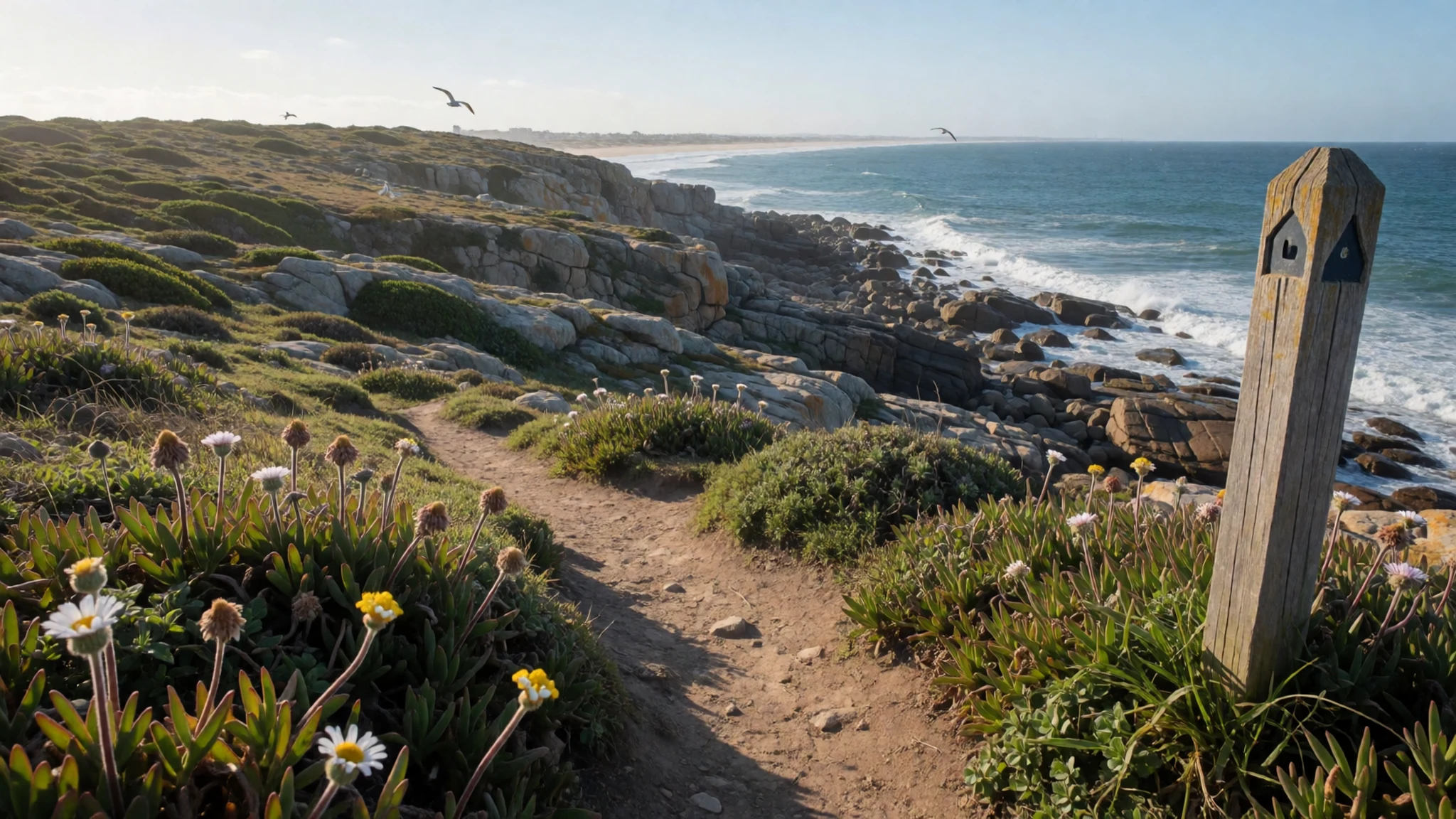
- Punta del Este — Punta del Este
The resort town of Punta del Este lies about 13 km along the coast and makes an easy companion trip. It has beaches, a port and a lively promenade, and it is much busier in summer than in winter. Casapueblo is usually paired with it, either before a sunset or on the way back.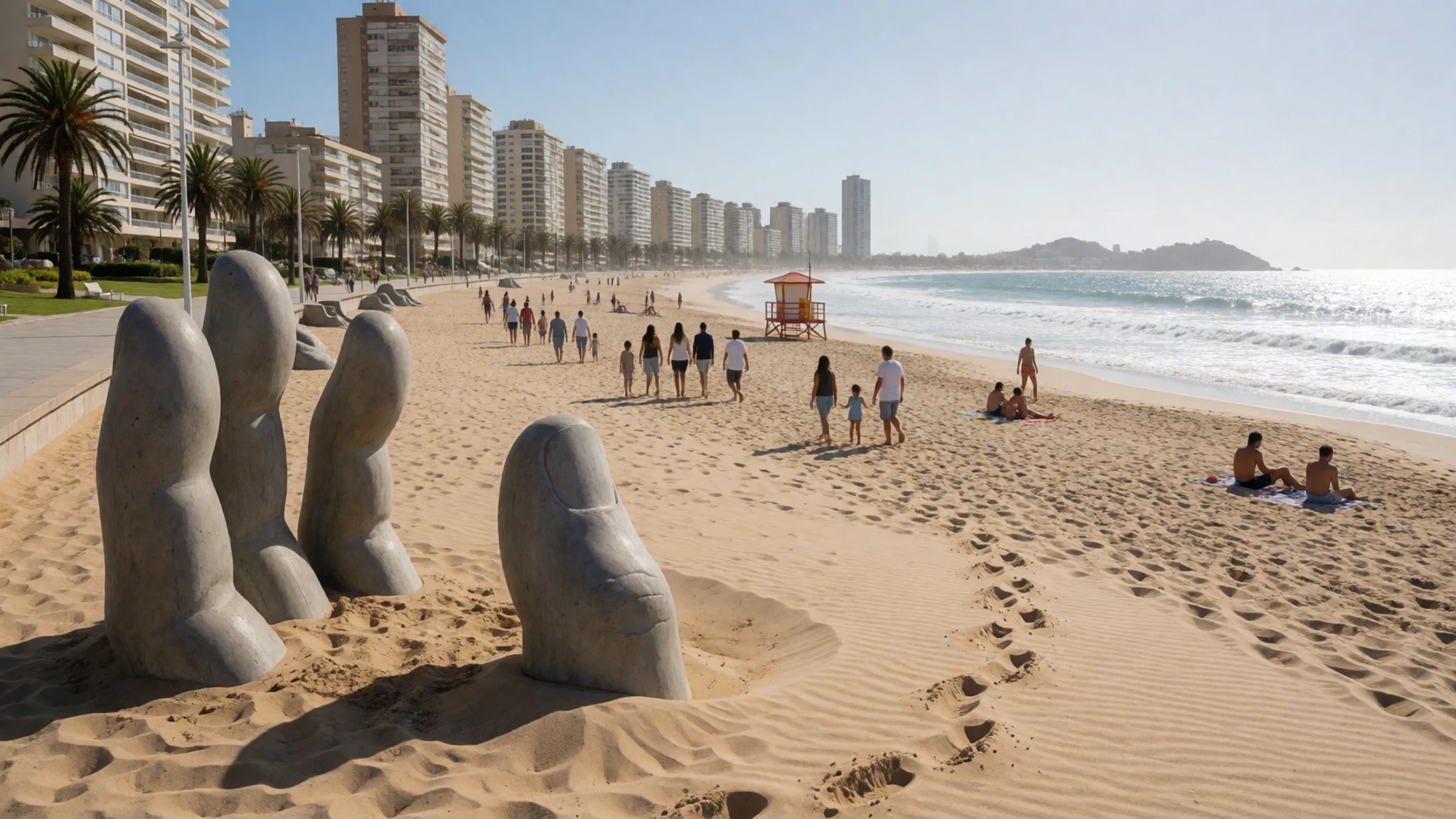
Culture
Casapueblo sits in a country that is relaxed, socially progressive and officially secular. Uruguay has kept religion out of state affairs for a long time, and even public holidays carry plain names: the week before Easter is formally Tourism Week and 25 December is Family Day. Most people are nominally Catholic but not strongly observant, so the coast has little of the church-centred rhythm found elsewhere in Latin America. Women won the vote ahead of many European countries, and the country is regarded as safe and welcoming for gay and lesbian visitors, including in resort areas such as Punta del Este. Italian immigration has left a mark on food and on habits of conversation, which tend to be polite, unhurried and warm. Many Uruguayans carry a flask of hot water and a gourd for mate, and sharing is part of social life, though a visitor is only offered a turn once a group has got to know them. Casapueblo's own culture is that of an artist's home that became a public place: it is both a working hotel and a monument to one family's story, and guests mix with day visitors. People tend to dress and behave casually, tipping is modest, and service is courteous rather than hurried. Keep voices low in the narrow, winding corridors, and ask before photographing guest rooms, private terraces or other visitors.
What to wear
The traditional dress of Uruguay's countryside is that of the gaucho, the cattle-herder of the pampas. It includes bombachas de campo, loose pleated work trousers in cotton or twill, a woollen poncho against the wind, a flat beret called a boina, a wide leather belt and rope-soled alpargatas or boots. Today it appears mainly at rural fairs, country shows and heritage celebrations around Tourism Week rather than in daily life. What people wear now is simple and casual: jeans, linen and cotton in summer, trainers or sandals, and a jumper or jacket in the evening, since the coast gets windy once the sun drops. In Punta del Este, resort fashion is smarter, with crisp shirts, sundresses and designer sunglasses, while Montevideo leans towards quiet, neat dress. A visitor to Casapueblo should plan for sun, wind and stairs. Wear shoes with grip, since the whitewashed paths and steps are uneven and can be slippery, and bring a light layer, a hat and sunscreen for the open terraces. There is no strict dress code beyond ordinary beach-resort manners, though cover-ups are expected away from the sand and in restaurants. Winter visitors will want a proper jacket, as the Atlantic breeze can feel sharp. Pack comfortable footwear for walking on the headland as well.
What to eat
- Asado — Any parrilla (grill restaurant) around Punta del Este
Uruguay's mixed grill of beef and sausages cooked slowly over embers. Meat is the centre of the meal, served with simple salads and little seasoning beyond salt. Look for a parrilla, the grill restaurant, in Punta del Este or along the coast road near Punta Ballena.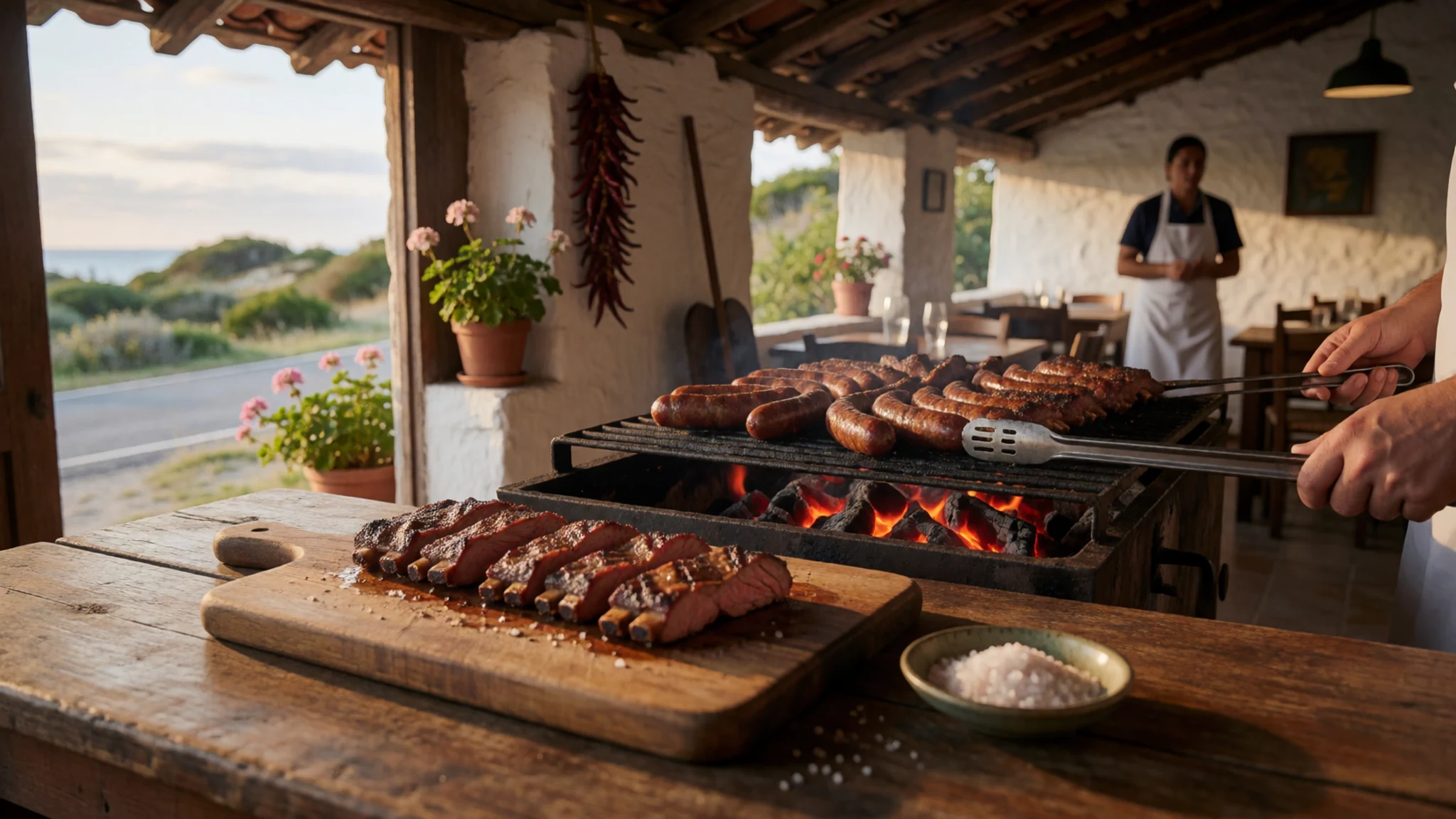
- Chivito — Cafés and casual eateries along the coast
The national sandwich: thin steak piled into a roll with ham, cheese, egg, lettuce and tomato, often with chips on the side. It is hearty enough for a full lunch. Cafés and casual eateries across the country serve it, including those near the beach.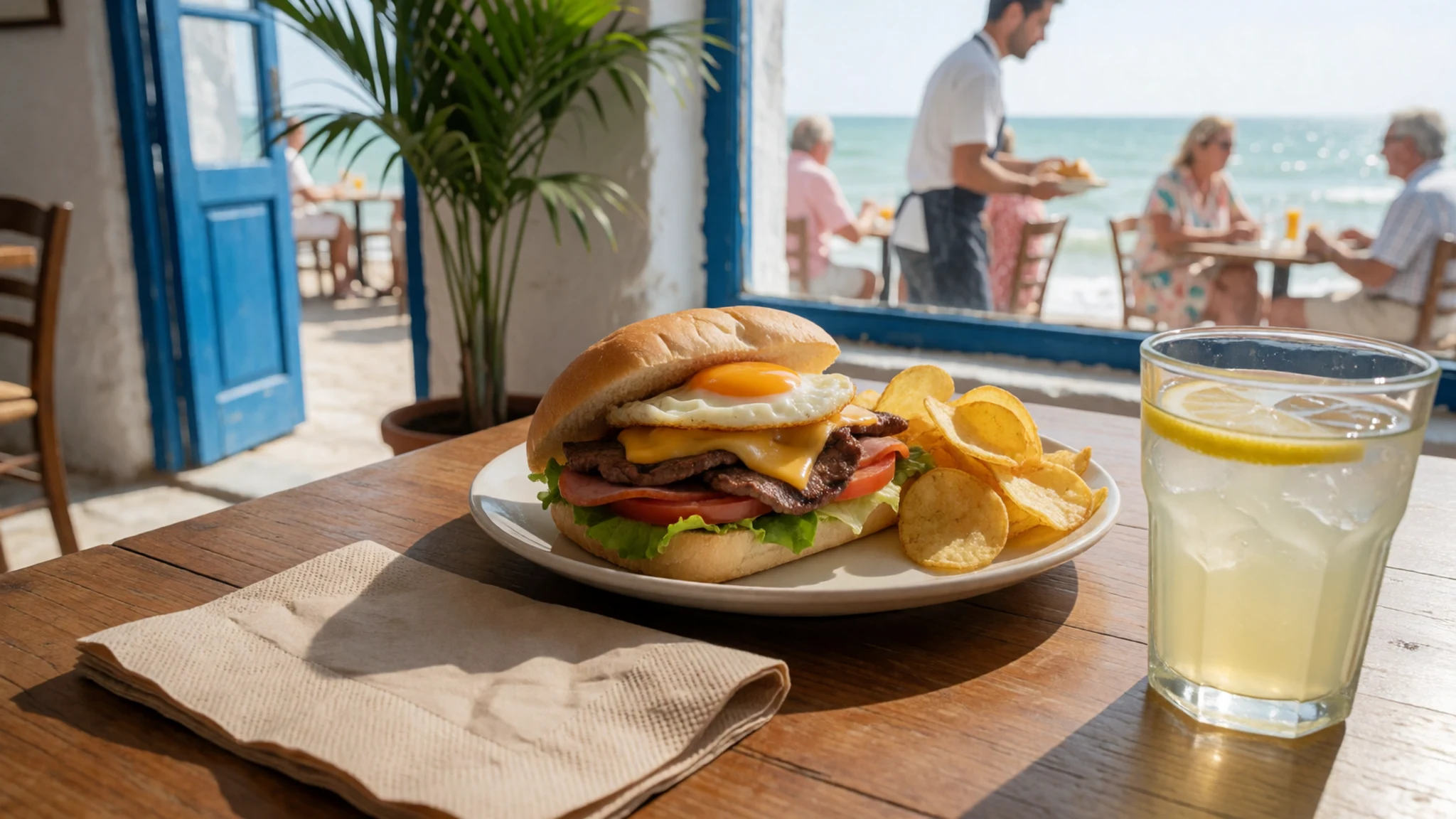
- Milanesa — Neighbourhood eateries in Punta del Este and Maldonado
A breaded, fried cutlet of beef or chicken, a legacy of Italian migration. It is served plain, topped with cheese and tomato, or inside a sandwich. It is an everyday dish, filling and mild, and easy to find at neighbourhood eateries. - Pasta and gnocchi — Family-run Italian-style restaurants in Punta del Este
Italian influence runs deep, so fresh pasta, stuffed shapes and potato gnocchi appear on menus everywhere. Sauces are rich in butter and cheese rather than spice. Good for a long lunch after a morning on the headland. - Dulce de leche and alfajores — Bakeries and confectioners in Punta del Este
Dulce de leche, a slow-cooked milk caramel, fills pancakes, cakes and the alfajor, a sandwich biscuit often dipped in chocolate. It is very sweet, and the biscuits make easy souvenirs. Buy them from bakeries and confectioners, or from shops in resort towns.
Plan it
Best time. December to March for warm weather, long evenings and open terraces, though January is the busiest month on the coast. Winter is quieter and cooler with sharper wind, and some seaside services slow down, so check ahead.
How long. 1
Getting there. Fly to Punta del Este's regional airport or to Montevideo's international airport, then continue by road along the coast; Punta Ballena is about 13 km from Punta del Este, reached by taxi, hire car or local bus. The last stretch up to Casapueblo is a short drive from the main road.
Budget. mid
Tips
- Check the official site, casapueblo.com.uy, for visiting arrangements, bookings and any entry charges before travelling
- Arrive well before sunset in summer, as the terraces fill up and the best spots go first
- Carry a light layer, since the wind off the Atlantic is cooler than it looks
- Many restaurants add a cover charge, and some give discounts for foreign cards, so ask when ordering
- Wear shoes with grip for the whitewashed steps and uneven paths
Etiquette
- Keep voices low in the narrow corridors, as guests are staying in the building
- Ask before photographing guest rooms, private terraces or other visitors
- Treat the walls and artworks gently, as they are hand-finished and fragile
Nearby
Sources
- Wikidata Q377792 (CC0)
- Wikipedia: Casapueblo (rev 1344391053) (CC BY-SA 4.0)
- Wikivoyage: Uruguay (rev 5432731) (CC BY-SA 4.0)
- Talkingheads, Casapueblo (CC BY 3.0)
- Wagner T. Cassimiro "Aranha", Casapueblo (CC BY 2.5)
- Romerito Pontes, Uruguai_01 (CC BY 2.5)
- Romerito Pontes, Uruguai_05 (CC BY 2.5)
- Romerito Pontes, Uruguai_06 (CC BY 2.5)
- Romerito Pontes, Uruguai_15 (CC BY 2.5)
- Joel Diplan, Punta Ballena (12) (CC BY 3.0)
- Joel Diplan, Punta Ballena (13) (CC BY 3.0)


