Laguna Garzón
Laguna Garzón, Uruguay
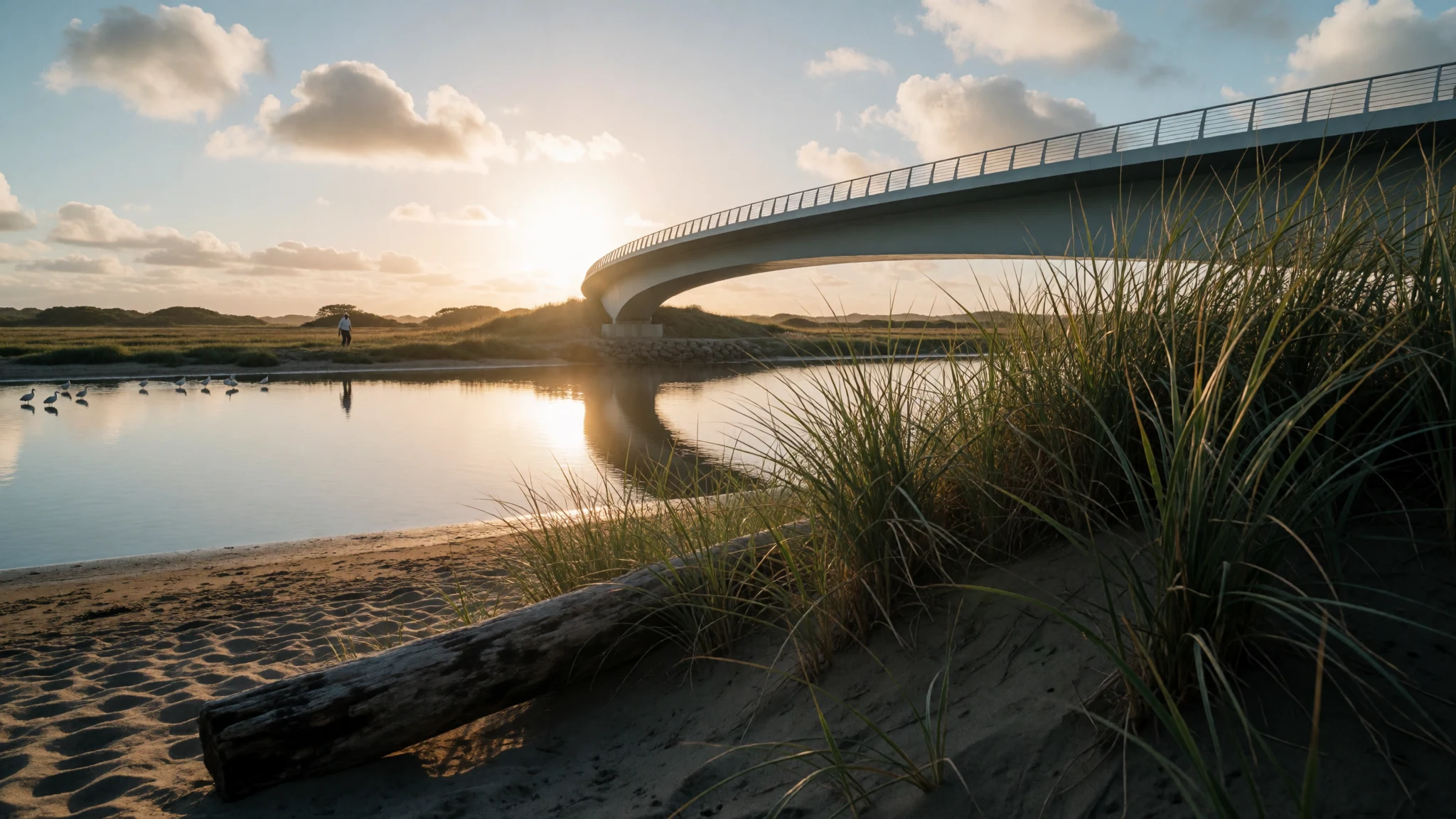
Laguna Garzón is a calm Atlantic lagoon behind a sandbank, crossed by a looping bridge, with the fashionable village of José Ignacio nearby.
The place
Laguna Garzón is a coastal lagoon on Uruguay's Atlantic shore, lying across the boundary between Maldonado Department and Rocha Department. It also appears on maps and in some writing as Laguna José Ignacio, after the nearby seaside village. A sandbank separates the shallow water from the open ocean, so a sheltered lagoon and a surf beach sit within a short walk of each other. The nearest well-known resort is José Ignacio, a fishing village turned summer retreat. The surrounding country is flat to gently rolling, with grassland, dunes and scrub rather than anything mountainous, and the light does much of the work: long soft evenings, big cloud, and water that shifts from pewter to gold within an hour. Water birds are common along the margins. The area is quiet outside the southern summer and noticeably busier from December to February, when holidaymakers from Montevideo, Buenos Aires and further afield fill the coast. Facilities are modest. There is no town on the lagoon itself, so the experience is made of edges: shoreline, sandbank, bridge and horizon. Expect wind, sun with little shade, and distances that suit a car. As a waterfalls-and-lakes destination it is gentle rather than dramatic. Nothing thunders and nothing needs a hike; it is simply a broad body of water held back from the sea by sand. That suits people who like watching weather, photographing light and then eating well in a nearby village. Those wanting more activity usually pair it with the beaches of Rocha and Maldonado on either side.
Its story
Laguna Garzón has a short written history, and most of it concerns how to get across the water. For many years the coast road between Maldonado and Rocha was broken by the lagoon, and the link was a small ferry carrying just two vehicles at a time. It ran only in daylight and only when conditions were kind, so queues, delays and cancelled crossings were part of a summer journey, and wind on the lagoon could end the day's service early. That changed in December 2015, when the Laguna Garzón Bridge opened to traffic. It is a circular structure designed by the architect Rafael Viñoly, who was born in Montevideo. Instead of running straight across, the roadway curves in a ring above the water, a shape meant to slow drivers and give passengers time to look along the lagoon. Its capacity is quoted at roughly 1,000 vehicles a day, and pedestrians can use it as well. The bridge joined the two departments in a way the ferry never could, and made the coast road to Rocha a continuous drive. The lagoon itself follows a familiar Atlantic pattern. A sandbank builds along the shore, closes off a shallow inlet from the ocean, and leaves calmer water behind it. Such sandbars respond to storms, tides and wind, which is one reason the shoreline can look different from one season to the next. Most of the lagoon's story is therefore a story of sand, weather and crossings.
What to see
- Laguna Garzón Bridge — Coast road between Maldonado and Rocha departments
The Laguna Garzón Bridge is a ring-shaped crossing designed by Rafael Viñoly, and it is the structure most visitors come to see. Drivers loop gently over the water instead of heading straight across, which gives a slow, wide view of the lagoon and sandbank. Pedestrians can use it too; go early or late for the softest light.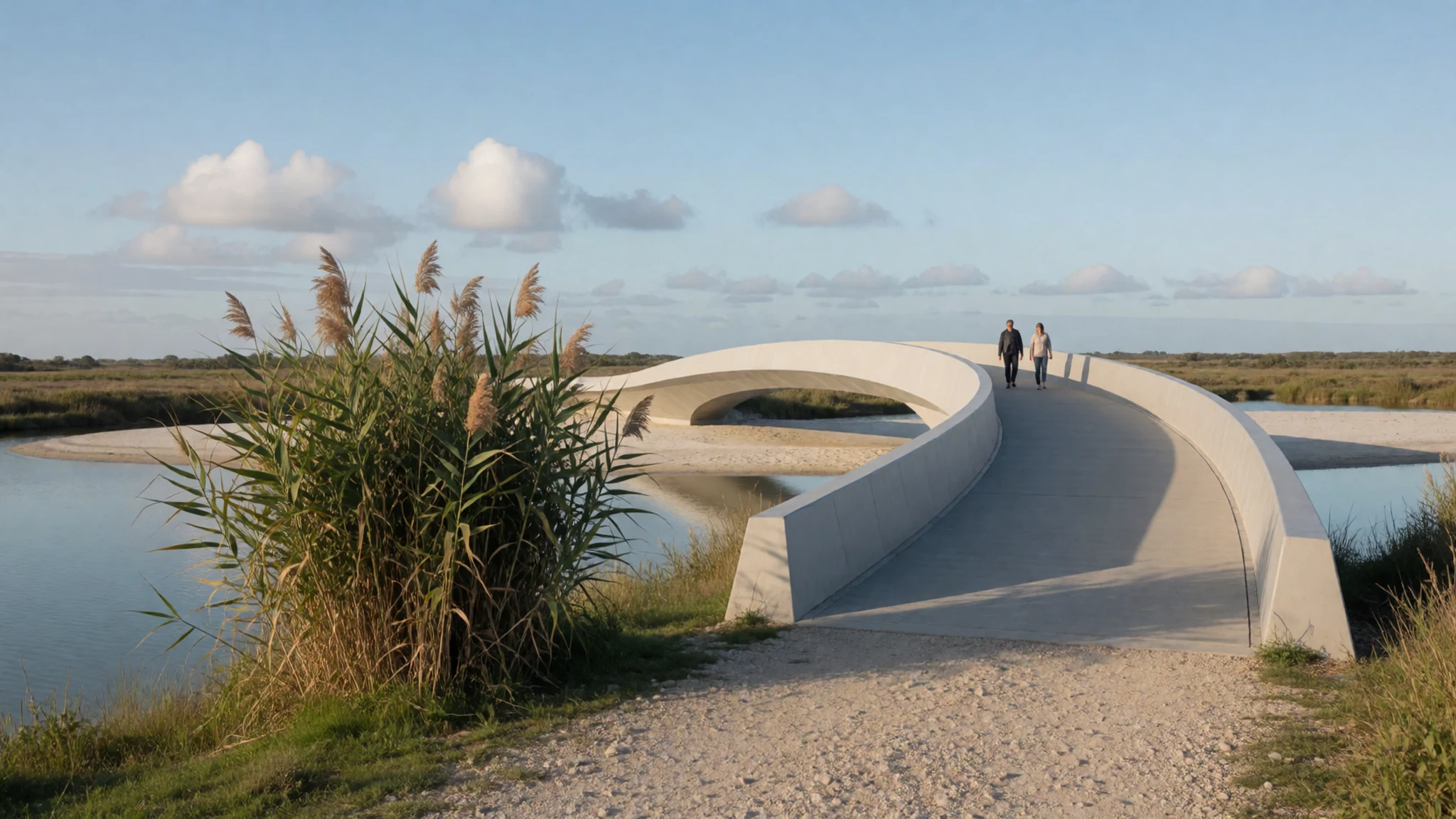
- The sandbank — Ocean side of the lagoon
The sandbank between Laguna Garzón and the Atlantic is the feature that makes the lagoon what it is. Standing on it, one side offers flat sheltered water and the other open surf. Walk slowly, watch for wading birds, and bring a hat, because shade is scarce and the ocean wind can be steady.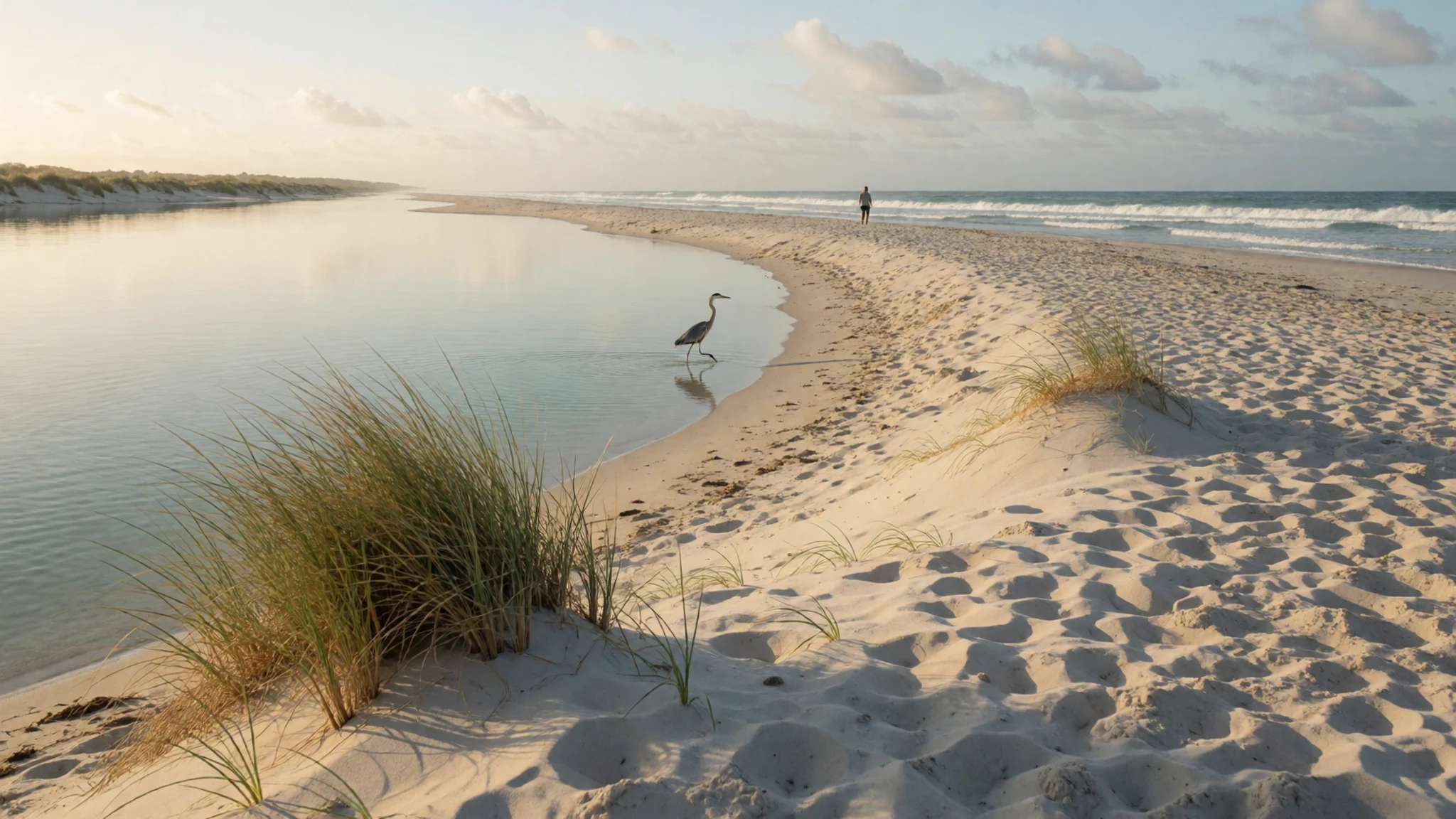
- Sunrise at the water's edge — Lagoon shoreline
Sunrise at Laguna Garzón suits early risers who like empty shorelines. The water is usually at its stillest before the breeze builds, and the shallows turn pale pink and then silver. Photographers favour low angles close to the edge. Bring a layer, since mornings can be cool even in summer, and keep to existing tracks.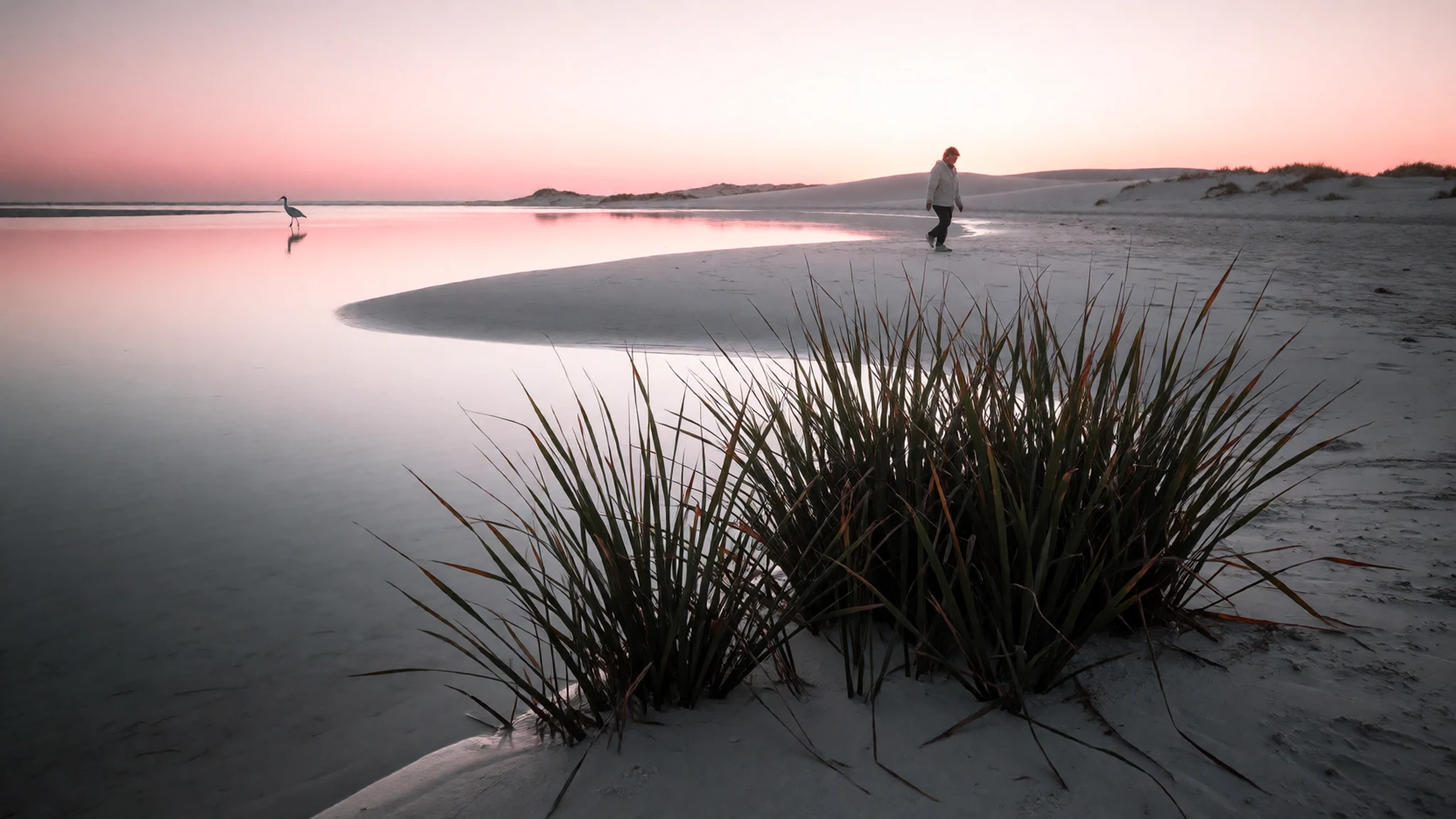
- Sunset over the lagoon — Lagoon shoreline
Sunset at Laguna Garzón is a quieter alternative to the ocean beaches, where crowds gather in summer. The sun drops behind flat grassland and the lagoon holds the colour for a while afterwards. Stay for the afterglow, then drive back with care, as local roads can be dark and unlit in places.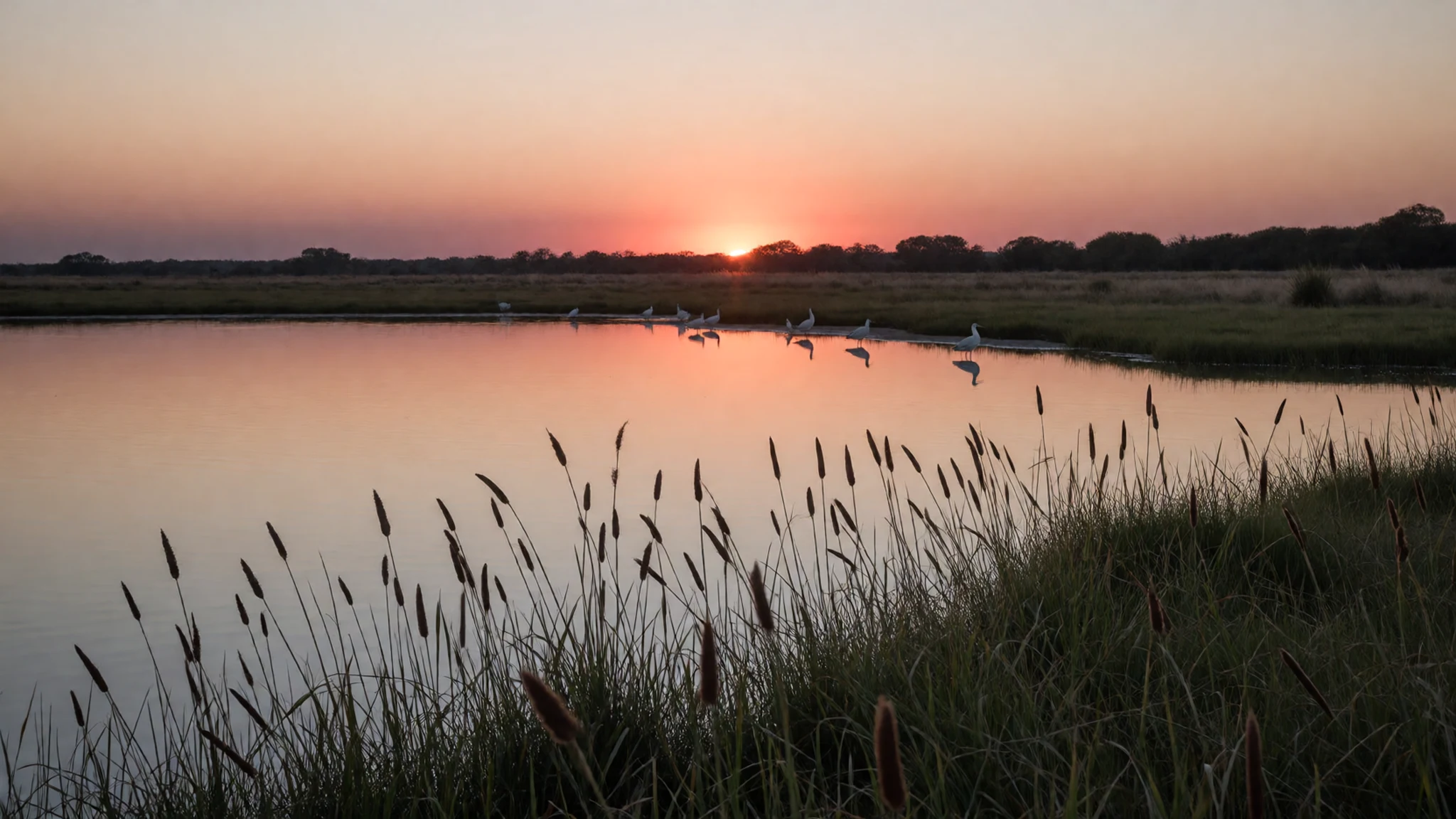
- José Ignacio village — José Ignacio, Maldonado Department
José Ignacio, the nearest well-known resort to Laguna Garzón, is a fishing village turned summer retreat, with sandy streets, a lighthouse on the point and restaurants serving the day's catch. It is lively and expensive in high season and calm in winter. Allow half a day for a walk, a meal and the beach.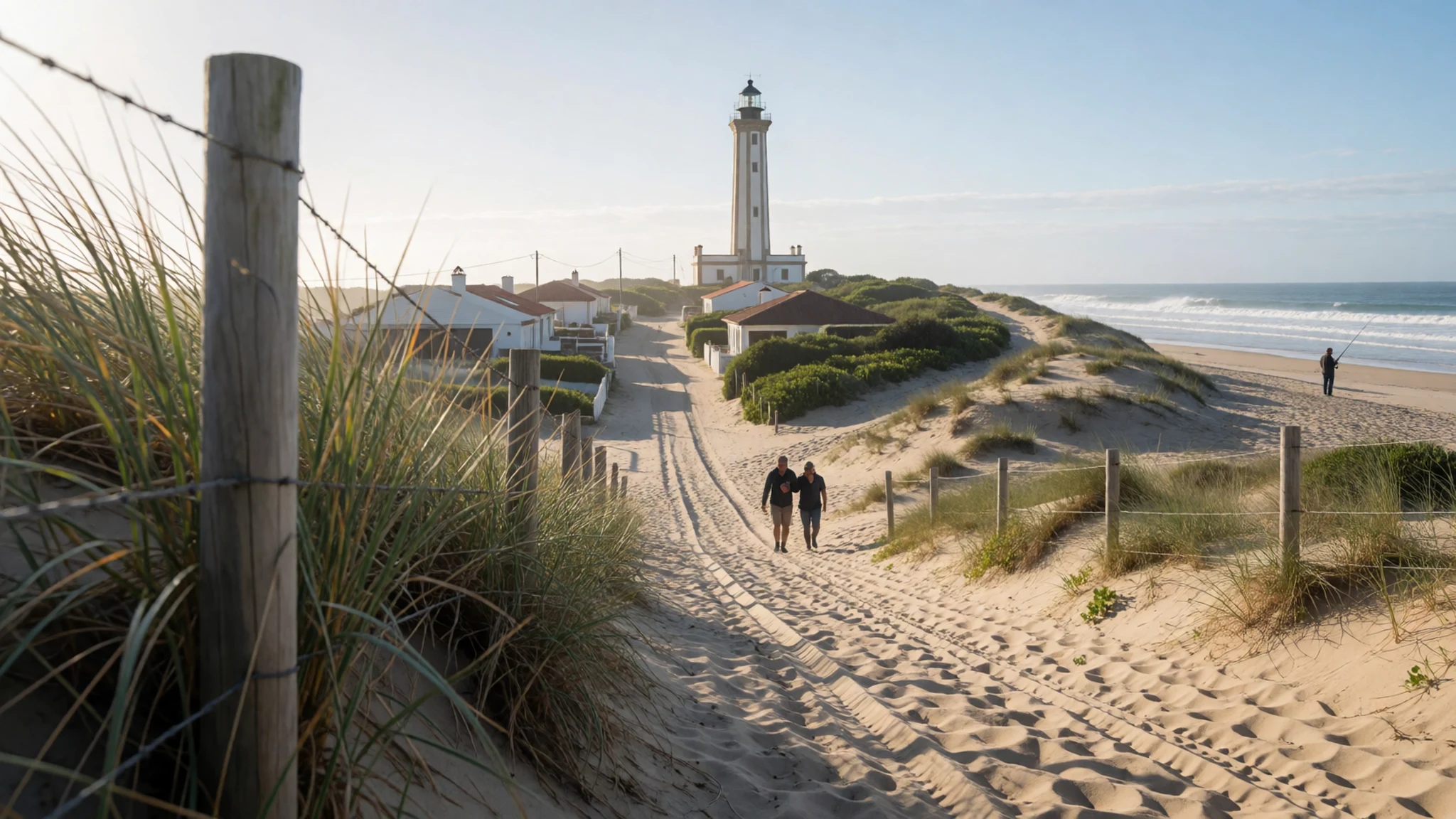
Culture
Laguna Garzón sits in a part of Uruguay where beach life and rural habits overlap. Spanish is the everyday language, and greetings between friends often come with a single kiss on the cheek. Many Uruguayans carry a thermos and a gourd for mate, an herbal infusion shared in a circle on beaches, in cars and beside the water, and a visitor who is offered a turn should take it as a real gesture of welcome. Meals run late, especially in summer, when dinner often starts well after dark. Asado, the slow grill, is as much a social ritual as a dish, and the person tending the fire takes pride in the work. Inland from the coast, cattle ranching shaped the gaucho tradition of horsemanship, leatherwork and informal hospitality, still visible at ranches and at local festivals. The coast has become a summer destination for urban Uruguayans and Argentines, so the pace is relaxed and dress is casual, even in the smarter restaurants of José Ignacio. Winter is quiet: some places close or cut back, and locals are noticeably unhurried. Fishing, walking and watching the weather remain the main pastimes around the lagoon. At the lagoon, keep to existing tracks, take all rubbish away, and if someone shares mate, drink the gourd through and say gracias only when you have had enough, as thanks signals that you are finished.
What to wear
Laguna Garzón has no single local costume, but rural Uruguay nearby keeps the gaucho outfit. It centres on bombachas de campo, loose cotton or twill trousers that button at the ankle, worn with a wool poncho against the wind, a boina (flat beret) and a wide leather belt, often decorated with silver. A woven sash called a faja is sometimes added, and boots are leather. The outfit appears at ranch work, country fairs and heritage festivals rather than in everyday coastal life. Day to day, people dress for the beach: linen shirts, shorts, light dresses, sandals, caps and sunglasses, with a jumper or windcheater for evenings and breezy days. In José Ignacio restaurants, smart-casual is common after dark, meaning clean linen and simple dresses, though nobody expects formality. Many locals also carry a mate set. Visitors should pack for sun and wind: a secure or wide-brimmed hat, high-factor sunscreen, sunglasses, breathable cotton or linen, and a windproof layer even in summer. Swimwear is fine on the beaches, but cover up for shops and restaurants. Sandals work on boardwalks, while closed trainers or walking shoes suit sandy tracks and the approaches to the bridge. In winter, bring a warm coat and a waterproof jacket. No religious dress codes apply around the lagoon.
What to eat
- Asado — Parrillas along the coast road and in José Ignacio
Asado is Uruguay's wood- or charcoal-fired grill of beef cuts, sausages and offal, cooked slowly over embers. Expect it at parrillas, the grill restaurants along the coast road and in nearby villages, and at family Sunday lunches.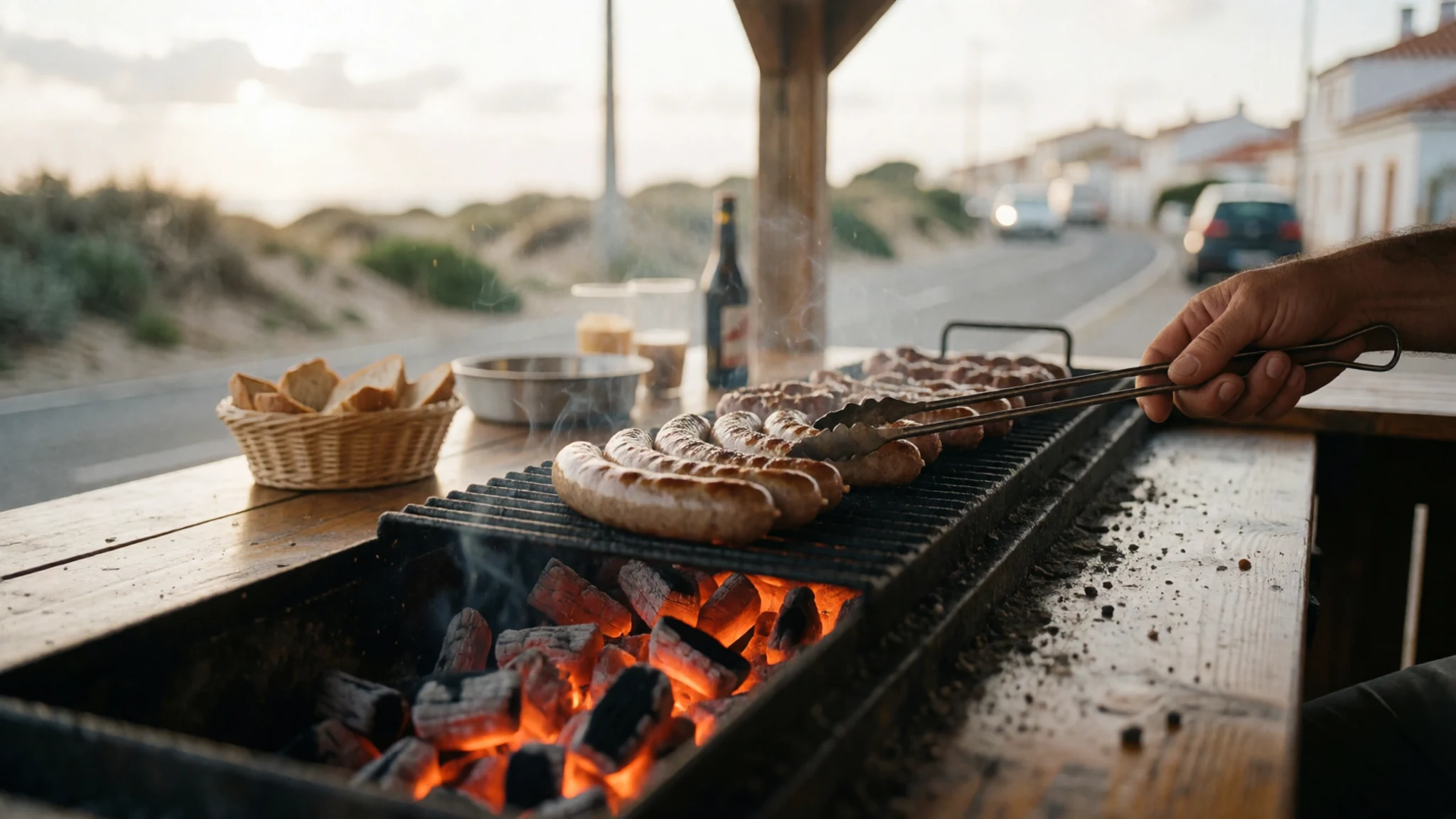
- Chivito — Beach kiosks, roadside cafés and casual eateries
Chivito is a hefty steak sandwich piled with ham, cheese, egg, tomato and lettuce, often served with chips. It is the standard quick lunch at beach kiosks, roadside cafés and casual eateries near the coast.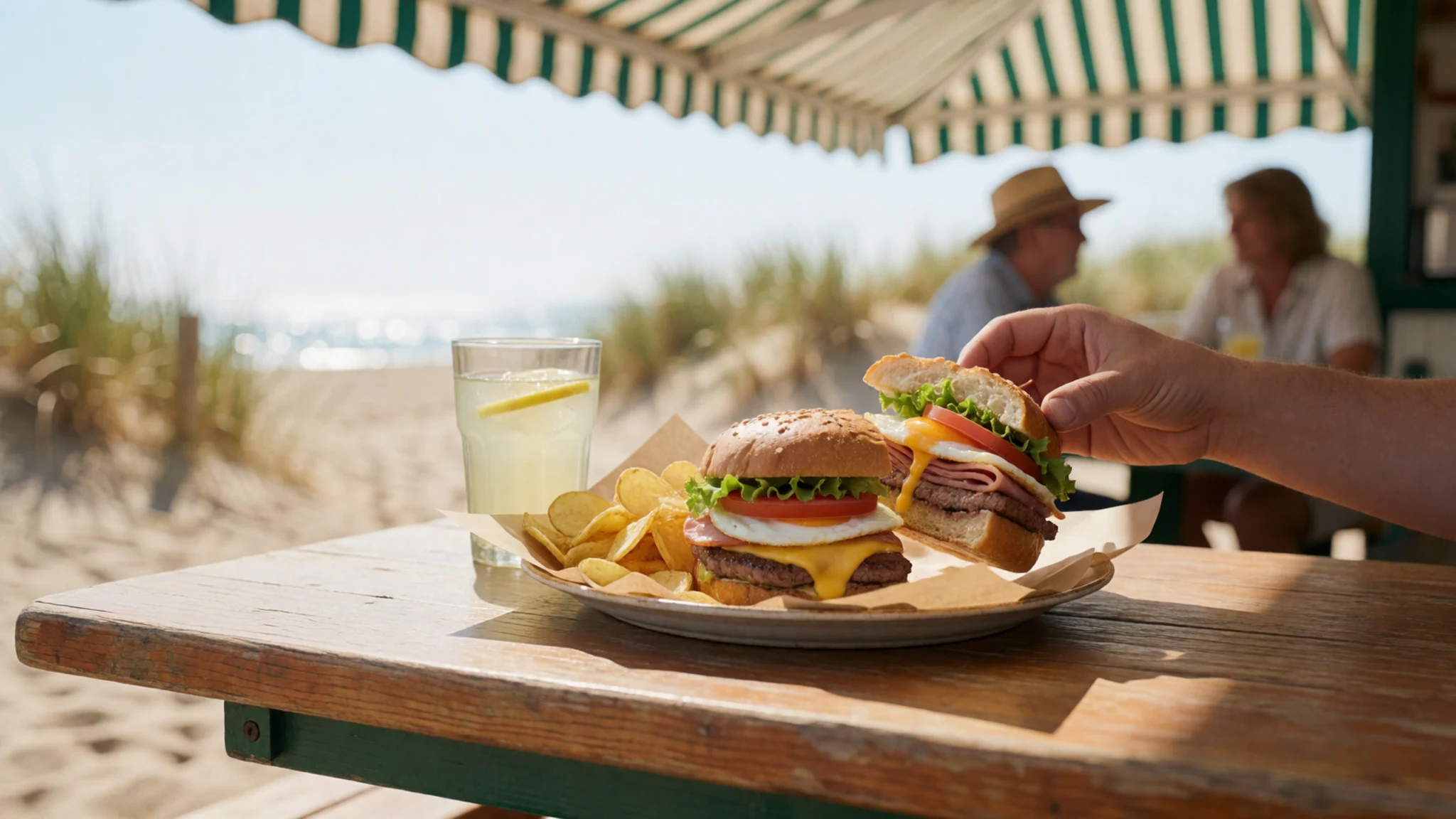
- Grilled fish of the day — Fishing-village restaurants in José Ignacio and the Rocha coast
Fish of the day, grilled whole or as fillets with lemon and a simple salad, reflects the nearby Atlantic. Look for it at fishing-village restaurants in José Ignacio and along the Rocha coast, where menus follow the catch. - Empanadas — Village bakeries, shops and market stalls
Empanadas are baked or fried pastry parcels filled with beef, ham and cheese, or sweetcorn. They suit a beach picnic and appear at bakeries, village shops and market stalls, usually sold singly or by the half dozen. - Alfajores — Bakeries and cafés in coastal villages
Alfajores are two soft biscuits sandwiched with dulce de leche, sometimes dipped in chocolate or dusted with coconut. Bakeries and cafés sell them, and one with mate or coffee makes a decent mid-afternoon stop.
Plan it
Best time. December–March, the southern summer, for warm days and swimming; January is the busiest and most expensive month. November and April are quieter shoulder months. Winter is cool, windy and quiet, with many seasonal places closed.
How long. 1–2
Getting there. Fly into Carrasco International Airport at Montevideo, or to the regional airport serving Punta del Este, then drive east along the coast. The last leg crosses the Laguna Garzón Bridge between Maldonado and Rocha. Public transport is thin, so most visitors hire a car or book a transfer.
Budget. mid
Tips
- Book accommodation well ahead for December to February, when the coast fills up
- Bring sun protection, a hat and water, as shade around the lagoon is scarce
- Carry a card and some cash, since small kiosks and village stalls may not take cards
- Visit at sunrise or late afternoon for calm water and softer light
- Check the weather before going, as strong wind can make the sandbank unpleasant
Etiquette
- Keep to existing tracks around the dunes and lagoon edge
- Take all rubbish away with you
- Ask before photographing people, especially at beach and village gatherings
Nearby
Sources
- Wikidata Q5969058 (CC0)
- Wikipedia — Laguna Garzón (rev 1366074709) (CC BY-SA 4.0)
- Wikivoyage — Laguna Garzón (CC BY-SA 4.0)
- Photo: Bridge Laguna Garzón-3 (Jimmy Baikovicius) (CC BY-SA 2.0)
- Photo: Laguna Garzon 02 (Fedaro) (CC BY-SA 4.0)
- Photo: Uruguay topographic location map (GrandEscogriffe) (CC BY 4.0)
- Photo: South America laea relief location map (Uwe Dedering) (CC BY 3.0)
- Photo: Agua que brilla (Casaseneleste) (CC BY 3.0)
- Photo: Amanecer en el bañado (Serrano48) (CC BY 3.0)
- Photo: Antes de la luna (Yoanna Silvera) (CC BY 3.0)
- Photo: Atardecer Laguna Garzón (Yoanna Silvera) (CC BY 3.0)


