Laguna de Rocha
Laguna de Rocha, Uruguay
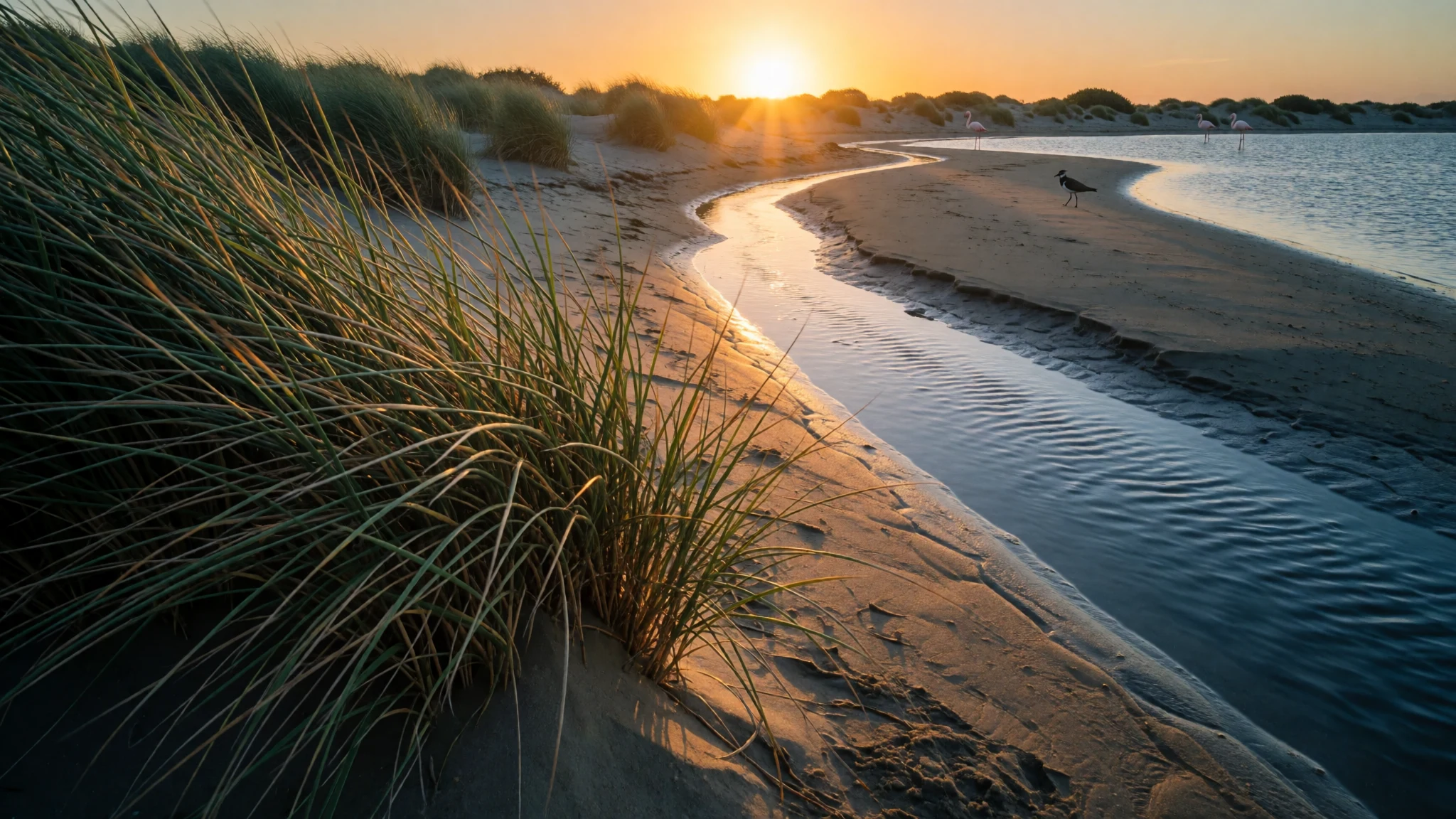
Laguna de Rocha is a quiet Atlantic lagoon in Uruguay where flamingos, herons and long empty dunes replace crowds and facilities.
The place
Laguna de Rocha lies in Rocha Department on Uruguay's Atlantic side. It is a coastal lagoon rather than a mountain lake: shallow, open to the weather and linked to the sea by a sandbar that shifts with the tides. The protected area covers more than 20,000 hectares. About 7,200 hectares of that is open water, and the rest is grassland and coastal woodland around the shore. Between the lagoon and the ocean runs a long barrier of sand and dune grass. When tides run high or storms push in, channels cut through it, and the barrier becomes an island or a peninsula depending on the day. That gives the landscape a slightly unfinished feel, because the line between water and land is never quite where the map puts it. The place is lightly visited and has no developed facilities for travellers, so it suits people who like quiet more than cafés and boardwalks. Birds are the main draw, with more than 200 species recorded, flamingos and several kinds of heron among them, plus owls in the woodland and grassland. The nearest places to stay are in Rocha town, so most visitors base themselves there or on the coast and come out for the day. Camping is allowed across most of the park, though nothing is set up, so campers carry everything in and out. Expect wind, sun with little shade, and a lot of sky.
Its story
The story of Laguna de Rocha is mostly one of slowly growing protection, with one sudden interruption from the sky. The state first set the lagoon aside in 1977 as a lake national park. In 2010 its status was reworked and responsibility passed to SNAP, Uruguay's national system of protected areas, which is the agency that looks after it today. In 2015 the lagoon was also named a Ramsar wetland of international importance, a recognition that rests largely on its value to breeding and nesting waterbirds. That long run of decisions shows a change in how the place is seen: from a landscape to be set aside, to a living habitat managed for wildlife first, with visitors fitted around it. The interruption came on 31 October 1945. An Air France flying boat, a Latécoère registered F-BANT, was in difficulty after a propeller on its third engine broke away and tore a hole in the fuselage, about three metres across. Two passengers were killed and a small fire broke out. The crew put the aircraft down on the lagoon, and the machine was repaired afterwards. It is an odd footnote for such a calm place, and a reminder that the water is wide enough and open enough to have served, once, as an emergency runway.
What to see
- Sendero la Laguna — Laguna de Rocha National Park
A marked footpath, wide, easy and flat, runs for about 5 km through grassland and marsh and takes roughly 2 hours at a relaxed pace. It is the simplest way to reach the lagoon's edge on foot. Shade is scarce, so a hat and water matter, and early morning or late afternoon light is kinder for birds.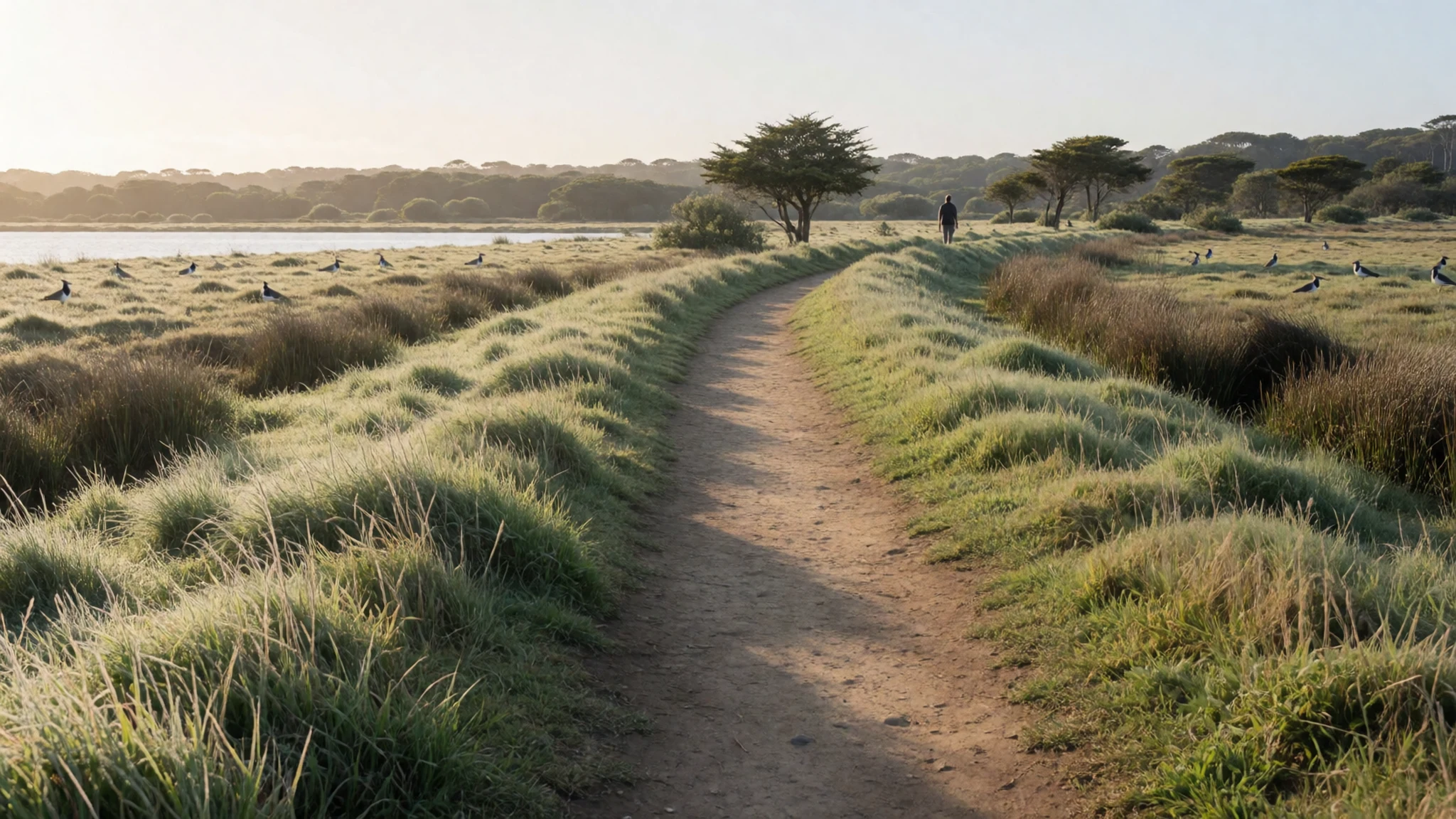
- The barrier beach — Sand barrier between lagoon and Atlantic
The sand barrier between lagoon and ocean runs for about 7 km, with soft sand, dunes and plenty of open space. No lifeguards are on duty and few people come, so swimmers should be cautious and treat the sea as unsupervised. Walking along the dunes gives a clear sense of lagoon on one side and Atlantic on the other.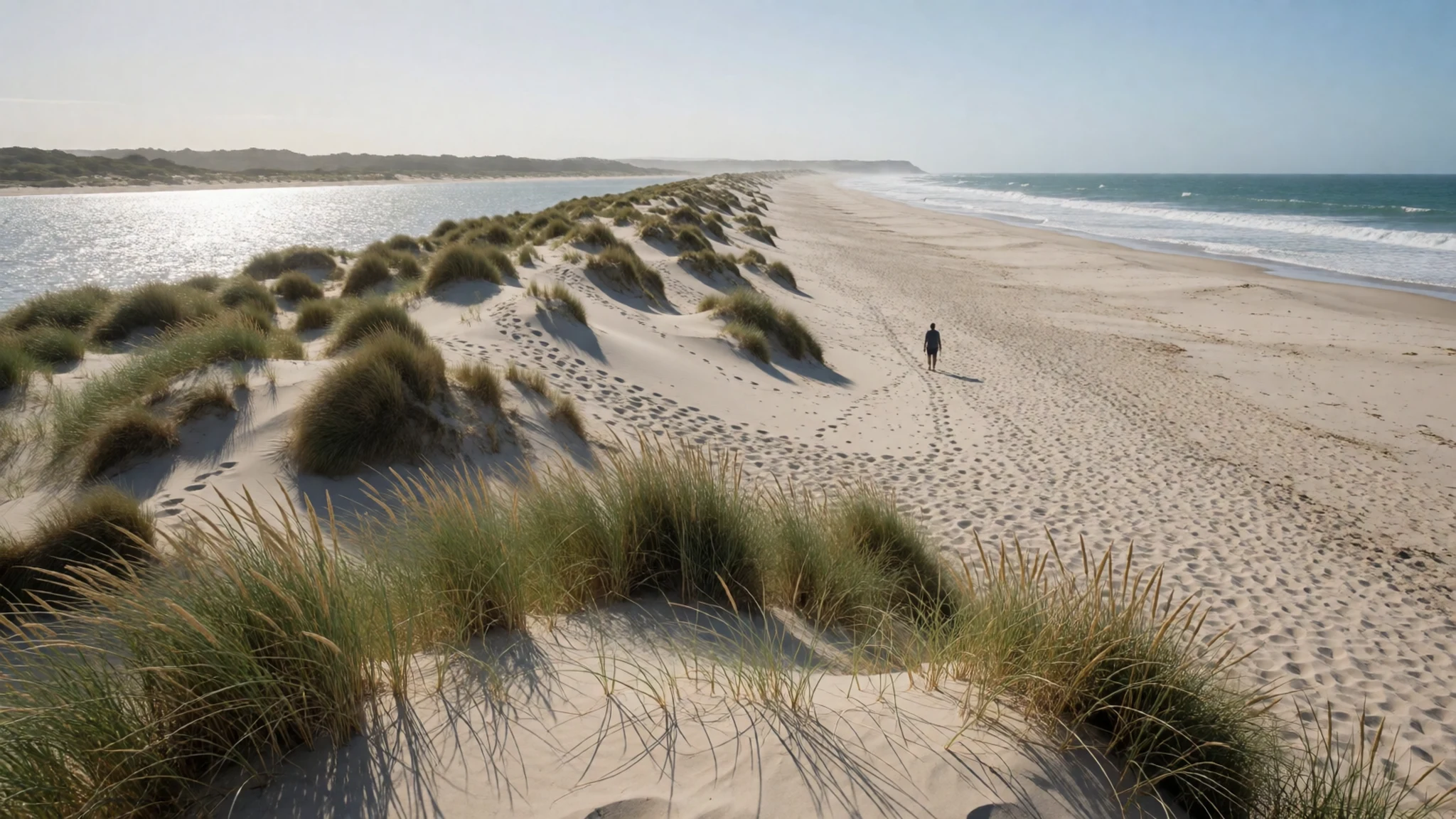
- Birdwatching along the shallows — Lagoon margins and reed beds
More than 200 bird species have been recorded here, and the shallows and reedy margins are where most show up. Flamingos and herons wade the water, while owls and other woodland and grassland birds turn up on drier ground. Bring binoculars and patience, and keep well back from nesting areas, since the park exists largely to protect them.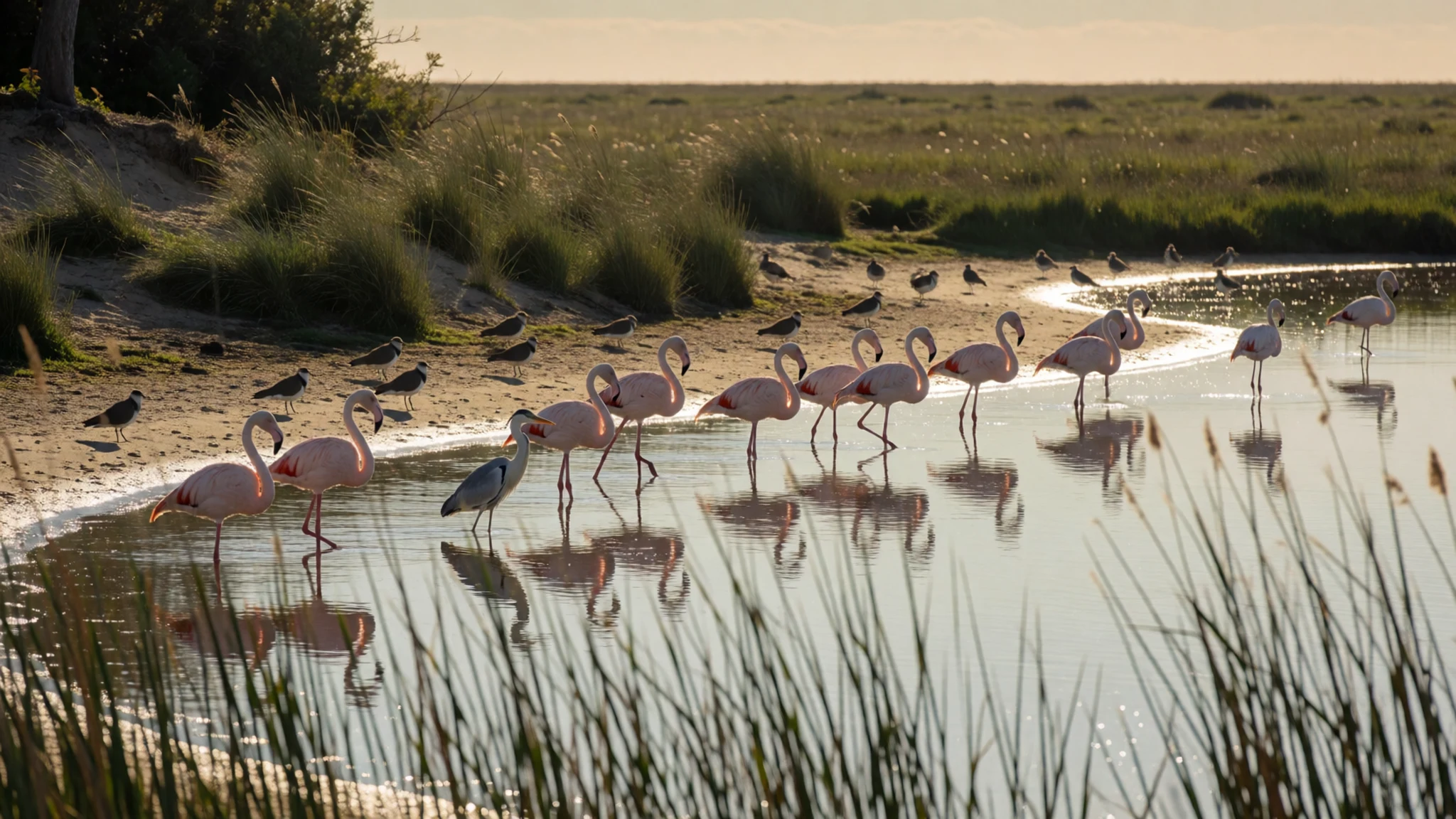
- Grassland and coastal woodland — Land around the lagoon
The larger share of the protected area is not water at all but open grassland and coastal forest. Seen from above, vegetation meets the lagoon in a ragged, shifting edge. On the ground it means wind-combed grass, small trees for shade and good chances of seeing woodland birds away from the shore.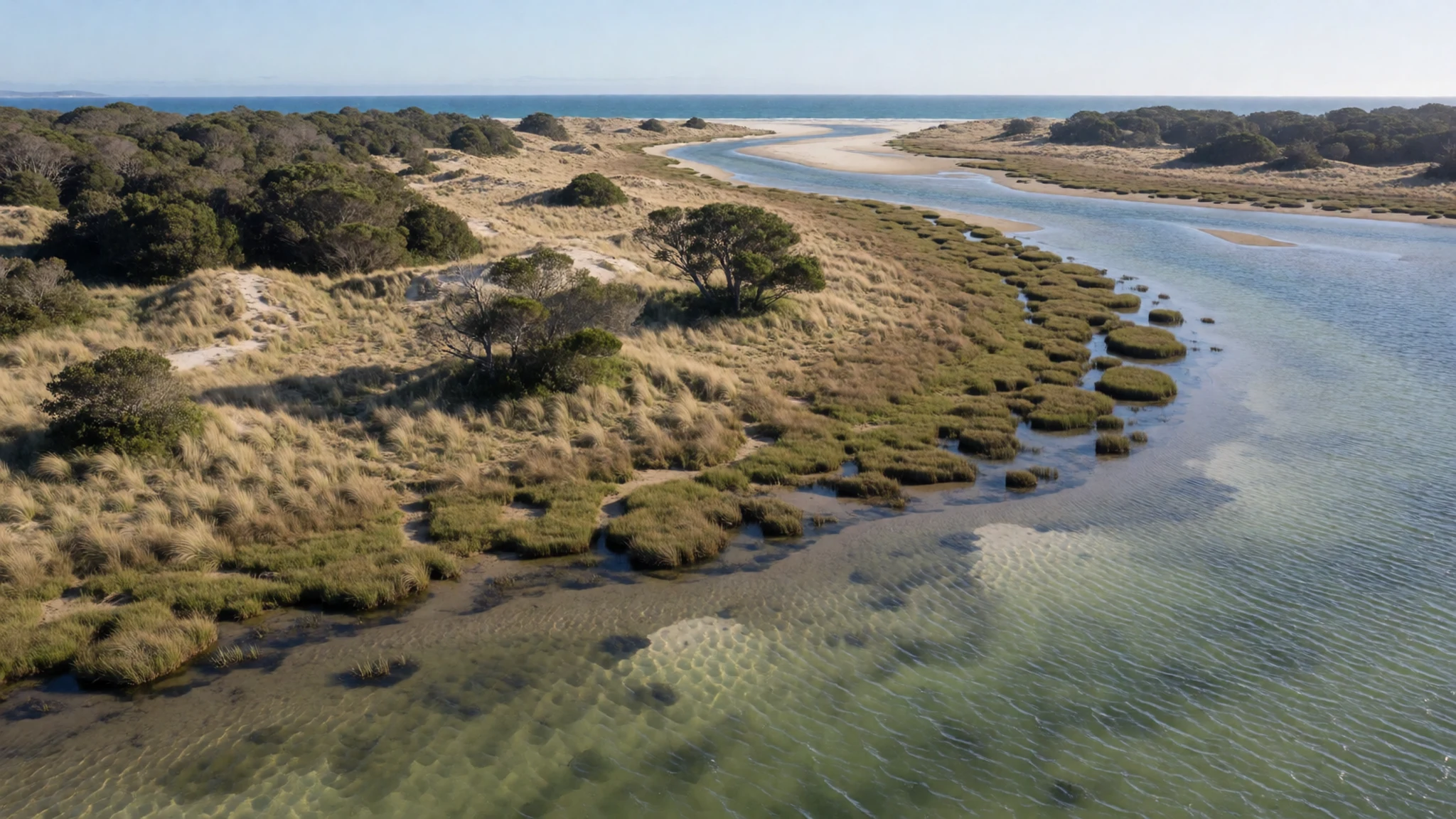
- Cabo Polonio as a next stop — Rocha coast, east of the lagoon
Cabo Polonio is one of the usual next stops along this coast, together with Rocha town and La Paloma. It suits a visitor who has enjoyed the lagoon's quiet and wants more Atlantic shoreline. Access and rules there differ from the park, so check current local information before setting out.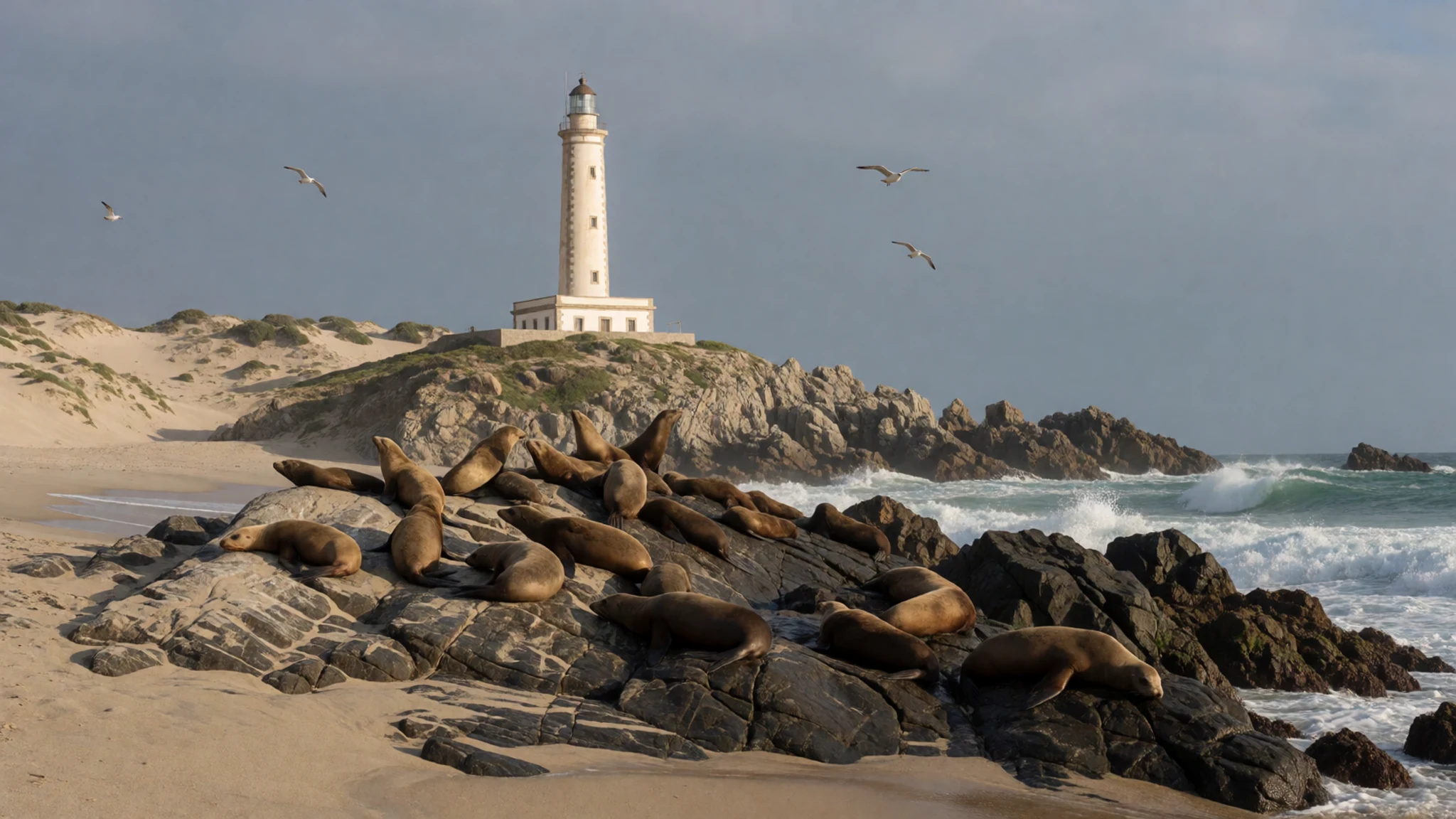
Culture
Laguna de Rocha sits in a part of Uruguay where life follows the pace of cattle country and coast. Rocha Department is rural and spread out, and the rhythm is unhurried: long meals, small towns, and neighbours who stop to talk. The most recognisable local habit is mate, a bitter herbal infusion sipped from a gourd through a metal straw. People carry a thermos under one arm and share the gourd in a circle, so being offered a turn is a gesture of welcome. Beneath that sits the gaucho tradition of horsemanship and ranching, which still shapes the grasslands around the lagoon and the way many people talk about the land. More recent is a culture of conservation: the lagoon is a national park and a Ramsar wetland, and its birds are the reason the place is looked after. Uruguay is also a fairly secular country, so there are few religious codes to navigate here, and the main expectations are simple courtesy and care for the environment. Because the park has no developed infrastructure, the quiet itself is part of what is being protected, and loud music or off-path wandering is out of step with the place. Carry all your rubbish out, stay on marked paths near nesting birds, and if someone offers you mate, drink the gourd through and hand it back with thanks.
What to wear
Laguna de Rocha belongs to a region whose traditional dress comes from the gaucho, the mounted cattle hand of the River Plate grasslands. The classic outfit is bombachas, loose pleated trousers in cotton or twill that tuck into boots or sit above alpargatas, plus a wool poncho against the wind, a leather belt or woven sash, and a flat beret called a boina. These are worn for work on estancias, at rural festivals and on parades, rather than every day. What people actually wear now is plain and practical: jeans, trainers or boots, fleece and windcheater layers, a cap or sun hat, and very often a mate gourd and thermos carried everywhere. Coastal towns lean towards beachwear and sandals in summer. For a visit to the lagoon, dress for wind, sun and uneven ground. Long, light trousers protect against tall grass and insects, and closed shoes with grip suit the marsh paths. Bring a sun hat, sunglasses and a windproof layer, since the shore can feel cool even on bright days. Swimwear is fine on the barrier beach, but with no lifeguards, a cover-up and a towel are as useful as a costume. There are no religious dress rules in the park, only common sense about weather and terrain.
What to eat
- Asado — A parrilla grill house in Rocha town or on the coast
Slow-cooked beef, sausages and offal grilled over embers, the centre of Uruguayan eating. Portions are generous and meant for sharing. Look for a parrilla with a visible grill and a busy lunchtime crowd, and order a mixed plate to try several cuts.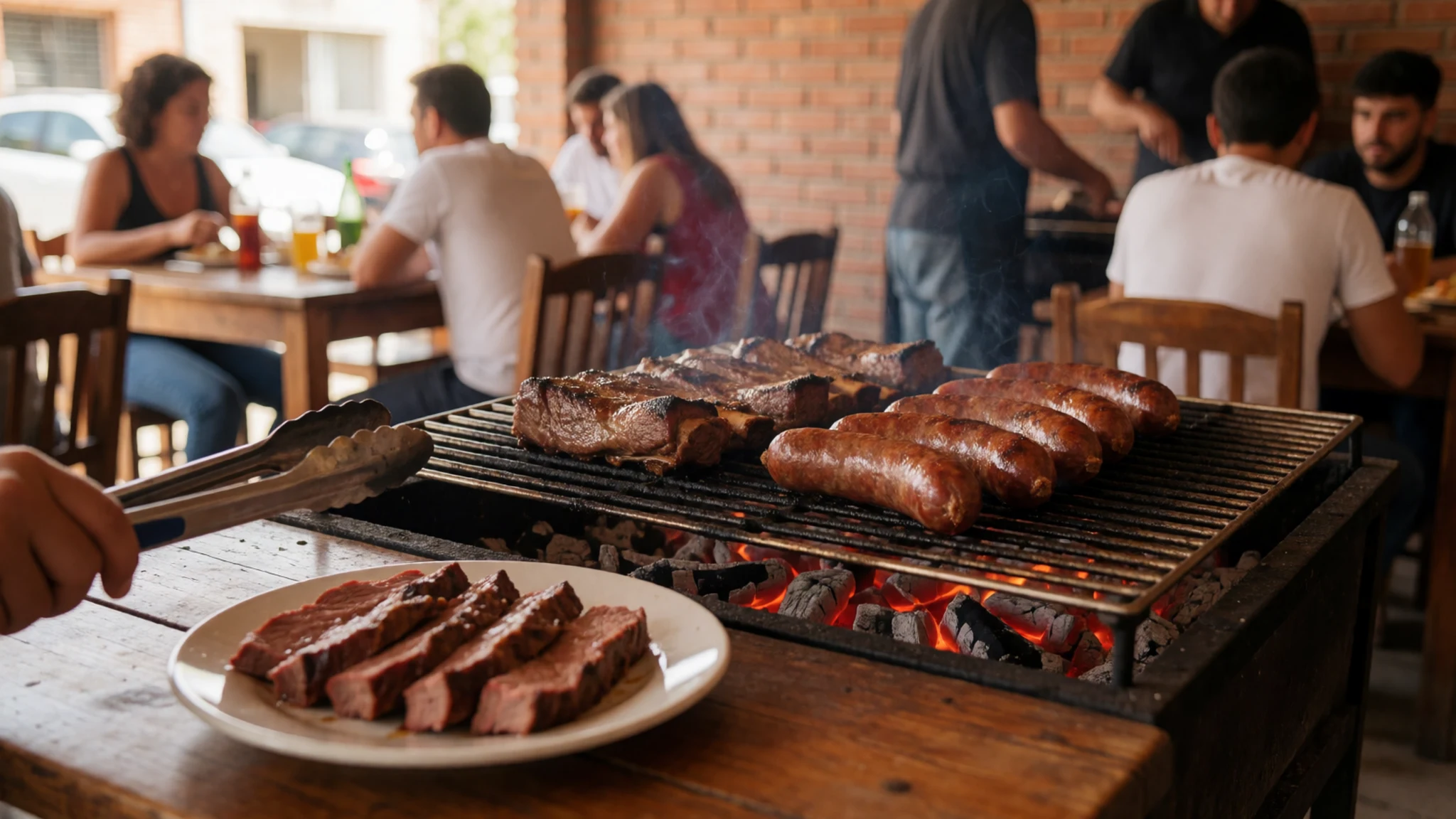
- Chivito — Cafés and snack bars in Rocha town
A towering sandwich of thin steak with ham, cheese, lettuce, tomato and often egg, usually served with chips. It is filling enough to count as a full meal, and a sensible lunch before or after a long walk by the lagoon.
- Milanesa — Everyday family-style eateries and lunch counters
A breaded, fried cutlet of beef or chicken, served plain, with chips or a fried egg on top. It is simple, cheap by local standards and found almost everywhere, which makes it a reliable choice when little else is open. - Fresh fish and seafood — Fish restaurants in La Paloma and other coastal towns
The Atlantic coast supplies fish and shellfish, typically grilled, fried or baked, with lemon and a simple salad. Choose places that list the catch of the day, and ask what is local and in season rather than assuming. - Alfajores and dulce de leche sweets — Bakeries and corner shops
Soft biscuits sandwiched with dulce de leche, a caramelised milk spread, and sometimes coated in chocolate or dusted with coconut. They travel well, so a few in a daypack make a good snack for the lagoon trail.
Plan it
Best time. November to March, the warmer southern-hemisphere spring and summer, when long days suit walking, birdwatching and the beach. Wind and sun are strong on the open shore in any season, and the sea is unsupervised, so choose calm days for swimming.
How long. 1–2
Getting there. Fly into Montevideo's international airport, then take a bus to Rocha town; services leave Montevideo often and the journey takes about 3 hours. Taxis wait at the Rocha bus terminal for the short ride to the lagoon. By car, drive east from Montevideo along the coastal Interbalnearia road for about 3 hours to Rocha, then follow the signed road south for roughly 20 km to the park entrance.
Budget. low
Tips
- Base yourself in Rocha town, where the nearest places to stay are, and make the lagoon a day trip
- Go early or late in the day for the best bird activity and softer light
- Carry water, food, sun protection and cash, because the park has no developed facilities
- Check the official park information through SNAP, Uruguay's protected-areas agency, for any current access rules before you set out
- If camping, bring everything you need, as no campsites are provided
Etiquette
- Stay on marked paths and keep your distance from nesting birds
- Take all rubbish away with you
- Do not swim at the barrier beach unless conditions are calm, as no lifeguards are on duty
Nearby
Sources
- Wikidata Q5969233 (CC0)
- Wikipedia: Laguna de Rocha (rev 1366075097) (CC BY-SA 4.0)
- Wikivoyage: Laguna de Rocha (rev 5087917) (CC BY-SA 4.0)
- Photo: Laguna de Rocha, Rocha, Uruguay, snap (Pablofor) (CC BY 3.0)
- Photo: Uruguay topographic location map (GrandEscogriffe) (CC BY 4.0)
- Photo: South America relief location map (Uwe Dedering) (CC BY 3.0)
- Photo: Tero real, Laguna de Rocha, Uruguay (Okta30) (CC BY 3.0)
- Photo: A orillas de la laguna (Jovarca) (CC BY 3.0)
- Photo: A tus orillas (Yoanna Silvera) (CC BY 3.0)
- Photo: Agua, arena, vegetación (Diegoseba19912015) (CC BY-SA 4.0)
- Photo: Aguardando, Cabo Polonio (Jovarca) (CC BY 3.0)


Wildlife
- Chilean flamingo (animal)
Among the more than 200 bird species recorded at Laguna de Rocha, the Chilean flamingo is a favourite: a large wader, lighter in colour and smaller than its close relatives. Look for it wading in the water. When to see it is not recorded here, so ask a guide. Keep back, speak softly and never feed it. It is Near Threatened, so calm, respectful watching really matters. - Cocoi heron (animal)
The cocoi heron is a tall, long-legged wader with pale grey feathers and a darker grey crest. At Laguna de Rocha it wades the shallow water, hunting fish and crustaceans. Season and time of day are not recorded here, so ask your guide. Keep your distance, stay quiet and still, and let it hunt undisturbed. Never feed it; it finds its own meals perfectly well. - Chilean flamingo (bird)
Among the more than 200 bird species recorded at Laguna de Rocha, the Chilean flamingo is a favourite: a large wader, lighter in colour and smaller than its close relatives. Look for it wading in the water. When to see it is not recorded here, so ask a guide. Keep back, speak softly and never feed it. It is Near Threatened, so calm, respectful watching really matters.