Piriápolis
Piriápolis, Uruguay
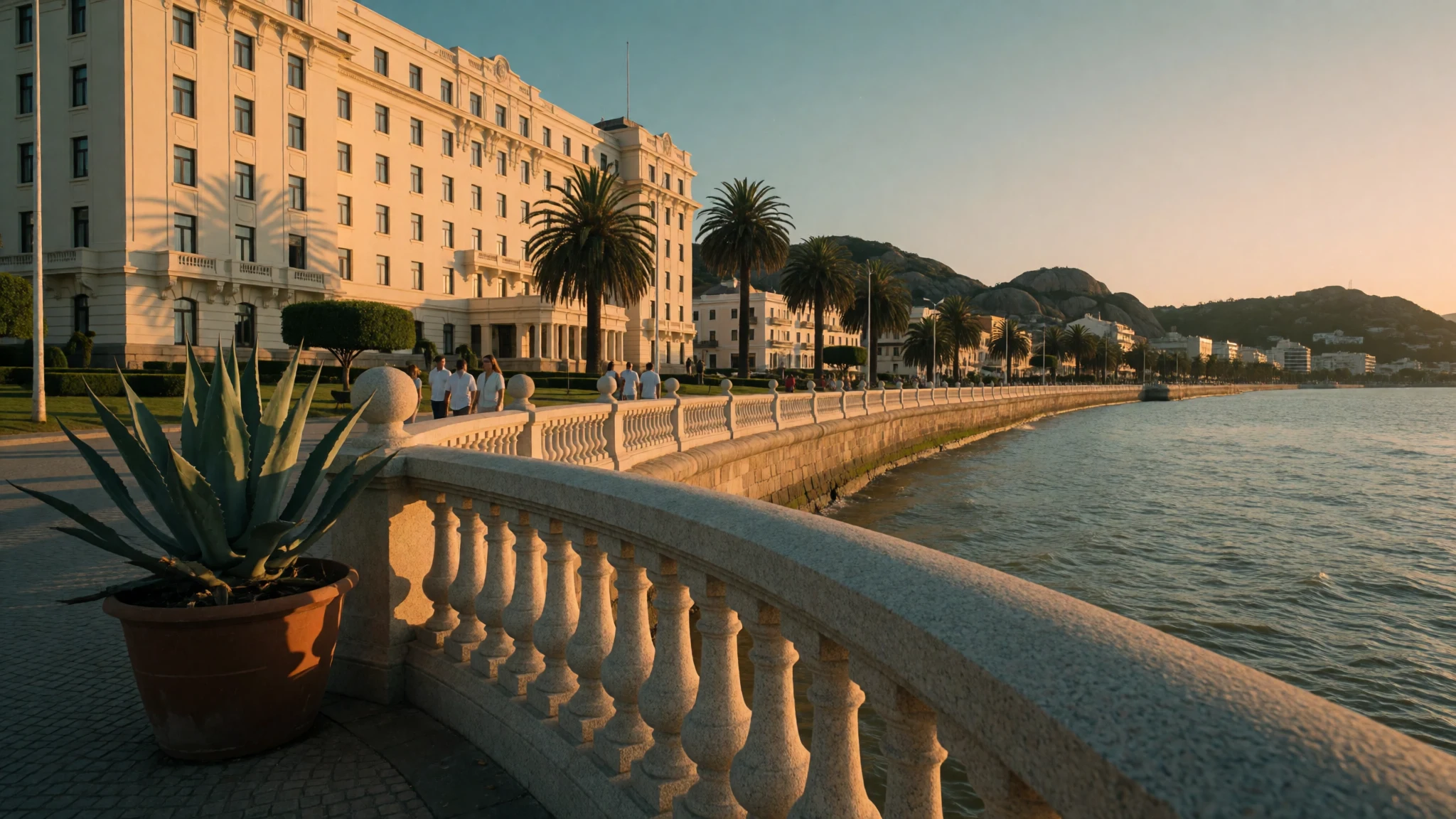
Piriápolis is an unhurried Uruguayan beach resort of granite hills, a long seafront promenade and one eccentric founder's castle, calmer than Punta del Este.
The place
Piriápolis is a seaside city in Uruguay's Maldonado Department, home to 12,144 people year-round and many times that in high summer. It sits only 17 m above sea level on the Río de la Plata, where the water is more brown-green than ocean blue, the beaches are broad and gently shelving, and granite hills rise almost directly behind the town. Within minutes of the promenade the streets give way to scrub and rock, which gives the resort a compact, walkable feel. The municipality is wider than the city itself and strings together a run of beach districts, among them Playa Grande, Playa Hermosa, Playa Verde and Punta Colorada, plus hill settlements such as Sierras del Tirol. The centre is organised around the marina, the casino, the bus station and a long seafront avenue, the Rambla de los Argentinos. Piriápolis lies roughly two hours by road east of Montevideo, so it works as a day trip for people from the capital as well as a base for a few quiet days. Its character is family-minded and unhurried. It is often described as a calmer cousin of Punta del Este, with fewer smart restaurants and clubs, and it suits couples and older travellers as readily as families. Seasons matter a great deal. The resort is busy from December to March, and in the low season crowds and prices fall sharply, some seasonal sights close, and the promenade belongs to dog walkers and people carrying thermos flasks for mate.
Its story
Piriápolis exists because of one businessman, Francisco Piria, who bought a huge stretch of land running from the inland hills down to the shore. It took in Cerro Pan de Azúcar, Cerro San Antonio and Cerro del Toro, and Piria saw it as the site of a planned holiday town. The settlement was founded in 1893 under the name El Balneario del Porvenir, the Resort of the Future, and the town later took his own name. He then built to a grand scale. His private residence became the castle that still stands inland from the town. A first large hotel was later converted into a school holiday colony. He laid out the seafront avenue named for Argentine visitors, and he added the Argentino Hotel, a building of a size few in South America matched at the time. A cathedral was also begun, though the church reportedly wanted nothing to do with it because of rumours linking Piria to the Freemasons. After his death, disputes among his heirs followed, and the town developed more slowly and more modestly than he had imagined. Official recognition came in stages: first as a village, and then, in the middle of the twentieth century, as a city. What visitors walk through today is largely his plan, softened by decades of ordinary holiday habits.
What to see
- Cerro San Antonio — Above the marina
Cerro San Antonio is the hill above Piriápolis and the easiest way to grasp the town's layout of beach, marina and granite ridges. Open chairlift seats, the sillitas, climb from the marina, or a taxi or long walk will do. On clear days Punta del Este shows along the coast. Stay for sunset, the chapel and the souvenir shop.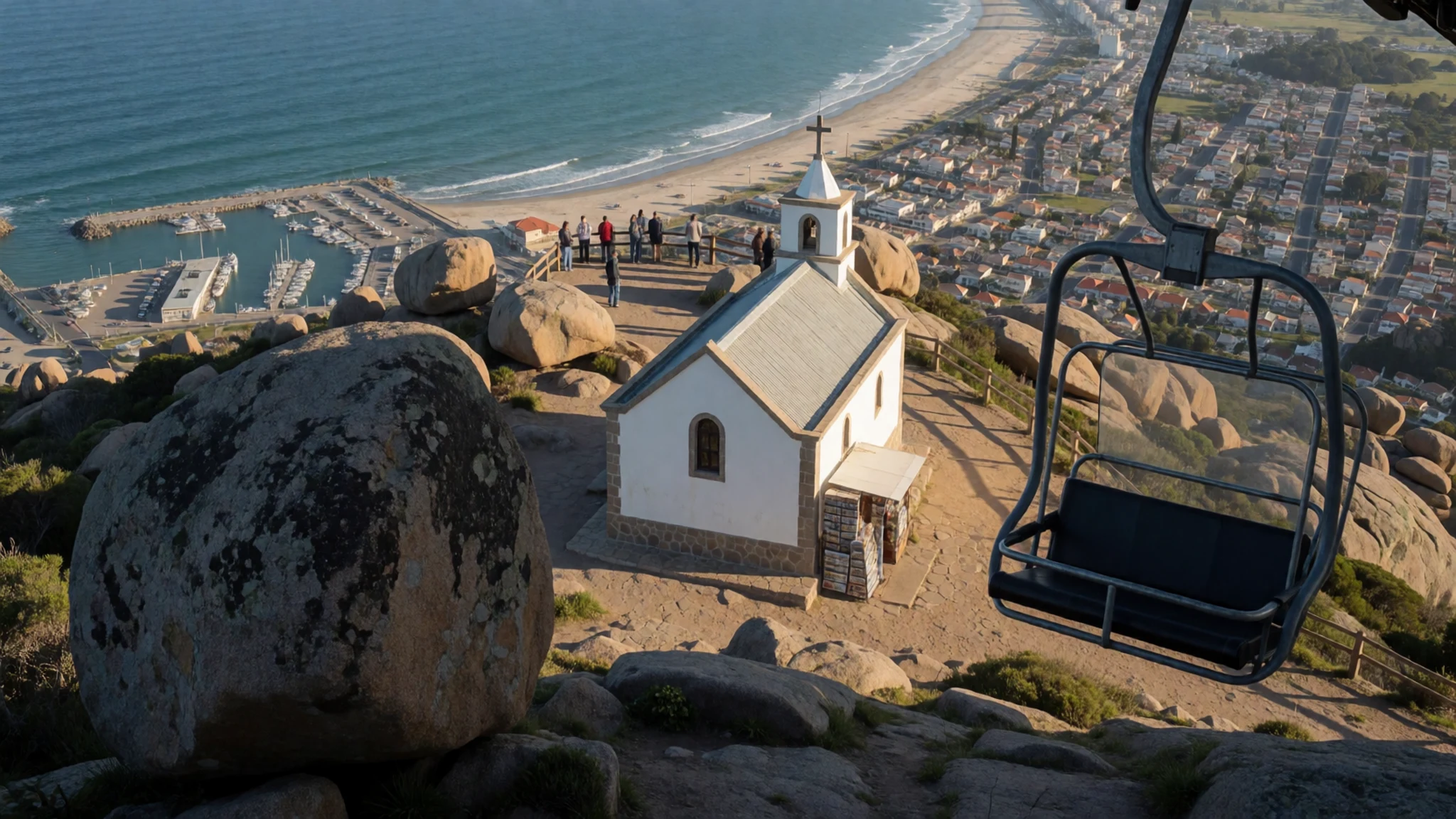
- Castillo de Piria — Inland, north of the town centre
Piria's Castle, the founder's own house, stands a short drive inland from the casino. Whether it reads as a very big house or a small castle is a matter of taste, but it is an odd and characterful piece of local history. Many residents have apparently never been inside, so it rarely feels crowded.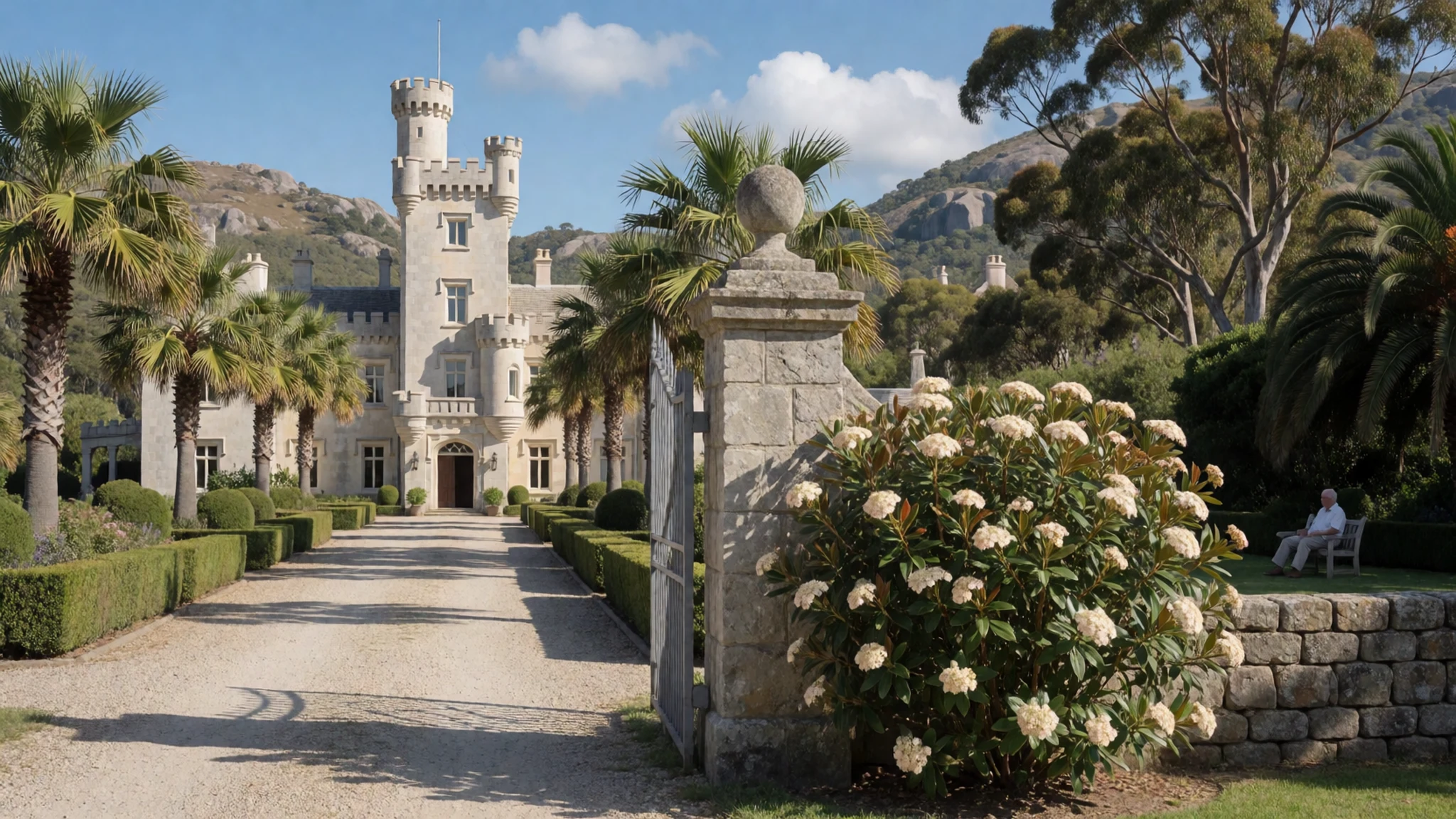
- Argentino Hotel and the Rambla — Seafront, central Piriápolis
The Argentino Hotel is the grand old building on the seafront, a reminder of how ambitious Piria's plans were. It still offers old-style luxury, with saltwater pools and a spa, though it is pricey by Uruguayan standards. A railway museum opposite its eastern face opens in summer only. The Rambla is the place for evening strolls.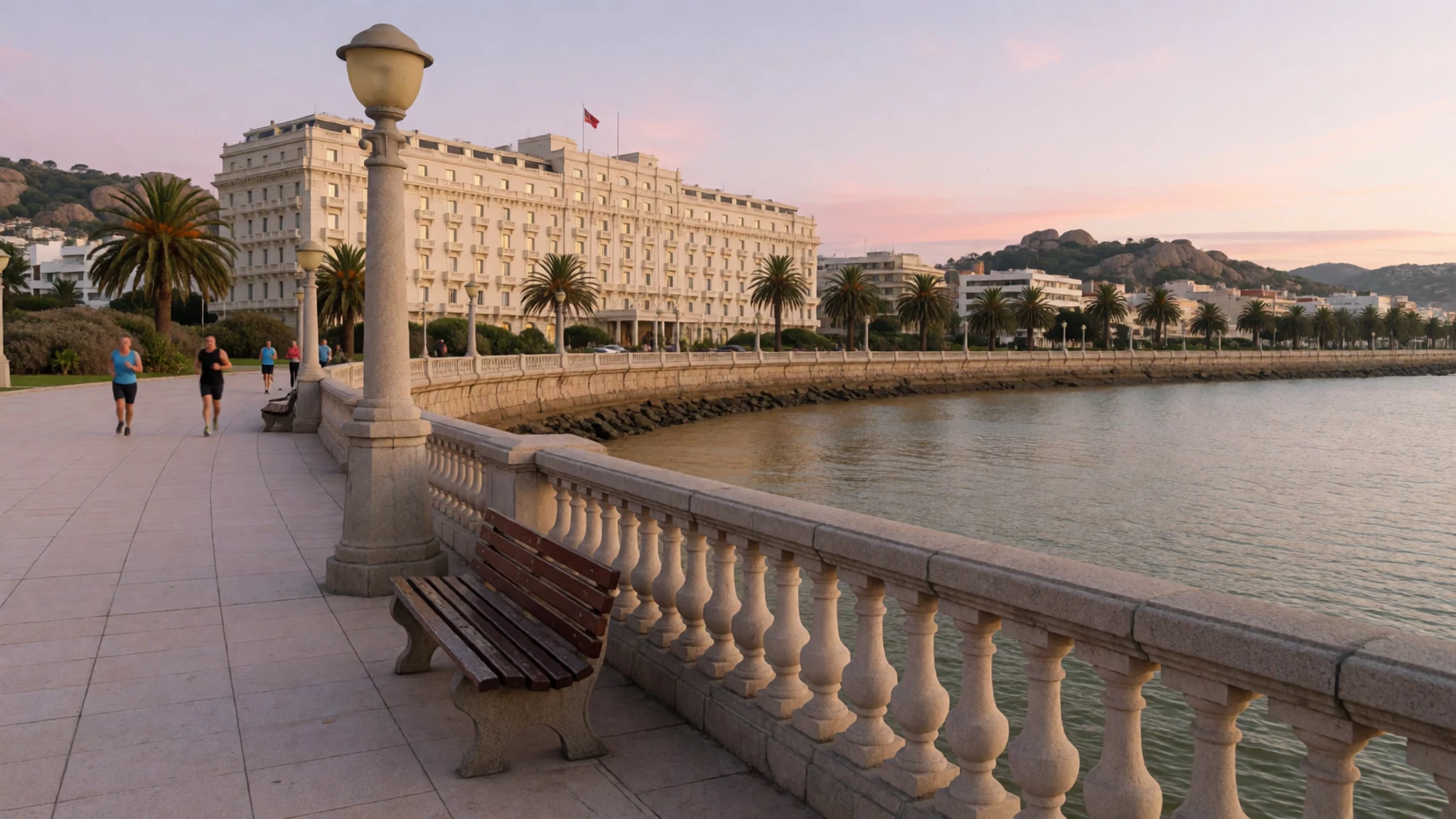
- Catedral de Piria — North of the centre
The ruined Catedral de Piria is a roofless shell on the hillside north of the centre, built by Piria for a church that declined to take it on. Only ruins remain, but the front is remarkably well preserved and photographs well in afternoon light. It is a quiet, short detour, without facilities.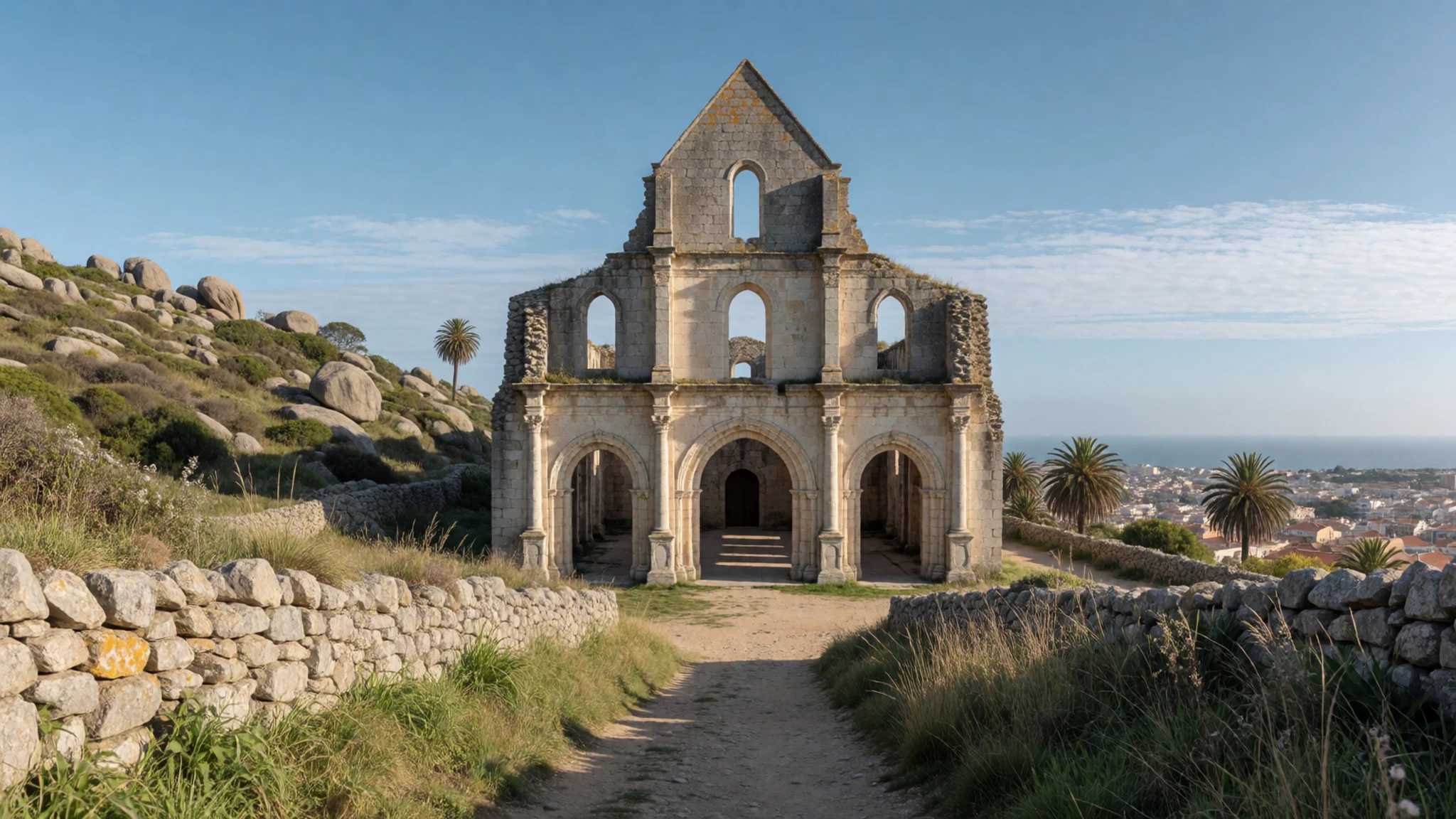
- Cerro del Toro — Outskirts, east of the centre
Cerro del Toro is a lower and less showy hill than San Antonio, but the return hike takes a couple of hours and rewards the effort with wide views over the coast. It lies on the edge of town, close enough to the sea to keep the shoreline in sight. Bring water and sturdy shoes, and avoid the midday heat.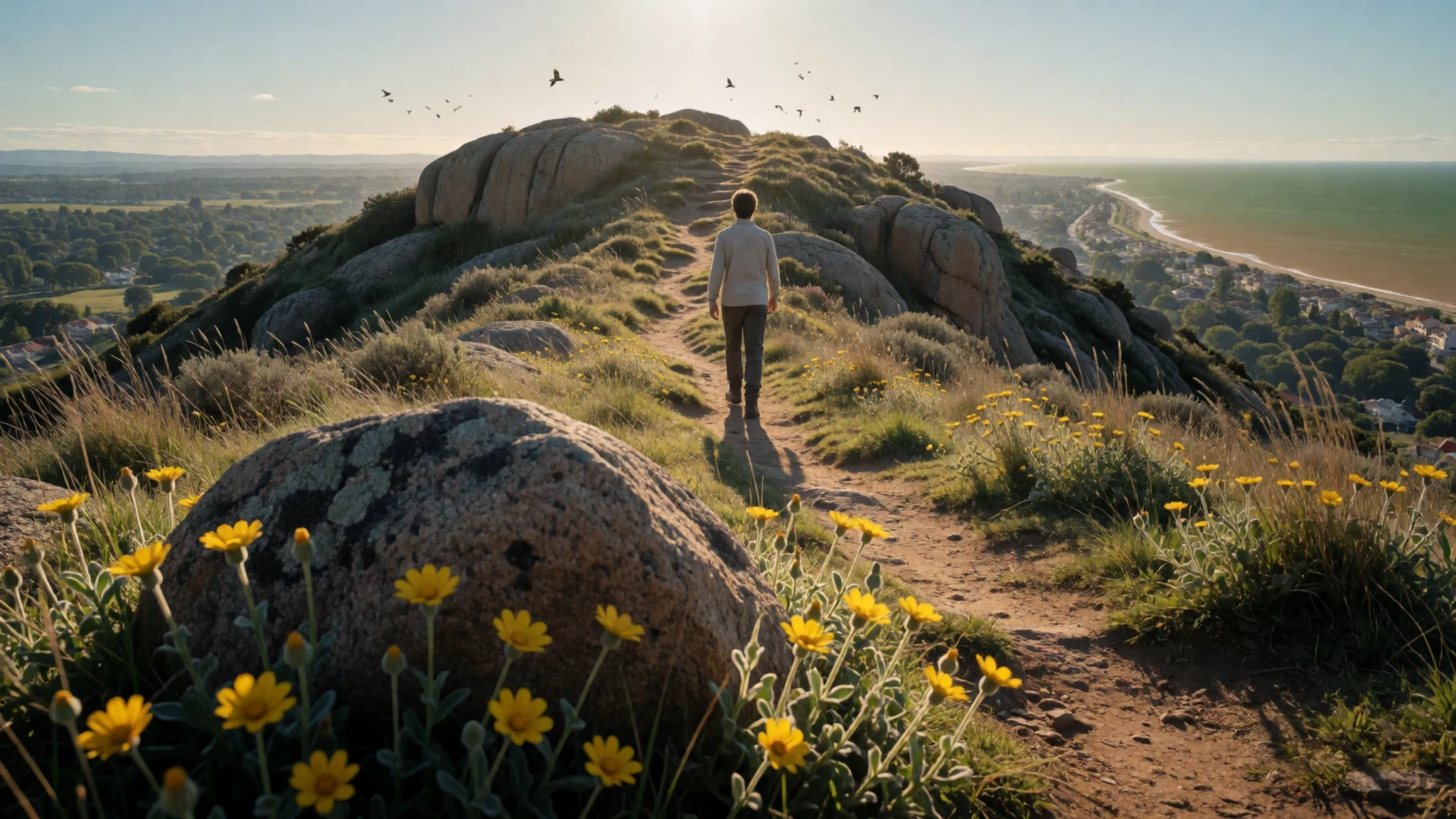
Culture
Piriápolis has the culture of a Río de la Plata holiday town, where the day is organised around the beach, the mate gourd and long meals. A walk along the Rambla at dusk, thermos tucked under one arm, is the main evening entertainment, and families, couples and older residents all take part. Mate, a bitter herbal infusion, is passed around in a single shared gourd and topped up from the thermos by whoever is serving, who pours for each person in turn. Meals follow Italian-influenced habits: coffee comes after food rather than before, seafood at the marina is eaten slowly, and nobody hurries a table. Nights start late, with the discos barely stirring before midnight. The name of the seafront avenue nods to the Argentine holidaymakers who have long been part of the summer crowd. The resort's past gives local conversation an eccentric streak too, from Francisco Piria's taste for theatrical buildings to the story of the cathedral the church refused. Out of season, Piriápolis turns quiet and residential, and the pace slows further. Drinking is relaxed but tied to meals; sipping alcohol on the street or before lunch is seen as rude rather than illegal. If someone passes you the mate gourd, drink it right down before handing it back, and say "gracias" only when you want no more.
What to wear
Piriápolis has no town costume of its own; the traditional dress of Uruguay is the gaucho outfit of the pampas, and it appears here mainly at rural fairs, folk festivals and in souvenir shops. Its parts are bombachas de campo, loose cotton or twill trousers gathered at the ankle; a wool poncho or heavy cloth jacket against the wind; a flat boina beret or wide-brimmed hat; a woven sash at the waist; and alpargatas or leather boots. Day to day, the resort dresses for the beach: swimwear, linen shirts, shorts, sandals and sunglasses in summer, with a light jumper or windcheater for evenings on the Rambla. Locals tend to dress a little smarter for dinner and the casino, though nothing is formal. In the cooler months, fleece, scarves and jackets are common, and the wind off the river makes layers sensible. For a visitor: pack light, breathable clothes, a hat, sun cream and a wrap or sweater for after dark. Sandals suit the promenade, but sturdy closed shoes or trainers are better for the loose rock on Cerro San Antonio and Cerro del Toro. There are no strict modesty rules, though a shirt or cover-up over swimwear is the polite choice in cafés and restaurants.
What to eat
- Brick-oven pizza — Seaside restaurants along the Rambla
Pizza from a brick oven is a staple of the Italian-influenced Uruguayan table, with a thick, chewy base and plenty of cheese. It suits a relaxed evening after the beach, often shared among a group and eaten without hurry.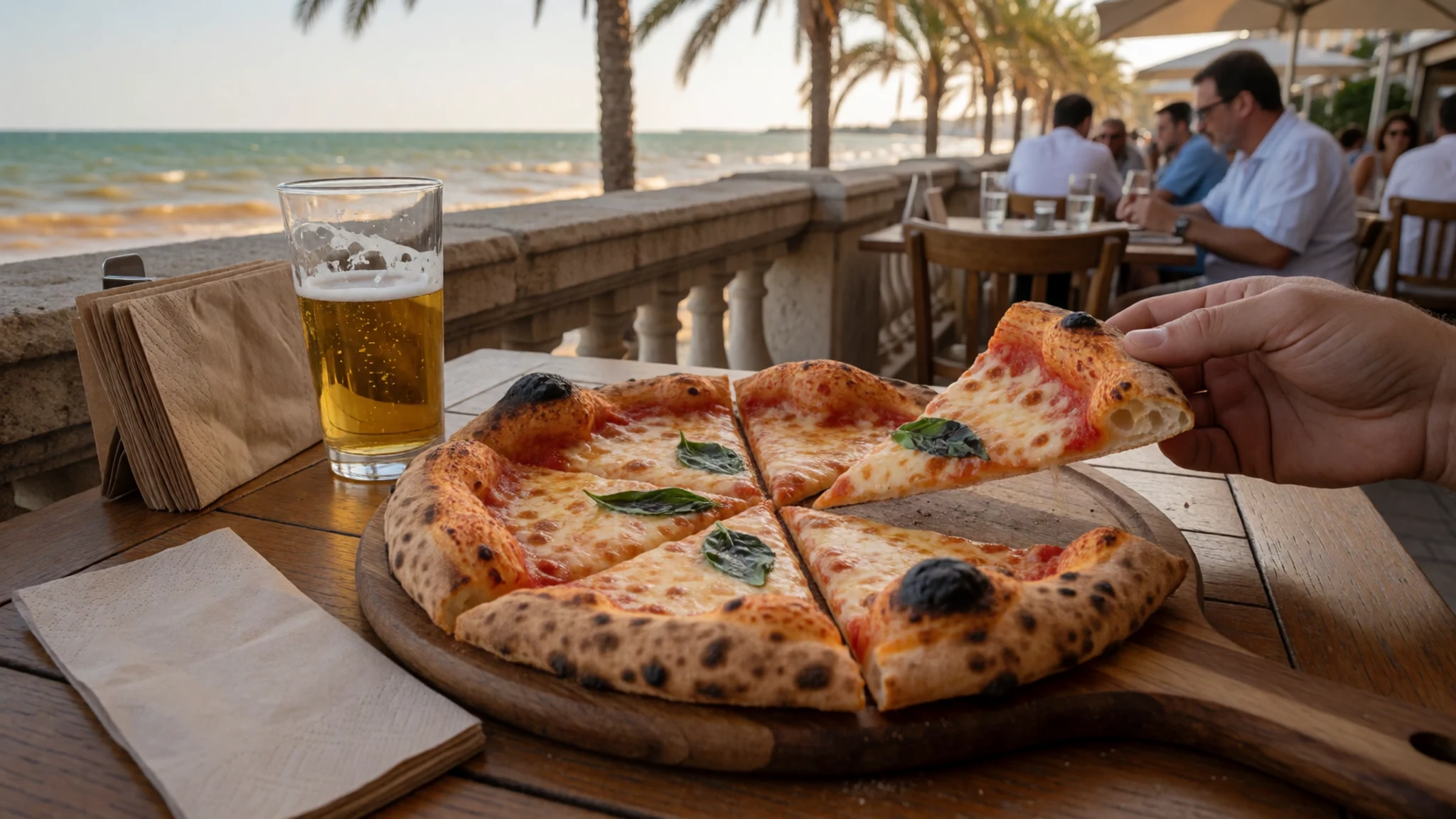
- Chivito — Seaside restaurants and snack bars
The chivito is Uruguay's famous sandwich, built on finely sliced beef in a soft bun with toppings that usually include cheese, ham, egg and salad. It is filling enough to count as a full meal, and the beach town versions are a reliable lunch.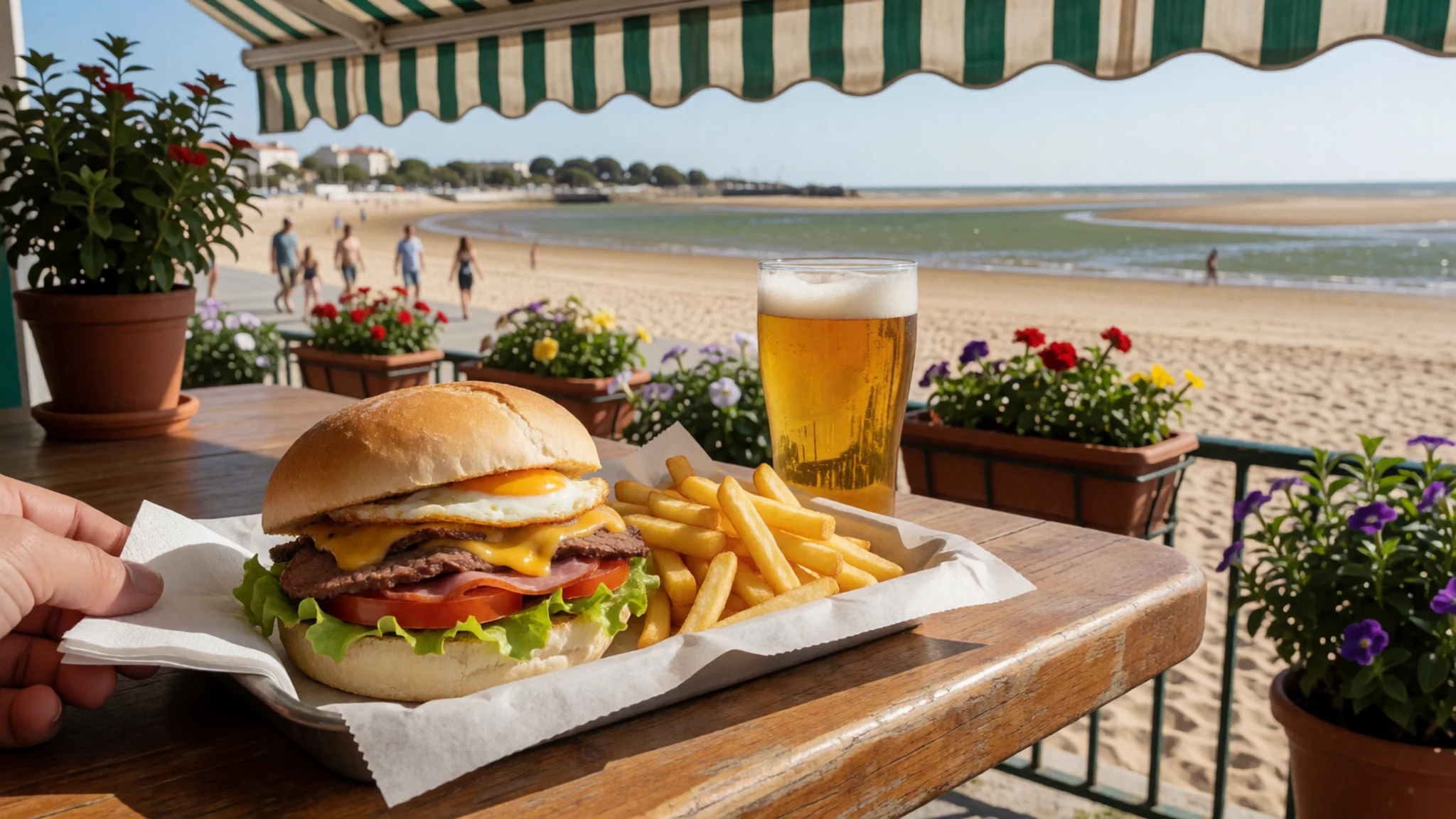
- Marina seafood — The marina and harbour area
Fish and shellfish are best eaten where they are landed. The marina area has several restaurants and simple stalls serving grilled or fried catch of the day, often with chips or salad. Allow plenty of time, because meals here are leisurely. - Medialuna with cortado — Bakeries and cafés in the town centre
A medialuna is a soft crescent pastry, similar to a croissant, sometimes filled with ham and cheese. Pair it with a cortado, a coffee cut with a little milk, for the standard local breakfast. Expect a simple continental spread rather than cooked breakfasts. - Mate — The Rambla, the beach and public squares
Mate is less a dish than a daily ritual: a bitter herbal infusion sipped through a metal straw from a shared gourd. Residents carry it along the seafront in the evening. Visitors are often invited to try it, so accept a turn at least once.
Plan it
Best time. December to March for beach weather and the full run of restaurants, nightlife and seasonal sights, though January is the busiest. Late November and March are calmer shoulder months. In the low season crowds and prices fall sharply, but some places close and evenings are cool and windy.
How long. 2–3
Getting there. Fly into Montevideo's airport, then take a bus from the Tres Cruces terminal; buses run roughly hourly by day in high season, and direct services take under two hours. Punta del Este's airport is much closer to Piriápolis but has limited flights, mostly in summer from Buenos Aires and Brazil. By car, take the Ruta Interbalnearia from Montevideo, then turn off for Piriápolis.
Budget. mid
Tips
- Climb Cerro San Antonio on a clear afternoon and stay for sunset
- Book summer weekends and the Argentino Hotel well ahead
- Visit the tourist office by the casino or within the bus station for maps, tours and current opening times
- If driving, carry local currency for the tolls on the Interbalnearia
- Do not expect nightlife to start before midnight; dinner is late too
Etiquette
- Drink alcohol with meals or in eating areas, not on the street or before lunch
- Accept the mate gourd when offered, and drink it through before passing it back
- Allow plenty of time for meals and do not rush the table
Nearby
Sources
- Wikidata Q1006155 (CC0)
- Wikipedia: Piriápolis (CC BY-SA 4.0)
- Wikivoyage: Piriapolis (CC BY-SA 4.0)
- Photo: Vista general de la ciudad de Piriápolis desde el Cerro San Antonio (CITY MVD) (CC BY 3.0)
- Photo: Piria's Castle (Daniel Bertúa) (CC BY 2.5)
- Photo: Argentino Hotel during the 2008 Piriápolis Grand Prix (NaBUru38) (CC BY 3.0)
- Photo: Panoramic view of Piriápolis (Alberto) (CC BY 2.5)
- Photo: Punta colorada desde el cerro San Antonio (Adriana Peralta) (CC BY 3.0)
- Photo: Piriápolis sunset (Alexandre Pereira) (CC BY-SA 2.0)
- Photo: Breakwater (Marcelo Campi) (CC BY 3.0)
- Photo: Cerro San Antonio (nicolas badel) (CC BY 3.0)


