Grutas del Palacio
Grutas del Palacio, Uruguay
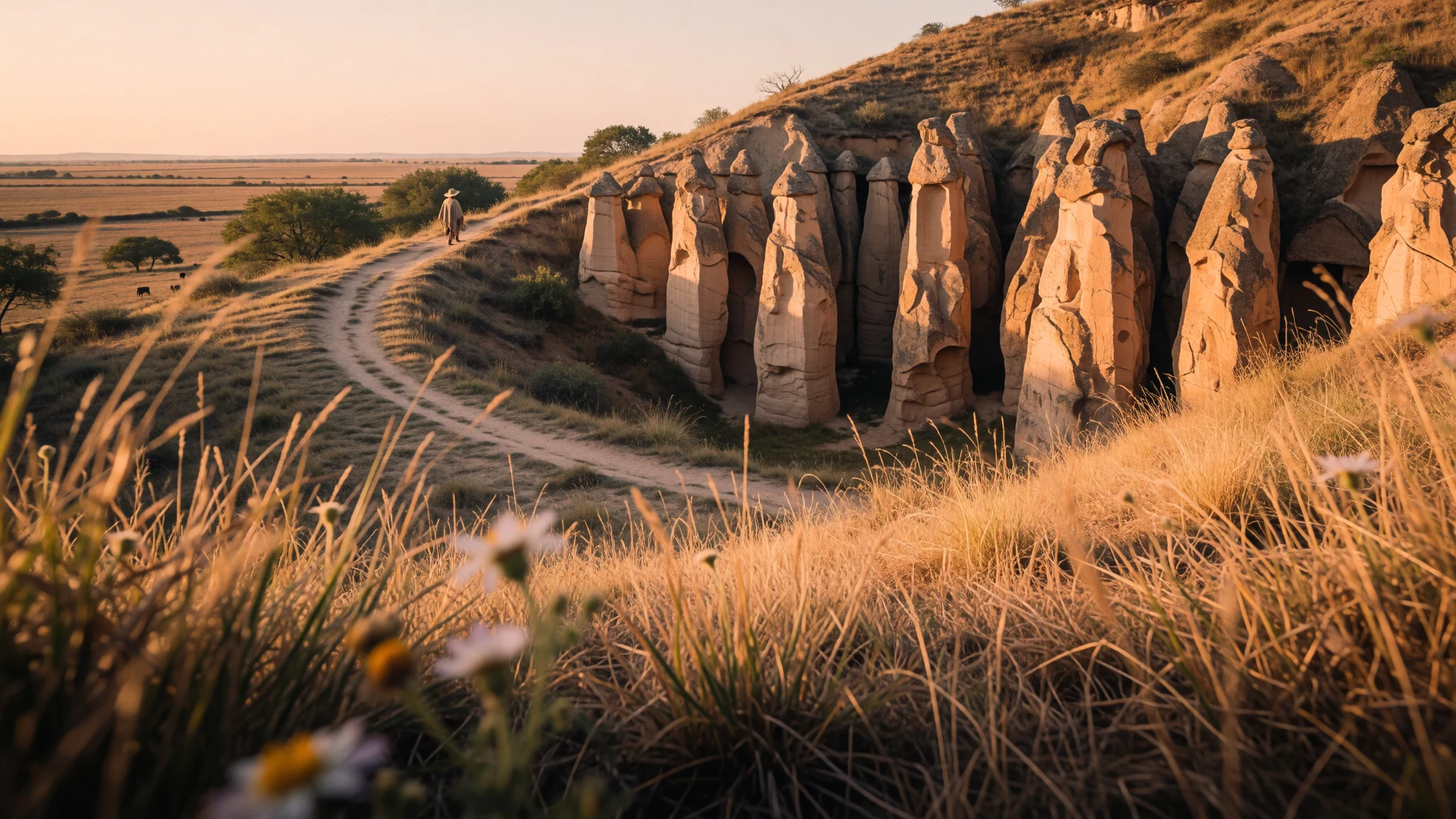
Grutas del Palacio is a sandstone cave in Uruguay's quiet farming heartland, shaped by erosion into pillars and a story written in rock.
The place
Grutas del Palacio (the Palace Cave) sits in Flores Department, in the interior of Uruguay, not far from the town of Trinidad. This is not the Uruguay of the beach resorts. The country is mostly low-lying, and Flores is open farm country where cattle outnumber people and the horizon is wide and flat. Against that backdrop, a cave in sandstone comes as a surprise, and it is the reason this stretch of countryside draws visitors from well beyond the department.
The cave was carved by erosion, and the result is a set of oddly shaped stone columns rather than one smooth chamber. Local descriptions speak of polymorphic columns, which simply means pillars of many forms. The sandstone was hardened with iron compounds long ago, which is why the standing rock has survived while softer material wore away around it.
Because the site is in the interior, reaching it takes a little planning. Most people base themselves in Trinidad or come on a longer loop through the middle of the country, joining the cave with estancias (ranches) and small towns. It is a short visit rather than a full-day destination, so it suits a stop on a road trip better than a journey built entirely around it.
The wider country is small, calm and unhurried. The name Uruguay is usually explained as river of the colourful birds, and the interior still feels more like grass, wind and birdsong than anything urban. Summer afternoons can be hot, and the ground around the cave can turn muddy after rain, so the season shapes the experience as much as the rock does.
Its story
Grutas del Palacio is a story told in sandstone. The rock around the cave dates to the Late Cretaceous, and it was later hardened by iron-bearing minerals during the Paleocene. Erosion then did the sculpting, wearing away the weaker material and leaving tougher columns standing in odd shapes. What visitors walk among is the slow work of water and time on a very old seabed-and-river landscape.
Scientific attention came in 1877, when the cave was first studied. In the early twentieth century a researcher, Dr Karl Walter, explored it further. Those early accounts placed a farmland hollow on the map of Uruguayan geology, in a region far better known for livestock than for caves.
In more recent years the cave has been at the centre of a geopark proposal. A geopark is a way of protecting a landscape for its geology and presenting it to the public as a whole, rather than as one isolated attraction. UNESCO has been considering the area as a possible World Heritage Site on the strength of that geopark interest. A decision is not something to assume, so the place is best treated as a prospect for listing rather than a settled status.
The cave also appears on the coat of arms of Flores Department. For a district of ranches and small towns, that is a telling choice: the Palace Cave is the one natural landmark local people picked as their emblem, and it still carries that weight of local pride today.
What to see
- The cave and its columns — Flores Department
The cave itself is the reason to come: erosion has left sandstone columns of mixed shapes standing in and around a hollow in the hillside. Allow time to walk slowly round the openings rather than rushing in. The light changes the colour of the rock, and patience pays off for photographs.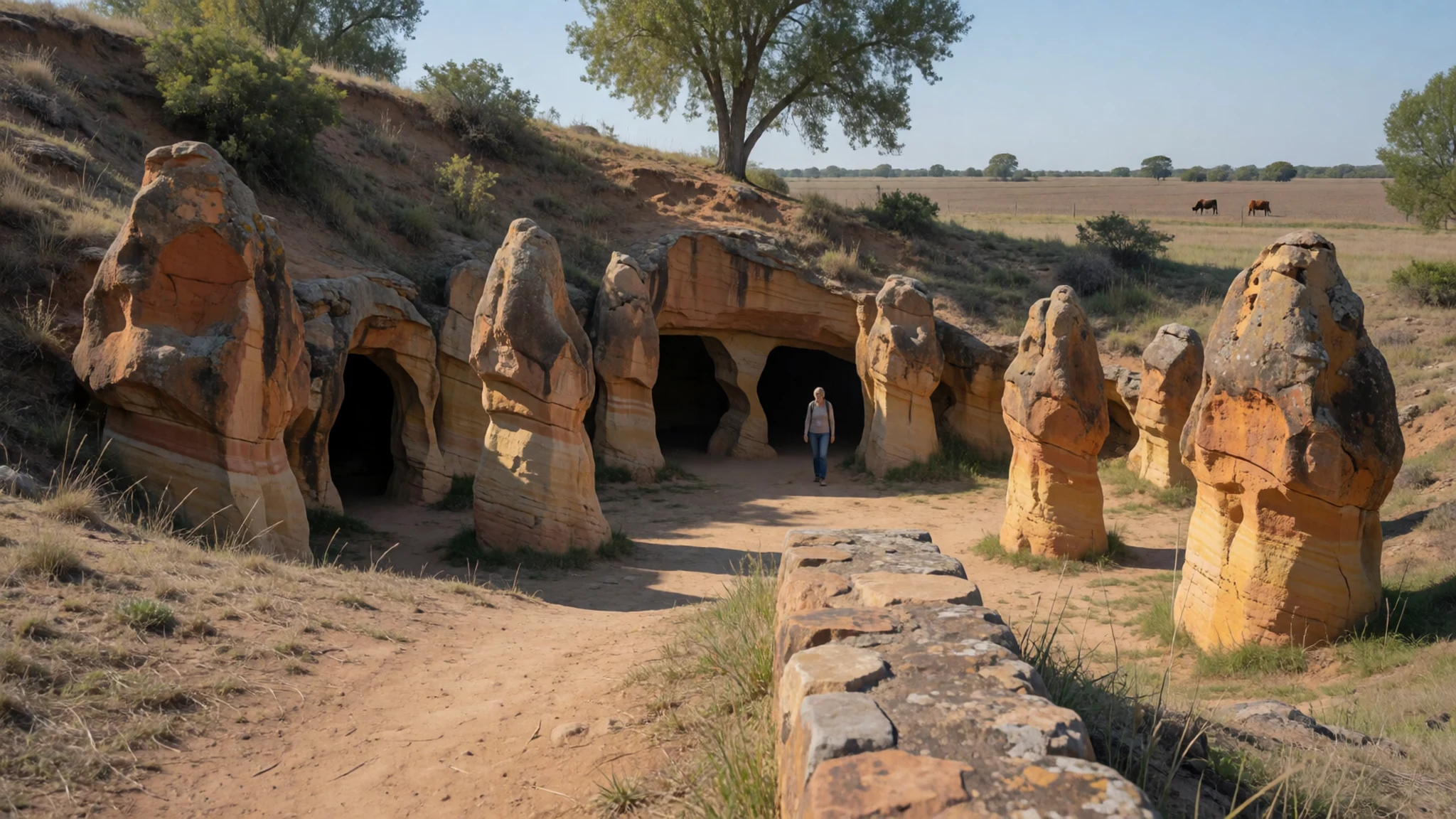
- The standing pillar — Flores Department
One of the free-standing pillars works well as a single study, with the cave wall behind it. Step back to take in its full height and how different it looks from its neighbours. Stone that appears solid has been shaped by water over a very long time, so keep a respectful distance.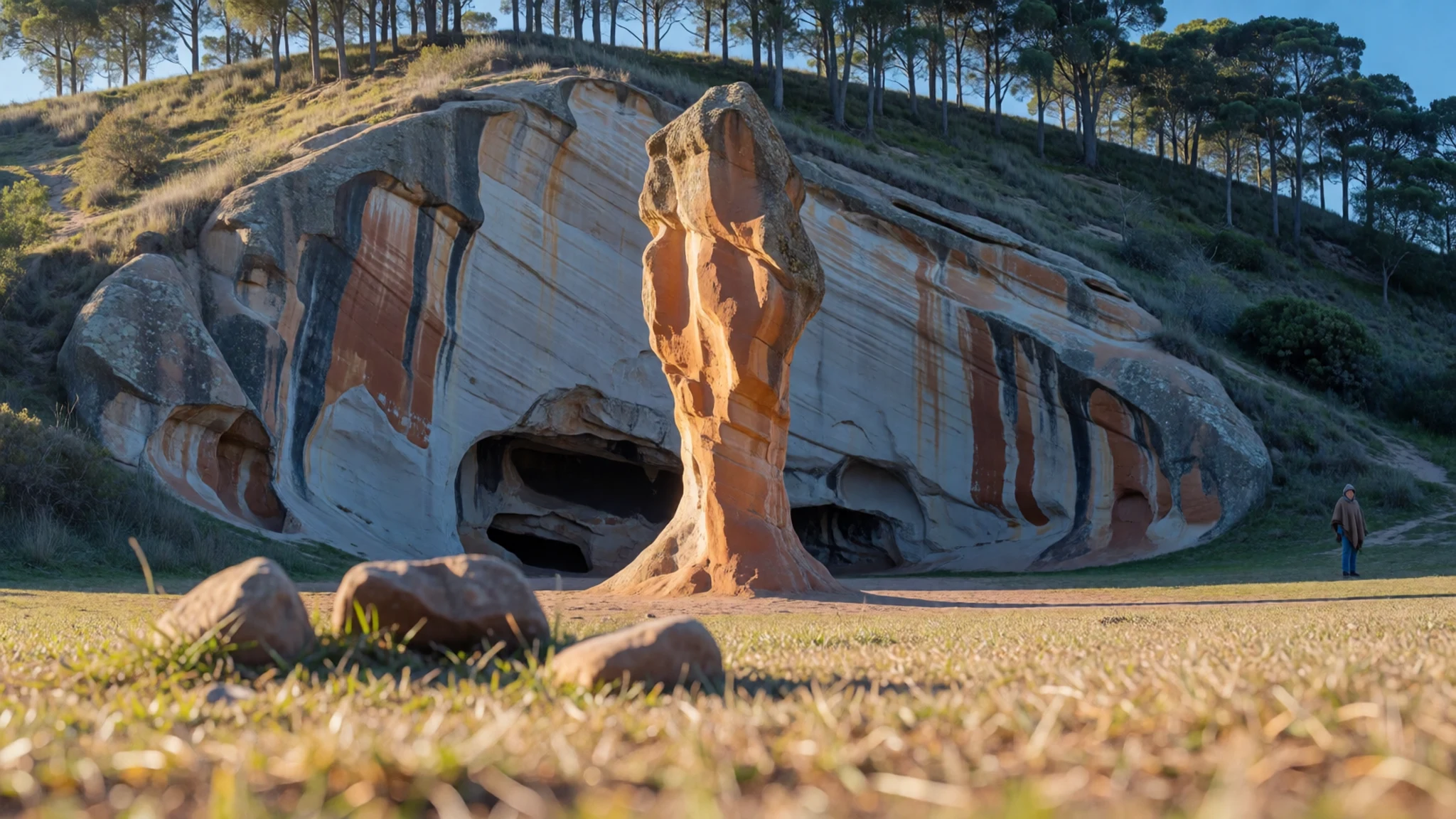
- Light and shadow at the opening — Flores Department
The contrast between dark hollows and bright open ground repays a few quiet minutes. The mouth of the cave is a good place to watch shadows move, especially in the low sun of early morning or late afternoon, when the rock takes on warmer tones and the farmland beyond glows.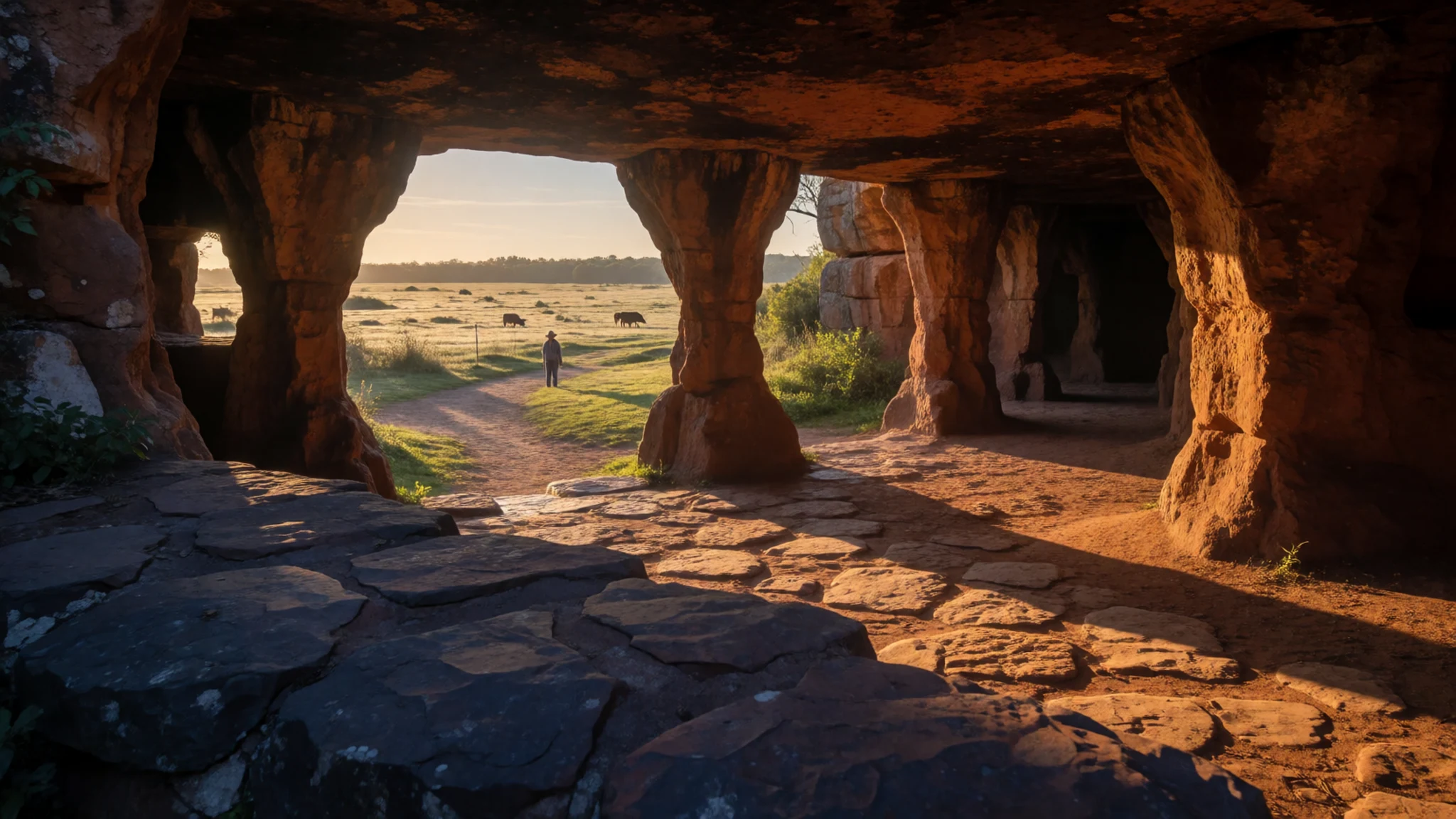
- The tree-lined approach — Flores Department
The approach passes under trees, and the walk in is half the pleasure. Flores is open farmland, so shade and birdsong feel unusual. Autumn brings changing leaves along the route; summer brings welcome cover from the sun. Footwear that copes with mud after rain is worth packing.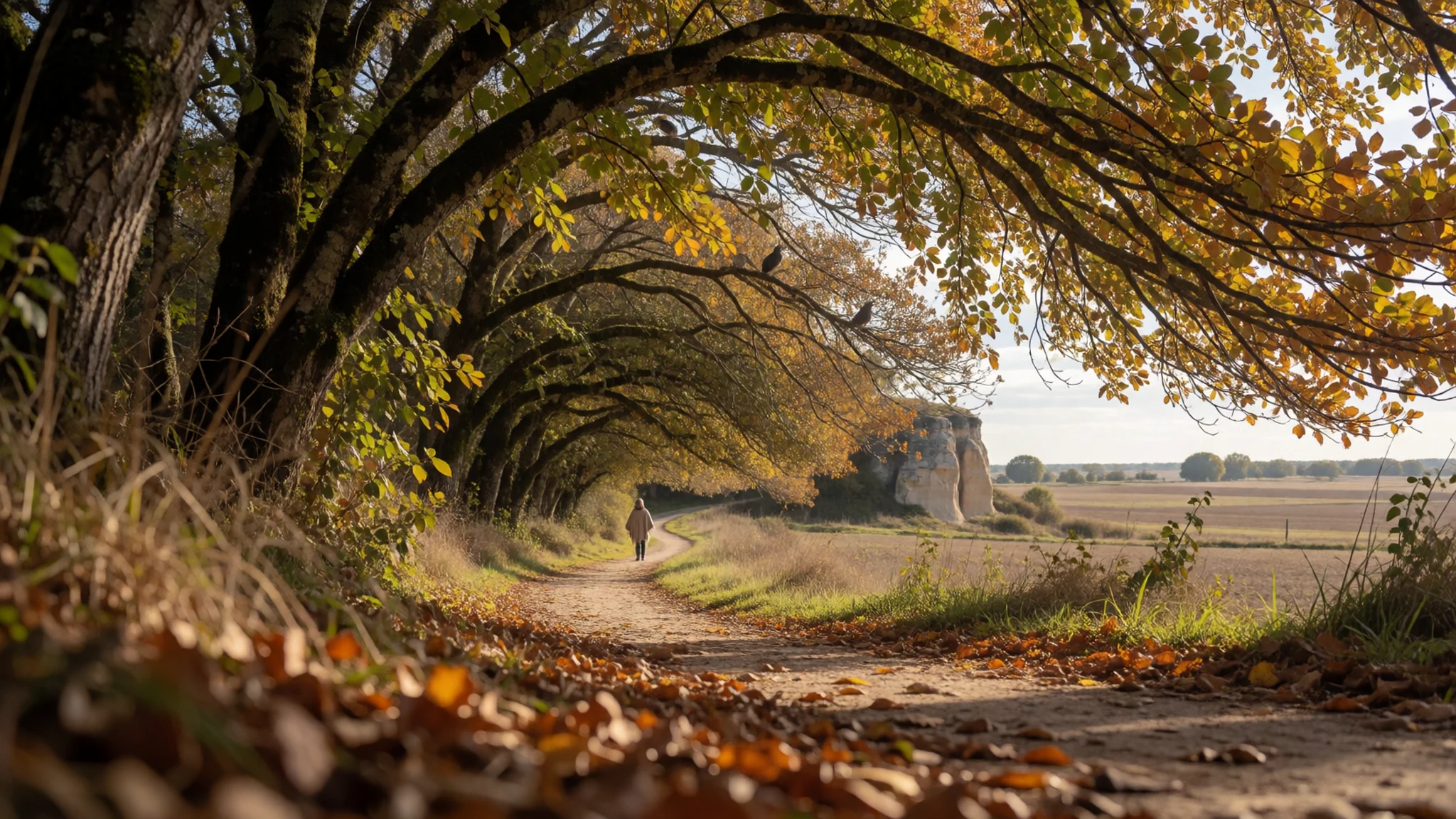
- Trinidad — Trinidad, Flores Department
Trinidad, the nearest town, is a calm base and a sensible place to ask about conditions at the cave before setting out. It is the practical choice for meals, shopping and onward buses, and locals are usually glad to point visitors towards other sights and ranches in the department.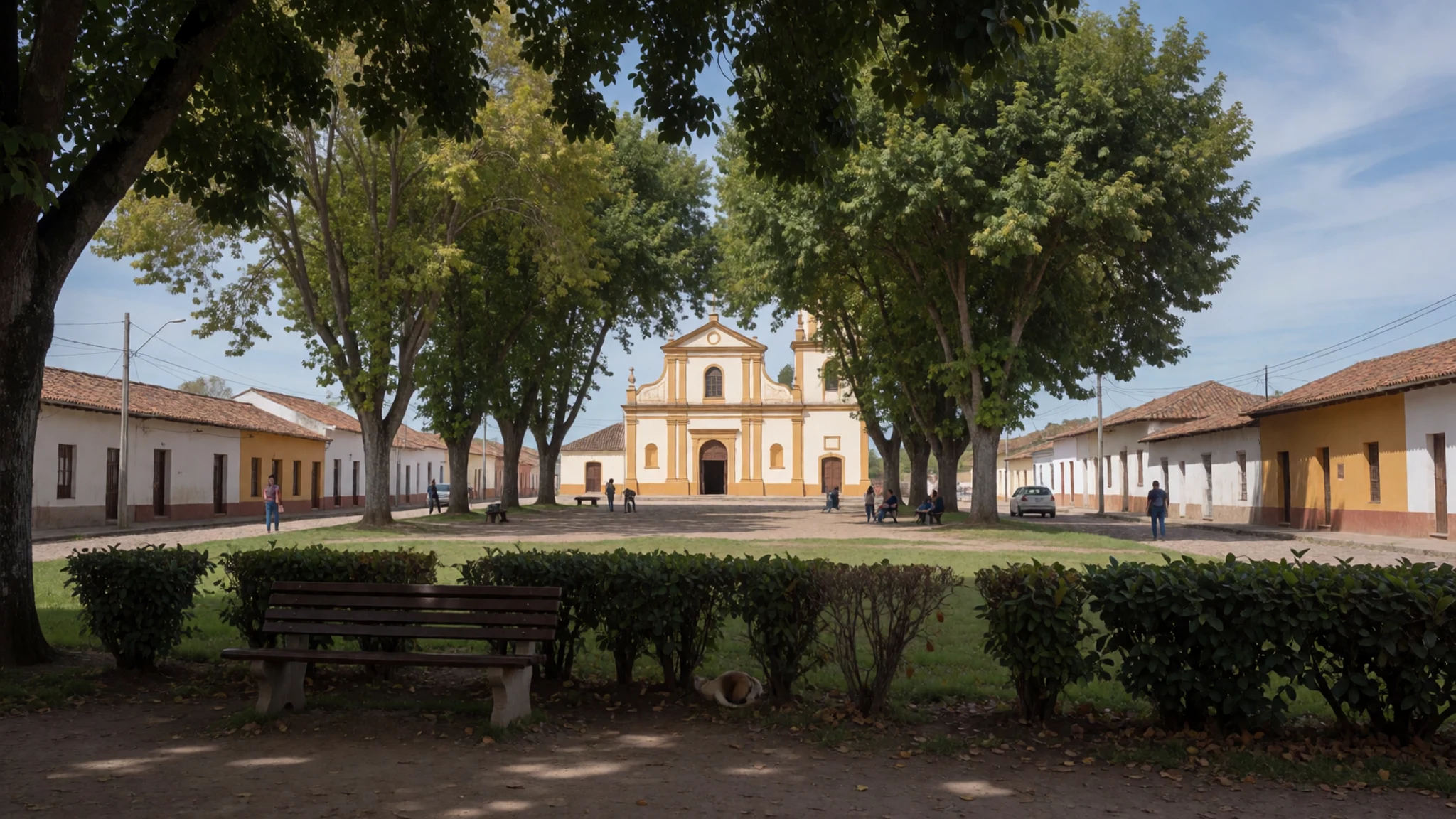
Culture
Grutas del Palacio sits in a country that wears its beliefs lightly. Uruguay is a secular state, and even public holidays carry plain names: Tourism Week is the official title for the week preceding Easter and Christmas Day is Family Day. Most people are nominally Catholic, but regular church-going is not widespread.
The interior, where Flores lies, keeps older rural habits: livestock, horsemanship and the gaucho tradition of the open grasslands. Social life turns on two rituals. One is mate, the herbal infusion carried in a flask and passed round a group from a single gourd. The other is the weekend asado, a slow barbecue that can fill an afternoon. Both are about company more than food or drink, and being invited to join is a sign of welcome.
Uruguay is also socially progressive. It was an early adopter of civil unions in Latin America, same-sex marriage is legal, and even rural areas show little overt discrimination, so most visitors feel at ease. People in the countryside are polite, friendly and unhurried, and conversation works even with limited Spanish if offered with patience and a smile. Plans tend to move at an easy pace, so flexibility helps.
Tourism Week is the busiest time for domestic travel, which affects roads and rooms near any popular sight, the cave included.
At the cave, stay on the marked paths and keep your hands off the sandstone, which wears away easily.
What to wear
Fashion around Grutas del Palacio is rural and practical. The traditional dress of the Uruguayan countryside is gaucho clothing: bombachas de campo, loose cotton or twill trousers gathered at the ankle; a wool or felt boina (beret) or a brimmed hat; a woollen poncho against the wind; a wide leather belt; and boots or alpargatas, canvas shoes with rope soles. Wool is the defining textile in a land of sheep and cattle. This dress is worn for work on estancias, at country fairs and festivals, and at the parades of Tourism Week.
Day to day, people in Trinidad and the surrounding farm towns wear jeans, T-shirts, light jackets and trainers, with football shirts a common sight. Many carry a thermos and a mate gourd under the arm. Dress is informal, and nobody expects anything smart at the cave.
Visitors should bring a hat and sun protection for the warm months, layers and a waterproof for cooler or showery ones, and sturdy closed shoes with good grip for uneven, sometimes wet ground. There are no special modesty rules in the countryside, though covering the shoulders is polite when stepping into a church in town.
What to eat
- Asado — A parrilla (grill restaurant) in Trinidad or a stall in a public market
Beef grilled slowly over embers, the centre of weekend meals in a country with far more cattle than people. A mixed grill usually brings several cuts, often with sausage and offal alongside. Order for the table and share.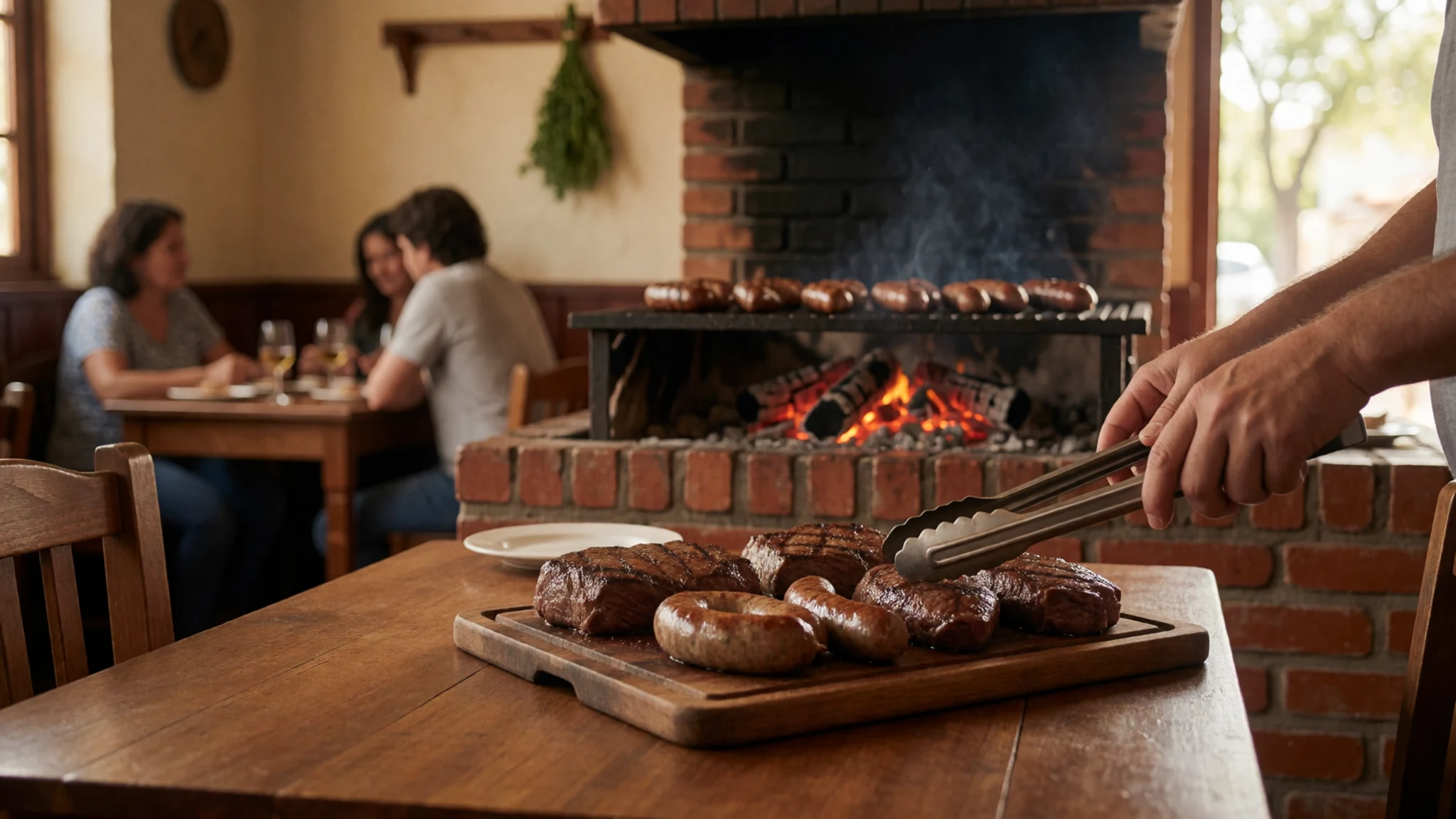
- Chivito — Simple eateries and snack bars in Trinidad
A steak sandwich piled with ham, cheese, egg, lettuce and tomato, usually served with chips. It is hearty enough to count as a full meal and a staple of roadside and town eateries across the country.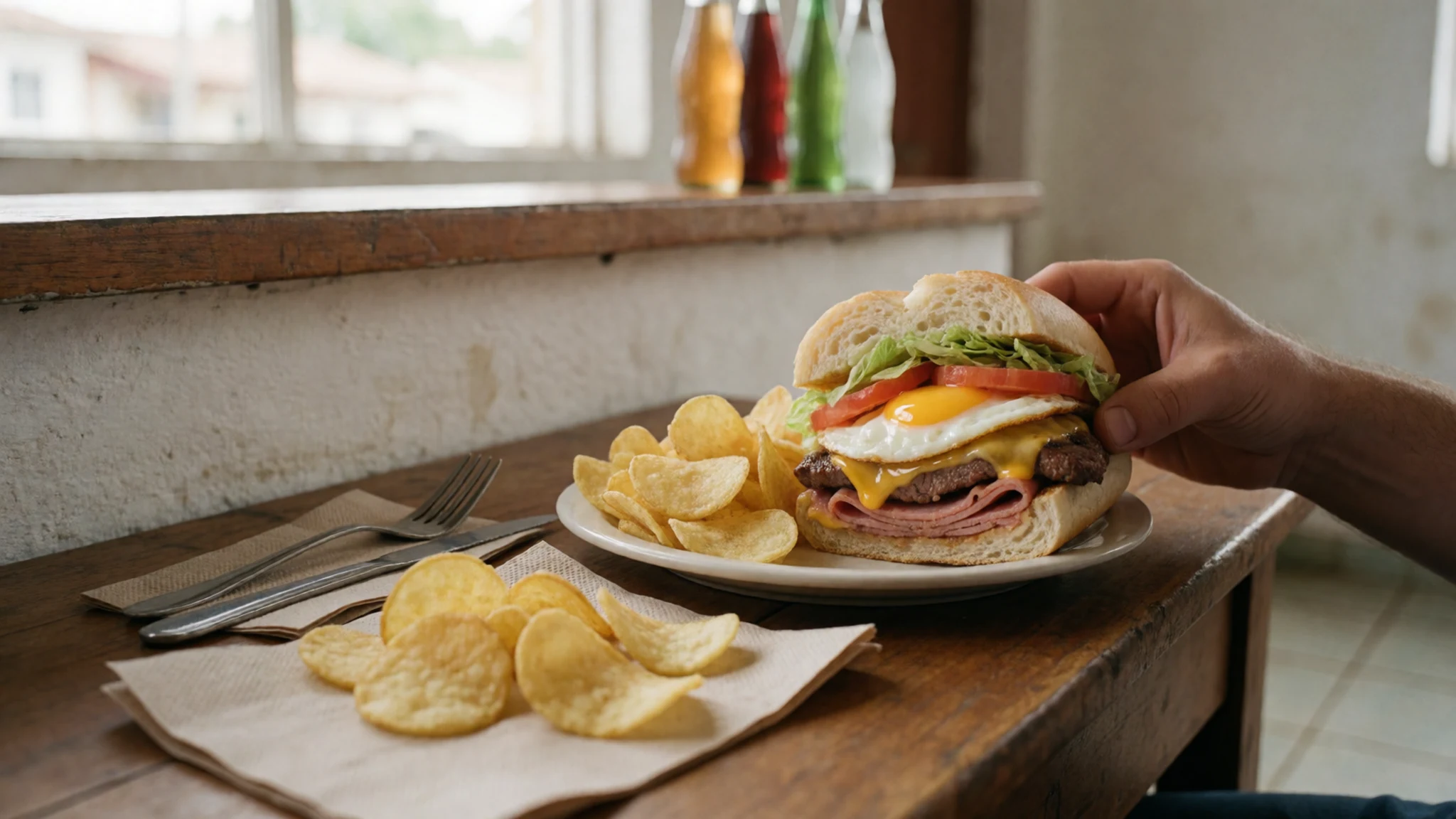
- Milanesa — Any everyday eatery or bar in town
A breaded, fried cutlet of beef or chicken, a legacy of Italian immigration. It comes with chips, salad or mashed potato, or tucked into a bread roll, and suits a quick, filling lunch. - Alfajores and dulce de leche — Bakeries and kiosks in Trinidad
Dulce de leche is a soft milk caramel spread on bread, folded into pastries and sandwiched between alfajores, soft biscuits dusted with coconut or coated in chocolate. Sweet, filling and easy to carry in a bag. - Mate — Offered by locals everywhere; leaves and gourds are sold in supermarkets and markets
Less a dish than a ritual: ground yerba leaves steeped in hot water from a flask and sipped through a metal straw from a gourd. It is bitter at first, so expect to need a few rounds to acquire the taste.
Plan it
Best time. Spring (September–November) and autumn (March–May) are usually the most comfortable for walking round the cave, with milder temperatures than summer. Summer afternoons can be hot, and winter can be cool and damp. Ground can be muddy after rain whatever the season.
How long. 1–2
Getting there. Fly to Montevideo's international airport, then take a long-distance bus to Trinidad. From town, the cave is a short onward trip by taxi or hire car. Check locally before travelling, as access arrangements may change.
Budget. low
Tips
- Ask in Trinidad about current opening arrangements at the cave before setting out, since no official website is listed
- Carry cash and a card, as small rural shops and eateries may not take cards
- Bring water and sun protection; open farmland offers little shade
- Avoid Tourism Week unless booked ahead, as domestic travel makes roads and rooms busier
Etiquette
- Stay on the marked paths and do not touch or climb the sandstone
- If offered mate, accept it, drink it through, then hand it back
- Take litter away; farm and cave land are shared with local people
Nearby
Sources
- Wikidata Q7126157 (CC0)
- Wikipedia: Palace Cave (rev 1361760588) (CC BY-SA 4.0)
- Wikivoyage: Uruguay (rev 5432731) (CC BY-SA 4.0)
- Photo: Grutas del Palacio, Departamento Flores (Mevrob) (CC BY 3.0)
- Photo: Uruguay topographic location map (GrandEscogriffe) (CC BY 4.0)
- Photo: 1. Grutas del palacio (Catarosario) (CC BY 3.0)
- Photo: 10. Contraste (Catarosario) (CC BY 3.0)
- Photo: 11. Pilar (Catarosario) (CC BY 3.0)
- Photo: 12. Árboles en el camino (Catarosario) (CC BY 3.0)
- Photo: 13. Alguien en el camino (Catarosario) (CC BY 3.0)
- Photo: 14. Otoño (Catarosario) (CC BY 3.0)


