Laguna Merín
Laguna Merín, Uruguay
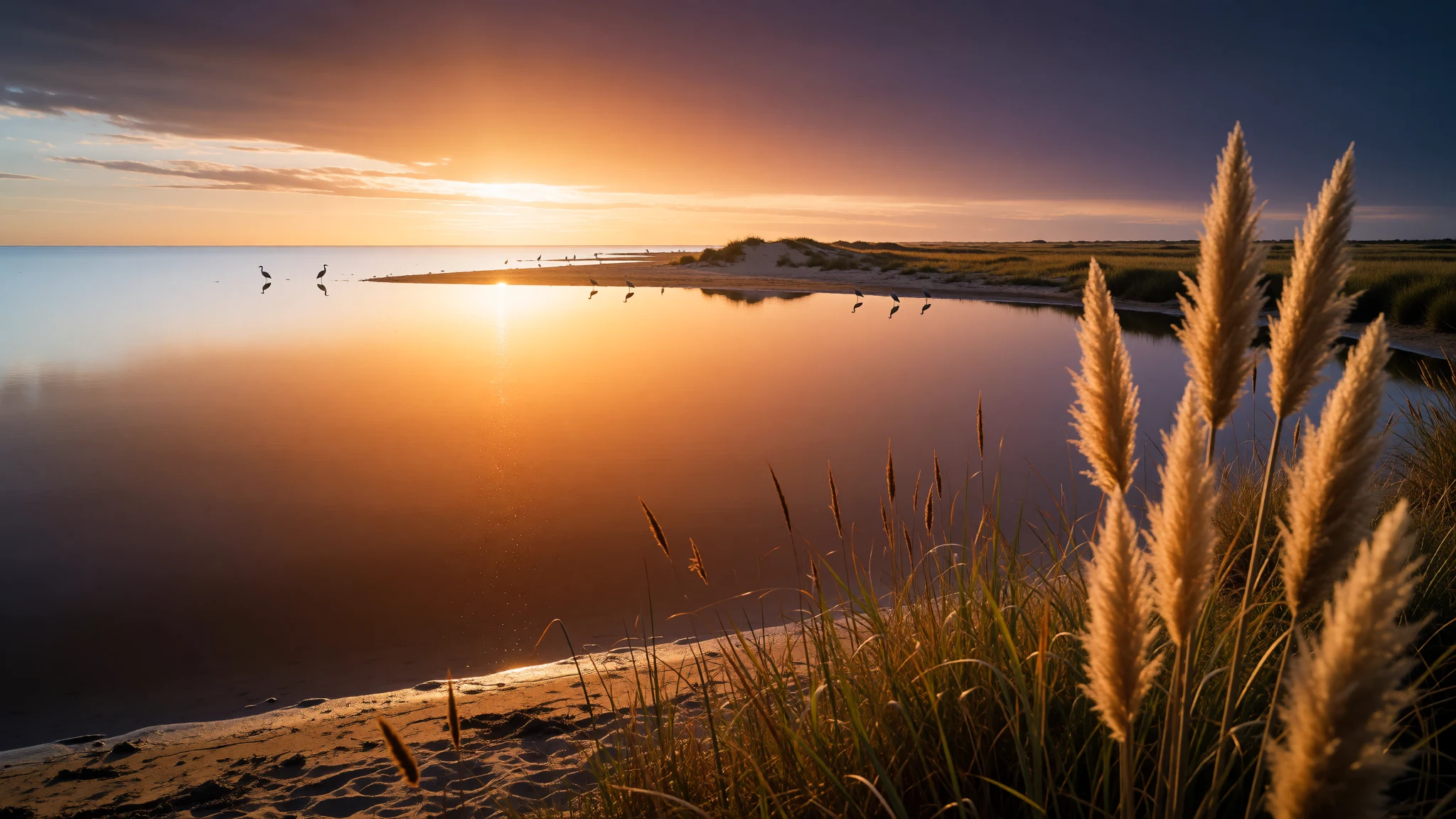
Laguna Merín is a wide, flat lagoon on the Uruguay–Brazil border, good for birdwatching, big skies and slow border-country travel.
The place
Laguna Merín, known as Lagoa Mirim on the Brazilian side, is a long estuarine lagoon lying across the border between Uruguay and Brazil. Its elevation in the facts is just 1 m, which tells much of the story: this is flat country where water, reeds, rice fields and sky meet at a very low horizon. The lagoon stretches from the south of Rio Grande do Sul into eastern Uruguay, and a narrow sandy isthmus keeps it apart from the Atlantic. There is no direct opening to the sea. Instead, its water drains north through the São Gonçalo Channel into the larger Lagoa dos Patos, and from there a tidal channel at Rio Grande reaches the ocean. Because the lagoon sits at ocean level, tides push some salt into the system, though only near that outlet.
Rivers do the filling. The Jaguarão (Yaguarón in Spanish), which forms part of the national boundary, enters here, along with the Cebollatí and the Tacuarí from Uruguay. More water arrives from the Uruguayan side than from the Brazilian one. On the Jaguarão, the twin towns of Jaguarão and Rio Branco face each other across the river and make a practical base. East of the lagoon, between it and the sea, lies the Taim Ecological Station, a protected wetland that gives the area its birdlife. A visitor should expect shoreline roads, small ports, grazing and farmland, and long views rather than a single headline sight. Facilities are modest and distances are real, so a car helps.
Its story
Laguna Merín began as part of the coastline. Long ago the sea edge here formed a shallow depression, and wind and ocean currents slowly piled up sand into barriers that closed it off. What had been open water became two lagoons, Merín and its larger northern neighbour Lagoa dos Patos, both still sitting at sea level. That sandy barrier is the reason the area feels like a hinge between land and ocean: a strip of dunes and wetland to the east, and a broad, calm lagoon behind it.
People settled along its margins because the rivers and the water offered transport and fertile ground. The Jaguarão, which carries part of the Brazil–Uruguay border, became a natural line between two countries and two languages, Portuguese and Spanish, and the towns on its banks grew up facing one another. Boats still use the river up past Jaguarão and Rio Branco, and small craft can pass through the São Gonçalo Channel towards Lagoa dos Patos, a reminder that this was a working waterway as much as a landscape.
Today the story is about sharing. A lagoon that spans two countries needs both to care for its water, and the protected wetlands at Taim on the Brazilian side show what is at stake. Rivers from Uruguay supply more of the lagoon's water than those from Brazil, so what happens upstream shapes what happens on the shore, and the quiet surface hides a lot of interdependence.
What to see
- Jaguarão and Rio Branco — Border towns on the Jaguarão/Yaguarón River
These twin towns face each other across the river that forms part of the national boundary. Walk the waterfront, cross the bridge with your documents, and notice how Portuguese and Spanish mix in shop talk. They make the easiest base for exploring the lagoon's western shore.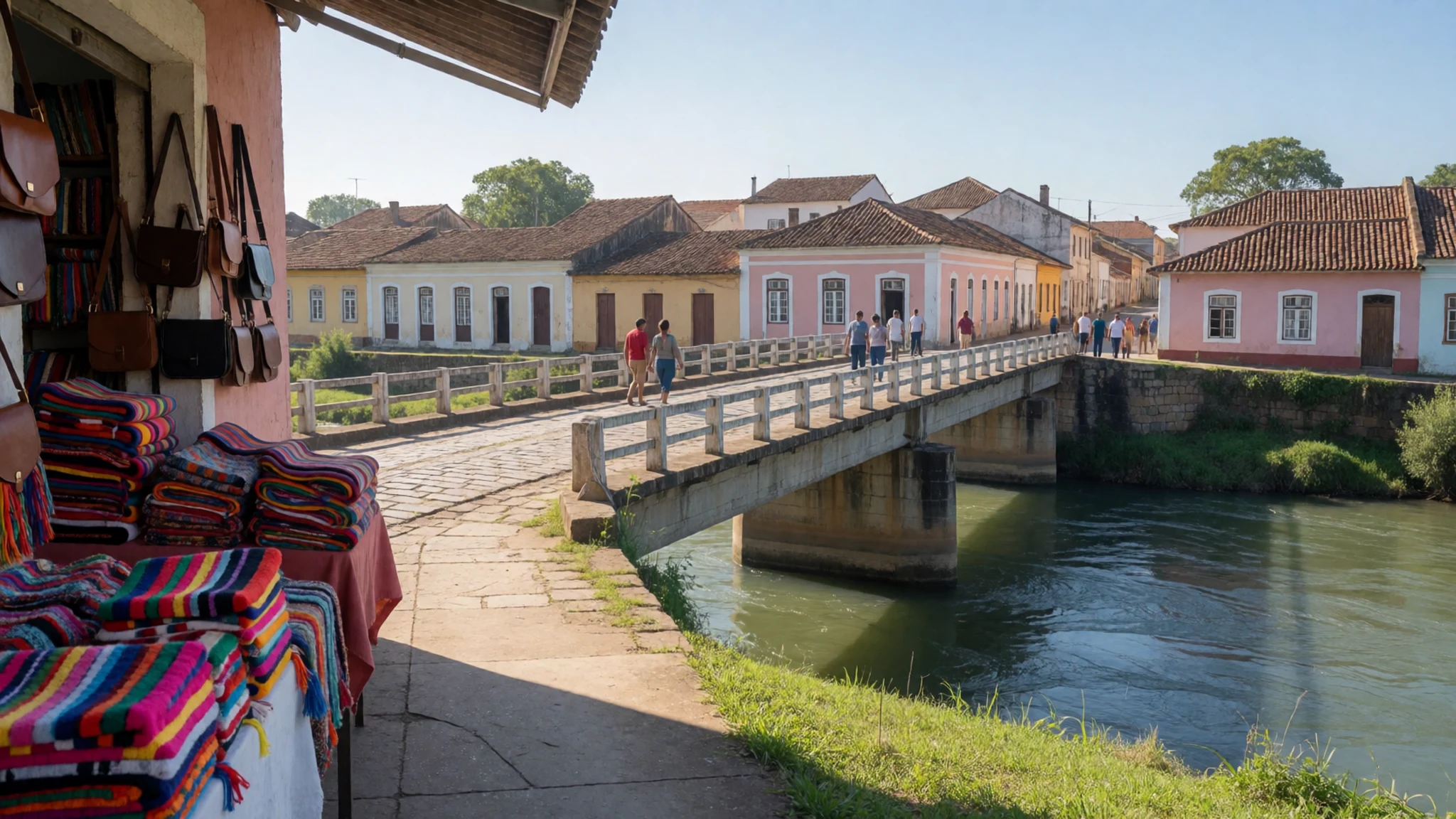
- Taim Ecological Station — Isthmus between the lagoon and the Atlantic, Brazil
This protected wetland lies in the narrow strip of land between the lagoon and the sea. It is the place to look for waterbirds among reeds and open water. Access rules apply to protected areas, so check with the managing authority before travelling.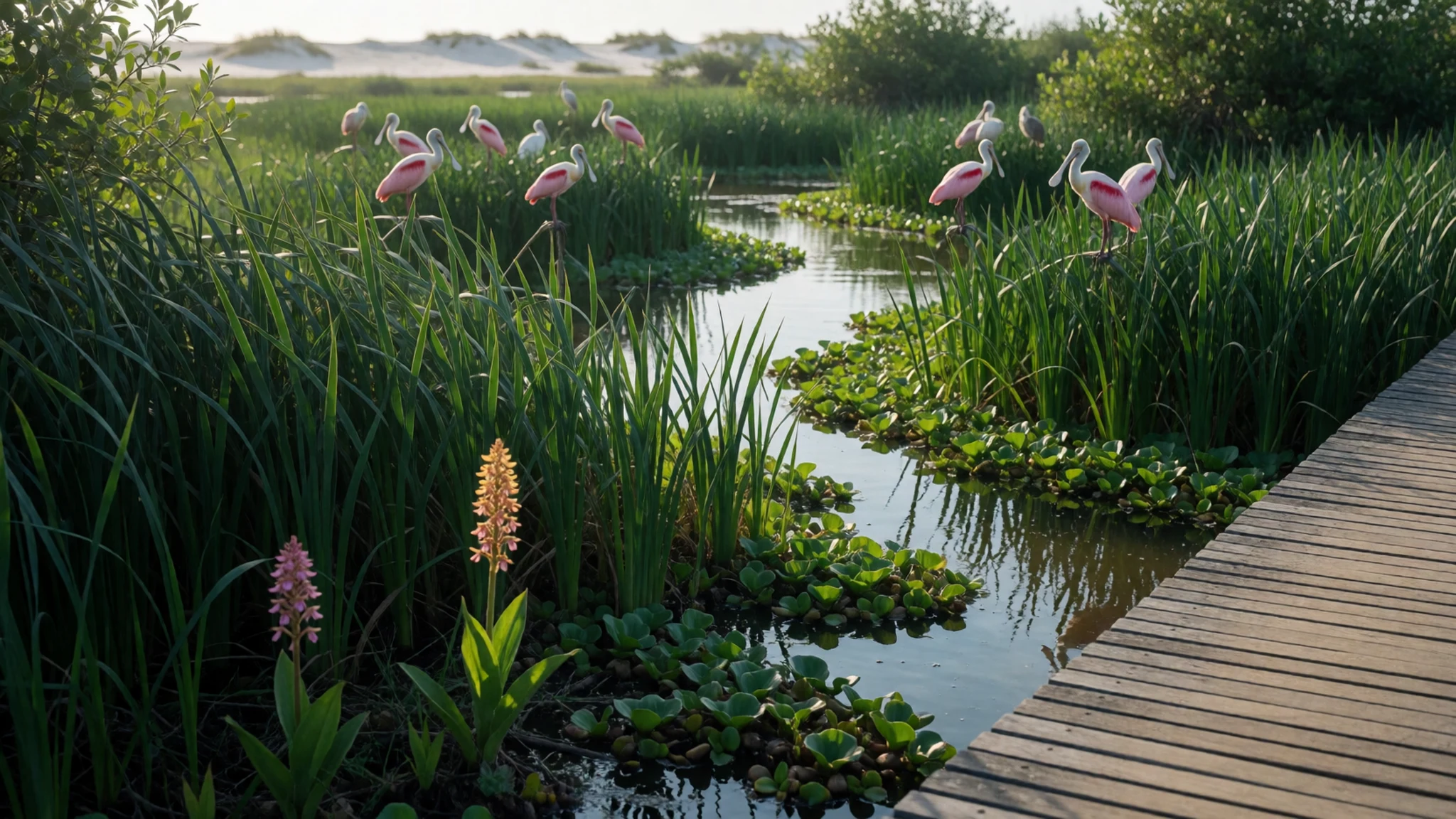
- Santa Vitória do Palmar port — Brazilian shore of the lagoon
The small port here is a favourite spot for photographing dusk over the water, with fishing boats silhouetted against a wide, low sky. It is a quiet, working harbour rather than a resort, best visited in the late afternoon and early evening.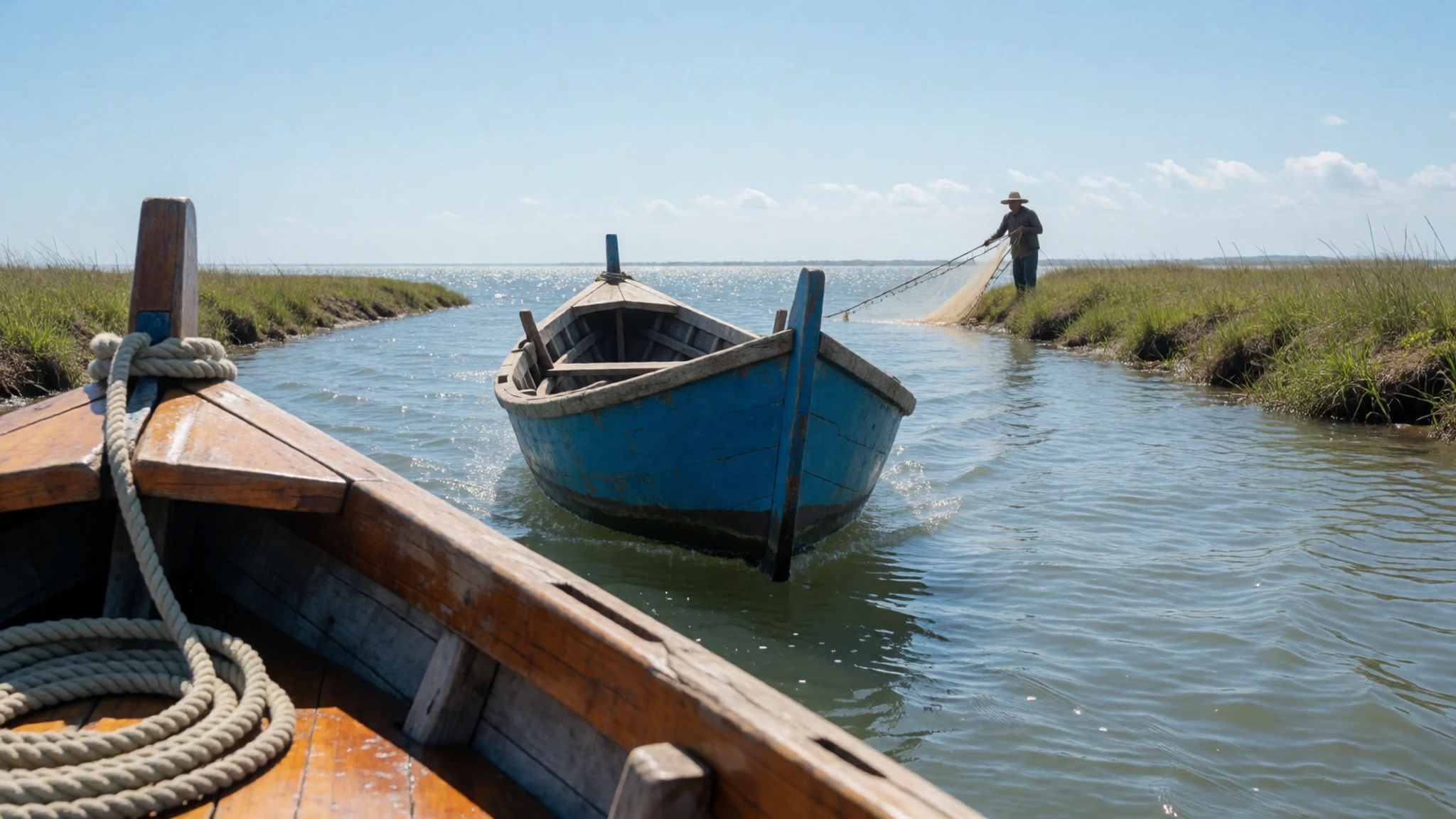
- Uruguayan shoreline at sunset — Eastern Uruguay, on the lagoon's western edge
Along the Uruguayan side the shore is low, open and often empty, with grazing land and rice country running to the water's edge. Come for evening light, long horizons and the sound of birds, and bring binoculars for the reed beds.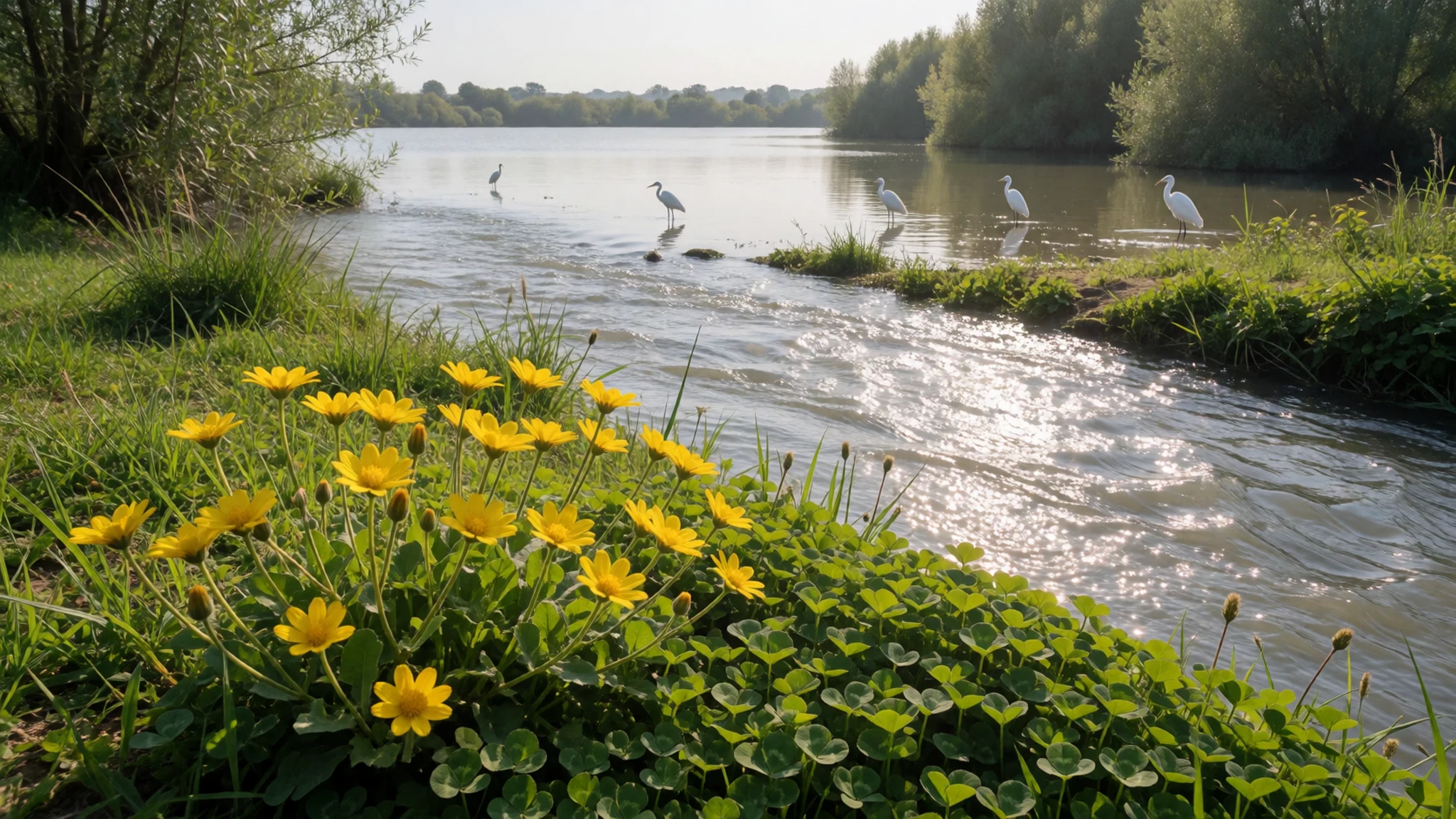
- São Gonçalo Channel — Northern outlet towards Lagoa dos Patos, Brazil
This navigable channel links Laguna Merín with Lagoa dos Patos and shows the lagoon's role as part of a larger inland water system. It is a landscape of working boats, flat banks and farmland, better seen by road or from a local boat than from a single viewpoint.
Culture
Laguna Merín sits in border country, and its culture is shaped by that. On the Uruguayan side Spanish is the everyday language and on the Brazilian side it is Portuguese, while in the twin towns of Jaguarão and Rio Branco the two mix freely in shops, schools and family life, and people cross the river as a matter of routine. Rural life follows the gaucho tradition of cattle country, with horses, open grassland and long afternoons built around shared mate, the bitter herbal infusion passed from hand to hand in a gourd. Fishing on the lagoon and rivers is a small-scale trade, and the surrounding flatlands carry rice fields and grazing land, so the working calendar follows planting, harvest and weather more than any tourist season. Weekends tend to revolve around family, barbecues and time by the water. Hospitality is unforced: visitors who show real interest in the landscape, the birds or the local way of drinking mate are usually welcomed warmly, though they should not expect polished tourism services. Small towns keep unhurried hours, often with a pause in the middle of the day, and evenings are sociable. The lagoon itself is mostly a working and family space rather than a resort, which gives it a calm, local feel. If someone offers you mate, drink the gourd through before handing it back, and say thank you only when you have had enough.
What to wear
Traditional dress around Laguna Merín is the dress of the gaucho, the cattle-hand of the grasslands shared by Uruguay and southern Brazil. The classic pieces are bombachas, loose pleated trousers in cotton or twill that tuck into boots; a wool poncho against wind and damp; a neckerchief; a wide woven or leather belt; and a beret or broad-brimmed hat. Wool is the key textile because this is sheep and cattle country. These clothes appear at rural work, at regional festivals and on parades, and many people wear parts of them casually, especially the hat and the poncho on cold days.
Day to day, people dress simply: jeans or work trousers, football shirts, cotton tops and rain jackets, with a flask of hot water and a mate gourd tucked under an arm almost as an accessory. Winters here are damp and can feel cold, so layers matter locally.
A visitor should pack for weather and wet ground rather than for formality. Bring a hat, sunscreen and light long sleeves for the sun and for insects in summer, plus a waterproof layer and a warm jumper for winter and early spring. Closed shoes or light boots suit muddy shores and reedy paths, while sandals are fine on town streets in the heat. Churches and civic buildings carry no strict dress code, but covered shoulders are polite.
What to eat
- Asado and churrasco — Grill restaurants and family barbecues in Rio Branco, Jaguarão and the surrounding towns
Beef cooked slowly over embers is the centre of regional eating, called asado in Uruguay and churrasco in Brazil. Expect different cuts, sausages and simple salads, served at weekend gatherings and in grill restaurants across the border towns.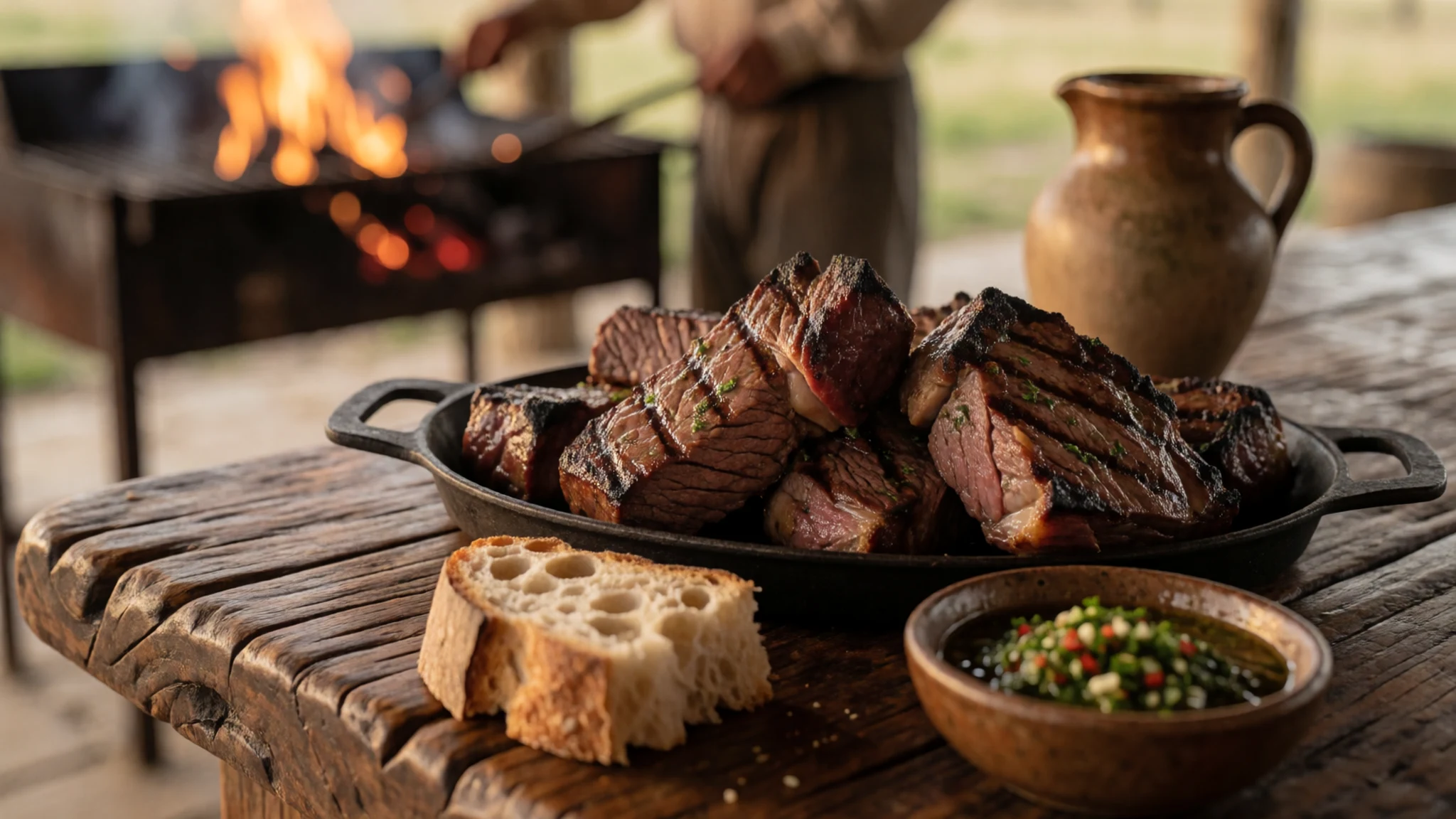
- Chivito — Snack bars and cafés in Uruguayan towns such as Rio Branco
Uruguay's famous sandwich piles thin steak, ham, cheese, egg and salad into a soft roll. It is filling and easy to find, and a sensible lunch before an afternoon of exploring the lagoon shore.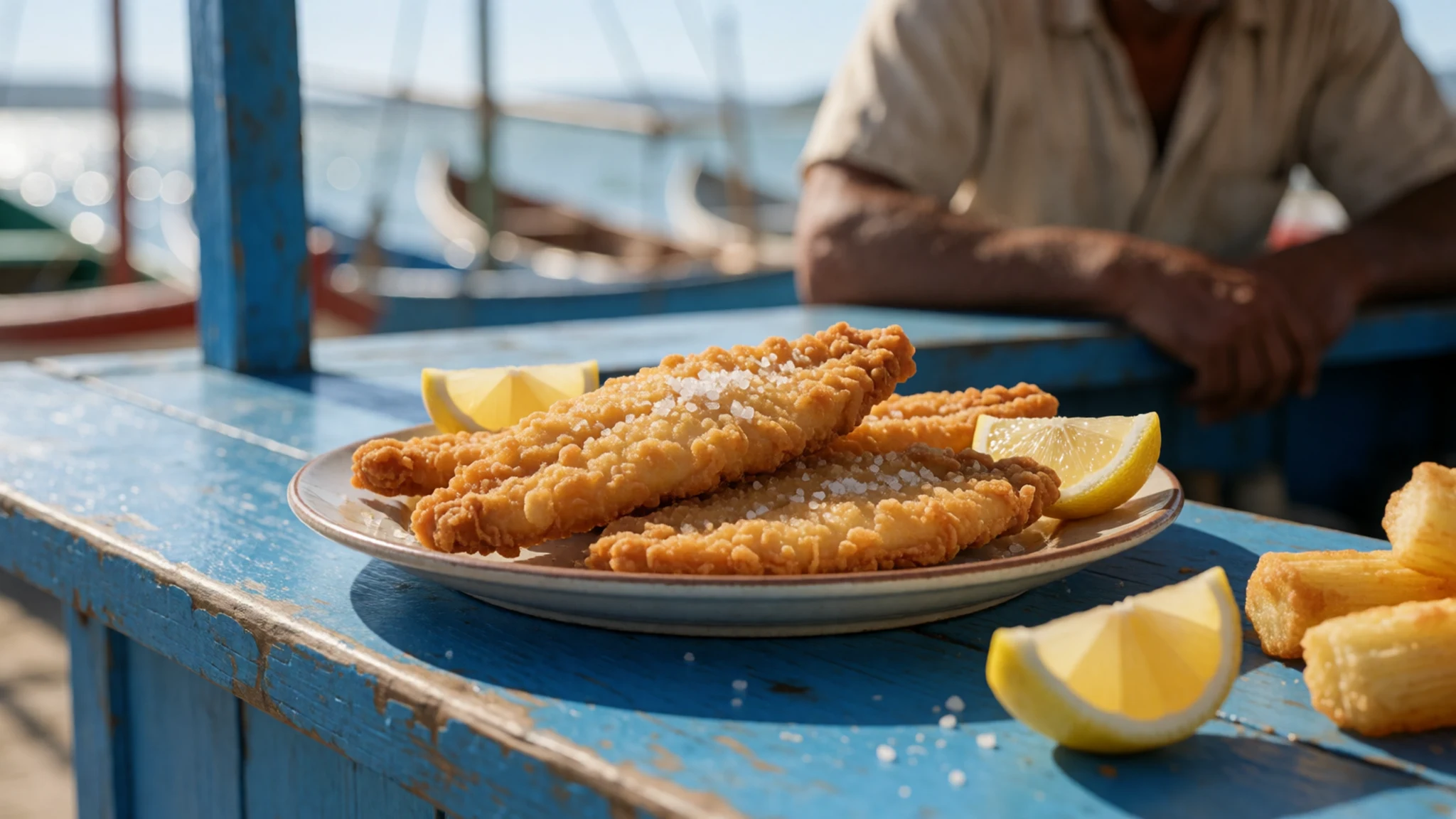
- Arroz de carreteiro — Home-style eateries on the Brazilian side, including Jaguarão
A rice dish cooked with dried beef, onion and seasoning, traditionally a travelling-worker meal and still a staple of Rio Grande do Sul cooking. It is hearty and warming, especially in the cooler months. - Doces de ovos — Bakeries and sweet shops in Jaguarão and nearby Pelotas
Egg-yolk sweets are a signature of the southern Brazilian border country, usually small, sugary, and sold in boxes. Buy a few from a local bakery to eat with coffee or take home. - Alfajores and dulce de leche — Bakeries and corner shops in Uruguayan towns
Soft biscuits sandwiched with dulce de leche, a thick milk caramel loved on both sides of the border. They are sweet, cheap to share and good with mate on a long shoreline afternoon.
Plan it
Best time. October–November and March–April, when spring and autumn bring milder weather and good light for birds and shoreline walks. Summer is hot and humid, and winter is damp and cool, with wind across the open water.
How long. 2–3
Getting there. Fly to Montevideo in Uruguay or to Porto Alegre in Brazil, then continue by long-distance bus or hire car towards Rio Branco or Jaguarão. The last leg is by local road to the shore; check timetables with the bus operators and expect long distances between towns.
Budget. low
Tips
- Hire a car if you can, as shoreline roads and small ports are spread out and public transport is limited
- Carry your passport or ID whenever you cross between Jaguarão and Rio Branco
- Carry some cash, since small towns and rural eateries may not take cards
- Bring binoculars, insect repellent and a hat for the wetlands and open shore
- Check access rules for protected areas such as the Taim Ecological Station before you go
Etiquette
- Greet people politely, with a handshake or a nod, before asking questions or taking photos
- Ask before photographing people at work on boats or farms
- Follow border officials' instructions and keep your documents to hand when crossing the river
Nearby
Sources
- Wikidata Q876280 (CC0)
- Wikipedia, Lagoon Mirim (rev 1366074608) (CC BY-SA 4.0)
- Photo: Relief Map of Brazil (NordNordWest / Виктор В) (CC BY 3.0)
- Photo: Admiralty Chart No 3063, Cidreira to Punta Coronilla (UK Hydrographic Office) (Public domain)
- Photo: Albardón (Eduloru) (CC BY-SA 4.0)
- Photo: Anoitecer na Lagoa Mirim (Thaysa de Melo Assumpção Moreira) (CC BY-SA 4.0)
- Photo: Barquinho no anoitecer da Lagoa Mirim (Thaysa de Melo Assumpção Moreira) (CC BY-SA 4.0)
- Photo: Coast of Rio Grande do Sul (Coordenação-Geral de Observação da Terra/INPE) (CC BY-SA 2.0)
- Photo: Começo da noite na Lagoa Mirim (Thaysa de Melo Assumpção Moreira) (CC BY-SA 4.0)
- Photo: Entardecer na Laguna Merin, Uruguai (Mb vargas) (CC BY-SA 4.0)
- Wikivoyage (CC BY-SA 4.0)


