Punta del Diablo
Punta del Diablo, Uruguay
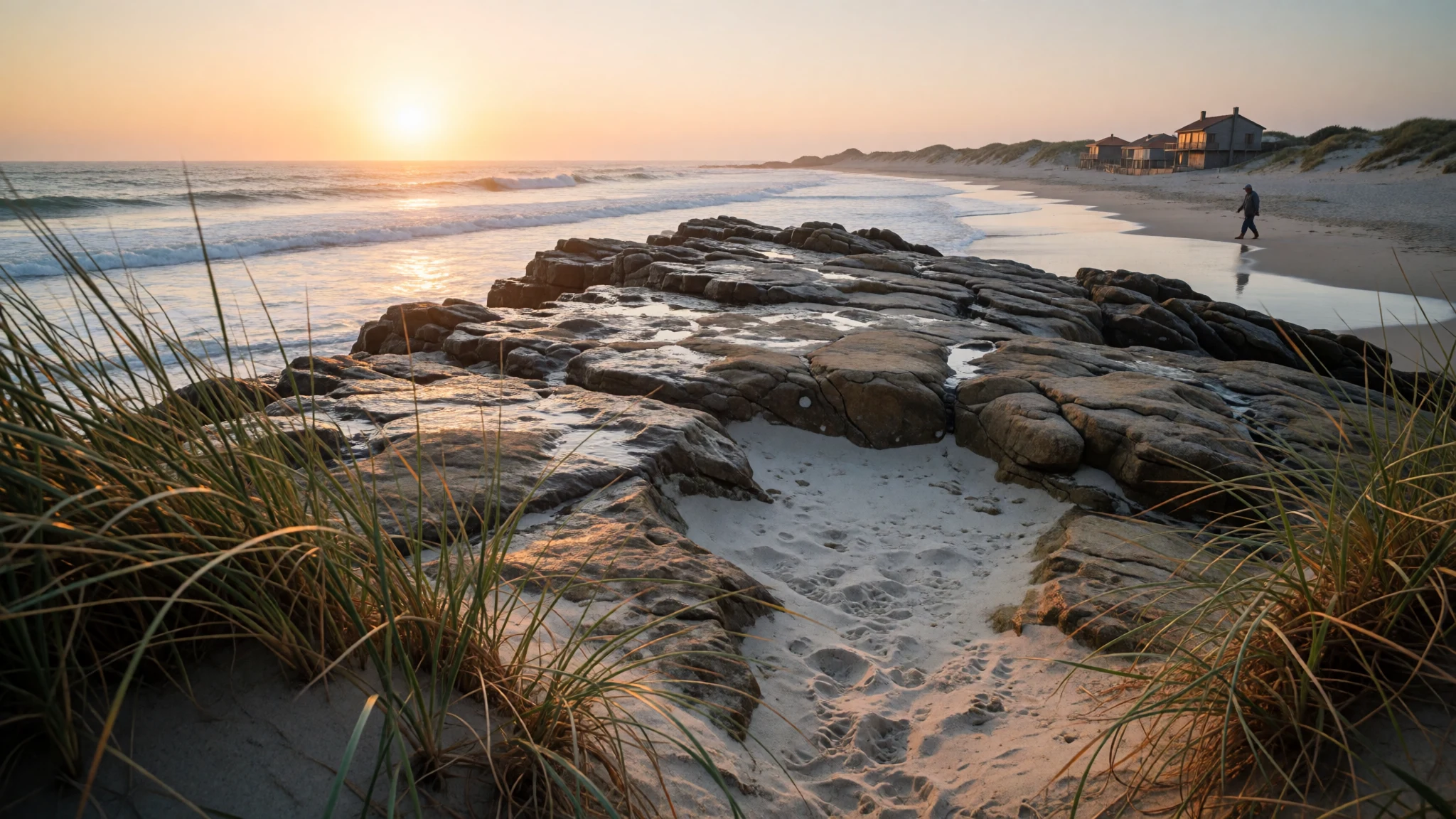
Punta del Diablo is a fishing village on the Uruguayan Atlantic where boats and a sandy summer town still share one beach.
The place
Punta del Diablo sits on the Atlantic coast of Uruguay, in the department of Rocha, where a low rocky headland breaks a long run of sand. The village takes its name from that point. Fishing boats are pulled up above the tide line, and the houses behind them sit in the dunes rather than on a formal seafront. Streets are sandy tracks more often than paved roads, and the buildings stay low: timber, brick and simple concrete, many of them rented out only in the warm months.
Life here still turns on the sea. In the morning the boats go out and come back, and the beach nearest the village is a working shore as well as a place to swim. Further along the coast the sand widens into quieter stretches, with dune grass and the odd headland between them. Behind the first line of houses the ground rises only gently; this is not a cliff coast. The light is hard and bright, and the wind off the ocean is part of every day, cool even when the sun is strong.
Visitors who know Uruguay's glossier resort coast will find Punta del Diablo rougher and more improvised. The ocean can look mild from the dune line and still carry a shore break and a current, so swimming is safer where other people are already in the water and the boats are not being launched. At the end of the day the sand holds the heat a little longer than the air, and the village smells of salt, wood smoke and fried fish.
Its story
Punta del Diablo began as a fishing settlement on a difficult bit of coast, and the name still carries that warning. Local telling links the devil in the name to the point itself: rocks, a confused sea, and boats that had to know the shore before a visitor ever asked for a swimming beach. The story that matters on the ground is less a single legend than a habit of work. Families put to sea in small boats, landed their catch on the sand, and built houses in the dunes where the wind would allow a wall to stand.
The change came with summer travel along the Rocha coast. People looking for a looser beach than the big resorts found unpaved lanes, cheap plots and a view of the boats. Houses went up one at a time, often by their owners, which is why the village has no single style and no straight seafront. A craft and music scene followed the visitors. Painters and seasonal cooks now share the lanes with fishermen, and in January the boats still leave at dawn while the bars fill after dark.
What the summer crowds can hide is how quickly the place returns to a hamlet. When the holiday months end, Punta del Diablo keeps the fishery and lets the rest go quiet. Camping grounds that were packed with tents become open sand again. That swing, between a working beach and a short, intense season, is the story the village is still telling. Nothing about it was laid out by a master plan. The dunes, the boats and the summer rentals simply accumulated, and the point kept its old name.
What to see
- Playa de los Pescadores — the beach in front of the village
Punta del Diablo meets the sea on this working beach, where fishing boats rest between trips with their hulls high on the sand. Mornings are the lively hours, as crews sort the catch and swimmers keep to the side. Crews need a clear path when a boat is launched or hauled. The shore looks back to low dune houses, and the whole scene is the village in one view.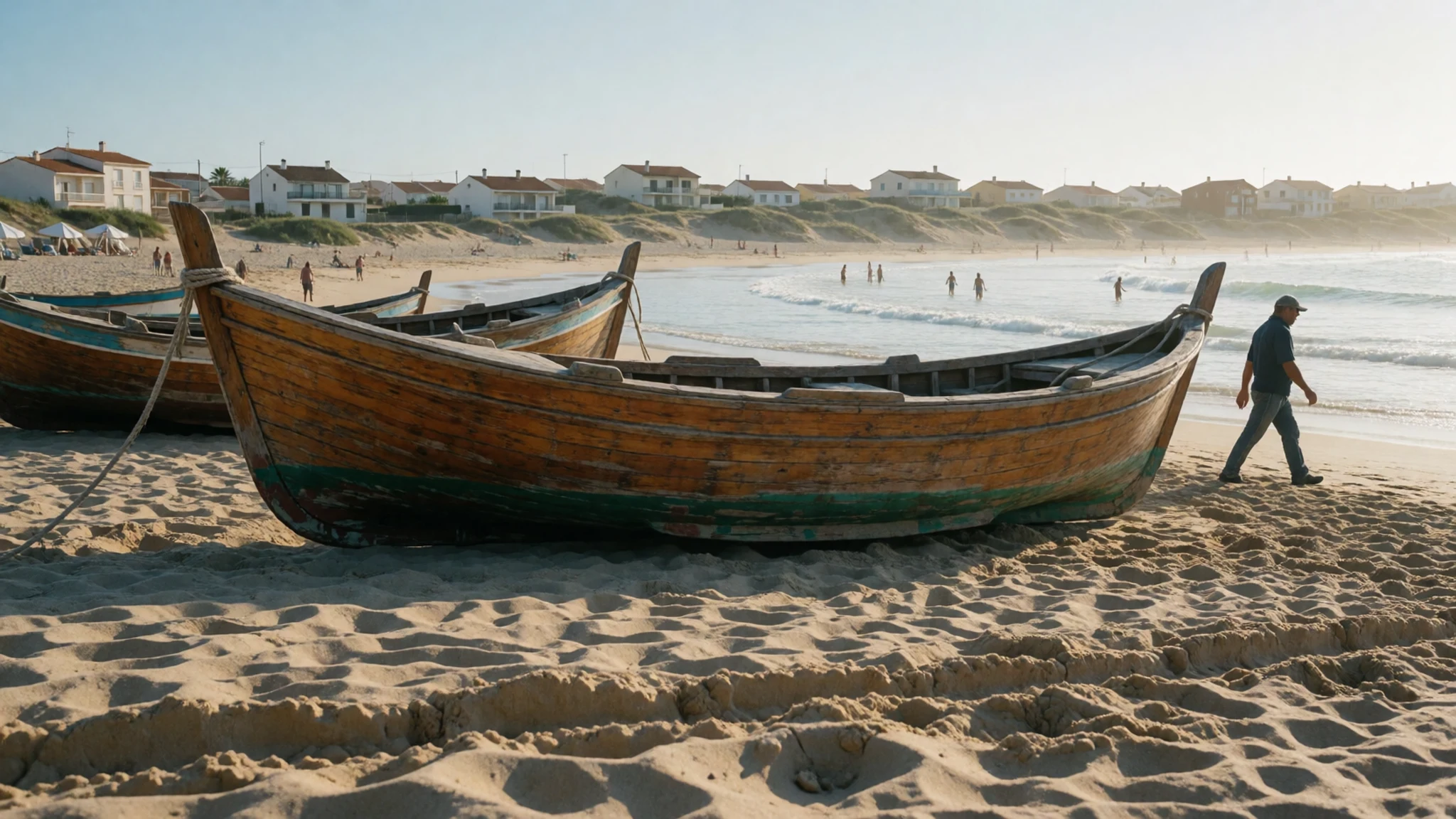
- The headland — the rocky point at the village shore
The headland is the punta that gives Punta del Diablo its name, a low rocky nose rather than a high cape. From it the coast bends, with boats on one side and open sand on the other. The rock is uneven underfoot and the wind is stronger than on the beach. People walk out for the view back over the dune houses and for a sunset on the Atlantic.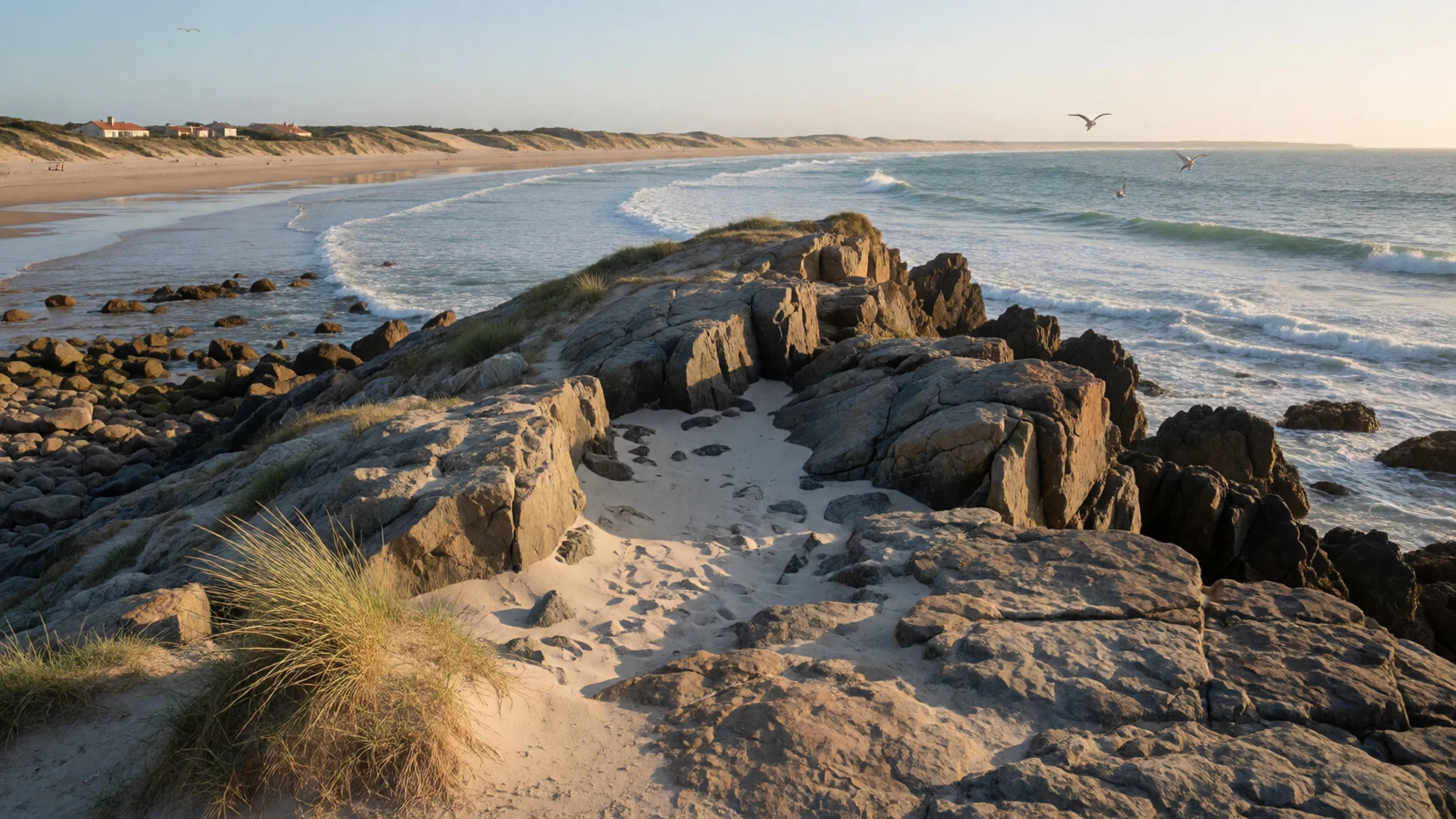
- Houses in the dunes — the sandy lanes behind the beach
Houses in the dunes are the architecture of Punta del Diablo: timber, brick and plain concrete at odd angles on sandy tracks. Nothing lines up as a formal street, and grass still grows between the plots. Some houses are lived in all year; many open only for the summer let. The tracks show the village in late afternoon, when the walls take the warm light and the wind eases.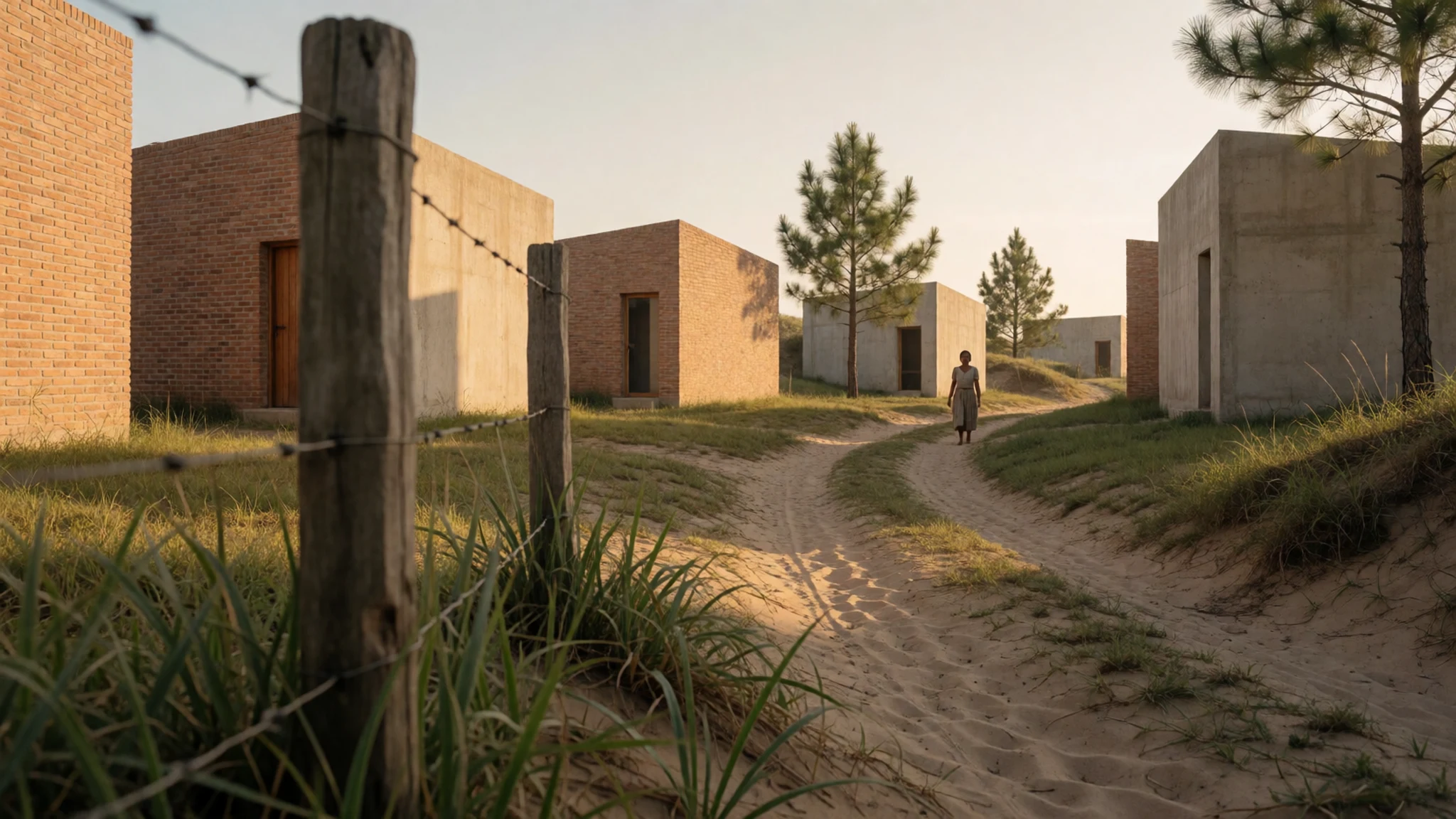
- Playa Grande — the long beach beyond the village headland
Playa Grande is the long open beach just beyond the headland at Punta del Diablo, with fewer boats and more room to walk than the fishermen's shore. Surf and space are the draw. Dunes back the sand and shade is scarce, so sun cover matters. A summer afternoon fills the beach; a windy weekday outside the peak weeks can feel almost empty.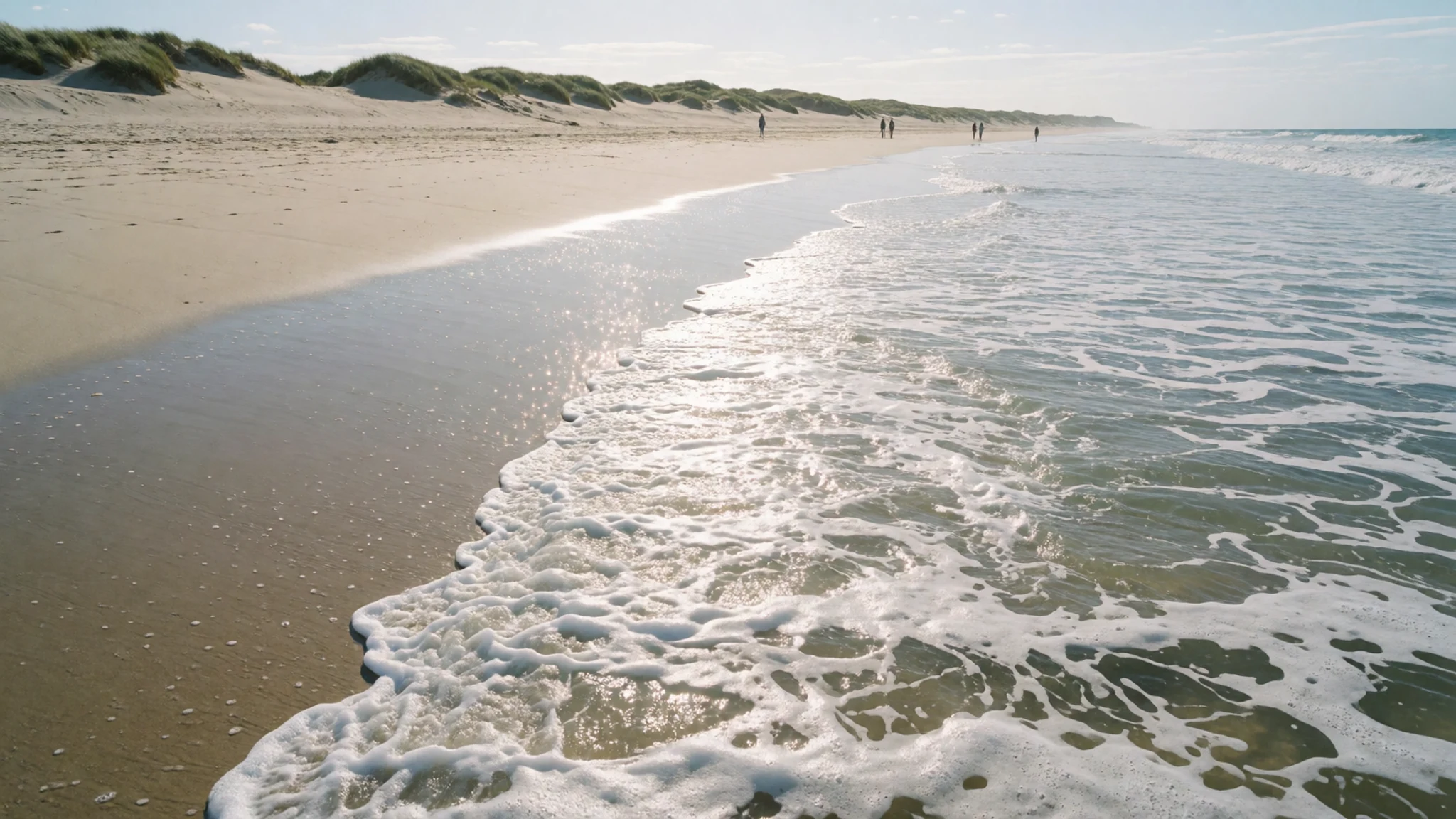
- The camping grounds — the dunes on the edge of the village
Camping is part of the landscape of Punta del Diablo, on grounds set in the dunes rather than inside a fenced resort. In summer, tents and simple cabins turn the sand into a temporary town, with shared wash-blocks and a short walk to the beach. Music drifts between pitches in the busy weeks. Outside that season the same grounds empty, and the place shows its other face.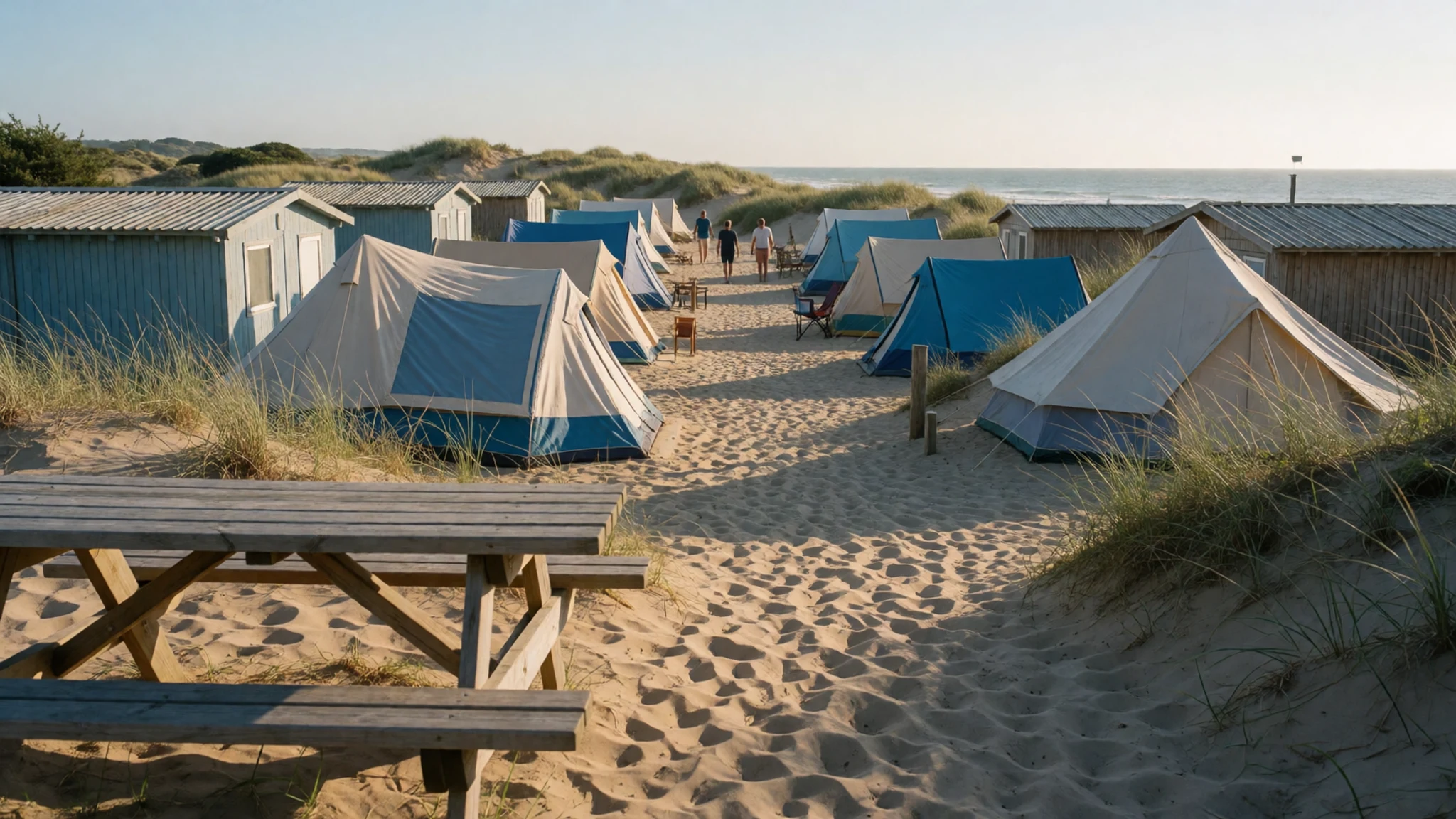
Culture
Punta del Diablo's culture is a fishing calendar with a summer season laid over it. Mate is passed on the beach and in the camping grounds as it is across Uruguay: a shared thermos and an unhurried talk, not a café order to finish and leave. Spanish is the language of the lanes, Rioplatense in accent, and in January a large share of the voices are Argentine. Fishermen, builders, seasonal cooks and people selling crafts use the same sandy streets. The tone is informal — children underfoot, dogs, music from a porch, a shop that is also a front room.
The warm months add a bohemian layer the village is now known for. Handmade jewellery, painted boards, small bars and late meals sit beside the boats, and the lanes can feel like a fair. Under that, Punta del Diablo is still a place where people work, and the fishery is not a display put on for visitors. In the quiet months this is obvious. In the busy months it is easy to miss.
If you photograph crews or boats at Punta del Diablo, ask first and keep clear of a launch.
What to wear
Punta del Diablo has no costume of its own that people wear in the lanes. The older dress of rural Uruguay is the gaucho set — bombachas, a wide belt, a boina or a hat, a woollen poncho, and alpargatas — and it still appears at festivals and on working estancias inland, not on this beach. Fishermen here have always dressed for weather and work: salt-stiff cotton, a cap, boots or bare feet, a jacket when the wind comes up.
In the summer the village wears swimwear, loose linen and cotton, sun hats, and sandals or no shoes at all, with a shirt thrown on for the shop. Evenings cool quickly in the ocean wind, so a light layer is normal after dark. In the cooler months the same residents switch to jeans, knitwear and windproof jackets. Visitors from Montevideo and Buenos Aires dress the beach down rather than up.
A visitor does well to copy that. Swimwear belongs on the sand, with a cover-up for the lanes and the shops. Sandals that can take grit, or shoes that can be rinsed, suit the unpaved tracks better than new trainers. A hat, sun cover and a warm layer for the evening matter in every warm-month week, because the wind does not retire when the sun does. There is no shrine dress rule: beach clothes stay on the beach, and a dry layer helps when the spray picks up.
What to eat
- Buñuelos de algas — beach stalls and seasonal cookshops
Buñuelos de algas are fritters of local seaweed, a Rocha coast snack sold in Punta del Diablo when the summer kitchens open. The batter is plain and the flavour is marine rather than sweet, eaten hot from a paper tray on the walk back from the beach.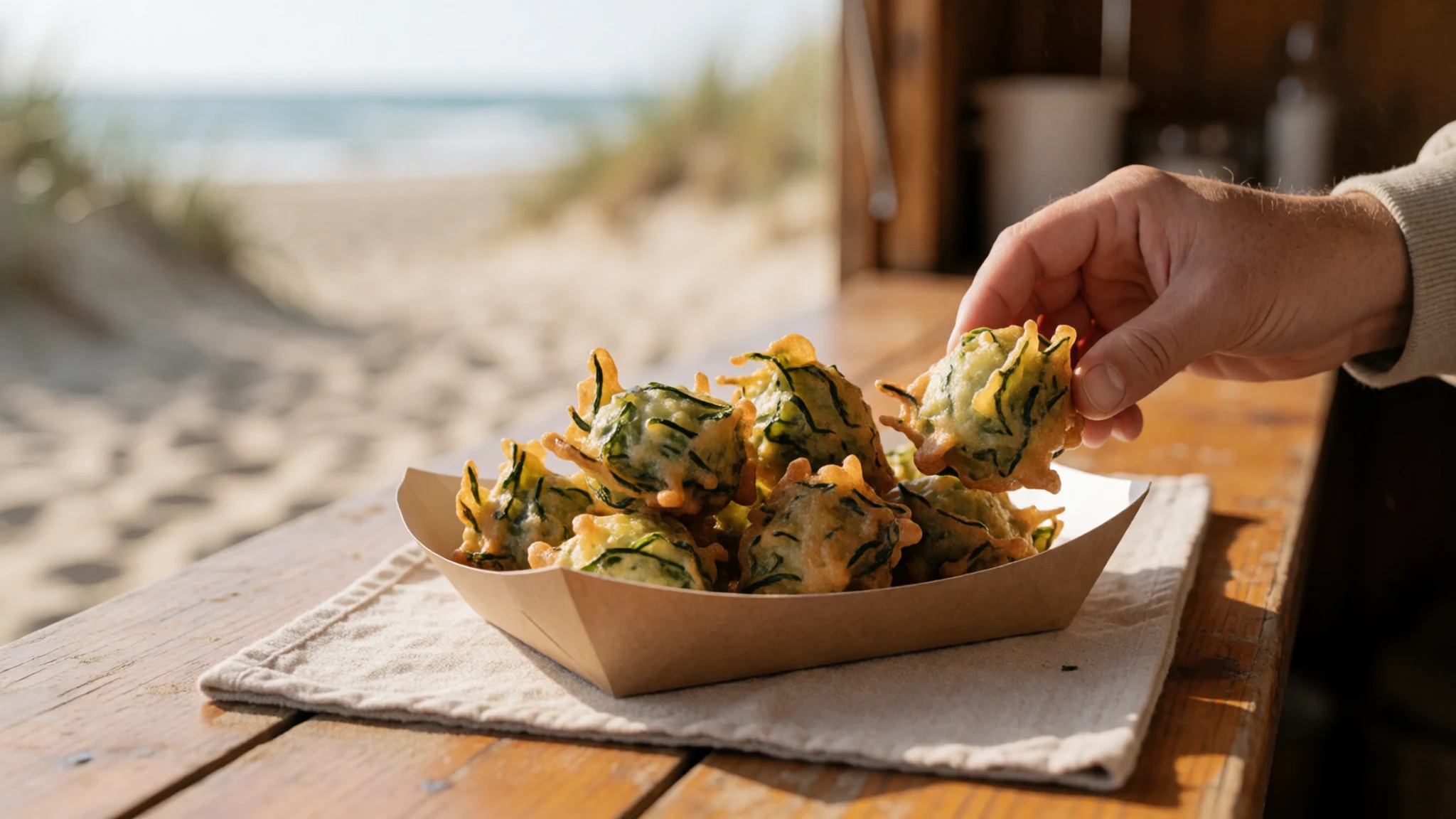
- Grilled fish — beachside parrillas and simple eateries in the lanes
Grilled fish is the everyday feast in Punta del Diablo, usually whatever the boats landed, cooked over embers with lemon, potato and a simple salad. Corvina and other coastal fish appear when the catch is good. A parrilla facing the sand suits it better than a formal dining room.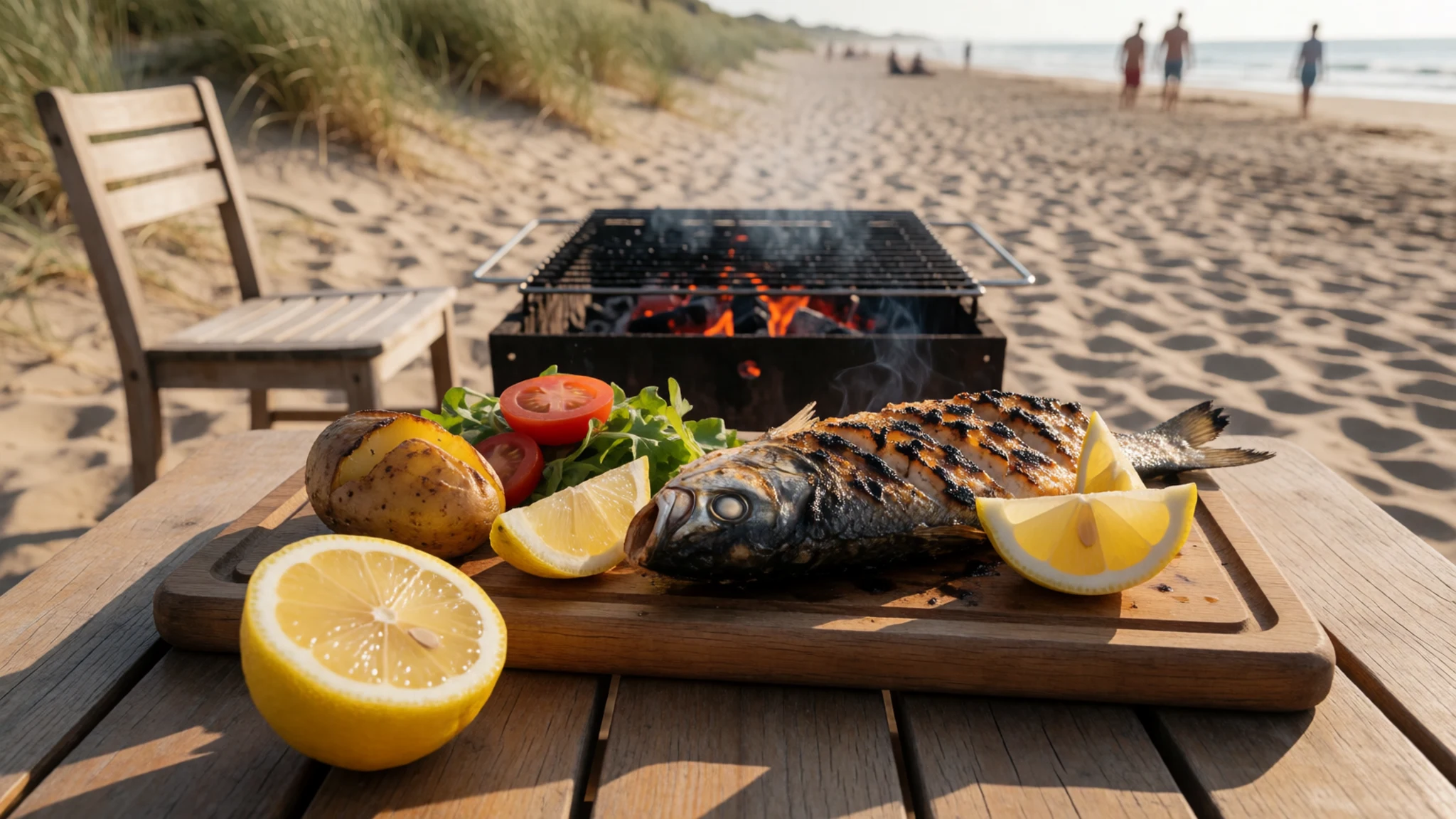
- Chivito — beach bars and lane eateries
The chivito is Uruguay's steak sandwich, and in Punta del Diablo it is the meal for when the catch is not the point: beef, egg, cheese, lettuce and tomato in a soft roll. Beach bars and lane eateries grill them through the summer afternoon. - Empanadas — bakeries and takeaway counters in the lanes
Empanadas, baked or fried, are the walking meal of Punta del Diablo: beef, ham and cheese, or occasionally fish, folded in pastry and eaten on the way to the beach. Bakeries and small counters sell them. They travel well in a bag on a day of sand and camping. - Rabas — summer bars and seafood counters near the beach
Rabas — squid cut into rings and fried — are the snack to share at Punta del Diablo. Summer bars and seafood counters near the beach serve them with lemon. They are crisp, salty and gone quickly, a coast habit rather than a plated main course.
Plan it
Best time. December to March is the warm season for swimming at Punta del Diablo, and January and February are the crowded heart of it. March and November are quieter, with cooler evenings. From June through August the wind takes over, many kitchens close, and the village belongs again to the fishery.
How long. 2–3
Getting there. Punta del Diablo has no airport and no railway. Most people fly into Montevideo and continue by long-distance bus, about four hours, with some coaches entering the village and others stopping about 5 km short at the highway turnoff. Inside the village the streets are sand, so that last stretch is slow when the summer traffic is in.
Budget. low
Tips
- Book a bed or a camping pitch for January well ahead; the season is short and the village fills.
- Carry some cash, because small stalls and camping shops may not take cards.
- Walk early in the day; the sun and the ocean wind both strengthen as the hours pass.
- Swim clear of the stretch where boats are launching or being hauled up.
- Outside the summer weeks, check which kitchens are open before you count on a sit-down meal.
Etiquette
- Ask before you photograph fishermen or their boats at work.
- Keep off the path of a crew launching or landing a boat.
- Carry rubbish away from the beach; the wind pushes litter straight into the dunes.
Nearby
Sources
- Wikidata (CC0)
- Wikipedia (CC BY-SA 4.0)
- Wikivoyage (CC BY-SA 4.0)