Uvs Lake
Uvs Lake, Russia
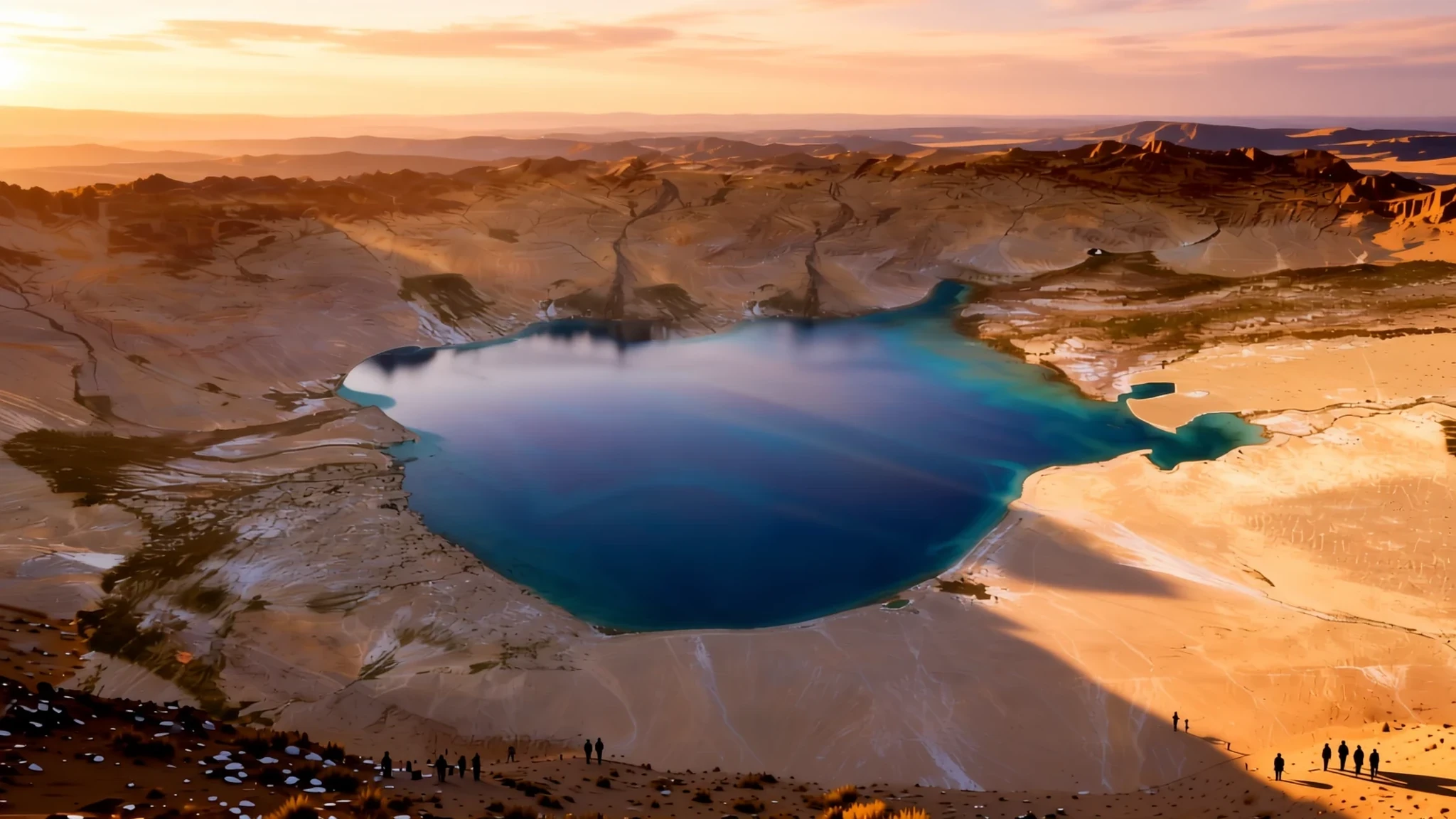
Uvs Lake is a salt lake in a wind-scoured basin where Mongolian steppe, desert dunes and a frozen winter all meet.
The place
Uvs Lake sits in the Great Lakes Depression of north-western Mongolia, a closed basin near the Russian border where rivers run inward and stop. The water is saline: it gathers what the streams bring and has no channel to the sea, so minerals stay behind as the surface evaporates under a hard, dry wind. From the shore the far side often disappears into glare. The margin shifts between pale salt crust, reed beds and low gravel, with desert dunes on one flank and mountain walls closing the horizon on others.
The depression around Uvs Lake is a wide hollow rather than a single shoreline. Steppe runs to the water in some places; elsewhere sand climbs in low ridges, and marshy deltas push green tongues into the lake where the larger rivers arrive. The Tes, the main feeder, builds one of those deltas along the northern reach, a maze of channels and reeds that holds a different life from the open, bitter water. Satellite views of the hollow show the lake as a pale oval in brown country, ringed by smaller lakes and dry lake-beds of the same basin system.
Winter locks Uvs Lake. The surface freezes, the tracks that cross the aimag fill with snow, and the basin is known across Mongolia for cold that settles and stays. Birds use the wetlands on passage and in the breeding months; herders move with their stock on the grass that the basin still gives. There is no city on the shore. The aimag centre, Ulaangom, is the usual base, and the last stretch to the water is a drive across open country on unpaved tracks.
Its story
Uvs Lake has long been a landmark in a country that navigates by mountains, wells and winter camps rather than by streets. Mongolian speakers know it as Uvs Nuur, nuur simply meaning lake, and the aimag around it takes the same name. For herding families the water is less a resort than a boundary: salt on one side, grazing on the other, a place to read the weather and to time the move between spring and autumn camps. The basin's people include Dörvöd, Bayad and Khoton communities, each with their own strand of history, all of them shaped by life at the edge of the steppe where Russia's Tuva lies just over the northern ridges.
The hollow itself is older than any camp. Rivers have been filling a sink with no outlet for a very long time, leaving a chain of lakes, some fresh in character, Uvs Lake salt, and a pattern of abandoned shorelines that show the water has risen and shrunk with the climate. The lake was a fixed point in the western routes: hard to miss, poor to drink, rich in wildfowl, and a reason to keep the track on firm ground rather than on the salt flats.
In the modern period Uvs Lake became a reference for scientists as well as herders, a closed basin whose cold, birds and shifting shores record drought and plenty. That attention did not replace the older use. Herders still come to the grass, and Ulaangom, the aimag centre, holds the market and the airport for a region that still measures its year by livestock, wind and the month the ice breaks.
What to see
- The open water — Central basin
Uvs Lake's open water is a broad sheet of saline grey-green, often chopped by wind and edged with white crust where the shallows dry. There is no promenade and little shelter. Firm gravel makes the safest footing; soft salt near the wash line can give way. The far shore often dissolves in glare. Early morning and late evening bring the calmest light.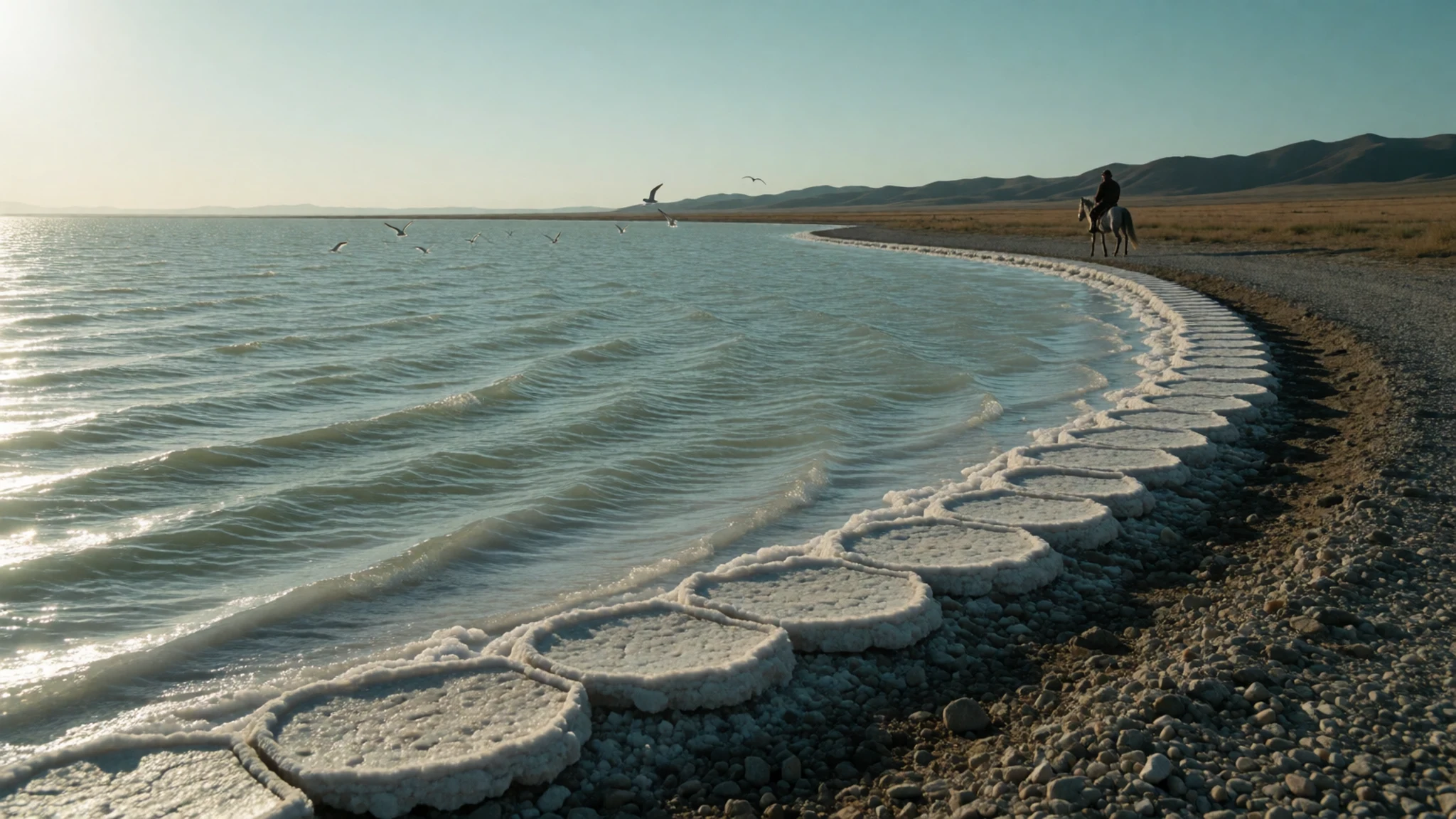
- Tes River delta — Northern shore
The Tes River meets Uvs Lake in a broad delta of channels, reed beds and wet pasture on the northern shore. Fresher water spreads through the marsh before it mixes with the salt lake, and birds gather in the warm months. A local driver is the practical way in. The delta rewards a slow visit at dawn, when wings are busy and people are few.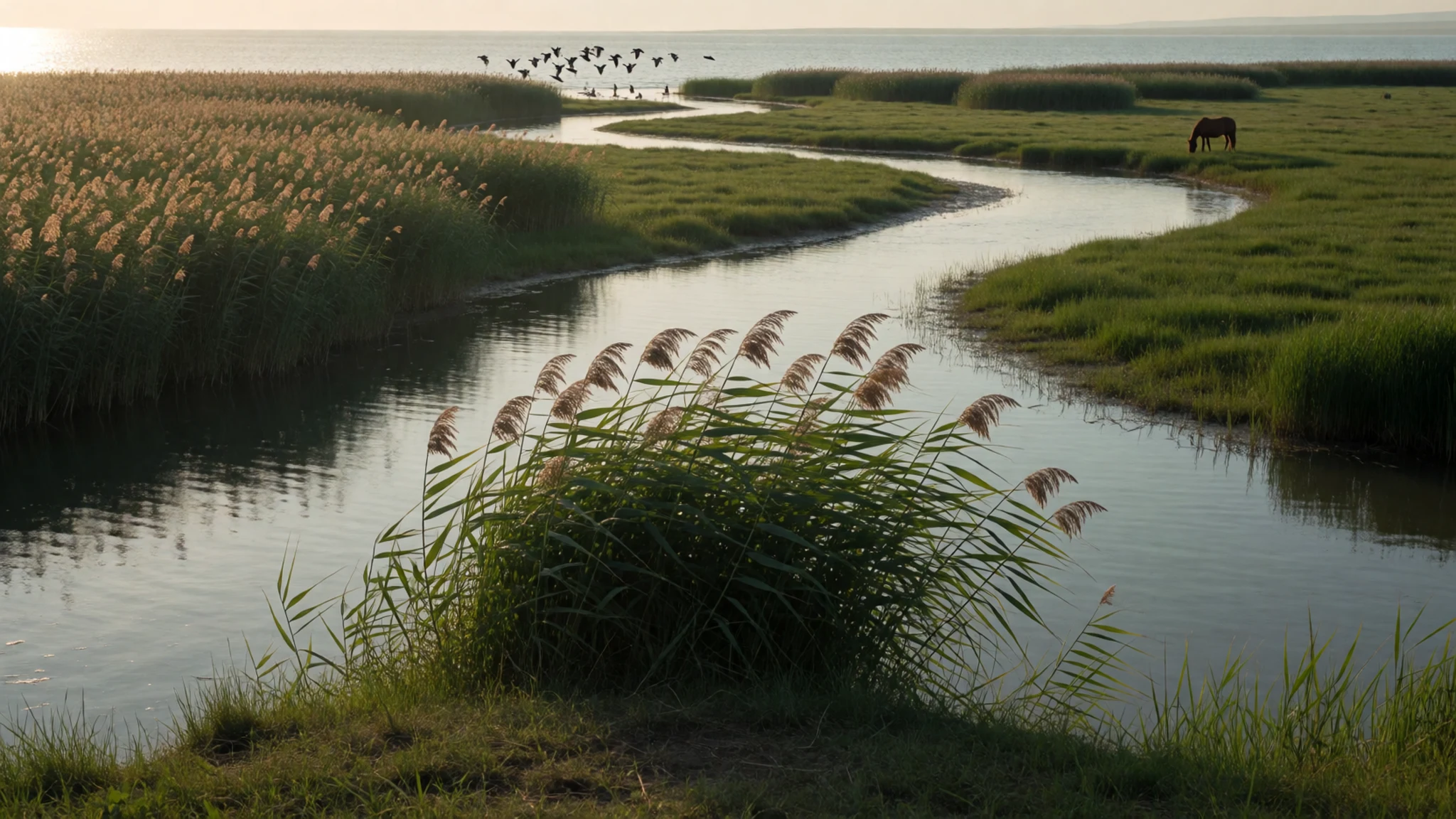
- Altan Els dunes — Southern basin
Altan Els, the Golden Sands, rises in the desert country south of Uvs Lake. The dunes are a sharp change from the salt shore: bare ridges, thin grass in the hollows, and a wind that moves the surface. Herders use the edges; the high crests are for walking, not for vehicles. Midday heat and glare are real even when the morning was cold.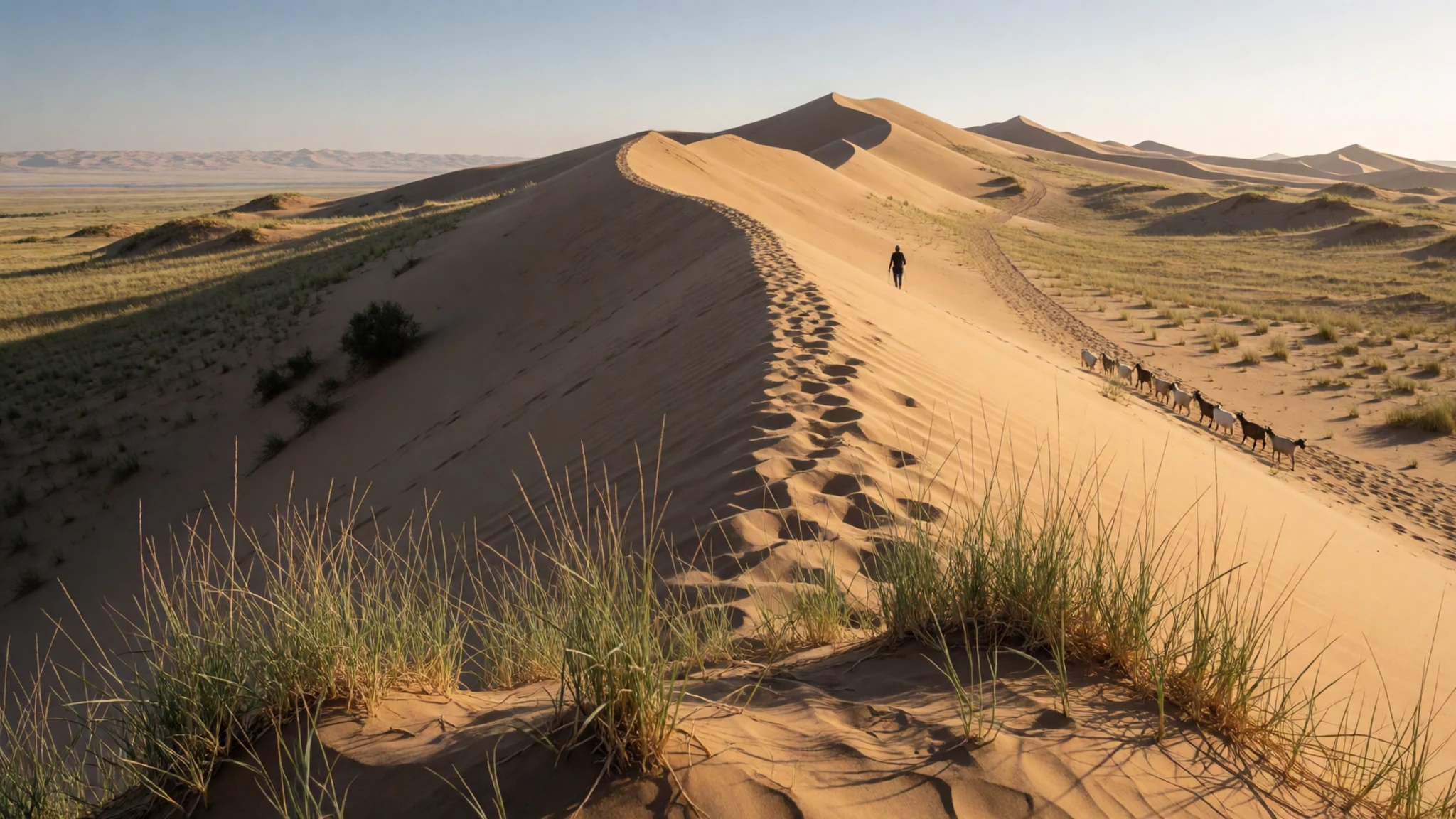
- Ulaangom — Western side of the basin
Ulaangom is the base for Uvs Lake, a small aimag capital on the western side of the basin, with a market, monastery yards and the airport. It is not a lakeside town; the shore is still a drive across open country. Fuel, cash, a meal and a driver who knows firm tracks are the reasons to stop.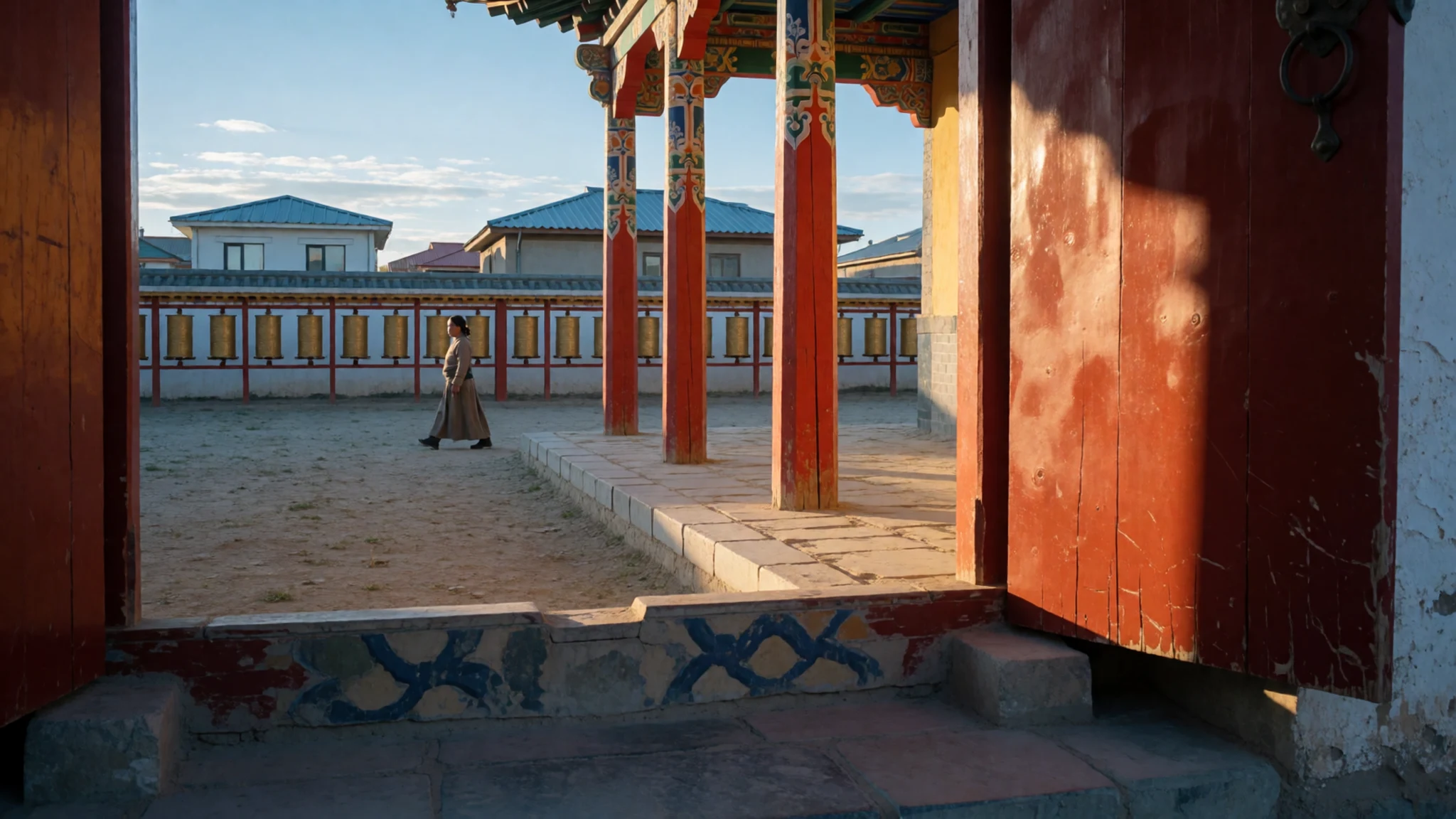
- The mountain rim — Northern ridges
The mountain rim north of Uvs Lake closes the basin and marks the climb toward Tuva. From the higher ground the lake reads as one pale floor in a much larger hollow, with smaller lakes and dry beds scattered across the brown. The road over these ridges, when it is open, is the long view rather than a swim stop.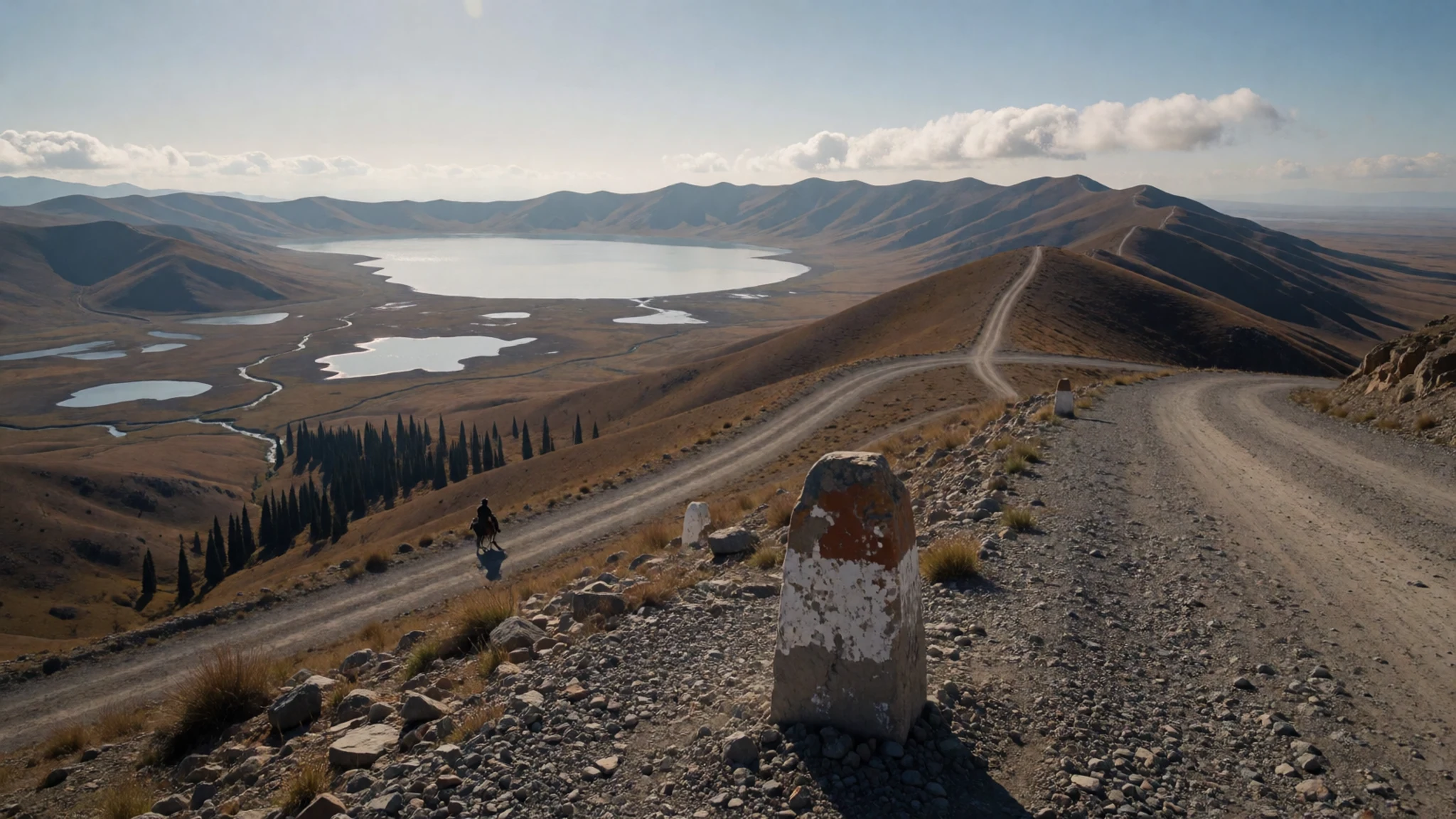
Culture
Uvs Lake belongs to a herding culture that still organises the year around grass, animals and the ger. In Uvs aimag the communities include Dörvöd, Bayad and Khoton families, and Tibetan Buddhist practice sits alongside older habits of offering to the land. A drive to the shore passes winter camps and summer pastures; the lake is part of that working country, not a separate park with a gatehouse. Hospitality is the social centre. Tea appears almost as soon as a guest is inside a ger, and a meal is a serious courtesy, not a snack.
Public life has its own calendar. Naadam, the midsummer festival of wrestling, horse racing and archery, is when deels come out in force and the aimag feels briefly urban. Monasteries in Ulaangom and smaller assemblies in the countryside keep a quieter rhythm of chanting and festival days. On the lake itself culture is thinner and more practical: knowledge of ice, of which shore floods, of where the reeds hold birds that people hunt or simply watch. Russian Tuva is only a ridge away, so border life, trade and mixed histories are part of the northern basin even when a visitor never crosses. Ask before you photograph people or the inside of a ger, and step over the threshold rather than onto it.
What to wear
Uvs Lake is cold country that dresses for wind first and for ceremony second. The traditional garment is the deel, a long robe worn over trousers, closed with a silk or cloth sash. Summer deels are lighter cotton or silk; winter deels are wool, sometimes lined with sheepskin, and the cut is what makes a coat into a closed shelter against the basin's wind. Boots, often the upturned gutal, cope with mud, stirrups and snow. A sash is not only decoration: it supports the back on horseback and marks a dressed person at a festival or a formal visit.
Around Ulaangom and on the road to Uvs Lake, everyday clothes are what work requires. Herders mix the deel with quilted jackets, rubber boots, baseball caps and padded coats from the market. Younger people in town wear jeans, trainers and down jackets for most of the year, and bring the deel out for Naadam, Tsagaan Sar and family events.
A visitor should copy the layering rather than the ceremony. Windproof outer clothes, a warm mid-layer even in summer, a hat for sun and a scarf for dust are the useful kit. Long trousers beat shorts once the wind is up, and shoulders should be covered at a monastery. Footwear needs to handle salt crust, sand and wet reed-edge mud; open sandals fail on all three. A clean pair of socks is worth carrying if a ger stay offers slippers at the door.
What to eat
- Suutei tsai — Any ger or roadside guanz on the way to the lake
Suutei tsai, salty milk tea, is the drink that structures a day around Uvs Lake. It is usually boiled with tea and a pinch of salt, sometimes with fried millet or a little meat fat. Guests are expected to take at least a little.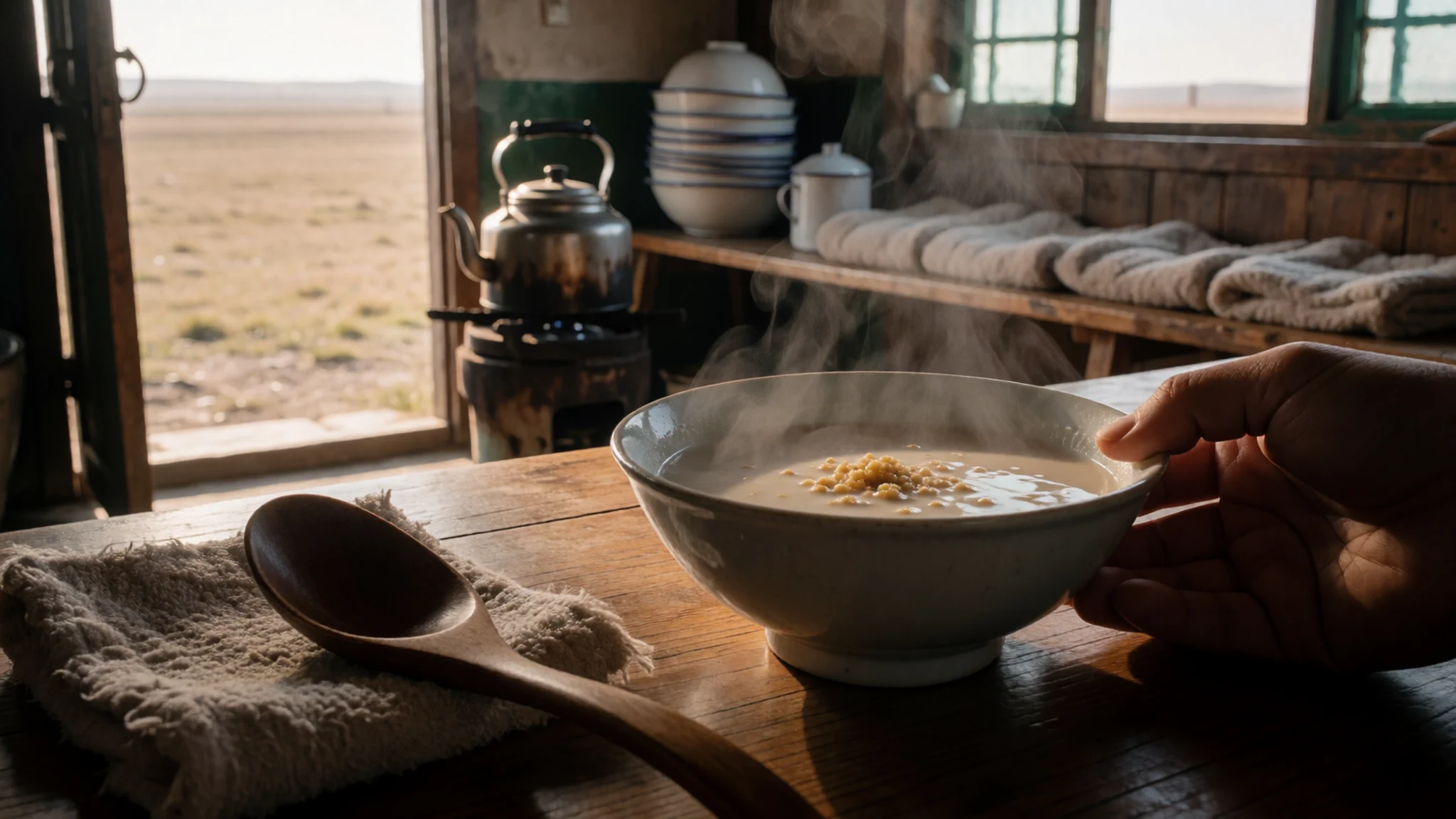
- Buuz — Market canteens in Ulaangom
Buuz are steamed dumplings filled with mutton, the everyday feast in Ulaangom before a trip toward Uvs Lake. The dough is thin, the filling seasoned with onion, and they are eaten with the fingers, often with the tea. A market canteen will serve them by the plate at midday.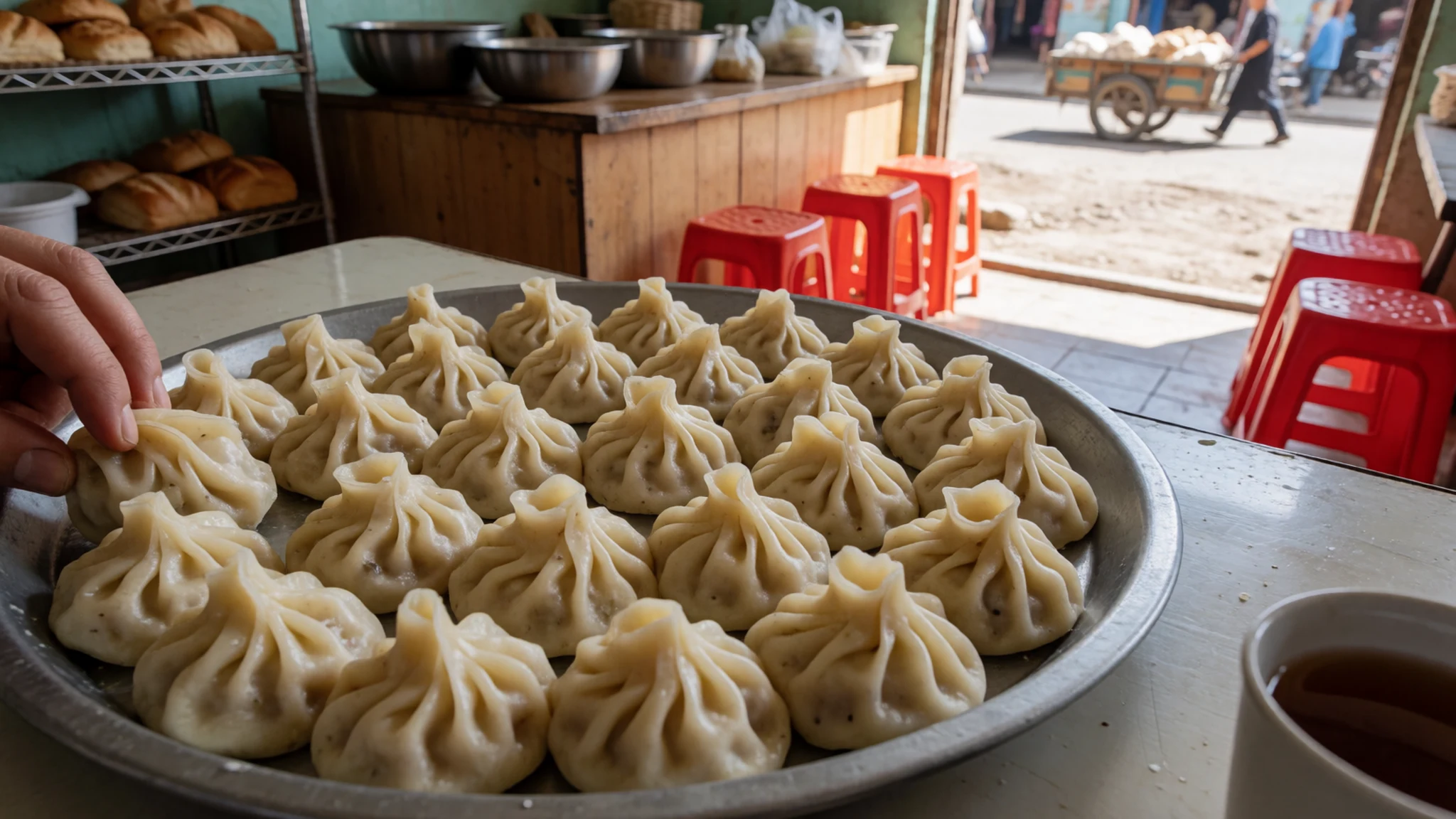
- Khuushuur — Roadside guanz between Ulaangom and the lake
Khuushuur are fried meat pastries, the food that survives a long drive toward Uvs Lake. A round of dough is folded over mutton and onion and fried until the crust blisters. They are sold at roadside guanz, the simple eateries on the tracks out of Ulaangom. - Tsuivan — Guanz and family kitchens in Ulaangom
Tsuivan is a stir of noodles, mutton and vegetables, a full plate when the wind off Uvs Lake has made a light meal seem foolish. The noodles are often cut from dough in the same kitchen. Canteens in Ulaangom serve it at lunch. - Aaruul — Markets in Ulaangom and herder camps near the lake
Aaruul is dried milk curd, hard, sour and sweet at once, and the snack that actually belongs in a pocket on the way to Uvs Lake. It keeps without a fridge. Markets sell it in bags; herders offer it with tea.
Plan it
Best time. Uvs Lake is easiest to visit from June through September, when the ice has broken, tracks are mostly open and birds use the deltas. May and October are possible in a mild year and harsh in a cold one, with snow still a risk on the passes. Winter freezes the water and is a specialist journey.
How long. 3–4
Getting there. Uvs Lake is reached from Ulaangom, not from a station on the shore. Flights connect Ulaanbaatar with Ulaangom; confirm the current schedule with the airline, because weather rewrites it. From the town a local driver and a high-clearance vehicle cover the unpaved last leg to the water, the dunes or the delta. Overland from neighbouring aimags is possible in the warmer months and slow.
Budget. mid
Tips
- Hire a driver in Ulaangom who has driven the basin that season; soft salt and sand move.
- Carry drinking water. Uvs Lake is saline and the shore has no standpipes.
- Take cash. Cards thin out quickly on the road toward Uvs Lake.
- Keep a warm layer in the car even in August. Nights in the basin drop fast.
Etiquette
- Accept a sip of tea when a ger offers it.
- Step over the threshold of a ger and wait to be shown a seat.
- Ask before photographing people, and do not push a camera on monks who decline.
- Slow down for livestock; herds have the road around Uvs Lake.
Nearby
Sources
- Wikidata (CC0)
- Wikipedia (CC BY-SA 4.0)
- Wikivoyage (CC BY-SA 4.0)