Gatchina Palace
Gatchina Palace, Russia
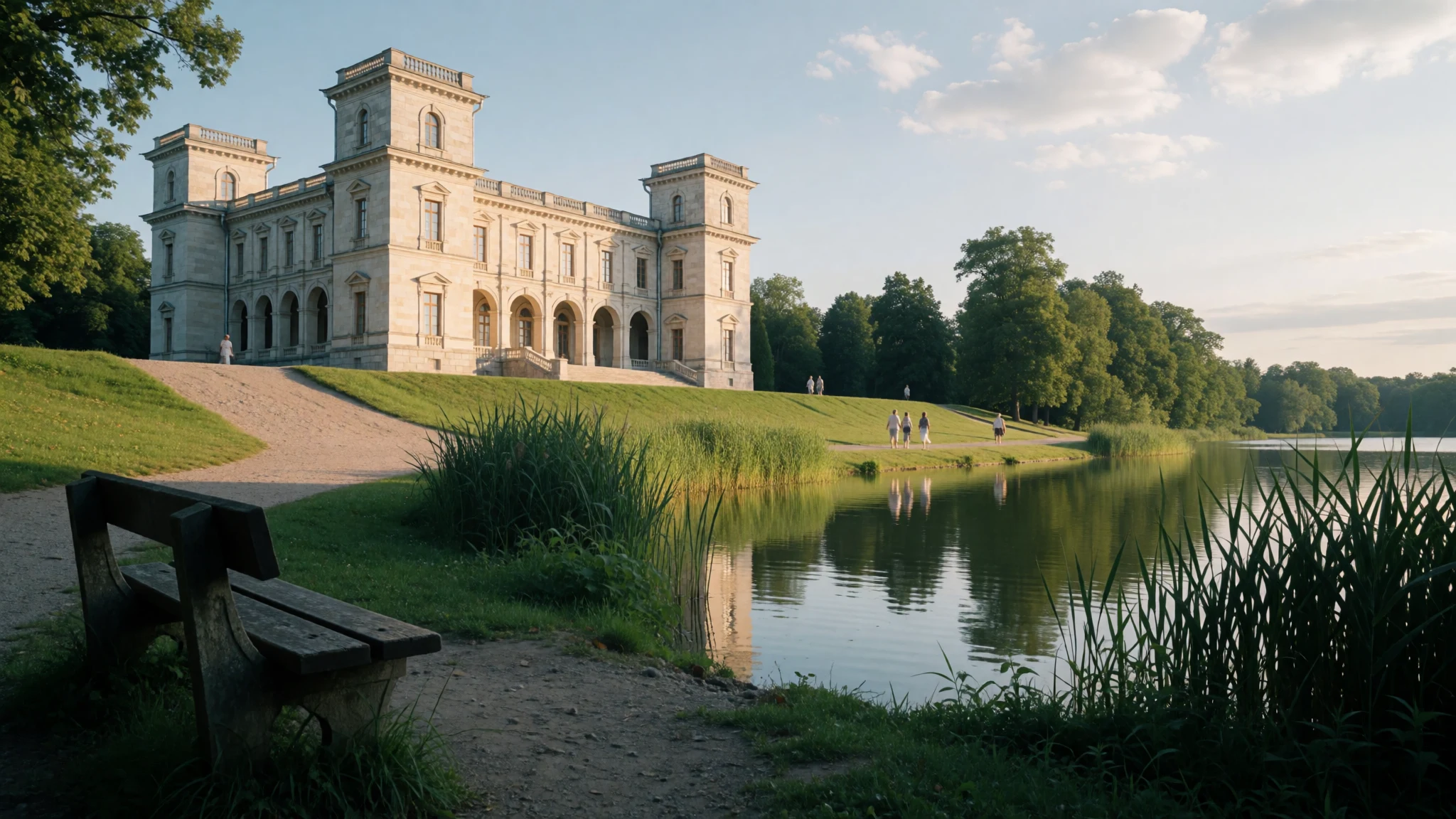
A castle-like imperial palace on a lakeside hill, an easy day out from Saint Petersburg with quieter rooms and parkland.
The place
Gatchina Palace stands on a rise in the middle of Gatchina, a town in Leningrad Oblast that works well as a day out from Saint Petersburg. Lake Serebryany lies at the foot of the hill, and the building faces it with a long, pale, slightly severe front that looks like a fortress taught good manners. That effect is deliberate. The Italian architect Antonio Rinaldi blended classical symmetry with towers and blocky wings borrowed from medieval castles, so the outside reads as part stronghold and part country house, while the rooms inside follow the ornate taste of Russian classicism. The local stone matters too. Pale limestone from villages nearby gives the walls a soft grey-cream tone that turns warmer in low evening light.
Gatchina was never only a showpiece. Several members of the imperial family treated it as a favourite residence, and politics was conducted here as well as leisure. The setting also differs from the grander palaces nearer the capital: it feels like a small country town with a castle at its centre, rather than a purpose-built court complex, and the park is used by local people for ordinary walks.
After the fall of the monarchy the residence passed into public hands and became a museum, with the grounds open as a park. The visit suits a half day or more, because the rooms, the parkland and the lake edge each reward unhurried time, and the walk between them is part of the pleasure.
Its story
Gatchina Palace began as a favour. In 1765 Catherine the Great bought a modest manor south of Saint Petersburg and handed it to Grigory Orlov, the courtier widely credited with arranging the removal of her husband, Peter III, and so clearing her path to the throne. Work on a new palace began in 1766 on a hill beside Lake Serebryany. Rinaldi's plan drew on Russian habits, a medieval castle and an English hunting lodge, and relied on limestone and other stone quarried in neighbouring villages.
Building was slow. The main block stood by the end of 1768, the outer decoration was finished in 1772, and the interiors dragged on through the late 1770s. The palace was complete in 1781, and Orlov died in 1783. Catherine had grown fond of the place by then and bought it from his heirs.
She gave it to her son Paul, the future Paul I, even though a house had already been built for him at Pavlovsk. Paul put much of his remaining money into Gatchina itself, using what he had seen on his travels around Europe to shape the town around the palace as a model of order. During the 1790s he had Vincenzo Brenna and Andrei Zakharov enlarge and rebuild large parts of the building. Later generations of the family kept returning, which is why the palace carries the marks of more than one reign rather than a single moment.
What to see
- The southern façade — Palace forecourt, central Gatchina
The southern front shows Rinaldi's mixture most clearly: pale stone, square towers and long wings that recall a castle more than a palace. It is the view most photographs use, and the wide forecourt makes it easy to step back and take in the full width. Morning light, before tour groups arrive, suits it best.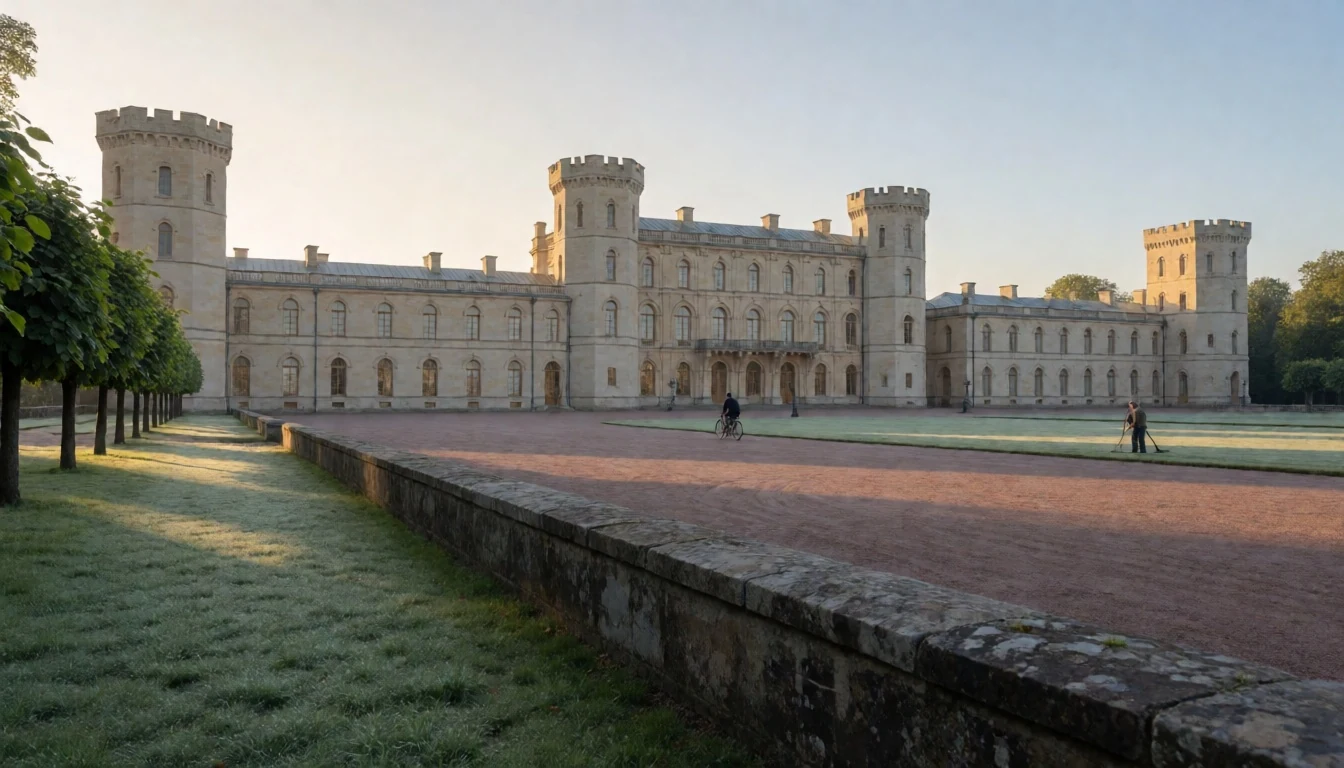
- The northern side and Lake Serebryany — Lakeshore below the palace
On the lake side the palace looks different: the stonework is reflected in the water and the building seems to rise straight out of the slope. The paths along the shore are good for a slow walk after the interiors, and the light is kinder in the late afternoon.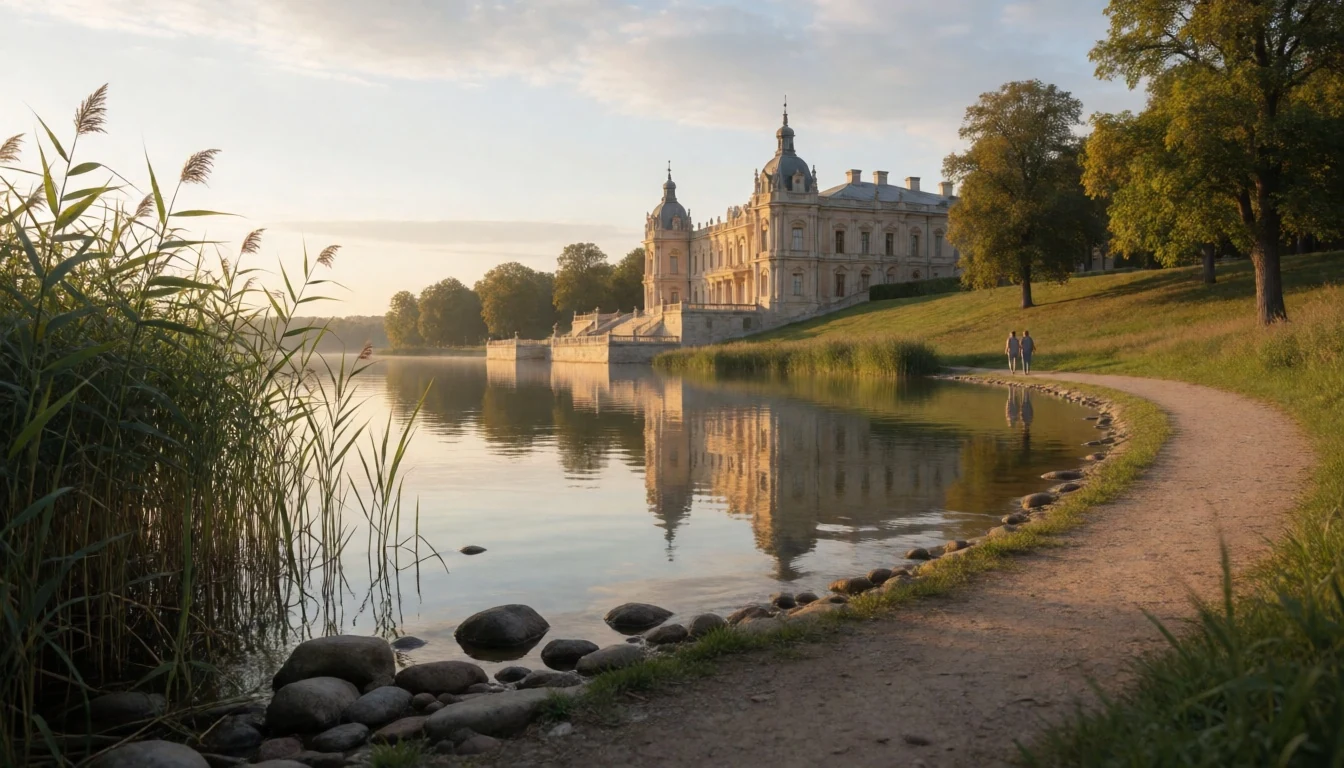
- The state rooms — Inside the main palace
Inside, ornate Russian classicism takes over from the castle look of the exterior. The rooms form a route through ceremonial spaces and family apartments, so the visit doubles as a tour of changing tastes under Catherine, Paul and later owners. Check the official site, gatchinapalace.ru, for which rooms are open and how to book.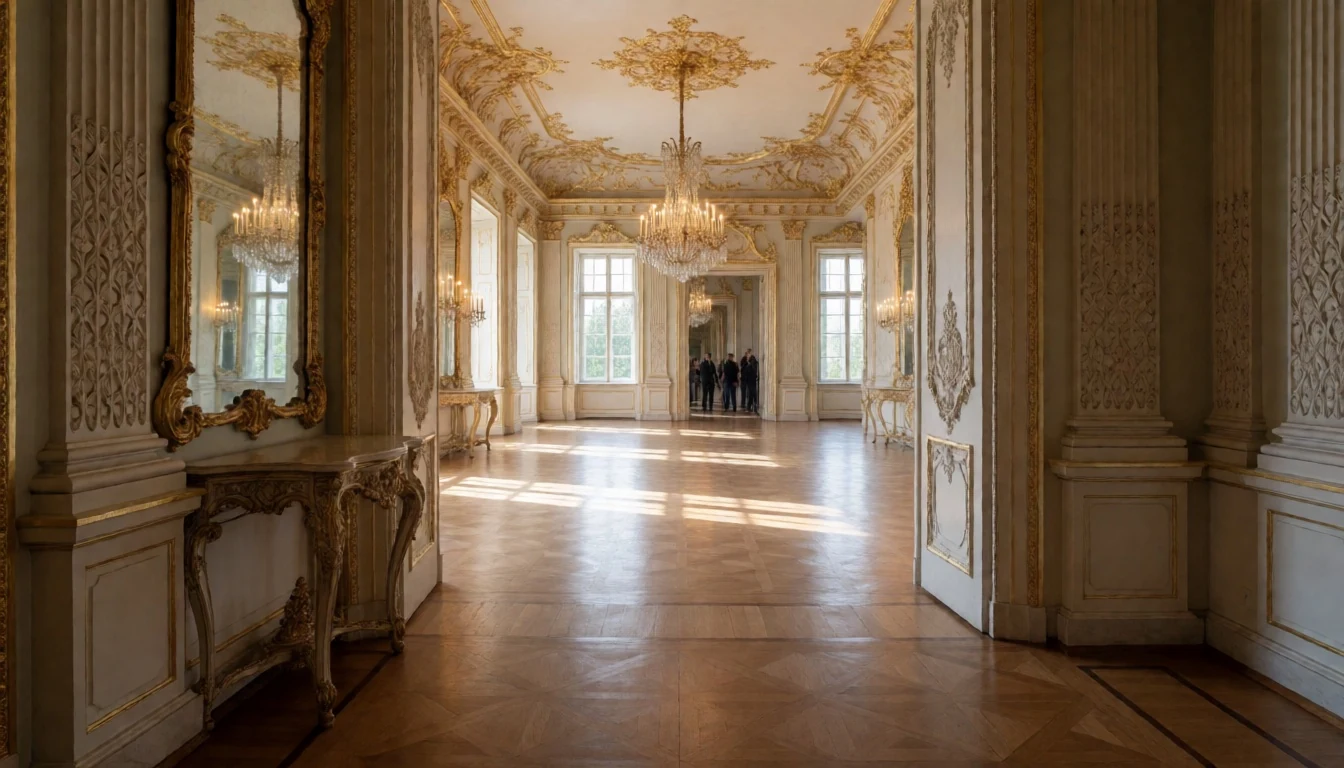
- The park — Grounds surrounding the palace
The park around the palace is a working town green as much as a heritage landscape. Paths, water and old trees spread out from the building, and local families use it year round. It deserves its own block of time, separate from the palace, and shoes that cope with damp ground.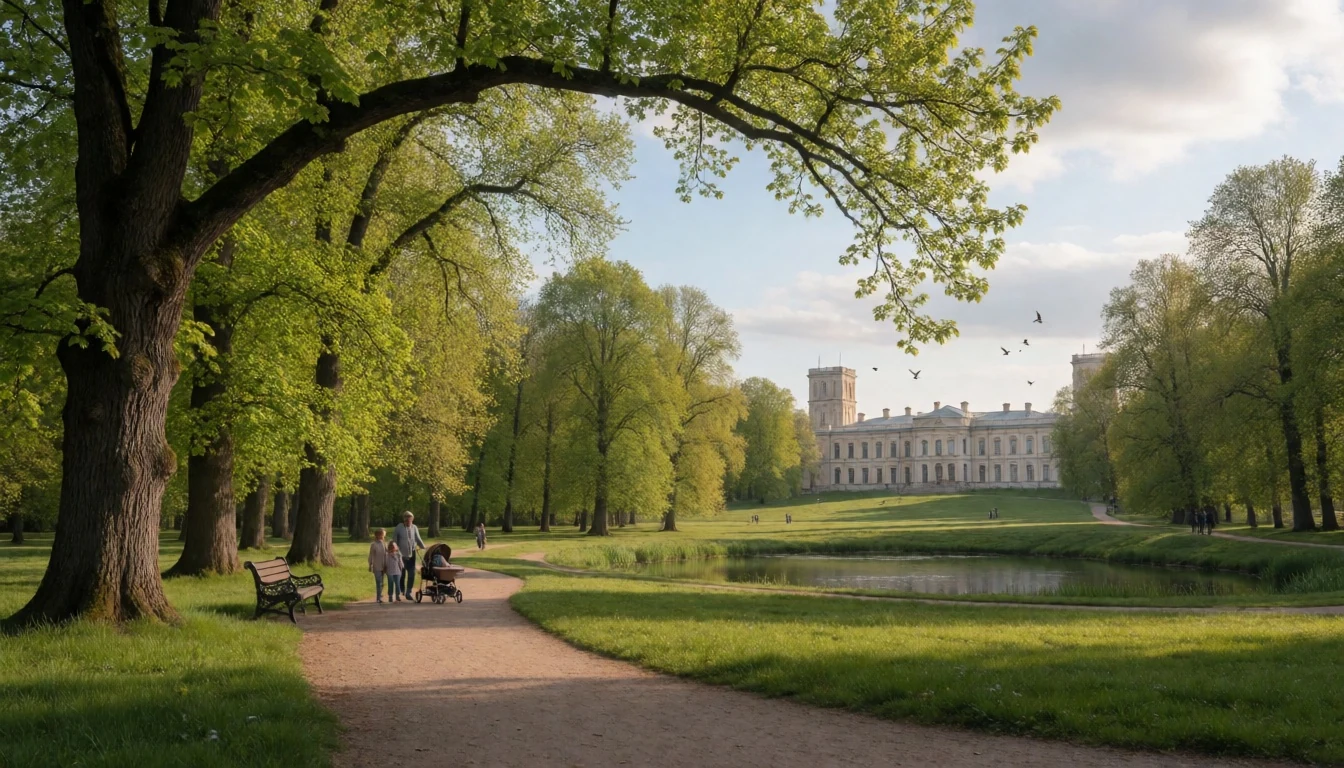
- The Gatchina Palace Egg — Displayed abroad; a connection to the palace's story
A Fabergé egg carries the palace's name, made in the house of Fabergé with layers of translucent enamel in a revival of eighteenth-century technique. The piece sits in a museum in the United States, so it cannot be seen here, but it shows how far the palace's name travelled among the court's collectors.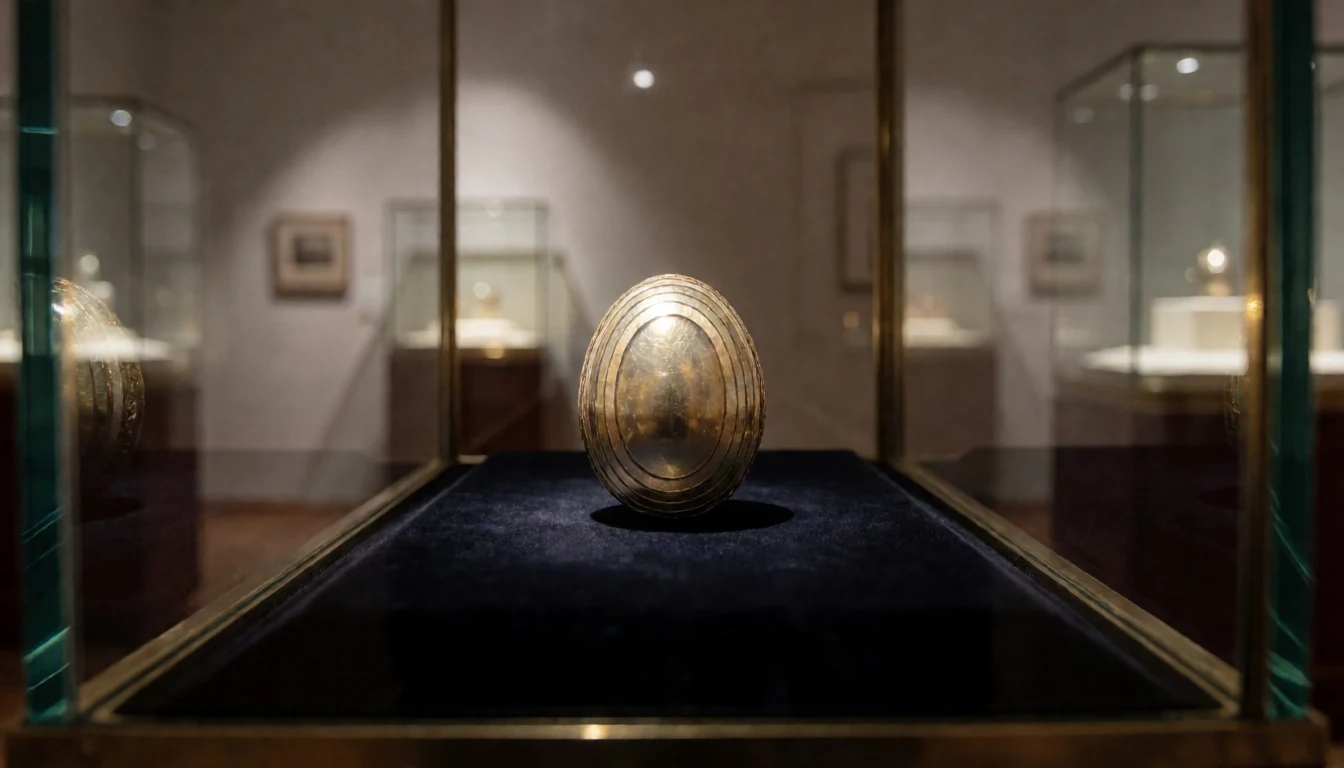
Culture
Gatchina Palace sits inside a culture that treats historic houses as shared inheritance. Families come for weekend outings from Saint Petersburg, schools bring classes, and the building is discussed as part of the national story rather than as a curiosity. Because the palace passed through the hands of a favourite, an empress and a future tsar, its story is usually told through people and their rivalries, so a visit feels like a family saga set in stone.
Russian museum manners lean formal. Attendants in the rooms are firm about distance from objects, voices stay low, and coats and bags are normally left at a cloakroom before entering. Tea and a pastry afterwards are the usual way to close a day out, and the town has small cafés for exactly that.
The seasons shape the mood. Pale summer evenings in the north give long light for walking the park, while winter turns the lake white and the palace into a grey silhouette against a low sky. Russian is the working language on site, and a few words such as spasibo (thank you) are appreciated, though staff at larger sites may manage some English.
Follow the attendants' lead on photography, since flash and tripods are often restricted in the historic rooms, and keep a clear arm's length from furniture, paintings and walls.
What to wear
Gatchina Palace belongs to a region whose traditional dress is best known from folk costume. The sarafan, a sleeveless dress in linen, wool or cotton, is worn over a linen shirt called a rubakha, with embroidery at the collar and cuffs. The kokoshnik headdress and wool shawls from Pavlovo Posad belong to festive wear, and felt boots called valenki and fur hats suit the winters. These now appear mainly at folk festivals, weddings and stage performances, while the palace rooms show eighteenth-century court dress in portraits and displays.
Everyday clothes in Gatchina are practical and city-like: jeans, dark coats, boots or trainers, and plenty of layers. Locals dress up a little for theatre or museum outings, but nobody expects formal wear.
Visitors should plan around the weather first. In summer, light layers and a rain jacket cover most days, with insect repellent useful near the lake and park. From late autumn to early spring, a warm coat, hat, gloves and shoes with grip matter more than style, and the cloakroom takes coats at the door. Comfortable, flat shoes are best for polished floors and gravel paths alike. There is no strict dress code inside, though covered shoulders and knees are never out of place in a historic house.
What to eat
- Pirozhki — Bakeries and kiosks around the town centre
Small baked or fried buns filled with cabbage, potato, egg or meat, sold warm as a snack. Fillings vary by baker, so ask what is inside. A couple make a cheap, light lunch between the palace and the park.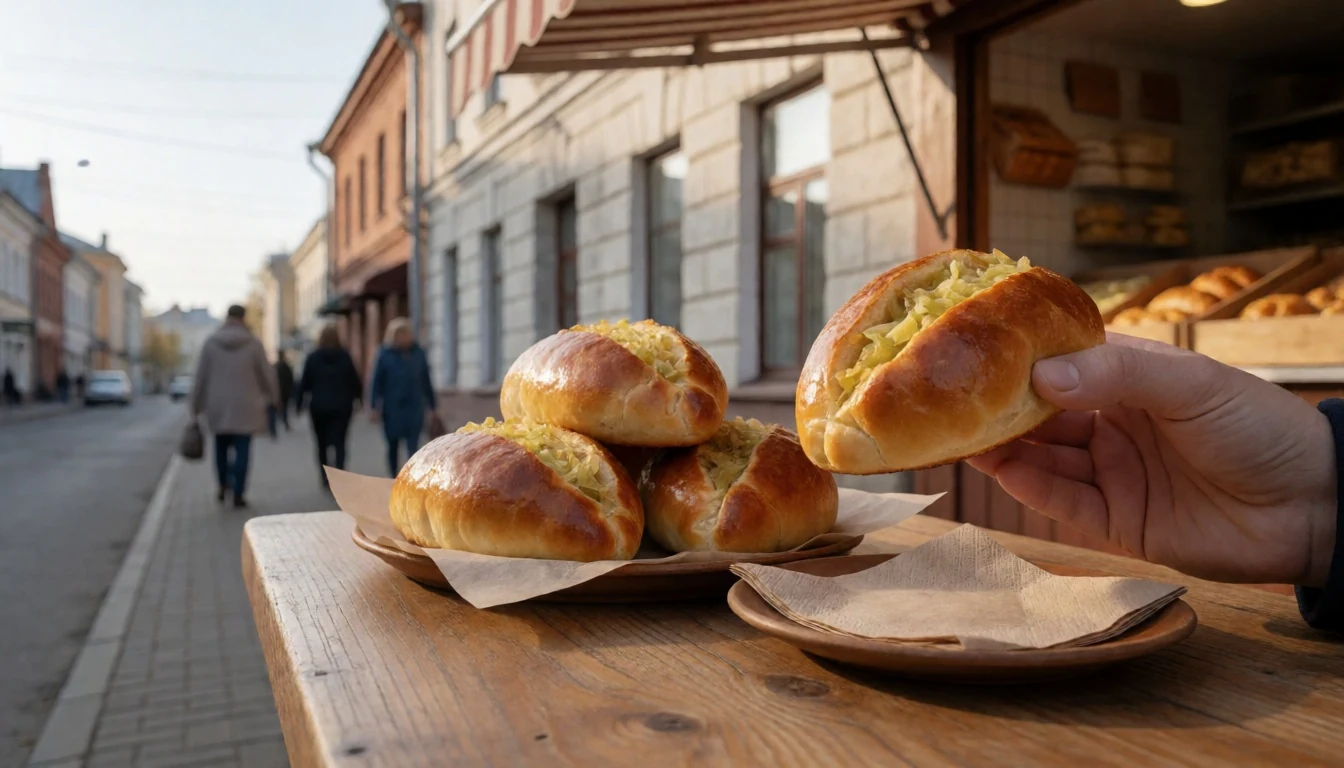
- Borscht — Canteen-style eateries (stolovaya) and family cafés
A beetroot soup served hot with a spoon of sour cream and dark rye bread. Households make it differently, some with meat and some without, so ask if that matters. It suits cold, damp days well, which the northern climate often supplies.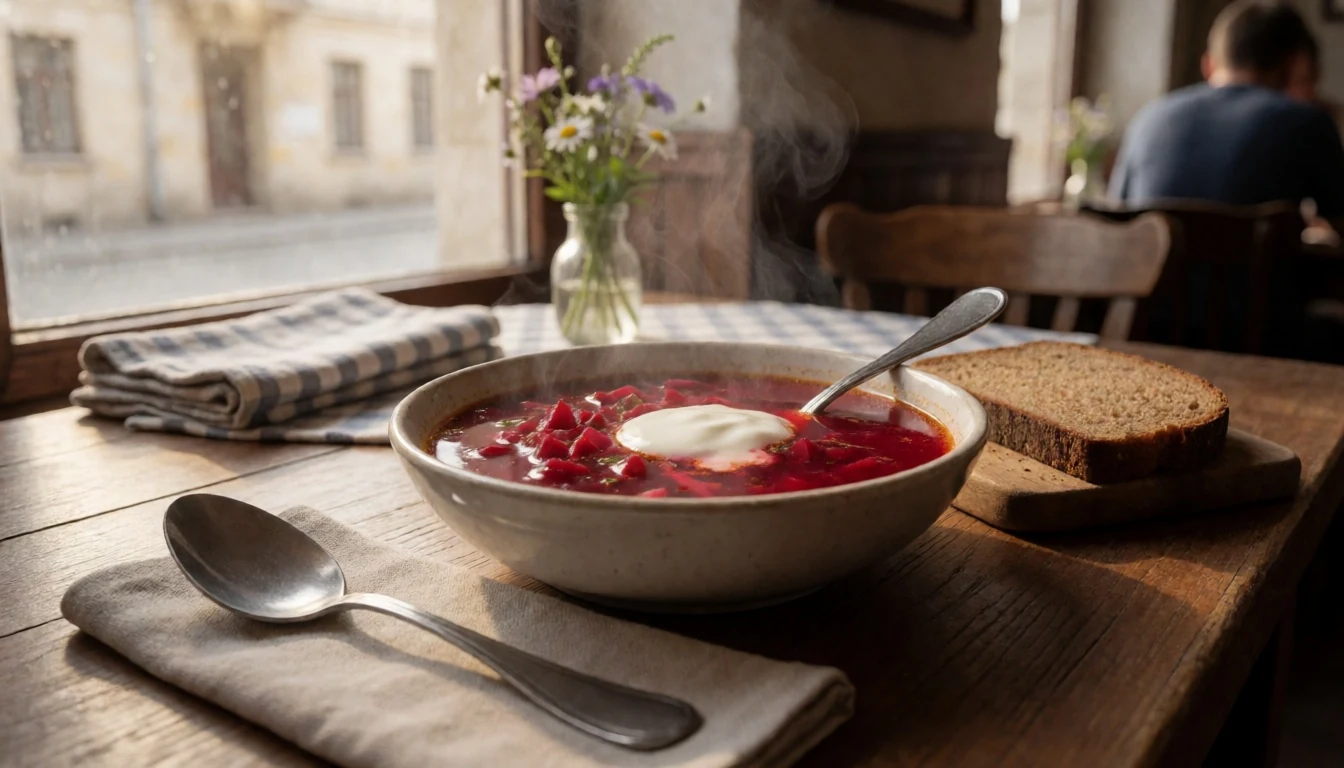
- Pelmeni — Cafés and simple restaurants in the town centre
Small meat dumplings, boiled and served with butter, vinegar or sour cream. They are filling after a long walk through the palace rooms. Fillings are often mixed, so ask about pork or beef if avoiding either. - Blini — Pancake cafés and bakeries along the main streets
Thin pancakes rolled or folded around sour cream, jam, cottage cheese or savoury fillings. They work as breakfast, a snack or a light supper, and pair well with hot tea after a chilly walk around the lake. - Kvass — Summer street stalls and cafés
A lightly sour drink fermented from rye bread, very low in alcohol and sold cold in summer. It tastes of bread and a little malt, and some visitors need a second glass to decide. Ask about alcohol content if avoiding it.
Plan it
Best time. May to September for walking the park and lake, when days are long and light lingers into the evening; June and early July are the white-night weeks around Saint Petersburg. Winters are cold and dark, though a snowy park is quiet and handsome, and the spring thaw leaves paths muddy.
How long. 1
Getting there. Fly to Pulkovo Airport in Saint Petersburg, then take a suburban train from Baltysky Railway Station to Gatchina, about 45 km to the south. Buses also run from Moskovskaya and Prospekt Veteranov metro stations, and the R23 road brings drivers in from the north. From the station, a local bus or taxi covers the last leg into the centre, where the palace stands on its hill by the lake.
Budget. low
Tips
- Check the official site, gatchinapalace.ru, for opening days, ticketing and which rooms are open before setting out
- Arrive early in the day: the rooms are calmer and the park light is better, and the cloakroom queue is shorter
- Foreign bank cards may not work in Russia, so check with your bank and plan how to pay before travelling
- Check current entry rules and your government's travel advice well ahead, as they change
Etiquette
- Leave coats and large bags at the cloakroom when asked
- Keep a clear distance from furniture, paintings and walls in the historic rooms
- Ask staff before using flash, tripods or video indoors
Nearby
Sources
- Wikidata Q7461 (CC0)
- Wikipedia: Great Gatchina Palace (rev 1364710493) (CC BY-SA 4.0)
- Wikivoyage: Gatchina (rev 4850172) (CC BY-SA 4.0)
- Photo: Gatchina Palace, Southern facade (Florstein) (CC BY-SA 4.0)
- Photo: Gatchina Palace Egg (House of Fabergé) (CC BY 3.0)
- Photo: Gatchina. Podvesnaya doroga (Public domain)
- Photo: Gatchina palace. North view (Artem Topchiy) (CC BY-SA 2.5)
- Photo: Vadimrazumov copter, Gatchina 5 (Usadboved) (CC BY-SA 4.0)
- Photo: Maria Fyodorovna with her children in Gatchina (Smirnov) (Public domain)
- Photo: Vadimrazumov copter, Gatchina 6 (Usadboved) (CC BY-SA 4.0)
- Photo: Vadimrazumov copter, Gatchina 7 (Usadboved) (CC BY-SA 4.0)


