Altai Tavan Bogd
Altai Tavan Bogd, Russia
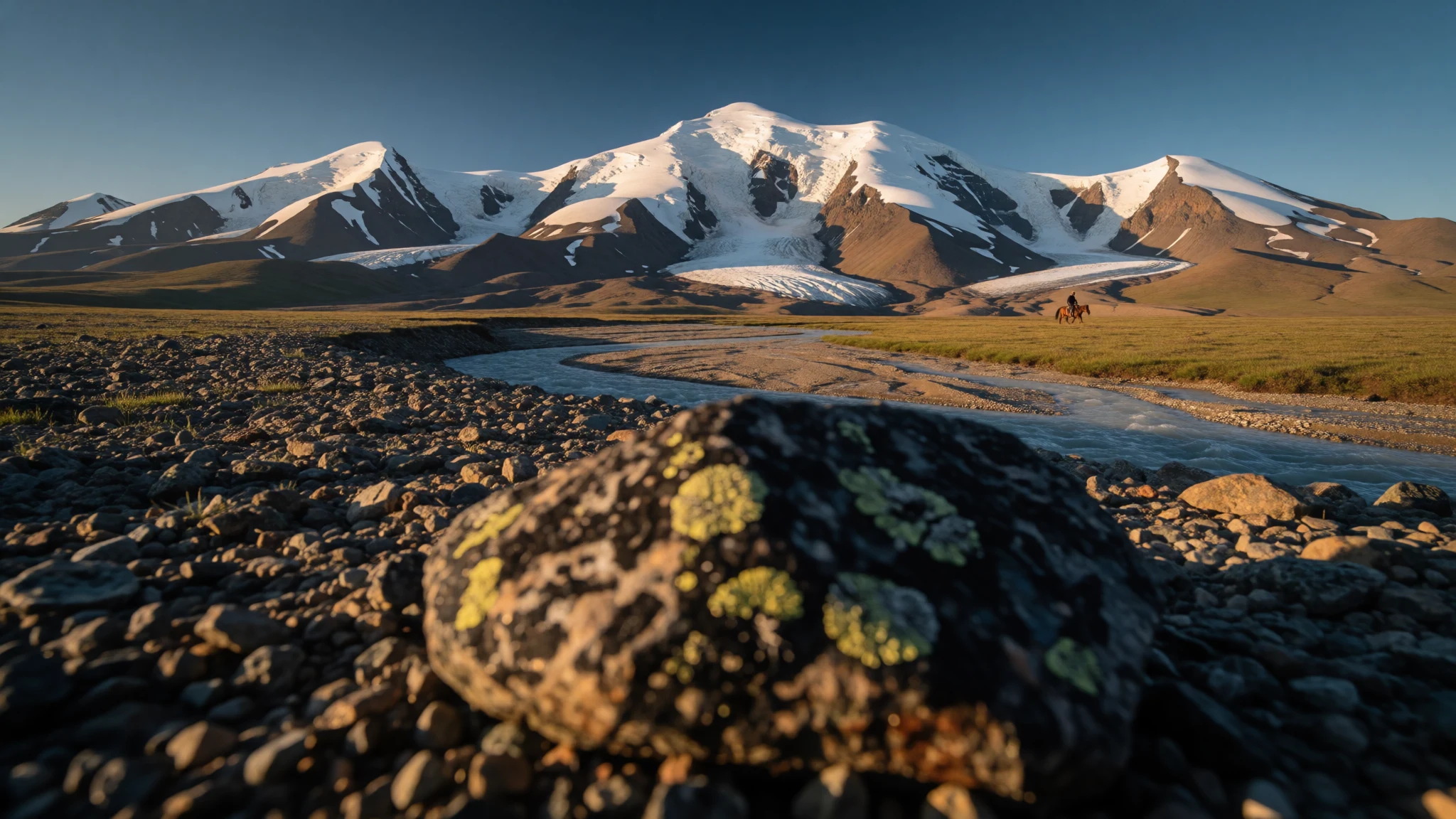
Altai Tavan Bogd is where Mongolia, Russia and China meet: a glaciated massif of five peaks, reached only by long overland travel.
The place
Altai Tavan Bogd sits in the far west of Mongolia, in Bayan-Ölgii Province, at the point where the Mongolian, Russian and Chinese borders meet. The name means Five Saints, and the massif is a cluster of five summits: Khüiten, Nairamdal, Malchin, Bürged and Ölgii. Khüiten is the highest ground in Mongolia. The massif reaches a height of 4374 meters at Khüiten Peak, and the permanent ice on its upper slopes feeds the rivers and lakes in the valleys below. Its northern slopes fall into Russia's Altai Republic, and the western side belongs to Burqin County in China, so the mountains are as much a frontier as a destination. On the ground it is a high, wide landscape of glacial valleys, alpine lakes, bare rock and open steppe, with almost no buildings. The nearest real town, Ölgii, is a long drive away over tracks rather than tarmac, and the park lies in a border zone where permits are part of the plan; the rules change, so they need checking each season. The people of the surrounding valleys are largely Kazakh herders, who move their animals between seasonal pastures. Weather turns quickly, and snow is possible at altitude in any month. Visitors should expect to be self-reliant, to travel with a driver or an operator, and to treat the logistics as part of the experience rather than an obstacle to it.
Its story
Altai Tavan Bogd takes its name from the Mongolian for Five Saints, and the reverence in that name is older than the borders that now cut through the range. Mountains across the Altai have long been treated as sacred by the Turkic and Mongol peoples who grazed herds beneath them, and the five summits were seen as a group of guardians rather than a climbing objective. The highest peak, Khüiten, was once better known as Nairamdal, a name that still turns up on older maps and in older accounts. The modern story is largely one of lines on a map. The Russian Empire, the Soviet Union, Mongolia and China all pressed their claims into this corner of Asia, and the result is a tripoint on the high ground that remains controlled to this day. Mountaineers have come mainly in recent decades, and the glaciers have become a draw for small, self-sufficient expeditions. Over the Russian border, the Ukok plateau holds ancient burial mounds and is a protected landscape in its own right. The park on the Mongolian side now does two jobs at once: it protects headwaters and wildlife, and it keeps open the old seasonal routes of the Kazakh and other herding families who live around it. Local guides talk about how the snow line has shifted within living memory. The mountains are still more a working landscape than a trophy.
What to see
- Tavan Bogd glaciers and base camps — Upper valleys, Altai Tavan Bogd National Park
The upper valleys beneath Khüiten and its neighbours are the heart of the park, with moraine, braided meltwater streams and glaciers spilling off the high ridges. Most visitors walk or ride to a base camp rather than climb. Views open slowly, so allow time to acclimatise and wait out the cloud.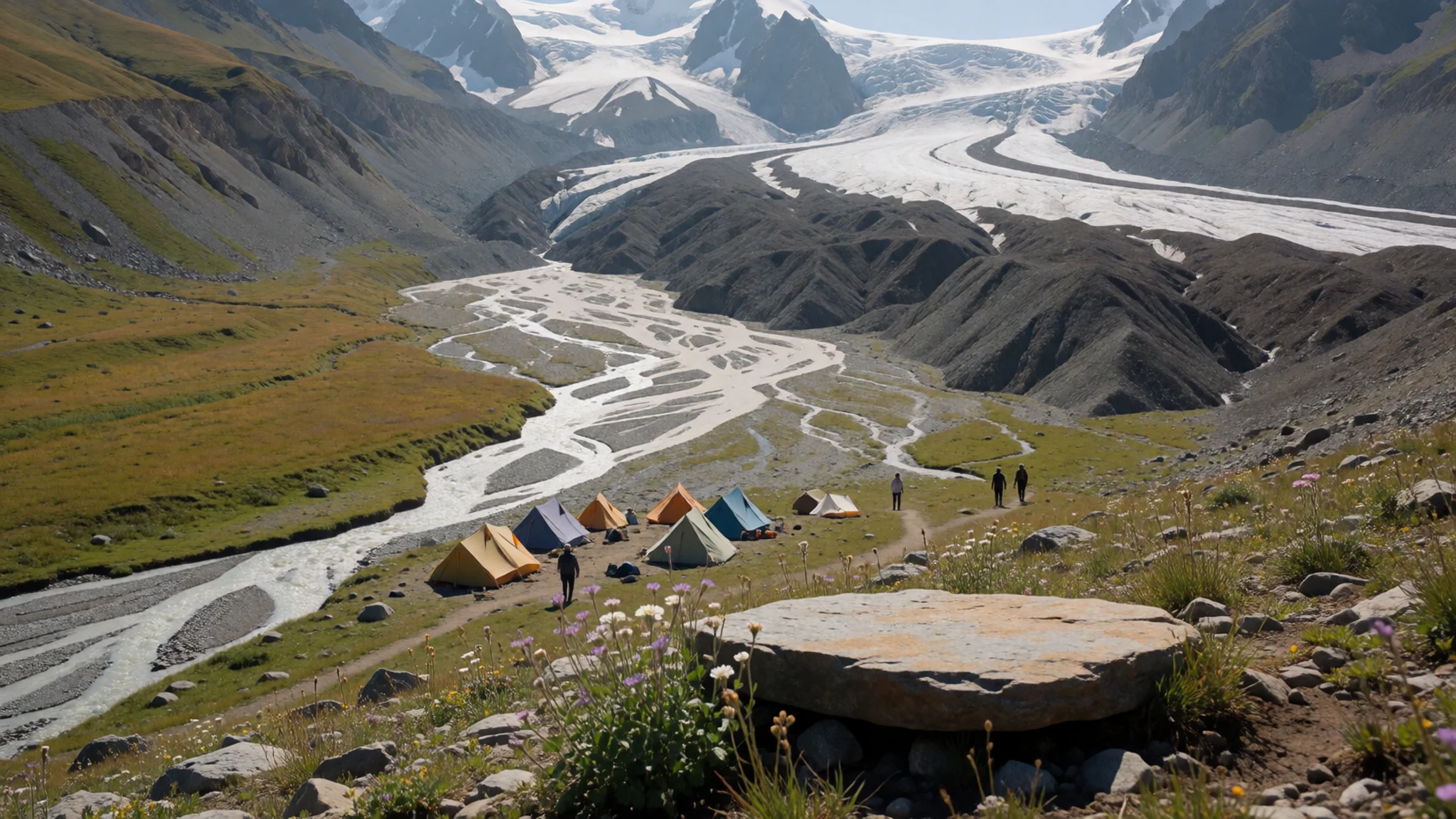
- Khoton Nuur — Lower park, near the lake shore
A large freshwater lake in the park's lower reaches, ringed by hills and sheltered conifer slopes. It is the usual first stop on the way in and a good place to adjust to the altitude. Camps along the shore range from simple tents to herder families offering a bed in a ger.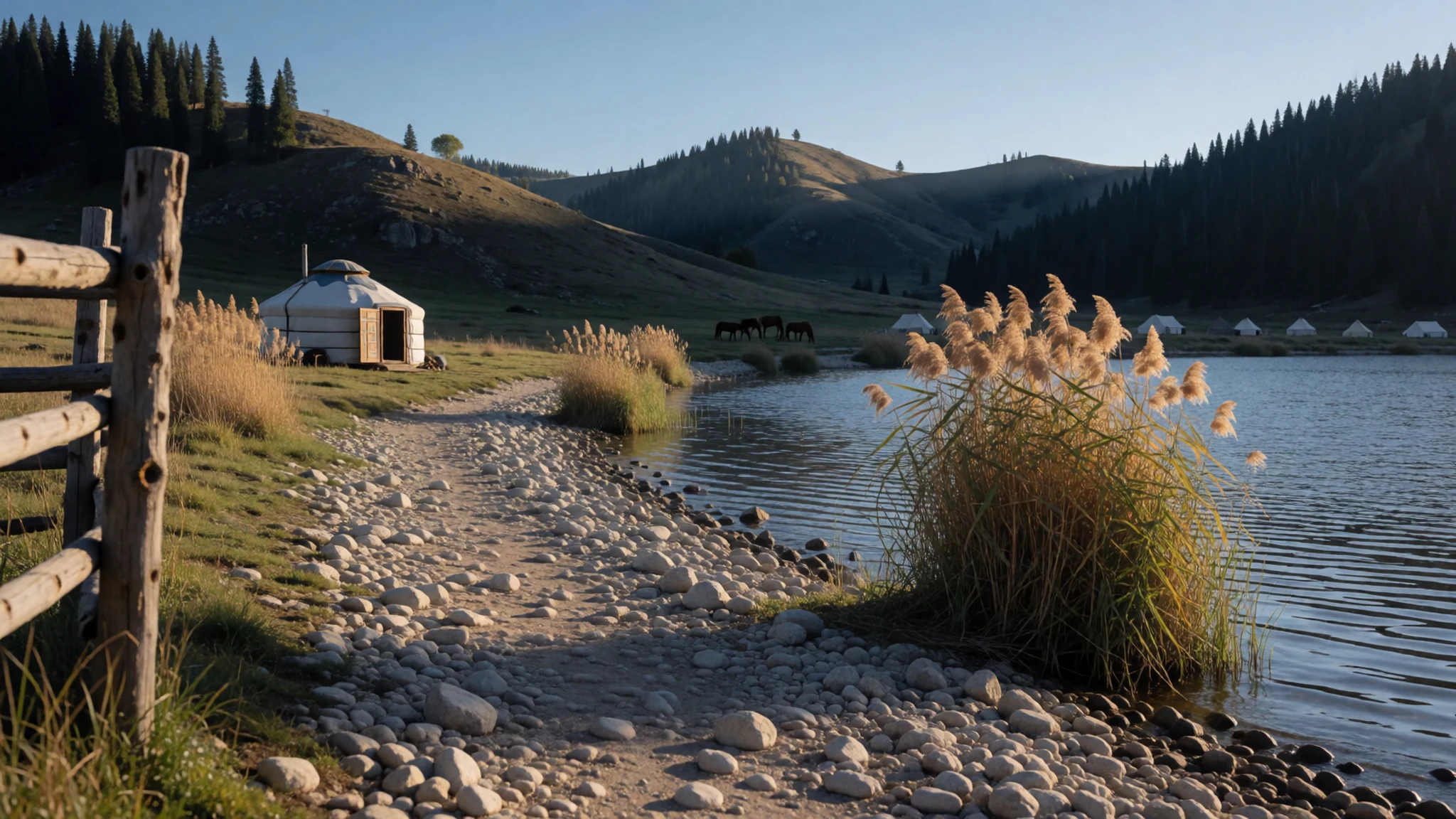
- Baga Turgen waterfall — Between the lakes, lower park
A waterfall on the river that links the lakes, reached by a short walk from the track. It is a calm, scenic break after hours in a vehicle, best in summer when the flow is full. Wet rock can be slippery, so wear boots with grip and keep back from the edge.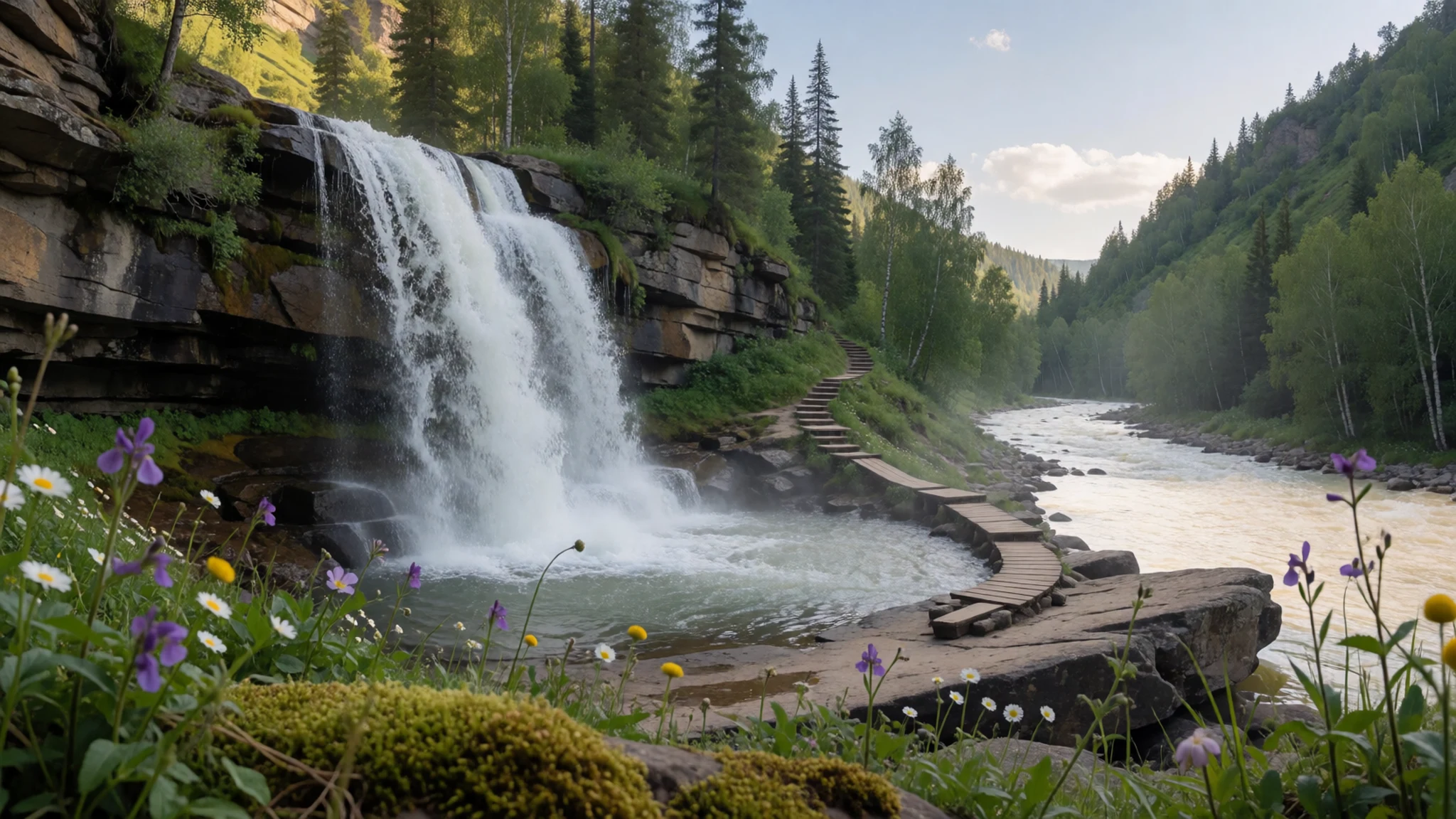
- Ukok plateau — Altai Republic, Russia
Across the border in Russia's Altai Republic lies a high, treeless plateau of grass, wetland and scattered burial mounds. It cannot be casually visited from the Mongolian side, but it shows what the wider region looks like. Anyone planning to cross should confirm every permit and border rule in advance.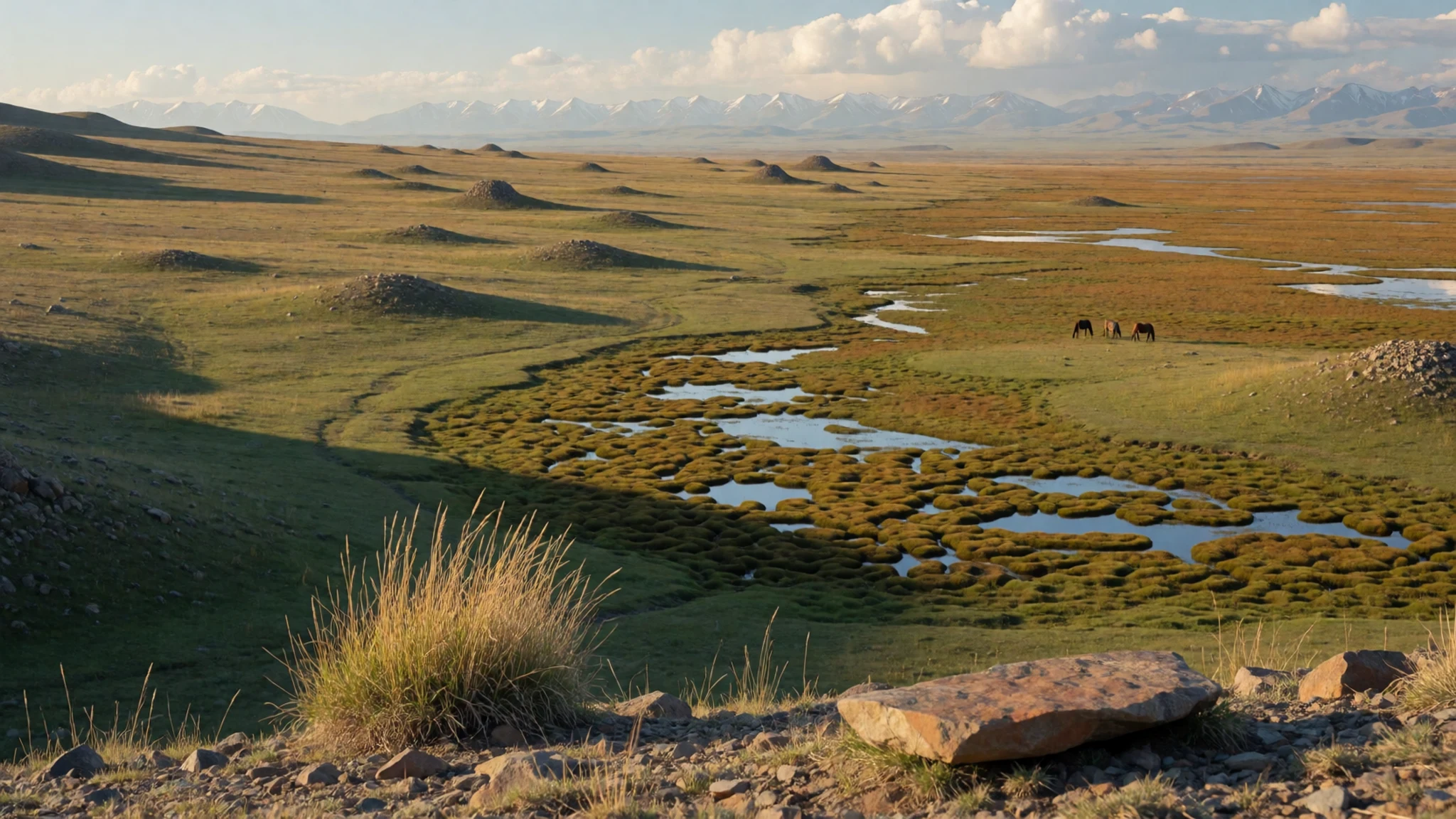
- Ölgii town — Ölgii, Bayan-Ölgii Province
The provincial capital is the staging post for nearly every trip: a place to buy supplies, change money, meet drivers and sort permits. Its bazaar sells felt, embroidered textiles, dried dairy and fresh bread, and the town gives a first taste of Kazakh life before the mountains.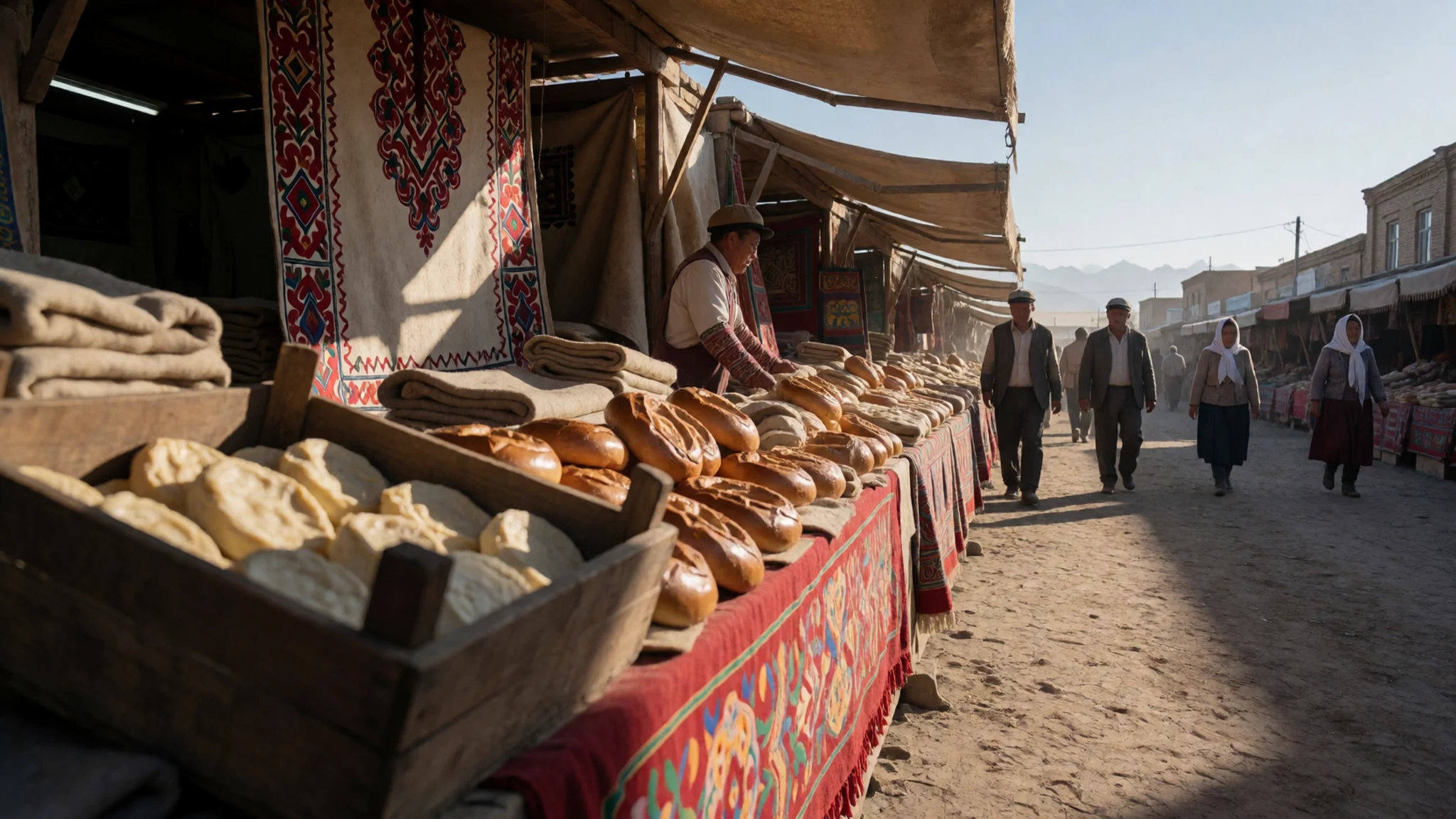
Culture
Altai Tavan Bogd lies in the part of Mongolia where Kazakh culture is strongest, rather than the Khalkha Mongol majority found elsewhere in the country. Families in Bayan-Ölgii speak Kazakh, follow Islam in a lightly practised, rural form, and keep customs closer to Central Asia than to Ulaanbaatar. Hospitality is central: a traveller arriving at a ger is normally offered tea, bread and sweets before any question is asked, and refusing everything outright can sting. Herding shapes the calendar, with families moving to summer pastures and back to sheltered winter camps. Eagle hunting, in which hunters train golden eagles to take foxes from horseback, is the best-known tradition of the province, and festivals showcase it; check local listings for dates. Mountains and lakes carry spiritual weight for many herders, and cairns of stones, often draped with blue cloth, mark passes and high points. Livestock, horses and dogs are working animals, not attractions. Visitors are guests in other people's homes and pastures, and a little patience with long, slow meals goes a long way. When you enter a ger, step over the threshold rather than on it, accept the first cup of tea with your right hand, and ask before photographing people, eagles or livestock.
What to wear
Around Altai Tavan Bogd, traditional dress belongs mainly to the Kazakh families of Bayan-Ölgii, whose clothing is built for riding and for cold. Men's winter coats are lined with sheepskin or fox fur, and a fur cap with long ear flaps is a familiar piece. Women's festive dress uses velvet and brocade, heavily embroidered, with a tall headdress called a saukele worn at weddings and other special occasions. Felt, wool and leather are the working materials, and embroidered felt wall hangings and carpets called tuskiyiz are made for the home. Everyday clothing today is far plainer: jeans, fleeces, padded jackets, boots and baseball caps, with traditional coats kept for festivals, weddings and winter riding. Visitors should dress for mountain weather rather than for ceremony. Pack thermal layers, a windproof and waterproof shell, a warm hat and gloves even in midsummer, sun protection for thin air, and broken-in waterproof boots with ankle support for stony ground and stream crossings. Modest dress is appreciated in villages and in family homes: covered shoulders and knees are sensible for everyone, and women do not need to cover their hair. A pair of light camp shoes is useful for stepping in and out of gers.
What to eat
- Beshbarmak — A family ger or guesthouse in Ölgii, especially at a celebration
Boiled mutton or horse meat laid over broad, flat noodles with onions and a little broth. It is the Kazakh dish for feasts and honoured guests, eaten communally from a shared platter and best enjoyed slowly.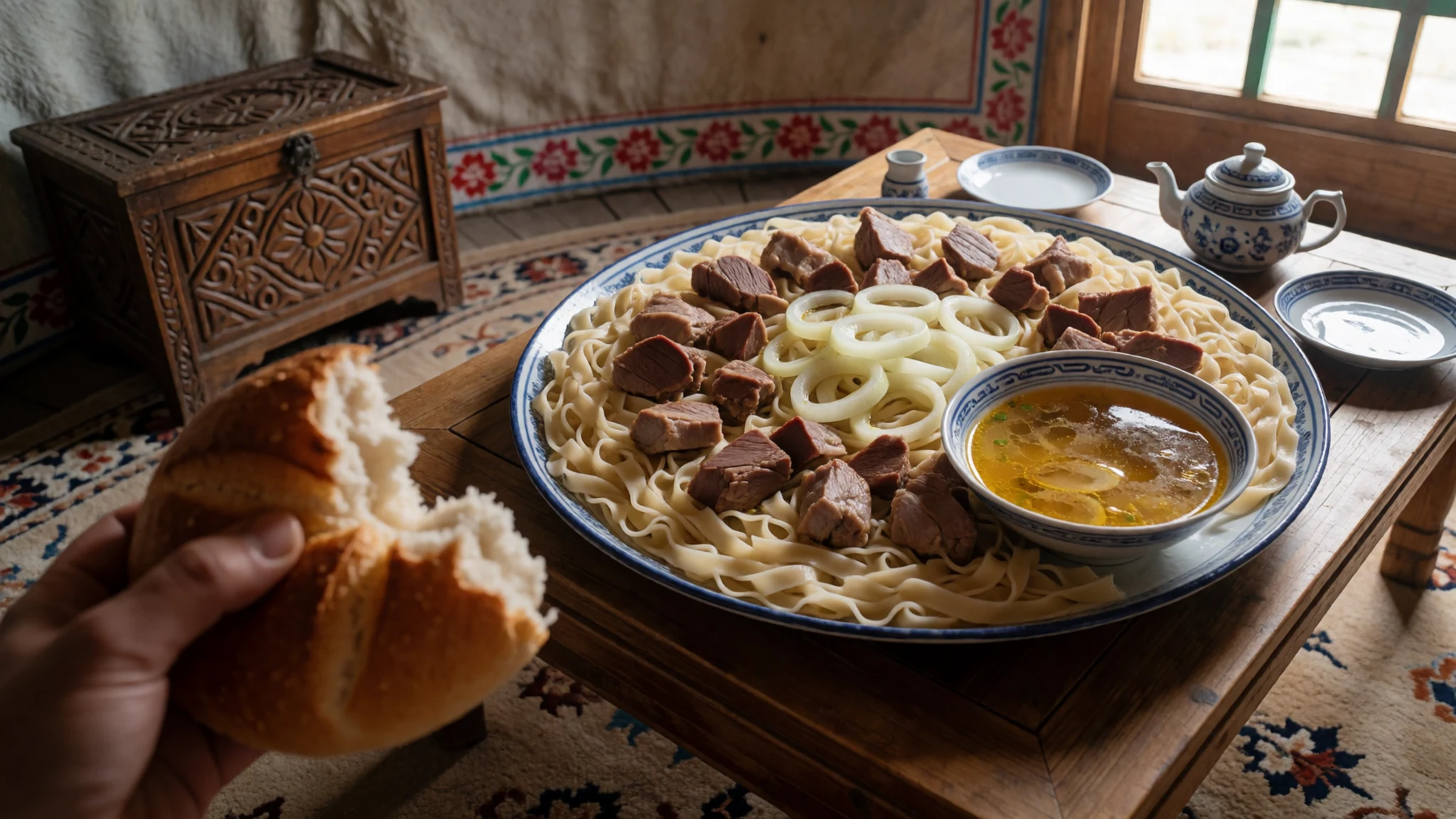
- Baursak — Bazaar stalls in Ölgii and any family table
Golden puffs of fried dough, plain or lightly sweet, served in heaps beside the tea. They are made fresh at most family tables and keep well, so herders often carry some for long rides.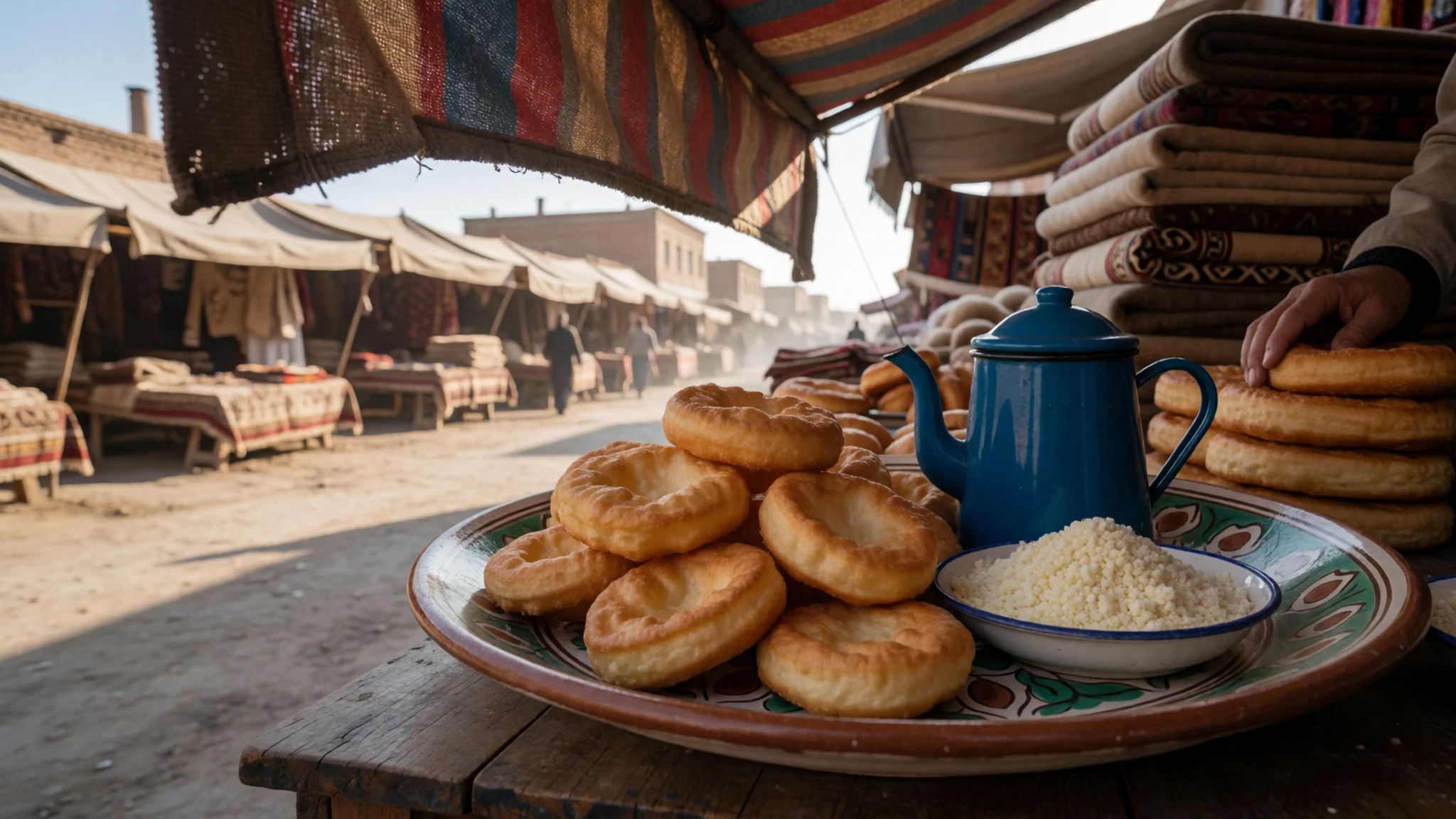
- Kurt — The dairy section of Ölgii's bazaar and herder camps
Dried, salty balls of soured cheese, hard enough to need a slow suck rather than a bite. Herders carry them as a trail snack, and the flavour is sharp, tangy and an acquired taste. - Salted milk tea — Every ger, camp and roadside eatery
Hot tea made with plenty of milk and a pinch of salt, offered to every visitor on arrival. It is warming, filling and usually served with bread, butter or cream, and refusing the first cup is awkward. - Qymyz — Summer herding camps in the valleys
Fermented mare's milk, lightly fizzy, sour and slightly alcoholic, made in summer when mares are milked often. It is an acquired taste, and one bowl is usually enough for a first try.
Plan it
Best time. June to September. Summer gives the most reliable access, long daylight and snow-free tracks; July is the warmest and wettest month, though nights stay cold and rain or snow can still arrive at altitude. Winter is severe and most routes are closed to ordinary visitors.
How long. 5–7
Getting there. Fly from Ulaanbaatar to Ölgii, the provincial capital, then continue by off-road vehicle with a local driver or operator over unsurfaced tracks into the park, which usually takes a full day or more. Flights are limited and weather-sensitive, so keep spare days at either end.
Budget. mid
Tips
- Arrange the border-zone permit and a guide through a local operator well before you travel, and check current rules
- Buy cash, food, fuel and water filters in Ölgii; cards and shops are scarce in the park
- Build in a few spare days for weather delays on flights and tracks
- Acclimatise slowly: sleep low, rise gradually, and turn back if headaches worsen
- Carry offline maps and a satellite communicator, since phone signal is patchy
Etiquette
- Ask before photographing people, eagles or livestock
- Take all rubbish out and keep to existing tracks to protect the pasture
- Leave gates as you find them and keep clear of herds and dogs
Nearby
Sources
- Wikidata Q143008 (CC0)
- Wikipedia: Tavan Bogd (CC BY-SA 4.0)
- Wikivoyage (CC BY-SA 4.0)
- Photo: Ukok Plateau (Kobsev) (CC BY 3.0)
- Photo: Relief map of Mongolia (NordNordWest, Виктор_В) (CC BY 3.0)
- Photo: Tavan Bogd Mountains (Altaihunters) (CC BY 3.0)
- Photo: Baga Turgen waterfall (Mongolia Expeditions) (CC BY 3.0)
- Photo: Camping in Tavan Bogd (Altaihunters) (CC BY 3.0)
- Photo: Khoton Lake (Altaihunters) (CC BY 3.0)
- Photo: View of Mongolia, ISS024-E-15469 (NASA) (Public domain)
- Photo: View of Mongolia, ISS024-E-15470 (NASA) (Public domain)


Wildlife
- Golden eagle (animal)
The golden eagle is a dark-brown bird of prey with a golden-brown glow on its neck, quick and strong, with sharp talons. Young ones often show white on the tail and wings. In this province, hunters train these eagles to catch foxes while riding, a much-loved tradition shown at festivals; ask locally for dates. To watch well, go with a guide, keep your distance, stay quiet, and never feed it.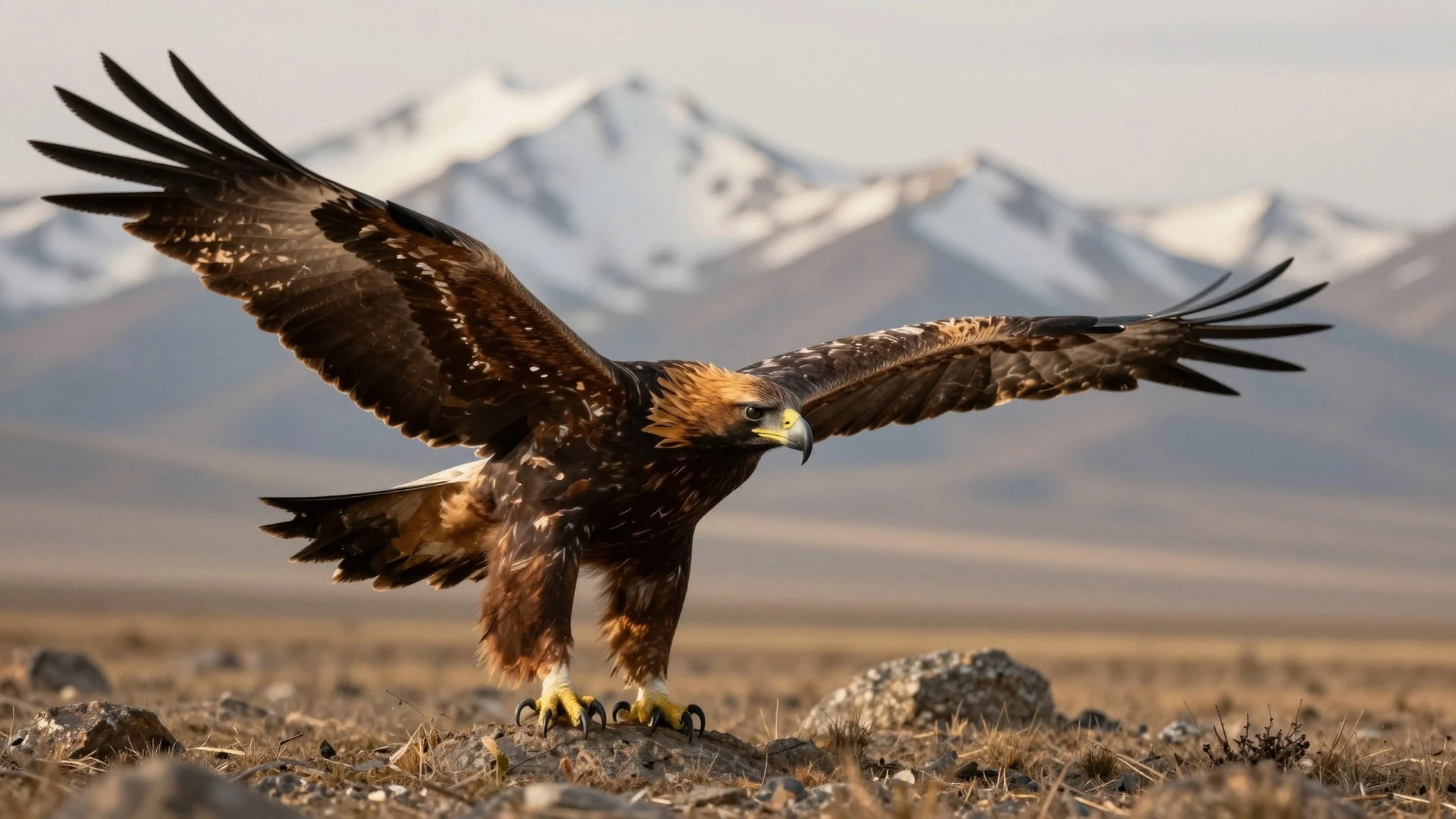
- Fox (animal)
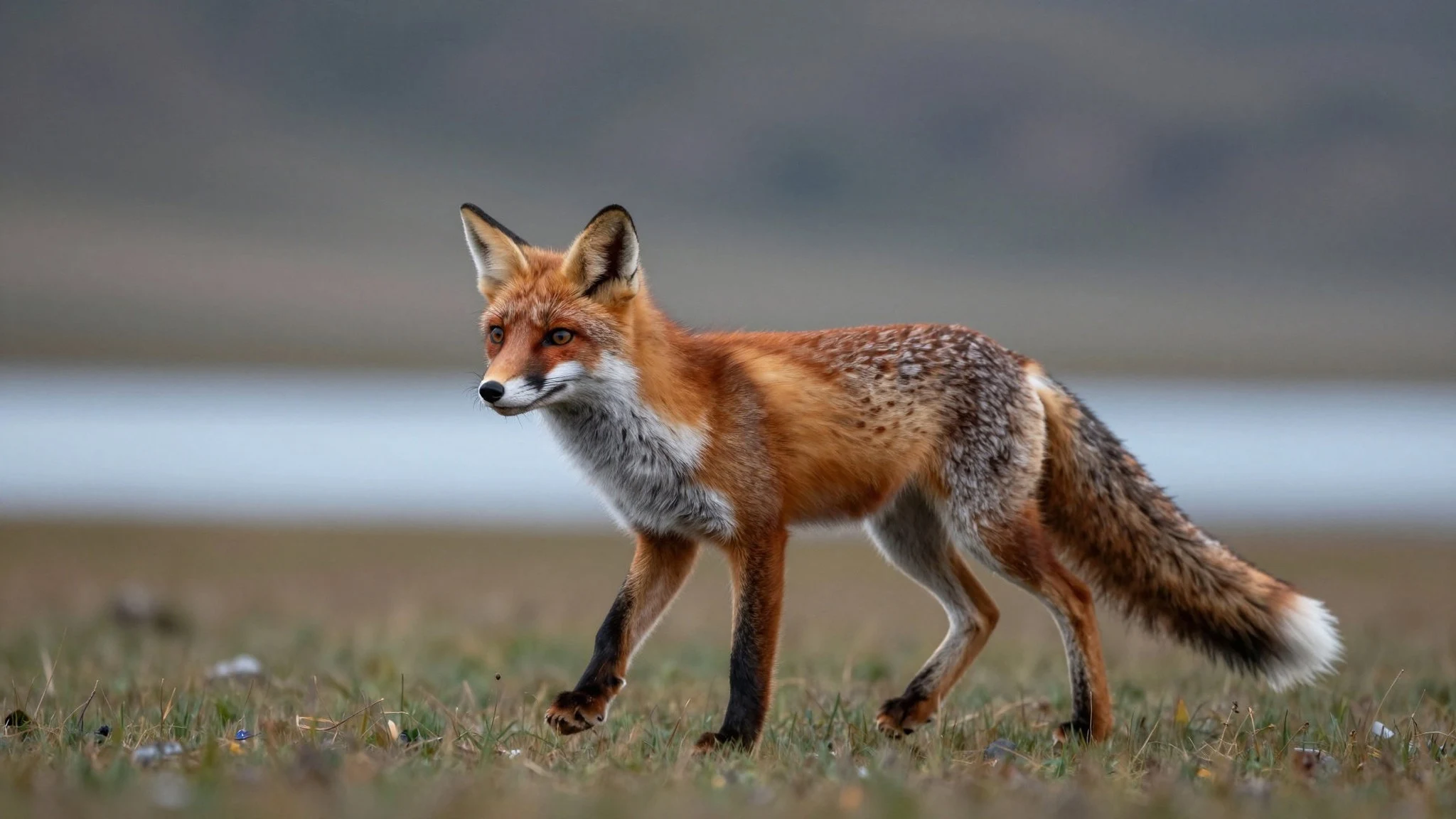
The red fox is the biggest of the true foxes, a wild hunter found right across the northern half of the world, Asia included. In this province it appears in the famous eagle-hunting custom, where trained birds catch foxes while their riders stay on horseback; festivals show it off, so ask locally for dates. To watch well, use a guide, keep a good distance, stay quiet, and never feed it.