Akhmad Kadyrov Mosque
Akhmad Kadyrov Mosque, Russia
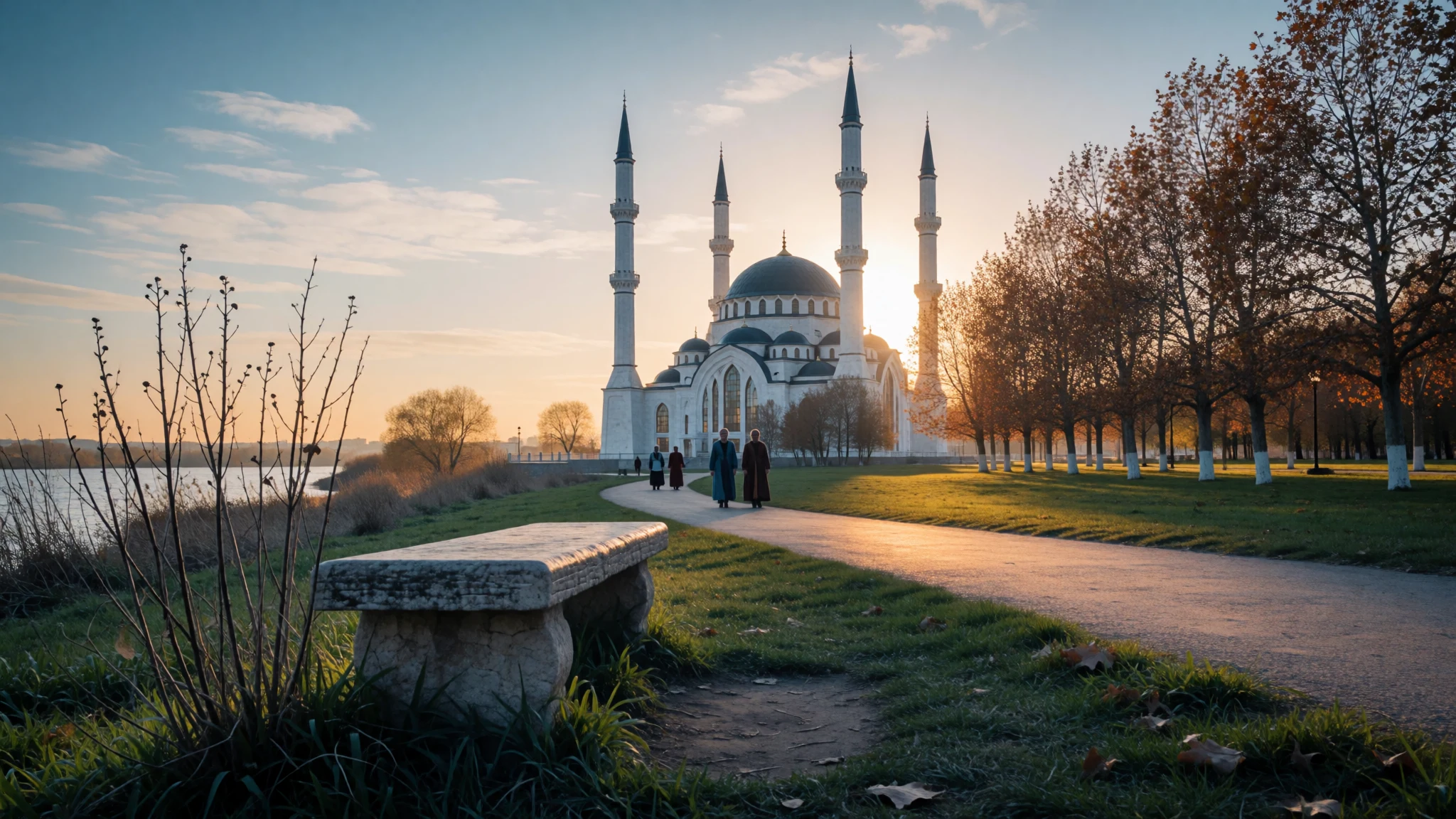
Akhmad Kadyrov Mosque is a white marble Ottoman-style mosque in Grozny, rebuilt on war-scarred ground, and the clearest picture of how modern Chechnya presents itself.
The place
Akhmad Kadyrov Mosque stands in Grozny, the capital of Chechnya, on the bank of the Sunzha River. Locals and the official signage call it the Heart of Chechnya. It was finished in 2008 and sits inside a landscaped park of about 14 hectares, which makes the approach on foot a slow, open walk rather than a squeeze through traffic.
The building follows the classical Ottoman pattern familiar from Istanbul: a broad central dome flanked by four pencil-thin minarets. The dome is about 16 metres across and rises roughly 32 metres, while each minaret reaches 62 metres. Marble and travertine clad the walls inside and out, and the interior glows white. The prayer space is large enough for more than 10,000 people, spread across an area of 5,000 square metres.
The mosque is the centrepiece of a wider Islamic complex. Nearby are the Russian Islamic University, the Kunta-Haji centre and the Spiritual Administration of Muslims of the Republic of Chechnya, so the grounds are as much an institutional campus as a sight.
The setting matters. Grozny has been heavily rebuilt, and the mosque reads as the proudest piece of that rebuilding: polished, floodlit at night and very clean. Visitors who come expecting a quiet old shrine will find something closer to a statement in stone, and a place where local families come to stroll, pray and take photographs, especially in the evening.
Its story
Akhmad Kadyrov Mosque occupies ground with a hard recent history. Before it, the site held the Presidential Palace of Grozny, which was destroyed by Russian forces during the First Chechen War. Clearing that ruin and putting a place of worship there was a deliberate gesture about recovery after the fighting.
The name honours Akhmad Kadyrov, the first president of the Chechen Republic and the father of its present leader, Ramzan Kadyrov. That political link is part of the building's identity, and it shapes how Chechens and outsiders talk about it. Some see a civic symbol of survival; others see a monument tied closely to one ruling family.
The project had an international backer. The municipality of Konya in Turkey supported the construction, which fits the architecture: the four minarets echo those of the Sultan Ahmed Mosque, the Blue Mosque of Istanbul, a seventeenth-century landmark. The design is not a local Caucasian form but a deliberate import of Ottoman style, chosen to signal belonging to a wider Muslim world.
The mosque opened on 16 October 2008 in a ceremony attended by Ramzan Kadyrov, who spoke there with the Russian prime minister, Vladimir Putin. Since then the mosque has become the city's best-known landmark and the first stop for most visitors. Read honestly, it is both a house of prayer and a showpiece, and it carries the weight of a city that had to be largely rebuilt.
What to see
- The exterior and minarets — Mosque grounds, Grozny
Walk the full circuit of the building to take in the white marble and travertine facades and the four 62-metre minarets. The Ottoman profile is clearest from the park side, with the dome rising between the towers. Late light turns the stone warm, and after dark the floodlighting is striking.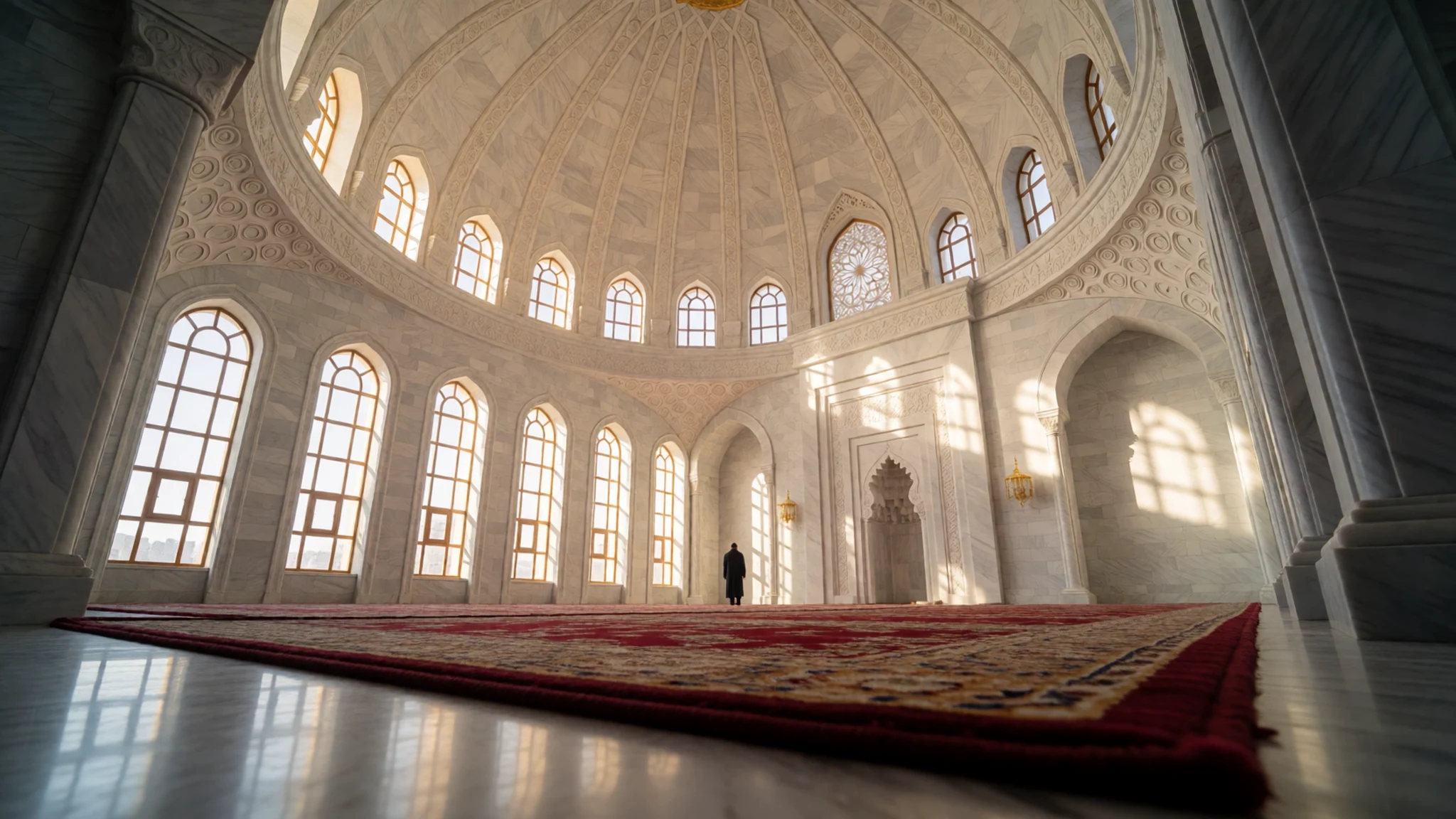
- The central prayer hall — Inside the mosque
Inside, the white marble interior sits beneath a dome about 32 metres high and 16 metres across. The space is calm, bright and very open, with room for thousands. Visitors are admitted outside prayer times, and dress rules apply, so check what is expected before you enter.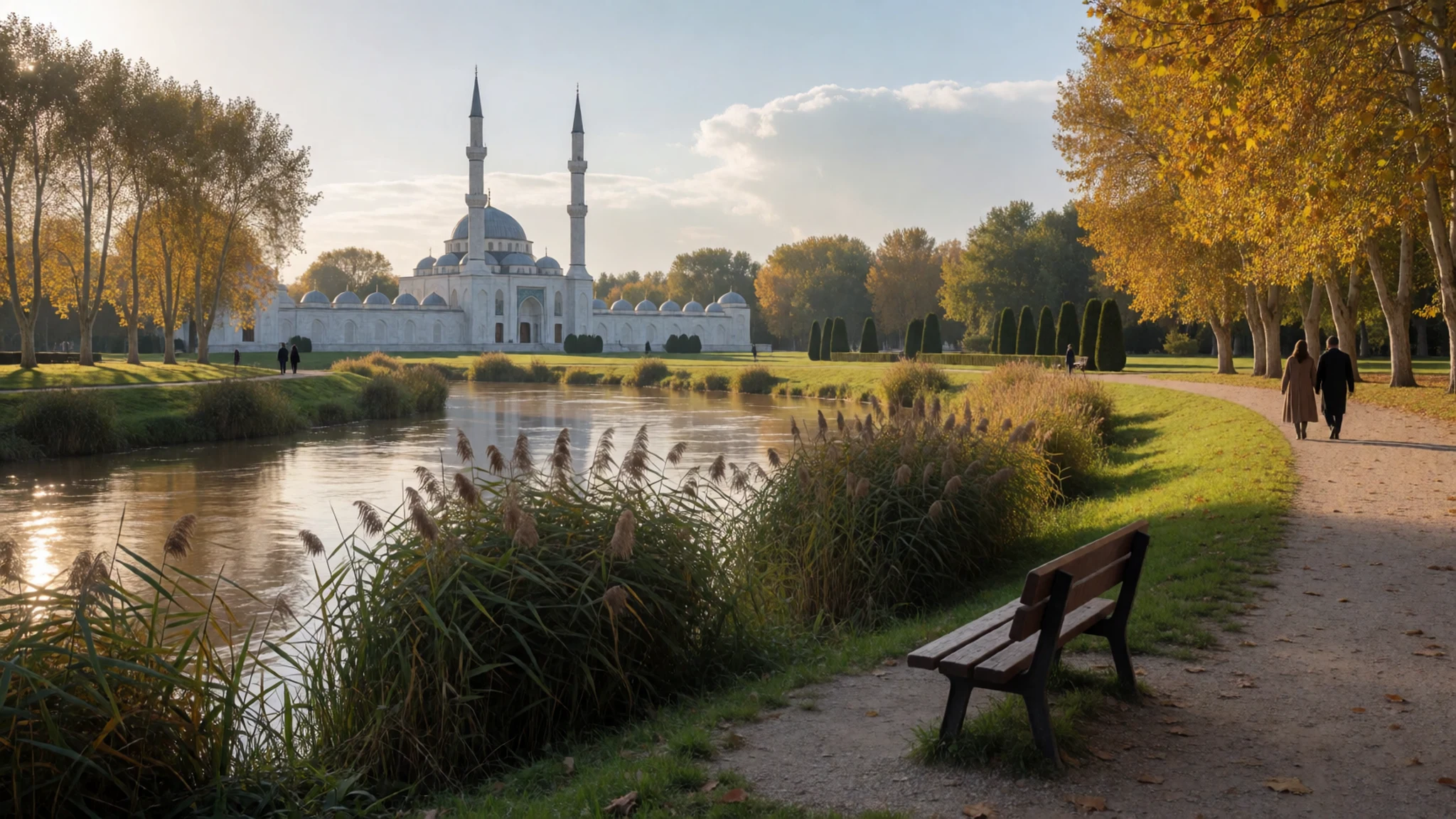
- The park and the Sunzha riverbank — Riverside park, central Grozny
The mosque sits in about 14 hectares of park beside the Sunzha River. The paths are broad and well kept, and families gather here in the evenings. It is the best place to see the building from a distance and to watch how the city uses it.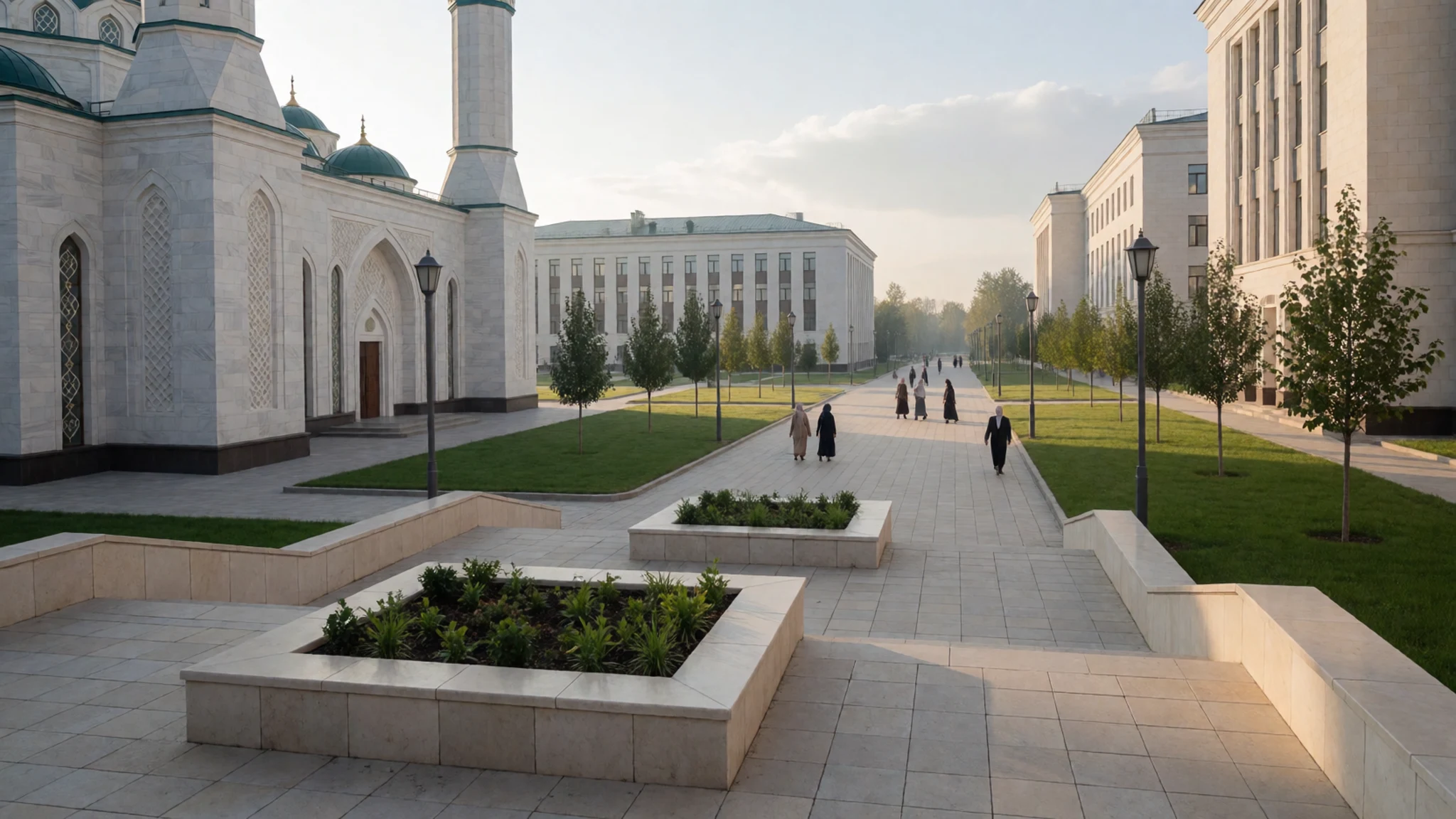
- Church of St. Michael the Archangel — Central Grozny
This Orthodox church in Grozny was badly damaged during the siege of the city and has since been renovated. It is a worthwhile second stop for a fuller sense of the city's mixed religious history, and a quieter, smaller counterpoint to the great mosque.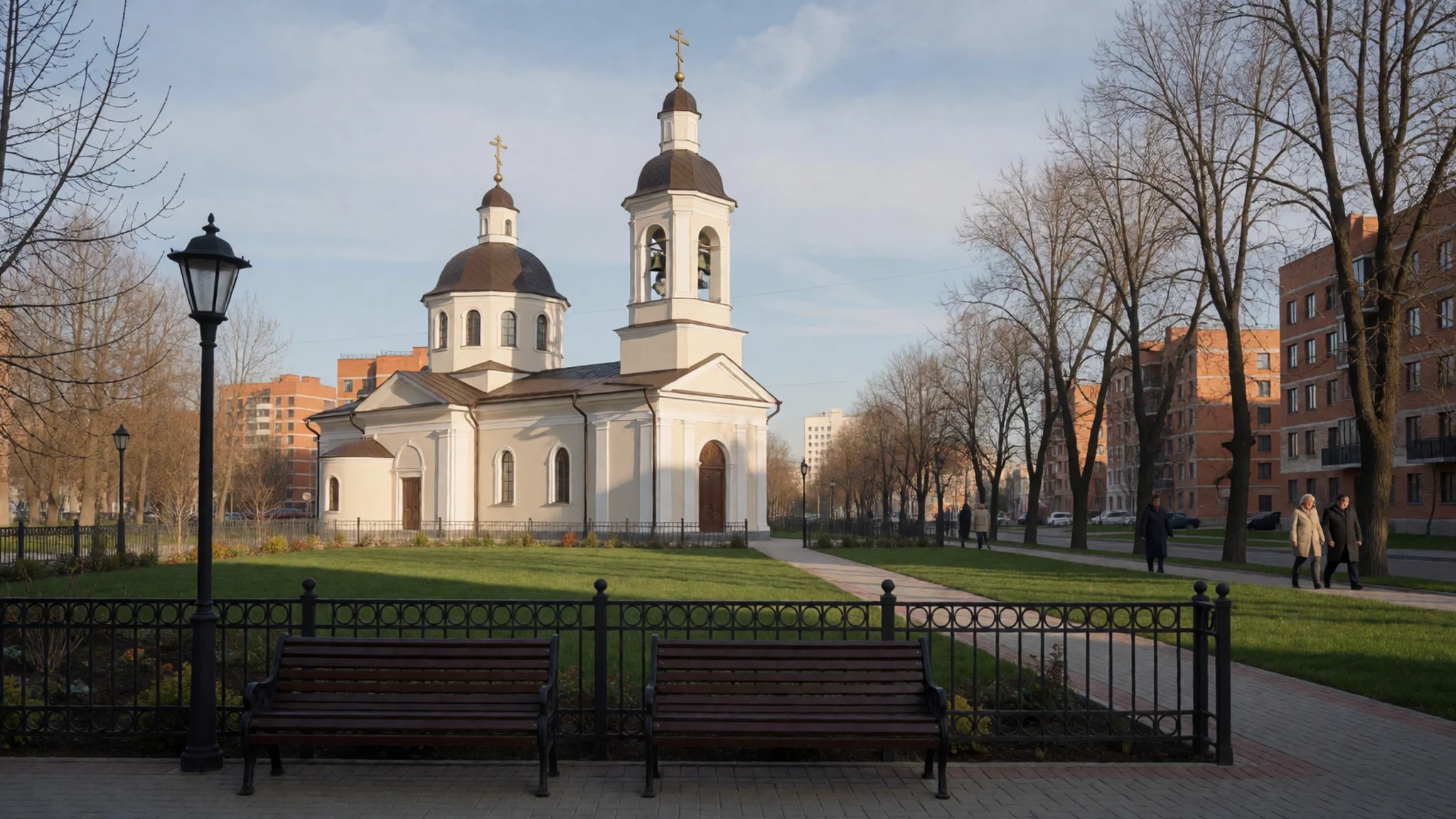
- Downtown Grozny and the stadium — Central Grozny
The central streets are busy in the evening, with shops, cafes and street stalls under bright lights. On match days, football fans head to the Sultan Bilimkhanov Stadium, where FC Terek Grozny play in the Russian Premier League. Both give a sense of everyday life beyond the mosque.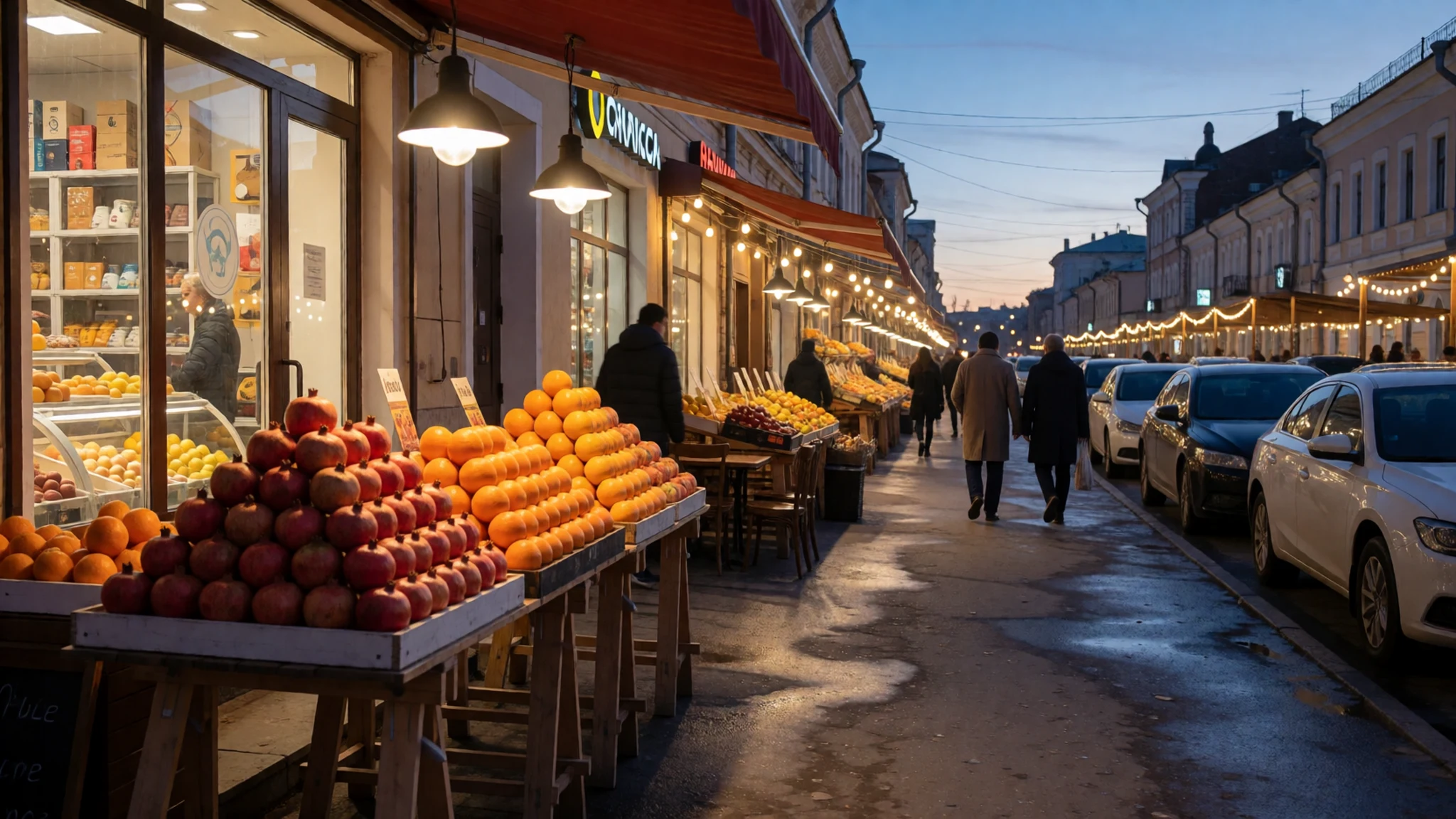
Culture
Akhmad Kadyrov Mosque is a working place of worship in a republic where Islam, mostly in its Sufi-influenced Sunni form, is central to public life. Chechens are known for hospitality to guests, and visitors who come respectfully are generally met with courtesy. Prayer times structure the day around the building, and the call to prayer carries across the park.
The mosque belongs to a larger Islamic complex that includes a university and the religious administration of the republic, so it also functions as an institution of learning and authority. On major religious occasions the grounds fill with worshippers, and the scale of the interior becomes clear in a way that an empty weekday visit cannot show.
Civic life here follows conservative norms. Alcohol is not served in public venues in the city, and modest dress is the expected standard in the streets as well as inside the mosque. Politics is a sensitive subject: the mosque is named after a former president and is closely tied to the present leadership, so opinions about it are best heard rather than offered. Photography of the building is welcome, but photographing worshippers, especially women, without asking is considered intrusive.
Before you enter, cover your arms and legs, women should also cover their hair, and everyone must remove shoes at the door and avoid visiting during prayer times.
What to wear
Akhmad Kadyrov Mosque sits in a region with a proud tradition of Caucasian highland dress. For men, the classic outfit is the long wool coat with cartridge pockets across the chest, worn with a tall sheepskin hat, the papakha, and a heavy felt cloak, the burka, in cold weather. Women's traditional dress is a long, fitted gown in silk or velvet, often with embroidered trim and a headscarf. These garments now appear mostly at weddings, dance performances and festivals.
Everyday dress in Grozny is modern but modest. Many women wear long skirts or dresses, loose tops with long sleeves and a headscarf, and men favour trousers and shirts rather than shorts. Younger people dress in current fashion, though the covered-up standard holds in public. Around the mosque you will see families in their best clothes, especially on Fridays and religious holidays.
Visitors should follow the same line. Women should bring a scarf that covers the hair, a long-sleeved top and a skirt or trousers that reach the ankles; the mosque may supply covering at the entrance, but carrying your own is easier. Men should wear long trousers and a shirt with sleeves. Shoes come off at the door, so wear socks and footwear that slips on and off easily. Summers are hot, so choose light cotton or linen, and carry a layer in winter, when the weather turns cold.
What to eat
- Zhizhig-galnash — Chechen cafes in central Grozny
The signature Chechen dish: boiled meat, usually chicken or lamb, served with soft dumplings and a garlic sauce or broth. It is hearty, simple and filling, and is a good first order at any cafe in the city centre that serves local food.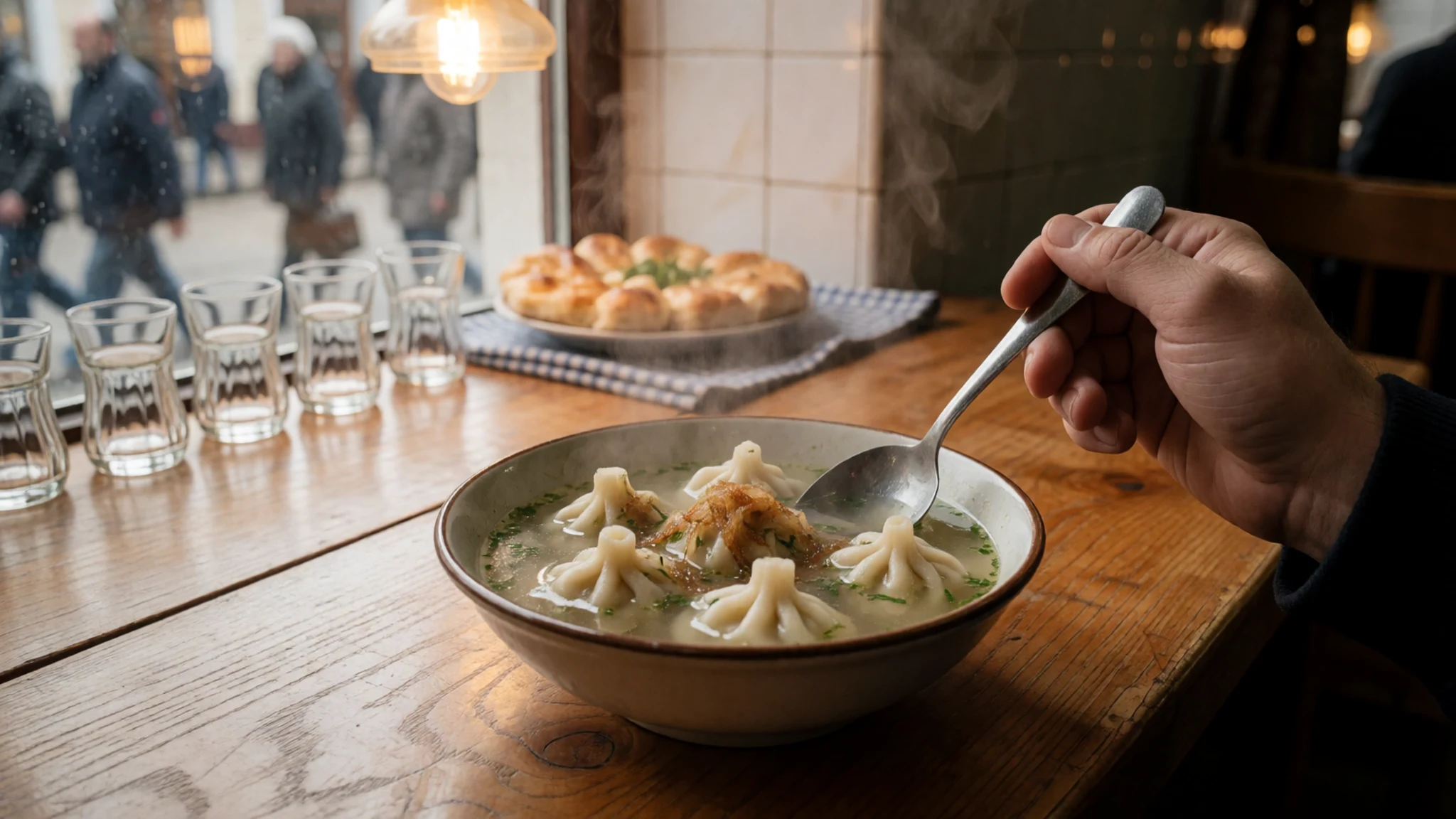
- Chepalgash — Local cafes and home-style eateries
Thin flatbreads filled with cottage cheese or sometimes herbs and potato, cooked on a dry pan and brushed with butter. They make a light meal or snack and are easy to share, and are often served warm at family-style cafes.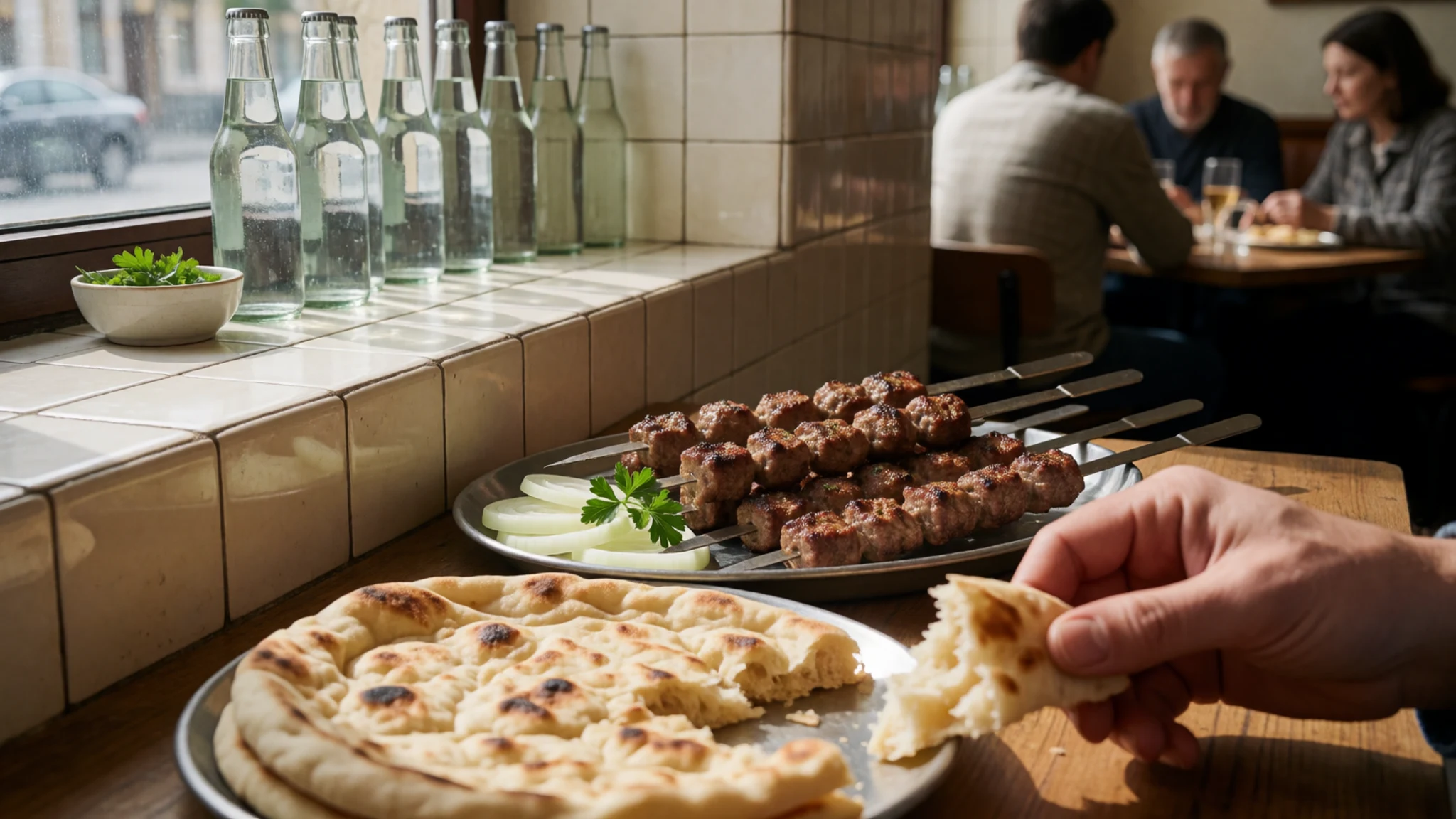
- Hingalsh — Chechen restaurants and family cafes
Large dumplings stuffed with pumpkin or sometimes meat, typically served with butter and garlic sauce. The pumpkin version is a useful option for vegetarians, though check with staff first as some fillings include meat.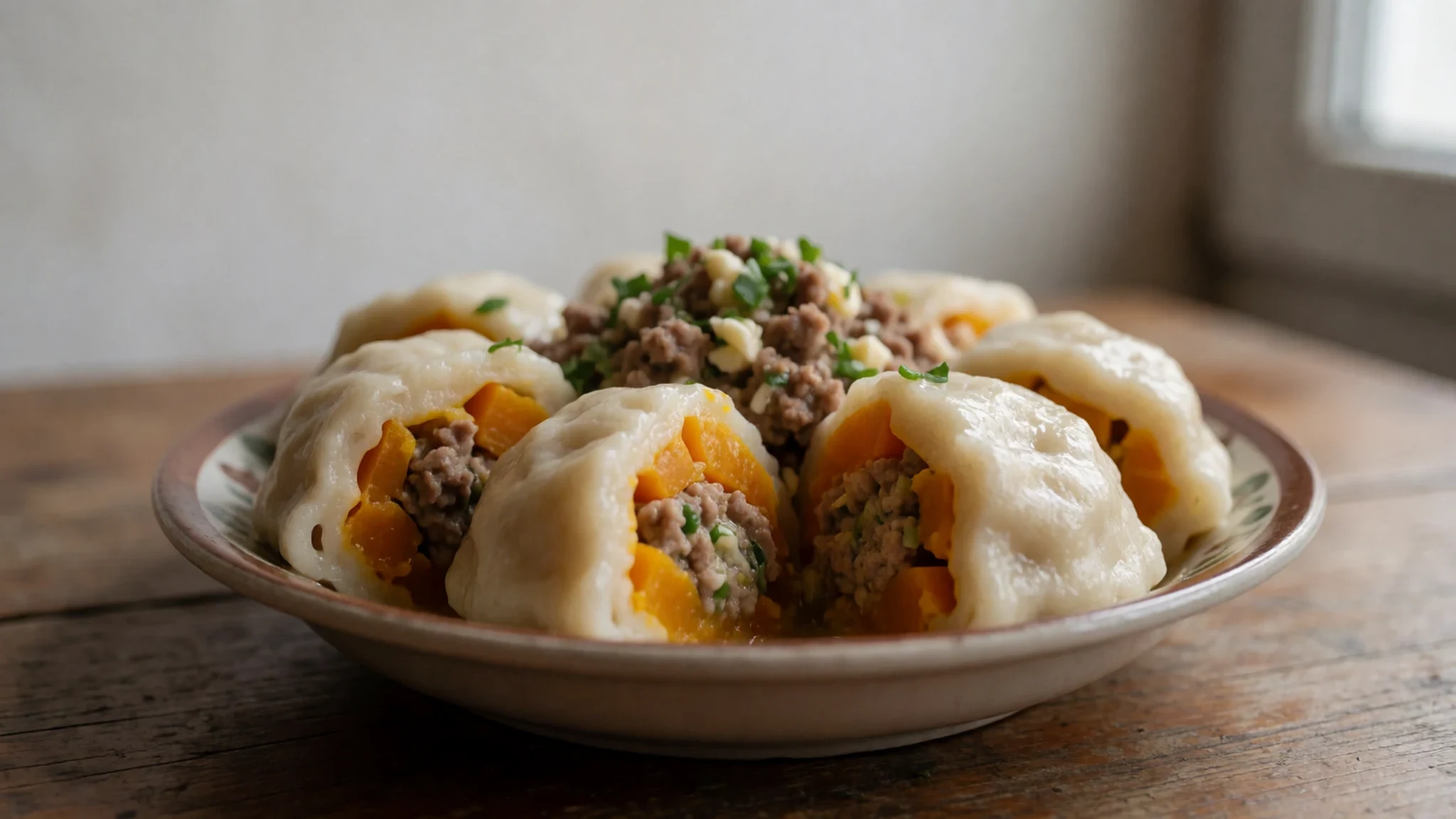
- Tea and sweets — Cafes around the city centre
Alcohol is not sold in public venues here, so tea, juices and soft drinks fill the gap. Sweet pastries and honey-based treats appear alongside, and a pot of tea with something sweet is a pleasant way to end a day.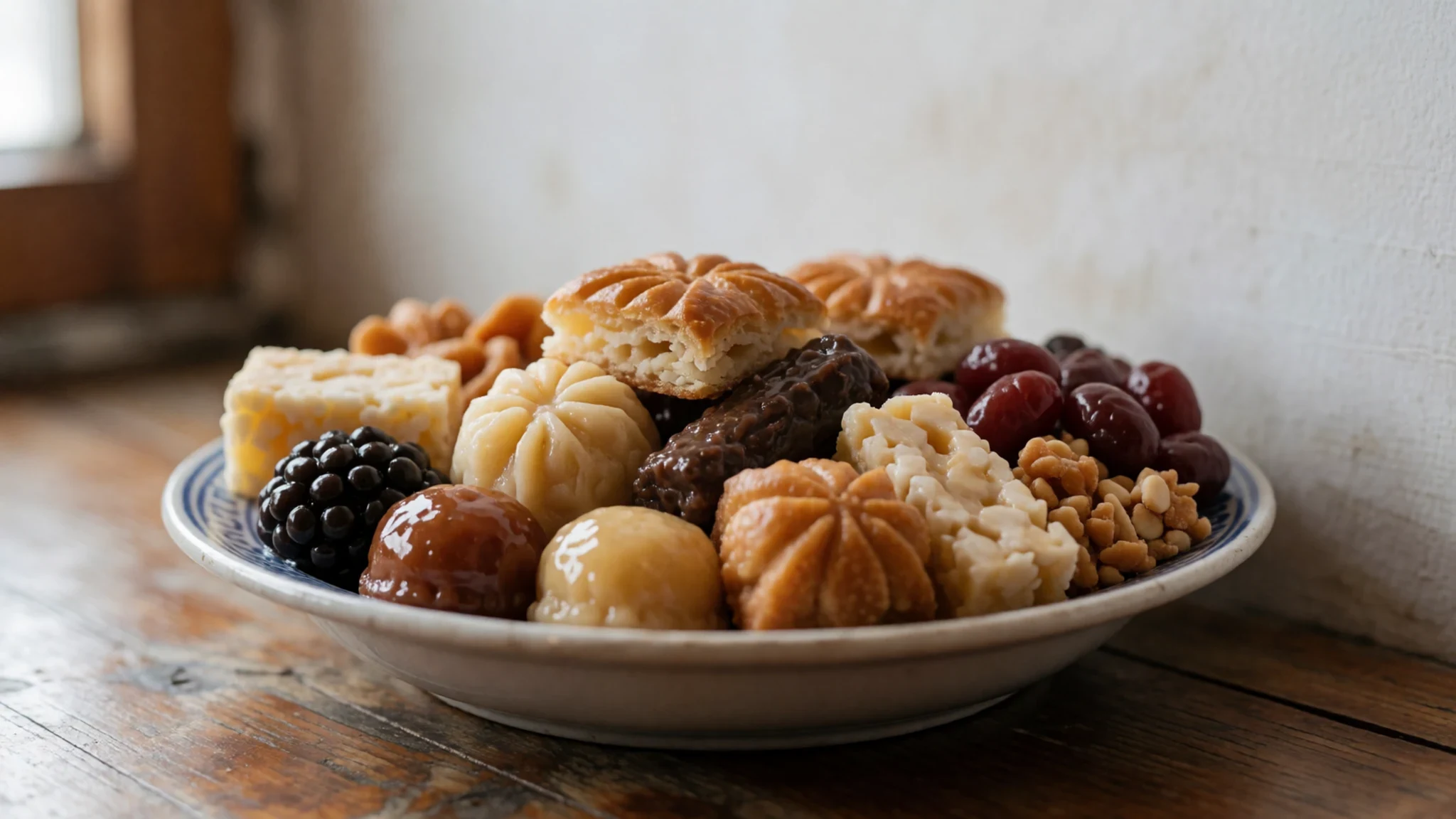
Plan it
Best time. April–May and September–October, when the weather is mild enough for walking the park and the mosque grounds; summers can be hot and winters cold.
How long. 1–2
Getting there. Flights serve Grozny from Moscow, and trains run from Moscow, Rostov-on-Don and Astrakhan. Highways link the city to the rest of southern Russia. From the airport or station, a taxi reaches the mosque in the city centre. Check current transport and entry rules before travelling.
Budget. mid
Tips
- Check the official site (http://www.serdce-chechni.ru/) for visiting arrangements before you go
- Visit in the evening, when the floodlit building and the park are at their best
- Carry a passport and registration papers, as checks are common
- Keep some cash for small stalls and cafes
- Do not touch unidentified objects off the main paths, as unexploded wartime ordnance has been reported
Etiquette
- Remove your shoes at the door and cover arms and legs; women should cover their hair
- Avoid entering during prayer times and keep your voice low inside
- Ask before photographing people, especially women
Nearby
Sources
- Wikidata Q340549 (CC0)
- Wikipedia: Akhmad Kadyrov Mosque (rev 1374090350) (CC BY-SA 4.0)
- Wikivoyage: Grozny (rev 5403295) (CC BY-SA 4.0)
- Photo 01-2011.jpg, Салман Д (CC BY 3.0)
- Photo 02-panoramio.jpg, Alexey Bartenyev (CC BY 3.0)
- Photo 03, Vyacheslav Argenberg (CC BY 4.0)
- Photo 04-1-01.jpg, Саитова Сара (CC BY 4.0)
- Photo 05-1-02.jpg, Саитова Сара (CC BY 4.0)
- Photo 06-1-03.jpg, Саитова Сара (CC BY 4.0)
- Photo 07-1-04.jpg, Саитова Сара (CC BY 4.0)
- Photo 08-1-05.jpg, Саитова Сара (CC BY 4.0)


