Arkaim
Arkaim, Russia
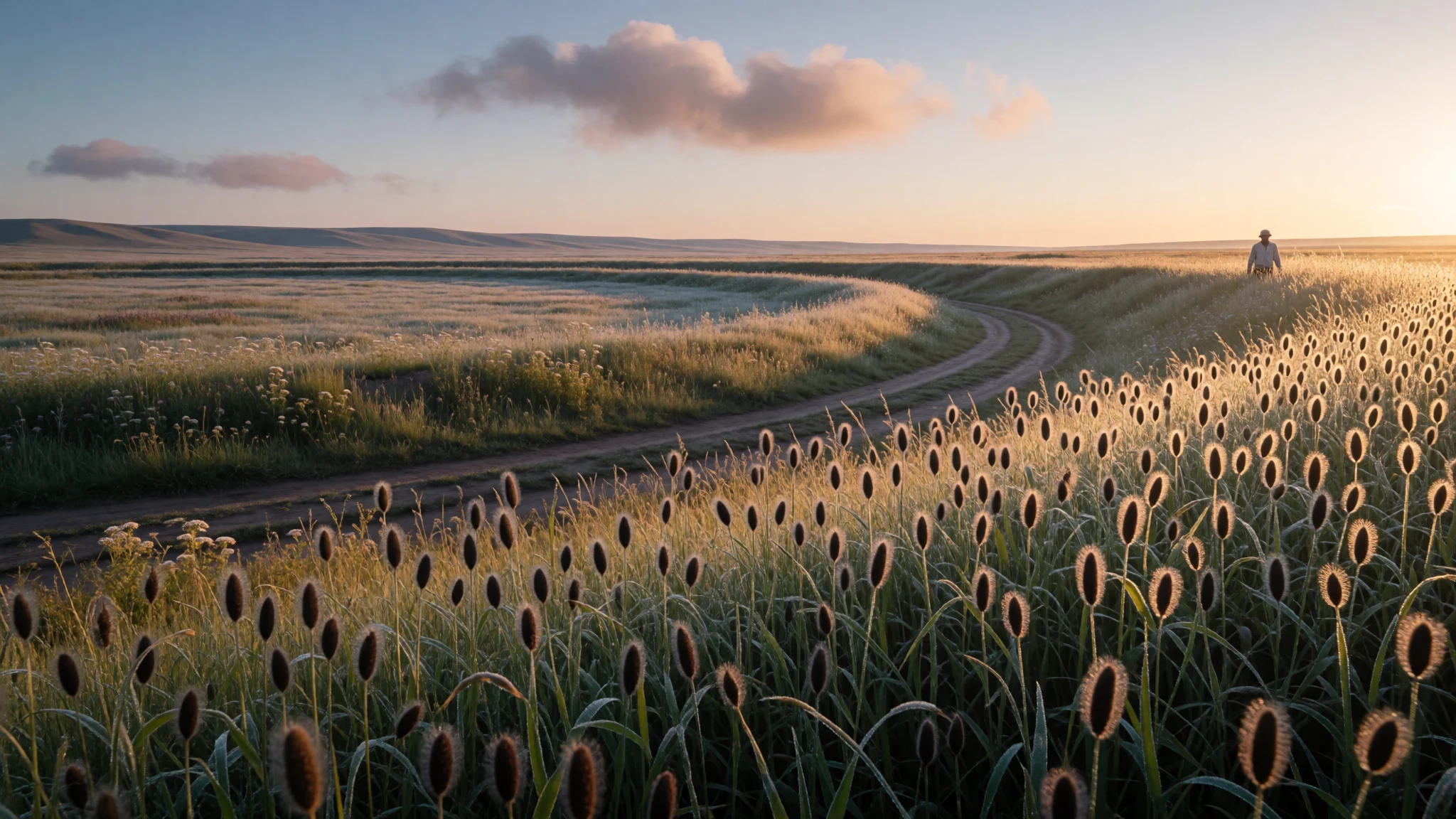
Arkaim is a Bronze Age ring-town on the Southern Urals steppe, where grass-covered earthworks hint at a planned settlement almost four thousand years old.
The place
Arkaim sits on open steppe in the Southern Urals, in Russia's Chelyabinsk Oblast, close to the Kazakhstan border. The land is wide, treeless and rolling, with big skies and wind that rarely drops. The site lies on the left bank of the Bolshaya Karaganka, a small river that feeds the Ural. The nearest villages are Amursky and Alexandrovsky, both a short drive away, so this is a place of distance and quiet rather than of towns.
What survives is not stone architecture but the footprint of a fortified settlement: a circular layout of banks and ditches, now softened by grass. Archaeologists date it to roughly 2150 to 1650 BC (the range given in the Wikipedia lead of the brief), and attribute it to the Sintashta culture. From ground level it can look modest, just gentle ridges in the turf. The sense of design comes from the aerial photographs and from the reconstructed sections and displays at the museum-reserve.
The protected area is run as a museum-reserve, with a visitor centre, trails and a small cluster of reconstructed buildings. Summer weekends bring school groups, campers and people drawn by modern spiritual interest in the site. Out of season it is far emptier, and far colder. Expect a day of walking on exposed ground with little shade, and treat it as a place for patient looking rather than for big monuments.
Its story
Arkaim was found in 1987 by archaeologists who later worked under Gennady Zdanovich. At that moment the valley was earmarked to be flooded for a reservoir. The team recognised that the earthworks were something unusual, and the scale of the discovery was enough to halt the flooding plan, which is why the site can still be walked today rather than lying under water.
The settlement belongs to the Sintashta culture, named after another site about 30 kilometres away. Sintashta itself had been identified in 1968 by a university expedition from the Urals, and the surrounding district was explored for years before Arkaim emerged. Several other ancient settlements lie in the same area, including the Bolshekaraganskiy kurgan, and a related group, the Alakul culture, is known from a site further north-east along the Miass river.
Why does it matter beyond the region? Some scholars link the Sintashta people to early Proto-Indo-Iranian speakers, a community that may have lain behind later migrations towards Central Asia, the Iranian plateau and the Indian subcontinent. That view is debated, and it is worth holding loosely. What is firmer is the picture of an organised, fortified Bronze Age settlement on the steppe, which challenges the idea that such places belonged only to river valleys farther south.
What to see
- The ring of earthworks — Main archaeological site
The main attraction is the settlement itself, on the left bank of the Bolshaya Karaganka. Walk the perimeter and the interior to feel its circular plan. It reads best from the raised ground nearby, or in the aerial pictures displayed on site, where the concentric lines become clear.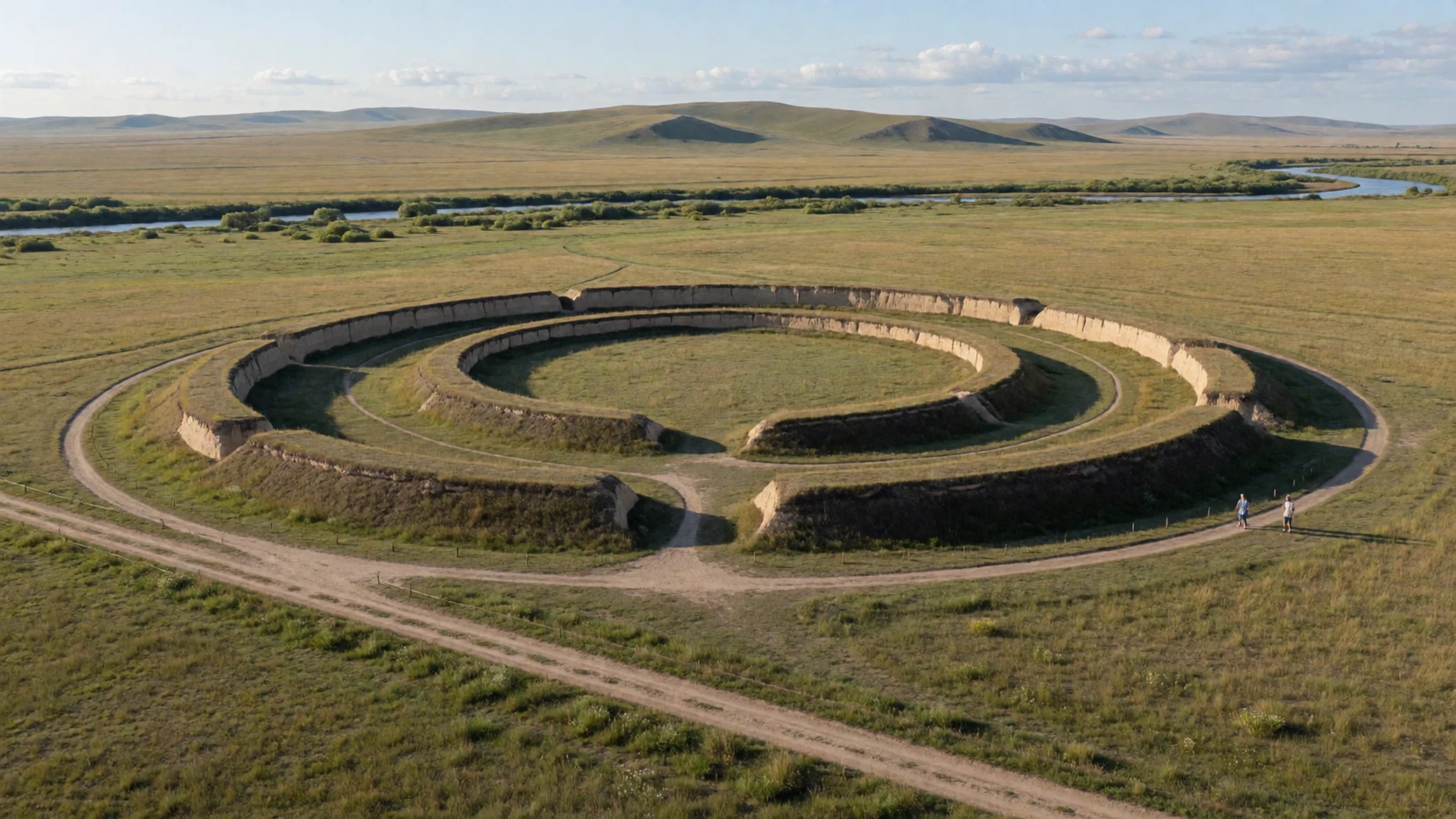
- The excavated dwellings — Excavated section of the settlement
Part of the settlement has been dug and left open under protection, showing the outlines of two adjoining dwellings. This is the closest you get to the daily scale of Bronze Age life: room sizes, hearth positions and the way the houses sat against the bank.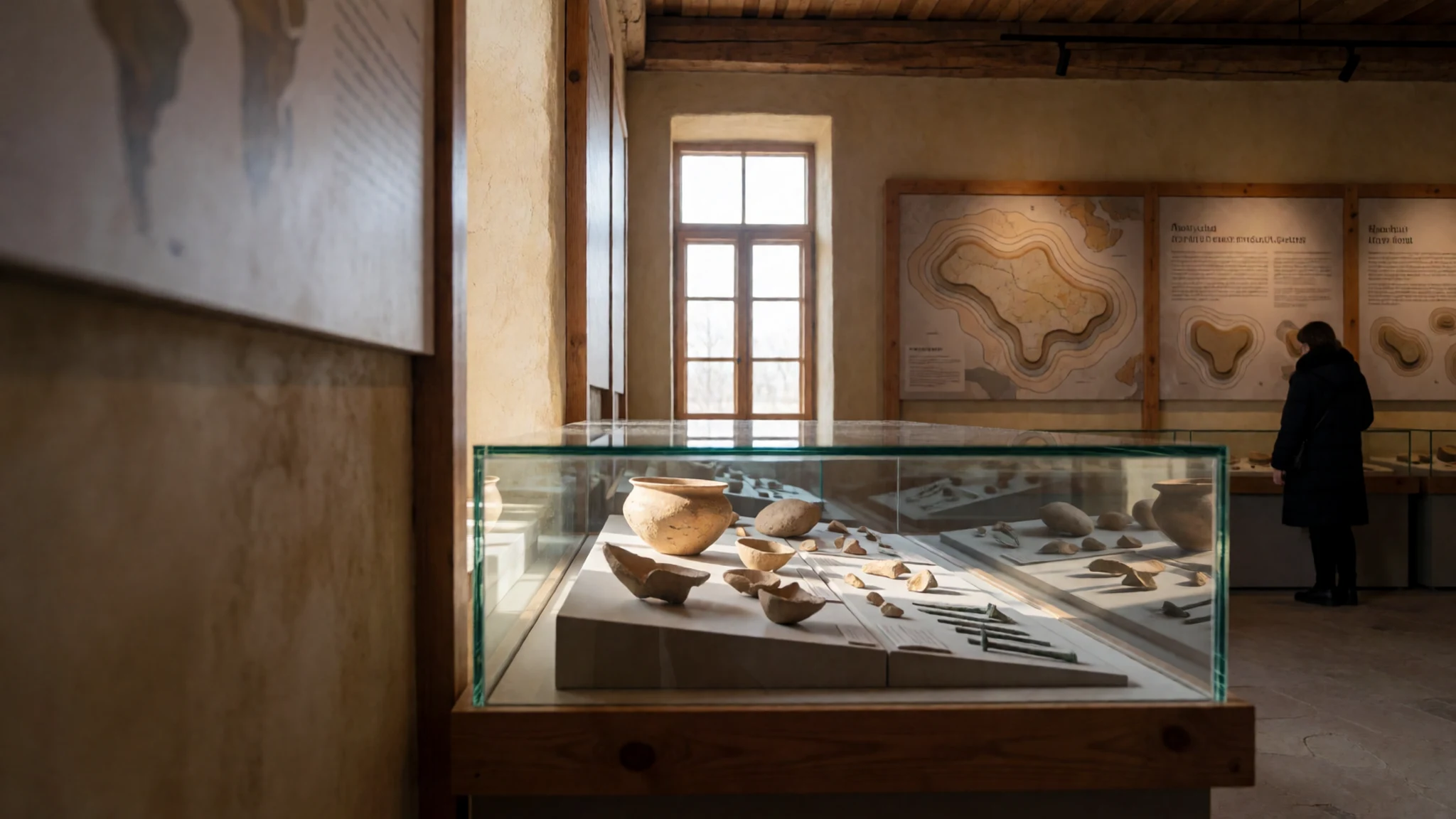
- Mount Shamanka — Hill beside the reserve
A rocky hill near the site, popular with walkers for its view back over the steppe. The climb is short but exposed, and the wind can be strong. From the top the circular settlement and the winding river give a useful sense of how the landscape was used.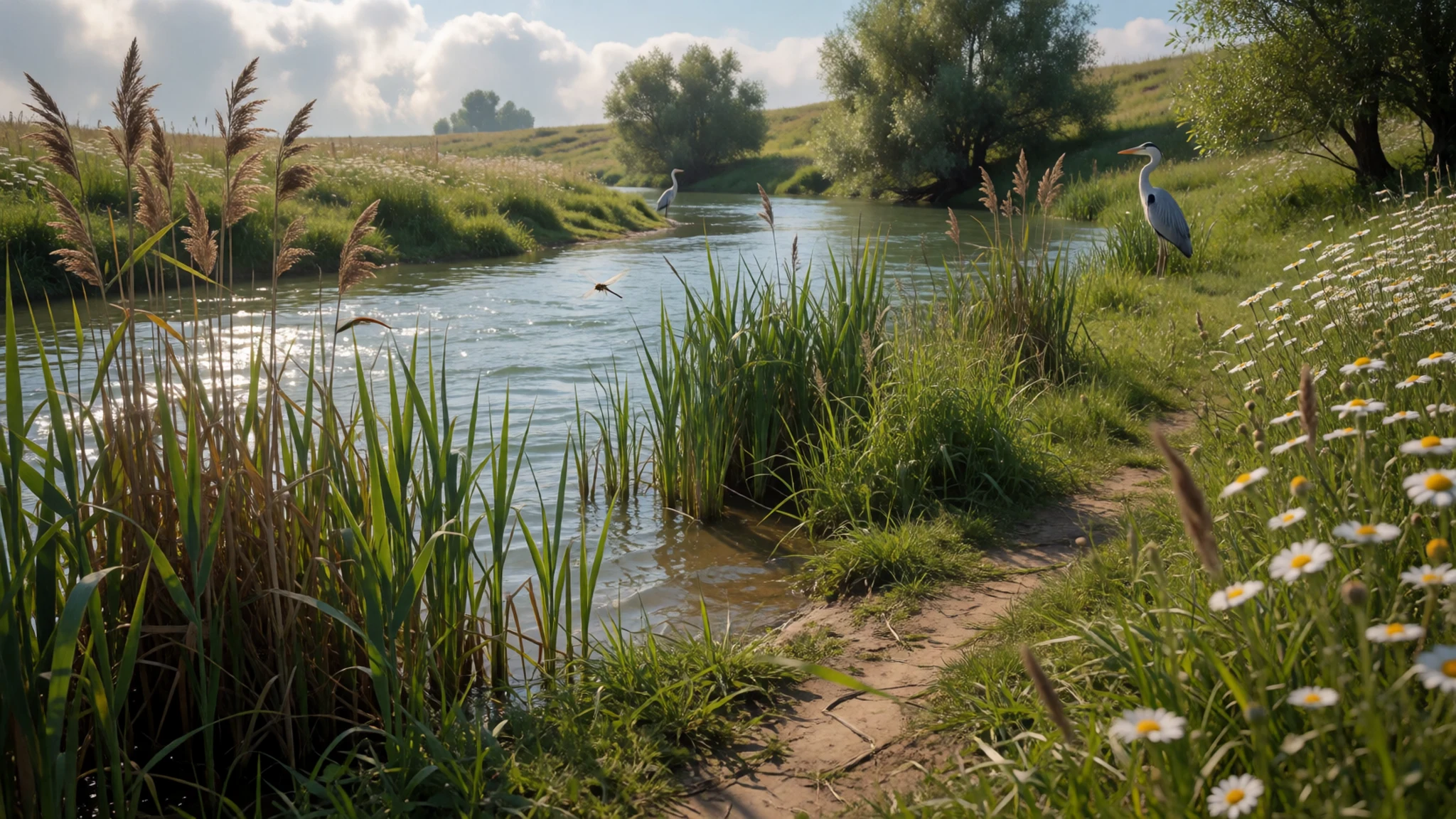
- The museum-reserve exhibits — Visitor centre
The museum-reserve gathers finds, models and explanatory displays about the Sintashta culture and the excavations. It is the best place to understand what the grassy ridges outside once were, and a sensible first stop before walking the site. Check the official website for opening arrangements.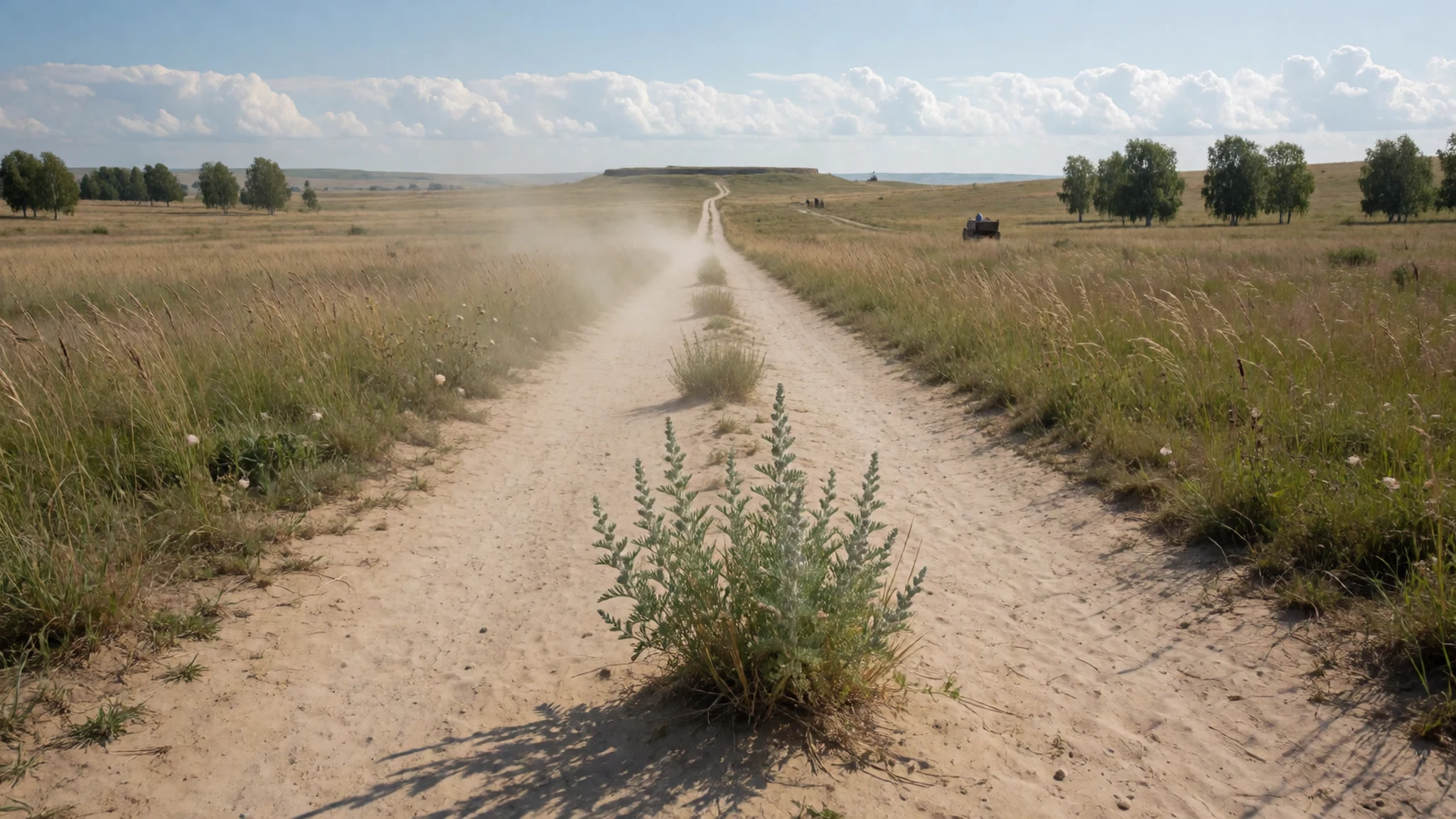
- The river and meadow edge — River valley below the settlement
The Bolshaya Karaganka is a modest stream, but its banks give the quietest walking at the site, with birds, wildflowers in early summer and open views of the steppe. It also explains the choice of location, since water and grazing sat side by side.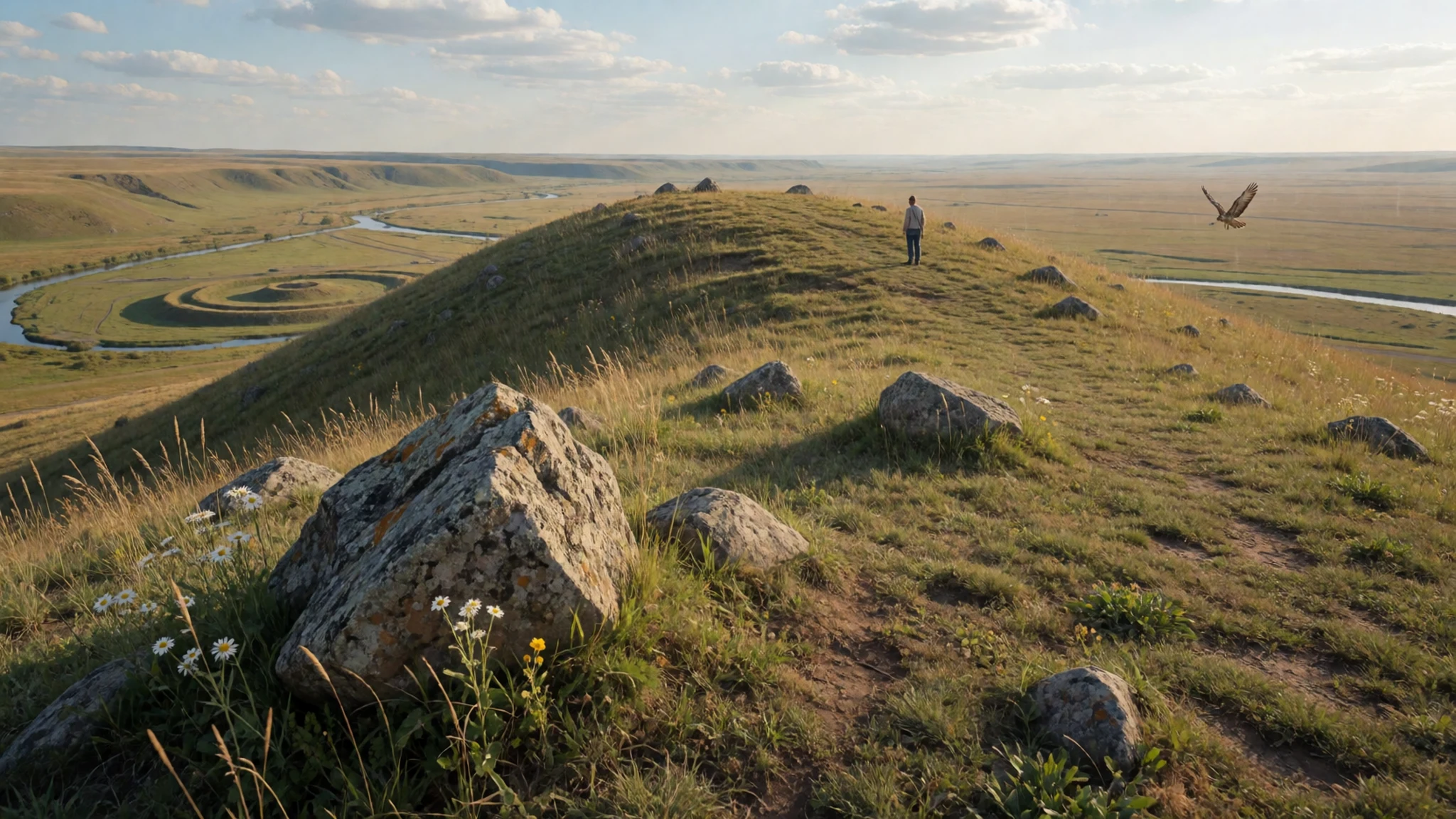
- The Cossack homestead display — Near the reserve entrance
A reconstructed Cossack-style homestead, set up beside the reserve, shows a much later chapter of life on this steppe. It makes a useful contrast with the Bronze Age remains, and gives visitors a sense of how settled communities used the same land in recent centuries.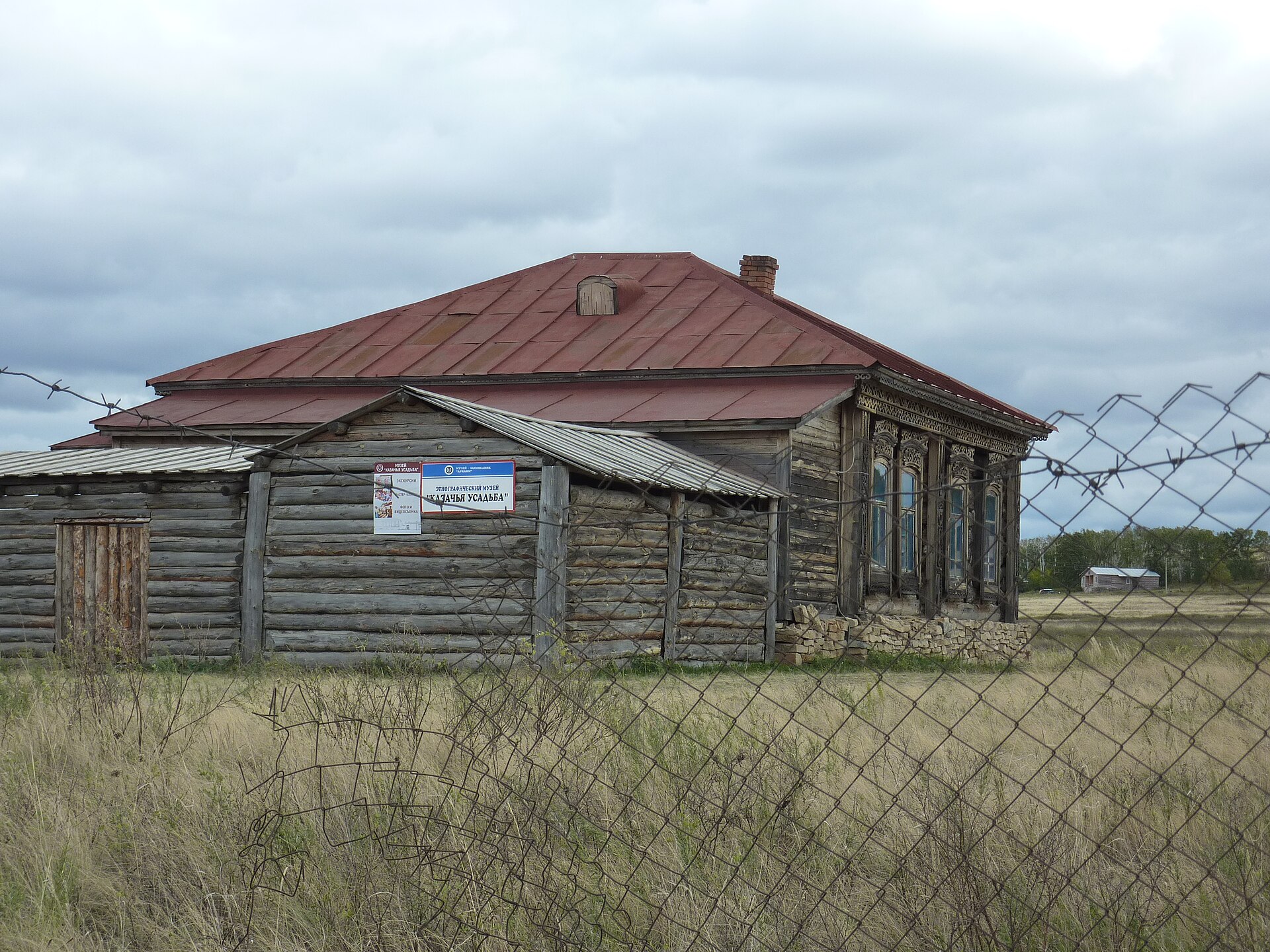
Culture
Arkaim is a place where archaeology, local identity and modern spirituality overlap. For researchers it is a Sintashta site, important for understanding Bronze Age steppe communities and the debates about early Indo-Iranian speakers. For many Russians it is also a point of national and regional pride, and a landmark of the Chelyabinsk Oblast.
It also draws people who treat it as a power place. Visitors come for solstice gatherings, meditation and informal ceremonies, particularly in the warmer months. Around the summer solstice the atmosphere is festive, with tents, music and gatherings in the surrounding fields, and the reserve can be crowded. Scholars tend to be cautious about the more mystical claims, and a sensible visitor can hold both views at once: enjoy the atmosphere, and rely on the museum's archaeology for the facts.
This part of the Southern Urals is shaped by steppe traditions, with Russian, Bashkir and Kazakh influences in food, music and hospitality. Staff and local guides are usually glad to answer questions, and the reserve sees itself as an educational site as much as a tourist one.
Stay on the marked paths and do not climb or dig into the earthworks, since the banks and excavated areas are fragile and protected.
What to wear
Arkaim has no single local costume of its own, because the area is a meeting point of Russian, Bashkir and Kazakh traditions. Traditional Bashkir dress uses wool, felt and embroidered cloth, with decorated caps and coin ornaments, and Cossack heritage brings tunics, sashes and tall boots. These are mostly worn today at festivals, folk performances and heritage events rather than in daily life, and the reserve's homestead display and museum show historical styles.
Day to day, people in the Chelyabinsk Oblast dress for a continental climate: jeans, practical jackets, trainers or boots, and warm hats in the colder months. On summer weekends you will see campers, families and festival-goers in light outdoor clothes, and some visitors to solstice events wear loose, natural-fibre clothing or simple folk-style embroidery.
For a visit, dress for open steppe. There is little shade, the wind can be sharp and the weather changes quickly, so bring layers, a windproof jacket and a hat. Wear sturdy shoes or light boots, as the ground is uneven and can be muddy after rain. In summer add sun protection and insect repellent. No special modesty rules apply, though modest clothing is wise if you attend any ceremony or gathering held at the site.
What to eat
- Pelmeni — Roadside cafés and village canteens near the reserve
Small dumplings filled with minced meat, served hot with butter, sour cream or vinegar. They are a staple across the Urals and an easy, filling meal after a day on the steppe. Look for them at roadside cafés and village canteens.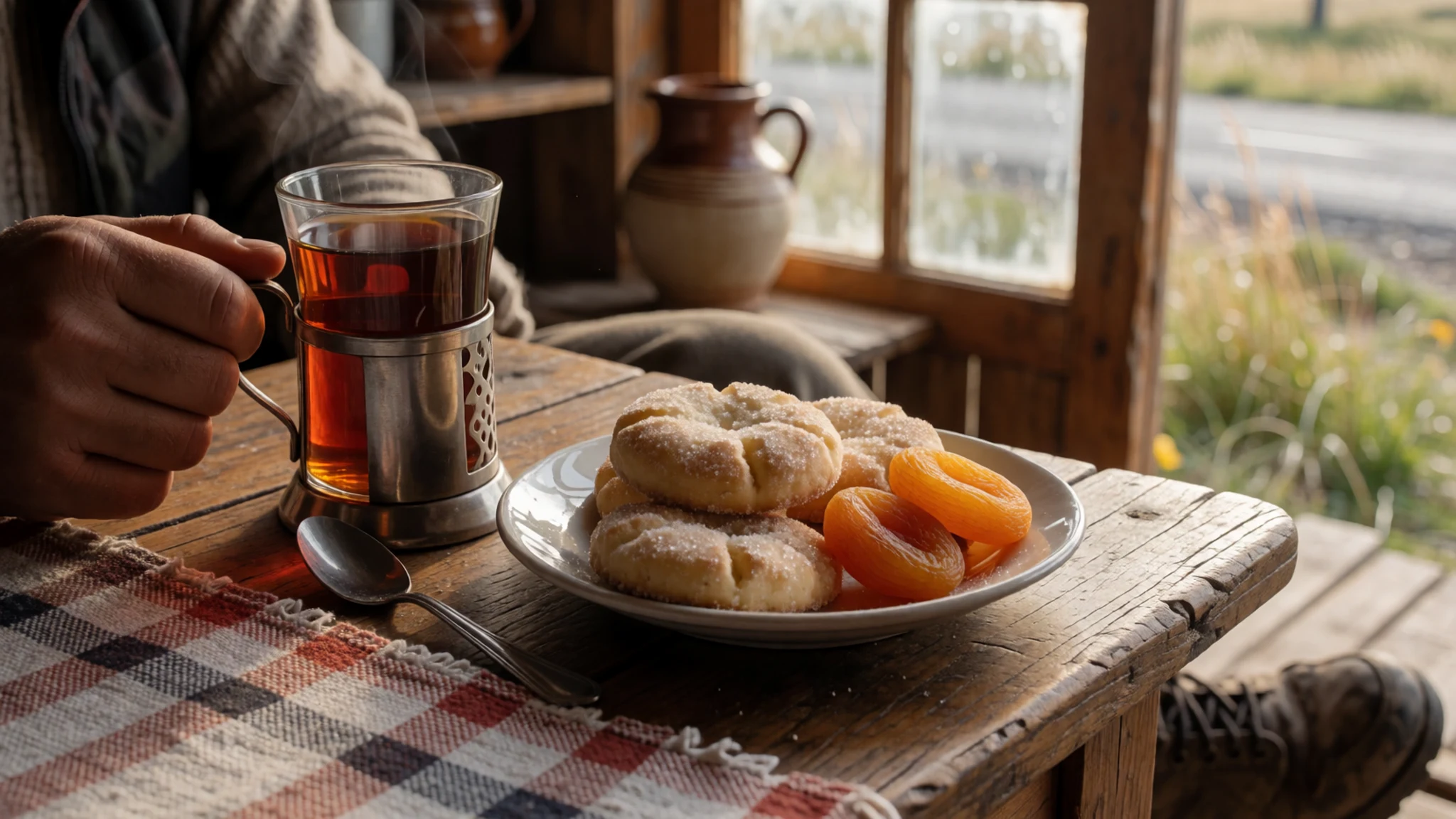
- Beshbarmak — Bashkir and Kazakh eateries in nearby towns
A Bashkir and Kazakh dish of boiled meat served over flat noodles, with onion and a rich broth. It is hearty, built for gatherings, and typical of the steppe hospitality of this region. Try it at a Bashkir or Kazakh eatery in a regional town.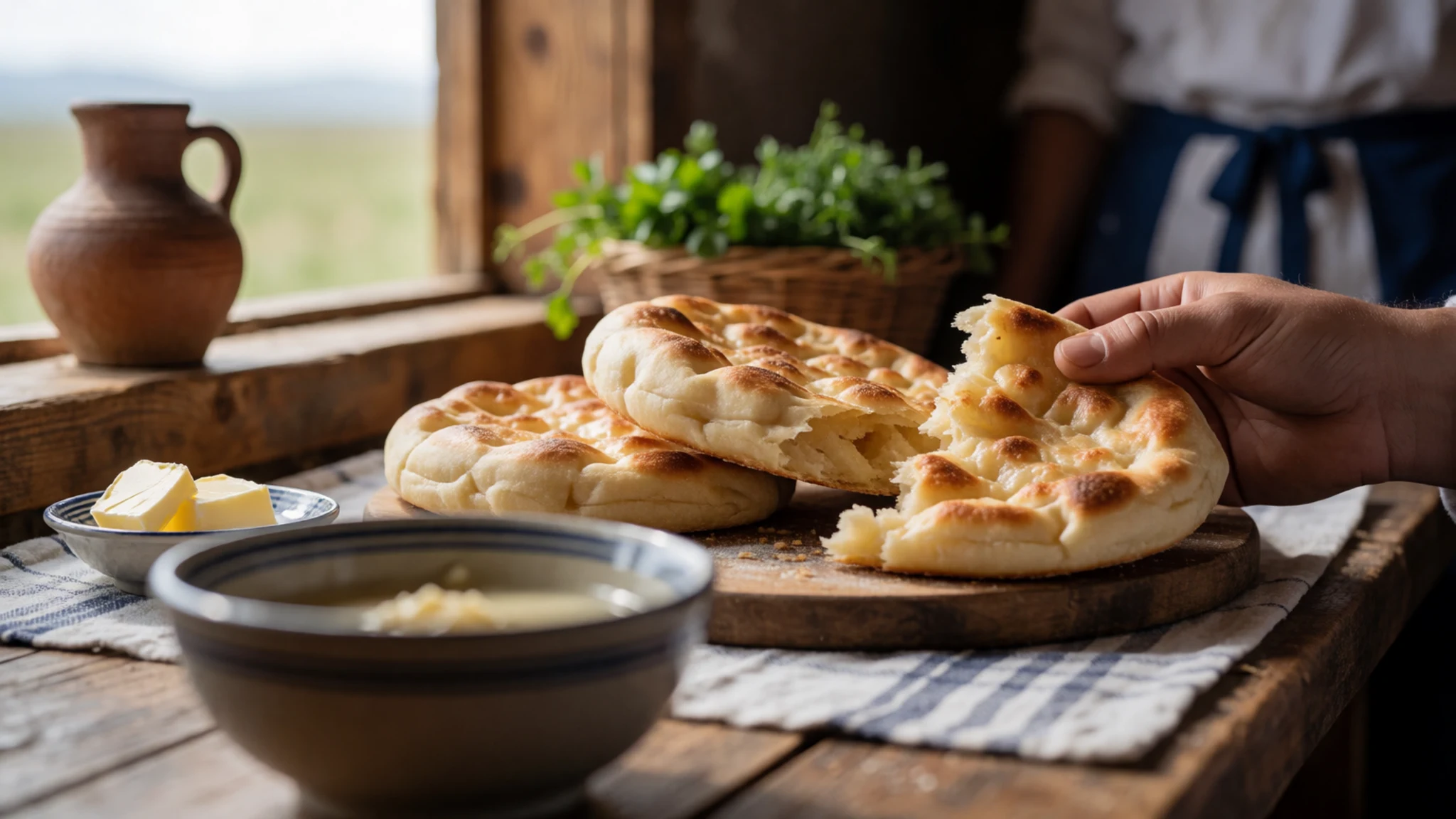
- Bashkir honey — Roadside stalls and regional markets
The southern Urals are known for honey, often sold in jars at roadside stalls and markets. It ranges from pale and mild to dark and strong, and makes a useful, portable souvenir. Ask which flowers the bees visited and taste before buying. - Kumis — Festivals and specialist stalls in the region
Fermented mare's milk, lightly sour and slightly fizzy, a traditional drink of steppe peoples. It is an acquired taste and is more likely to be offered at festivals or specialist stalls than in ordinary cafés. Try a small amount first. - Chak-chak — Bakeries and markets in regional towns
A sweet of fried dough pieces bound together with honey, popular in Bashkir and Tatar homes. It is sticky, rich and best shared with tea. You can find it in bakeries, markets and as a gift in many regional shops.
Plan it
Best time. Late May to June and September are the most comfortable, with mild days and green or golden steppe. July can be hot and busy, especially around the solstice. Winters are long and very cold, with wind across the open ground.
How long. 1–2
Getting there. Fly to Chelyabinsk or Magnitogorsk, then travel by road. Arkaim lies about 8 km from Amursky and the last stretch is by car or an organised tour from regional towns. Check the official site, https://arkaim-center.ru/, for visitor information.
Budget. low
Tips
- Go early in the day for quieter light and cooler air
- Bring water, sun protection and layers, as there is almost no shade
- Avoid the solstice weekend if you want a calm visit
- Carry cash and a charged phone, as services are limited nearby
- Start at the museum before walking the site
Etiquette
- Stay on marked paths and off the earthworks
- Respect people holding ceremonies or meditating
- Take litter away with you
Nearby
Sources
- Wikidata Q672602 (CC0)
- Wikipedia: Arkaim (rev 1374954570) (CC BY-SA 4.0)
- Photo 01-2015-cropped.jpg, Rafikova m (CC BY-SA 4.0)
- Photo 02-.jpg, Андрюша Романов (CC BY 4.0)
- Photo 04-.jpg, Rafikova m (CC BY-SA 4.0)
- Photo 05-panoramio.jpg, Kudrjashov Andrey (CC BY 3.0)
- Photo 06-panoramio.jpg, Pesotsky (CC BY 3.0)
- Photo 07-.jpg, Евгений Сергеев (CC BY-SA 4.0)
- Wikivoyage (CC BY-SA 4.0)


