Astrakhan
Astrakhan, Russia
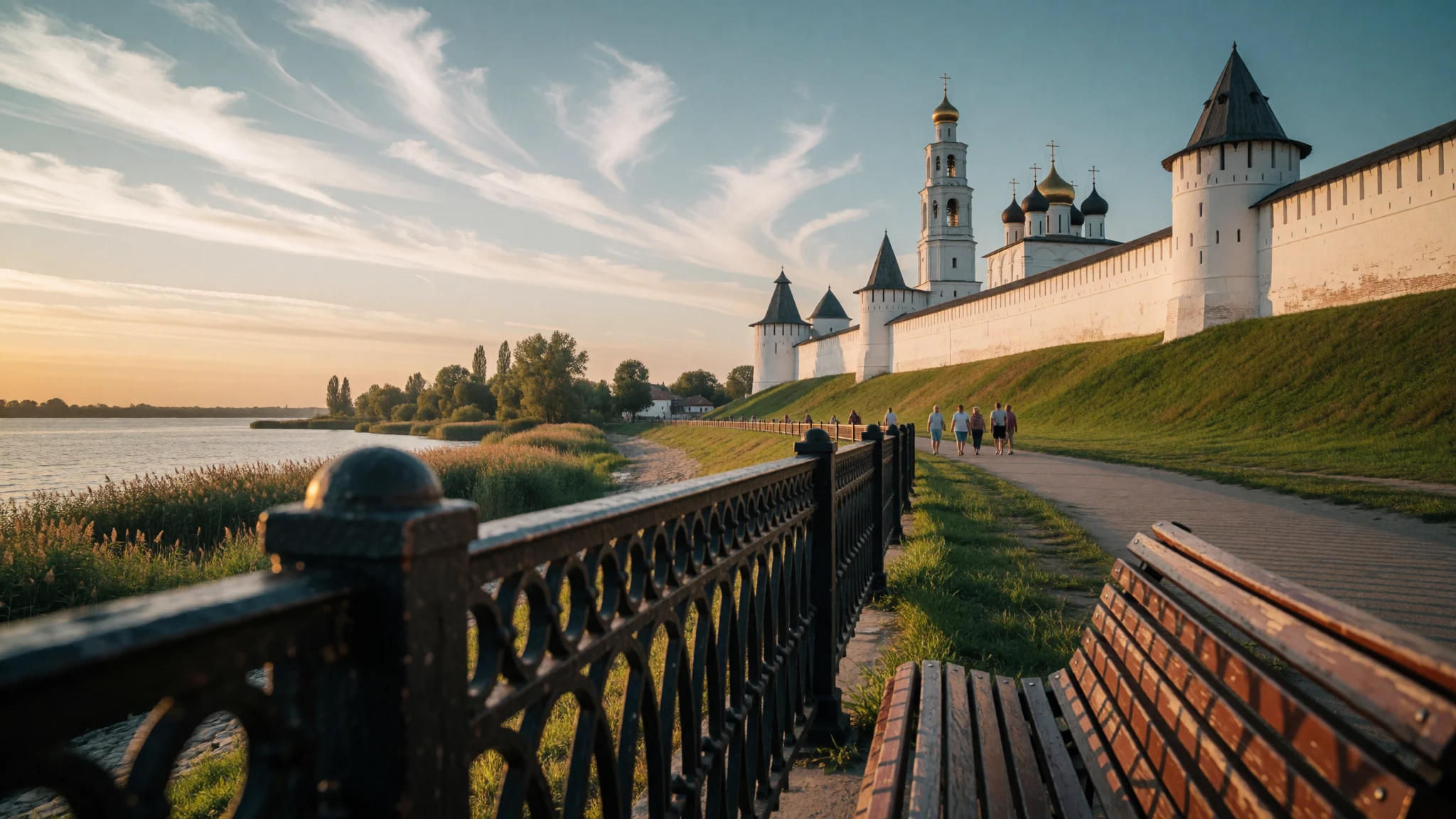
Astrakhan is a Volga delta city below sea level, where a white kremlin, fish markets and Caspian watermelons mark Russia's southern edge.
The place
Astrakhan stands on the Volga where the river begins to fan out into its delta, on a scatter of low islands not far from the Caspian Sea. The facts put its elevation at about 25 metres below sea level, and the flatness is the first thing visitors notice: no hills, just water, reed beds, long bridges and a very big sky. About 465,990 people live here, so this is a working regional city with a port, universities and ordinary traffic, not a preserved old town. The historic core is small and sits around the kremlin on slightly higher ground, with river embankments and older merchant streets spreading out from it. Beyond the centre, Soviet-era blocks and busy markets take over. The population is mixed, with Russians, Tatars, Kazakhs and others, and that shows in the food, the faces at the market and the occasional mosque among the church domes. Local tourism leans towards fishing, hunting, birdwatching and river cruises, which says a lot about what the surrounding delta is for. Summers are hot, dry and dusty, with mosquitoes near the water; winters are cold and windy, and the river can freeze. Spring and early autumn are the kindest seasons. Astrakhan is also far from most things. It suits people who like rivers, edges and places that rarely appear on itineraries, more than anyone planning a first trip to Russia.
Its story
Astrakhan's story begins upstream of the present city, on a higher bank of the Volga, where a trading town grew up on caravan and river routes. Medieval travellers recorded it under a name like Xacitarxan, and the delta around it was already rich in sturgeon and fertile land, with earlier capitals of Khazaria and the Golden Horde nearby. Timur burned the settlement in 1395, but trade pulled it back to life and it became the capital of the Astrakhan Khanate, ruled by the Astrakhan Tatars. Ivan the Terrible's forces took it in 1556, bringing the lower Volga into the Russian state and opening a road towards the Caspian and Central Asia. In 1558 the town was moved to its present site, and a new fortress rose on a rise among the islands. From then on Astrakhan was Russia's doorway for Persian, Armenian and Central Asian merchants, and its markets and fish trade grew alongside them. The medieval traveller Ibn Battuta passed through the Golden Horde lands, praised the Volga as a river of the first rank, and described how the khan's people laid hay over the frozen water so that travellers could cross. Archaeologists have since found the ruins of the earlier settlement a short way upstream, a reminder that the first Astrakhan is not the one visitors walk through today.
What to see
- Astrakhan Kremlin — Kremlin hill, city centre
Astrakhan Kremlin is the old fortress on the rise at the heart of the city, raised after the town moved to its present site. White walls link towers with names such as Artillery, Crimean and Granary, and several churches stand inside. Allow a slow half-day, ideally starting in the cool of the morning. Check the official city site for current opening arrangements.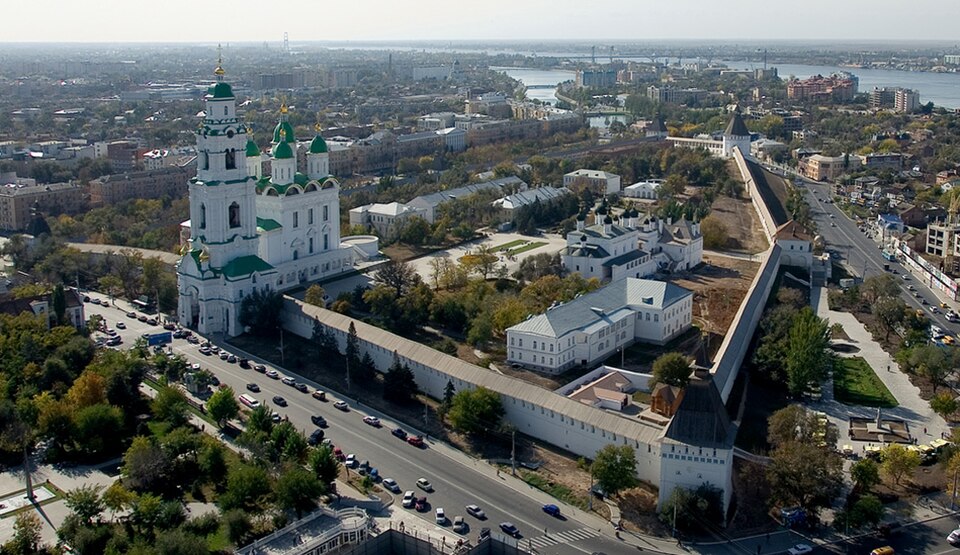
- Assumption Cathedral — Inside the Astrakhan Kremlin
Assumption Cathedral stands inside the kremlin walls, its domes and bell tower easy to spot from across the river. It is the fortress's main church and still a place of worship, so services shape when and how visitors can go in. Cover shoulders and knees, and check current visiting arrangements before planning the day. - House of Archbishop — Inside the Astrakhan Kremlin
The House of Archbishop, with its small house church of the Merciful Saviour, stands in the kremlin grounds and shows how church authority and daily administration shared the fortress. Its chambers look especially good from the grounds in low winter light. Interiors and museum use can change, so confirm what is open before going.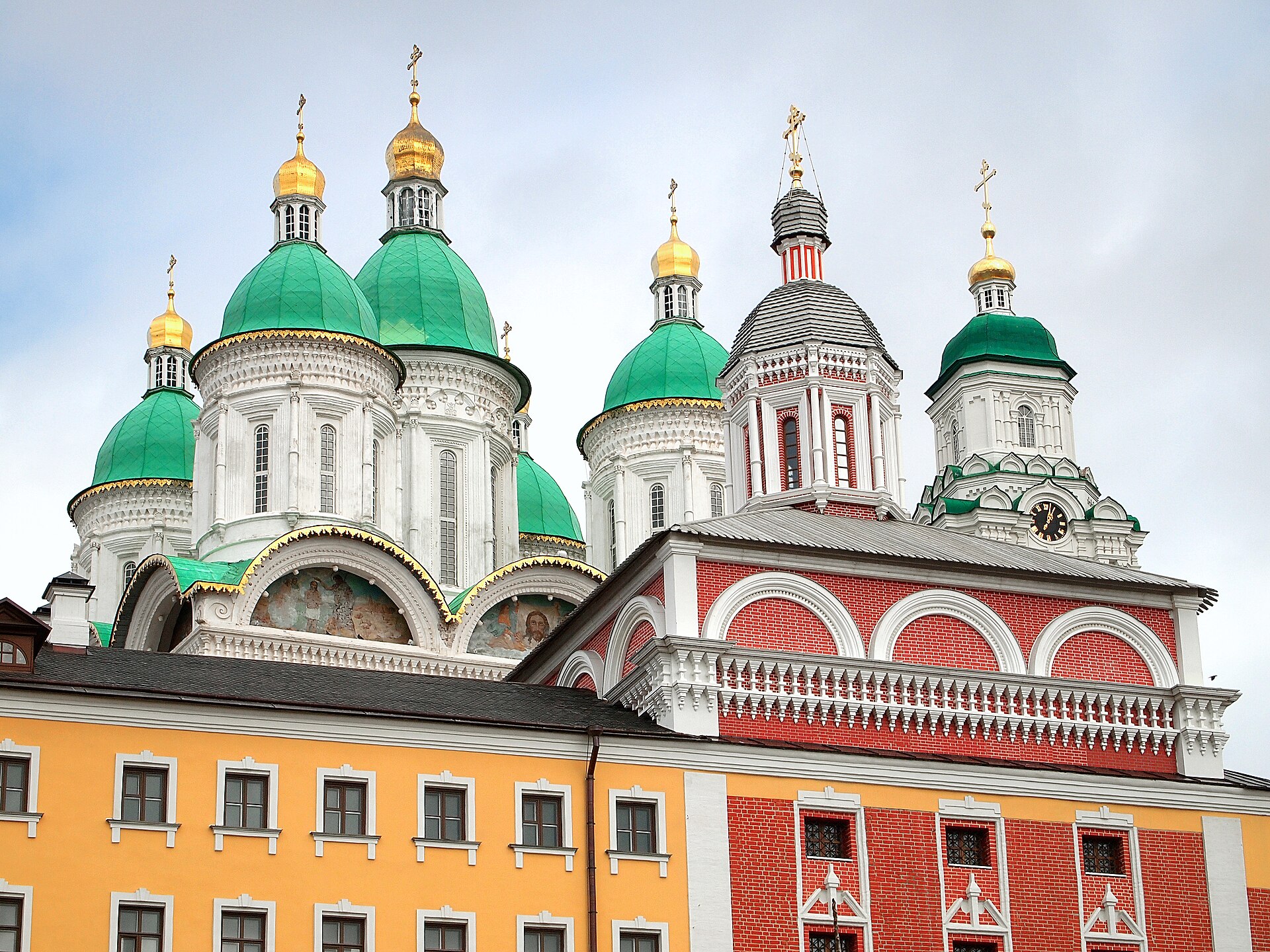
- Astrakhan Regional Museum — East of the kremlin, city centre
Astrakhan Regional Museum, a little east of the kremlin, covers the region's wildlife, the fish of the Volga and Caspian basin, the deep geological past and local life in the nineteenth and early twentieth centuries. An archaeological display called Gold of Nomads is a highlight. Labels may be mainly in Russian, so a translation app helps. - Dogadin Picture Gallery — East of the centre
The Dogadin Picture Gallery is the city's art museum, a walk east of the kremlin, and offers a calmer hour once the fortress is done. Expect paintings, with a strong local flavour alongside wider Russian work; check the official site for the current collection and hours. It suits a hot afternoon or a grey winter day.
Culture
Astrakhan's culture is a meeting of Orthodox Russia with the steppe and the Caspian world. Churches and the kremlin carry the Russian side, but Tatar, Kazakh and other communities have been part of the city since the khanate, and mosques share streets with cathedrals. Trade made the place tolerant in a practical way: merchants from Persia, the Caucasus and Central Asia all needed somewhere to sell. The Volga is the other constant. Fishing is a way of life, from anglers on the embankments to the seasonal rhythm of the delta, and local pride rests on fish, watermelons and river lore at least as much as on grand monuments. People tend to be formal and a little reserved with strangers, then generous once introduced; a guest is usually fed. Russian is the language of daily life, and English is limited outside tourist offices and universities, so a few phrases and a translation app go a long way. Religious calendars, from Orthodox feasts to Muslim holidays, shape the mood in different neighbourhoods, and museums and churches are the easiest places to see local traditions kept alive. In churches, cover shoulders and knees, wear a scarf over the hair if women around you do, keep your voice low, and never photograph worshippers or a service without asking.
What to wear
Astrakhan's traditional dress reflects its mix of peoples. Russian festival costume meant a long sarafan over an embroidered linen shirt, with a headscarf or a decorated headdress, while Tatar and Kazakh dress made use of velvet, silk and wool, embroidered skullcaps, gold-thread trim and layered coats. The curly lambskin fur sold as astrakhan takes its name from the city's trade. These garments now appear mostly at folk festivals, weddings, on stage and in museums. Everyday dress in Astrakhan is practical and fairly smart: jeans, jackets and trainers for the young, tailored coats and polished shoes for office and evening, and light cotton in summer, when the heat is strong. Winters call for proper wool, fur hats and insulated boots. Visitors should dress for the season first. In summer that means light, breathable long sleeves or sun-protective layers, a hat, sunglasses and sunscreen, plus insect repellent for anything near the water. In winter, bring a warm coat, hat, gloves and boots with grip. Comfortable closed shoes suit cobbles, dusty embankments and the kremlin grounds. For churches, keep knees and shoulders covered and carry a light scarf; at a mosque, dress modestly and expect to remove shoes.
What to eat
- Ukha — Traditional Russian eateries in the centre and canteens near the river
Ukha is a clear Russian fish soup, and in Astrakhan it is made with river fish from the Volga delta, simply seasoned with onion, bay and dill. A bowl is warming in winter and surprisingly light in summer, usually served with dark bread. - Vobla — City food markets and fish stalls
Vobla is salted, air-dried roach, a Volga snack eaten with beer and pulled from its skin by hand. It smells strong and is an acquired taste. The dried fish stalls in the main food markets sell it by weight. - Sturgeon — Restaurants specialising in Volga fish and the covered markets
Sturgeon is the delta's famous fish, served baked, smoked or in aspic. Wild stocks are protected, so ask whether the fish is farmed. Buy sturgeon and caviar only from licensed sellers and restaurants, never from street sellers or strangers. - Astrakhan watermelon — Roadside stalls and city markets in late summer
Astrakhan watermelons ripen in the long hot summer and pile up on roadsides and market stalls from late summer. They are sweet, juicy and sold whole or by the slice, and regional pride in them runs high. - Fish pirozhki — Bakeries, kiosks and market stalls
Pirozhki are small baked or fried pies, and in Astrakhan a fish and rice or onion filling is common. They make a cheap, quick snack on the move and are best eaten warm.
Plan it
Best time. May–June and September are the most comfortable: warm, long days and green growth along the delta. July and August are very hot and dry, with mosquitoes near the water. Winters are cold and windy, though the kremlin looks fine in snow.
How long. 2–3
Getting there. Fly to Astrakhan from Moscow or other Russian cities, then take a taxi or bus into the centre. Overnight trains run from Moscow to the city's main station, and the Kaspiy highway links it by road. From May to the end of September, Volga river cruises run from Moscow and other river cities.
Budget. low
Tips
- Check current entry rules and travel advice for your passport well before booking
- Foreign-issued bank cards often do not work in Russia, so confirm payment options and carry some cash
- See the kremlin early in the morning, before the heat and the tour groups
- Use repellent and drink bottled water on delta trips
- Book fishing or delta excursions through a licensed operator ahead of time
Etiquette
- Cover shoulders and knees in churches and mosques, and remove shoes in mosques
- Ask before photographing people, especially worshippers
- Buy sturgeon and caviar only from licensed sellers
Nearby
Sources
- Wikidata Q3927 (CC0)
- Wikipedia: Astrakhan (CC BY-SA 4.0)
- Wikivoyage: Astrakhan (CC BY-SA 4.0)
- Panorama of the central part of Astrakhan from the new bridge — Madyudya Denis (CC BY 3.0)
- Astrakhan - Russia — ic.pics.livejournal.com (CC BY-SA 2.5)
- Archbishop's chambers, Astrakhan Kremlin — Сергей С. Петров (CC BY-SA 4.0)
- Astrakhan. Stock Exchange Building — Alexxx1979 (CC BY-SA 4.0)
- Astrakhan — Alexxx1979 (CC BY-SA 4.0)
- Astrakhan Kremlin from above — Astrakhan-musei (CC BY-SA 4.0)
- Astrachaň v 17. století — unknown author (Public domain)
- Russian Kremlins stamp: Astrakhan Kremlin (Public domain)


