Derbent
Derbent, Russia
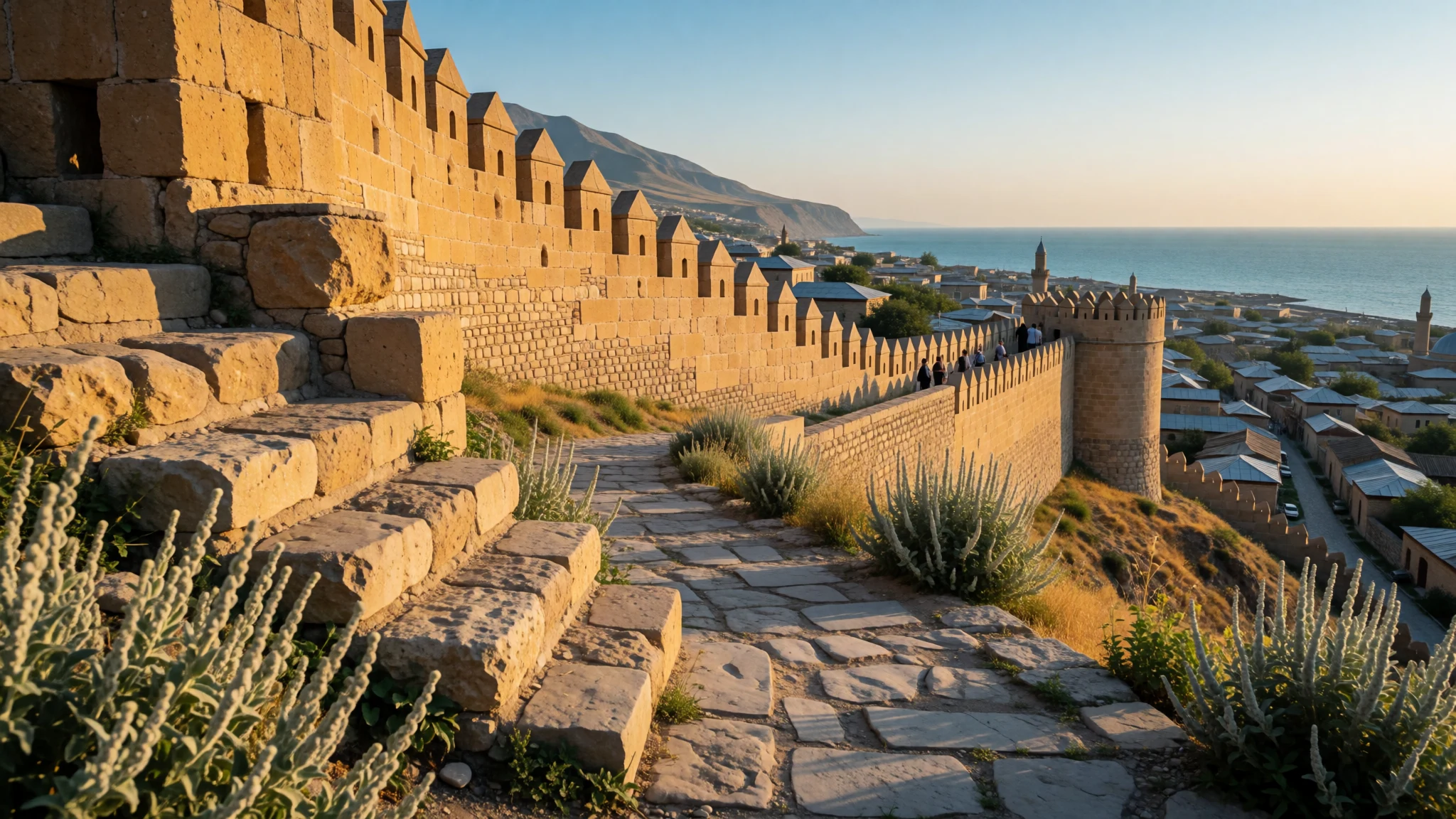
Derbent is where Russia’s geography tightens into a historical “gateway” between mountains and the Caspian.
The place
Derbent (in Dagestan, Russia) sits on a narrow strip where the Caspian Sea meets the Caucasus Mountains, squeezing travel routes into something like a pinch-point. That location is the whole story: for centuries, whoever controlled Derbent could influence land movement between the Eurasian Steppe to the north and the Iranian Plateau to the south.
The city’s present shape follows that logic. Its historic core includes fortifications, walls, and a citadel system that look less like “old town scenery” and more like infrastructure built to last. Walking the walls gives a rare sense of how geography becomes power: sea on one side, hills and passes on the other, with the narrowness doing the heavy lifting.
Derbent also has a multi-layered identity in its names alone—Albana, Chor, Bab al-Abwab, Darband/Derbend—so even if you’re not a timeline person, the layers show up in architecture and religious life around the old defences. And there’s the modern city too: it’s a working place with a harbour and rail links, so you’ll feel the day-to-day alongside the monuments rather than in a sealed-off museum zone.
Crowd levels are usually modest compared with bigger tourist hubs; the bigger variables are heat and the feel of being in the south of Russia. In warmer months, you’ll want early starts and breaks. In shoulder seasons, it’s much easier to move between fortress, museum, and waterfront without rushing.
Its story
Derbent’s history reads like a long argument between empires and the shape of the land. The city occupies a strategic gateway: a narrow three-kilometre strip between the Caspian Sea and the Caucasus Mountains. Historically, that mattered because there weren’t many practical ways to cross the Caucasus ridge—so controlling this pass meant controlling a chokepoint.
Early Persian influence begins as far back as the 8th century BC in the wider Derbent area, with settlement intensifying over time and Persian monarchs periodically controlling the site. Much later, a Persian dynastic push helped re-establish the city under the name Darband, a word tied to the idea of a “gateway”. Walls and fortifications also become central: the defensive system is associated with rulers in the Sassanid sphere, with towers facing north and a fortress designed to manage hostile movement from the steppe.
A useful way to understand the city is to picture it switching hands whenever broader regional politics shifted. Across centuries, control moved among Persian and Arab powers, later Mongol and Timurid dynamics, and Shirvan-linked periods. That repeated turnover is why Derbent doesn’t feel like a single-styles heritage site—more like a palimpsest where each era leaves practical marks.
There are also legends and interpretations: some accounts link changes in the Caspian’s water level with opening routes that needed fortifying. Whether you take that literally or not, it fits the city’s logic. Derbent is constantly adapting to the environment around it, turning sea level, mountains, and passes into defensive and economic strategy.
Today, you can still sense that ancient “gateway” mindset when you stand near the walls and look out across the narrow geography—history here isn’t background; it’s layout.
What to see
- Citadel of Derbent
The Citadel of Derbent is the backbone of the city’s defences: fortification and walls first associated with the Sassanian period, then repaired or improved through later eras. For a first visit, aim to get a view of the wall line and its gates—this is where the “gateway” geography becomes real. The atmosphere is firm, not souvenir-like.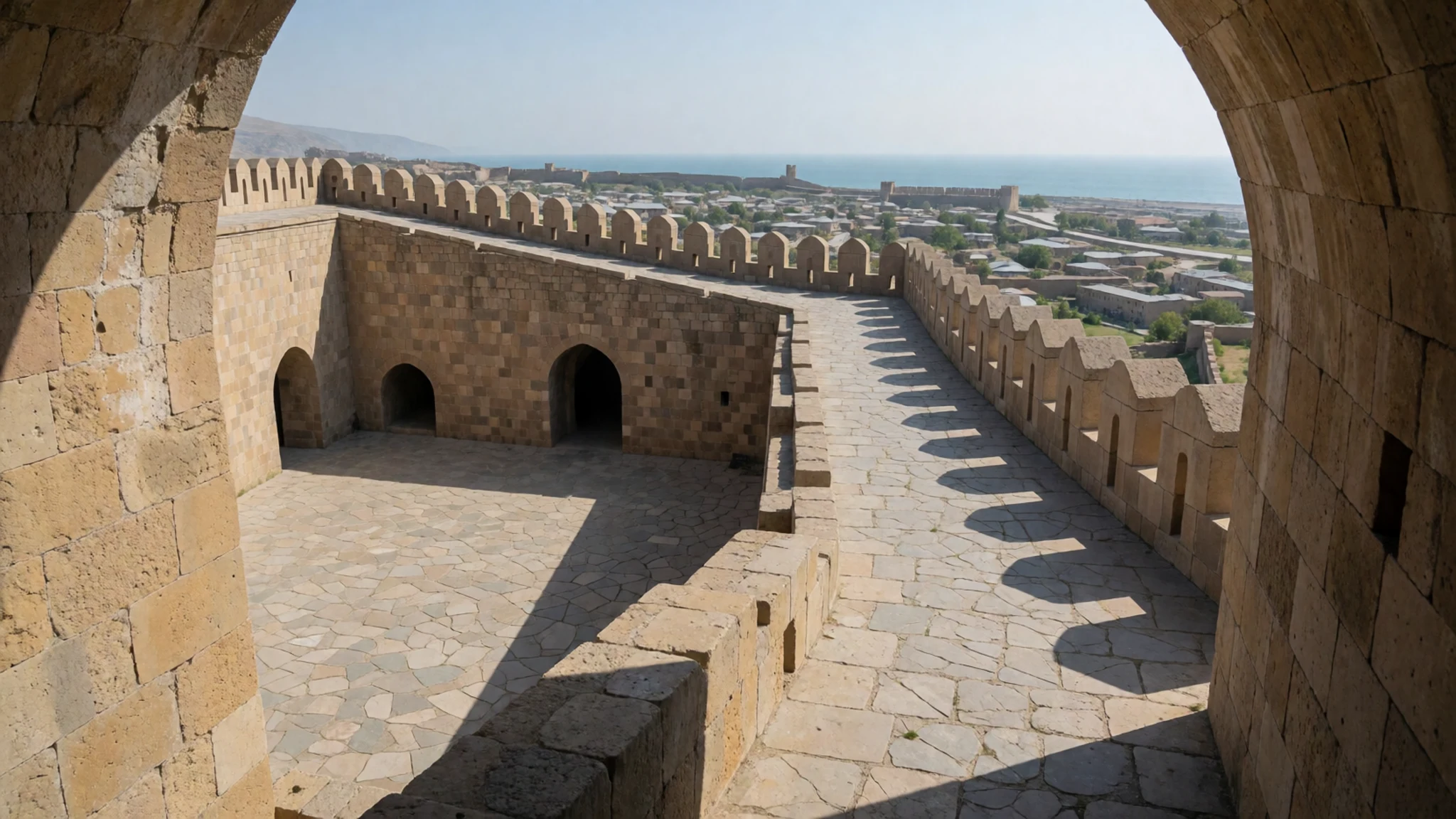
- Museum of the History of World Cultures and Religions
This museum is a good counterbalance to the stone-and-strategy feeling of Derbent’s walls. It’s positioned close to the historic core, so you can pair it with fortress time. If the city’s names and eras feel like a lot, the museum context helps you connect the dots without turning the day into pure wandering.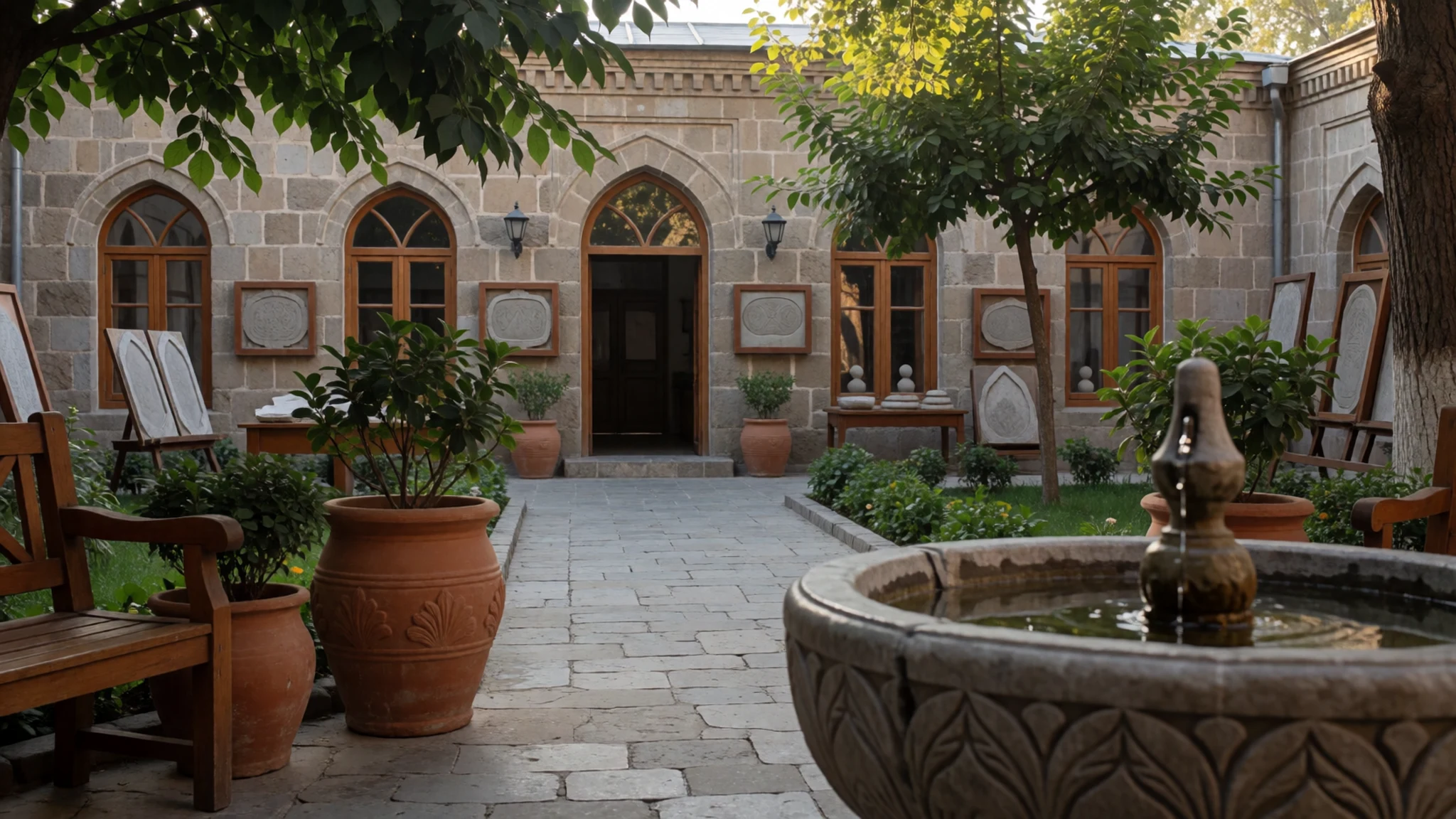
- Grand Mosque (Juma Mosque)
The Juma Mosque gives you a sense of Derbent’s living religious landscape alongside the ancient defences. It’s the kind of place where architecture and daily devotion sit together, and where respectful observation matters more than photos. Visit as daylight is good and the streets around it feel calmer.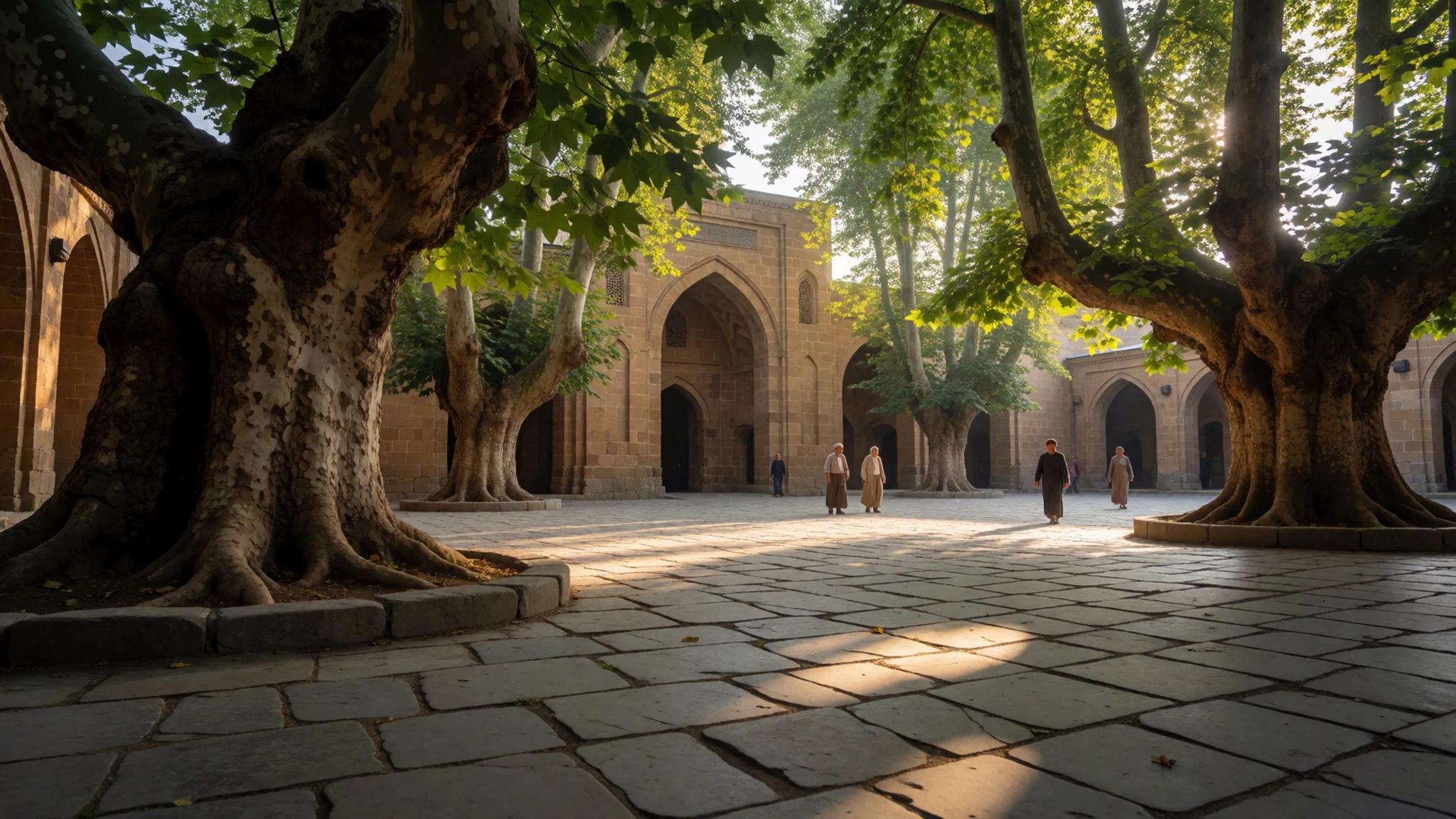
- Embankment and beach
Derbent’s equipped embankment sits to the north of the city, and it leads toward the shoreline. It’s a practical place to cool down after fortress walking, especially when the sun is doing the most. Expect the historical part to reach the coast but also some industrial stretches—use it for atmosphere and sea air, not postcard prettiness.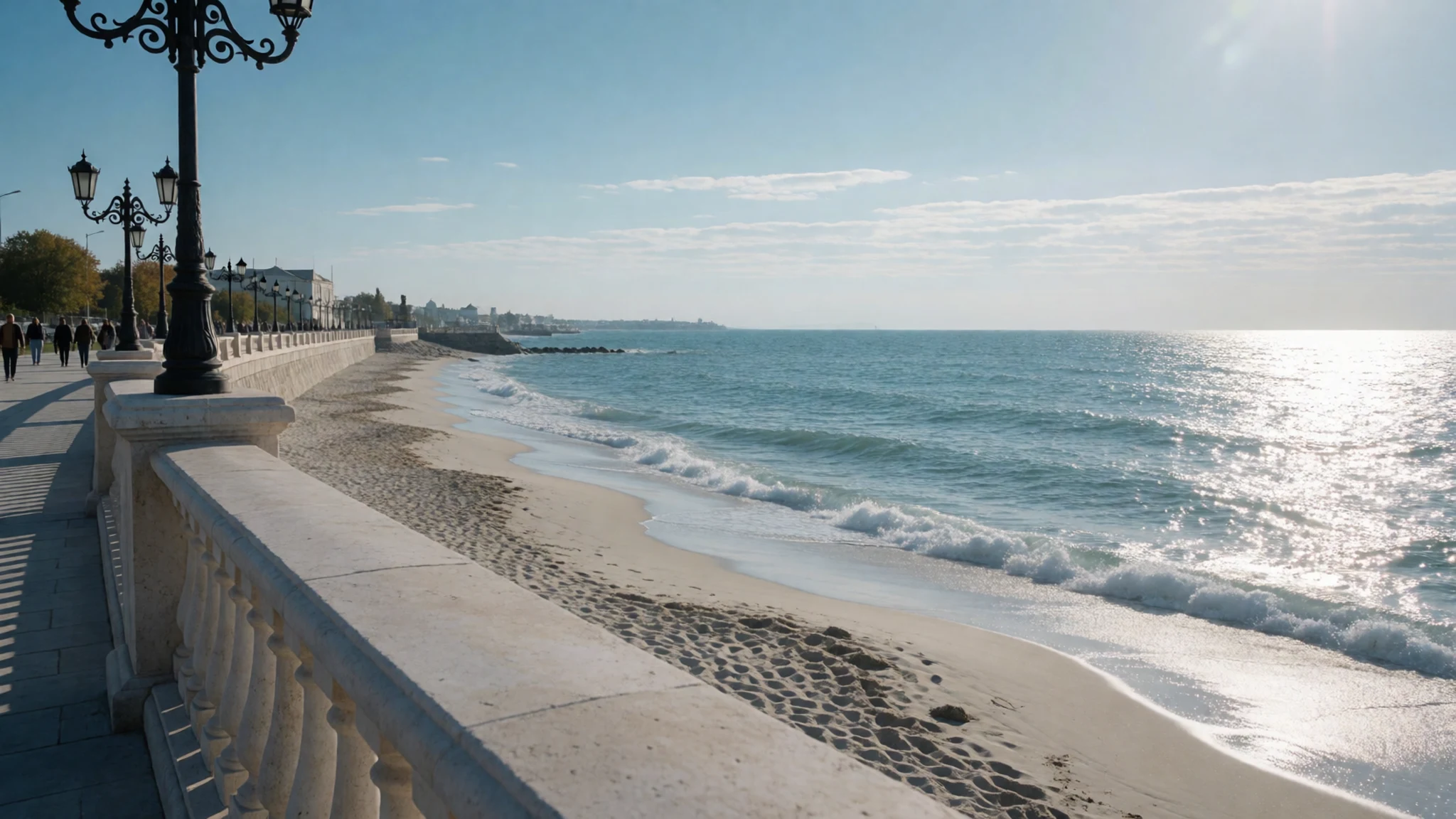
- House of Peter I — near the historic centre
The House of Peter I marks a specific episode: during the Persian campaign, Peter I stayed for several days in Derbent in an earthen hut. Even if you’re not chasing imperial history, it’s a useful stop because it brings the city’s strategic role into early modern times—again reinforcing the “gateway” theme, not just the ancient walls.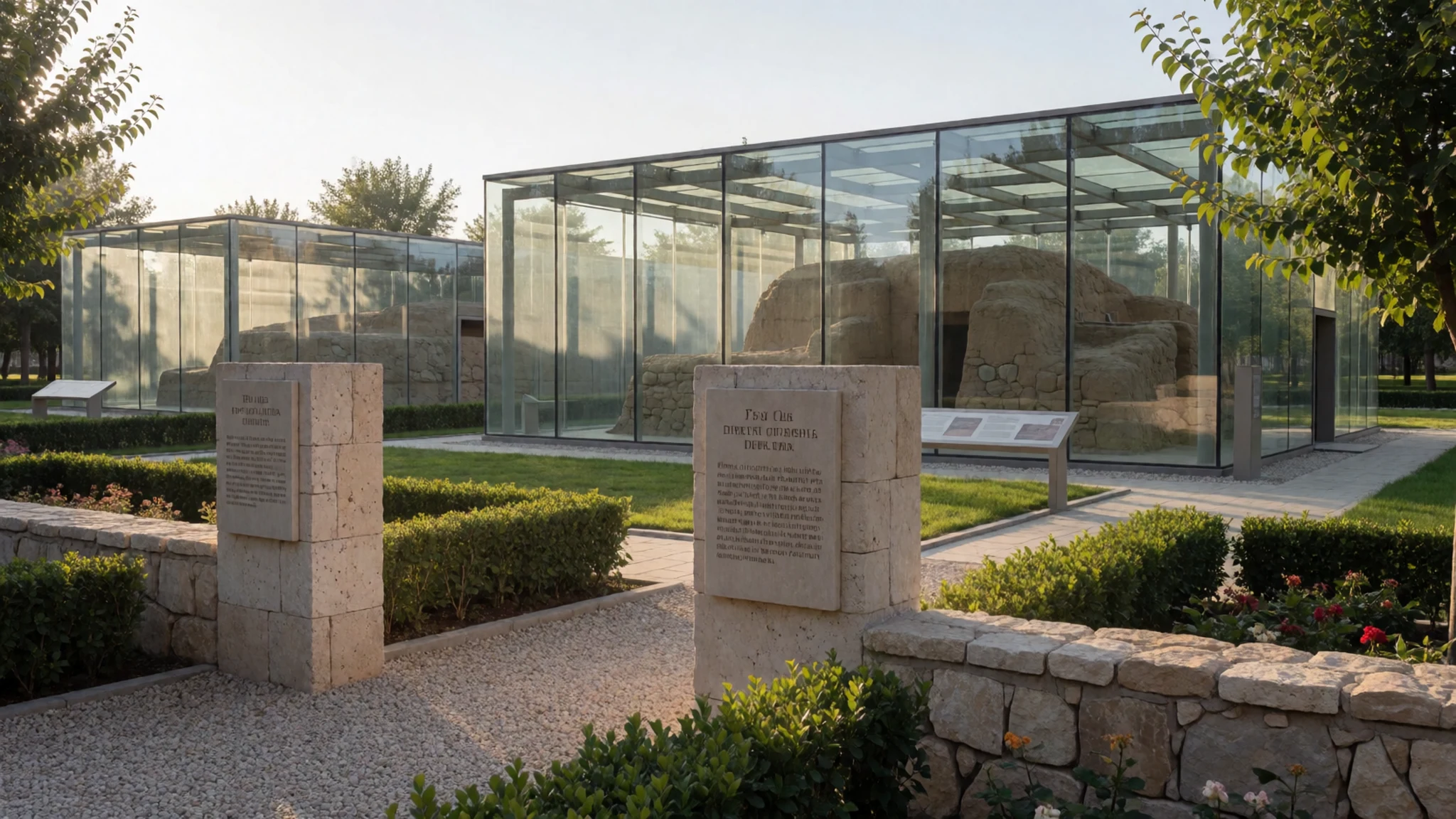
Culture
Derbent’s culture is shaped by layers: long histories of conquest and border life, plus present-day everyday life in Dagestan’s southern city. In practice, you’ll notice it in how religious buildings and civic spaces feel integrated into town routines rather than cordoned off. It’s also a city where the old fortifications aren’t “neutral ruins”—they’re tied to identity, memory, and local pride.
Respectful visiting is the main rule of thumb. If you enter places of worship, dress modestly and act quietly; street-level energy around entrances can be lively, so keep your voice down. Photography can be casual on viewpoints and streets, but at religious sites it’s safer to wait for a clear cue and avoid focusing on individuals without permission.
Because Derbent is in a warmer part of Russia by latitude and terrain, heat management is cultural as well as practical: locals tend to structure days around shade and calmer hours, and you’ll feel the difference if you try to “power through” mid-afternoon. Carry water, take breaks, and don’t treat every walk as an endurance test.
Visitor etiquette: dress modestly at mosques and churches, and ask before photographing people (especially during worship).
What to wear
In Derbent, traditional dress is part of local identity in Dagestan, but day-to-day outfits are what you’d expect in many Russian regional cities: practical, weather-aware clothing for streets and transport. The most visible “traditional” influence tends to appear during cultural events, community gatherings, or when people choose it for ceremony.
If you want to blend respectfully, think modest layers. In warmer months, lightweight tops with sleeves and long trousers (or long skirts for those who prefer them) work well, and a breathable overshirt helps for evenings by the sea breeze. During visits to religious sites, cover your shoulders and avoid shorts; footwear should be easy to slip on and off where required.
Textures and textiles vary by community, but the visitor-friendly takeaway is straightforward: choose comfortable fabrics you can move in, not delicate items that you’ll worry about on uneven historic streets. For fortress and wall-walking, trainers with grip are a better bet than soft sandals—Derbent’s terrain near the old areas can feel uneven and dusty.
What to wear now: T-shirts or lightweight shirts in summer, long trousers, and a light jacket for evenings; what to wear as a visitor: modest clothing for religious stops and closed shoes for walking.
What to eat
- Seafood dishes by the Caspian — sea-facing neighbourhoods near the embankment and harbour
Derbent’s waterfront and fishing economy mean seafood is a sensible bet. Look for grilled fish or simple stews in the local eateries around the harbour and sea-facing parts of town, especially in lunch menus and casual dining spots.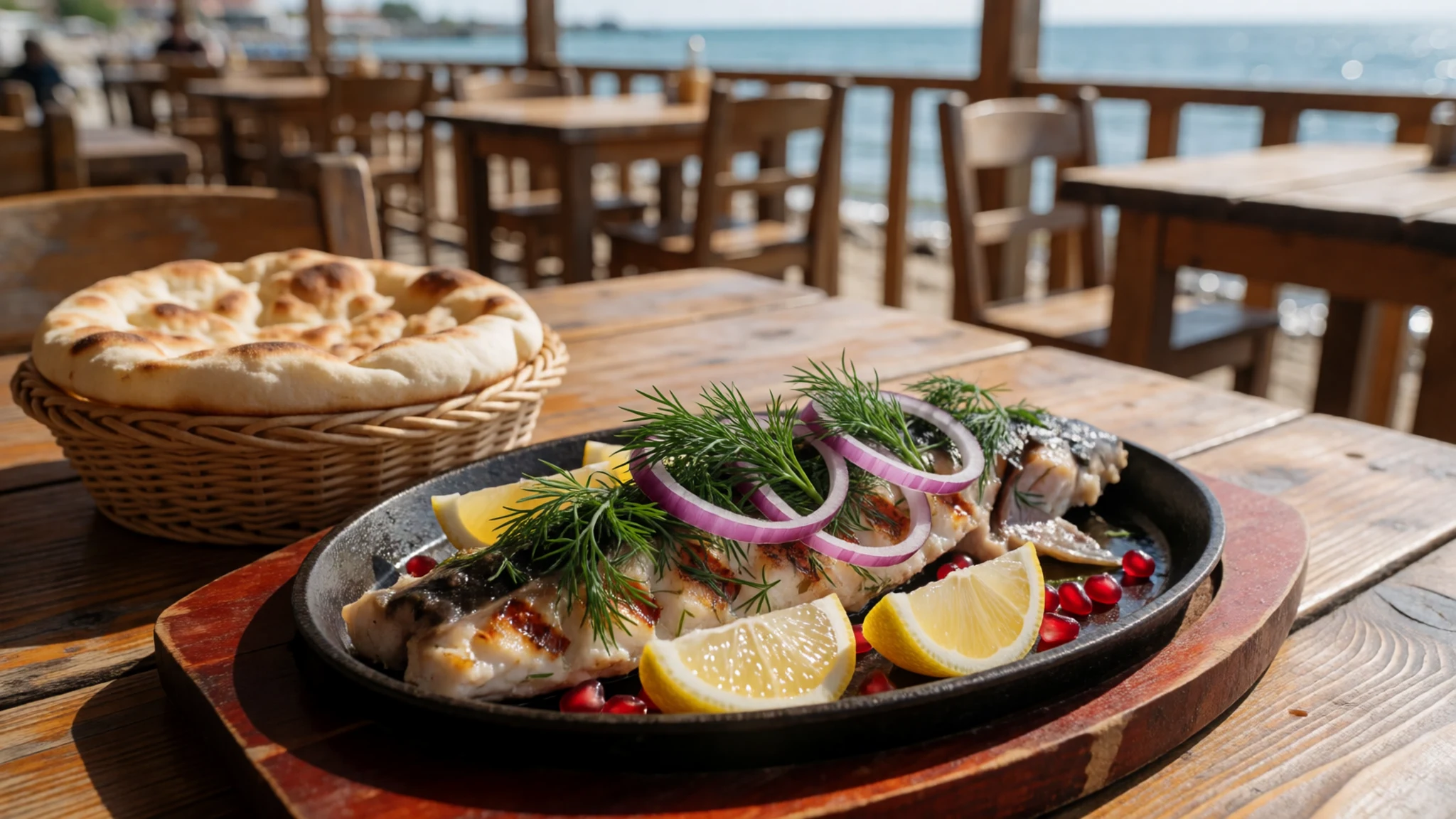
- Local breads and baked savoury pastries — street bakeries and local markets
In cities across Dagestan, bakeries and small stalls are where people grab something warm between errands. In Derbent, seek out freshly baked breads and savoury pastries sold as quick meals—often best eaten while still hot.
- Meat-based kebabs and grills — casual street food areas and family-run restaurants
Kebab-style grills are common in the region, and Derbent is no exception. You’ll typically find marinated chicken or beef skewers served with salad and bread—easy, filling, and ideal after a long wall-walk when you want something straightforward. - Vegetable and herb appetisers — standard restaurant starters and market food counters
Expect plenty of vegetables, pickles, and herb-forward sides that cut through rich main dishes. If you see local salads served as shared starters, try them alongside meat or seafood—good variety without needing a long menu translation mission. - Traditional sweets with tea — bakeries and dessert sections of local markets
End with something sweet that goes well with tea, rather than a heavy dessert. Look for small pastries, nutty bites, or honeyed treats sold in bakeries and dessert counters—often the easiest “try-it” option for visitors.
Plan it
Best time. March–April and October–November for comfortable walking weather; summer can feel hot near the Caspian, and shoulder months make museum-to-wall days easier.
How long. 2–3
Getting there. By train, Derbent is reachable via regional services from Makhachkala and by long-distance trains that can stop here (including routes from Moscow and with connections from Baku). By road, minibuses run from Makhachkala, with most local schedule detail found on the spot; buses to/from Baku are rarer and can involve border transfers.
Budget. mid
Tips
- Plan fortress time for earlier in the day so you’re not wrestling heat during the wall walks.
- Build your day around logistics: pair the citadel/walls with the museum so you’re not backtracking across town.
- If travelling by minibus from Makhachkala, expect “after filling” departure patterns and some waiting rather than a fixed timetable.
- Keep small cash for snacks and market stops, and carry water for the walkable historic areas.
- Before departure, double-check travel conditions—Dagestan travel can be sensitive, so treat safety info as a living thing.
Etiquette
- Dress modestly at religious sites and follow any instructions about head coverings or entry areas.
- Ask before photographing people, especially near worship spaces.
- Keep voices down in and around places of worship even if the street outside feels busy.
Nearby
Sources
- Wikidata Q131416 (CC0)
- Wikipedia (Derbent, rev 1380128090) (CC BY-SA 4.0)
- Wikivoyage (Derbent, rev 5401003) (CC BY-SA 4.0)
- File: Derbent.Naryn_Kala_Citadel.139.Southern_City_Wall.Bayat_Kapy_Gate.JPG (CC BY 3.0)
