Kaliningrad
Kaliningrad, Russia
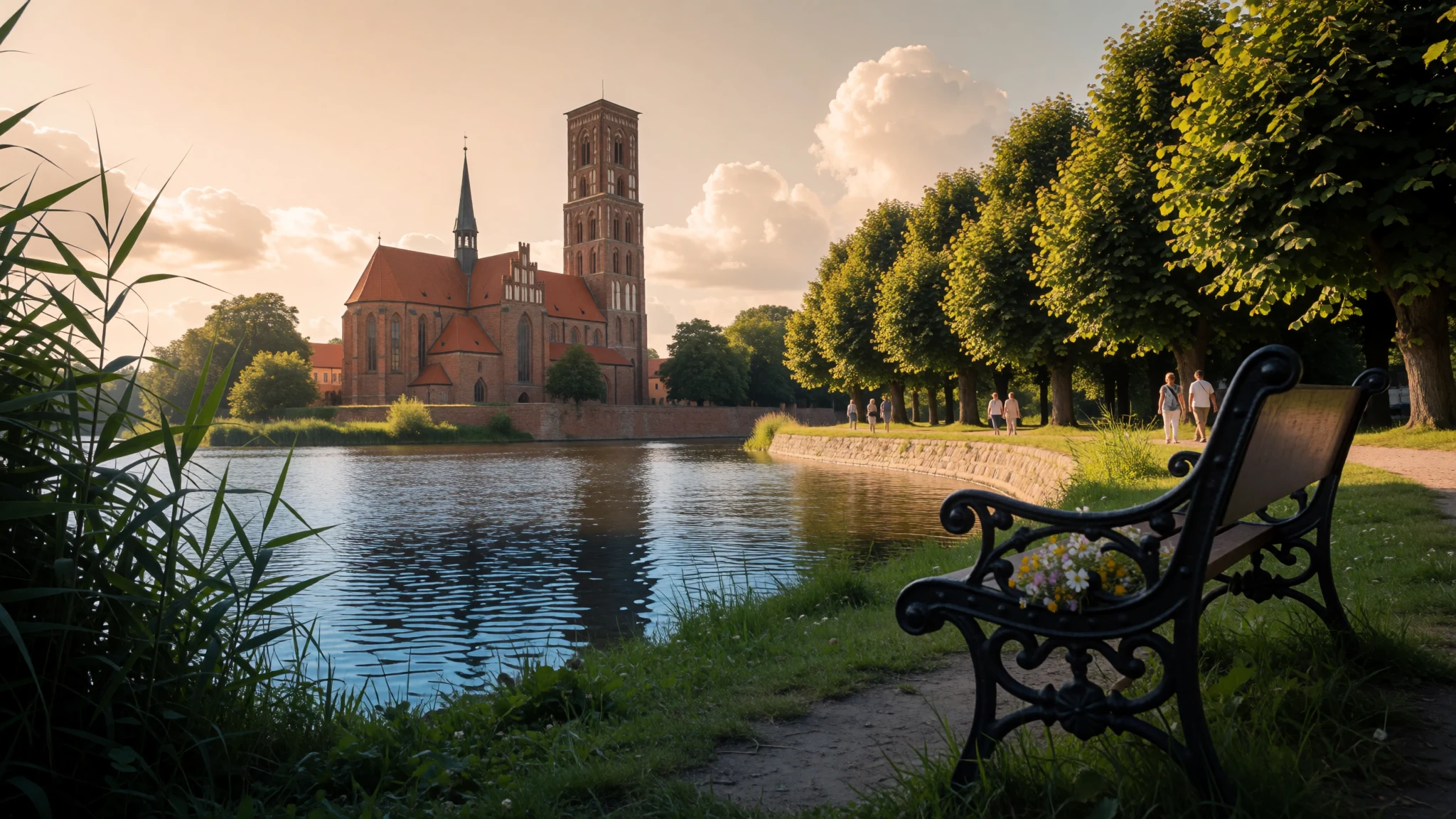
Kaliningrad is a Baltic port where Prussian brick, Soviet blocks and a rebuilt cathedral island share one flat, riverside city.
The place
Kaliningrad sits on the Pregolya River close to the Vistula Lagoon, a shallow inlet of the Baltic, in a pocket of Russia wedged between Poland and Lithuania. It is the administrative centre of its oblast and home to about 490,000 people. Foreign territory separates it from the rest of Russia, so ordinary journeys here involve flights, ferries or transit rules that mainland cities never think about. The ground is flat and low, only about five metres above sea level, and the river splits around islands that give the centre its shape. A first-time visitor finds a layered city: wide Soviet avenues and apartment blocks, patches of German red brick that survived the war, rebuilt landmarks on the old cathedral island, and newer waterside districts styled as an idealised past. It feels unlike Moscow or St Petersburg, and unlike Poland over the border. Many residents cross into Poland and Lithuania more often than they travel to the Russian mainland, which gives the place a quiet Baltic outlook. Parks, trams and long ring roads make it feel lived-in rather than curated. The centre is compact enough to cover on foot, with a tram or taxi for the longer hops. Two honest caveats: the sky is grey for much of the year, and visa rules and government travel advice need checking well before any booking is made.
Its story
Kaliningrad began as a fort of the Sambians, an Old Prussian tribe, called Twangste. In 1255 the Teutonic Knights, campaigning in the Northern Crusades, destroyed it and raised a castle on the site, naming the new stronghold Königsberg after the Bohemian king Ottokar II. Three separate towns grew beside it, Altstadt, Löbenicht and Kneiphof, each with its own charter, and they later merged into one city. Over the centuries Königsberg passed from the Order to the Duchy of Prussia and then to the Kingdom of Prussia. In 1701 it became the coronation city of Prussian monarchs, even though Berlin took over as capital. Merchants, shipowners and a university made it an important Baltic centre, and the philosopher Immanuel Kant spent his life here. Catastrophe came late. Allied bombing in 1944 and the battle for the city in early 1945 wrecked the medieval core, and Soviet forces took it in April 1945. The remaining German population was later expelled, settlers arrived from across the USSR, and in 1946 the city was renamed Kaliningrad after the Soviet politician Mikhail Kalinin. For decades it served as a military and port zone that outsiders could barely enter. Since 1991 it has been part of Russia, and residents have been working out which parts of the Prussian past to rebuild, which to remember quietly, and which to leave alone.
What to see
- Old Cathedral on Kneiphof Island — Kneiphof Island, city centre
The brick cathedral stands on a river island in the middle of the city, surrounded by lawns and the graves of professors. It was founded in the medieval period and rebuilt extensively after the war. Inside, a museum and an organ hall share the space; a tower gives a view over the Pregolya.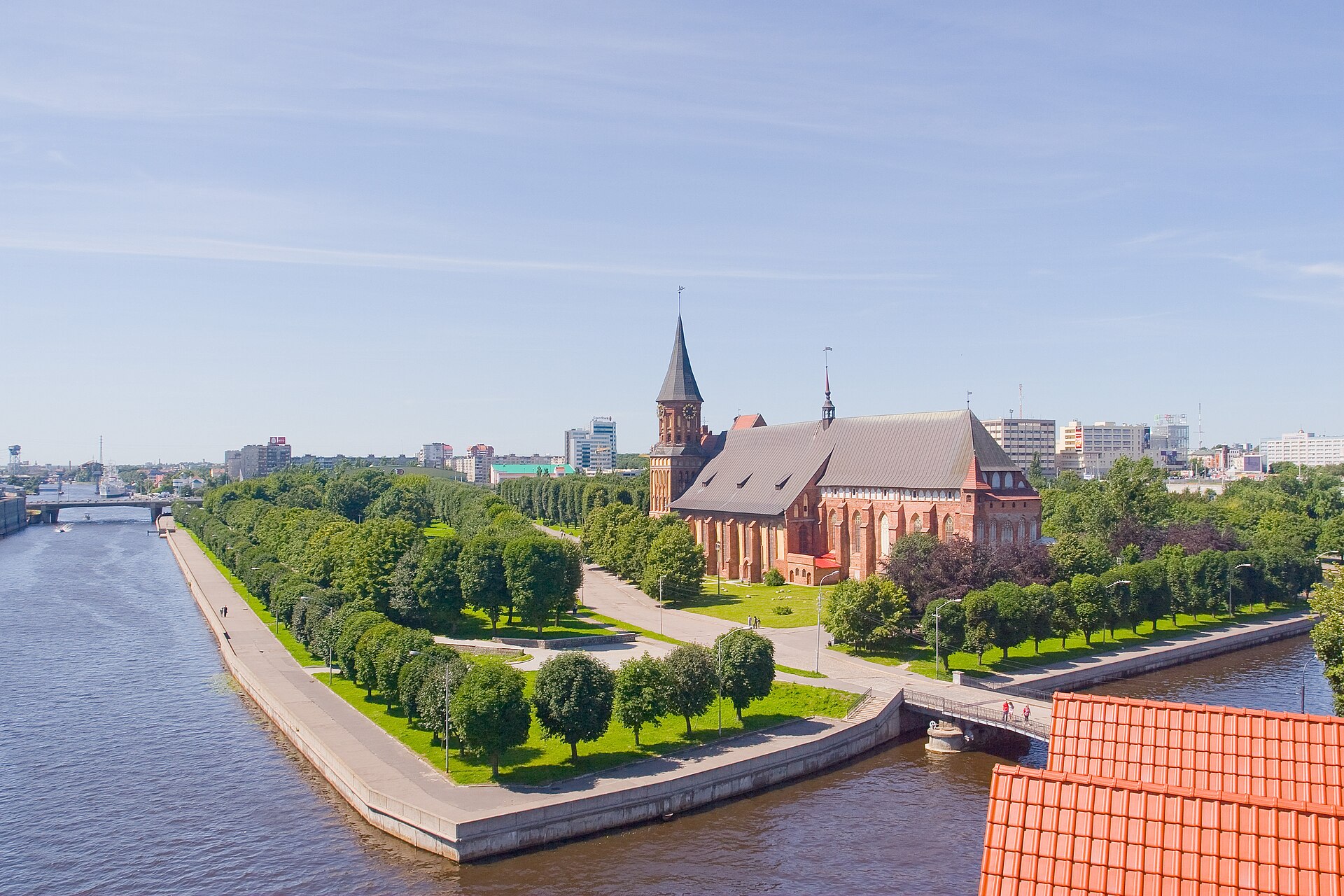
- Fishing Village — Pregolya embankment, near Kneiphof
A modern riverside quarter built in the style of old Königsberg, with red roofs, timber-look façades and a lighthouse tower. It is touristy and rebuilt rather than original, but pleasant on a summer evening for a walk along the water, and handy for restaurants and souvenir stalls. - City gates and fortifications — Along the old ring of defences
A ring of nineteenth-century defences, including a series of brick town gates, still marks the old edge of the city. Several gates now serve as museums, galleries or event spaces, and the Amber Museum occupies a former defensive tower. The Sackheim gate area suits a slow wander.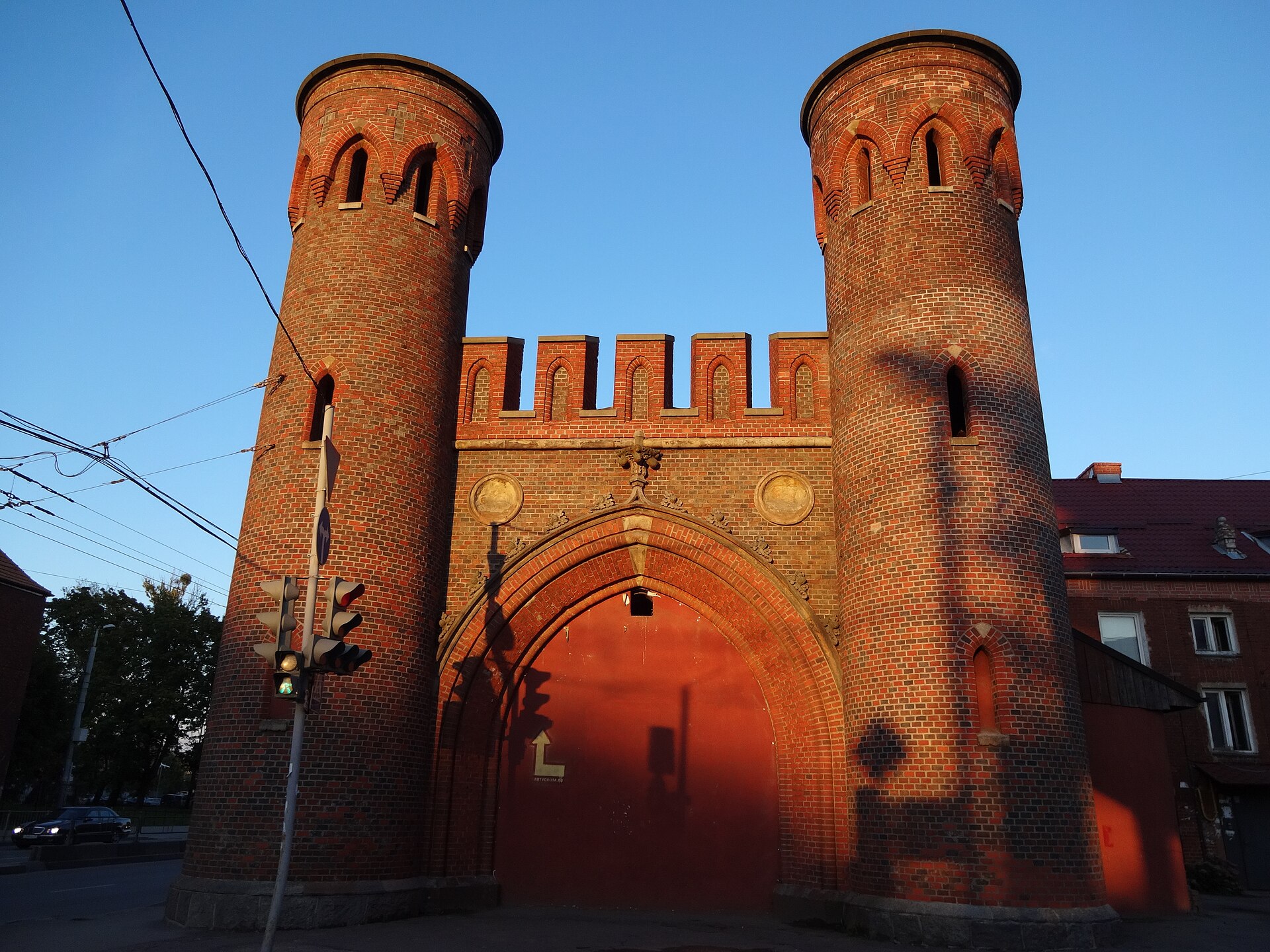
- New Synagogue — Near the Pregolya, central Kaliningrad
The congregation's original synagogue was burnt down during Kristallnacht, and this building was put up from scratch on the same site and opened to the public in 2018. It is a modest but serious place, worth a visit for the story it tells about what the city lost. - Amber Museum — Lakeside tower, north of the centre
Housed in a stout defensive tower beside a lake, the museum shows amber from the nearby Baltic coast, including jewellery, ornaments and pieces with insects trapped inside. Amber is a local trade and identity marker, so this is the best place to understand why it turns up in shops across the city.
Culture
Kaliningrad's culture comes from layers that do not quite agree with one another. The architecture and street plan speak of Prussia, the apartment blocks and monuments speak of the Soviet decades, and the daily language, television and food are Russian, with a strong sense of Baltic neighbourliness. Residents often describe themselves as a distinct kind of Russian, shaped by living at the edge of Europe. Museums are central to this conversation. The regional history and arts museum, founded in 1946, runs several branches, including a bunker-style site and a fort. The amber museum sits in a former defensive tower, and the state art gallery shows Russian and foreign work across its halls. Churches reflect the same mix: Orthodox cathedrals, some in former Lutheran buildings, stand alongside the rebuilt synagogue and the cathedral on Kneiphof Island, which is now a museum and concert space. Public holidays such as Victory Day in May bring parades, wreaths and crowds to the central square, and the war is remembered seriously. Conversations with locals tend to be warm once started, though politics is better left for people you already know. Photograph war memorials and Victory Day ceremonies respectfully, and never photograph military sites or port installations.
What to wear
Kaliningrad has no distinct regional costume of its own. The traditional dress of Russia, the sarafan, a long sleeveless dress worn over a linen blouse, and the kokoshnik headdress, appears at folk festivals, school performances and on stage rather than in the street. Linen, wool and embroidered cotton are the classic textiles. The region's real signature is amber, set in silver and worn as rings, pendants and brooches. What people wear now is ordinary European city dress: dark coats and boots in the long cool months, jeans and trainers, and light summer dresses and shirts when the sun finally arrives. Locals dress a little more smartly than a British or Indian visitor might expect for an evening out, and people take care over shoes. For visitors, practicality comes first. Pack a waterproof layer in any season, a warm coat and hat from late autumn, and comfortable shoes for cobbles, tram platforms and wet pavements. Summer on the nearby coast can be pleasantly warm, but evenings cool quickly. Orthodox churches welcome visitors in modest clothing, so carry a scarf or shawl for covering shoulders and, for women, hair if wished. Cathedrals and museums are heated, so layers that come off easily help.
What to eat
- Königsberger Klopse — Restaurants in the centre that serve historic or German-style menus
Poached meatballs in a creamy white sauce sharpened with capers, usually served with boiled potatoes. It is the dish that carries the city's old German name, and it is the one local cooks like to revive for visitors.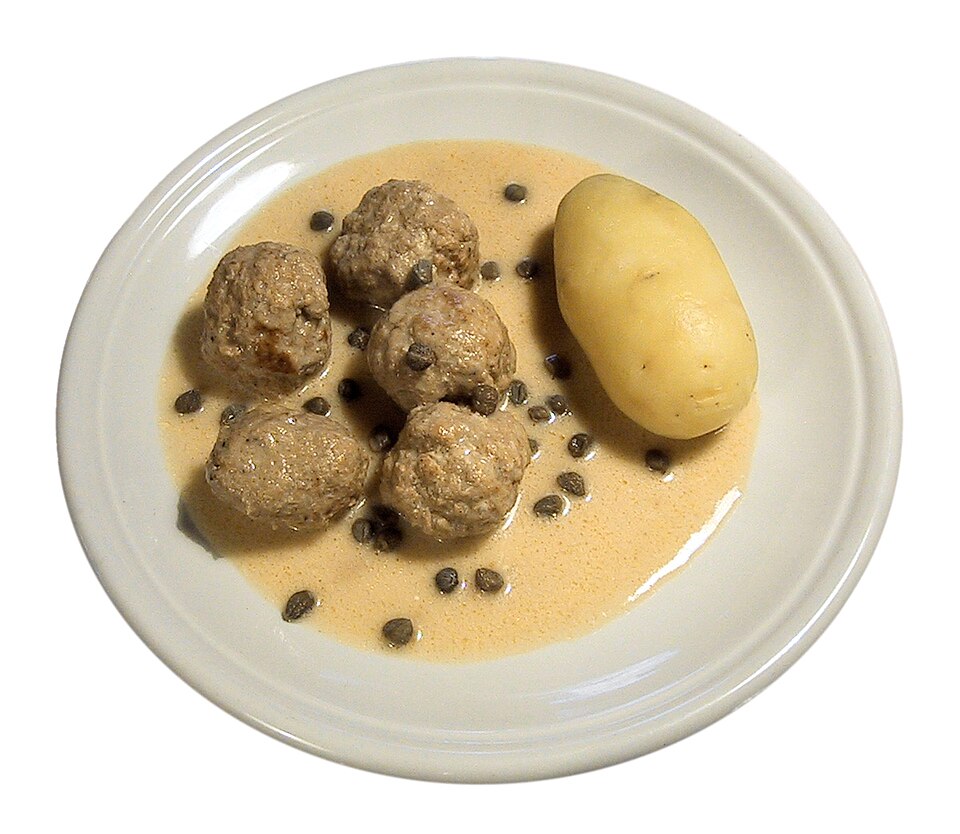
- Plov — Uzbek restaurants and tea houses in the city centre
Rice cooked with lamb, carrots and spices, a dish brought by Central Asian settlers and now a normal part of the city's eating. Several Uzbek restaurants serve it in generous portions, often with flatbread and green tea. - Smoked Baltic fish — Markets and fish stalls near the river and on the coast
Eel, flounder and herring are smoked or pickled along the coast and lagoon. The flesh is oily and salty, good with dark bread and a glass of cold beer, and a sensible choice for a simple lunch. - Königsberg marzipan — Confectioners and gift shops around the old town
A baked almond sweet, traditionally browned on top and shaped into small pieces or filled loaves. The city was once known for it, and bakers and confectioners here now sell it in boxes and slices that travel well. - Pelmeni — Canteen-style eateries and family restaurants across the city
Small dumplings of minced meat in thin dough, boiled and served with sour cream, butter or vinegar. They are a cheap, filling Russian staple, and on a cold day they are what many locals reach for.
Plan it
Best time. June to September, when the days are long, the parks and coast are at their best and the weather is mildest. Winters are cold, damp and dark, and autumn turns grey quickly, though museums and cafes keep the city comfortable.
How long. 2–3
Getting there. Fly to Kaliningrad's own airport, with domestic flights from Moscow, St Petersburg and other Russian cities, then take a taxi or bus into the centre. Overland routes cross Poland or Lithuania, but transit rules change, so check current guidance before planning. Almost all visitors need a Russian visa, and some nationalities can use an eVisa; confirm everything with the official Russian foreign ministry and your own government's travel advice. The city website is https://www.klgd.ru/.
Budget. mid
Tips
- Check visa rules and your government's travel advice well before booking, as they change
- Walk the centre in the morning, then take a tram or taxi to the wider museums
- Carry some cash and a card, since small places differ in what they accept
- Pack a waterproof layer and warm clothes, even in summer
- Book a coastal day trip separately, as buses and trains may need planning
Etiquette
- Dress modestly and cover your shoulders inside Orthodox churches
- Do not photograph military sites, port facilities or uniformed personnel
- Be thoughtful discussing politics and the war with strangers
Nearby
Sources
- Wikidata Q1829 (CC0)
- Wikipedia: Kaliningrad (rev 1382043146) (CC BY-SA 4.0)
- Wikivoyage: Kaliningrad (rev 5406162) (CC BY-SA 4.0)
- Photo: Old cathedral of Kaliningrad in Russia (Gumerov Ildar) (Public domain)
- Photo: Königsberg 280 (unknown author) (Public domain)
- Photo: Victory Day in Kaliningrad 2017-05-09 (Alexandr Podgorchuk/Klops.ru) (CC BY-SA 4.0)
- Photo: City gate no. 3, Litovsky Val (Lady-F) (CC BY-SA 4.0)
- Photo: St Nicholas Cathedral, Kaliningrad (Попадин) (CC BY 3.0)
- Photo: Kaliningrad Regional Scientific Library (Ekaterina Tikun) (CC BY 3.0)
- Photo: Königsberger Klopse (Rainer Zenz) (Public domain)
- Photo: Kaliningrad Stadium, 7 April 2018 (Dmitry Rozhkov) (CC BY-SA 4.0)


