Trier
Trier, Germany
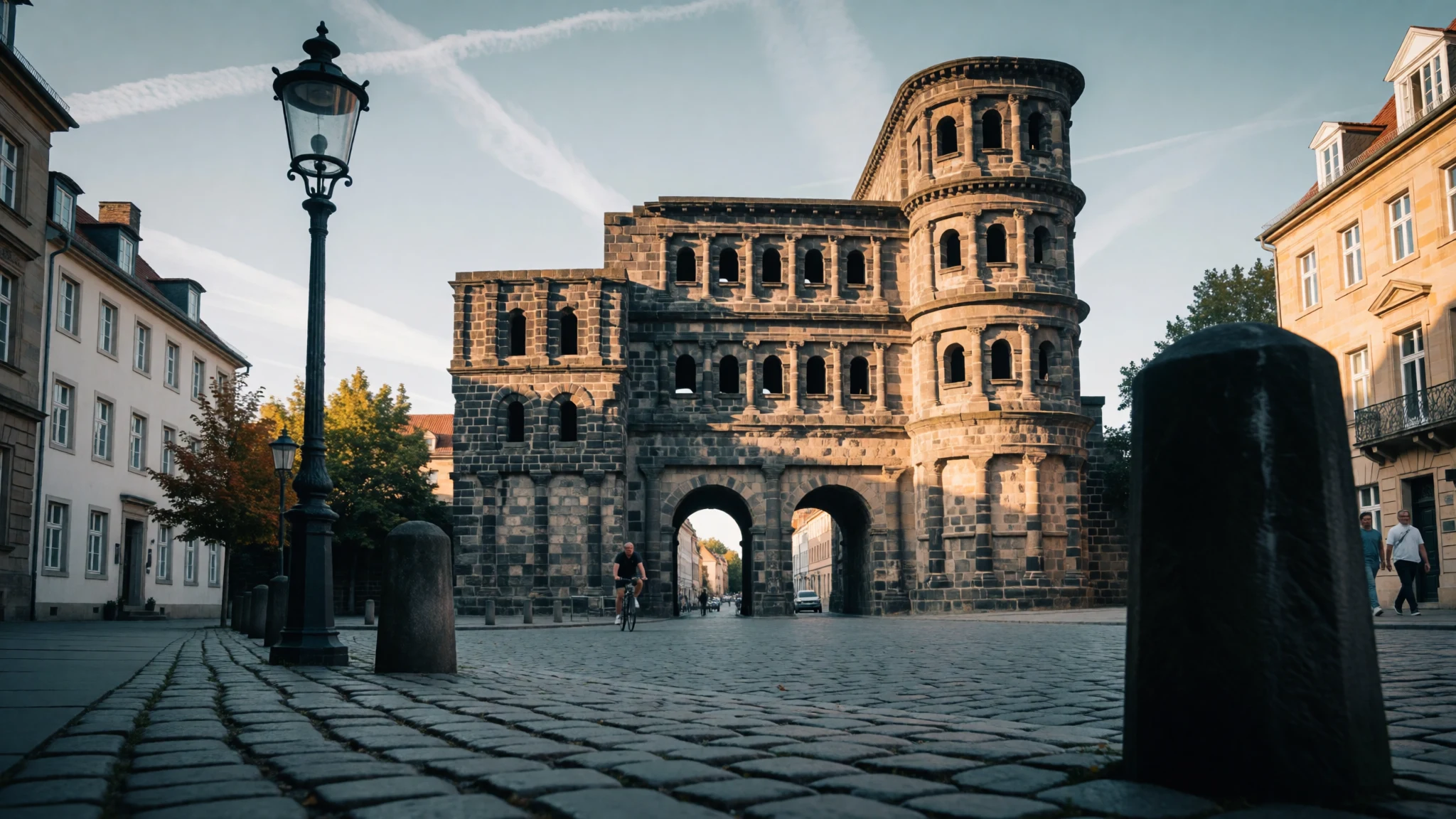
Trier packs Roman gates, baths and an emperor's hall beside medieval churches and Moselle vineyards into a compact, walkable old town.
The place
Trier sits on the Moselle in the far west of Rhineland-Palatinate, close to the border with Luxembourg, in a valley framed by low red sandstone hills covered in vines. It is a city of about 105,000 people, at 141 m above sea level, and it feels both bigger and smaller than that figure suggests: bigger because its Roman ruins and churches are on the scale of a capital, smaller because the old centre can be crossed on foot in a quarter of an hour. Founded in 16 BCE as Augusta Treverorum, it later became the seat of archbishop-electors, princes of the Church whose lands stretched from the French border towards the Rhine. That double inheritance, imperial Rome and Catholic power, explains most of what was built here. Today Trier is also a university town, with students filling the pubs near the Hauptmarkt and cyclists following the river path beside the vineyards. Wine country is the backdrop to everything: Riesling slopes run to the edge of town, and day trips by train, bike or boat reach villages along the river. Trier is not a place of big-city bustle. Summer brings tour groups to the main sights, especially around the black gate at midday, while winter is quieter, damp and grey but cheaper and calmer. The cobbled centre is largely pedestrianised, which makes wandering easy, though the paving is hard on thin soles.
Its story
Trier began as a settlement of the Treveri, a Celtic tribe whose name survives inside the city's Latin one. Roman forces subdued them, and around 16 BCE a new town, Augusta Treverorum, was laid out beside the Moselle. Its title honoured the first emperor and set it apart from the many other towns named for him. It grew into the capital of a Gaulish province, and when the empire was reorganised it became the seat of an administration governing much of the west. For a time in the late Roman period emperors lived here, which is why Trier has a palace hall, vast bathing complexes and an amphitheatre rather than a few scattered stones. Medieval Trier told its own origin story: chroniclers writing for the archbishops credited a legendary founder named Trebeta, and a later historian gave him credit for a string of other cities too. Historians treat this as legend rather than record. After the western empire collapsed, the bishops kept the city important. The archbishops of Trier became electors who helped choose the Holy Roman emperor, and their wealth shaped the cathedral, the Electoral Palace and the churches around the centre. Later the city passed under French and then Prussian rule before becoming part of modern Germany. Its Roman monuments and church buildings now share a World Heritage listing.
What to see
- Porta Nigra — Northern edge of the old town
The Porta Nigra, or Black Gate, is a Roman city gate of huge sandstone blocks darkened by centuries of weather. A church was later built inside it, which helped it survive. Visitors can climb through its upper levels and look down on the street. Go early, before tour groups arrive and while the morning light is on the stone.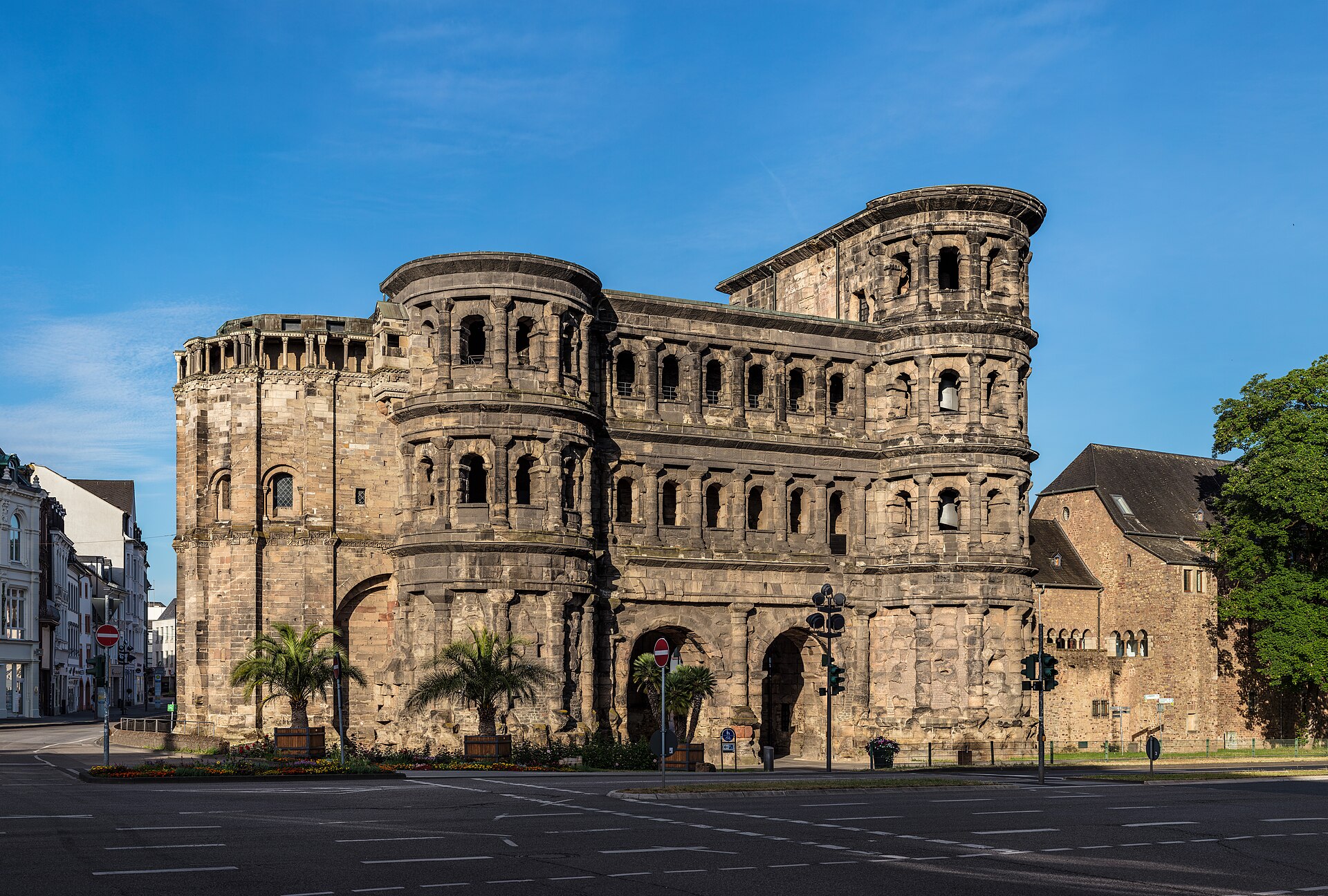
- Basilica of Constantine — Near the Electoral Palace
The Basilica of Constantine, also called the Aula Palatina, was a Roman emperor's throne hall. Its plain brick outside hides an enormous bare interior, and it serves today as a Protestant church. Opening times vary, so check the official city site at trier.de. Next door, the Electoral Palace has a formal garden that is pleasant for a short stroll.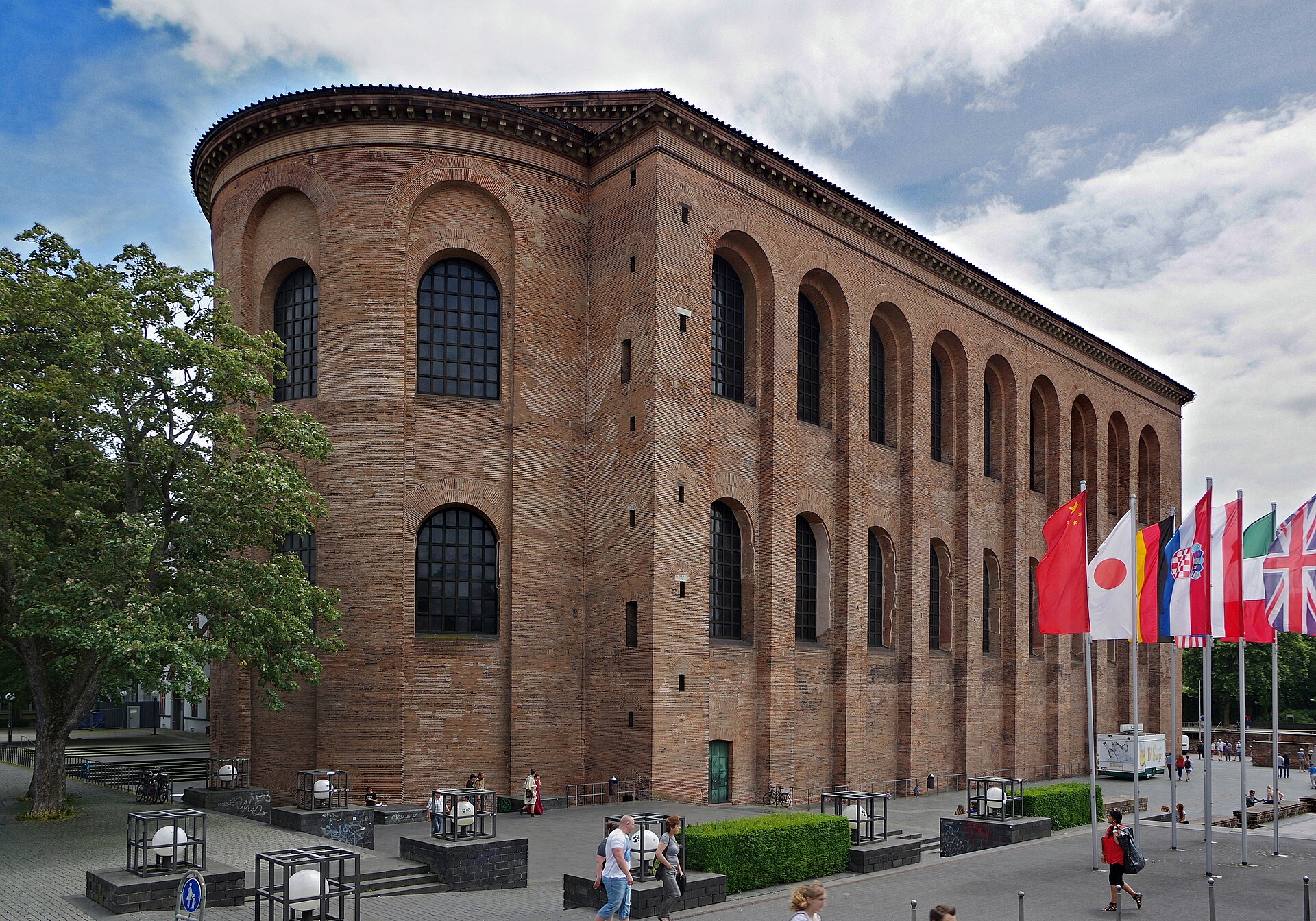
- Trier Cathedral and Liebfrauenkirche — Old town, beside each other
Trier Cathedral grows from Roman foundations and holds the relic known as the Holy Robe. Its Romanesque west front is heavy and fortress-like. Immediately beside it, the Liebfrauenkirche is an early Gothic church with a lighter, more airy feel. Seeing the two together shows how building styles changed in the Middle Ages.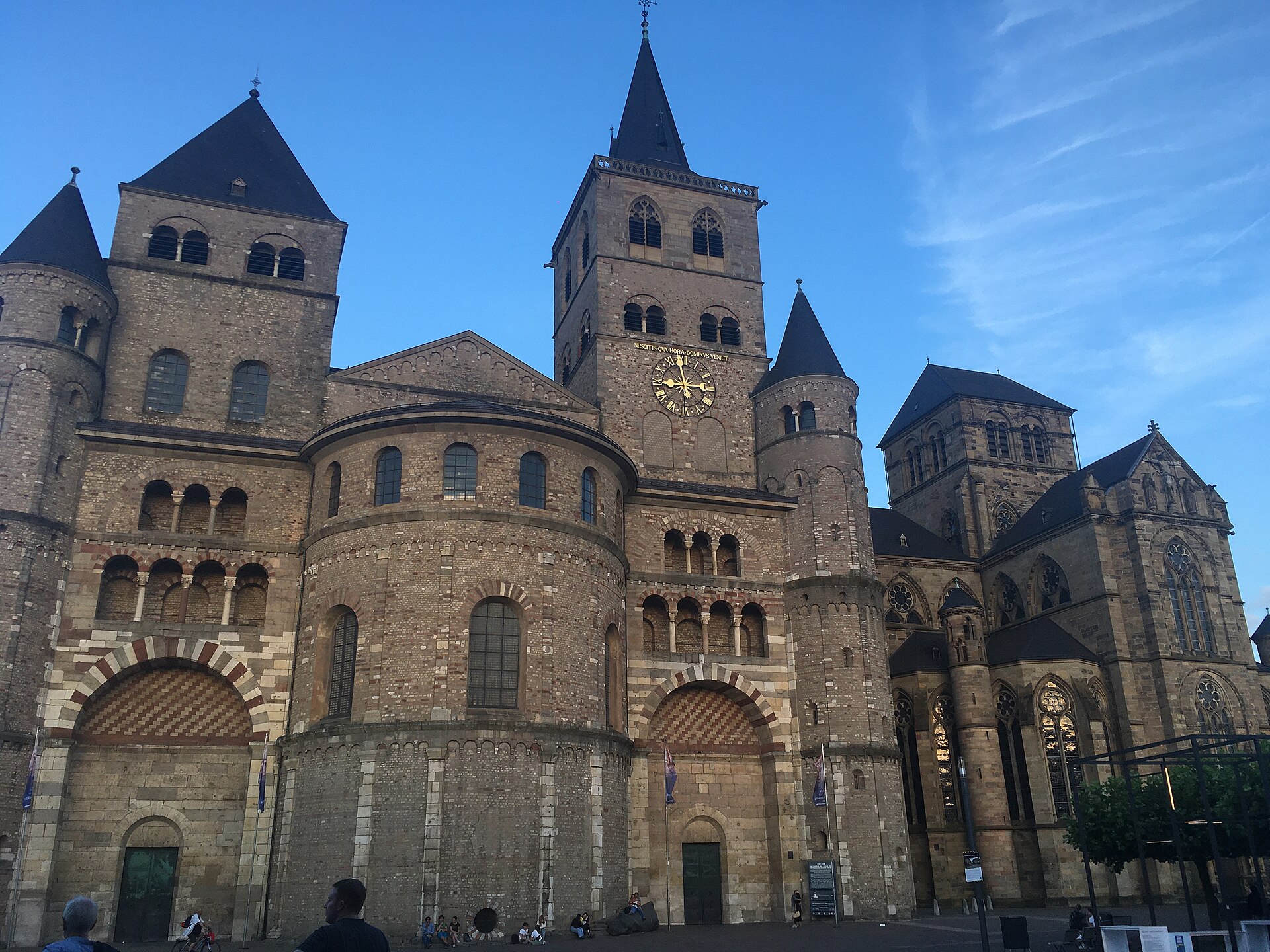
- Imperial Baths and the amphitheatre — Southern edge of the old town
Trier keeps the remains of several Roman bathing complexes, among them the Imperial Baths, the Barbara Baths and the Forum Baths. The Imperial Baths are the easiest to grasp, with tall brick walls and underground service passages. A short walk away, the Roman amphitheatre sits against a hillside where crowds once watched spectacles.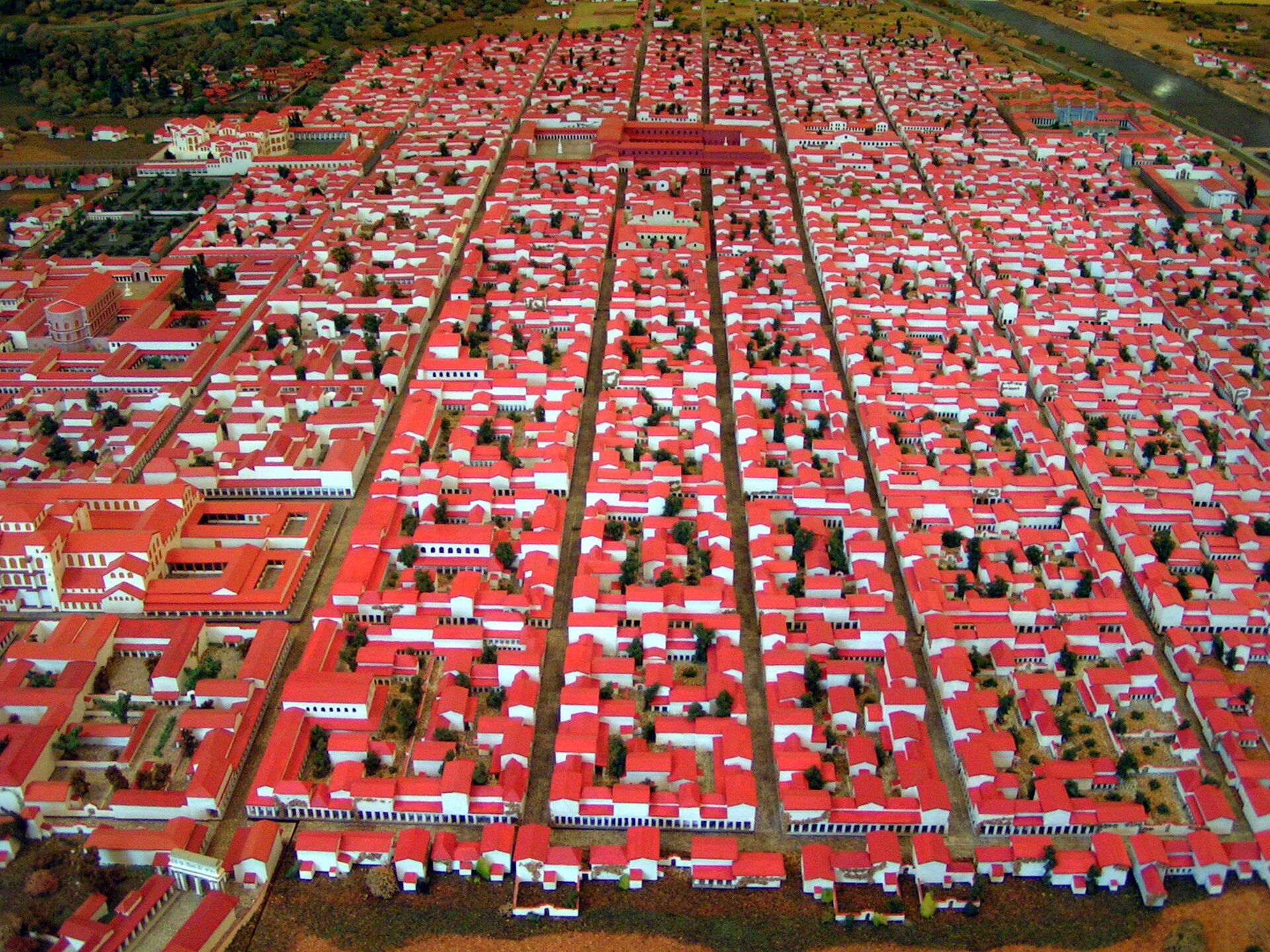
- Roman Bridge — On the Moselle, west of the centre
The Roman Bridge across the Moselle still stands on old stone pillars from Roman times and carries traffic today. Walking across at dusk gives a view back along the river towards the town and, in the other direction, the vineyard slopes. The bridge is also a good start for a riverside cycle or walk. - Karl-Marx-Haus — Brückenstraße, old town
Karl Marx was born in Trier, and the house on Brückenstraße is now a museum about his life and ideas. It draws visitors with an interest in the history of political thought, whatever their own views. Check the museum's official page before travelling, as opening arrangements and any admission charge can change.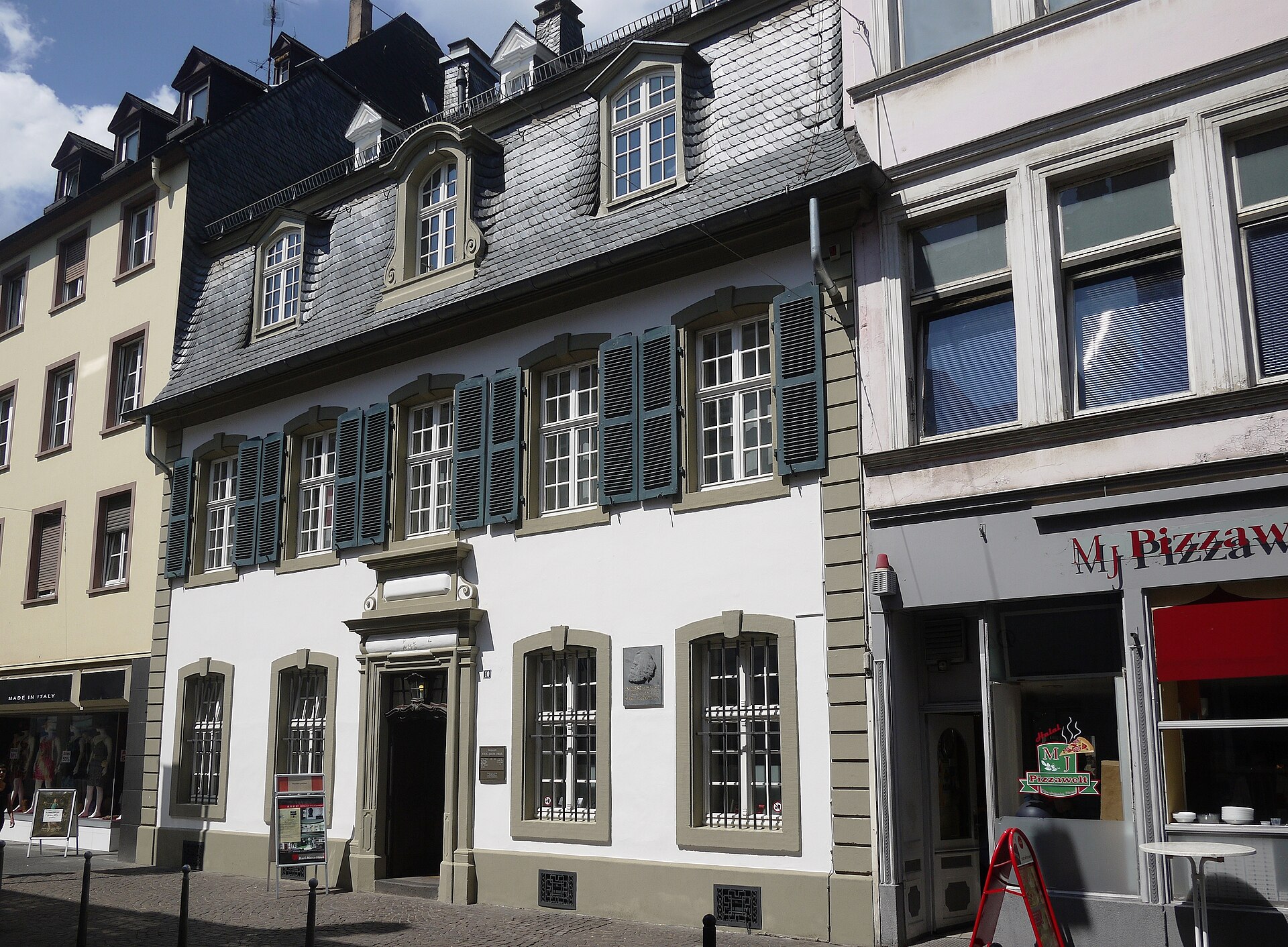
Culture
Trier carries its Roman and church past lightly in daily life. Locals pass a Roman gate on the way to the shops, and cathedral bells set the rhythm of the old centre. Catholic tradition runs deep: the cathedral is a working church, pilgrims still come to St Matthias' Abbey for the relics of an apostle, and processions mark the church calendar. The Basilica of Constantine, by contrast, serves a Protestant congregation, a reminder that the city has long held more than one tradition. Culturally the city also looks west, with Luxembourg and France close by, and that shows in the food, the languages overheard and the habit of crossing the border to shop. Theatre Trier stages plays, dance and musical theatre, and the university brings concerts, student nights and festivals. Moselle wine sets much of the social calendar, from village wine festivals to the taverns where conversation moves slowly. Karl Marx was born in Trier, where the museum inside his former family home attracts curious travellers from many nations. Punctuality and quiet in public places are valued. Dress modestly and speak softly inside the cathedral, the Liebfrauenkirche and St Matthias' Abbey, and do not photograph worshippers or use flash during services.
What to wear
Trier has no single everyday costume of its own, so traditional dress here means the regional Tracht of the Moselle and Eifel countryside. These outfits, made of wool, linen and heavy cotton, typically pair embroidered bodices, aprons and dark skirts for women with waistcoats and hats for men. They now appear mainly at wine festivals, church processions and folk-group performances rather than on the street. Everyday dress in the city is casual and practical. As a university town, Trier leans towards jeans, trainers, rain jackets and rucksacks, with smarter clothes saved for the theatre, weddings and church. Locals dress in layers and carry an umbrella without fuss. Visitors should bring comfortable shoes with decent grip, since the old centre is cobbled and Roman paving can be uneven and slippery when wet. Layers and a waterproof jacket are sensible in any season, and a sun hat helps on vineyard walks in summer. Winter needs a proper coat, hat and gloves. For churches and the abbey, cover shoulders and knees and remove hats indoors. Nothing more formal is expected, and smart casual is fine for restaurants and the theatre.
What to eat
- Schnitzel — Pubs and restaurants in the city centre, often with a weekly schnitzel evening
A breaded cutlet served with fries and salad is the everyday comfort food of German pubs, and Trier's student-friendly places serve generous plates. Look for a weekly schnitzel special on chalkboards in the old centre and ask about the vegetarian versions if you need one. - Potato dishes — Restaurants specialising in potatoes near the Hauptmarkt and old town
Trier has restaurants built around the potato in every form, from fried and baked to mashed with sauces and toppings. It is hearty, filling food that suits cold days and is usually good value. Vegetarians generally find several options on these menus. - Döner kebab — Kebab shops across the city centre
Kebab shops are common across Trier and offer an inexpensive, quick meal of grilled meat, salad and sauces in flatbread. Students and workers eat here daily. Many also serve falafel or vegetarian wraps, so look at the counter before ordering. - Levantine plates — Syrian and Middle Eastern restaurants in the old town
Alongside German cooking, Trier has Syrian and other Middle Eastern restaurants serving grilled meats, mezze, rice and flatbreads. They are a good choice for vegetarians who want hummus, salads and stuffed vegetables, and they often stay open later than traditional German kitchens. - Moselle Riesling — Wine taverns and wine bars in the old town, and vineyard villages along the river
The Moselle region is known for white wines, especially Riesling, grown on the steep slopes around the city. Wine taverns pour it by the glass, often in styles from dry to sweet. Ask the staff to match a bottle to your meal, and consider a vineyard visit.
Plan it
Best time. May–June and September–October are the best months, with mild weather, long daylight and vineyard colour in autumn. July and August are warm and busier, while winter is grey and damp, though the old centre feels atmospheric and quieter.
How long. 2–3
Getting there. Luxembourg Airport is the closest of several airports; Frankfurt Airport has more connections but needs a longer train journey. Trains reach Trier's main station from Saarbrücken, Luxembourg, Koblenz and Cologne, so check timetables on Deutsche Bahn. From the station, the old centre is a short walk.
Budget. mid
Tips
- Visit the Porta Nigra early in the morning, before tour groups arrive
- Check the city's official site, trier.de, or each monument's own page for opening times and tickets
- Carry a card but keep some cash for small taverns and stalls
- Wear shoes with grip, because the cobbles and Roman stones are slippery in rain
- Take a day trip by train or bike along the Moselle to a wine village
Etiquette
- Keep your voice low and dress modestly inside churches and the abbey
- Ask before photographing worshippers or anyone in a service
- Queue in an orderly way and be punctual for tours and trains
Nearby
Sources
- Wikidata Q3138 (CC0)
- Wikipedia: Trier (CC BY-SA 4.0)
- Wikivoyage: Trier (CC BY-SA 4.0)
- Photo: Trier, Luftaufnahme (Wolkenkratzer) (CC BY-SA 4.0)
- Photo: Blick vom Weishaus auf die Altstadt (CTHOE) (CC BY 3.0)
- Photo: Porta Nigra at Trier (Thomas Wolf) (CC BY-SA 3.0 de)
- Photo: Trier Konstantinbasilika (Berthold Werner) (CC BY 3.0)
- Photo: Dom and Liebfrauenkirche (Hoebele) (CC BY-SA 4.0)
- Photo: Karl-Marx-Haus (Lutz Hartmann) (CC BY 3.0)
- Photo: Hauptmarkt Trier (Berthold Werner) (CC BY 3.0)
- Photo: Augusta Treverorum model (Stefan Kühn) (CC BY 3.0)


