Bonn
Bonn, Germany
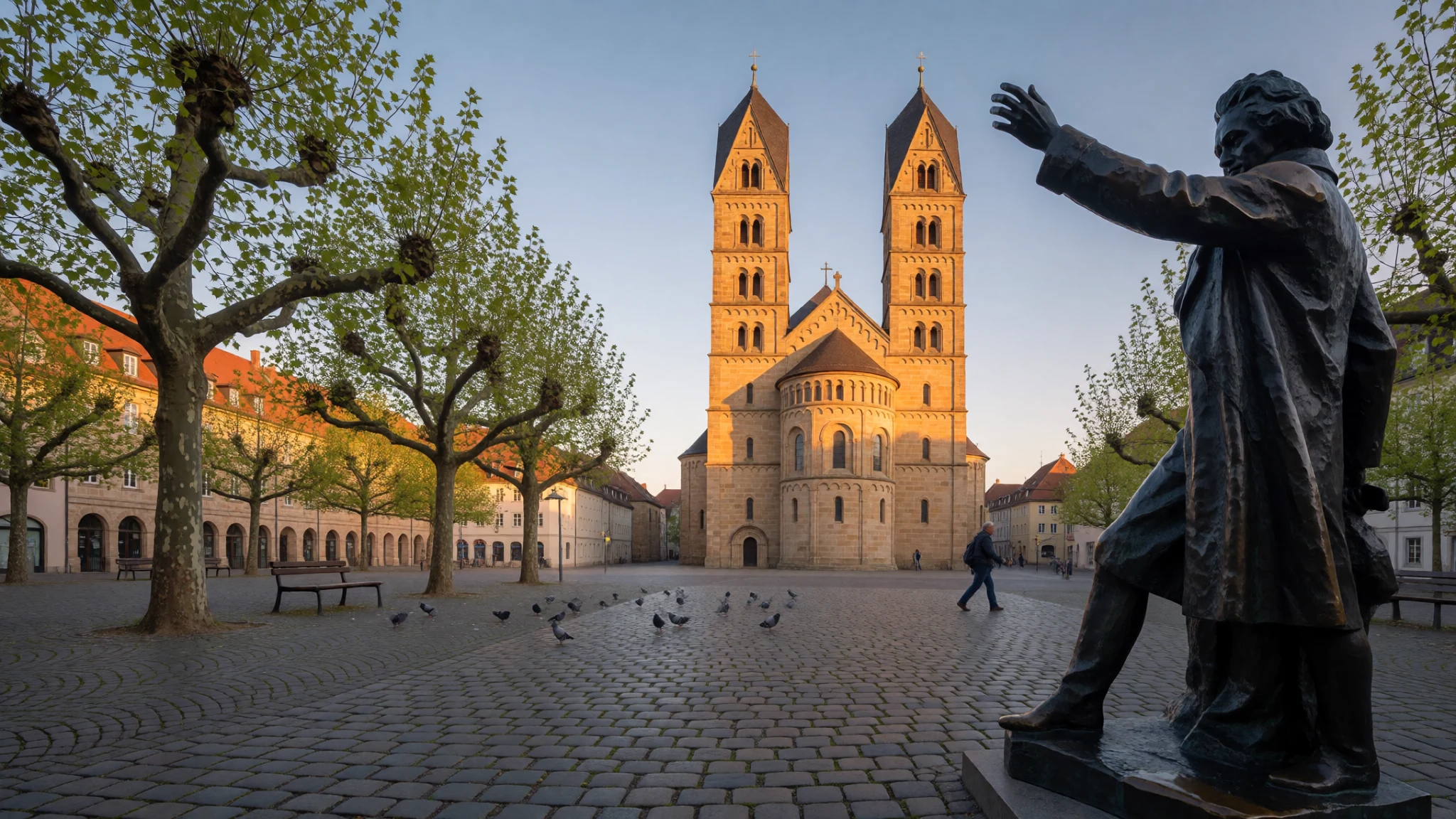
Bonn is a calm Rhine university town that once ran West Germany, and the birthplace of Beethoven.
The place
Bonn sits on the left bank of the Rhine in North Rhine-Westphalia, a short way south of Cologne. About 324,000 people live here, at roughly 60 metres above sea level. For four decades after the Second World War it was the seat of government of West Germany, and that history explains what a first-time visitor notices: a modest, tidy university town that still carries the furniture of a national capital. Ministry buildings, grand villas and a broad riverside avenue sit alongside a market square and a baroque old town. After the government moved to Berlin, Bonn kept a real federal role. A share of ministry jobs stayed, and the city works as a quiet secondary seat of power, a home for international bodies and the base of a large university. The mix gives the centre a youthful, unhurried feel in term time and a calmer one in summer. The old centre is compact. The Münster, the market square, the old town hall, the former electoral palace and Beethoven's birthplace all lie within an easy walk of one another, and the Rhine promenade is a few minutes further. Beyond the centre, a chestnut-lined avenue runs to a botanical garden in Poppelsdorf, and wooded hills rise across the river towards Königswinter. Bonn draws far fewer crowds than Cologne, so queues are short and the pace is gentle, though rain is possible in any season and river mist can linger in winter.
Its story
Bonn is among the older cities in Germany, and its story starts well before the country existed. People lived around this stretch of the Rhine in the Stone Age, and a double burial found at Oberkassel shows how deep the settlement goes. In the first century BC the Roman governor Agrippa settled the Ubii tribe here, and a fortified Roman camp followed. After a Roman defeat in the Teutoburg Forest, a legion was posted to the site and built a fortress in what is now the northern part of town. Traders and craftsmen set up a settlement along the road to the south, roughly where Adenauerallee runs today. When Roman rule ended, Bonn shrank. Viking raiders burned it twice in a single year and returned the next. A religious centre then grew around the Minster, and a market settlement formed on the square nearby. The city's grand chapter came when it became the capital of the Electorate of Cologne, home to the archbishops who were also prince-electors. Their palace, now part of the university, and the baroque town hall date from that era. Later rulers included the French and then Prussia. The modern chapter began in 1949, when Bonn became the capital of West Germany and the place where the Basic Law, the country's constitution, was drafted. Bonn remained the capital until 1990 and served as the administrative base for reunited Germany until 1999, after which the Berlin-Bonn Act preserved an ongoing federal presence in the city.
What to see
- Old Town Hall (Altes Rathaus) — Market square, city centre
The Rococo town hall faces the market square with a pink and cream façade and a double staircase. It is used for official receptions and the mayor's office, so it is not open for visits. Admire it from the square, ideally on a market day when the stalls fill the space.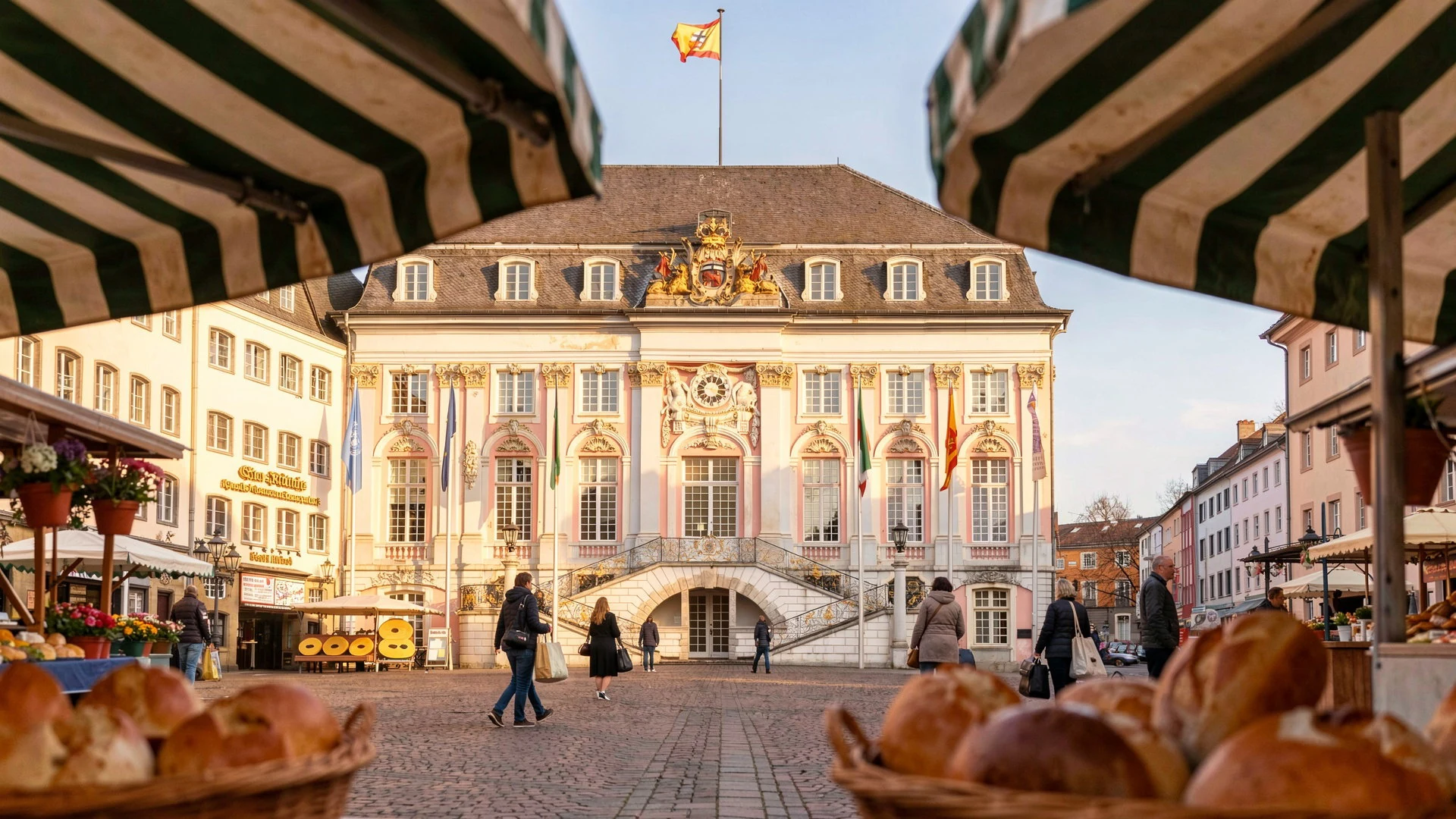
- Bonner Münster — Münsterplatz
This basilica grew from the religious centre that shaped medieval Bonn. Its towers and cloister anchor the old town, and the interior rewards a slow look. Guided tours are arranged only through Bonn Information or the Münster foundation, so ask there, and check the official site for opening times.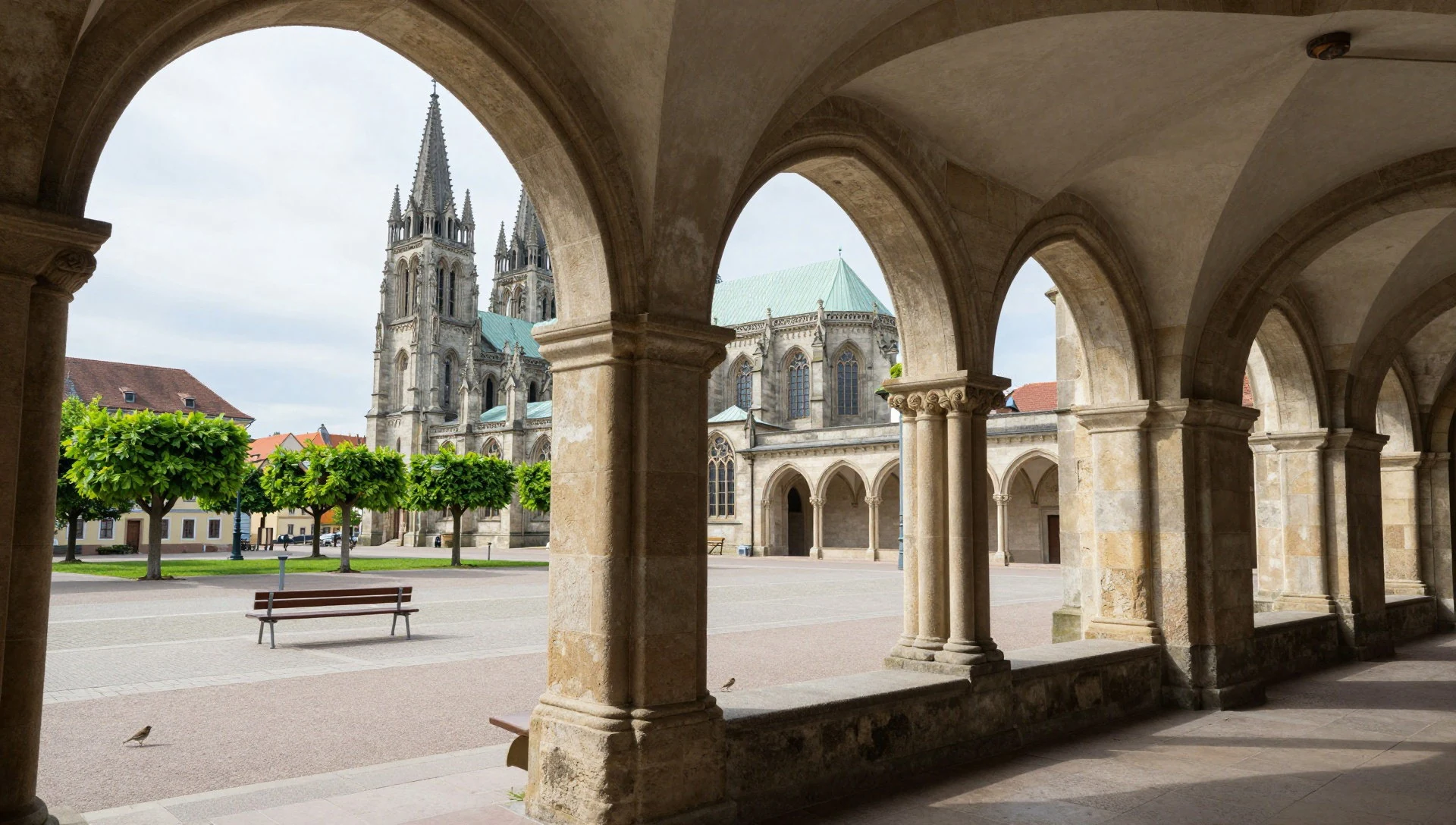
- Beethoven-Haus — Bonngasse, near the market square
The composer's birthplace stands on a narrow street a minute from the market. It is now a museum, and a visit works best if you like manuscripts and instruments. Book ahead in busy seasons and check the official site for hours. On the nearby Münsterplatz, a bronze statue of him stands in the open.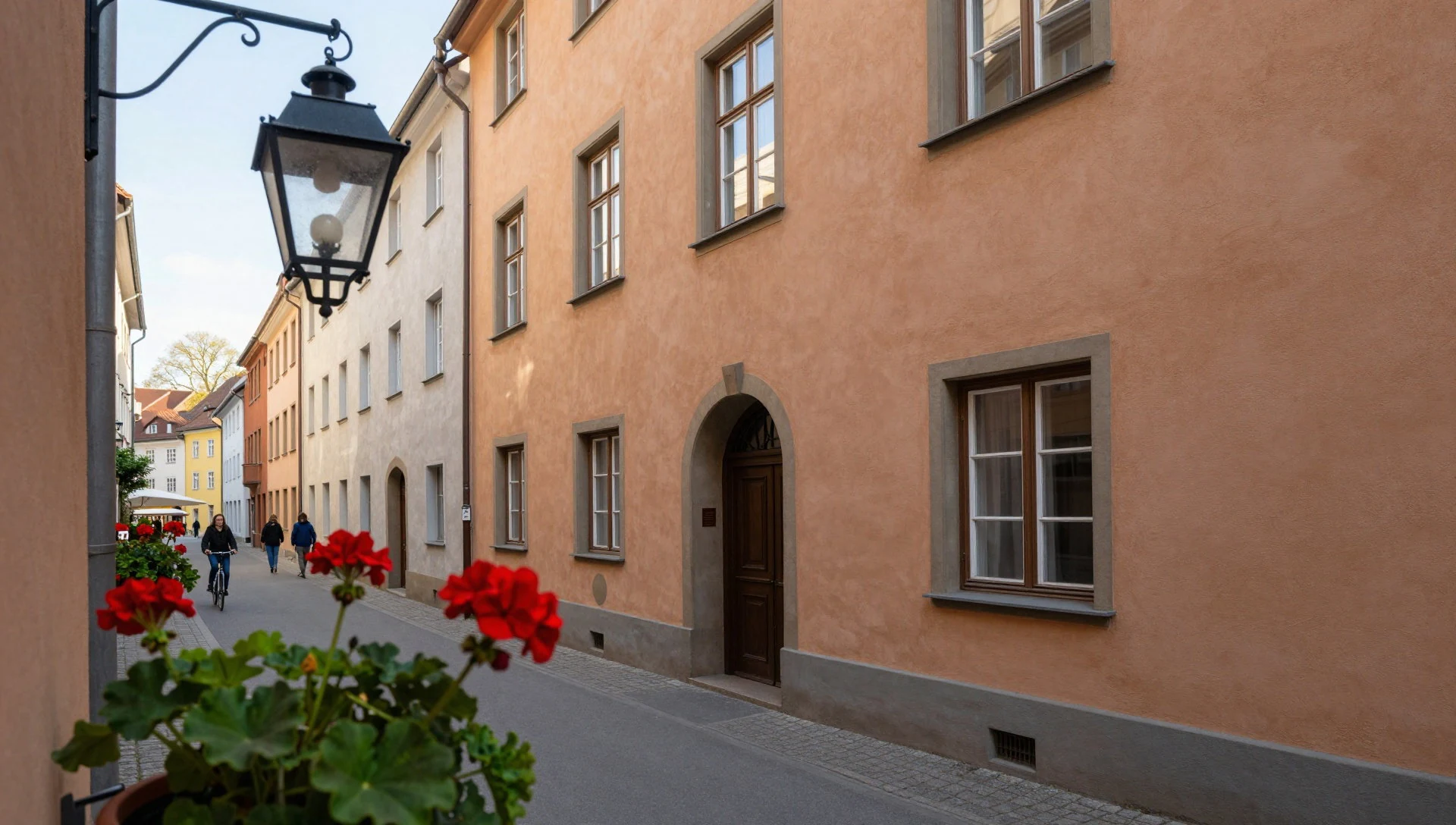
- University main building (Kurfürstliches Schloss) — Hofgarten, edge of the old town
The long yellow façade was once the residence of the Archbishop-Electors of Cologne, designed by Enrico Zuccalli. It now houses the university's main building. Students cross the Hofgarten lawn in front, and locals sit there in fine weather, which makes it a pleasant place to pause between sights.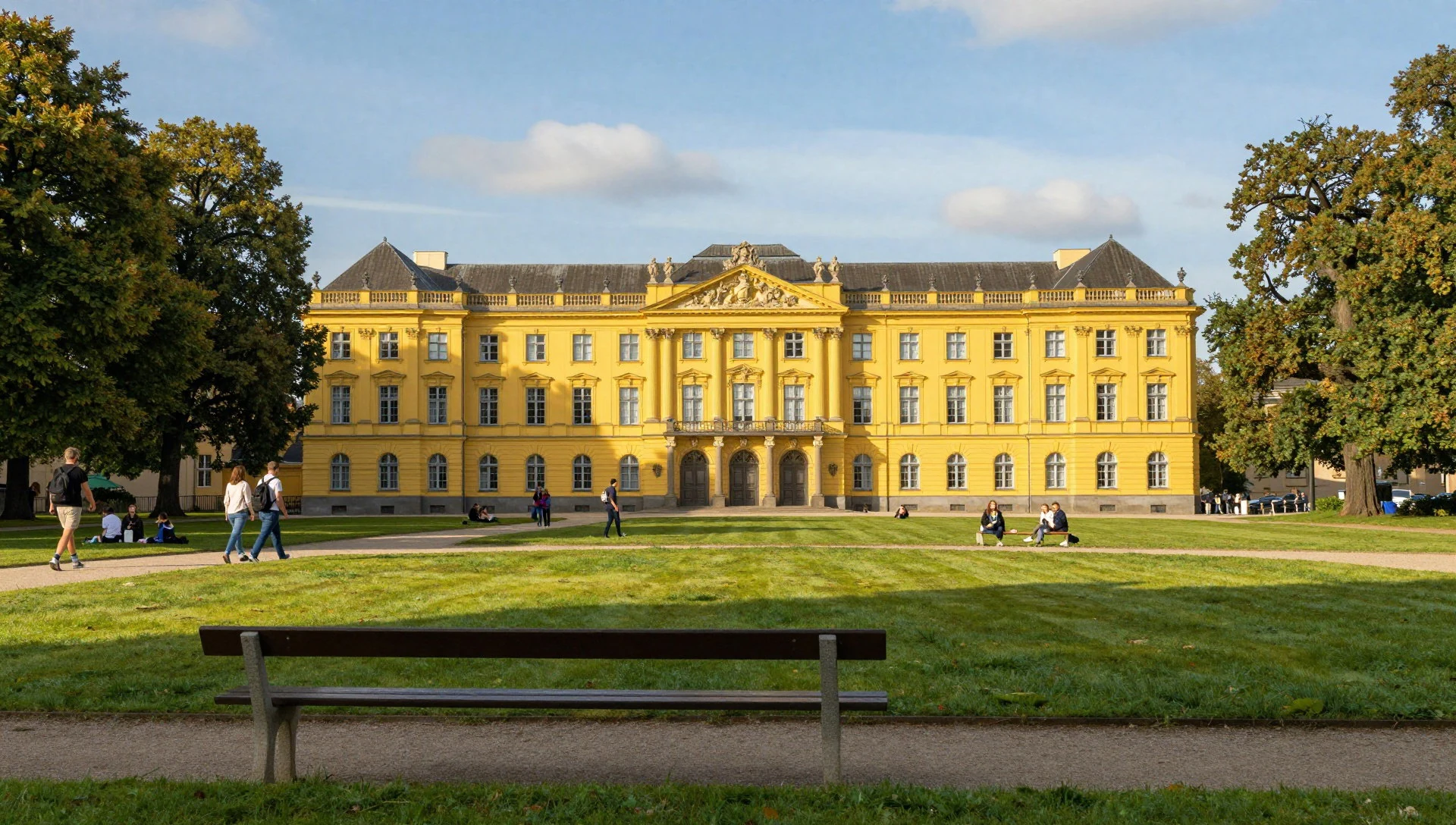
- Poppelsdorf Palace and Botanical Garden — Poppelsdorf, south-west of the centre
A chestnut-lined avenue, once the route of the city's first horse-drawn tram, links the old electoral palace with this former prince-electors' retreat. The grounds are now a botanical garden. Walking the avenue takes a gentle quarter of an hour and shows the town's university side.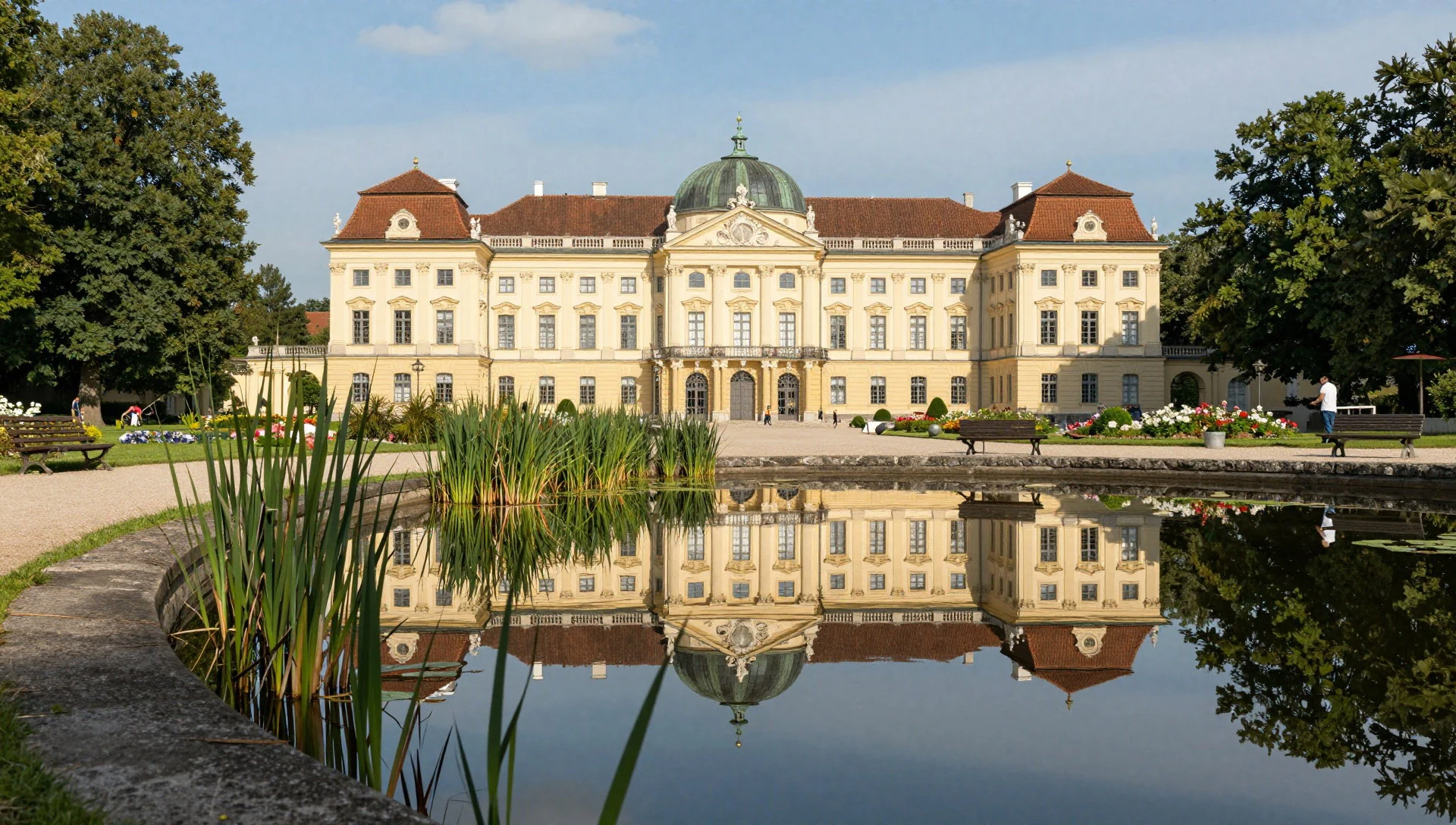
Culture
Bonn wears two identities at once: a former seat of national government, and the Rhineland town where Beethoven grew up. Music is the thread that ties the city together. The composer's birthplace, the concert programmes at the festival and the statue on Münsterplatz make him part of everyday civic pride, and local concert halls keep classical music in regular rotation. The political past shows up in the large federal buildings along the river and in the way officials, diplomats and students share the same cafés. The Rhineland temperament helps: people are chatty, relaxed and fond of a local drink and a joke. Carnival is the biggest social moment of the year, with parades, costumes and a famously cheerful disregard for the usual rules, and it includes a women's carnival tradition in Beuel across the river. Churches such as the Münster and the Kreuzbergkirche remain working places of worship as well as monuments. The university brings an international crowd, so English is widely understood in the centre, though a greeting in German is always appreciated. Daily life is orderly: bicycles have their own lanes, trams run on time, and quiet hours on Sundays are respected. Visitors who step into a church or a concert hall should switch their phone to silent and keep voices low, and should not photograph worshippers or take flash pictures during a service.
What to wear
Bonn has no single everyday traditional costume, but the Rhineland has a strong dress culture around carnival. Local carnival societies wear historic uniforms modelled on old town guards, with braided jackets, sashes and plumed hats made of wool and felt, and the wider public turns up in home-made costumes during the carnival season in winter. Beyond that, church and civic ceremonies sometimes bring out formal dark suits and regional associations' sashes. What people wear day to day is plain and practical: dark jeans, trainers, waterproof jackets and scarves, with bicycle helmets and rucksacks among students and commuters. Smarter outfits appear for the opera, theatre and concerts, but the dress code stays relaxed, and business clothing leans towards understated. Bonn is not a place for showy dress. A visitor should dress in layers, because the Rhine valley is mild but changeable, and a light waterproof is worth carrying in any month. Comfortable walking shoes matter more than anything else, as the old town has cobbles and the best views involve a lot of strolling by the river. In summer, light cotton or linen is fine; in winter bring a warm coat, hat and gloves. Churches do not require formal covering, but bare shoulders and very short shorts feel out of place at services, so a scarf or light cardigan in the bag is sensible.
What to eat
- Brötchen — Any neighbourhood bakery, early morning
The Rhineland breakfast roll, crisp outside and soft within, sold plain or split with cheese, ham or sausage. Bakeries open early across the city, and a roll with coffee is the quick, cheap way to start a day of walking.
- Currywurst — Snack stands and fast-food counters near the centre
Grilled sausage in a curry-spiced tomato sauce, served with chips. It is a German street classic and a reliable lunch when time is short. Look for the busy counters where locals queue, and expect plain, filling food rather than anything elaborate.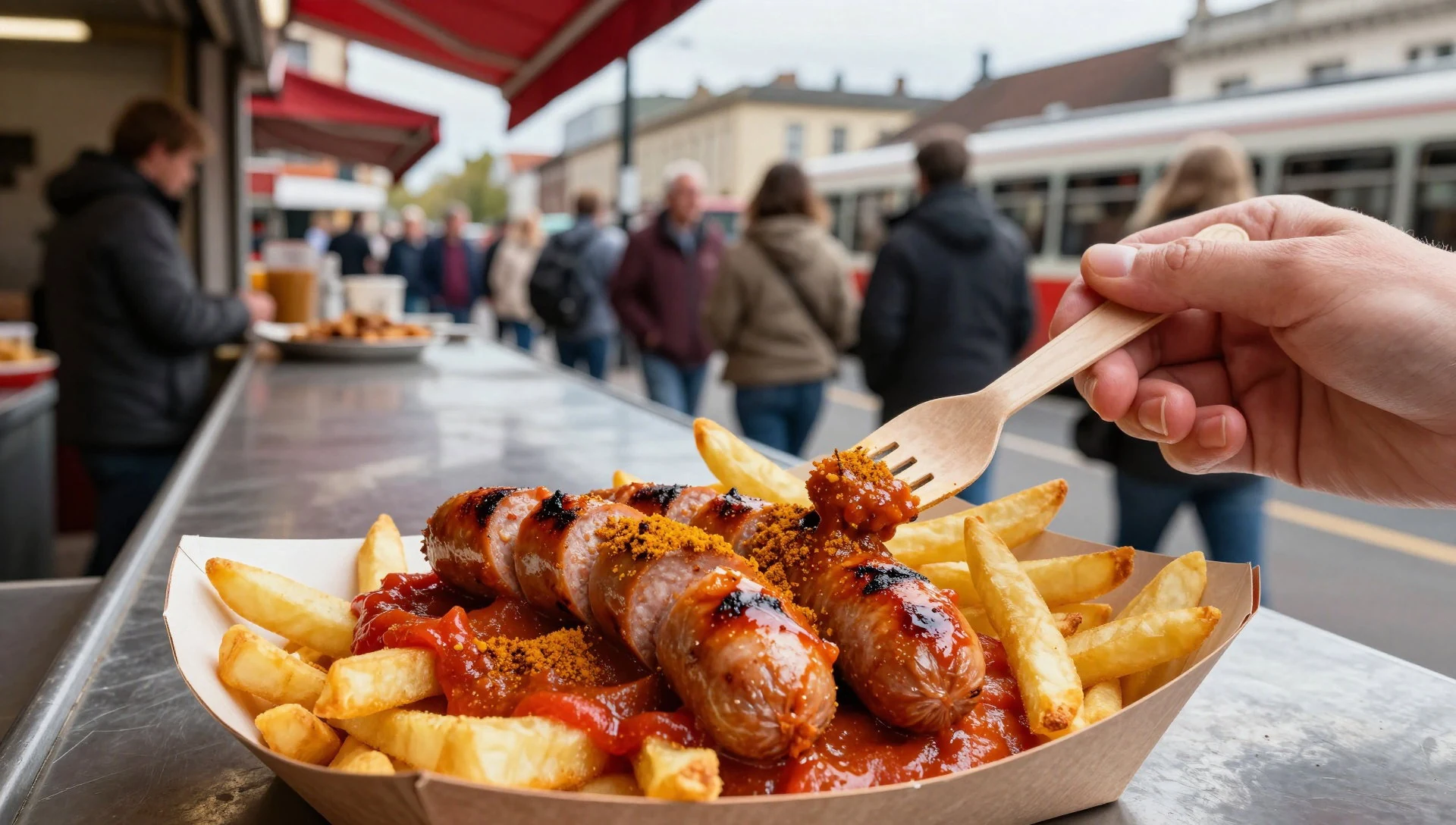
- Falafel wrap — Small takeaway counters in the old town
Student-friendly hole-in-the-wall shops serve falafel in flatbread with salad, sauces and chips. It suits vegetarians, costs little, and is easy to eat on the move towards the Rhine promenade or the Hofgarten lawn. - Mandu — Korean snack bars near the market
Korean dumplings, often steamed or fried and served with kimchi, rolls or glass noodles. Bonn's international student population keeps these small, friendly places busy, and they offer a lighter alternative to heavier German fare. - Himmel un Ääd — Traditional Rhenish brewhouses and pubs
A Rhineland dish of black pudding served with fried onions, apple sauce and mashed potato, its name meaning heaven and earth. It is hearty cold-weather food, best paired with a local beer in a traditional pub with wooden tables.
Plan it
Best time. April–June and September–October are the most comfortable months: mild days, long light, and gardens and parks at their best. Spring brings blossom in the old town, and late summer is good for the river. Winter is grey and damp but quiet, and carnival season is lively if you like crowds and costumes.
How long. 1–2
Getting there. Cologne Bonn Airport is the nearest airport, and Bonn Hauptbahnhof is the main rail station for local and regional trains. For intercontinental flights, Frankfurt or Düsseldorf are the usual alternatives, followed by a train. Cologne is a short train ride away, and a high-speed line stops at nearby Siegburg. The centre is walkable from the station.
Budget. mid
Tips
- Allow time for Cologne or Königswinter as a day trip; both are easy by train
- Book the Beethoven-Haus ahead in busy seasons and check the official site for hours
- Carry a small amount of cash, as some snack bars and bakeries prefer it
- Bring a light waterproof, since rain can arrive in any season
- Visit the market square on a market day for the liveliest atmosphere
Etiquette
- Keep voices low in churches and put phones on silent
- Do not photograph worshippers or use flash during a service
- Stand on the right on escalators and keep to the marked cycle lanes
Nearby
Sources
- Wikidata Q586 (CC0)
- Wikipedia: Bonn (rev 1384897936) (CC BY-SA 4.0)
- Wikivoyage: Bonn (rev 5395585) (CC BY-SA 4.0)
- Photo: Altes Rathaus Bonn, Der Wolf im Wald (CC BY 3.0)
- Photo: General view over Bonn (cropped), Matthias Zepper (CC BY 3.0)
- Photo: Beethoven-Haus, Thomas Wolf (CC BY-SA 3.0 de)
- Photo: Posttower Bonn 001 (CC BY 3.0)
- Photo: Universität Bonn, Der Wolf im Wald (CC BY-SA 2.5)
- Photo: General view over Bonn, Matthias Zepper (CC BY 3.0)
- Photo: CIL XIII,8079, Heiko Fischer (CC BY-SA 4.0)
- Photo: De Merian Mainz Trier Köln 085, Martin Zeiller (Public domain)


