Prague
Prague, Czech Republic
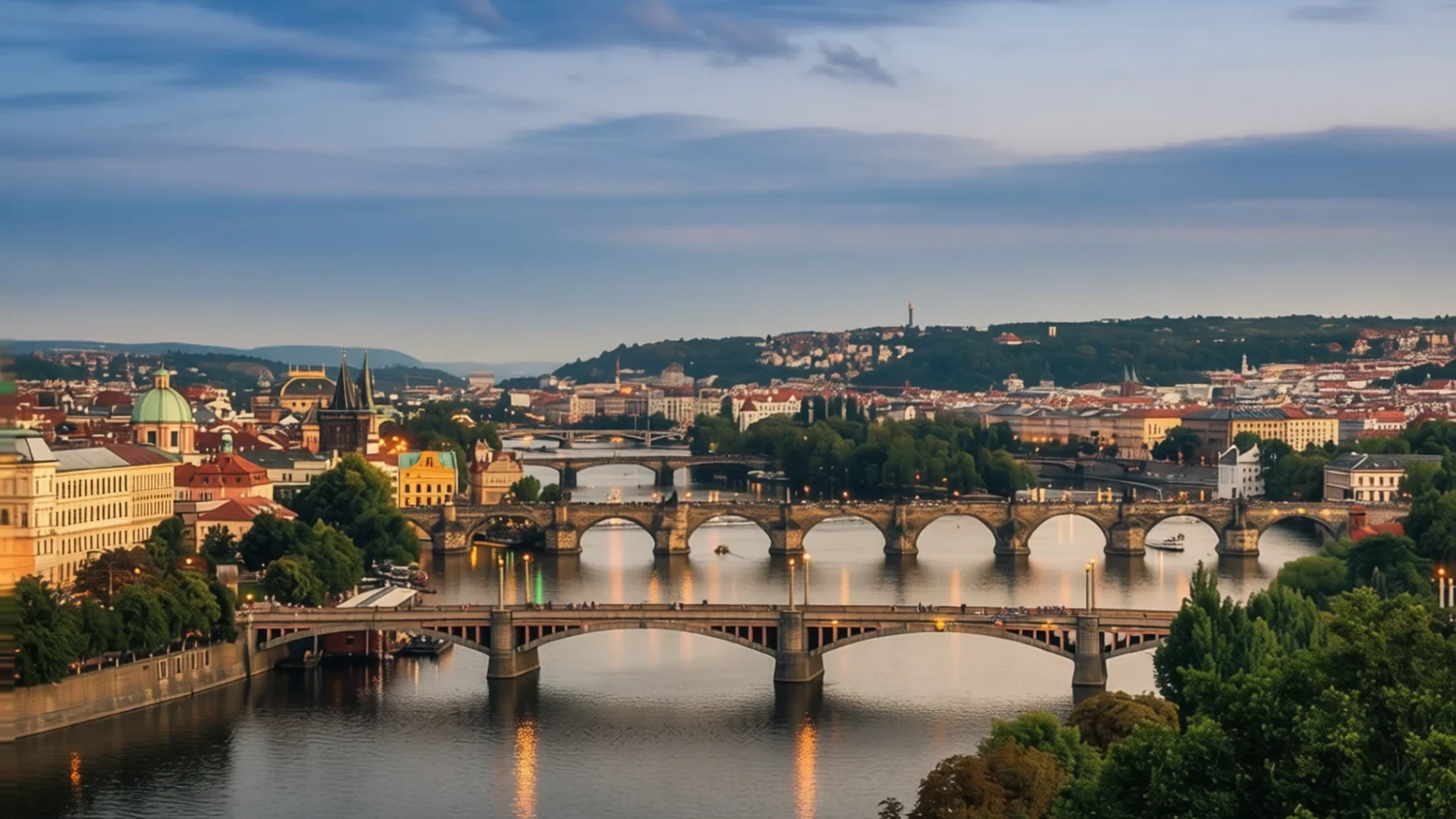
Prague balances medieval spires, riverside promenades, and deep literary heritage as the historic heart of Bohemia.
The place
Prague, known locally as Praha, sits astride the Vltava River as the capital and largest settlement of the Czech Republic. Home to roughly 1.4 million residents at an elevation of 235 metres, the city acts as the historical anchor of Bohemia. Its urban fabric is a dense architectural archive, featuring Romanesque foundations tucked beneath Gothic vaults, Renaissance courtyards, and extravagant Baroque façades that survived centuries of dynastic shifts.
As the former seat of Holy Roman Emperors and the capital of historic realms, the city grew outward from fortified high points along the riverbanks. Today, its historic centre is recognized as a UNESCO World Heritage Site, drawing throngs of visitors to its cobbled lanes, sprawling castle courtyards, and stone river crossings. Despite the heavy tourist footfall in the warmer months, everyday life hums quietly in residential neighbourhoods away from the main drag, where leafy parks, corner pubs, and neighborhood bakeries define local rhythms. The climate brings hot summers, with highs above 30 °C from May to September, and crisp, often snowy winters, making spring and early autumn the most comfortable windows for exploring the city's steep alleys and panoramic viewpoints on foot.
Its story
Prague's narrative stretches back through millennia, rooted in archaeological layers that plunge deep beneath the modern pavement. Human habitation in the area dates as far back as the Paleolithic age, followed centuries later by Celtic tribes who established large fortified oppida and named the surrounding region Bohemia after the Boii people. These early groups were eventually succeeded by Germanic tribes before Slavic populations laid the foundations for permanent settlements.
Throughout the medieval era, the city rose in political and cultural prominence under ambitious rulers such as Charles IV, who transformed it into an imperial capital adorned with grand stone structures, a prestigious university, and monumental bridges. It later served as a crucial stage for religious upheavals during the Protestant Reformation and the devastating conflicts of the Thirty Years' War. In the twentieth century, Prague bore the heavy weight of modern European history, acting as the capital of Czechoslovakia through turbulent interwar democracies, Nazi occupation under the Protectorate of Bohemia and Moravia, and decades of post-war Communist rule before the Velvet Revolution restored its democratic path.
What to see
- Prague Castle — Hradčany
A sprawling hilltop complex containing ancient palaces, administrative courtyards, and the soaring Gothic spires of St. Vitus Cathedral, which dominates the city skyline.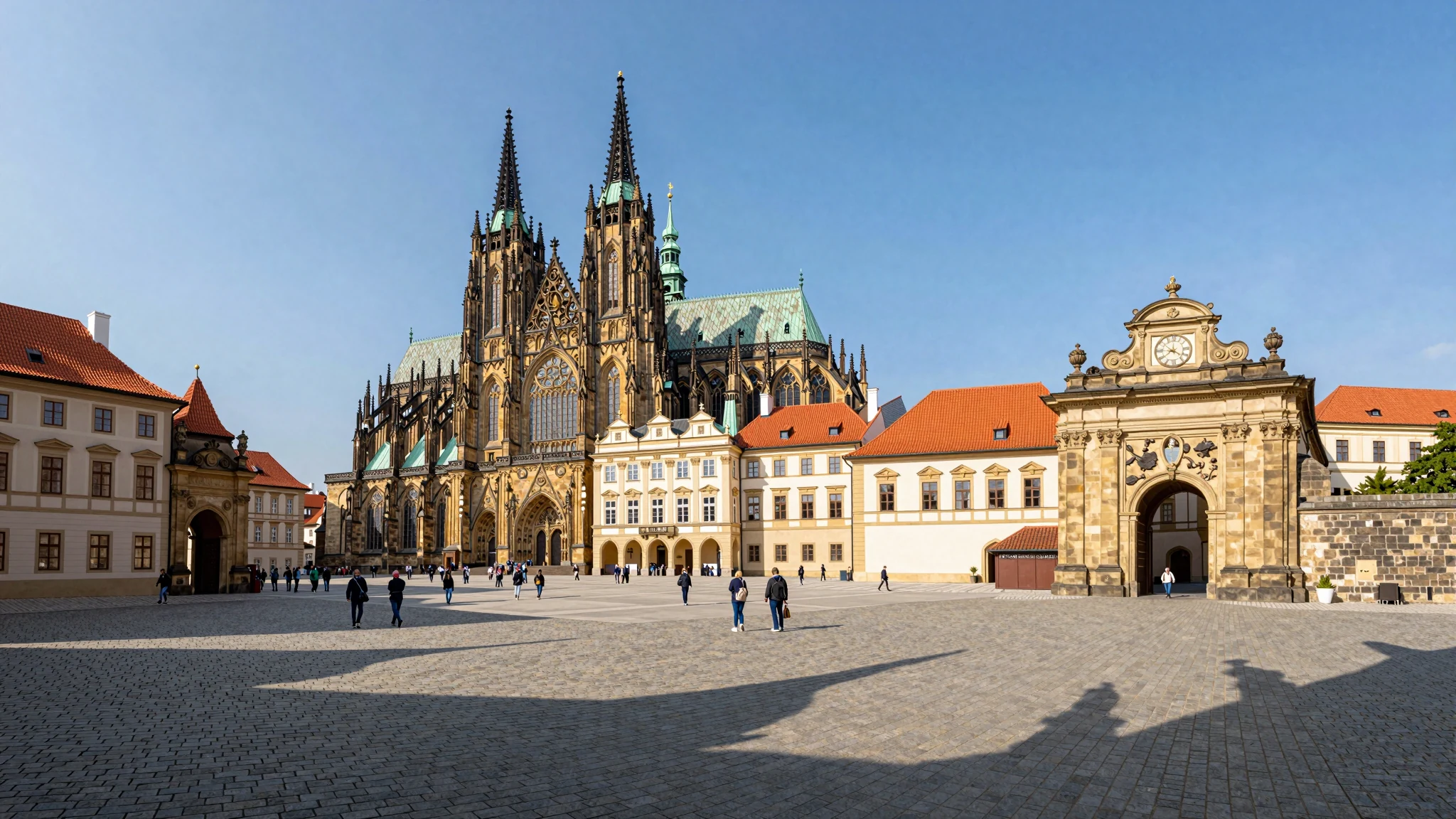
- Charles Bridge — Old Town / Lesser Town
The historic stone pedestrian crossing lined with weathered Baroque statues, connecting the Old Town to the Lesser Town across the Vltava River.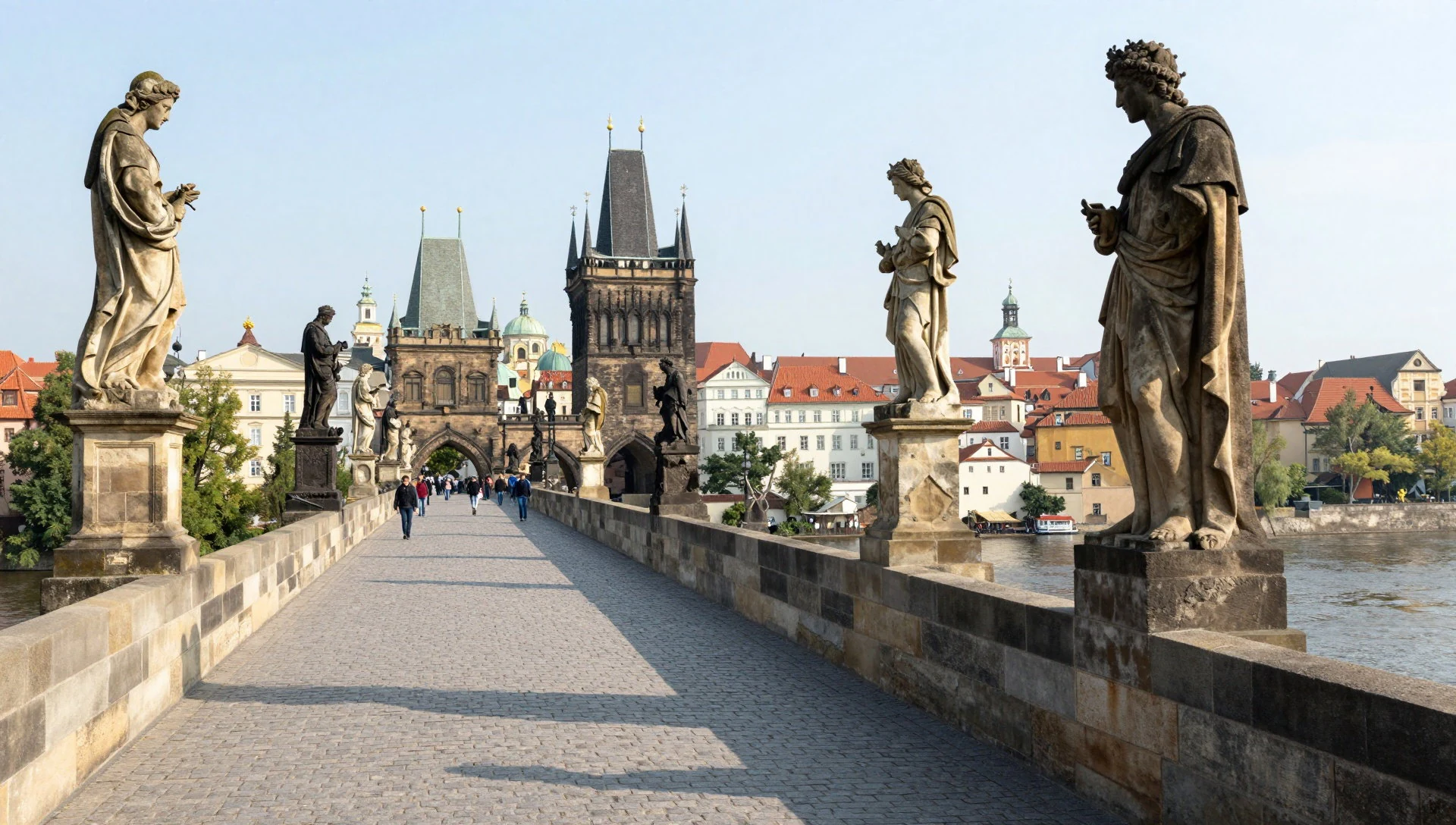
- Old Town Square — Staré Město
A bustling medieval marketplace framed by colourful historic buildings, featuring the famous astronomical clock that draws crowds every hour.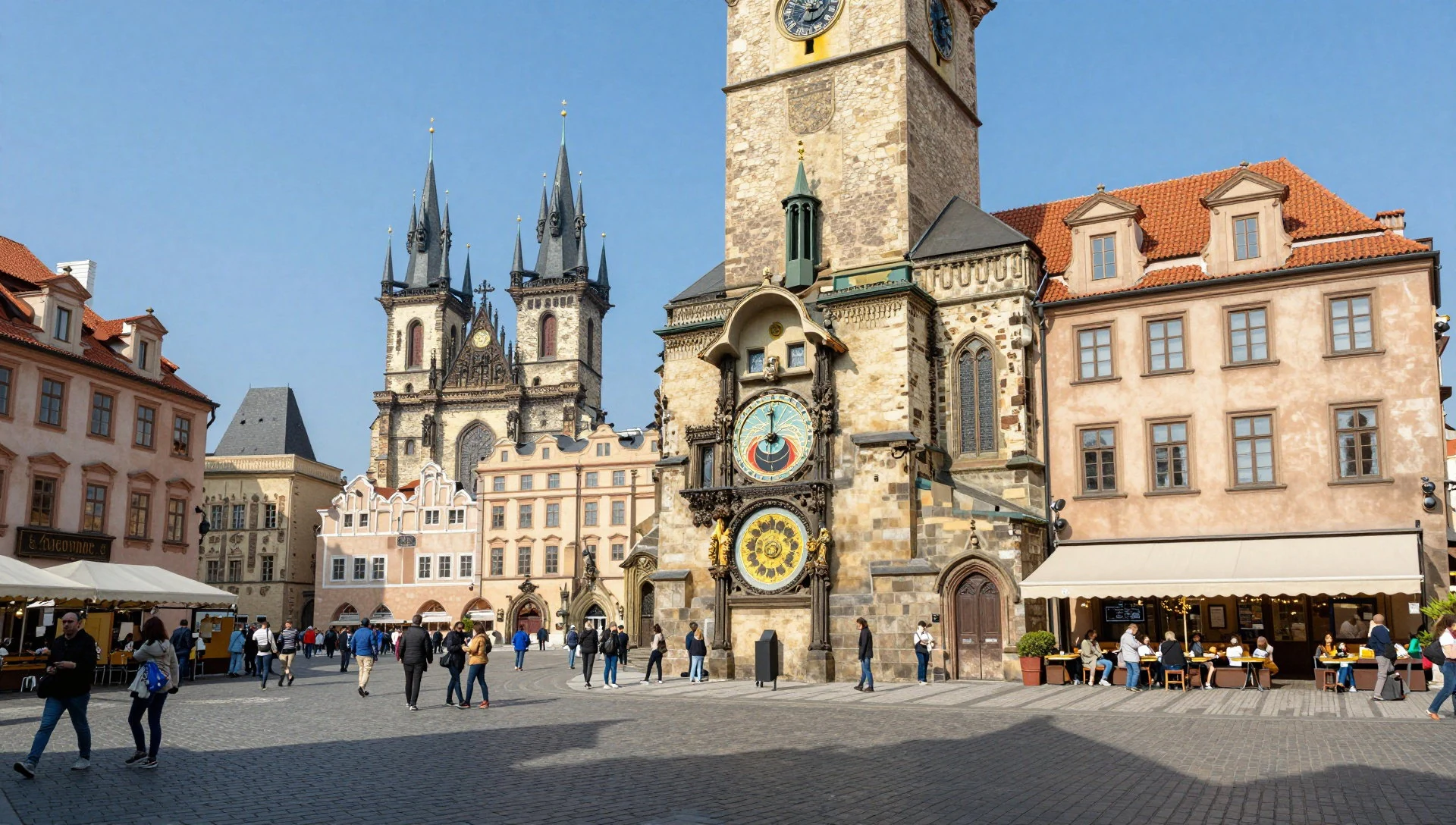
- Petřín Hill — Lesser Town
A leafy green oasis rising above the river, offering sweeping panoramic views of the city's red rooftops, walking paths, and a miniature observation tower.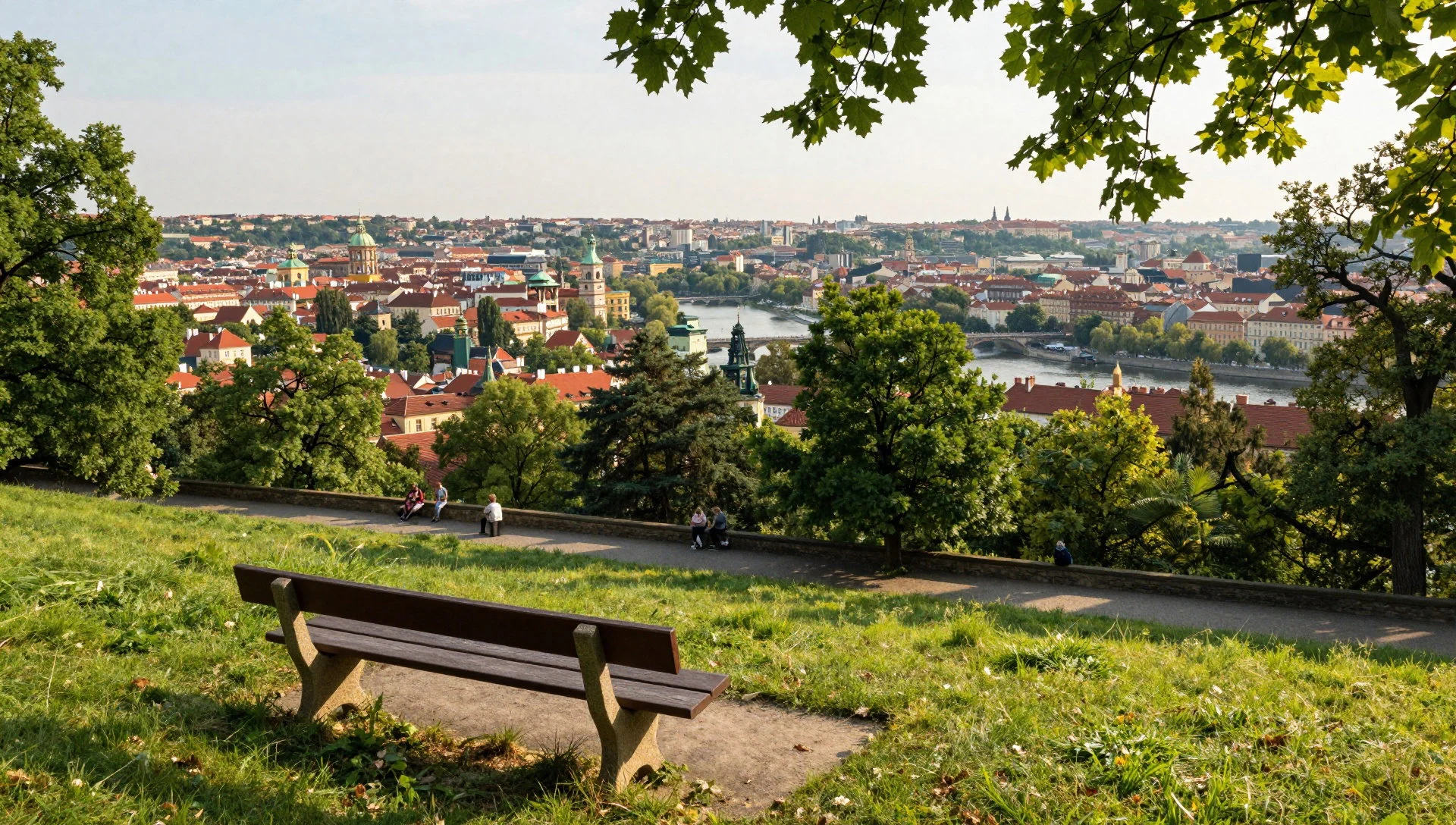
- Vyšehrad — Vyšehrad
An ancient hilltop fortress and park situated downriver, steeped in local legend and offering quiet walking trails alongside a monumental neo-Gothic church.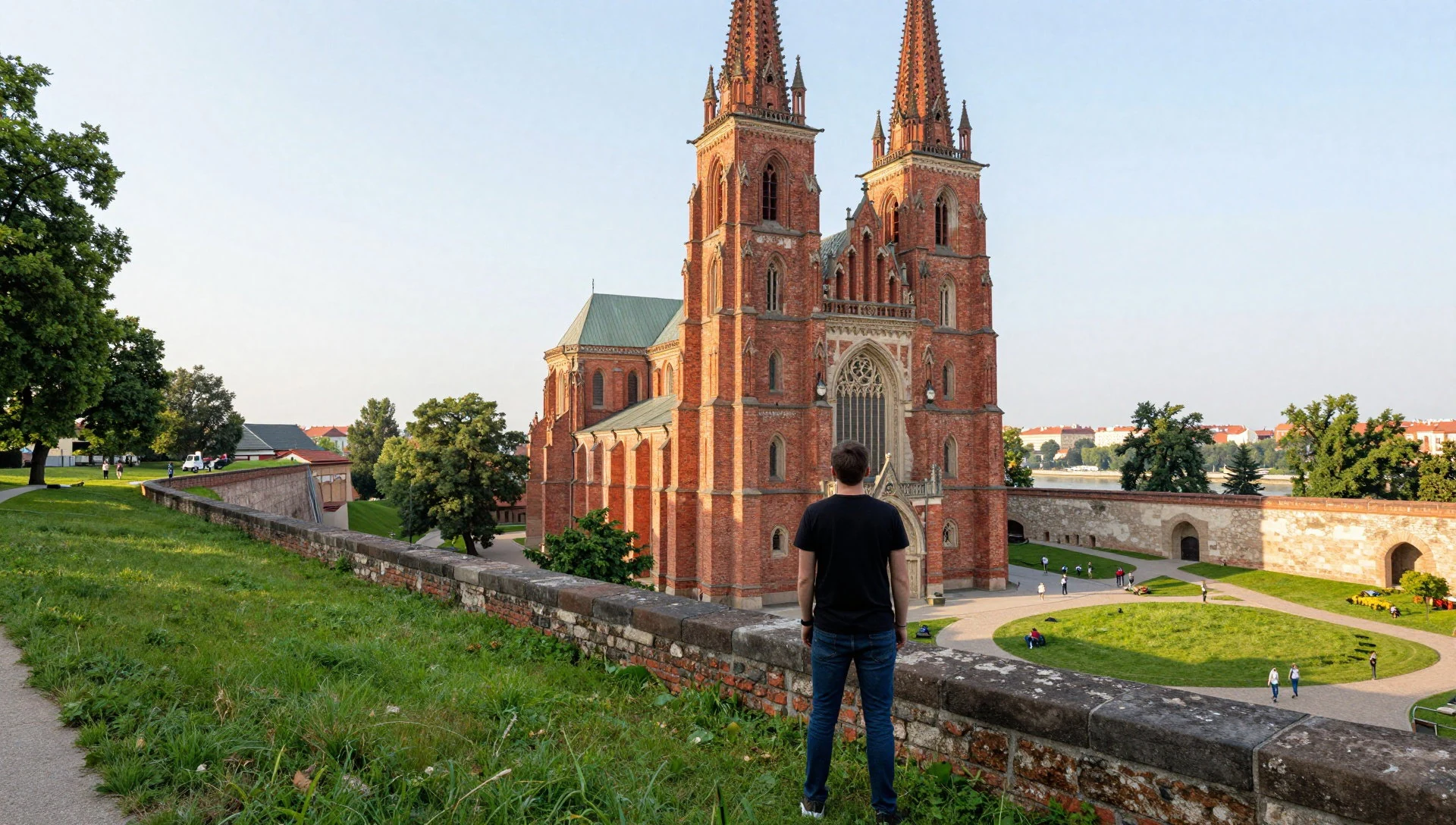
Culture
Prague has long functioned as a preeminent cultural nexus in Europe, nurturing classical music, theatrical innovation, and literary expression. Historic venues like the National Theatre and the Estates Theatre—where Mozart famously premiered Don Giovanni—anchor a vibrant performing arts scene alongside world-class orchestras housed in the Rudolfinum and the Municipal House. Intellectual life here is tied to a tradition of quiet contemplation in historic cafes and libraries, reflecting a society that values the arts, literature, and architectural preservation.
Locals generally value privacy and polite, understated interaction in public spaces, preferring quiet conversation on public transport and orderly queuing in shops and ticket halls. When entering traditional pubs, small shops, or someone's home, always offer a polite greeting in the local language, and remember to validate your transit tickets before boarding trams or entering the metro system.
What to wear
Traditional Czech folk costume, or kroj, varies significantly by region and is preserved today primarily for folk festivals, historical reenactments, and national celebrations. These traditional garments often feature embroidered linen shirts, woolen vests, pleated skirts, and decorative headwear, utilizing natural textiles like wool, flax, and cotton crafted with intricate needlework.
In daily life, Prague residents dress in a practical, contemporary European style. Urban wardrobes lean toward smart-casual attire, with comfortable layers, tailored coats, and versatile footwear reigning supreme due to the city's extensive cobbled streets. For visitors, packing sturdy, broken-in walking shoes is essential for navigating uneven stone pavements and steep hill climbs. Layered clothing works best for variable seasonal temperatures, and while casual wear is acceptable almost everywhere, carrying a modest scarf or lightweight jacket for entering churches and sacred interiors is recommended.
What to eat
- Svíčková na smetaně — Traditional Czech restaurants and neighborhood eateries
Tender beef simmered in a rich, velvety vegetable and cream sauce, traditionally served with bread dumplings and a dollop of cranberry compote.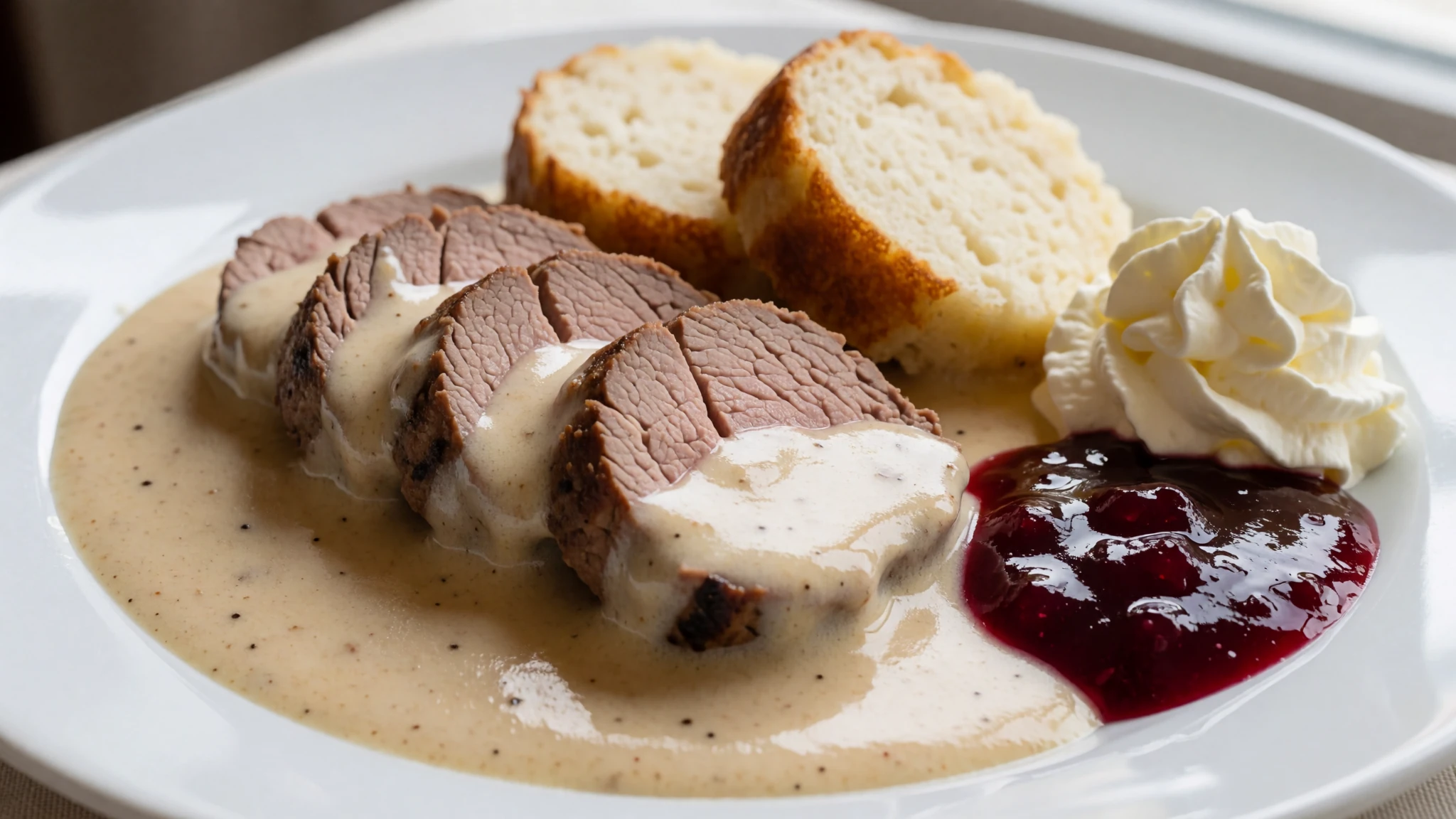
- Vepřo-knedlo-zelo — Historic pubs and old-town taverns
Roast pork paired with soft bread dumplings and stewed sauerkraut, representing the hearty foundation of classic Bohemian comfort food.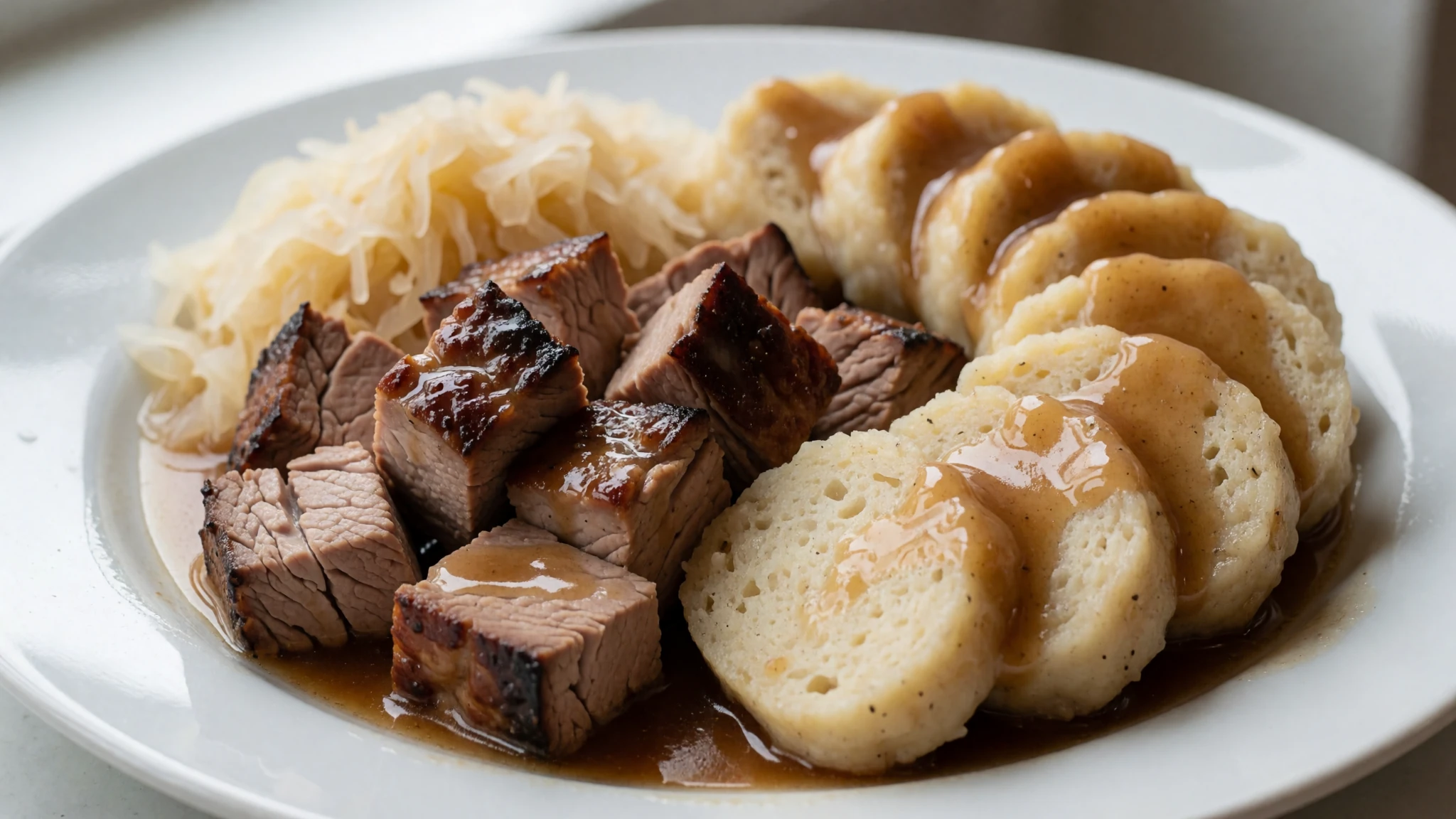
- Ovocné knedlíky — Local pastry shops and traditional dining halls
Sweet seasonal fruit dumplings stuffed with plums, apricots, or strawberries, generously dusted with grated curd cheese, icing sugar, and melted butter. - Goulash with Dumplings — Corner pubs and neighborhood restaurants
A rich, slow-cooked beef stew seasoned with paprika and onions, served alongside sliced bread dumplings to soak up the savoury gravy.
Plan it
Best time. April and October offer the most comfortable weather and manageable crowds, just before and after the peak summer rush.
How long. 3–4
Getting there. Fly into Vaclav Havel Airport Prague, then take the airport bus connection to the nearest metro station for a direct ride into the city centre.
Budget. mid
Tips
- Wear comfortable, flat shoes to cope with the uneven cobblestones.
- Visit major sights like Prague Castle and Charles Bridge early in the morning to avoid heavy tour groups.
- Always validate your public transport ticket immediately upon boarding.
- Keep some local currency or contactless payment ready for small independent shops.
Etiquette
- Greet shopkeepers and staff when entering small establishments.
- Keep voices down when travelling on public transport.
Nearby
Sources
- Wikidata Q1085 (CC0)
- Wikipedia (CC BY-SA 4.0)
- Wikivoyage (CC BY-SA 4.0)