Paris
Paris, France
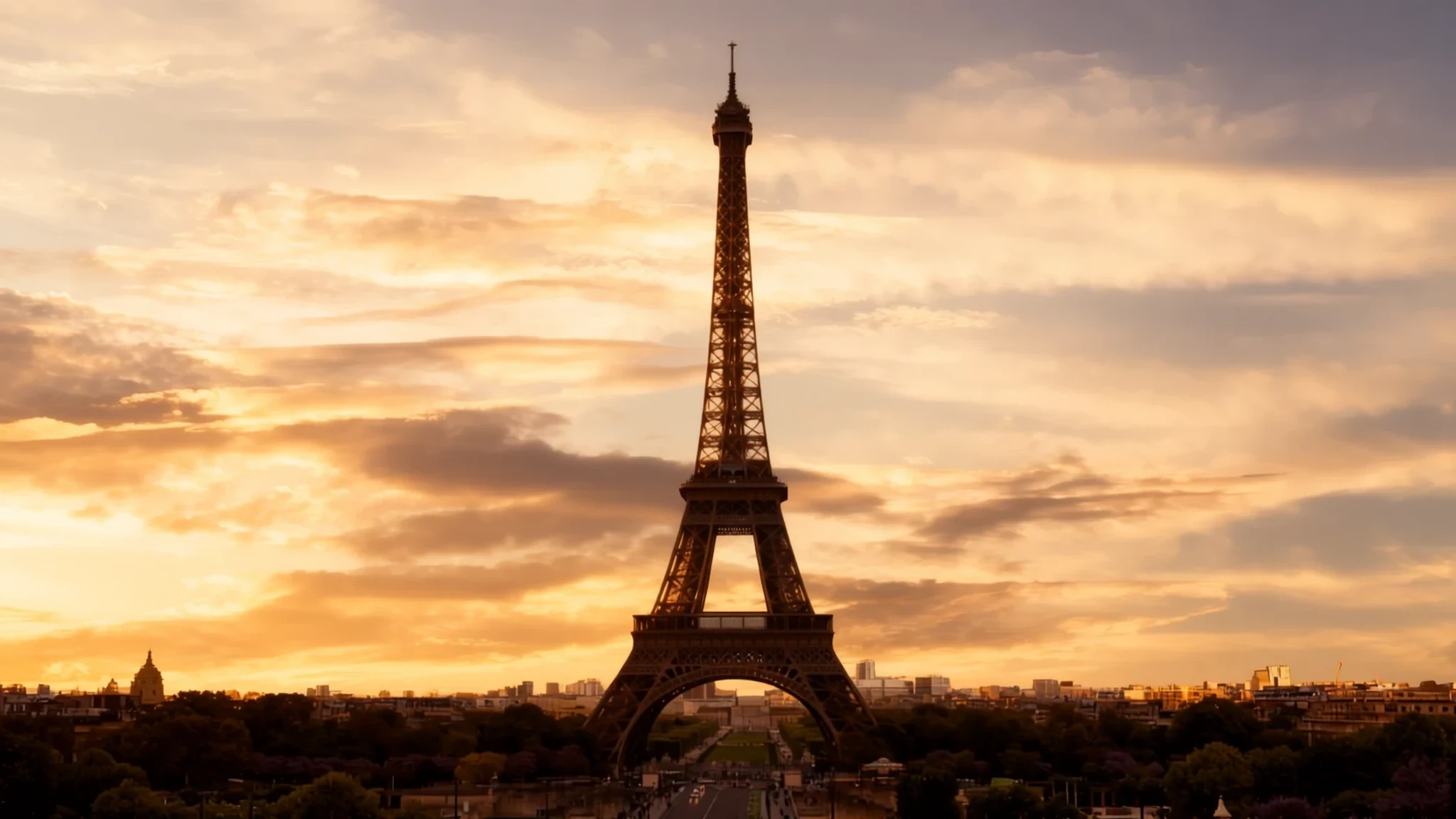
Spanning the Seine with grand avenues, centuries of artistic achievement, and exceptional baking, Paris remains an essential urban journey.
The place
Paris stands as the capital and largest city of France, situated along the Seine River in the heart of northern France. The city is arranged in twenty administrative districts known as arrondissements, spiralling outwards from the central river islands like a snail shell. Wide limestone boulevards, meticulously planned tree-lined avenues, and expansive public gardens give the urban landscape its grand, cohesive character, largely shaped by sweeping nineteenth-century urban renovations. Beyond its famous architectural monuments, everyday life unfolds across quiet residential quarters, neighbourhood bakeries, independent bookshops, and terrace cafés along the pavements. The urban flow is anchored by the river, crossed by dozens of historic stone and iron bridges that connect the artistic quarters of the left bank with the civic and commercial centres of the right bank. Below ground, an extensive underground railway network connects every district, making navigation remarkably straightforward for visitors. While central areas host millions of travellers throughout the year, quiet everyday life thrives in the outer quarters where local street markets, corner bistros, and small public squares serve as social hubs for residents. Whether walking through grand classical courtyards or lingering over coffee along a quiet side street, visitors encounter a metropolis that seamlessly balances its deep royal heritage with the rhythm of contemporary European life.
Its story
Paris began as a settlement of the Parisii, a Celtic tribe who established a fortified community on the banks and islands of the Seine River around three hundred years before the Common Era. Situated along key river trading routes, the Parisii engaged in extensive commerce with neighbouring settlements and minted their own distinct gold coinage. Roman forces under Julius Caesar conquered the region in fifty-two BC, establishing the Gallo-Roman town of Lutetia on the river's elevated left bank. Remnants of this ancient Roman period, including public baths and an amphitheatre, still endure beneath the modern street plan. During the Middle Ages, the city expanded rapidly around the central river island, becoming a major centre of religious scholarship, royal authority, and Gothic architecture. Subsequent centuries of royal patronage transformed the urban landscape with grand palaces, monumental public squares, and expansive royal gardens. The French Revolution dramatically reshaped the city's political role, converting royal structures into public museums and establishing civic institutions that endure today. In the mid-nineteenth century, a massive urban transformation swept away narrow medieval alleyways to create the broad boulevards, uniform stone facades, and integrated park systems that define the modern streetscape. Through foreign invasions, revolutionary uprisings, and wartime occupations, the settlement evolved from a modest river island trading post into one of the world's premier political and cultural capitals.
What to see
- Eiffel Tower — Champ de Mars
Rising above the public lawns of the Champ de Mars, this monumental iron lattice structure offers sweeping views across the capital from its upper observation platforms. Conceived as a temporary exhibition monument, the tower became the defining symbol of the French capital. Visitors can climb the stairs or take elevators to view the surrounding city grid, winding river, and historic avenues.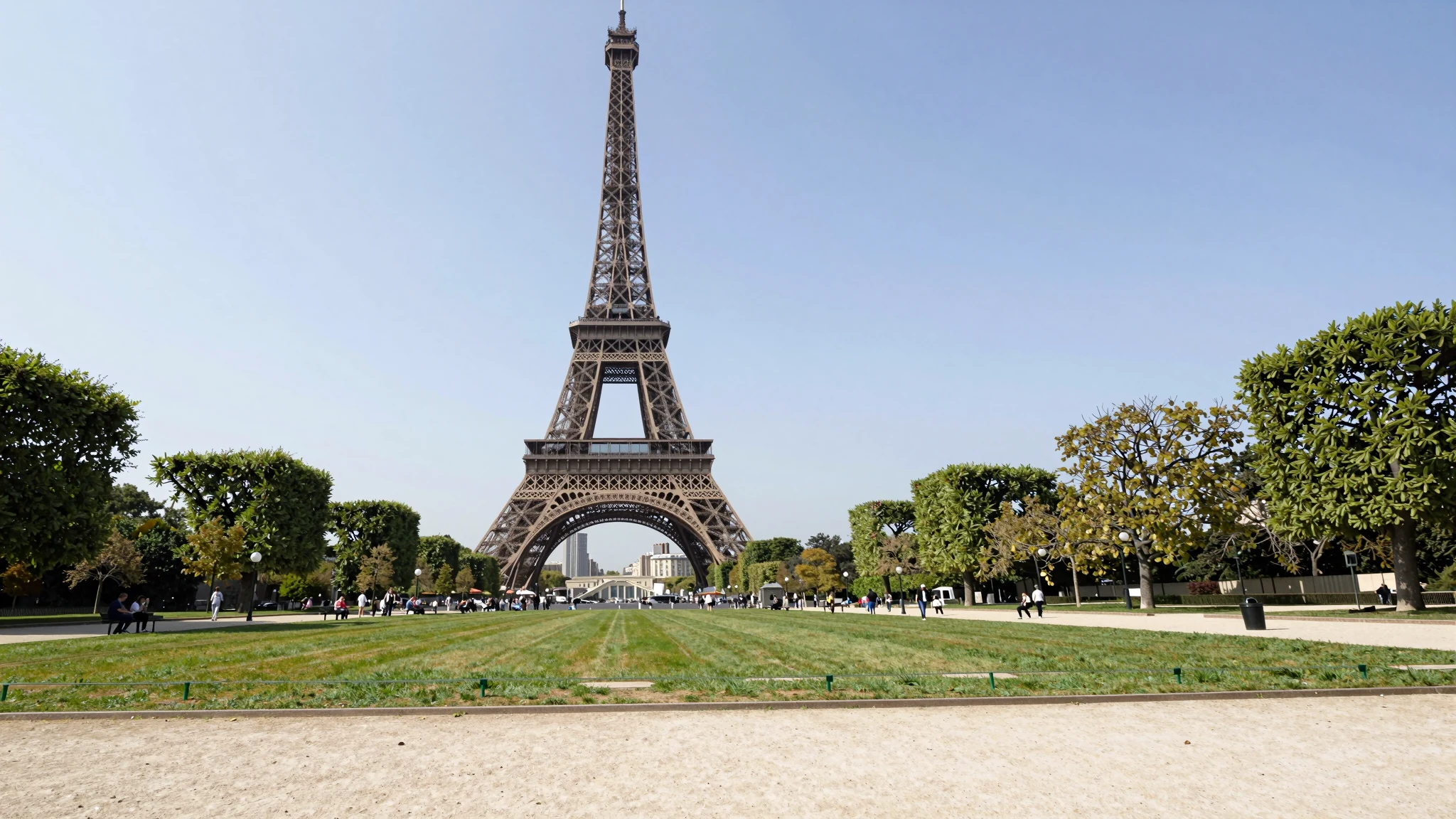
- Notre Dame Cathedral — Île de la Cité
Situated on a natural island in the Seine River, this masterwork of French Gothic architecture features soaring vaulted ceilings, intricate stone carvings, and monumental rose windows. The cathedral served as the dramatic setting for Victor Hugo's famous literary masterpiece. Surrounding plazas offer peaceful vantage points to appreciate the flying buttresses, sculpted doorways, and medieval stone craftsmanship.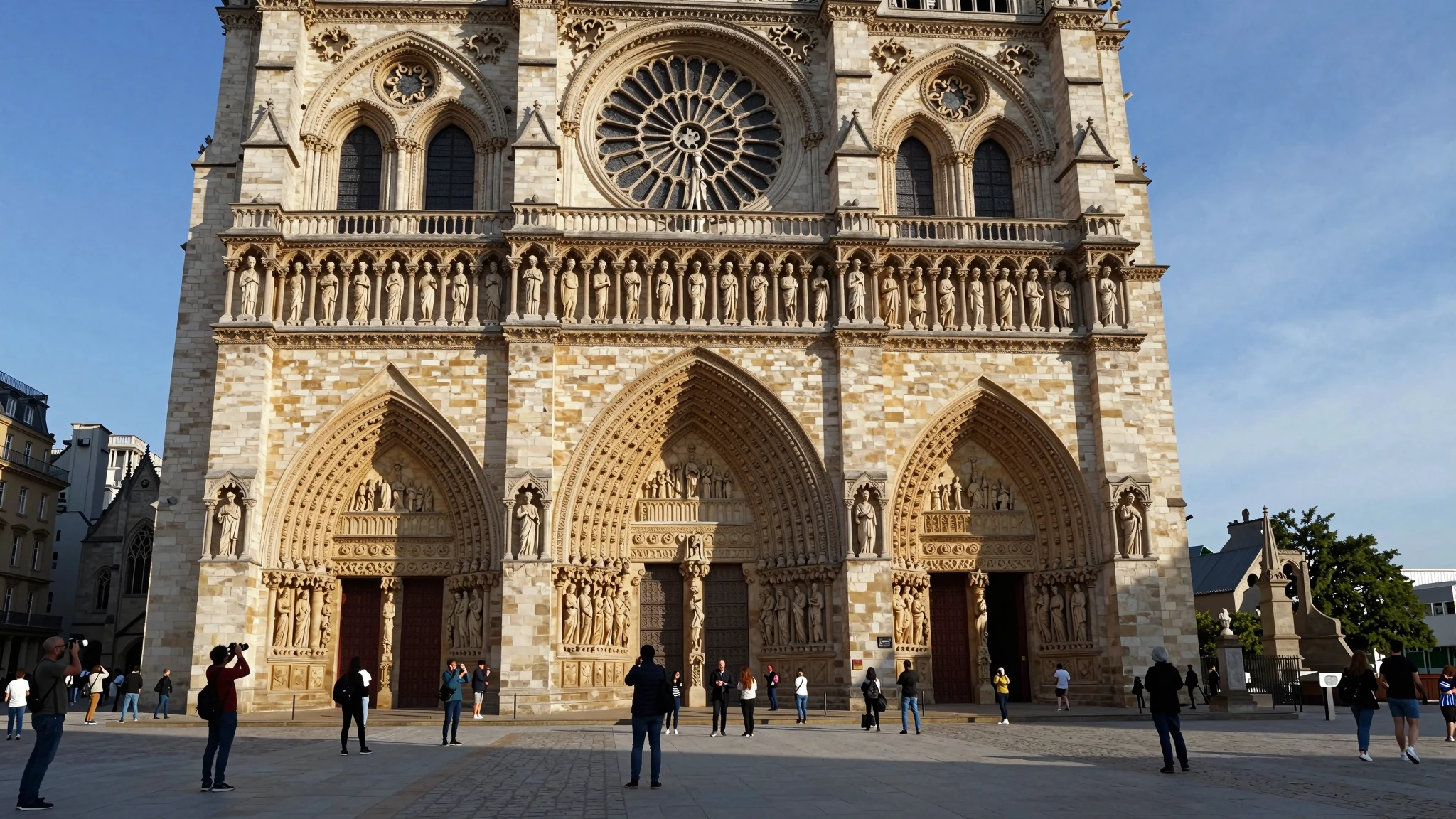
- Sacré-Cœur Basilica — Montmartre
Perched atop the steep hill of Montmartre, this striking white travertine basilica overlooks the sprawling city skyline from the highest natural elevation in Paris. The grand dome and terraced gardens attract travellers seeking expansive urban vistas, while the surrounding hilltop lanes preserve the historic charm of a former artistic village filled with painters, street musicians, and open-air cafés.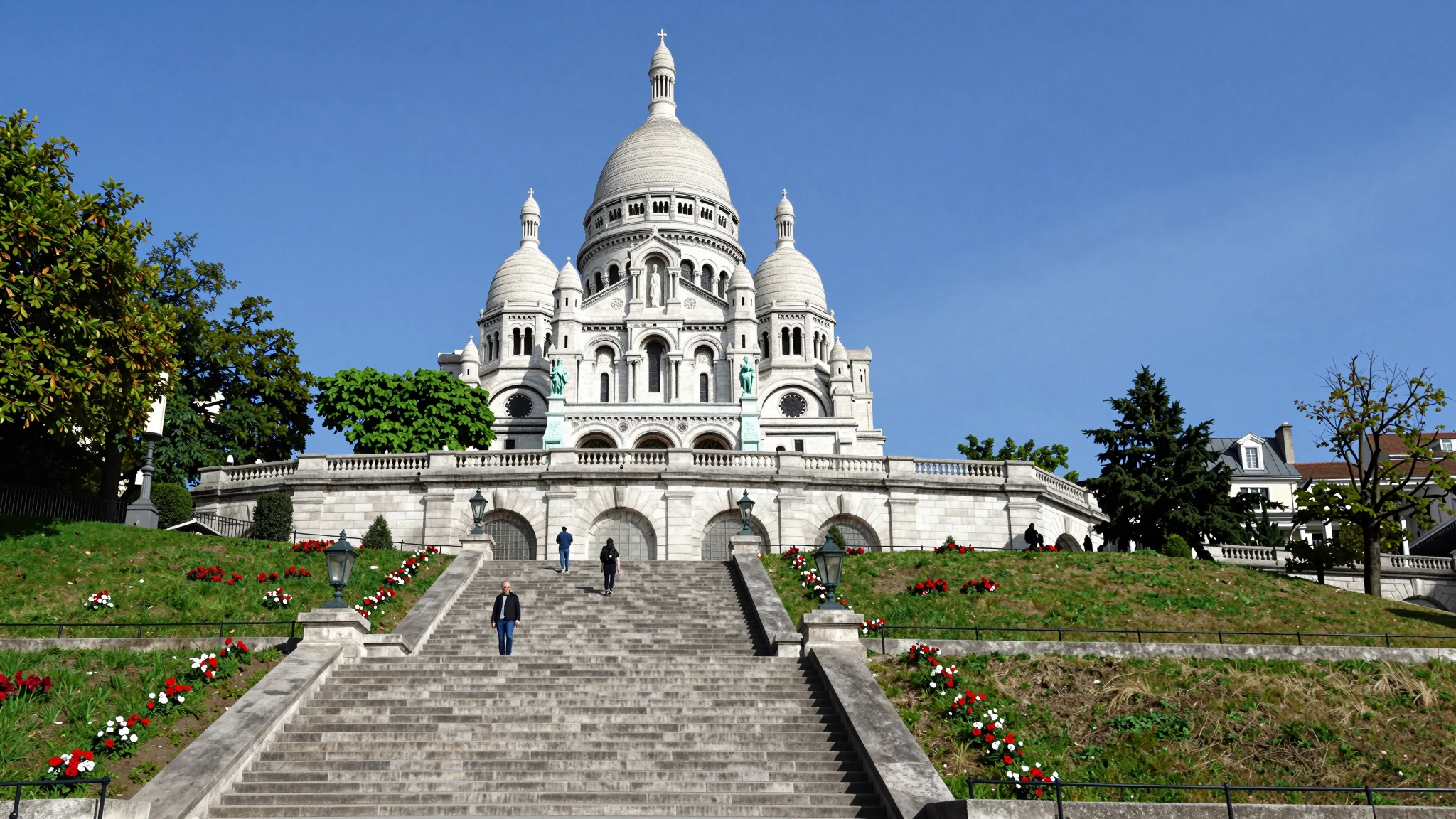
- Arc de Triomphe — Place Charles de Gaulle
Standing at the center of a grand circular junction where twelve broad avenues converge, this massive neoclassical triumphal arch honours French military history. Intricate stone reliefs depict historic battle scenes, while the rooftop platform offers impressive views straight down the Champs-Élysées. Beneath the central arch, an eternal flame burns above the tomb of the Unknown Soldier.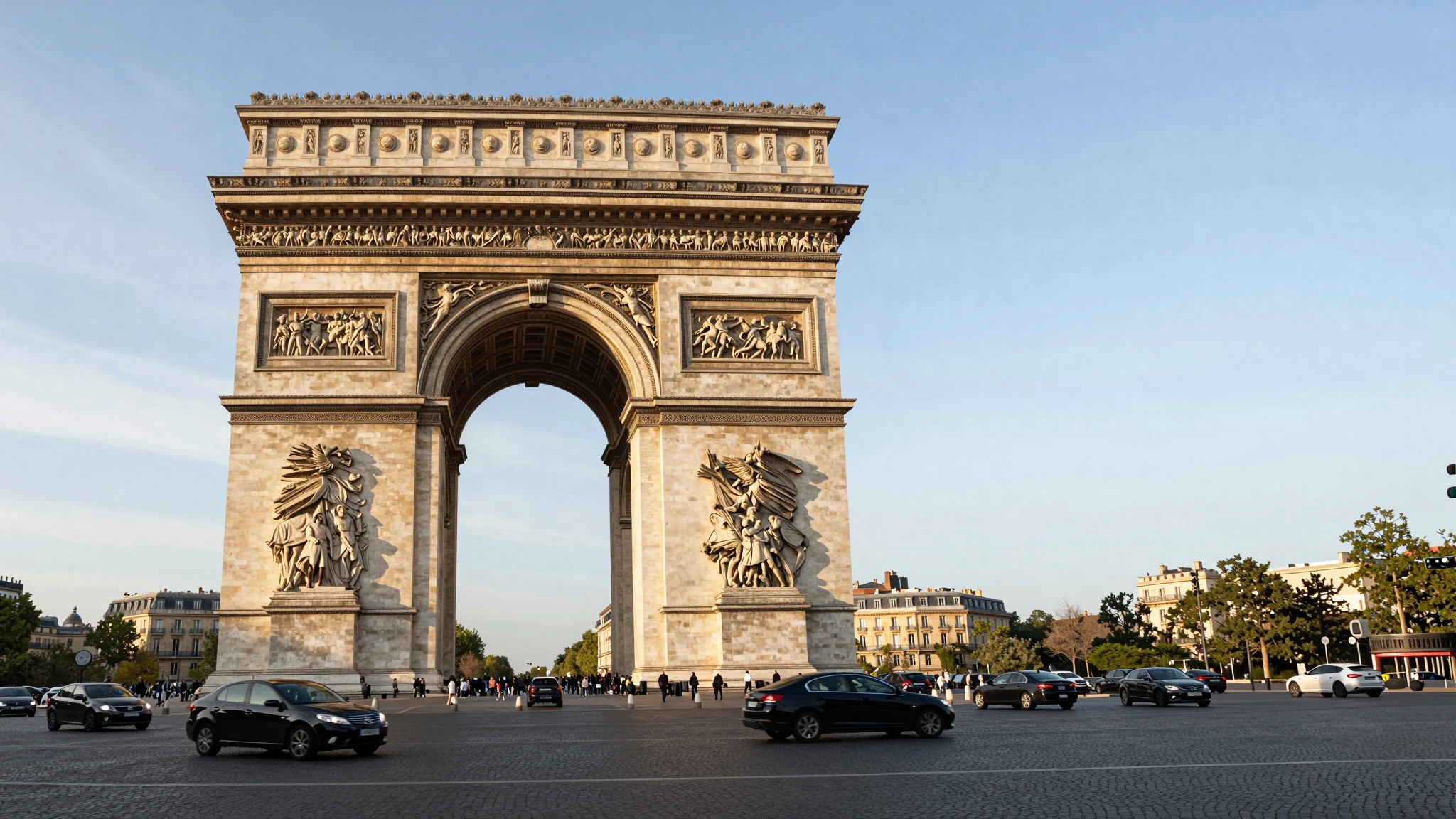
- Champs-Élysées — Eighth arrondissement
Stretching between the Place de la Concorde and the Arc de Triomphe, this world-famous avenue features wide, tree-lined footpaths bordered by flagship fashion boutiques, historic theatres, and lively café terraces. The boulevard serves as the traditional venue for major national parades and public celebrations, providing a quintessential promenade for taking in classic Parisian street life.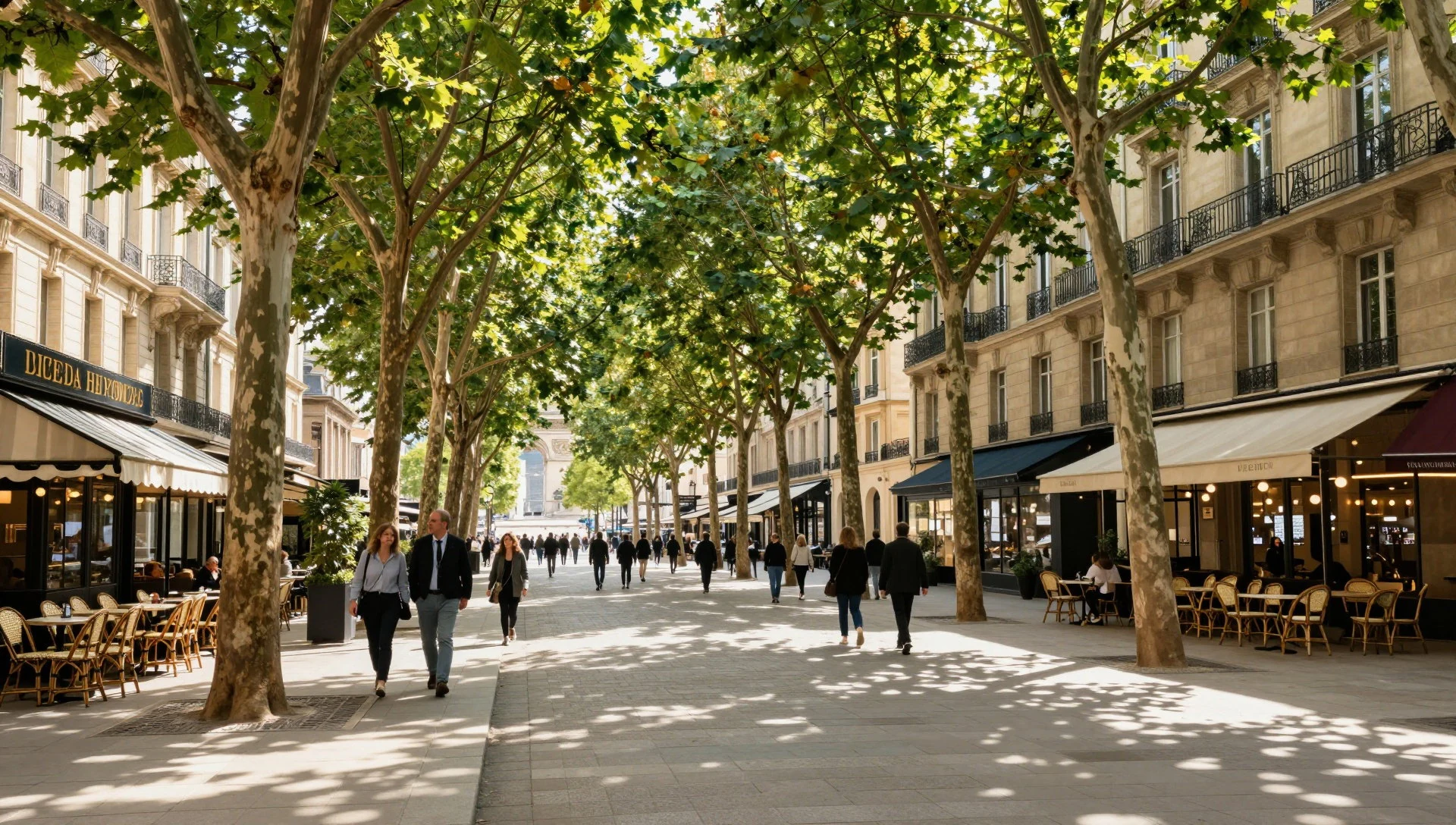
Culture
Paris has long maintained its international renown as a global capital of artistic creation, philosophical debate, and refined culinary tradition. For centuries, royal patronage and world-renowned academies drew painters, sculptors, and writers from across Europe, fostering movements ranging from classicism and impressionism to modern avant-garde art. Today, this creative heritage flourishes across world-class national galleries, neighbourhood exhibition spaces, classical concert halls, and historic literary cafés where intellectuals historically gathered. The rhythm of daily life centers on simple, cherished routines: browsing riverside book stalls along the Seine, enjoying long mid-day meals in neighbourhood bistros, and spending peaceful afternoons lingering on outdoor café terraces. High culture and street-level artistic expression exist side by side, with classical architecture providing the backdrop for contemporary fashion shows, street performance, and seasonal festivals. Residents take immense pride in preserving their architectural heritage, language, and table manners, appreciating visitors who show respect for local social customs and quiet urban decorum. When entering small shops or neighbourhood businesses, always greet the shopkeeper with a polite greeting before asking for assistance.
What to wear
Historically, regional French attire in the Île-de-France region featured practical woollen trousers, linen shirts, and smocks for working men, while women wore layered cotton or wool skirts, embroidered aprons, and lace headpieces known as coiffes during festive gatherings. Silk weaving and high fashion tailoring flourished under royal patronage, establishing fine wools, silk brocades, and structured lace as hallmarks of luxury French dress. Today, modern Parisians favour a tailored, understated style characterised by neutral colour palettes, classic trench coats, well-cut denim, crisp button-down shirts, and quality leather footwear or clean sneakers. Effortless elegance takes precedence over flashy branding, with carefully chosen accessories like silk scarves or wool caps providing subtle personal accents. For visitors, dressing in neat, smart-casual attire helps you blend seamlessly into city life and local establishments. Practical walking shoes are essential for navigating cobbles, metro staircases, and gravel park paths throughout long days of exploration. Light, breathable layers with an umbrella or waterproof jacket suit spring and autumn weather, while sophisticated yet modest attire is expected when visiting historic cathedrals, high-end restaurants, or evening theatre performances.
What to eat
- Baguette tradition — Any neighbourhood bakery
This iconic long French loaf features a crisp, golden crust and a soft, airy interior. Made strictly with flour, water, salt, and yeast, it is baked fresh multiple times daily across neighbourhood bakeries and eaten alongside meals or filled with butter and ham.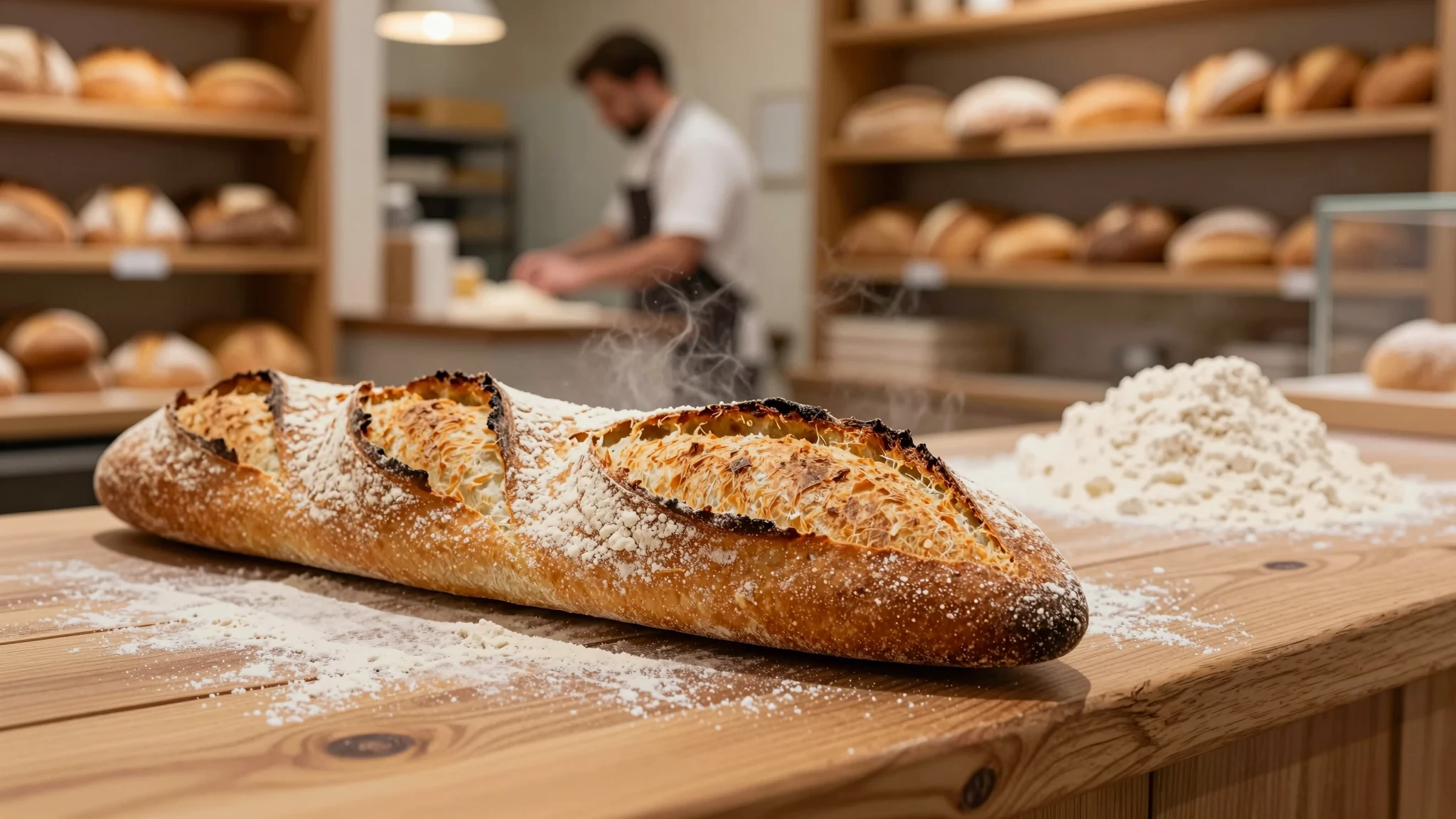
- Croissant pur beurre — Morning bakeries and street cafés
A staple of classic French breakfast culture, this crescent-shaped pastry is made by layering rich butter into delicate yeast dough. Freshly baked each morning, it boasts flaky, golden outer layers and a tender, buttery center perfect alongside espresso.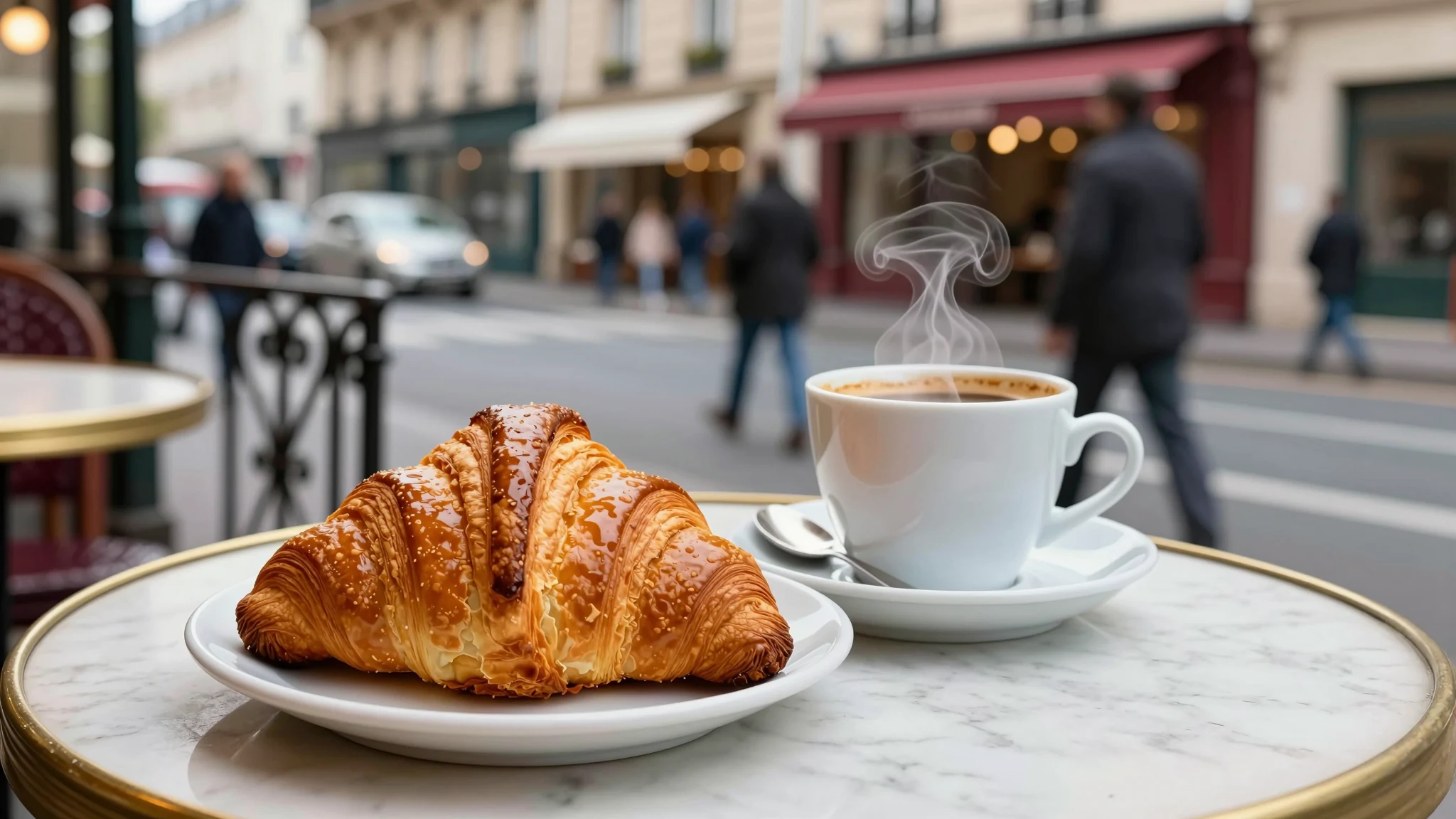
- Steak frites — Traditional bistros and brasseries
A staple bistro classic consisting of a pan-seared beef steak served with a rich pan sauce or compound butter and a generous mound of golden, crispy thin-cut French fries. It remains one of the most popular lunch dishes throughout local brasseries.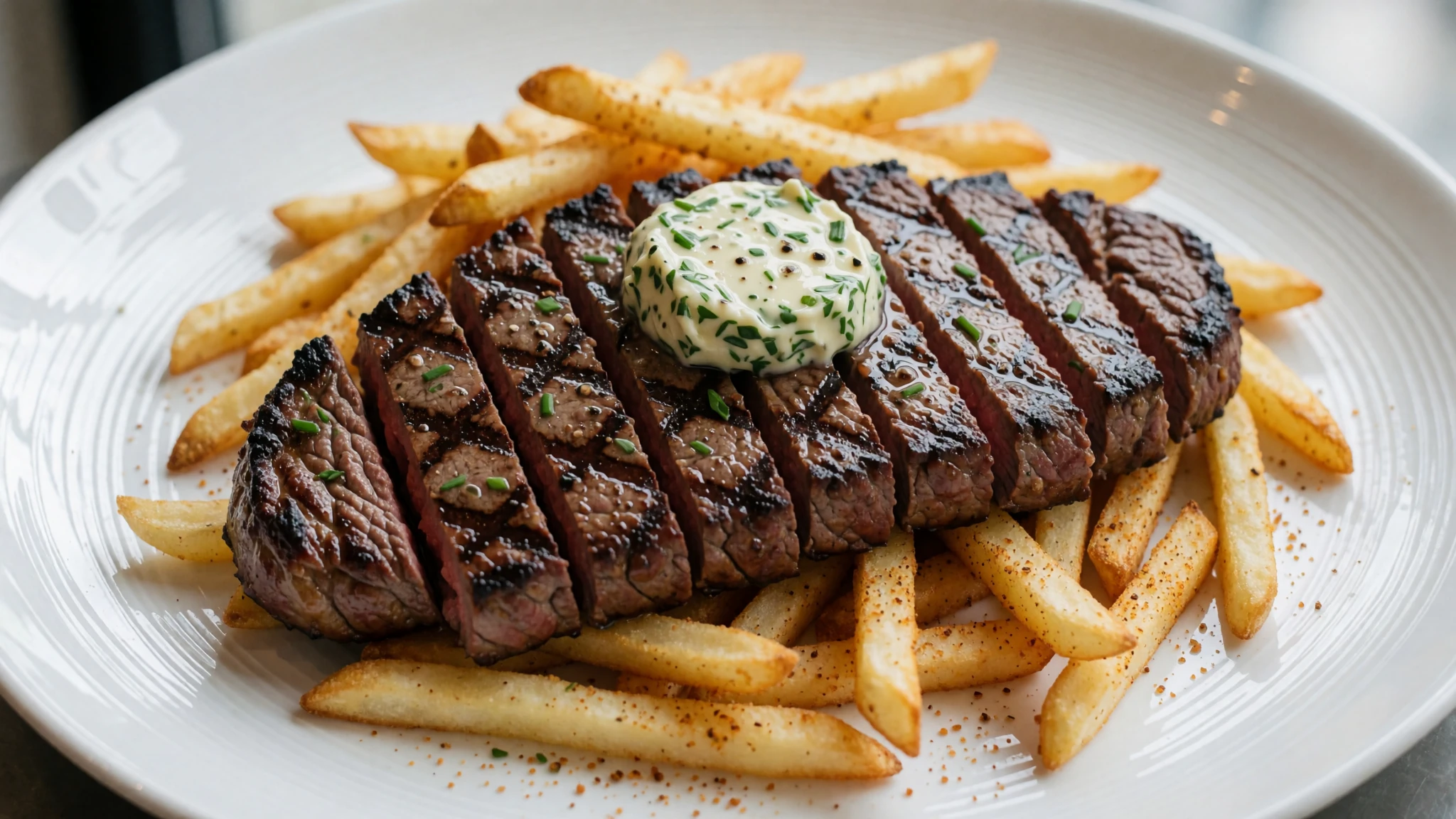
- French onion soup — Historic brasseries and corner taverns
This comforting soup features deeply caramelised onions simmered in rich beef broth, flavoured with herbs and wine. Served piping hot in ceramic crocks, it comes topped with a toasted bread crouton and a thick, melted blanket of broiled Gruyère cheese. - Macarons — Pastry shops and tea salons
Delicate meringue-based confectioneries crafted from finely ground almonds, egg whites, and sugar. These colourful double-sided sweet treats sandwich rich ganache, buttercream, or fruit jam fillings, available in dozens of classic and seasonal flavours at neighbourhood pastry shops.
Plan it
Best time. April–May for mild spring weather and blooming gardens, or September–October for comfortable temperatures and autumnal light; July and August bring heavy summer tourist crowds and occasional heatwaves.
How long. 3–4
Getting there. Charles de Gaulle Airport handles long-haul international flights, connected to central Paris via RER line B trains in about 35 minutes; high-speed Eurostar and TGV rail lines terminate directly at central stations.
Budget. mid
Tips
- Book tickets for popular monuments and museums weeks in advance online to avoid long entry lines
- Use the Metro underground network or walk between adjacent districts for the fastest navigation
- Carry a small amount of cash for minor purchases at traditional bakeries and street markets
- Validate your public transport ticket before entering platforms and keep it until exiting
Etiquette
- Greet shopkeepers with a polite bonjour upon entering and au revoir when leaving
- Keep your voice low when travelling on public transport or dining inside quiet restaurants
- Keep to the right hand side on metro escalators to let walking commuters pass on the left
Nearby
In a traveller's words
I am writing this chapter partly for the satisfaction of abusing that accomplished knave Billfinger, and partly to show whosoever shall read this how Americans fare at the hands of the Paris guides and what sort of people Paris guides are. It need not be supposed that we were a stupider or an easier prey than our countrymen generally are, for we were not. The guides deceive and defraud every American who goes to Paris for the first time and sees its sights alone or in company with others as little experienced as himself. I shall visit Paris again someday, and then let the guides beware! I shall go in my war paint--I shall carry my tomahawk along.
— Mark Twain, The Innocents Abroad, 1869
Sources
- Wikidata Q90 (CC0)
- Wikipedia Paris (CC BY-SA 4.0)
- Wikivoyage Paris (CC BY-SA 4.0)
- Photo photos/01-la-tour-eiffel-vue-de-la-tour-saint-jacques-paris-ao-t-2014-.jpg (CC BY-SA 2.0)
- Photo photos/02-notre-dame-de-paris-2013-07-24.jpg (CC BY 3.0)
- Photo photos/03-basilique-du-sacr-c-ur-de-montmartre-paris-18e-140223-2.jpg (CC BY 3.0)
- Photo photos/04-panth-on-paris-v-fr75-2025-03-29-1.jpg (CC BY-SA 4.0)
- Photo photos/05-arc-de-triomphe-hdr-2007.jpg (CC BY 2.5)
- Photo photos/06-palais-garnier-paris-ix-fr75-2022-01-22-1.jpg (CC BY-SA 4.0)
- Photo photos/07-louvre-courtyard-looking-west.jpg (CC BY-SA 4.0)
- Photo photos/08-parisiicoins.jpg (CC BY-SA 1.0)
- Mark Twain, The Innocents Abroad (1869) (Public domain)


