Bremen
Bremen, Germany
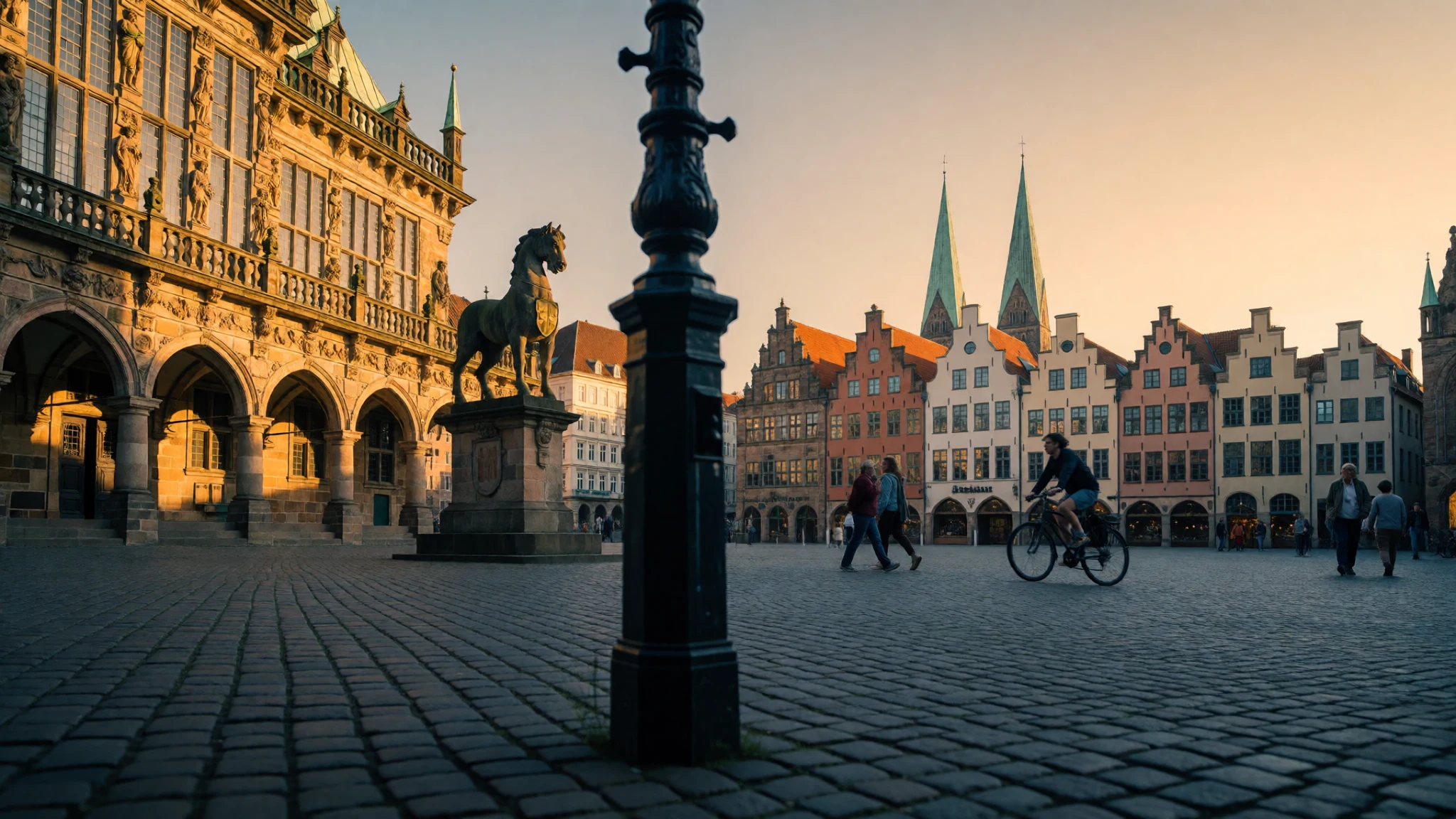
Bremen offers a proud merchant-city centre, with a historic town hall, a Roland statue and riverside lanes, all within easy walking distance.
The place
Bremen sits on the River Weser in north-west Germany, only about 11 metres above sea level, with the North Sea reached downstream at Bremerhaven. The city has about 588,000 inhabitants and forms a two-city state with Bremerhaven, officially the Free Hanseatic City of Bremen. Lower Saxony surrounds it completely, and towns such as Delmenhorst, Stuhr and Weyhe run on from its edges, so the built-up area feels larger than the city limits suggest. The centre is compact and flat. The market square holds the town hall, the cathedral and the Roland statue within a few steps of each other, and from there a short walk leads either to the Schlachte, the riverside promenade, or to the Böttcherstraße, a brick lane of Jugendstil design. Older timber-framed houses survive in the Schnoor quarter, while the Viertel to the east is where students and the evening crowd gather. Bremen has a university and a long habit of trade, and both show: cafés fill early, bicycles are everywhere, and Low German, the regional dialect, still colours local humour and street names. The climate is maritime, so expect mild summers, cool damp winters and rain at almost any time of year. It is an easy city for a weekend, best taken on foot, with the river as its natural spine and the harbour history never far from the surface.
Its story
Bremen has spent most of its roughly 1,200 years as a self-governing city. It became the seat of a bishop in 787, and over the following centuries its merchants and guilds grew wealthy enough to push back against the Church's power, which they kept doing until the Reformation. In the 13th century the city joined the Hanseatic League, the network of trading towns around the North Sea and Baltic, and the town hall and Roland statue still read as statements of that independence. Later rivals included Sweden, which controlled the surrounding duchy after the Thirty Years' War. The Elector of Hanover, who became King of Great Britain in 1714, recognised Bremen as a free city in 1720. France annexed it in 1810, and independence returned in 1815. The nineteenth century made Bremen a gateway. With new docks at Bremerhaven it became a main departure point for emigrants heading to the Americas, and the shipping company Norddeutscher Lloyd, founded here in 1857, grew into a major name in world shipping. The twentieth century was harder. After the First World War Bremen was briefly a soviet republic, then lost its autonomy under the Nazi regime. Bombing in the Second World War destroyed almost two thirds of the city's fabric, which is why the rebuilt and carefully protected market square matters so much to locals. Self-government returned after the war and the city-state status survives today.
What to see
- Rathaus (town hall) — Market square
The town hall on the market square is the clearest expression of Bremen's merchant confidence. Building began in 1410, and the façade was later given a richly carved Renaissance front. Inside, the ornate halls are normally seen on a guided tour, so check the official site for times and booking before planning around it.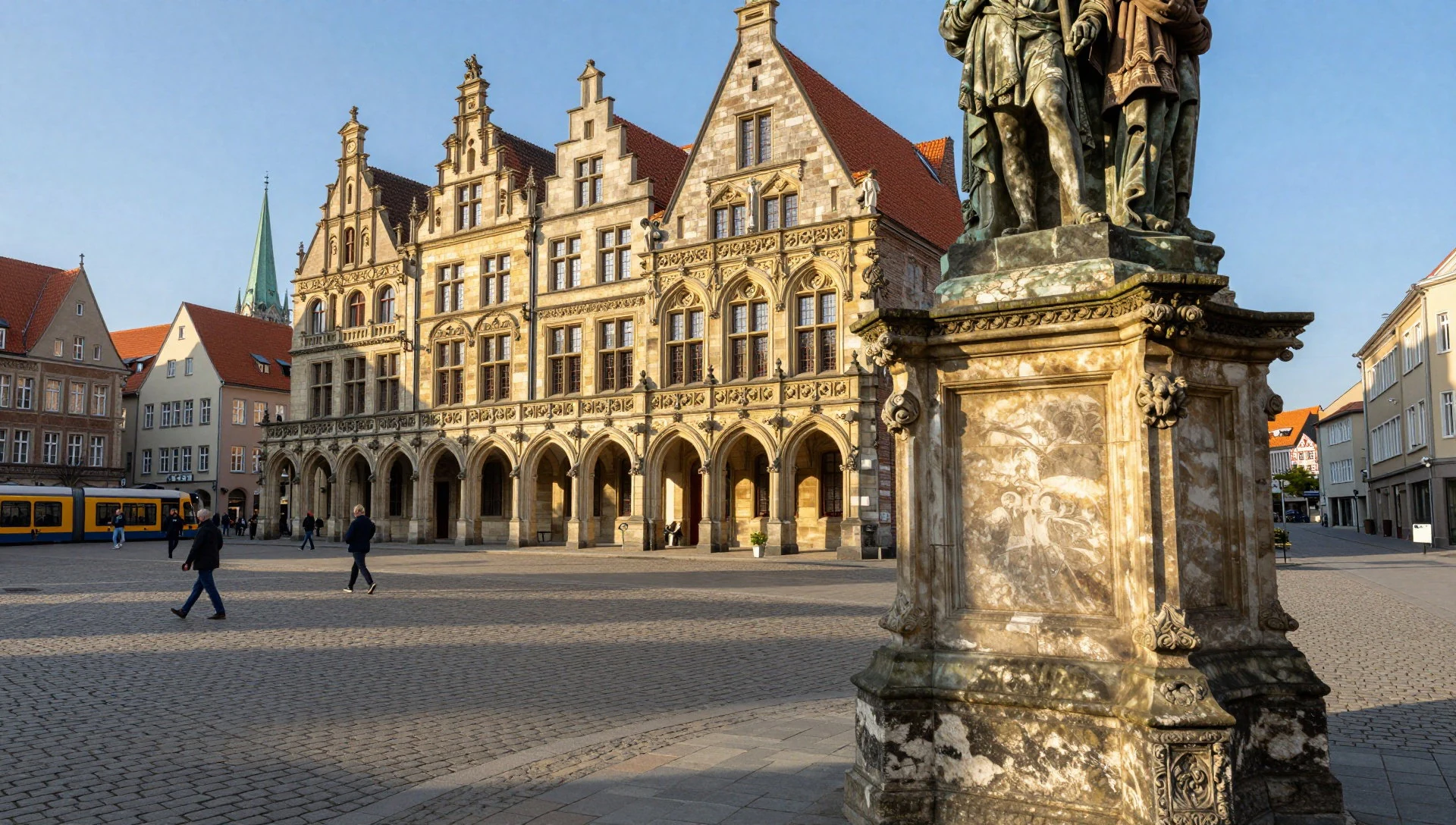
- Roland statue — Market square
The stone Roland stands in front of the town hall, a knight from the medieval Song of Roland shown with sword and shield, gazing across the square. For Bremen he stands for civic freedom and the right to trade. Locals treat him as a guardian of the city, and he looks best early, before the crowds arrive.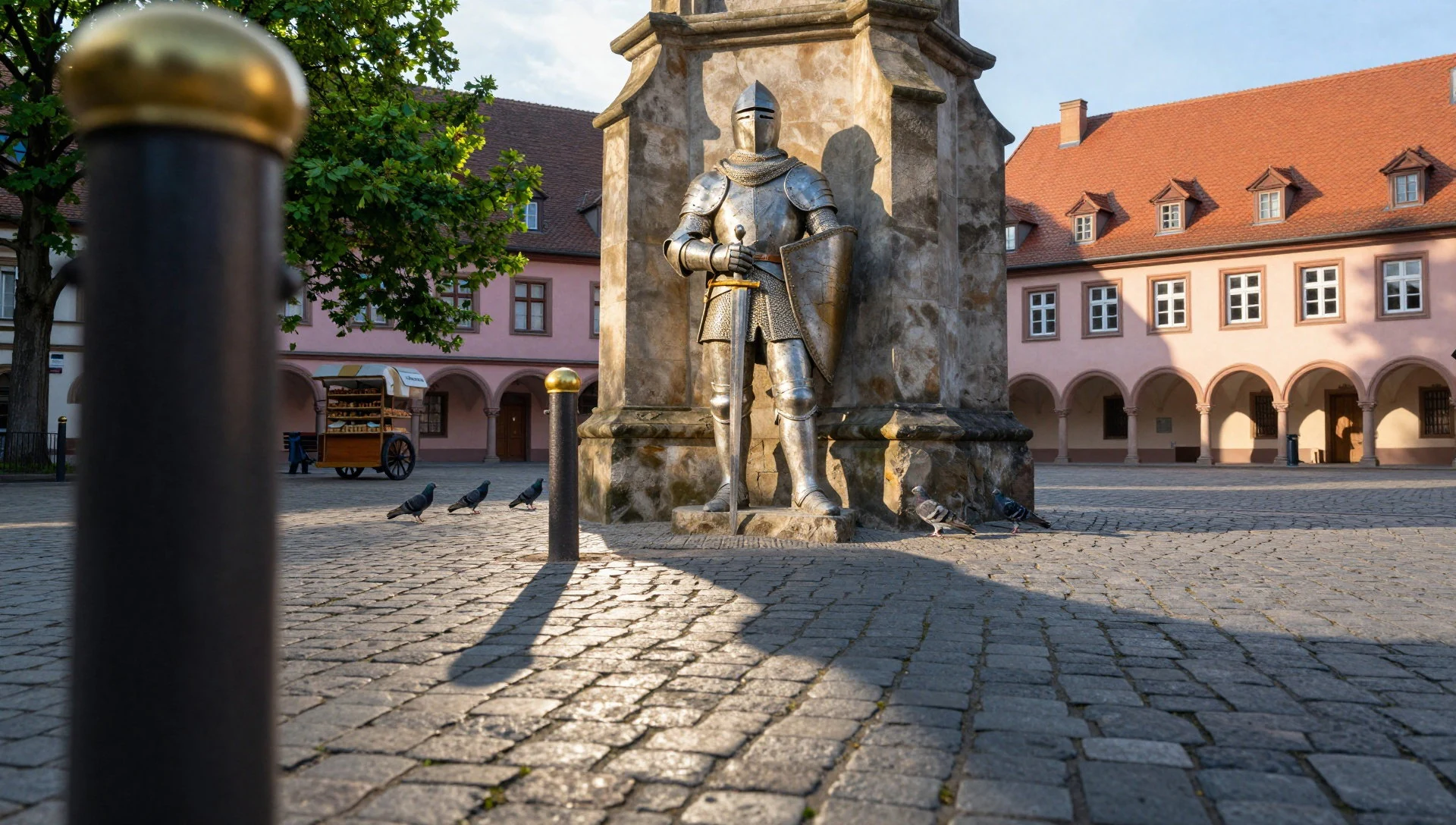
- Dom St. Petri (cathedral) — Market square
The cathedral's towered façade dominates the edge of the market square, and its story stretches back over 1,200 years. Inside, look up for the painted details on the ceilings. It is a calm place after the bustle outside; check the cathedral's own site for opening times and any tower access.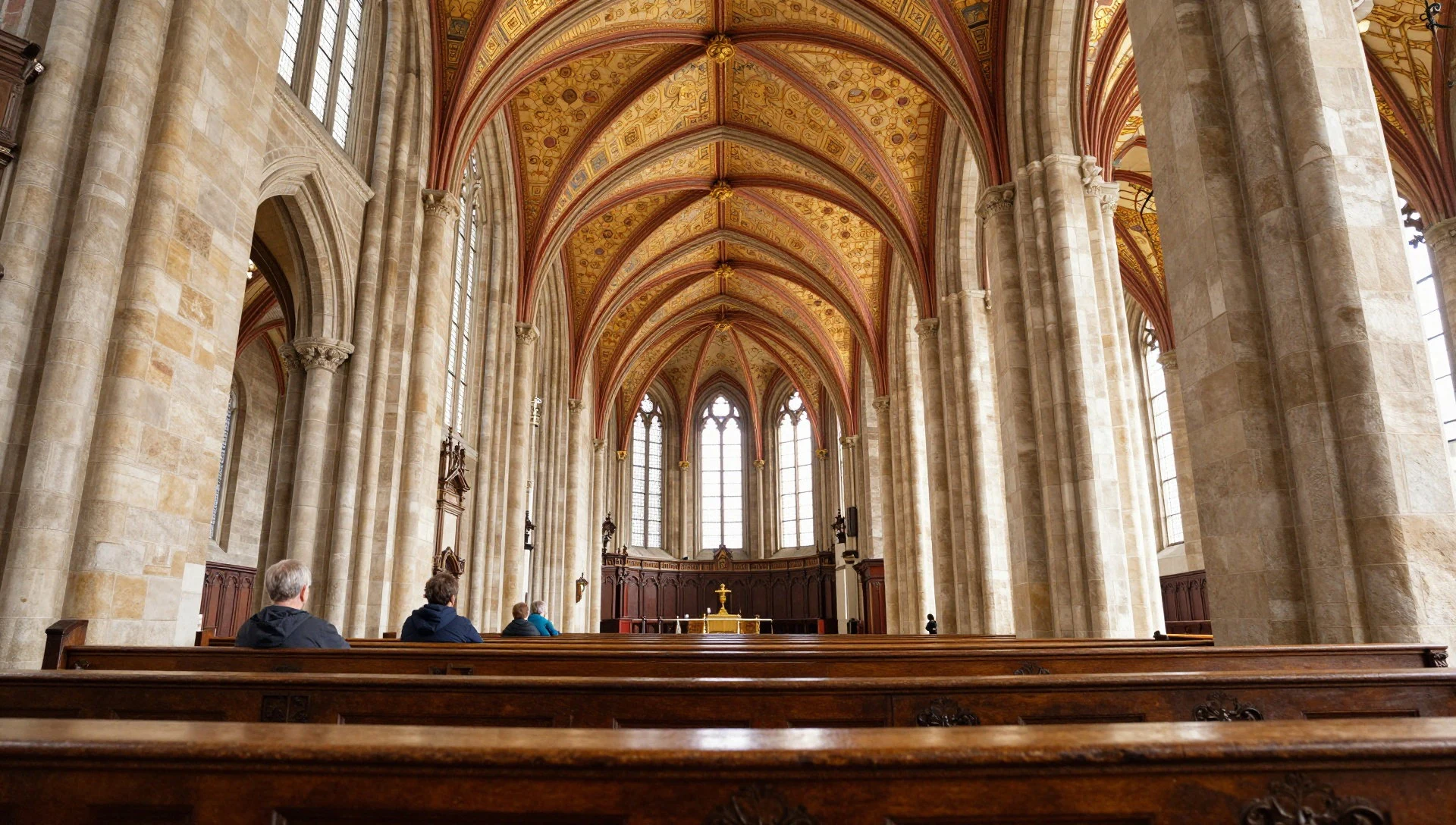
- Böttcherstraße — Between the market square and the Weser
This short brick street runs from the market square towards the river and is one of the most unusual in northern Germany. Jugendstil (Art Nouveau) design shows in its façades, carvings and small courtyards. Crafts shops and cafés fill it by midday, so mornings give a better look at the detail.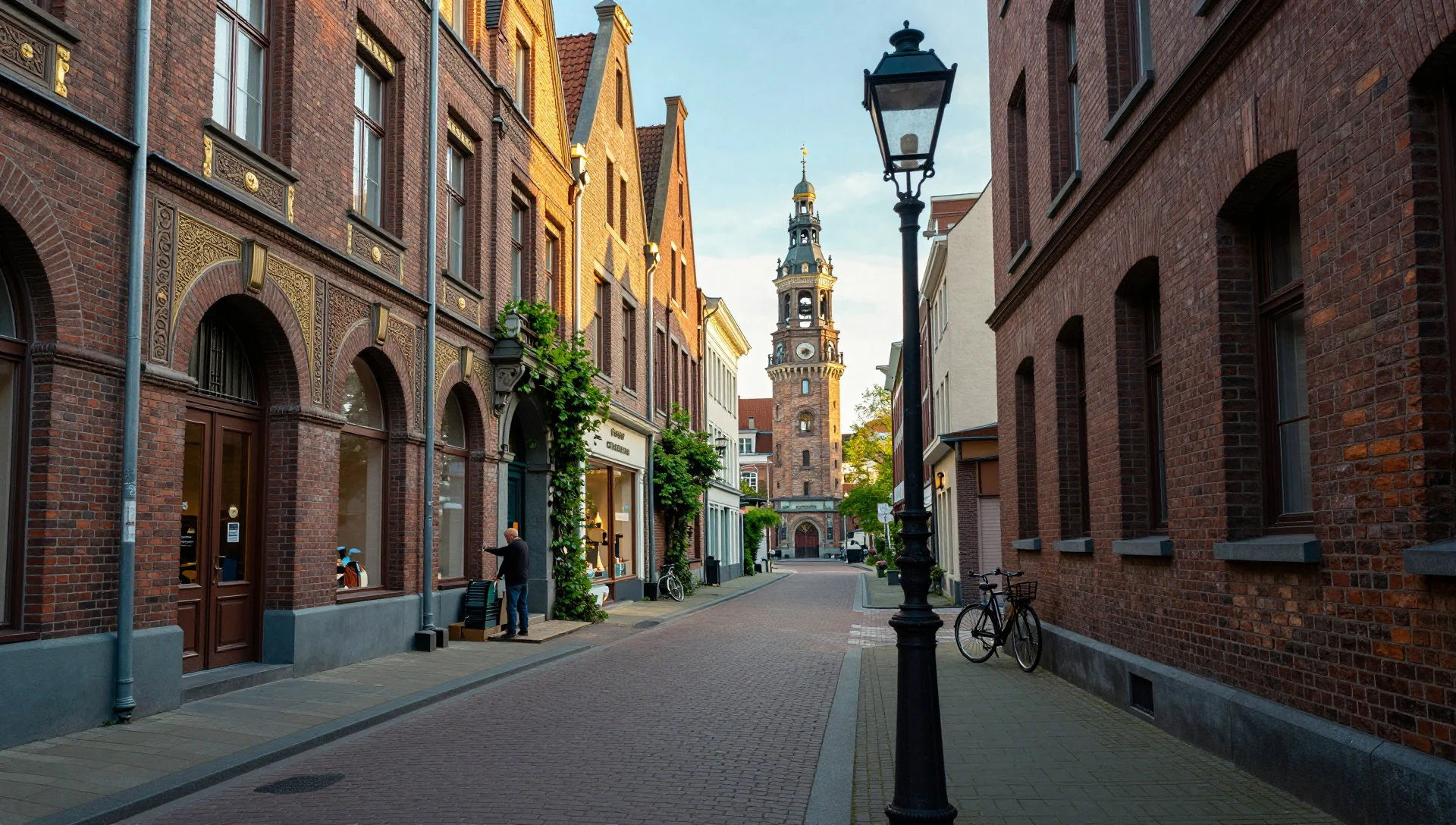
- Schnoor quarter — Old town, near the cathedral
The Schnoor is a knot of narrow lanes lined with low, colourful houses, now home to craft shops, small galleries and cafés. It is photogenic but tight, and summer afternoons feel crowded. Go in the morning or early evening, and wear shoes that cope with uneven cobbles.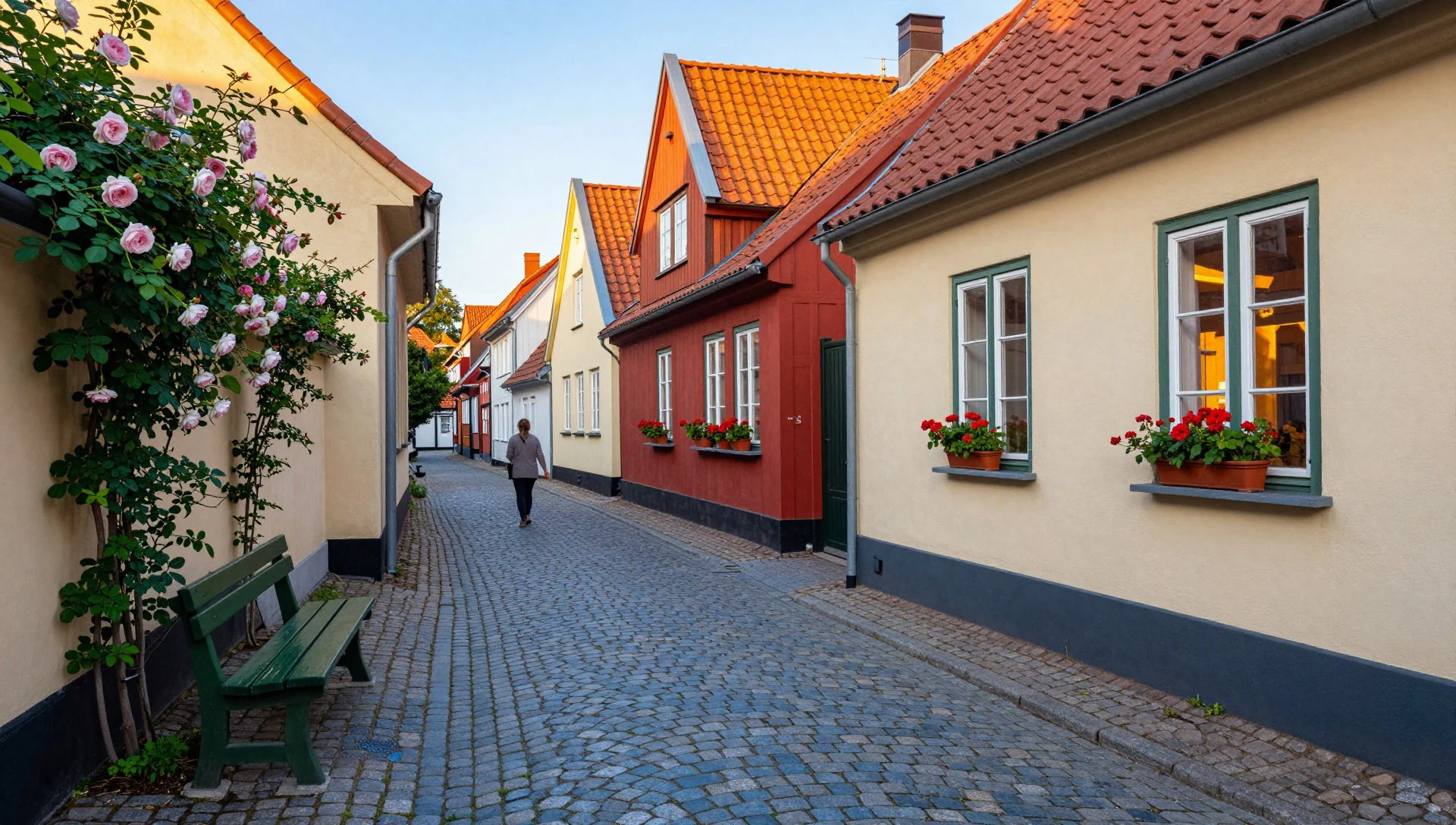
- Wallanlagen — Ring around the old town
This star-shaped park follows the lines of Bremen's former city fortifications, with water, lawns and shaded paths. It makes a quiet loop after the market square and is popular with joggers and picnickers in good weather. Walk it in a half-circle to reach the Viertel or the station.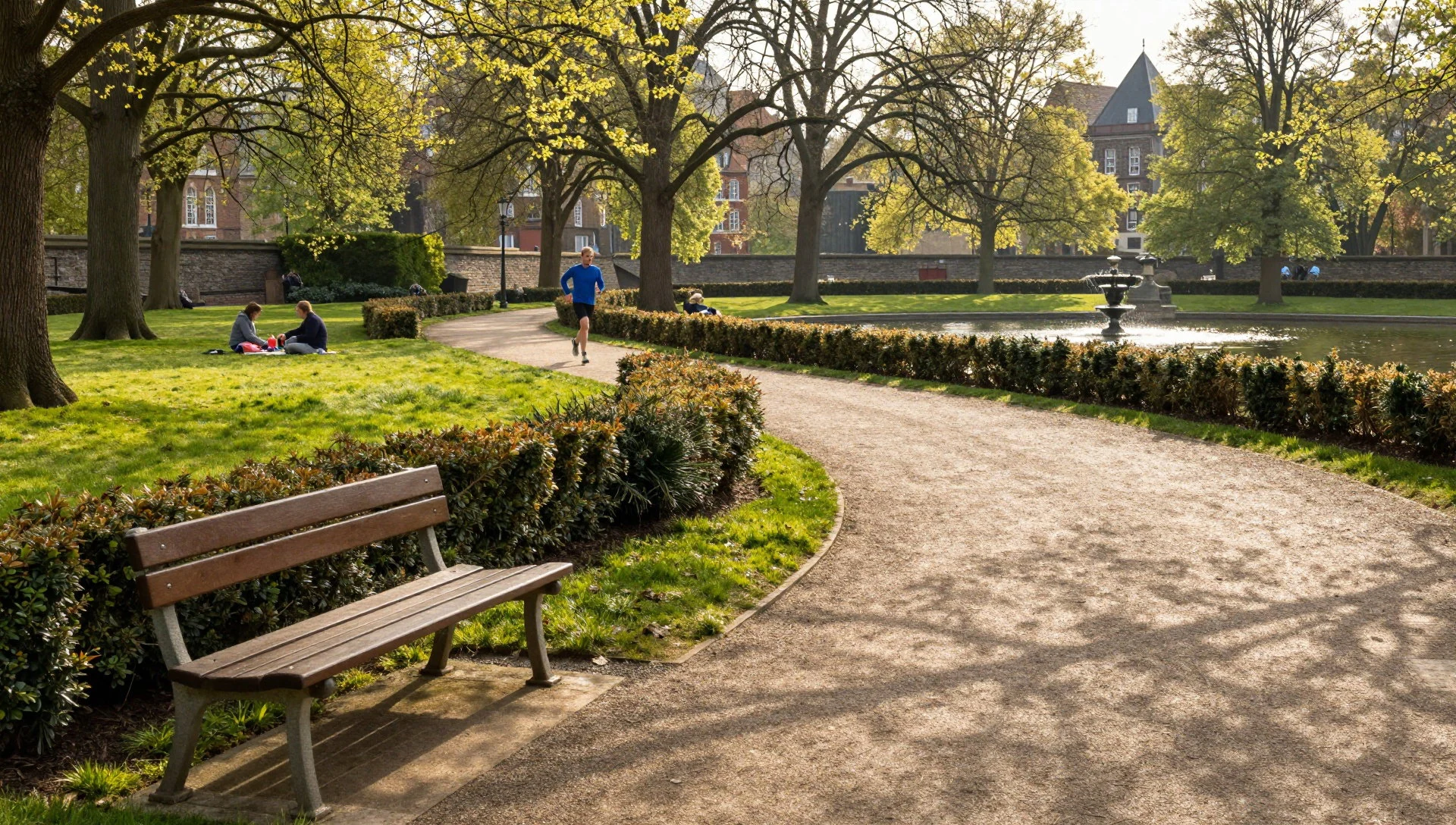
Culture
Bremen's character comes from centuries of merchant self-rule. The old Hanseatic habit of understatement, reliability and quiet civic pride still shapes how the city sees itself, and the Roland statue, a symbol of freedom and trade rights, is the clearest emblem. The best-known story belongs to the Town Musicians of Bremen, from the Grimm fairy tale: a donkey, dog, cat and rooster who set out to become musicians and never quite arrive. Their bronze statue near the town hall draws a steady queue, and visitors rub the donkey's front legs for luck. Coffee and beer are part of the local identity, since the port brought in goods and the city turned them into industries. Football matters too, with the green-and-white colours of Werder Bremen common on match days. Autumn brings the Freimarkt, a large funfair that has run for centuries and is the city's biggest social event; check bremen.de for dates. Locals speak standard German in shops and cafés, with Low German surviving in phrases, jokes and place names. People are polite but reserved at first, warming up once you start a conversation. Many pubs and cafés are relaxed about lingering over a drink. Cyclists have priority on many streets and moving fast. In the Dom and other churches, keep your voice low, take off your hat, and check the signs before photographing during a service.
What to wear
Bremen has no single regional costume that people wear in daily life. Northern German Tracht, the traditional dress of the countryside, is found mostly at folk festivals, heritage associations and museum displays. It typically uses wool, linen and sturdy cotton, with embroidered aprons, dark bodices and silver buttons for women, and waistcoats and dark jackets for men. The more visible tradition is maritime and merchant: sailors' caps, oilskin jackets and navy wool coats belong to a port city and show up in shops and on the quayside. What people wear now is practical and understated. Locals favour layers, dark or muted colours, good jackets, comfortable trainers or boots and a bicycle-friendly style, with smarter outfits for the theatre and restaurant evenings. Umbrellas and hooded rain jackets are normal, because the wind off the north can bring showers in any season. For a visitor, pack for changeable, mild weather: a waterproof layer, a warm jumper even in summer, and shoes with grip for wet cobbles in the old town and the Schnoor. Winter needs a proper coat, hat and gloves, because the damp feels colder than the temperature suggests. Churches and the cathedral have no strict dress code, but covered shoulders and a respectful look are sensible for services. Flat, comfortable footwear matters more than fashion, since the best way to see the centre is on foot.
What to eat
- Bratwurst — Snack stalls and grills around the market square
Grilled sausage in a bread roll is the quick lunch of the old town. It is simple, salty and filling, usually served with mustard. Look for the stalls and snack bars around the market square, and ask for it with onions if you like.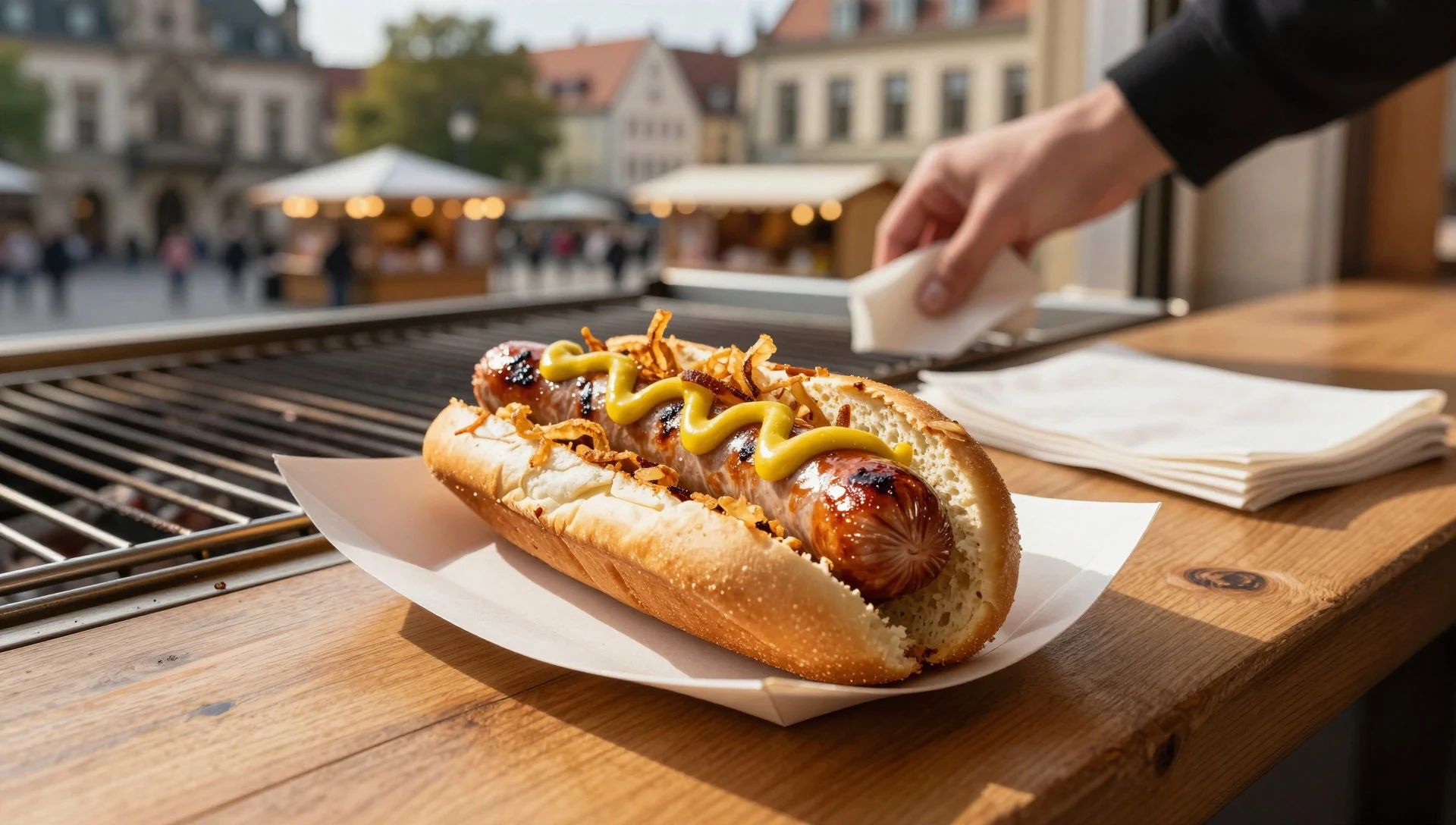
- Kohl und Pinkel — Traditional pubs and restaurants in the old town, mostly in winter
A winter classic of north-west Germany: stewed kale cooked with oats and served with smoked sausage and pork. It is heavy, smoky and meant for cold days. Traditional pubs and restaurants serve it from autumn into early spring.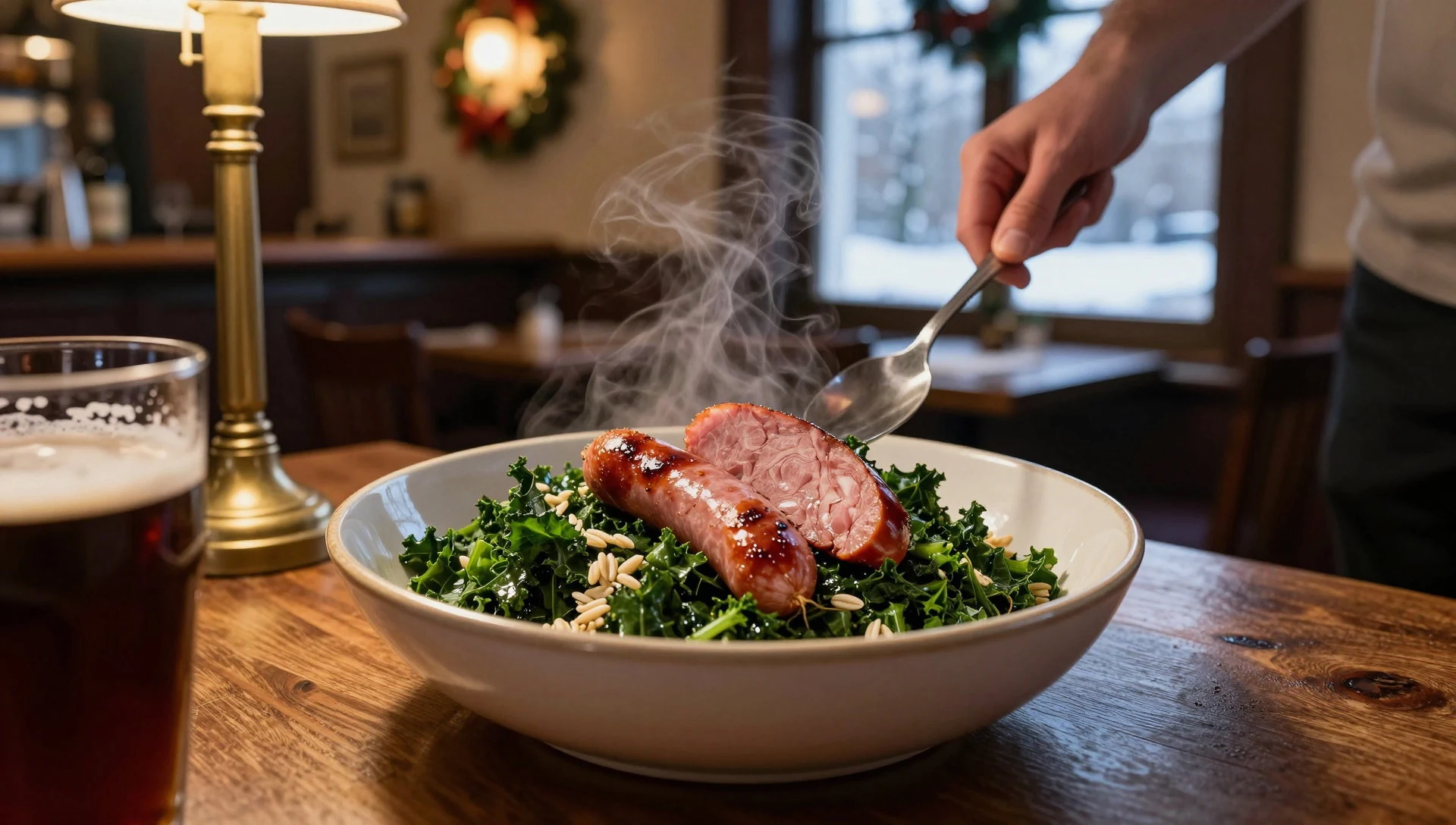
- Fischbrötchen — Kiosks and cafés along the Schlachte riverside
Fish in a roll is a north German habit, often herring or other cured or fried fish with onion and pickles. It makes a cheap, filling stop beside the water, and tastes best eaten outside while watching the river traffic. - Turkish grills and tantuni — Turkish eateries around the station and the city centre
Turkish cooking is a strong part of Bremen's everyday eating. Expect grilled meats, wraps and tantuni, thin-sliced meat cooked on a hot plate and rolled in flatbread. Cheap, quick and good for a late meal. - Spanish tapas — Bars and small restaurants around the Viertel
Small plates of Spanish food are a well-liked evening option, shared over drinks. Think olives, croquettes, tortilla and grilled prawns. The relaxed, student-heavy streets near the Viertel are where evenings run longest.
Plan it
Best time. May to September for mild weather and long evenings; December suits Christmas markets but is cold and damp. Rain can arrive in any month, so carry a waterproof whenever you visit.
How long. 2
Getting there. Bremen has its own airport with connections from major German and European hubs; a tram leaves from right outside the terminal and runs frequently to the city centre and the main railway station. Hamburg and Hannover are both on frequent direct train lines to Bremen, so rail is easy from elsewhere in Germany.
Budget. mid
Tips
- Start at the market square early, before tour groups arrive, then move on to the quieter lanes
- Book town hall tours through the official site, since interior visits are guided and may sell out
- Carry some cash for small stalls and bakeries, although cards are common in larger places
- Hire a bike or use trams for the Viertel and parks, but walk the old centre
- Pack a waterproof and layers, because showers and wind can change a day quickly
Etiquette
- Stay off cycle lanes, which are busy and clearly marked on pavements
- Keep voices low in the cathedral and other churches
- Say a brief greeting when entering a small shop or café
Nearby
Sources
- Wikidata Q24879 (CC0)
- Wikipedia: Bremen (rev 1383276593) (CC BY-SA 4.0)
- Wikivoyage: Bremen (rev 5395857) (CC BY-SA 4.0)
- Photo: Bremen, Rathaus, Dom und Bürgerschaft — Klaus Grünberg (CC BY 3.0)
- Photo: Rathaus, Roland und Dom in Bremen — Matthias Süßen (CC BY-SA 4.0)
- Photo: At the market square in Bremen — W. Bulach (CC BY-SA 4.0)
- Photo: Bremen, Weser und Altstadt — Harry Traber (CC BY 2.5)
- Photo: The Schütting, Bremen — W. Bulach (CC BY-SA 4.0)
- Photo: Im Schnoor — Matthias Süßen (CC BY-SA 4.0)
- Photo: St Petri Cathedral in Bremen — Dietmar Rabich (CC BY-SA 4.0)
- Photo: Bremen — Georg Braun; Frans Hogenberg (Public domain)


