Amrum
Amrum, Germany
Amrum is a North Sea island of dunes, heath and a huge sandy beach, with Frisian traditions still alive and very few cars in sight.
The place
Amrum is one of the North Frisian Islands, off Germany's North Sea coast, south of Sylt and west of Föhr. It belongs to the Nordfriesland district in Schleswig-Holstein and has about 2,331 residents. The island's name in the local Frisian dialect, Öömrang, is Oomram.
The geography is simple and strongly divided. The west side faces open water and is lined by a very broad sandy beach, the Kniepsand, which adds a great deal of ground to the island's land area. The east side looks onto the Wadden Sea, where the tide draws back to leave mudflats that are rich in birdlife. Between the two lies a spine of older sandy ground, with dunes, heath and low shrubs. The only forest was planted in 1948, so the island feels open and wind-scoured rather than wooded.
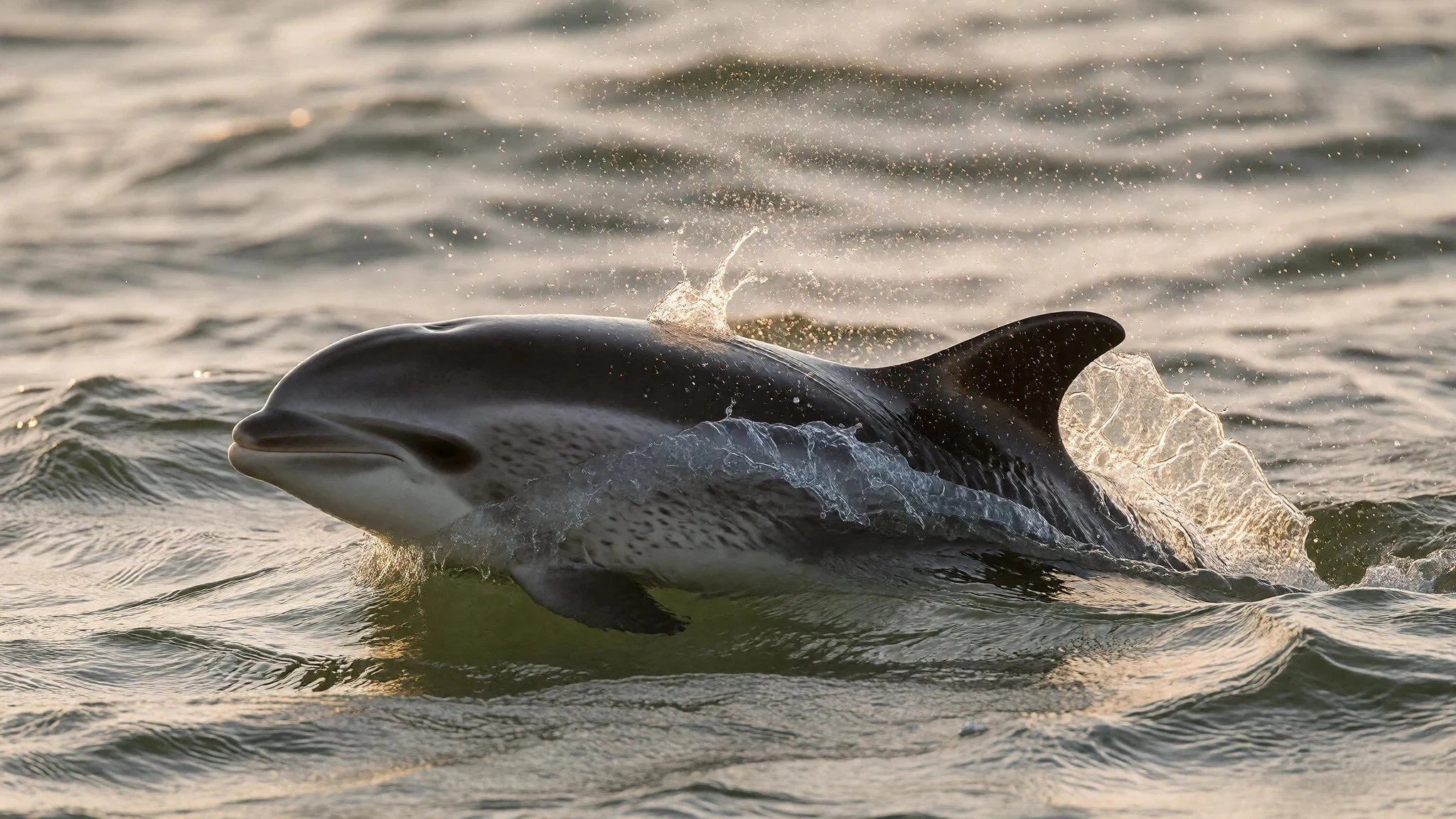
The soil is poor for farming, and the island's wildlife is fragile, so nearly everyone makes a living from visitors. Villages are small and low, with many thatched roofs, and the settlements are strung along the island rather than gathered in one centre. Wittdün is the ferry port. Grey seals and harbour porpoises live offshore, and birds use the island as a refuge.
It is a place for walking, cycling and long hours by the sea rather than for nightlife. Summer brings the crowds, and the ferry crossing shapes everything: what arrives, when people leave, and how busy the beach feels. Out of season the island is very quiet, and some places close.
Its story
Amrum's human story begins long before the Frisians. Dolmens survive from the Neolithic, when the area was still joined to the Jutland mainland, and there are burial mounds from the Bronze and Iron Ages. Remains of an Iron Age hamlet have turned up in the dunes. Whether the Ambrones, a tribe that threatened Rome around 100 BC, came from here is simply unknown.
Frisian settlers colonised the island in the early Middle Ages. The earliest written mention is in a Danish land register of 1231. For centuries people lived by salt making, farming, fishing, whaling and merchant shipping. The island belonged to the Uthlande, the Outer Lands of North Frisia, and later Amrum and western Föhr became a Danish enclave, separate from the Duchy of Schleswig around them.
The best-known islander is Hark Olufs, a sailor from Süddorf. Seized and enslaved in Algeria in 1724, he rose to the rank of general in his captors' service before he was allowed home, and he returned to Amrum in the 1730s. His tale shows how far the island's seafarers travelled.
In the late nineteenth century, sea bathing and holidays started to replace the old trades. That change reshaped the economy and still defines it. Today the Öömrang dialect is spoken by part of the population, and Frisian customs are kept up deliberately, as something worth holding on to rather than as a show for visitors.
What to see
- Amrum lighthouse — near Nebel
The lighthouse dates from 1875 and can be seen from a long way off across the flat island. Visitors can climb its many steps to a wide view over dunes, the Wadden Sea and neighbouring islands. Go on a clear day, and check the official site for opening times.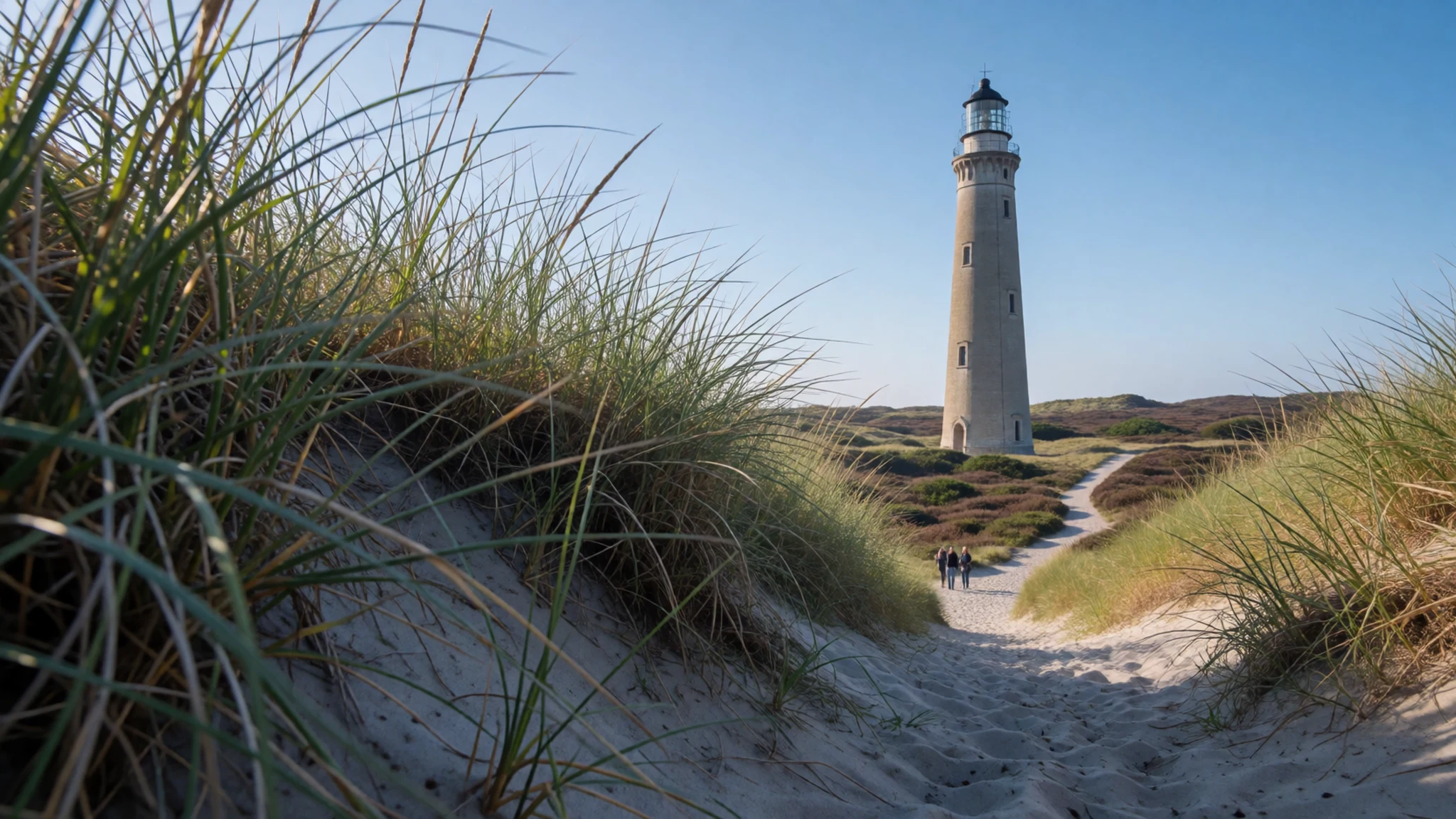
- Kniepsand beach — west coast
This enormous sand beach runs along the west coast and is wide enough that even in high summer people spread out. The water is the open North Sea, so it is cool and the tide matters. Walk far from the access points for the emptiest stretches.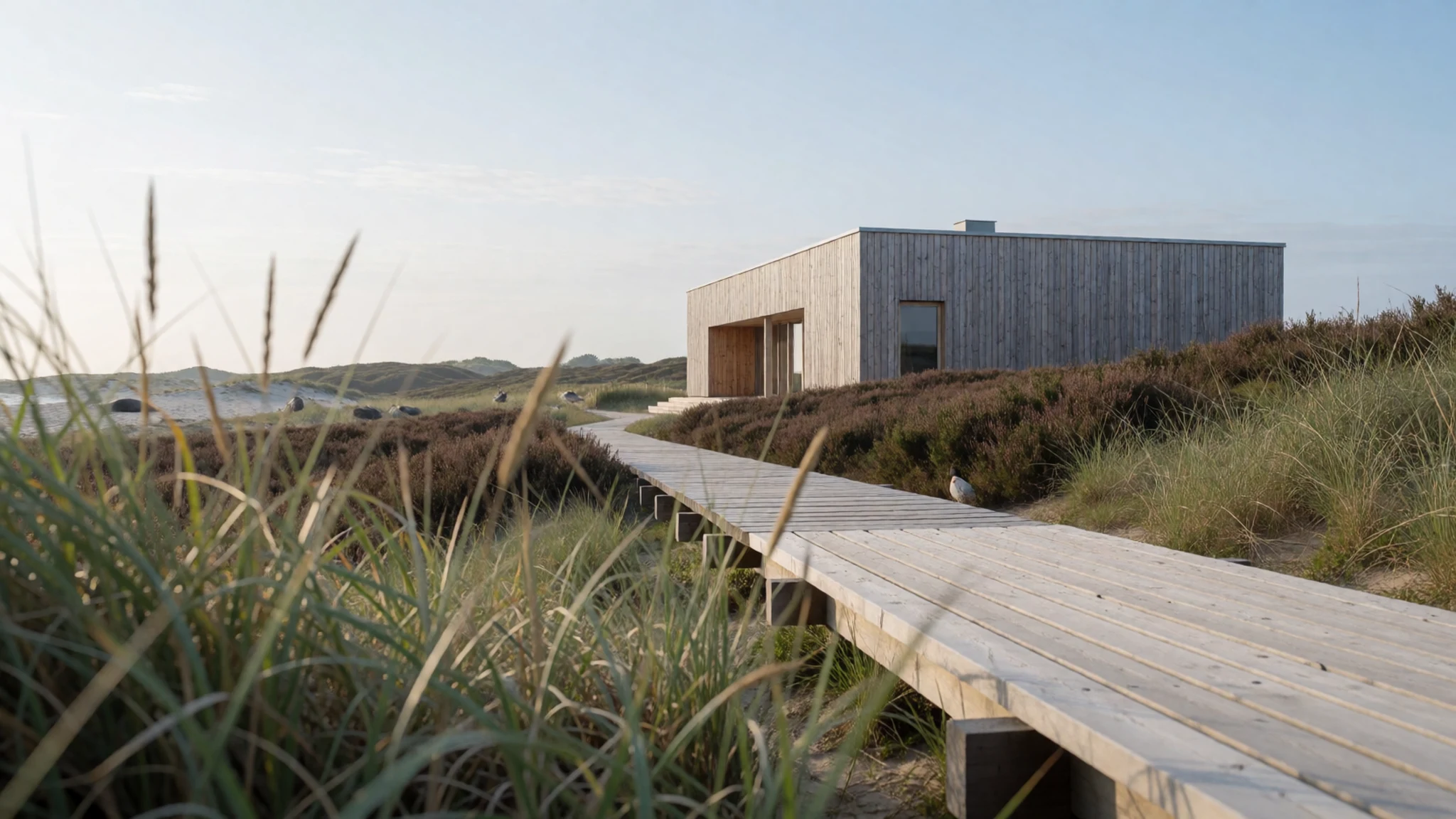
- Öömrang Hüs — Nebel
A traditional Frisian house kept as a museum, furnished and decorated as islanders once lived. It gives a feel for sea captains' homes, small rooms and the domestic side of an island that lived by seafaring. Check the official site for opening times.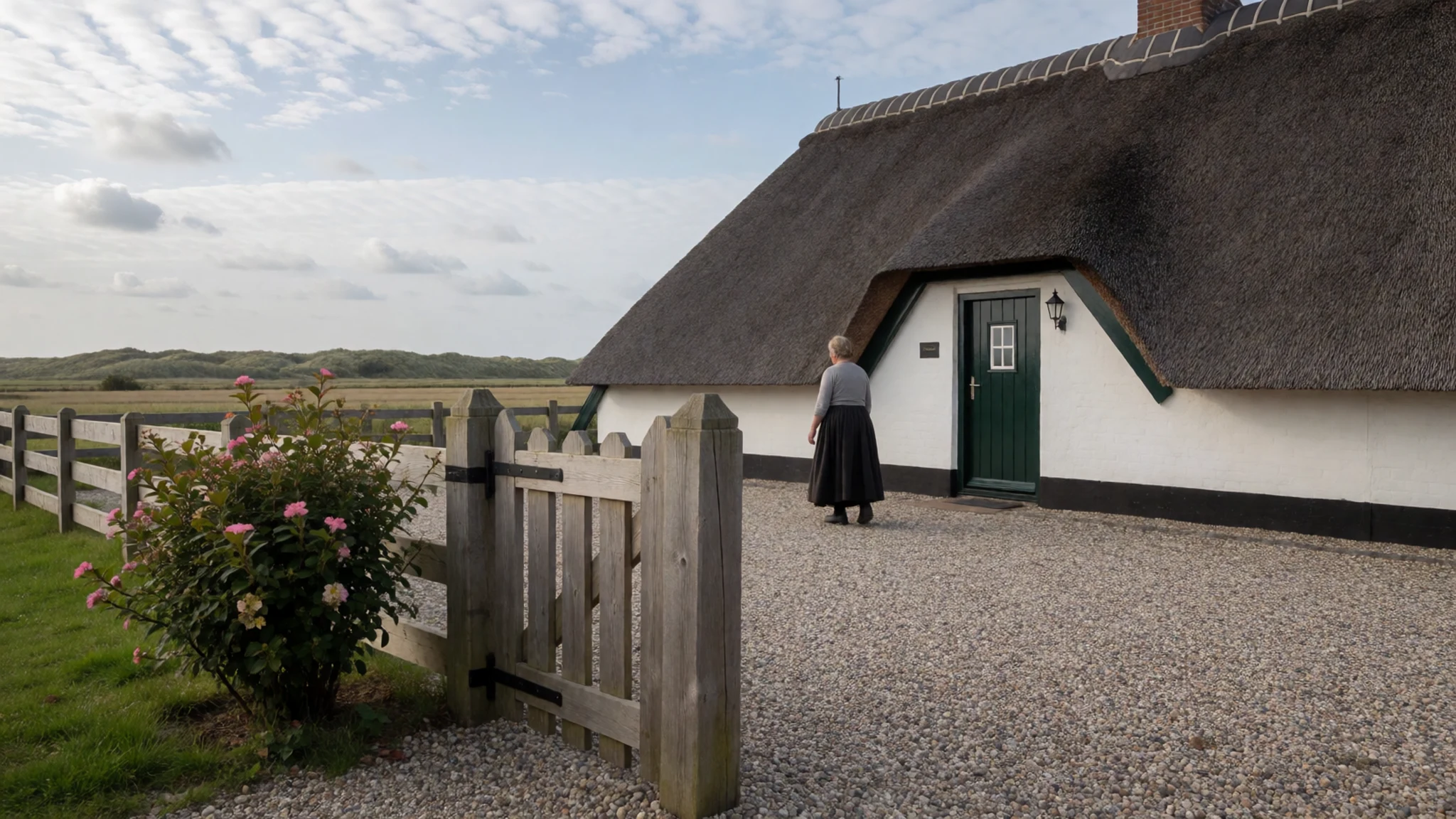
- Saint Clemens Church — Nebel area
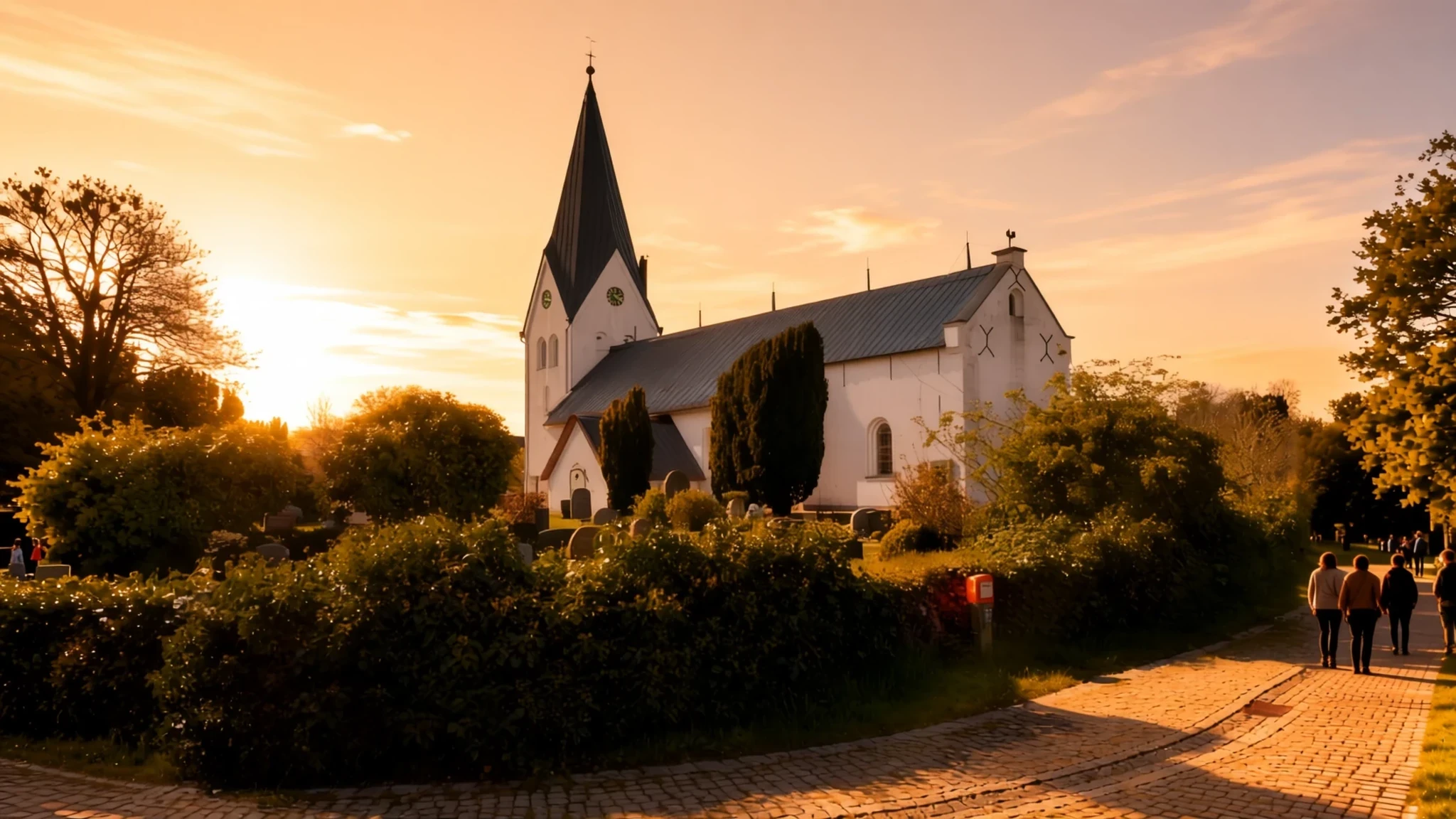
Built in the 1240s and named after the patron saint of sailors, this church wears the traditional reed thatch. Its graveyard tells the story of seafaring families. It is a calm, small-scale stop that suits a cycle ride between villages.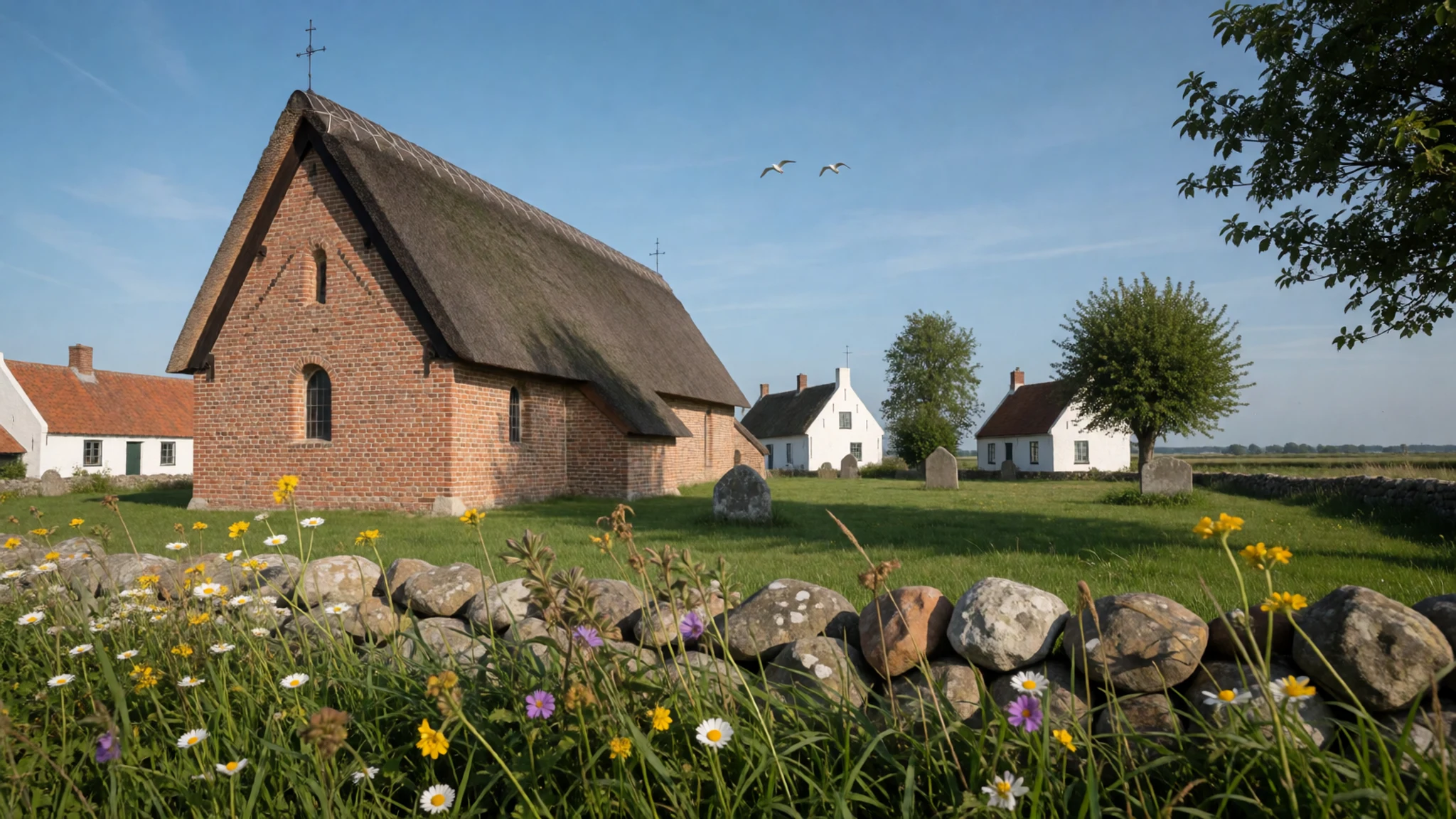
- Amrum windmill — near Nebel
The historic windmill near Nebel is a landmark of the island and a good reminder of the older working landscape. It is easy to reach by bike and photographs well against open sky.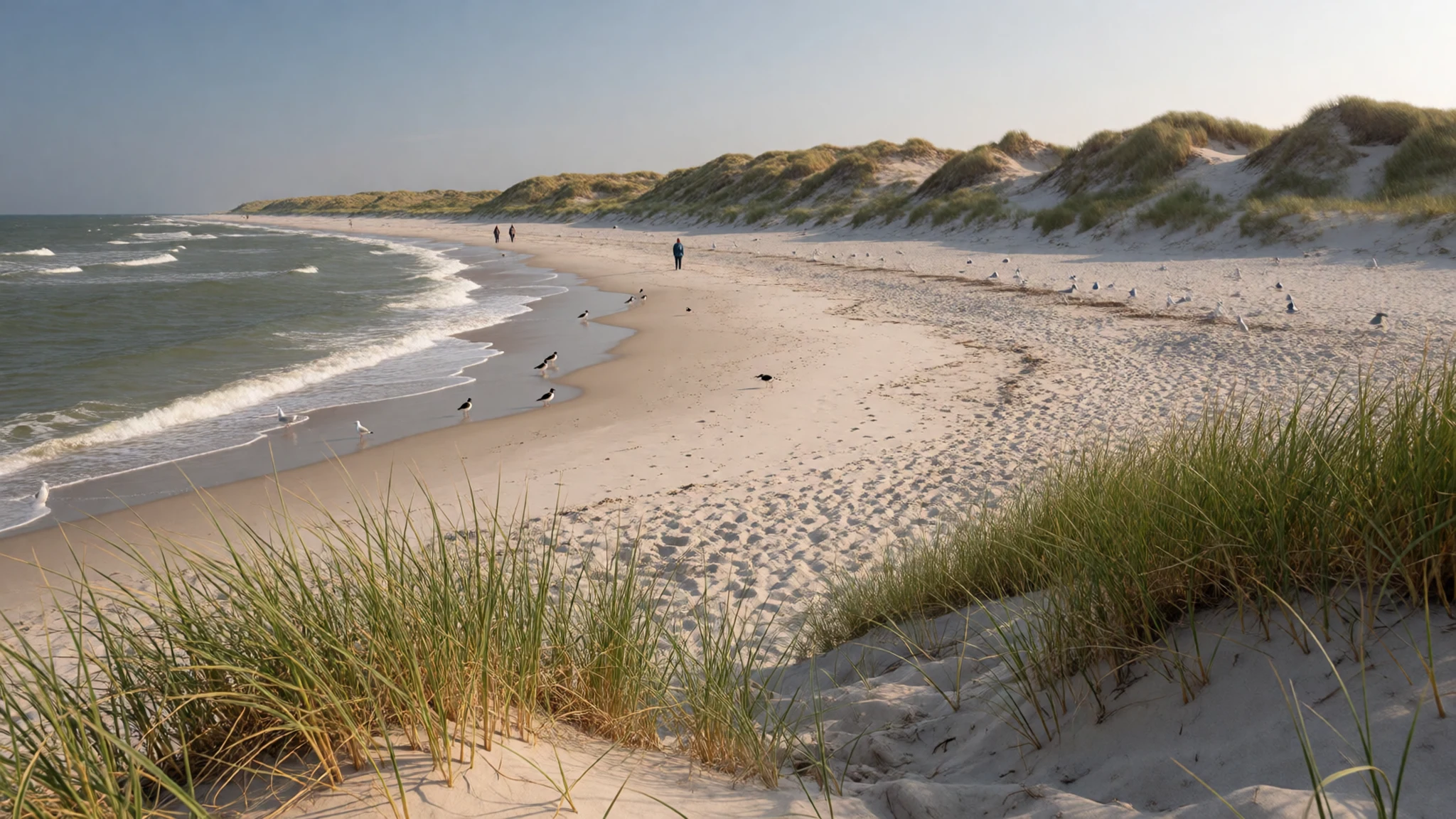
- Naturzentrum Norddorf — Norddorf
A nature centre in the north of the island, useful for learning about dunes, birds, seals and the tidal flats before heading out. Guided walks across the Wadden Sea are best taken with a local guide who knows the tides.
Culture
Amrum's culture is Frisian first and German second, and islanders care about that. Part of the population still speaks Öömrang, a dialect of North Frisian, and you may see place names and greetings in it. Frisian traditions are kept going through costume, song and local gatherings, though in a low-key way rather than as staged performance.
The island's identity was formed by the sea. Men sailed on merchant ships and whalers, and women ran households and land while they were away. The captains' houses, the thatched roofs and the sailors' patron saint at the church all come from that history. The story of Hark Olufs, who was enslaved in Algeria and returned in the 1730s, is told as part of the island's memory.
Today life is organised around tourism and the ferry. Villages are small, quiet in the evenings, and people know each other. The Wadden Sea, a protected tidal landscape, gives a strong sense of responsibility for nature, and the island is a refuge for birds and seals.
There is also a calm, unhurried social rhythm. Shops and eateries keep their own hours, which change with the season, and bicycles are the usual way to get around. Visitors who slow down and greet people tend to be met with warmth.
Keep a respectful distance from resting seals and nesting birds, stay on marked paths through the dunes, and do not pick or trample the protected plants.
What to wear
Amrum's traditional dress belongs to the wider North Frisian costume tradition: dark wool and linen garments, white linen collars and caps, and silver brooches and buttons. These outfits are mostly worn now for festivals, folk events and special family occasions, not on ordinary days.
Everyday island clothing is practical and unfussy. Locals wear windproof jackets, wool jumpers, sturdy shoes and rubber boots in wet weather, with layers that can be added or taken off as the wind changes. Bright seaside holiday clothes are common in summer, but style on the island runs to the casual and functional.
Visitors should dress for wind and changeable weather even in summer. A windproof, showerproof jacket matters more than anything else, with a jumper or fleece underneath. Bring swimwear and a towel for the beach, but expect the North Sea to be cool and the breeze to feel cooler than the air temperature suggests. Sun protection is needed on the open sand.
Footwear should suit sand and boardwalk: trainers or light walking shoes for cycling and dunes, and sandals or bare feet on the beach. If walking on the tidal flats, wear shoes you do not mind getting muddy. Nothing special is required at the church beyond ordinary modest dress, such as covering swimwear. Nude bathing is permitted in designated areas of some German beaches, so look for local signs.
What to eat
- Fresh North Sea fish — fish stalls and eateries near the harbour and in villages
Plaice, herring and other North Sea fish are the island's staples, served grilled, fried or in a bread roll. Fish eateries in the villages and the harbour area are the best places to look.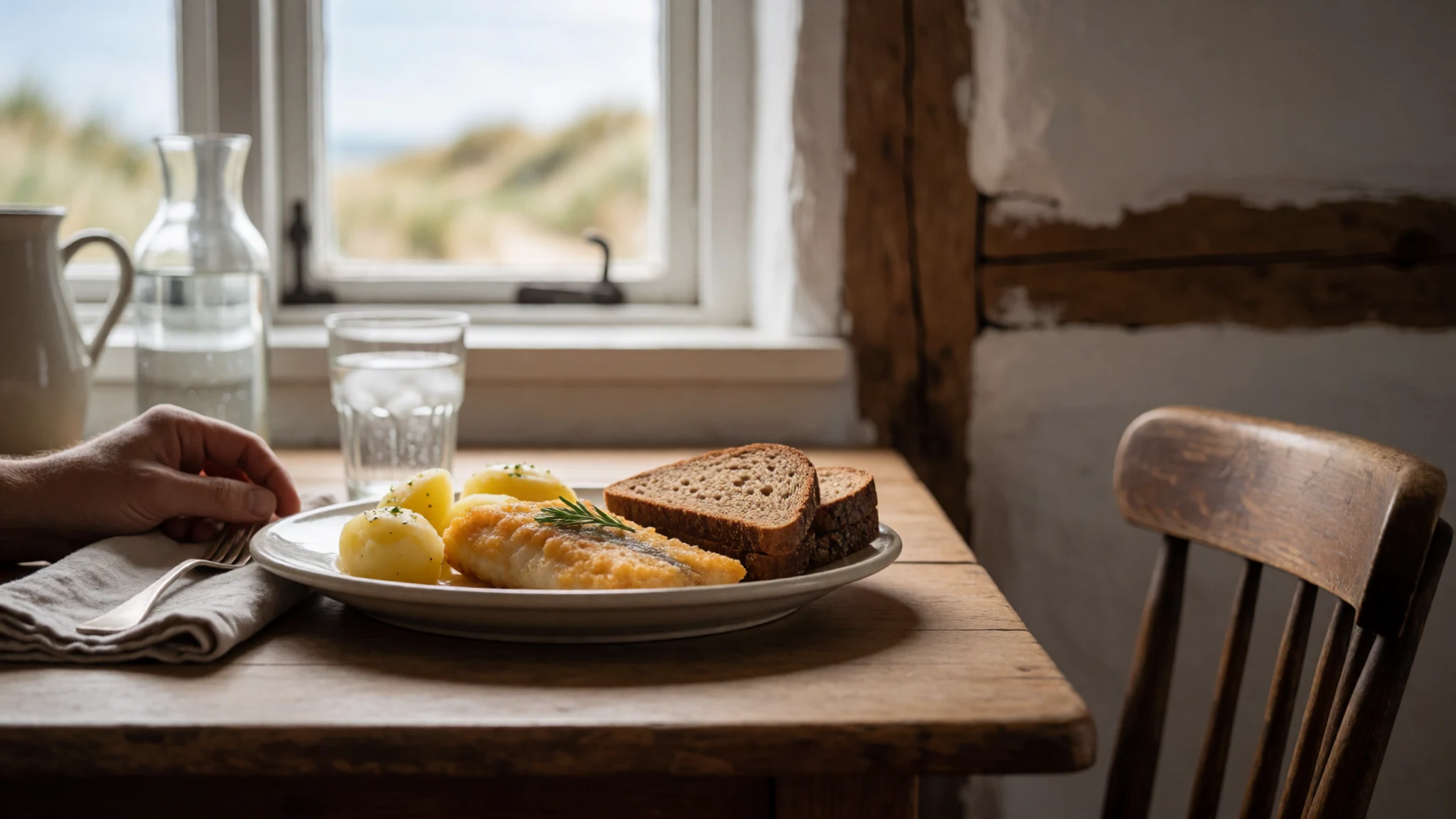
- Fischbrötchen — fish shops and kiosks
A bread roll filled with pickled herring, smoked fish or prawns, with onion and sauce. It is a cheap, quick lunch to eat by the sea and is sold from small fish shops and kiosks.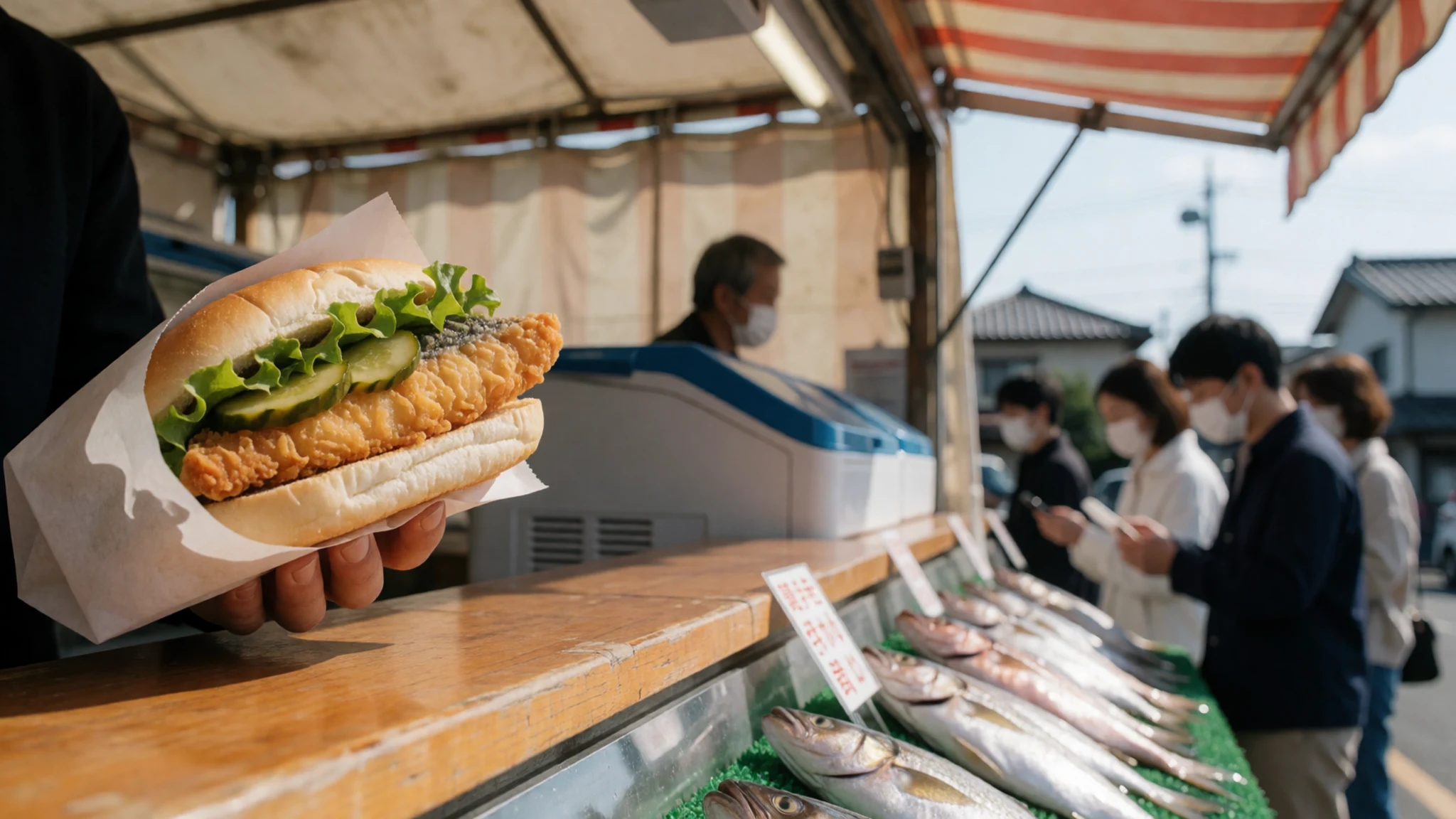
- North Sea shrimp — fishmongers and village eateries
Small brown shrimps from the coast, served on bread, in salads or with potatoes. Their flavour is sweet and delicate, and they are best bought freshly peeled from a fishmonger. - Lamb from the salt marshes — traditional island restaurants
Sheep graze the coastal grasses of the North Frisian coast, giving a lamb with a distinctive savoury taste. Look for it on menus in traditional island restaurants. - Frisian tea and cake — village cafés and tea rooms
Tea is drunk strong and with cream and rock sugar in this part of Germany, usually with a slice of cake in the afternoon. Cafés in the villages keep the habit going.
Plan it
Best time. May to September, when the days are longest and the sea is at its mildest, though July and August are the busiest. Spring and autumn are quieter and cooler, and winter is windy, with fewer ferries and some places shut.
How long. 2–4
Getting there. From Hamburg, take a regional or InterCity train towards Westerland and change at Niebüll for the small local line to Dagebüll, or drive via the Autobahn and rural roads to Dagebüll. From Dagebüll, WDR ferries carry foot passengers, bikes and cars to Wittdün on Amrum; some sailings go direct and others call at Föhr first. Check the ferry operator's site for the current timetable and fares, and book vehicle space early in summer.
Budget. mid
Tips
- Check ferry times in advance, as there are fewer sailings out of season
- Book accommodation early for July and August
- Hire a bicycle, as it is the easiest way to get between villages
- Carry a windproof layer even on sunny days
- Check tide tables before walking on the Wadden Sea flats, and go with a guide
Etiquette
- Stay on marked paths in the dunes to protect plants and nesting birds
- Keep your distance from seals and do not disturb them
- Greet people in shops and on paths, as is usual in small communities
Nearby
Sources
- Wikidata Q3136 (CC0)
- Wikipedia: Amrum (rev 1363880656) (CC BY-SA 4.0)
- Wikivoyage: Amrum (rev 5424099) (CC BY-SA 4.0)
- Photo: Luftbilder von der Nordseeküste 2012-05: Amrum, Ra Boe (CC BY-SA 3.0 de)
- Photo: Beach, Amrum, Steven Mattern (CC BY 3.0)
- Photo: Amrum lighthouse, Stefan Ellinger (CC BY 3.0)
- Photo: Amrum windmill, Frank Schulenburg (CC BY-SA 4.0)
- Photo: Drosera rotundifolia, Migas (CC BY 3.0)
- Photo: Wildkaninchen auf Amrum, Noqqe (CC0 1.0)
- Photo: Einsamkeit, Friedrich Haag (CC BY-SA 4.0)
- Photo: Fährschiff Nordfriesland, W. Bulach (CC BY-SA 4.0)


Wildlife
- Grey seal (animal)
The grey seal is a big, earless seal with such a large head that some people call it the horsehead seal. It lives on both sides of the North Atlantic, and Amrum is one of its havens, so a lucky visitor may spot one. A local guide can tell you where and when to look. Keep a good distance, stay quiet and still, and never feed it.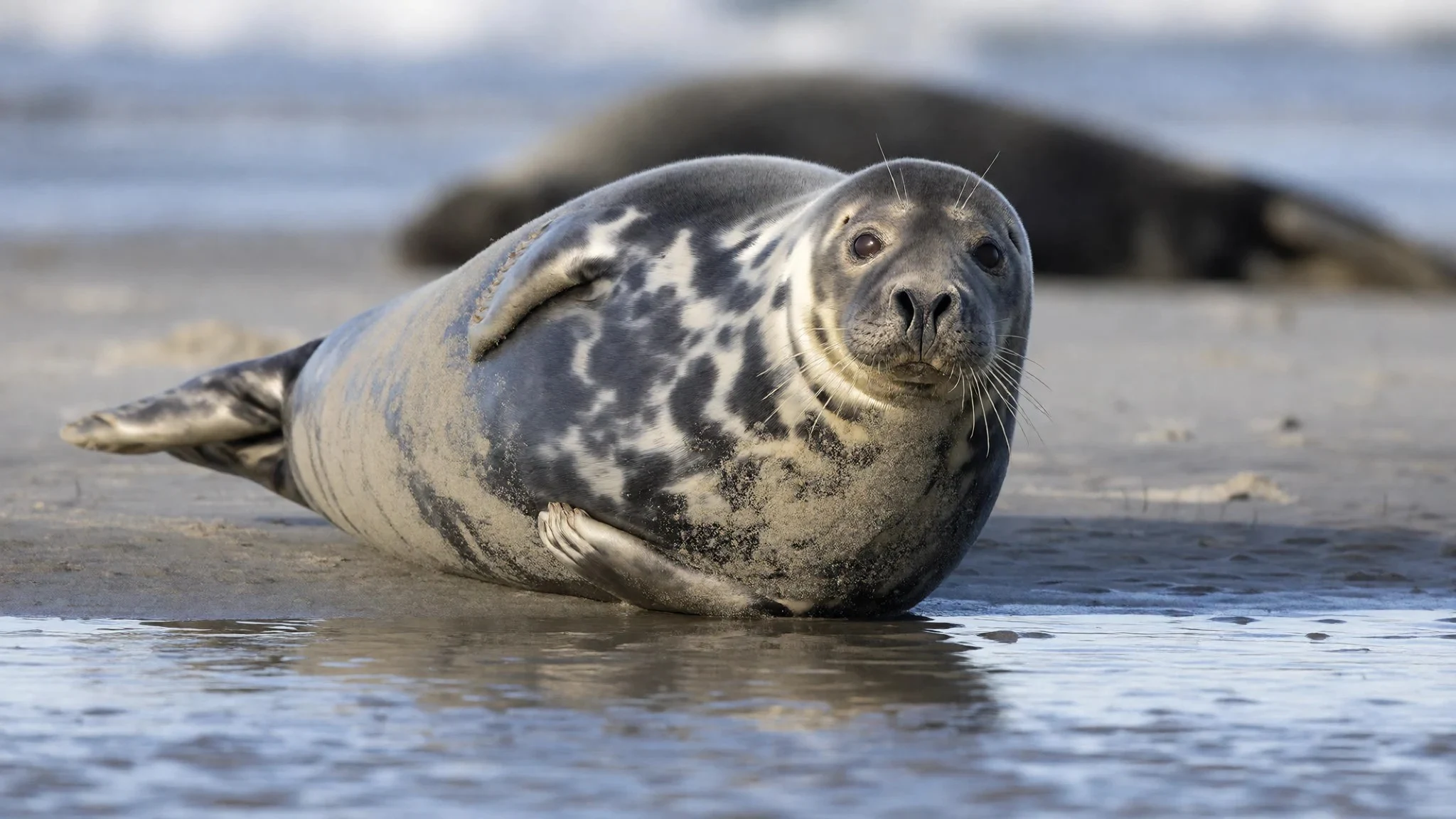
- Harbour porpoise (animal)
The harbour porpoise is one of the smallest members of the whale family, a little sea mammal that likes to stay close to the coast. Amrum offers it a safe refuge, so it is a hopeful sighting for visitors. A local guide can tell you where and when to look. Watch from a respectful distance, keep your voices low, and never feed it.