Danevirke
Danevirke, Germany
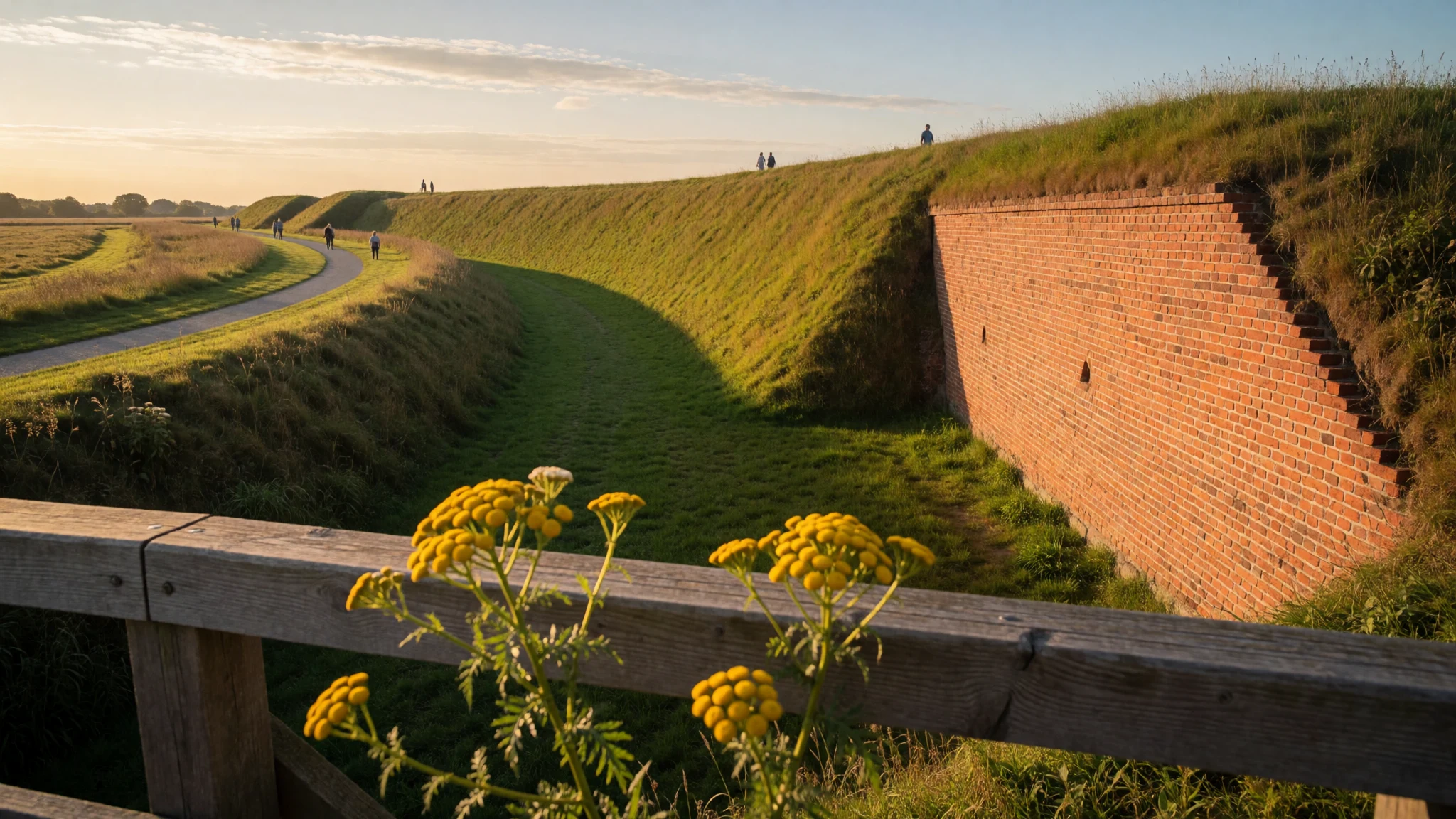
Danevirke offers a fascinating walk along ancient Danish linear earthworks cutting across the narrowest neck of northern Germany.
The place
Danevirke stretches across the narrow lowlands of Schleswig-Holstein, forming a remarkable network of historic defensive ramparts, ditches, and barriers. Located near the town of Schleswig, this expansive earthen monument spans the narrowest point of the Cimbrian peninsula, connecting coastal inlets with western marshlands. The surrounding landscape is strikingly flat, shaped by open pasture, quiet meadows, and shallow river valleys that once made this corridor the crucial land route into northern Europe.
The main wall of Danevirke once linked the eastern Baltic inlets near Hedeby directly toward the marshy western terrain, creating a formidable barrier against southern approach. Walking along the grassy embankments today, visitors encounter preserved earthen mounds, reconstructed gate structures, and peaceful trails following the line of ancient ramparts. The region feels distinctly tranquil, where breezes off the Baltic sweep over green ridges that now blend seamlessly into the rural German countryside.
Although situated in northern Germany, Danevirke retains strong cultural and historical ties to Denmark. The nearby historical town of Schleswig and surrounding villages harbour a unique borderlands heritage, reflected in bilingual signage, local museums, and shared maritime traditions. Visiting the earthworks provides a quiet, introspective journey through a rural landscape where centuries of northern history are written directly into the soil.
Its story
Danevirke was constructed as a vital shield for early Danish kingdoms, guarding the southern border of the peninsula from southern powers. Archaeological evidence shows that initial earthworks began around the seventh century, long before formal royal decrees recorded its expansion. Over subsequent centuries, Scandinavian rulers reinforced the ramparts with timber palisades, stone masonry, and deep defensive trenches to secure trade routes passing through Hedeby and protect farmsteads from outward invasion.
During the ninth century, King Gudfred expanded Danevirke to counter the northern push of the Frankish empire. As maritime trade flourished along the Baltic, controlling this narrow land passage became central to the security and economic strength of the Danish realm. The wall underwent multiple upgrades through the Viking Age and High Middle Ages, serving as a symbolic and physical boundary between Nordic culture and continental European states.
The military relevance of Danevirke endured for over a millennium, culminating in its final operational deployment during the Second War of Schleswig in 1864. Following that conflict, political boundaries shifted, placing the territory within Prussia and ultimately modern Germany. Today, the ancient ramparts stand preserved within a UNESCO World Heritage landscape, celebrating shared Danish and German heritage while testifying to the strategic ingenuity of early medieval engineers.
What to see
- Hovedvolden Main Wall — Dannewerk village
The central line of Danevirke features impressive earthen embankments covered in grass, where visitors can trace the historic fortifications on foot. Reconstructed sections reveal timber palisades and brick masonry phases built over centuries. A nearby museum displays archaeological finds from the earthworks, offering context on how early defenders fortified this crucial corridor. - Stegsvig Barrier — Stegsvig / Schlei inlet
Located along the eastern approaches near the Schlei inlet, the Stegsvig Barrier once blocked naval access to prevent coastal incursions. Reconstruction work demonstrates the underwater timber stakes and shore defences used by medieval engineers. Exploring this scenic waterside area highlights how natural marine features were integrated into the broader fortification scheme. - Old Town of Lübeck — Lübeck
Situated to the south-east in Schleswig-Holstein, Lübeck is renowned for its brick Gothic architecture, historic gateways, and medieval merchant heritage. A walk through its cobblestone alleys reveals grand guildhalls, soaring church spires, and historic courtyards that illustrate the maritime wealth of the Hanseatic League during the late Middle Ages. - Kiel Canal Corridor — Schleswig-Holstein
Stretching across the province between the North Sea and Baltic Sea, the Kiel Canal is one of the world's busiest artificial waterways. Observation points along the banks allow travellers to watch large cargo vessels and sailing ships navigate the flat countryside, contrasting modern maritime transit with the ancient trade passages guarded by Danevirke. - Dithmarschen Coast — Dithmarschen district
Positioned along the western edge of the region, the coastal expanses of Dithmarschen offer wide tidal mudflats, sea dykes, and fresh sea air. Traditional harbours provide excellent opportunities to sample fresh North Sea seafood while observing the dramatic ebb and flow of northern tides across the flat shoreline.
Culture
Danevirke stands at a unique cultural crossroads where Danish and German traditions meet across a peaceful borderland. Centuries of shared history have created a region defined by dual heritage, visible in bilingual road signs, local festivals, and the quiet resilience of regional communities. Residents take deep pride in maintaining both German and Danish minority institutions, schools, and cultural centers throughout Southern Schleswig, fostering an atmosphere of mutual respect and cooperation.
Daily life in this northern countryside moves at a relaxed rhythm. Traditional brick farmhouses, well-kept gardens, and village bakeries reflect a warm, unpretentious hospitality that values quiet conversations over bustle. Maritime heritage runs deep, influencing local folklore, coastal crafts, and seasonal gatherings that celebrate maritime harvests and summer solstice traditions. Communities along the earthworks remain committed to preserving the quiet rural landscape and archaeological heritage for future generations.
When visiting the historic earthworks and protected nature reserves, always stay strictly on designated walking paths to prevent soil erosion and protect fragile archaeological remains.
What to wear
Danevirke belongs to a region where traditional clothing was shaped by the windy, coastal environment of northern Germany and Southern Schleswig. Historical regional dress, known locally as Tracht, featured heavy woollen skirts, linen shirts, embroidered waistcoats, and dark felt hats designed to withstand harsh maritime breezes. Women often wore decorative lace caps and silver filigree brooches during Sunday church services and seasonal harvest festivals, highlighting regional textile craftsmanship and wool-weaving techniques.
Today, local residents dress in practical, understated modern attire suitable for variable northern European weather. High-quality waterproof jackets, sturdy denim, layered knitwear, and comfortable casual footwear are standard for daily life in rural towns and coastal villages. Neat, functional clothing is preferred, reflecting a down-to-earth aesthetic that prioritises comfort and weather protection over flamboyant trends.
For visitors exploring the earthworks, preparing for sudden weather changes and gusty winds is essential. Sturdy waterproof walking boots or well-cushioned trainers are recommended for traversing grassy embankments and gravel paths safely. Pack a breathable windproof jacket, lightweight thermal layers, and a warm hat, even during shoulder seasons, as weather across the flat Schleswig peninsula can shift rapidly from sunshine to brisk rain showers.
What to eat
- North Sea Shrimp (Büsumer Krabben) — Harbour stalls in coastal towns
Tiny, sweet brown shrimp are harvested along the nearby coast and served unpeeled by the litre. Locals enjoy peeling them by hand and piling them high on buttered dark rye bread, topped with a fried egg at harbour fish stalls across coastal towns. - Korn Grain Spirit — Rural taverns and regional eateries
This traditional clear grain liquor is a favourite digestif throughout northern Germany. Distilled from rye or wheat, it offers a smooth, crisp flavour and is typically served chilled in small glasses at rural taverns and traditional regional eateries after a hearty dinner. - Frisian Tea — Coastal tearooms and village bakeries
A comforting dark tea blend served over rock sugar with a swirl of fresh cream. Popular in coastal tearooms across the region, this warming beverage is enjoyed slowly alongside plum cakes or fresh pastries during afternoon tea breaks. - Fresh Smoked Fish Sandwich (Fischbrötchen) — Harbour kiosks and market stalls
Crispy bread rolls stuffed with freshly smoked herring, mackerel, or trout, accompanied by crisp onions and pickles. These satisfying sandwiches are widely sold at open-air harbour kiosks and village market stalls along the Baltic and North Sea coastlines.
Plan it
Best time. May to September for pleasant walking weather and longer daylight hours; July and August bring warm temperatures, while spring and autumn offer quiet trails.
How long. 2–3
Getting there. Fly into Hamburg Airport (HAM), then take a regional train to Schleswig station (about 1.5 to 2 hours); from Schleswig, local buses or taxi services reach the Danevirke Museum.
Budget. mid
Tips
- Book accommodations early if visiting during peak summer holiday periods
- Carry cash for small country cafés, rural farm shops, and local transport
- Check official opening hours for the Danevirke Museum before travelling
- Rent a bicycle to explore the full extent of the linear ramparts comfortably
Etiquette
- Keep to marked paths to protect the delicate earthen structures from erosion
- Greet shopkeepers and locals with a friendly 'Moin' in northern Germany
- Take all rubbish with you when walking along rural embankment trails
Nearby
Sources
- Wikidata Q689454 (CC0)
- Wikipedia (rev 1377090516) (CC BY-SA 4.0)
- Wikivoyage (rev 5339744) (CC BY-SA 4.0)
- Photo photos/01-danewerk.jpg (CC BY-SA 2.0 de)
- Photo photos/02-map-danavirki.jpg (Public domain)
- Photo photos/03-karte-danewerk.jpg (CC BY 3.0)
- Photo photos/04-stegsvig-slisp-rring-2.jpg (CC0 1.0)
- Photo photos/05-stervold5.jpg (CC BY 3.0)
- Photo photos/06-dannevirke-english.png (CC BY 3.0)
- Photo photos/07-thyre-dannebod-grundl-gger-dannevirke-kunstblad-1855-af-lore.jpg (Public domain)
- Photo photos/08-dannevirkes-hovedvold-margretevold.jpg (CC0 1.0)


