Corvey Abbey
Corvey Abbey, Germany
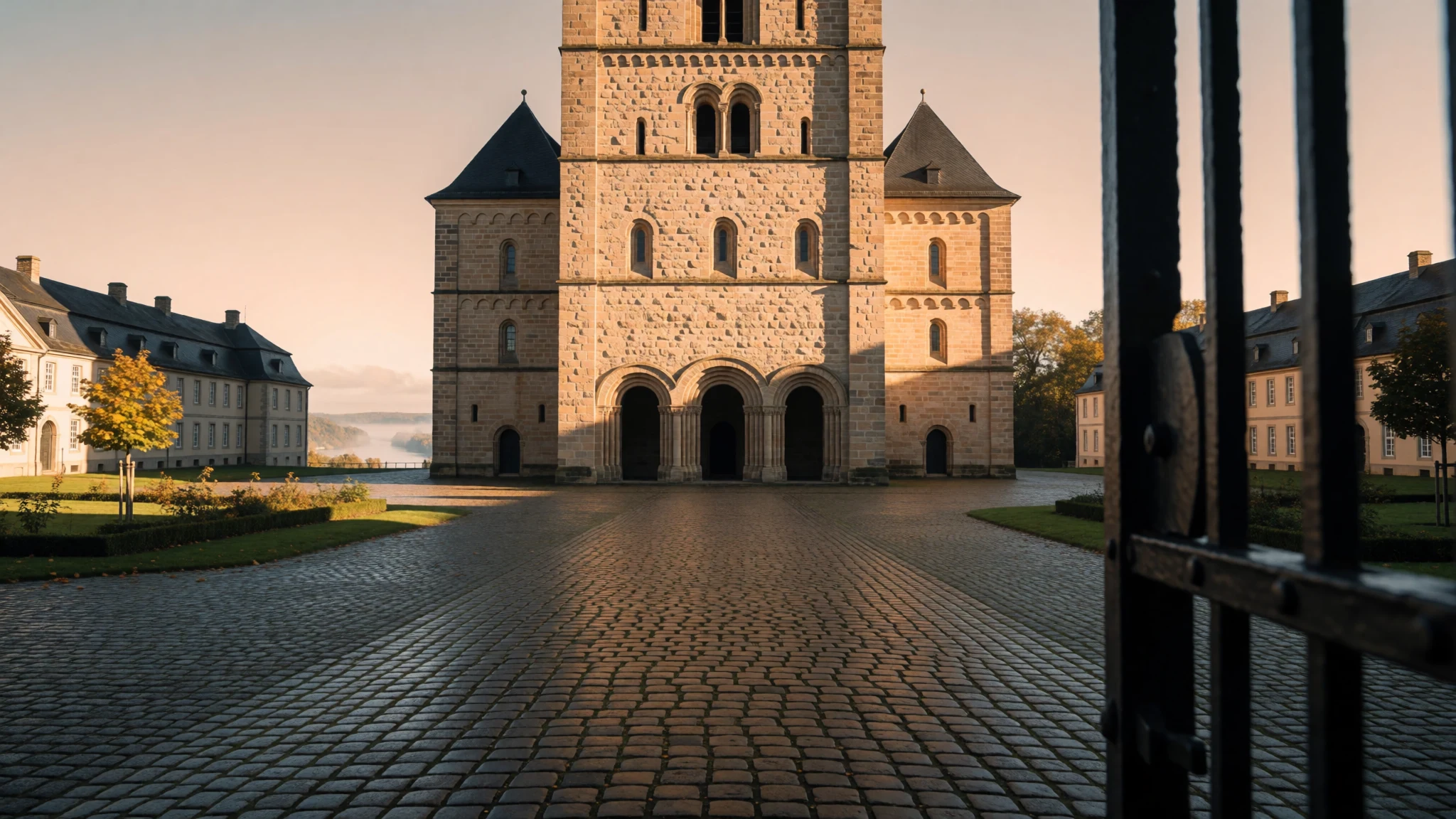
Corvey Abbey, beside the Weser in Westphalia, keeps a Carolingian westwork that shaped later church building, in a quiet river valley with few crowds.
The place
Corvey Abbey sits beside the River Weser, a short distance from the town of Höxter in North Rhine-Westphalia, Germany. The foundation date is usually given as about 801, although the monks only settled on the present site in 822. For centuries the abbey ruled its own territory as a princely abbey within the Holy Roman Empire. Today the site is a calm estate of long ranges, courtyards and lawns, with a Baroque character laid over much older stonework. The reason it matters is the westwork, the tall, blocky entrance front of the abbey church, which dates from the Carolingian age and survives largely intact. Inside, galleries look down on a vaulted hall, a plan that later builders in the region borrowed and reworked into Romanesque and Gothic churches. The walls there carry paintings of classical mythology read with a Christian meaning, which is unusual for the period. The abbey church was inscribed as a UNESCO World Heritage Site in 2014. A visit feels unhurried. This is rural Westphalia, with farmland, wooded ridges and a river valley, not a city sight with queues round the block. Weekdays and winter are the quietest times, though old stone is properly cold in the colder months. Many visitors pair Corvey with Höxter's half-timbered streets and a walk along the river. Because the buildings are still a working estate, access varies by season and by events, so the official site, https://www.schloss-corvey.de/, is the place to check before setting out.
Its story
Corvey Abbey grew out of Charlemagne's long campaign to bring Saxony under Frankish rule and convert its people. Bishoprics came first. A monastery in Saxony was talked about in his reign, but his son Louis the Pious acted on it, announcing the new house at a synod in Paderborn. Monks from Corbie, in Picardy, arrived to found a daughter community at a first site that proved badly chosen. In 822 they moved to the present spot by the Weser and named it Nova Corbeia, New Corbie, which is where the name Corvey comes from. Adalard, a cousin of Charlemagne, was the first abbot. Ansgar, later remembered as the apostle of Scandinavia, started the abbey school, and the library grew from books brought from Corbie plus the output of the monks' own writing room. Corvey won the right to mint coins, the first place east of the Rhine to hold it. In 836 relics of Saint Vitus arrived from near Paris. He became patron saint of the Saxons, pilgrims followed, and gifts from donors made the abbey wealthy enough for ambitious building. Its abbot answered directly to the emperor in worldly matters. The westwork rose in the later ninth century and still stands. Corvey continued as a princely abbey until 1803, when it was secularised and absorbed into a newly created principality.
What to see
- The westwork — Abbey church, west front
The westwork is the reason to come: a tall, solid stone front with twin towers, built in the Carolingian period and altered little at its core. Stand back in the forecourt first to take in its mass, then go inside to see how it works as a gateway to the church.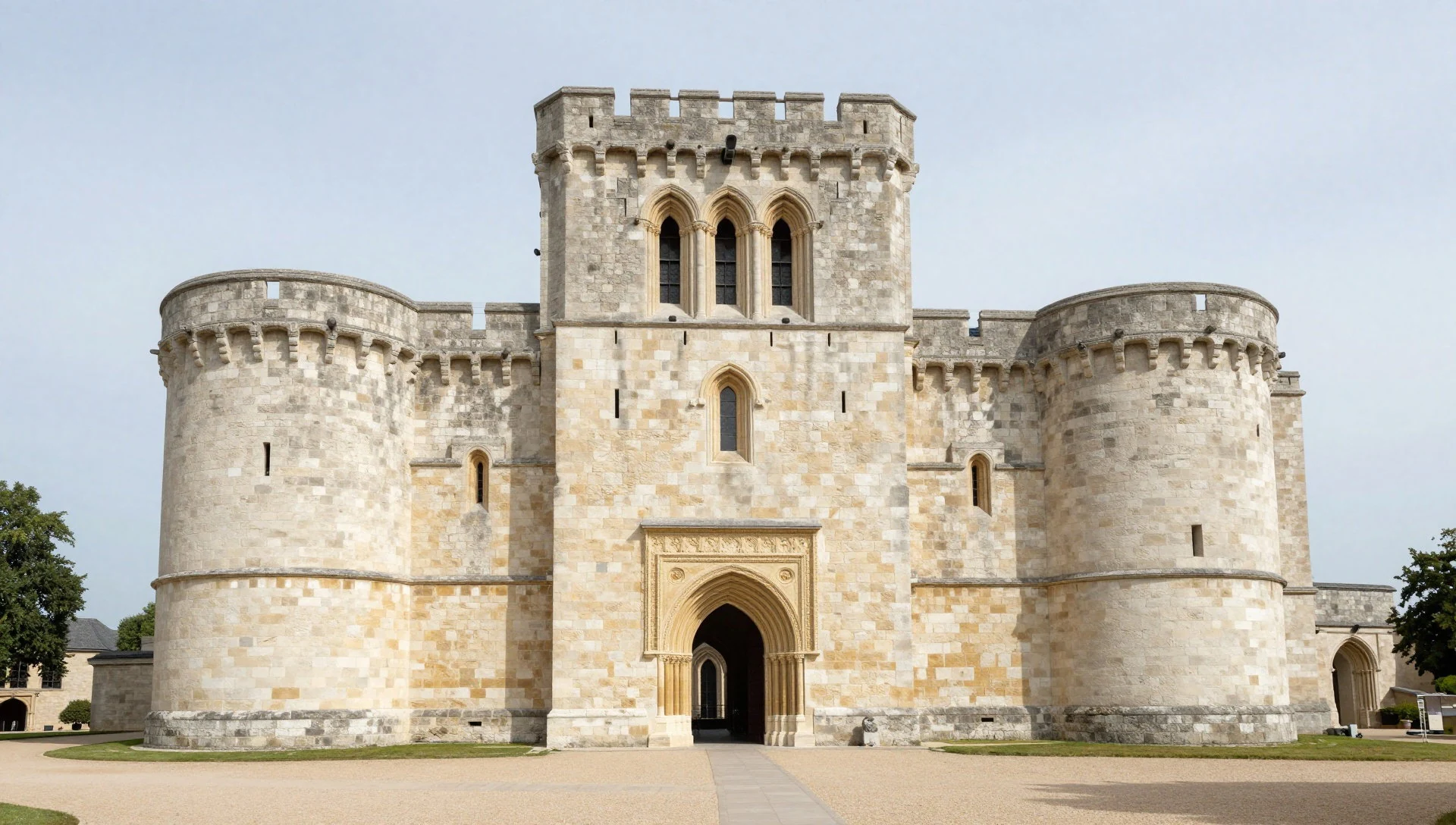
- The vaulted hall and wall paintings — Inside the westwork
Upstairs in the westwork, galleries encircle a vaulted central hall, a layout later churches echoed. On the walls are painted scenes from ancient mythology given a Christian reading. Light is low and the paint is fragile, so allow time for your eyes to adjust and read the signs.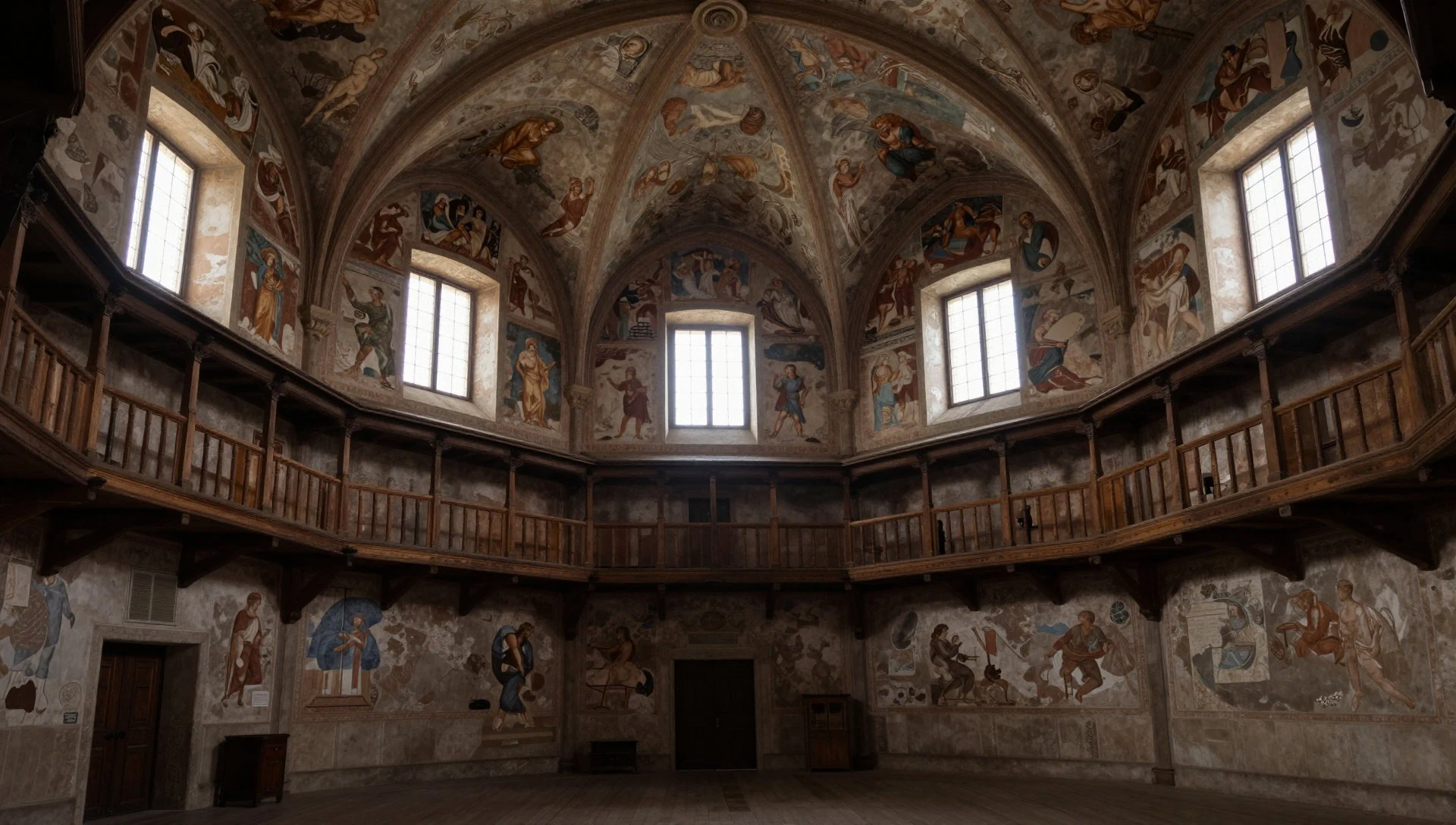
- The gatehouse approach — Western entrance of the estate
Arriving through the gatehouse gives the classic view: the westwork and the monastery ranges framed across an open space. It is the best spot to understand how church, cloister buildings and estate sit together, and a good place for photographs when the light is soft.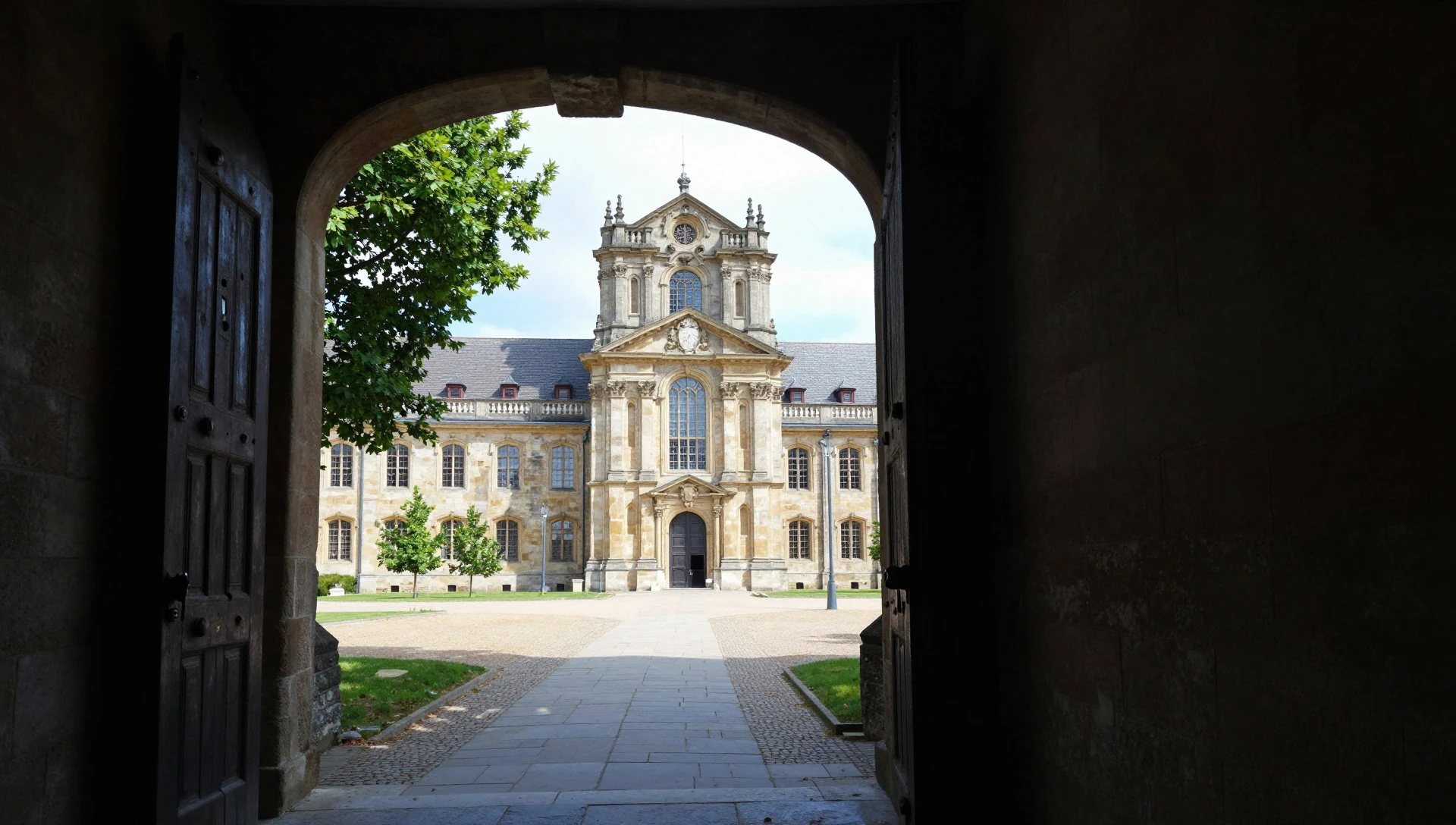
- The courtyard and monastery ranges — Monastery courtyard
The long ranges around the courtyard show the Baroque remodelling that gave the monastery its present, palace-like look. Walk the covered edges and the gardens, notice the plain stone below the later façades, and picture the community of monks and students who once filled these rooms.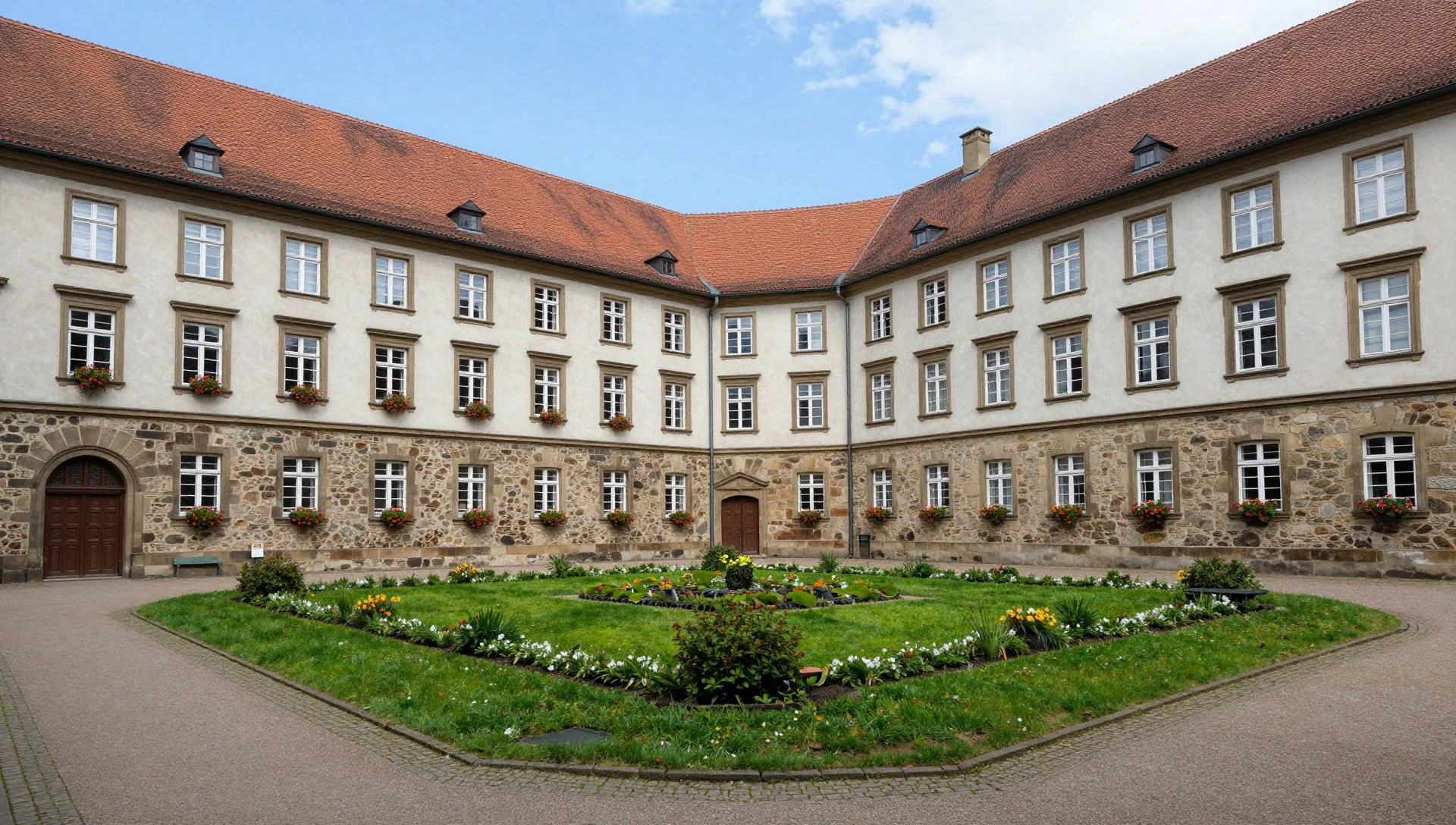
- Höxter and the Weser — Höxter old town
The town of Höxter, a short ride away, has timber-framed lanes, a market square and river paths. It makes a useful base for lunch and a stroll, and the Weser meadows give a sense of the landscape the monks chose. Cycling between town and abbey is easy.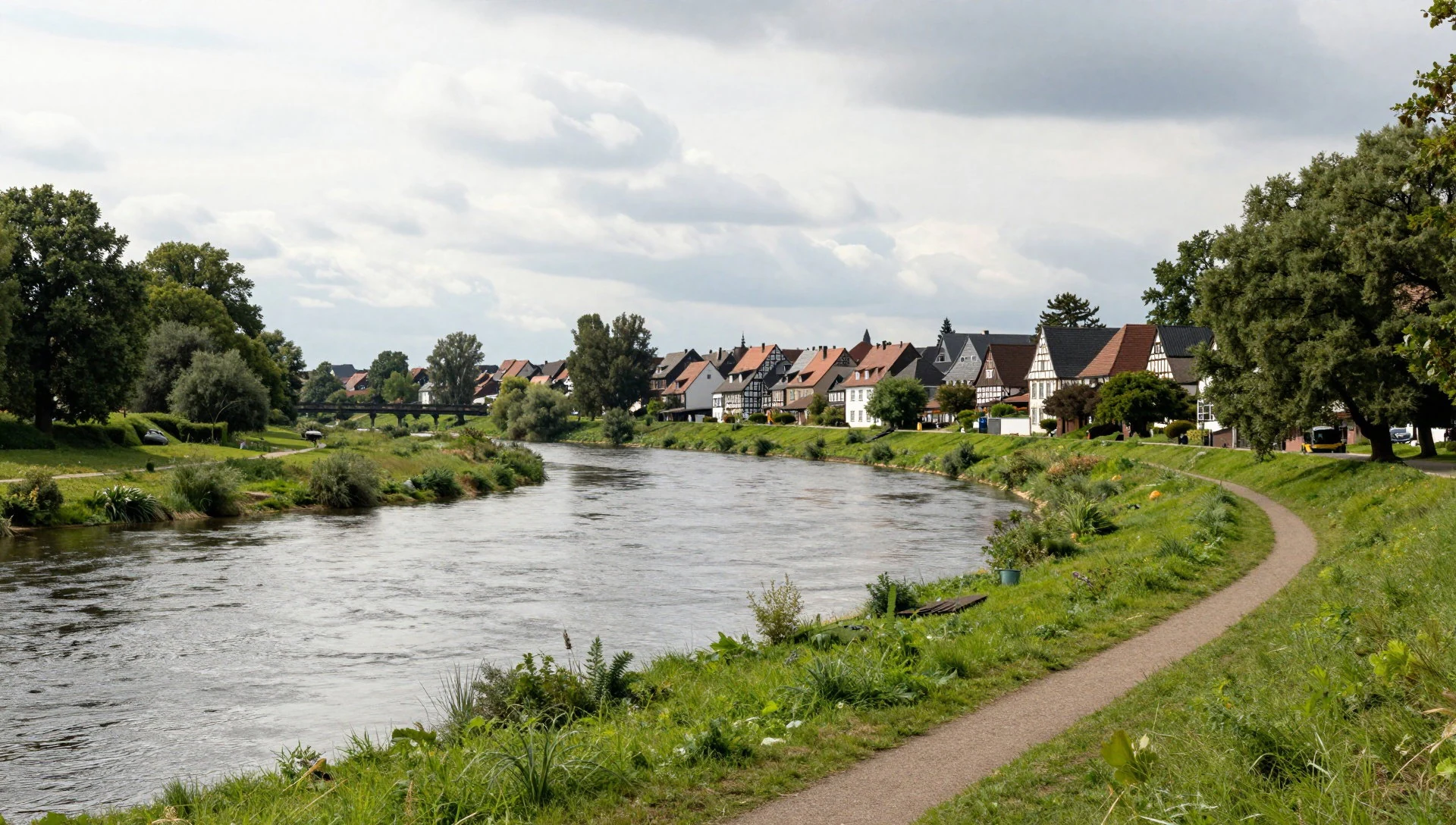
Culture
Corvey Abbey's culture is the story of Benedictine monastic life layered over a frontier region. The monks followed a rule of prayer, work and study, and the abbey became a centre of learning: the school, the library and the scriptorium made it a place where books were copied and ideas travelled between the Frankish heartland and Saxony. Pilgrimage was the other strand. After the relics of Saint Vitus arrived, devotion to him drew visitors from across the region, and gifts from pilgrims and nobles helped fund the building work still visible today. The paintings in the westwork show how early medieval Christians absorbed classical imagery rather than discarding it, a reminder that the Carolingian court prized Roman learning. Later centuries turned the monastery into a princely seat, and the Baroque rooms speak of that more worldly phase. Today the estate is a place for quiet visits, concerts and exhibitions rather than daily worship, but the buildings are still treated with the care owed to a protected heritage site. Local people know it as part of everyday Höxter life, a landmark for walks and school trips as well as for tourists. Take your time, read the information boards, and let the architecture do the talking. In the church and the westwork, keep your voice low, do not touch the painted walls, and follow any signs about photography and restricted areas.
What to wear
Corvey Abbey lies in a region of Westphalian rural tradition, where historic village dress, known as Tracht, was made from wool, linen and heavy cotton in dark, sober colours, often with embroidered trim, aprons and caps for women and waistcoats and tailored jackets for men. It survives mainly at local festivals, marksmen's fairs and heritage events rather than daily life, and details differ from village to village. Everyday clothing in the Weser valley is practical and understated: jeans, wool or fleece layers, waterproof jackets and sturdy shoes, with a little more polish for concerts or dinners. Visitors do not need anything special for Corvey, but the climate is changeable, so layers and a light waterproof are wise in any season. Old stone buildings stay cool even in summer, so bring a jumper for the westwork. Footwear matters more than fashion: the courtyards and approaches include cobbles, gravel and grass, and a walk to Höxter or along the river is better in comfortable walking shoes or trainers. The church is a protected heritage building rather than a strict place of worship, but quiet, modest dress, with shoulders and knees covered, feels right there. In winter add a hat and gloves.
What to eat
- Pumpernickel — Bakeries and market stalls in Höxter
A dense, dark, slow-baked rye bread from Westphalia, slightly sweet and best sliced thin. Eaten with butter, cheese or ham, it is a sensible lunch before a walk. Look for it at local bakeries and butchers' counters in Höxter.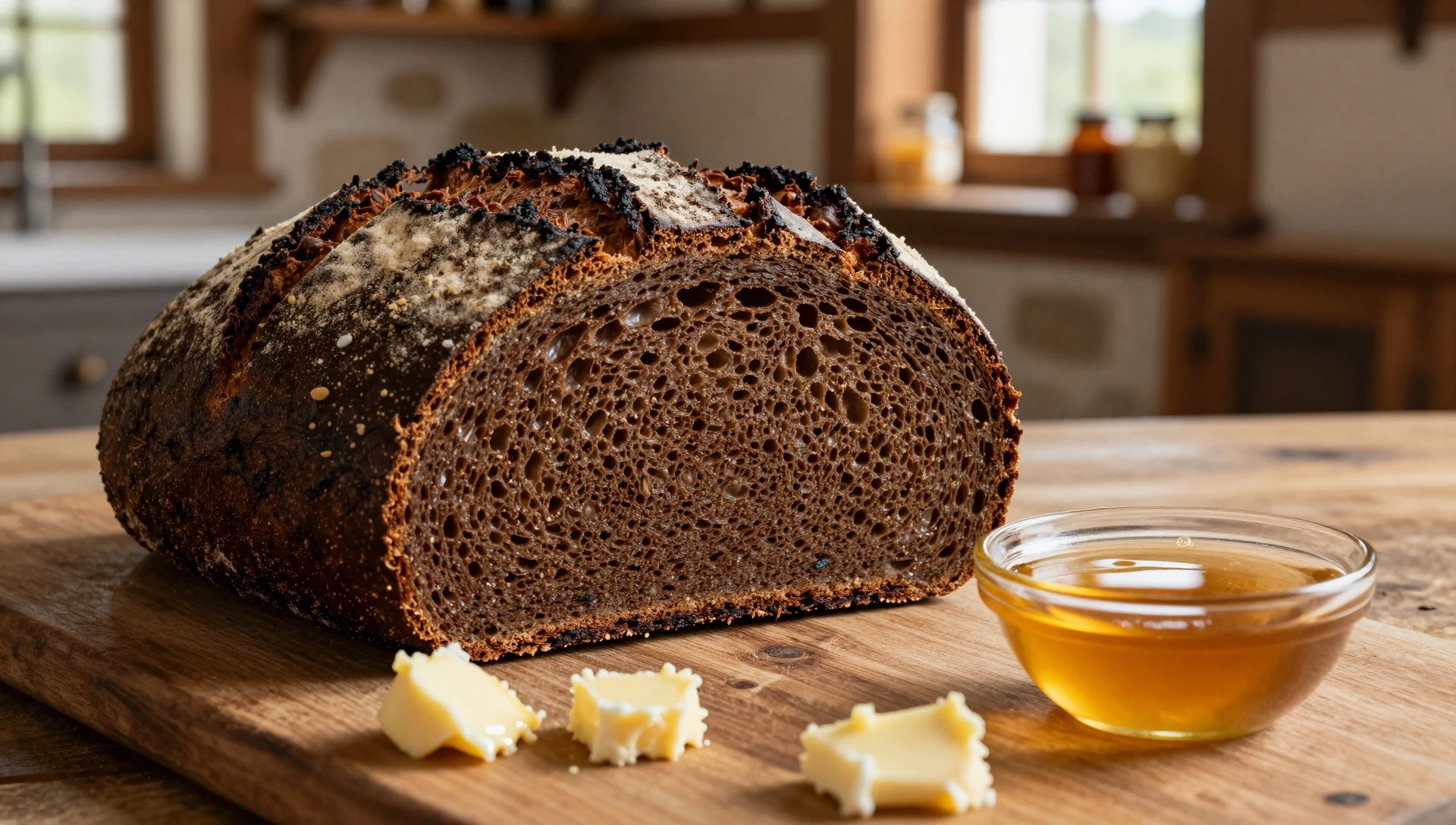
- Westfälischer Schinken — Butchers and traditional inns around the Weser valley
Westphalian ham is a smoked, cured ham served in thin slices, often on dark bread or with pickles and a cold beer. Regional butchers and inn menus feature it as a simple, salty snack that suits cool, damp weather.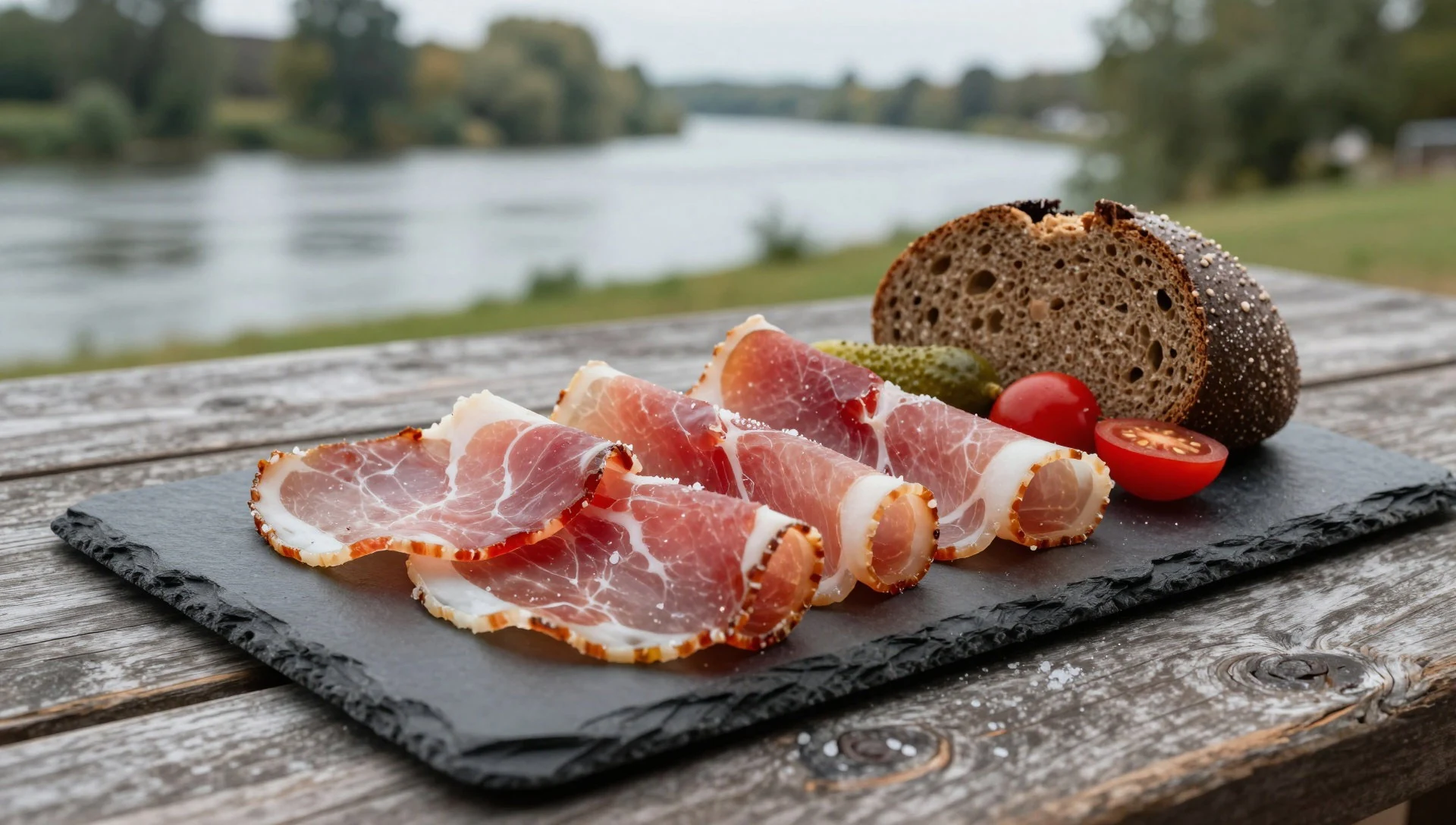
- Pfefferpotthast — Traditional inns and country restaurants
A Westphalian beef stew cooked slowly with onions, bay and plenty of pepper, then finished with a touch of acidity. It is a hearty winter dish, usually served with potatoes or bread, and found in traditional country inns rather than modern cafés. - Bratwurst from a market stall — Weekly market and festival stalls in Höxter
Grilled sausage in a bread roll with mustard is the easiest quick meal in town. Stalls set up on market days and at festivals, and the smell of the grill carries across the square. Pick up a roll and eat it on a bench by the river. - Kaffee und Kuchen — Cafés in Höxter's old town
The afternoon habit of coffee with a slice of cake is taken seriously. Expect plum, apple or cream tortes, often baked locally. A café in Höxter's old town is a good place to warm up after the abbey and rest before the journey home.
Plan it
Best time. May–June and September–October, when the Weser valley is warm and green and daylight is long enough to combine the abbey with Höxter. July and August are warm and busier, while winter is cold, grey and short on daylight, though quiet.
How long. 1
Getting there. Fly to Paderborn-Lippstadt or Hannover airport, then take regional trains to Höxter. The last leg to the abbey is a short taxi, bus or cycle ride from the town, along the river.
Budget. mid
Tips
- Check the official site, https://www.schloss-corvey.de/, for opening arrangements and any events before you travel
- Carry some cash and a card, as smaller cafés and market stalls in Höxter may prefer one or the other
- Wear layers: the westwork and the old ranges stay cool even in summer
- Allow a half-day for the abbey and another half for Höxter and a river walk or bike ride
Etiquette
- Keep your voice low and do not touch the painted walls inside the westwork
- Follow signs on photography and restricted areas, and stay on marked paths in the grounds
Nearby
Sources
- Wikidata Q56004 (CC0)
- Wikipedia: Princely Abbey of Corvey (rev 1368571430) (CC BY-SA 4.0)
- Wikivoyage (CC BY-SA 4.0)
- Photo: Schloß Corvey, Westanlage (Aeggy) (CC BY 3.0)
- Photo: Das Westwerk der Klosterkirche Corvey 2013 (Aeggy) (CC BY 3.0)
- Photo: Corvey Abbey with Westwork near Höxter (Spunky) (Public domain)
- Map: Territory of the Prince-Abbey of Corvey (Seutter-Lotter, 1756) (Public domain)
- Meister des Evangeliars von Wernigerode 001 (Public domain)
- Photo: Courtyard of the monastery of Corvey (Heinz-Josef Lücking) (CC BY-SA 3.0 de)
- Photo: Schloss Corvey Nordansicht (StefanTsingtauer) (CC BY-SA 4.0)
- Photo: Corvey (Ziko) (CC BY-SA 4.0)


