Tövkhön
Tövkhön, Mongolia
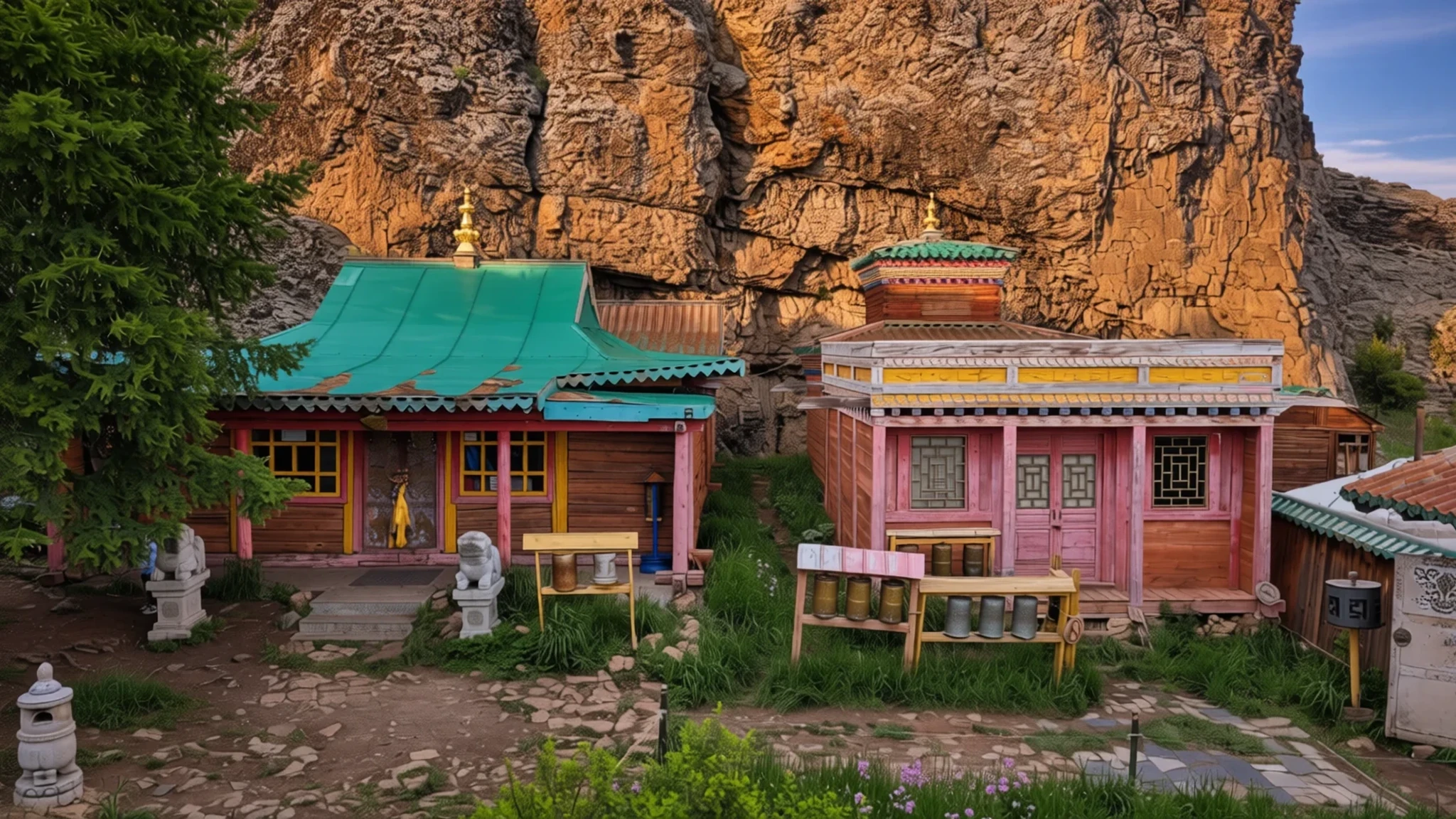
Tövkhön is a cliff-top Buddhist monastery in Mongolia's Orkhon country, where Zanabazar withdrew to meditate and make sacred art.
The place
Tövkhön occupies a rocky summit in the Khangai mountains, high above the Orkhon valley in central Mongolia. The monastery is a compact group of wooden halls tucked against pale cliffs, with pine and larch dropping toward grassland and the slow bends of the country below. Blue prayer flags and offering scarves mark the ridge, and the wind is part of the architecture: it pulls at flags, doors and the hems of coats, and it never quite leaves the site.
Reaching Tövkhön is a short journey with a hard ending. Vehicles stop on a rough track below the crown, and the last stretch is a walk up stone steps and open rock. Shade thins as the path climbs. Cloud often caps the summit while the valley stays clear. In the warmer months the steps carry Mongolian pilgrims together with visitors who have based themselves in Kharkhorin or in ger camps along the Orkhon. Deep cold, snow and a track that turns to mud keep most people away for the rest of the year.
Tövkhön is a living monastery, not only a viewpoint. Monks tend the shrines, and families come to circle the site, leave a scarf and sit where the rock gives a little shelter. The buildings stay small — low roofs, painted timber, narrow courtyards — and the scale of the mountain does the rest of the work. Incense, juniper smoke and the snap of flags carry farther than any loudspeaker.
Around Tövkhön the Orkhon country is pasture: horses, seasonal camps and a river valley long used for grazing, worship and travel. The ridge feels separate from that everyday movement, yet the road up to it crosses the same land.
Its story
Tövkhön enters Mongolian history through Zanabazar, the religious leader and artist who lived from 1635 to 1723 and who treated this summit as a retreat. He stood in the line of Buddhist reincarnate teachers known as the Jebtsundamba Khutuktu, a Gelug monk who also cast bronze, designed temples and shaped the Soyombo symbol-script still visible on the national flag. The mountain gave him distance from court business. Caves in the cliff served as meditation rooms, and the quiet was for making images as much as for prayer.
The work people still attach to those years includes bronze deities of careful finish. A White Tara from his hand shows the kind of figure he pursued: a calm face, fine jewellery and a body that reads as both icon and sculpture. Whether or not a given casting sits at the monastery today, Tövkhön is the landscape those images come from, a workshop in all but name, set above the Orkhon rather than in a city.
The retreat did not stay untouched. Conflict swept the region in Zanabazar's lifetime, and the wooden monastery was ruined and abandoned more than once. In the twentieth century a government hostile to Buddhism destroyed monasteries across Mongolia; Tövkhön shared that fate, its monks dispersed and its halls reduced. Families kept the memory of the ridge, where two seventeenth-century temples and two stupas still stand beside eighteenth-century halls. Pilgrimage to a holy mountain does not need an intact roof, and scarves kept appearing on the rocks.
When open religious life returned, Tövkhön was raised again on the old footprint. Timber halls, a revived monastic presence and the cave linked with Zanabazar's meditation now share the summit with the flags. The story the site tells is of a place chosen by an artist-monk, broken by war and policy, and put back into use.
What to see
- Tövkhön Khiid — Shireet Ulaan summit, Orkhon valley
Tövkhön Khiid is the monastery itself: low wooden halls and shrines set against the cliff at the top of the climb. Monks use the rooms for prayer, and visitors walk through in stockinged feet where the step up asks for shoes to come off. Painted timber, butter lamps and small courtyards matter more than size.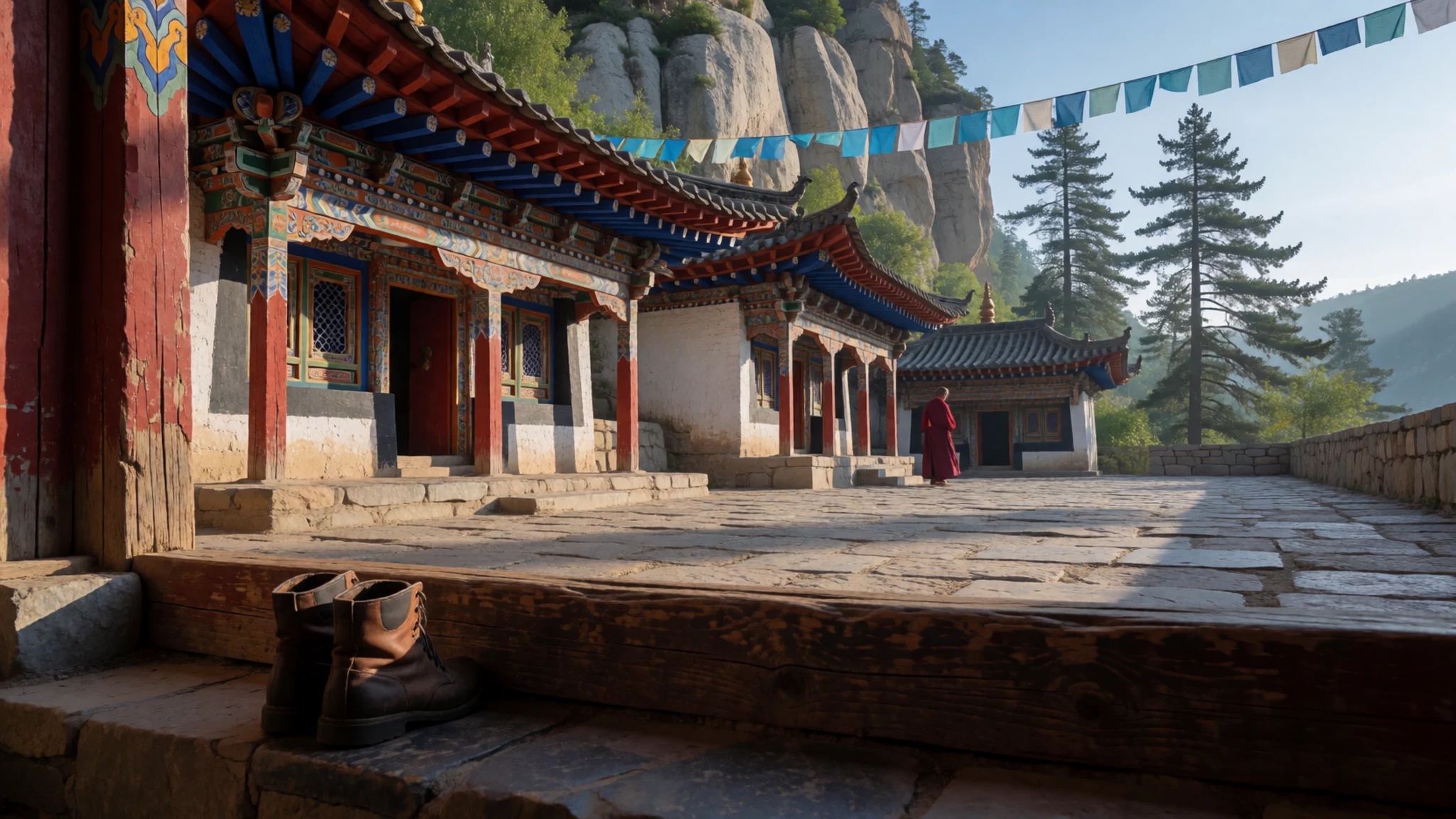
- Meditation cave — Summit cliff, Tövkhön
The meditation cave at Tövkhön is a cleft in the summit rock linked with Zanabazar's retreat, not a large decorated cavern. Pilgrims treat it as the spot where he sat apart from the halls. The approach is uneven stone. On a busy day a short wait is normal, and offerings belong only where scarves already mark a place.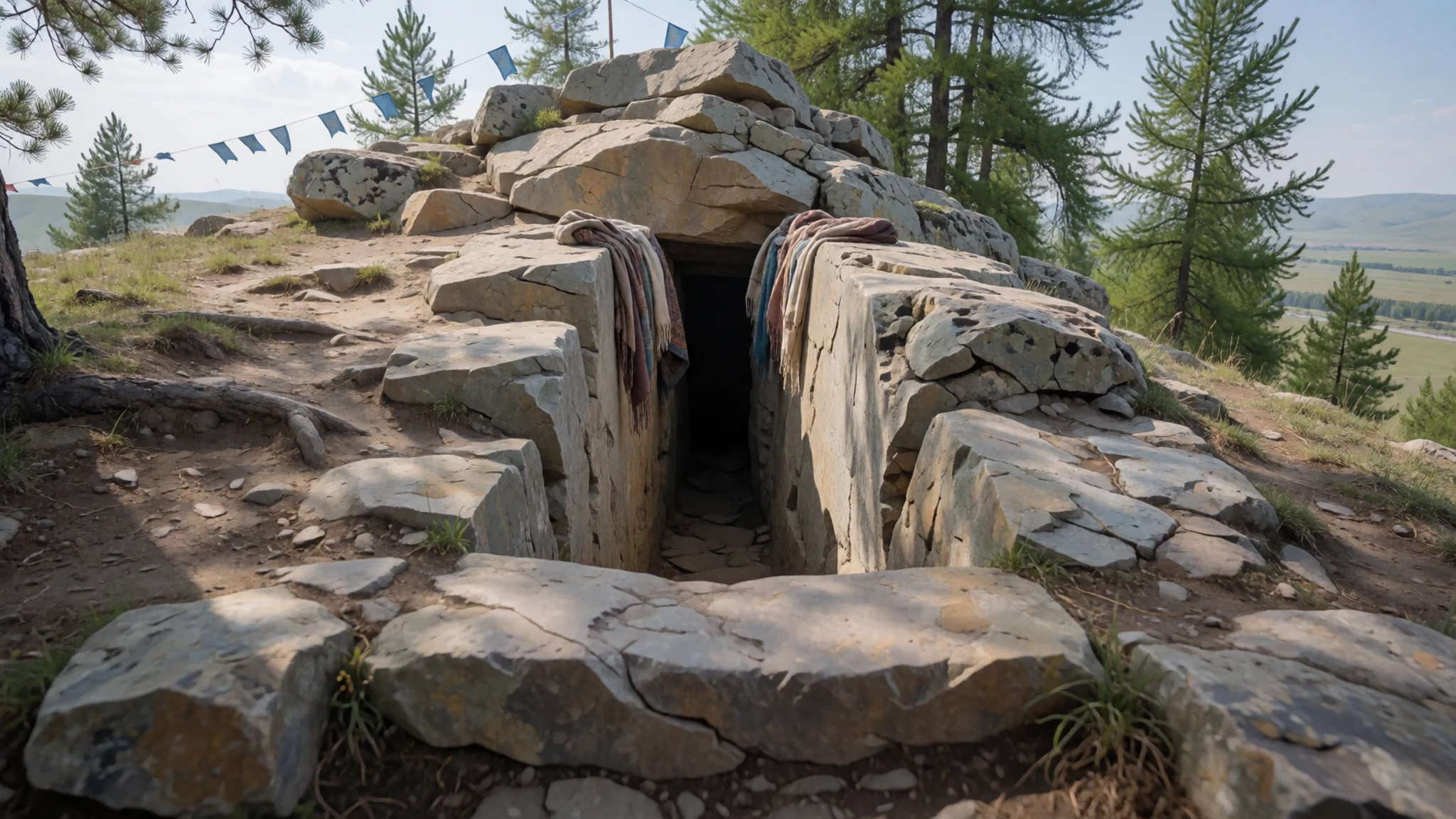
- Prayer flags and khadag — Ridge paths, Tövkhön
Prayer flags and khadag scarves at Tövkhön run along the ridge and the paths between rock and hall. Blue cloth is the colour that marks many of the lines, though white, red, green and yellow appear too, each flag printed with prayers the wind is meant to carry. Visitors add scarves; they do not take them away.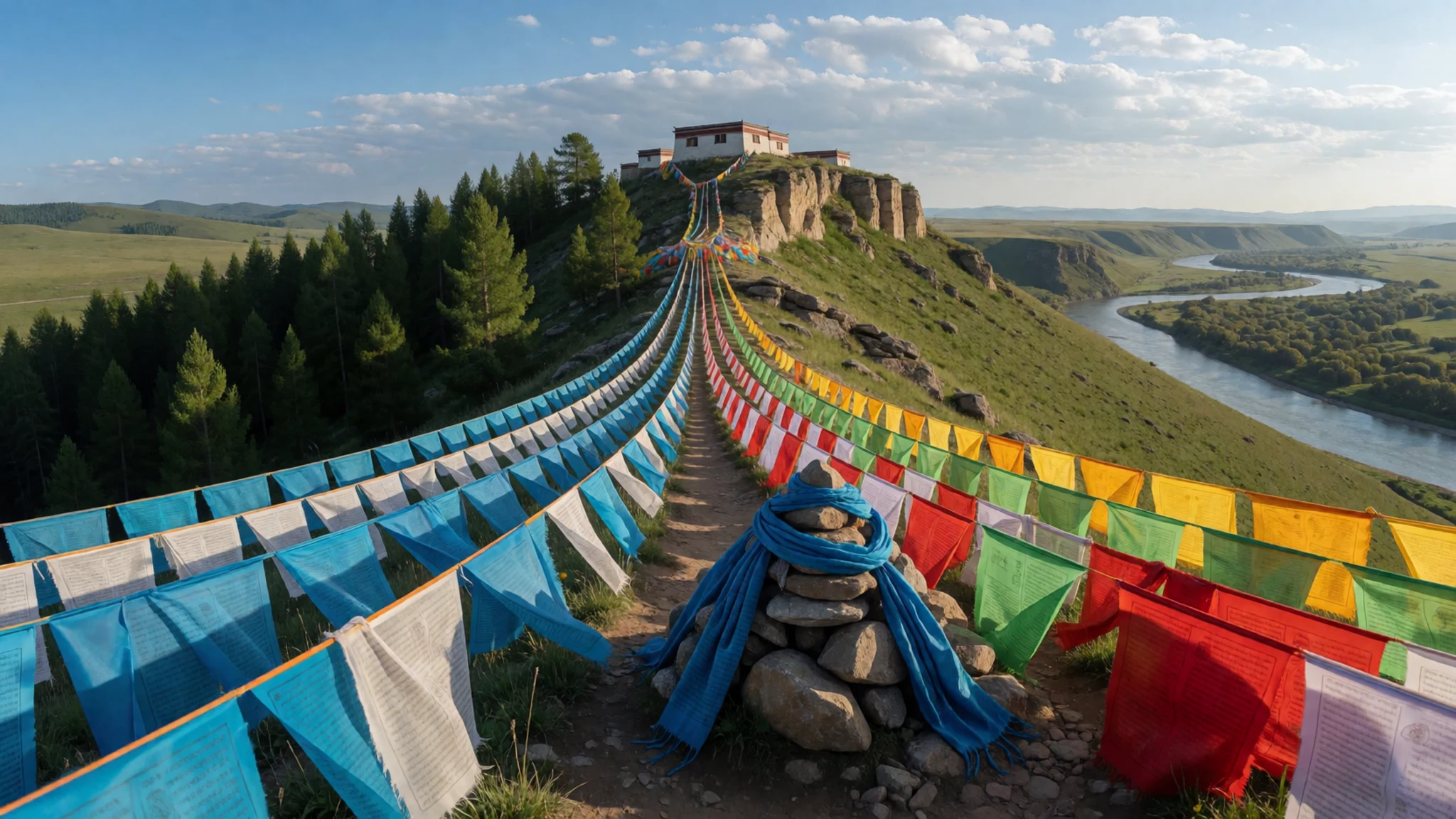
- The stone stair — Upper path, Tövkhön
The stone stair at Tövkhön is the last leg from the upper car park to the monastery, a stepped path on open rock with patches of pine lower down. It is steep enough to slow a group and exposed enough that a jacket stays on even in summer. There is little shade near the top.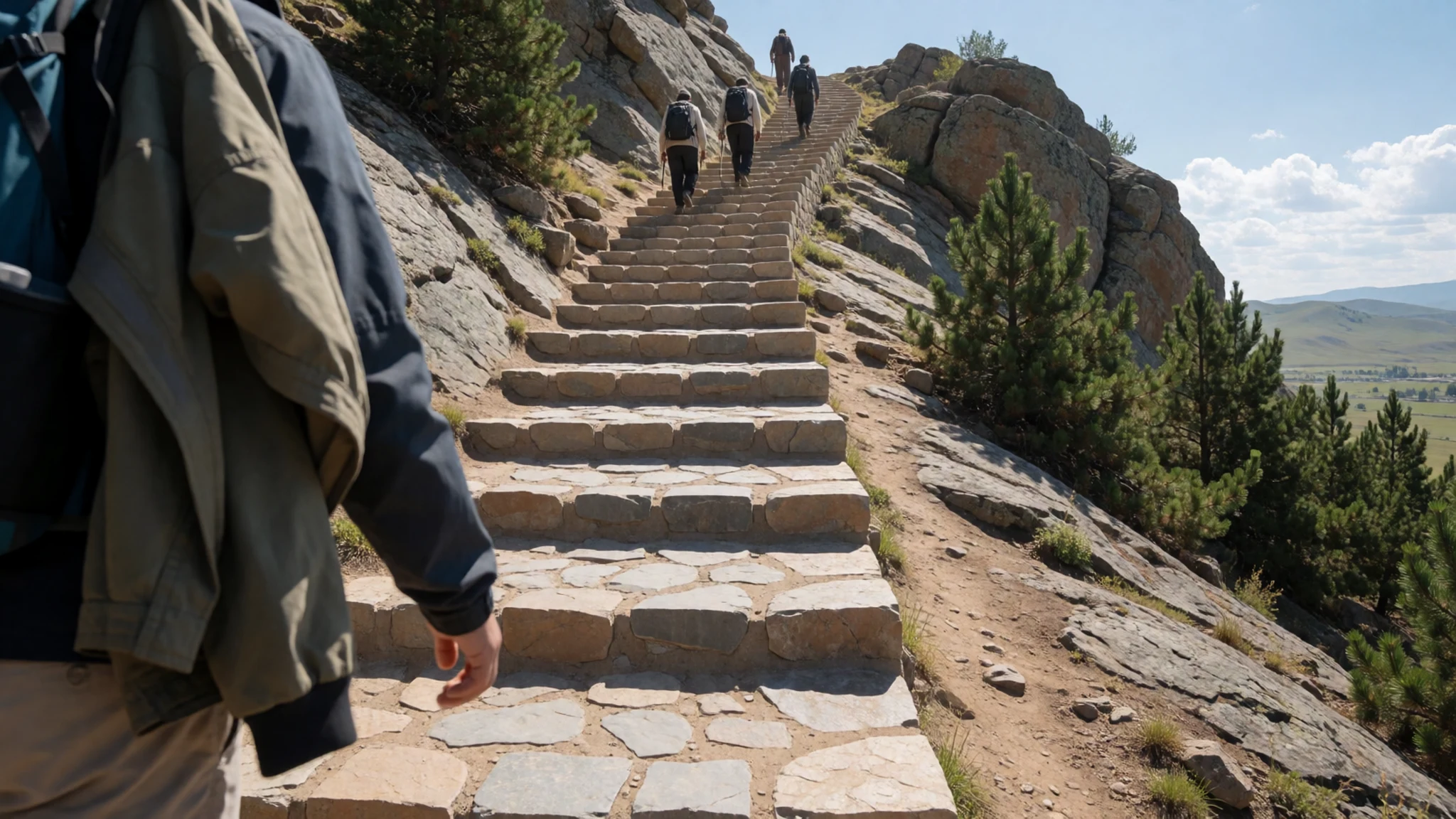
- Shrine rooms — Monastery halls, Tövkhön
Inside the shrine rooms at Tövkhön, painted figures, lamps and offerings sit close. A monk may be tending the space or speaking with a family, and the pace is the one already set by people at prayer. Photography of faces needs a request first. The rooms are small, and a backpack on the shoulder blocks the circuit.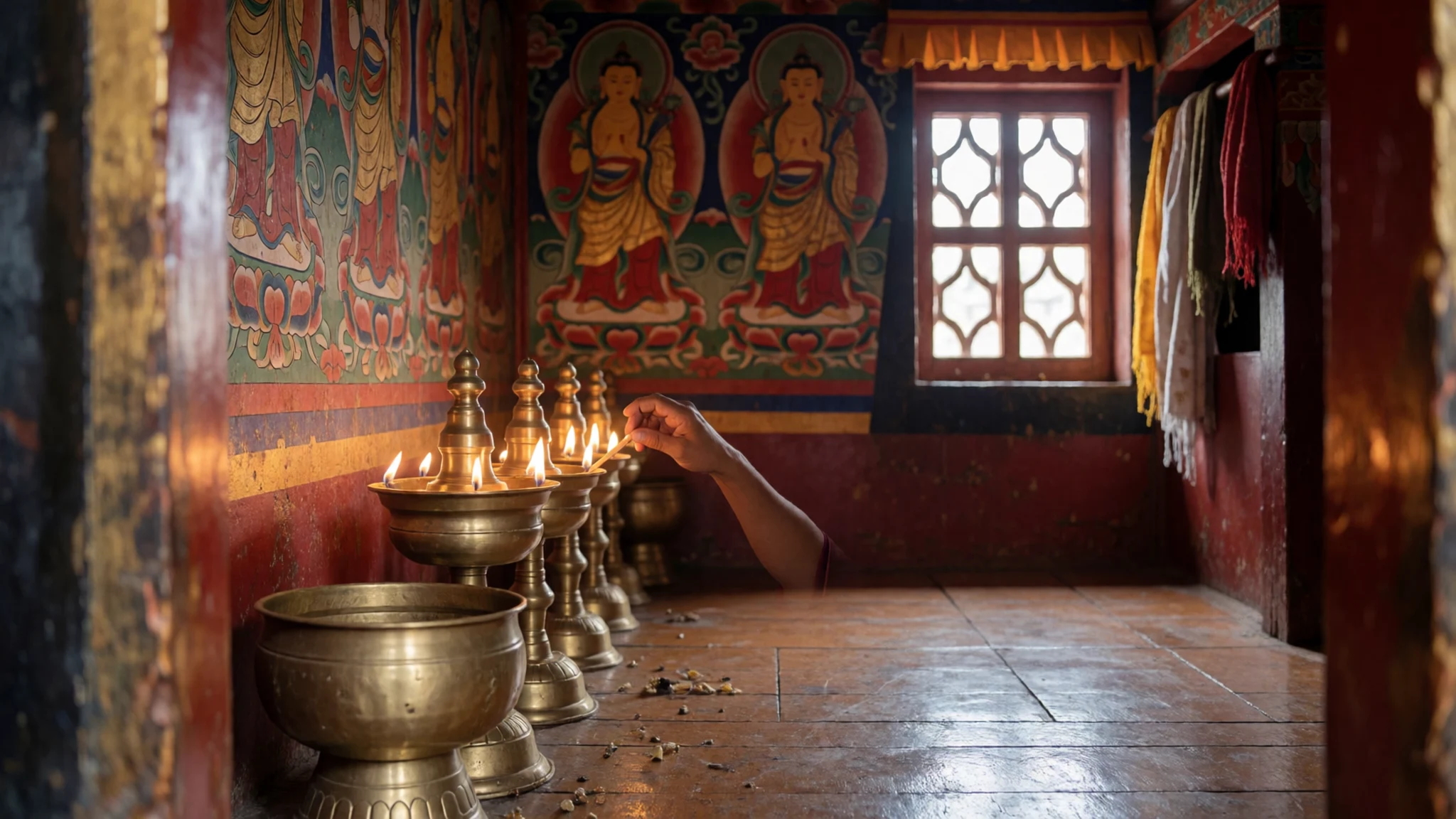
Culture
Culture at Tövkhön is Tibetan-style Buddhism as it is lived in Mongolia, with Zanabazar's memory at the centre. The summit is a place of circumambulation: pilgrims move clockwise around shrines and around the ovoo, the stone cairn where people add a rock and a prayer. Khadag, the ceremonial scarf, is offered to the landscape and to images, not treated as a souvenir. Blue prayer flags carry printed mantras; the wind, not the visitor, is supposed to do the reading.
Milk, incense and butter lamps are ordinary offerings. A family may ask a monk for a blessing, and the exchange is quiet. The Soyombo, the script-symbol Zanabazar shaped, links this ridge to a national story, but on the mountain it works as a religious mark before it works as a flag. Festivals elsewhere in the country, especially Tsagaan Sar and Naadam, fill monasteries with deel-clad worshippers; Tövkhön sees its own smaller surges on holy days, when the stair is crowded with people who have come to pray rather than to look.
The monastery asks for the same bodily manners as other Mongolian Buddhist sites. Hats come off in some shrine rooms, feet do not point at images, and a circuit goes clockwise. Voices stay low beside people who are praying.
Leave shoes where a raised threshold and waiting slippers show that the room is entered unshod, and ask before photographing any monk or worshipper at Tövkhön.
What to wear
Dress at Tövkhön runs from formal deel to the practical layers of a mountain day. The deel is Mongolia's robe, cut with long sleeves and a standing collar, wrapped across the body and held by a wide sash. Silk versions come out for Tsagaan Sar, Naadam and monastery visits; wool and cotton versions are working clothes for cold pasture. Boots with upturned toes, the gutal, belong to the same formal set, and a hat or a carefully tied sash finishes the line.
On an ordinary day the people around Tövkhön wear what the weather demands. Herders and drivers use jeans or riding trousers, puffer jackets, caps and scuffed boots. City visitors often arrive in sports shoes and bright outdoor coats. A worshipper who has come to pray may still put a deel on over modern clothes, especially on a holy day, and monks wear maroon robes that stand out against the pine and the pale rock.
For a visitor the useful wardrobe is modest and mountain-minded. Shoulders and knees covered make the shrine rooms comfortable to enter, and a scarf handles both sun and wind. The stair is uneven, so shoes need a grip and must come off quickly at a threshold. A light windproof layer earns its place in July as well as in September, because the summit is cooler and gustier than Kharkhorin below.
What to eat
- Buuz — Ger camps and eateries in Kharkhorin
Buuz around Tövkhön are steamed dumplings filled with mutton, sometimes beef, and a little onion, eaten with the fingers so the hot juice is not lost. They turn up in ger-camp kitchens and in small eateries in Kharkhorin, not on the summit itself.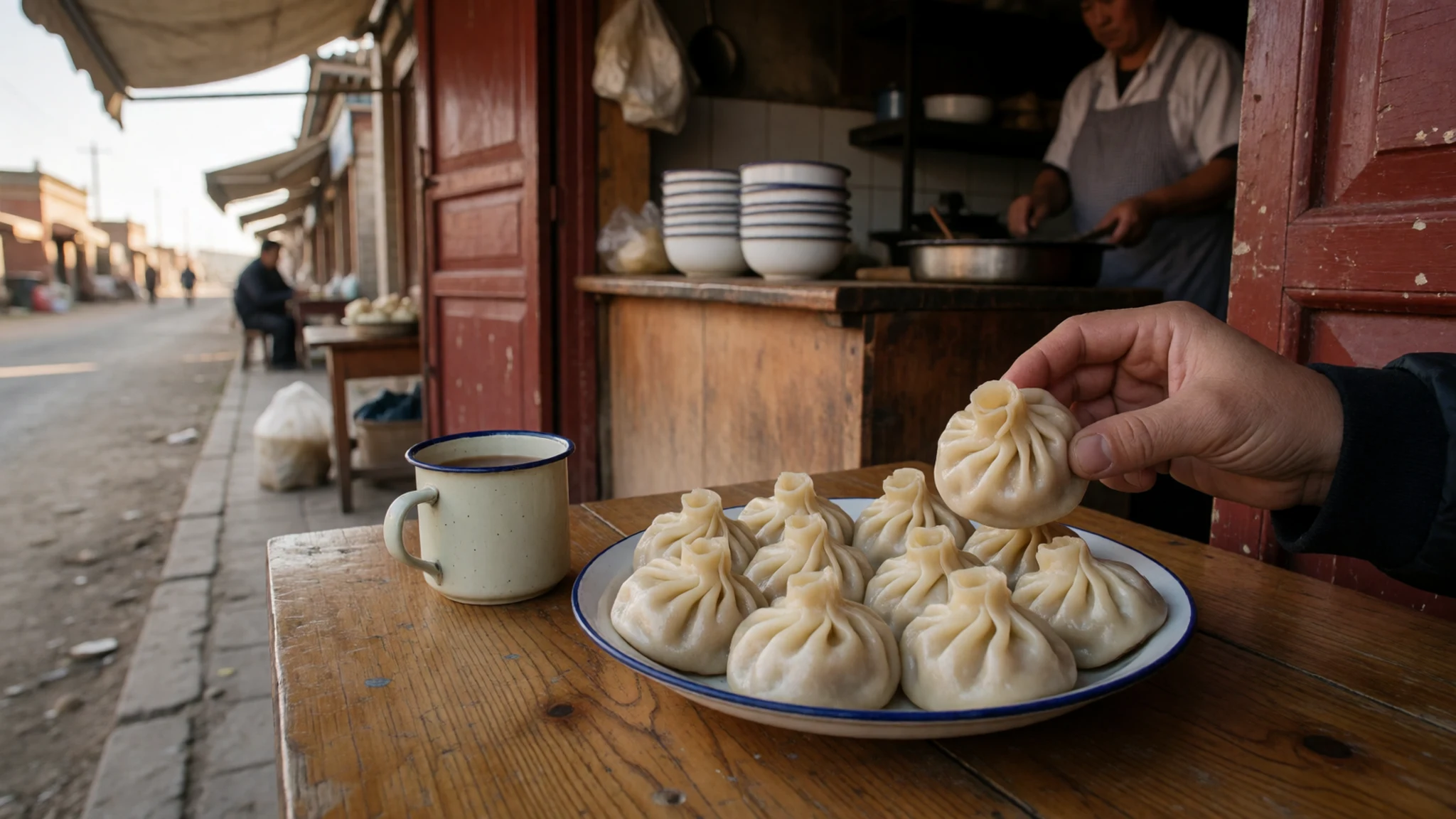
- Khuushuur — Roadside kitchens and ger-camp dining rooms on the Orkhon road
Khuushuur on the road to Tövkhön are flat fried pastries stuffed with seasoned mutton, crisp at the edge and juicy in the middle. Roadside kitchens and camp dining rooms between Ulaanbaatar and the Orkhon serve them as the practical lunch of a driving day.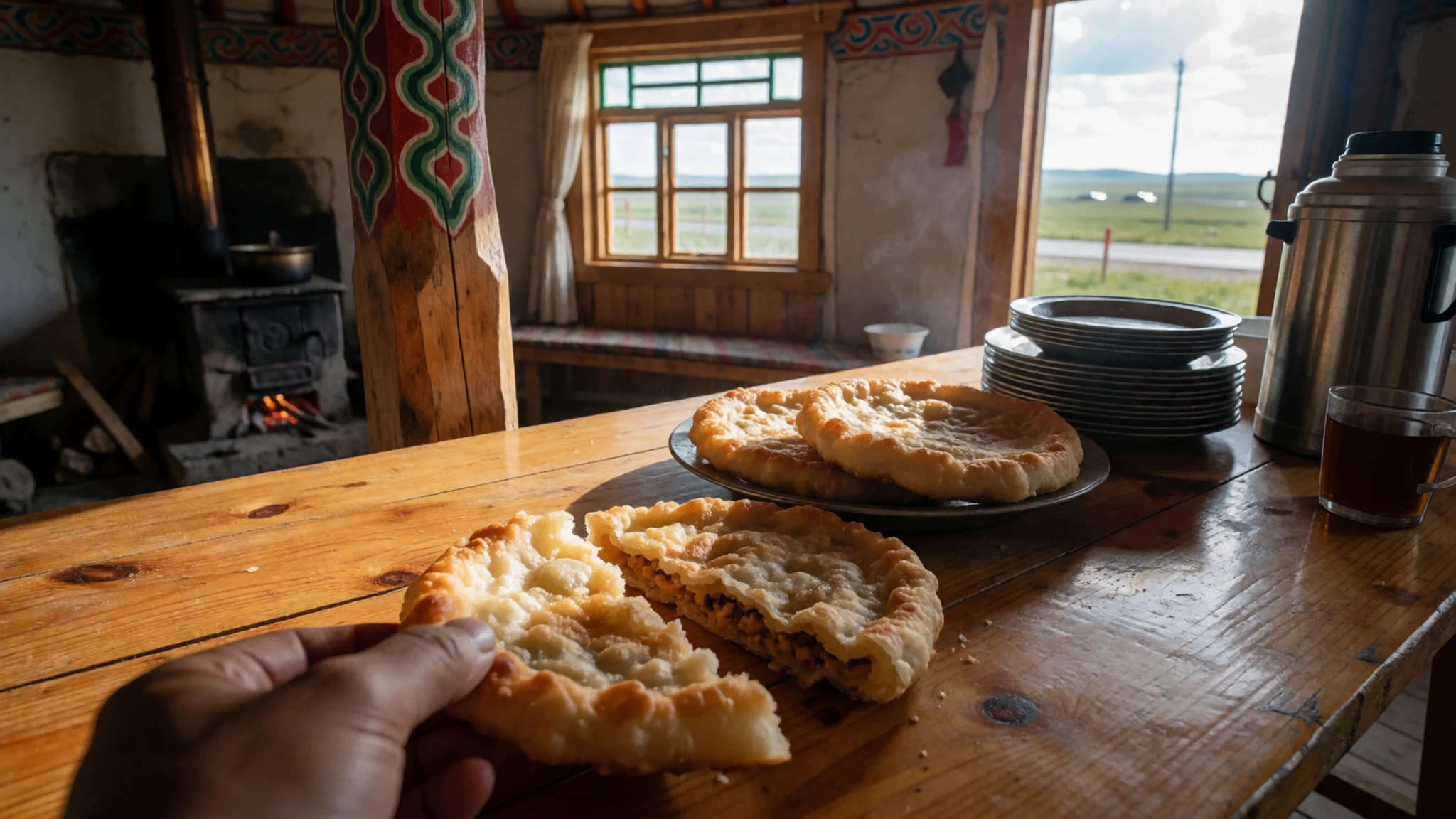
- Tsuivan — Eateries in Kharkhorin and ger-camp kitchens
Tsuivan near Tövkhön is a stir-fried noodle dish with strips of meat, carrot and cabbage, cooked in one pan so the noodles take up the fat. Eateries in Kharkhorin and camp cooks plate it in the evening for visitors coming down from the ridge. - Suutei tsai — Ger camps in the Orkhon valley
Suutei tsai, salted milk tea, is the drink poured first when someone enters a ger near Tövkhön. A pinch of butter or a scatter of millet may go in; sugar does not. Camps in the Orkhon valley serve it all day, and accepting a bowl is ordinary courtesy. - Aaruul — Shops and the market in Kharkhorin
Aaruul for the climb to Tövkhön is dried milk curd, hard, sour and small, chewed as a snack rather than eaten as a meal. It keeps for days in a pocket, and there is no stall at the top. Shops and market tables in Kharkhorin sell it by the bag.
Plan it
Best time. June to September, when the track up to Tövkhön is usually open and the summit is free of deep snow. July and August are warmer and busier. May and October can still be icy on the stair, and winter cold plus a closed or drifted track makes the ridge unrealistic for most visitors.
How long. 2–3
Getting there. Fly into Chinggis Khaan International Airport at Ulaanbaatar, then travel by road to Kharkhorin in the Orkhon valley — a full day's drive — and on by a rough track to the upper car park at Tövkhön. The last stretch is on foot up the stone stair. There is no rail line to the monastery. A driver who knows the mountain road is the usual last leg.
Budget. mid
Tips
- Book a ger camp near Kharkhorin or the Orkhon well ahead for July and August.
- Start the climb early; wind and cloud often build on the Tövkhön ridge after midday.
- Carry cash, because card payment is unreliable once you leave Ulaanbaatar.
- Bring drinking water; the upper path has little shade and no dependable stall.
- Ask locally about the track after rain, when mud can stop a car below the stair.
Etiquette
- Walk clockwise around shrines and ovoos at Tövkhön.
- Remove shoes at a raised threshold where slippers are waiting.
- Ask before photographing monks or people who are praying.
- Keep voices low inside the shrine rooms and do not sit on ritual seats.
Nearby
Sources
- Wikidata (CC0)
- Wikipedia (CC BY-SA 4.0)
- Wikivoyage (CC BY-SA 4.0)