Darkhad Valley
Darkhad Valley, Mongolia
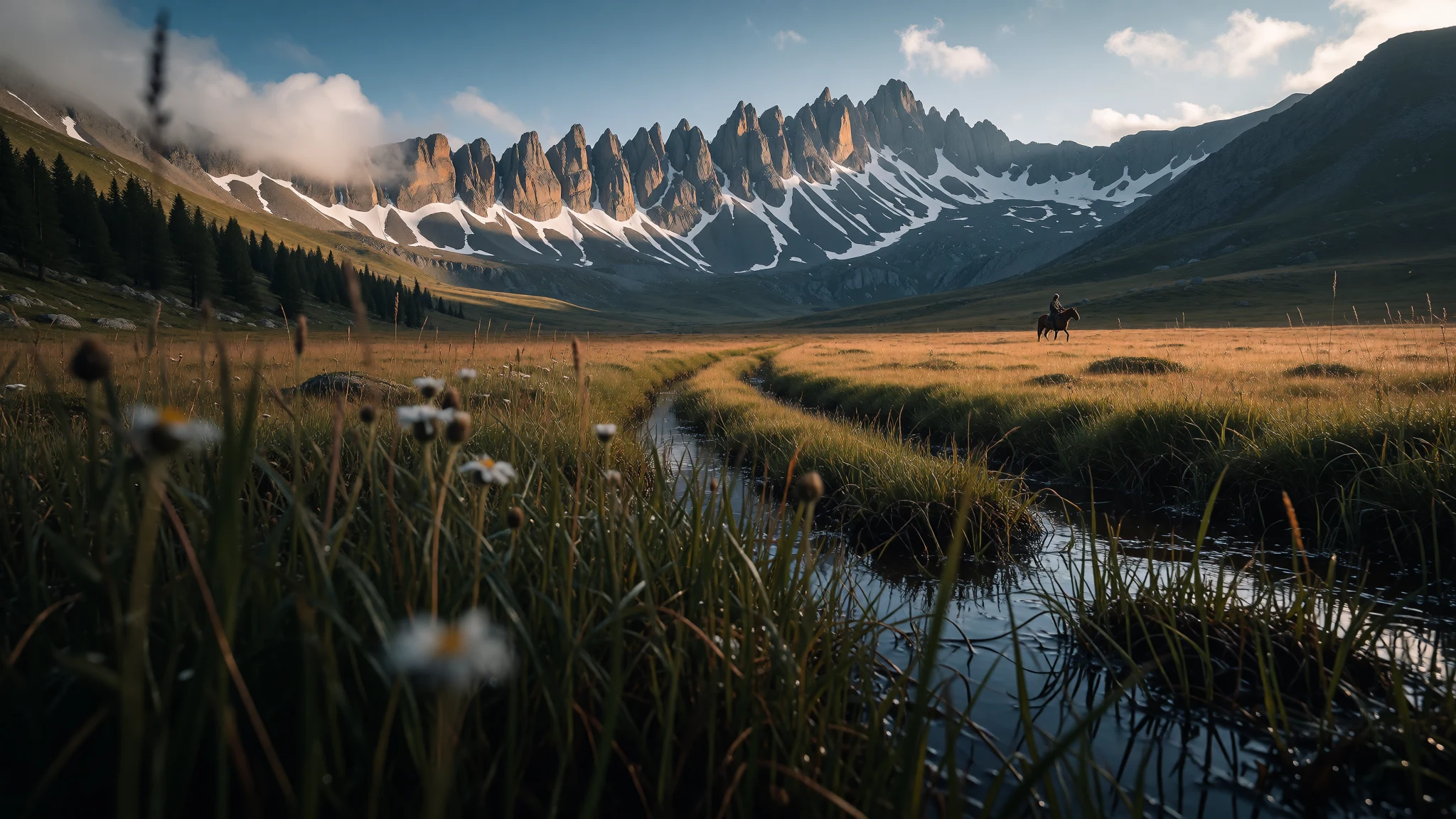
Darkhad Valley is a high, remote Mongolian basin of lakes, marsh and mountain ridges, where reindeer herders and horse families still shape daily life.
The place
Darkhad Valley (Mongolian: Дархадын хотгор) is a broad basin in the north-west of Khövsgöl Province, Mongolia, held between the Ulaan Taiga and Khoridol Saridag ranges. Its floor sits at about 1600 m, and the basin stretches roughly 160 km in length and 40 km in width. Seen from a ridge, it reads less as a valley than as a vast bowl of grass, bog and scattered larch, with snow-streaked mountains standing around the rim.
Water defines the place. Dood Tsagaan Lake and the Shishged River are the best-known among many lakes, streams and wetlands, and in summer the ground can be soft underfoot and thick with insects. Administratively the valley is shared between three districts, Ulaan-Uul, Renchinlkhümbe and Tsagaannuur, none of them large settlements.
Most residents are Darkhad, the people who give the valley its name, living by herding on seasonal pastures. A smaller number are Tsaatan, reindeer herders whose way of life draws occasional visitors. Even by Mongolian standards the valley is remote and hard to reach: there are tracks rather than highways, river crossings depend on the weather, and help can be a long way off. That distance is exactly why it feels so quiet. Trips here are slow, weather-led and best arranged with local drivers and guides who know which tracks are passable after rain.
Its story
Darkhad Valley's modern story begins with a border decision. In 1925 the valley was moved from the People's Republic of Tannu Tuva to the Mongolian People's Republic. It was a concession by the Soviet side to Mongolians, who had hoped to bring the whole Tannu Uriankhai region into their country. They did not get that, but they did gain this basin, and it has been part of Mongolia ever since.
Before and after that line was redrawn, daily life in the valley followed the rhythm of herding. Families moved livestock between summer and winter pastures, and the Darkhad community kept its own identity in a landscape that outsiders rarely reached. Remoteness protected the area from much of the development seen elsewhere, though it also kept services thin.
In recent years the valley has attracted conservation interest. The filmmaker Jeff Colhoun wrote a book and made a documentary, titled Darkhad Valley, about Rally for Rangers, a group that works to equip park rangers with motorcycles so they can patrol wild country. The project shows a practical truth about the place: protecting a landscape this large and roadless depends on people who can actually get across it. For visitors, that history is mostly invisible, but it explains why the valley still feels like a frontier.
What to see
- Khoridol Saridag Mountains — Southern edge of the valley
The Khoridol Saridag range forms the southern wall of Darkhad Valley, and the clearest views come from the open grassland below it. In good light the ridge looks sharp against the sky. Expect wind, quick weather changes and few signposts, so go with a driver who knows the tracks.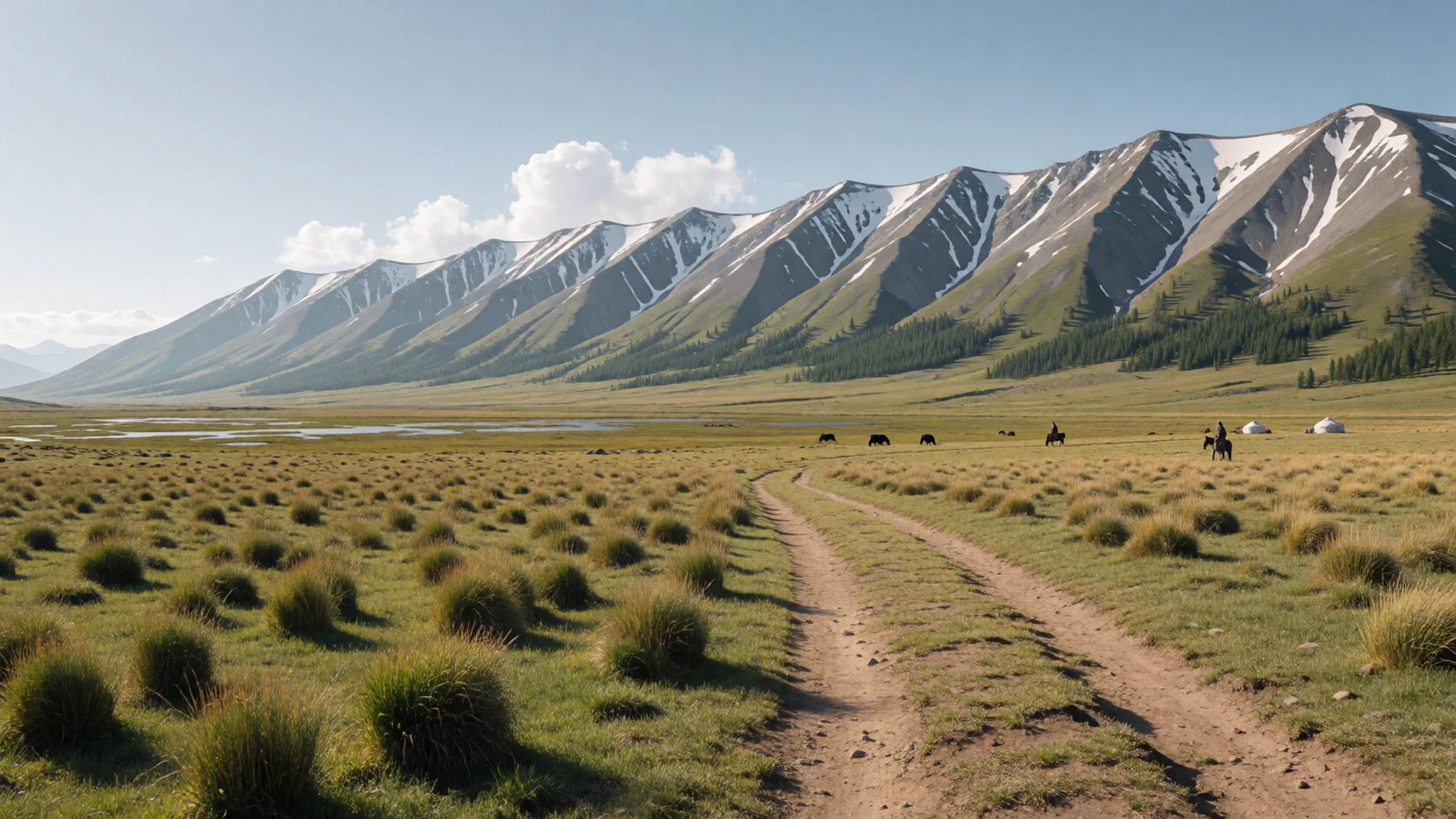
- Dood Tsagaan Lake — Northern part of the valley
Dood Tsagaan Lake is the best-known lake in the valley, set among marsh, grass and low hills. It suits slow walking, birdwatching and quiet camping rather than activity. Ground near the shore can be boggy, and mosquitoes are a real nuisance in midsummer, so bring repellent and waterproof boots.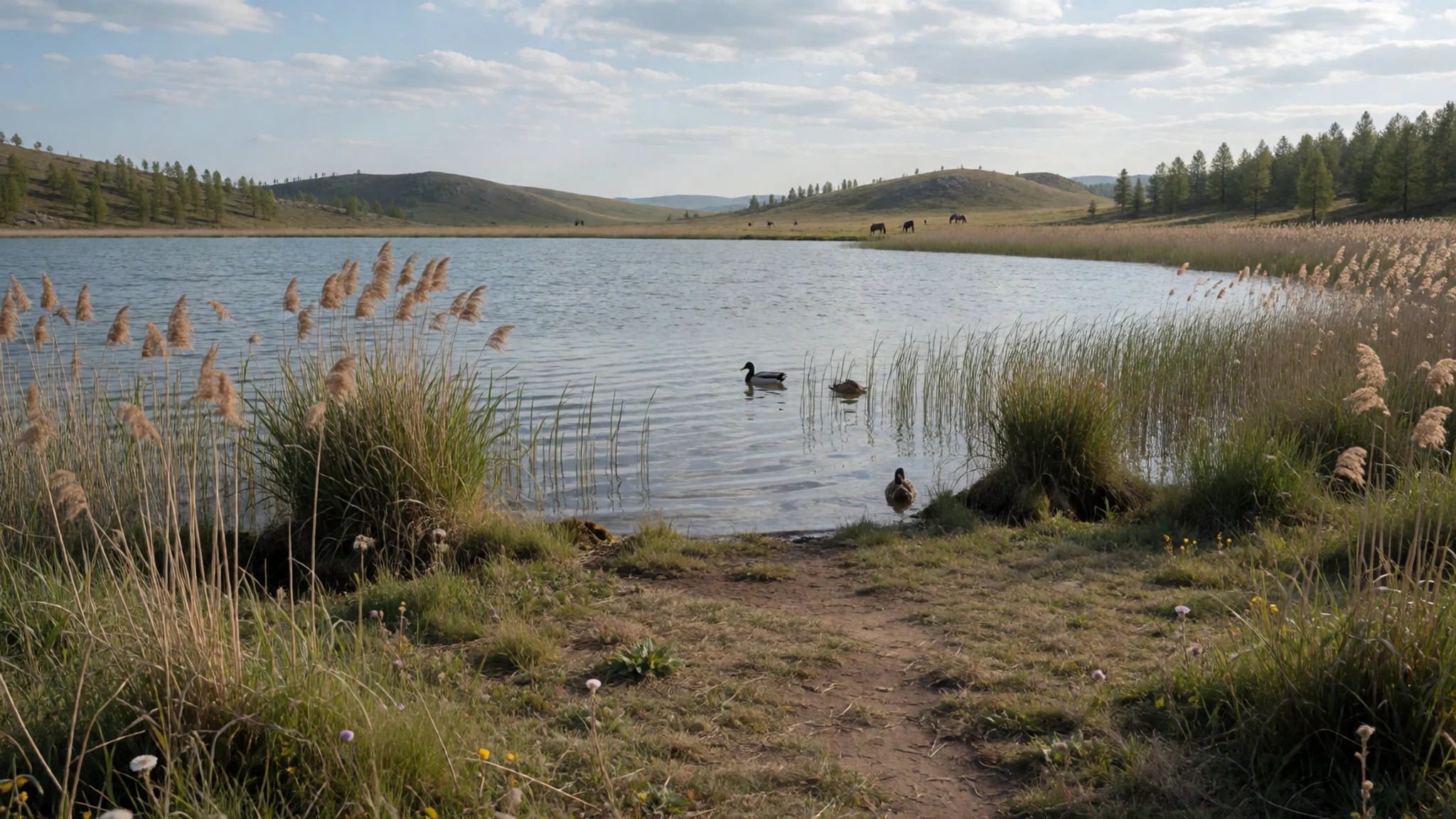
- Shishged River — Across the valley floor
The Shishged is the main river of the valley, winding through wet meadows before the mountains close in. Herders bring animals to its banks, which makes it a good place to watch pastoral life at a distance. Crossings can be difficult after rain, so ask local drivers before planning a route.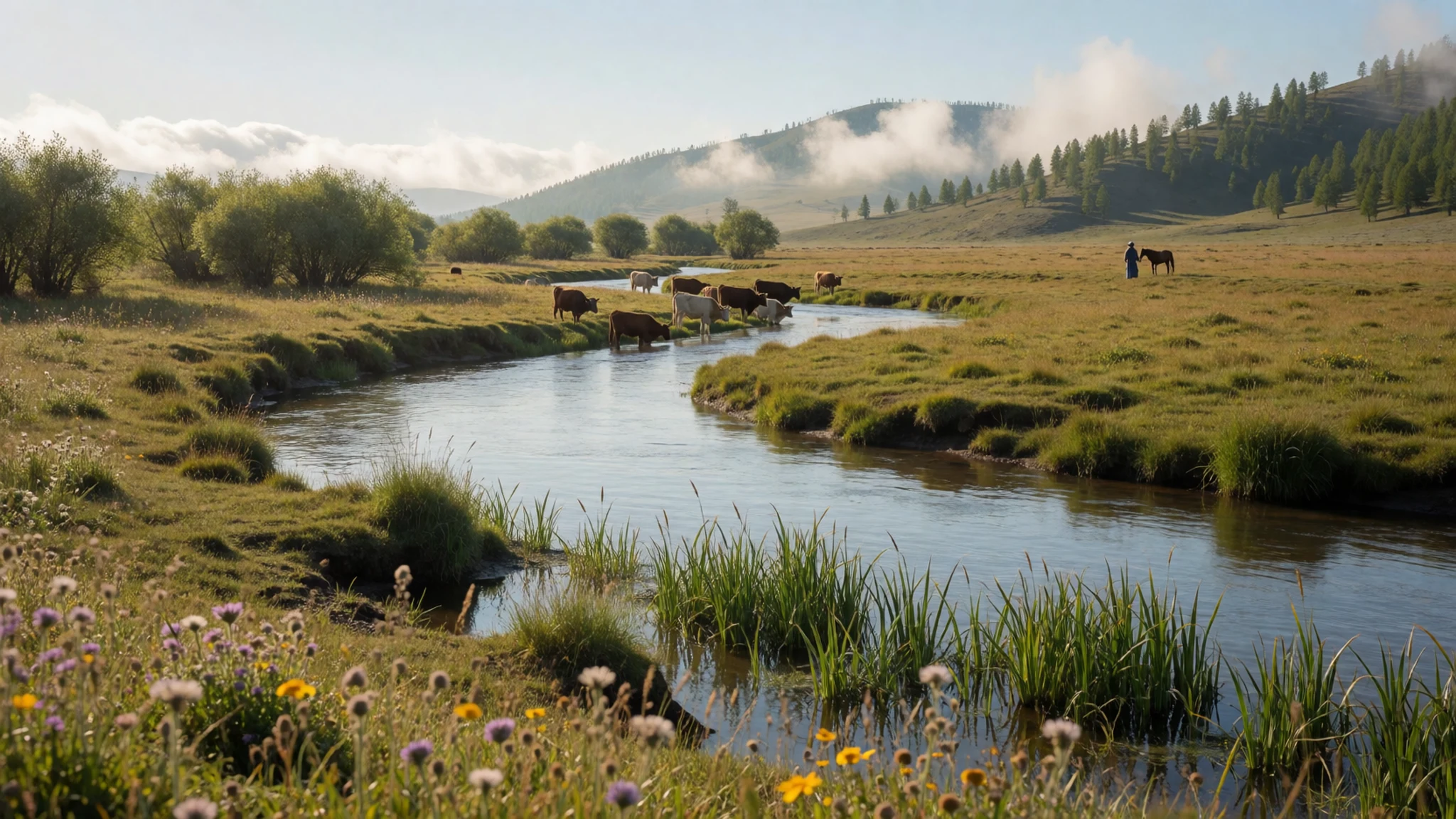
- Ulaan-Uul and Tsagaannuur — District centres in the valley
Ulaan-Uul and Tsagaannuur are two of the district centres where the valley's roads, such as they are, gather. They offer a few shops, basic canteens and a chance to sort fuel, supplies and local permits or guides. Neither is a destination in itself, but both are useful bases.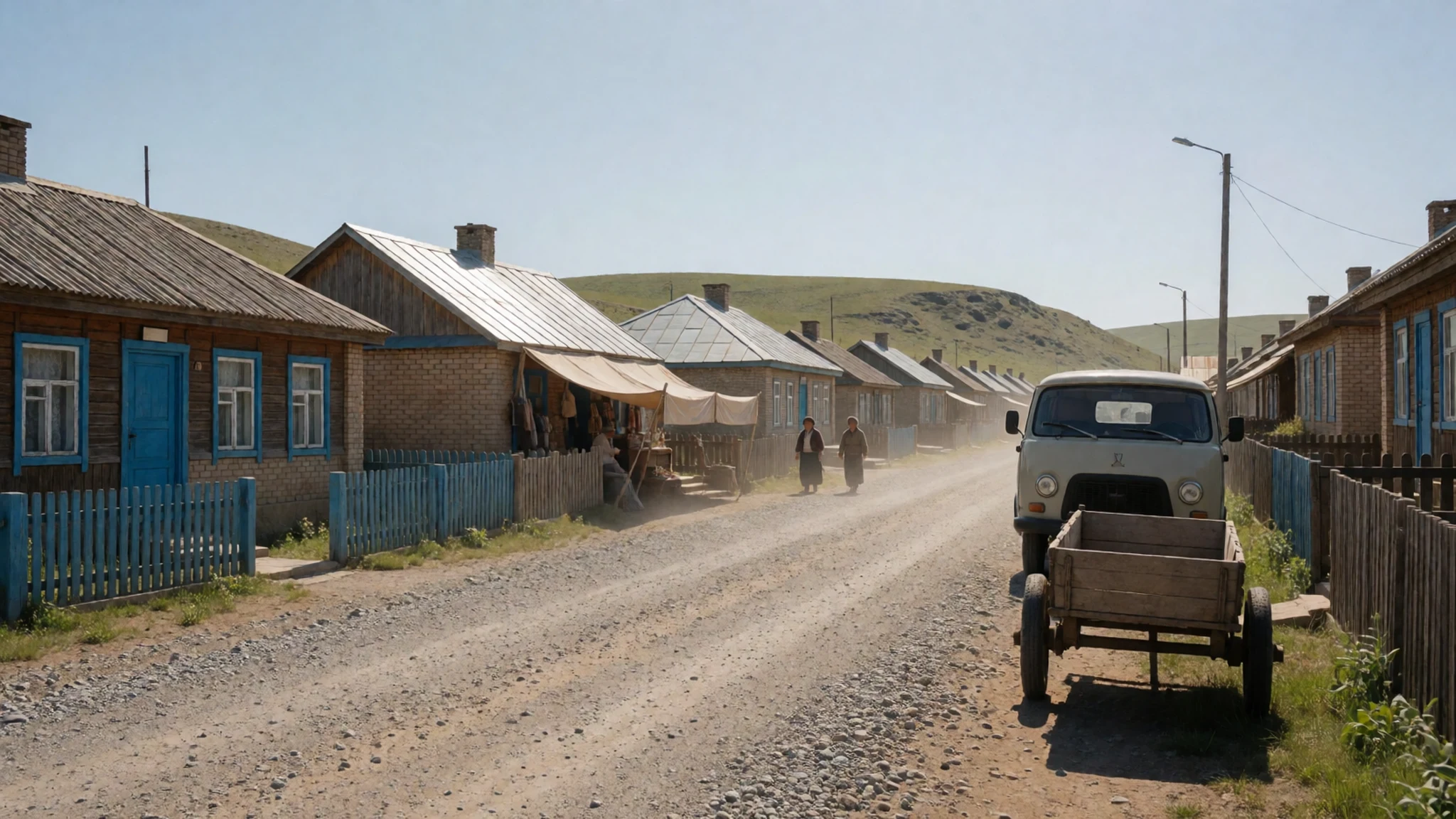
- Tsaatan reindeer camps — Forested hills around the valley
The Tsaatan are reindeer herders who live partly in the forested hills around the valley. Visits are best arranged through a local guide who asks the families first, and the tone should be respectful rather than touristic. Camps move with the seasons, so no one can promise a particular location.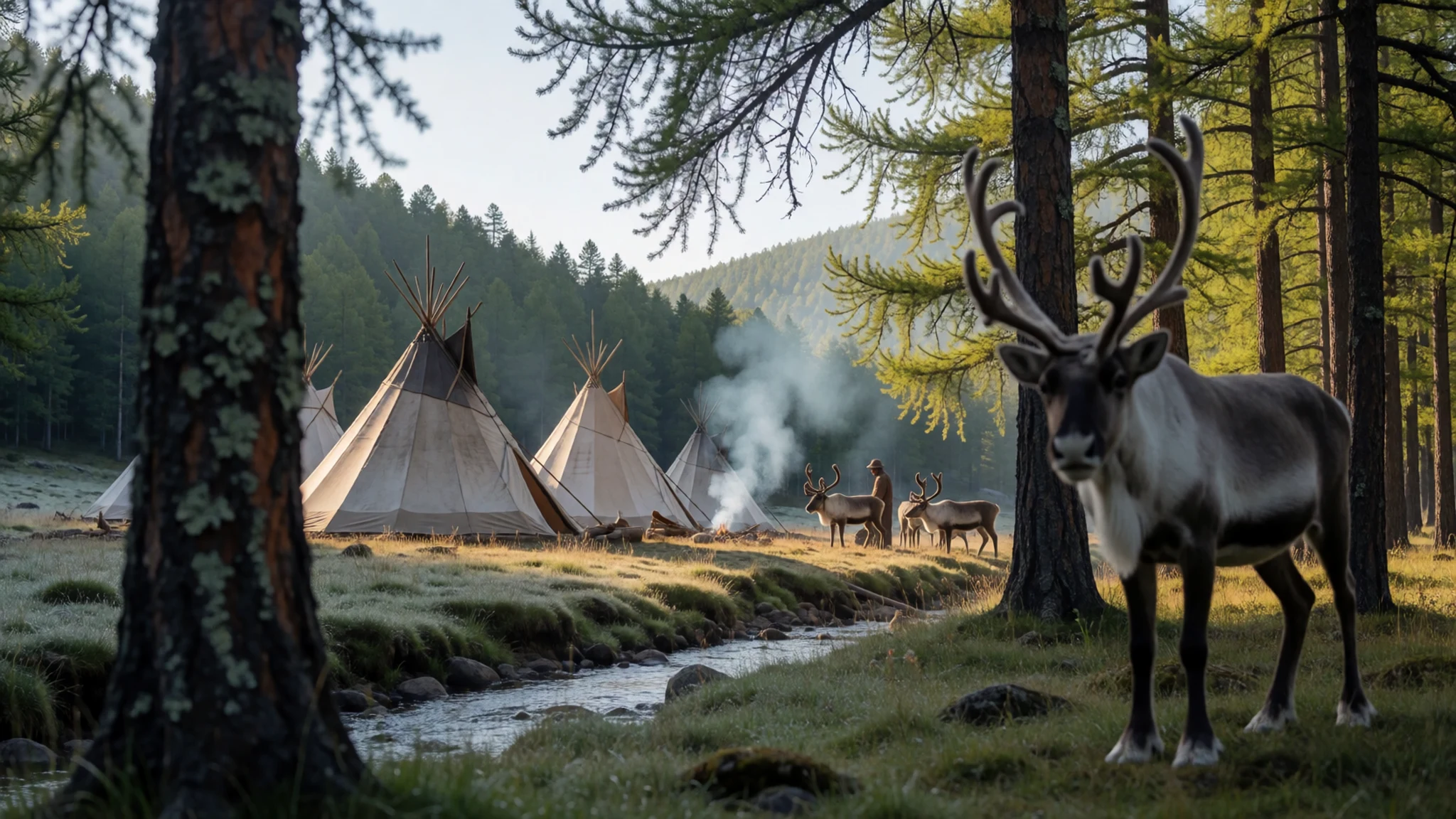
Culture
Darkhad Valley is home mainly to Darkhad herding families, with some Tsaatan reindeer herders, and life here follows the animals. Households move with the seasons, the ger is both home and meeting place, and hospitality is taken seriously. A visitor who arrives at a ger will normally be given salted milk tea and a bowl of dried snacks before anything else is discussed.
Mongolians are generally direct, so expect honest answers to questions, including when something is not possible. Ordinary Western pleasantries do not always land as intended; local manners matter more than a polished greeting. Conversations about politics can be sensitive, and it is wise to avoid wearing anything associated with China or raising the subject, as many Mongolians feel strongly about the relationship.
Buddhist traditions sit alongside older shamanic beliefs in this part of Mongolia, and the valley's mountains, lakes and springs often carry spiritual meaning for local people. Stone cairns draped with blue cloth, known as ovoo, mark such places, and they are not photo props. Wild country here is also working country, so closing gates, leaving livestock undisturbed and asking before camping near a family's pasture is simple good practice. Take offered tea or food with your right hand, palm up, and always taste at least a little rather than refusing.
What to wear
The traditional garment of Darkhad Valley is the deel, a long wrap-over robe worn by herders across Mongolia. It is made from wool, cotton or silk, often lined or padded for winter, and tied with a wide cloth sash at the waist. Deels are worn daily by some older herders and almost universally at festivals, weddings and Naadam celebrations, when colours and trims are brighter. Boots with upturned toes and felt hats complete the older look, and Tsaatan families wear versions suited to forest and reindeer work.
Day to day, most people now mix tradition with practical modern clothing: a deel or a padded coat over trousers, rubber or leather boots, scarves, and caps. Mobile phones and motorbikes sit comfortably with felt and sheepskin.
Visitors should dress for changeable mountain weather rather than for style. Summer can bring heat, rain and cold nights within a single day, so bring a warm fleece, a waterproof shell, quick-drying trousers, a hat and sun protection. Sturdy waterproof boots matter far more than anything else, because ground near rivers and lakes is wet. Long sleeves and trousers help against insects. Modest, plain clothing is appropriate when visiting families or any religious site, and items associated with China are best left at home.
What to eat
- Buuz — Village canteens and family gers
Buuz are steamed dumplings filled with chopped mutton, often seasoned with little more than salt and onion. They are the everyday celebratory food of Mongolian homes and appear at family gatherings. Look for them in village canteens or ask a host family if they are making a batch.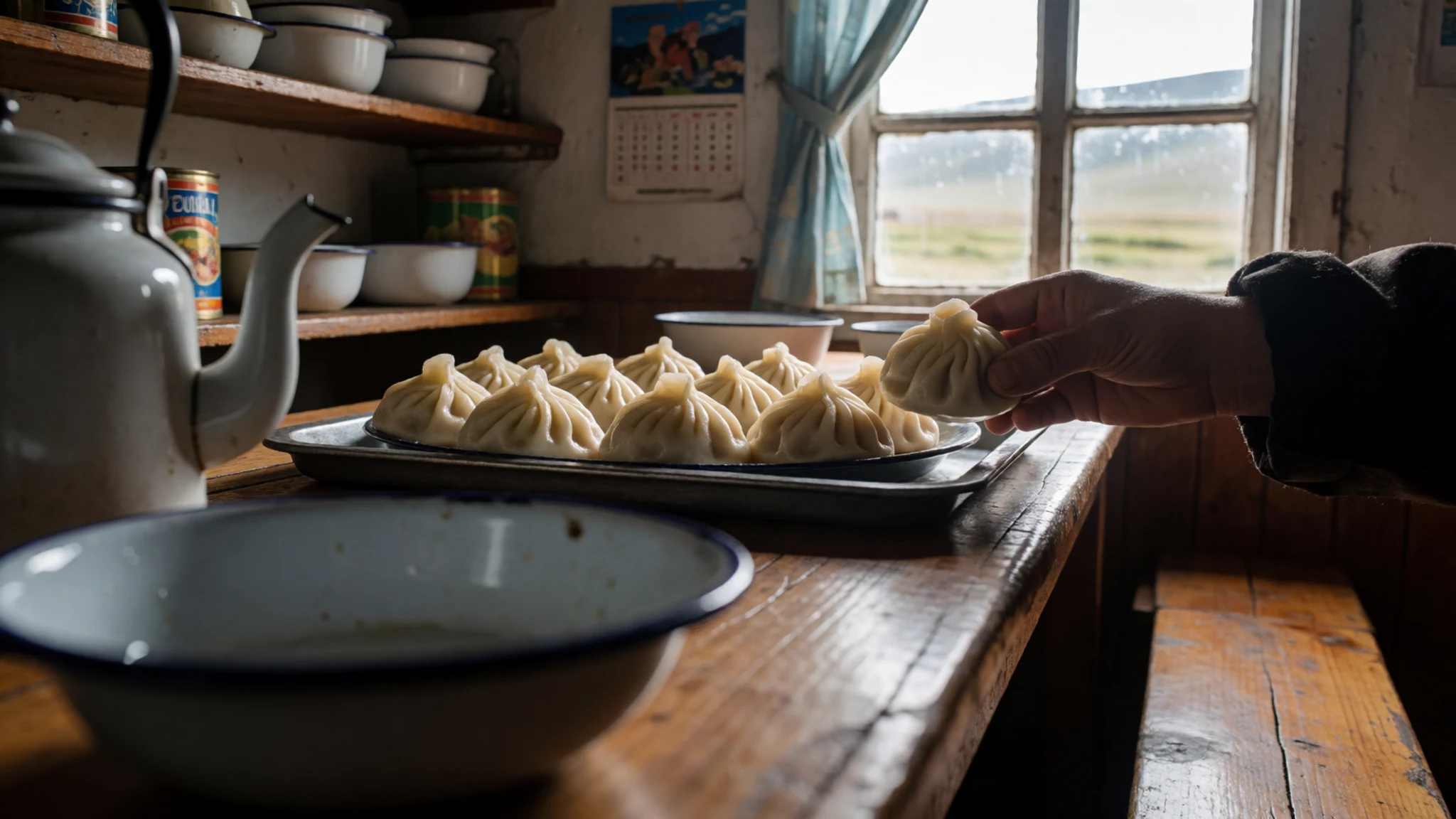
- Khuushuur — Canteens in district centres and roadside food stops
Khuushuur is a flat, deep-fried pastry parcel stuffed with meat and onion, crisp outside and juicy inside. Once a festival dish, it is now common wherever people eat. It travels well, so it is a sensible lunch on long drives across the valley.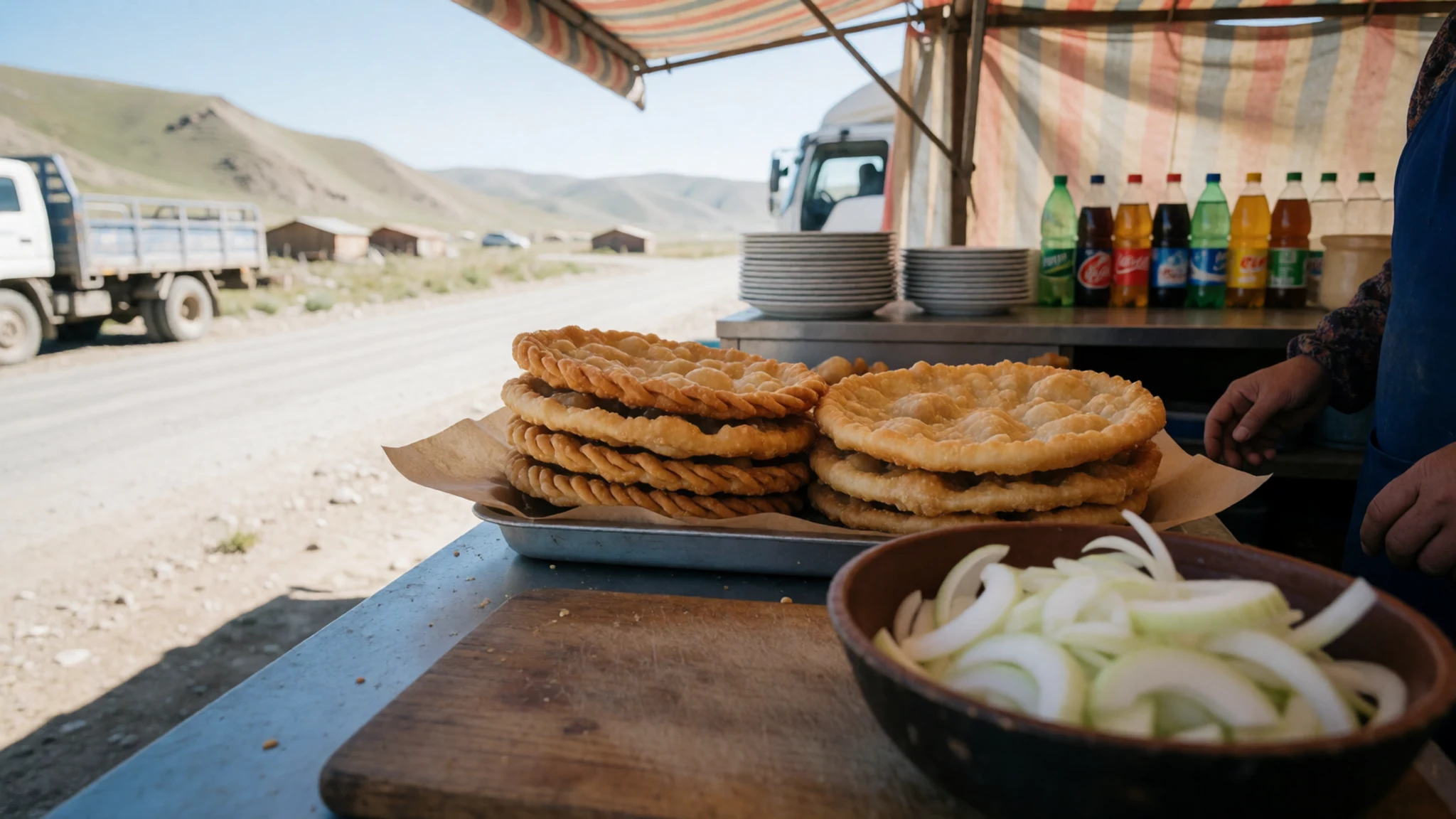
- Tsuivan — Canteens in Ulaan-Uul and Tsagaannuur
Tsuivan is a plate of hand-cut noodles fried with meat and a few vegetables. It is hearty, filling and simple, suited to cold or wet days. Vegetables are limited this far from farmland, so portions lean heavily on mutton and noodles. - Süütei tsai — Any herding family's ger
Süütei tsai is salted milk tea, a boiled mixture of milk, water and a little tea that is the first thing offered to visitors in a ger. It tastes savoury rather than sweet. Accepting a cup is both polite and a good way to start a conversation. - Aaruul — Family gers and small shops in the valley
Aaruul are dried curds, sold or made as a long-lasting snack in herding country. They are very hard and sour, and are best sucked slowly rather than bitten. Fresh cheese and clotted cream, known as byaslag and öröm, often sit on the same plate.
Plan it
Best time. June to September, when the grass is green and tracks are most passable. Summer can bring rain and cold nights, and the winters are bitterly cold and make travel hard, so most visitors avoid them.
How long. 5–7
Getting there. Fly from Ulaanbaatar to Mörön, the provincial capital of Khövsgöl, checking the current schedule with an airline or agent. From there the last leg is a long overland drive in an off-road vehicle with a local driver to Tsagaannuur or Ulaan-Uul. Allow a spare day for weather and river crossings.
Budget. mid
Tips
- Book a local driver and guide well ahead for summer, because good ones fill up.
- Carry cash, since cards are rarely accepted outside district centres.
- Bring a water filter or purification tablets, a warm layer and waterproofs even in July.
- Pack insect repellent and a head net for marshy areas near the lakes.
- Check current entry and visa rules for your nationality before booking, as they have changed in recent years.
Etiquette
- Receive tea, food and gifts with the right hand, palm up.
- Ask before photographing people, their animals or their gers.
- Treat stone cairns and sacred sites with respect, and do not climb on them.
Nearby
Sources
- Wikidata Q2351051 (CC0)
- Wikipedia: Darkhad Valley (rev 1373667952) (CC BY-SA 4.0)
- Wikivoyage: Mongolia (rev 5427090) (CC BY-SA 4.0)
- Photo: Horidol Saridag Mountains from the Darhadyn Hotgor, by Yaan (CC BY 3.0)
- Photo: View of Earth, ISS Expedition 31, NASA (Public domain)
- Photo: View of Darkhad Valley, ISS Expedition 45, NASA (Public domain)


