Erdene Zuu Monastery
Erdene Zuu Monastery, Mongolia
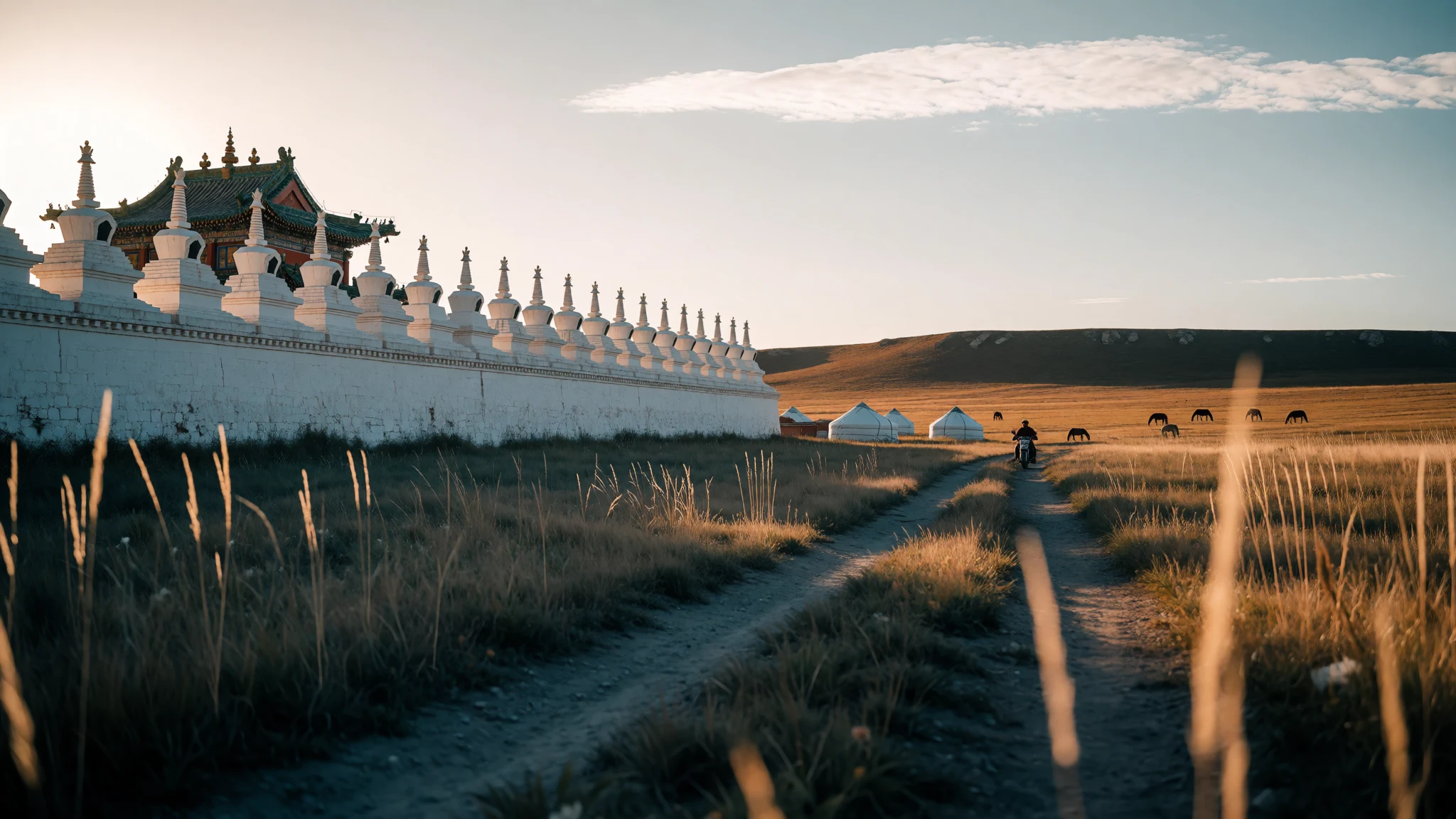
Erdene Zuu is a Mongolian steppe monastery ringed by white stupas, built from the stones of a lost Mongol capital and saved from destruction.
The place
Erdene Zuu Monastery stands at the edge of Kharkhorin, in Övörkhangai Province, on open grassland in central Mongolia. It was founded in 1585, belongs to the Gelug school of Tibetan Buddhism, and lies inside the Orkhon Valley Cultural Landscape World Heritage Site. Its Mongolian name is Эрдэнэ Зуу хийд. What registers first from a distance is the long perimeter wall, studded with whitewashed stupas, which encloses a rectangle of temples with Chinese-style roofs and Tibetan-influenced decoration. The compound is smaller than its fame suggests, and much of the interior is open ground between a handful of surviving halls. Entry arrangements for the temples have changed over the years and are worth checking locally. Right beside it lay Karakorum, the thirteenth-century Mongol capital, though little of that city survives above ground. The imperial court was largely a camp of felt tents, and tents leave few traces. Stone from its ruins went into the monastery walls, so the two sites are physically tangled together. The town around it is low-rise and dusty, with a container market, guesthouses and ger camps, and horses and cattle wander the roads. Summer brings tour groups and a festival mood, while the rest of the year is quiet and, in winter, fiercely cold. Most people spend a couple of hours inside the wall and use the remaining day for the river valley beyond, where older capitals and a waterfall wait.
Its story
Erdene Zuu Monastery grew out of a political bargain. Abtai Sain Khan, a Khalkha Mongol ruler and grandfather of Zanabazar, the first Jebtsundamba Khutuktu, met the 3rd Dalai Lama, after which Tibetan Buddhism became the state religion of Mongolia. Building began soon afterwards, and the monastery was founded in 1585. Workers carried stone from the ruins of Karakorum, the old Mongol capital, to raise the walls. The plan was a boundary of 108 stupas, echoing the beads of a Buddhist rosary, though that count was probably never reached. Temple interiors were painted and the roofs were covered in green tiles in the Chinese manner. War between the Dzungars and the Khalkha Mongols damaged the site in 1688, and local people later stripped away its abandoned wooden defences. One local tradition tells of Bunia, a disciple who in 1745 reportedly tried again and again to take to the air with a canopy of his own making, and failed every time. The worst chapter came in 1939, when the communist ruler Choibalsan took part in a purge that levelled hundreds of monasteries across the country and killed thousands of monks. Erdene Zuu was marked for demolition. Three small temples and the outer wall with its stupas came through. By 1944, with pressure from Stalin, the site was kept standing to impress foreign guests, as was Gandantegchinlen in Ulaanbaatar. What remains today is a fragment of a far larger complex.
What to see
- The perimeter wall and main gate — Erdene Zuu Monastery, Kharkhorin
The wall around Erdene Zuu Monastery is the clearest picture of the founders' ambition, a long enclosure topped with stupas that were meant to mimic a rosary. Walk the outside before going in. The gate gives the best view of the roofs, and the stupas catch low evening light well.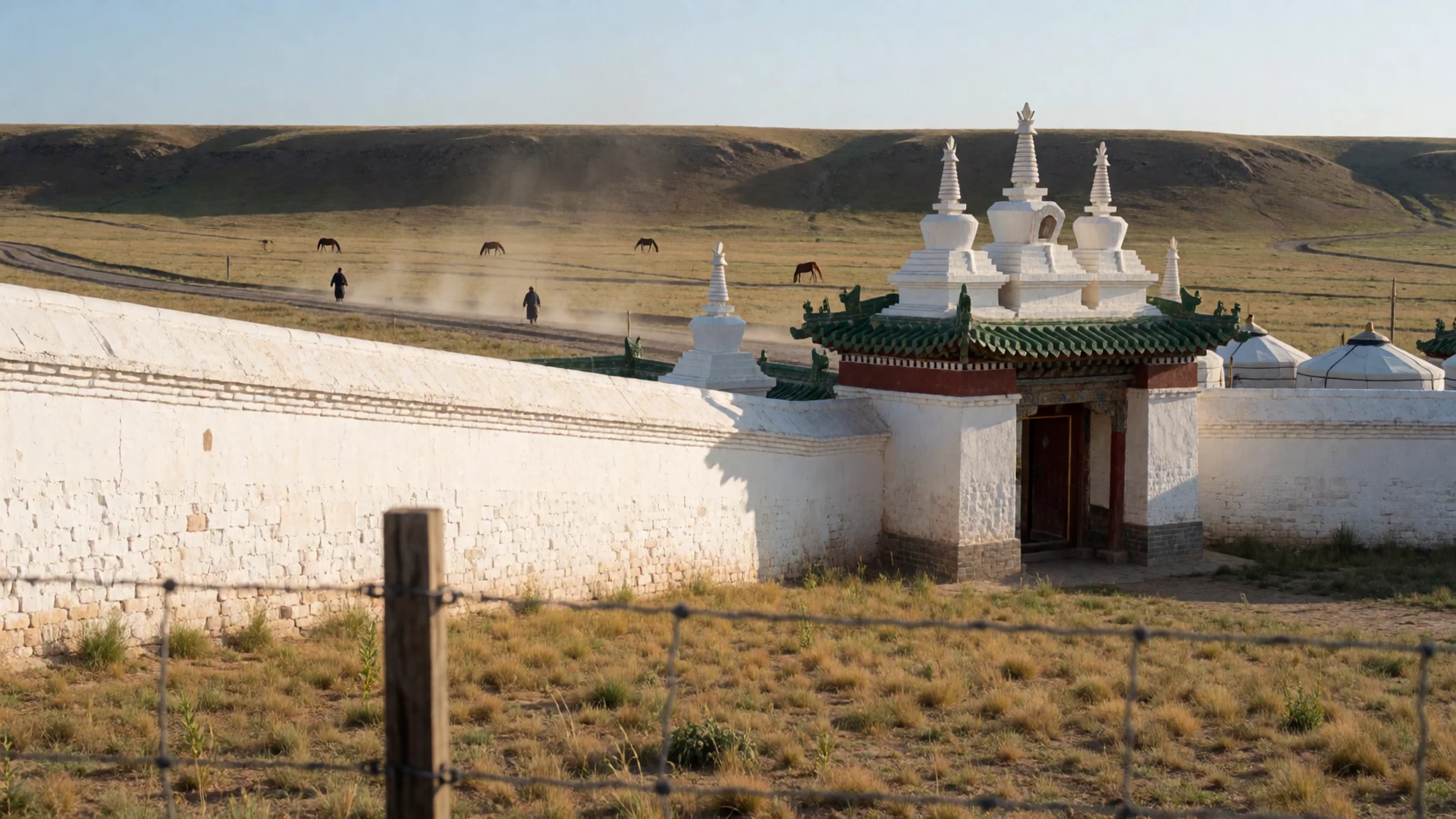
- Lavrin Temple — Inside the monastery wall, Kharkhorin
Lavrin Temple is one of the surviving halls inside the compound, with the upturned green-tiled roof line that marks the monastery's Chinese-influenced style. Inside, visitors find painted walls, altars and offerings. Guided tours are on offer, and photography inside has been charged separately, so ask before lifting a camera.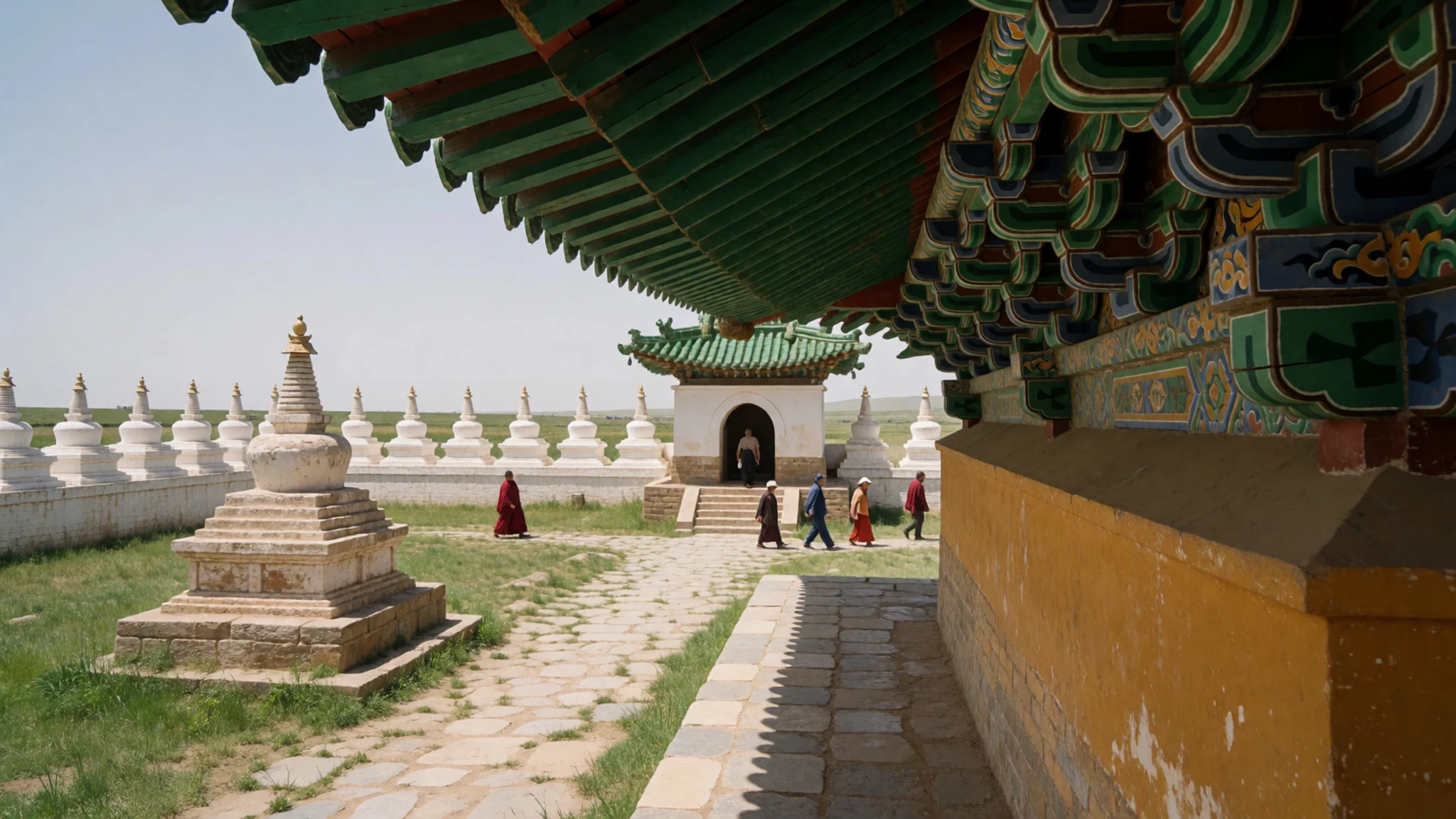
- Western Temple — Inside the monastery wall, Kharkhorin
The Western Temple was built by Abtai Khan and his son, and it shows how the monastery once had several large halls arranged around a courtyard. It is a good place to picture the original scale of the complex, since so much of the rest has gone.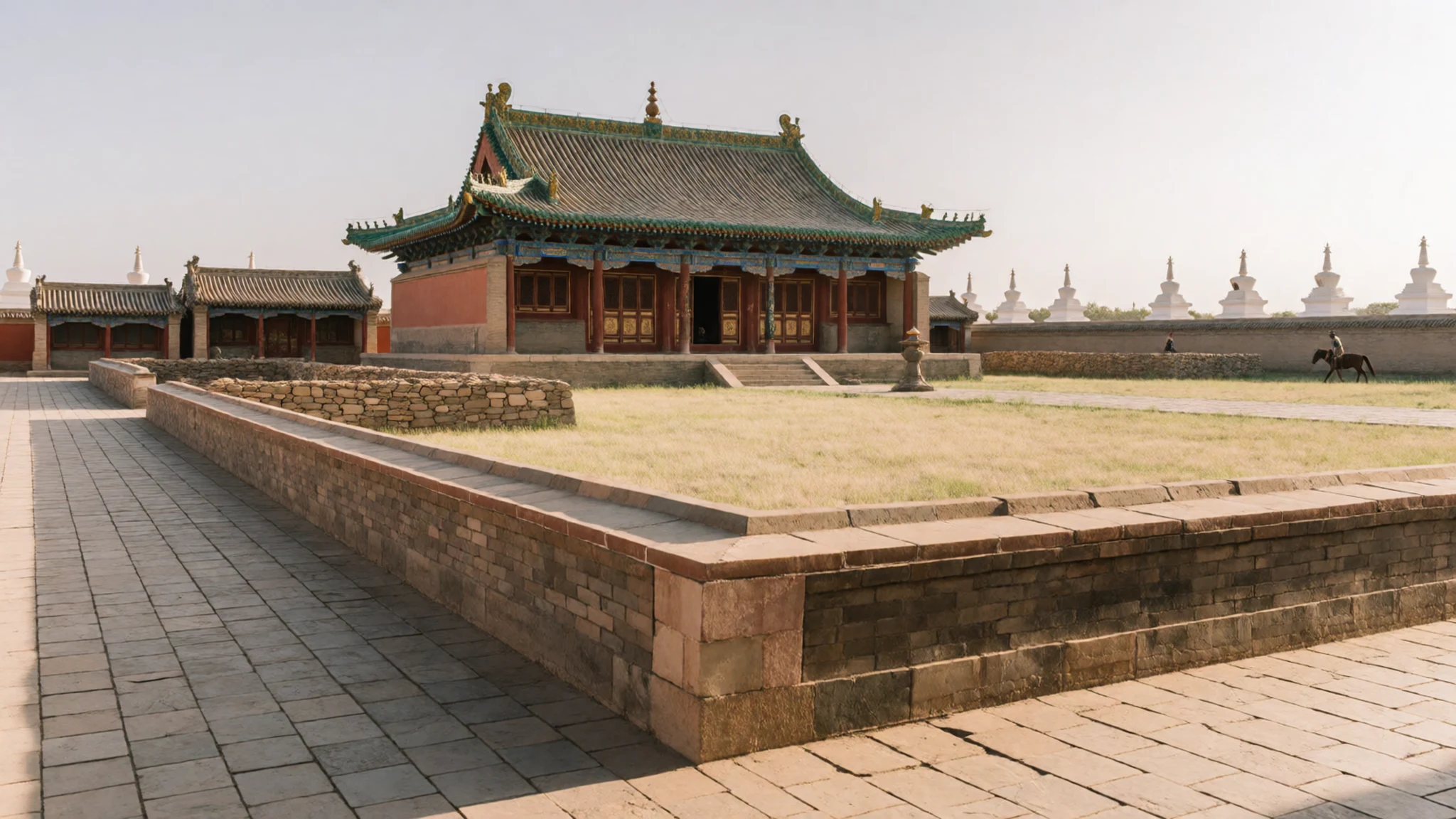
- Gol Zuu Temple — Centre of the monastery, Kharkhorin
Gol Zuu is the central temple, sitting at the heart of the enclosure and drawing the most visitors. The building has the layered roofs and bright woodwork typical of Mongolian monasteries. Go early or late to avoid tour groups, and linger outside, where the yard gives the best views.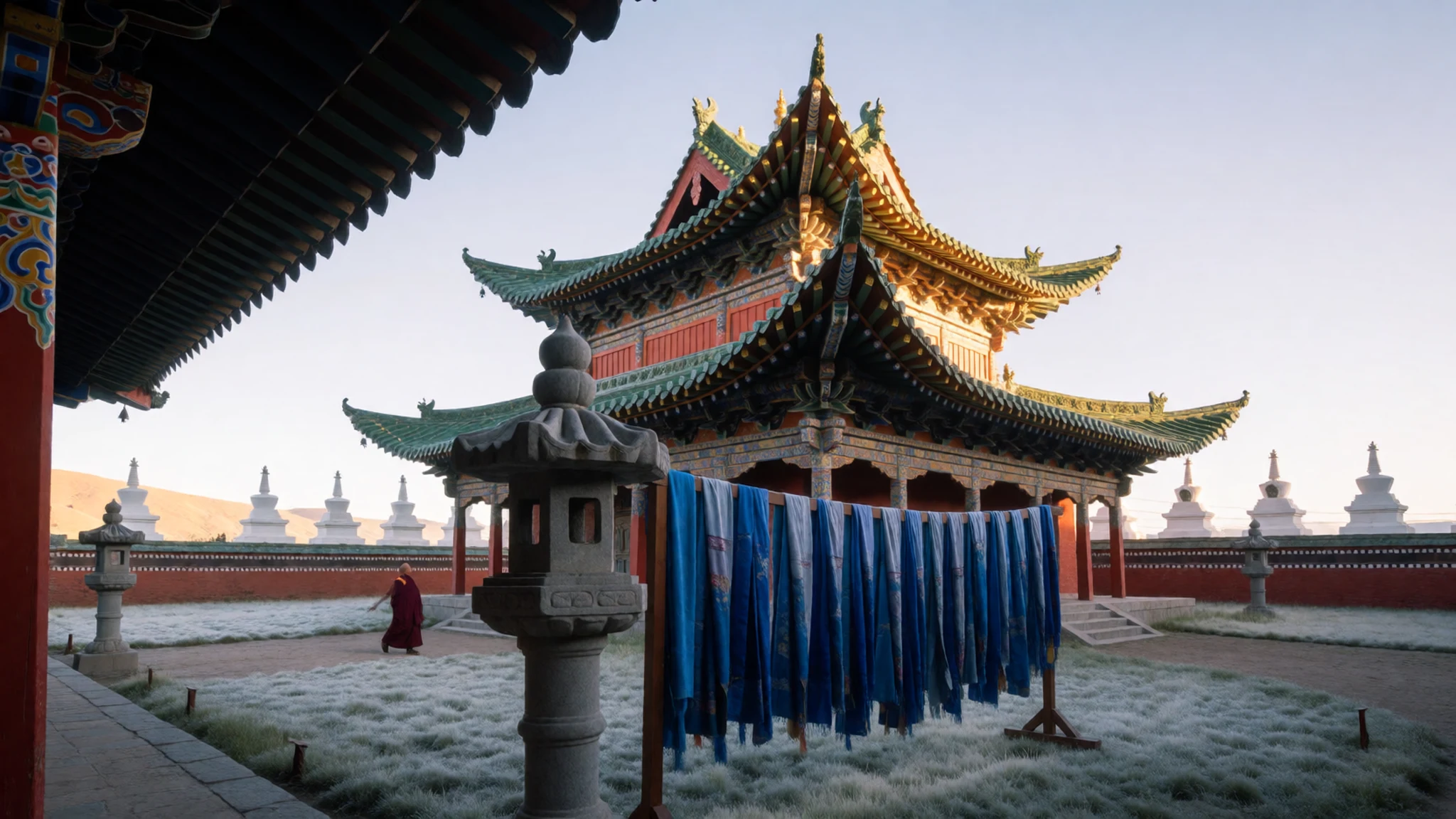
- Khar Balgas — North of Kharkhorin, Orkhon Valley
Khar Balgas, north of Kharkhorin, was the capital of the Uighur Khaganate. It suits anyone drawn to steppe history, though the remains are earthworks and low ruins rather than standing buildings. A local driver or guide helps with the track and with making sense of the site.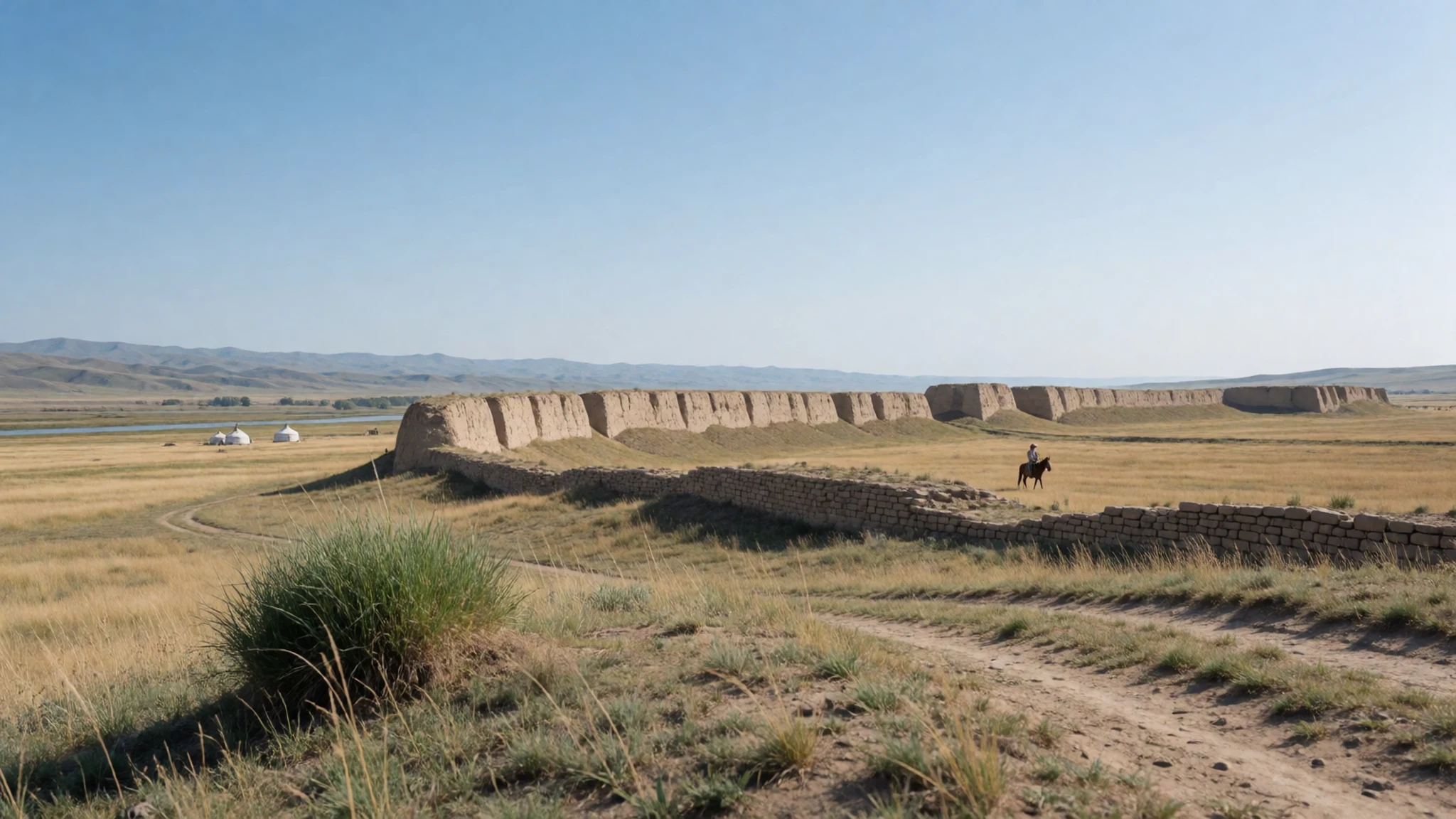
- Orkhon Waterfall — South-west of Kharkhorin
Orkhon Waterfall lies south-west of Kharkhorin along the river, reached by crossing a bridge and continuing over rough ground. It makes a long day trip, best combined with Tövkhön Monastery. Roads are poor, so hire a driver with a sturdy vehicle and check conditions after rain.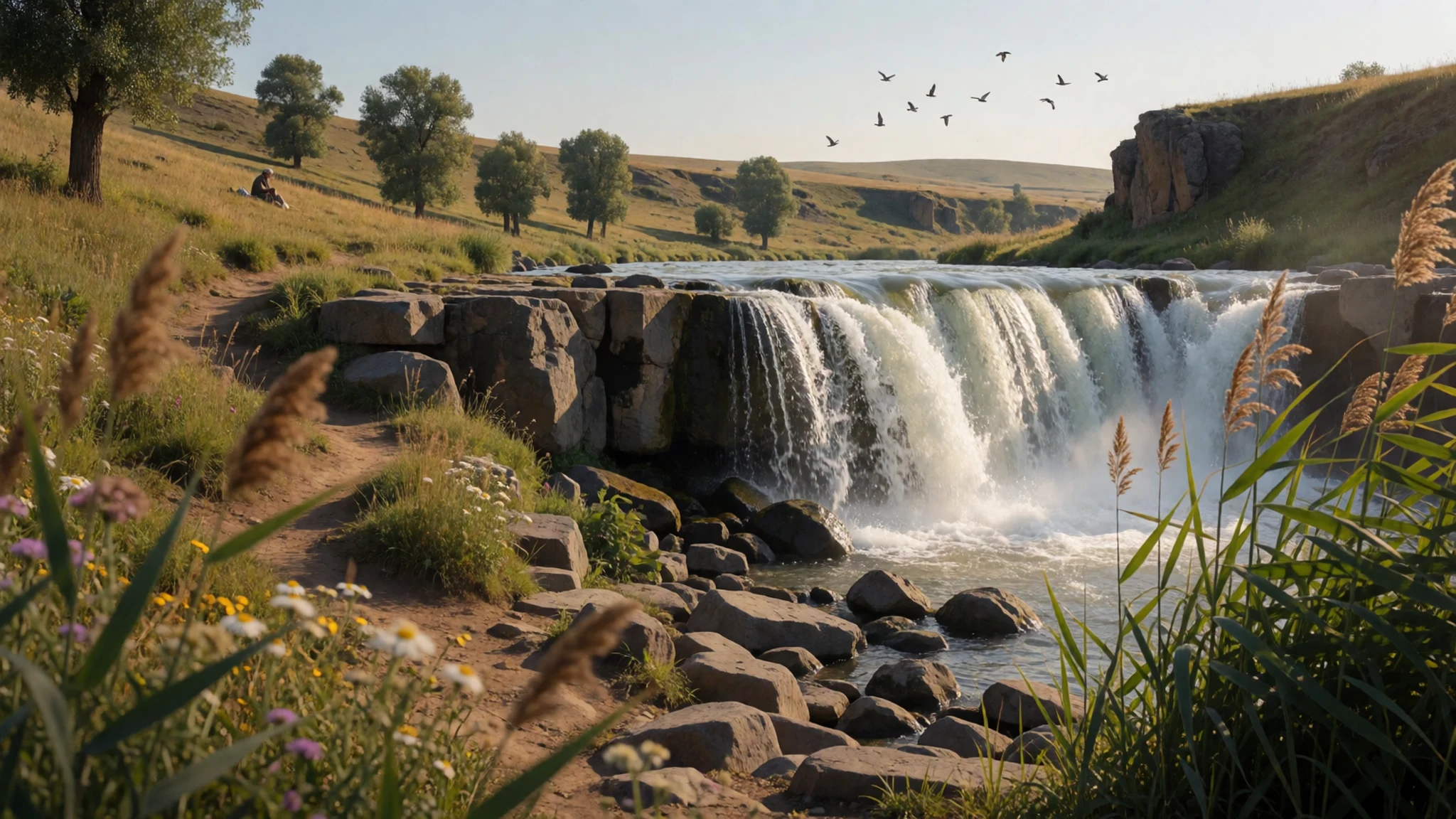
Culture
Erdene Zuu Monastery belongs to the Gelug tradition of Tibetan Buddhism, which Mongolia adopted as its state religion in the late sixteenth century. After decades of suppression in the twentieth century, Buddhist practice returned, and the temples here serve as places of prayer as well as heritage. Visitors will see prayer wheels, which are spun clockwise, and stupas, which are walked around clockwise too. Butter lamps, incense and small offerings are familiar sights. The number 108 matters because a rosary has that many beads, and the monastery's wall was conceived as a giant one. Mongolian Buddhism also lives alongside older steppe beliefs in sky and mountain spirits. Along roads in the valley, heaps of stones called ovoo, draped with blue silk scarves, mark places of respect, and travellers walk round them clockwise as well. Summer festivals, including Naadam in July, bring wrestling, archery and horse racing to the region, and the town fills with visitors. Monks may be chanting in a hall at certain hours, and this is worship, not a performance put on for tourists. In a herder's ger, the host offers salted milk tea, and it is polite to accept it with the right hand and take at least a sip. Walk clockwise around stupas and prayer wheels, keep your voice low inside the temples, and ask before photographing monks or worshippers.
What to wear
At Erdene Zuu Monastery in Kharkhorin, traditional dress means the deel, a long robe that wraps across the chest and fastens at the right shoulder, with a high collar and a sash at the waist. It is made of cotton, silk brocade or wool, and winter versions are lined with sheepskin. Boots called gutal, with upturned toes and thick soles, and felt or fur hats complete the outfit. Deels are worn for festivals such as Naadam, for weddings and the lunar new year, and daily by many herders. In town, everyday clothing is mostly jeans, fleeces, trainers and padded jackets, often with a deel for the countryside or a ceremony. Monks wear robes in deep maroon and saffron. For visitors, the steppe means exposure. Summer days can be hot and sunny, evenings cool quickly, and wind is common, so bring layers, a windproof jacket, a hat and sunscreen. In winter, pack serious insulation, including thermals, a hat and gloves. Footwear should be sturdy, since the ground inside the wall is uneven and tracks beyond are rough. For the temples, cover shoulders and knees, avoid hats indoors, and wear shoes that slip off easily if asked.
What to eat
- Buuz — Small canteen-style eateries in Kharkhorin town
Buuz are steamed dumplings filled with minced mutton or beef, pleated shut and served hot with a little salt or sauce. They are everyday Mongolian food and a common order in small canteen-style eateries around Kharkhorin.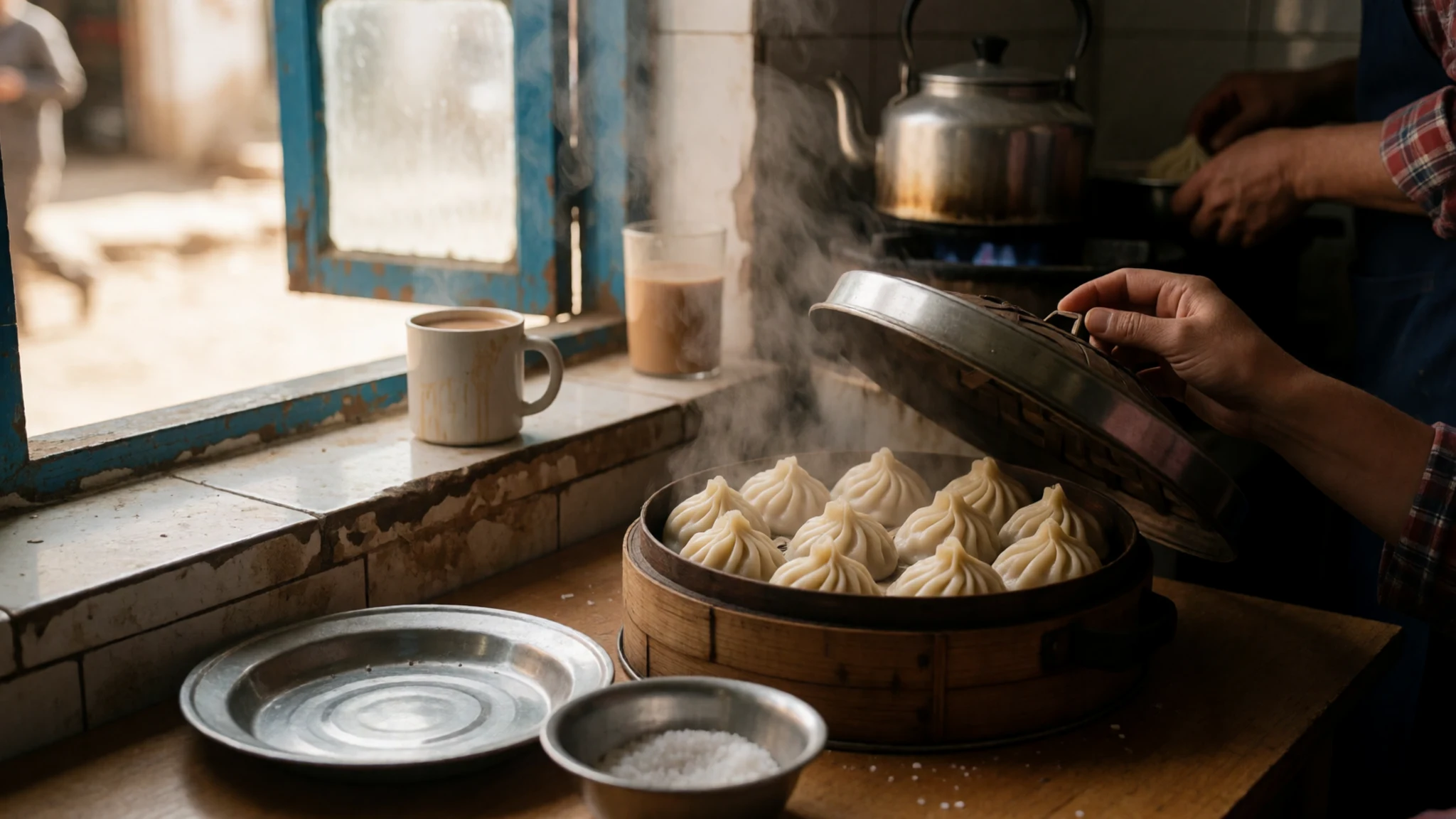
- Khuushuur — Cafes and stalls near the container market
Khuushuur are flat, fried meat pancakes with a crisp, greasy shell and a juicy filling. They are filling road food, good before a day outdoors, and turn up at summer stalls and cafes near the market area.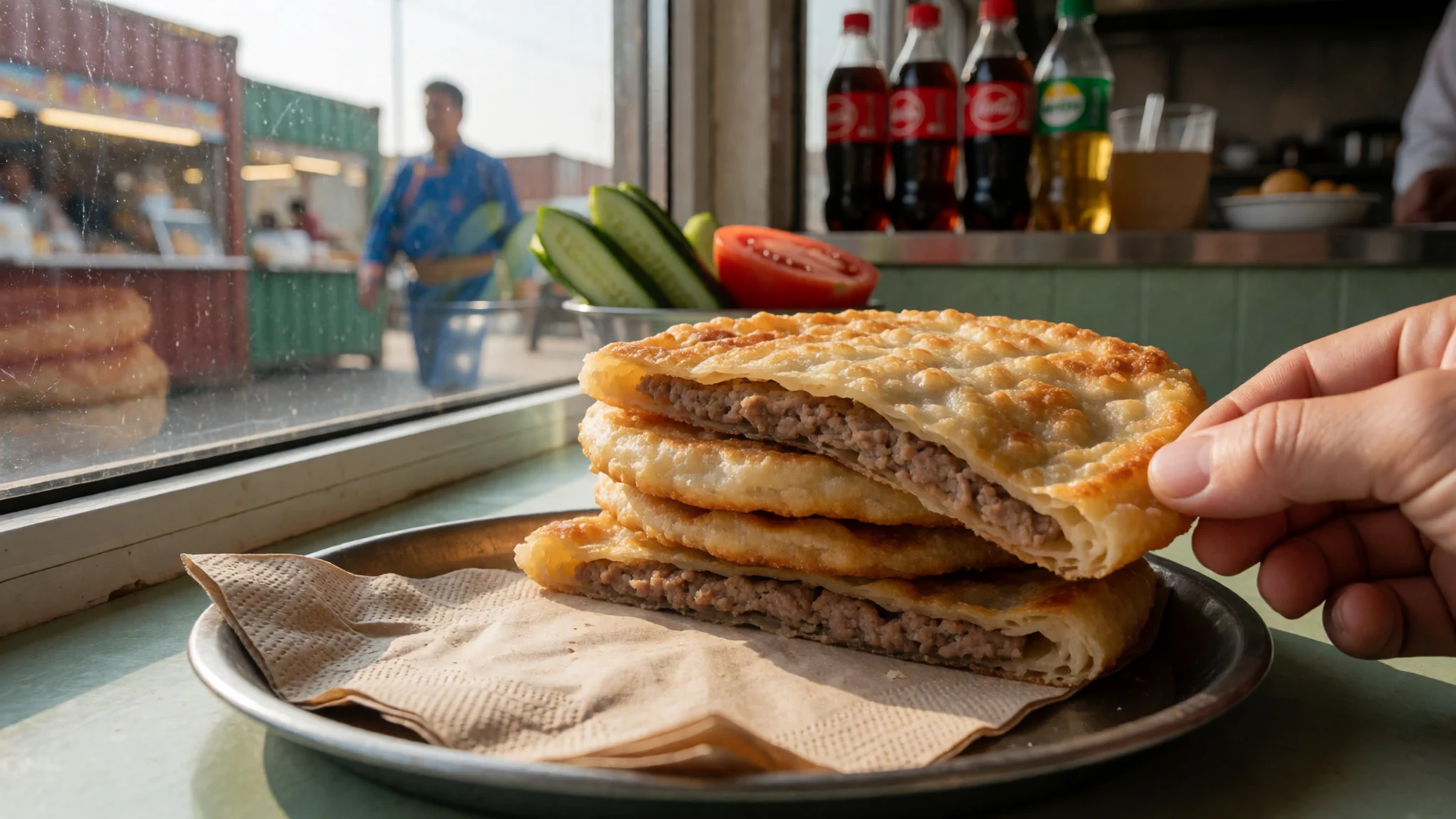
- Tsuivan — Mongolian restaurants along the main roads of Kharkhorin
Tsuivan is stir-fried flat noodles with meat and a few vegetables such as carrot and cabbage. It is a plain, hearty plate, and one of the dishes that most simple Mongolian restaurants can be relied on to serve. - Suutei tsai — Ger camps, guesthouses and herders' tents in the valley
Suutei tsai is salted milk tea, often made with a little butter or millet added. It tastes odd at first to visitors used to sweet tea, but it is warming and offered everywhere, especially in gers. - Airag — Herders' gers and roadside stalls in summer
Airag is fermented mare's milk, slightly fizzy and sour, and seasonal in summer. It is usually offered as a gesture of hospitality, and visitors are welcome to take a small taste.
Plan it
Best time. June to September, when days are warm and ger camps and tours are running; July brings Naadam and the biggest crowds. Winters are long and bitterly cold, and some services close.
How long. 2–3
Getting there. Fly into Ulaanbaatar, then take a daily bus to Kharkhorin, a trip of around seven hours with a lunch stop, or join a guided tour. Shared cars, jeeps and minivans run back to Ulaanbaatar and nearby towns from the market area.
Budget. mid
Tips
- Check the current arrangements for temple entry and photography on the spot, since rules and charges change
- Allow a day for the Orkhon Valley sights, which need a driver and decent vehicle
- Carry cash, as cards are unreliable outside the larger shops
- Bring water, sun protection and warm layers, as the weather shifts quickly
- Watch for horses and cattle on roads and animal dung on pavements
Etiquette
- Walk clockwise around stupas and prayer wheels
- Ask before photographing monks or worshippers
- Accept offered tea or airag with the right hand
Nearby
Sources
- Wikidata Q1058965 (CC0)
- Wikipedia: Erdene Zuu Monastery (rev 1384095866) (CC BY-SA 4.0)
- Wikivoyage: Karakorum (rev 5406284) (CC BY-SA 4.0)
- Photo: Niebo nad budynkami klasztoru Erdene Dzuu 02, Marcin Konsek (CC BY-SA 4.0)
- Photo: Świątynia Zachodnia w klasztorze Erdene Dzuu 01, Marcin Konsek (CC BY-SA 4.0)
- Photo: Erdene-Zuu, Frithjof Spangenberg (CC BY-SA 2.5)
- Photo: Erdene Zuu Monastery 07, Bernard Gagnon (CC0 1.0)
- Photo: Lavrin Temple, Chongkian (CC BY-SA 4.0)
- Photo: Erdene Zuu Monastery Stupa, Chongkian (CC BY-SA 4.0)
- Photo: Świątynia Dalajlamy 04, Marcin Konsek (CC BY-SA 4.0)
- Photo: Gol Zuu Temple 01, Bernard Gagnon (CC0 1.0)


