Altai Tavan Bogd National Park
Altai Tavan Bogd National Park, Mongolia
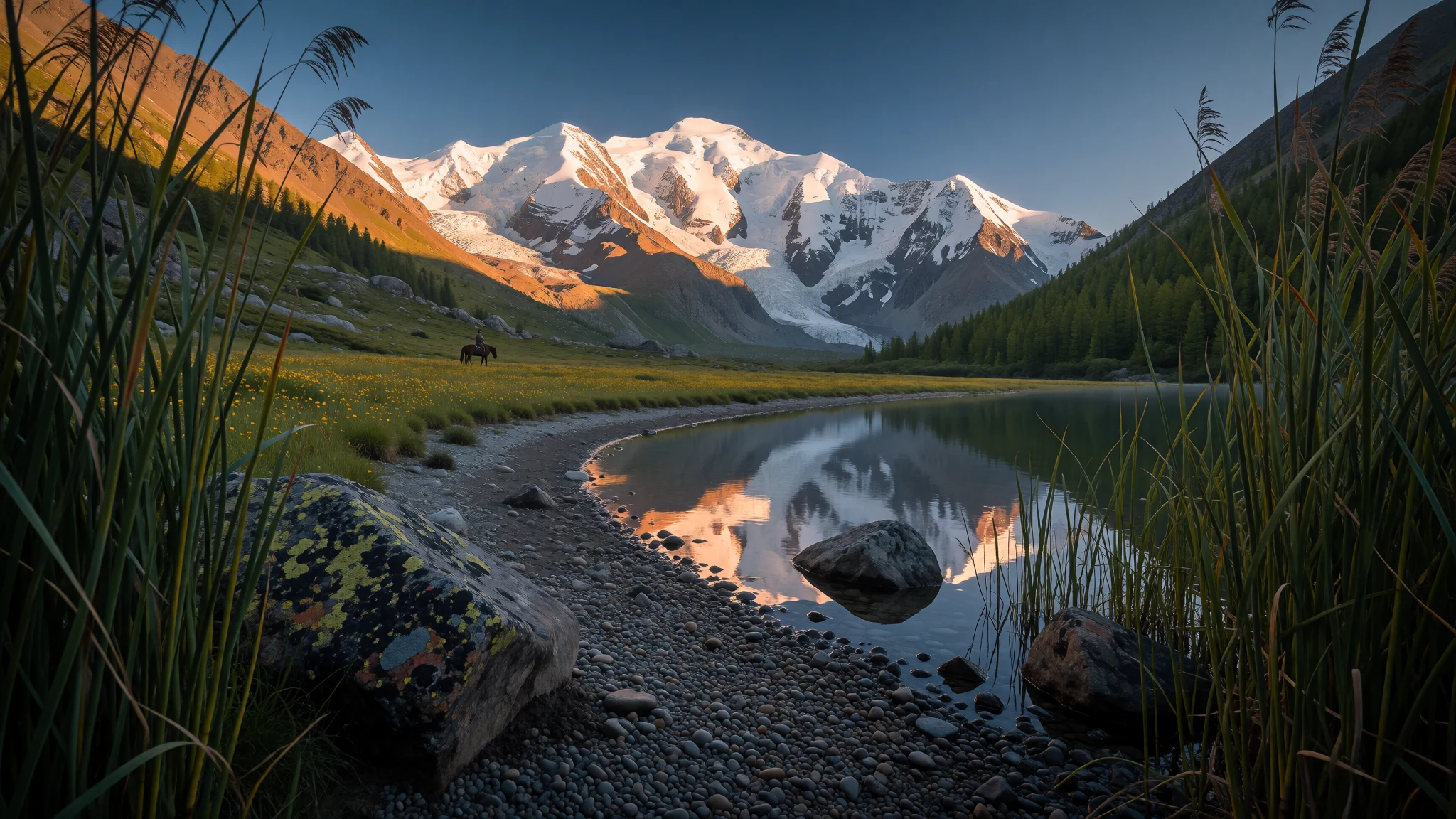
Altai Tavan Bogd feels like Mongolia at full volume: high mountains, remote valleys, and ancient rock art in one big, wild patch.
The place
Altai Tavan Bogd National Park sits in Bayan-Ölgii Province in western Mongolia, covering the Mongolian side of the Tavan Bogd massif. This region is split by the triple border with Russia and China, so the park’s geography comes with a frontier feel—mountain passes, long drives, and landscapes that change quickly from open steppe to sharper alpine terrain.
At the heart of the park is the sacred Tavan Bogd massif, named for the “five saints”. The snow-capped Kuiten Uul mountain is the highest among the five peaks that give the area its name. The scenery is shaped by glaciers and water: the park holds multiple freshwater lakes—Khoton, Khurgan and Dayan are the best-known—and it also includes waterfalls and extensive glacial formations.
The lakes region is where most visitors base themselves in summer. Camps, tracks, and cultural sites cluster around the valleys draining from the mountains, especially where rivers flow between passes and down toward the lake system. Farther out, the park becomes more about time and travel: trekking routes link viewpoints, petroglyph concentrations, and monuments scattered through wider valleys.
A key part of the appeal is cultural depth. Inside the park lies the UNESCO World Heritage Site “Petroglyphic Complexes of the Mongolian Altai”, spread across multiple locations with thousands of petroglyphs and Turkic stone monuments. It’s not a “museum in the hills”—the marks are simply part of the terrain.
It’s also a place for honest expectations. Even in the busy months there’s no urban comfort: few services, minimal infrastructure, and travel that depends on road conditions and local guidance.
Its story
Altai Tavan Bogd National Park earns its reputation less through comfort and more through continuity—between mountain sacredness, everyday nomad life, and the long arc of human markings on stone. In the summer, the park’s main lakes act like magnets. People move between the shores, the valleys, and the routes that lead up toward the Tavan Bogd peaks, and the days are shaped by daylight, weather, and the pace of travel on rough ground.
Over thousands of years, this landscape has drawn different kinds of communities: ancient hunting groups, later pastoral life, and the semi-nomadic rhythms that came with domestication and horses. You can feel this layering when the trip includes stops around petroglyph concentrations and “stone men” scattered across the wider park. These aren’t staged displays; they’re part of riverside and valley contexts, which makes the experience feel grounded even when it’s remote.
Practicalities also become part of the story. Many visitors arrive via Ölgii with a guide or tour that helps with permits and logistics, because roads are rough and bridges are limited. That means the “journey” is not a quick transfer—it’s a proper day’s travel, with pass-like stretches and the need to adjust plans as river crossings and track conditions shift through the season.
In the busy months, August and September bring the best mountain-weather windows for climbing, and more people appear around the lakes and tour-camp areas. Outside that peak, the park becomes quieter and tougher: winter conditions change access and activities, and there’s no year-round accommodation inside the park. The reward, though, is the same—wide horizons, real mountain air, and ancient sites that feel embedded in the land.
What to see
- Tavan Bogd Mountain — Tavan Bogd massif area
Tavan Bogd Mountain anchors the park’s skyline, with steep massif views and a snow-and-ice feel even when the lower valleys look dry. Nearby glaciers include Potanin Glacier, and the area is a common base for mountain-climbing routes and viewpoint day trips.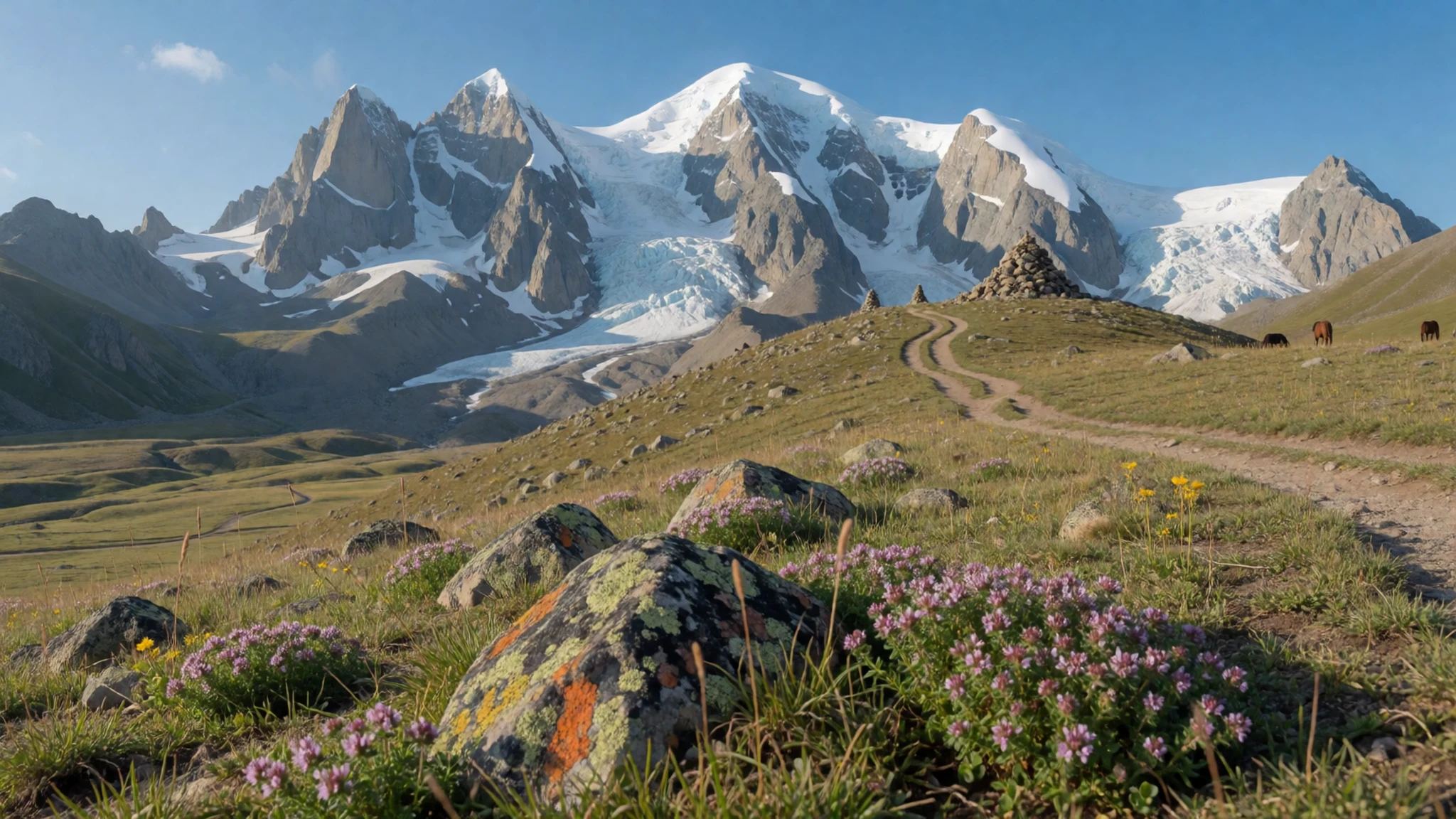
- Lakes Region (Khoton Nuur, Khurgan Nuur, Dayan Nuur) — around the lakes
The Lakes Region is where most people concentrate in summer, with Khoton Nuur and Khurgan Nuur forming a twin-lake landscape and Dayan Nuur sitting nearby. It’s also where Kazakh nomads spend the summer, so the shoreline has both natural scenery and living-countryside energy.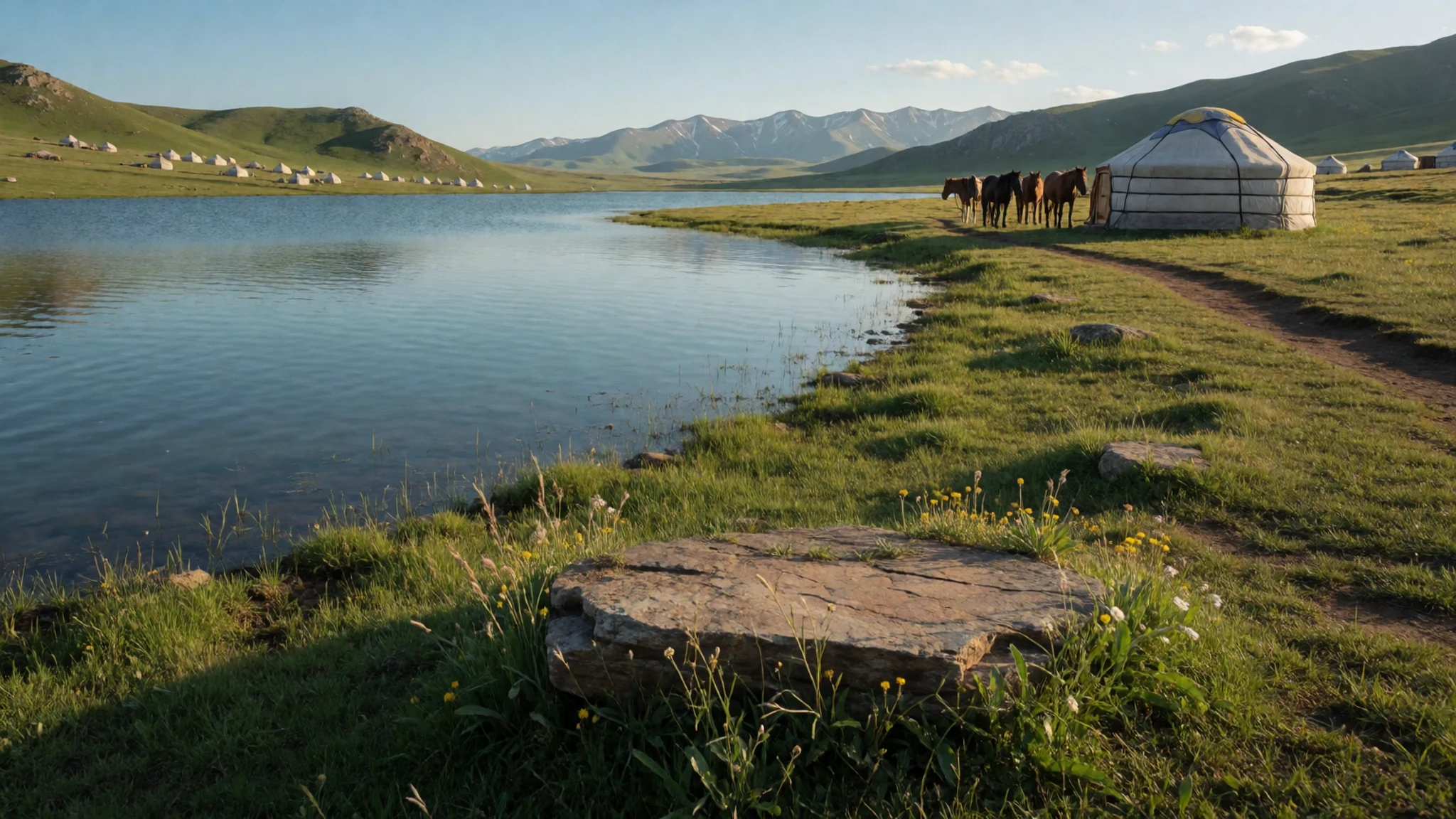
- Tsagaan Salaa (White Valley) — northern edge near the Russian border
Tsagaan Salaa, also known as White Valley, sits near the Russian border at the northern edge of the park. It’s known for a high concentration of petroglyphs, “stone men”, and burial mounds, making it one of the most meaningful places for reading the landscape’s older history.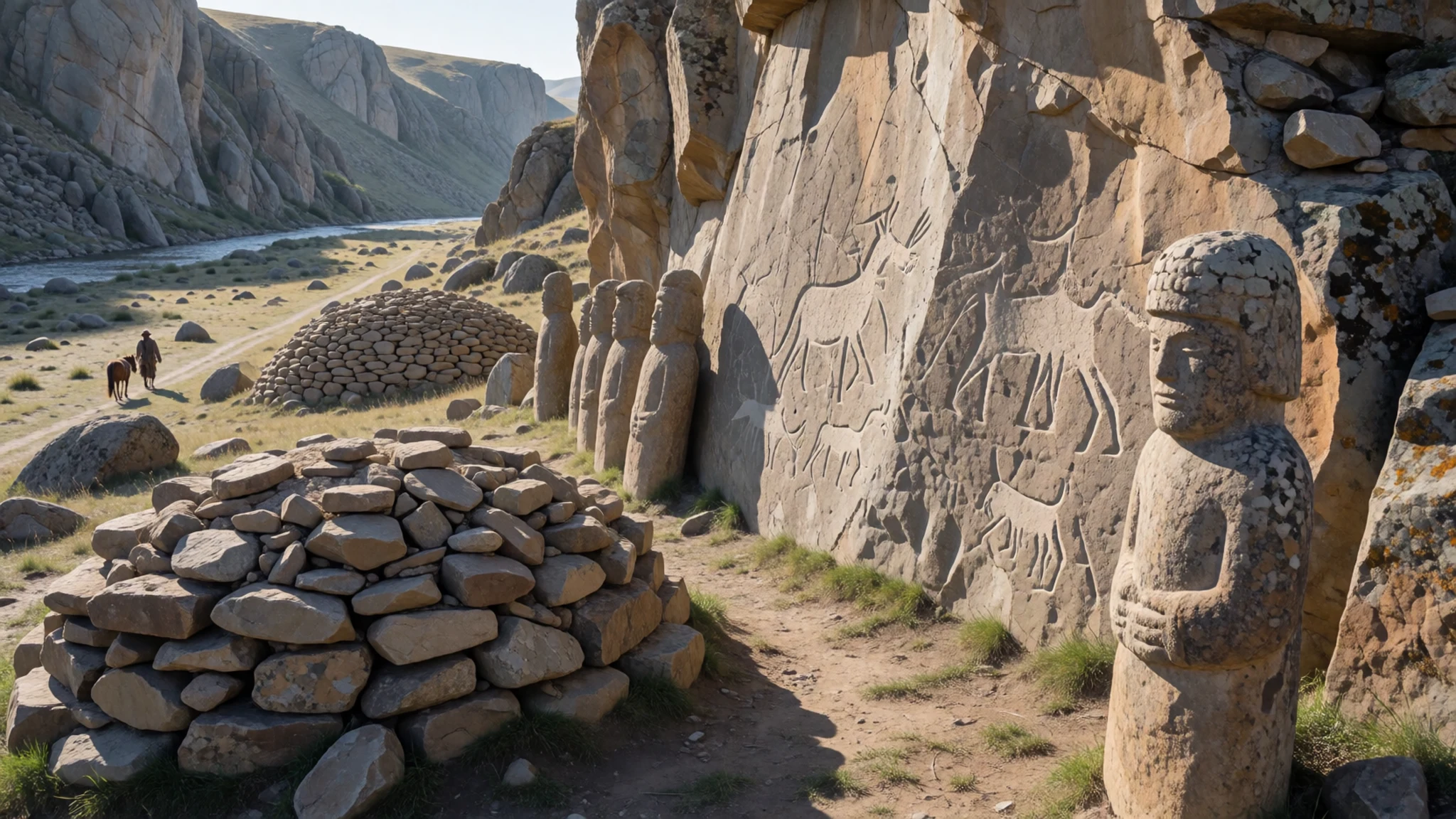
- Tsagaan Gol (White River valley) — Tsengel / central UNESCO section approach
Tsagaan Gol is the main valley route carrying the White River from the Tavan Bogd Mountains toward Tsengel village and the UNESCO World Heritage Site’s central section. Valley travel is slower here, but the setting works well for understanding how water shapes both movement and settlement patterns.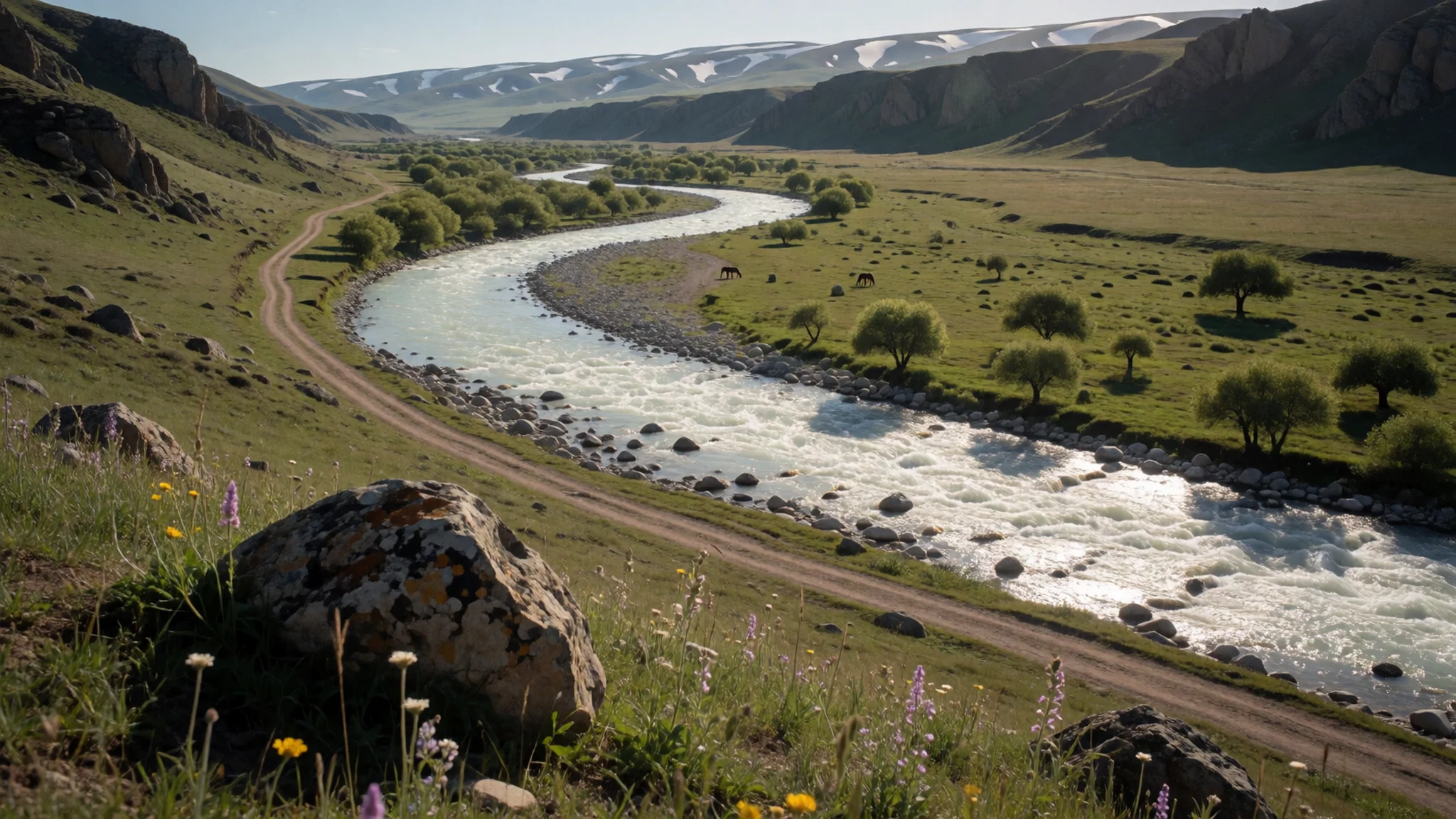
- Takhiltyn Havtsal (forested valley) — valley south of Tavan Bogd
Takhiltyn Havtsal is a forested valley where river flows head south from the mountain passes into the lake system and beyond. It’s a wildlife-rich-feeling area and also a landscape with monuments, so it tends to suit travellers who want more than just mountain views.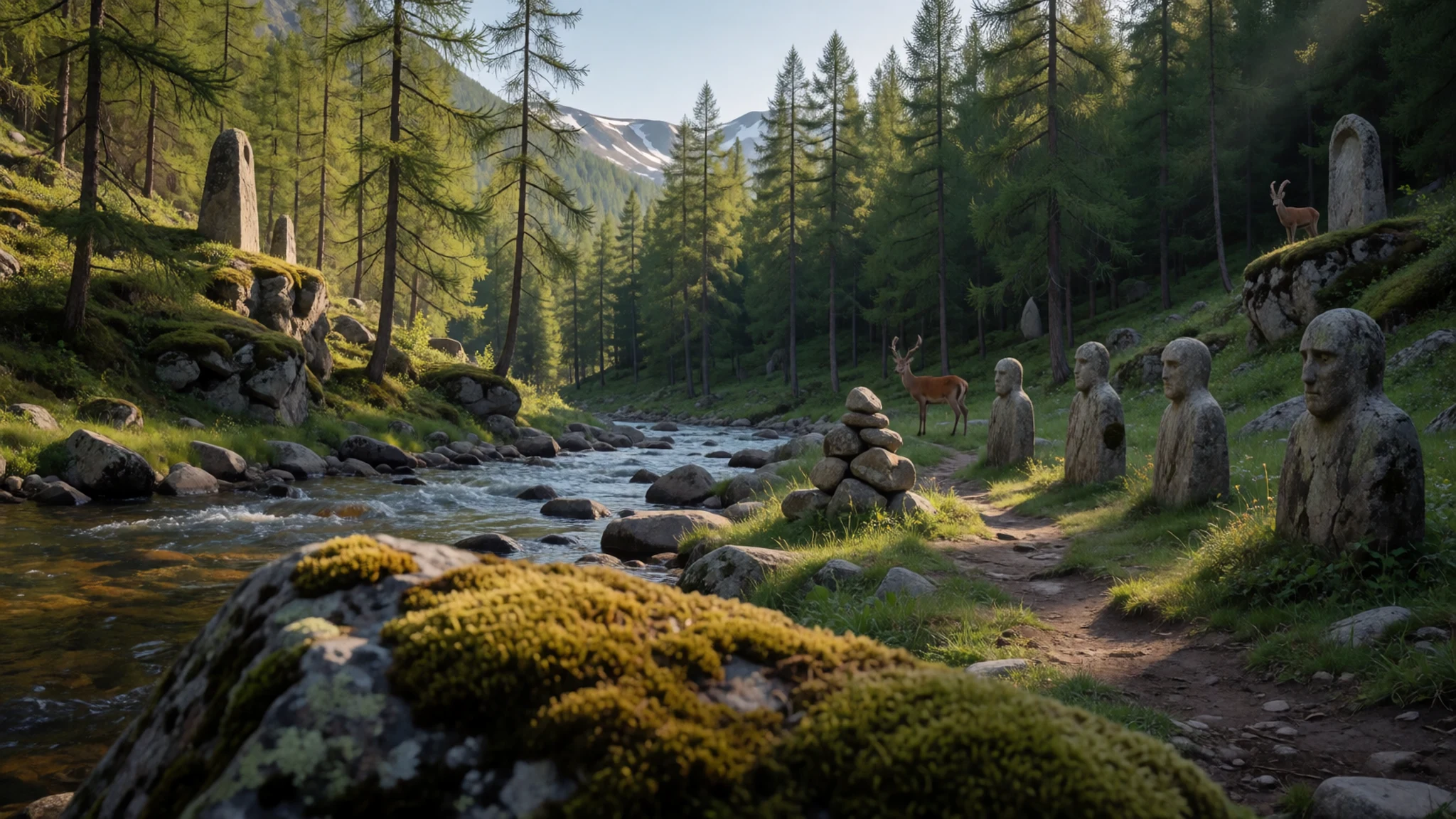
Culture
Altai Tavan Bogd National Park sits in a culturally layered part of western Mongolia, where the mountains are considered sacred by local Kazakh, Tuvan, and Mongolian communities. That sense of sacredness isn’t abstract—it shows up in how sites are approached, where people pause, and how stories are told around stone monuments and older rock markings.
The UNESCO World Heritage Site inside the park is the Petroglyphic Complexes of the Mongolian Altai, spread across multiple locations with several thousand petroglyphs and Turkic stone monuments. One well-known site is Tsagaan Salaa, where more than 10,000 cave drawings are spread along a stretch of river valley. Elsewhere, the “stone men” and burial mounds add another layer, reflecting long-standing ceremonial and memorial landscapes.
Because this is not a theme park, the most respectful cultural behaviour is simply to move carefully and quietly—especially near rock surfaces and monument areas. If a guide is involved, follow local guidance on where to stand and how to photograph. Camps and everyday life also matter: when visitors eat or stay near nomad families, interactions often become warmer and more personal than travellers expect.
Visitor etiquette: ask before photographing people or sacred stones, keep noise low, and stick to the route or standing areas suggested by your guide or hosts.
What to wear
In Altai Tavan Bogd National Park, clothing needs to handle big temperature swings, wind off the open valleys, and travel on uneven ground. Traditional dress varies by community, but in this Kazakh-influenced region it’s common to see layered, practical garments with felt and wool components; bright textiles may appear during festivals and celebrations around the lakes.
In day-to-day summer travel, most visitors wear outdoor layers—windproof jackets, warm mid-layers, and sturdy trousers—because even when the landscape looks bright, mornings and evenings can feel chilly. Footwear matters: tracks and trekking routes are not gentle underfoot, and boots with grip help when surfaces are rocky or muddy near water.
For a visitor wardrobe, think “mountain survival” rather than “light packing”: bring a warm layer for glacier-and-peak days, a waterproof shell for pass-weather changes, and gloves or a hat for cold mornings. If the trip includes cultural sites or time near camps, modesty helps—choose clothing that covers shoulders and avoids overly revealing outfits, and remove or adjust anything that’s uncomfortable for sitting around felt tents. In practice, layers are the key, because the park’s weather can shift quickly even within a single day.
What to eat
- Meat-heavy stews and cooked meat (goat, sheep, horse, camel, cow) — with local families in summer camps and countryside visits
In Altai Tavan Bogd, most meals centre on meat—goat, sheep, horse, camel or cow—served hot and often stewed. It’s the simplest way to “eat like the countryside” during lake and countryside days.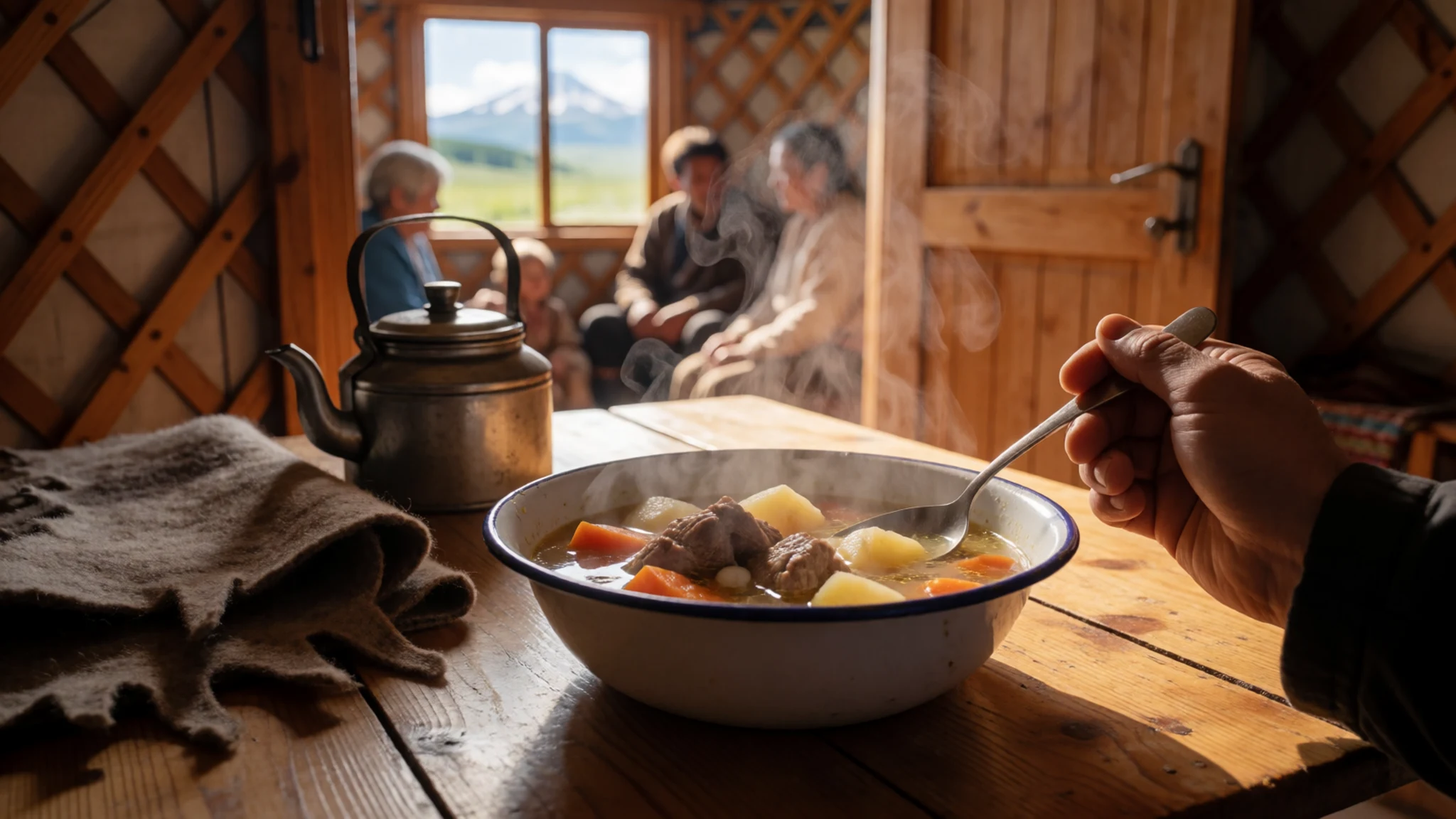
- Flour staples, often with potatoes where available — near the lakes and on road-trip provisioning stops via Ölgii
Flour-based staples are common, typically paired with whatever vegetables are easiest to source—potatoes when available. Expect hearty portions designed for long travel days rather than light, snack-style eating.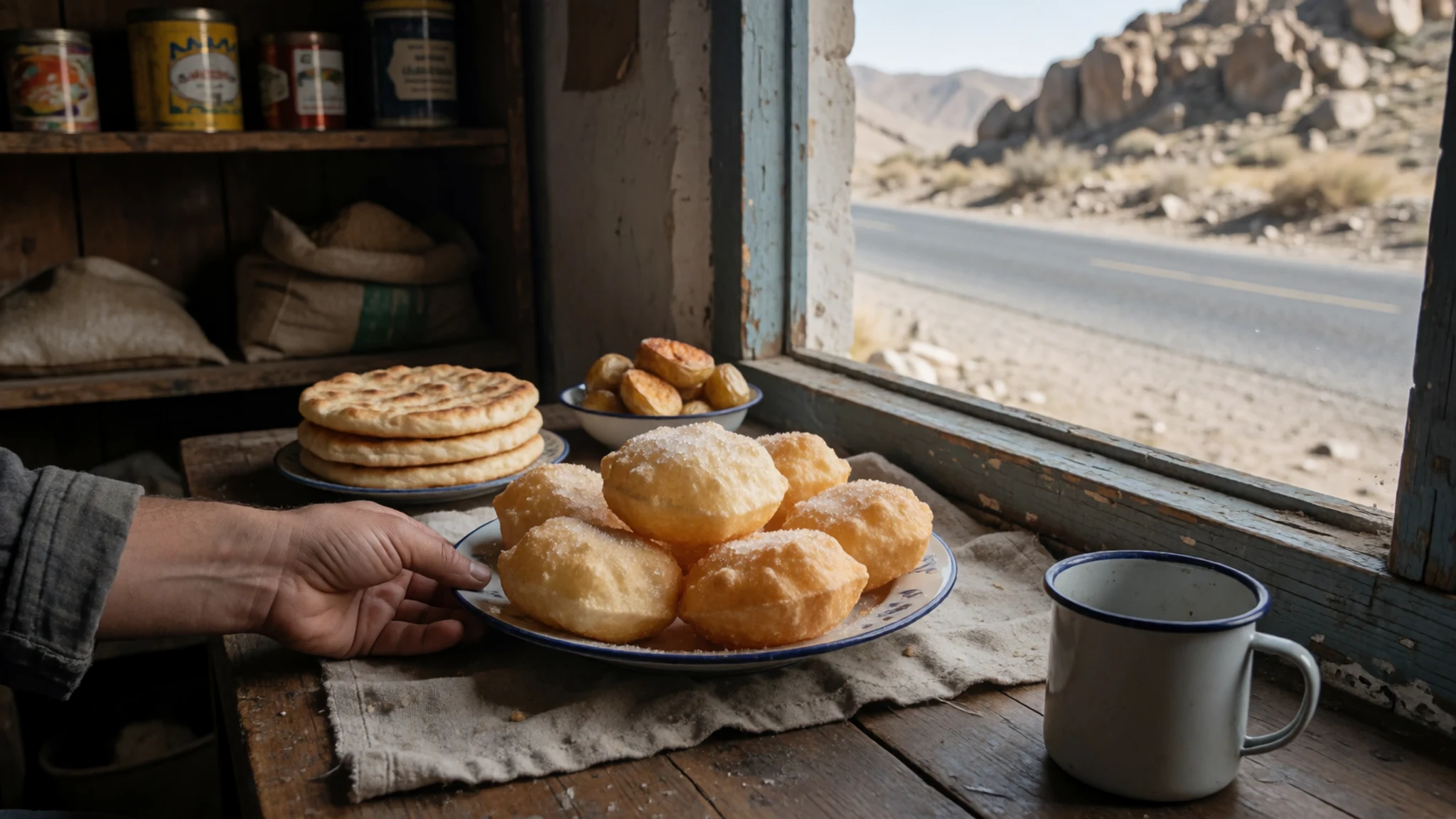
- Milk tea — with local hosts during countryside visits and stays
Milk tea shows up often in Mongolian hospitality, especially when visitors are invited into a home or camp. It’s a comforting warm drink after cold stretches by rivers and lakes. - Koumiss (fermented horse milk) — around nomad camps and family get-togethers
Koumiss is a fizzy, sour fermented horse-milk drink that’s commonly shared in pastoral settings. It’s an acquired taste, but it’s a direct way to experience local food culture. - Bazaar supplies (noodles, rice, herbs and sauces) — open-air Bazaar in Ölgii
If a trip plan includes independent packing, provisioning matters: noodles or rice, onions, potatoes, carrots, cabbage, and flavour helpers like herbs or tomato sauce make meals easier on the road.
Plan it
Best time. June to October for warmer conditions when snow has melted and tour camps/shuttles are operating; August to September for the best weather for mountain climbing. Spring can be cold, and winter is quiet but far more demanding.
How long. 5–7
Getting there. The park is about 180 km from Ölgii, the provincial capital in Bayan-Ölgii. Most visitors start in Ölgii; the drive typically takes around 7 hours with stops (about 5 hours non-stop) due to rough roads, high mountain passes, and limited bridges, and the last leg depends on current track and river-crossing conditions.
Budget. mid
Tips
- Plan for a tour or guide if permits and access coordination are required; many visitors rely on this approach.
- If driving, ask a guide to sketch a route because paths and river passability can change seasonally.
- Register with the park office before setting off, especially for independent trips, since Mongolia lacks a formal rescue service.
- Pack seasonal layers and backcountry basics for the activity—mountains, glacier areas, and long drives all call for it.
Etiquette
- If staying with locals, it’s normal to bring small gifts (for example sweets or tea) as a token of appreciation; it’s not mandatory but it’s appreciated.
- Carry water and purify/boil what’s needed when camping; don’t rely on “easy access” to facilities.
- Be wildlife-aware in the park—keep distance and follow local guidance in animal territory.
Nearby
Sources
- Wikidata Q932232 (CC0)
- Wikipedia (rev 1382879920) (CC BY-SA 4.0)
- Wikivoyage (rev 5423971) (CC BY-SA 4.0)
- Photo photos/01-tavan-bogd-mountain.jpg (CC BY 3.0)
- Photo photos/02-relief-map-of-mongolia.png (CC BY 3.0)

