Burkhan Khaldun
Burkhan Khaldun, Mongolia
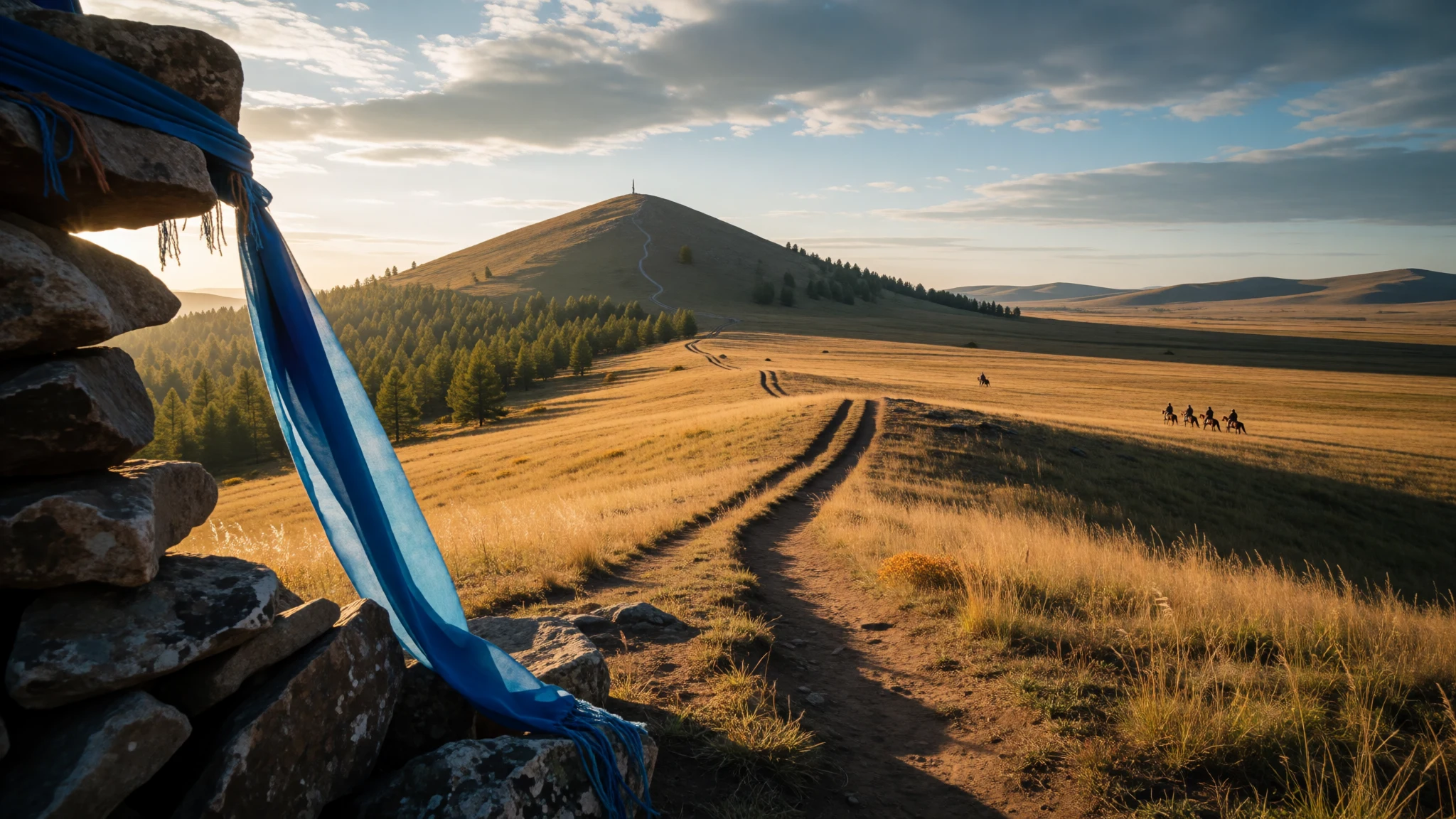
Burkhan Khaldun is Mongolia’s “God Mountain”, where legend, state-sanctioned worship and wild landscapes overlap.
The place
Burkhan Khaldun (Бурхан Халдун) sits in the Khentii Mountains of northeastern Mongolia, within the Khentii Province. It’s part of the larger Khan Khentii Strictly Protected Area, a protected landscape established in 1992 that covers about 12,000 square kilometres. The mountain carries a special status in Mongolian belief: it is widely treated as the most sacred mountain in the country, and the worship connected to it was formalised by presidential decree.
Geographically, the mountain is described as crescent-shaped and as a key watershed. Rivers linked to the mountain feed out in several directions: the Kherlen heads towards Hulun Lake, while the Onon and other tributaries connect to the Amur system; further rivers flow northwards to join the Selenge. That range of drainage routes is one reason the locality feels like more than a single peak—this is a whole sacred zone, tied to water, pasture and seasonal movement.
At around 2,362 m elevation, Burkhan Khaldun stands high above the steppe. The protected area around it supports a complex ecosystem, including species adapted to a transition zone between Siberian permafrost landforms and steppe. If the region looks open and sparse from a distance, that’s part of the point: the mountain’s spiritual reputation is matched by an environment that isn’t staged for visitors. Access and viewing often depend on local arrangements and the conditions of the day, so travel here tends to be about patience, respect and being ready for cold mornings and changing weather.
Its story
Burkhan Khaldun’s story is inseparable from Mongolia’s origin legends and from the way leaders turned faith into formal practice. In the Secret History of the Mongols, Genghis Khan is portrayed going up Mount Burkhan Khaldun. The account describes fear in the ascent, protection offered by the mountain, and a promise to honour it with sacrifices every morning and prayers every day. In that same narrative arc, the mountain becomes more than scenery: it becomes a sacred landmark bound to the authority of the conqueror.
After Genghis Khan unified the land and people, the mountain’s status shifted into a “royal sacred” symbol. The text’s repeated mention of Burkhan Khaldun is often treated as evidence of how central the site was to heritage and memory. Later, the worship connected to the mountain didn’t remain only in folklore. A presidential decree in 1995 formalised the worship as a national monument, including a prescribed procedure and a designated “Ovoo of the Heaven” as a focus.
Special worship is described as being reserved for a limited group: state and local officials, shamans, and a few Buddhist lamas. The result is a living tradition that’s both ancient in tone and administrative in structure. For travellers, the lesson is simple: this place is used and observed, not just visited. The legend explains why people treat the mountain as sacred; the later formalisation explains why the ritual side still matters.
What to see
- Ovoo sites on the approach — Khentii mountain approaches
Around Burkhan Khaldun, ovoo cairns mark sacred spots. They’re places where offerings may be tied or arranged, and they help explain why the mountain is treated as a living focus of worship rather than a distant landmark.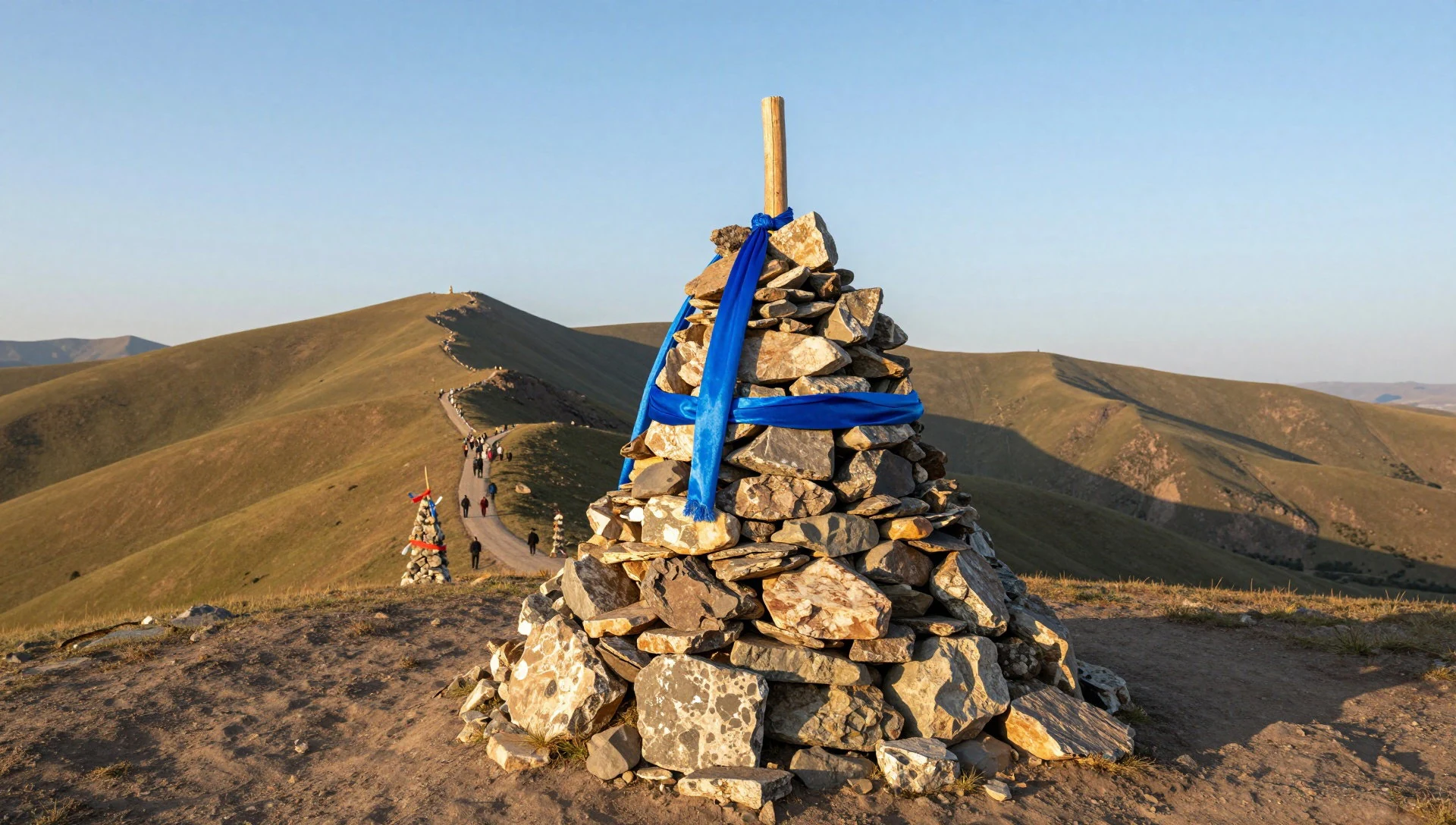
- Crescent-shaped profile and viewpoints — Khentii Mountains
Burkhan Khaldun is described as crescent-shaped, so different angles change how the ridge sits against the sky. Look for natural rises and follow local guidance on where movement is permitted within the protected area.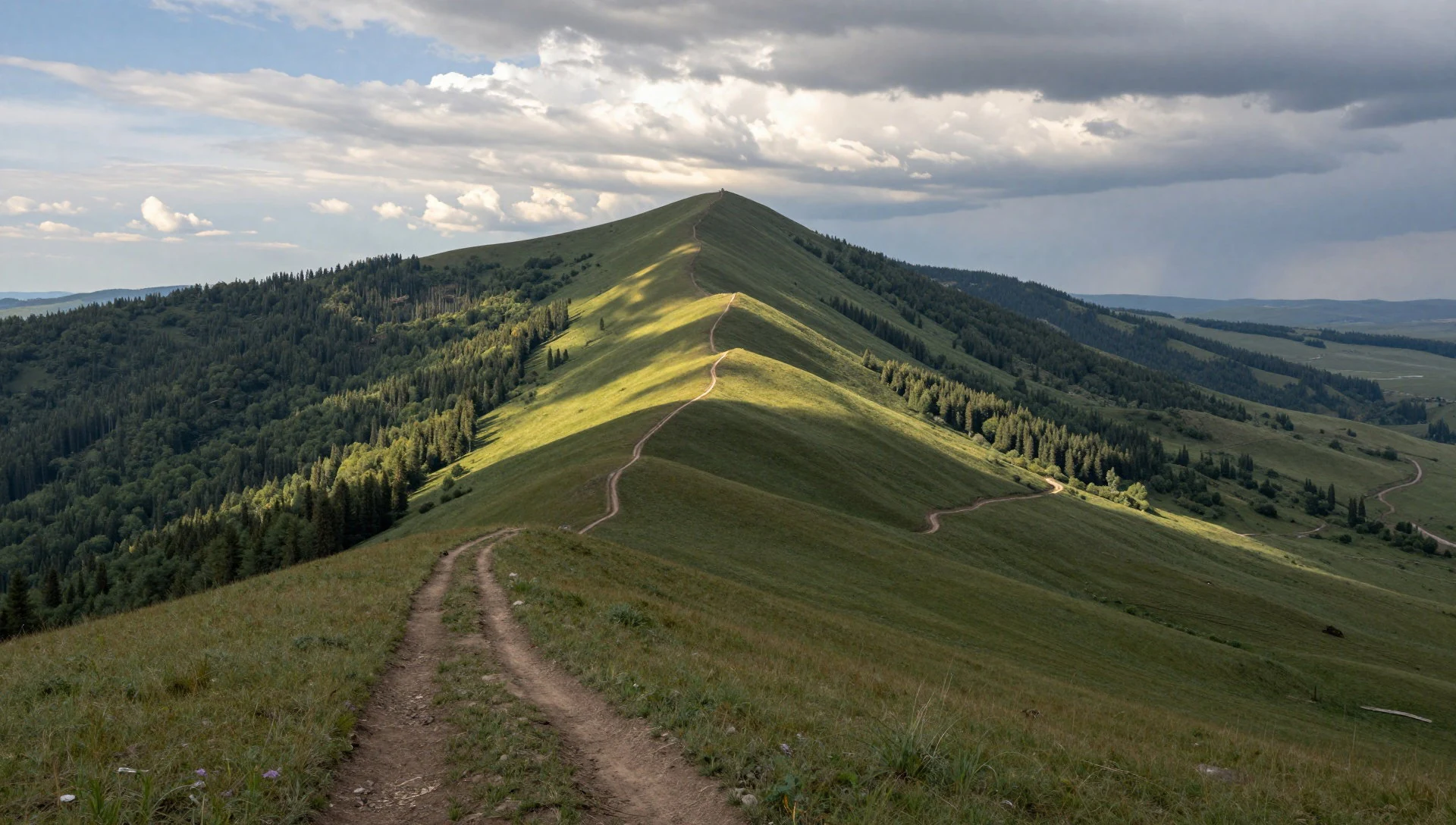
- River-source landscape — Protected area river basins
The mountain feeds multiple river systems, including routes towards Hulun Lake and the Amur basin, and northward flows connected to Lake Baikal. Even from afar, the landscape reads as a watershed, not a single peak.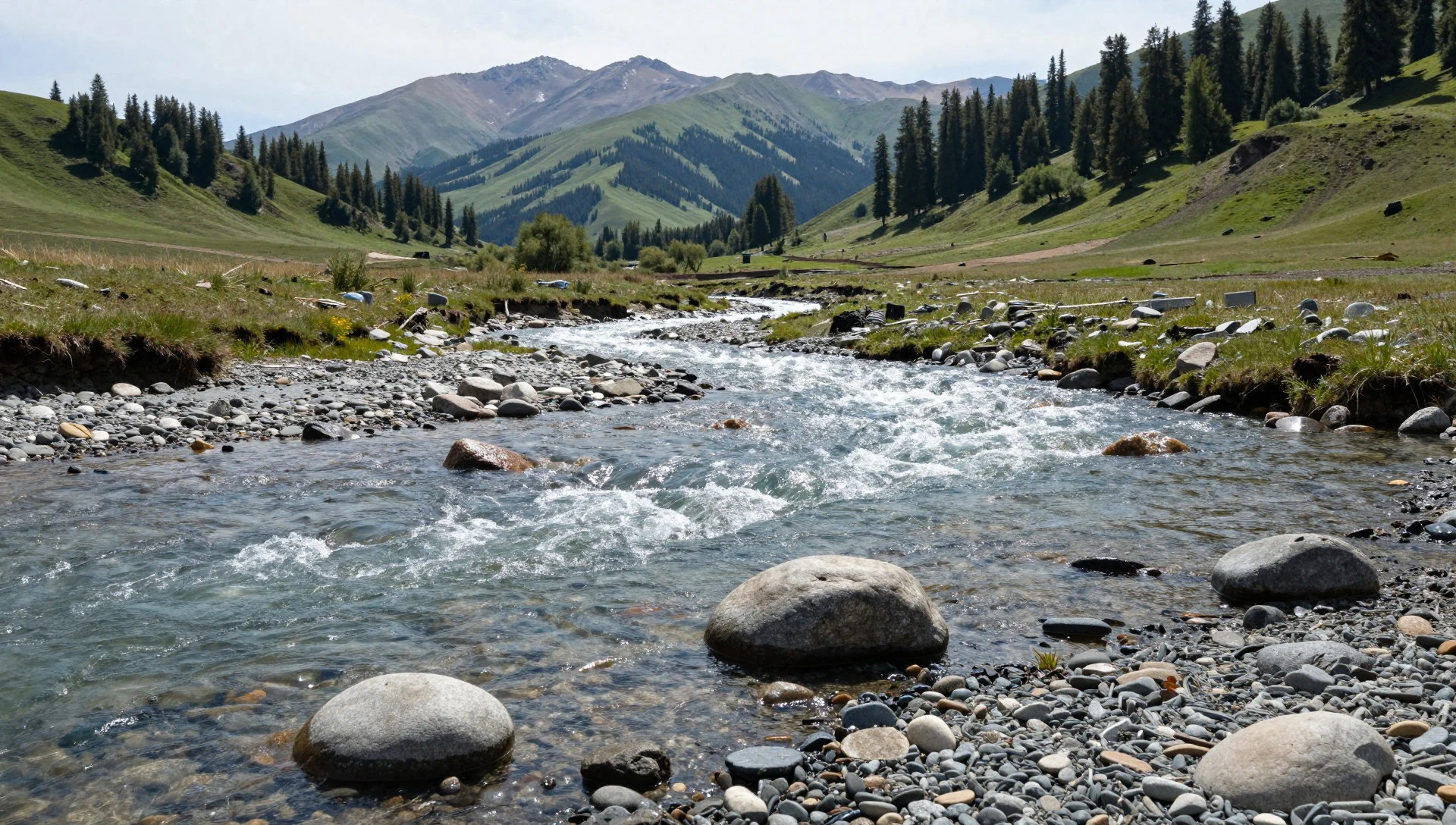
- The sacred landscape designation in practice — Khentii Strictly Protected Area
Burkhan Khaldun’s UNESCO inscription highlights the mountain and its surrounding sacred landscape. What that looks like on the ground is a mix of protected terrain, spiritual focus and regulated access, so expect the day to be shaped by local rules.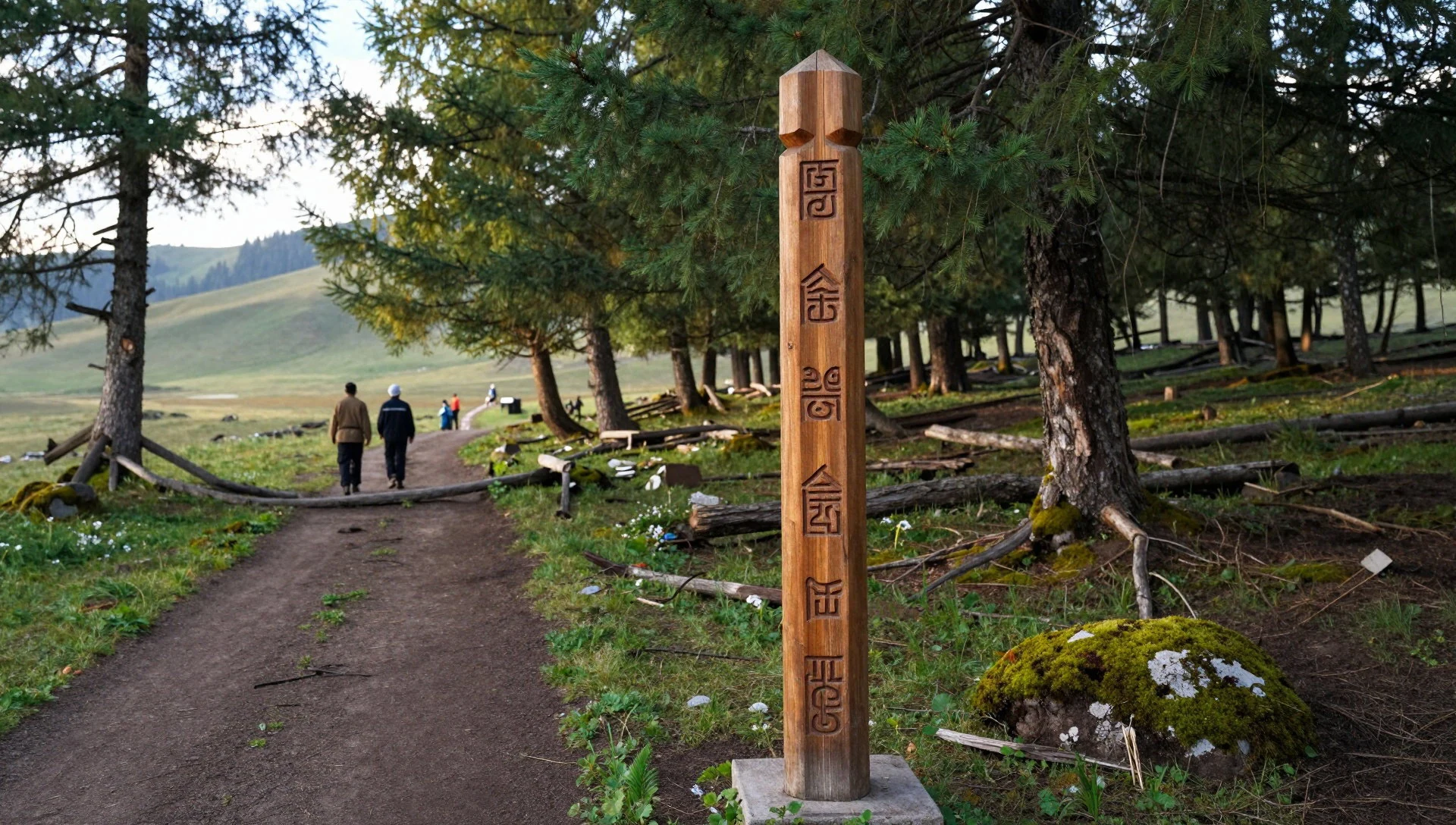
Culture
Burkhan Khaldun is treated as a sacred mountain within Mongolia’s Khentii region, and that sacredness is backed by formal recognition. The worship practices are described as being reserved for specific roles—state and local officials, shamans and a few Buddhist lamas—so visitors should assume the rituals have structure and boundaries.
The story of the mountain also matters to how people behave. The Secret History of the Mongols presents Genghis Khan honouring the mountain with daily sacrifices and prayers. In later time, a presidential decree formalised worship as a national monument and centred ceremonies around the main “Ovoo of the Heaven”. That combination—legend plus official ritual—means the place has a distinct atmosphere: quiet, focused and careful.
On the ground, this often translates into practical behaviour: move respectfully around ovoo sites, keep voices down, and avoid treating the area like open countryside for selfies and loud sightseeing. The protected landscape is there to safeguard ecosystems and a sacred setting at the same time; stepping off permitted routes can be disrespectful and also risky.
Visitor etiquette: keep noise low, observe how locals approach ovoo cairns, and follow any instructions about where outsiders can walk and photograph.
What to wear
For Burkhan Khaldun, clothing is mostly about weather, dust or mud underfoot, and respect at sacred spots. The region can be cold and exposed, so bring layered basics that can handle a chilly start and warmer afternoon swings. A warm hat, gloves and a reliable outer layer help more than thin “going-out” clothes. Closed-toe shoes with grip are important because the approach terrain can be uneven and rocky.
Traditional Mongolian dress is closely linked to steppe life: deels (deel) are long, wrap-style garments often associated with ceremonial or everyday wear in Mongolian culture, typically in heavy fabrics suitable for cold and wind. For textiles, visitors often see wool, felt and patterned materials that suit the climate. While visitors may not be expected to wear a deels, modest, non-revealing clothing aligns with the area’s sacred tone.
What to wear as a visitor: a long-sleeved top and trousers or a long skirt under an outer layer; keep shoulders covered at sensitive areas; carry a scarf that can double as warmth and as a sign of modesty. If the route includes ceremonies around ovoo cairns, dress for stillness—comfortable layers, not anything that requires constant adjustment.
What to eat
- Milk tea (suutei tsai) — Roadside stops and ger camps in the Khentii region
Milk tea is a common Mongolian comfort drink on long drives and in rural stays. It’s typically warm, mildly sweet, and helps with the cold mornings around the steppe.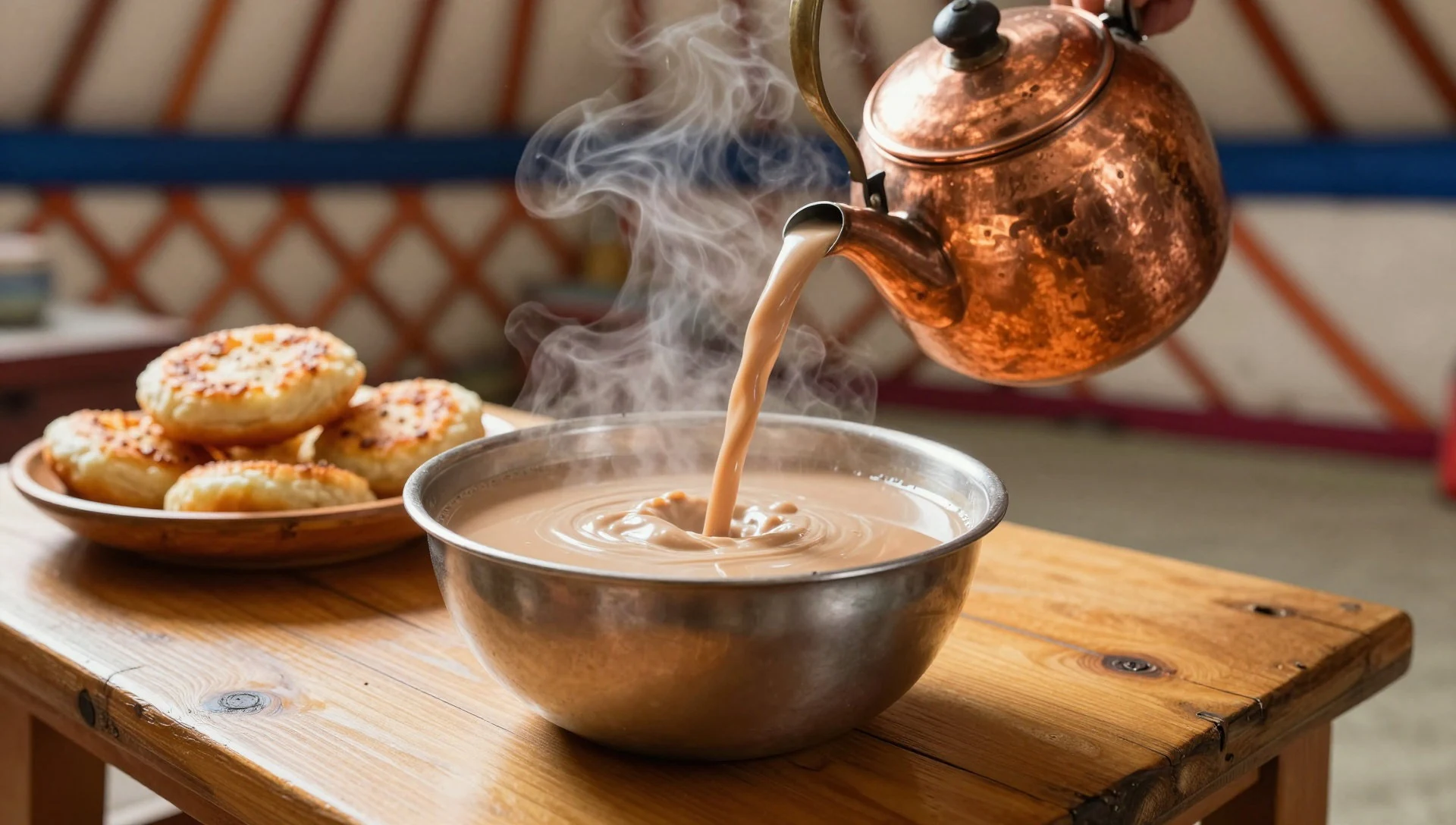
- Buuz (steamed dumplings) — Ger camps and community eateries around Khentii
Buuz are steamed dumplings, usually filled with spiced minced meat. They’re a reliable, filling meal when staying in Mongolian communities and during shared meals.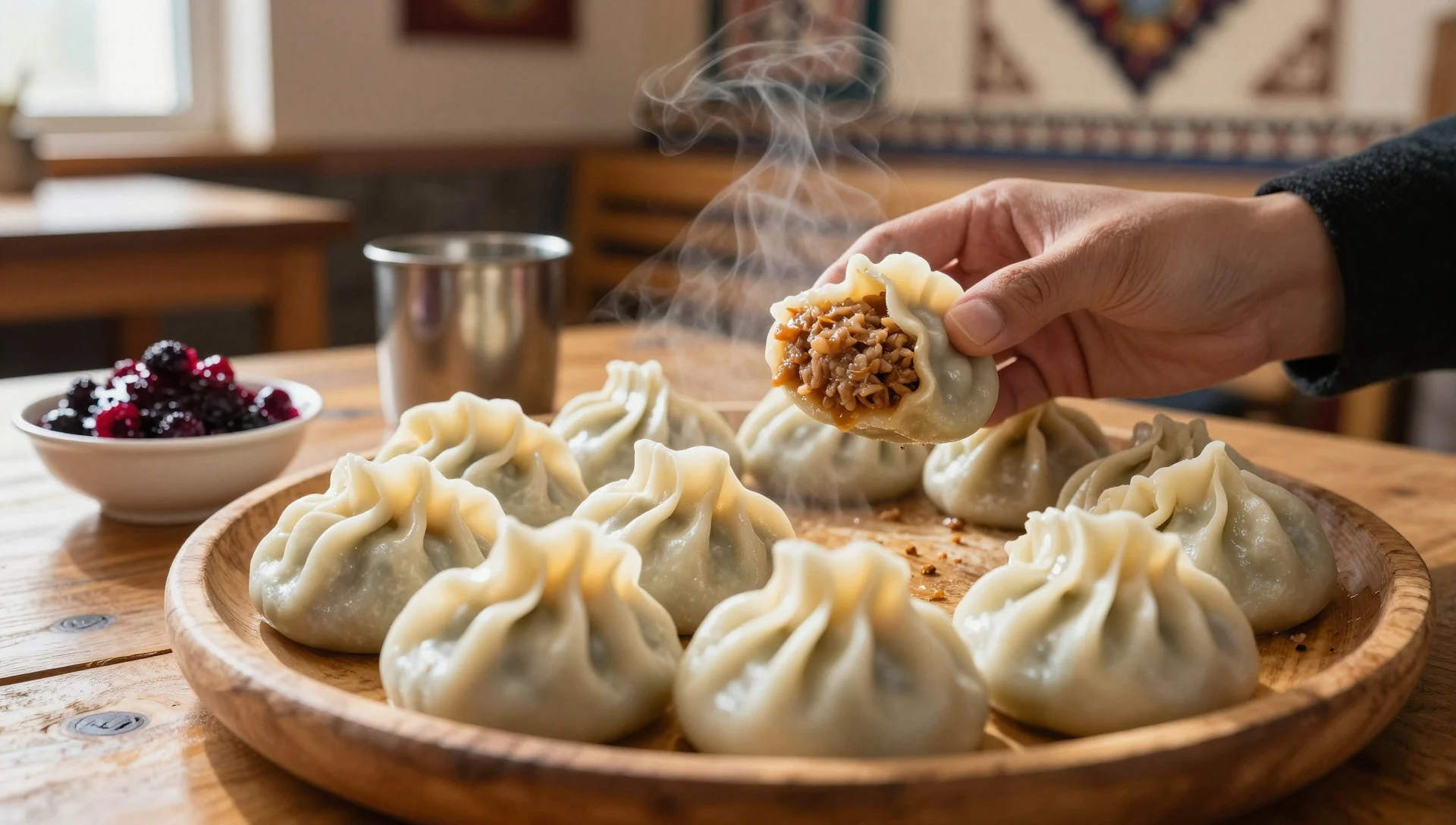
- Khuushuur (pan-fried meat pastries) — Street-style food stalls and roadside eateries
Khuushuur are pan-fried meat pastries with a crisp outer shell and a savoury filling. They’re easy to grab when moving between viewpoints and sites. - Mutton broth or soups — Ger camp kitchens and simple local restaurants
Mutton broth and hearty soups are common in Mongolia, especially when the day starts cold. Expect warming flavours and thick, satisfying comfort after walking in open terrain.
Plan it
Best time. Late April to early September for the mildest conditions, with the warmest months in July and August; September stays relatively comfortable as temperatures cool. May is the start of the wetter half of the year, with June through August the wettest, so plan around rain. Late October through November brings colder, crisp conditions, with January and February the coldest and driest.
How long. 3–4
Getting there. Fly to the nearest major gateway into Mongolia (typically via Ulaanbaatar), then use domestic transport to reach the Khentii area. The last leg is usually by road with a local driver/guide to access the protected mountain region.
Budget. mid
Tips
- Plan a full day buffer: weather and protected-area access can change what feels possible
- Start early for calmer winds and softer light on the mountain profile
- Bring warm layers and water—cold mornings and sudden shifts are common in mountain-steppe travel
- Expect limited facilities; arrange guidance and logistics before the trip
Etiquette
- Approach ovoo cairns calmly and follow any instructions given by locals
- Keep voices low around ritual areas and avoid blocking routes
- Ask before taking close photos of people involved in worship
Nearby
Sources
- Wikidata Q1010335 (CC0)
- Wikipedia (rev 1369452944) (CC BY-SA 4.0)
- Ovoo photo (File:Ovoo.JPG) (CC BY-SA 1.0)
- Wikivoyage (CC BY-SA 4.0)
