Baldan Bereeven
Baldan Bereeven, Mongolia
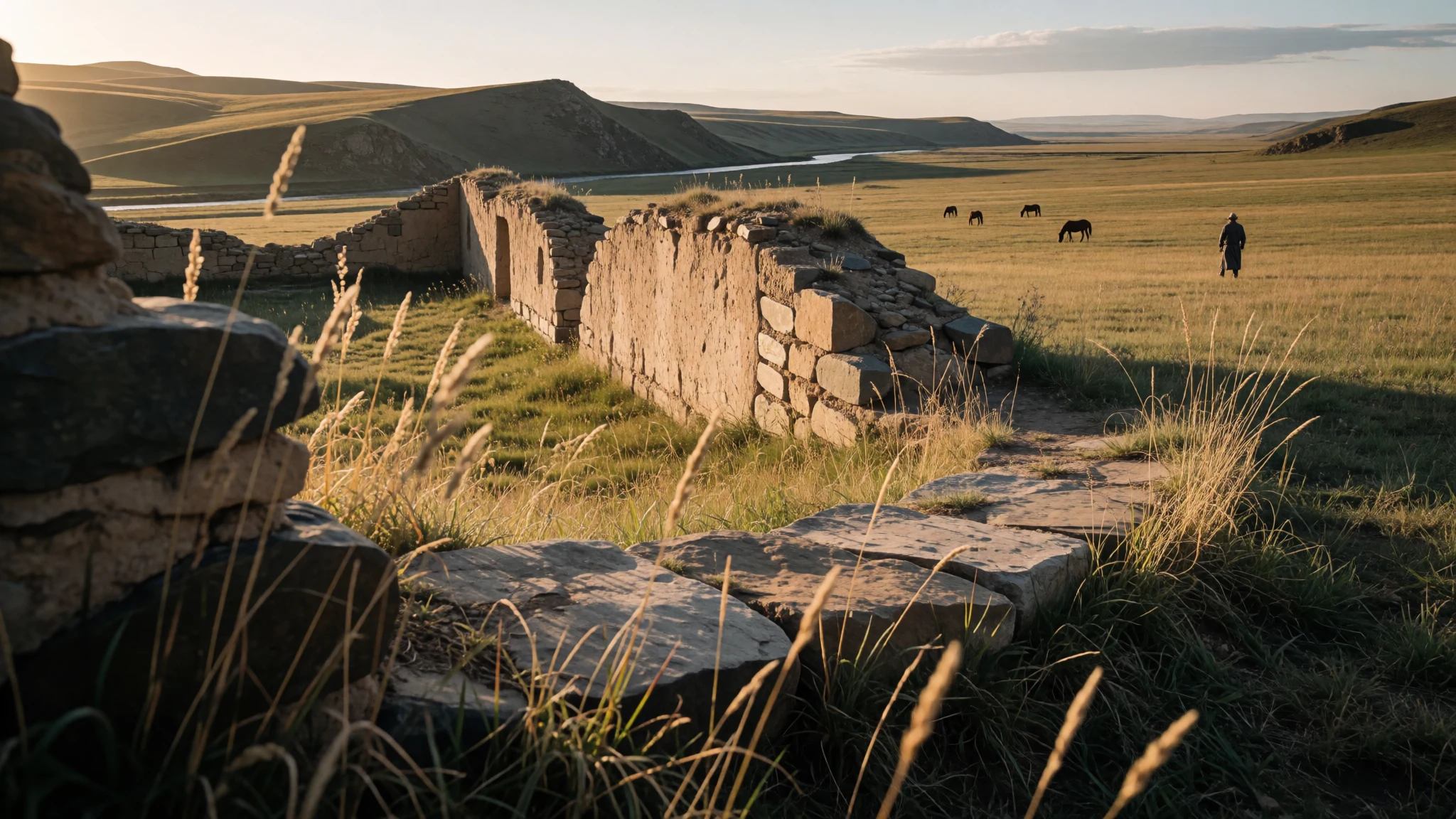
Baldan Bereeven is a ruined Mongolian monastery on remote steppe, where a once-vast Buddhist community is remembered through broken walls, open grassland and silence.
The place
Baldan Bereeven Monastery sits in the valley of the Baruun Jargalant River, in Ömnödelger district, Khentii Province, in eastern Mongolia. Today it is a ruin rather than a working monastery: broken walls, foundations and a few restored structures on open ground, with grassland and low hills all around. Nothing nearby resembles a town. The surrounding country is herding land, where gers, horses and sheep outnumber buildings. The monastery belonged to the Gelugpa, the Yellow Hat school of Tibetan Buddhism, which dominated monastic life in Mongolia. It was founded in 1654, and Wikidata classes it as a Tibetan Buddhist monastery. Reaching it is as much a part of the experience as the stones themselves. Mongolia is a vast landlocked country with very few people per square kilometre, and tracks to places like this are often unsurfaced, so the trip from Ulaanbaatar takes planning and usually a driver who knows the route. Weather shapes everything. Winters are bitterly cold, summers are generally warm to hot with rain in many regions, nights can turn cool, and the country is known for its clear skies. The atmosphere is a mix of emptiness and memory. Mongolian pilgrims and a small number of travellers come to walk the site, look at what remains and think about how large the community once was. It is an honest destination, with no polished galleries or staged displays, and a visit depends on the road, the light and the season.
Its story
Baldan Bereeven Monastery was founded in 1654 by a lama named Tsevendorj, who by tradition had studied in Tibet under Zanabazar, the first Bogd Gegeen of Mongolia. His aim was to create a Mongolian counterpart to Lumbini, the Buddha's birthplace, so that pilgrims who could not make the long journey abroad had somewhere closer to go. The community began with about fifteen hundred lamas. Over the next two centuries the complex grew. The main temple, Dash Tsepel Ling, was finished in 1776, and the great assembly hall, Tsogchin Dugan, followed in 1813, built to resemble Kumbum Monastery in Tibet. By the middle of the nineteenth century the monastery was a major teaching centre, with four colleges, more than twenty temples and close to eight thousand monks. An epidemic around 1900 then killed roughly half of them. The end came with the communist period. After the regime took power in 1921, the state seized monastic property, curbed the church's independence and taxed monasteries heavily, and persecution intensified in the 1930s. In 1937, during the Stalinist purges led by Khorloogiin Choibalsan, the monastery was razed. Many monks were removed, shot and buried in mass graves, others were forced out of the order and sent to labour camps, and younger monks were returned to their families. What survives today is what outlasted that destruction.
What to see
- The ruined temple grounds — Baruun Jargalant River valley, Ömnödelger
The main site of Baldan Bereeven Monastery is a spread of low walls, foundations and rebuilt corners on open ground. It rewards slow walking: the layout hints at how many temples and colleges once stood here, and the hills behind give a sense of scale.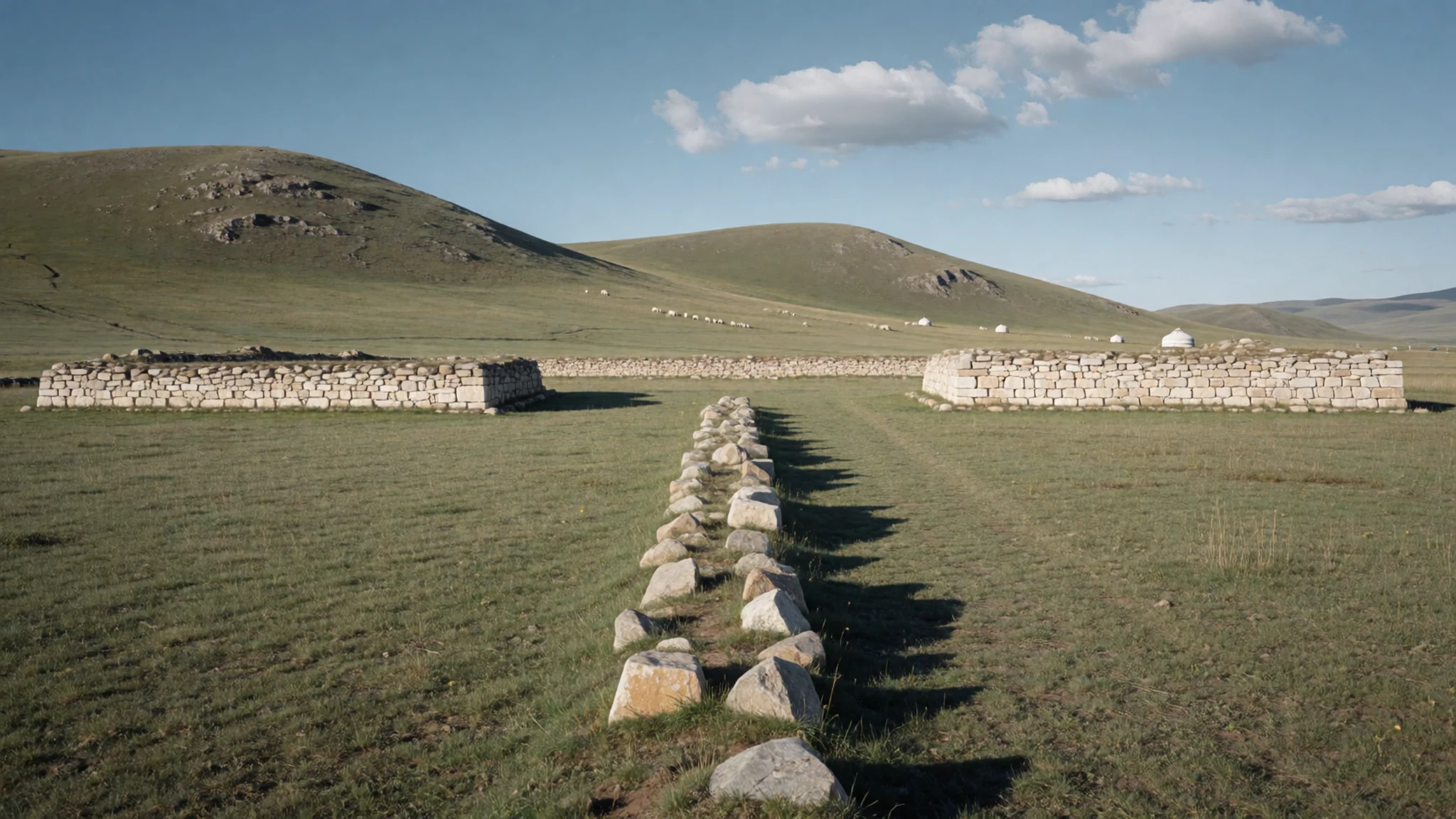
- Site of Tsogchin Dugan, the great hall — Within the monastery grounds
The great assembly hall was finished in 1813 and modelled on the look of Kumbum in Tibet. Little of it remains standing, but its footprint shows how large a gathering space the monastery needed for its monks. Take time to pace out the outline.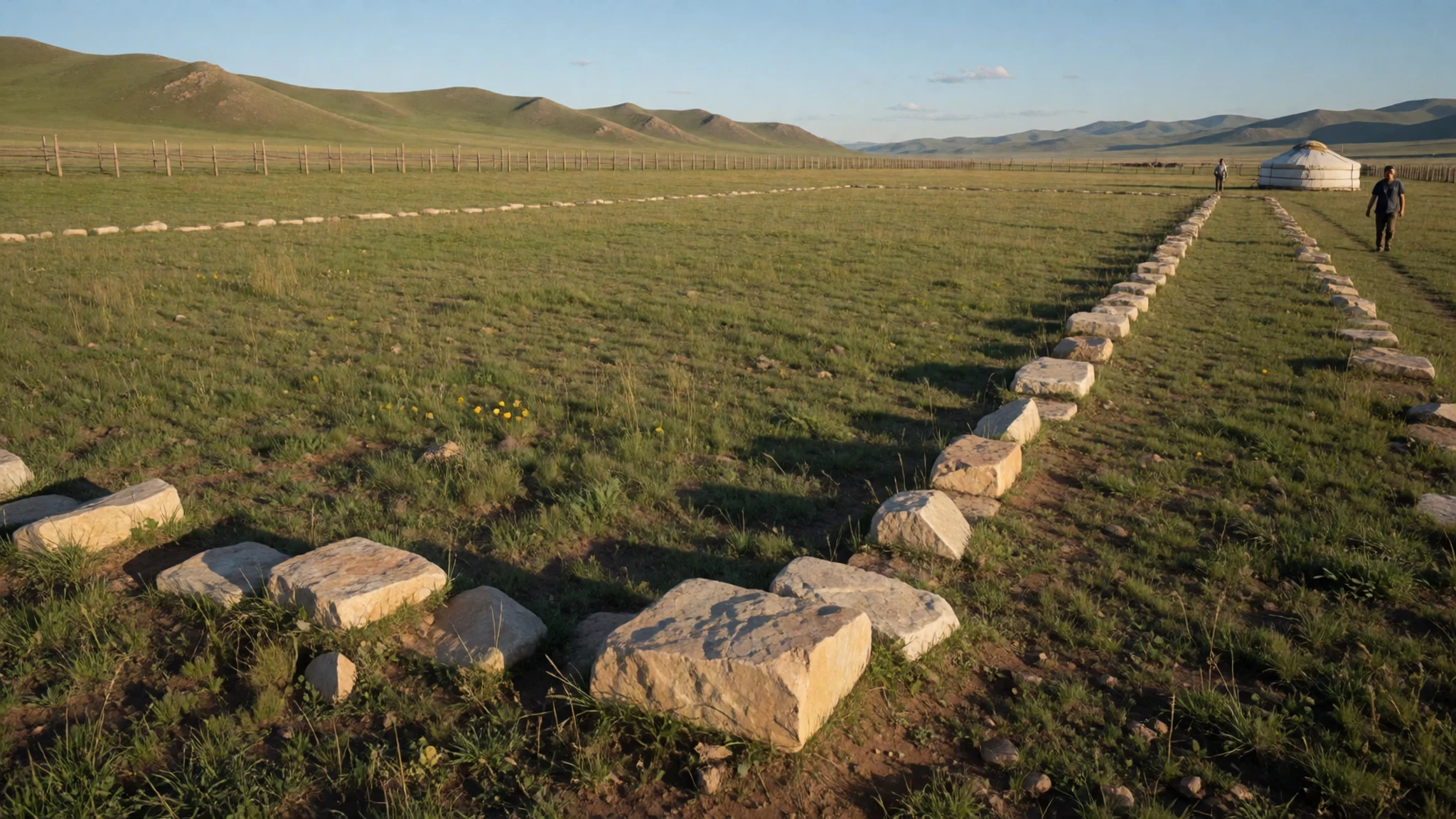
- The valley and river landscape — Around the monastery, Khentii Province
The Baruun Jargalant valley is as much a reason to come as the ruins. Grass, low ridges and wide sky frame the site, and herders' gers and animals often appear in the distance. Early and late light is best, and summer evenings turn cool quickly.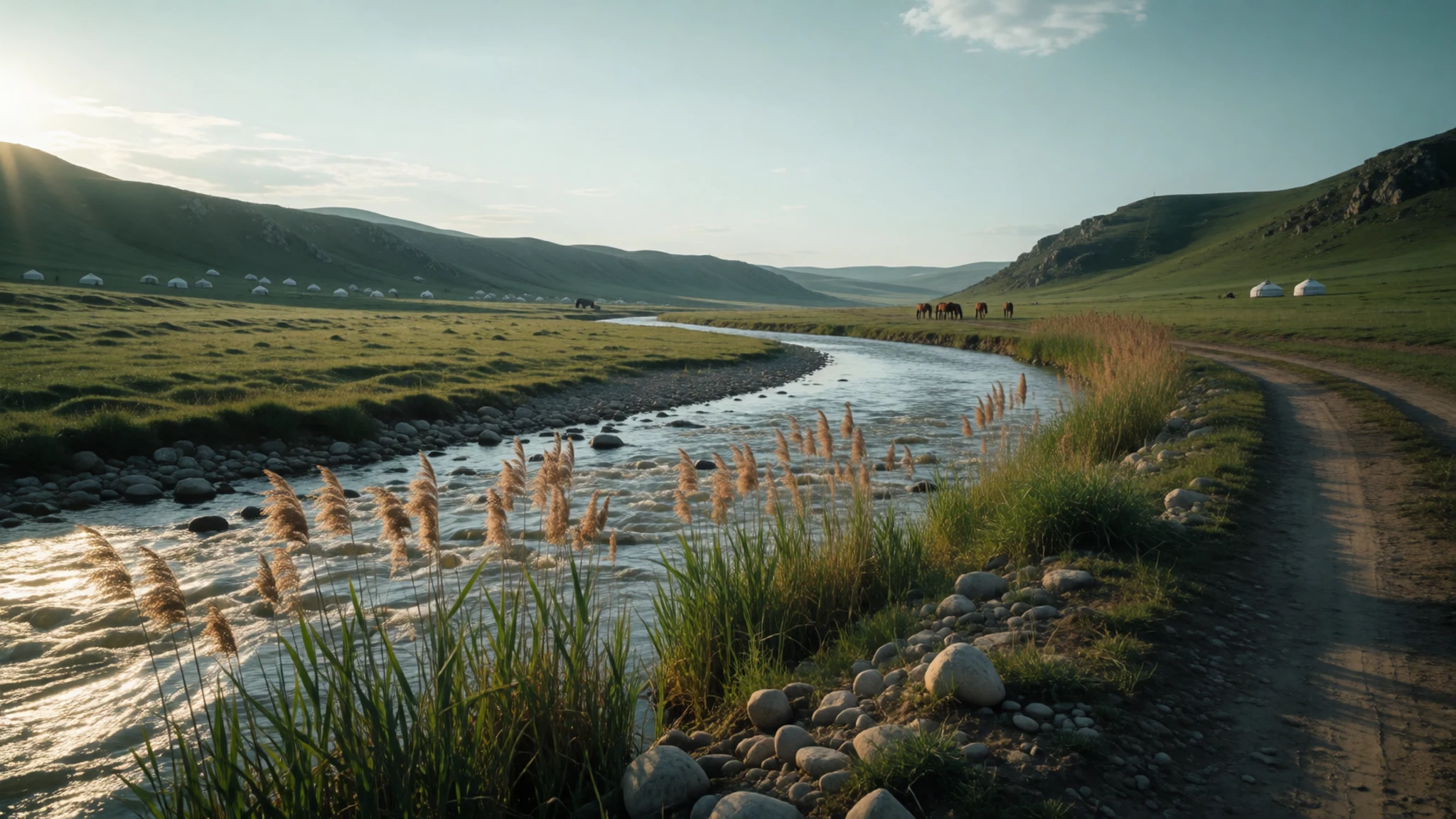
- Erdene Zuu Monastery — Kharkhorin, Övörkhangai Province
Erdene Zuu, at Kharkhorin in central Mongolia, is one of the few Tibetan Buddhist monasteries that still stand after the purges. It makes a useful companion to Baldan Bereeven, showing what a surviving complex looks like, though it lies a long drive to the west.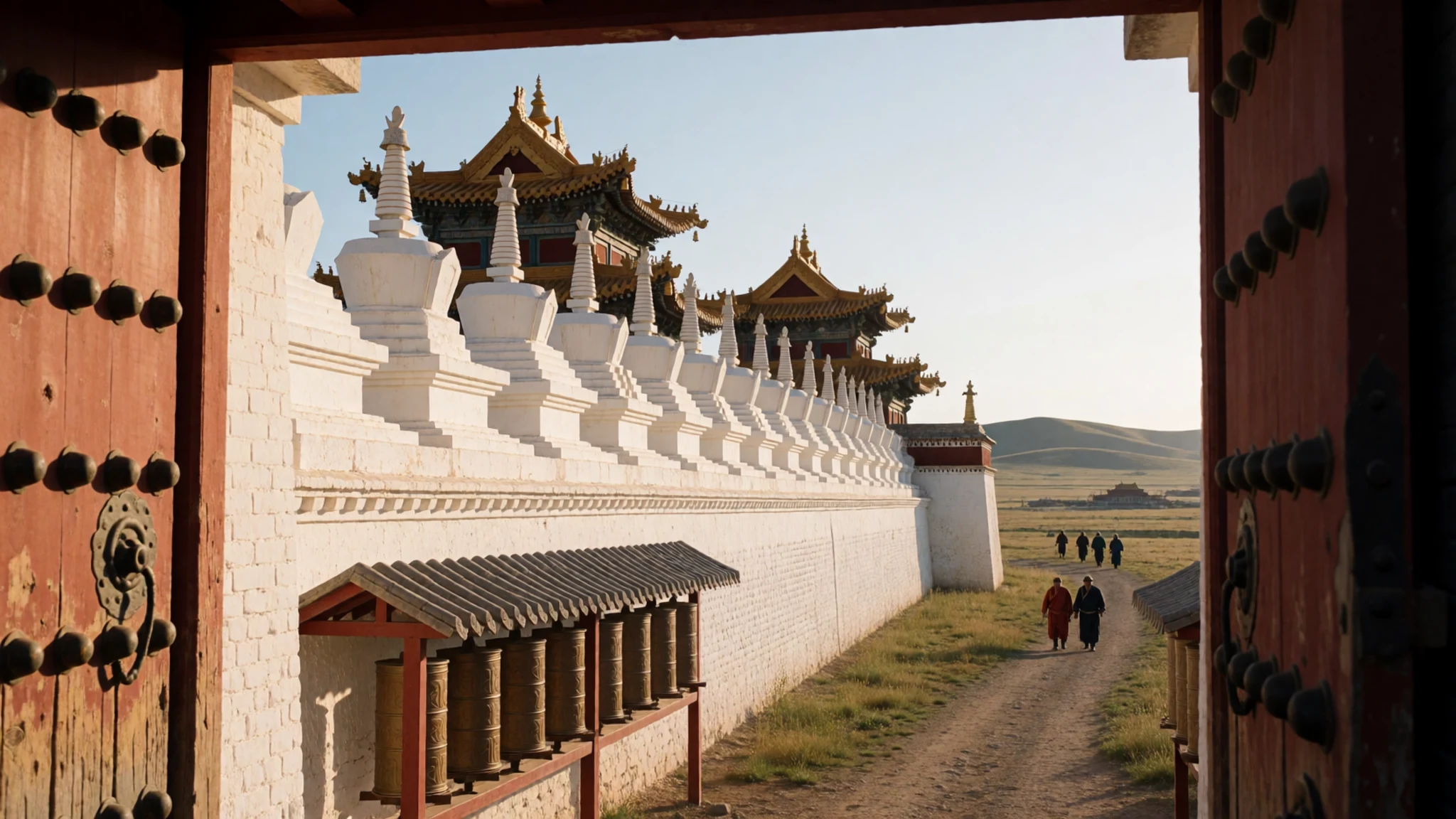
- Gandan Monastery — Ulaanbaatar
Gandan Monastery in Ulaanbaatar is an active religious site with a large resident community of lamas. Visiting it before or after the eastern trip gives a living picture of the Buddhist practice that Baldan Bereeven once supported on a far larger scale.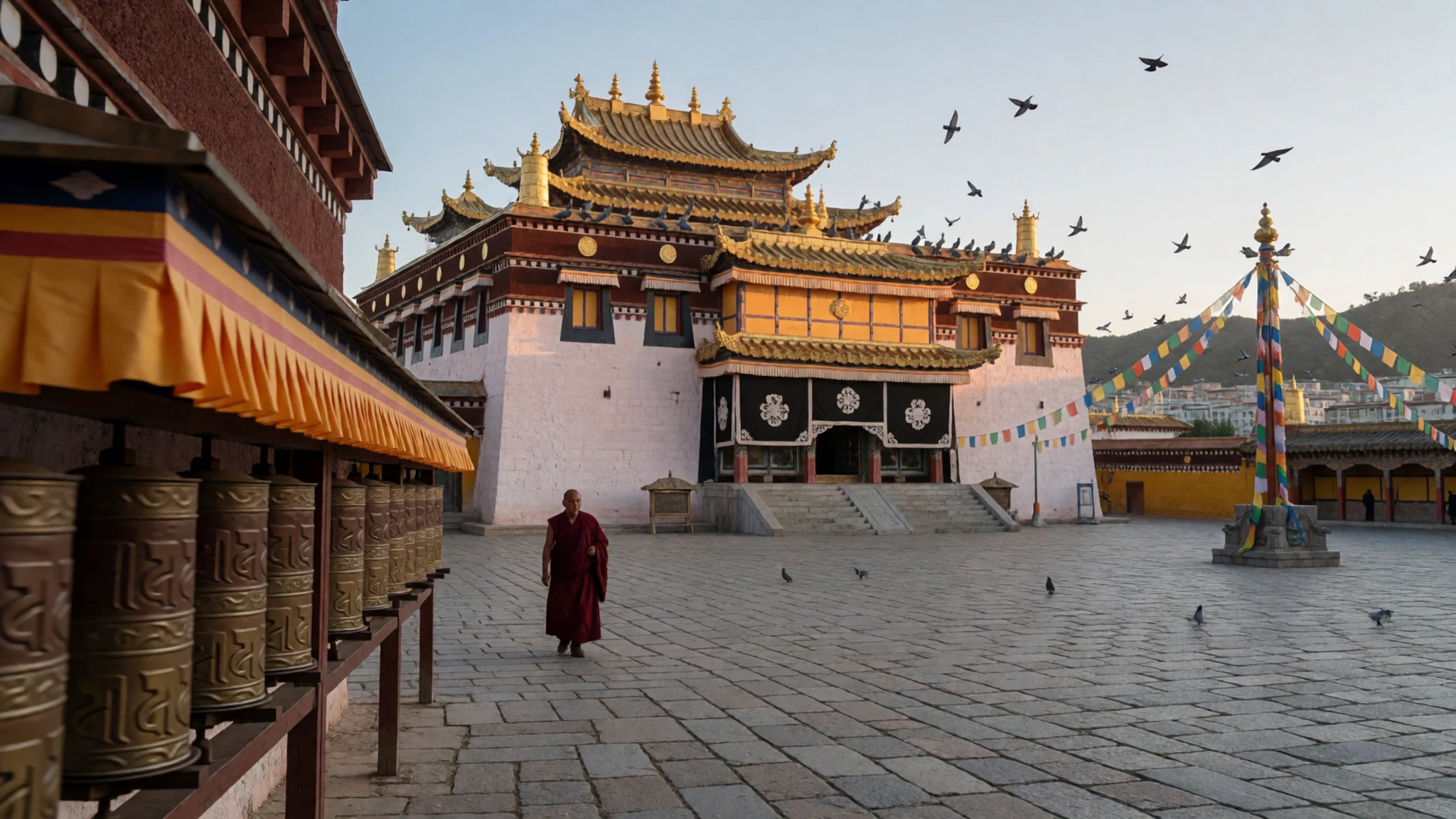
Culture
Baldan Bereeven Monastery belongs to a Mongolian Buddhist tradition that was nearly erased in the twentieth century and has been slowly reclaimed since. The Gelugpa, or Yellow Hat, school shaped monastic life here, and the site carries real weight for Mongolians because of what happened to its monks. It is better approached as a place of memory than as an attraction. Mongolians are generally direct, and visitors should expect honest opinions rather than polite hedging. Hospitality on the steppe follows its own rules. Receive anything, whether a bowl of tea, a gift or a plate of snacks, with the right hand, palm turned up, and take at least a small taste of what is offered, since refusing is considered rude. Drinks are taken the same way. Conversation about China is best avoided, and so is wearing anything that carries Chinese branding or symbols, as feeling on the subject runs high; Inner Mongolia is usually called southern Mongolia. Herding families may live near the ruins, and their dogs can be aggressive, sometimes roaming in packs, so keep a respectful distance from gers unless you are invited. Shrines, cairns and offerings left at the site are still in use. At the ruins, walk clockwise around any stupa or cairn, keep your voice low, and do not climb on the old walls or take stones away.
What to wear
Baldan Bereeven is a remote steppe site, and Mongolian dress here reflects both tradition and a hard climate. The traditional garment is the deel, a long wrapped robe fastened at the side and tied with a sash. It is made in wool, cotton, silk or brocade depending on season and occasion, and winter versions are lined or trimmed with sheepskin. Heavy leather boots with upturned toes, known as gutal, and felt hats complete the outfit. Deels appear at festivals, weddings and national celebrations, and many older herders still wear them daily. Younger people and townspeople mostly wear ordinary modern clothes such as jeans, jackets and trainers, with a deel kept for special days. Visitors should dress for weather, not for style. In summer bring layers, because days can be hot but nights cool, plus a waterproof jacket for rain, a hat and sun protection for open ground with no shade. In colder months, serious insulation matters, including thermal layers, a windproof outer shell, gloves and warm socks. Wear sturdy walking shoes or boots for uneven grass and broken stone. At a ruined temple site, modest clothing with covered shoulders and knees is respectful, and it also protects against sun, insects and wind. Leave anything with Chinese symbols or branding at home.
What to eat
- Boiled mutton — Herder households and countryside canteens
Boiled mutton is the base of Mongolian cooking, often flavoured with little more than salt. A herder's meal may be little else. It is the dish most likely to be offered in a ger on the road to Baldan Bereeven.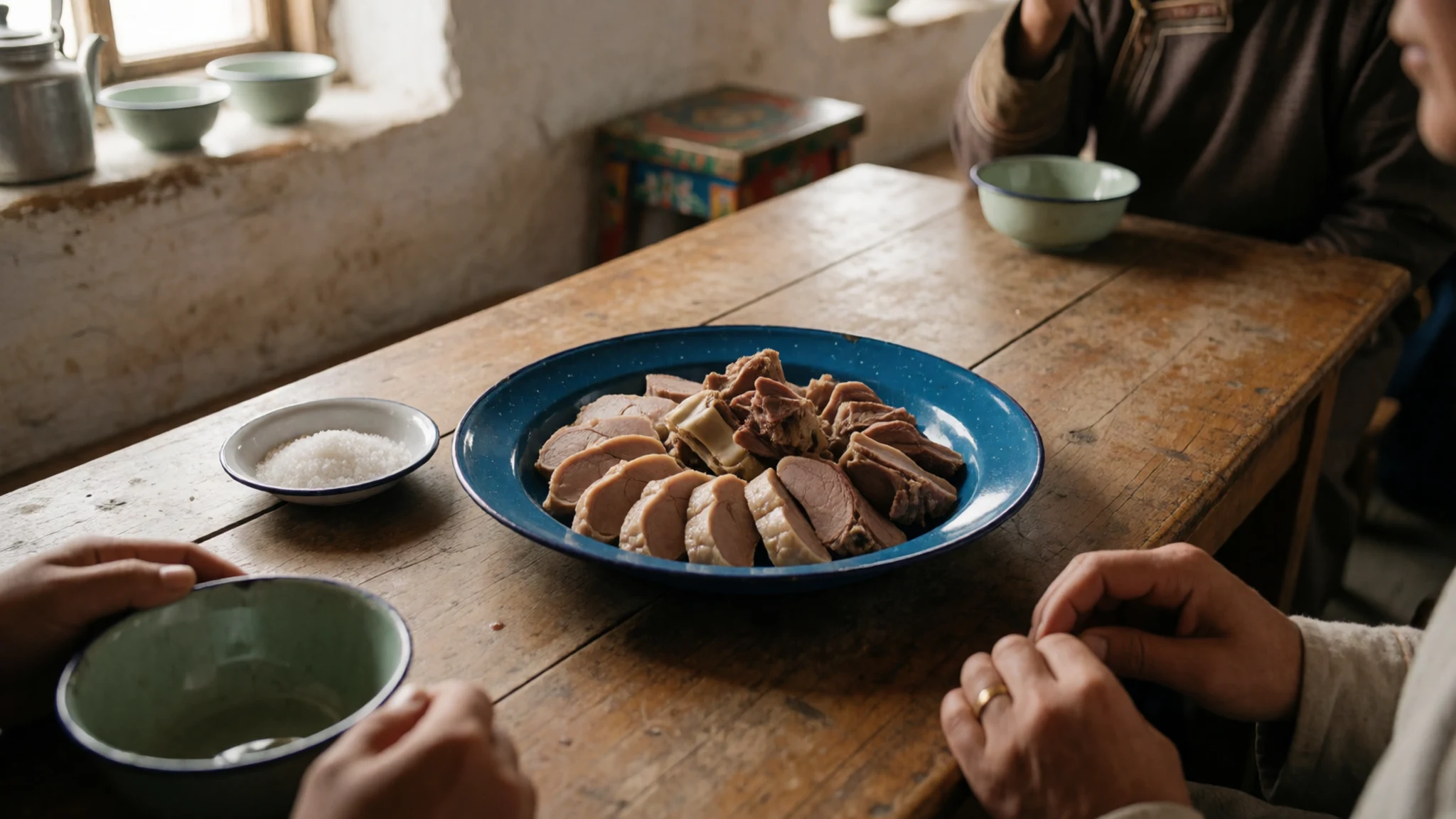
- Buuz — Canteens, tea shops and small eateries in towns along the route
Buuz are steamed dumplings stuffed with minced meat, often described as the national dish. They are related to Chinese baozi. They are filling, simple and easy to find, and they make a good stop on a long drive.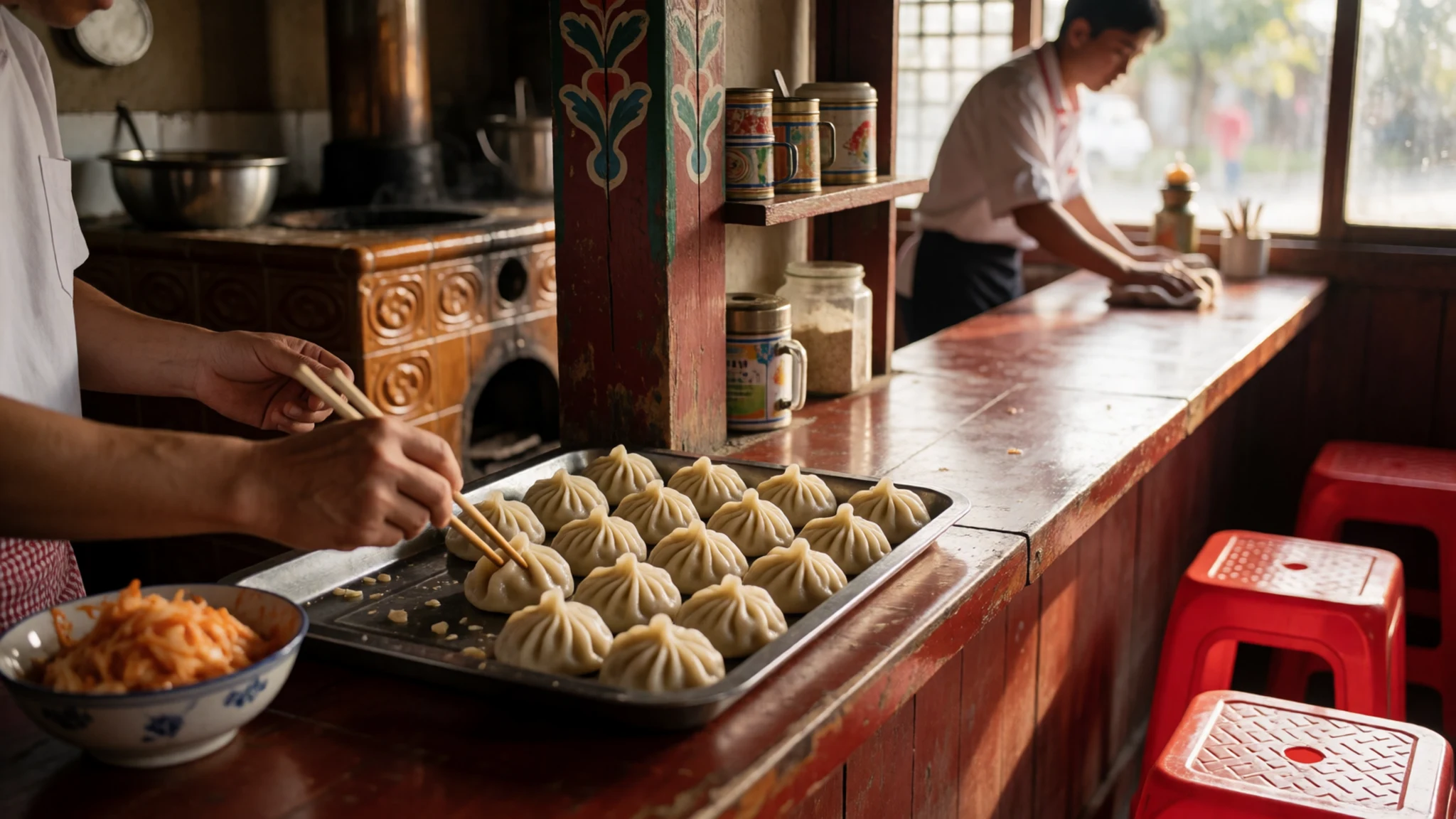
- Khuushuur — Roadside eateries, markets and canteens
Khuushuur are deep-fried flatbreads filled with meat and onion. They began as a festive dish but are now found everywhere. Eat them hot, as they get greasy fast, and expect a few to make a meal. - Tsuivan — Canteens and restaurants in district centres
Tsuivan consists of stir-fried noodles with meat and a small amount of vegetables, sometimes served with ketchup on the side. It is hearty, plain travelling food and common wherever there is a kitchen. - Byaslag — Markets and herders' households
Byaslag is a mild, fresh cheese rather like paneer. It is one of several dairy products in the Mongolian diet, and a welcome change from meat. Ask for it in summer, when dairy is most plentiful. - Öröm — Herders' gers and local markets
Öröm is clotted cream, rich and slightly sweet. It is usually offered as a treat with bread or tea, and is a typical sign of hospitality in a herding family's ger.
Plan it
Best time. June to September, when the grassland is open and daytime weather is generally warm to hot, though rain is common in many regions and nights can be cool. Winters are bitterly cold and travel is much harder.
How long. 2–3
Getting there. Fly to Ulaanbaatar, the usual gateway, then travel east into Khentii Province by road. There is no rail or scheduled service to the site itself, so hire a driver-guide or join a tour; the last stretch is usually an unsurfaced track across open steppe.
Budget. mid
Tips
- Check current visa rules before booking, as the relaxed entry rules in the brief were described as temporary
- Hire a driver who knows the route and carry spare fuel, food and water, as services are very thin
- Pack for sudden weather changes, with layers, rain gear and sun protection even in summer
- Carry cash, since cards are unlikely to work outside towns
- Keep your distance from loose dogs near gers and travel only by daylight
Etiquette
- Receive tea, gifts and food with your right hand, palm up
- Walk clockwise around cairns and stupas, and do not move stones from the ruins
- Avoid conversation about China and clothing with Chinese branding
Nearby
Sources
- Wikidata Q15196259 (CC0)
- Wikipedia: Baldan Bereeven Monastery (rev 1367020754) (CC BY-SA 4.0)
- Wikivoyage: Mongolia (rev 5427090) (CC BY-SA 4.0)
- Photo: Ruins of Baldan Bereeven Monastery, by Erdenee (CC BY 3.0)
