Bayan-Ulgii
Bayan-Ulgii, Mongolia
Bayan-Ölgii gives western Mongolia's Kazakh eagle hunters, glaciated Altai peaks and a mosque-centred town that feels closer to Central Asia than to the steppe.
The place
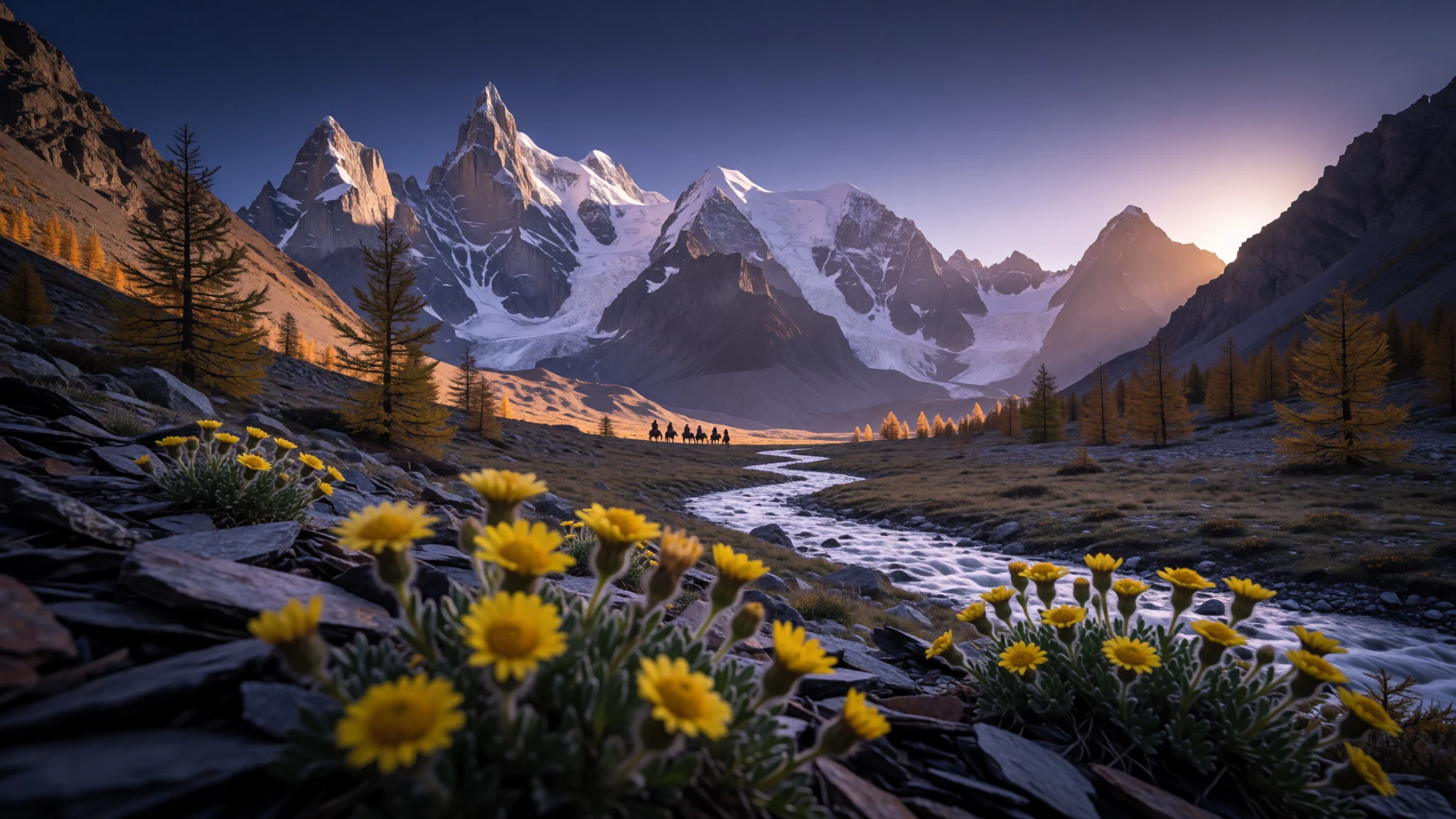
Bayan-Ölgii sits in the far west of Mongolia, a province of 106,810 people where the country runs out against the borders of Russia and China. It is listed at an elevation of 1,710 m and counts as the loftiest of Mongolia's provinces, folded into the Mongolian Altai at the point where that range hands over to its Russian counterpart. The capital, Ölgii, is a low, spread-out town of apartment blocks and ger districts on a high plain, with mountains standing at its edges. Trees are scarce: only about a tenth of the land is forested, mostly with Siberian larch, and the rest is steppe, scree and bare slope. The great landmark is the Tavan Bogd massif, whose name means five saints. Khüiten Peak, on the Chinese frontier, is the highest point in Mongolia at 4,374 m, and the Potanin Glacier, about 19 km long, drains the same massif. That ground belongs to climbers travelling with local guides, not casual walkers. Water matters here too. The Khovd River begins in the province, fed by the lakes Khoton, Khurgan and Dayan. Tolbo Lake, salty yet cold and clear, lies roughly 50 km from Ölgii at 2,080 m. In the south, Altai Tavan Bogd National Park covers 6,362 km². Compared with the rest of Mongolia, Bayan-Ölgii feels like a different country: Kazakh is the majority identity, Islam the majority faith, and travel is slow because distances are long and roads are rough. The local time zone is UTC+07:00.
Its story
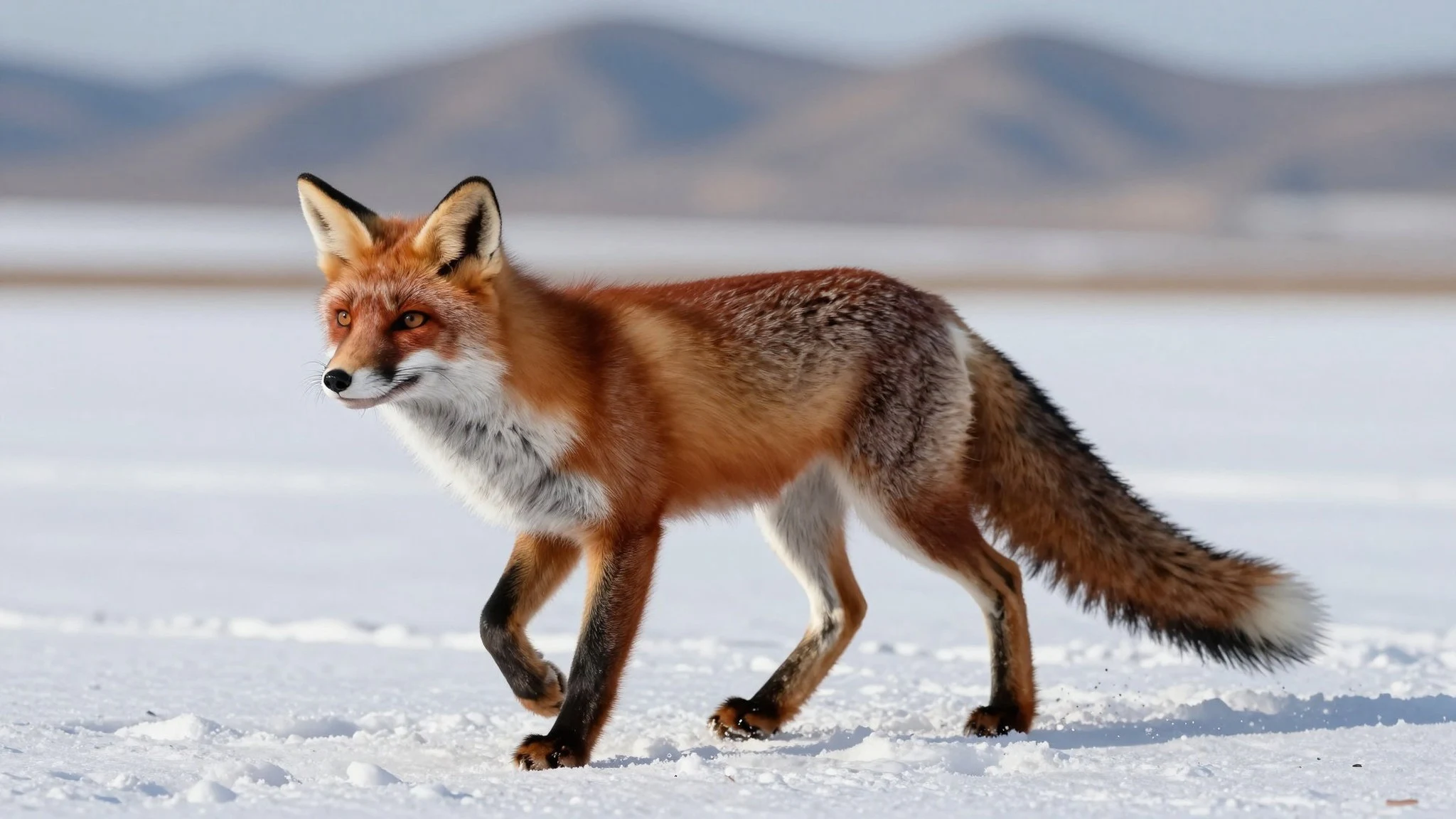
Bayan-Ölgii appears on Mongolia's provincial map from 1939, but the community that defines it is much older than that administrative line. Kazakh herding families have long moved their livestock between the valleys and high pastures of the Altai, and their language, faith and customs set the province apart from the Buddhist-shaped culture found across most of Mongolia. Islam is the thread through daily life, from the central mosque in Ölgii to the madrasah beside it. The best-known inheritance is hunting with trained eagles. The birds are raised in captivity and flown in the cold months at foxes and hares, which show up clearly against snow. Similar traditions survive in Kazakhstan and Kyrgyzstan, yet the practice is most concentrated here, and one estimate puts about 80 percent of the world's eagle hunters in this province. Each October Ölgii holds the Golden Eagle Festival, where hunters show off what their birds can do. Borders shape the story as well. The province touches both Russia and China, and the short frontier between those two neighbours ends close to Kazakhstan, so the area has always been a crossroads of peoples and routes. Mongolia as a whole stayed hard for outsiders to reach for much of the twentieth century, and even now getting between its few well-known places takes patience. At the far western end of the country, Bayan-Ölgii rewards that patience with a living culture, not a museum piece.
What to see
- Abu-Bakr Siddiq Central Mosque, Ölgii — Ölgii town centre
The central mosque is the town's most telling building. It also houses the Islamic Centre of Mongolia, with a madrasah on the same site. Its angle looks odd against the street layout because it was set to face Mecca exactly. Visitors should go outside prayer times and ask before entering.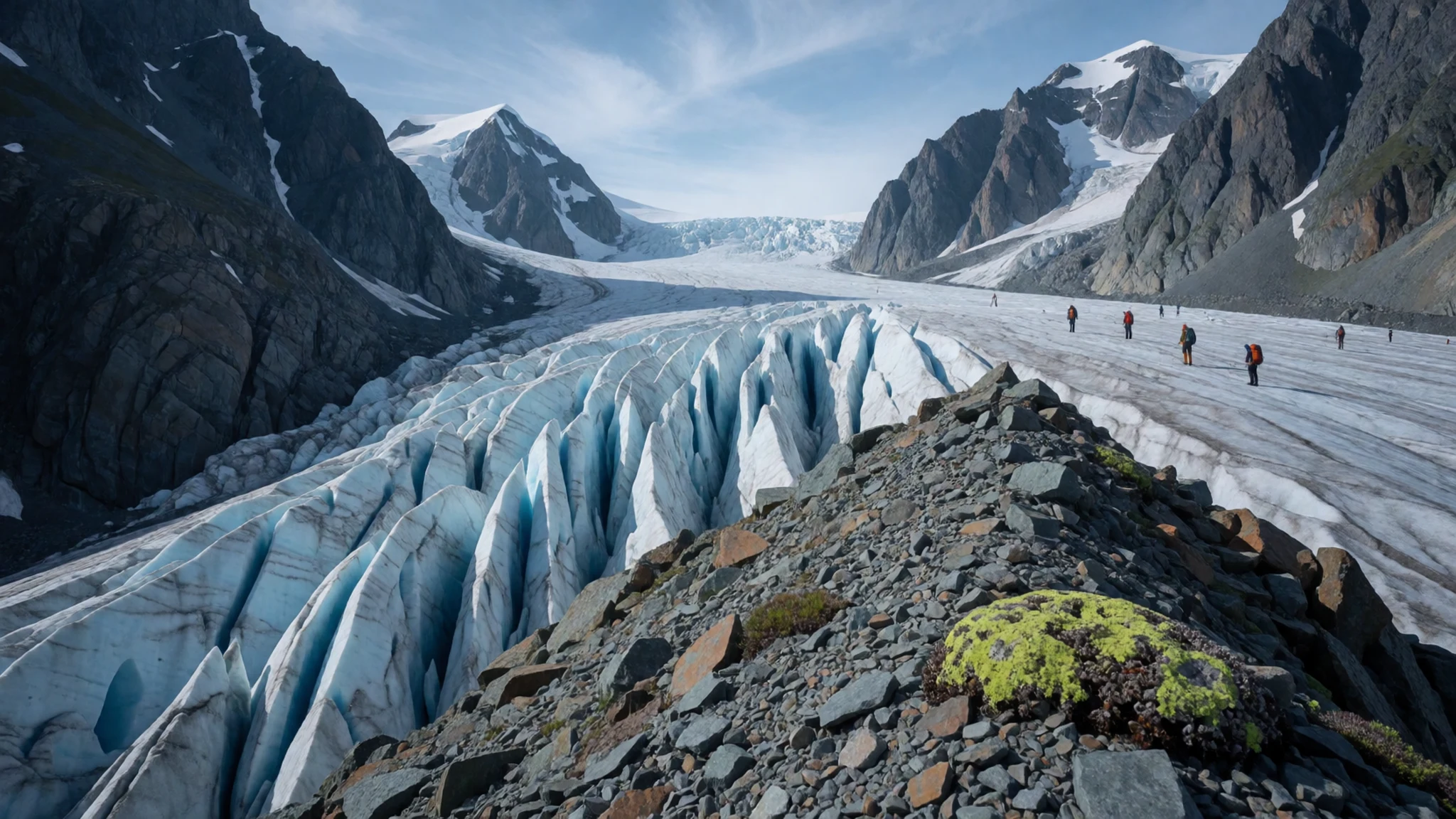
- Altai Tavan Bogd National Park — Southern Bayan-Ölgii, on the Chinese border
The park spans 6,362 km² in the south of the province, around the Tavan Bogd massif and its glaciers, including the Potanin. Reaching the high peaks needs experience and a local guide. Most visitors instead take multi-day jeep and horse trips through the valleys and lakes below the snowline.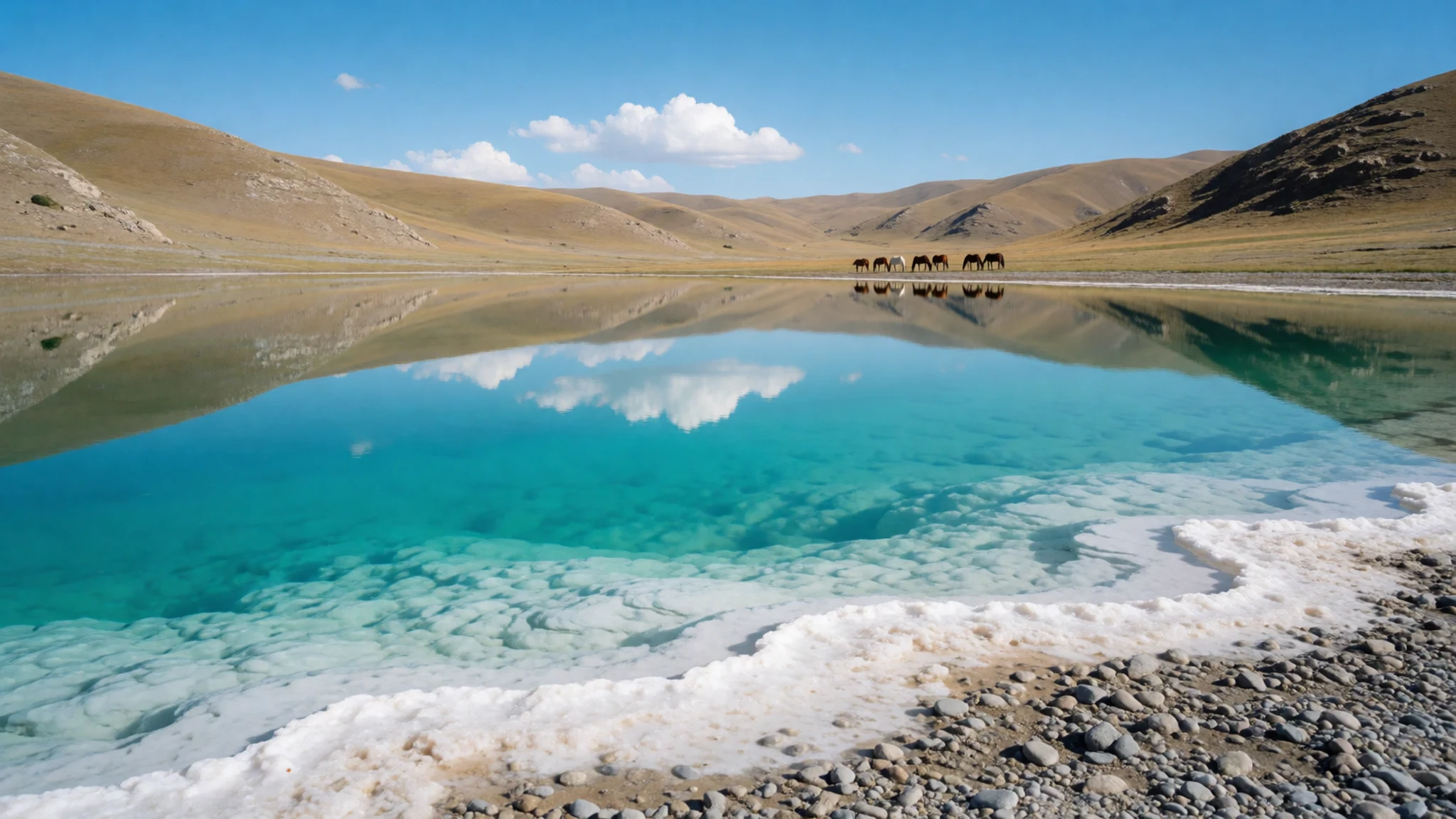
- Tolbo Lake — South of Ölgii
Tolbo Lake lies at 2,080 m, roughly 50 km from Ölgii. The water is salty but cold and clear, with mountains rising behind the shore. It makes a straightforward day trip by vehicle and a good first taste of the province's open country before heading higher.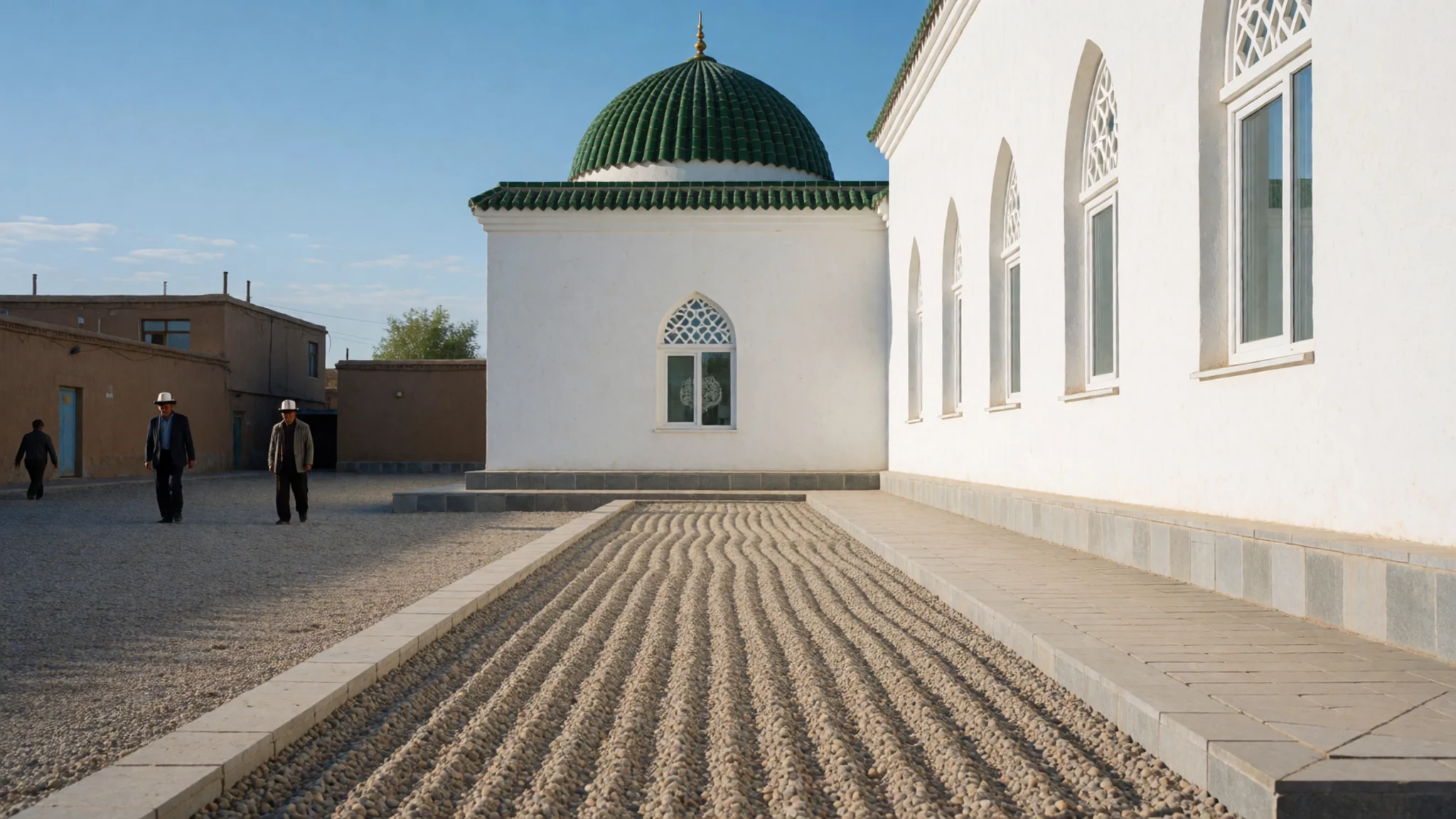
- Golden Eagle Festival and eagle hunters — Ölgii and surrounding valleys
Each October Ölgii hosts a festival where Kazakh hunters present their eagles and display their skills. Winter hunting with the birds, after foxes and hares on snow, is the practice's working heart. Visitors can arrange a meeting with a hunter through local guides.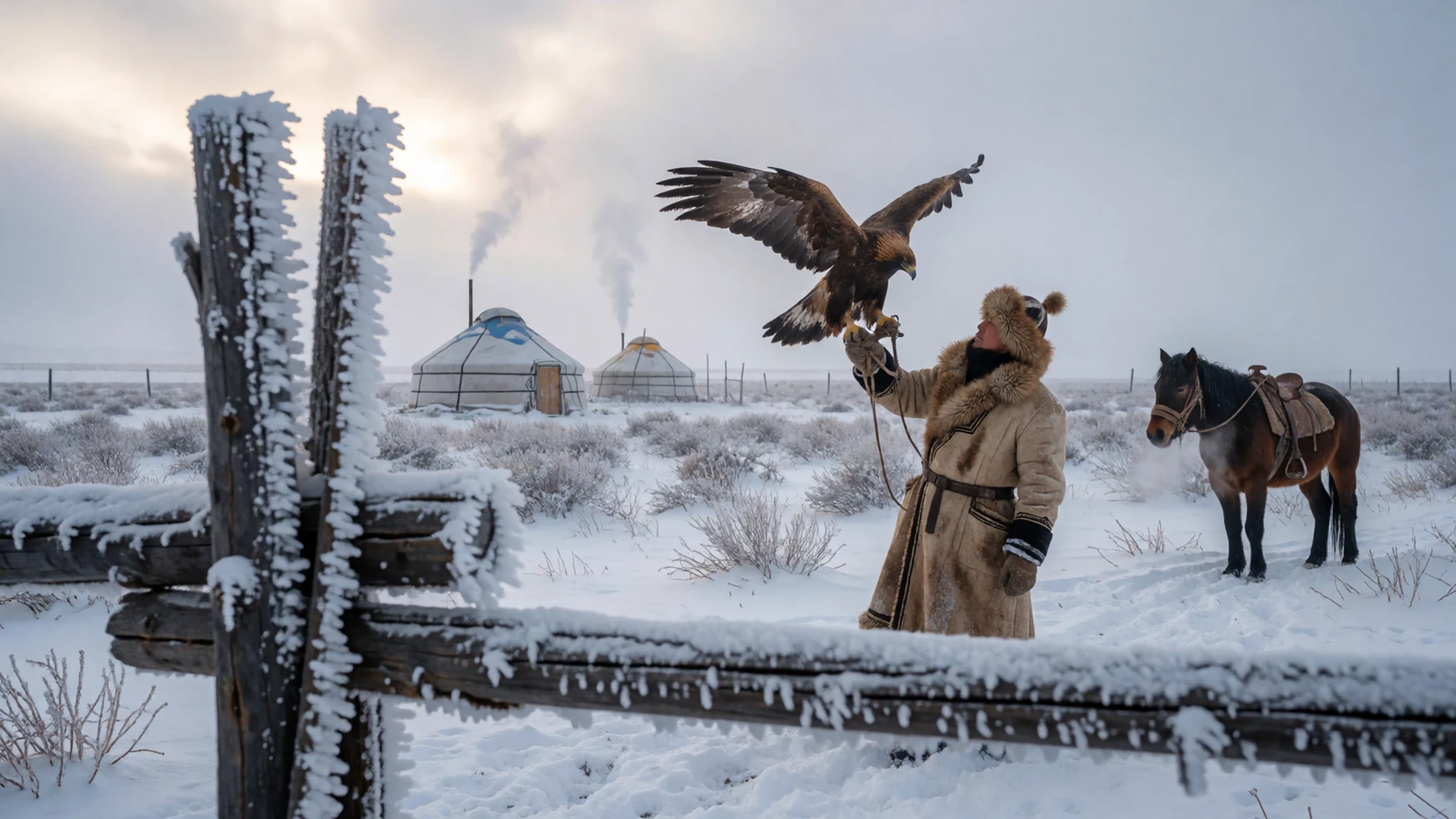
- The A0306 highway towards Russia — Northern Bayan-Ölgii
The road across the province near the Russian border is a sight in its own right, running past grazing herds, river valleys and mountain walls. It is also the practical way to see how thinly settled the Altai is. Long hours between villages are normal, so carry food and water.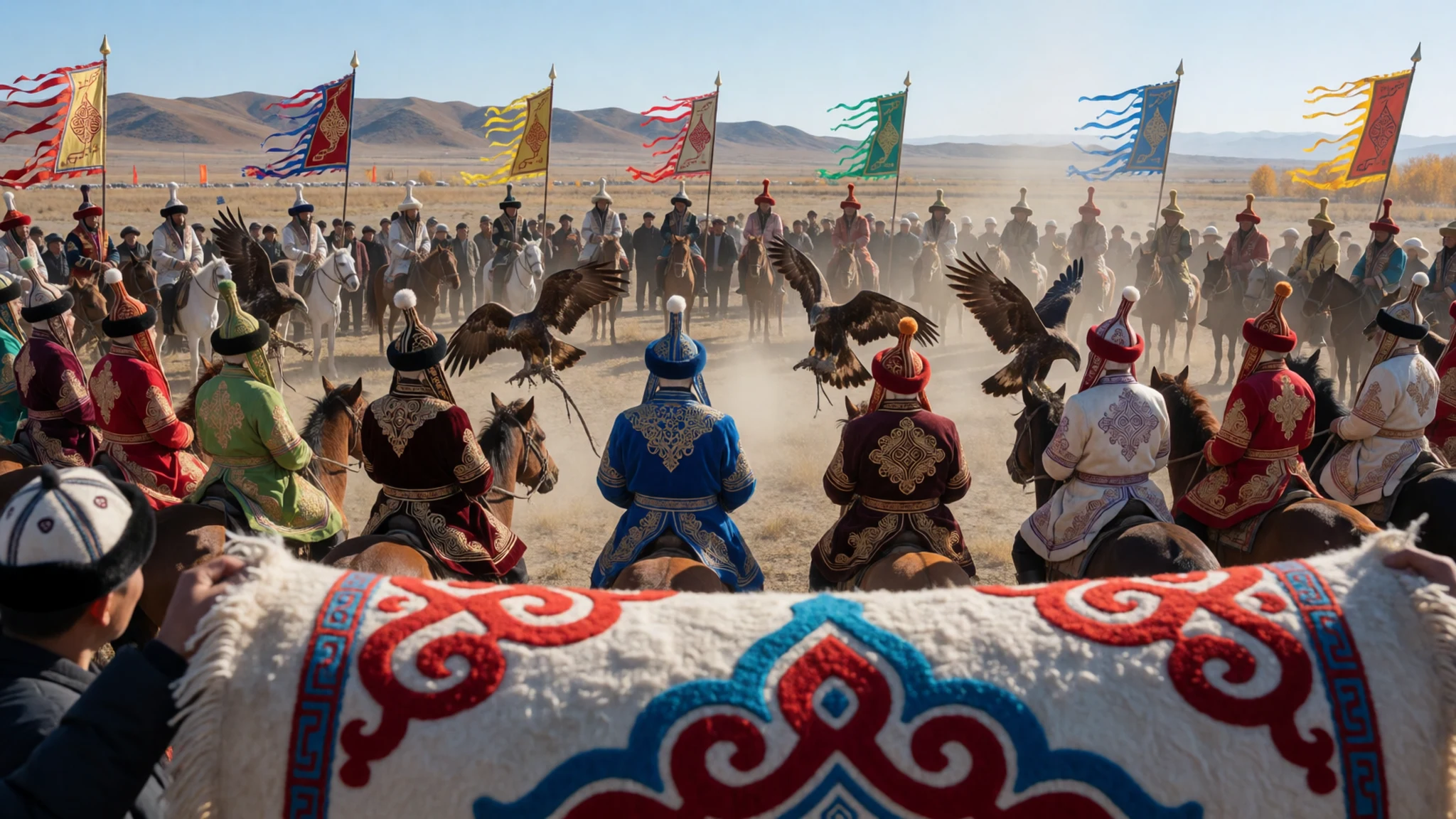
Culture
Bayan-Ölgii is the Mongolian province where Kazakh culture and Islam set the tone, and that shows in everyday detail. The Abu-Bakr Siddiq Central Mosque in Ölgii also houses the Islamic Centre of Mongolia, with a madrasah on the same site, and the building sits at an odd angle to the surrounding streets because it faces Mecca exactly. Hospitality is central to life here: a visit usually begins with tea, bread and dairy, and accepting a cup is the polite way to start. Eagle hunting is both a craft and a mark of identity, handed from one generation to the next, with each bird treated as a working partner, not a pet. Hunters gather every October for the Golden Eagle Festival in Ölgii to show their skills in front of crowds. Mongolians in general are direct talkers, so a blunt opinion is rarely meant as rudeness, and visitors can answer in kind without offence. One sensitive subject is China. Feelings about the neighbouring country run high across Mongolia, so it is wise to skip Chinese-branded clothing and to keep the topic out of conversation. Family and community ties are strong, and guests are often drawn into meals and gatherings quickly. Ask permission before photographing people or their eagles, and remove your shoes and cover arms and legs if you step into the mosque.
What to wear
Bayan-Ölgii's traditional dress is Kazakh, not Mongolian, and it is built for cold. Eagle hunters wear long, heavy coats, tall leather boots and fur-trimmed hats, often with a thick glove on the arm that carries the bird. Women's festive clothing includes embroidered velvet and wool, bright colour and ornate headwear, and felt, sheepskin and fur do much of the practical work in winter. Full costume appears at weddings, holidays and the October eagle festival, when many families bring out their best pieces. In daily life most people in Ölgii dress in jeans, jackets, fleeces and sturdy shoes, with some women covering their hair and many older men keeping a fur or felt hat. Visitors should dress for rapid weather changes at altitude: layers, a windproof shell, a warm hat and sun protection even in summer, plus broken-in boots for rough ground and wet grass. In town and especially at the mosque, modest clothing is the norm, meaning shoulders and knees covered, and women may want a light scarf for their head. Since anti-China feeling is common in Mongolia, visitors should avoid clothing that carries Chinese slogans or branding. In winter, temperatures drop sharply, so proper insulated boots, gloves and thermal layers matter far more than style.
What to eat
- Boiled mutton — Herder homes, ger camps and town canteens
Boiled mutton is the base of Mongolian cooking, and the Bayan-Ölgii countryside is no exception. Simply seasoned with salt, it is served on the bone at the end of a long day. Expect it in herder households and ger camps, and in any town canteen.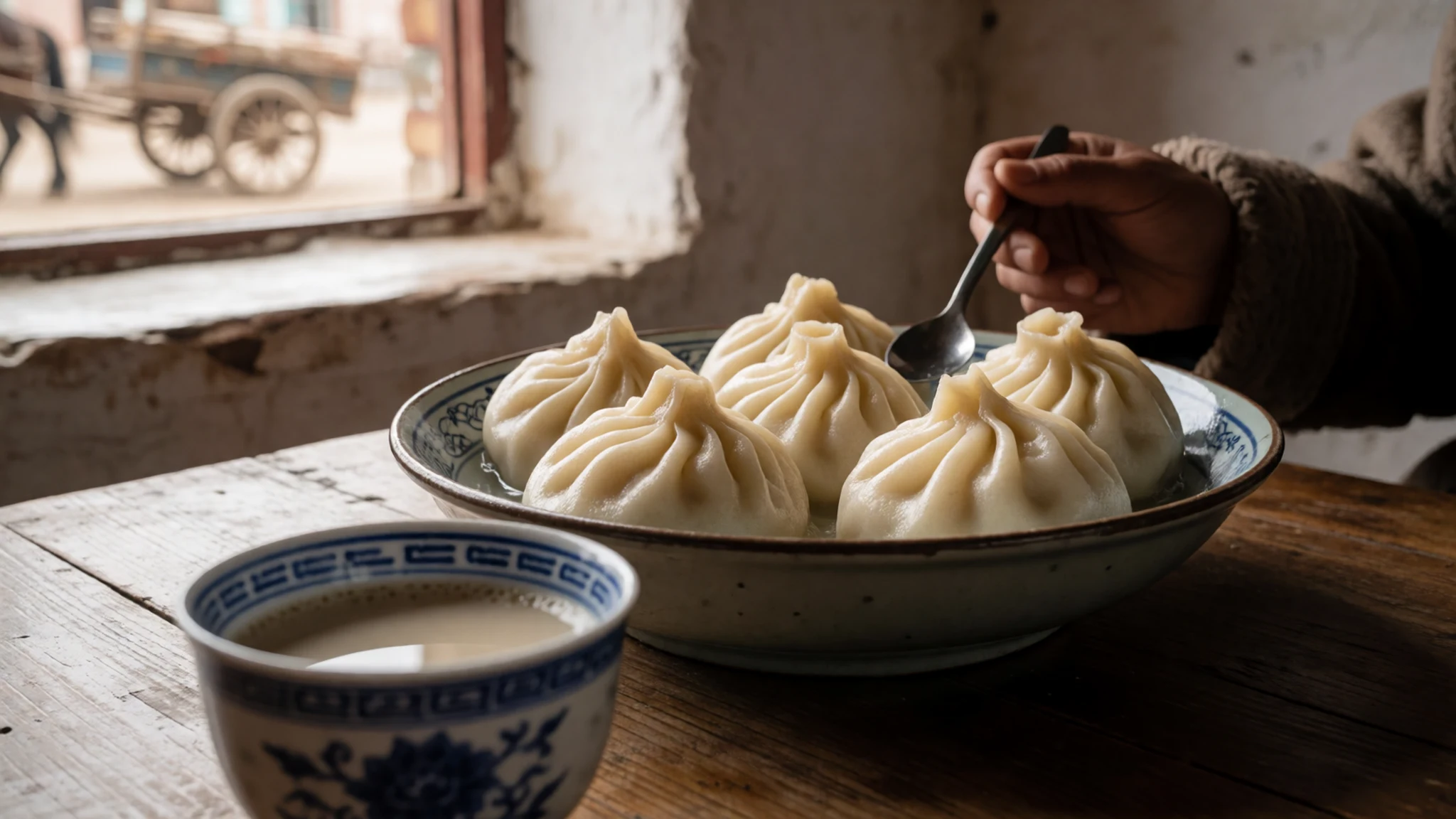
- Buuz — Canteens and tea shops in Ölgii
Buuz are steamed dumplings filled with minced meat, often called Mongolia's national dish. They arrive hot in a steamer basket, juicy inside, and make a cheap, filling meal. Bayan-Ölgii's canteens and tea shops serve them through the day.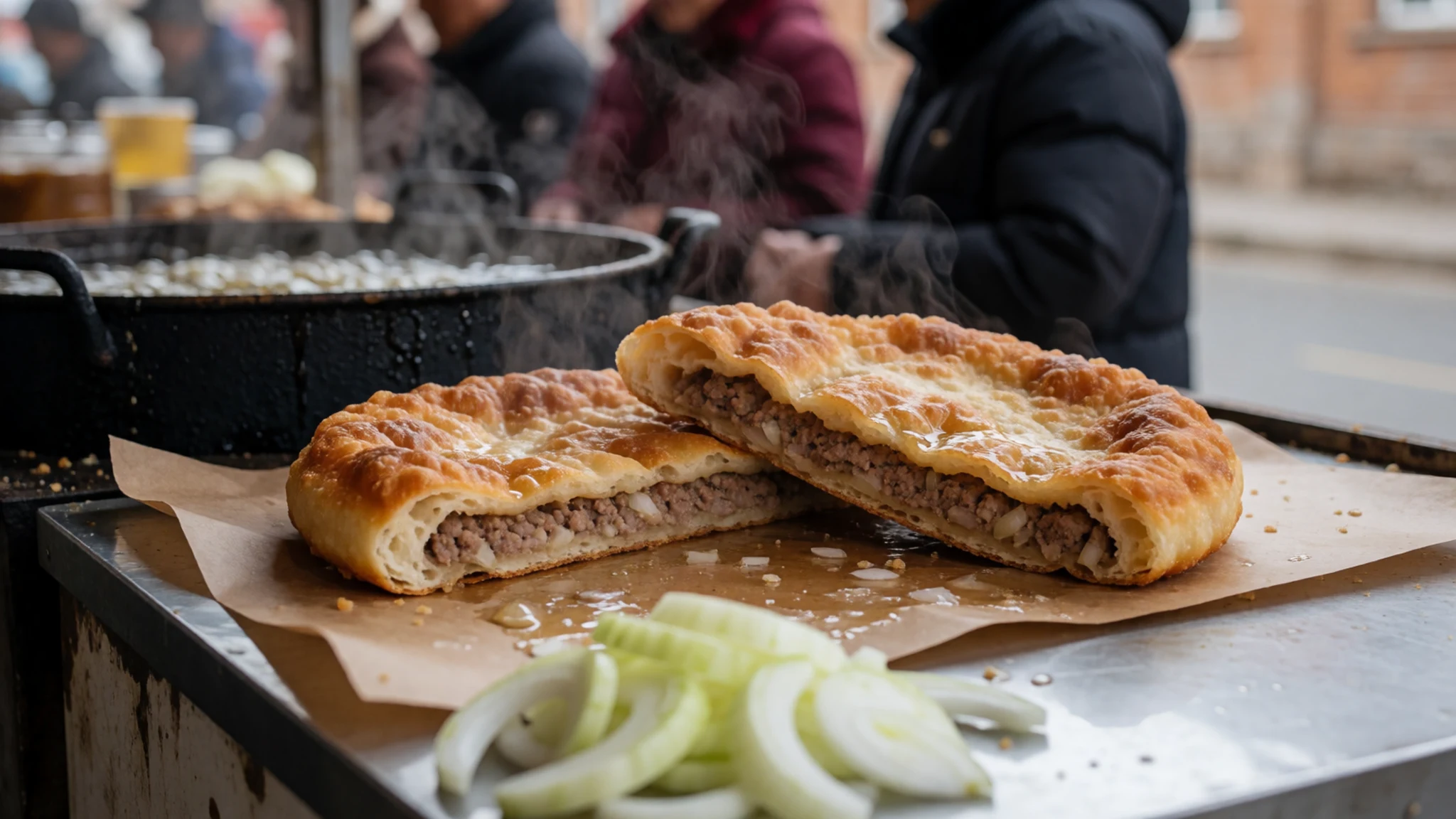
- Khuushuur — Market stalls and canteens around Ölgii
Khuushuur are flat, fried pastries stuffed with meat and onion. Once a festive food, they are now sold almost everywhere. Eaten hot and greasy, they suit cold days well, and a few are usually enough for a meal. - Tsuivan — Everyday restaurants and canteens in town
Tsuivan is a plate of stir-fried noodles with meat and a scattering of vegetables. It is a standard canteen order, plain but warming, and comes in generous portions. Vegetables are limited in this part of the country because farming is hard. - Beshbarmak — Kazakh family homes and Kazakh-run eateries
Beshbarmak, a Kazakh dish found across Central Asia, is boiled meat laid over broad noodles in broth. In Bayan-Ölgii it is a celebration meal, so it appears at family gatherings and in Kazakh-run eateries. Ask locally where it is served. - Byaslag and öröm — Herder households and local markets
Byaslag is a mild, fresh cheese, similar to paneer, and öröm is clotted cream. Both come from the herds' milk and are staples of the table in the countryside. Served with bread and tea, they make a simple breakfast.
Plan it
Best time. June to September for hiking, lakes and mountain roads, when the high country is most accessible. October brings the Golden Eagle Festival but also cold, and winter is severe, though that is when hunters work with their eagles.
How long. 4–6
Getting there. Fly from Ulaanbaatar to Ölgii (check current flights with the airlines), or take the long overland route west. From Ölgii, hire a driver and vehicle for Tolbo Lake and Altai Tavan Bogd National Park, as the last stretches are rough tracks.
Budget. mid
Tips
- Arrange a local guide and vehicle in Ölgii before heading to the park, and use the official provincial site http://www.bayan-olgii.gov.mn/ for local information
- Check current visa rules for your passport before booking, as the recent tourist-entry relaxations have set end dates
- Book October festival stays and guides well ahead, as the town fills up
- Carry cash and extra food, water and warm layers, as services thin out fast outside Ölgii
- Allow for altitude and fast weather changes, and keep away from dog packs near settlements
Etiquette
- Dress modestly in town and remove shoes before entering a mosque or a home
- Ask before photographing people, eagles or the inside of the mosque
- Avoid Chinese-branded clothing and keep the subject of China out of conversation
Nearby
Sources
- Wikidata Q191792 (CC0)
- Wikipedia: Bayan-Ölgii Province (rev 1377565508) (CC BY-SA 4.0)
- Wikivoyage: Mongolia (rev 5427090) (CC BY-SA 4.0)
- Photo: Olgii panorama, Nahcamuk (CC BY 3.0)
- Photo: Tavan Bogd Mountain, Altaihunters (CC BY 3.0)
- Photo: Road towards Ölgii city, BatboldDorjgurkhem (CC BY 4.0)
- Photo: Tolbo-nuur, Alexandr frolov (CC BY-SA 4.0)
- Photo: Parade of eagle hunters, Altaihunters (CC BY 3.0)
- Photo: A0306 Highway in Bayan-Ölgii, Alexandr frolov (CC BY-SA 4.0)
- Photo: Ölgii Mosque, Nahcamuk (CC BY 3.0)
- Photo: Map of Bayan Olgii sums, Bogomolov.PL (CC BY 3.0)


Wildlife
- Golden eagle (animal)
The golden eagle is a big, dark-brown bird of prey with a golden shine on the back of its neck, and it swoops on hares and marmots with sharp talons. Bayan-Ulgii is the true home of Mongolia's eagle hunters, so this is the place to meet one, often with its trained partner in the winter snow. Watch from a respectful distance, keep your voice low, go with a local guide who knows the hunters, and never offer the bird food.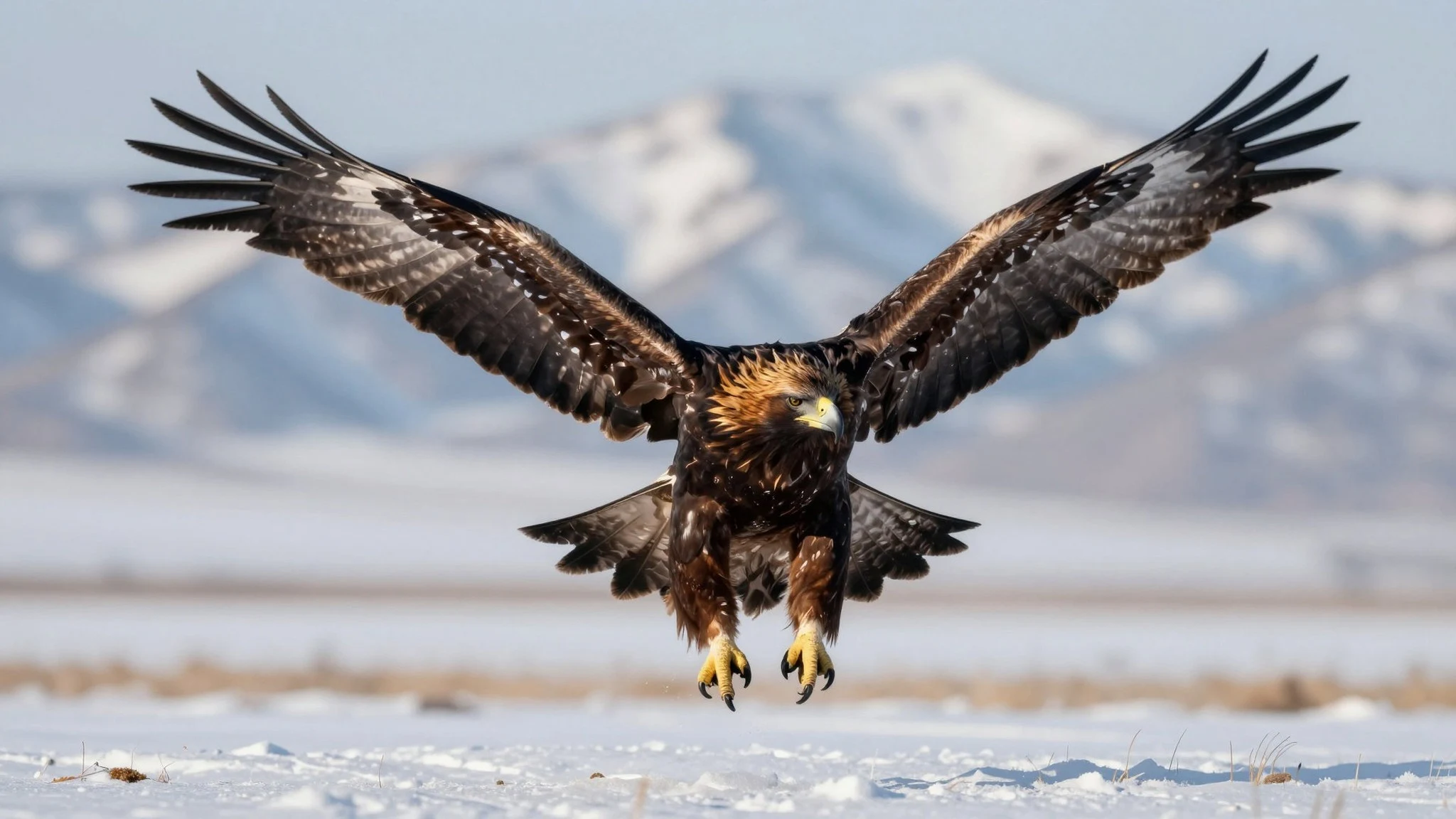
- Red fox (animal)
The red fox is the biggest of all the true foxes, a wild hunter that lives across much of the northern half of the world. In Bayan-Ulgii you may glimpse one in winter, when eagle hunters work the white snow and foxes are among their quarry. Keep well back, stay quiet and still, and let a local guide choose your spot. Never feed a fox, however curious it seems; wild animals should stay wild.