Buir Lake
Buir Lake, Mongolia
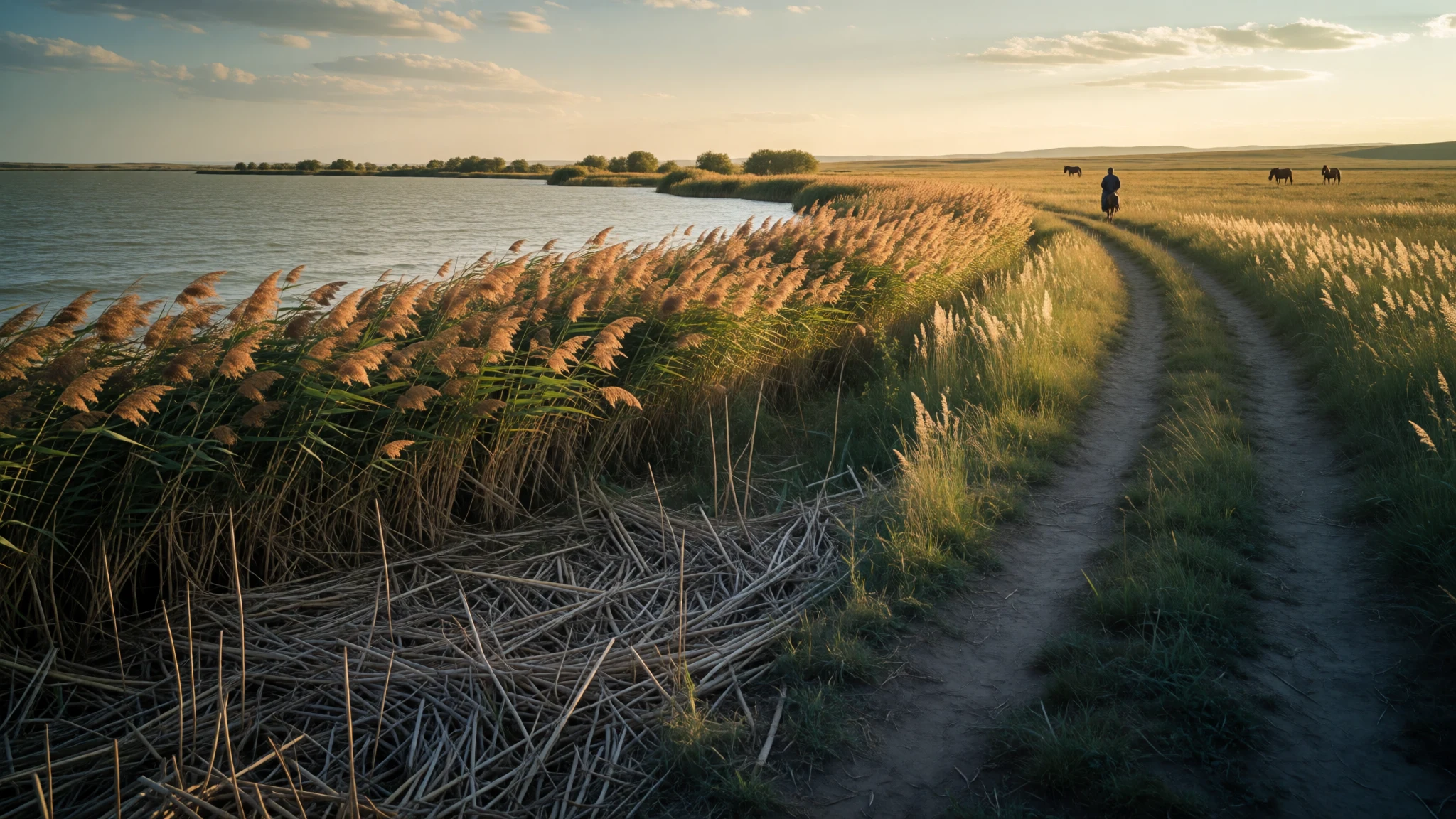
Buir Lake is a freshwater border lake on the Mongolian steppe, for travellers who value empty horizons and a story few others tell.
The place
Buir Lake lies 583 metres above sea level on the border between Mongolia and China, a freshwater lake set in a wide hollow called the Buir Lake Depression. The Mongolian shore belongs to Dornod province, in the far east of the country, where the Khalkhgol district looks onto the water. The opposite shore is in Inner Mongolia, part of China. That division shapes almost everything about the lake: who can approach it, who patrols it and how little travel writing exists about it.
The setting is steppe rather than mountain scenery. Eastern Inner Mongolia is described as wide grass meadow broken by forest and low mountains, and the Mongolian side is open grassland country as well. Water here is a flat presence in a very large landscape, and the lake reads clearly as a patch of water against the surrounding land in satellite imagery.
A second lake, Hulun, lies entirely on the Chinese side. Between them, the two lakes gave their names to Hulunbuir, a Chinese city, so Buir is better known as a name than as a destination. Mongolian border guards patrol it with a small number of motorboats, which says a good deal about its character: a working borderland, not a leisure lake with jetties and cafés.
Visitors should arrive with realistic expectations. Facilities near the shore are likely to be thin, distances are long, and anything touching the border zone needs checking with official sources before travel. What the place offers in return is space, big skies and a corner of the Mongolian steppe that few itineraries include.
Its story
Buir Lake has a history that is more about borders and dynasties than about the water itself. In 1388 the Ming general Lan Yu led his army into the lake region and defeated the Northern Yuan, the Mongol court that had withdrawn to the steppe after losing control of China. The defeated ruler, Tögüs Temür, fled but did not last long: he was dead soon after the battle. The episode is a reminder that the grasslands around the lake were once contested ground between the Ming dynasty and the Mongols to the north.
Later centuries drew new lines across the same country. Today the lake is shared by two states, Mongolia and the People's Republic of China, and the water is divided between them. On the Chinese side lies Inner Mongolia, an autonomous region within China. Its population is mostly Han Chinese, with a Mongol minority that keeps herding traditions, gers and Vajrayana Buddhism alive in the open country between towns.
The name of the Chinese city of Hulunbuir joins Buir Lake and its neighbour Hulun Lake into a single word, a small piece of history carried in an address. The Mongolian side has its own quieter administrative story, as a lakeshore district of Dornod province patrolled by border guards on the water.
The result is a place with a layered identity. Visitors stand on ground where a medieval campaign was decided, and where a modern border now decides who may stand where. That history is easier to feel on the spot than to read in any single source.
What to see
- Buir Lake shore, Khalkhgol district — Khalkhgol district, Dornod province, Mongolia
The shore at Khalkhgol district in Dornod province is the natural place to meet the lake from the Mongolian side. The appeal is quiet rather than spectacle: low land, open sky and a wide stretch of water. Plan with a local driver, and ask about current access, since this is a border area and some stretches of shoreline may be restricted.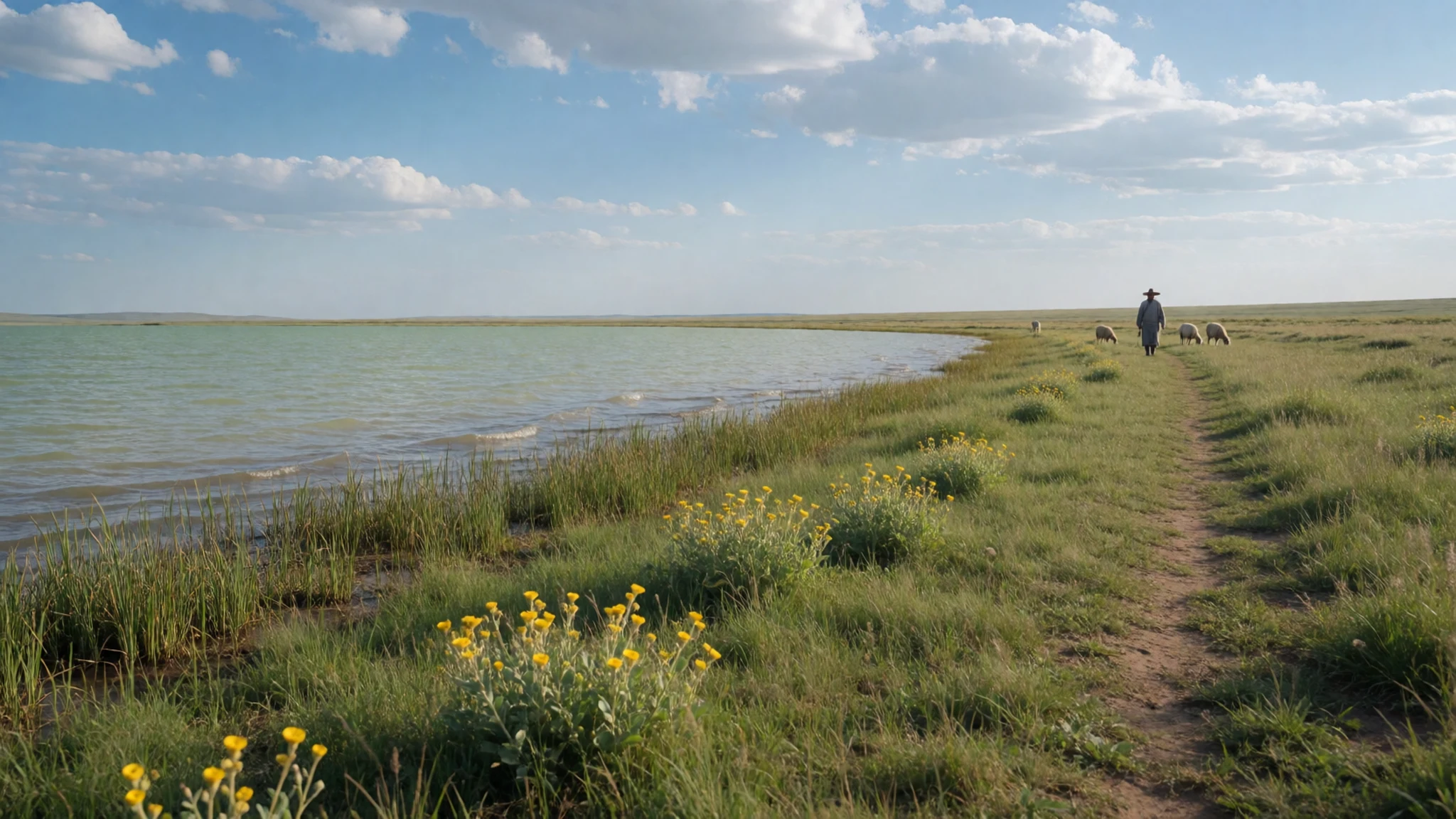
- The lake from orbit — Buir Lake, Mongolia–China border
A public-domain Landsat image shows Buir Lake across eastern Mongolia and Inner Mongolia, and it is the clearest way to grasp the lake's setting. Studying it before travelling helps place the water relative to the surrounding grassland and to Hulun Lake, and makes the shape of a long overland trip easier to plan.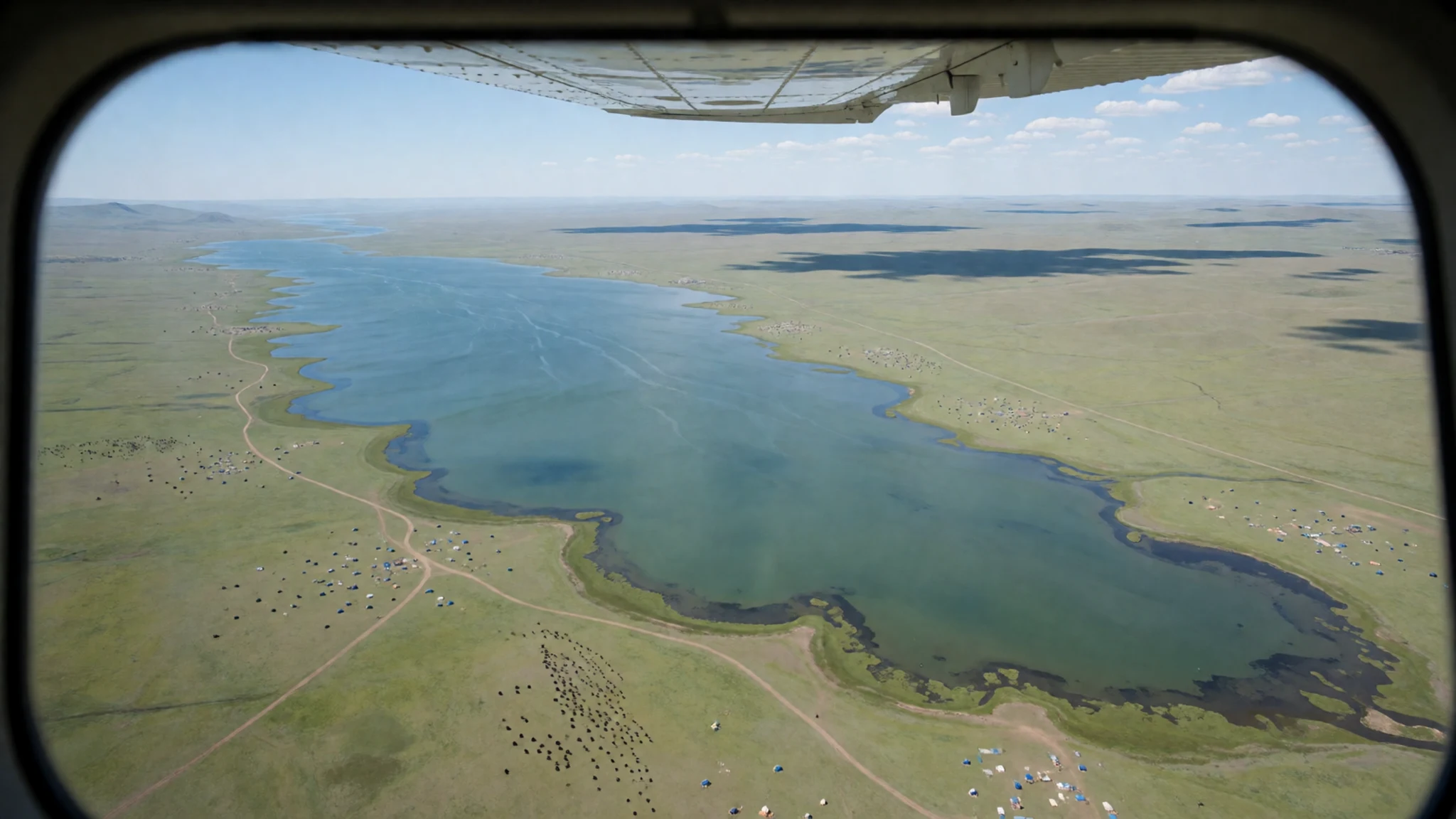
- Tamsag Bulag area — Dornod province, Mongolia
Tamsag Bulag is an area of Dornod province, steppe country south-west of the lake, recorded on an old survey map from the US Army Map Service. It is useful for understanding how remote the region is: long distances of grassland and few places to stop. Travellers heading to the lake often cross this kind of terrain.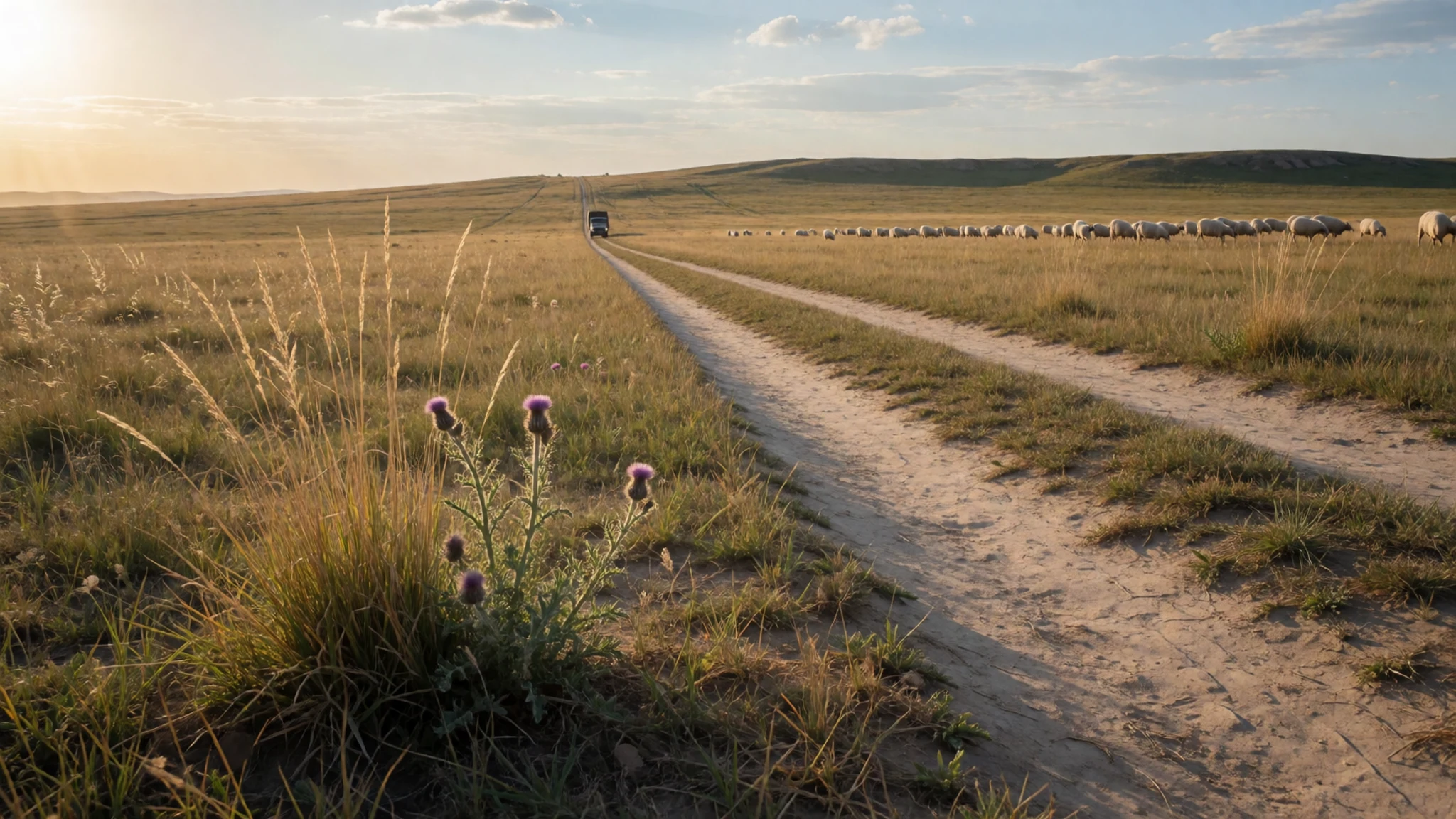
- Hulun Lake — Inner Mongolia, China
Hulun Lake is situated completely within China, in Inner Mongolia, and shares the naming of Hulunbuir with Buir Lake. For travellers approaching through China it is the better-known neighbour, and a way to see the same steppe landscape. Check current access and local transport with official sources before planning a visit.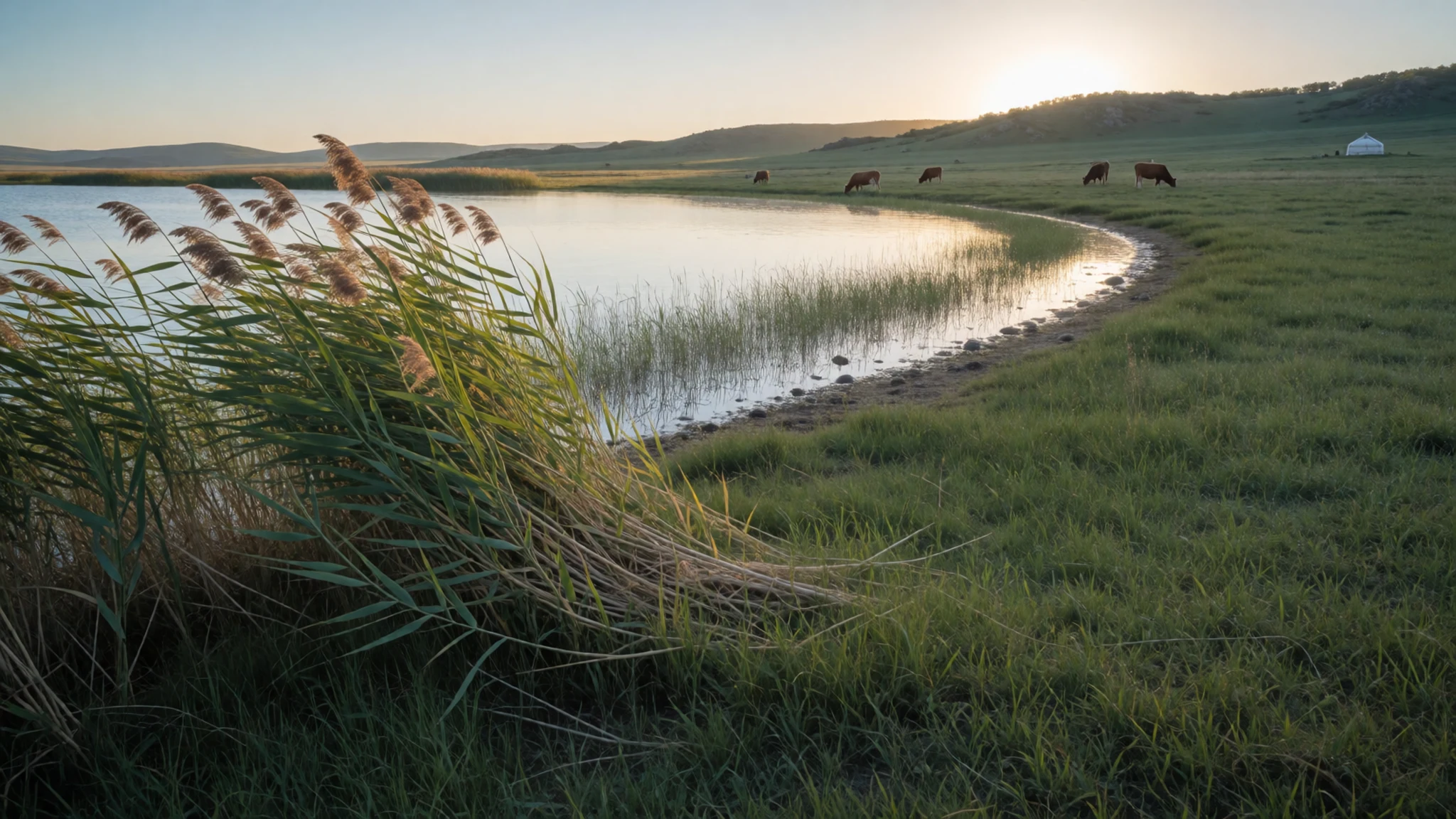
- Hulunbuir city — Hailar, Inner Mongolia, China
The Chinese city of Hulunbuir takes its name from both lakes and is the practical urban base on the Chinese side, with air and rail links to the wider network. Visitors planning a loop through Inner Mongolia can use it for supplies, restaurants and onward arrangements, though entry to the border zone itself needs separate checking.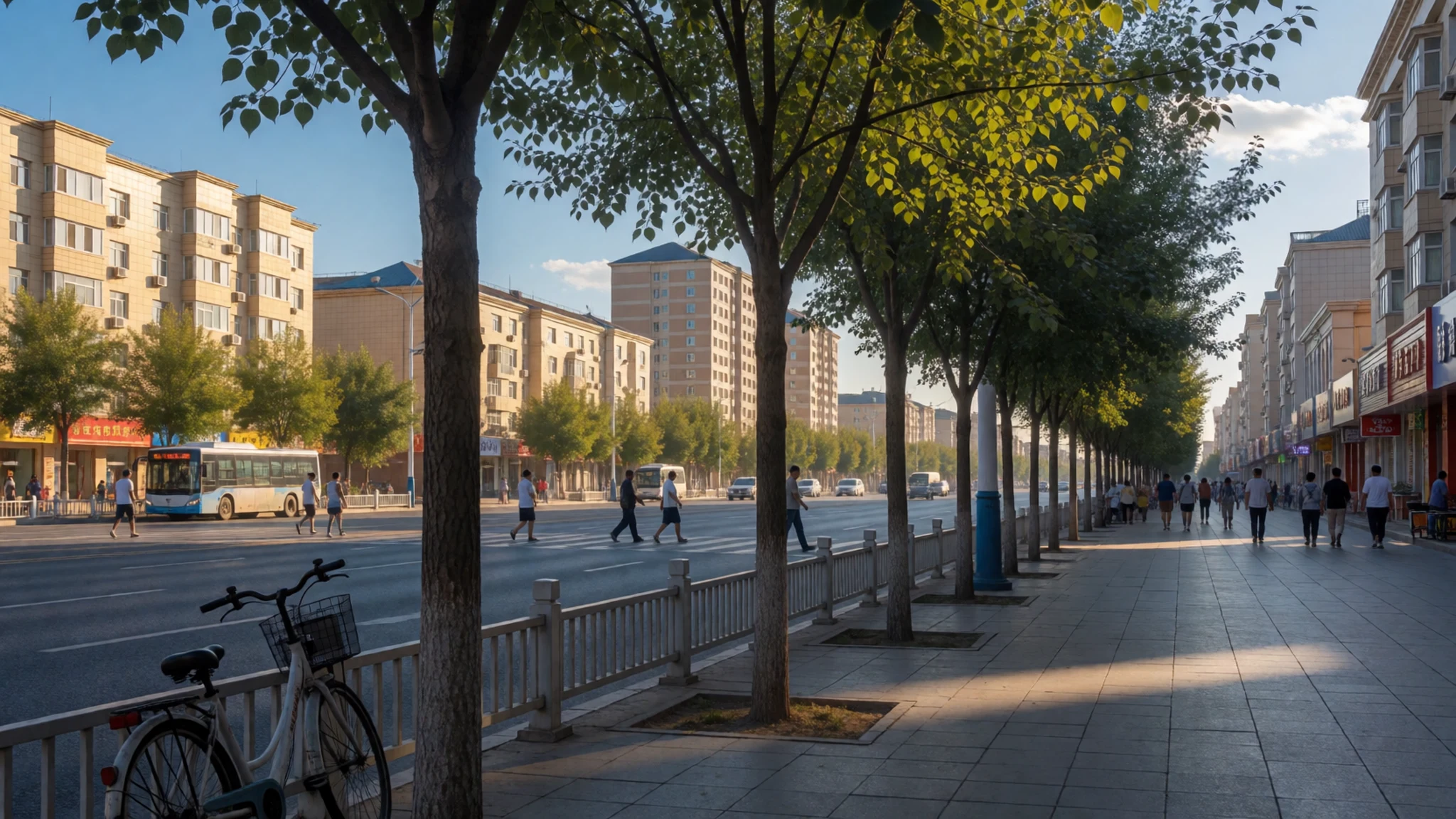
Culture
Buir Lake sits between two countries that share a Mongol heritage and very different political systems, and that is the first thing to understand about its culture. On the Mongolian side, in Dornod province, life revolves around herding, grassland and a Mongolian-speaking majority. Across the water, Inner Mongolia is an autonomous region of China where ethnic Mongols are a minority among a Han Chinese majority, yet nomadic traditions persist and gers can still be seen in open country between the towns.
The main faith among Mongols on both sides is Vajrayana Buddhism, the tradition also found in Tibet and Bhutan, so monasteries and roadside cairns are part of the landscape. Hospitality is central to steppe life: a visitor welcomed into a family's ger is likely to be offered milk tea and dairy foods, and refusing everything outright can seem cold.
Politics needs a light touch. Inner Mongolia and Mongolia are separate, and talking about them as one country can cause offence, and on the Chinese side it may even be read as separatist. It is wiser to let local people lead any conversation about borders, history and identity, and to ask questions rather than offer opinions.
The border itself is a living presence, not just a line on a map, because patrols watch the water. Treat that with the seriousness it deserves.
Ask permission before photographing border guards, patrol boats or border markers, and follow local instructions about where you may walk near the shore.
What to wear
Traditional dress around Buir Lake is the Mongolian deel, a long wrap-over robe that fastens at the side and is held at the waist by a sash. Everyday deels are often made of cotton or wool, while festival and ceremonial ones may be silk brocade in strong colours. In cold seasons herders add sheepskin and felt, and wear leather boots with turned-up toes. The full outfit appears at weddings, festivals and national celebrations, and many herders still wear a plainer deel for daily work.
Most people now dress for the job and the weather: jeans, fleece, windproof jackets, caps and trainers or rubber boots, with the deel kept for occasions. In towns on both sides of the border, younger people dress much as they would elsewhere in Asia.
Visitors should think in layers. The steppe is open and windy, with little shelter, and temperatures can change sharply between day and night. Pack a windproof jacket, a warm layer even in summer, a sun hat, sunglasses and sunscreen, and long trousers against insects and grass. Sturdy closed footwear matters because ground near the lake can be wet and rough. At a monastery or in a family's ger, cover shoulders and knees as a courtesy. Winter travel calls for serious cold-weather kit: insulated boots, thermal layers, gloves and a face covering.
What to eat
- Suutei tsai (Mongolian milk tea) — Any family ger or ger camp, and breakfast at guesthouses
A salty, milky tea served hot in bowls, and often the first thing a guest is offered. It is closer to a light broth than to sweet chai, and it appears with breakfast as well as through the day. Many visitors find it an acquired taste that grows on them.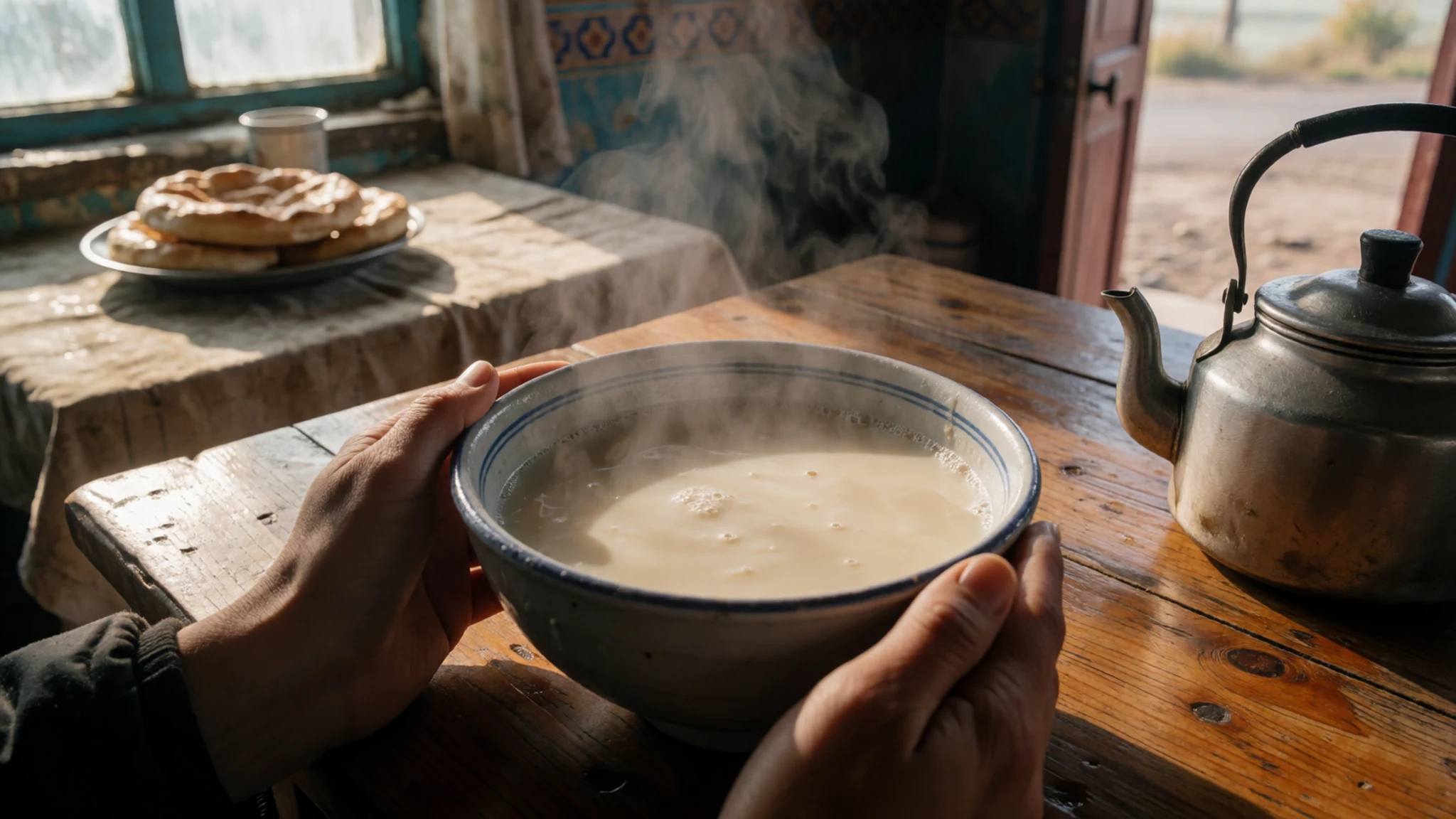
- Roast lamb — Eateries in provincial towns and family meals at ger camps
Lamb is the centre of most meals in the region, and it is often roasted with a coating of spices that gives a strong, distinct flavour. Expect generous portions of meat with simple sides, and ask your host how the cut is meant to be eaten.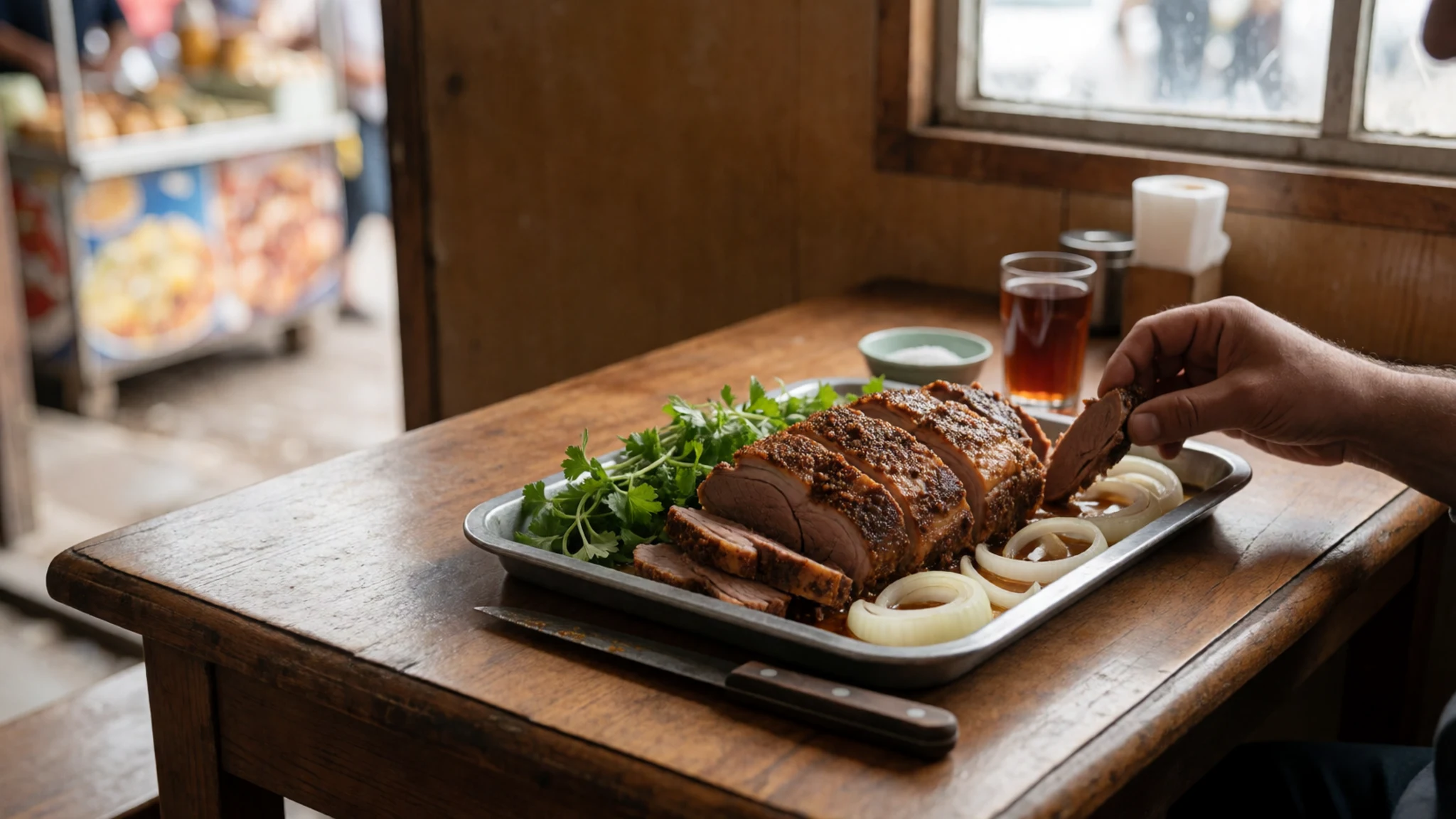
- Mongolian hotpot — Hotpot restaurants in towns on the Chinese side, such as Hulunbuir
A communal pot of well-flavoured broth in which thin slices of meat and vegetables are cooked at the table. It is milder than the chilli-heavy pots of central China, so it suits visitors who prefer flavour without a lot of heat. - Yoghurt, cheese and dried curd — Family stalls, district-town markets and ger camps
Dairy is a pillar of steppe food, with milk turned into yoghurt, cheese and hard dried curd that keeps well. Tasting them is as much about understanding herding life as about flavour, and many are sour, so start with small portions. - Buuz (steamed dumplings) — Small canteens and market stalls in district towns
Small steamed dumplings filled with minced meat and onion, popular across Mongolian communities. They make a practical, filling meal for long road days, and are usually eaten by hand with a little salt or sauce alongside.
Plan it
Best time. June to September, when the steppe is green and travel is easiest; winters here are long and harsh, and spring can be windy, so plan around the warmer months and check the forecast close to travel.
How long. 3–4
Getting there. From Mongolia, fly to Ulaanbaatar, then travel east to Dornod province by domestic flight or a long road journey, finishing with a drive to Khalkhgol district; arrange a driver. From China, fly to Hailar Dongshan Airport (HLD) or Manzhouli (NZH) in Inner Mongolia and ask locally about onward access. The Trans-Mongolian railway is the long-haul option between Beijing and Ulaanbaatar.
Budget. mid
Tips
- Check current entry and border-zone rules with the official immigration authorities of Mongolia or China before booking, as the lake lies on an international border
- Hire a local driver or guide, because tracks are unmarked and distances are long
- Carry cash, water and snacks, since card payments and shops can be scarce outside towns
- Bring insect repellent and a windproof layer for summer trips
- Download offline maps before leaving town, as mobile signal on the steppe can be patchy
Etiquette
- Ask before photographing border guards, patrol boats or border markers
- Accept food and drink offered in a ger with both hands or the right hand
- Avoid calling Inner Mongolia part of Mongolia when talking to people on the Chinese side
Nearby
Sources
- Wikidata Q715788 (CC0)
- Wikipedia: Buir Lake (rev 1365913199) (CC BY-SA 4.0)
- Wikivoyage: Inner Mongolia (rev 5293903) (CC BY-SA 4.0)
- Buir Nuur in Eastern Mongolia and in China (Inner Mongolia), LandSat-7 satellite image — NASA, via Wikimedia Commons (Public domain)
- Relief map of Mongolia — NordNordWest, derivative work Виктор_В, via Wikimedia Commons (CC BY 3.0)
- Map of Tamsag Bulag area — Army Map Service, Corps of Engineers, via Wikimedia Commons (Public domain)
- Буйр нуур /Дорнод аймаг Халхгол сум/ — baterdene_0933, via Wikimedia Commons (CC BY 3.0)


