Böön Tsagaan Lake
Böön Tsagaan Lake, Mongolia
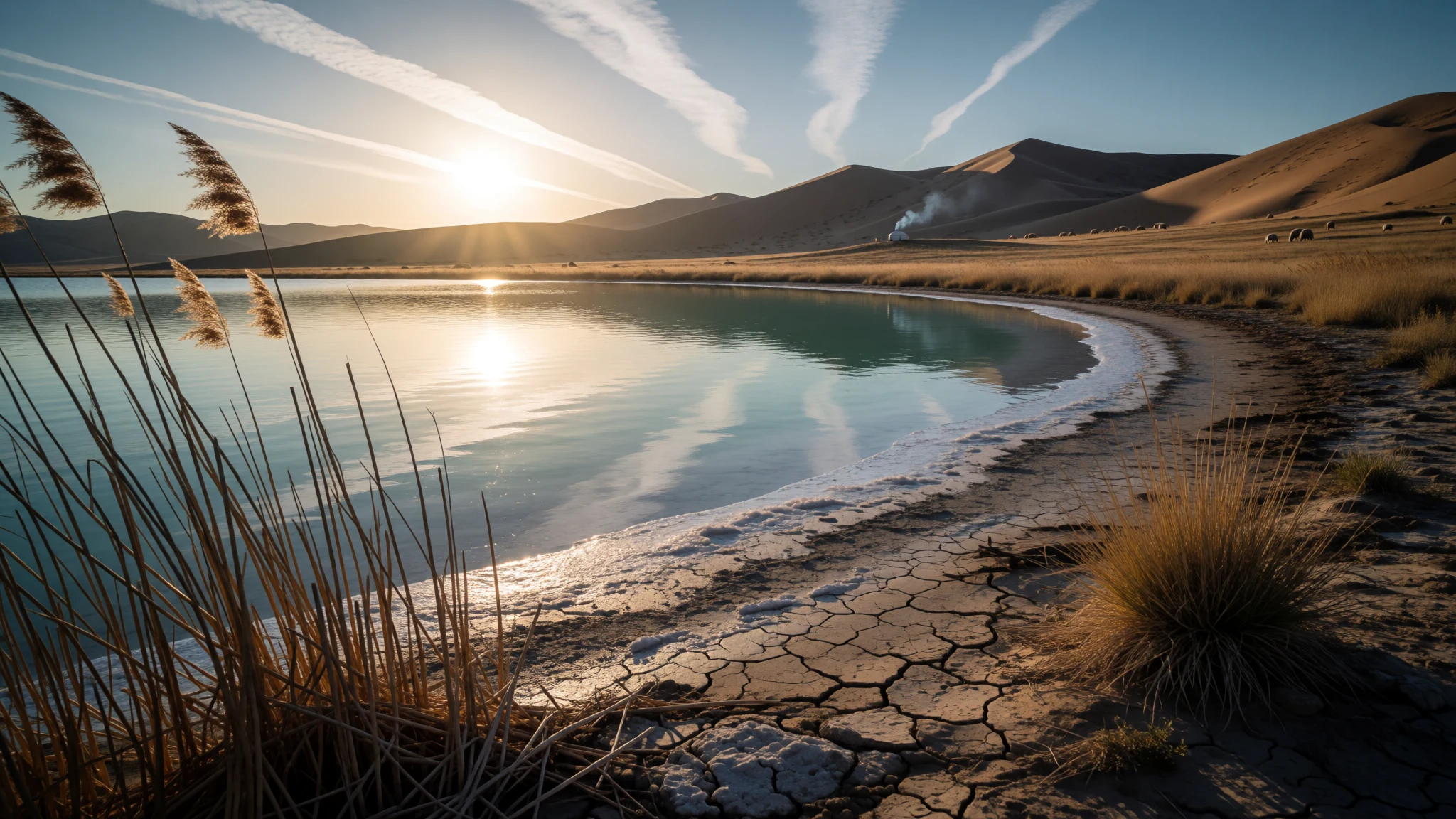
Böön Tsagaan Lake is a wide, silent Gobi lake where dunes, mountains and herders' gers meet under a very large sky.
The place
Böön Tsagaan Lake (Бөөн Цагаан нуур) lies in southern Mongolia at about 1312 m, on the floor of the Valley of Lakes. This long basin runs between the Khangai Mountains to the north and the Govi Altai to the south, so the water is framed by pale ridges on both horizons. Around it are open plains, patches of sand dune and bare slopes, with almost no buildings in sight.
The lake is endorheic, meaning it has no outlet to the sea. Water arrives mainly through the Baidrag River and leaves only by evaporation, so the level and the character of the water shift from year to year. Wikipedia describes it as the biggest lake in the Govi region. It stretches roughly 24 km from end to end and has a shoreline of about 81 km, which turns a full walk round it into an expedition rather than an afternoon stroll.
The climate is cold, dry and continental. Weather records from nearby stations give an average annual temperature of about 3.4 °C and only about 86 mm of precipitation a year, so the colour comes from water, sky and sand rather than from plants. Summers can be hot with cool nights, and winters are bitterly cold.
Mongolia is nicknamed the Land of Blue Skies, and the light here explains why: clear, hard and quick to change, moving from pale gold to deep blue within a couple of hours. Facilities are sparse. Most visitors travel with a driver and sleep in a ger.
Its story
Böön Tsagaan Lake keeps part of its history written in the ground. Along the northern, eastern and south-eastern shores, old terraces and abandoned shorelines sit above today's waterline, showing that the lake once stood higher, during the late Quaternary. Geologists read these steps rather like tree rings: each marks a time when the climate was wetter or the inflow stronger. The present lake is a shrunken, shifting remnant of that larger water.
The recent record is also one of change. Since the late twentieth century, air temperatures around the basin have been climbing, while rainfall swings sharply between years. For a lake with no outflow that matters a great deal, because small shifts in inflow or evaporation move the shoreline. A traveller returning after several years may find the water's edge somewhere new.
People have long organised their lives around water in the Gobi. Herders move livestock between pastures and wells, and a lake in a dry basin pulls animals and families towards it.
Mongolia's wider history sits behind this. The country was the heart of the Mongol Empire, yet the descendants of Genghis Khan left little standing architecture at home, apart from the short-lived capital at Karakorum (Kharkhorin). The lasting marks on this land are the pastoral routes, the old stone monuments and later the Buddhist monasteries, rather than cities. At Böön Tsagaan the story is told by the landscape itself, and by families who still tend animals on its shores.
What to see
- Ancient shoreline terraces — Northern and eastern shores
Along the northern and eastern shores, flat steps in the ground mark where the lake once stood higher. Walking from the present water's edge up across them gives a physical sense of how much the basin has changed. Go early, when the light is low and the ridges show clearly.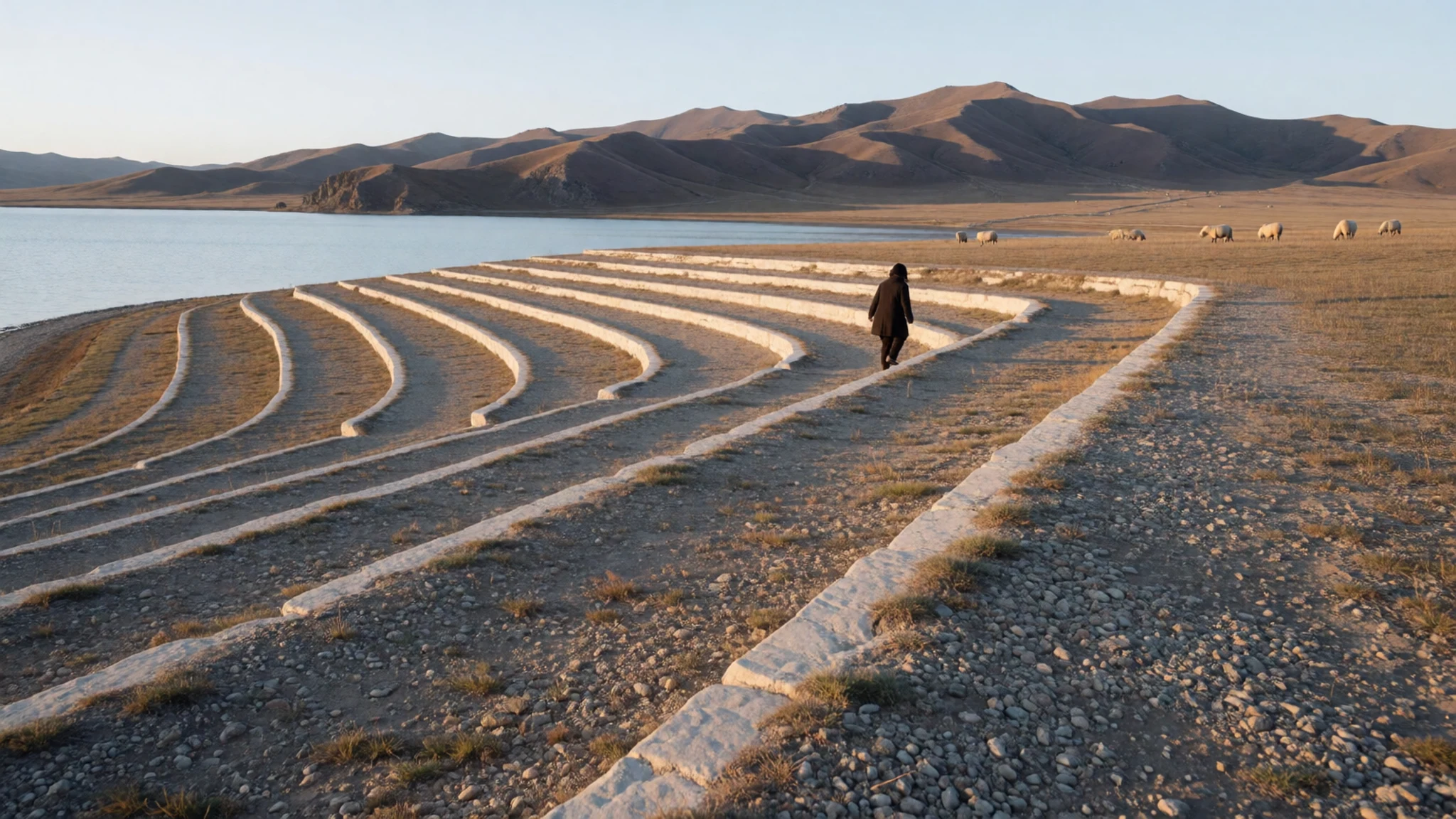
- Dune fields beside the water — Sandy margins of the lake
Sand dunes run close to the lake in places, so pale ripples and blue water sit side by side. The dunes are best explored on foot in the morning or late afternoon, when the sand is cooler and the shadows give the slopes their shape. Carry water and a scarf against wind.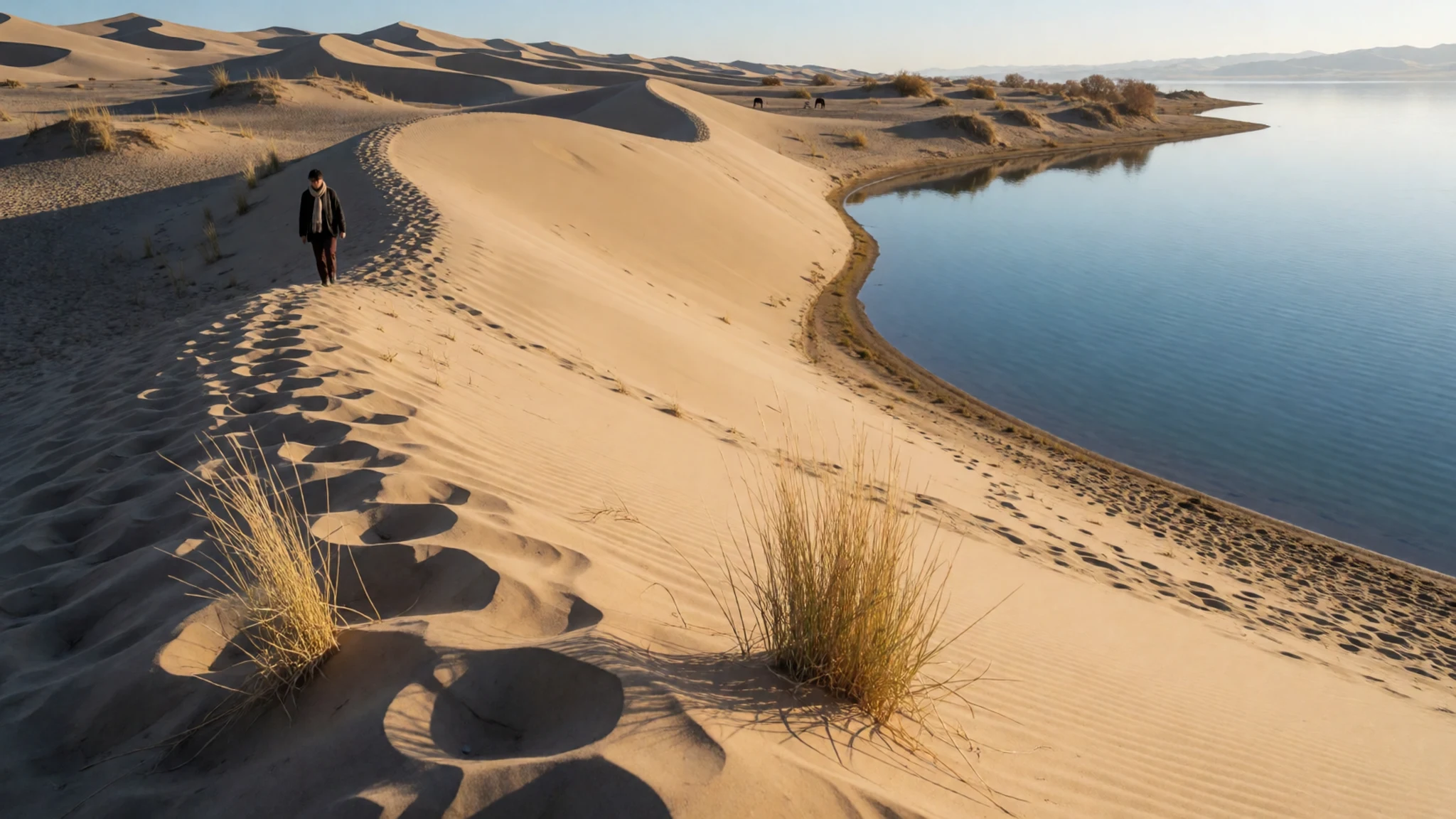
- Baidrag River inflow — Where the Baidrag River meets the lake
The Baidrag River feeds the lake and links it to the wider internal drainage of Central Asia. The inflow area is greener than its surroundings and draws birds and grazing animals. Conditions vary with the season and the year, so ask your driver what the water is doing before heading out.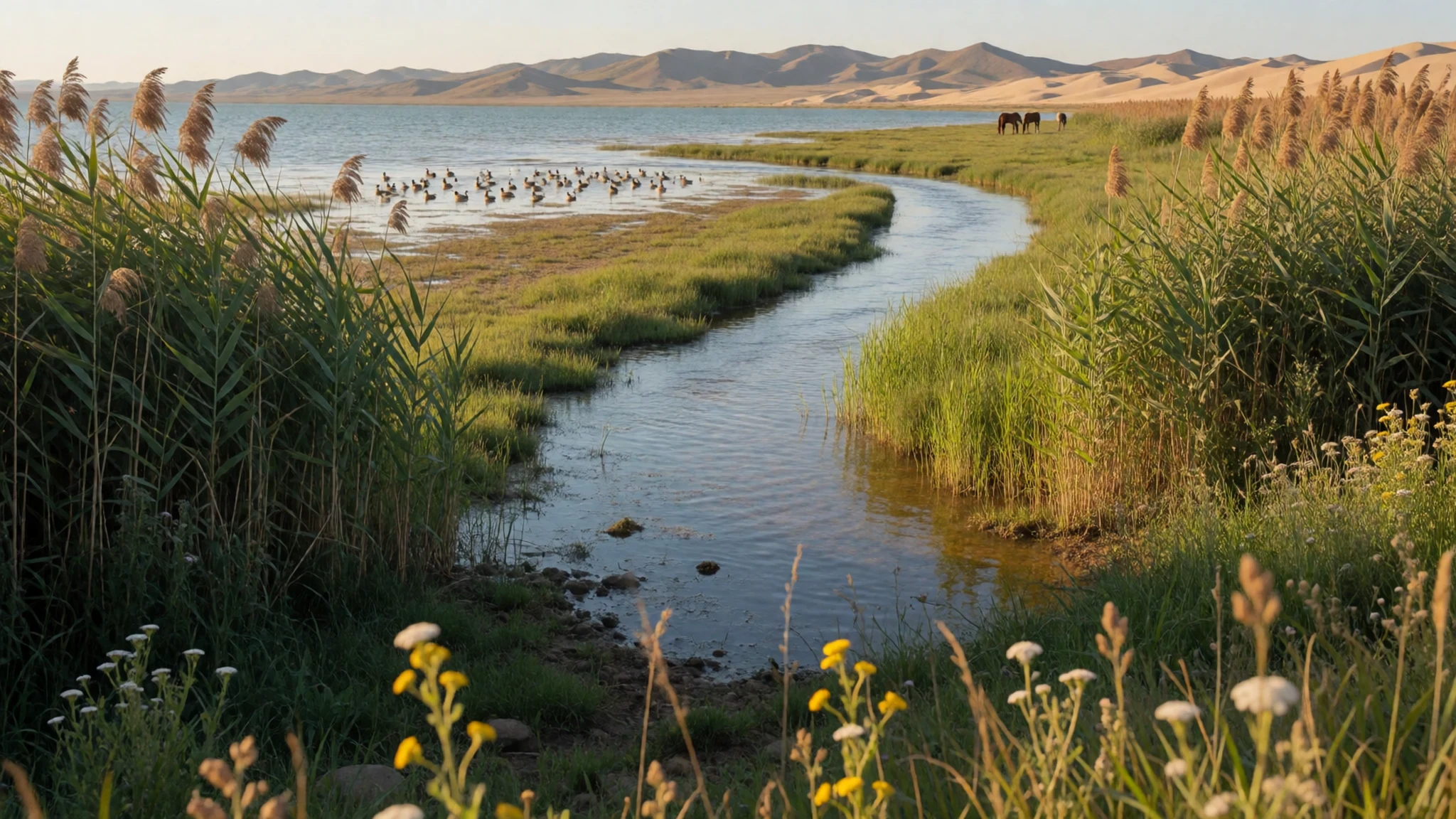
- A herding family's ger — Camps and herder households near the shore
Staying with a herding family, or stopping for tea, is the most direct way to understand life here. The first things offered are usually salted milk tea and dried dairy snacks. Arrange it through a local operator or driver, and bring a small gift from home or town.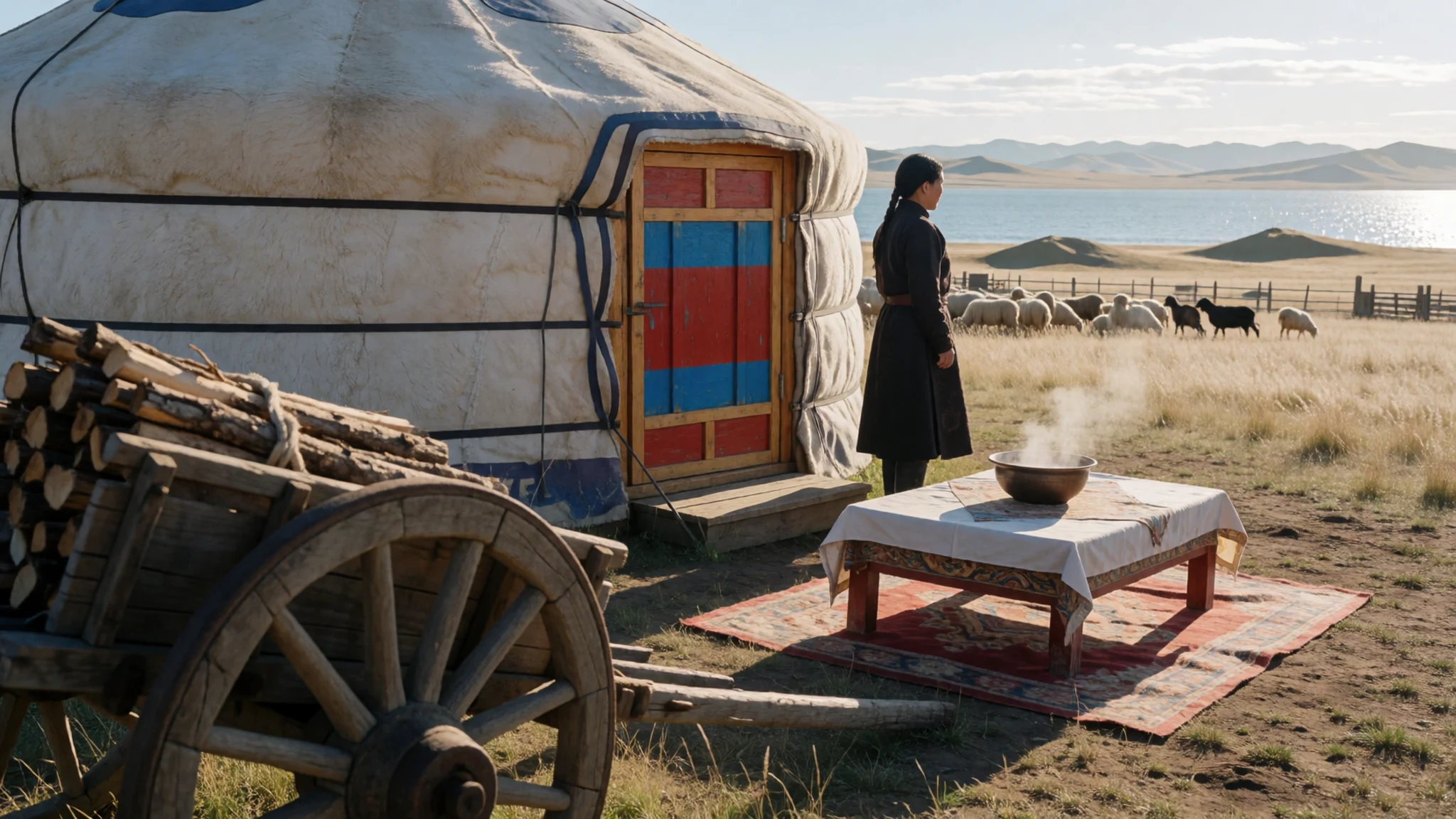
- Valley of Lakes viewpoint — Ridges and rises around the lake
A modest rise above the shore gives a long view across the basin, with the Khangai Mountains hazy to the north and the Govi Altai to the south. On clear days the scale of the valley becomes obvious. Sunrise and sunset are the strongest times, and also the coldest, so layer up.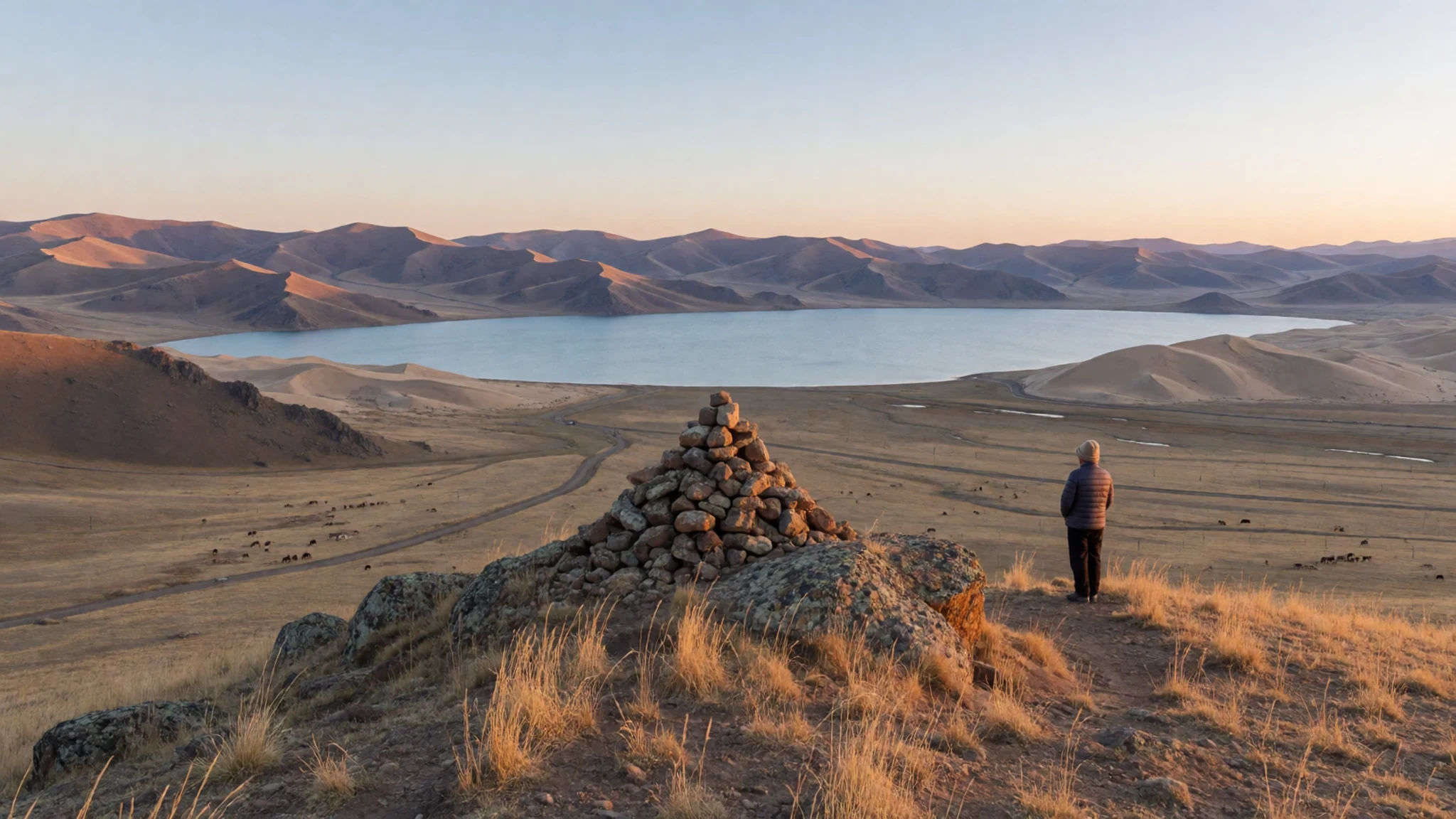
Culture
Böön Tsagaan Lake lies in a country whose culture grew from herding on the steppe, and daily manners here follow that way of life. Mongolians are generally direct, so expect people to say plainly what they think and feel. That is rarely meant as rudeness, and it goes with a strong tradition of hospitality.
A visit to a ger usually begins with salted milk tea and a bowl of dried snacks. Refusing what is offered is considered very rude, so take at least a small taste of everything, even if the flavour is unfamiliar. Western pleasantries do not always land as intended; it is better to copy local manners, such as taking cups and gifts with the right hand.
The lake sits in a part of Mongolia where Tibetan Buddhist heritage and the older nomadic customs both matter, though few monasteries survived the Stalinist purges of the last century. Family and herd come first, and a household may be far from its nearest neighbour, so visitors are often welcomed warmly.
One sensitive subject is China. Many Mongolians feel strongly about history and territory, so it is wise to avoid clothing associated with China and to keep the topic out of conversation.
When offered tea, a cup or a gift in a ger, take it with your right hand, palm facing up, and taste at least a little of whatever is put in front of you.
What to wear
The traditional garment of Mongolia is the deel, a long, wrap-over robe closed at the side and tied with a wide sash. Everyday versions are cut from cotton or wool and padded for winter, while festival and ceremonial deels use silk and brocade in deep blues, reds and golds. Leather boots with upturned toes and felt or fur-trimmed hats complete the outfit. Deels are worn at Naadam, weddings, the Lunar New Year and other celebrations, and many herders still wear them for daily work because they keep out wind and cold.
Around Böön Tsagaan, most people dress for the climate and the job. Herders often combine a deel with practical boots, a jacket and a hat; younger people and those in towns wear jeans, fleeces and trainers. Bright scarves are common as protection against wind and dust.
A visitor should dress for large swings in temperature. Summers can be hot by day and cool at night, so pack light long sleeves, a warm fleece and a windproof layer, plus a hat, sunglasses and sun cream. Sturdy closed shoes or light boots suit sand, stones and rough tracks. Modest, practical clothing suits ger stays and any monastery visit. In cold months, thermal layers, insulated boots and good gloves are essential.
What to eat
- Boiled mutton — A herding family's ger or any roadside canteen
Boiled mutton is the everyday centre of Mongolian eating, often cooked with little more than salt. Expect it wherever herders are cooking, and in simple meals served at a ger. It is hearty, plain and filling, and best enjoyed with hot tea afterwards.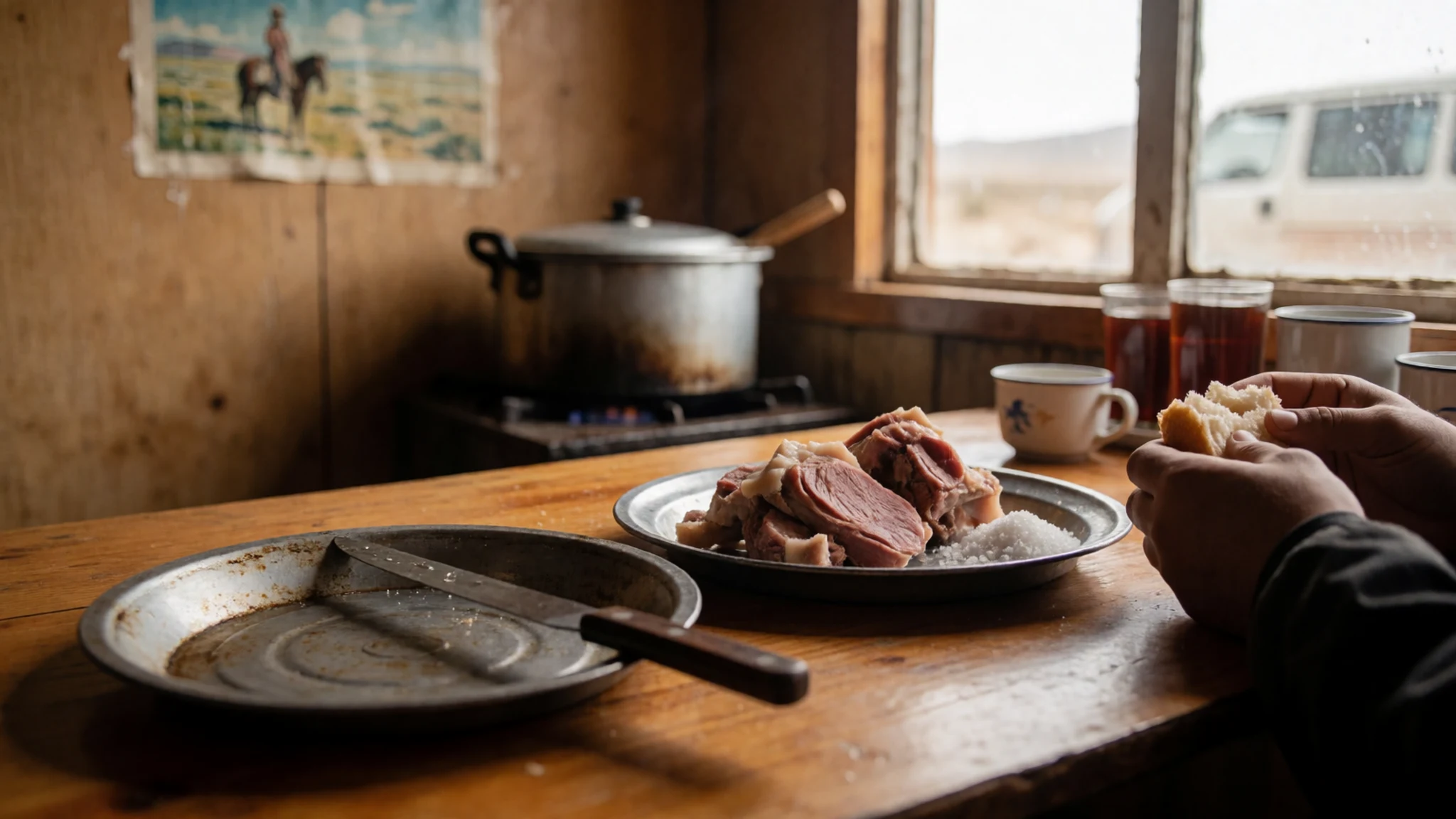
- Buuz (бууз) — Canteens and tea shops in provincial towns
Buuz are steamed dumplings filled with minced meat, often called the national dish. They are juicy, mild and eaten with the fingers. Cooks make them in large batches for celebrations, and they turn up in provincial canteens and tea shops.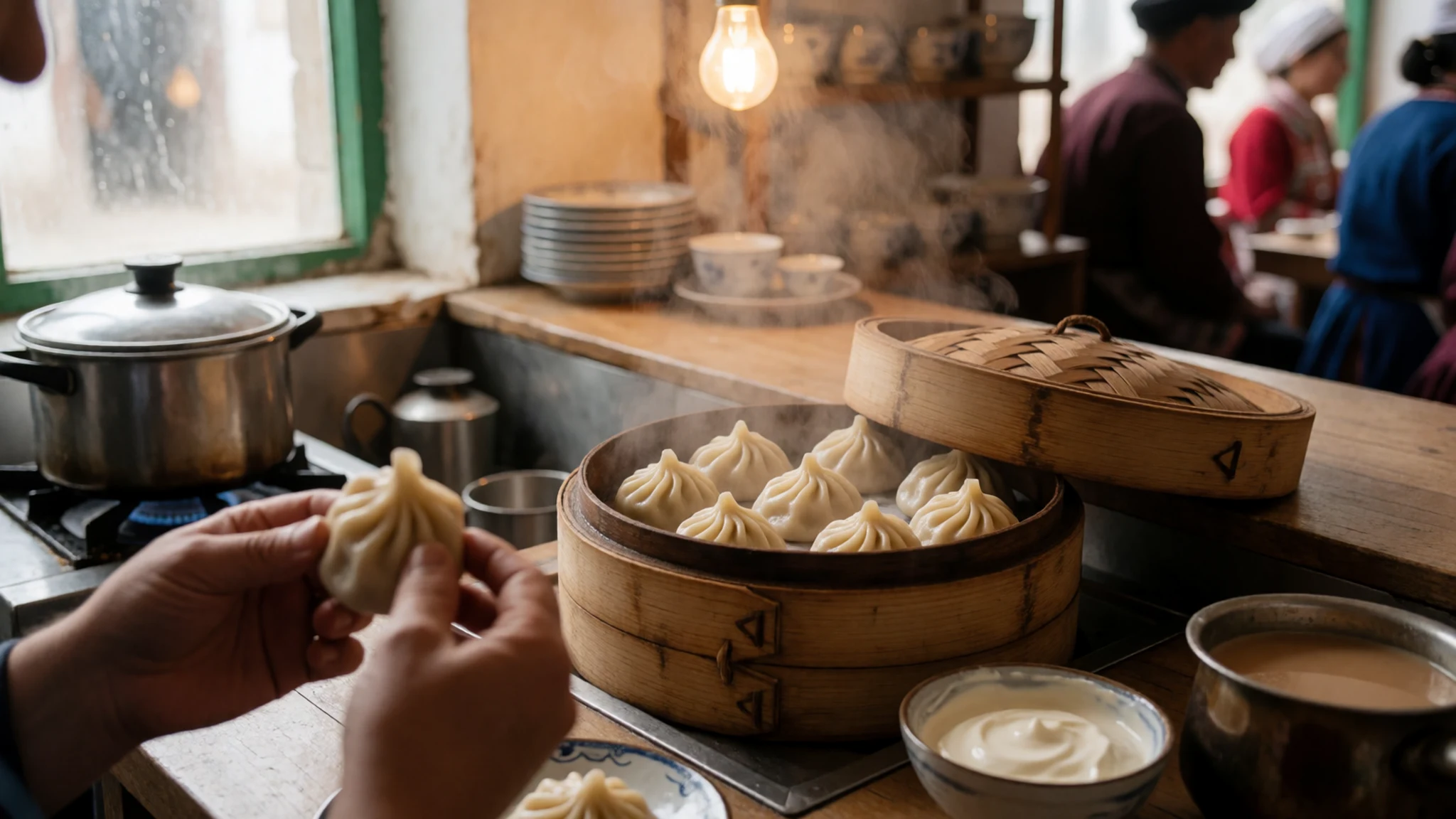
- Khuushuur (хуушуур) — Roadside stalls and market food counters
Khuushuur is a deep-fried flatbread folded round meat and onion. It began as festive food and is now found everywhere. It is greasy, hot and crisp, and a couple will make a solid meal after a long day on the road. - Süütei tsai (сүүтэй цай) — Any ger, canteen or tea shop
Salted milk tea is boiled milk and water, sometimes with tea leaves and a pinch of salt. It is the first thing served in a ger and accompanies most meals. The taste is gentler than many expect, and it can be bulked up with millet or rice. - Aaruul (ааруул) — Offered in a ger, or sold at local markets
Aaruul are dried curds, a common snack in a bowl beside the tea. They are very hard, so let them dissolve slowly in the mouth. The flavour is sour and cheesy, an acquired taste that most visitors learn to respect.
Plan it
Best time. Late May to June and September: summers in the Gobi can be hot, nights are cool, and winters are bitterly cold. This is a dry region with little rain, so the lake can look quite different from year to year.
How long. 2–3
Getting there. Fly to Ulaanbaatar's international airport, then continue towards Bayankhongor province by a long drive or a domestic connection. The final leg is usually on unsealed tracks in an off-road vehicle with a local driver, so book transport and a guide through an operator.
Budget. mid
Tips
- Check current visa rules before booking, as relaxed entry rules have been time-limited and some nationalities must still apply.
- Travel with a driver who knows the tracks, and carry spare water, food and warm layers; shelter is far apart.
- Bring cash in small notes and do not count on cards away from towns.
- Be wary of dogs near camps, which can run in packs and are not tame like pets elsewhere.
- Take care at night and where alcohol is involved, and avoid walking far from shelter in harsh weather.
Etiquette
- Take cups, gifts and food with the right hand, palm facing up.
- Taste at least a little of any food offered, as refusing is rude.
- Avoid wearing anything linked to China, and keep that topic out of conversation.
Nearby
Sources
- Wikidata Q749776 (CC0)
- Wikipedia — Böön Tsagaan Lake (rev 1365913914) (CC BY-SA 4.0)
- Wikivoyage — Mongolia (rev 5427090) (CC BY-SA 4.0)
- Lake Buuntsagaan, Mongolia — Noel Marsh-Giddings, via Wikimedia Commons (CC BY 3.0)
