Asralt Khairkhan
Asralt Khairkhan, Mongolia
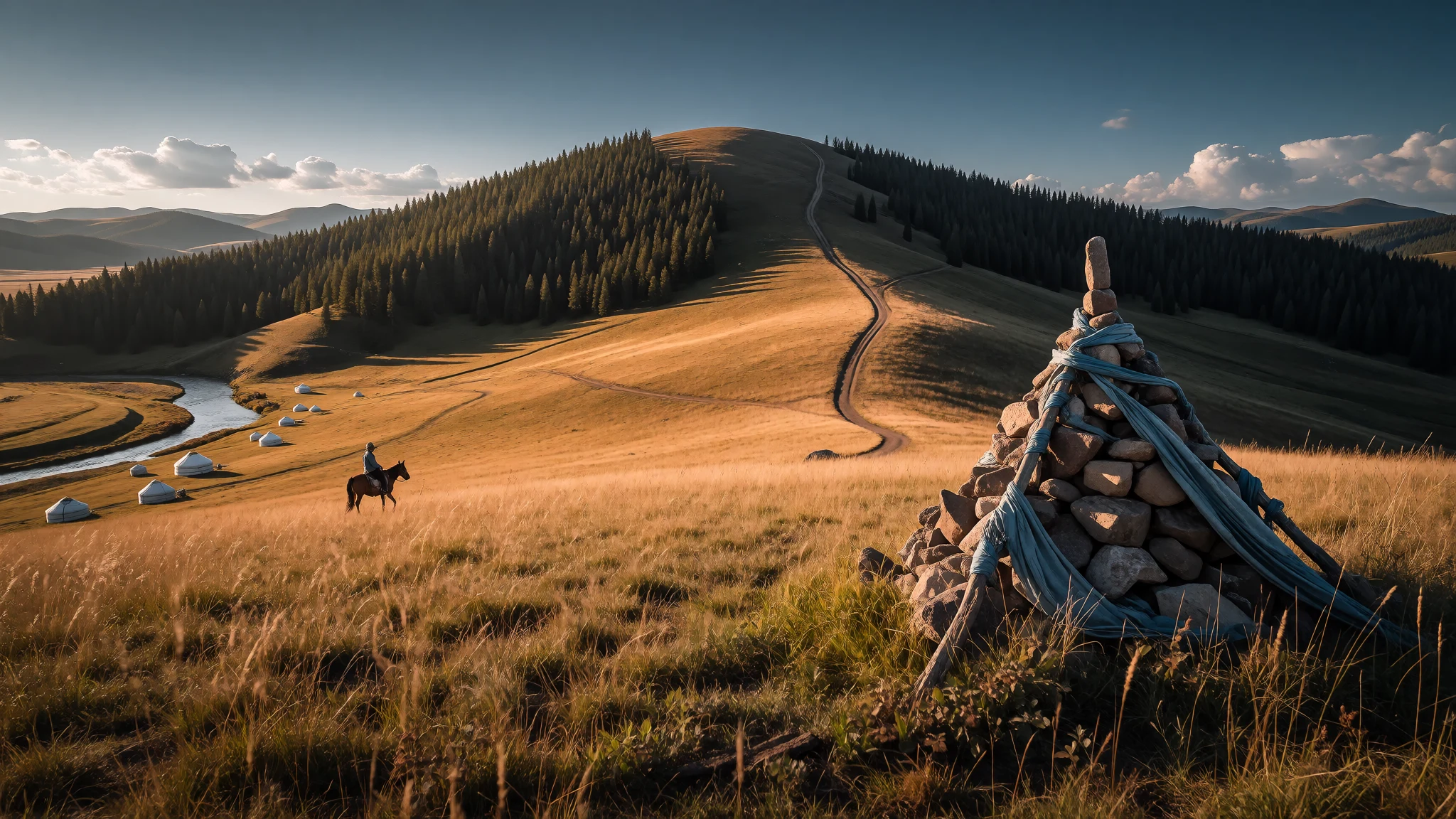
Asralt Khairkhan is the high point of the Khentii range, a quiet central Mongolian massif with steppe, forest and a rare local faith.
The place
Asralt Khairkhan (Асралт хайрхан) rises in Erdene, in Töv Province, central Mongolia. Its summit stands at 2,799 metres, and it is the top of the Khentii Mountains. The range is better known for rounded, forested ridges than for jagged peaks, so the mountain reads as a broad, heavy massif rather than a spire. Around it lies the familiar central Mongolian mix: open grassland on the lower ground, darker conifer woods on the cooler slopes, and river valleys where herding families move their animals through the warm months.
This is not a developed destination. There are no famous viewpoints with ticket booths and, as far as the sources for this reading show, no established trail network or visitor centre. Most visitors would arrive through Ulaanbaatar and travel overland with a driver or a local guide who knows the tracks, the seasonal river crossings and the herders' pastures. That suits people who like open country and are happy to improvise, and it will disappoint anyone expecting waymarked paths and a café at the top.
The climate is continental. Winters are long, dry and severe, summers are short and pleasantly warm, and mountain weather can turn quickly even in July, with cold rain, hail or wind arriving out of a clear morning. Distances on the map look small, but unpaved roads make journeys slow. The reward is space, quiet, and a corner of Mongolia that sees far fewer outsiders than the better-known national parks.
Its story
Asralt Khairkhan belongs to the Khentii region, a part of Mongolia that carries heavy historical and spiritual weight. In Mongolian tradition the Khentii mountains are tied to the early story of the Mongol people, and mountains across the country have long been treated as dwelling places of protective spirits. Travellers will see the habit of mountain reverence in the stone-and-branch cairns, called ovoo, that mark passes and ridgelines, and in the way local people lower their voices and walk around them clockwise.
The name itself speaks to that tradition. Khairkhan is a respectful term used for revered mountains in Mongolia, and the word carries a sense of affection and awe rather than mere description. Asralt can be read as relating to care or protection, though the exact local reasoning is not set out in the sources behind this reading, so it is best asked about on the spot.
What makes the mountain unusual is a hamlet at its foot. It holds a monastery belonging to Pi Shashin, a minority faith of the area, and published sources know of no other monastery of that religion. Very little has been written about it in English, and this reading will not guess at doctrine or practice. A visitor who wants to understand it should go with a local guide, ask politely, and accept that some things may not be explained to outsiders.
The broader backdrop is Mongolia's long history of Buddhism, shamanic practice and nomadic life, which sit side by side more easily than many outsiders expect. Asralt Khairkhan is a reminder that the country's religious map is more varied than the usual summary suggests.
What to see
- The summit massif — Erdene, Töv Province
The top of Asralt Khairkhan, at 2,799 metres, is the high point of the whole Khentii range. Expect a broad, rounded mountain rather than a technical climb. Conditions change fast, so a local guide, warm layers and an early start matter more than any special equipment. Clear days give long views over ridges and steppe.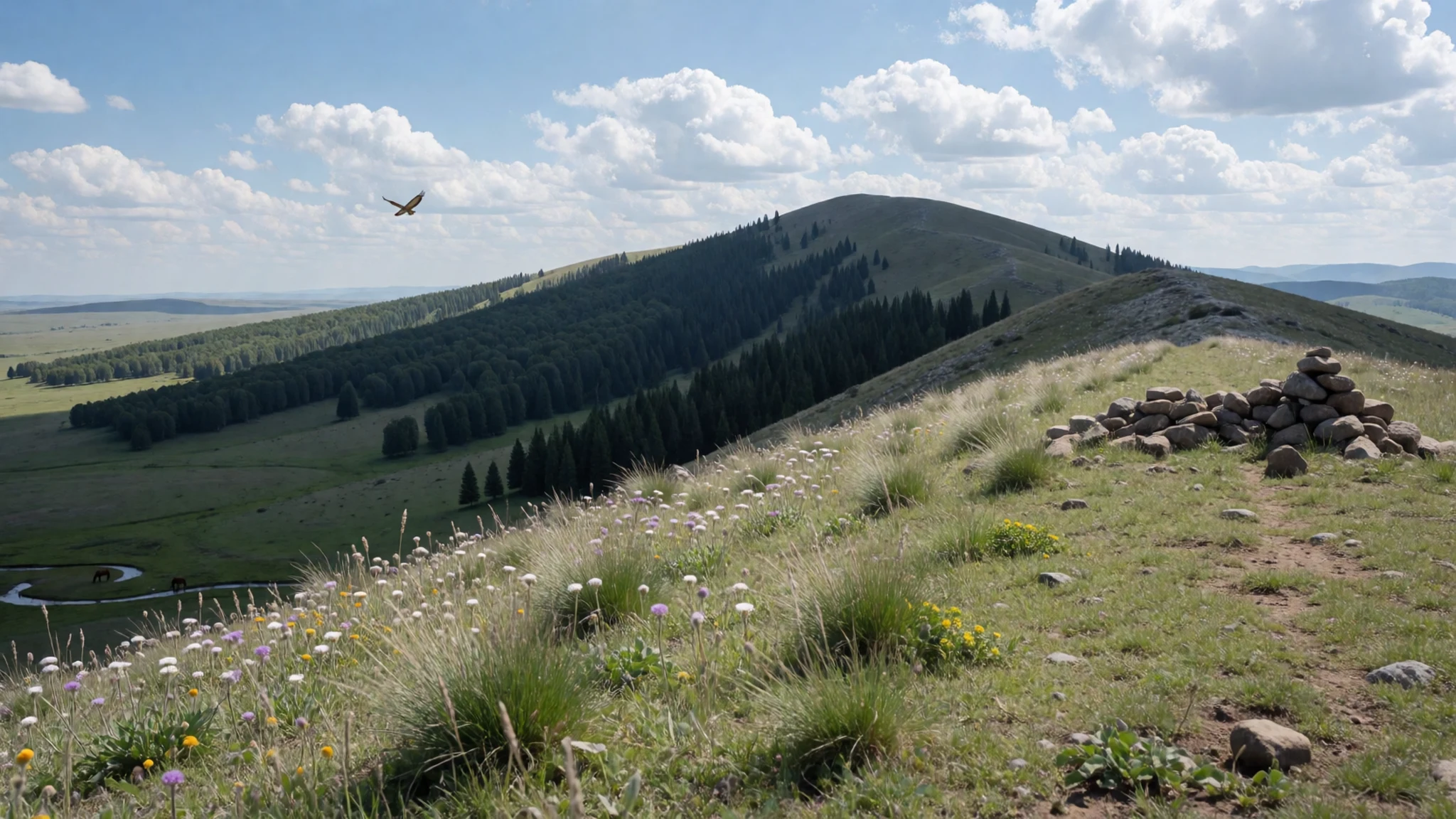
- The Pi Shashin monastery — Settlement at the foot of the mountain
At the mountain's edge sits a monastery of Pi Shashin, a minority faith recorded in only this one place. Treat it as a living religious site, not an attraction. Ask a guide to arrange an introduction, keep a respectful distance during any ceremony, and do not assume that photography is welcome.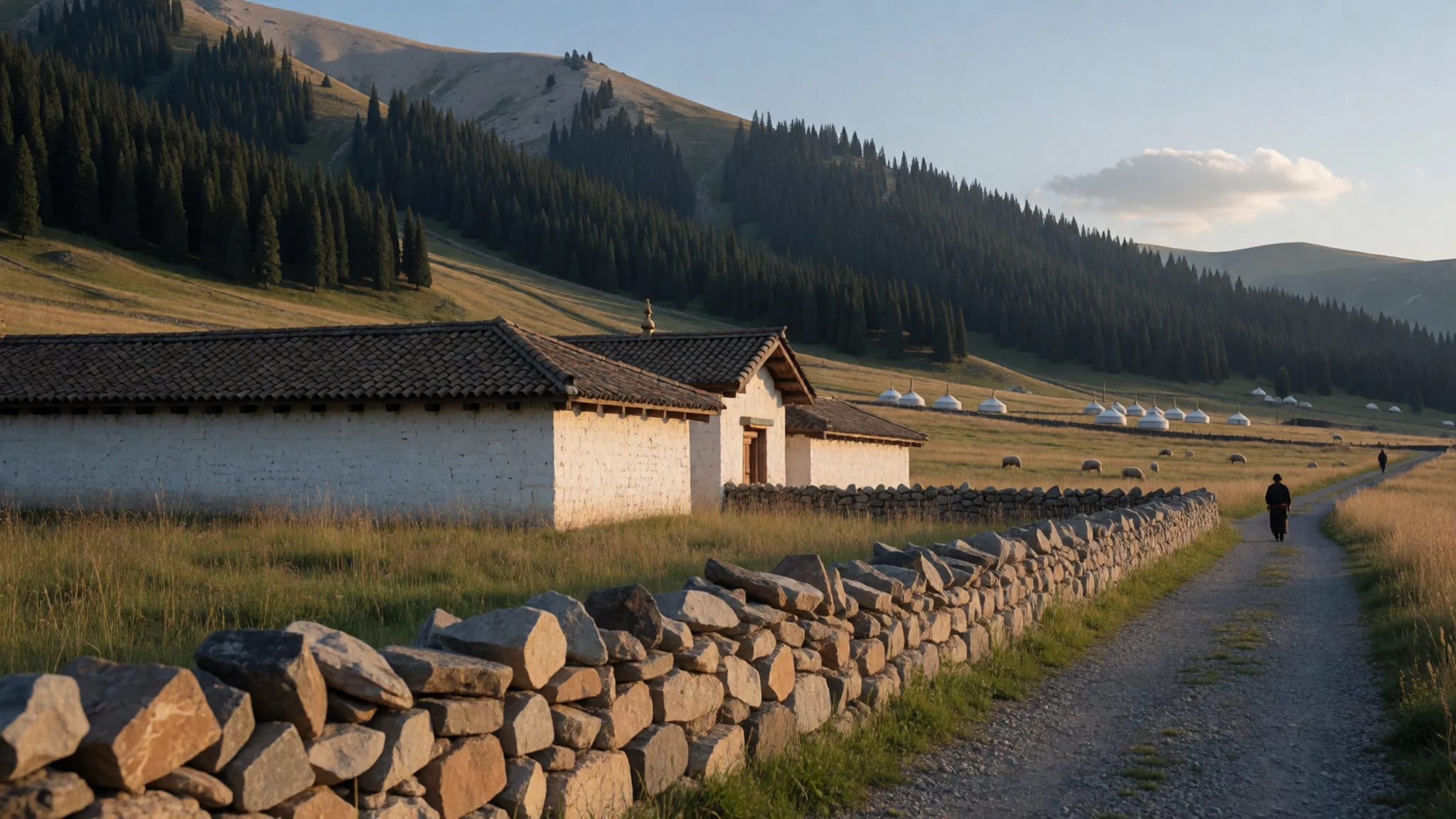
- Ovoo cairns on the ridgelines — Passes and ridges around the massif
Stone cairns, often wrapped in blue cloth and sometimes topped with branches, mark high points and passes across the Khentii region. They are shrines to local spirits. Walking around one clockwise and adding a stone is the usual gesture, and they also make handy landmarks when the weather closes in.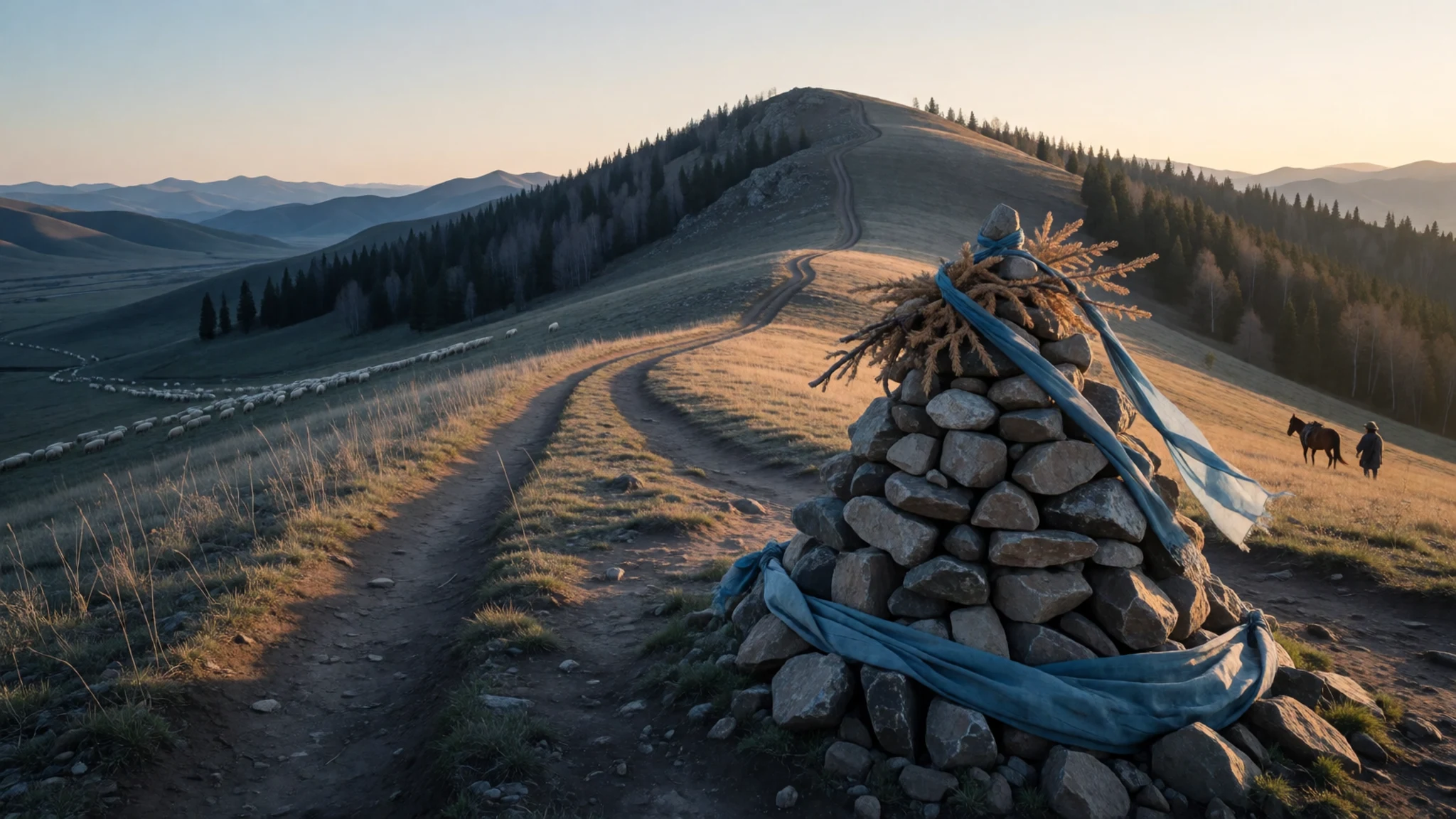
- Steppe and river valleys — Approaches to the mountain
The lower ground around the mountain is open grassland cut by streams, with conifer woods on shadier slopes. In summer herding families camp here with horses, sheep and goats. It is good country for slow walking or riding, and for watching birds of prey circle over the grass.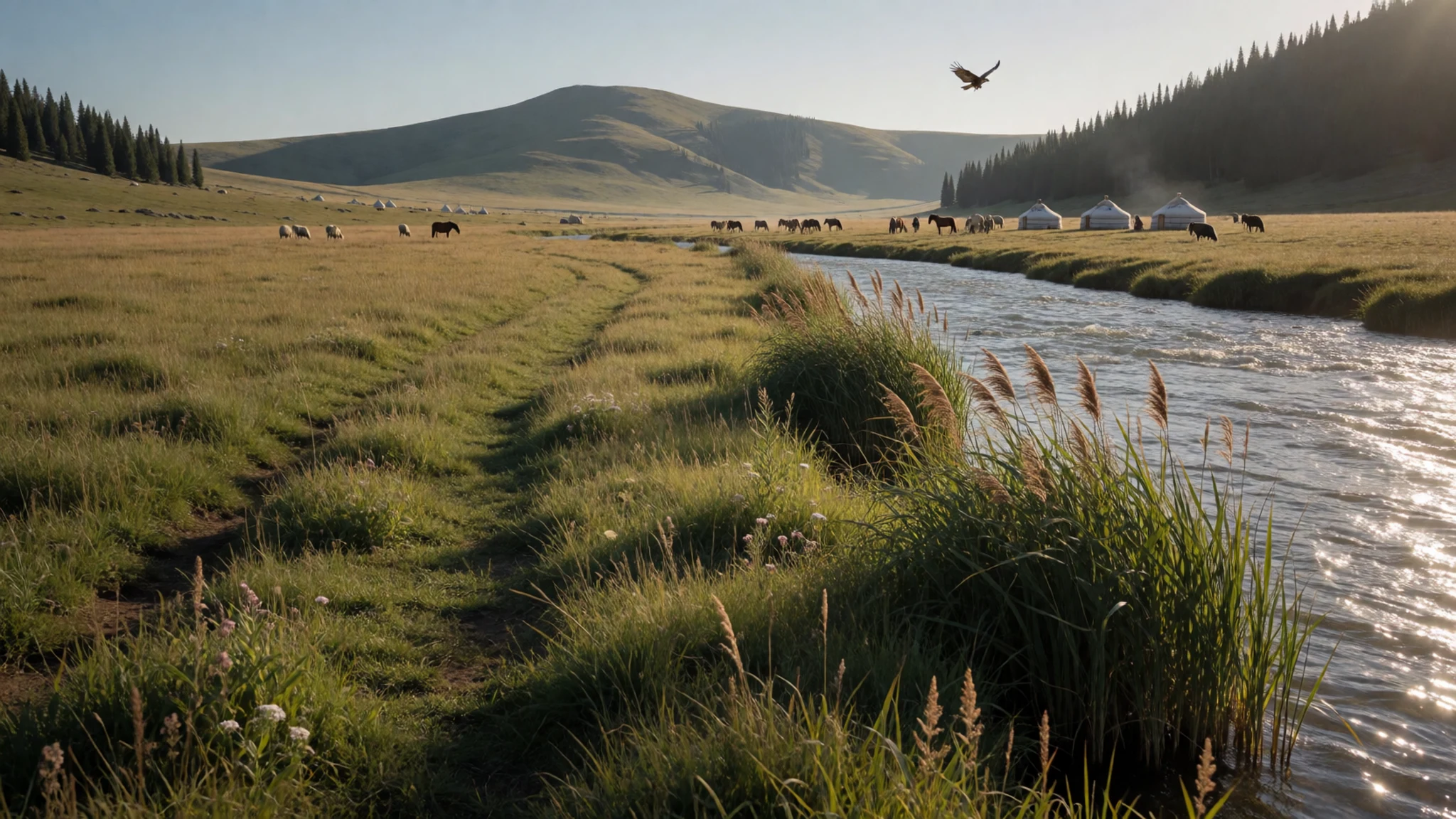
- Larch and pine slopes — Wooded flanks of the massif
The cooler, north-facing slopes of the Khentii are wooded, and the forest changes the mood sharply after miles of open grass. Paths are mostly animal tracks, so keep a guide close. Late September can bring gold to the larches, though nights are already cold by then.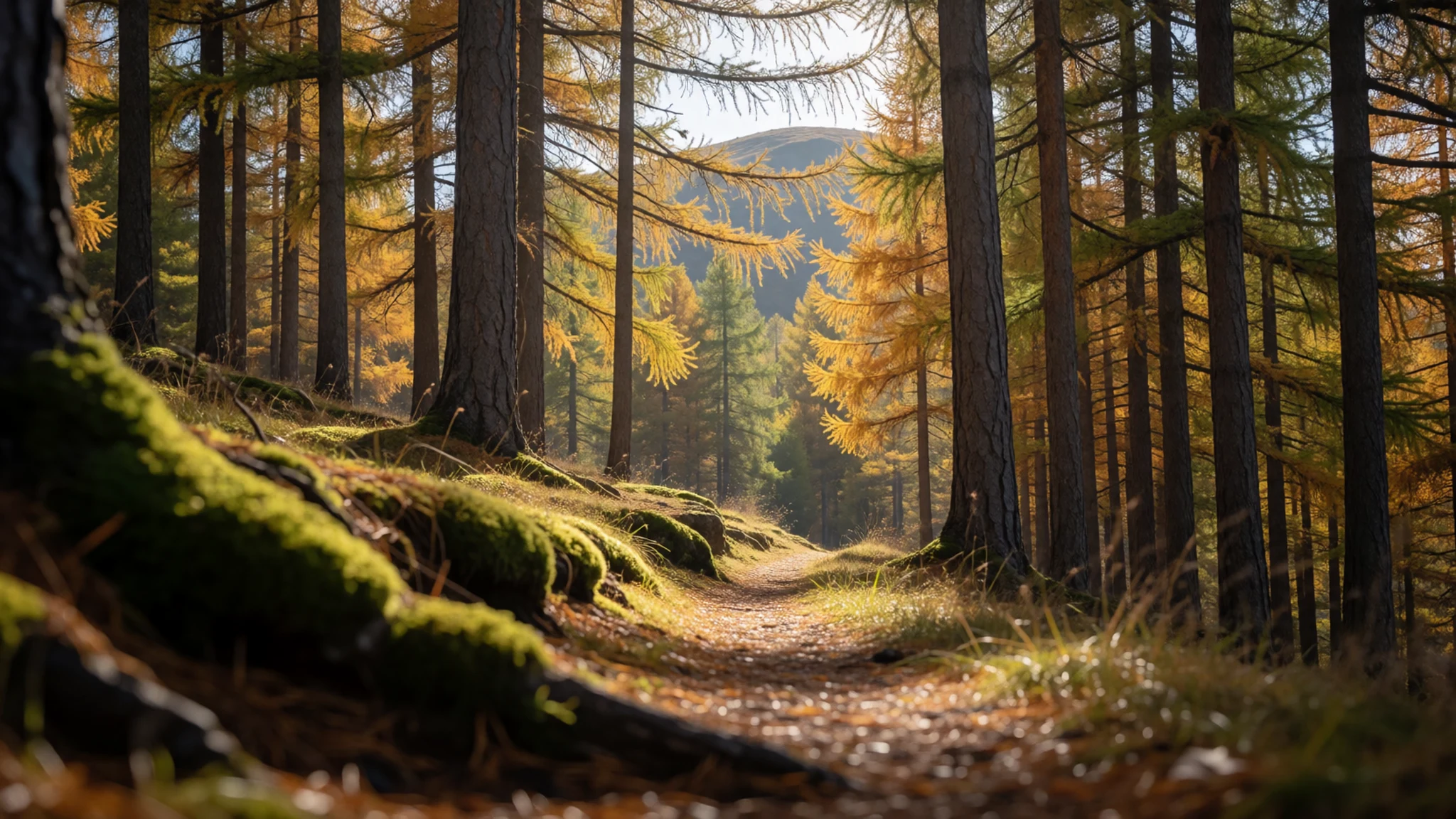
Culture
Asralt Khairkhan sits in a part of Mongolia where older ideas about the landscape still shape everyday behaviour. Mountains are widely regarded as having a presence of their own, and many are named with the respectful word khairkhan, which is part of this mountain's name. Offerings, cairns and quiet restraint on high ground are normal rather than theatrical.
The area also holds something rare: a monastery of Pi Shashin, a minority religion with, according to the sources used here, no other known monastery. Information in English is thin, so it is wiser to listen than to assume. Guides and local families may be glad to explain what they choose to, and silence on a subject is itself an answer.
Hospitality is central to Mongolian life. A herding family may invite a stranger into a ger for tea, salted milk tea or dairy snacks, and refusing outright can sting. Accept with the right hand, or with both hands, and take at least a sip or a nibble. Stepping on the threshold, leaning on the support poles or pointing the soles of the feet at the hearth is considered rude. Gifts such as tea, sweets or fruit for a host are appreciated and need not be costly.
When passing an ovoo cairn, walk around it clockwise and do not take stones or objects from it, and ask your guide before photographing the monastery or any person.
What to wear
Asralt Khairkhan lies in central Mongolia, where traditional dress centres on the deel, a long wrap-over robe closed at the right shoulder and fastened with a sash. Winter deels are lined or padded, often with sheepskin, while summer ones are lighter cotton or silk. Colours and trim vary by region and occasion, and festival deels can be rich brocade in deep blues, reds and golds. Leather boots with upturned toes and felt are traditional, and wool, felt and sheepskin remain the base materials of herding life.
Day to day, most people now wear ordinary modern clothes: jeans, jackets, fleeces and trainers in towns, and practical layers for working with animals. Many rural men and women still put on a deel for weddings, the Naadam summer festivals and visits to relatives, and some herders wear one for riding because it is warm and has a sash for tools.
A visitor should dress for mountain weather rather than for any strict dress code. Pack layers: a warm base, a fleece, and a windproof and waterproof shell, plus a hat and gloves even in summer, because evenings are cold. Sturdy walking boots with ankle support suit the uneven ground, and sun protection matters on open grassland. Around the monastery or any shrine, choose covered shoulders and knees and remove hats. Trousers are better than shorts for riding and for tick-prone grass.
What to eat
- Suutei tsai — Any herding family's ger, or a roadside eatery
Salted milk tea, the first thing offered in almost any Mongolian home. It is savoury rather than sweet, and often has a little millet or rice added. A bowl is a mark of welcome, and sipping it slowly is polite.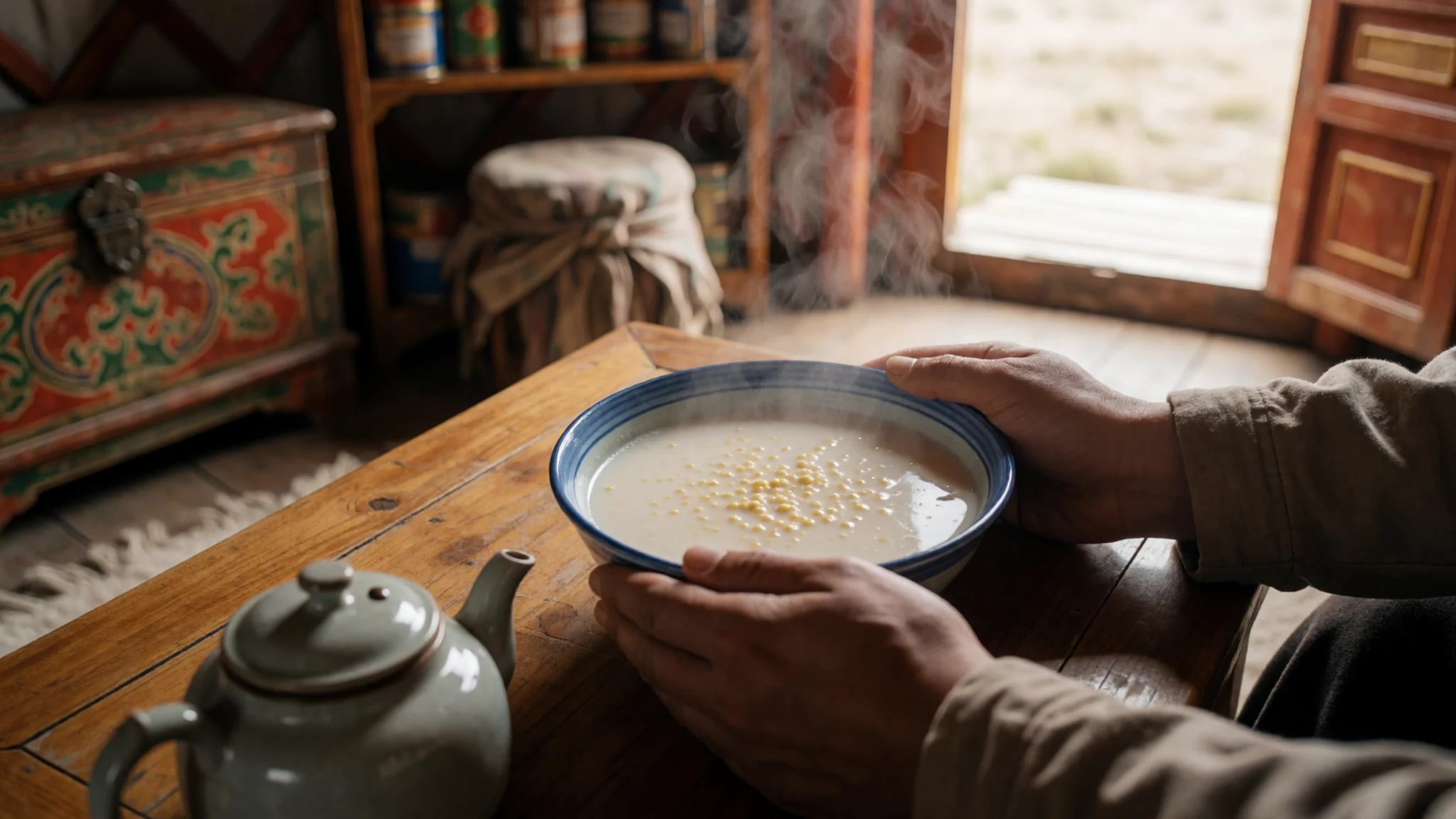
- Buuz — Small canteens in Ulaanbaatar and district centres
Steamed dumplings, usually filled with minced mutton or beef and onion. They are a staple for festivals and everyday lunches, and are eaten by hand. The juice inside is part of the point, so bite carefully.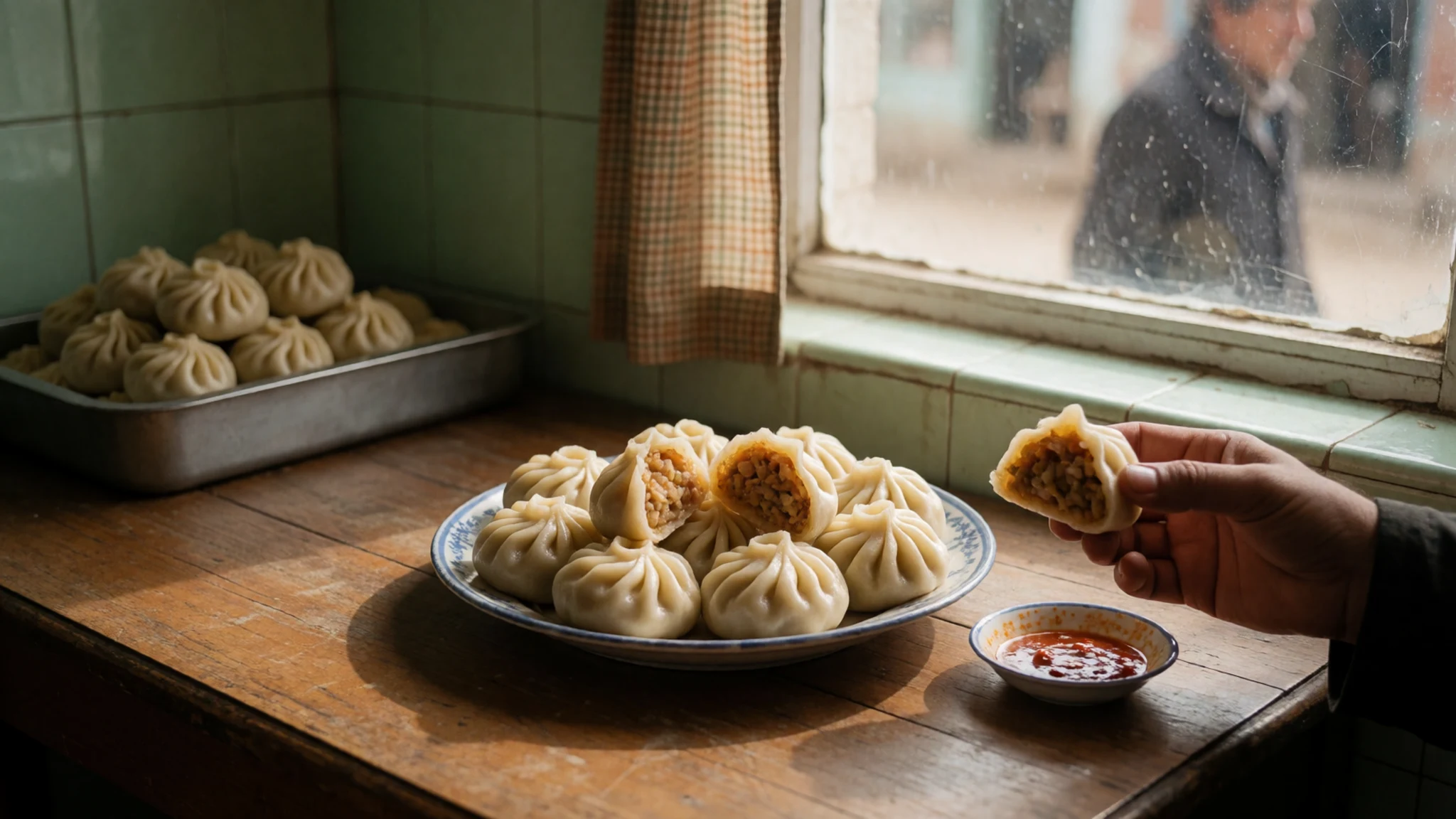
- Khuushuur — Roadside stalls and local markets
Flat, deep-fried pastries filled with minced meat, crisp at the edge and juicy within. They are a common road-trip food, easy to carry and filling after a cold morning on the hills. - Aaruul and other dried curd — Herding families' tents and town markets
Hard dried curds made from milk, tart and chewy, and sometimes sweetened. Families make them in summer and keep them for months. They are a sturdy snack for walks, though the first taste can be sharp. - Tsuivan — Family kitchens and local canteens
Hand-cut noodles stir-fried or steamed with meat and vegetables, a common home dish across central Mongolia. It is simple, warming and generous in portion, and is often the meal a guide's family will cook.
Plan it
Best time. June to September, when days are warmest and roads and tracks are most reliable. July and August are the greenest and busiest months but can bring heavy afternoon rain. Winters are long, dry and extremely cold, and are best left to experienced and well-equipped travellers.
How long. 3–4
Getting there. Fly to Ulaanbaatar, then travel overland towards Erdene in Töv Province by road with a driver or guide. Tracks near the mountain can be rough, so check current road and weather conditions locally before setting out.
Budget. mid
Tips
- Arrange a local driver or guide in Ulaanbaatar, as public transport and signage near the mountain are limited
- Carry cash, as cards are unlikely to work away from towns
- Bring warm layers and rain cover even in July, because mountain weather changes quickly
- Carry plenty of drinking water or a filter, and tell someone your route
- Start walks early, as afternoon cloud and storms are common in summer
Etiquette
- Ask before photographing the monastery, ceremonies or people
- Walk clockwise around ovoo cairns and do not move their stones
- Accept food and tea offered in a ger with both hands, or with the right hand
Nearby
Sources
- Wikidata Q4808266 (CC0)
- Wikipedia: Asralt Khairkhan (rev 1371762325) (CC BY-SA 4.0)
- Wikivoyage: Mongolia (CC BY-SA 4.0)
- Relief map of Mongolia (NordNordWest, derivative work Виктор_В) (CC BY 3.0)
