Suwarrow
Suwarrow, Cook Islands
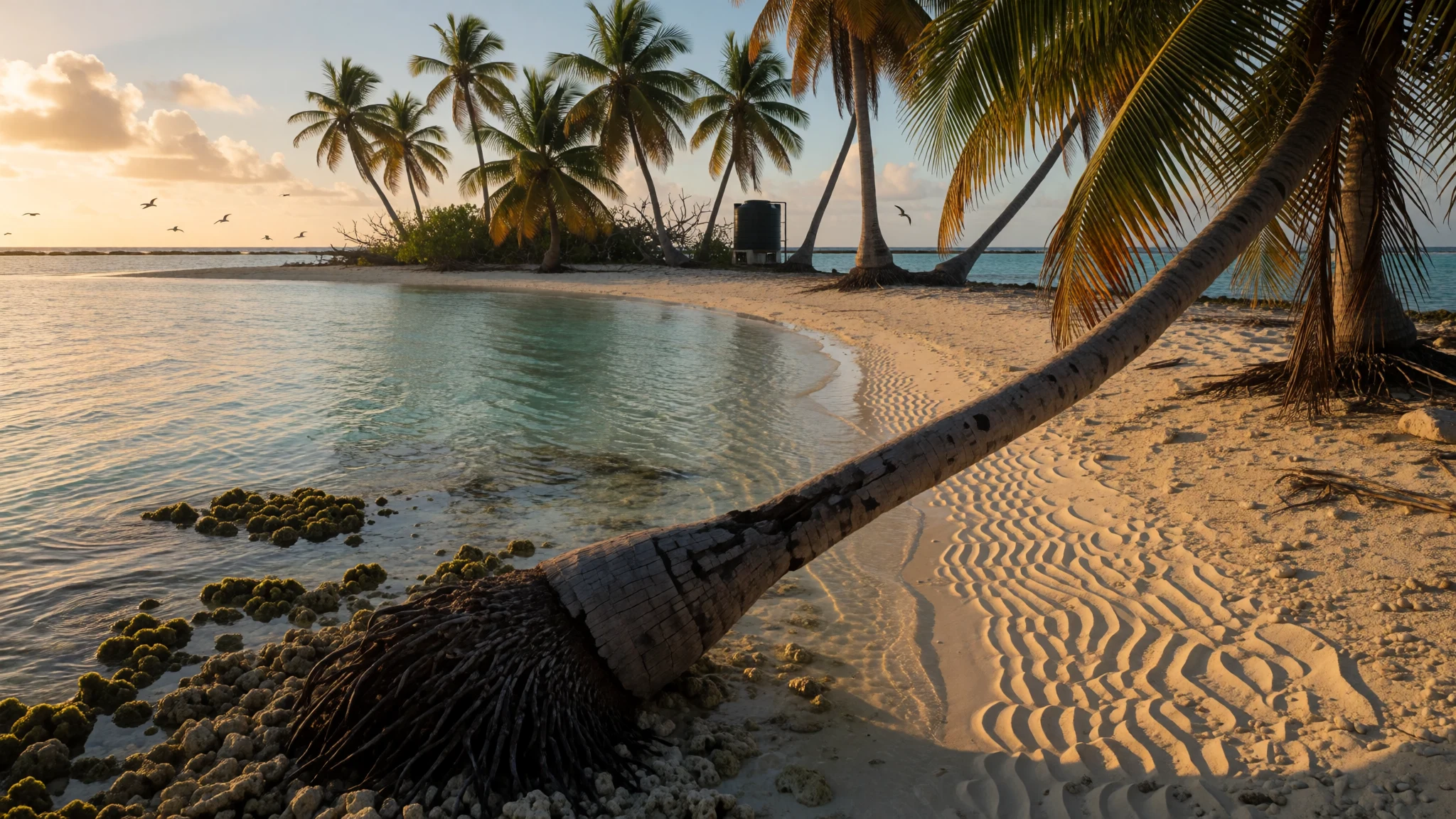
Suwarrow is a remote Cook Islands atoll where a still lagoon, nesting seabirds and a caretaker's welcome are the whole point of the voyage.
The place
Suwarrow lies in the northern Cook Islands as a ring of reef and low coral motu around a lagoon, far out in the South Pacific and well away from the country's villages. Older charts spell it Suvarov, and both names point to the same lonely place. It does not behave like a resort island. There is no village, no airstrip, no shop and no road, only sand, scrub and coconut palms standing a few steps above the tide. Anchorage Island is the islet that matters to a visitor: the park caretakers live there, and visiting yachts anchor off it when the pass is safe. The other motu stay empty for long stretches, given over to nesting seabirds and to coconut crabs moving through the palms. Suwarrow belongs to the Cook Islands and is cared for as a national park, which means a landing is asked for, not assumed. The lagoon inside the reef is the daily world: clearer and quieter than the ocean outside, shallow over sand and coral heads, deep enough in the anchorage for a cruising yacht. Light is hard, heat sits on the sand by midday, and the trade wind is the relief. Rain comes in bursts and fills whatever has been set out to catch it. After dark the surf on the outer reef is the loudest thing, with frigatebirds and terns shifting in the trees. Suwarrow's appeal is that stillness, and its limit is the same stillness: nothing is delivered, nothing is collected, and the passage from Rarotonga is the real boundary of the visit.
Its story
Suwarrow's written story is younger than its reef, and its layers do not always agree. For the Cook Islands it is home territory in the northern group, named and used within a Polynesian sea long before any European chart. Old sketch surveys, later copied onto Admiralty sheets, set the atoll down as Suvarov and treated it as a hazard and a curiosity for ships crossing the South Pacific. Ships used the charts to avoid the reef more often than they used them to stay. The story visitors repeat begins with Tom Neale, a New Zealander whose house stood on Anchorage Island. Expedition photographs from a call at the atoll show him and that house among the palms, a lone domestic scrap on a park that otherwise keeps no village. Neale wrote An Island to Oneself about living there alone, and the book turned Suwarrow into a modern fable of dropping out of the world. The fable is only half the place. The atoll was never empty of meaning, and it was never his to keep. After he was gone the Cook Islands took the care of Suwarrow into public hands and put caretakers on Anchorage Island, people whose job is the park, the birds and the behaviour of visiting boats. Yacht logs now carry the newer story: a long passage, a sandy pass, a conversation with the caretakers, a few still days, and the understanding that the hermit chapter is closed. Suwarrow's past is worth knowing so that no one arrives expecting to relive it.
What to see
- Anchorage Island — Anchorage Island
Anchorage Island is the part of Suwarrow set up for people. Caretakers live among the palms, where rainwater tanks and a simple house stand back from the beach, and yachts hold just off the shore. Walkers keep to the paths the caretakers indicate. The islet is small, bright and short of shade once the sun is overhead. Landing is a conversation, not a right.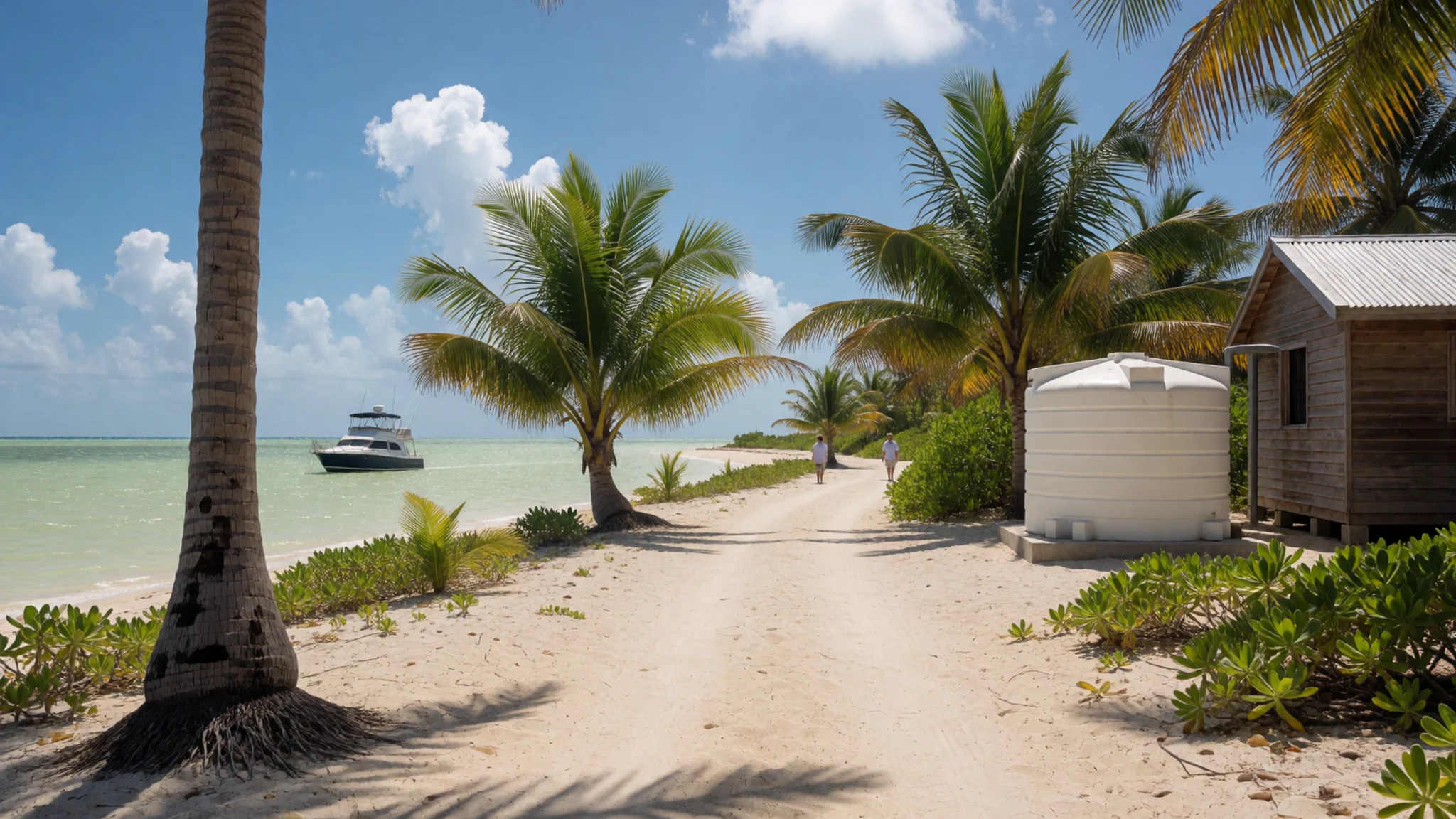
- The lagoon — the lagoon
The lagoon is Suwarrow's sheltered sea, pale water inside the reef with sand patches broken by coral heads. From a deck it looks mild. In the water it is a slope of coral, reef fish and the occasional shark along the drop. Snorkelling is the way in, in daylight and well clear of the pass when the tide is running.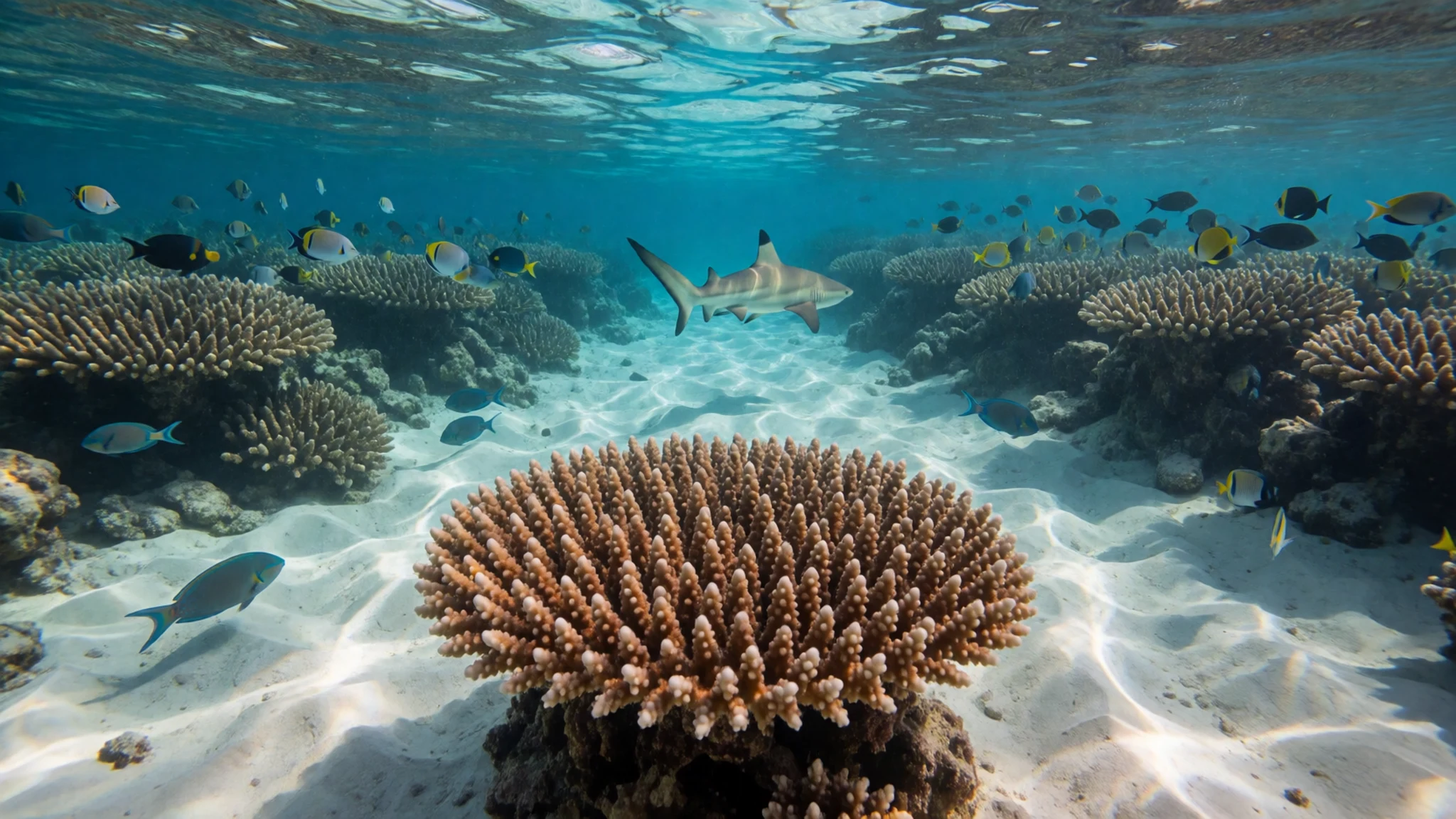
- The pass — the reef pass
The pass is the door into Suwarrow, a break in the reef on the way to Anchorage Island. Swell, light and the tide decide whether a yacht enters or stands off. Inside, the channel bends toward the anchorage. Outside, the ocean has no shelter at all. It is a piece of the passage, timed in daylight, and a poor place to swim while the current runs.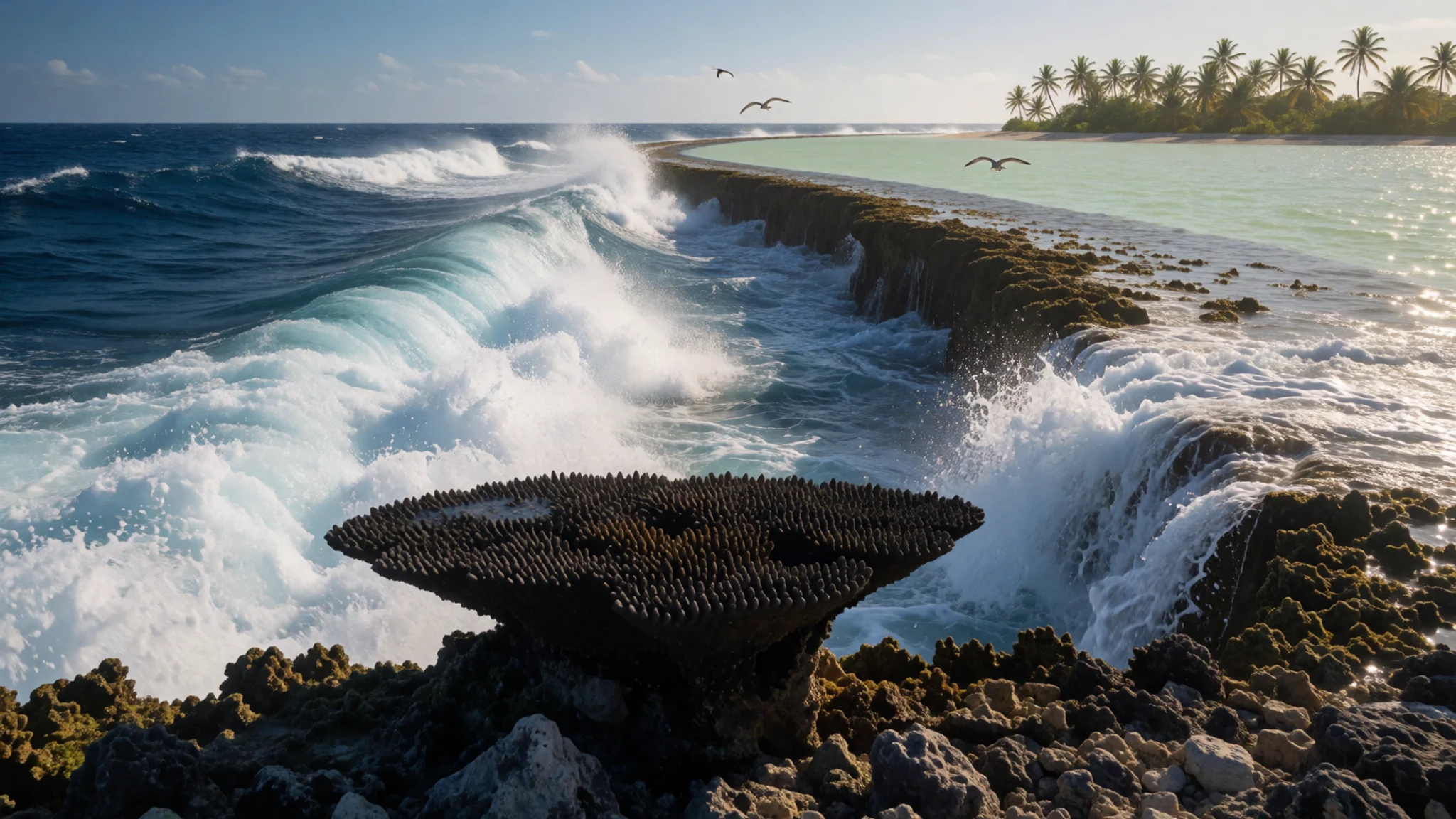
- Tom Neale's house — Anchorage Island
Tom Neale's house is the human mark on Suwarrow. What stands on Anchorage Island today is a caretaker's station, not a preserved hermitage, and old photographs show a simpler shelter among the same palms. The point is the setting rather than a museum. People live and work in the buildings, so the walk up from the beach waits on a greeting.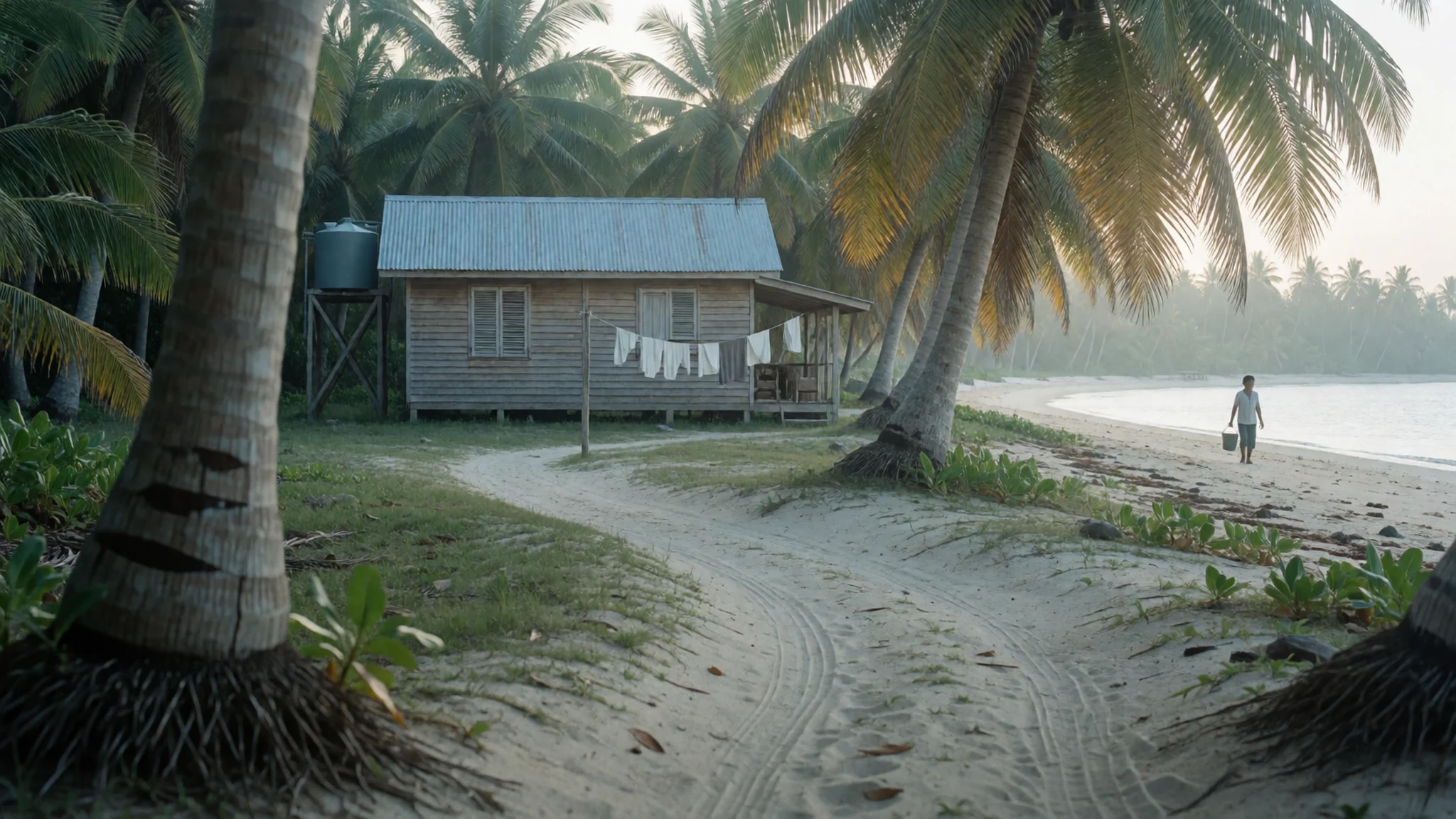
- The outer motu — the outer motu
The outer motu of Suwarrow are for the birds. Terns, boobies and frigatebirds nest in the scrub and the palms, and in season the ground is busy with burrows and chicks. Any landing waits on the caretakers and stays slow, with feet kept off the nests. Coconut crabs cross the same sand and they stay where they are. The usual view is from the dinghy.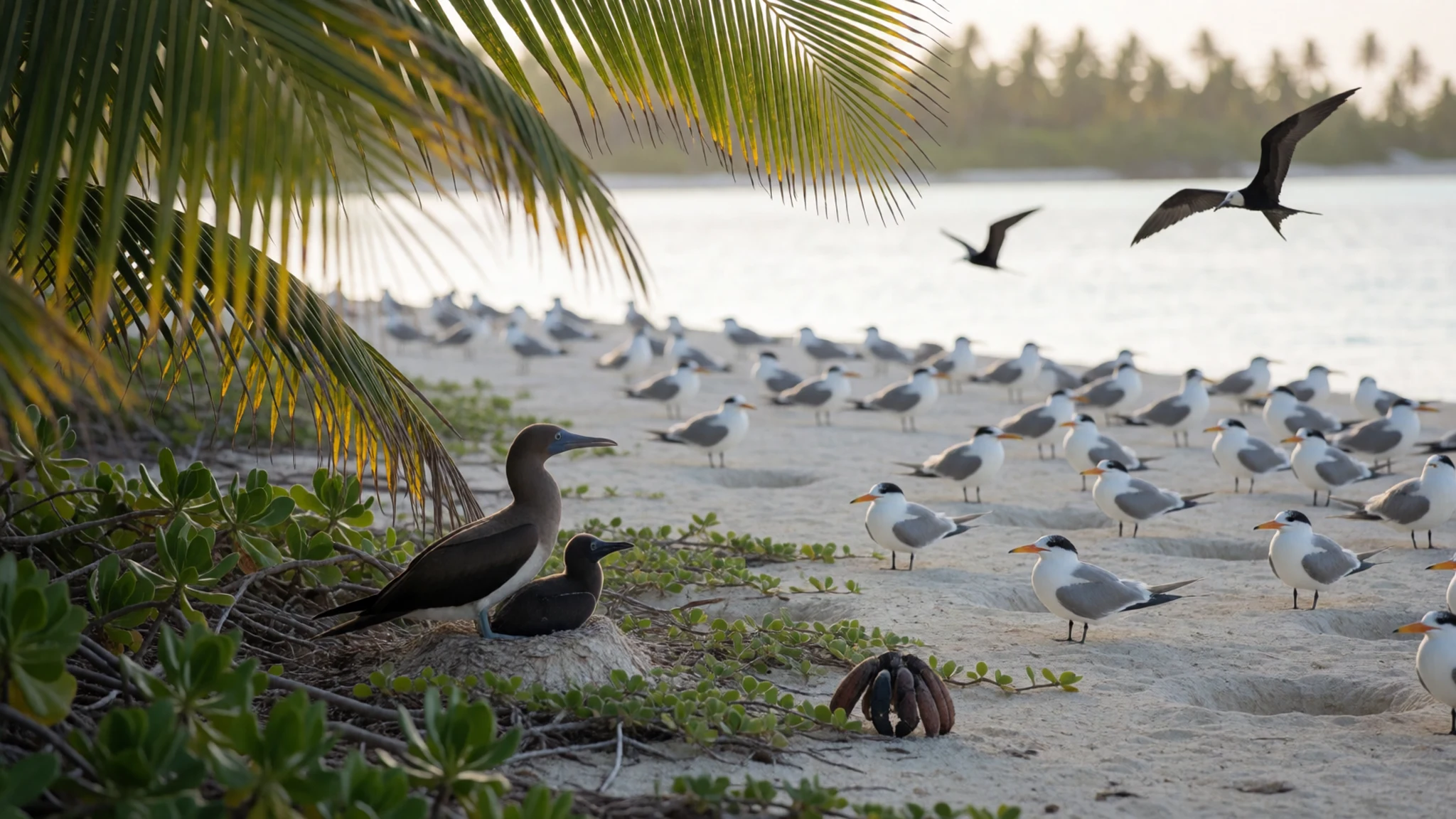
Culture
Suwarrow has no resident village and no daily round of church, market and dance, so its culture is the culture people bring to it. The caretakers come from the Cook Islands, and the manners of the atoll follow theirs: a greeting before business, a request before a landing, and a sense that the island is a workplace and a home at once. Cook Islands Maori is the language of the country, English sits easily beside it, and a few words of greeting are noticed even when the rest of the talk is practical — weather, water, where the dinghy may sit. The older Polynesian relationship with this sea is still the right frame. Land this low is not scenery; it is a breeding ground and a pantry that has to last. Tom Neale's solitary years are part of Suwarrow's outside reputation, yet they are a new chapter beside the Cook Islands' own claim, and visitors who treat the atoll as an abandoned stage miss the point of the caretakers' presence. Church and dance belong to Rarotonga and the other inhabited islands; here the shared acts are smaller: a cup of something cold, a warning about the pass, a rule about the crabs. Take nothing living or dead from Suwarrow, and ask the caretakers before you step ashore, fish, or walk beyond the beach.
What to wear
Suwarrow has no festival ground and no place to show off clothes, so dress here follows the sun, the salt and the short list of people who will see it. In the Cook Islands the cloth of ceremony is the pareu, a length of printed cotton wrapped as a skirt or a dress, and the garlands called ei, of flowers, leaves or small shells, given to honour a guest. Tivaevae, the appliqué quilts of the islands, are a textile art of the home rather than something worn on a beach. None of that finery is everyday on this atoll. Caretakers and the crews of passing yachts wear what the reef allows: faded shorts, a shirt with sleeves against the sun, a hat, and sandals or bare feet on sand. Evenings cool only a little. A visitor should copy that plainness and add protection: a long-sleeved sun shirt, swimwear for the lagoon, and shoes that can cope with coral rubble if a walk on the motu is offered. A pareu is worth packing. It dries fast, covers knees when sitting down with the caretakers, and needs no iron. Shells stay on the beach; an ei bought in Rarotonga is the garland to bring, not one made from the park.
What to eat
- Nu — palms on Anchorage Island
Nu, the drinking coconut, is a fresh thing Suwarrow can offer without a supply boat. A green nut from the palms on Anchorage Island is food and water together, and it is the caretakers' trees, so it is asked for rather than picked on a stroll.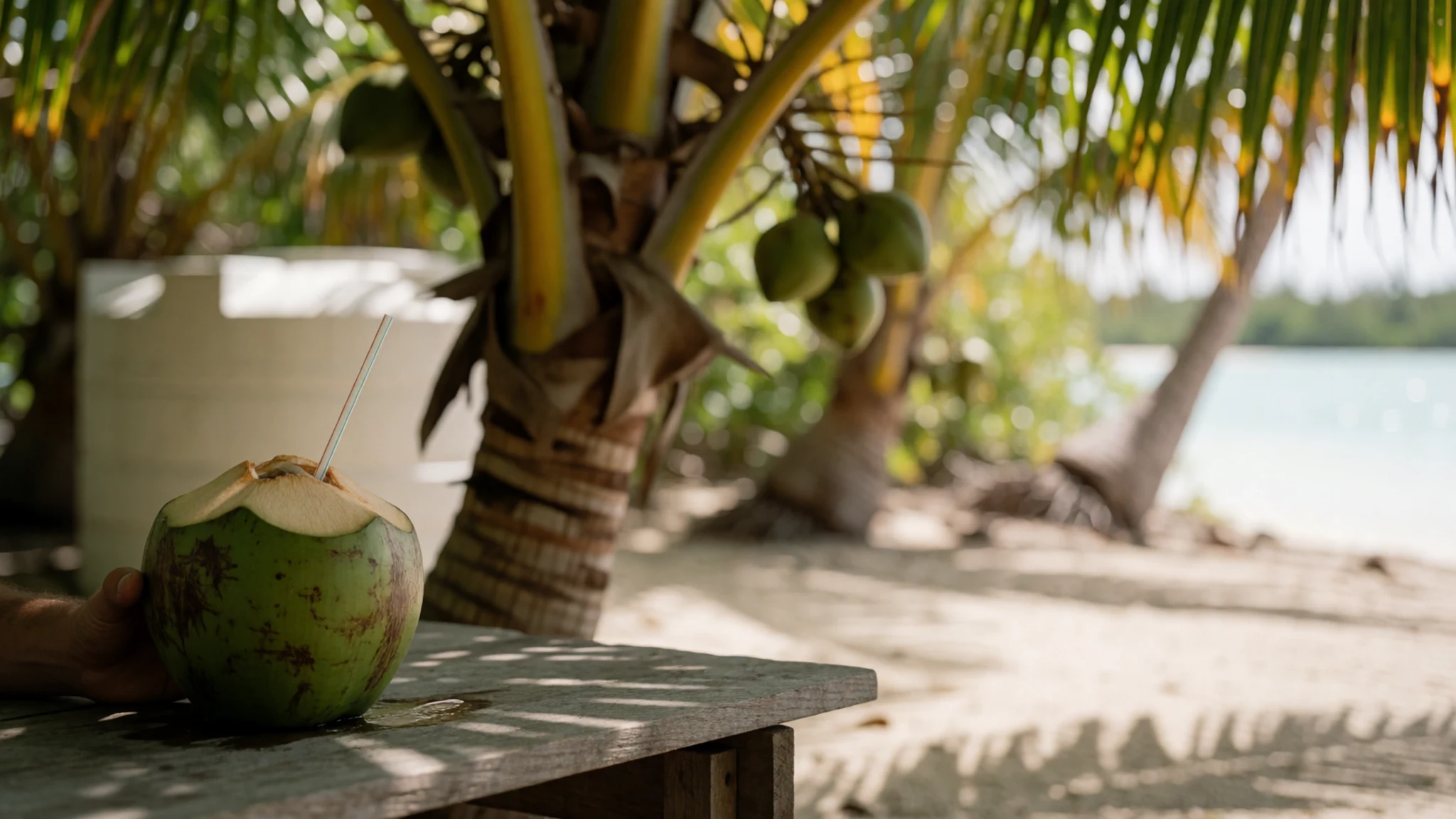
- Ika mata — yacht galleys and Rarotonga eateries
Ika mata is raw fish in lime and coconut cream, a Cook Islands plate that often turns up in a galley bound for Suwarrow. Crews mix it when a fish has been taken with the caretakers' leave, or order it in a Rarotonga eatery while stores are going aboard.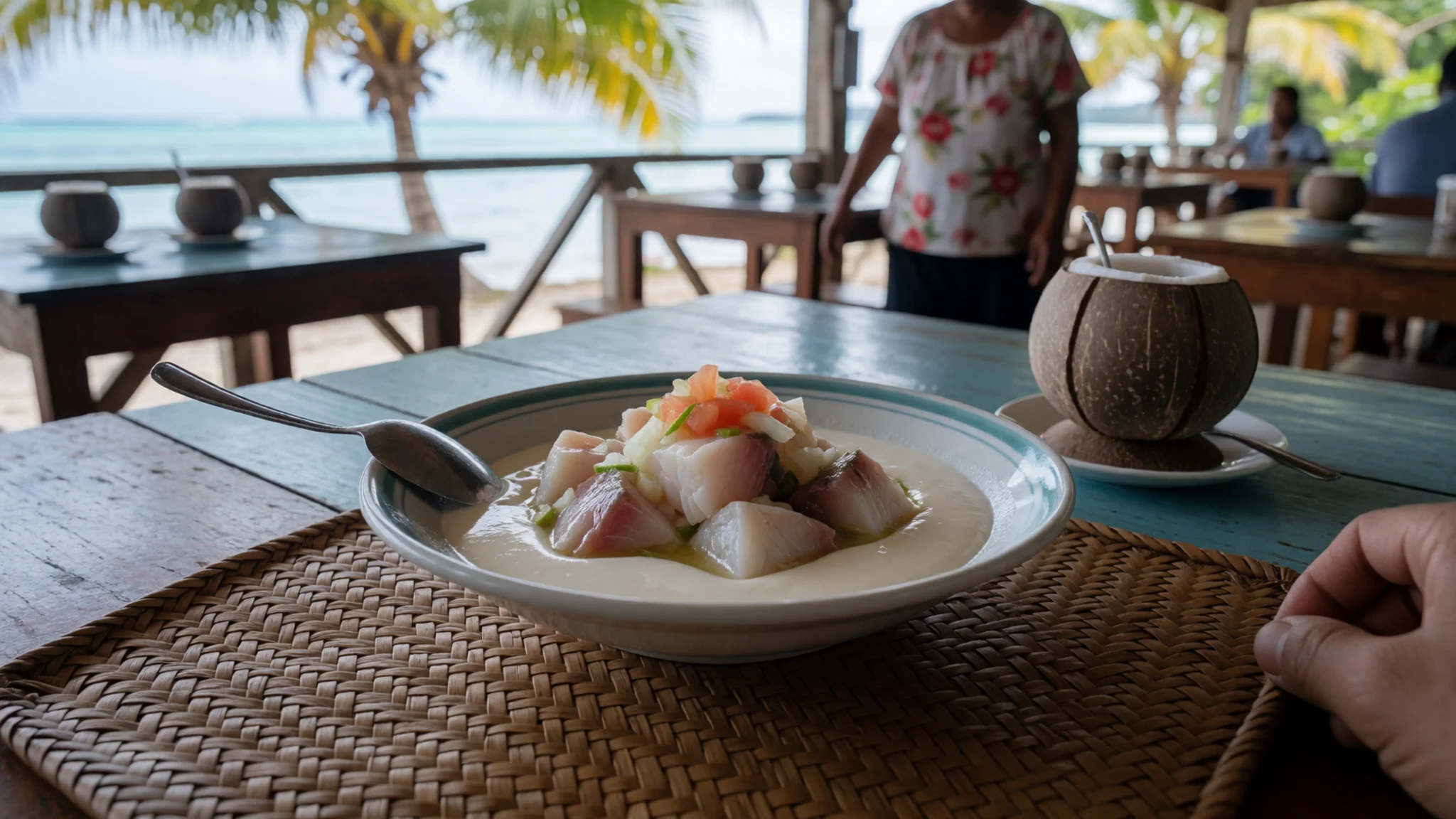
- Grilled reef fish — yacht galleys at the anchorage
A grilled reef fish is the ordinary hot meal at Suwarrow, cooked on a yacht stove or a small fire if the caretakers are content with that. The fish is whatever the lagoon gave that morning, eaten with rice or bread from the stores and a squeeze of lime. - Rukau — Punanga Nui market and eateries in Rarotonga
Rukau is taro leaves cooked in coconut cream, a Cook Islands staple that will not grow in any useful way on Suwarrow's coral sand. It is eaten in Rarotonga, at Punanga Nui market or in a local eatery, in the days before a boat heads north. - Poke — Rarotonga tables and boat provisions
Poke, in the Cook Islands, is a pudding of banana or taro with coconut, not the raw-fish bowl of other oceans. It keeps a little better than fresh leaves and sometimes appears among the provisions of a boat sailing for Suwarrow.
Plan it
Best time. The cooler and drier months for a yacht approach to Suwarrow are May to October, when the trade wind is steadier and cyclone risk is lower. November to April is the wetter, cyclone-prone season and a poor time to be anchored on a low atoll. Check a current South Pacific forecast before leaving Rarotonga.
How long. 3–5
Getting there. Rarotonga International Airport is the gateway into the Cook Islands. Suwarrow has no airstrip and no ferry. The last leg is a yacht passage through the northern group, timed for a daylight entry through the pass, after arranging the visit with the Cook Islands National Environment Service.
Budget. high
Tips
- Arrange permission with the national park authorities in Rarotonga before sailing
- Carry all food, drinking water, fuel and spares; Suwarrow sells nothing
- Enter the pass in daylight and be ready to stand off if the swell is up
- Treat the caretakers' compound as a home and ask before walking inland
- Pack out every scrap of rubbish and do not count on a card machine or a shop
Etiquette
- Ask the caretakers before landing, fishing, or using the palms
- Do not take coconut crabs, shells, coral or chicks
- Give nesting birds a wide berth and keep voices down on the motu
- Call ahead on the radio so the station knows a boat is coming
Nearby
Sources
- Wikidata (CC0)
- Wikipedia (CC BY-SA 4.0)
- Wikivoyage (CC BY-SA 4.0)
Wildlife
- Coconut crab (animal)
The coconut crab is a giant hermit crab that has given up the sea for life on land, and it is the biggest land-dwelling creature of its kind in the world. Some call it the robber crab or palm thief. On Suwarrow, look for it among the palms of the outer motu, which are often deserted and left to crabs and nesting seabirds. Go with a guide, keep your distance, stay quiet, and never offer it food. - Lesser frigatebird (bird)
The lesser frigatebird is the smallest of the frigatebirds, a seabird that spends its life roaming warm tropical oceans. When night falls on Suwarrow and the surf on the outer reef roars, look up into the trees, where frigatebirds shuffle about alongside terns. Stay well back, keep your voice low, and let a guide show you where to stand. Never feed them; simply enjoy watching them settle for the night.