Mauke
Mauke, Cook Islands
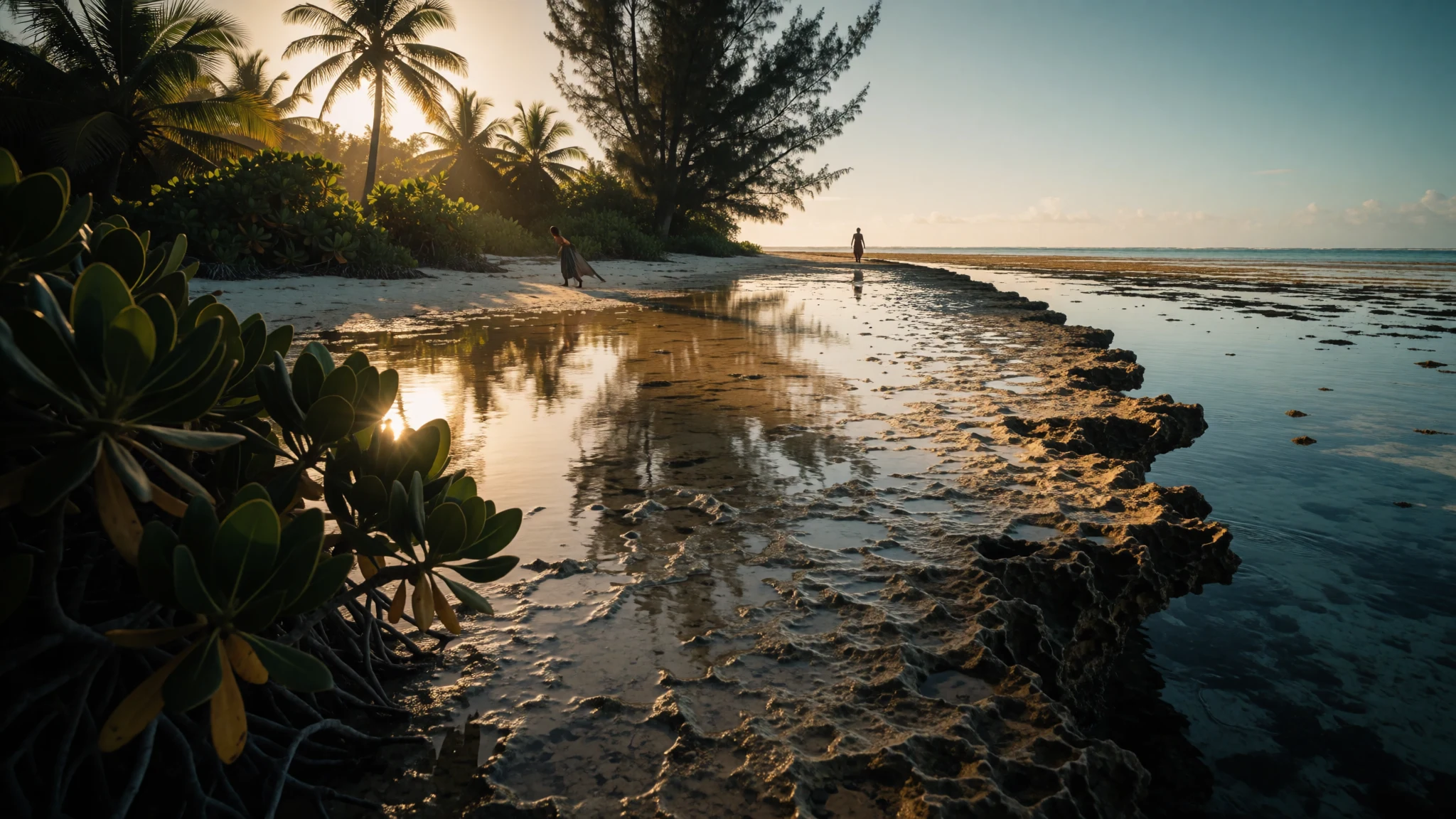
Mauke is a quiet raised-coral island in the southern Cook Islands, where fossil-reef caves, fertile gardens and a small community set the pace.
The place
Mauke is a small island in the Cook Islands, about 277 km north-east of Rarotonga, and it feels further away than that. Its population is 249, and its highest ground is only 29 m above the sea. From the air it looks like a green coin set in blue water, ringed by a pale fringing reef that is broken by six passages where boats can slip through.
The shape of the land explains most of what a visitor sees. Mauke is a raised coral island: the old reef was lifted clear of the sea and now forms a rim of sharp, fossilised limestone called makatea, which runs inland for up to about a mile. Inside the rim lies a band of swampy ground, and inside that a plateau of volcanic soil. The whole island sits on an extinct volcano whose foot is thousands of metres below the waves.
That plateau soil is why Mauke is nicknamed the Garden of the Islands. Crops do well there, while the makatea is too rough to farm and is riddled with caves instead. The island is also written Ma'uke, and has the older name Akatokamanava.
Daily life is quiet. Most paid work is in the public sector, and the main export is maire, a fragrant plant used to make leis. Tourism is small, with only two budget accommodation providers, so Mauke has none of the resort infrastructure of Rarotonga. Electricity now comes partly from the sun, through a solar-diesel plant commissioned in 2019. Mauke is one of the Nga-Pu-Toru islands, alongside Atiu and Mitiaro.
Its story
Mauke's own tradition says the island was found by a navigator called Uke, and the name Ma'uke means the land of Uke. His descendants are said to have gone on to settle neighbouring Atiu. Another tale tells of a son of Ruatapu being killed here, followed by a violent revenge. Alongside these stories sits a firmer pattern: for long periods Mauke was dominated by Atiu, whose warriors raided it often.
Outsiders arrived in the 1820s. John Williams of the London Missionary Society sighted the island in 1823 and left a Polynesian preacher, Haavi, to begin teaching Christianity. Two years later Captain Lord Byron of HMS Blonde passed by and called it Parry Island, a name that never replaced the original. In the 1840s Atiu tried another raid but turned back once word spread that a European trader had supplied the Maukeans with muskets.
Politics then shifted through marriage. In the 1860s the ariki, or paramount chief, of Atiu, Mauke and Mitiaro married a Rarotongan ariki, and in 1871 Mauke was folded into the Kingdom of Rarotonga. It became a British protectorate in 1888, and New Zealand annexed it in 1901.
Religion shaped the map as well. In 1904, friction between followers of the London Missionary Society and newly arrived Catholics led to a separate coastal village, Kimiangatau. Catholic sisters ran a school, St Mary's, for decades; a second order took over in 1986 and left in 2001. Now only the state-run Mauke School remains.
What to see
- The makatea and its caves — The rim of fossil coral around the island
The makatea is the jagged fossil-coral rim circling Mauke, and it hides caves including Vaitango, Moti and Motuanga. The limestone is sharp and uneven, so sturdy shoes matter, and a local guide is sensible for finding and entering the caves safely. Ask at your accommodation, and expect to get muddy.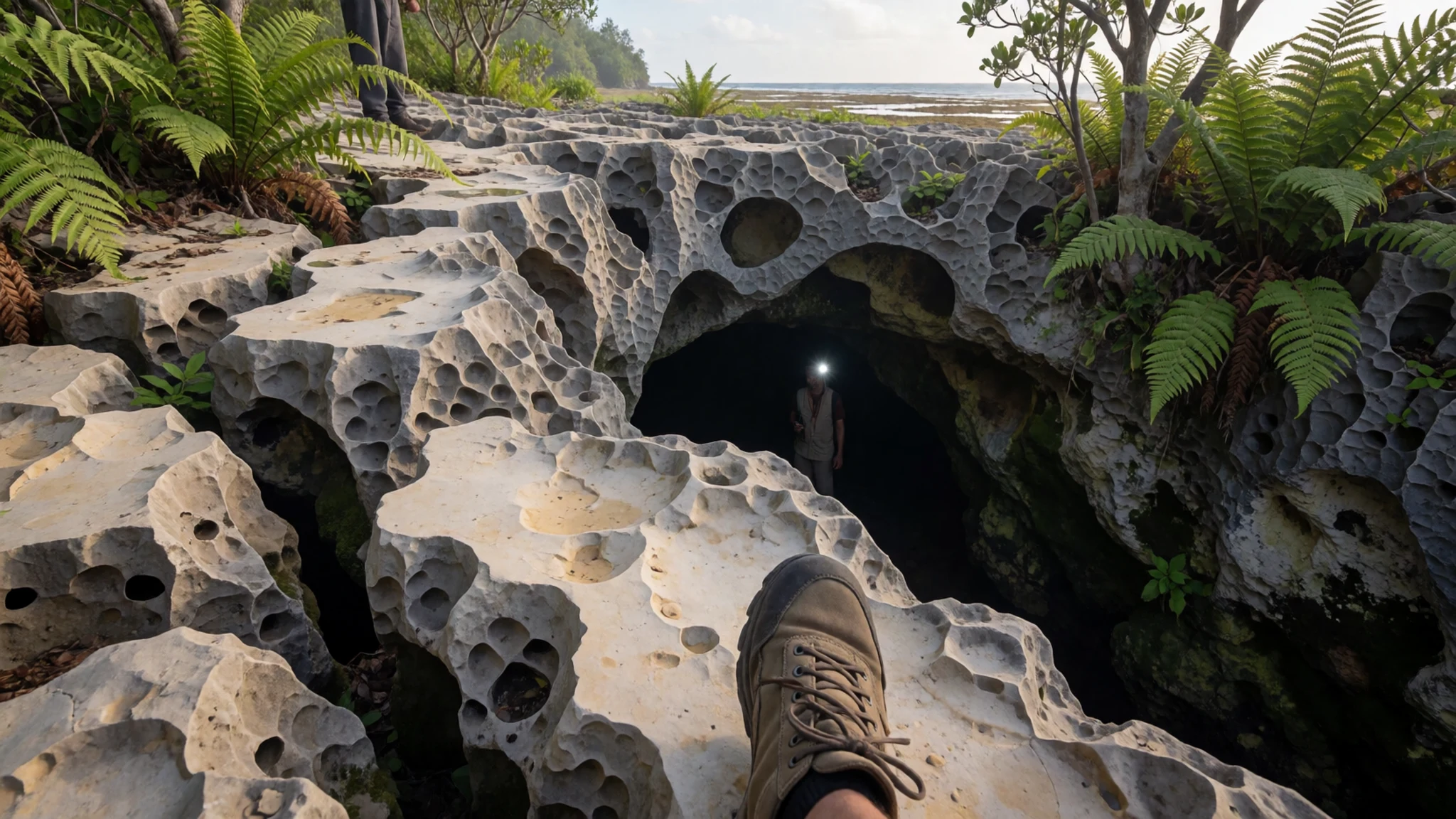
- The plateau gardens — Inland, on the volcanic plateau
Inland of the swampy belt, Mauke's volcanic plateau holds the gardens behind the Garden of the Islands nickname. Walking or riding along the tracks shows food crops and plantations, including the maire used for leis. Go in the cool early morning, and ask before stepping onto anyone's land.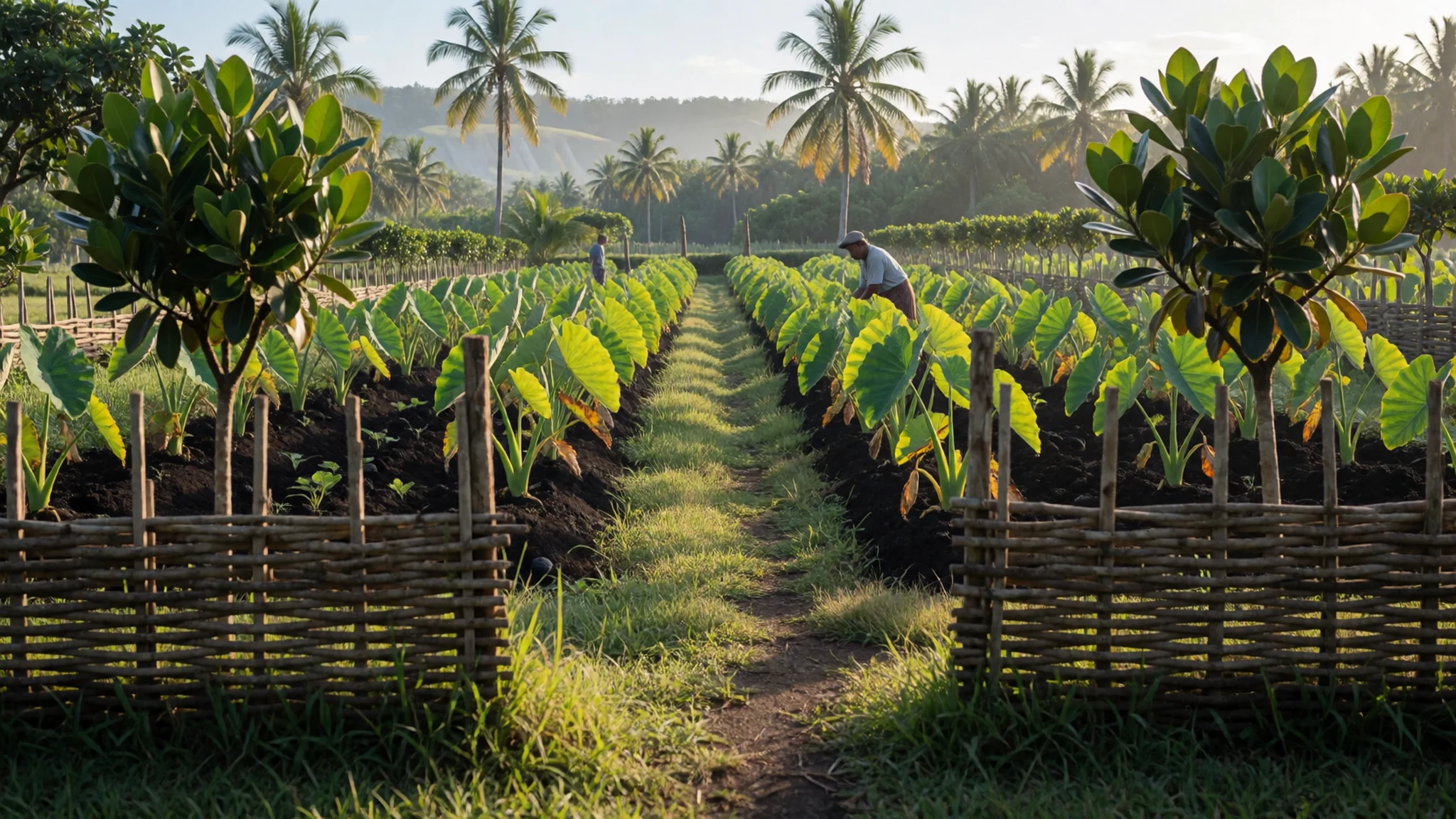
- The reef and harbour — The coast
Mauke's fringing reef is broken by six passages, and the harbour, damaged by cyclones in 2005 and upgraded by 2013, is where boats come and go. Watching the shoreline activity here is an easy way to see how the island connects to the outside world. Take local advice on tides and currents before swimming or snorkelling.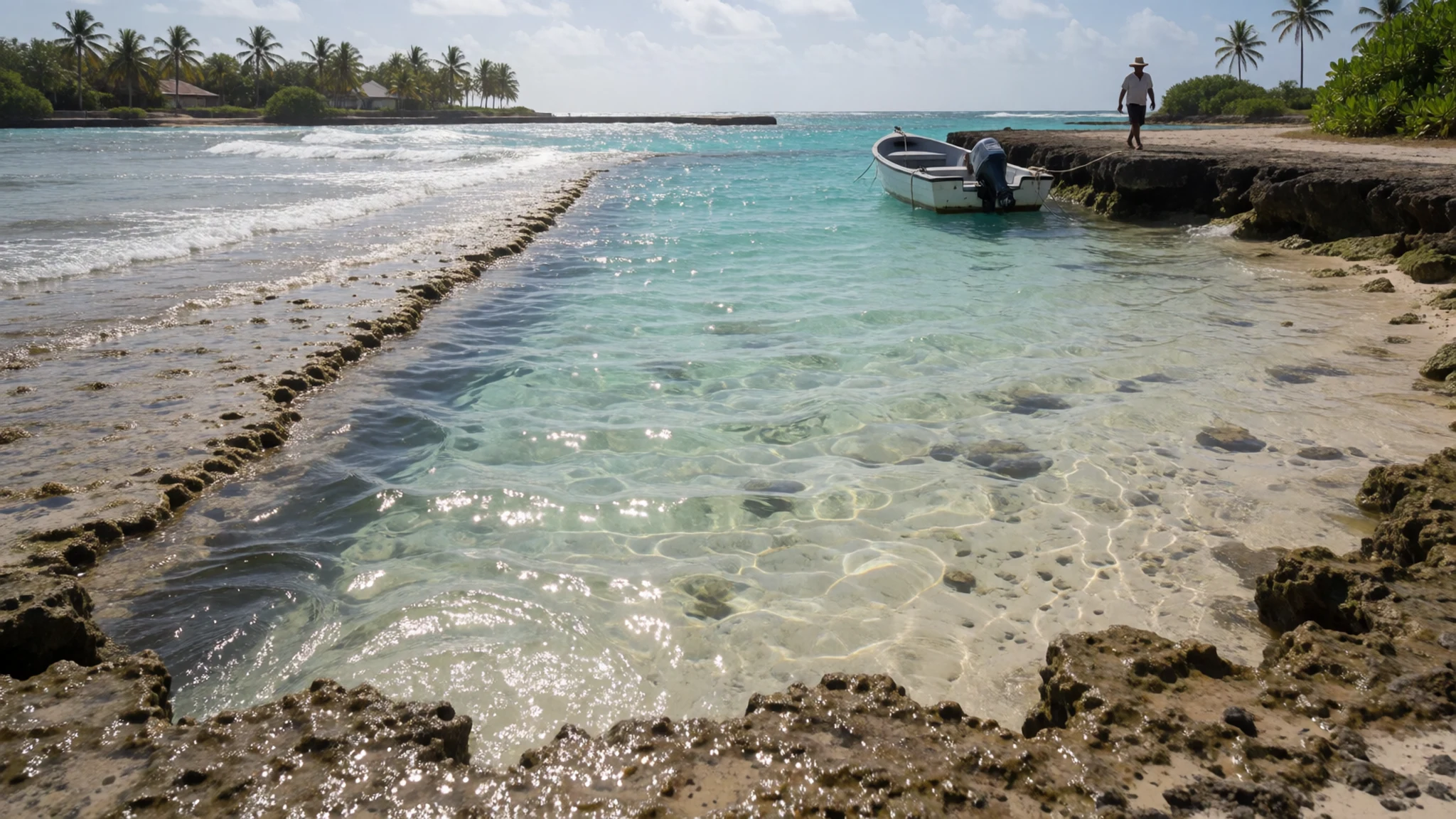
- Kimiangatau village — The coast
Kimiangatau was founded in 1904 after a split between London Missionary Society followers and newly arrived Catholics. The village is a reminder of how religion shaped settlement here. Visit with respect, greet people you meet, and if you are welcomed at a church service, treat it as a community occasion rather than a performance.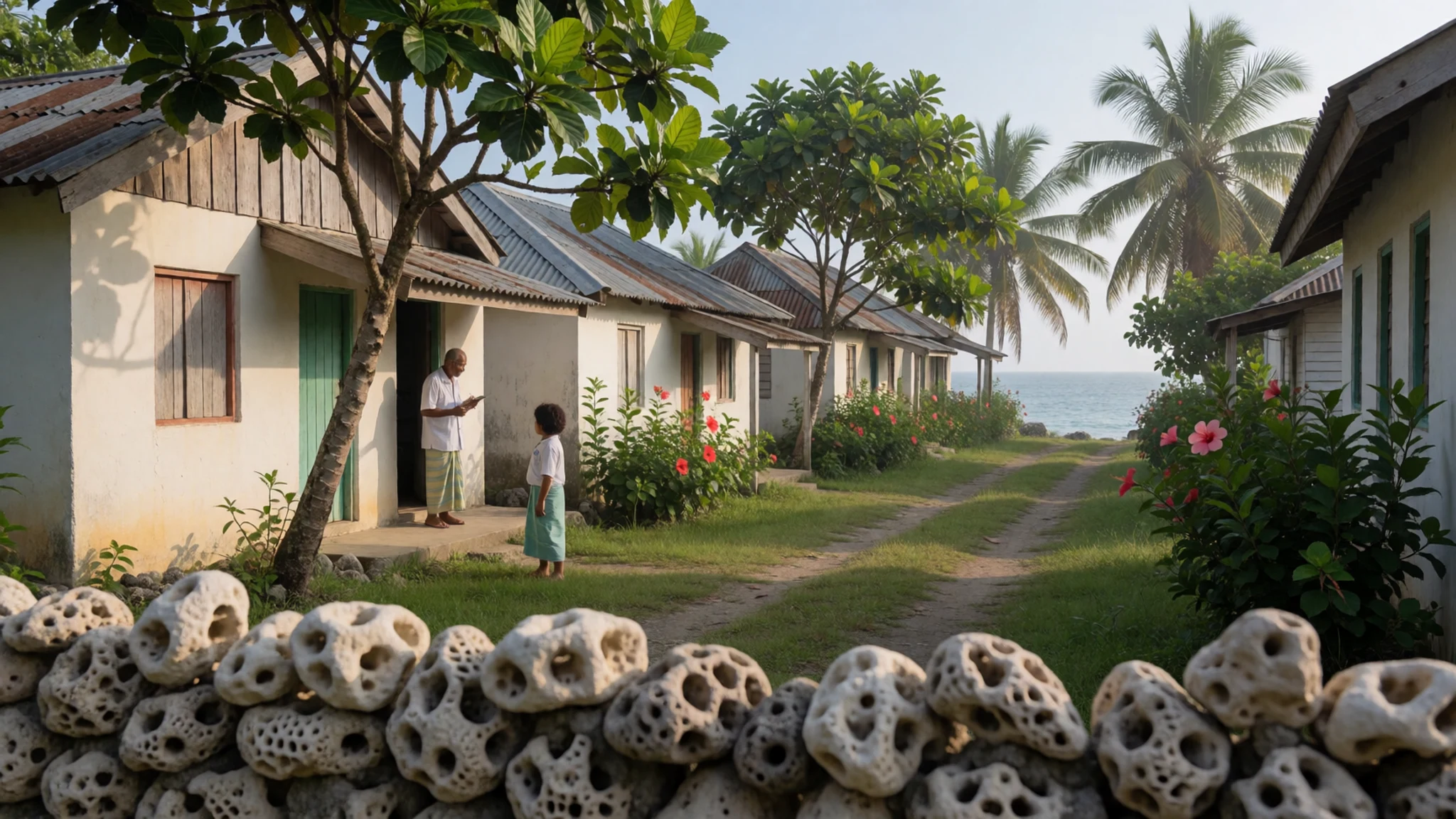
- Mauke from the air — On approach to Mauke Airport
Arriving by plane gives the clearest picture of the island's layers: a darker green plateau, a paler ring of makatea, and the reef beyond. Sit by a window if you can. The aerial photograph and topographic map in this reading help explain what you are looking at.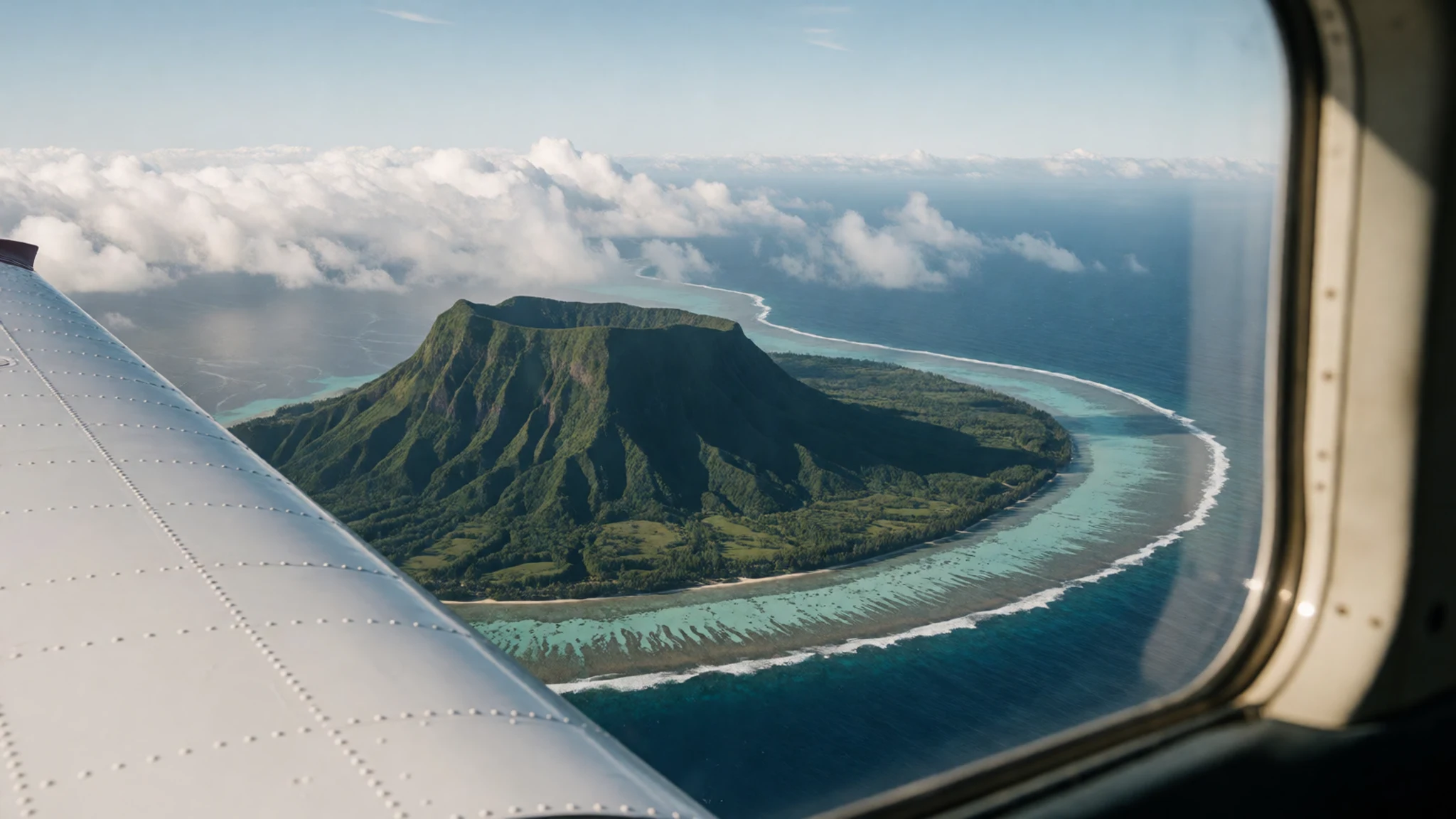
Culture
Mauke's community life revolves around church, family and the land. The island's history of rival Christian groups, including the separate Catholic village founded in 1904, still gives it a mix of congregations. With only 249 residents, everyone knows everyone, and a visitor is noticed and usually welcomed. Gardening, fishing and gathering maire for leis fill much of the week, and the chiefly title of ariki remains part of how islanders understand their history.
Land is held by families, so a pretty clearing, cave entrance or stretch of shore may belong to someone, and asking first is the normal courtesy. Visitors who take the time to chat, accept a cup of tea or share a meal will learn more than any guidebook offers. Expect a slow pace: boats, flights and supplies shape the rhythm of the day, and plans can shift with the weather.
Across the Cook Islands, Sunday is generally a day for church and rest, and Mauke is likely to follow that pattern, so expect things to be quiet. Hymn singing is part of church life, and being invited to a service is a gesture of welcome. Gifts of small supplies from Rarotonga are often appreciated by hosts, though nobody expects them.
On Sundays dress modestly, keep noise down near churches, and ask before photographing people, services or private land.
What to wear
Mauke's traditional dress draws on wider Cook Islands textiles. The pareu, a wrap of printed cotton, is worn by men and women, and tivaevae, the appliqué and patchwork quilts made by women, are prized as gifts and for family occasions. Leis, called hei, are made from flowers and leaves, and on Mauke maire is the plant most associated with them. Women often wear woven pandanus hats to church, and festivals and dance performances bring out fuller costume with shells, fibre and feathers.
Everyday clothing on the island is relaxed and practical: T-shirts, shorts, light dresses, flip-flops and sun hats for gardening, fishing and the heat. Church clothes are noticeably smarter, with white or pale shirts and dresses common on Sundays, and a visitor attending a service will fit in best by following that lead.
For a visit, pack light cotton or linen that dries quickly, a wide-brimmed hat and sunscreen, and a rain jacket for sudden showers. Bring one modest outfit for church, with covered shoulders and knees. Footwear matters more here than on most beach islands: the makatea is sharp fossil coral, so closed, grippy shoes are needed for the caves and inland tracks, and reef shoes help in the shallows. Swimwear belongs at the beach, not in the villages.
What to eat
- Ika mata — Island family kitchens and community feasts
Ika mata is raw fish marinated in lime or lemon juice, then dressed in coconut cream, often with chopped vegetables. It is the signature dish of the Cook Islands, made from the day's catch, and a good test of how fresh the fish really is.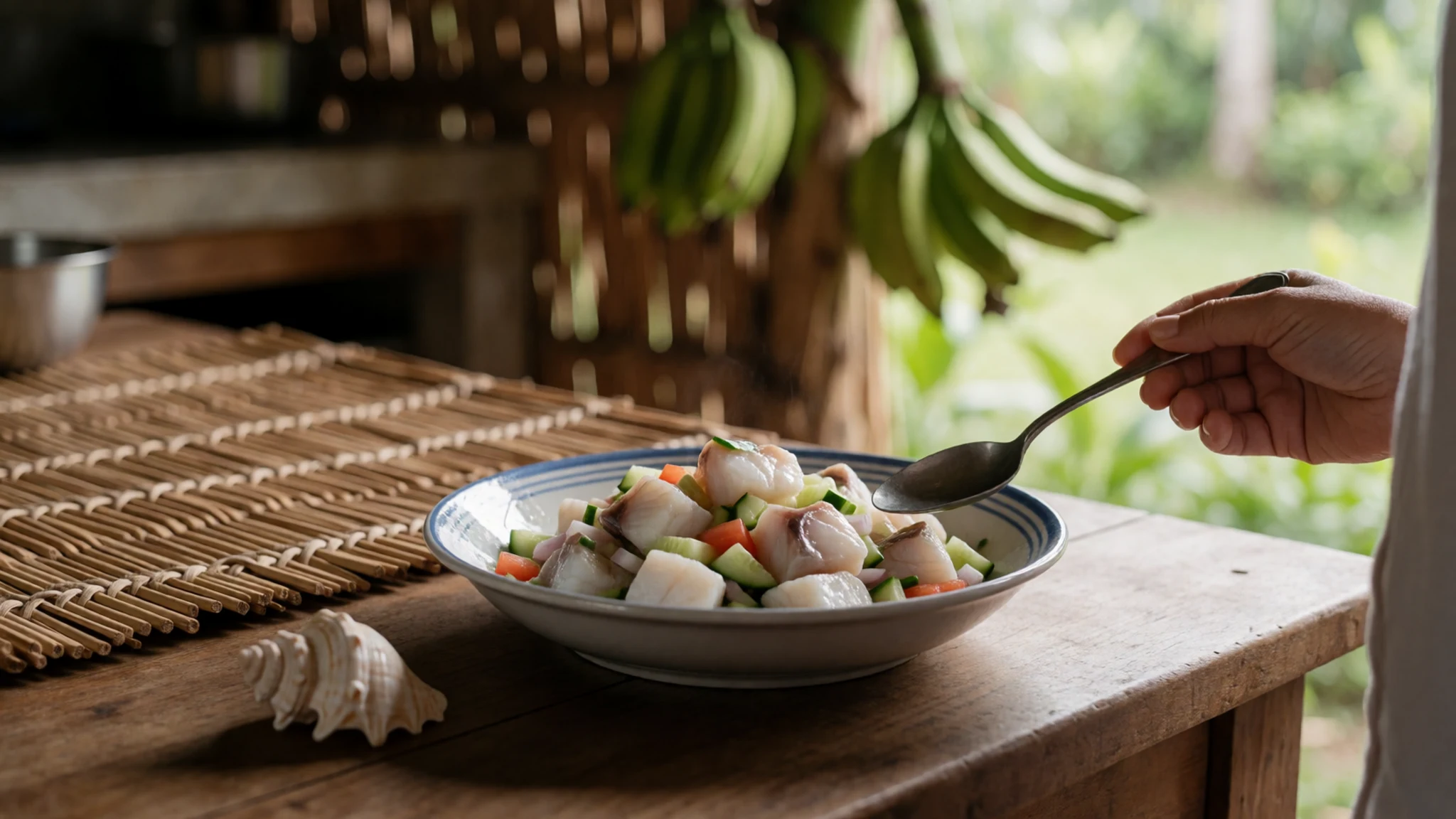
- Rukau — Home cooking and shared island meals
Rukau is cooked taro leaf, simmered down to a soft, creamy dish, often with coconut cream. It is a staple side served alongside fish, pork or root vegetables, and the leaves come from plateau gardens like those that give Mauke its nickname.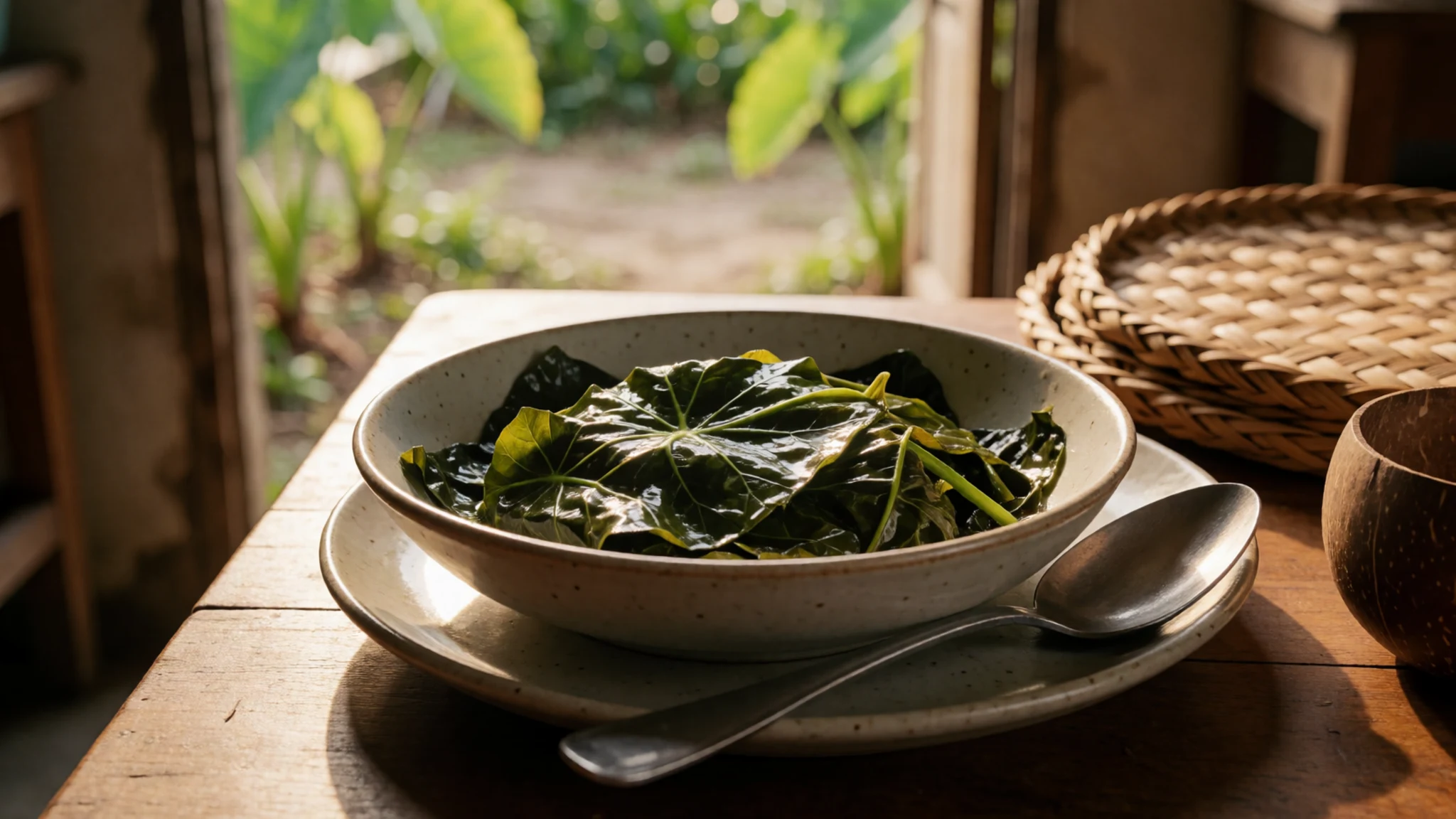
- Umu feast — Church gatherings, celebrations and community events
An umu is an earth oven, with food wrapped in leaves and cooked over heated stones. Pork, fish, taro and breadfruit come out smoky and tender. On Mauke it is usually part of a gathering, so an invitation is the likeliest way to try it. - Fresh reef and ocean fish — The harbour, when boats come in, or at island guesthouses
Fish caught on or beyond the reef are grilled, fried or eaten raw. Species and availability depend on the weather and the boats going out, so what reaches the table is whatever the sea gave that day, usually plainly cooked. - Taro and root crops — Plateau gardens and island kitchens
Taro, sweet potato and cassava grow in the volcanic soil of the central plateau and are boiled, baked or mashed beside fish and meat. They are filling, simple food, and a direct taste of why Mauke is called a garden. - Coconut and tropical fruit — Roadside trees and family gardens
Fresh coconut water, pawpaw, bananas and other fruit are grown across the island and offered at homes. Coconut cream also thickens many savoury dishes. Ask before picking anything, as trees belong to families.
Plan it
Best time. May to October is generally the drier, cooler stretch in the southern Cook Islands, and the best bet for walking the makatea and reef. November to April is hotter, wetter and the cyclone season; Mauke's harbour was damaged by cyclones in 2005, so storms are a real factor for flights and boats.
How long. 3–4
Getting there. Fly to Rarotonga, then take an inter-island flight to Mauke Airport; the island is about 277 km north-east of Rarotonga. Check schedules with the airline early, as services can be infrequent and weather-dependent.
Budget. mid
Tips
- Book flights and accommodation well ahead, as there are only two budget accommodation providers on the island
- Bring cash and any special supplies from Rarotonga, since services on Mauke are limited
- Wear closed, grippy shoes for the makatea and carry drinking water on inland walks
- Ask a local guide to take you to the caves rather than going alone
- Take advice on tides and currents before swimming near the reef passages
Etiquette
- Dress modestly in villages and for church, and keep Sundays quiet
- Ask before photographing people or entering private land
- Greet people you pass; the community is small and visitors are noticed
Nearby
Sources
- Wikidata Q511978 (CC0)
- Wikipedia: Mauke (rev 1382301870) (CC BY-SA 4.0)
- Wikivoyage: Mauke (rev 5244808) (CC BY-SA 4.0)
- Mauke Aerial.jpg (Public domain)
- Topographic map of Mauke Island, Land Information New Zealand (CC BY 4.0)
- NASA astronaut image of Mauke Island (Public domain)
- Map of Mauke (Cook Islands), Mr Minton (CC BY 2.5)


