Manihiki
Manihiki, Cook Islands
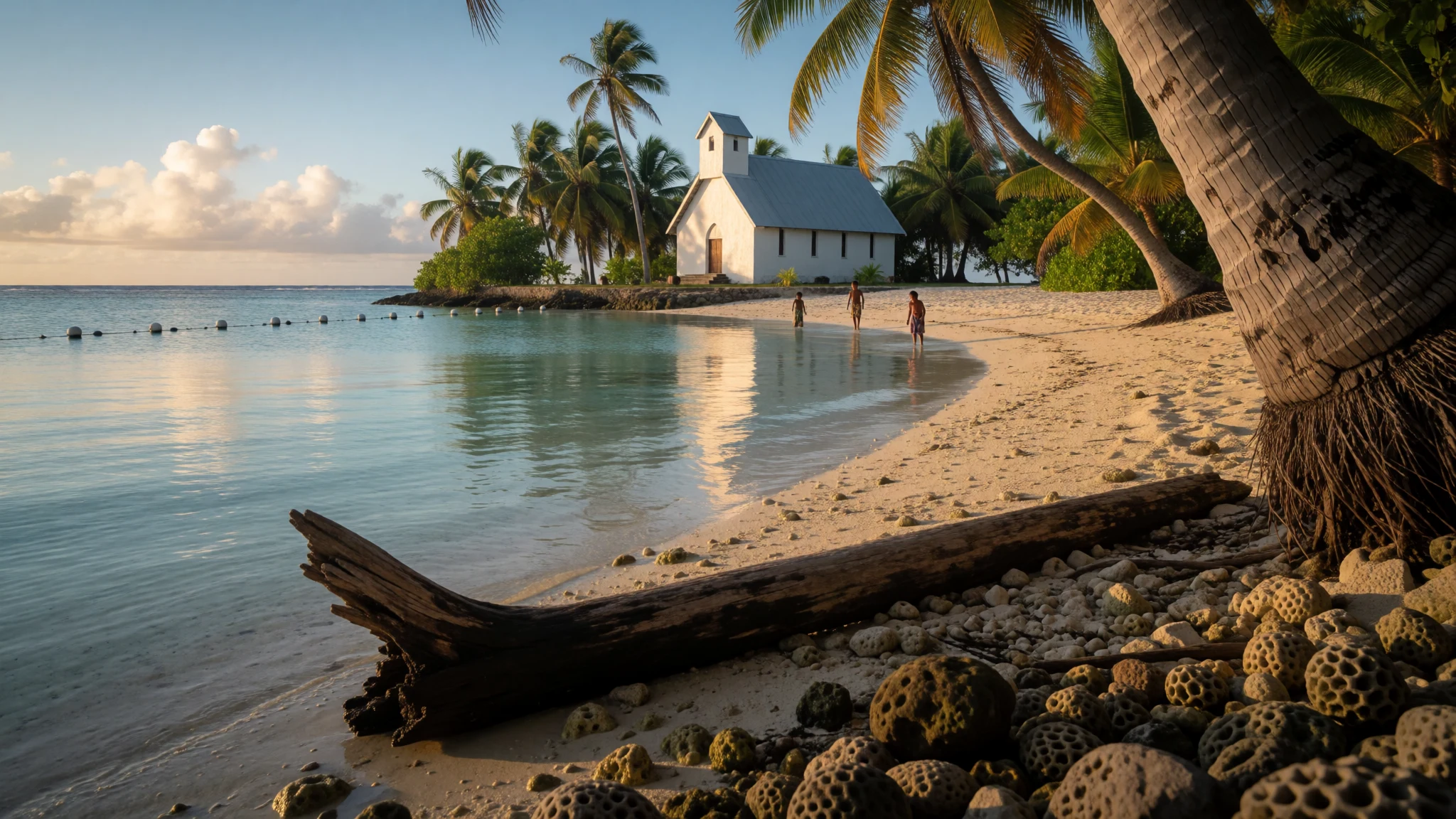
Manihiki is a far-northern Cook Islands atoll where a lagoon, two villages and black-pearl farms set the pace of daily life.
The place
Manihiki sits in the northern Cook Islands as a coral ring: motu of sand and palms holding a lagoon, with open ocean on every outer shore. From the air the ring reads as narrow green strips and pale sand around water that is lighter than the sea outside. There is no high ground and no river. Dry land is a beach, a path and a line of coconut palms. Tauhunu and Tukao, the two villages, face the lagoon from different parts of that ring, so a neighbour may be a boat ride away. The water between them is working water. Rows of buoys mark black-pearl farms, the oysters hanging where families can tend them by boat. Beyond the reef the horizon is empty. Inside it, the lagoon shifts from sandy shallows to boat channels. Channels are for local boats that know the coral; a stranger does not explore them alone. Shade comes from palms, not from hills, and the noon sun is the main fact of being outdoors. Soil is scarce, so coconuts, fish and whatever the supply ship or the plane brings matter more than gardens. Wind, sun and the state of the lagoon shape the day. Houses stay low. Churches rise above the palms. The airstrip sits on the rim, and getting from the plane to a house can still mean a boat. Manihiki is remote in the plain sense: a small community, few visitors, and a landscape made mostly of water that people farm, fish and cross on the way home.
Its story
Manihiki’s story is a paired one. The atoll is linked, by language, family and a shared flag, to Rakahanga, another northern Cook Islands atoll distant enough that kinship has always meant a voyage. Oral tradition treats the two as kin that separated: people, the stories say, once moved between them, and the sea kept what genealogies joined. Families still locate themselves in those accounts, and in the memory of who taught whom to dive. European ships later fixed foreign names on the chart, and missionaries brought a congregational Christianity that set the week around Sunday worship. The congregational Christianity brought by missionaries soon established the church as the public face of the village. The lagoon’s older export was shell. Divers went down for oyster shell, hard and dangerous work tied to a trade far from the atoll. The same oyster later became the basis of cultured black pearls, and farms of hanging lines turned a diving knowledge into a settled craft of cleaning, grading and waiting. Storms have emptied houses and shifted who lives on which motu; the community that stays is small, church-centred and practised at rebuilding. Manihiki’s recent story is not a resort laid over an empty reef. It is a lagoon people already knew how to work, then learned to farm, while a sister-island memory remained that no map of separate dots can carry.
What to see
- Manihiki lagoon — Centre of the atoll
Manihiki’s lagoon is the atoll’s main road, workplace and larder. Black-pearl farms show as long rows of buoys; boats from Tauhunu and Tukao cross between them rather than drive around. The water changes colour with depth, from pale sandbanks to darker channels. Visitors do not treat the farms as a park: the lines are someone’s crop, and wash from a careless boat costs a family its oysters.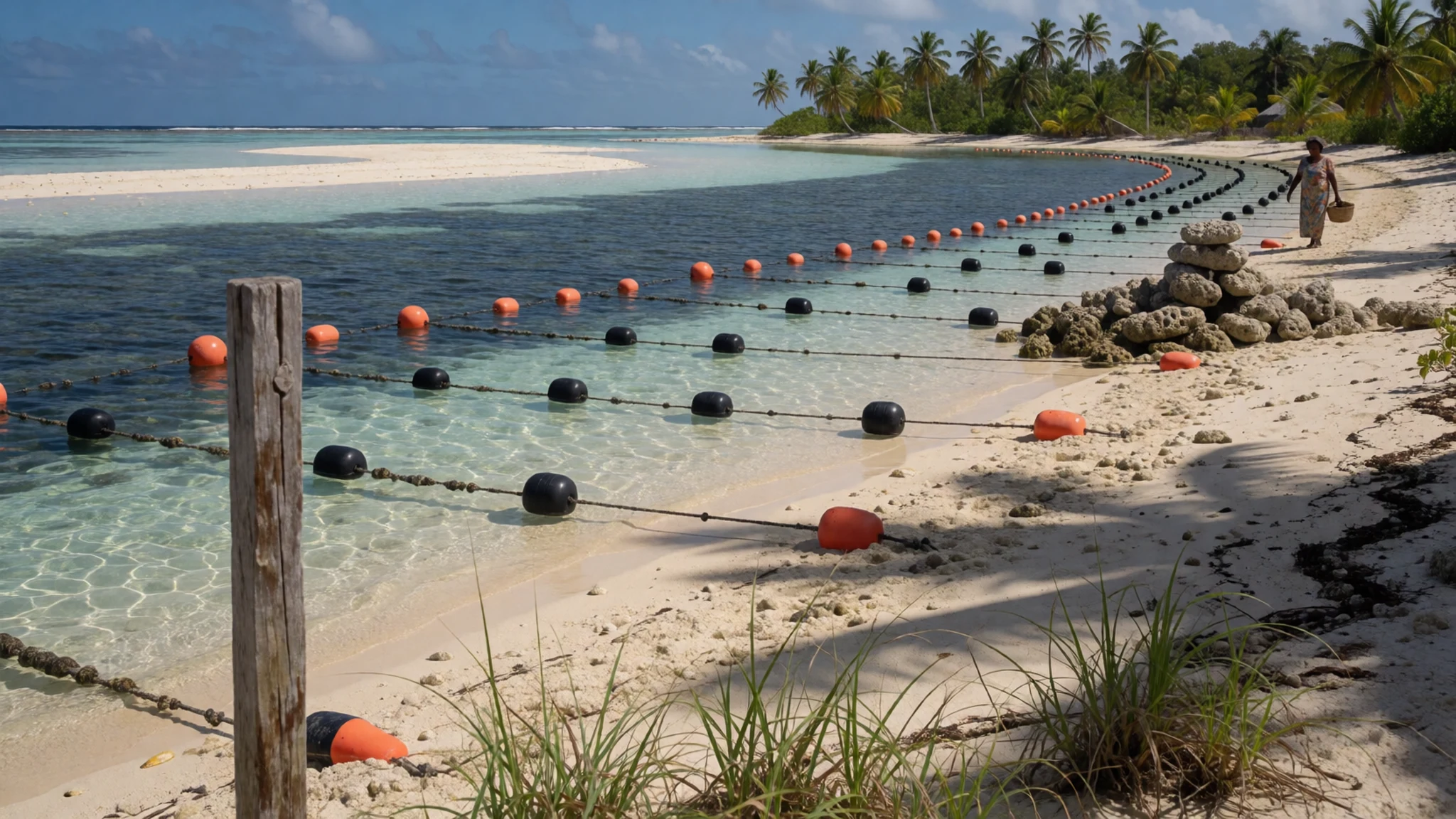
- Tauhunu — Western side of the atoll
Tauhunu is one of Manihiki’s two villages, a short line of houses, a church and a landing squeezed between lagoon and ocean. Boats do the work of roads, and the path along the motu is the whole street. There is no commercial waterfront, only a working shore where supplies and passengers step off. Visitors who wander should greet people who are outside and keep clear of private pearl gear.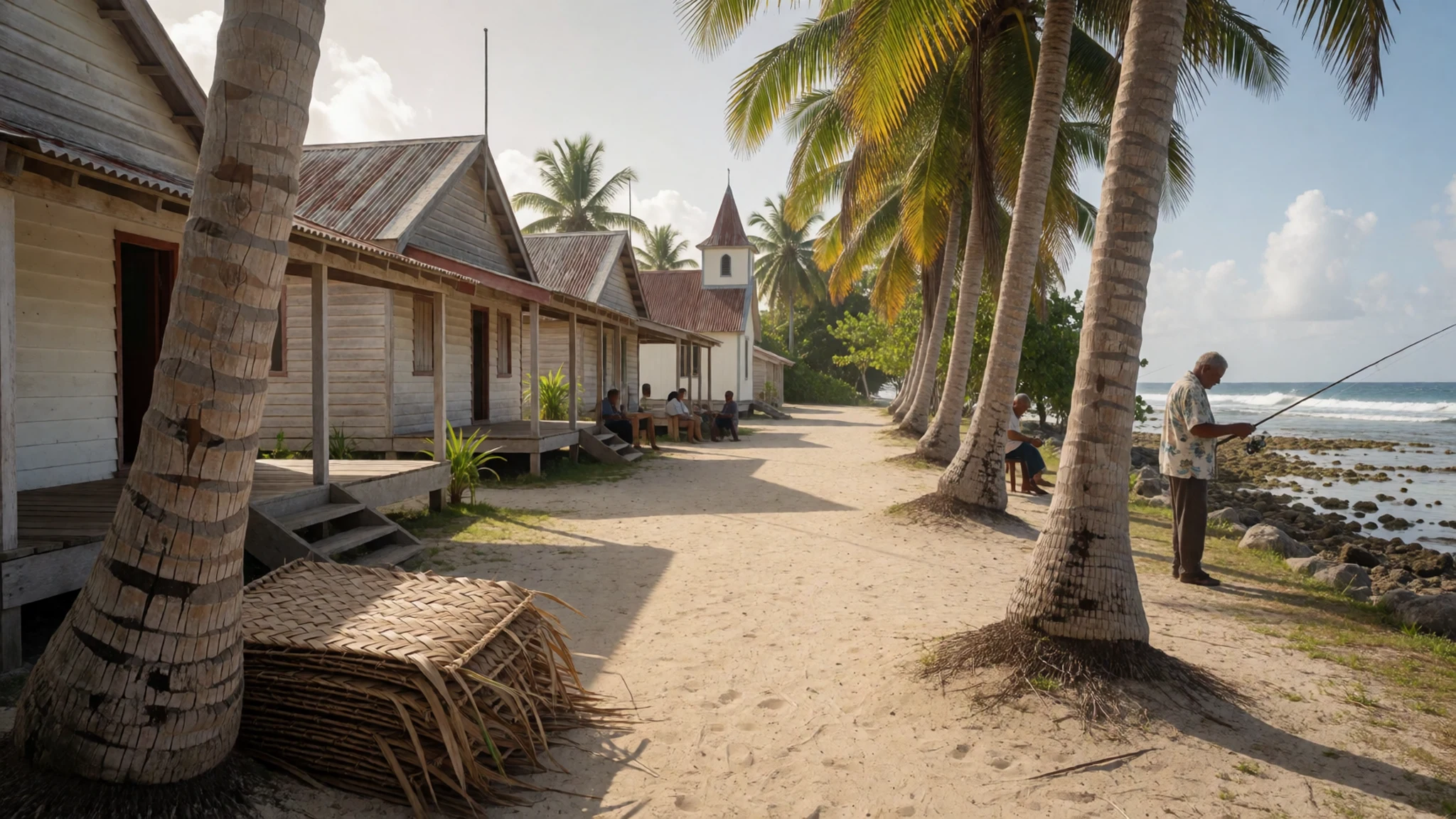
- Tukao — Northern side of the atoll
Tukao is Manihiki’s other village, across the lagoon from Tauhunu: houses, a church, palms, a landing and a clear view of the farms. The church building serves as the settlement's public centre, reflecting the island's deep religious roots. The boat from Tauhunu is the ordinary way across; there is no road around the rim. The public shore is the right limit unless someone local invites a longer walk.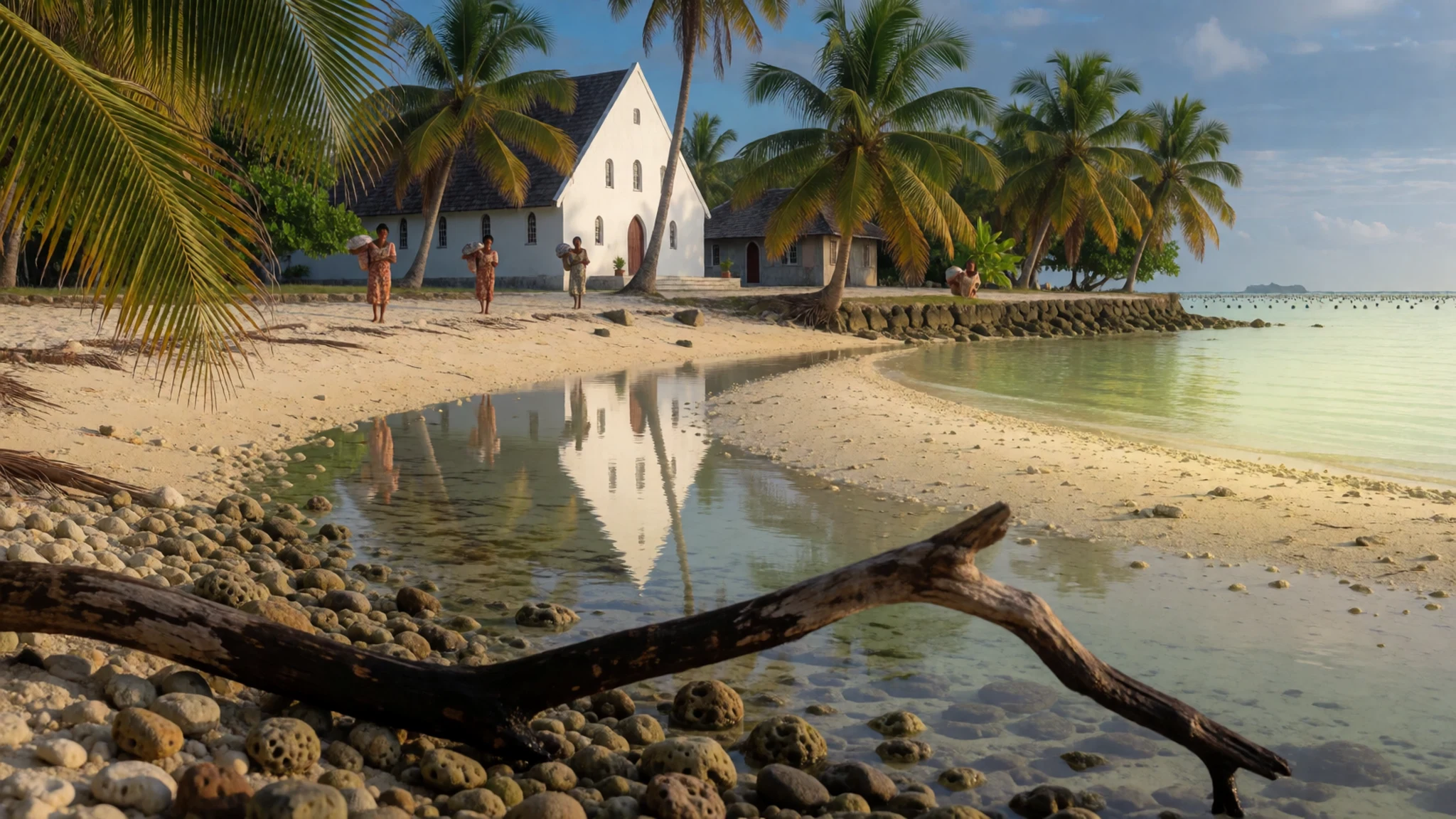
- Reef motu — The atoll rim
The motu are the narrow islets that make Manihiki’s ring: coconut palms, coral rubble, a windward beach and a lagoon beach a few steps apart. Some hold houses; many are only bush and birds. Walking them means reef rock, not pavement, and the ocean side can be rough even when the lagoon looks calm. Shells, coral and anything growing on a farm line stay where they are.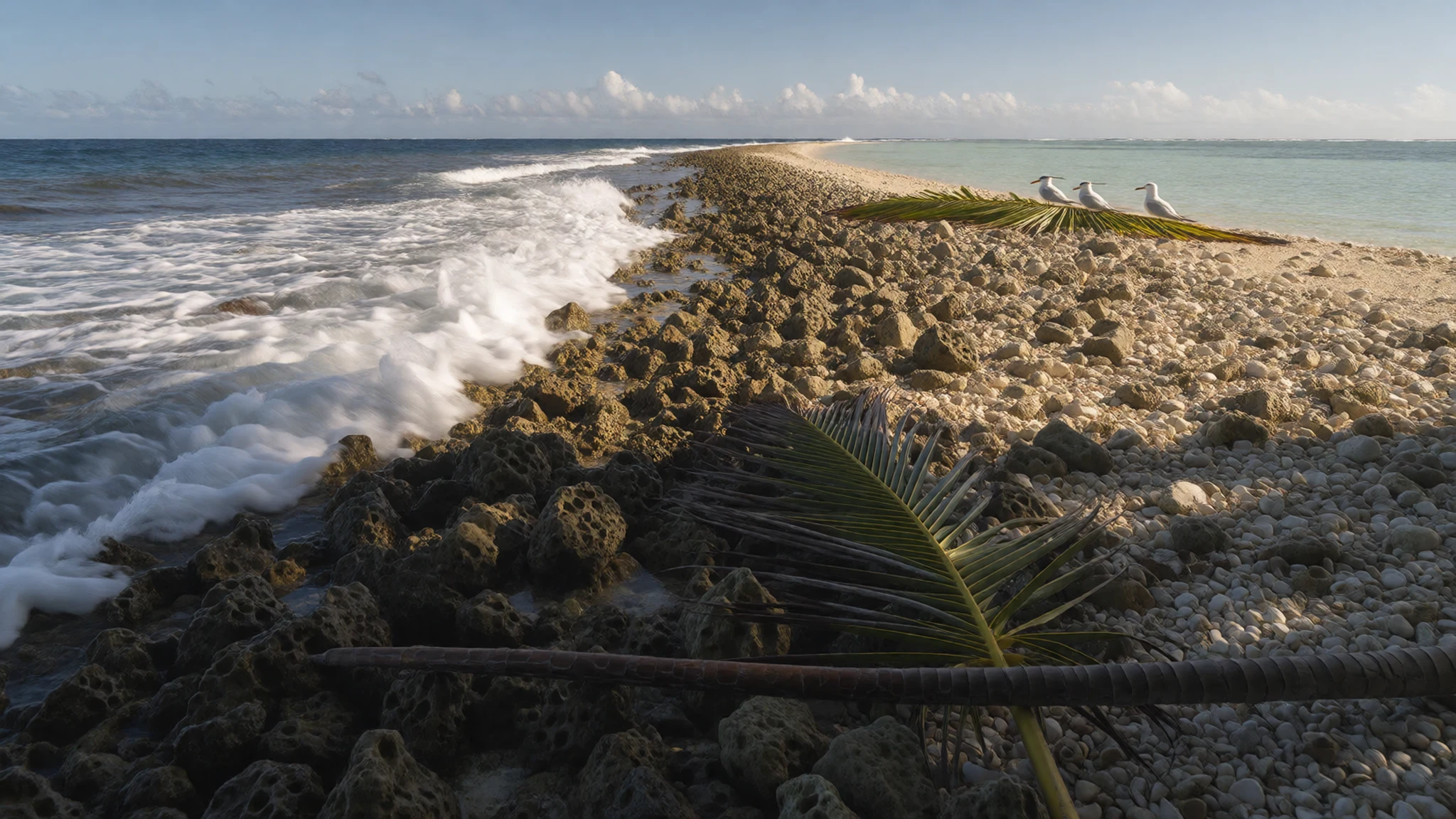
- Village churches — Tauhunu and Tukao
Church buildings are the landmarks on Manihiki. White walls and a pitched roof rise above palms that otherwise hide the houses, and on Sunday they are the centre of the atoll, not a side visit. The presence of these churches records how early the community's social pattern settled in. Visitors dress modestly, step quietly, and do not treat a service as a sight to be walked through.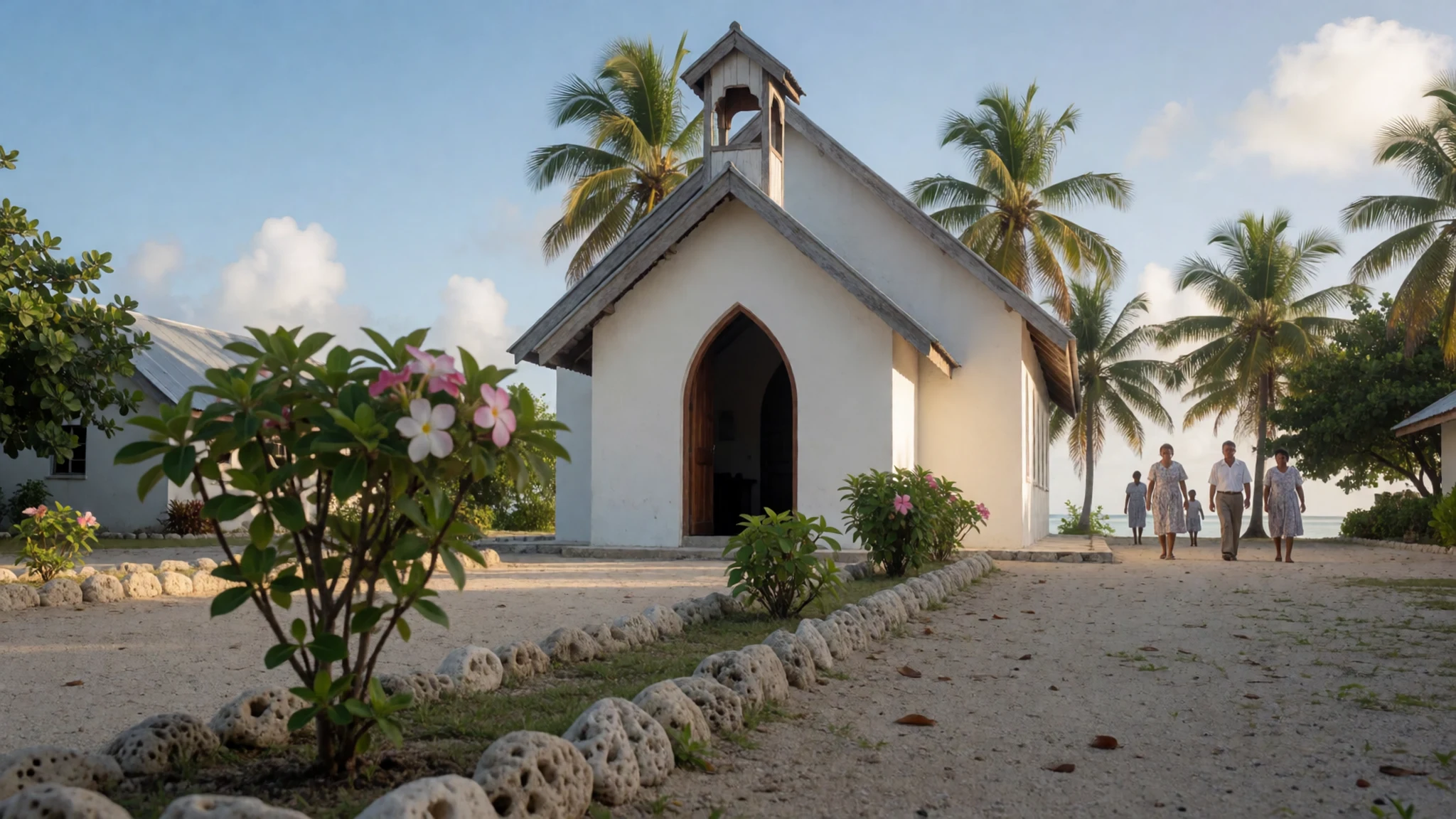
Culture
Manihiki’s culture is northern Cook Islands culture on a very small stage. The language at home is a Cook Islands Māori that people from Rarotonga hear as a sister tongue, shared most closely with Rakahanga. Family decides who may cross a motu, who shares a catch, and who is expected at a funeral or a feast. Christianity, brought by missionaries and kept by the local churches, structures the week. Sunday is for worship, rest and a meal; farm work, fishing and noisy jobs wait. Drumming, hymn harmonies and group dance appear at church gatherings and community celebrations, not as a nightly show. Women weave fine rito from bleached pandanus, a northern-atoll craft, and pearl work has its own slow apprenticeship. Cash is limited, and imported goods arrive only when the ship or the plane does, so sharing is practical. A visitor is a guest in a village, not a customer in a resort. Ask before you photograph people, keep off pearl lines, and treat Sunday as a quiet day: no loud music, and modest clothes if you enter a church.
What to wear
Manihiki’s traditional dress uses what an atoll can grow and what trade can land. The everyday wrap is the pareu, printed cotton tied at the waist or chest for swimming, housework and heat. For welcome, church and dance, people add an ei of flowers, leaves or shells, and many women wear a dress and a woven hat. The northern atolls are known for rito: young pandanus leaf, bleached pale and plaited into fine hats and fans. A good hat is a valued gift as well as shade. Pearl jewellery, often a dark pearl on a plain finding, is the other local ornament, worn because the lagoon produces it. Day to day, people wear T-shirts, shorts, football shirts, sandals or bare feet, with a pareu over swimwear after the water. Sunday is different: covered shoulders and knees, a hat for many women, a clean shirt for men. Visitors should copy that split. Bring light cotton, a long-sleeved shirt, reef shoes for coral, and a modest outfit for church. Keep swimwear on the beach or in the lagoon, and take shoes off at a house door when your hosts do.
What to eat
- Ika mata — Home kitchens and community feasts in Tauhunu and Tukao
On Manihiki, ika mata is raw fish cut small, cured with lime or lemon and folded through coconut cream. The fish comes from the lagoon or the reef, not from a freezer. It shows up when a catch is shared at home or at a community meal in either village.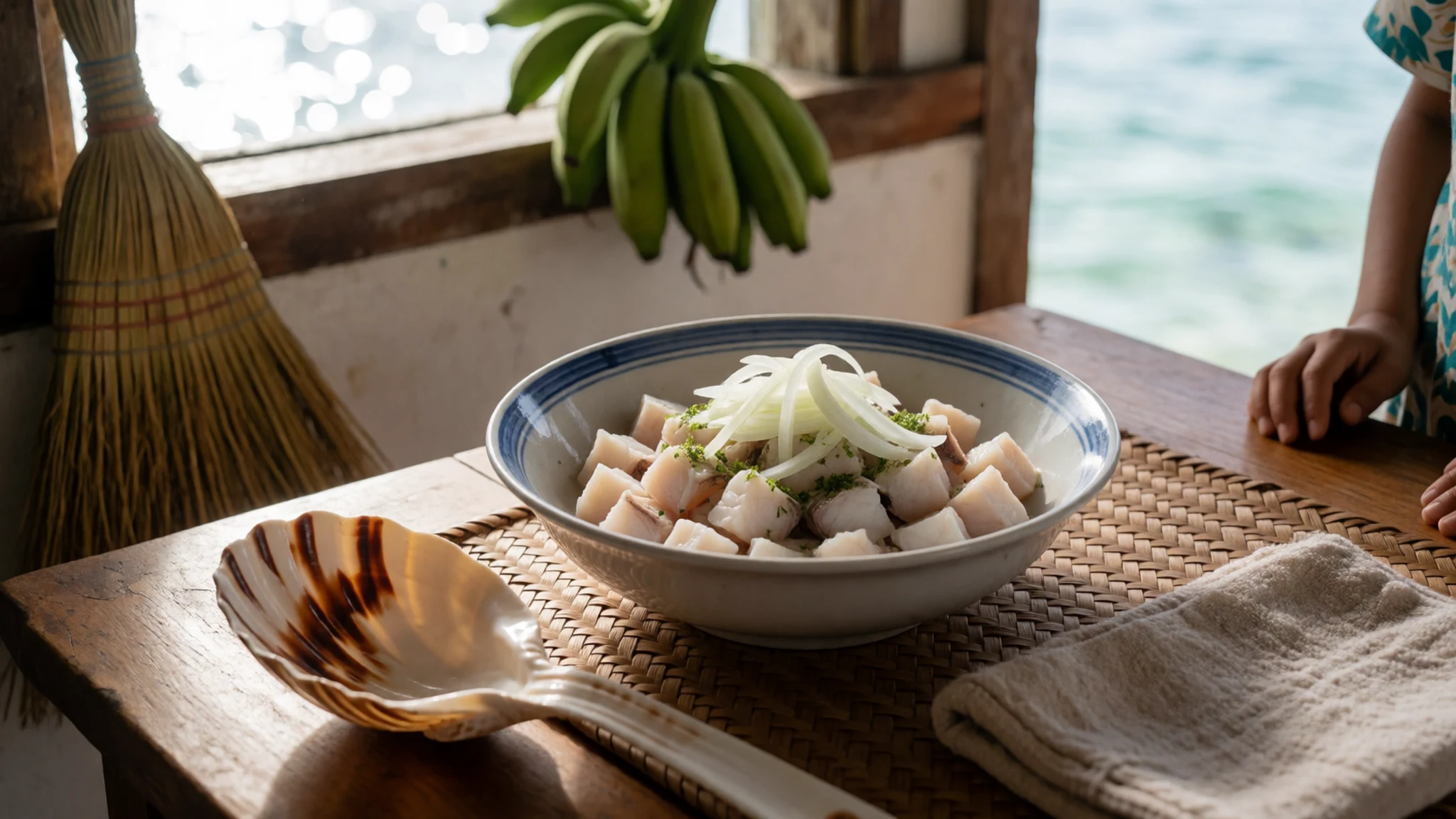
- Fish in coconut cream — Household kitchens on the village motu
Firm reef fish simmered in fresh coconut cream is a standard Manihiki meal. The cream is pressed from nuts grown on the motu, so the sauce is as local as the catch. Families cook it at home in Tauhunu and Tukao, and a guest eats it by invitation.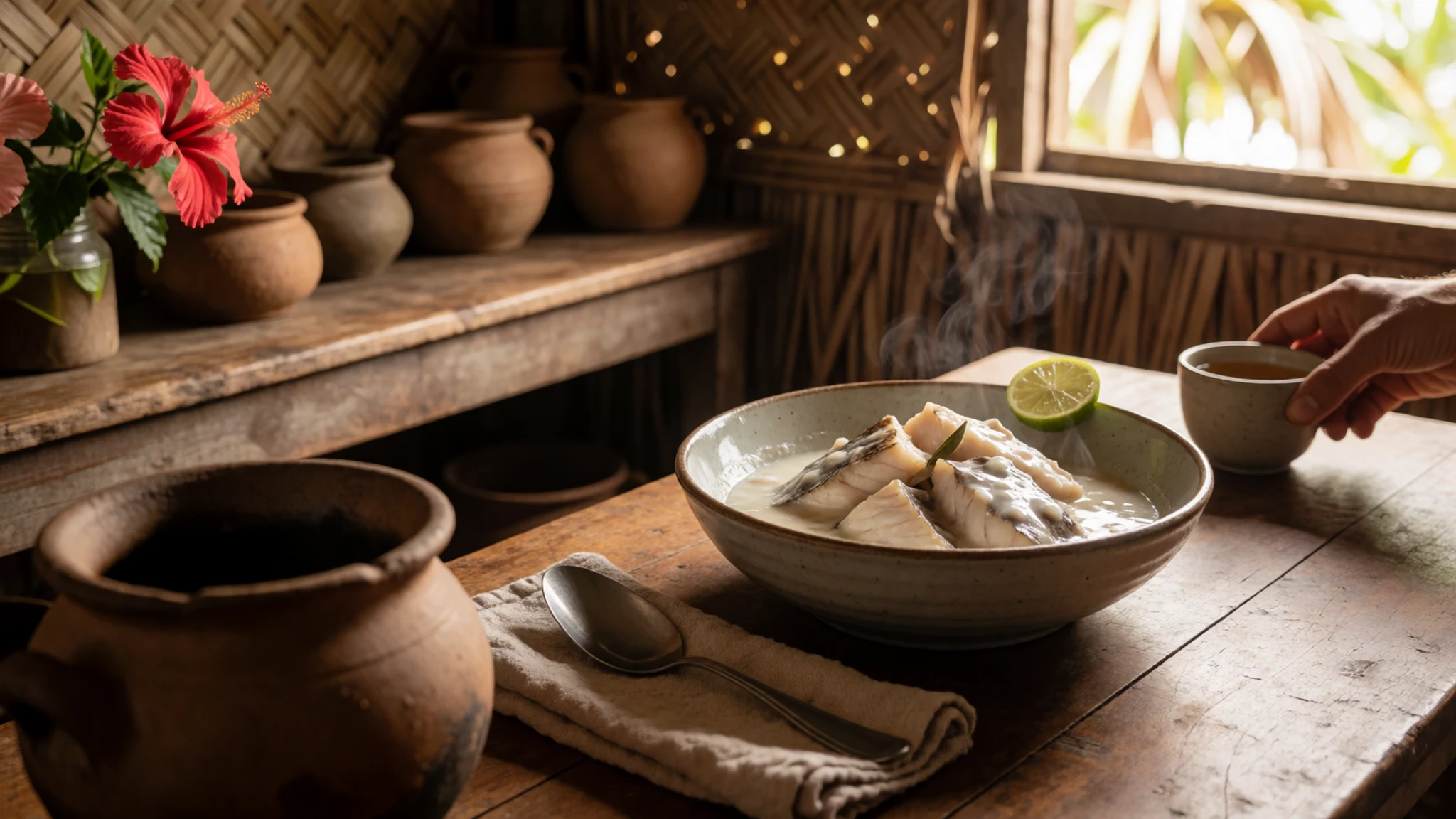
- Uto — Coconut palms on the motu
On Manihiki, uto is the soft, sweet flesh inside a sprouting coconut, scooped out once the nut is split. It grows on the tree and feeds children and fishers. It is one of the foods the atoll itself provides. Nuts should be taken only from trees a host points out. - Grilled lagoon fish — Village cookfires and shared meals
Whole fish from the lagoon, salted and grilled or fried, is an everyday Manihiki supper. Species change with the season, and nobody prints a menu. Bones stay in; this is food cooked a few steps from the water. Visitors who are offered a plate should eat what is given. - Drinking coconut — Palms beside the villages
On Manihiki a green drinking nut, sliced open at the top, is the everyday drink. The liquid is cooler if the nut sat in the shade, and the soft jelly is scraped out afterwards. Households use them. Visitors accept one when offered and leave village trees unstripped.
Plan it
Best time. Manihiki is warm in every month. A visit sits more easily from June to September, the driest months of the year, when heavy rain and rough lagoon crossings are less likely. The wetter, stormier months can stop boats and planes. Check a current forecast for the northern Cook Islands before locking travel dates.
How long. 3–5
Getting there. Manihiki is reached by air from Rarotonga on the scheduled inter-island flight. The last leg is often a boat across the lagoon to the village. There is no road from any other island. Seats are few, so the airline’s current flying days set the trip.
Budget. high
Tips
- Book the flight before you book anything else, and stay until the next seat you can actually hold.
- Carry cash. Do not assume a card will pay for a bed, a boat or a small shop.
- Bring sun cover, reef shoes, and any medicine you need. Village shops are small and wait on the ship or the plane.
- Ask which water is for drinking. Rainwater tanks are precious, and a visitor should not waste them.
- Treat pearl-farm lines as private property. Wash from a careless boat can ruin a family’s crop.
Etiquette
- Cover shoulders and knees for church, and do not walk into a service to take photographs.
- Ask before you photograph people, and do not photograph pearl workers as if the lagoon were a studio.
- Keep Sunday quiet: no loud music, and no expectation that a shop or a farm will open for you.
Nearby
Sources
- Wikidata (CC0)
- Wikipedia: Manihiki (CC BY-SA 4.0)
- Wikivoyage: Manihiki (CC BY-SA 4.0)