Penrhyn
Penrhyn, Cook Islands
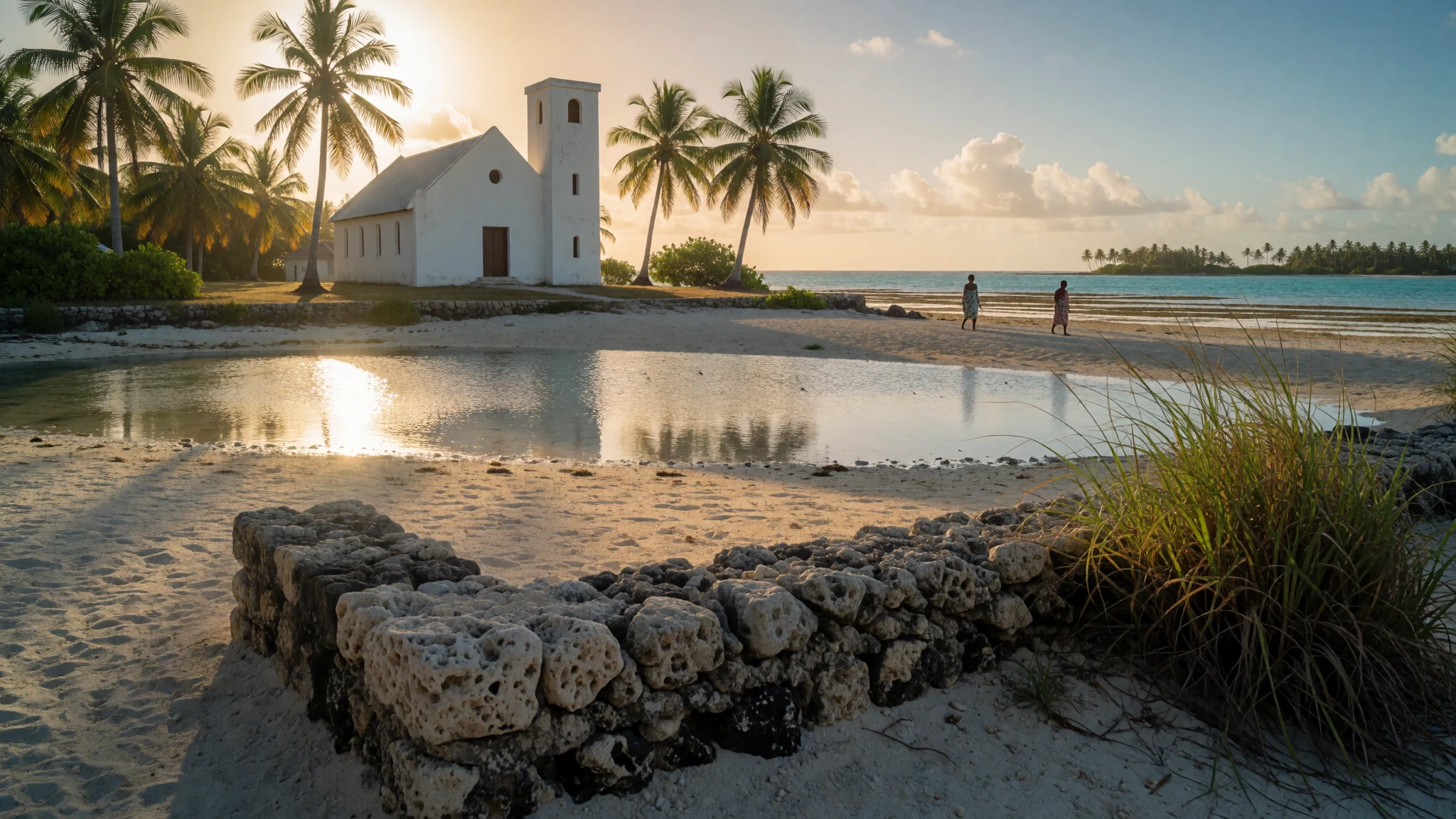
Penrhyn is a remote Pacific atoll where a vast lagoon, village life and a long memory take the place of resorts, crowds and schedules.
The place
Penrhyn, also called Tongareva, is a ring of coral in the northern Cook Islands. It is the northernmost island of the group, about 1,365 km north-north-east of Rarotonga and roughly nine degrees south of the equator. Its nearest neighbours, Rakahanga and Manihiki, lie a long sea journey to the south-west. The atoll is close to circular and encloses a lagoon of about 233 square kilometres, while the dry land adds up to under ten square kilometres. That ratio is the character of the place: water everywhere, land in thin strips. The highest ground is only about 4 m above the sea, so the horizon is flat, the sky is huge, and weather and tides are felt directly. The rim is broken into 18 major islets strung out like beads, with names such as Tokerau, Tepuka and Moananui. The people live in two villages, and daily life revolves around the church, the school, the shore and the lagoon. Beneath the atoll sits an old submarine volcano, though nothing of it shows above water. A wide passage into the lagoon lets ships enter, which is why yachts crossing from Panama towards New Zealand sometimes stop here. Visitors are few and facilities are basic. There are no resort strips and no nightlife, and little to buy. What Penrhyn offers is quiet, a working Pacific community and a lagoon that looks extraordinary from the air. Heat and humidity are constant, and supplies depend on boats and planes that often run late.
Its story
Penrhyn's oral tradition says the atoll was fished up from the sea by the god Vatea, who used a piece of his own thigh as bait, so the island has been inhabited since creation. Historians place Polynesian settlement at roughly a thousand years ago. Other stories tell of ancestors of Tangiia-nui of Rarotonga stopping here on the way from Samoa to Tahiti, and of settlers arriving from Aitutaki and Rakahanga. The older name, Tongareva, is explained in several ways, including 'Tonga floating in space' and 'away from the south'. The English name traces back to the Lady Penrhyn, a ship that passed by in 1788 on its return journey after transporting the first convicts to Australia. Russian and American vessels followed, and a wrecked brig later stranded some of its crew for almost a year; one of them, the trader Edward Henry Lamont, wrote a book about the stay. Polynesian missionaries sent by the London Missionary Society arrived soon afterwards, and the church became central to island life. Robert Louis Stevenson called in 1890. The darkest chapter came in the nineteenth century, when Peruvian slave ships took hundreds of islanders aboard. Famine from coconut blight, and the hope of earning money for bigger churches, had made the first offer of overseas work seem acceptable. Once aboard, people were shackled in the hold, and those who survived the voyage were sold in Peru. The atoll was almost emptied. That history is still part of how Penrhyn understands itself.
What to see
- The lagoon — Central lagoon
Penrhyn's lagoon is the main event: a sheet of sheltered water far larger than the land around it. Boat trips with local hosts are the usual way to see it, and its colour shifts with depth and light. Swimming and snorkelling depend on weather and tide, so ask locally before heading out.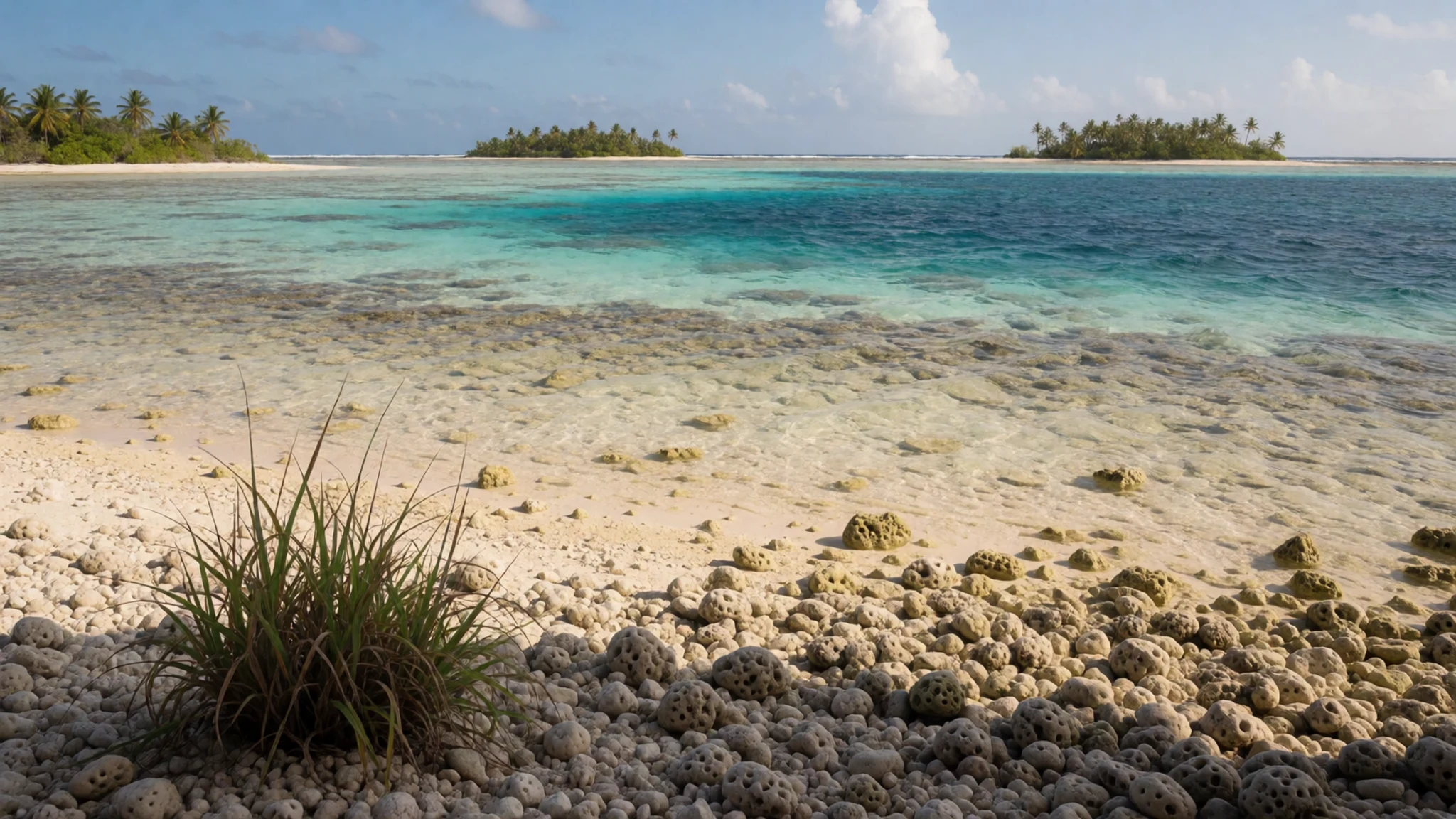
- Village church — Village centres
Each village on Penrhyn has a church at its centre, usually white and set among coconut palms. Services bring the community together, with strong hymn singing. Visitors who attend should arrive early, sit where shown and stay quiet. The buildings also show how deeply the missionary era shaped island life.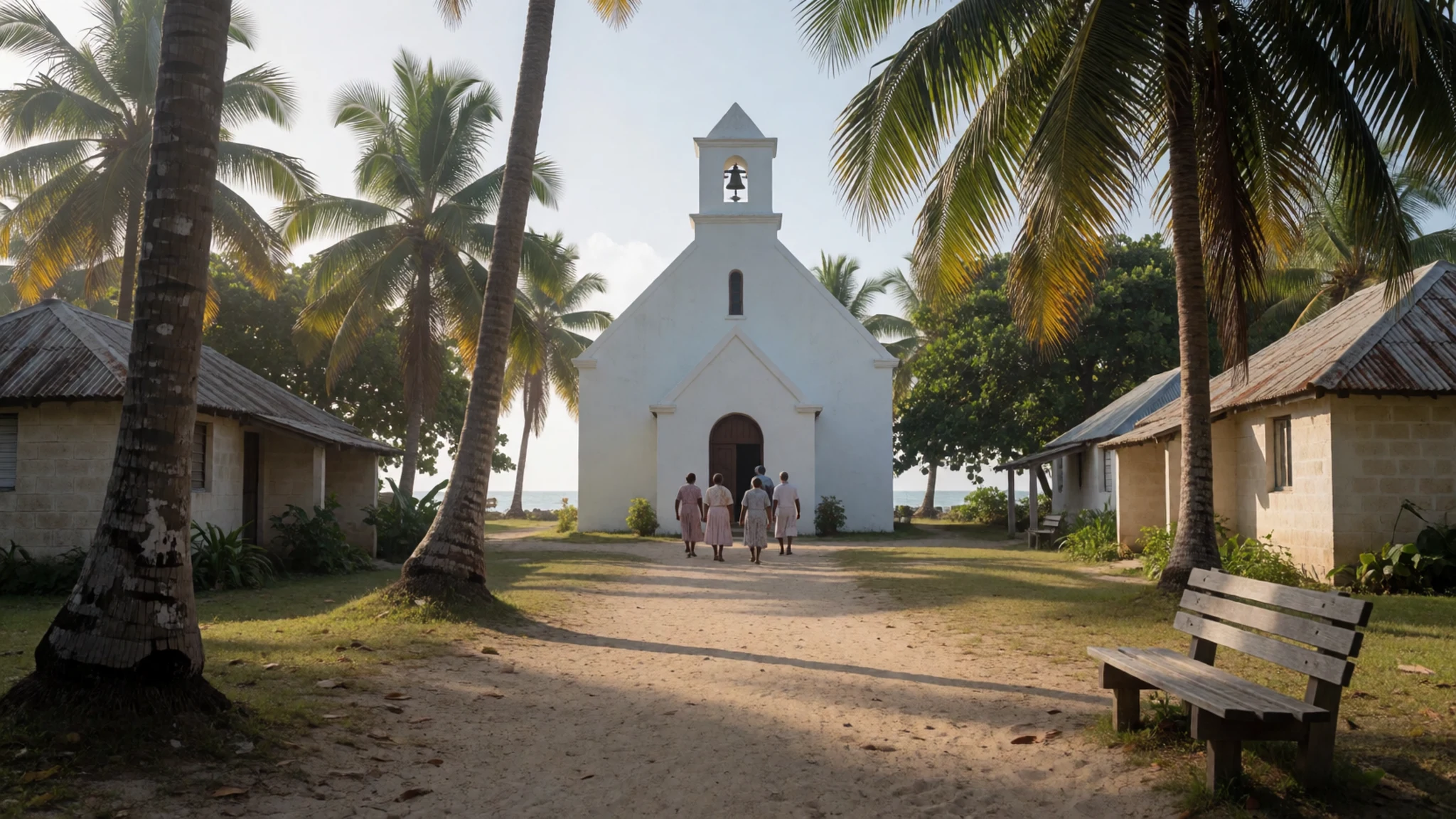
- Rito weaving — Both villages
Rito weaving is the atoll's best-known craft. Weavers strip young coconut leaf, boil it and dry it until it turns fine and pale, then plait it into hats, small baskets and Sunday church fans. Ask in either village about seeing work in progress, and buy directly from the maker.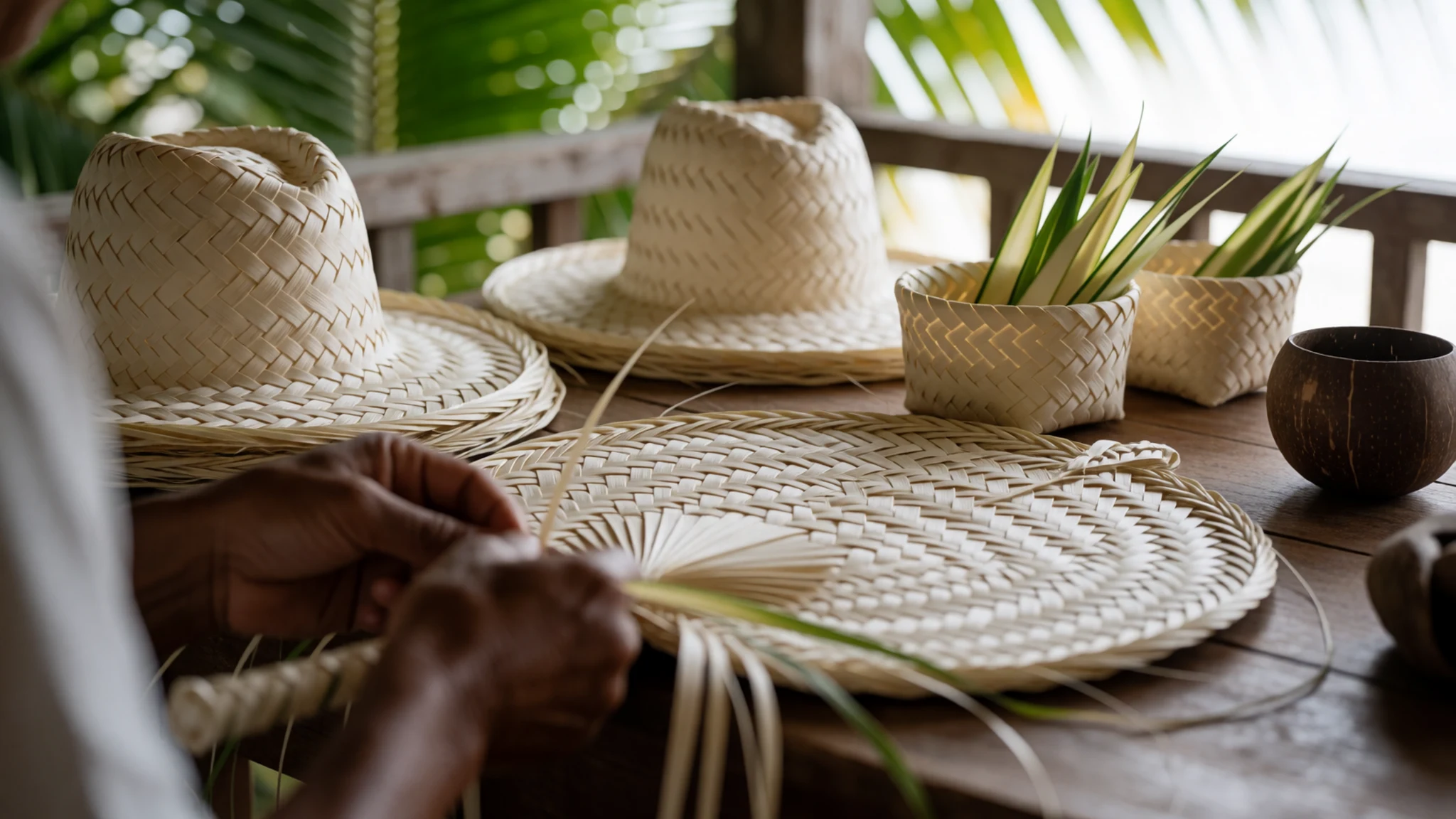
- Tongareva Airport — Airport islet
The airstrip was built during the Second World War and is still how most visitors arrive, though the runway is now shorter than it once was. Watching a small plane land on a strip of coral with lagoon on one side and open ocean on the other shows the atoll's scale better than any map.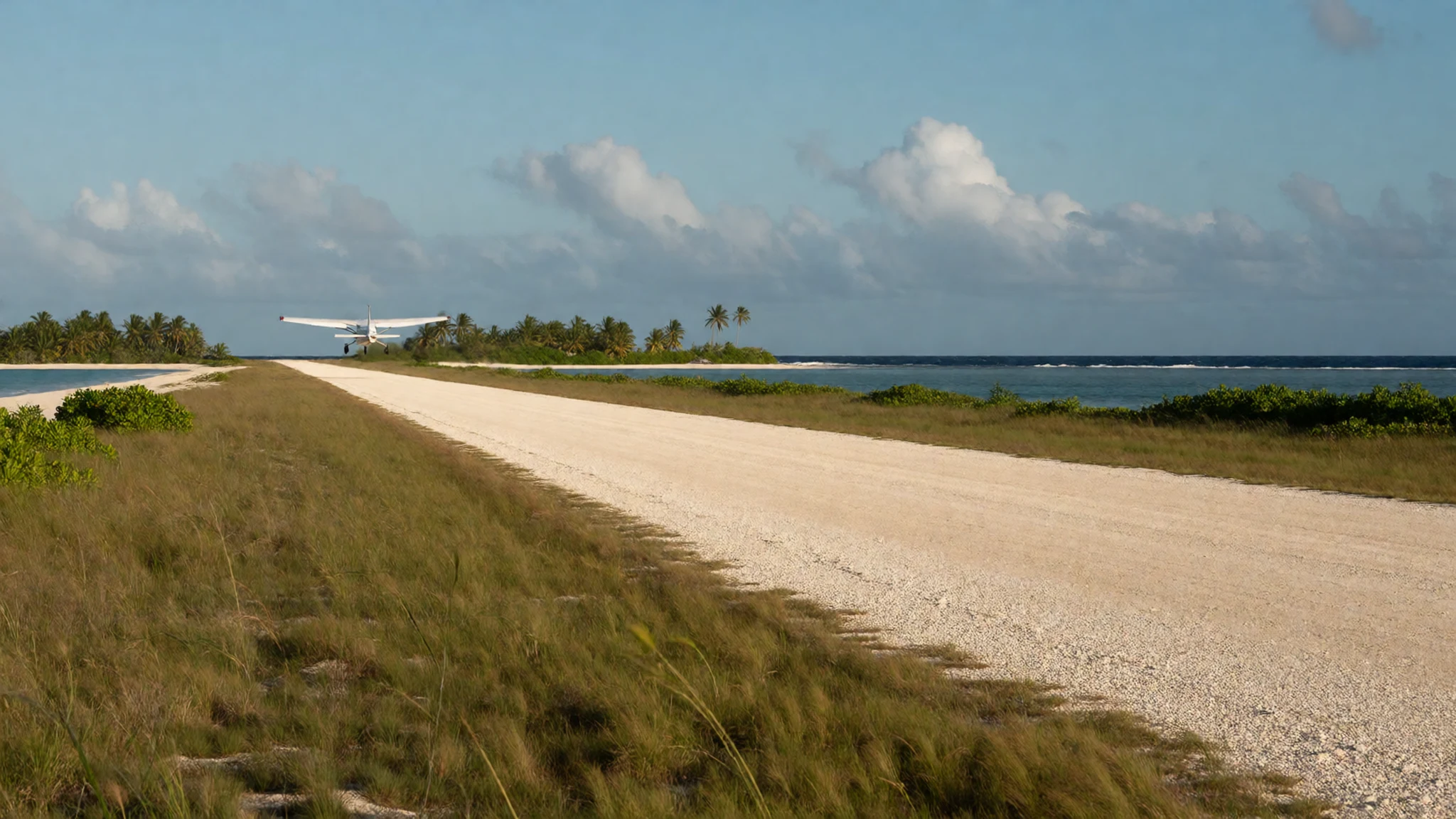
- Black pearl farms — Lagoon waters
Pearl farming arrived near the end of the twentieth century and, with mother-of-pearl, was long the main source of income. The farms sit out in the lagoon and are reached by boat. Arrange visits through local hosts, as there are no set tours, and ask before touching shells or equipment.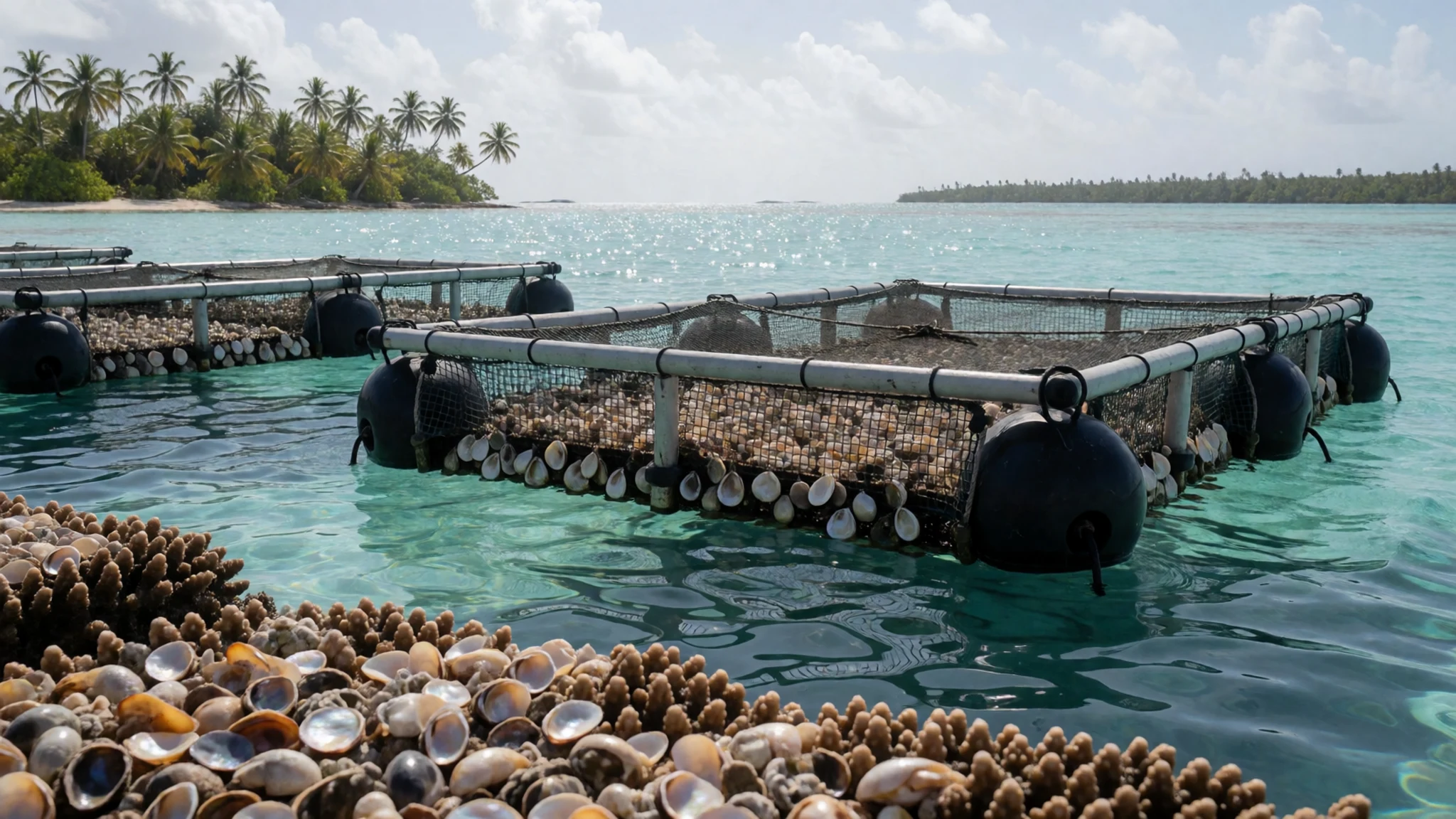
- The outer islets — Atoll rim
The rim breaks into islets such as Tepuka, Tokerau and Moananui, separated by shallow channels and reef. A boat day can take in a few of them for picnics, birdlife and empty shorelines. Tides, wind and local custom decide where visitors may land, so go with a host.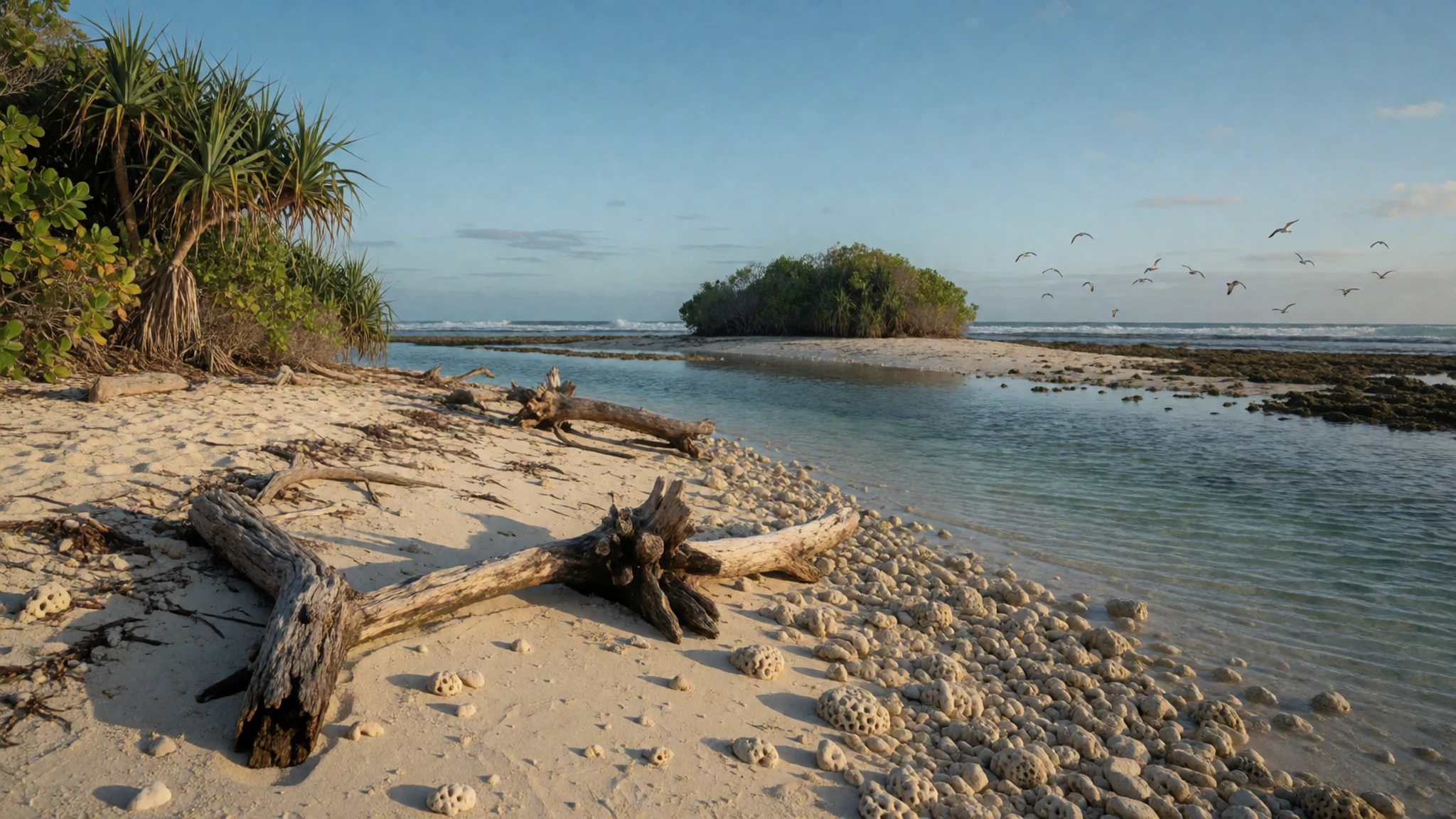
Culture
Penrhyn's culture rests on three things: the church, the sea and a strong sense of belonging to a small place. Sunday is the centre of the week. Families dress carefully, attend services and sing in harmony, and little else happens while that is going on. Weaving, fishing and the preparation of shared meals are done communally, and knowledge passes from older people to younger ones by watching and helping rather than by classes. The language spoken at home is a Cook Islands Māori dialect, and the old name Tongareva is still in everyday use alongside the English one. Oral tradition remains alive, from the story of Vatea fishing the island out of the sea to accounts of ancestors who sailed between Samoa, Tahiti and Rarotonga. The memory of the slaving voyages is also carried in family stories, and islanders may speak of it with feeling, so visitors should listen rather than ask for detail. Hospitality is real but unhurried. Offers of food, a boat ride or a seat in the shade are usually meant sincerely, and it is polite to accept something, even a small portion, and to say thanks. Because the community is small, news travels fast and reputations stick. Visitors should dress modestly, keep noise down around the church on Sundays, and ask permission before photographing people, services or private homes.
What to wear
Penrhyn's best-known traditional craft is rito, the fine white weaving made from young coconut leaf that is stripped, boiled and dried. Sunday mornings turn into church fairs with fans, small baskets, and hats, a style that started as imitations of what visiting sailors wore. Both villages weave, using traditional and sometimes artificial dyes. Printed cotton wraps and loose dresses are also part of everyday island dress, and church clothing leans towards white and pastel colours. Day to day, people wear what suits the heat: shorts, T-shirts, light dresses, cotton shirts and rubber sandals, with a hat for the sun. On Sundays and for celebrations, men often wear a clean shirt and long trousers or a wrap, and women wear a dress and, often, a woven hat. A visitor should pack light cotton or linen that dries fast, covers shoulders and knees, and copes with strong sun and sudden showers. Bring a wide-brimmed hat or buy a rito one locally, and wear sunscreen that is kind to reef water. Reef shoes protect feet on coral and in the shallows, and sandals are enough in the villages. Swimwear is for the beach and boat only; cover up when walking through a village. For church, pack one neat outfit with sleeves and a knee-length skirt or trousers.
What to eat
- Ika mata — Family tables and village feasts
Raw fish marinated in lime or lemon juice and finished with coconut cream. It is a staple across the Cook Islands, and on Penrhyn the fish comes straight from the lagoon or reef. Look for it at family meals and community gatherings.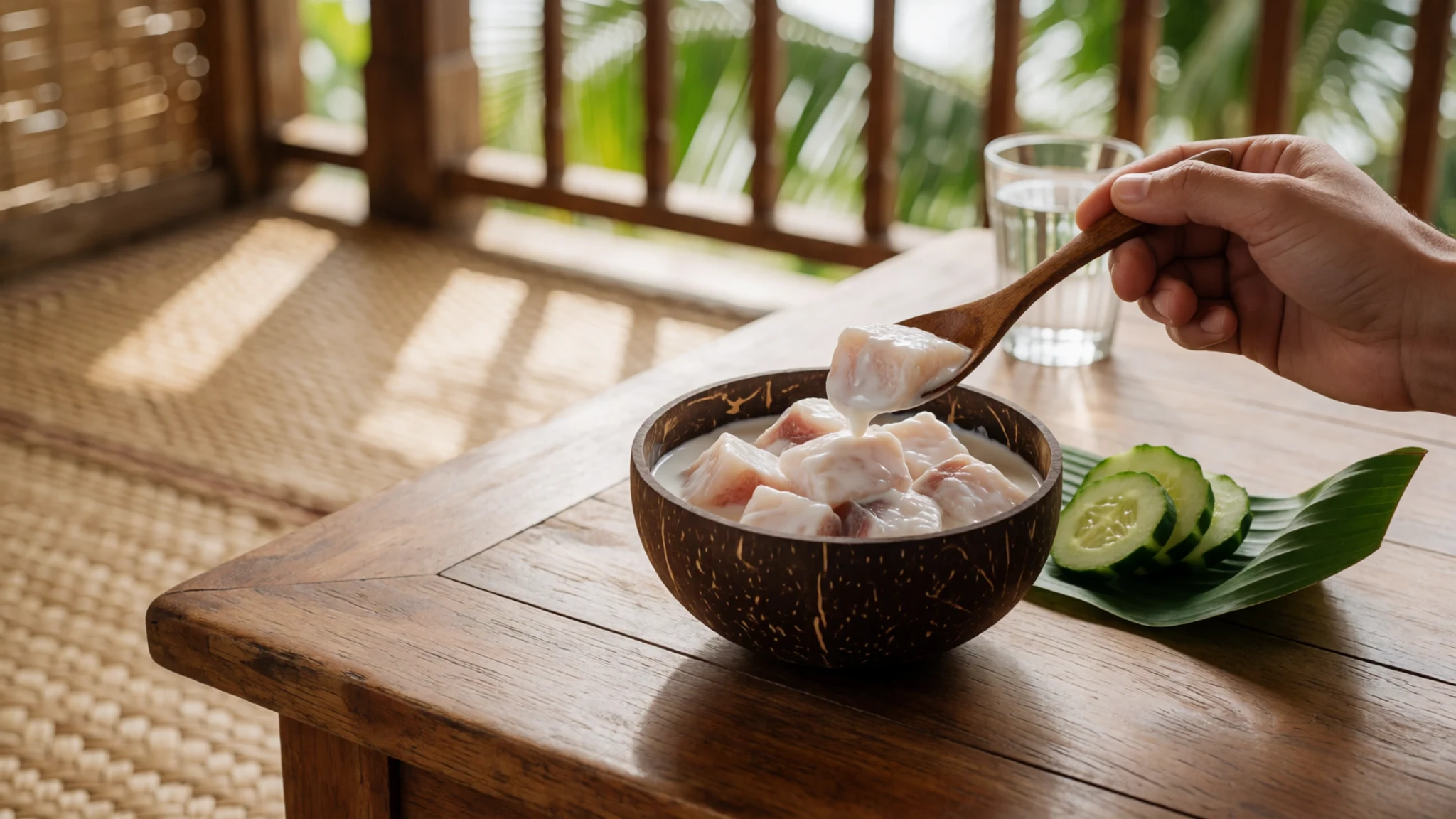
- Grilled or fried reef fish — Home kitchens and local eating houses by arrangement
Fresh reef fish is the everyday protein on the atoll, cooked simply over fire or in a pan and served with rice, taro or breadfruit. What is available depends on the day's catch and the weather.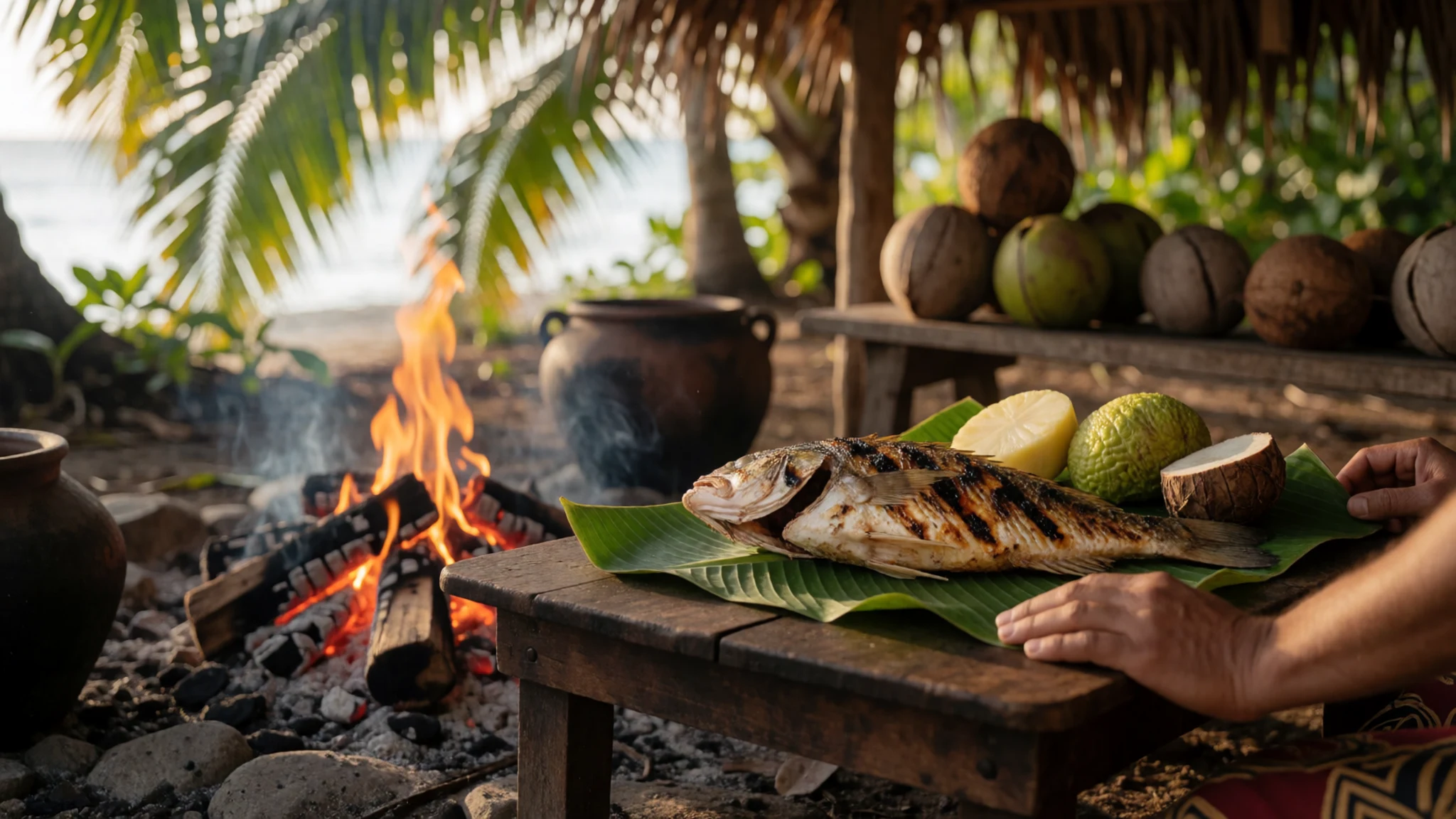
- Taro and breadfruit — Village meals and island feasts
Starchy root and fruit staples that fill the plate beside fish. Taro is boiled or baked, and breadfruit is roasted or boiled. Supply on a low atoll is limited, so these may be mixed with imported rice and flour. - Coconut in several forms — Village gardens and roadside stalls
Coconut turns up everywhere: drinking nuts, grated flesh, cream for sauces and fish, and sweet baked treats. A cold green nut on a hot afternoon is the simplest way to taste the atoll. - Island pudding — Sunday lunches and church feast days
Baked puddings made from fruit such as banana or papaya with coconut cream are typical Cook Islands desserts. They appear at Sunday lunches and celebrations, so the best chance of tasting one is to be invited.
Plan it
Best time. May to October is generally the more comfortable half of the year, with less rain and humidity. November to April is hotter and wetter, and falls within the Pacific cyclone season. Flights and ships run on weather and demand, so build in spare days whatever the month.
How long. 4–7
Getting there. Air Rarotonga flies weekly from Rarotonga to Tongareva Airport on the atoll, but flights are often cancelled when there are too few passengers or no fuel on Penrhyn for the return. The Taio Shipping inter-island vessel calls about every three months, and some yachts stop on the Panama to New Zealand route. The last leg is a short road or boat ride to the village where you are staying.
Budget. high
Tips
- Arrange accommodation, meals and boat trips with local hosts well before you travel, as there is little to walk into
- Allow for cancelled flights and a long stay: carry spare days, medicines and any essentials you cannot replace
- Bring cash from Rarotonga, since cards and cash machines cannot be relied on
- Carry sun protection, insect repellent and a refillable water bottle, and ask your hosts which water is safe to drink
- Check the official Cook Islands tourism site for current travel advice before booking
Etiquette
- Dress modestly in the villages and for church
- Ask before photographing people, homes or services
- Accept offers of food graciously and share what you bring
Nearby
Sources
- Wikidata Q950725 (CC0)
- Wikipedia: Penrhyn atoll (rev 1383153150) (CC BY-SA 4.0)
- Wikivoyage: Penrhyn (CC BY-SA 4.0)
- Photo: Penrhyn Aerial EFS 1280 (EwanSmith) (CC BY 3.0)
- Photo: Penrhyn map (Nevers) (Public domain)
- Photo: Church on Penrhyn island (Tudor Washington Collins) (CC BY 4.0)
- Photo: Penrhyn atoll (NASA) (Public domain)
- Photo: Penrhyn Atoll ISS006-38868 (NASA) (Public domain)
- Photo: Penrhyn Atoll ISS021-E-16005 (NASA) (Public domain)
- Photo: Penrhyn Atoll ISS021-E-16006 (NASA) (Public domain)
- Photo: Penrhyn Atoll ISS021-E-16007 (NASA) (Public domain)


