Rakahanga
Rakahanga, Cook Islands
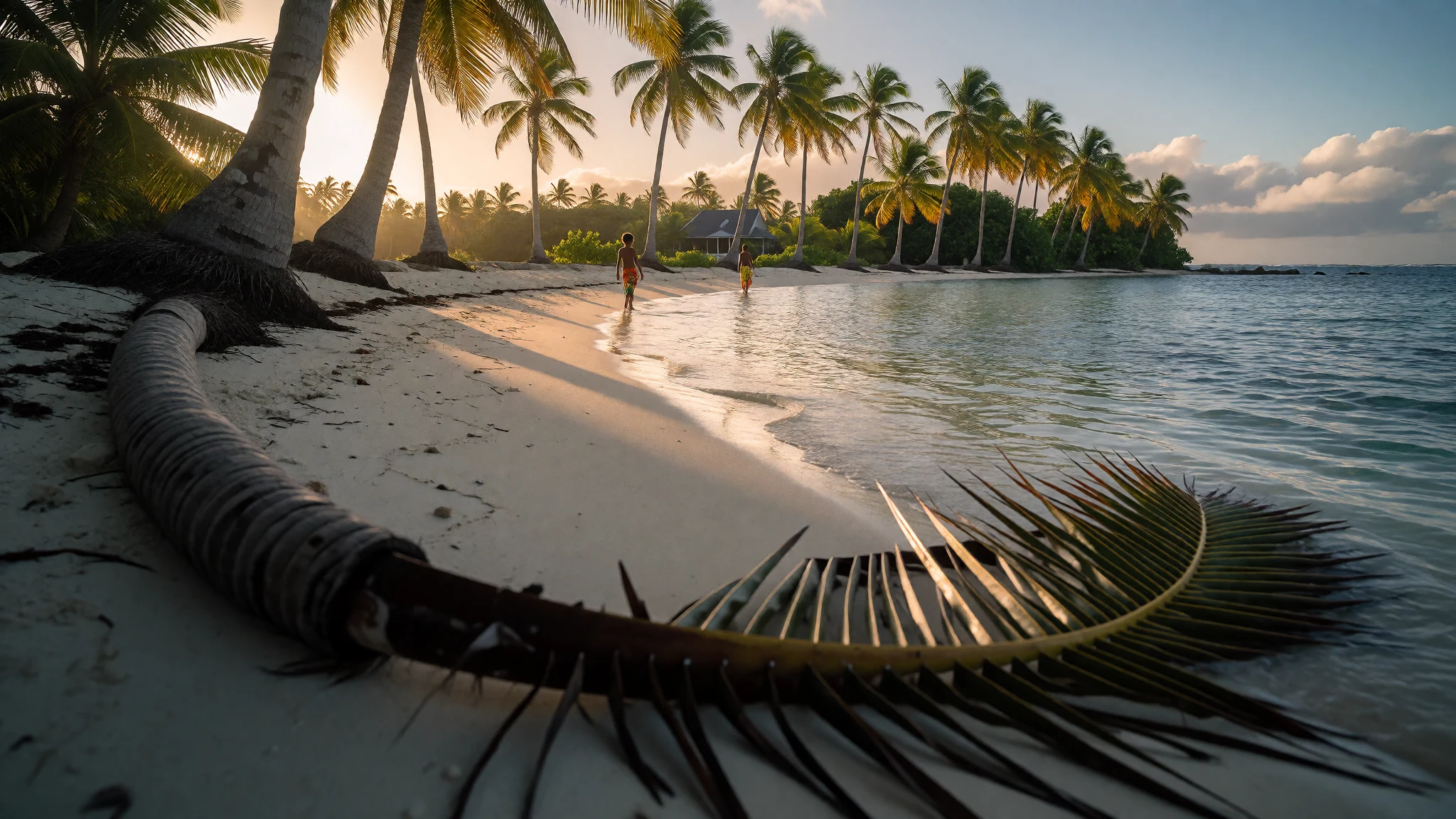
Rakahanga is a tiny solar-powered atoll of palms, lagoon and a handful of families, for travellers who want quiet and can accept slow logistics.
The place
Rakahanga is a ring of low land around a shallow lagoon in the northern Cook Islands, a long way from anywhere else. Rarotonga, the national capital, lies more than a thousand kilometres to the south, and the nearest neighbour is the atoll of Manihiki, a short sea crossing away. The land is flat, thick with coconut palms, and barely rises above the water, which is why rising seas are a real worry for the people who live here.
Four main islands and seven small motus (islets) sit along the reef. The northern land is split into three parts, while the southern island carries the settlement on its north-western side. Five adjoining villages run into one another there, and Matara is the main one and the seat of the island council. The north-east coast has sandy beaches, while the west is rubble and beach rock lying over old reef.
The lagoon is shallow and calm, while the narrow reef passages allow passage only to canoes and small boats piloted by experienced captains. A deeper channel was cut in recent years to make landings easier. Fewer than a hundred people live on the atoll. Electricity comes entirely from solar panels, and the local language is shared with Manihiki and differs from the Maori spoken on Rarotonga.
The weather hardly changes through the year: warm by day, not much cooler at night, and more humid in the wetter half of the year. Rakahanga has no resort scene. Daily life revolves around fishing, coconut work, church and family, and a visit means fitting into that rhythm rather than being entertained.
Its story
Rakahanga was settled around the fourteenth century, according to the oral histories of its people. They trace the community to two ancestors: Toa, a warrior banished from Rarotonga after defeat, and his wife Tapairu, a chief's sister or daughter who may have been the navigator that found the atoll. Some accounts credit her brother Huku with the discovery. The couple made their home on the motu of Te Kainga, beside the south-western entrance to the lagoon.
The genealogies describe a family that grew into tribes under separate chiefs, called arikis, with a Land Distributor appointed to settle disputes. Isolation spared the atoll from the wars and epidemics that hit other islands, and no fighting between its tribes is recorded. Te Kainga stayed the only place of residence, where pearl shell was shaped into saws, chisels and fishhooks. The rest of the atoll was kept for food: coconut, pandanus and puraka, a kind of taro.
Eventually the population pressed on the food supply. The answer was a periodic migration. The whole community sailed to the then-empty atoll of Manihiki and lived there for a time, leaving Rakahanga to recover. It was a risky open-sea crossing, repeated every few years.
A Spanish expedition under Pedro Fernandes de Queirós sighted the island in the early seventeenth century, and its record notes land divided among many owners, planted with roots for bread and a dense palm grove that fed the people. Later, trading ships brought copra and pearl shell into exchange for goods from New Zealand. When copra prices collapsed in the twentieth century, the old coconut economy stopped paying, and most work today is in public service.
What to see
- The lagoon — Central lagoon
Rakahanga's lagoon is the heart of the atoll, shallow and calm, and best seen from a boat with a local skipper who knows the channels. The water is not a coral-garden showpiece, as circulation is poor, but the light, the colour and the ring of palms on the horizon make it worth the slow crossing.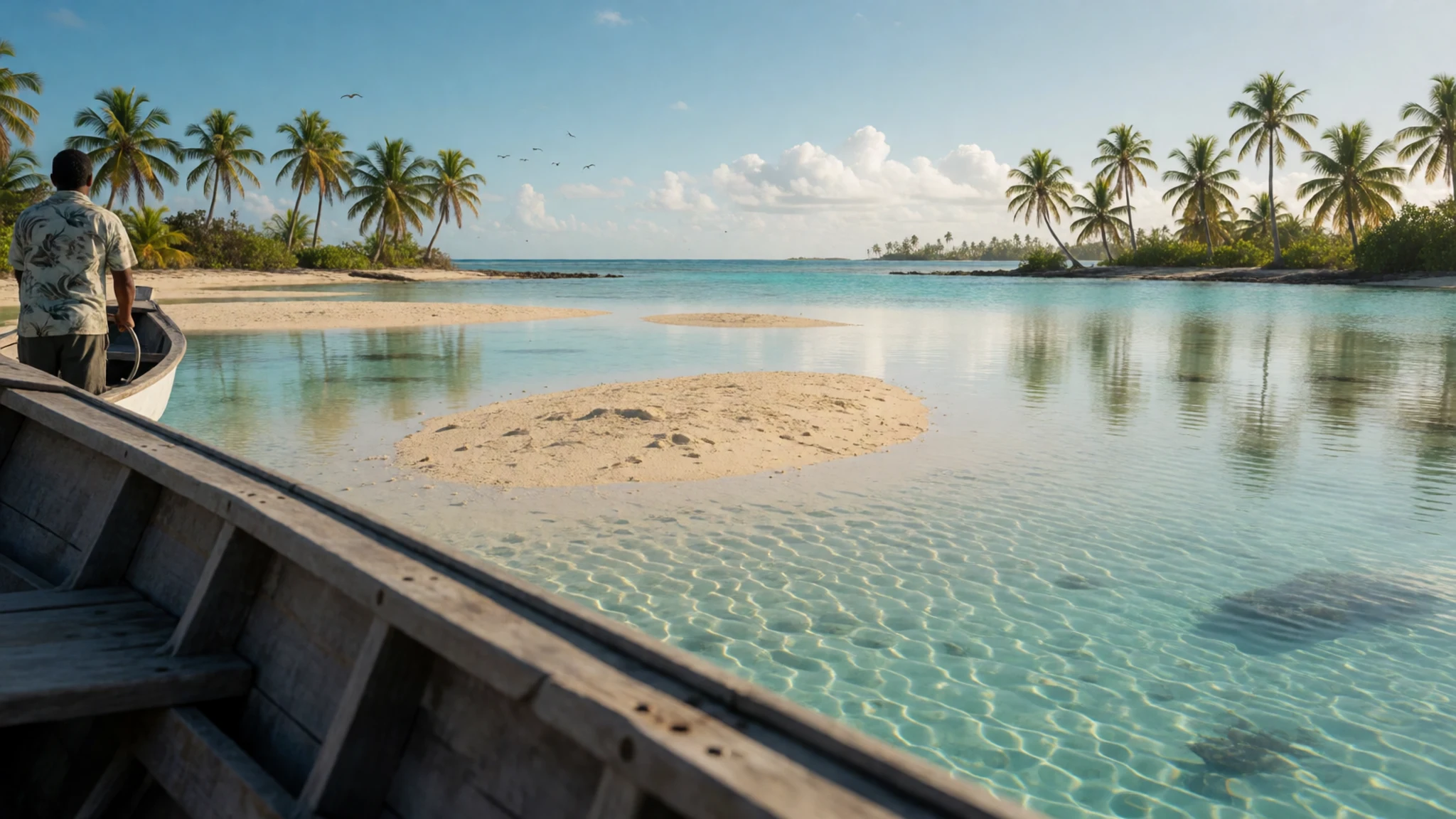
- Matara and the five villages — North-west of the southern island
Matara is the main village in a line of five that merge along the north-western shore of the southern island. A walk through shows the island's civic life: the council seat, the church, the tidy yards, the water tanks and the solar panels. Greet people, ask before photographing, and expect to be offered tea.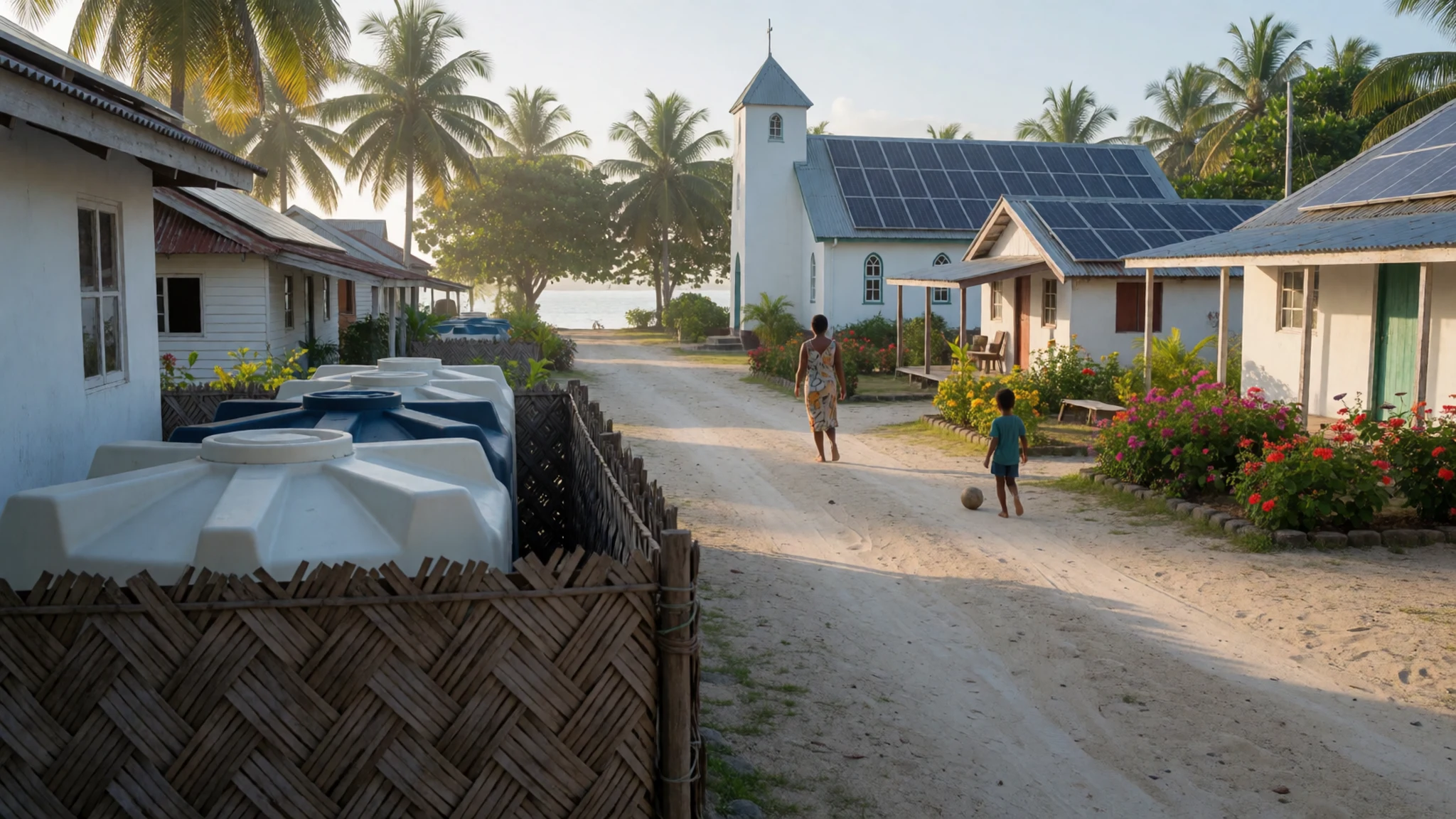
- Te Kainga motu — South-west entrance to the lagoon
Te Kainga is the islet where, by tradition, the first settlers Toa and Tapairu made their home, guarding the widest passage into the lagoon. It carries the weight of the island's origin story. Visits go through local hosts, partly for the boat handling and partly because places with ancestral meaning deserve a guide.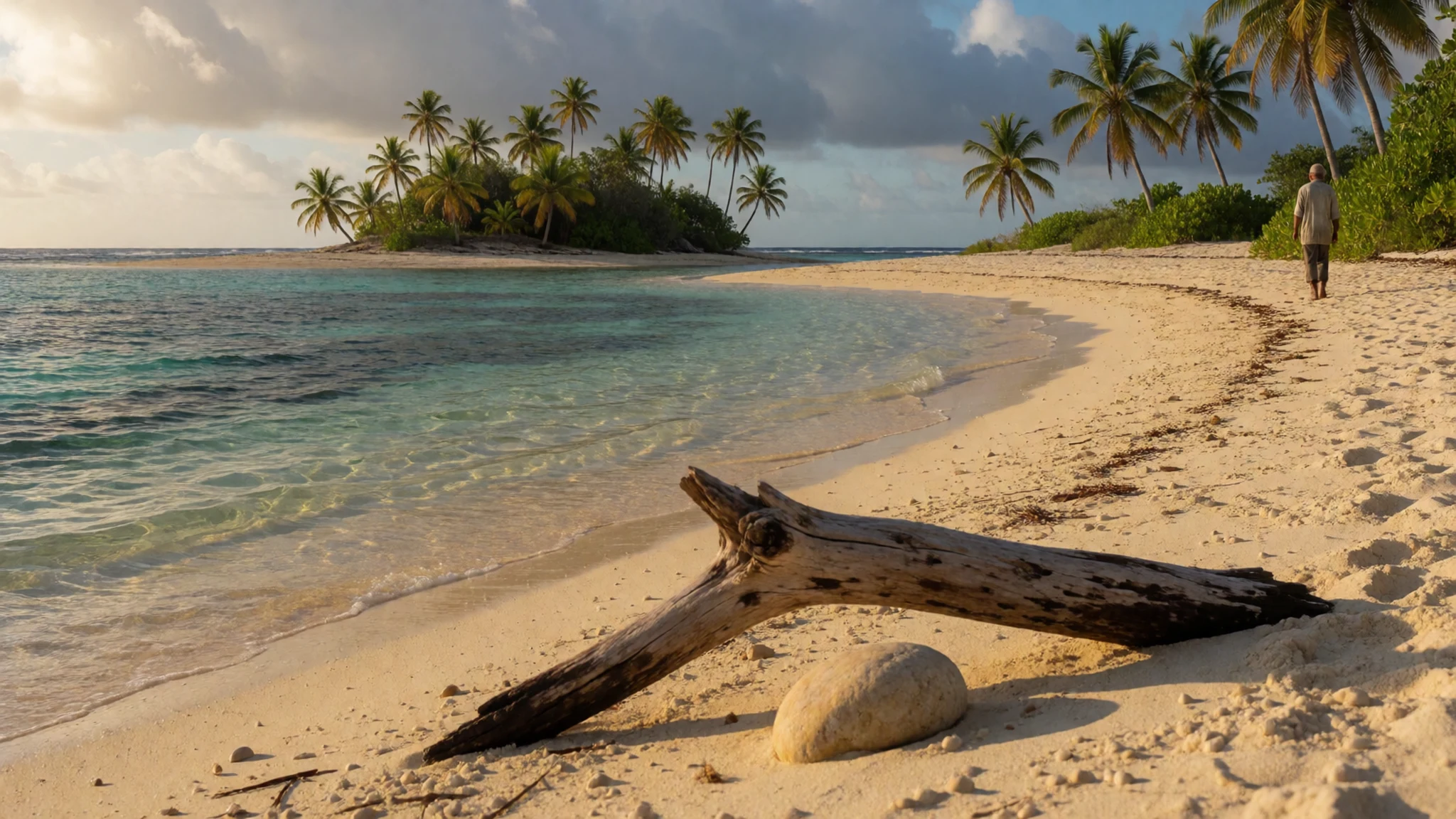
- The north-east beaches — North-east coast
The north-eastern coast is where Rakahanga has its sandy beaches, in contrast with the rubbly, rocky west. They are quiet and shaded by palms, good for walking and for sitting with a coconut. There are no lifeguards or facilities, so swim only where local people say it is safe.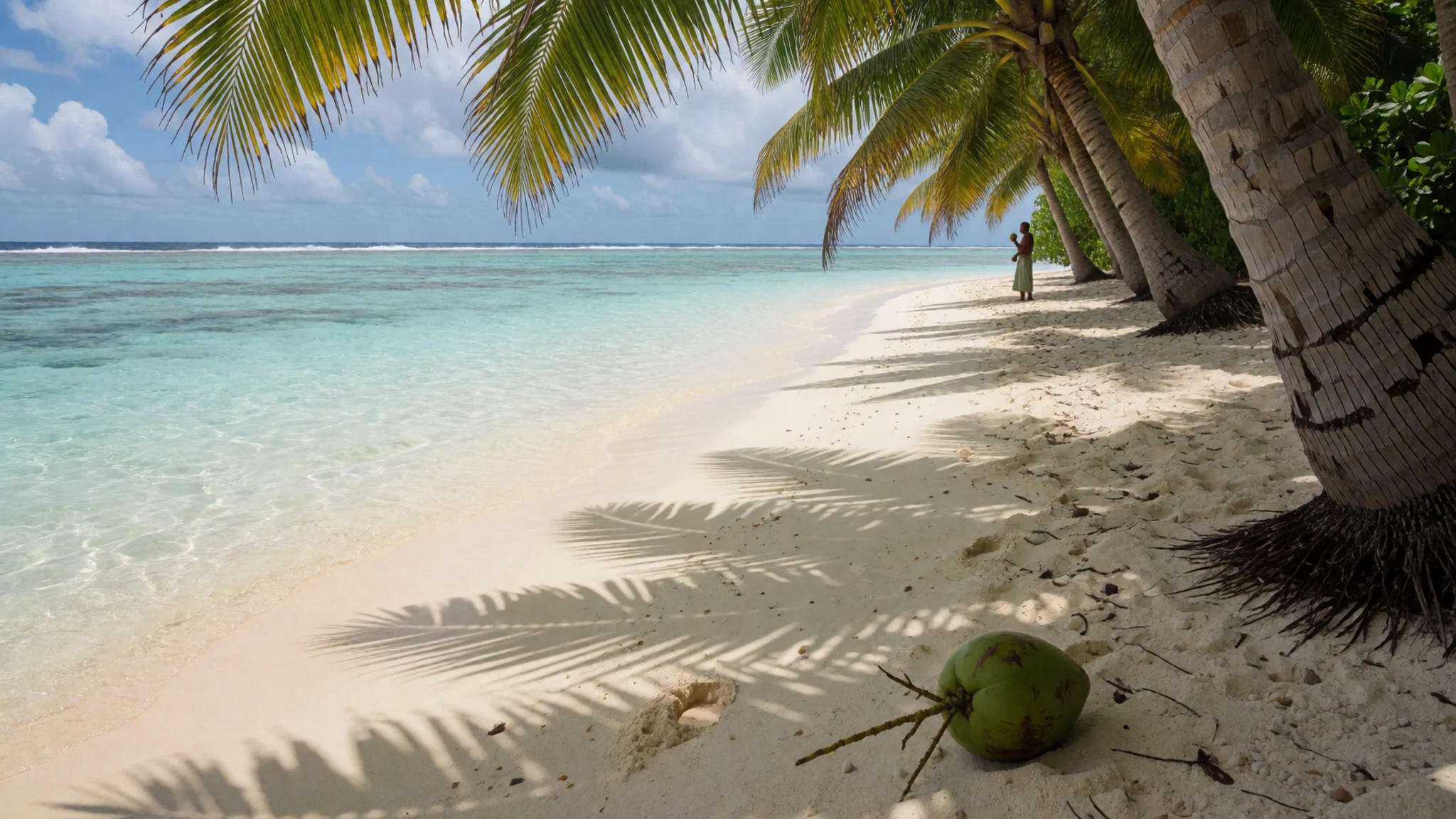
- Weaving and shell-inlay craft — In the villages
Rakahanga is known for hand crafts: plaited hats and mats from palm and pandanus leaf, applique cushions and quilts, and furniture inlaid with shell. Ask your host who is making what. Buying direct from the maker is the respectful way to take something home, and it supports a very small economy.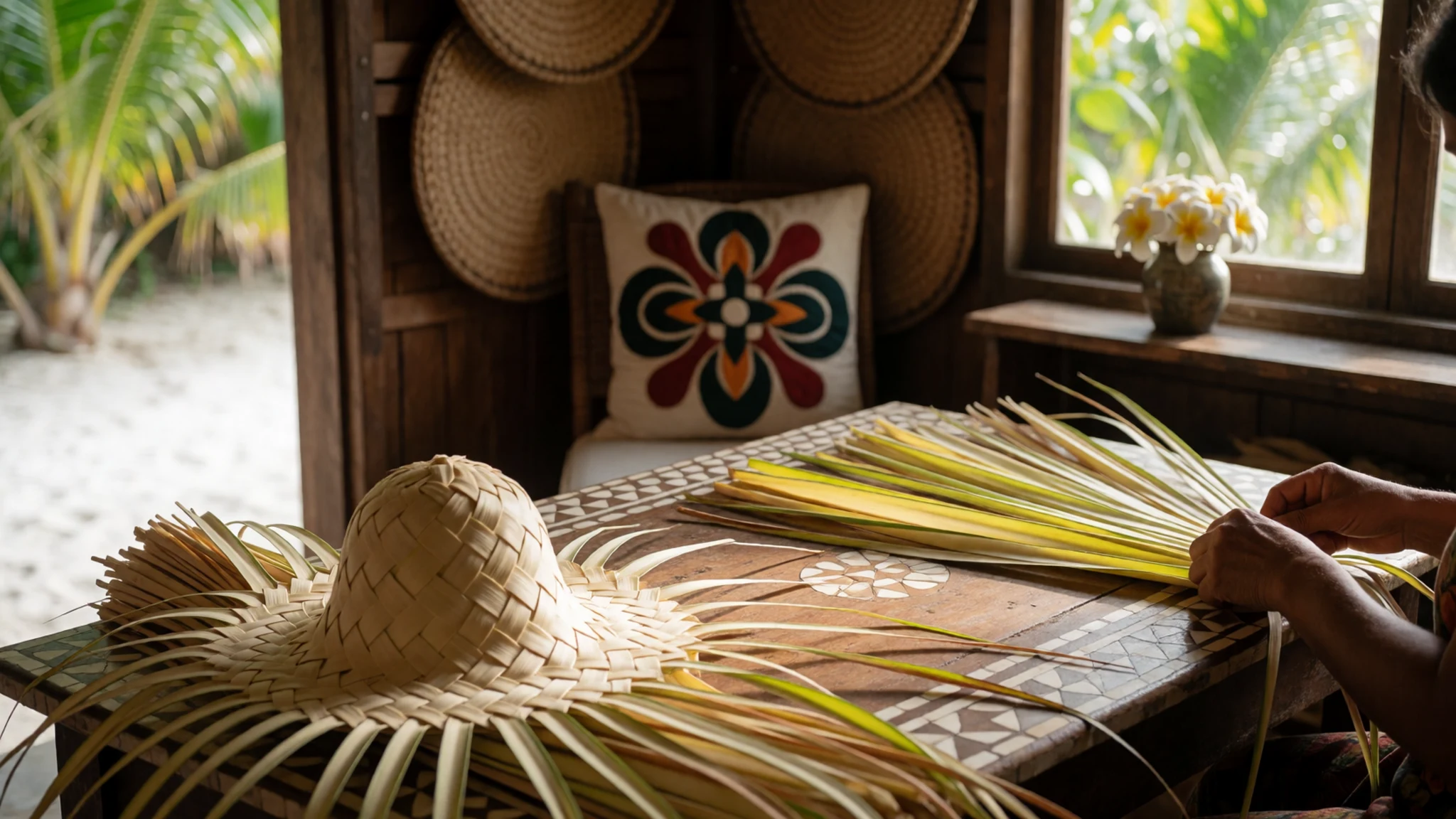
Culture
Rakahanga is a small, close community in which almost everyone is related and decisions are shared through the island council and the older families. Visitors are guests of a household more than customers of a business, and hospitality is part of the culture. Expect to be fed, introduced and gently asked about your family and your journey.
Land and palms are family property. Coconut trees were treasured inheritance long before traders arrived, and they still are: each tree has an owner, and each part of it has a use, from food and drink to roofing, fuel, baskets and netting. The same logic applies to the reef and lagoon, where fishing is local knowledge and not a free-for-all.
Church is central to island life in the Cook Islands, and Sundays are generally quiet, with services, family meals and rest rather than work or boat trips. The island's language is shared with Manihiki and differs from Rarotongan Maori, so a few words of greeting, learned on the spot, mean a lot. Oral history matters here: the story of Toa and Tapairu, the chiefs, the lineages and the migrations to Manihiki are told as living family history rather than folklore.
Isolation shapes manners. Water is stored in tanks and can run short in dry years, power is solar, and supplies arrive by sea or air only when schedules allow. Patience, flexibility and sharing are valued over haste.
Always ask your host before picking a coconut, entering a family compound or photographing people, and on Sundays keep noise, swimming and loud activity away from the village while church is on.
What to wear
Traditional dress in the Cook Islands centres on the pareu, a wrapped cloth worn around the waist, and on garlands, called ei, made of flowers and leaves. Rakahanga's best-known textile traditions are plaiting and sewing: hats and mats woven from palm and pandanus leaf, and applique work in bold, symmetrical patterns on cushions and bed covers. Fine hats and woven pieces are worn for church, feast days and celebrations, and shell is used for inlay and ornament.
Day to day, people dress for heat and practicality: shorts or a pareu, T-shirts, cotton dresses, sandals or bare feet, and a hat against the sun. On Sundays the community dresses up for church, with women in white or pale dresses and hats, and men in shirts and trousers or a wrapped lower garment.
Visitors should pack light, quick-drying cotton or linen, with covered shoulders and knees for village walks and church. The sun is strong and there is little shade away from the palms, so bring a wide-brimmed hat, sunglasses and reef-safe sunscreen. Swimwear belongs on the beach or boat, and should be covered with a sarong or shirt in the village. For footwear, take sandals for sand and reef shoes or old trainers for walking on rough coral rubble and beach rock, which can cut feet. A light rain jacket is handy in the humid season.
What to eat
- Ika mata (raw fish in coconut) — Family meals and community gatherings
Fresh reef or lagoon fish, cut small and dressed in coconut cream with lime, onion and often a little chilli. It is a Cook Islands staple, and on Rakahanga it arrives as fresh as fish can be, within hours of the boat landing.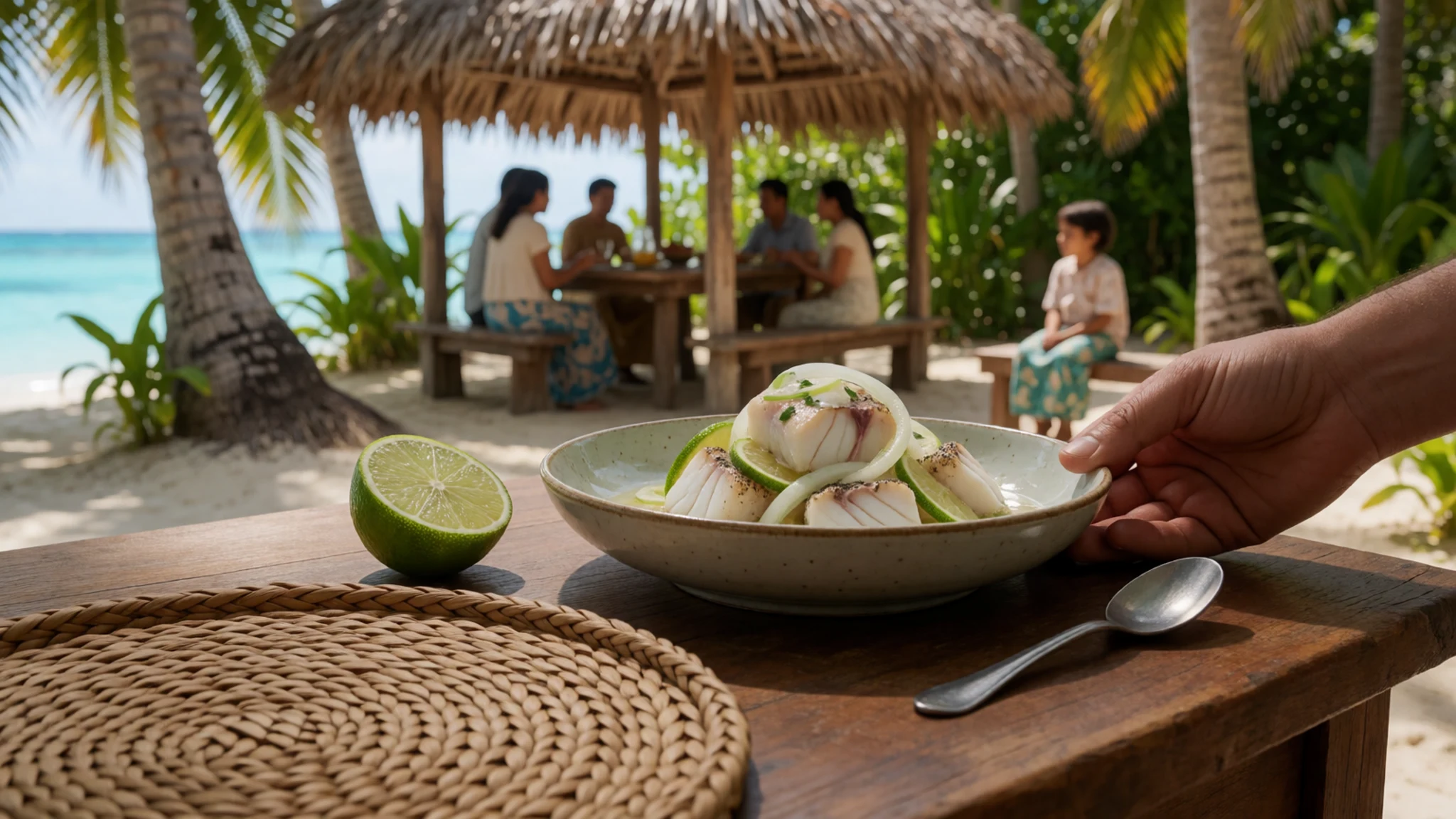
- Puraka — Home cooking; ask your host
Puraka is a giant swamp taro grown on the atoll for centuries, long before European traders came. It is boiled or baked, starchy and filling, and tastes mild next to fish and coconut. It is a food rooted in the island's own history.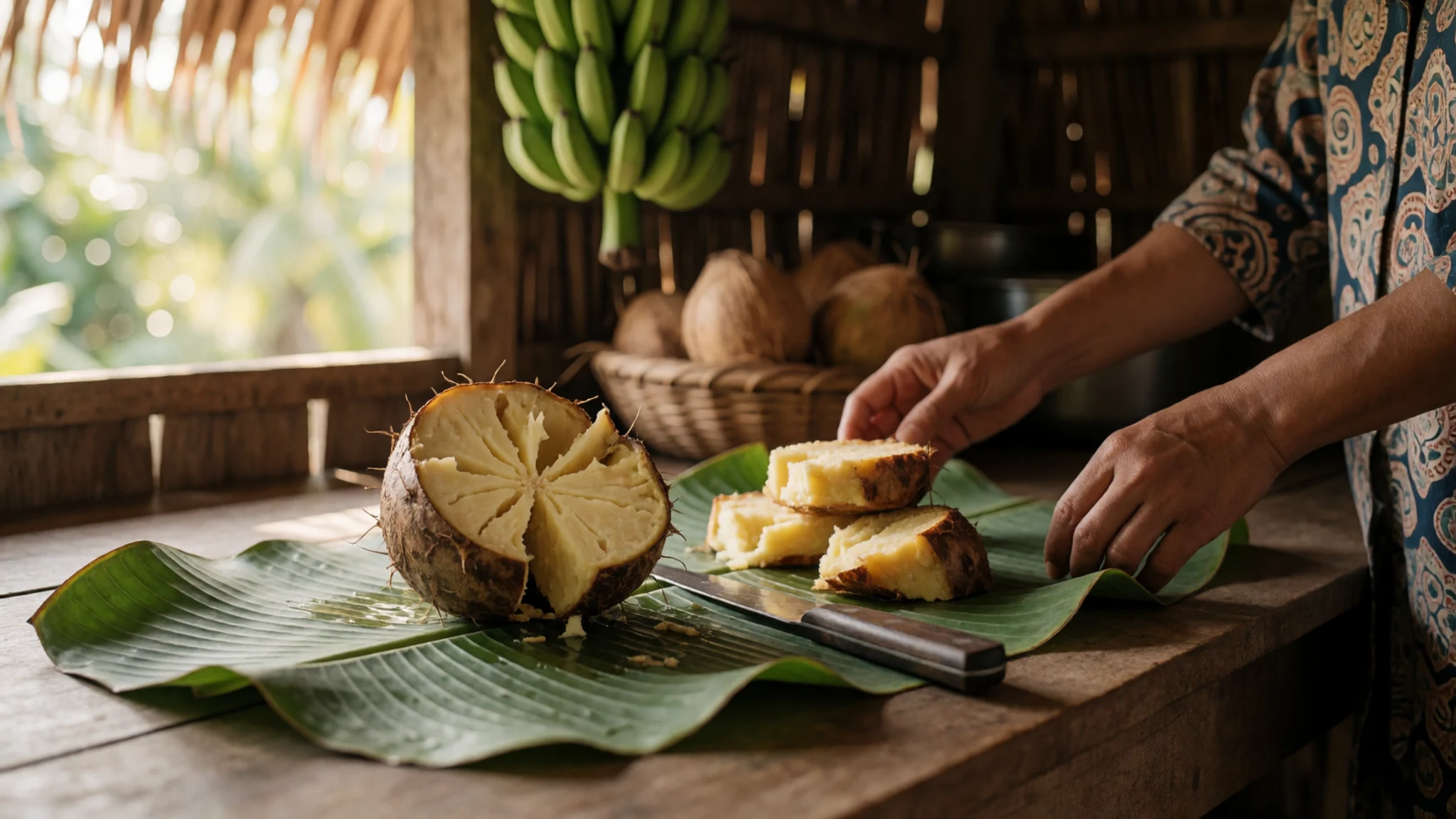
- Dried fish — Village households
Drying fish in the sun is a traditional way to keep a catch on an island where power and ice are scarce, and the product is seen as a possible export. It is chewy and salty, best eaten as a snack or flaked into other dishes. - Fresh coconut — Anywhere in the palm groves, with permission
A drinking coconut cut open on the spot is the simplest local refreshment, sweet and cool even in the humid season. The flesh, grated and squeezed, makes the cream that flavours most island cooking. Always ask the owner first. - Rukau (taro leaves in coconut cream) — Shared meals at your host's house or community feasts
Rukau is a soft, dark-green dish of taro leaves cooked down in coconut cream, a Cook Islands favourite often served with fish or root vegetables. It is rich, savoury and an easy introduction to island flavours.
Plan it
Best time. May to October, when the weather is generally dry. November to April is hot and humid and is the cyclone season, though such storms are relatively rare. In La Niña years it is drier still, and water shortages can be serious, so use water carefully whenever you go.
How long. 3–5
Getting there. Fly to Rarotonga, the national capital, which is the gateway for the Cook Islands. Rakahanga is a long way north, so the onward leg is by inter-island flight or ship, usually via neighbouring Manihiki, and it is not frequent. Ask Cook Islands tourism and the island council, and check the airline and shipping schedules yourself before booking. The final landing is by small boat through a narrow passage.
Budget. mid
Tips
- Arrange accommodation and meals through the island council or a local host well before you travel, as there are no hotels or commercial restaurants to fall back on
- Build slack into your return plans, because flights and ships can be delayed or cancelled
- Bring enough cash in small notes and your own supplies, as there is no bank and cards are unlikely to work
- Carry reusable water bottles and use water sparingly, since tank water is limited, and bring sun protection and basic medicines
- Mornings are the best time for walking and boat trips, before the heat builds
Etiquette
- Ask before entering family land, picking coconuts or photographing people
- Dress modestly in the village and at church, and keep Sundays quiet
- Offer to share food or pay for what you use, and thank your host
Nearby
Sources
- Wikidata Q1345121 (CC0)
- Wikipedia: Rakahanga (rev 1364194161) (CC BY-SA 4.0)
- Wikivoyage: Rakahanga (CC BY-SA 4.0)
- Rakahanga atoll (NASA) (Public domain)
- ISS002-E-10047 Rakahanga (NASA) (Public domain)
- Rakahanga lagoon, Janet AG51 (CC BY-SA 4.0)
- Popo's table, Janet AG51 (CC BY-SA 4.0)
- Water tanks and weeds, Janet AG51 (CC BY-SA 4.0)
- Flag of the Rakahanga and Manihiki, Theodore Preuss (Public domain)
- Mrs Porohu Setephano weaving a hat (1962), R. Fox (CC BY 2.5)
- United States Pacific change 1965-08-04, Golbez (CC BY-SA 1.0)


