Moai of Rapa Nui
Moai of Rapa Nui, Chile
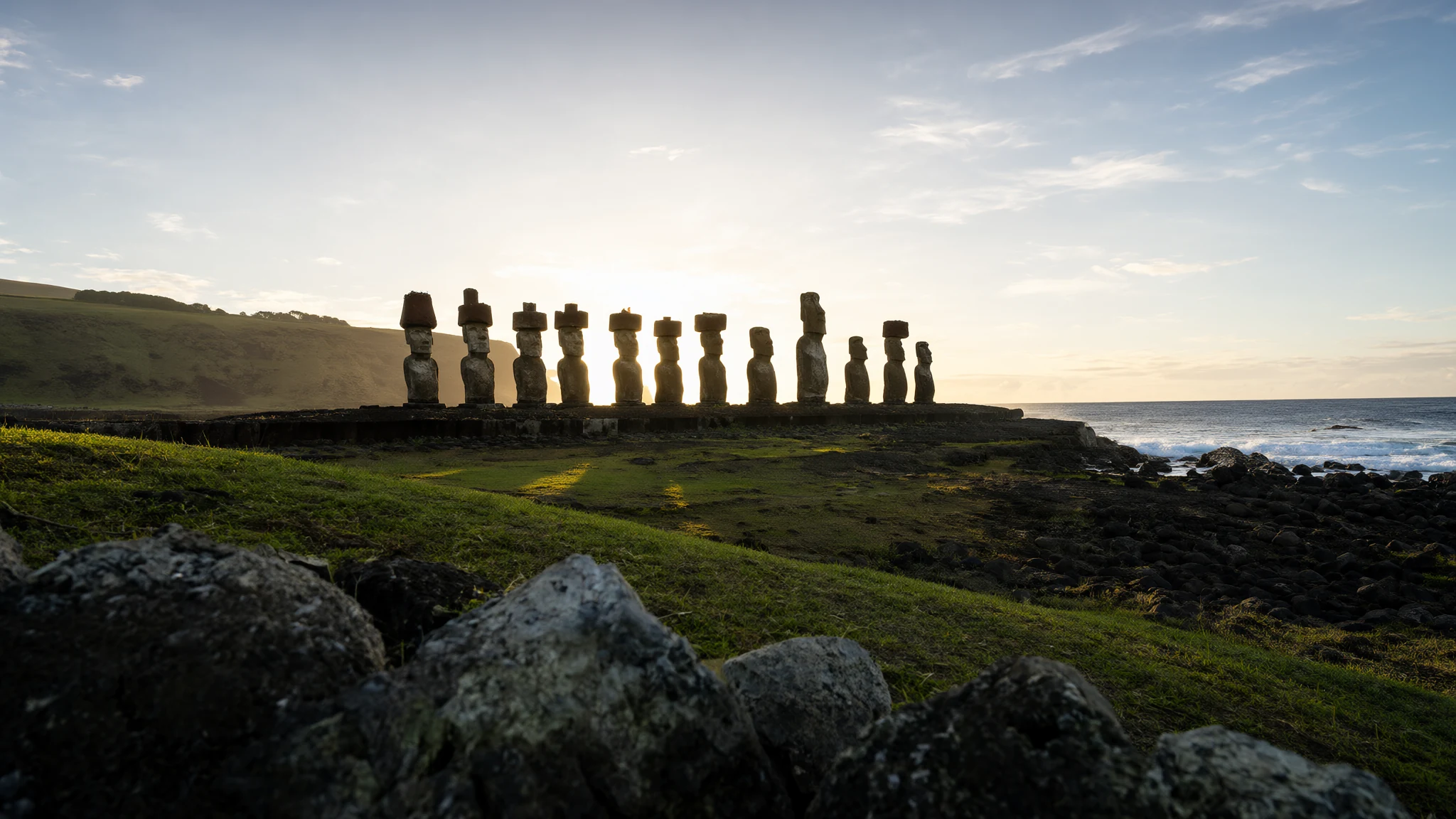
Journey to the southeastern corner of the Polynesian Triangle to stand before the monumental stone moai on remote Pacific shores.
The place
Easter Island, known locally as Rapa Nui, occupies an isolated position in the southeastern Pacific Ocean as part of Chile. This volcanic speck of land sits at the far southeastern tip of the Polynesian Triangle, far from neighbouring landmasses. The island is world-famous for its hundreds of monumental stone monoliths, known as moai, carved by the early islanders from volcanic tuff and scoria. Most of these great figures stand on stone platforms called ahu dotted around the coastal perimeter, their hollow eye sockets once gazing inland over ancestral settlements. Vast open expanses of grassland, dramatic sea cliffs, and cinder cones like Rano Raraku define the interior landscape. The main settlement of Hanga Roa acts as the sole urban hub, sheltering the majority of the permanent population in a relaxed grid of low-slung houses and small eateries. Weather here shifts rapidly under oceanic winds, bringing warm sun and sudden tropical showers. As a special territory of Chile, Rapa Nui blends traditional Polynesian heritage with South American administration, creating a distinct cultural identity found nowhere else in the Pacific. Visitors arrive by air at the island's single runway, stepping directly into a landscape shaped by incredible isolation, ancient engineering feats, and a resilient local community maintaining their ancestral language and customs against the backdrop of the open ocean.
Its story
According to oral history, the island's first settlers arrived in a two-canoe voyage guided by leader Hotu Matu'a and captain Tu'u ko Iho, who left their original homeland to escape a rival chief, the island having been found through a dreamer's vision. Upon arrival, the voyagers found a solitary settler before establishing communities across the coastal valleys and bays. Over subsequent centuries, the population expanded and divided into lineage-based social groups and confederations across the western and eastern territories. This industrious society dedicated generations to quarrying, carving, and transporting massive stone moai across rugged terrain, raising them upon ceremonial platforms to honour chiefs and ancestors. Volcanic tuff from the slopes of Rano Raraku provided the primary medium for these sculptures, while harder basalt and red scoria were utilised for fine tools and cylindrical topknots known as pukao. Intensive land clearance for agriculture eventually sparked gradual deforestation, altering the island's ecology by the time European explorers first arrived in the early eighteenth century. Subsequent foreign contact introduced devastating diseases and forced labour raids that decimated the local population to a fraction of its former size. Annexation by Chile followed in the late nineteenth century, drawing the remote territory into South American governance while its people quietly preserved their unique Polynesian lineage, language, and artistic heritage through song, dance, and oral history.
What to see
- Ahu Tongariki — Eastern coast
The largest ceremonial platform on the island features fifteen restored moai standing proudly in a single majestic row against the backdrop of the Pacific Ocean. Their massive stone forms and varied red topknots represent the pinnacle of ancestral Rapa Nui engineering and restoration efforts.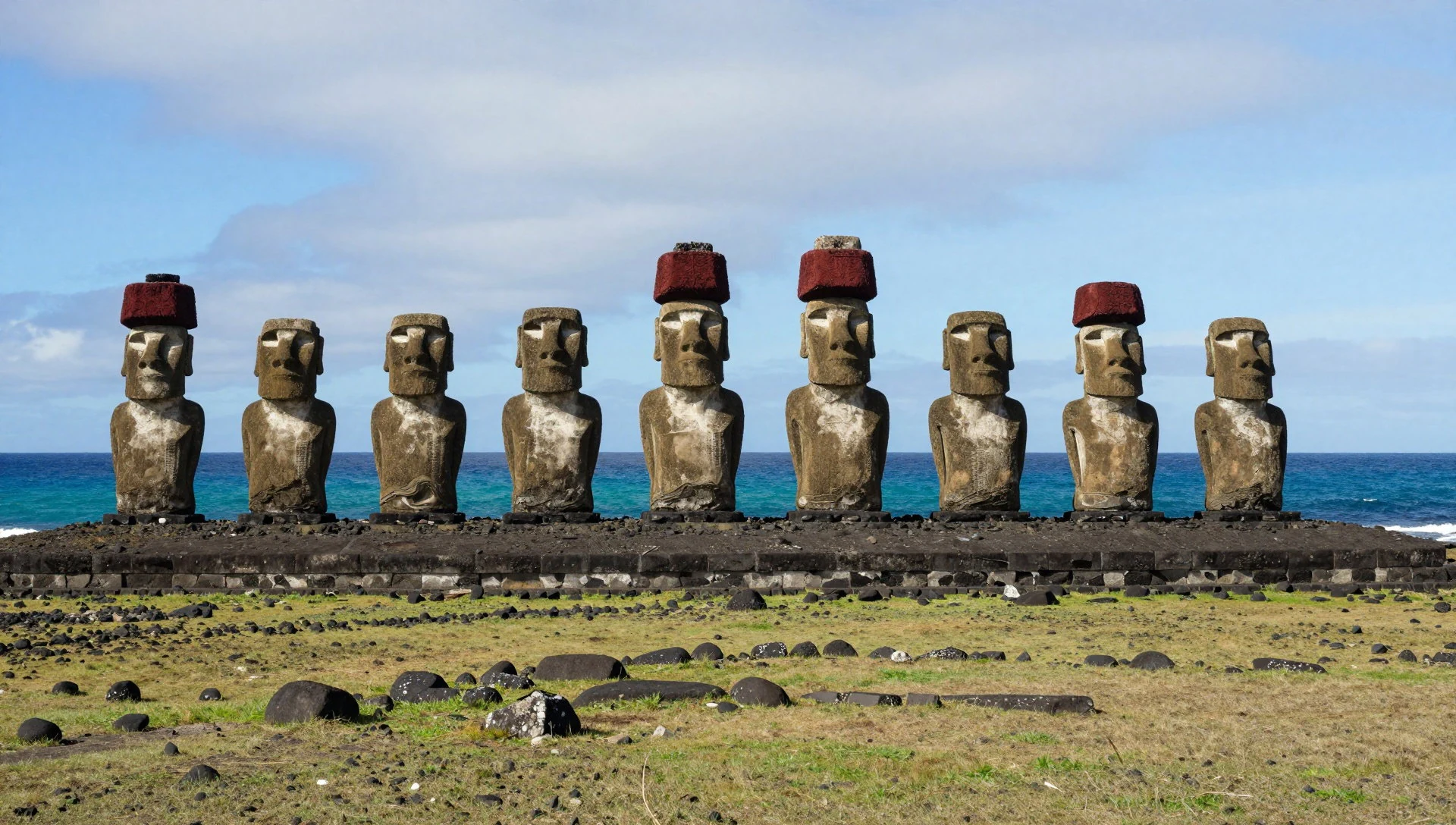
- Rano Raraku — Southern interior slopes
This volcanic crater and quarry served as the ancient manufacturing site where nearly all the moai were carved directly from the rock face. Scores of unfinished statues still rest half-embedded in the earthy slopes, offering a poignant look at the monumental production process.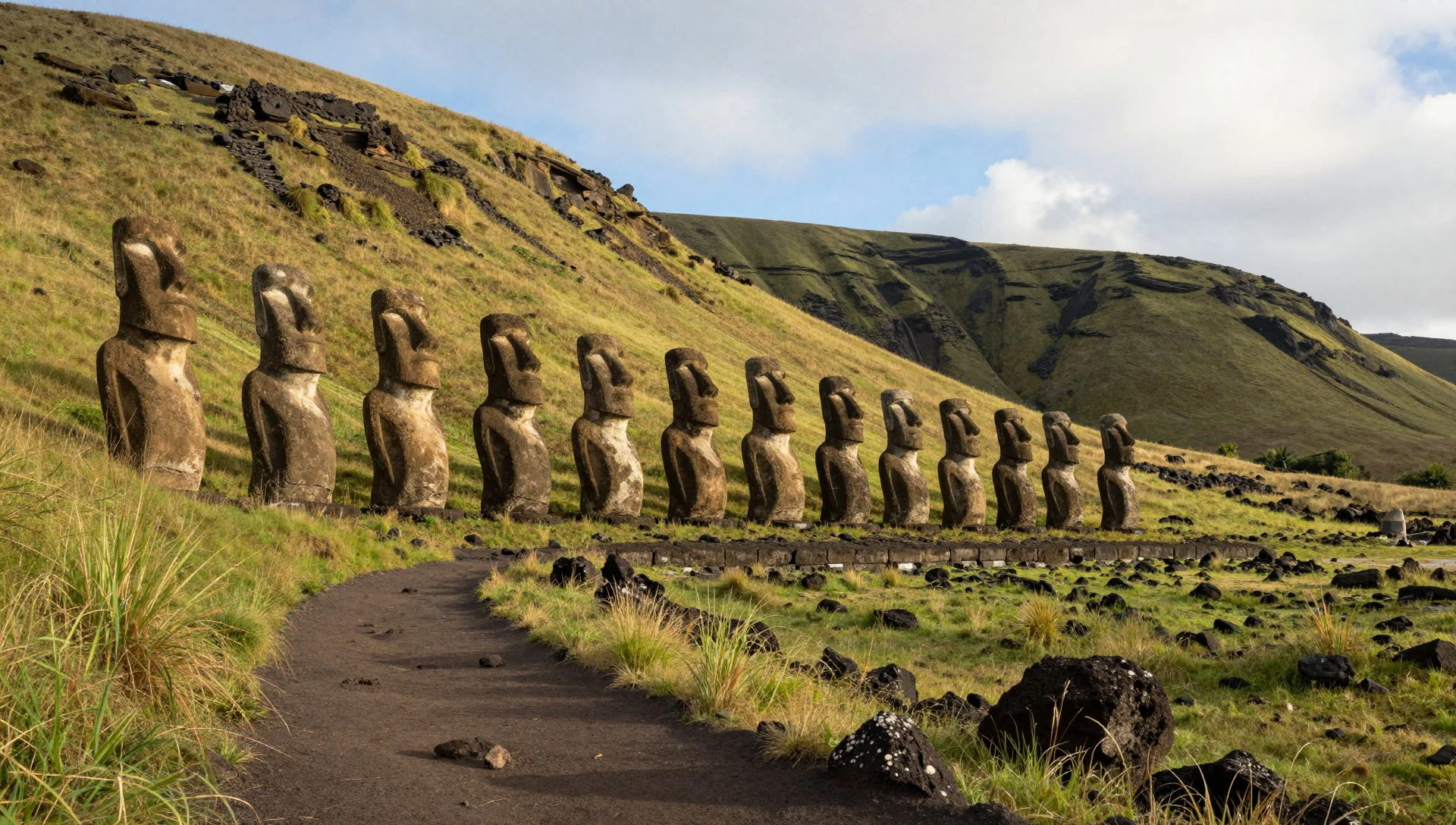
- Orongo — South-western headland
Perched dramatically on the razor-edge cliff above crashing ocean waves and the offshore islets of Motu Nui, this stone village was the ceremonial centre of the historic birdman cult. Low slate-lined dwellings mirror the windswept contours of the crater rim.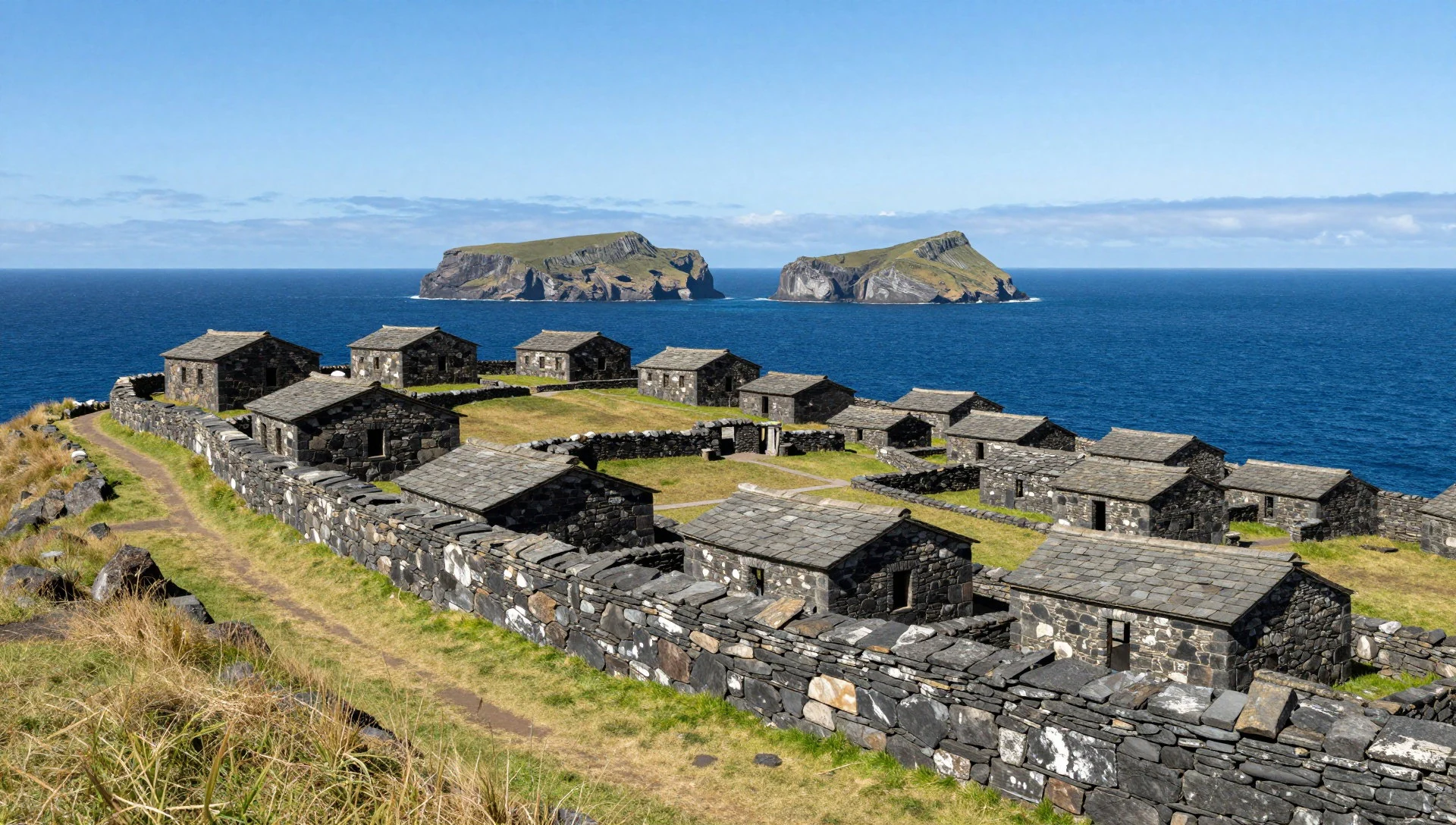
- Ahu Tahai — Near Hanga Roa
Located just a short walk from the main town, this archaeological complex features restored moai, including one with dramatic white coral and red scoria eyes reinstated. It provides an accessible gathering space to watch spectacular sunsets over the Pacific.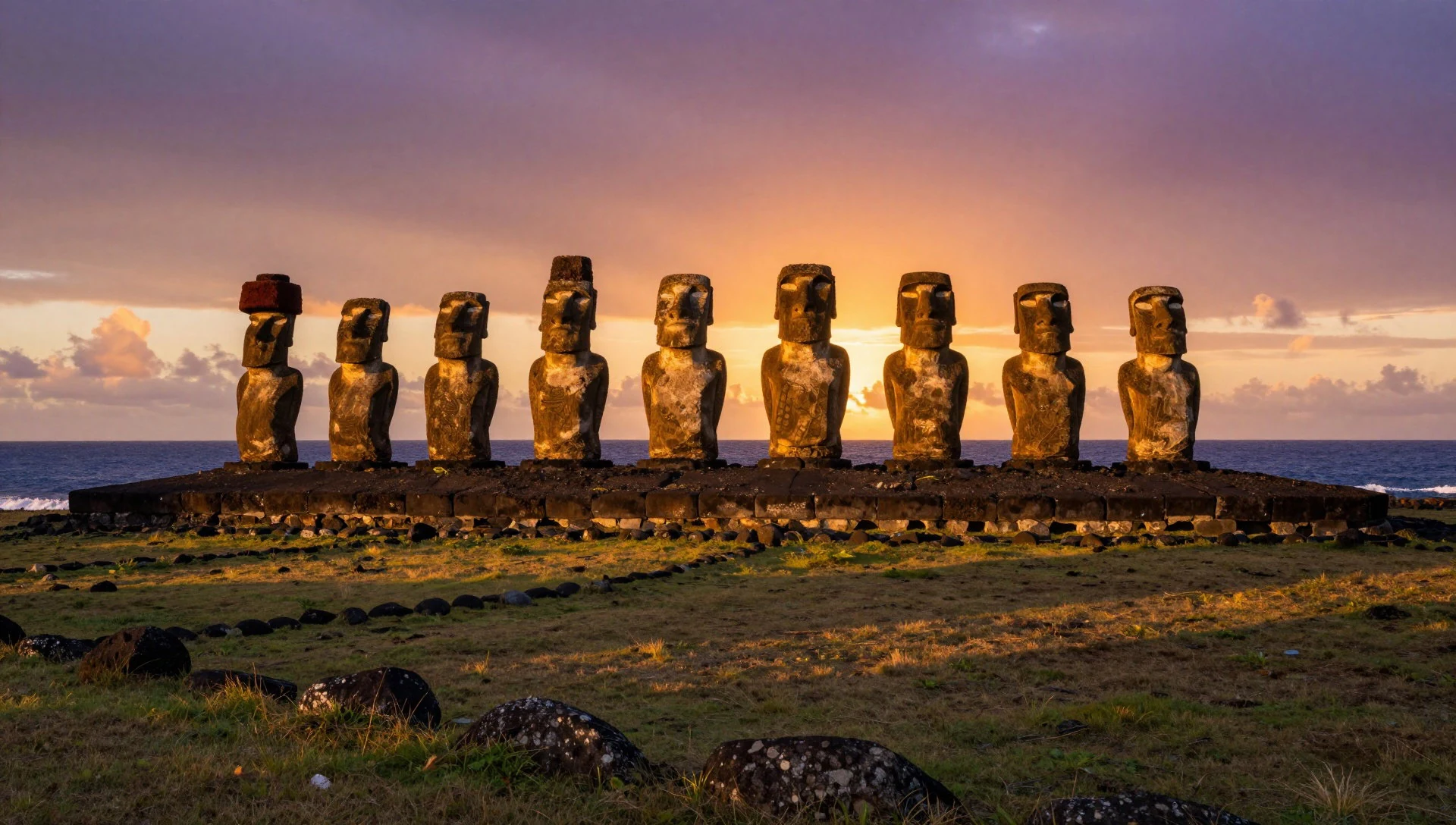
- Ahu Akivi — Central inland
Uniquely positioned inland rather than on the coast, this notable platform holds seven moai facing directly toward the setting equinox sun. Their alignment highlights the astronomical precision embedded in ancient Rapa Nui settlement planning.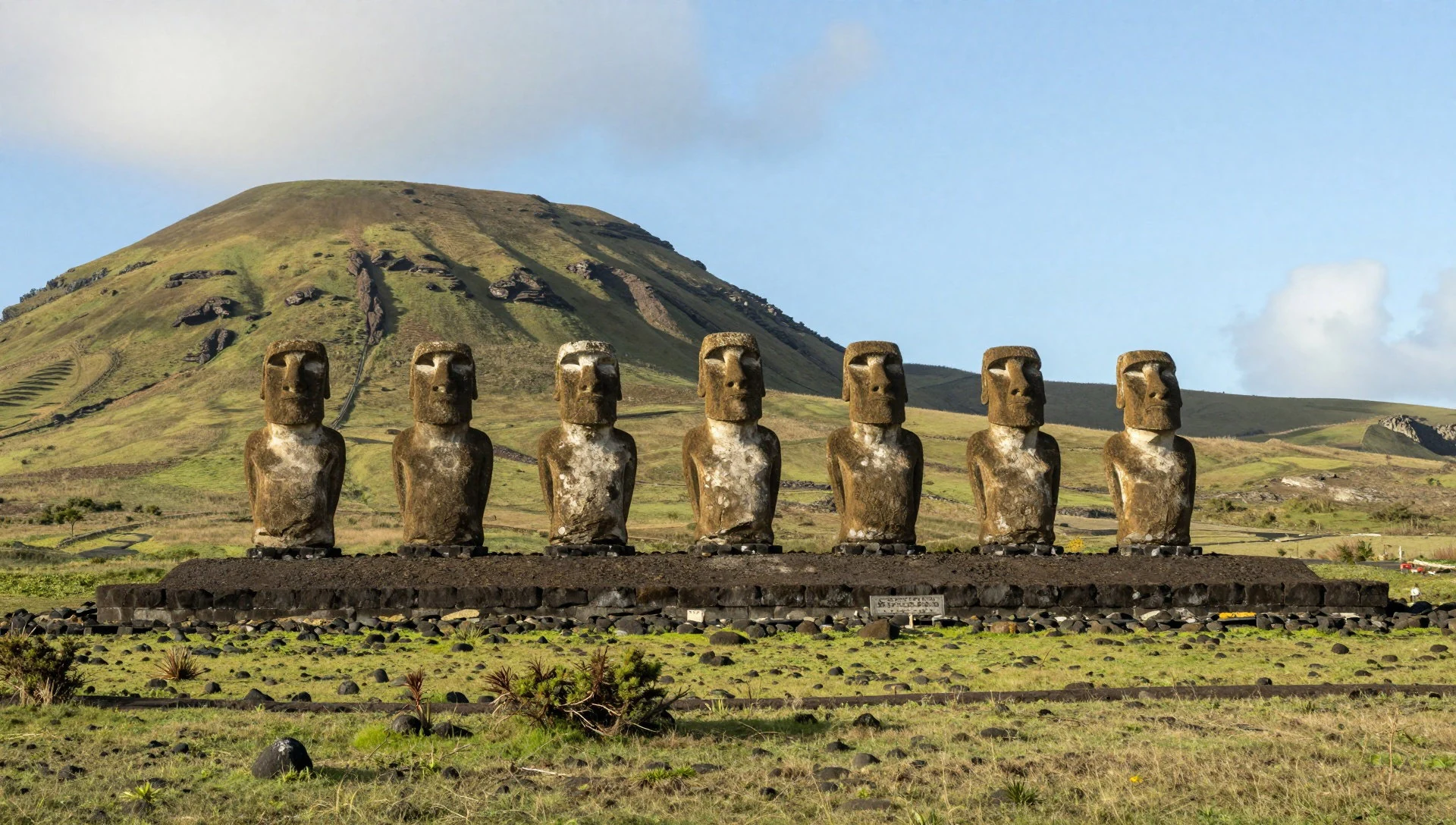
Culture
The heritage of Rapa Nui is deeply rooted in Polynesian tradition, expressed through ancient mythology, wood carving, and ancestral chants. Central figures in local lore include Makemake, a principal creator god, and the historical birdman cult known as tangata manu, which involved an annual endurance test swimming to the offshore islet of Motu Nui. Traditional craftsmanship relies heavily on local stone, from dense basalt used for sharp implements to red scoria quarried at Puna Pau for ceremonial topknots. Modern islanders maintain their Polynesian identity through traditional dance, music festivals like Tapati Rapa Nui, and the preservation of the indigenous language alongside official Spanish. Community ties remain exceptionally strong, with family networks guiding daily life and cultural transmission. Visitors should always respect archaeological boundaries and never climb upon or touch the ancient stone moai platforms.
What to wear
Traditional Rapa Nui clothing historically relied on plant fibres, bark cloth, and animal skins, adapted for protection against Pacific winds and sun. Today, islanders dress in casual, contemporary western styles similar to mainland Chile, with light cotton shirts, trousers, and practical footwear suitable for outdoor island life. During cultural celebrations and dance performances, participants don traditional Polynesian attire featuring feathered headpieces, shell ornaments, and plant-fibre skirts. For visitors, practical dressing is essential: lightweight layers, breathable fabrics, and sturdy walking shoes or boots are necessary for navigating uneven volcanic terrain, rocky paths, and windy coastal overlooks. A waterproof jacket is indispensable for sudden Pacific downpours, alongside a wide-brimmed hat and reliable sun protection due to strong UV exposure.
What to eat
- Empanadas Tía Berta — Main settlement area
A local favourite serving freshly baked or fried empanadas with diverse fillings, with the local tuna variety standing out as an essential island speciality. - Mamma Nui — Hanga Roa town
A family-run establishment offering authentic traditional cuisine, specialising in dishes prepared using ancient subterranean hot-stone cooking methods known as tunu ahi. - Mahina Tahai — Near the Tahai archaeological complex
A welcoming eatery providing classic sit-down meals featuring hearty soups, fresh local fish, rice, and traditional homemade desserts. - Tataku Vave — Coastal fringe of Hanga Roa
Situated slightly away from the main tourist drag, this scenic spot offers fresh seafood dishes accompanied by sweeping views of the ocean waves.
Plan it
Best time. October and November offer milder weather with less rain than the wetter autumn months, though ocean breezes and sudden showers can occur year-round.
How long. 4–5
Getting there. Arrive by commercial flight from Santiago into the island's single airport runway, then take local transport or a rental vehicle to your accommodation.
Budget. high
Tips
- Purchase your national park ticket in advance or upon arrival at the airport
- Hire an official guide for site visits where regulations require one
- Book accommodations and vehicle rentals well ahead of travel
- Carry cash for small shops and local markets as card machines can be unreliable
- Bring a reusable water bottle and reliable rain gear
Etiquette
- Never climb on or touch the ancient moai or stone platforms
- Always request permission before photographing local residents
Nearby
Sources
- Wikidata Q14452 (CC0)
- Wikipedia (CC BY-SA 4.0)
- Wikivoyage (CC BY-SA 4.0)