Bora Bora
Bora Bora, France
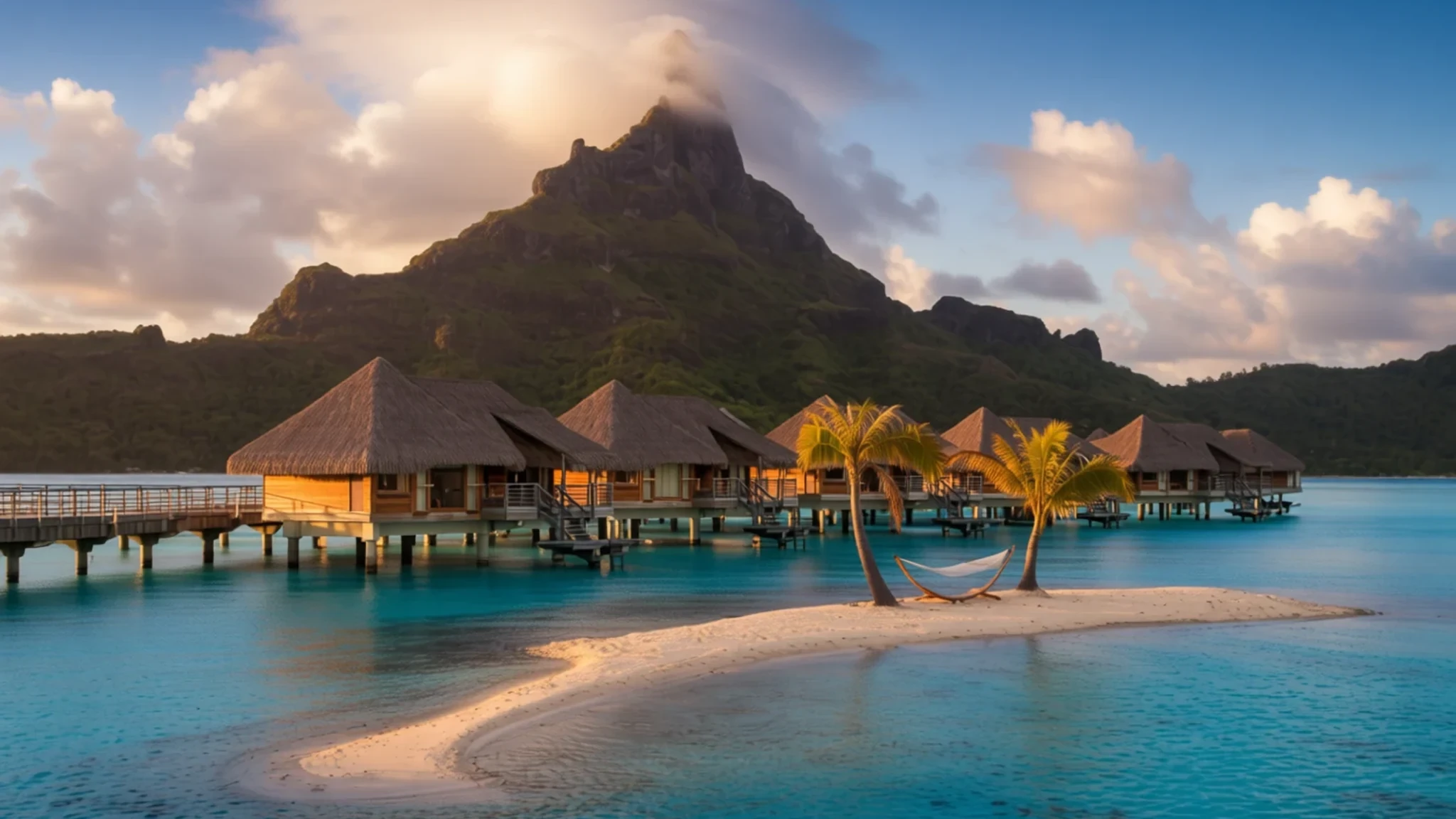
Bora Bora offers legendary turquoise lagoons, dramatic volcanic remnants, and world-renowned island hospitality in the heart of the South Pacific.
The place
Bora Bora sits in the western section of the Society Islands within French Polynesia, an island grouping positioned far out in the South Pacific waters. The terrain encompasses a total land area of about thirty square kilometres, featuring a main landmass cradled by an expansive turquoise lagoon and a protective outer barrier reef. At the heart of this island stand the eroded remnants of an ancient volcanic caldera, pushing upward into two prominent summits known as Mount Pahia and Mount Otemanu, which climbs to its highest point at seven hundred and twenty-seven metres.
Surrounding the central lagoon are numerous slender, vegetated islets called motus, forming a natural shield against the open ocean swells. The principal settlement of Vaitape occupies the western shore of the main island, positioned directly across the main navigable pass leading inward from the sea. Subsistence and local trade have historically relied upon the abundant bounty drawn from the surrounding ocean and the heavy groves of coconut palms that thrive across the sandy soils. While Tahitian and French remain the primary languages spoken by residents, visitors will find that English is widely understood due to decades of international tourism. Life here moves to a gentle tropical rhythm, shaped entirely by the shifting tides, the warm trade winds, and the deep turquoise expanse that defines every horizon.
Its story
Polynesian voyagers first settled these shores around the third century, establishing a thriving maritime society long before European vessels crossed the horizon. Early European contact came when Jacob Roggeveen sighted the island in seventeen twenty-two, followed decades later by James Cook in seventeen sixty-nine, who arrived guided by a knowledgeable local navigator named Tupaia. For generations, the community operated as an independent kingdom until eighteen eighty-eight, when French colonial authorities annexed the territory and compelled the reigning monarch, Queen Teriimaevarua III, to relinquish her crown.
A significant chapter unfolded during the Second World War when United States forces selected the island as a strategic South Pacific military supply installation, designating the initiative Operation Bobcat. Thousands of servicemen arrived alongside substantial engineering equipment, constructing defensive artillery batteries, fuel depots, seaplane facilities, and an initial airstrip. Heavy defensive cannons were hauled into position at commanding viewpoints across the landscape to guard against potential naval threats, though the garrison ultimately saw no active combat throughout the conflict. The military installation was formally decommissioned in nineteen forty-six, leaving behind infrastructure that eventually paved the way for modern civil aviation and tourism. The historical airstrip served as the primary international gateway for the region for many years before larger modern facilities opened elsewhere in the territory, leaving behind a quiet legacy of wartime history nestled among tropical foliage.
What to see
- Bora Bora Lagoonarium — Inner lagoon
Join a certified guide to swim inside a protected marine enclosure where you can come face to face with sea turtles, blacktip reef sharks, stingrays, and countless colourful reef fish in their natural element.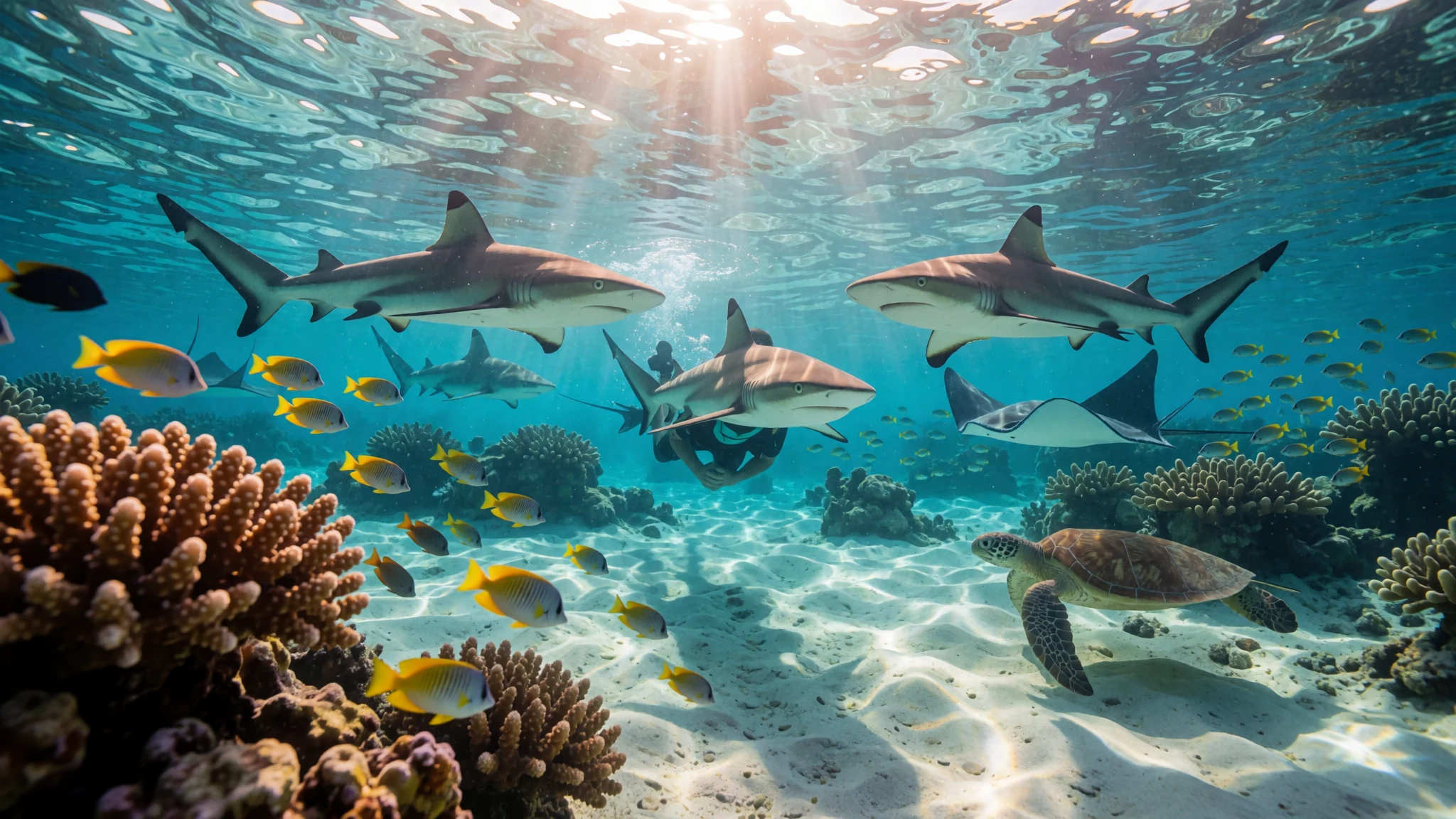
- Shark and Ray Snorkel Safari — Shallow lagoon flats
Take a boat excursion out to the shallow sandbars where dozens of gentle stingrays and reef sharks routinely glide close to visitors standing or floating in the crystal-clear waters.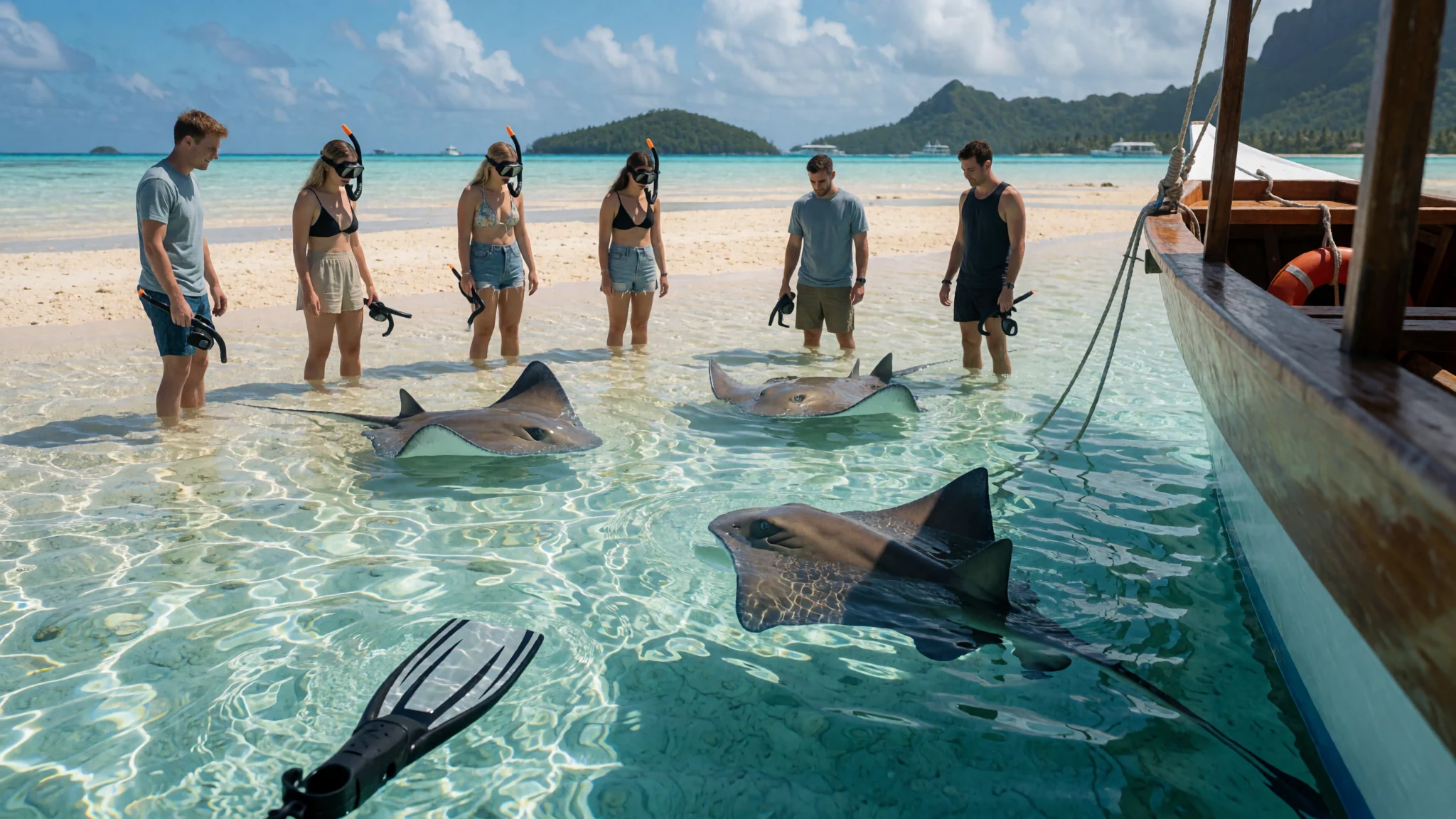
- Vaitape Village — Western coast
Explore the main administrative hub of the island, where you can browse local pearl shops, pick up artisan crafts, watch village life unfold, and sample casual meals from the evening food trucks.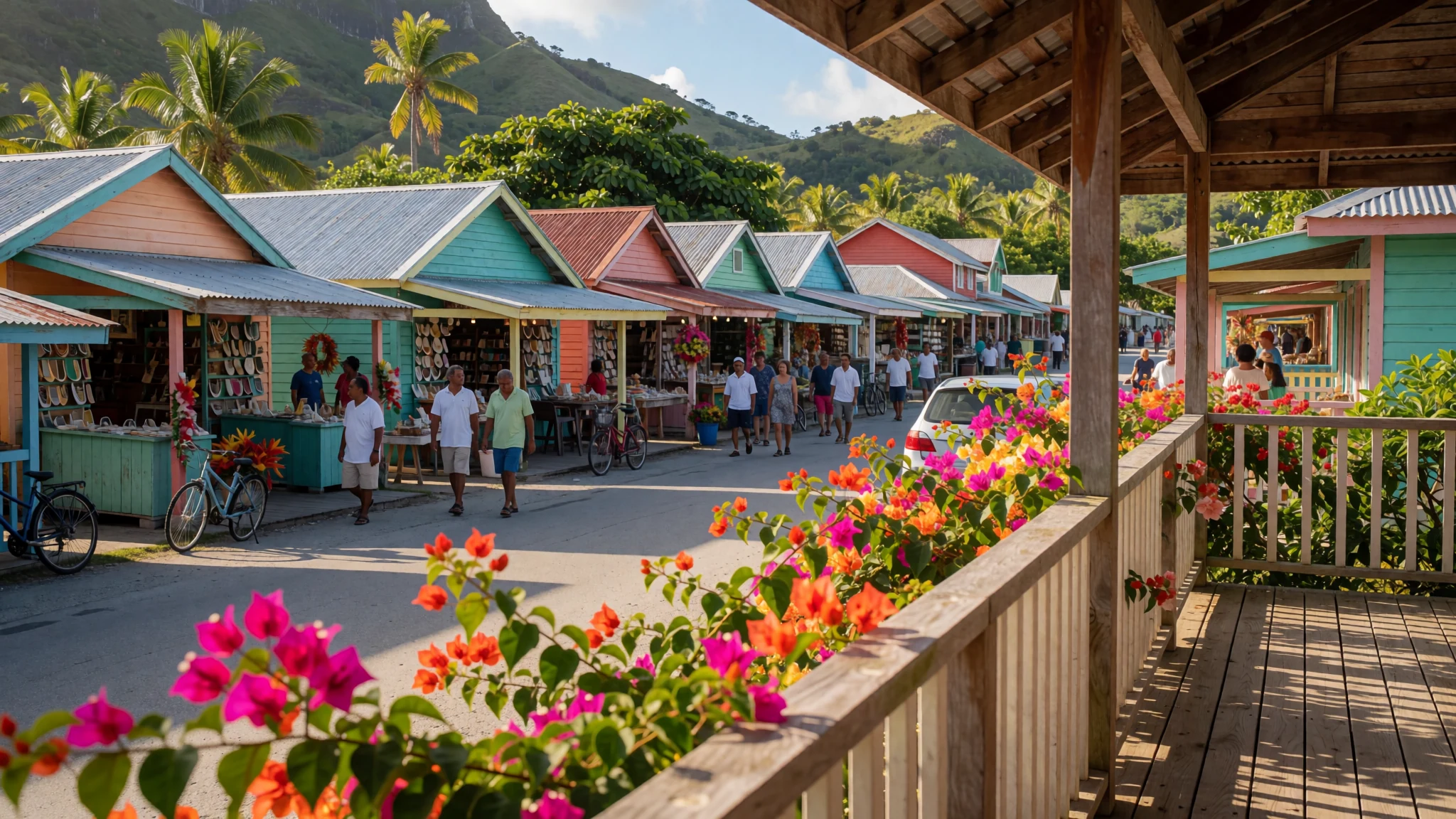
- Matira Beach — Southern tip
Relax on one of the finest public stretches of white coral sand on the main island, offering shallow turquoise waters that stretch out invitingly for swimming and unhurried shoreline walks.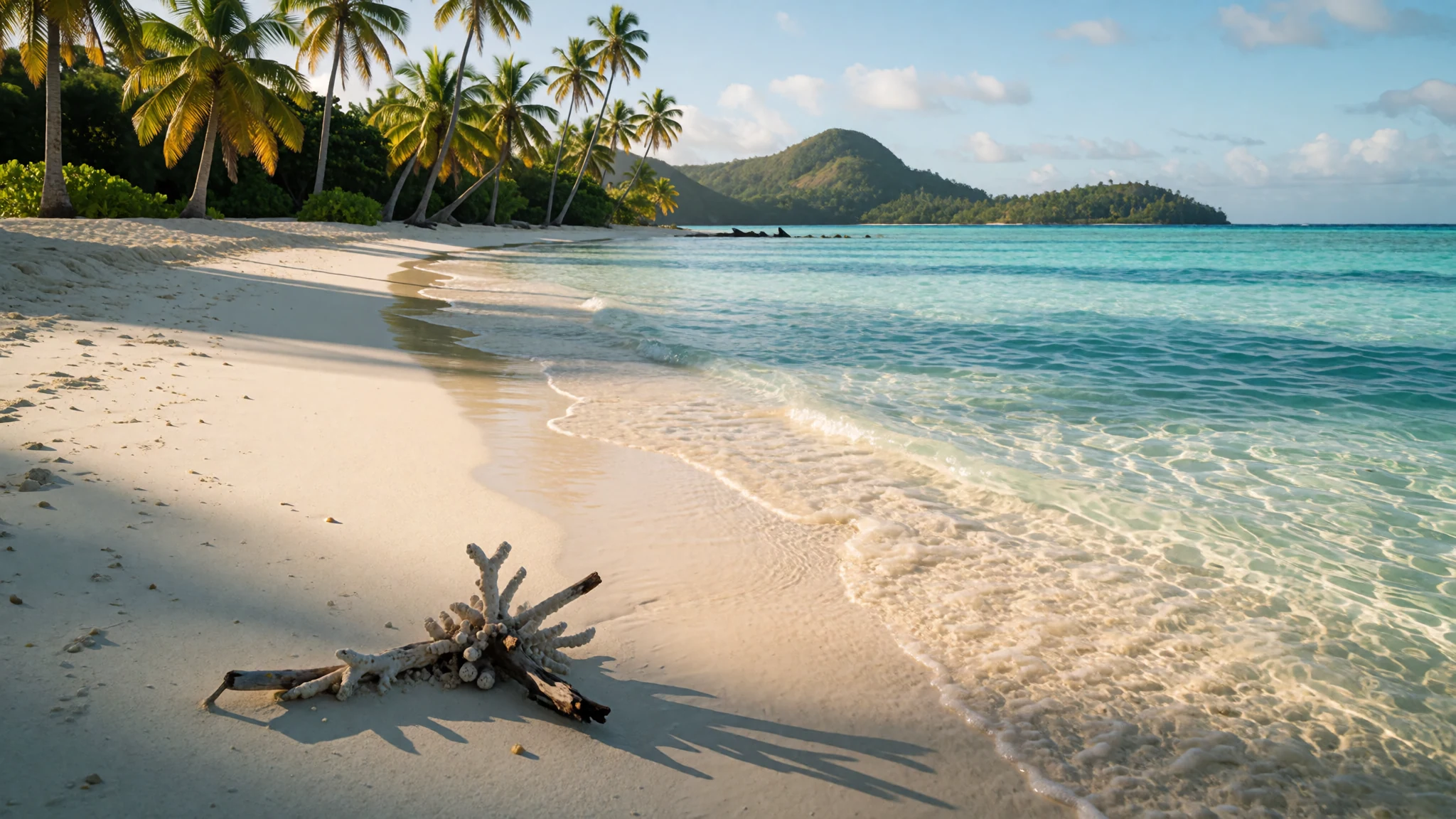
- World War II Cannon Sites — Elevated inland slopes
Hike up into the verdant hillsides to discover the heavy coastal artillery emplacements installed by American forces during the Second World War, offering a glimpse into the island's mid-century military past.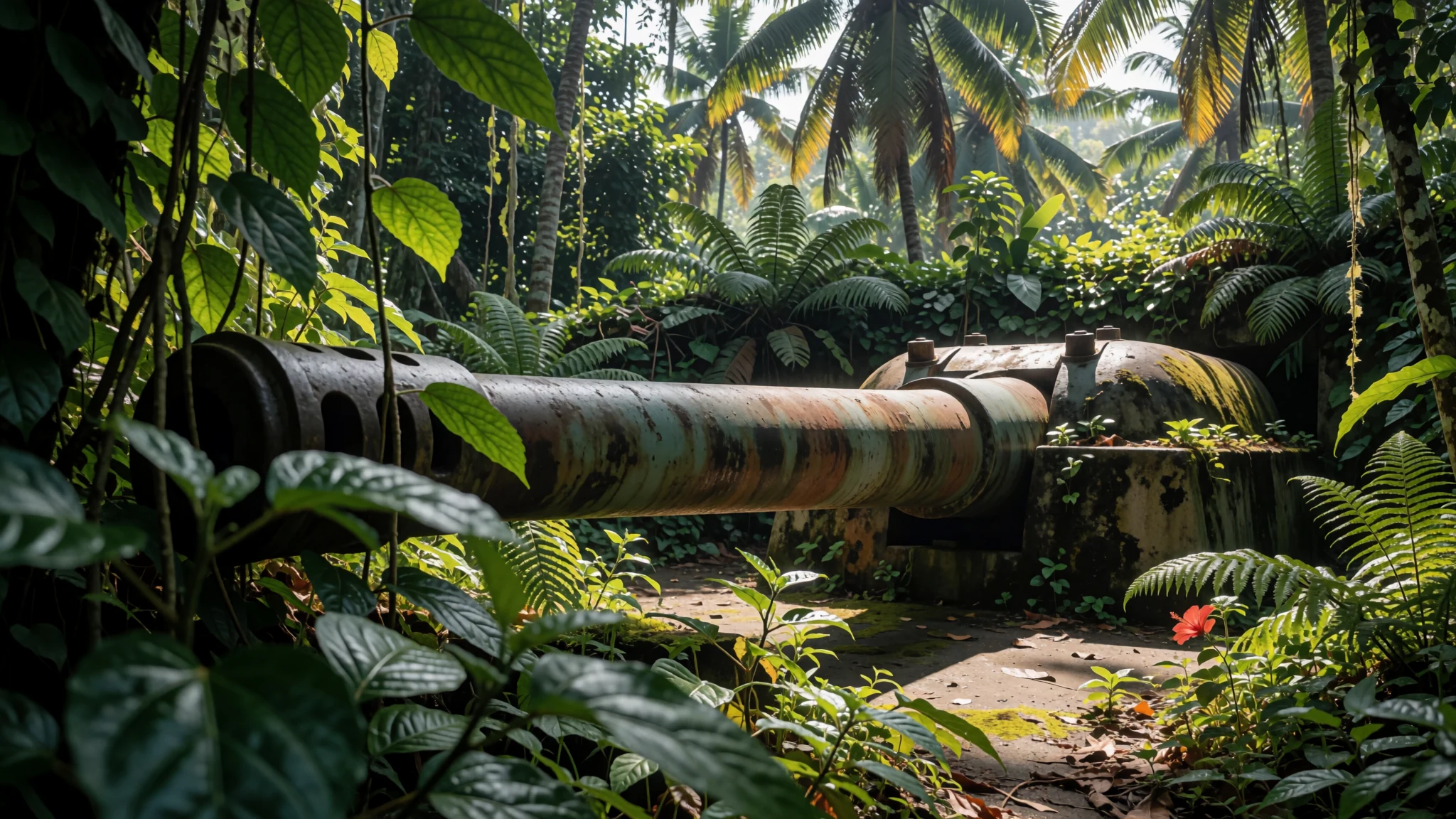
Culture
The cultural fabric of Bora Bora is deeply rooted in ancient Polynesian traditions, blending ancestral seafaring heritage with centuries of French influence. Music and dance hold a central place in community life, often telling stories of ancient deities, ocean voyages, and tribal genealogy through rhythmic drumbeats and expressive movement. Traditional craftsmanship remains vibrant, particularly in the creation of intricate shell jewellery, woven pandanus mats, and the cultivation of luminous black pearls harvested from the surrounding pristine waters. Kinship ties and communal gatherings are paramount, with local families maintaining strong bonds across the scattered motus and villages. Visitors are welcomed with genuine warmth and hospitality, though it is customary to greet locals with a polite greeting in French or Tahitian when entering shops or public spaces. Always ask for permission before photographing local residents or private property, and dress modestly when leaving the immediate beach areas to respect local village sensibilities.
What to wear
Traditional attire in the islands historically relied on natural fibres, plant leaves, and beaten bark cloth crafted into wraps and ceremonial garments adorned with fresh flower garlands and shell decorations. Today, everyday wear for residents is casual and practical, reflecting the warm tropical climate, with lightweight cotton shirts, shorts, and colourful pareus worn widely across all settlements. The pareu, a versatile rectangular length of hand-dyed fabric tied in various styles, remains an essential garment for both daily life and festive occasions. For visitors, lightweight, breathable fabrics are indispensable for staying comfortable under the equatorial sun. Swimwear is entirely appropriate on resort beaches and motus, but you should slip on a shirt and a sarong or lightweight trousers when walking through Vaitape or visiting residential neighbourhoods. Sturdy footwear or reef shoes are recommended for exploring rocky shorelines, uneven volcanic trails, and coral-strewn shallows.
What to eat
- Poisson Cru — Local cafes and snack bars
Fresh raw tuna marinated in lime juice and gently tossed in rich coconut milk with diced tomatoes, cucumbers, and onions. Find this refreshing local specialty at waterfront eateries and morning markets.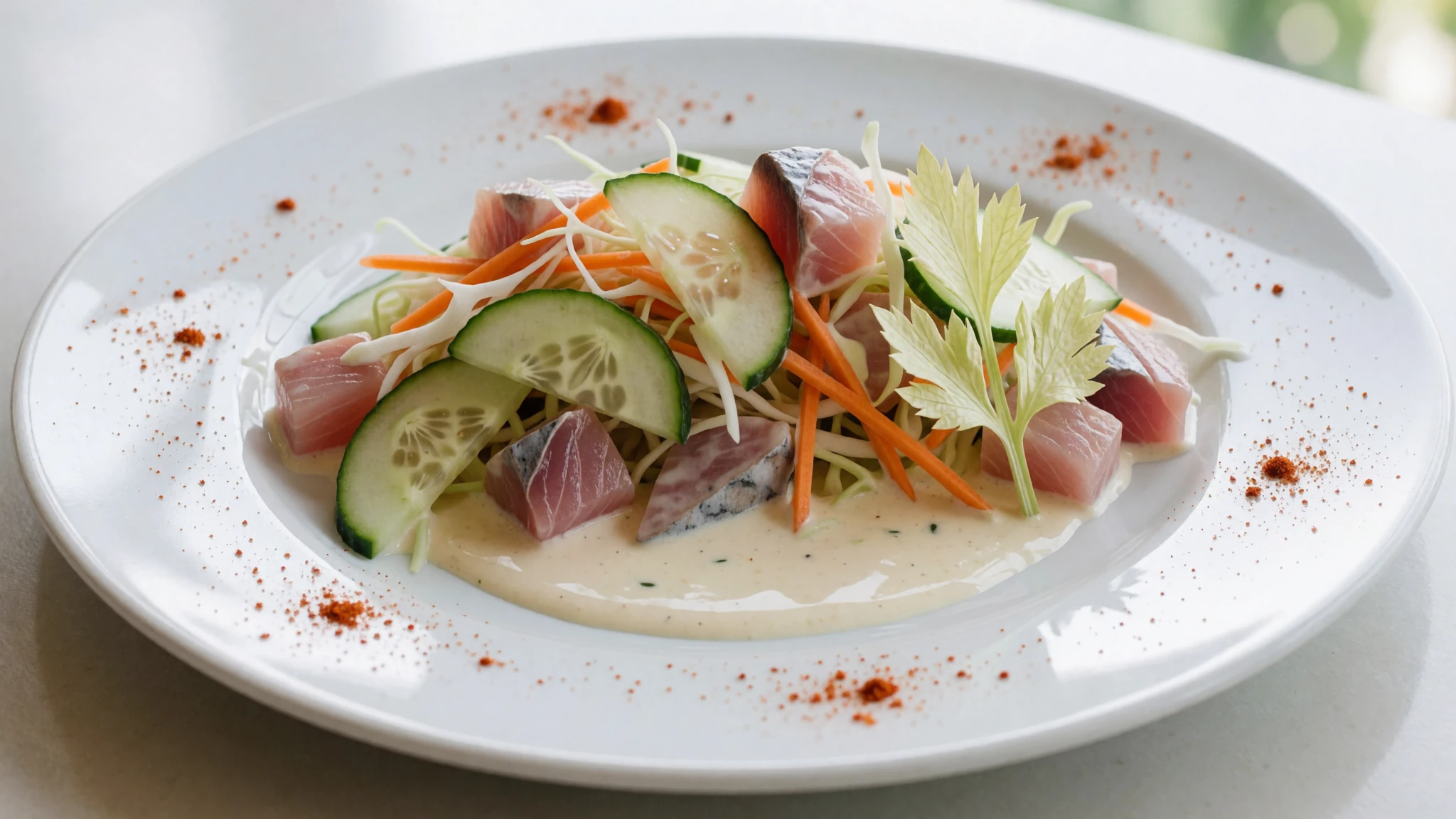
- Roulotte Meals — Vaitape town car park
Generous portions of grilled fish, steak frites, and Chinese-influenced stir-fries served from mobile food trucks that gather in the central village parking area every evening.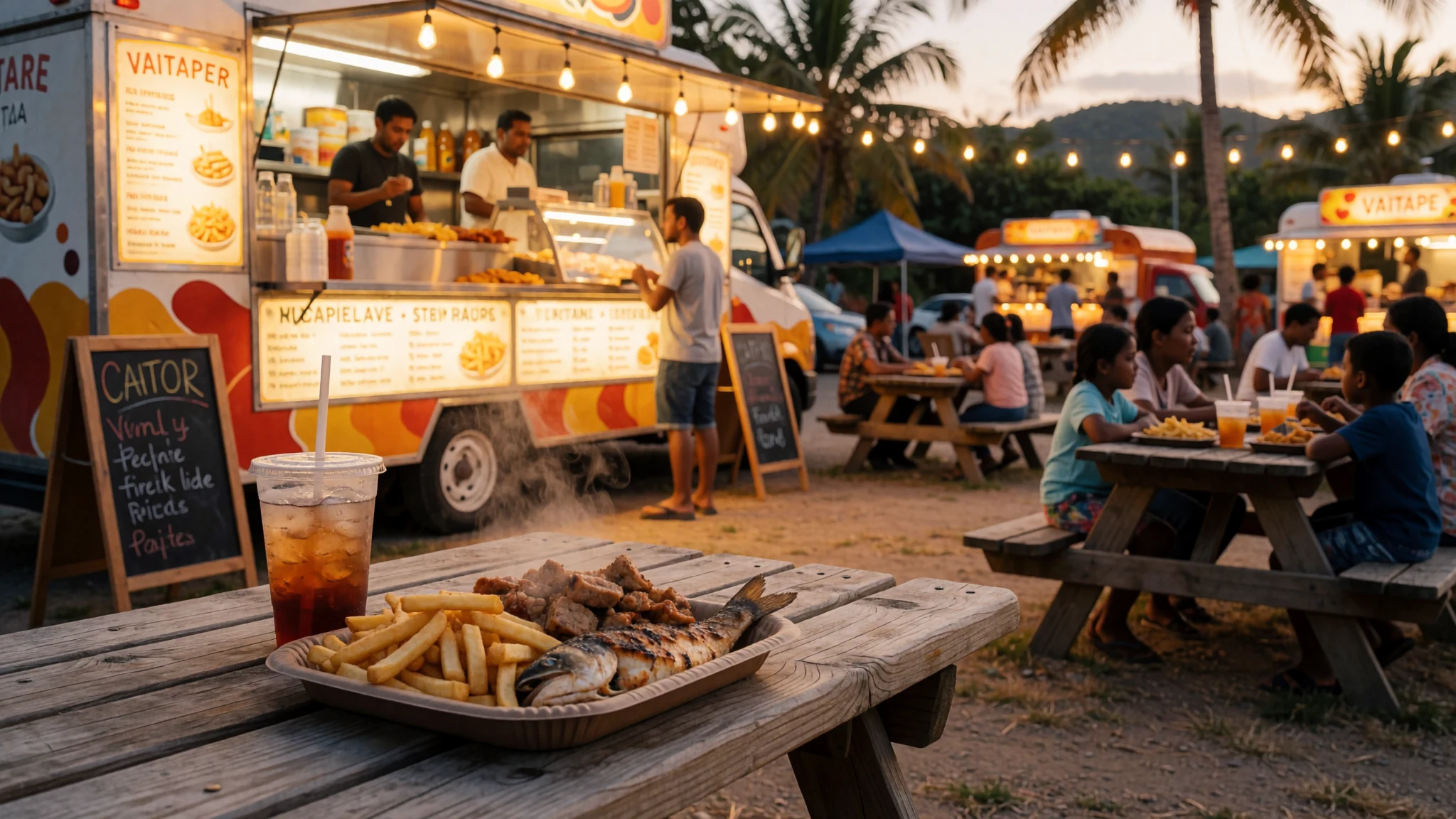
- Fresh Coconut and Breadfruit — Local stalls and island markets
Traditional starch staples and sweet refreshments harvested directly from the island's plentiful coconut palms and coastal trees, often roasted or served alongside seafood. - French Pastries and Crepes — Village bakeries
A delicious legacy of European influence, offering flaky croissants, delicate pastries, and sweet crepes crafted daily by local bakers and cafes across the main settlement. - Island-Style Poisson — Traditional family pensions
Freshly caught lagoon fish seasoned with local herbs, wrapped in banana leaves, and cooked slowly over hot coals until tender and fragrant.
Plan it
Best time. June to October offers drier weather, cooler trade winds, and more comfortable humidity, whereas the warmer months from November to May bring higher chances of tropical showers.
How long. 4–5
Getting there. Fly internationally into Tahiti, then take a short domestic flight to the airport located on a northern motu, followed by a complimentary ferry boat transfer across the lagoon to Vaitape or your resort.
Budget. high
Tips
- Book domestic flights and accommodation well in advance as capacity on island hops is limited
- Bring reef-safe sunscreen to protect the delicate coral ecosystem in the lagoon
- Carry cash for small purchases at local markets and food trucks
- Pack lightweight rain gear regardless of the season for passing tropical showers
- Take advantage of the free public ferry shuttle if staying on the main island
Etiquette
- Always ask permission before photographing local residents
- Dress modestly with shoulders and knees covered when visiting villages away from the beach
- Remove footwear if entering traditional local homes or private accommodations
Nearby
Sources
- Wikidata Q183113 (CC0)
- Wikipedia (rev 1377260992) (CC BY-SA 4.0)
- Wikivoyage (rev 5395622) (CC BY-SA 4.0)