Palmerston
Palmerston, Cook Islands
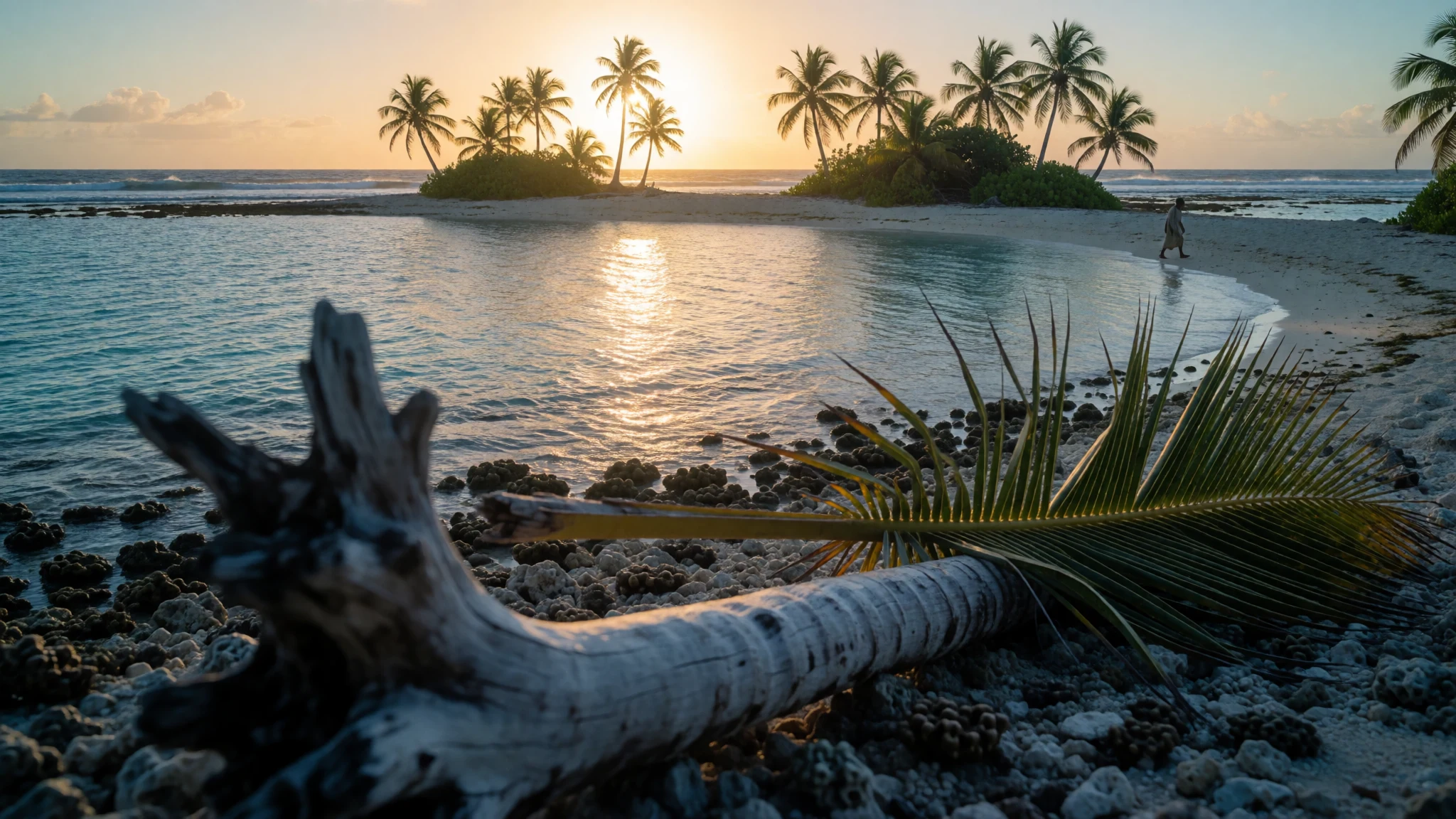
Palmerston is a coral ring in the Cook Islands where one family's descendants host the few yachts that make the long crossing.
The place
Palmerston is a coral atoll in the Cook Islands, lying about 470 km north-west of Rarotonga in the open Pacific. It is a reef island in the literal sense: a loose ring of reef carries a string of low sandy islets around a lagoon, and nothing on it rises more than about 6 metres above the sea. From a boat, the first sight is usually palms and surf breaking white on the reef, with the land barely clearing the horizon. The lagoon is the centre of daily life. Fishing, boat traffic and the narrow channel through the reef all revolve around it, and that channel decides who can come ashore and when. Only a small community lives here, some 25 people, with the settlement on one islet and the others left to coconuts and quiet shoreline. There is no resort and no street of shops. Arrival is by private yacht or on one of the occasional supply boats, and a stay bends to weather and cargo rather than to any timetable. The telephone is the link with the outside world, so contact is arranged by calling ahead rather than turning up. That isolation shapes everything else about the place. Visits begin with a welcome by boat, accommodation is in a family home, and the days are measured in conversations, fishing and games rather than sights. Palmerston suits sailors, patient travellers and anyone who wants an atoll as a place where people live, not as a backdrop for photographs.
Its story
Palmerston's recorded history begins with James Cook, who sighted the atoll in 1774 and came ashore in 1777. He found nobody living there, only some old graves, and named it after Henry Temple, Viscount Palmerston, who sat on the Admiralty board. An older name, Avarau, is said to mean 'two hundred harbours', a fair description of a reef broken into so many pockets of calm water. The present-day community traces its origin to 1863, when William Marsters—a cooper and ship's carpenter—settled here alongside his two Polynesian wives, who had journeyed with him from Manuae. A third wife followed. He is credited with some 23 children, and today's islanders descend from him. English is therefore the first language here, which is unusual in the Cook Islands. Marsters was long believed to come from Leicestershire, but the current view favours Gloucestershire, and the family's spelling of the surname is sometimes put down to a west-country accent. Britain annexed the atoll in 1891 and granted him a 21-year lease in 1892, and New Zealand took over administration in 1901. The lease was extended until 1954, when the family received full ownership. Three branches remain on the island, each tracing back to one of the three wives, and marriage within a branch is prohibited. All three wives came from Tongareva, so family ties run between the two atolls. Descendants now live in far greater numbers in Rarotonga and New Zealand, and many still call Palmerston home.
What to see
- The lagoon and reef passage — Lagoon and reef channel
The lagoon is the heart of Palmerston, and the narrow channel through the reef is how boats reach it. The passage is tricky enough that yachts rely on islanders to guide them in. Watching local boats come out to meet an arrival is itself one of the island's more memorable sights.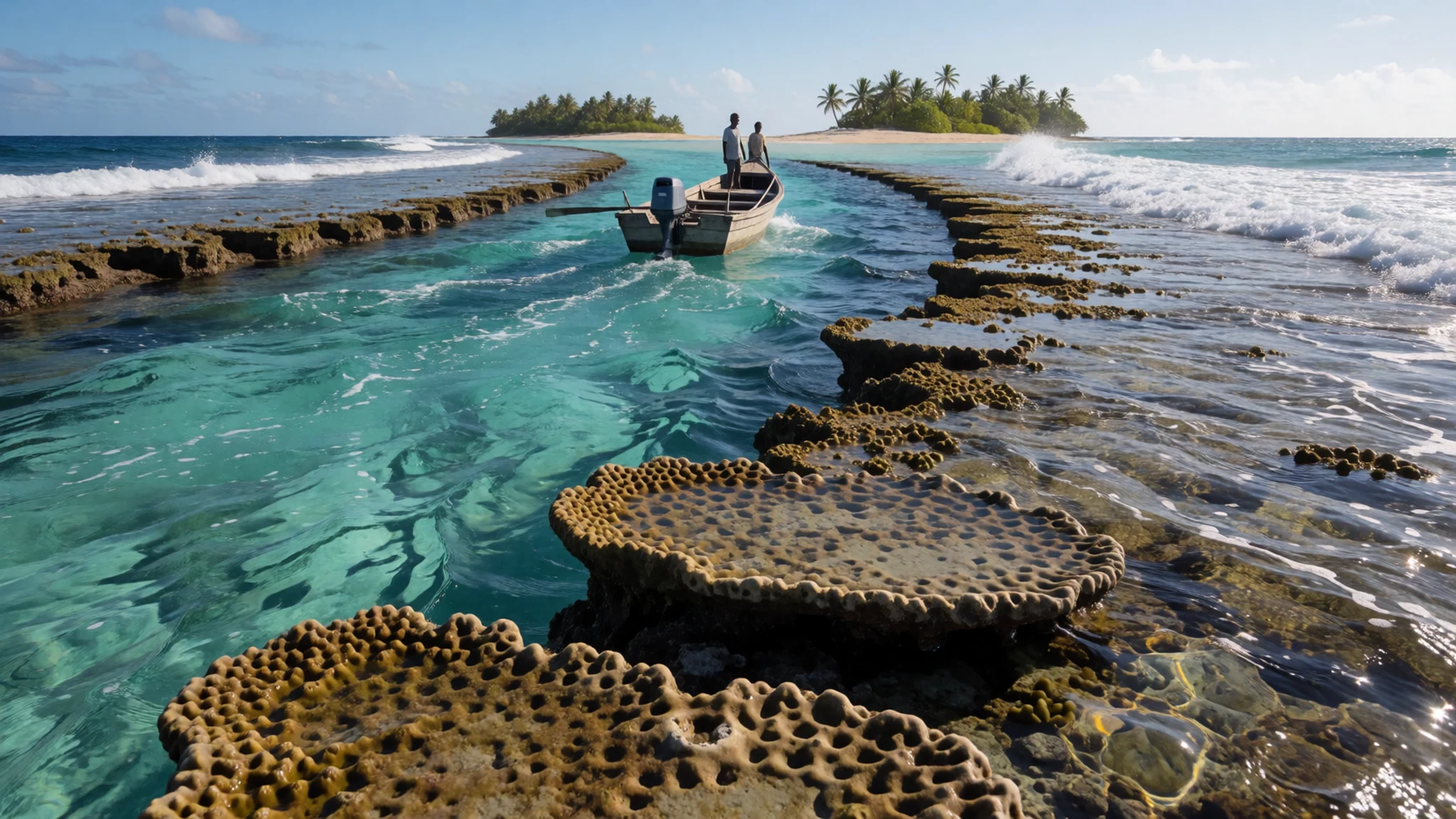
- The settlement islet — Main inhabited islet
Most of the community lives on a single islet, with houses, boats and gardens close together. This is where the homestay tradition plays out, and where a visitor sees how a small family-run atoll organises food, water, mail and the telephone link. Walk slowly and let the family set the pace.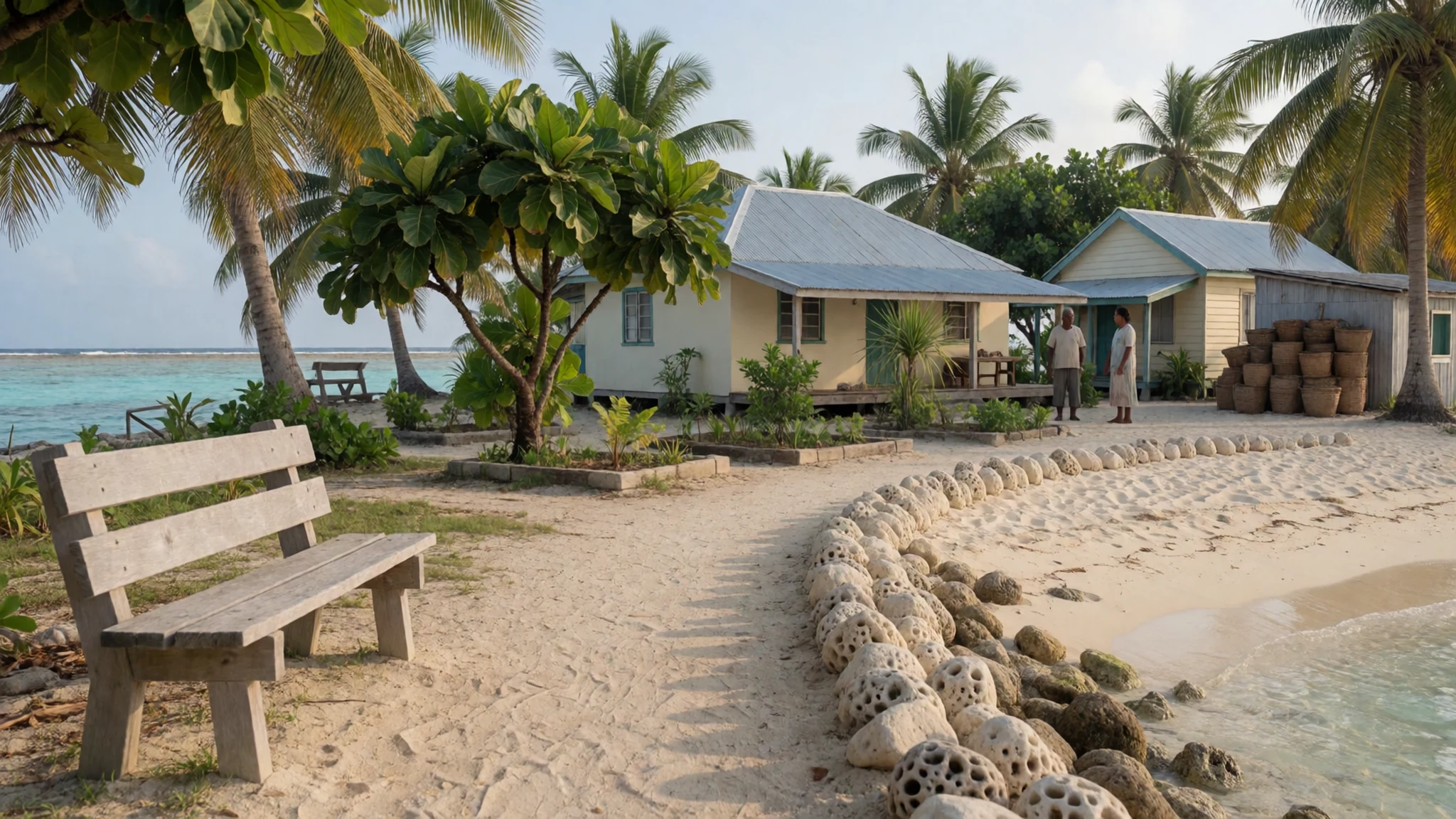
- Fishing on the lagoon and reef — Lagoon and outer reef
Fish are plentiful in the lagoon and around the islets, and fishing is central to island life as well as a pastime. A visitor may be invited along in a boat. Conditions, tides and the reef edge all matter, so go only with islanders who know the water.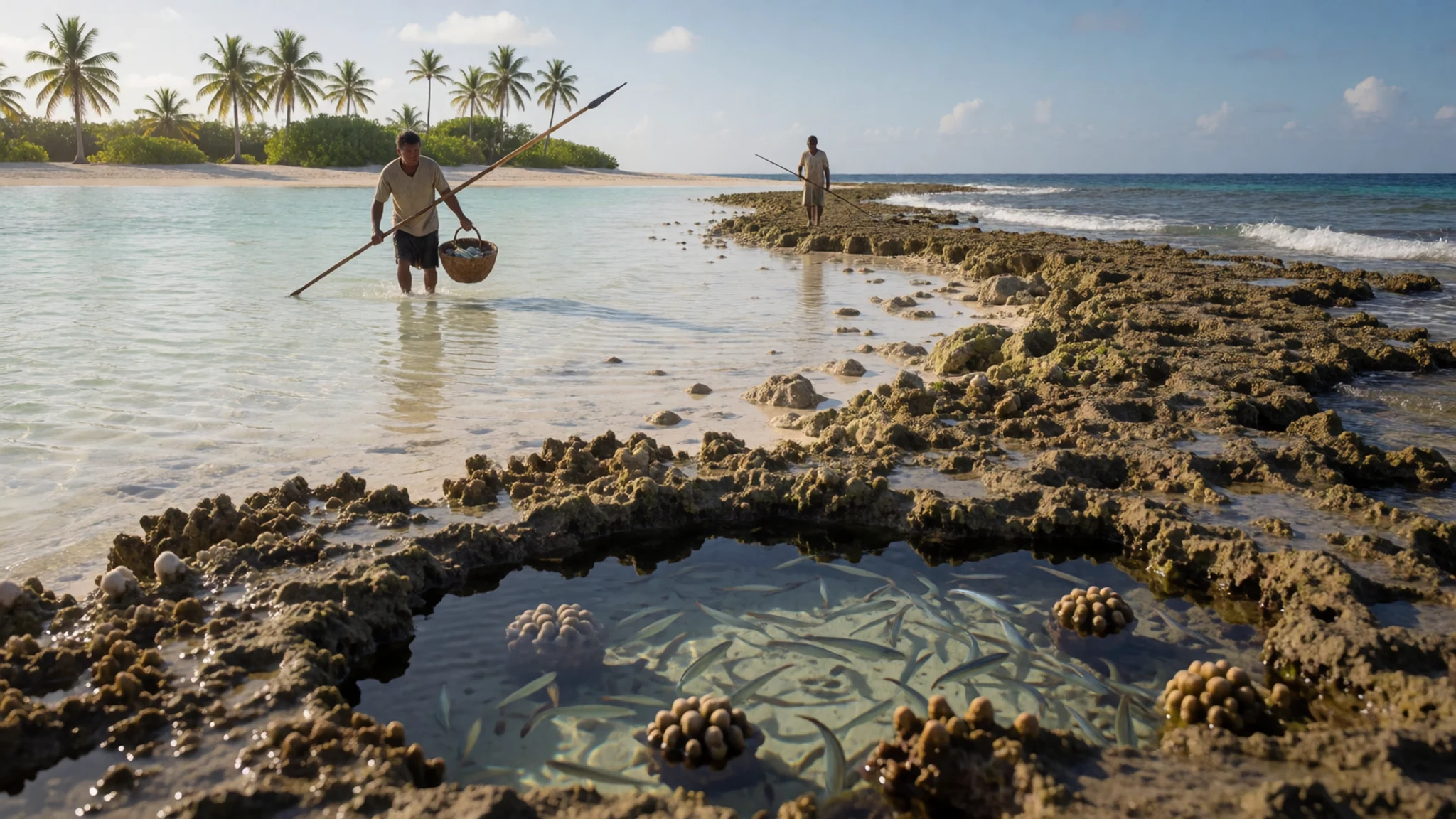
- A game of volleyball — Village area
A game of volleyball with the islanders is the closest thing Palmerston has to a standard social event. It is relaxed, noisy and open to visitors, and it is a good way to meet people beyond the host family. Expect it to fit around work, weather and the evening light.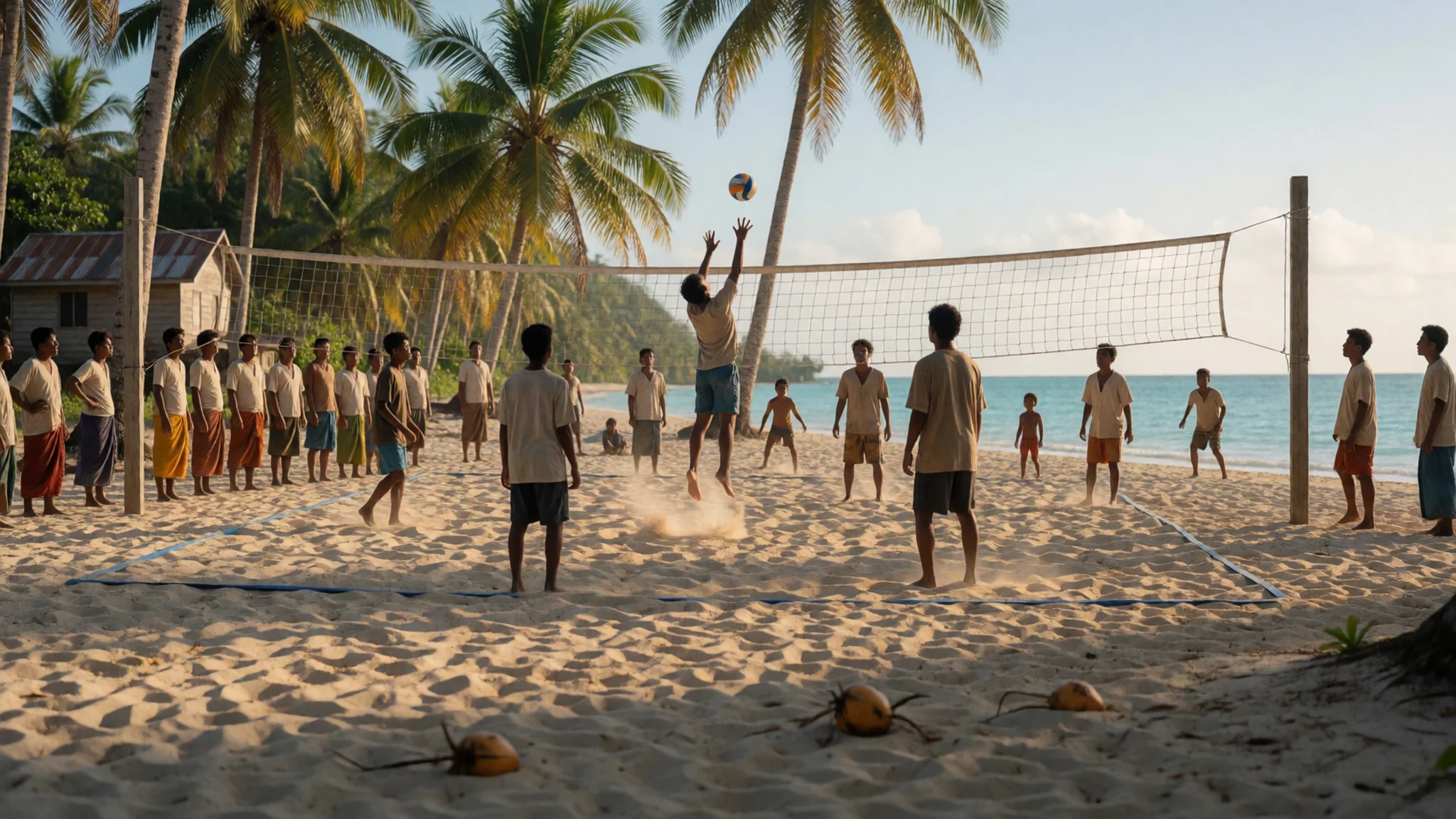
- The ring from above — Whole atoll
The clearest way to grasp Palmerston's shape is from orbit. Astronaut photographs show a ring of pale reef and small green islets around a turquoise lagoon, with dark ocean on every side. The images explain why landing is hard and why the lagoon matters so much.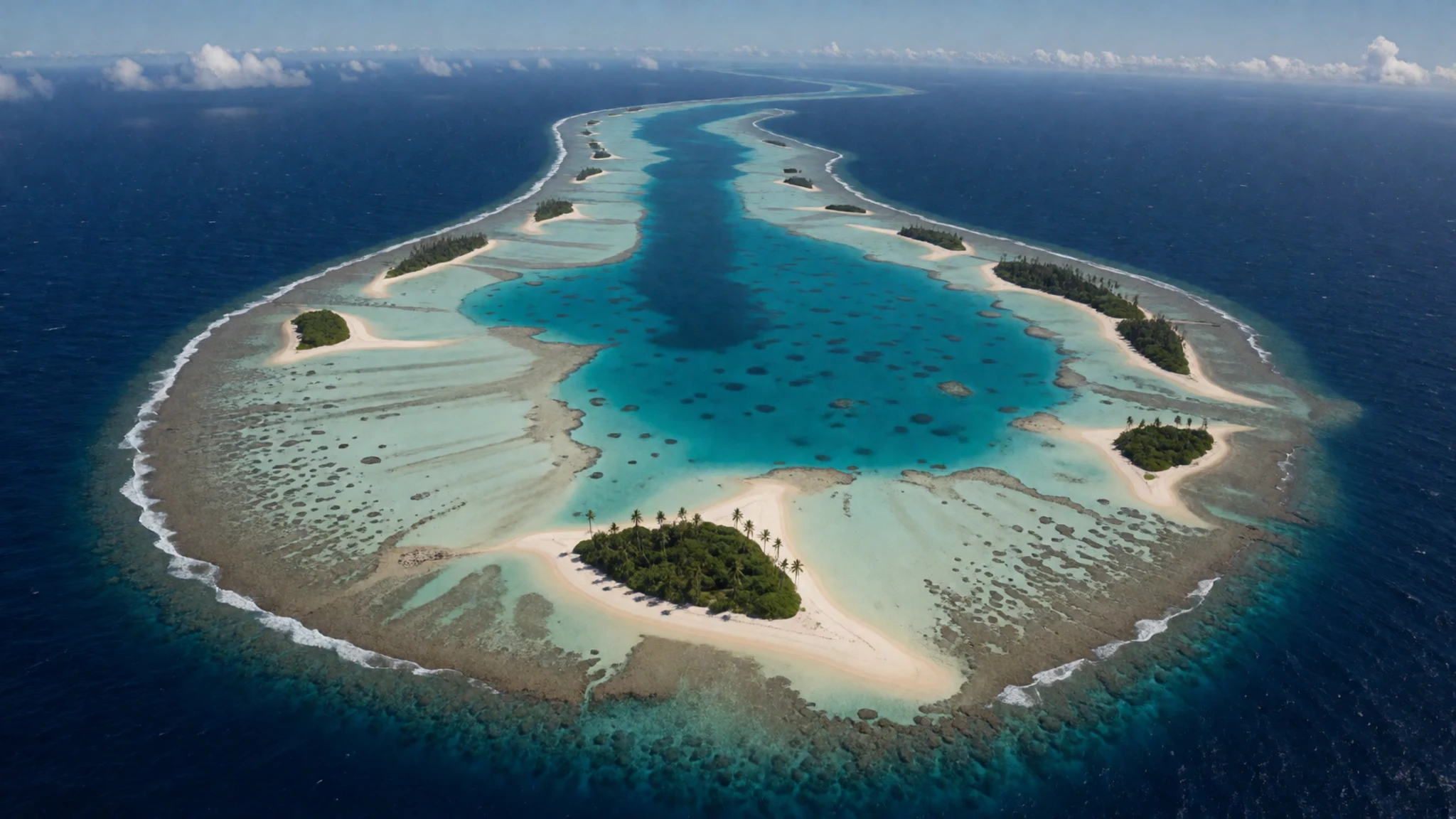
Culture
Palmerston's culture is that of a very small, closely knit community. Islanders are described as hardworking and honest, and they take their religion and traditions seriously without being solemn about them. They also enjoy a good party, and a visit often turns into a shared meal or a game. English is the home language, a legacy of the Marsters family's founder, though ties to Polynesian relatives on Tongareva and elsewhere in the Cook Islands remain strong. The island's three family branches each descend from one of the founder's wives, and tradition forbids marriage within a branch. Like any small community, it has its tensions between those groups, and these are the islanders' own business. Isolation shapes manners too. The telephone is the only link with the outside world, so arrivals are normally arranged in advance, and islanders often ask visitors to carry particular goods or mail from Rarotonga. Hospitality is real but it works both ways: the family that first greets a boat usually becomes its host. Gifts are welcome, and practical ones are valued most because supplies come only a few times a year. Bring useful gifts such as fuel, reading material or fruit, and keep any comment on the island's family politics to yourself.
What to wear
Palmerston's traditional dress belongs to the wider Cook Islands world. The pareu, a length of printed cotton wrapped round the body, is the classic everyday and festive garment, worn by women and men alike. Women's hats are woven from pandanus or other plant fibre, and flower garlands (ei) are given at welcomes and celebrations. Tivaevae, bright appliqué quilts, are the best-known textile of the group. What people wear day to day is simple: shorts, T-shirts and cotton shirts, bare feet or rubber sandals, and boating clothes for lagoon work. For church, tidier clothes are normal, with covered shoulders and knees for women. A visitor should pack for heat, sun and salt water. Light long-sleeved cotton shirts, a wide-brimmed hat and reef shoes make sense, and a sarong or pareu is useful on land. Swimwear belongs at the water, not in the settlement, and shoulders and knees should be covered when going to church or into the village. Everything gets wet on boat transfers, so quick-drying fabrics and a dry bag for phones and documents are worth carrying. Evenings can be breezy on the water, so a light layer helps.
What to eat
- Fresh reef and lagoon fish — At the host family's table
Fish from the lagoon and outside the reef is the staple of the island table. It is usually cooked simply, grilled or fried, and served fresh the same day. Eat it at the family home where a visitor is staying.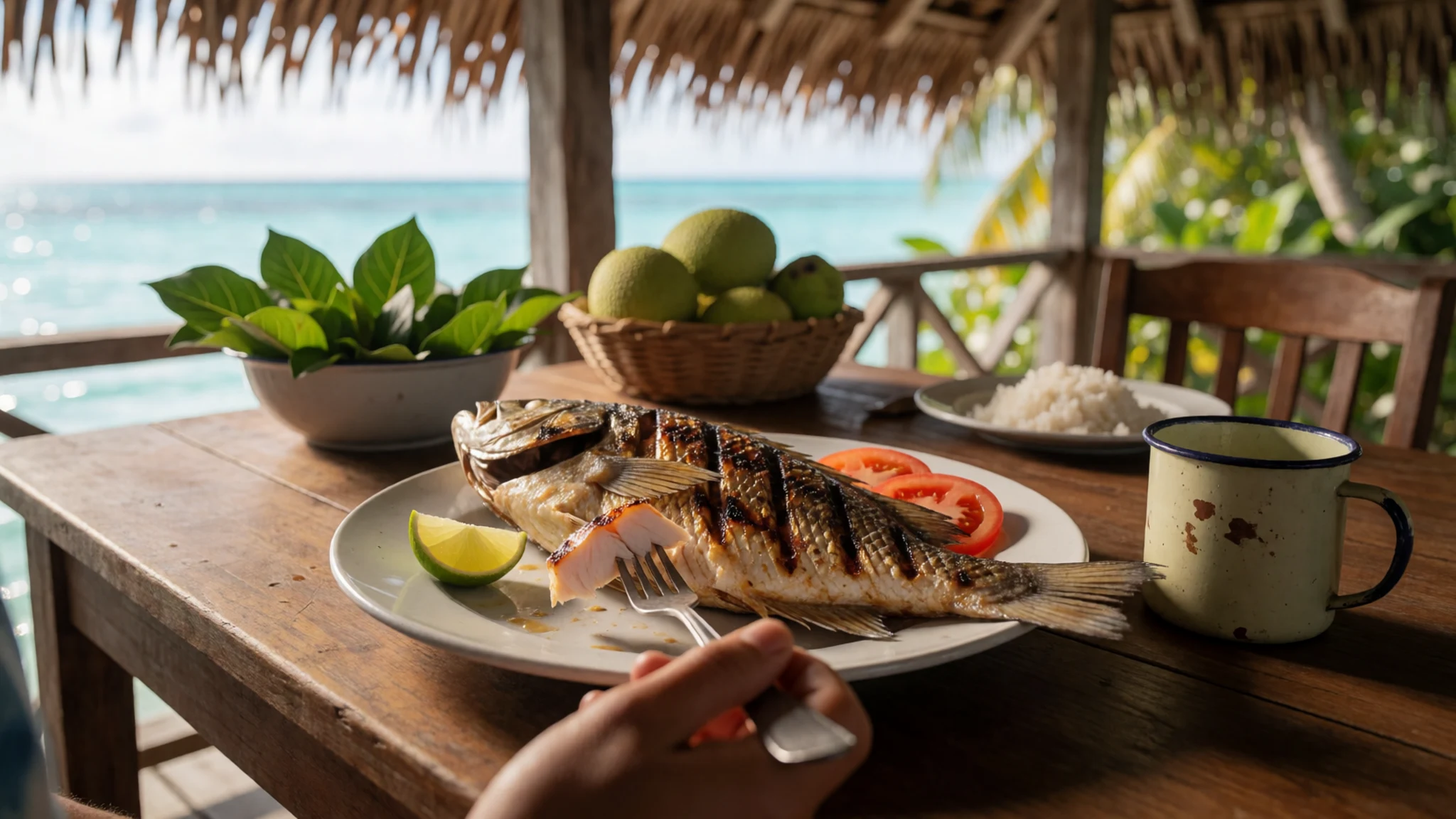
- Ika mata — Family homes and shared meals when fishing has gone well
Raw fish marinated in lime juice and finished with coconut cream is the classic dish of the Cook Islands. On Palmerston it depends on the day's catch. It is best eaten shortly after the boats come in.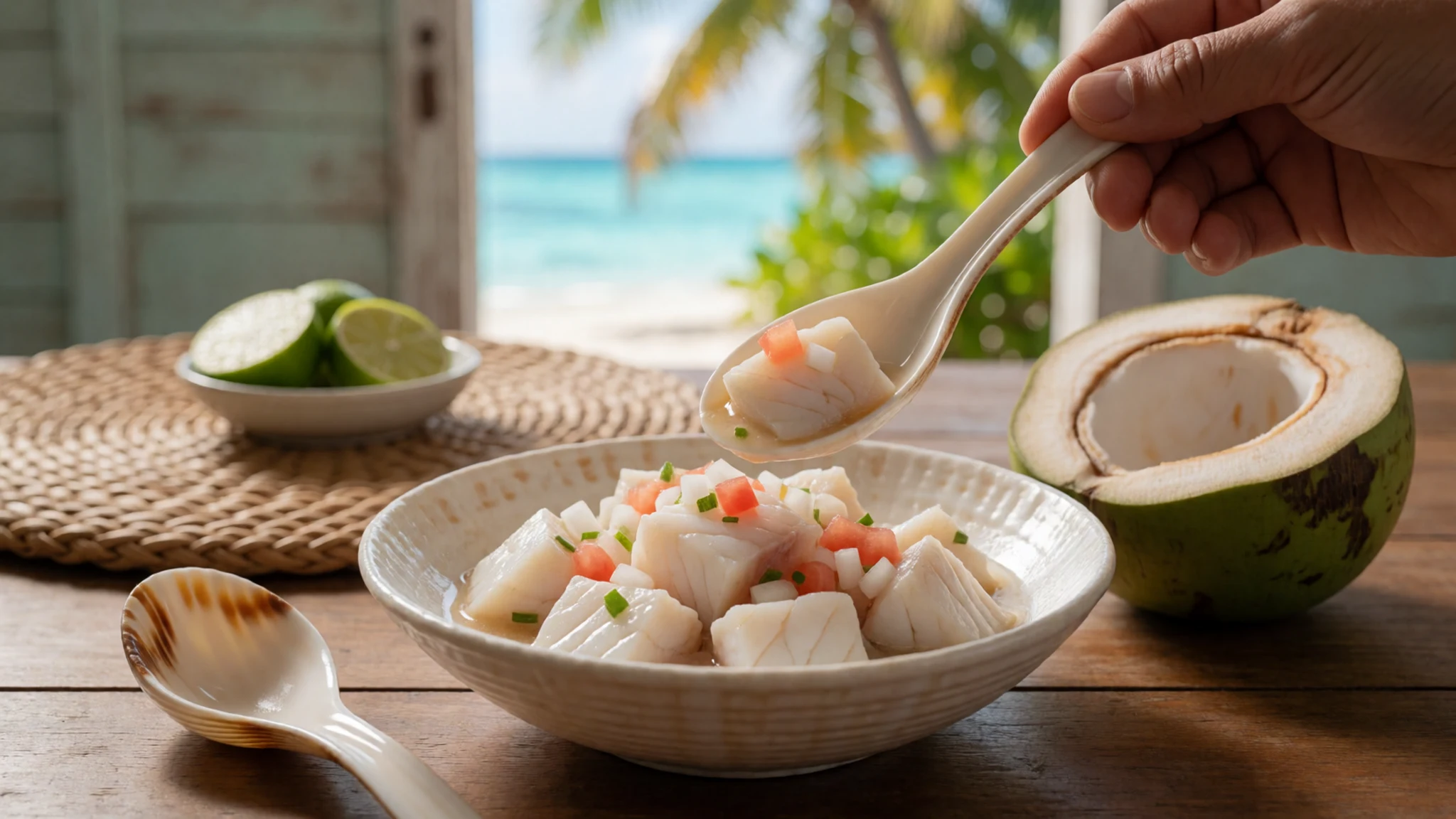
- Coconut — Gardens and groves around the settlement
Coconut is the island's everyday crop. Drinking nuts give a safe, sweet drink, and the flesh and cream go into many dishes. Palms line the islets, and islanders will usually show how nuts are opened. - Root crops and fruit from the gardens — Home cooking in the settlement
Taro and similar starchy roots, with whatever fruit is in season, fill out the plate beside the fish. Availability is limited on a small atoll, so what is served depends on the weather and the last supply boat. - Shared feast food — Community gatherings and celebrations
On a feast day or when a visiting boat is welcomed, families lay out many dishes together: fish, roots, bread and sweet items. The menu changes with the day, so the dishes here are indicative. Fruit and fresh produce are welcome contributions.
Plan it
Best time. Roughly May to October is the more settled season in the southern Pacific, and it is the sensible window for a crossing. Monsoon and hurricane seasons can be very wild, and sailing here is rough at the best of times, so check forecasts closely.
How long. 3–7
Getting there. Fly to Rarotonga, the main hub of the Cook Islands, about 470 km south-east of the atoll. The last leg is by private yacht or on an occasional supply boat, which may leave you waiting for the next one. Arrive in daylight so islanders can meet your boat, and rely on them to guide you through the narrow, treacherous passage into the lagoon.
Budget. mid
Tips
- Telephone ahead before setting out, and ask what goods, fuel or mail the islanders would like carried over
- Arrive by day so the islanders see you approaching and can come out to meet you
- Do not enter the lagoon without island help, as the passage is narrow and dangerous
- Only attempt the crossing if you are an accomplished sailor, and avoid the monsoon and hurricane seasons
- Plan for a homestay and bring your own supplies, as there is no resort and little to buy
Etiquette
- Accept the offer of the family that first greets you, as hosting is by custom
- Avoid comments on the island's family politics
- Bring useful gifts such as fuel, reading material or fruit
Nearby
Sources
- Wikidata Q2048265 (CC0)
- Wikipedia: Palmerston Island (rev 1383769346) (CC BY-SA 4.0)
- Wikivoyage: Palmerston Island (rev 4465247) (CC BY-SA 4.0)
- Palmerston ISS006 (NASA) (Public domain)
- Carte de Palmerston (Laurent Nevers) (CC BY 3.0)
- Cook Inseln Palmerston Atoll (NASA) (Public domain)
- View of the Cook Islands, ISS002-E-9626 (Public domain)
- Palmerston Atoll, ISS018-E-18152 (Public domain)
- Palmerston Atoll, ISS018-E-18153 (Public domain)
- Palmerston Atoll, ISS018-E-18154 (Public domain)
- Palmerston Atoll, ISS018-E-18155 (Public domain)


