Pukapuka
Pukapuka, Cook Islands
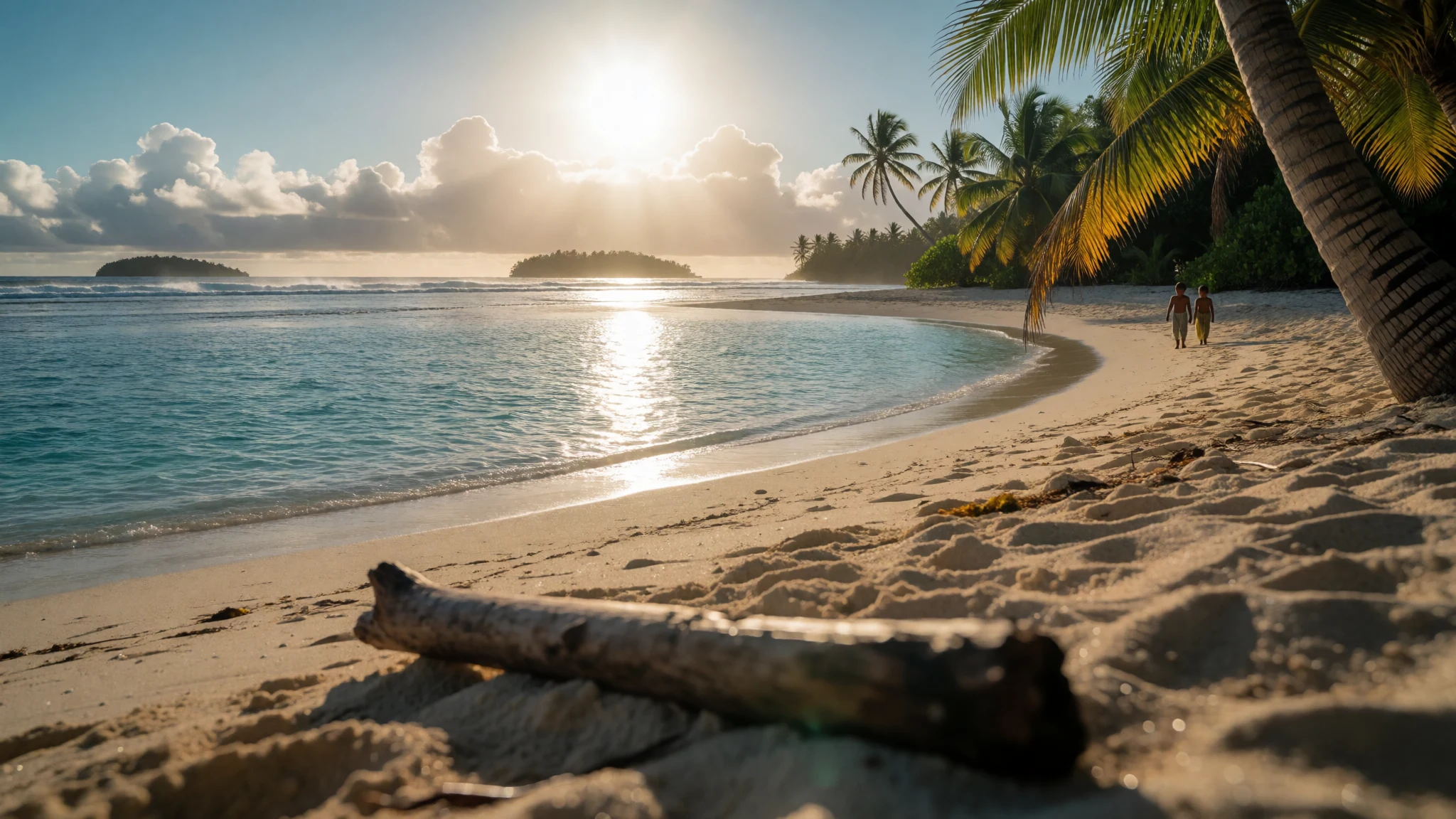
Pukapuka is a three-bladed coral atoll far out in the northern Cook Islands, where a distinct Polynesian language and way of life endure.
The place
Pukapuka sits in the northern Cook Islands, a ring of reef and sand with only a few small islets above water, and its highest ground rises about 11 metres above the sea. About 507 people live there, nearly all in three villages strung along one sheltered bay on the northern islet, Wale. The villages are Yātō, Loto and Ngake, though islanders also use nicknames borrowed from distant countries, and those names and flags come out when the villages compete at sport. Loto is where the island administration sits. The two southern islets, Motu Kō and Motu Kotawa, have no homes. They are worked by the whole community as gardens and coconut groves, growing taro and pulaka, and the airstrip is on Kō. Dry land totals roughly 3 square kilometres, so everything is close, and the lagoon and outer reef frame every view. Pukapuka is far from the rest of its nation. Rarotonga, the main island of the Cook Islands, lies about 1,140 kilometres to the south-east, and Samoa is nearer. That distance shapes daily life: supplies, visitors and news arrive slowly, and the island runs on shared effort. Nassau, a separate small island about 60 kilometres away, belongs to the people of Pukapuka and is run with a committee of its own. This is not a resort destination. A visit means fitting into a working community, with accommodation arranged well ahead and plans that bend around the weather and the flights.
Its story
Pukapuka's human story begins roughly 1,000 years ago, once the sea had settled near its present level. Oral tradition credits a Tongan god, Tamayei, with finding the atoll, and Tongan ancestors with settling it. Its position made it a stepping stone between West and East Polynesia. The language is Samoic and has absorbed some Tokelauan features, and stone adze blades were shaped from basalt that scientists have traced to a quarry on Tutuila in Samoa. Island memory also describes voyages to Tuvalu, Tokelau, Niue, Tonga, Rarotonga and Tahiti. The population was probably a thousand or more at first, and it has collapsed more than once. Tradition records civil wars and a catastrophic storm or wave that left few survivors, which oral histories place at about 1590. Blackbirding raids later cut the number to 340 by 1870. Europeans came late. The Spanish navigator Álvaro de Mendaña sighted the atoll in 1595 and named it San Bernardo. In 1765 a British expedition under John Byron found the surf and reef too fierce for a landing and called the place the Islands of Danger, which is why older maps say Danger Island. In 1796 a party from the American ship Otter, with the French adventurer Pierre François Péron aboard, went ashore, but the islanders would not let them explore. Local memory of earlier ship contact is blunter: a lineage chief named Tāwaki is remembered as being shot after a bold gesture towards a visiting captain.
What to see
- The lagoon and outer reef — Whole atoll
Pukapuka's lagoon is the heart of the atoll, a sheltered stretch of water inside a roughly triangular reef. The best sense of its shape comes from the sky, where the islets sit like blades of a fan. At ground level, the reef edge and calm inner shallows mark the line between open ocean and village life. Ask locally before swimming or fishing.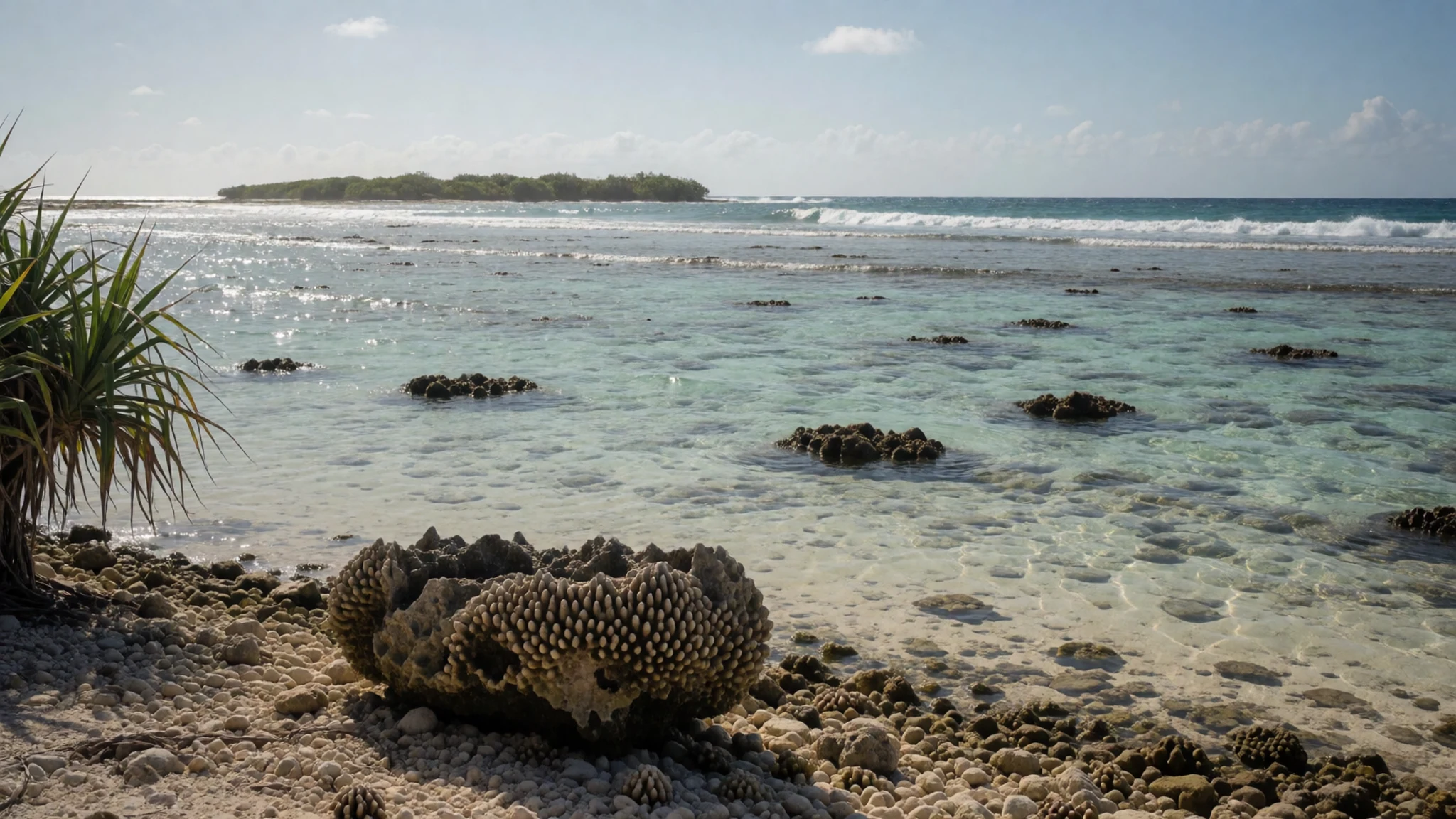
- Wale and its three villages — Northern islet
Wale, the northern islet, holds Yātō, Loto and Ngake along a crescent-shaped bay. Walking between them takes little time and shows the island's rhythm: gardens, boats on the shore, and the island administration in Loto. Each village has a traditional name and a nickname, so listen for them in conversation, especially around sports days.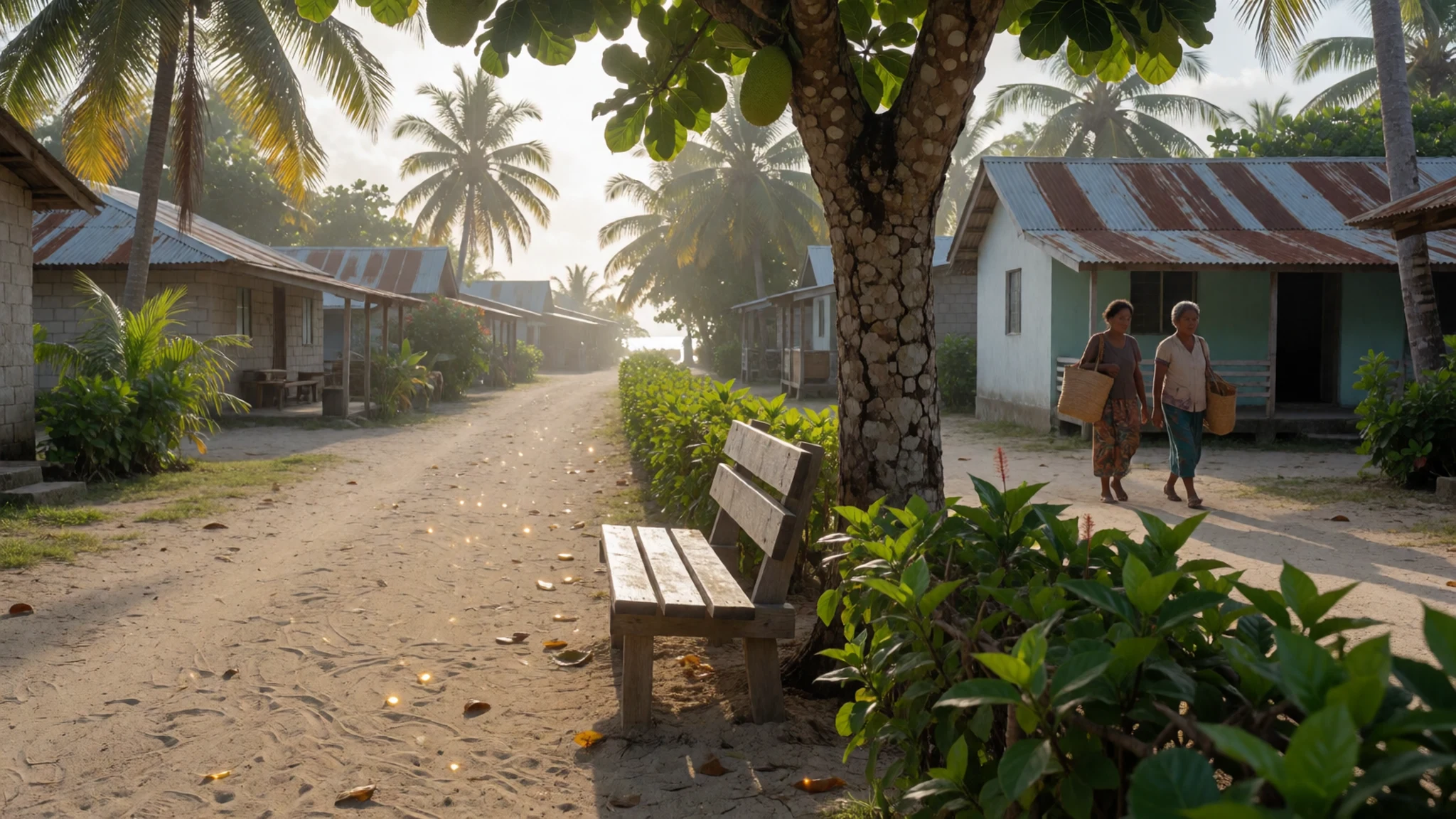
- Motu Kō — South-eastern islet
Motu Kō, the largest islet, lies to the south-east and has no village. It is a food reserve, with taro and pulaka gardens and coconut plantations tended by the community. The airstrip is also here, so many visitors first meet the island at its edge. Ask before walking through gardens, since they are working land.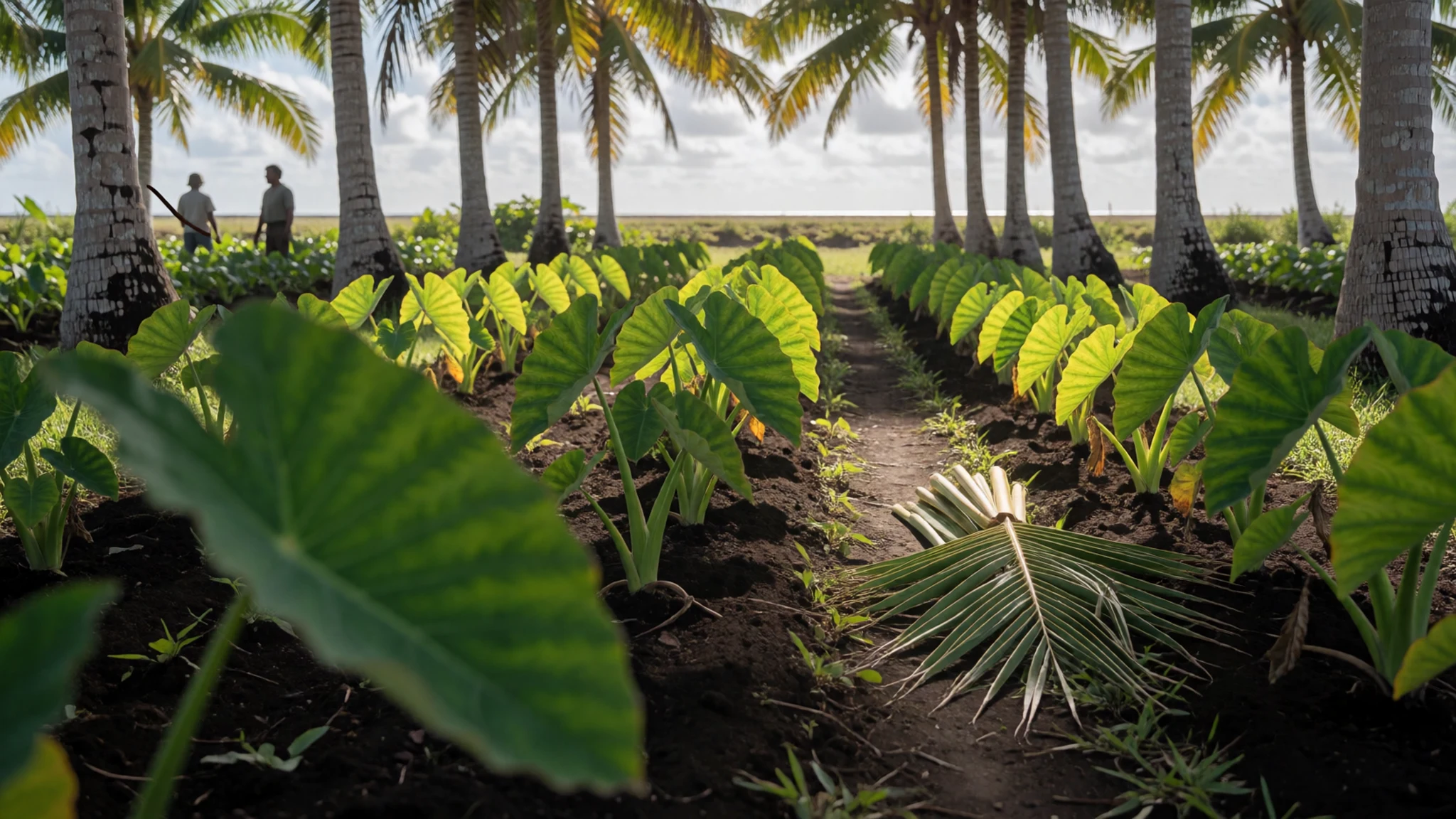
- Motu Kotawa (Frigatebird Island) — South-western islet
Motu Kotawa, also called Frigatebird Island, lies at the south-west of the atoll. Like Kō it is uninhabited and used for coconut and root-crop gardens. The name points to the seabirds that wheel overhead. Reaching it usually means a boat trip across the lagoon arranged with a local host, and the sea state decides the day.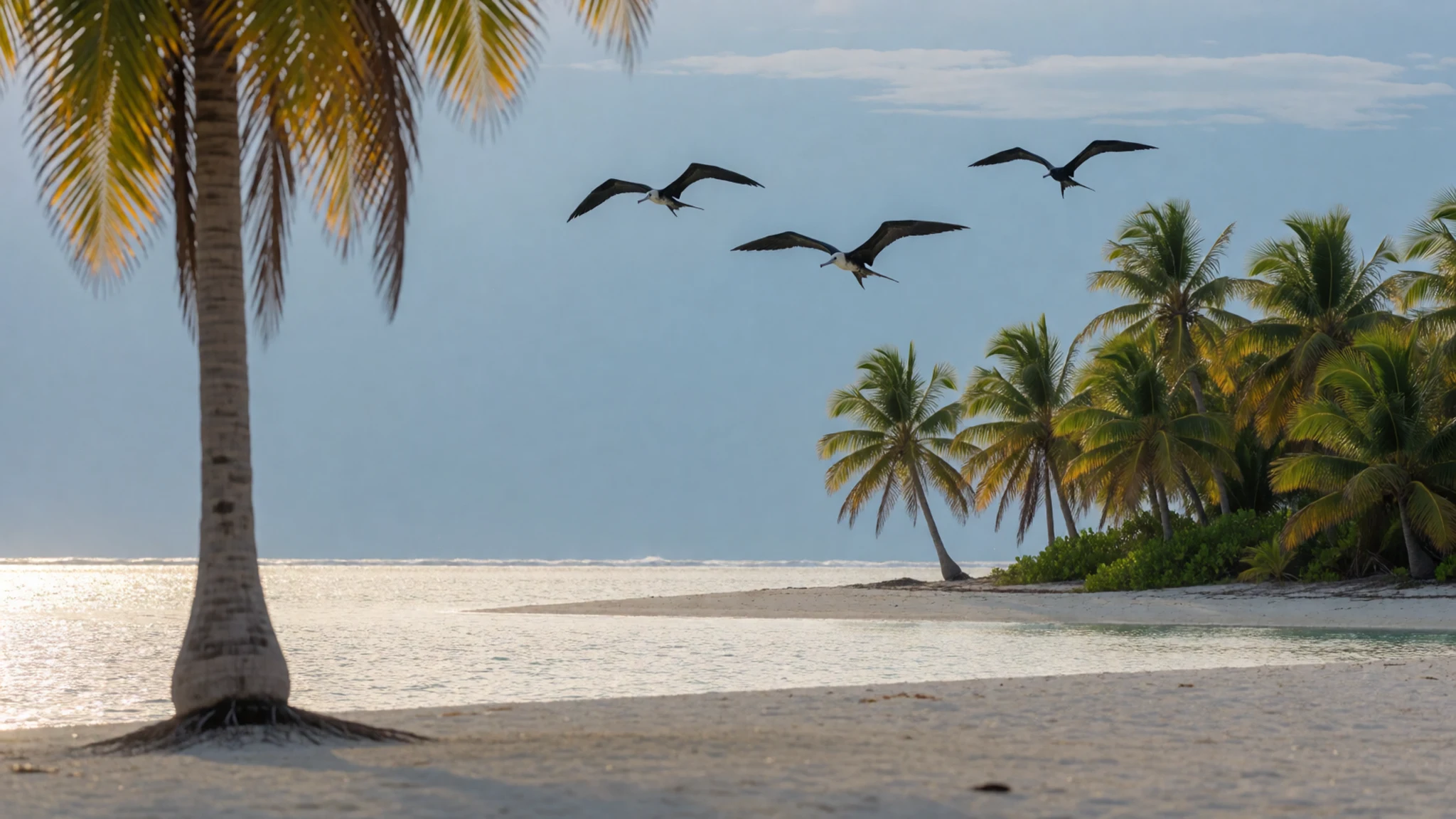
- Toka sand cay — Western edge of the atoll
Toka is a small sand cay on the western side of the atoll, divided from Motu Kotawa by a stretch of reef. It is a place for looking out over open water rather than for sights, and a reminder of how little dry land the atoll has. Go only with a local guide who knows the tides.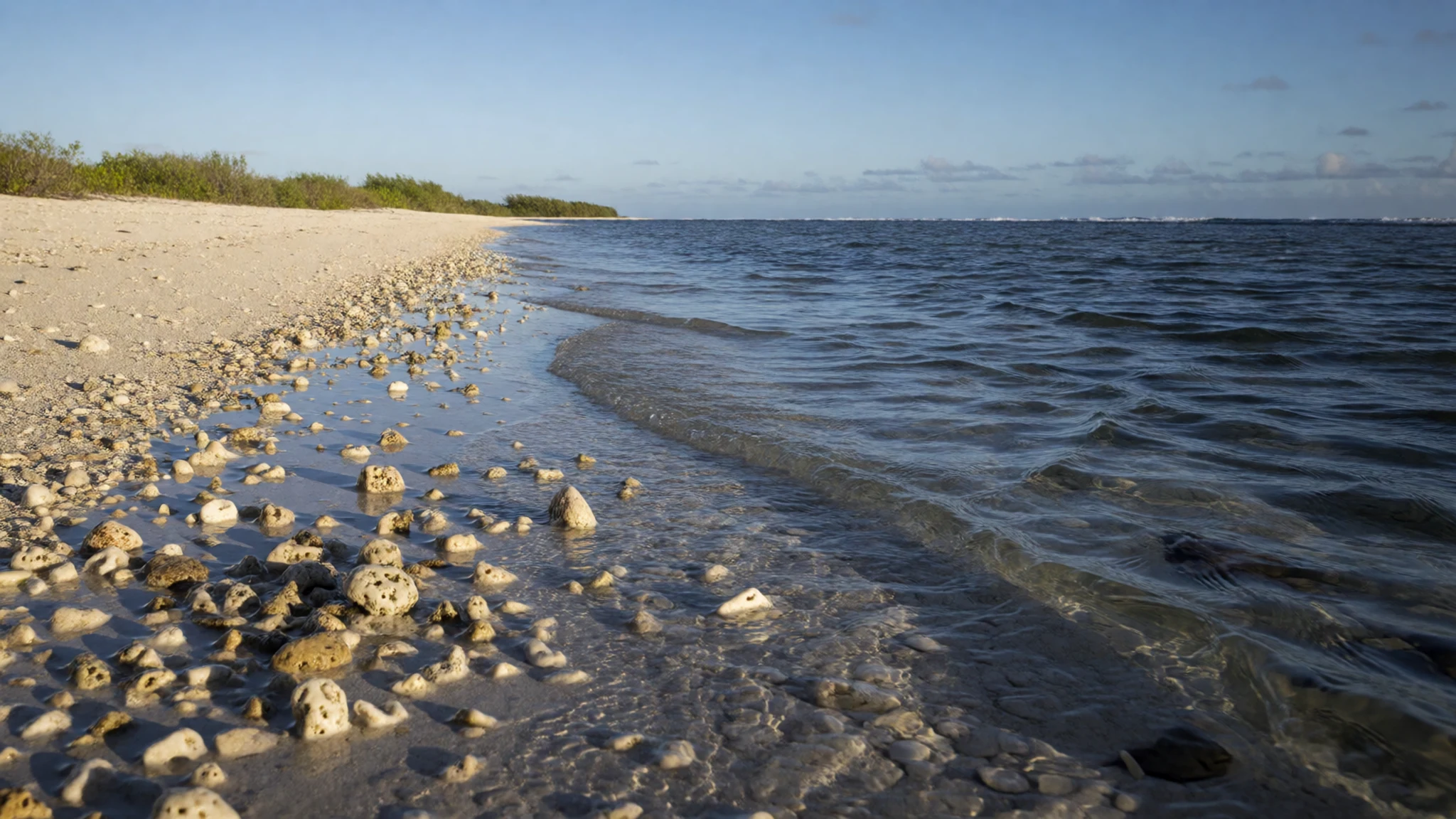
Culture
Pukapuka has its own language and customs, set apart from the other Cook Islands, and the community works hard to keep both alive. Identity is organised around the three villages, whose friendly rivalry shows in sport, with each side playing under a borrowed name and flag. Memory of the past is strong. Islanders trace their descent to survivors of a catastrophic storm and wave, and oral history is treated as a living record rather than folklore. The population has been shrinking in recent decades, with many families now based in New Zealand and Australia, and Pukapukans abroad sometimes travel home together in organised groups known as tele parties. Writers have long been drawn to the atoll. The American author Robert Dean Frisbie settled here in 1924, married a local woman and raised a family, hoping to find a place far from the noise of the wider world. His daughter Johnny's return to the island features in the 2021 documentary The Island in Me. Visitors are guests of a small community rather than customers of a tourism industry, and the pace is set by family, fishing, gardens and church. Expect to be asked who you are and why you came, and expect hospitality to come with a sense of obligation to behave well. Ask a host before photographing people, gardens or village gatherings, and dress modestly when walking through the villages.
What to wear
Pukapuka's own dress traditions are less documented than those of Rarotonga, so this picture draws on wider Cook Islands practice, much of which is likely to be familiar on the atoll. Traditional dress centres on the pareu, a length of printed cotton wrapped at the waist, and on woven items made from pandanus and coconut leaf, including mats and hats. Tivaevae, bright appliquéd quilts stitched by women, are made for gifts and celebrations rather than worn. Flower garlands and crowns appear at festivals, church events and welcomes. Day to day, people wear what suits heat and work: T-shirts, shorts, cotton dresses, wraps and rubber sandals, with reef shoes or bare feet along the shoreline. For Sunday services and community occasions, clothes are neater, and many women add a woven hat. Visitors should pack light, loose cotton that dries quickly, with knee-length shorts or skirts and sleeves that cover the shoulders for village walks and church. Bring a wide-brimmed hat, reef shoes for coral and sharp shells, and a sun shirt or rash vest, since there is little shade on the sand. Swimwear belongs on the beach and in the water, not in the village. A light rain jacket helps in the wetter months.
What to eat
- Fresh reef and lagoon fish — Family meals and the shoreline where boats land
On an atoll, fish is the daily protein. Catches from the lagoon and reef are grilled over coals, fried or boiled soon after landing. Ask a host what was caught that morning, and be ready to eat it simply, with salt, lime or coconut.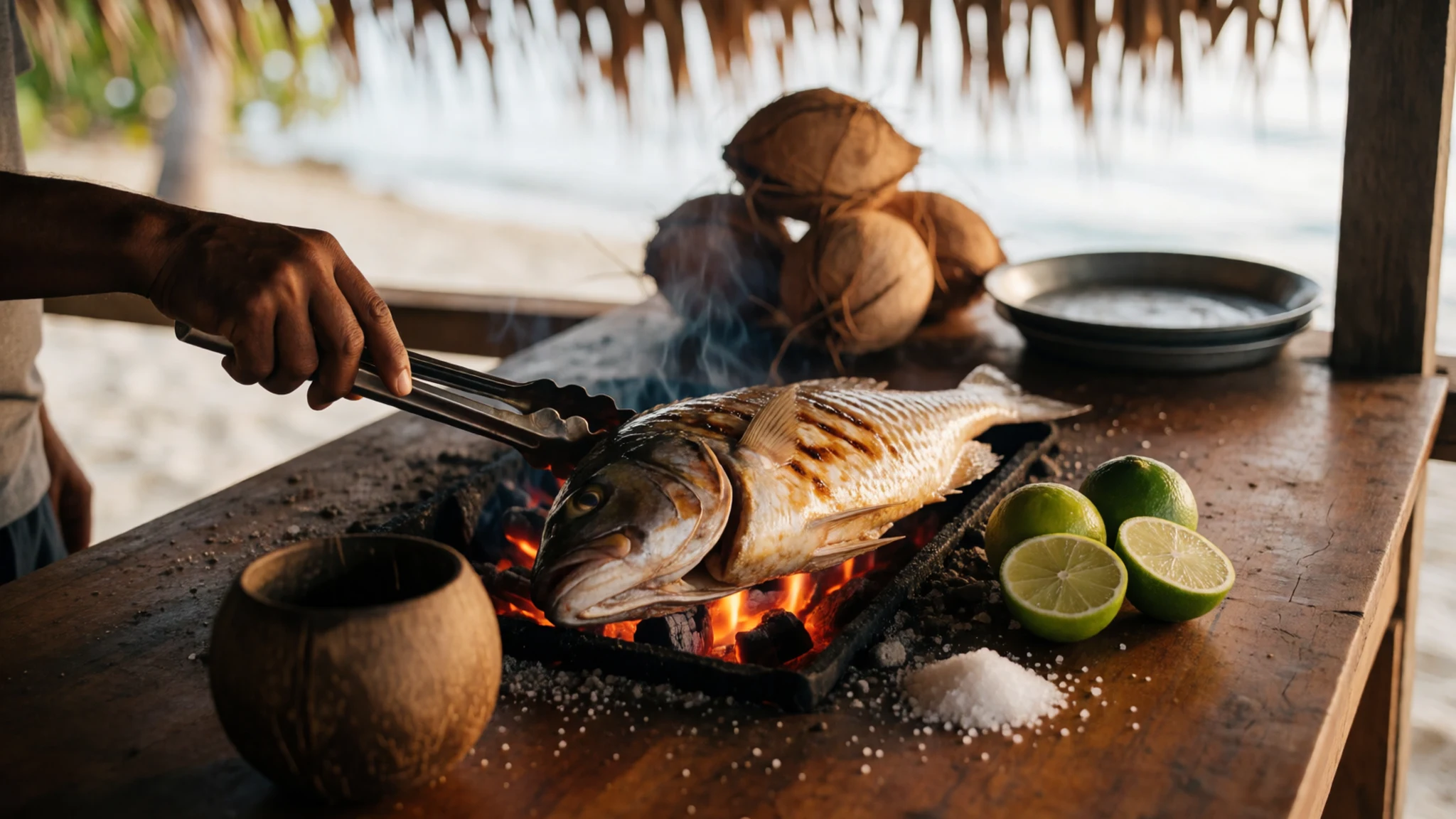
- Ika mata — Community feasts and family tables
Raw fish marinated in lime juice and finished with coconut cream, a staple across the Cook Islands. The fish is cut small and served chilled where possible. It is bright, sharp and creamy together, and usually appears when there is something to celebrate.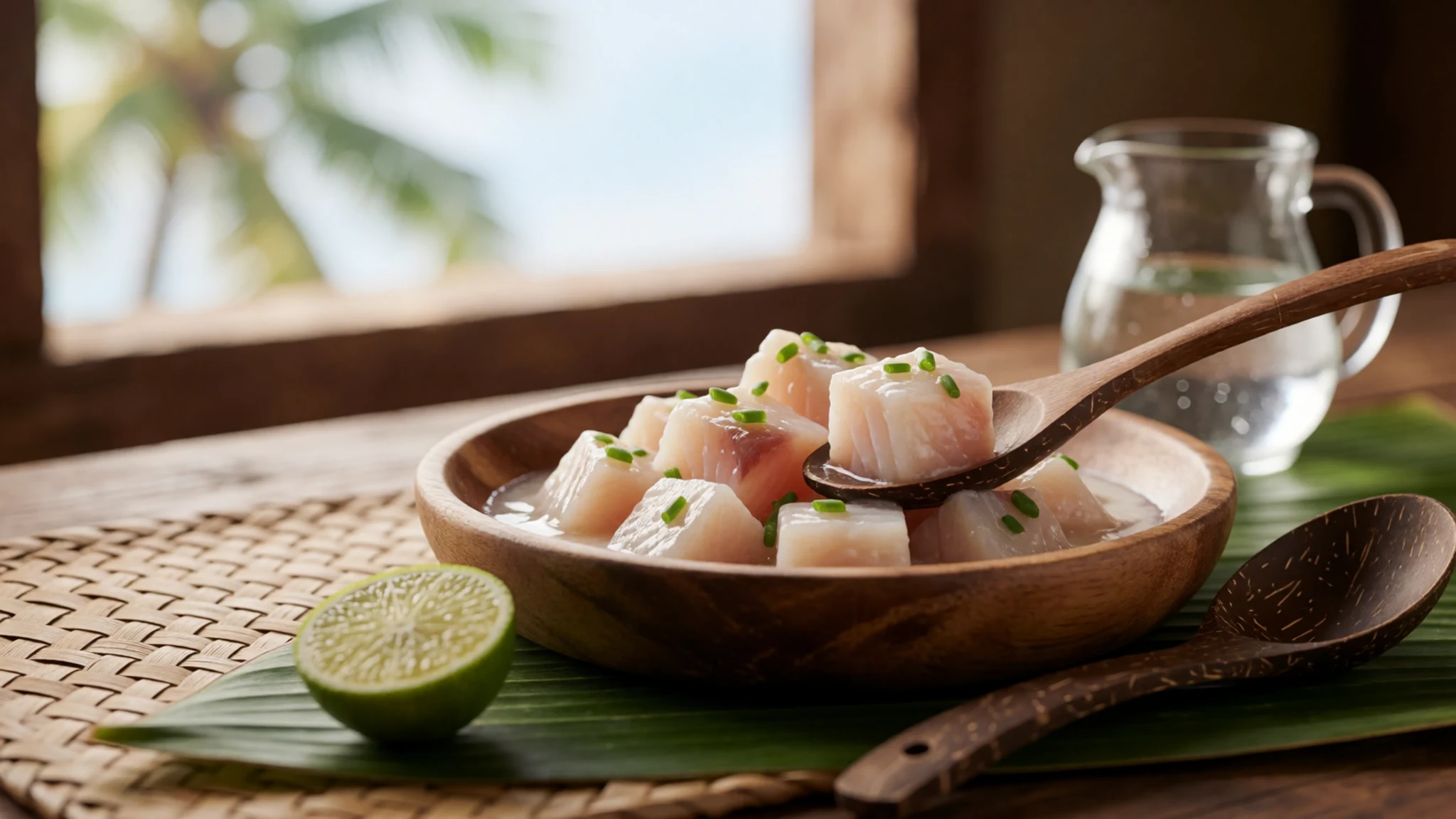
- Pulaka — Village meals, from the gardens on Kō and Kotawa
Pulaka is a swamp taro grown in pits on the uninhabited islets, and it is central to island food. It is boiled or baked until soft and eaten with fish or coconut dishes. Its starchy, filling character suits a place with little farmland. - Taro — Shared meals in the villages
Taro grows in the island gardens and is cooked as a plain boiled side or mashed into sweet puddings with coconut. It is mild and dense, and it carries the flavour of whatever it sits beside. It is often part of a larger shared spread. - Coconut in its many forms — Any household, and the coconut groves on the outer islets
Drinking nuts give cool, lightly sweet water in the heat, and the flesh is grated and squeezed for cream that enriches fish, root crops and desserts. Coconut is the island's most useful crop, and almost every meal touches it somewhere.
Plan it
Best time. May to October is generally drier and a little cooler, which makes it the easier half of the year for walking and boat trips. November to April is hotter, more humid and wetter, and falls in the South Pacific cyclone season. In practice, travel dates follow the flight schedule more than the weather.
How long. 5–7
Getting there. Fly to Rarotonga, then take the five-hour Air Rarotonga flight to Pukapuka Airport on Motu Kō. These flights run on government charters roughly every six weeks, so dates need checking directly with the airline and the island administration. Pukapukan groups increasingly route through Samoa. The last leg, from Kō to the villages on Wale, is local transport arranged by your host. For general background, see the island page at http://www.cookislands.org.uk/pukapuka.htm.
Budget. high
Tips
- Confirm your return flight before leaving Rarotonga; with charters about six weeks apart, a missed or cancelled flight means a long wait.
- Arrange accommodation and meals well ahead through the island administration or a host, and do not count on cards or cash machines; bring cash.
- Bring sun protection, insect repellent, reef shoes and any medication you need, since shops and health care are limited.
- Carry plenty of drinking water and ask your host how to get safe water during your stay.
- Pack light but allow extra days in your plans for delayed boats or flights.
Etiquette
- Ask before photographing people, gardens or village events.
- Dress modestly in the villages and on Sundays, with shoulders and knees covered.
- Accept hospitality graciously and offer to help or contribute, as the island's supplies are limited.
Nearby
Sources
- Wikidata Q1130629 (CC0)
- Wikipedia: Pukapuka (rev 1374798187) (CC BY-SA 4.0)
- NASA astronaut image of Pukapuka Atoll, via Wikimedia Commons (Public domain)
- Aerial photograph of Pukapuka Atoll, EwanSmith, via Wikimedia Commons (CC BY 3.0)
- Carte de Pukapuka, Nevers, via Wikimedia Commons (Public domain)
- ISS002-E-9622, View of the Cook Islands, NASA, via Wikimedia Commons (Public domain)
- ISS002-E-9915, View of the Cook Islands, NASA, via Wikimedia Commons (Public domain)
- Map of Pukapuka Atoll, Mr Minton, via Wikimedia Commons (CC BY 2.5)
- Solar PV array on Pukapuka, NZ MFAT, via Wikimedia Commons (CC BY 4.0)
- Map of the change to the United States in the Pacific Ocean, 4 August 1965, Golbez, via Wikimedia Commons (CC BY-SA 1.0)
- Wikivoyage (CC BY-SA 4.0)


Wildlife
- Great frigatebird (animal)
The great frigatebird is a big seabird that rides the sky like a living kite. On Pukapuka, look towards Motu Kotawa, also known as Frigatebird Island, in the atoll's south-west. Ask a local guide to take you there, as they will know the best way to go and how to visit without disturbing the birds. Keep a good distance, stay quiet and let the birds go about their day, using binoculars for a closer view. Never feed them.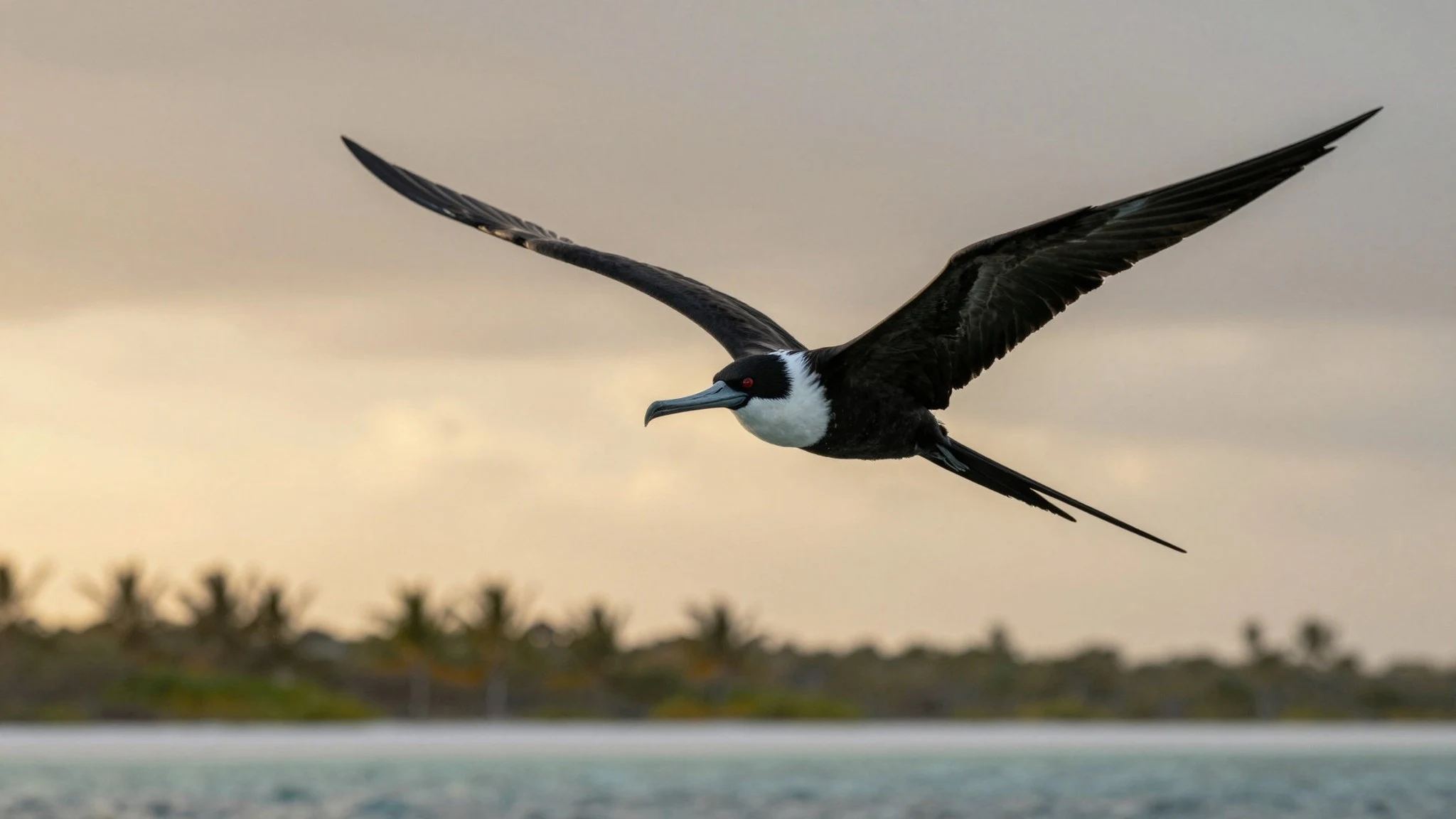
- Great frigatebird (bird)
The great frigatebird is a big seabird that rides the sky like a living kite. On Pukapuka, look towards Motu Kotawa, also known as Frigatebird Island, in the atoll's south-west. Ask a local guide to take you there, as they will know the best way to go and how to visit without disturbing the birds. Keep a good distance, stay quiet and let the birds go about their day, using binoculars for a closer view. Never feed them.