Seongsan Ilchulbong
Seongsan Ilchulbong, South Korea
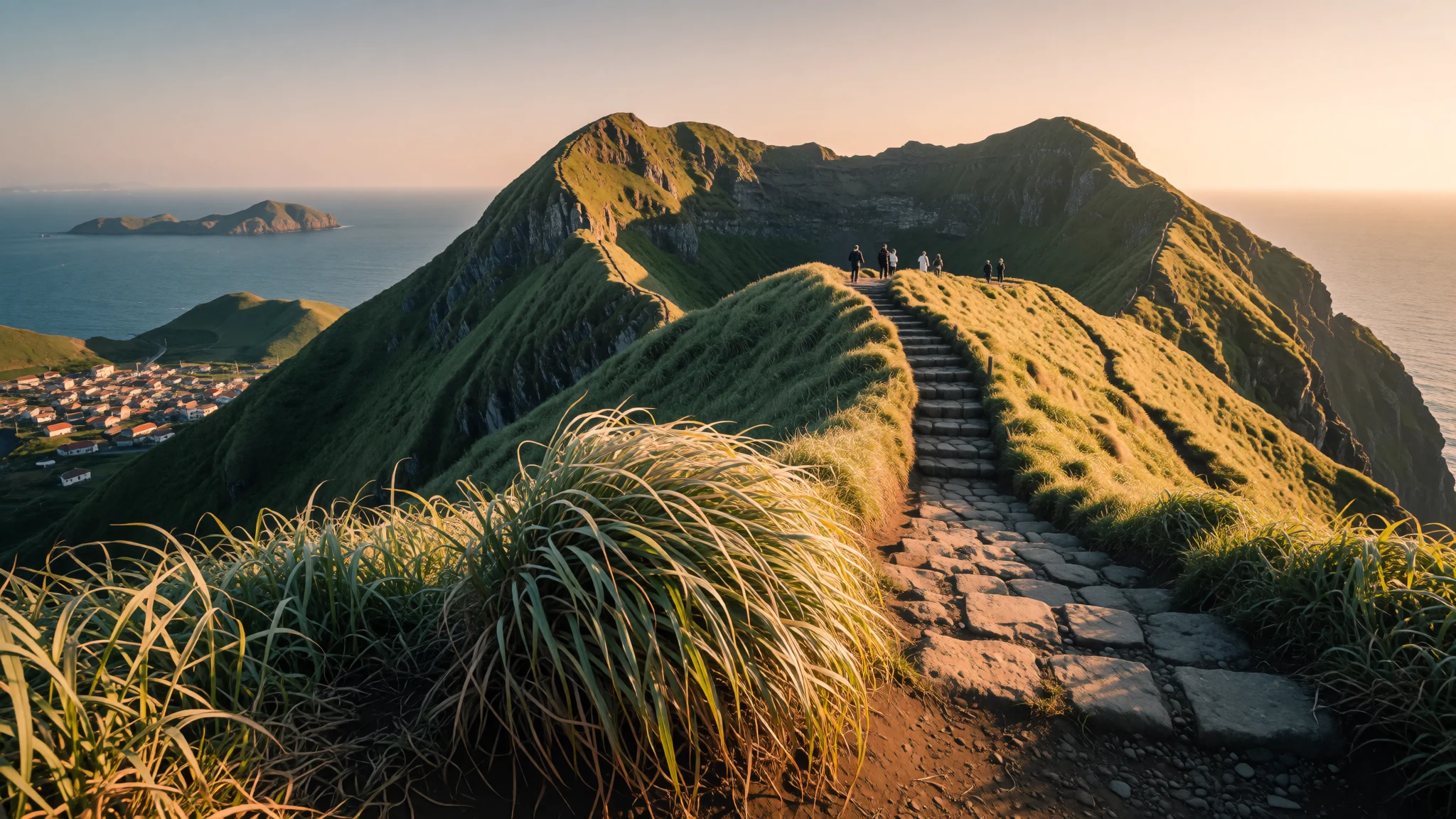
Seongsan Ilchulbong is a sea-cliff tuff cone on eastern Jeju where the crater rim frames the first light over the water.
The place
Seongsan Ilchulbong (성산일출봉) stands at the eastern end of Jeju, a grass-covered tuff cone whose crater faces the open sea. The Korean name pairs a fortress-like mountain with the peak of sunrise: from the water the rim reads as a ring of stone battlements, and the reason people climb is the dawn. Unlike the island's broad lava shield inland, this cone was built by wet eruptions, when hot magma met shallow seawater and shattered into ash. That ash hardened into pale rock, then weathered into cliffs on the ocean side and gentler green slopes inland, so the peak looks sheer from a boat and walkable from the village. The cone is no longer offshore. Sediment and later lava tied it to Jeju, leaving a short neck of land between Seongsan harbour and the fields. A stepped path climbs the landward flank through meadow and tighter stairs, then opens onto the rim. Inside, the crater is a bowl of grass and rock; outside, the cliff drops to surf. On clear mornings the low island of Udo sits across a short strait, and fishing boats leave the harbour while the sky is still grey. Wind defines the headland. Jeju's easterlies arrive with nothing to slow them, so the grass stays short and cloud can sit on the rim even when the west of the island is bright. Summer brings humid air and typhoons; winter leaves the trail passable but bitter in a northerly. At the harbour the scale changes. Stone walls, small boats and the working shore of Seongsan-ri sit under the peak. The cone is the landmark; the village is the lived place, with divers, fish stalls and a coast road. Spring and autumn bring clean light and an easier climb.
Its story
Seongsan Ilchulbong earned its name from shape and from an appointment with the sun. Seongsan, the fortress mountain, is a rim that looks built: a closed wall of rock above the eastern water. Ilchulbong, the sunrise peak, names the habit. For generations people from Seongsan-ri and from across Jeju have come in the dark to stand on that wall as the sun leaves the sea. The climb is short enough to finish before breakfast and exposed enough that a hard wind is what visitors remember. The rock tells an older story. Jeju is volcanic, and this headland is a wet eruption: molten rock met shallow water, steam blew the melt apart, and ash settled into a cone whose crater opens towards the waves. Shoreline debris and later lava then tied the cone to the main island. A local tale adds a joke. The rim is a crowd of rock points, and anyone who tried to count them is said to have lost the tally, as if the mountain refused a finished total. The skyline was never straightened into a smooth cinder cone. It still looks like a fort left unfinished, which is why the fortress name has lasted. The peak also belongs to a working coast. Haenyeo, the women divers of Seongsan, have long gathered seafood from reefs in sight of the cone, and the harbour still starts early for them. Sunrise tourism joined that hour later: coaches before dawn, a queue on the stairs, cameras along the rim, then a walk down into a village selling the night's catch. The older appointment and the newer crowd share the path. In a strong wind the cone feels older than both.
What to see
- Crater rim at dawn — summit circuit
Seongsan Ilchulbong's rim path is the reason for the early start. It runs along the crater edge, grass inward and a drop towards the sea, with the bowl of the crater just below. The path is busiest while the sky is still dim, full of people watching the same point on the horizon. The light comes fast, then the crowd thins as walkers complete the circuit and turn back down.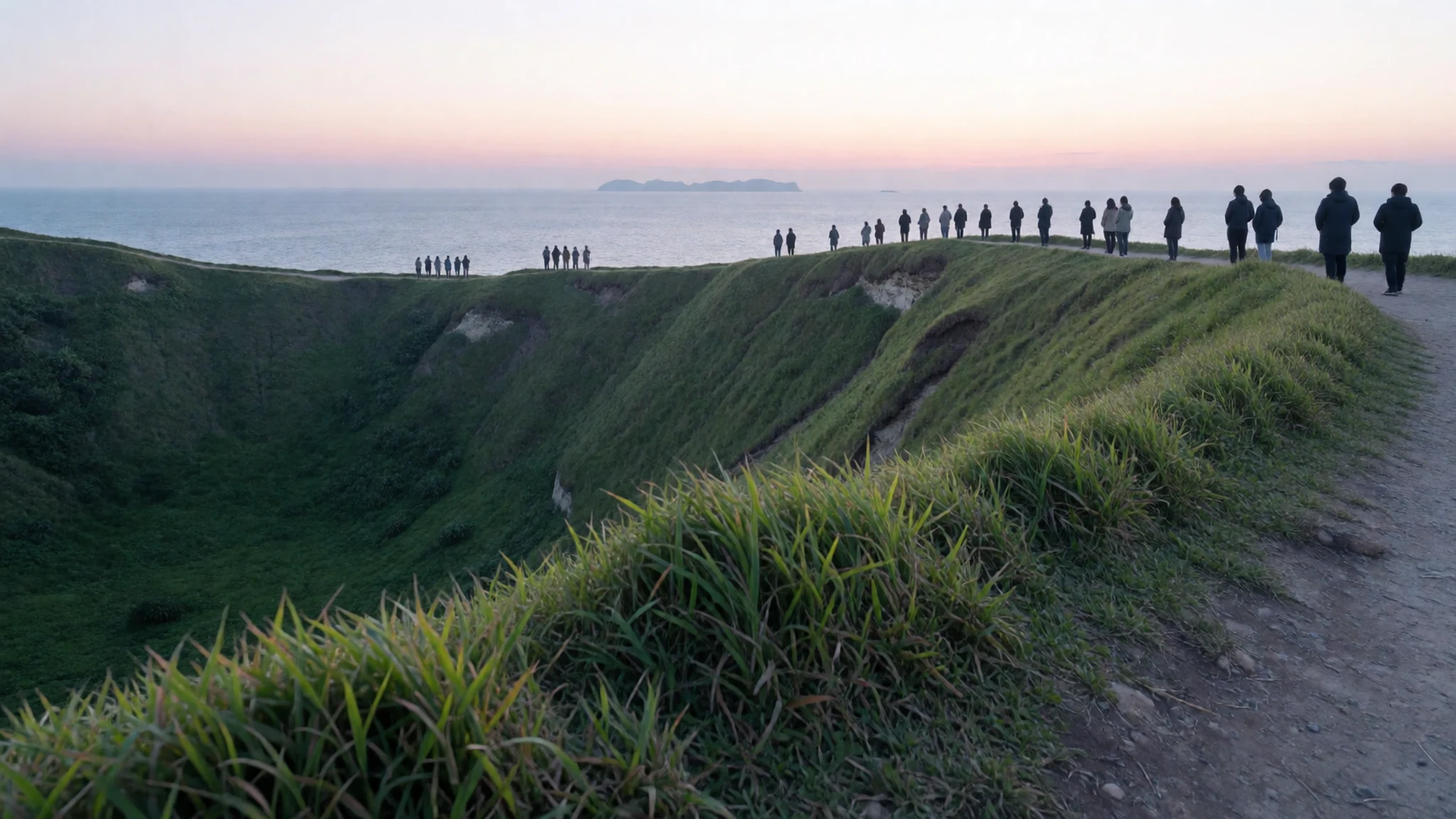
- Meadow stair — landward slope above Seongsan-ri
The landward approach to Seongsan Ilchulbong begins in open grass and becomes a long stair. The slope looks gentle from the coast road and feels steeper once the steps start, with little shade and a view back over fields towards the village. Most people walk it in the dark on the way up and see the meadows only on the way down, when the green flank fills the foreground.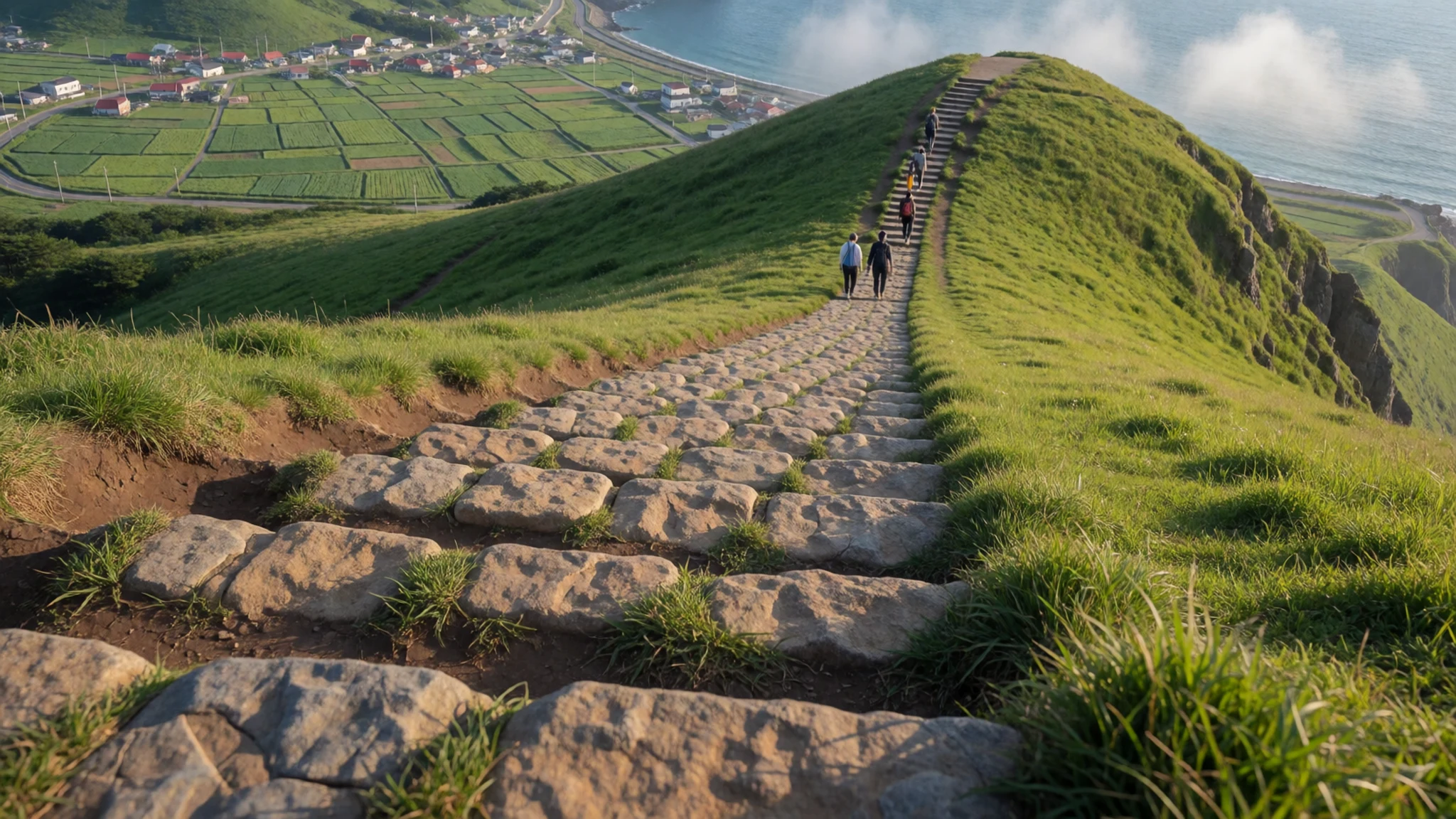
- Seaward cliff — ocean face, seen from Seongsan harbour
From the water, Seongsan Ilchulbong stops looking like a hill. The ocean side is a cliff of pale tuff, steeply cut, with the crater rim jagged against the sky and grass only along the skyline. Boats out of Seongsan harbour pass under that face, and the path used by walkers is a thin line on the far side, easy to miss from the sea. Morning light rakes the layered ash.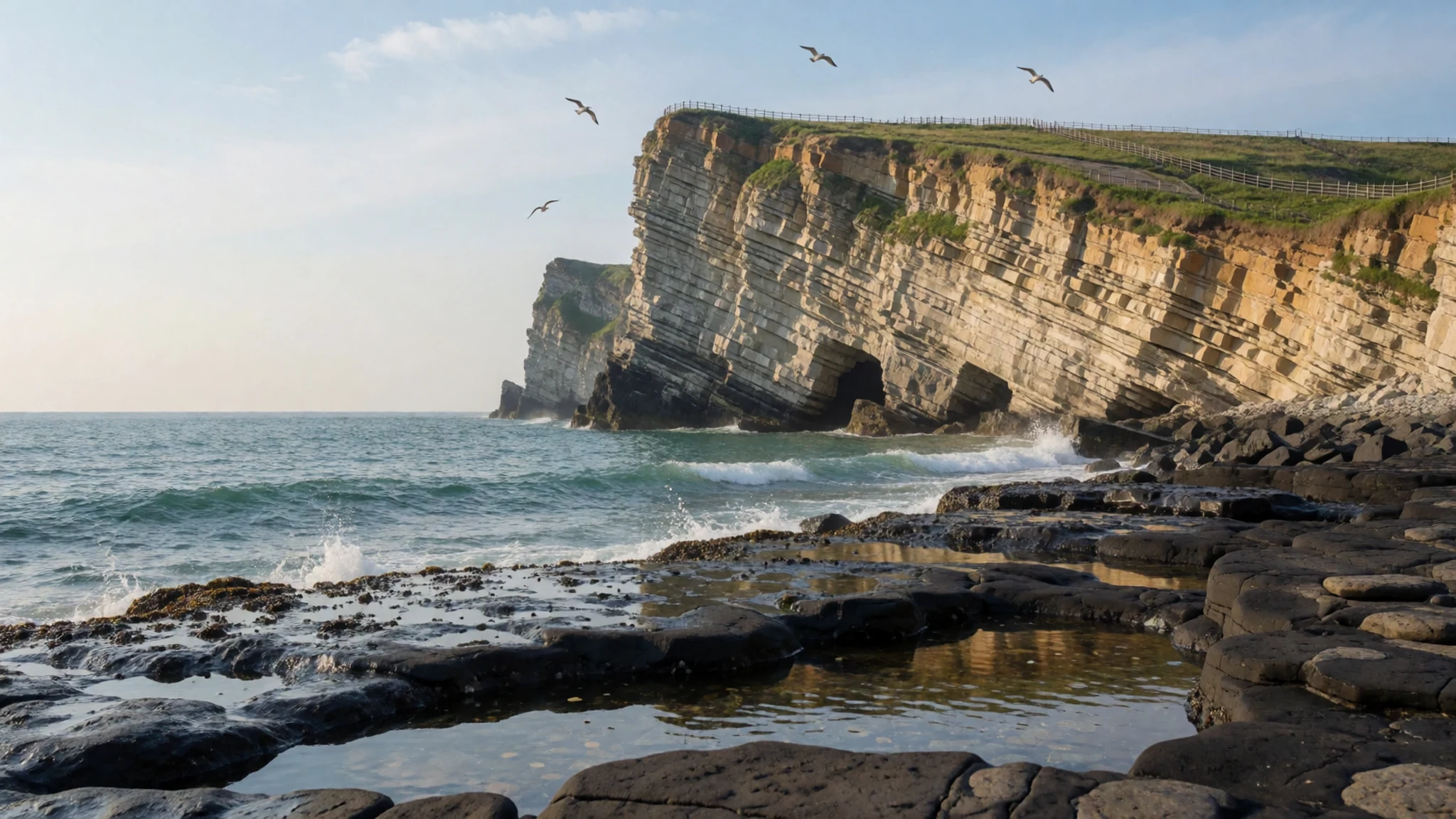
- Summit outlook — crater rim
The outlook from the top of Seongsan Ilchulbong takes in both sea and village. Once the sun is up, the strait towards Udo turns silver, with small craft crossing to that low island. The other way looks over the roofs of Seongsan-ri, the harbour and the coast fields below the grass. Haze flattens both views; clear air keeps the island's outline and the village lanes sharp.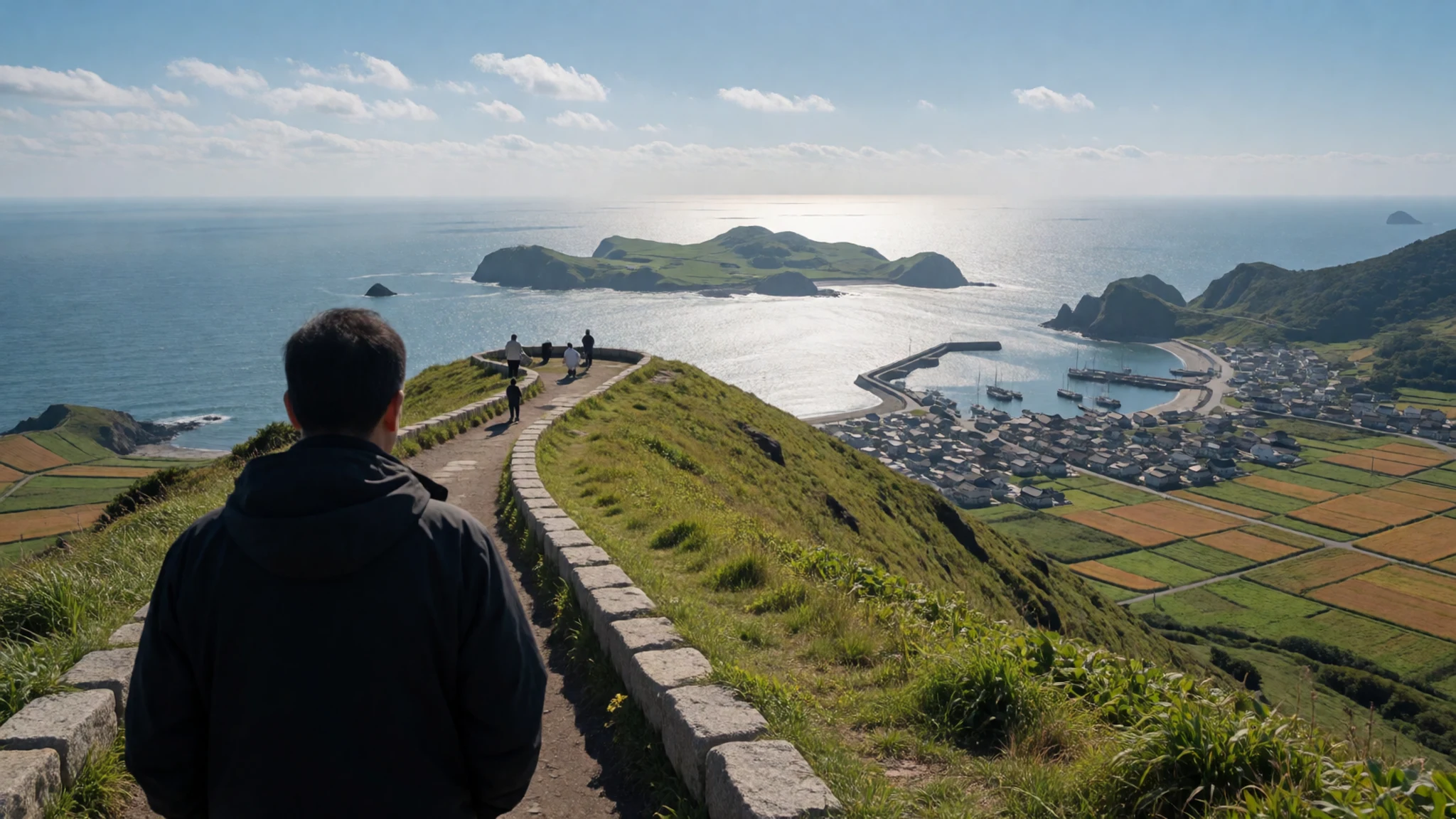
- Seongsan harbour — Seongsan harbour
Seongsan harbour sits at the foot of Seongsan Ilchulbong and keeps the peak honest. Fishing boats, dive gear and seafood stalls occupy the waterfront while the cone rises behind them, so the postcard and the workplace share a frame. Early risers come down off the summit into a shore that is already busy. The haenyeo sort their catch nearby, and grilled shellfish on the quay belongs to the visit.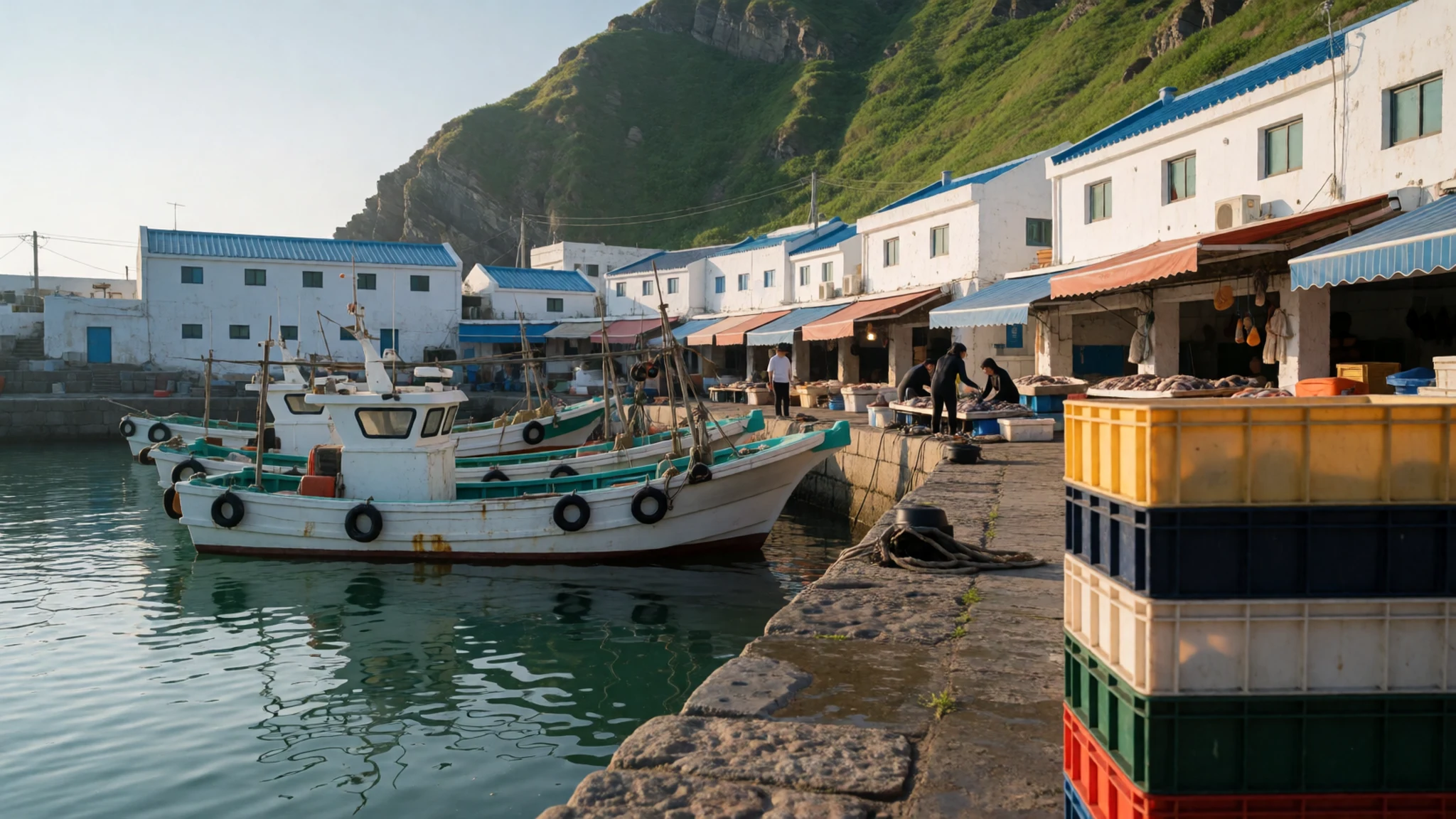
Culture
Seongsan Ilchulbong is both a scenic climb and a village landmark, and the culture around it is Jeju's rather than Seoul's. The island kept its own speech, shamanic practice and a diver tradition that the mainland never matched. In Seongsan-ri the haenyeo are the public face of that difference: women who dive for shellfish and seaweed, organise in village associations, and still change into their kit within sight of the cone. Their work is not a show staged for the summit crowd, even when visitors are welcome to watch from the quay. Shamanic ritual, the gut, remains part of Jeju life in a way that surprises travellers who only know mainland temple Buddhism. Small shrines and seasonal rites sit alongside ordinary fishing. Sunrise at the peak has become a shared civic habit: families, newlyweds and tour groups treat the first light as an occasion, then eat together in the harbour. The landscape is protected by custom as well as by rules. Plants on the cone are low and slow, and the grass is not a picnic lawn. Stay on the built path, keep voices down while people are watching the sun come up, and give working haenyeo room on the quay.
What to wear
Seongsan Ilchulbong has no costume of its own, so dress here follows Jeju. The formal traditional clothing is hanbok, still worn for weddings and festivals: jeogori jacket and chima skirt or baji trousers, in silk or ramie, with the island's taste leaning towards strong colour. The working textile is different again. Haenyeo once dived in a cotton mulot that clung when wet, and now wear black rubber suits, with lead weights, masks and tewak floats. That black kit on the quay is the traditional dress visitors actually see, not hanbok on the crater. Everyday clothes in Seongsan-ri are ordinary Korean coastal dress: practical layers, sun caps, sandals near the boats and trainers on the road. The path is windy, often damp, and the stairs ask for grip, so people who live here do not climb in loose sandals. A windproof layer, even in mild months, earns its place on the rim; the harbour can feel calm while the crater edge tugs at a jacket. Shoes need a sole that holds on the wet deck, and a free hand helps on the stair. Shoulders and legs need no special covering for the cone itself, but the same clothes should look tidy enough for a village meal afterwards. Summer calls for sun protection, and the cooler months call for a warm mid-layer.
What to eat
- Jeonbokjuk — harbour eateries in Seongsan
Seongsan Ilchulbong's harbour serves jeonbokjuk, abalone porridge of rice simmered soft in a broth that tastes of the shellfish. It is the bowl people order after a dawn climb, in eateries facing the boats. The abalone often comes from haenyeo on this shore.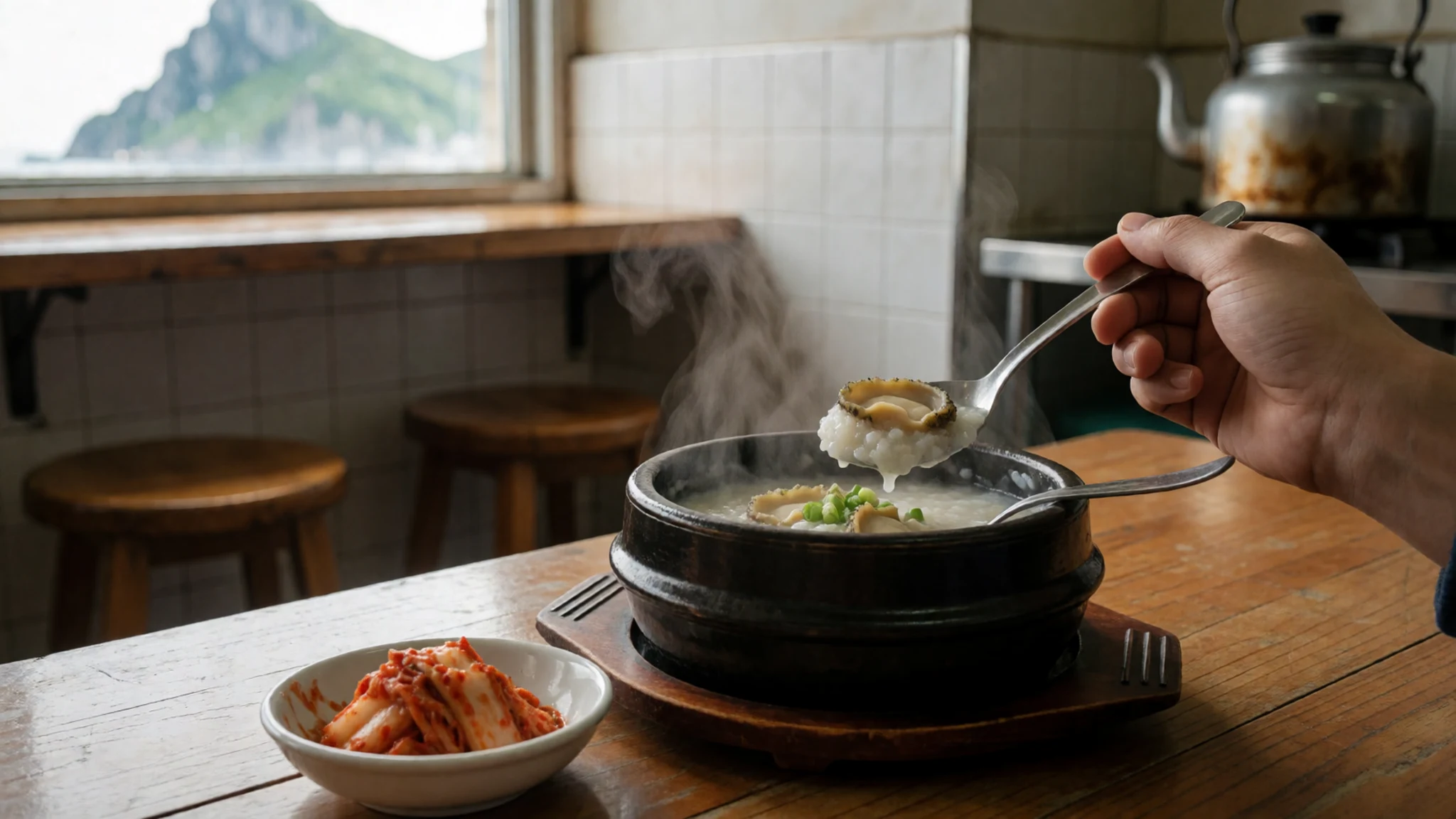
- Grilled shellfish — stalls and seafood houses along Seongsan harbour
Grilled shellfish is the louder plate beside that quiet porridge. Conch, abalone and the morning's fish turn up over charcoal in stalls and small seafood houses along Seongsan harbour, under Seongsan Ilchulbong. The smoke drifts across the quay. What matters is the day's catch.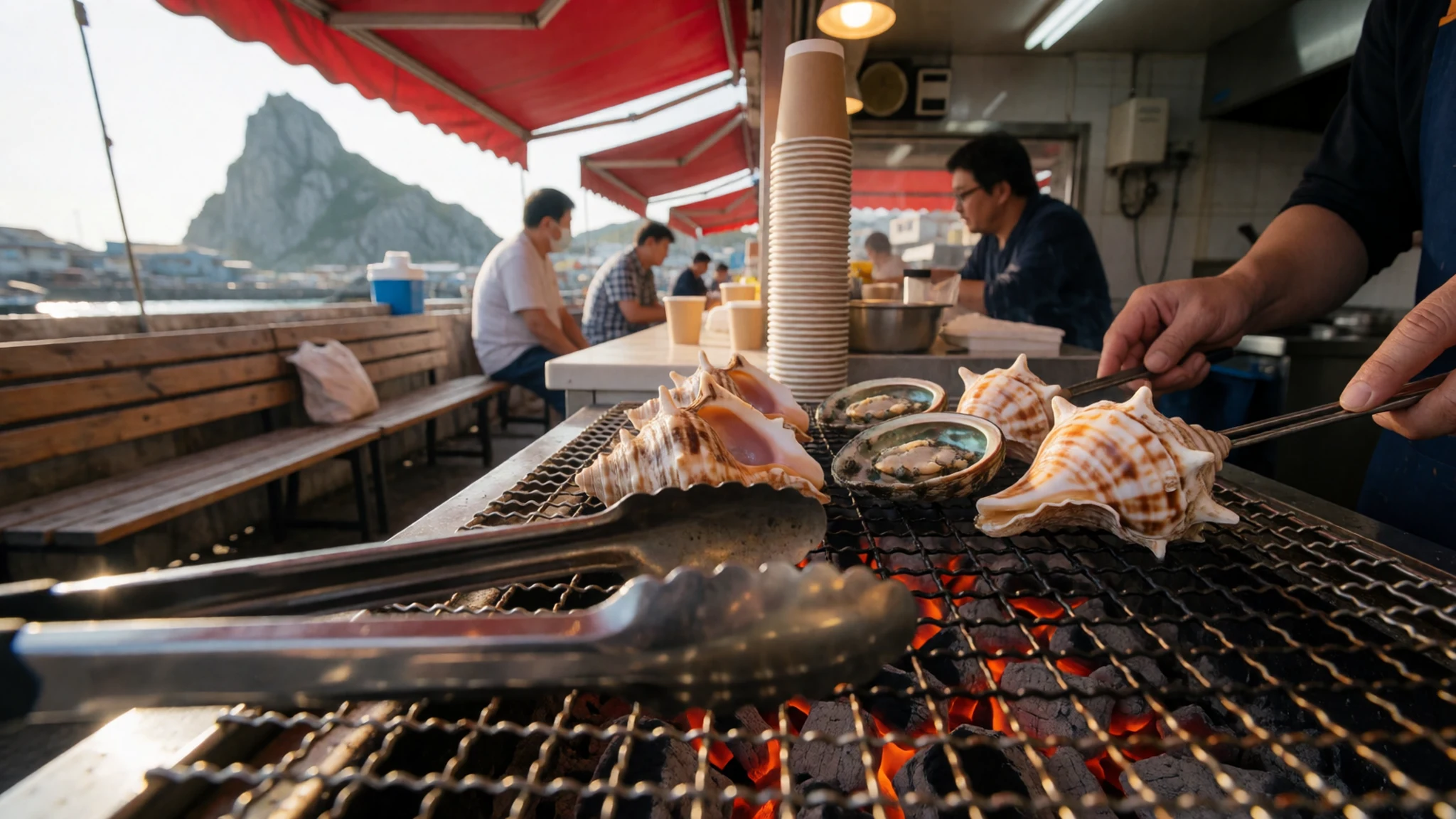
- Seongge — harbour counters at Seongsan
Seongge, sea urchin, is eaten raw around Seongsan Ilchulbong when calm water has let the divers bring it in. The orange roe is sweet and briny, served in the shell or over rice at harbour counters. Some mornings the stalls have it, and some mornings none. - Heukdwaeji — meat eateries in Seongsan-ri and on the eastern coast road
Jeju black pork, heukdwaeji, is grilled in strips and eaten with garlic, salted sesame oil and lettuce wraps. It is the island's meat meal on a day built around Seongsan Ilchulbong. Meat eateries in Seongsan-ri and along the eastern coast road serve it, away from the seafood quay. - Hallabong — roadside stalls on the eastern coast and in the village
Jeju citrus, especially hallabong with its pebbled rind and a bump at the stem, is sold from roadside stalls and small shops on the eastern coast. Near Seongsan Ilchulbong the fruit stands sit beside the coast road and in the village.
Plan it
Best time. At Seongsan Ilchulbong, April, May, October and November, when dawns are often clear and the stair is neither scoured by winter wind nor wrapped in summer humidity and typhoon rain. Flowering meadows make the spring climb gentler. Winter sunrises can be sharp, but the rim wind is punishing.
How long. 1–2
Getting there. Fly into Jeju International Airport or take a ferry to Jeju, then a bus or taxi east to Seongsan harbour. Seongsan Ilchulbong rises beside the harbour road, a short walk from the stops. Confirm the day's buses locally; routes change, and the sunrise departure is the journey that matters.
Budget. mid
Tips
- Begin in the dark if the sunrise is the aim; the rim path fills quickly once the sky lightens.
- Expect a harder wind on the crater edge than in the village, and turn back if the gusts make the rim path unsafe.
- Wear shoes that grip on the wet deck; sea mist and rain make the wooden stairs slick.
- Carry water for the exposed climb, and a little cash for harbour stalls that may not take cards.
Etiquette
- Stay on the built path and keep off the crater grass.
- Keep voices low while people are watching the sun rise, and do not stop on the stairs for photographs.
- Ask before photographing haenyeo at work, and leave them space on the quay.
- Do not pick plants or take stones from the cone.
Nearby
Sources
- Wikidata (CC0)
- Wikipedia (CC BY-SA 4.0)
- Wikivoyage (CC BY-SA 4.0)