Bogildo Island
Bogildo Island, South Korea
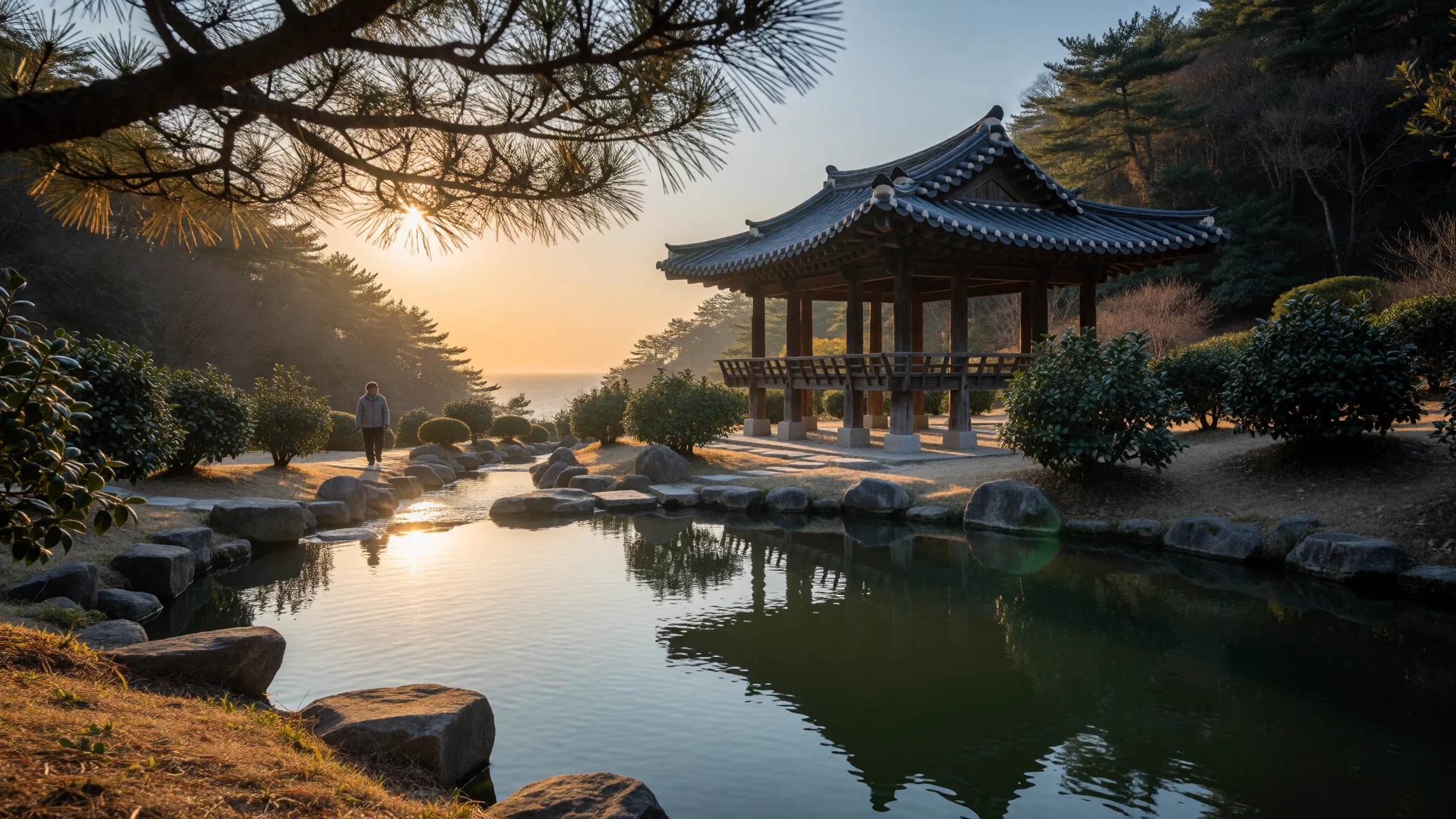
Bogildo is a quiet South Korean island where a Joseon-era poet built his garden, with pebble beaches, forested hills and a slow fishing-village pace.
The place
Bogildo is an island in the south of South Korea, run as the township of Bogil-myeon within Wando County. It is reached by sea, and that shapes everything: the pace is slow, the roads are short, and the main livelihoods are fishing, small-scale farming and the visitors who come for the shoreline. The coast alternates between dark rounded pebbles and pale sand, with low forested hills behind. Those hills hold evergreen broadleaf woodland, a sign of the mild maritime climate that warm offshore currents bring. Camellia groves survive around some of the villages, oak stands cover the slopes of the main peak, Jeokjabong, and the shoreline has its own thickets of hardy coastal shrubs. The island is compact, and a day with a hired car or the local bus covers the main sights, though an overnight stay lets the place settle. The most visited ground is the garden valley that the poet Yun Seon-do named Buyongdong, close to the village of Buhang-ri. The beaches lie along the south and east, and a rocky viewpoint marks the western tip. Small islets are visible from the beaches, which gives the water a layered look on clear days. Winters are cool but rarely harsh, summers are warm and damp, and rain can arrive in any season. Crowds gather at the beaches in summer and thin out sharply outside the holidays, which makes spring and autumn the easier months for walking. Bogildo is not developed in the manner of Korea's busier resort coasts, and that restraint is much of its appeal.
Its story
Bogildo's story is mostly the story of one man. Yun Seon-do, a Joseon-era scholar-official and poet, was sailing towards Jeju Island when weather forced his boat to put in here. He liked what he found: a sheltered valley, hills closing round it, and a coast within walking distance. He decided to stay and built a garden estate in that valley, which he named Buyongdong. Over the years he laid out a study, a pavilion beside a pond, and a mountainside retreat reached by a steep climb, each placed to frame a particular view. The poetry he wrote while living here, including the seasonal cycle known as The Fisherman's Four Seasons, remains well known in Korea, and a literature park on the island is built around it. After his time the island went through the ordinary shifts of local administration. It was placed under a mainland county that collected its taxes, gained a small defensive garrison at residents' request, and was later folded into Wando County and divided into smaller townships. Those townships were eventually reunited, and the island became a township in its own right in the late twentieth century. The garden is now a scenic site designated as national heritage, and the whole island trades gently on the memory of the traveller who stopped for shelter and stayed for the view.
What to see
- Buyongdong Garden (Yun Seon-do Garden) — Buhang-ri, central Bogildo
Buyongdong Garden is the poet's estate, now a designated scenic site and national heritage. Paths wind between pavilion sites, ponds and old foundations rather than grand buildings, so it rewards slow walking and a little reading beforehand. Allow a morning, wear shoes with grip, and check the official site for opening arrangements.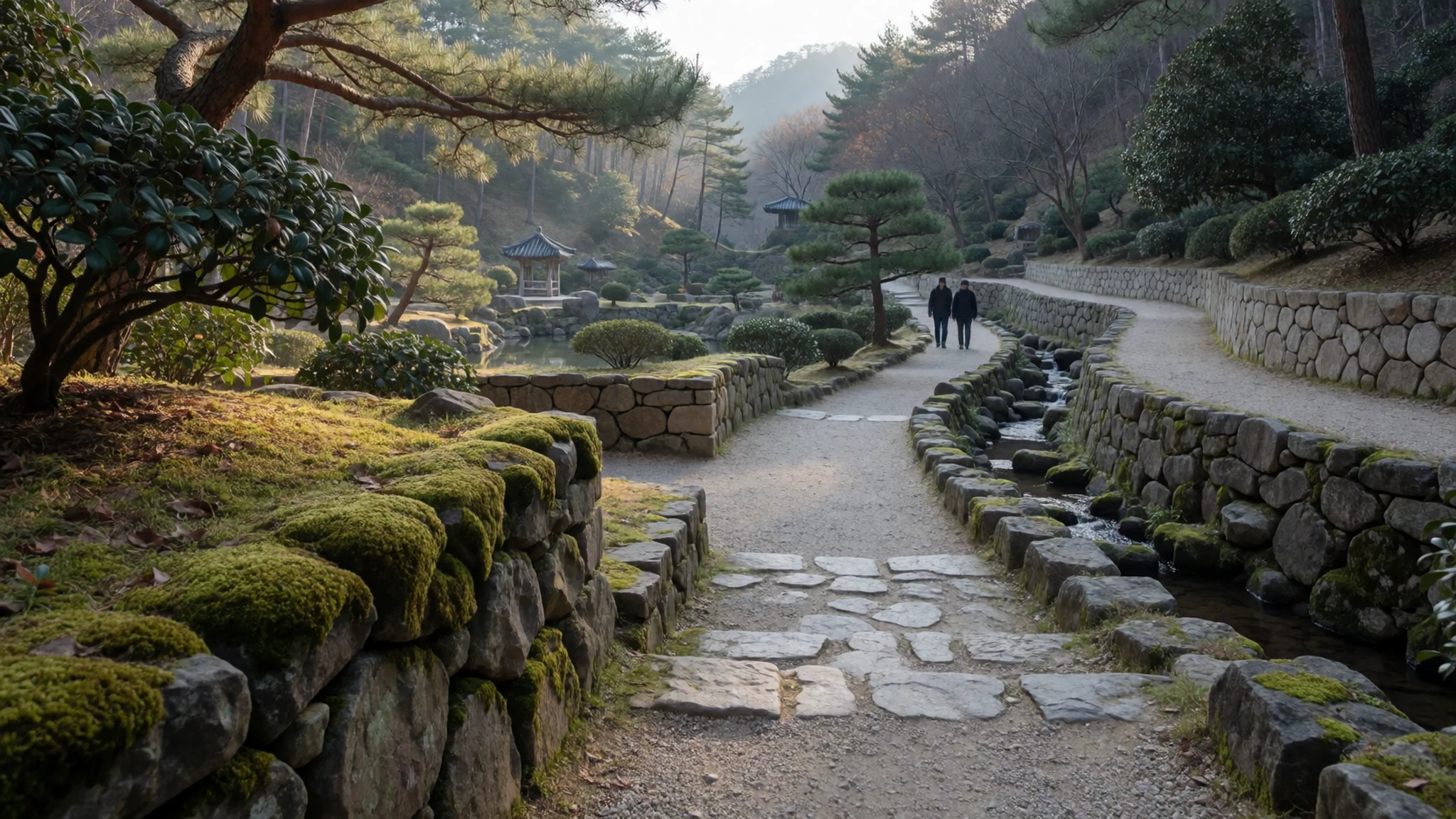
- Seyeonjeong — Buyongdong garden valley
Seyeonjeong is a pavilion beside a pond within the garden, built for leisure rather than study. Its name suggests a spot washed clean by water, and early morning, when the light is soft and few people are about, shows why. Look at how rocks, stream and trees were arranged to be seen from the pavilion.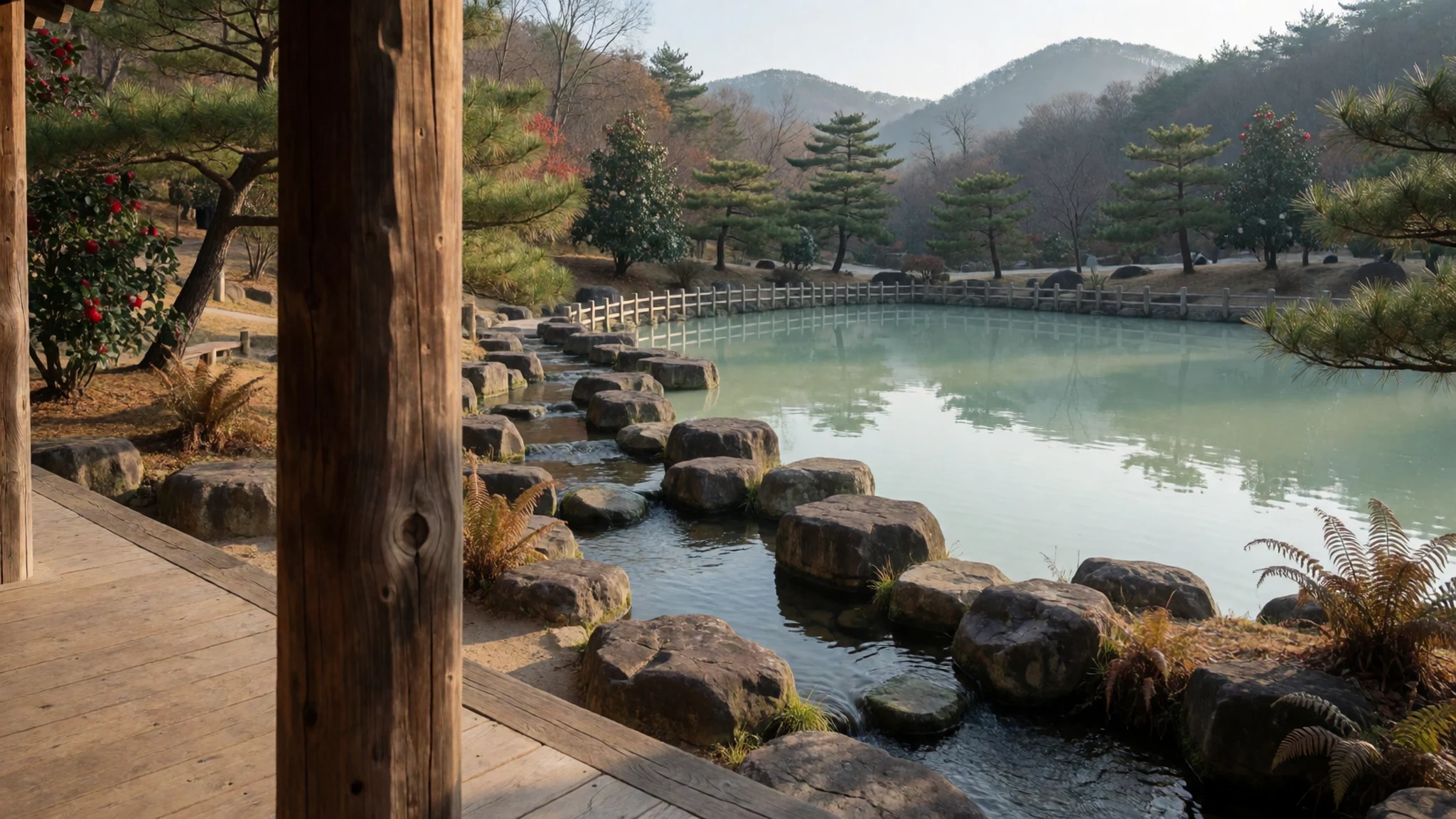
- Dongcheonseoksil — Hillside above Buyongdong
Dongcheonseoksil is a small pavilion site high on the hillside facing Nakseojae, reached by a steep path. Its position gives a wide view over the garden valley, and in Neo-Confucian thought such spots were imagined as places where immortals lived. Go for the view and the climb, and carry water.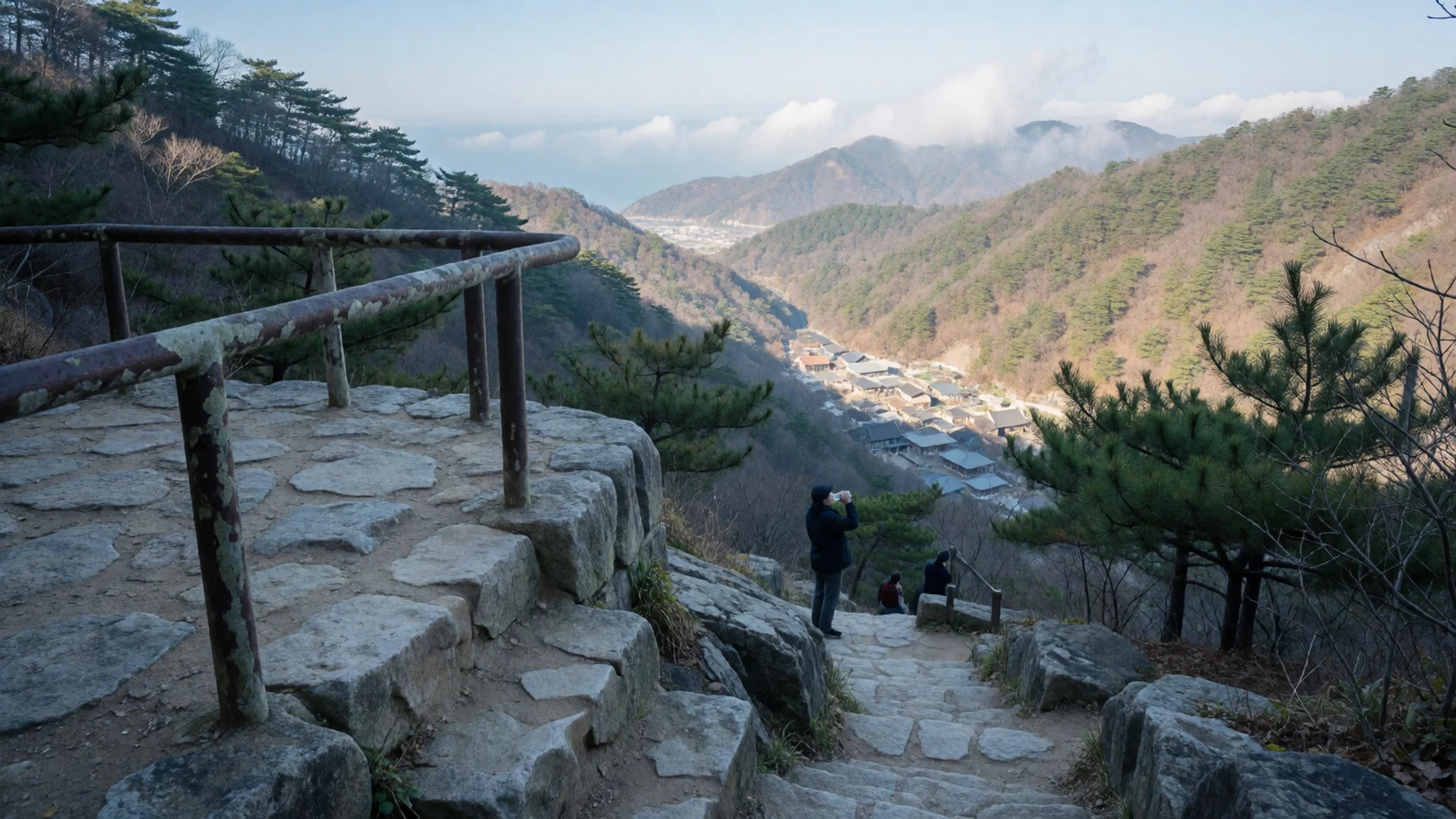
- Yesong-ri Beach — Yesong-ri, south-east coast
Yesong-ri Beach is known for its dark, rounded pebbles rather than sand, which clatter pleasantly as each wave draws back. Small islands stand offshore and evergreen trees line the back of the beach. It is busiest in summer but makes a calm walk in other seasons. Swim only where local signs allow.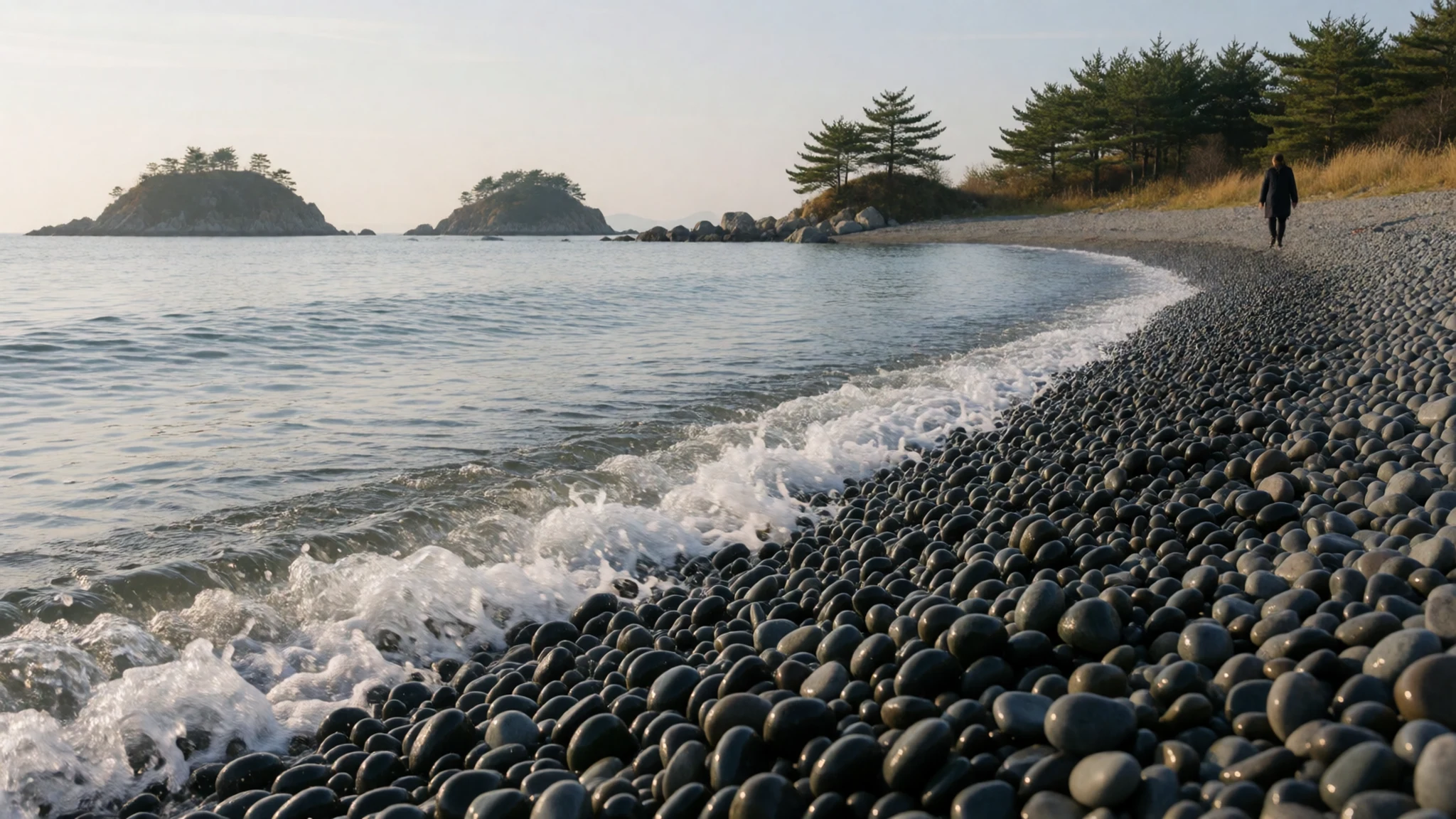
- Bo-ok-ri Dinosaur Egg Beach — Bo-ok-ri, western Bogildo
Bo-ok-ri Dinosaur Egg Beach takes its name from large, smooth pebbles that look like eggs heaped along the shore. It lies on the island's western side, close to a rocky outcrop with a viewpoint at the far tip. Late afternoon light is a good reason to stay overnight nearby.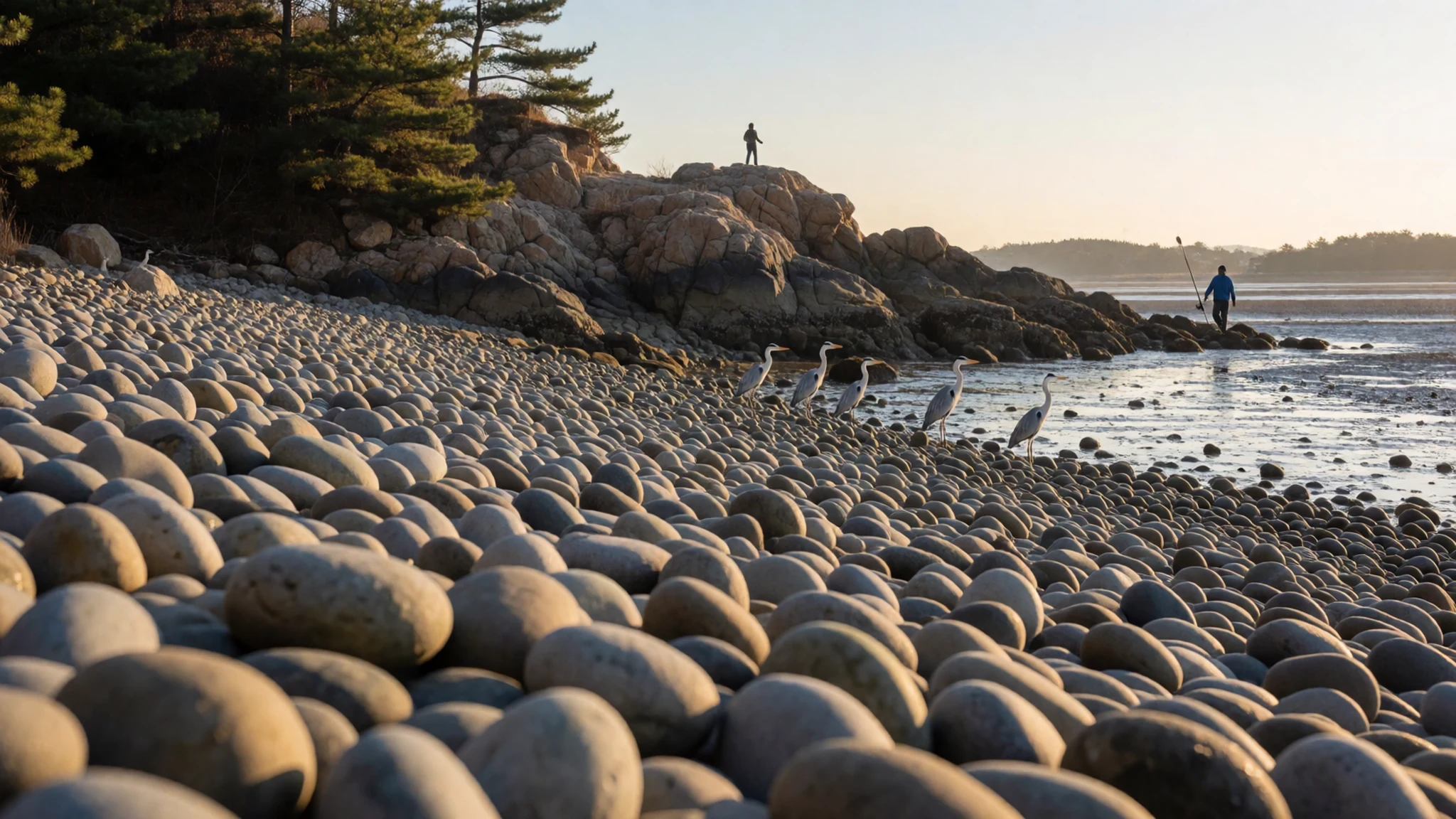
- Jungni Beach — Jungni, eastern Bogildo
Jungni Beach is a gentler shore of fine pale sand with old pine trees behind it. It sits close to a neighbouring beach, so the two can be walked in one outing. It suits families and anyone who prefers sand underfoot to pebbles, and in cooler months it is very quiet.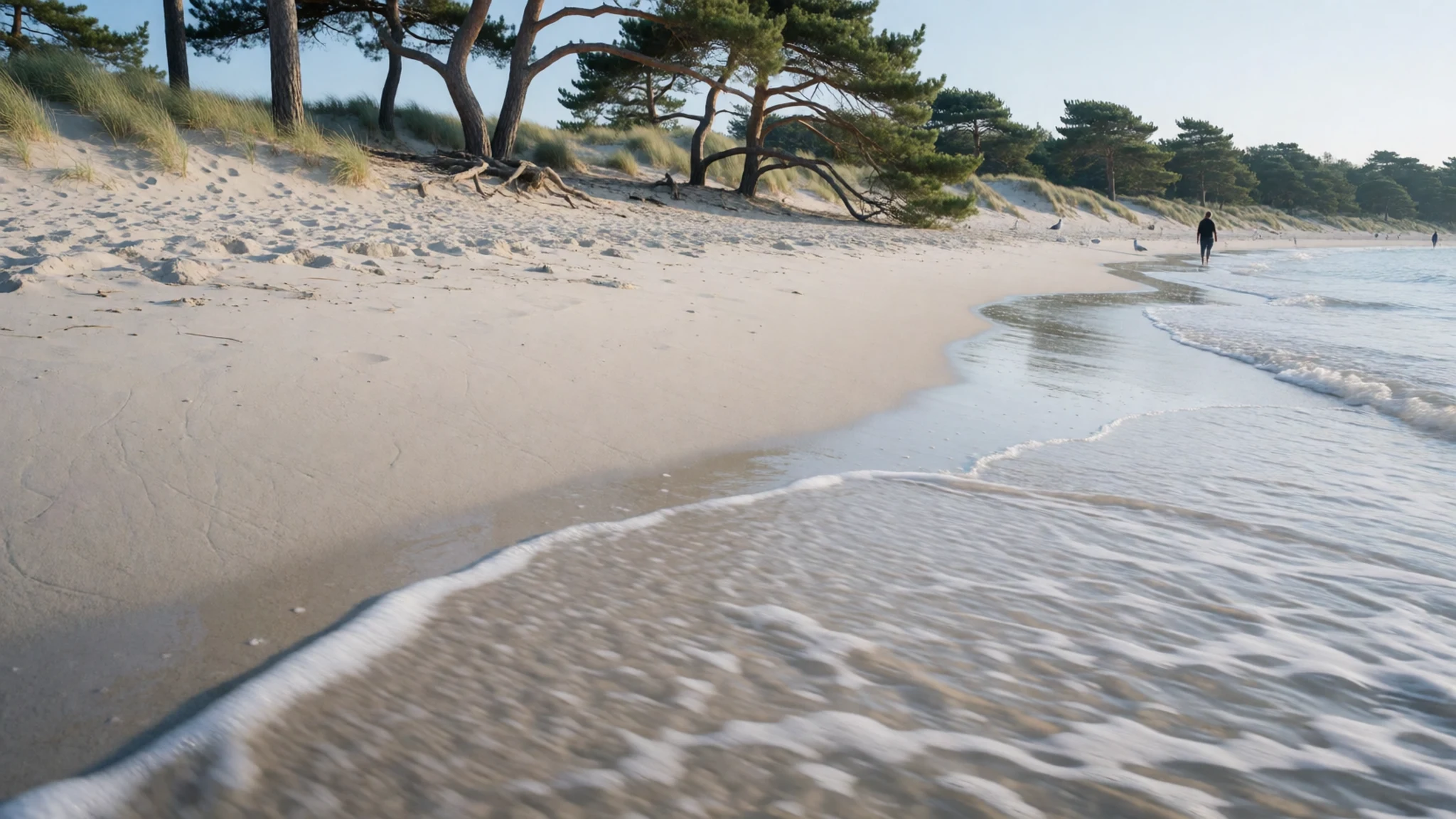
Culture
Bogildo has a literary culture that is unusual for a fishing island. Yun Seon-do's legacy shapes how the place presents itself: the garden, the poetry panels along a walking path, and a cultural festival held in his name, which has included village games, song contests and performances. The festival dates change, so check locally before planning around them. Beyond the poet, daily life follows the sea and the fields. Boats go out early, seaweed and shellfish are handled by hand, and the villages are small and close-knit, with houses opening straight onto the lanes and racks of drying seafood standing outside. Neo-Confucian ideas about the scholar's life, which valued study, modest living and attention to nature, run through the design of the garden, and many Korean visitors walk it in that spirit, quietly and with a book of poems in mind. Folk games such as yutnori, a throwing-stick board game, appear at festivals and family gatherings. Many islanders are older, and a simple greeting in Korean, such as annyeonghaseyo, is warmly received. Summer brings noise and queues at the beaches, but the garden valley stays hushed even then. Keep your voice low in the garden, stay on the marked paths, and ask before photographing villagers or the catch they have set out to dry.
What to wear
Bogildo follows Korean dress traditions, even though most visitors will never see them outside festivals. The traditional hanbok pairs a short jacket, the jeogori, with a full wrapped skirt, the chima, for women, and with loose trousers, the baji, for men. Fabrics include silk for formal wear, and ramie, hemp and cotton for summer and everyday use. It is worn at weddings, family ceremonies, national holidays and the odd village festival, usually in bright colours for celebrations. Day to day, islanders dress for work and weather: rubber boots, waterproof aprons or jackets, long sleeves against the sun, and wide-brimmed or cloth caps on the boats and in the fields. In the village centres, people wear plain, practical clothes, with a little more care on market or festival days. Visitors should dress for a mild, damp, windy coast. Bring layers and a light waterproof in any season, plus a warmer fleece for winter and early spring. Sturdy shoes with grip matter more than anything else, because the garden paths and the climb to the hillside pavilion are uneven and can be slippery after rain. Pebble beaches are hard on bare feet, so water shoes help. A sun hat and sunscreen are useful in summer. Swimwear is fine on the beaches, but cover up when walking through villages and the garden.
What to eat
- Jeonbokjuk (abalone porridge) — Seafood eateries in the harbour villages
Jeonbokjuk is a smooth rice porridge cooked with abalone, often with the innards for a deeper, slightly green colour. The surrounding waters are used for abalone farming, so it is a sensible order. It is mild, warming and a good breakfast after a ferry crossing.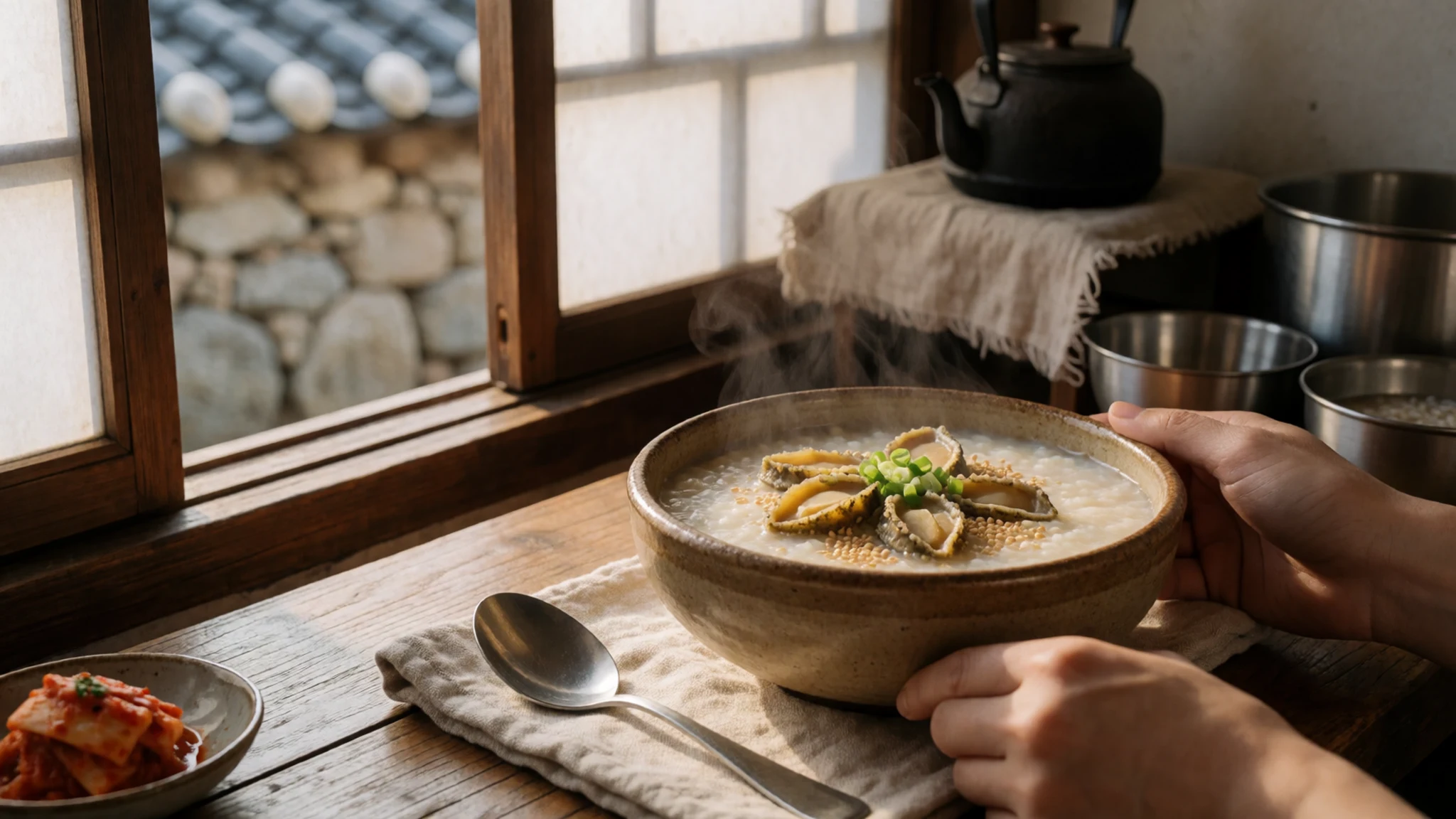
- Hoe (raw fish) — Fish restaurants near the ports and beach villages
Hoe is thinly sliced raw fish, eaten with lettuce or perilla leaves, garlic, chilli paste and salt. What is served depends on the day's catch, so ask what came in that morning. It is often followed by a spicy fish soup made from the bones.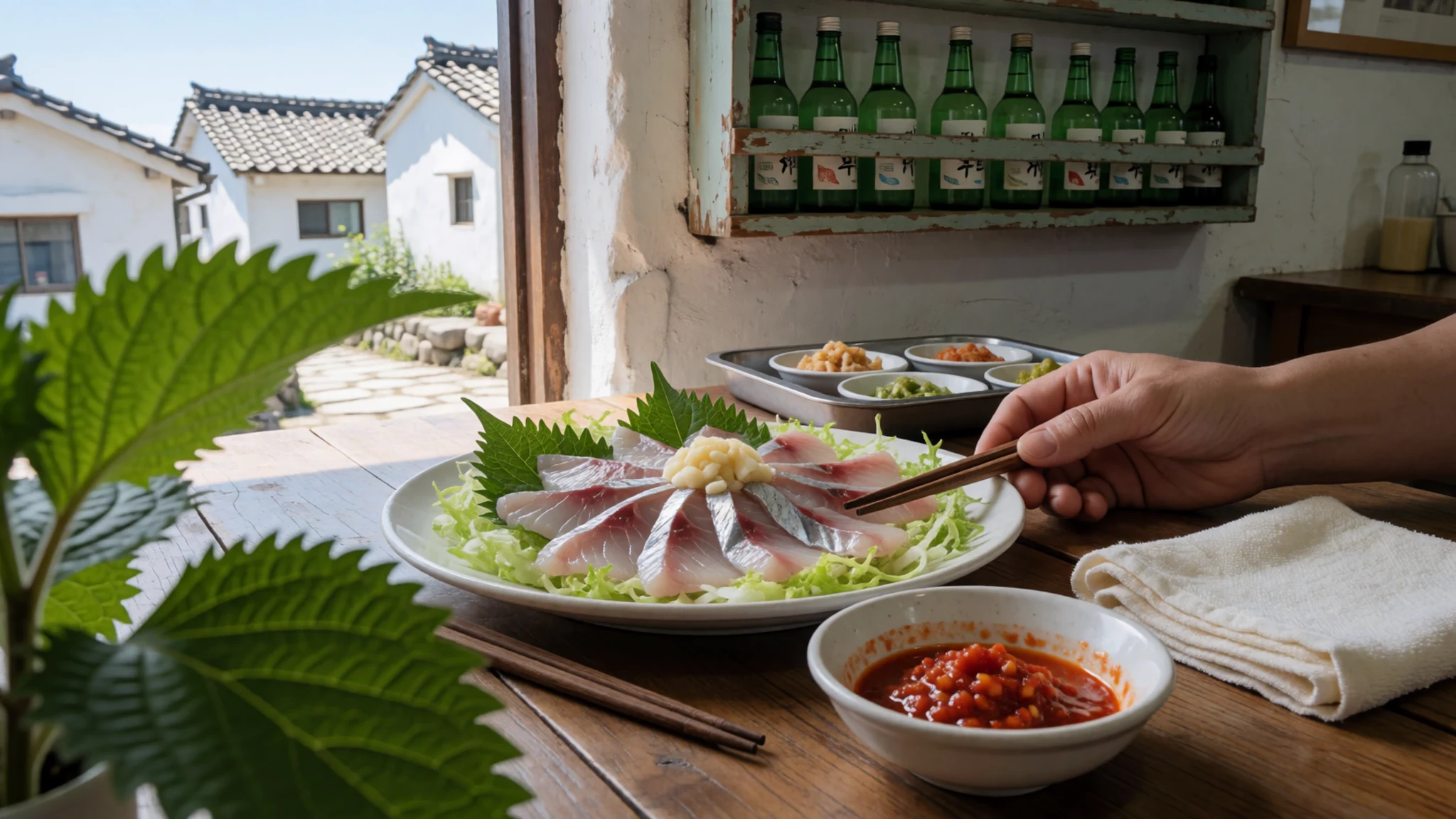
- Miyeok-guk (seaweed soup) — Family-run eateries in the villages
Miyeok-guk is a clear soup of brown seaweed, usually cooked with garlic and sometimes shellfish or beef. Seaweed farming is part of life on this coast, so the texture is fresh and the broth light. It is a comforting, gentle meal on a cool day. - Baekban (set meal) — Village eateries near the garden and the beaches
Baekban is a rice-and-soup set meal with a spread of small side dishes, often including seasoned seaweed, greens, pickles and fish. On an island, the sides lean towards seafood. It is the easiest way to taste many local flavours in a single sitting. - Saengseon-gui (grilled fish) — Seaside eateries along the main beaches
Saengseon-gui is whole fish, salted and grilled over heat until the skin crackles, served with rice and side dishes. The fish varies with the season and the morning's landing. Pick the flesh off the bone with chopsticks and save the head for last.
Plan it
Best time. April–May and October–November are the easiest months: mild air, green hills in spring and clear light in autumn. July–August is warm, humid and busy at the beaches. Winter is cool and windy, and rough seas can disrupt ferries.
How long. 2–3
Getting there. You can get to Bogildo by ferry from either Land's End Port in Haenam County or Hwaheung Port in Wando County, with crossings taking under an hour. Reach either port from the larger southern mainland cities by intercity bus or car, and check ferry times and vehicle rules on the operator's site before travelling.
Budget. mid
Tips
- Check ferry timetables the day before, and allow slack in rough weather
- Bring a hired car or plan around local buses, as sights are spread along the island
- Visit the garden early in the morning for soft light and fewer people
- Carry some cash and water, as small villages may have limited shops and card machines
- Book accommodation ahead for summer weekends and festival dates
Etiquette
- Keep to the marked paths in the garden and leave the pavilions as you find them
- Ask before photographing villagers or seafood laid out to dry
- Take litter back with you from the beaches
Nearby
Sources
- Wikidata Q12506721 (CC0)
- Wikipedia: Bogildo (CC BY-SA 4.0)
- Wikivoyage: Bogildo (rev 5431583) (CC BY-SA 4.0)
- Photo: Bogil-do Island (Cho's) (CC BY 3.0)
- Photo: Bogildo Nakseojae (Wando County Office) (CC BY-SA 2.0 kr)
- Photo: Dongcheonseoksil (Wando County Office) (CC BY-SA 2.0)
- Photo: Seyeonjeong (Kim Eun-a) (CC BY-SA 2.0 kr)


