Busan
Busan, South Korea
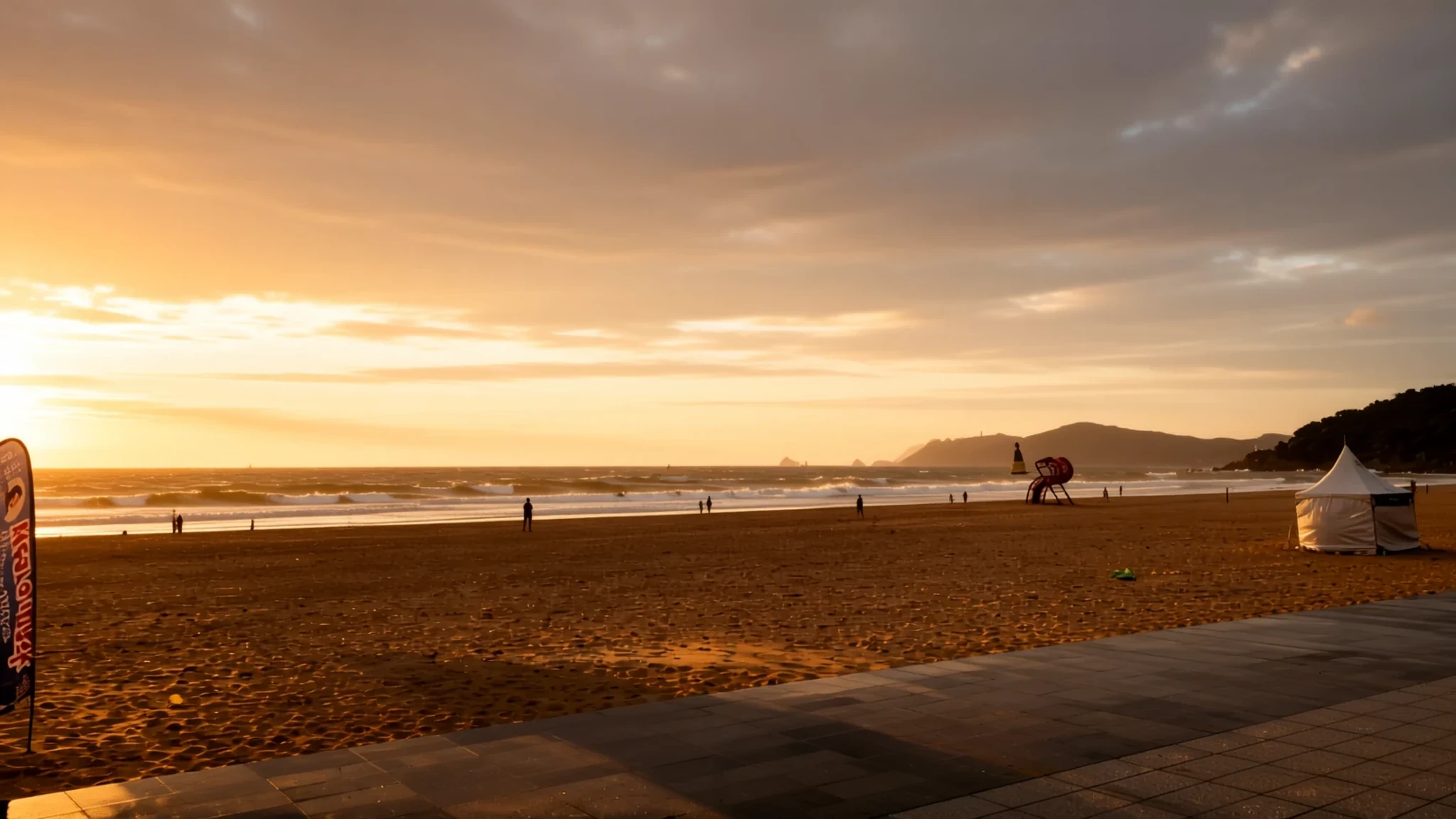
A working port and a summer beach city in one, where fresh seafood, hillside temples and a lively café culture sit side by side.
The place
Busan sits on South Korea's southeastern coast, where narrow valleys between the Nakdong and Suyeong rivers have filled with apartment blocks, roads and harbour cranes. The metropolitan area has about 3.5 million residents, and the city stands roughly 30 metres above sea level. Its port is the busiest in the country, so cargo ships are a familiar part of the view from many neighbourhoods. Mountains separate most of the districts, which means getting across the city often involves a hill, a tunnel or a long metro ride rather than a straight line. Busan is also a host for international conferences, and it has hosted major summit meetings in recent decades. The character changes with the seasons. Summer brings holidaymakers from across Korea to the beaches, and the seafront becomes busy from morning until late at night. Winter is quieter and cooler, and spring and autumn are the most comfortable months for walking between the coast, the hills and the markets. Most visitors spend their time in a few compact areas: the beaches to the east, the old harbour and fish market, and the dense shopping streets of the central districts.
Its story
Busan's history starts long before the modern port, with Neolithic people who lived along the coast and left stone tools, pottery and shell heaps behind. Fishing was a staple of their diet, and by the Bronze Age farming had reached the valleys further inland. Around the first century, a small chiefdom called Koch'ilsan-guk held the area around what is now Dongnae District. Silla later absorbed it and made it an administrative county, and in 757 the area was renamed Dongnae-gun. Beomeosa, a Buddhist temple in the hills to the north, is recorded as founded in 835, giving the district a religious history that predates most of the city's modern growth. During the Goryeo period (918–1392), the local Dongnae Jeong clan rose to prominence in national politics, and the hot springs of Dongnae became famous enough to be mentioned in the writing of the time. The same era brought raids by wokou pirates, and in 1396 a fortress called Dongnaeeupseong was built to protect the coast. In 1423 the port of Busan and a Japanese concession community, known as a waegwan, were established on the harbour. That settlement tied the city to trade and diplomacy with Japan for generations, and the harbour's role in that trade is part of why the modern port grew where it did.
What to see
- Haeundae Beach — Haeundae, east of the city centre
Haeundae Beach is Busan's best-known stretch of sand and the one most visitors picture first. Hotels and a long promenade line the front, and the beach has served as a setting for South Korean films and television. In summer it fills with families and swimmers, so arrive early in the morning or go in the evening when the crowds thin.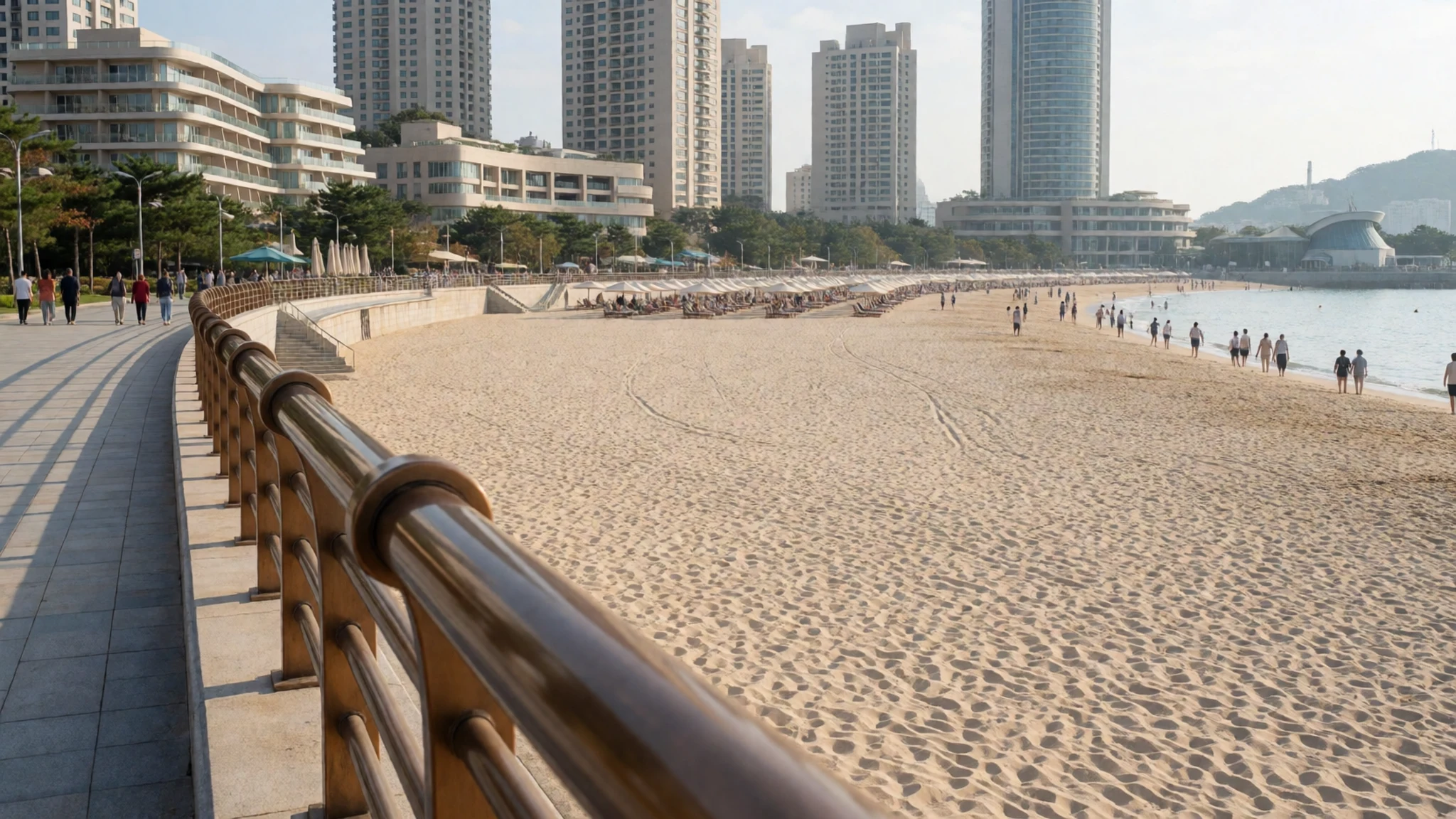
- Dongbaekseom Island — Southern end of Haeundae Beach
Dongbaekseom is a small wooded island at the southern end of Haeundae Beach, reached by a short walk along the shore. Camellia and pine trees cover much of it, so it feels more like a park than a sight. Paths loop past viewpoints over the bay, and the Nurimaru APEC House, built for the APEC summit held here, sits among the trees. Go on a weekday morning if you want quiet.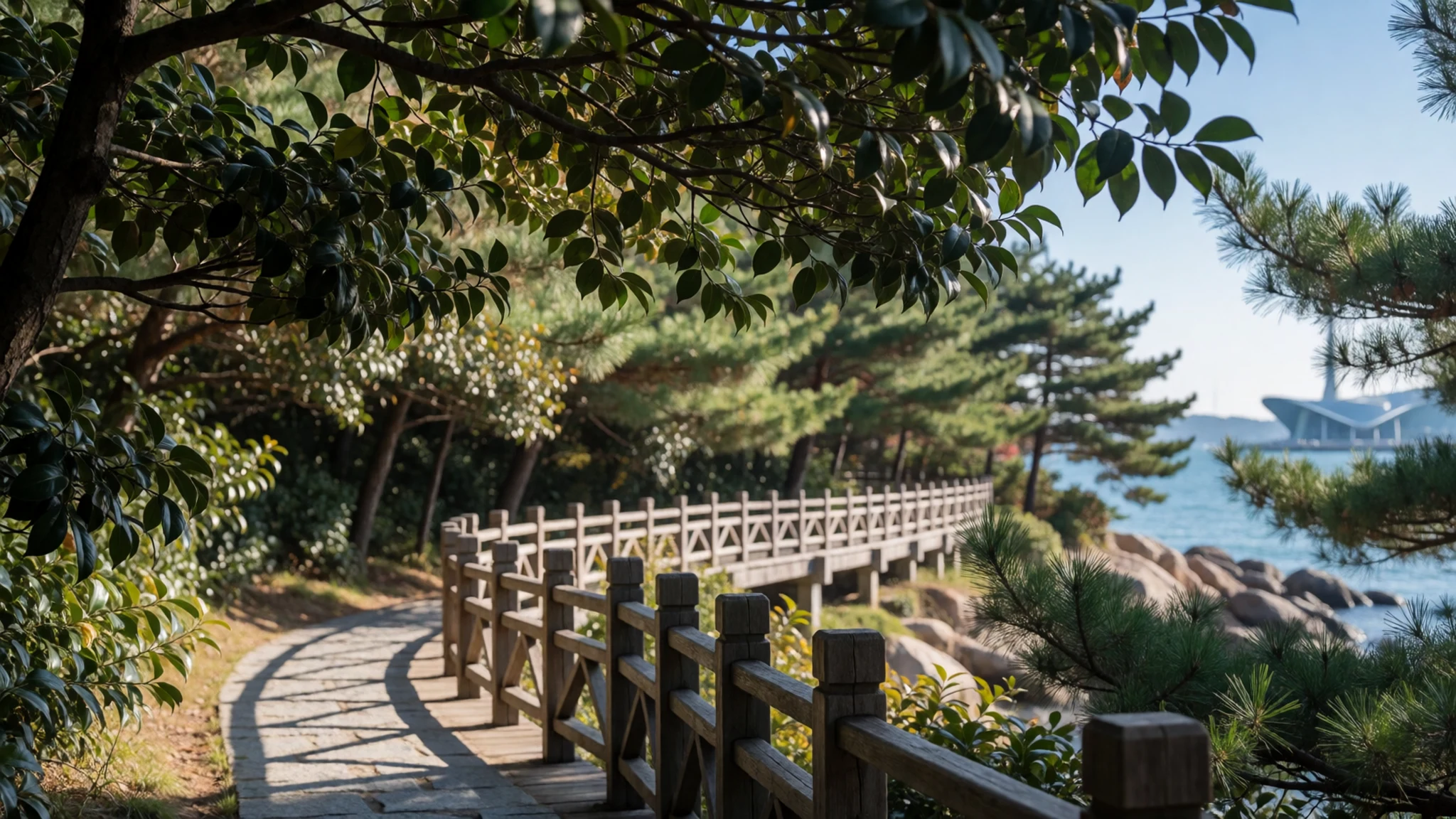
- Haedong Yonggungsa Temple — Coastal Gijang area, east of central Busan
Haedong Yonggungsa is a Buddhist temple on the coast east of the city, with halls set on rocks above the sea. The setting is more dramatic than most temples in Busan, and the sound of waves often carries into the courtyards. Steps are steep, and weekends and festival days bring large crowds. Dress modestly and keep voices low in the prayer halls.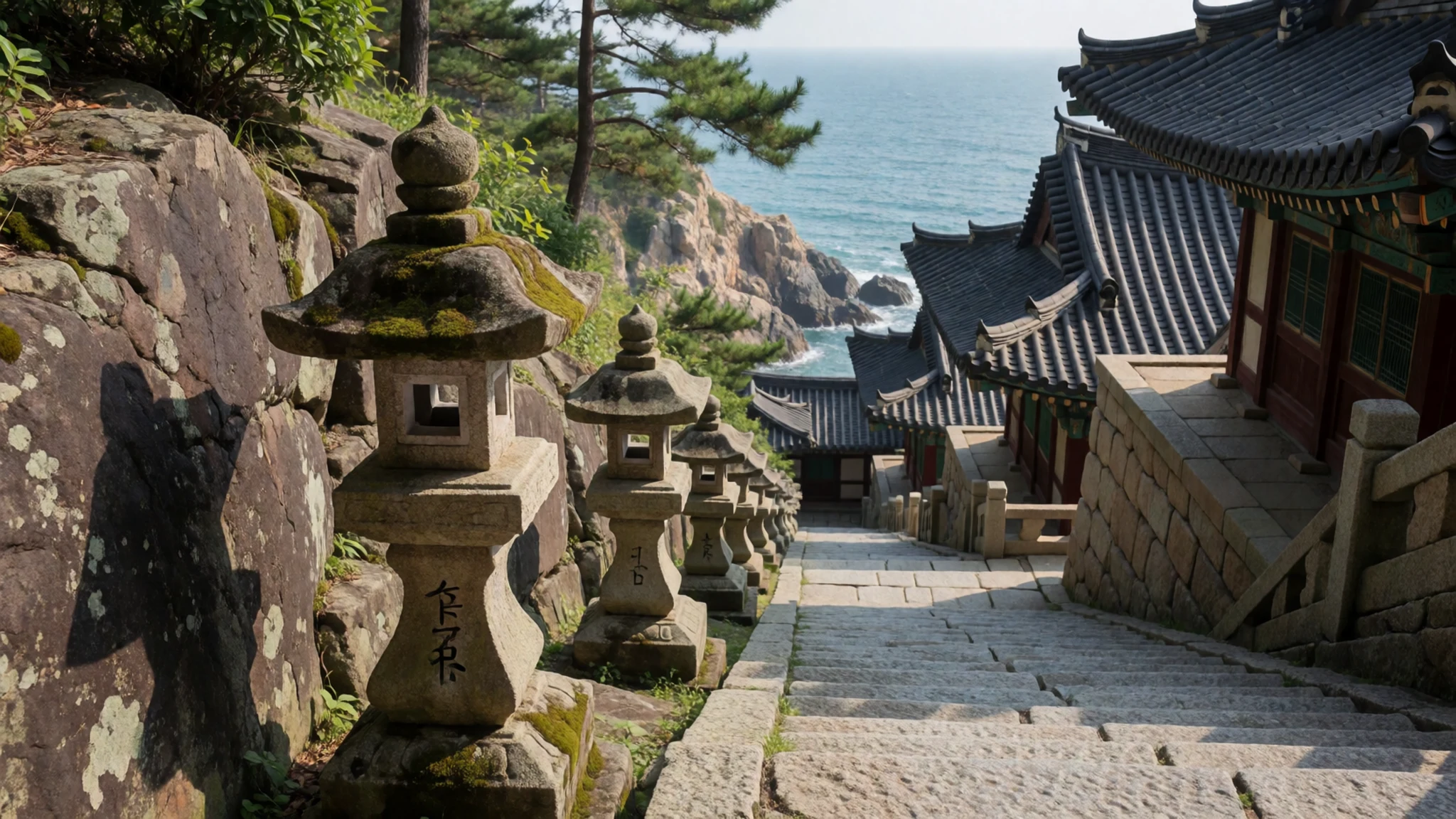
- Jagalchi Fish Market — Nampo, by the harbour
Jagalchi Fish Market, by the harbour in the Nampo area, is where much of the city's seafood is landed. Stalls sell fish and shellfish, and many let you choose a catch and have it cooked nearby or on an upper floor. Early morning is the busiest and most lively time. The lower floors can smell strong, and it is wise to carry some cash.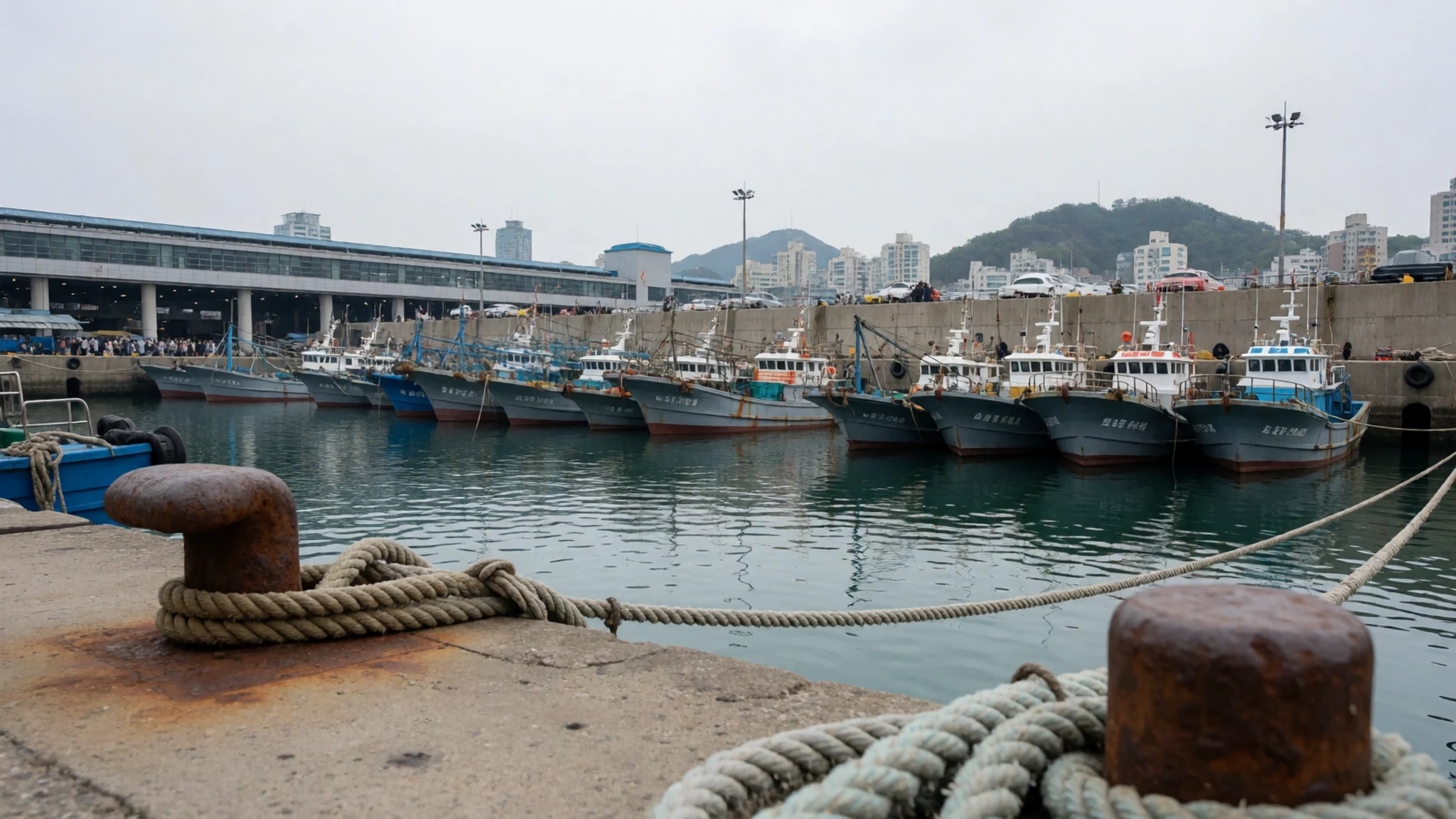
- Gwangalli Beach — Suyeong district, along the bay
Gwangalli Beach, further west along the coast, is a long curve of sand with cafés, bars and restaurants along its promenade. The Grand Gwangan Bridge spans the bay, and the views across the water make it a good place for an evening walk. It is quieter than Haeundae but still busy in summer. Weekend nights get crowded, so book ahead for a seafront table.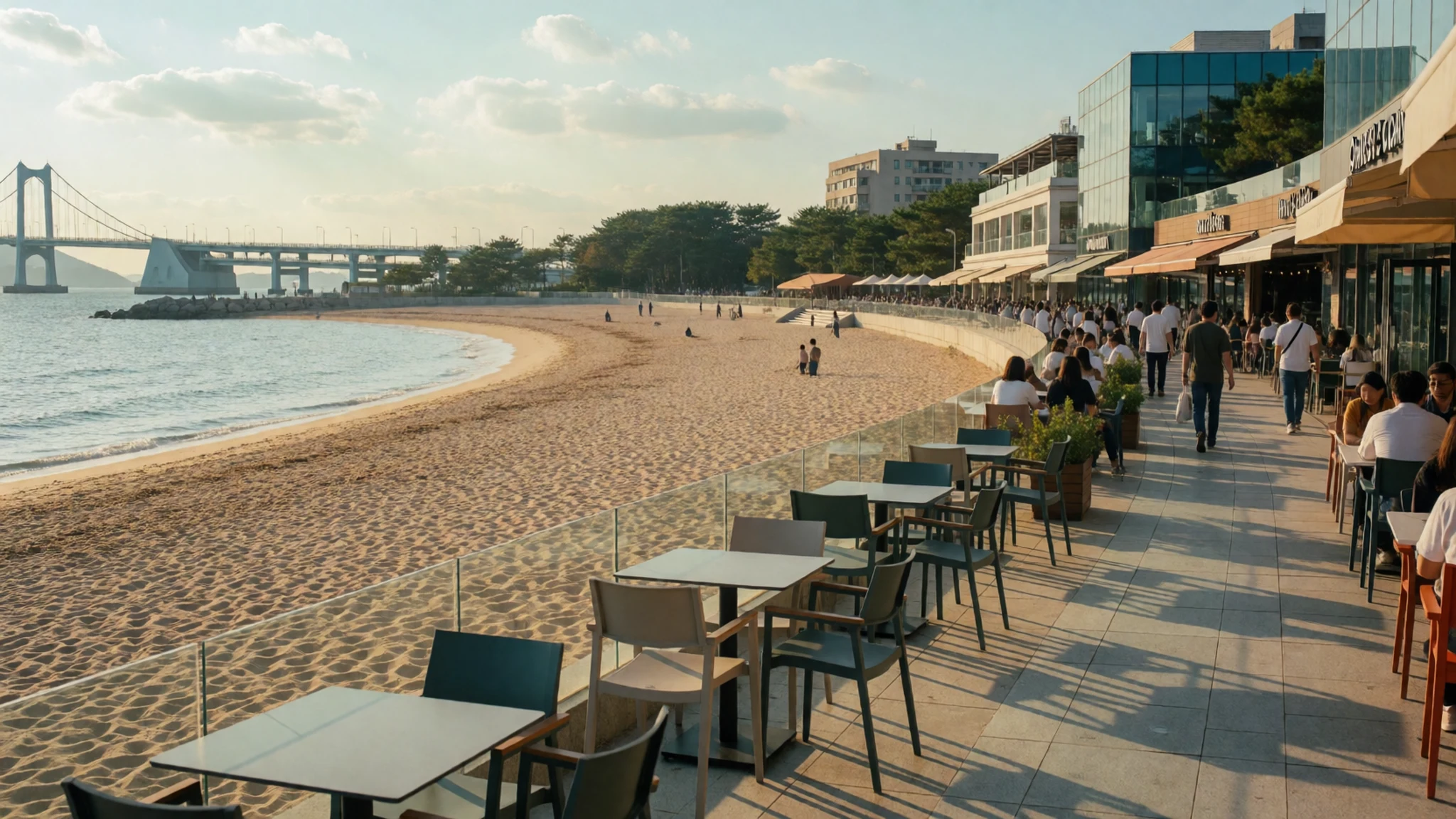
Culture
Busan's beach culture is central to its character. In July and August the sand at Haeundae and Gwangalli fills with families, and the seafront turns into a summer resort with open-air events and cafés along the promenades. The city also keeps a rougher, working side, visible at the fish markets and in the older streets around the harbour. Festivals run through the year, from an annual rock festival in August to a sea art festival that fills the beach in autumn. Winter brings the Polar Bear Swim in early January, when a crowd of swimmers wades into very cold water for the spectacle. Buddhist temples on the coast and in the hills are places of worship first and sights second, and that shapes how visitors should behave. At Haedong Yonggungsa, speak quietly in the halls, step aside for people who are praying, and avoid climbing on the rocks beneath the shrines.
What to wear
Busan shares the traditional dress of the wider country, the hanbok. Women wear a short jacket called a jeogori over a full, high-waisted skirt called a chima, and men wear a jeogori with loose trousers called baji. Silk is the classic cloth for festive occasions, while ramie and cotton suit everyday wear. Hanbok is most often seen today at palaces, festivals and photo studios, not on the street. In everyday life, people in Busan dress in relaxed, city-smart clothes, with plenty of sportswear and sandals in summer, and beachwear is common only on the sand. For a visitor, the climate calls for light layers, since summers are humid and winters can be cold and windy by the sea. Comfortable shoes with good grip matter more than anything else, because the hills and temple steps are steep. Dress modestly at temples such as Haedong Yonggungsa, covering shoulders and knees, and save swimwear for the beach and the bathhouses.
What to eat
- Grilled fish — Jagalchi Fish Market and the eateries around it
Fresh fish grilled over charcoal is the classic seafood meal at Busan's harbour. Vendors and small eateries near the fish market will cook a fish you have chosen, often with side dishes and rice. The fish is usually very fresh, so the simplest preparations tend to be the best.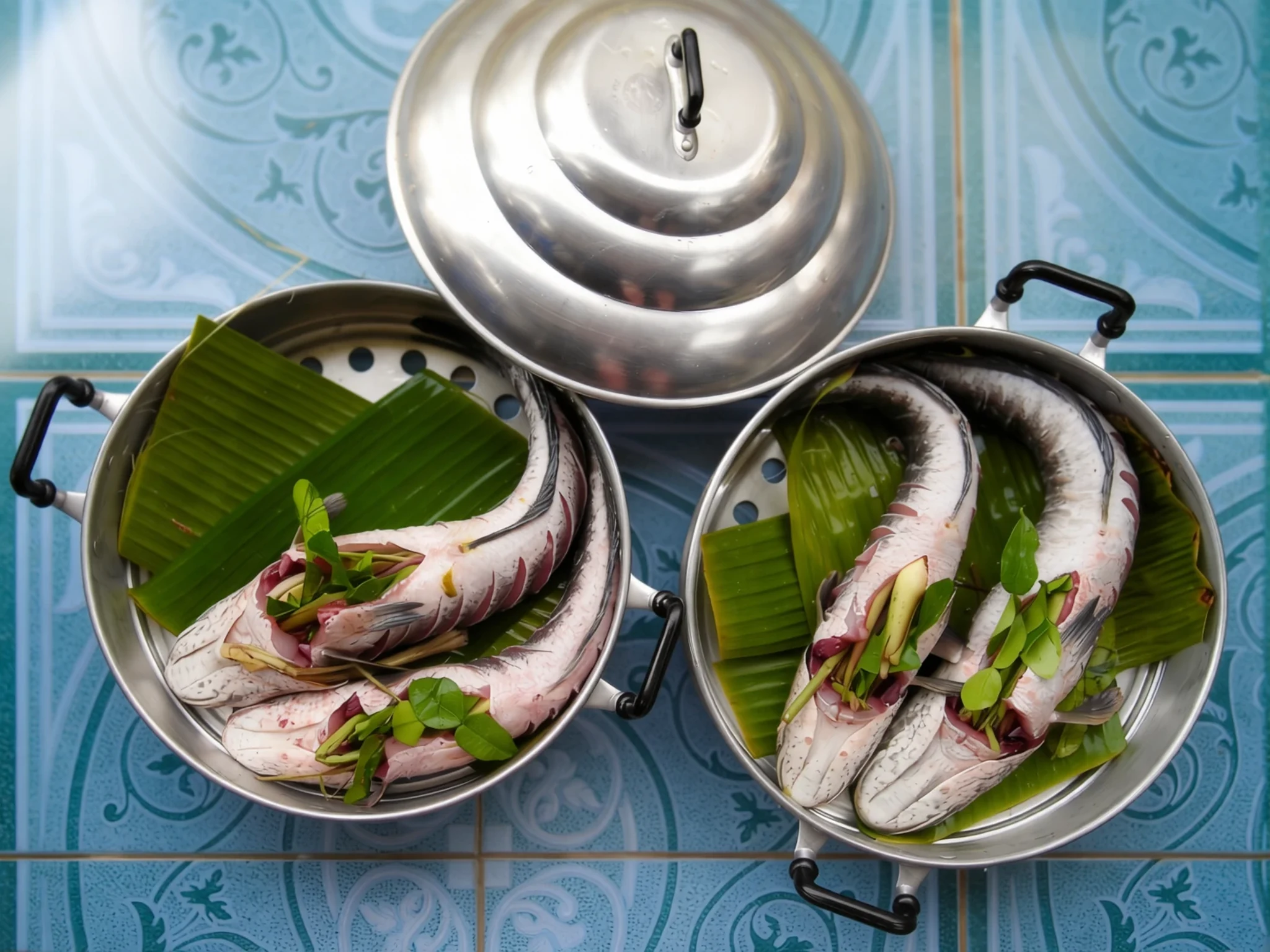
- Haejangguk — Eateries around Jagalchi, especially in the early morning
Haejangguk is a hearty soup often described as Korea's hangover soup, served in the morning to people who need a warm, spicy start. Versions in Busan usually include seafood and a rich broth. It is popular at the fish market, where the stalls are busy early.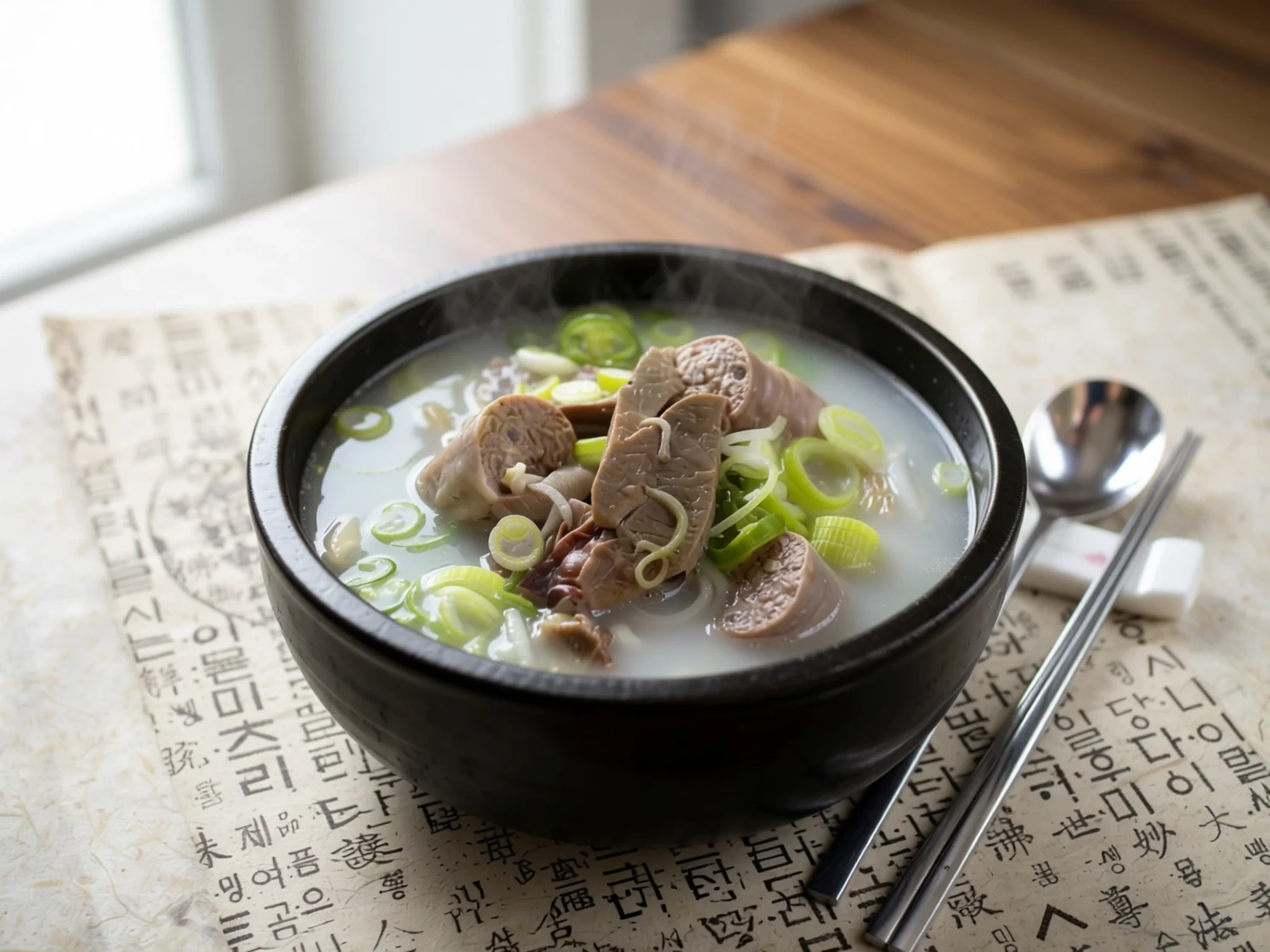
- Spicy glass noodles — The international market, among the cheap street stalls
Spicy glass noodles are chewy, translucent noodles stir-fried with vegetables and a chilli-based sauce. They are cheap, filling and a good way to try a common Korean street food. Portions are usually large, so share one if you are trying several dishes. - Chungmu-style gimbap — Snack stalls in the international market and around the harbour
Chungmu-style gimbap is a rice roll filled with seafood and vegetables, a regional style associated with the Busan area. It is sold as a quick snack and is easy to eat while walking. The filling is usually simple, with fish cakes and pickled vegetables. - Ssiat hotteok — Street stalls in the international market
Ssiat hotteok is a sweet pancake filled with seeds and sugar, pressed and fried until crisp. It is a cheap, warm treat that suits cool evenings. The filling can be very hot when it first comes off the griddle, so give it a moment before biting.
Plan it
Best time. Spring (April–May) and autumn (October–November) are the most comfortable months for walking the beaches, hills and markets. July and August bring the busiest beaches and humid heat, while early January suits the Polar Bear Swim and little else.
How long. 2–3
Getting there. Fly into Gimhae International Airport, then take the metro or a limousine bus into the city. From Seoul, the KTX high-speed train is often a better option than flying.
Budget. mid
Tips
- Book KTX seats from Seoul ahead for weekends and holidays
- Visit Jagalchi in the early morning, when the catch is freshest and the stalls are busiest
- Stay near a metro line, since the hills and tunnels make taxis slow at peak times
- Carry cash for market stalls and small eateries, and use a card for larger shops
- Wear sturdy shoes for the steps at Haedong Yonggungsa and the hill paths around Beomeosa
Etiquette
- Remove your shoes where you see a raised threshold or slippers waiting at a temple or home door
- Ask before photographing vendors or people at the fish market
- Keep voices low in temple halls and do not sit on shrine steps
Nearby
Sources
- Wikidata Q16520 (CC0)
- Wikipedia, Busan (rev 1382947661) (CC BY-SA 4.0)
- Wikivoyage, Busan (rev 5404804) (CC BY-SA 4.0)
- Busan scenery from Busan Tower, by lwy (CC BY 2.5)
- Dongbaekseom island, Busan, by Brit in Seoul (CC BY-SA 4.0)
- Busan Cinema Center BIFF 2023, by 399scout (CC BY-SA 4.0)
- Haeundae Beach May 2024, by Brit in Seoul (CC BY-SA 4.0)
- Seomyeon, by Studio Kei (Flickr: i.love.marimilk) (CC BY-SA 2.0)
- Haedong Yonggungsa, by midnight.here (CC BY-SA 2.0)
- Ships in Busan, by Raíssa Ruschel (CC BY 2.5)
- Busan Port (1), Busan Metropolitan City (CC BY-SA 4.0)


