Anmyeondo
Anmyeondo, South Korea
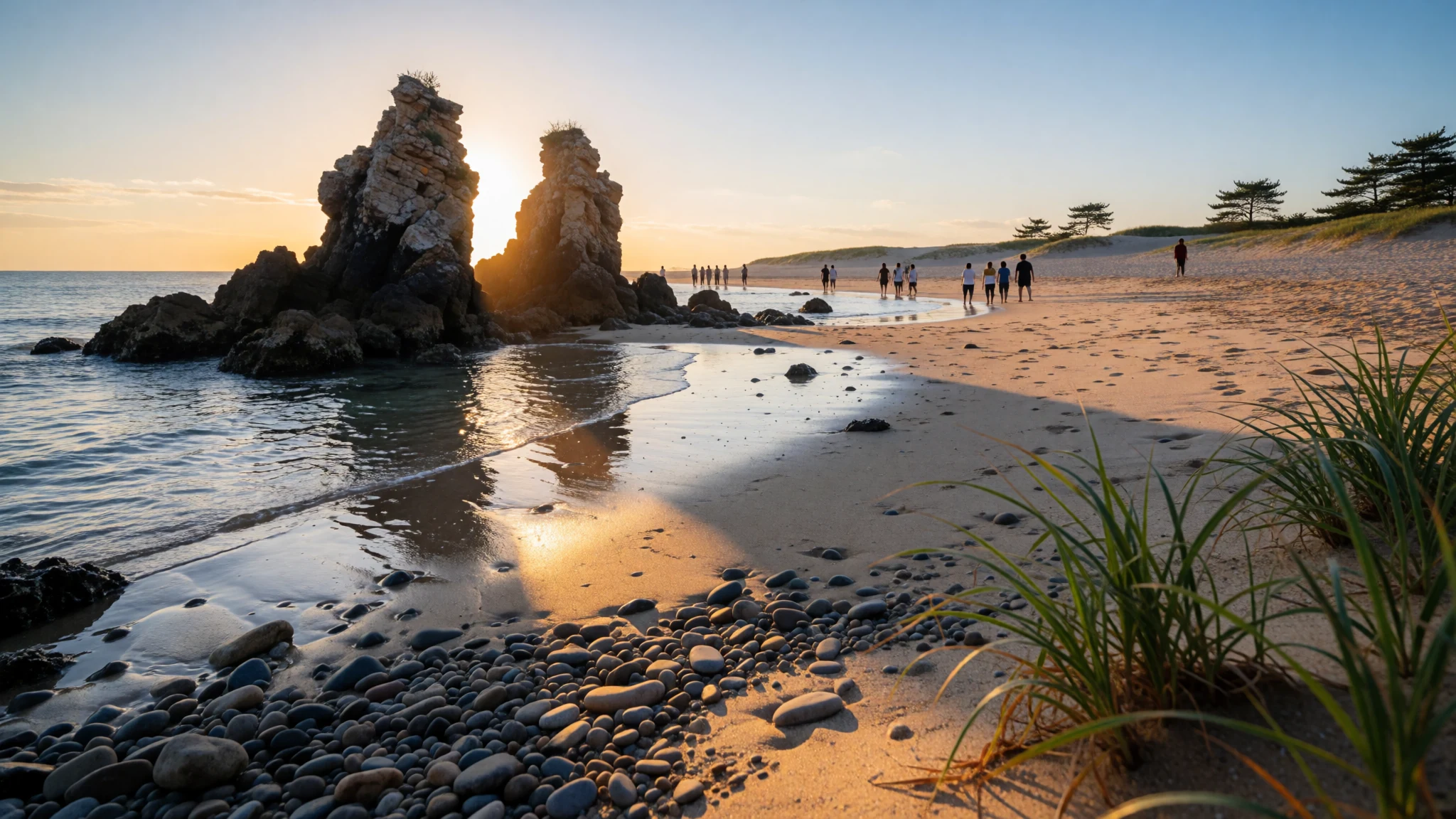
Anmyeondo is a pine-backed island on Korea's Yellow Sea coast, with fourteen beaches, forest walks and slow sunsets within easy reach of Seoul.
The place
Anmyeondo lies on the Yellow Sea coast of South Chungcheong Province, south of Seoul, and is reached by road across a bridge. Its Korean name, 안면도, is written with Hanja that mean 'rest peacefully island', which suits the pace. The island is an island only because people made it so: it began as a peninsula, and a channel was dug through the narrow neck that tied it to the land. Today it belongs to Taean County and has a rural feel, with fields, small villages and greenhouses more than a working fishing waterfront, because farming carries the local economy and fishing plays a smaller part. The western coast draws most visitors, with fourteen beaches, pine woods behind the sand and sunsets over open water. Inland, the island is quieter. A recreation forest of pines offers shaded walks, an exhibition hall on timber and its uses, and cabins for overnight stays, while a maritime national park protects part of the shoreline. A stand of golden rain trees here carries protection as a natural monument. Summer weekends and school holidays bring heavy traffic from Seoul and the neighbouring cities, so weekdays and shoulder seasons feel quite different. The sea is shallow and tidal, and the beaches change with the water, so the same stretch can look wide and flat at low tide and compact at high. Anmyeondo suits a slow stop of a night or two, rather than a rushed tick on a checklist.
Its story
Anmyeondo was a peninsula before it was an island. Getting grain past it by sea was slow and exposed, and grain mattered because harvest tax was shipped to the capital, then called Hanyang and now Seoul. Japanese pirates preyed on those cargoes. In 1638 an official, Kim Yuk, ordered the narrow neck of land to be cut and flooded, which gave the grain boats a shorter, safer route and turned the peninsula into an island. For a long time afterwards the island depended on boats. The Anmyeongyo bridge, 208.5 metres long, opened in 1970 and linked the island to the mainland by road. That bridge changed the island's character, turning a remote farming community into a weekend destination for the region. The pines have a story too. The island's pine forest has royal links: the Goryeo court managed it, and the trees standing today are about a hundred years old. In 1965 responsibility passed to the provincial government of South Chungcheong. The woods are therefore a tended inheritance rather than wild forest, and the recreation facilities built among them are a recent layer on a long record of care. The island's name, 'rest peacefully', now reads like a promise to holidaymakers.
What to see
- Kkotji Beach — Western coast, Anmyeon
Kkotji Beach on the western shore is the name most often linked with Anmyeondo's sunsets. The sand is broad, and at low tide the flats stretch out towards the water, so the view changes hour by hour. Evenings are busy in summer, so arrive early for a place to sit, and bring a layer for the breeze.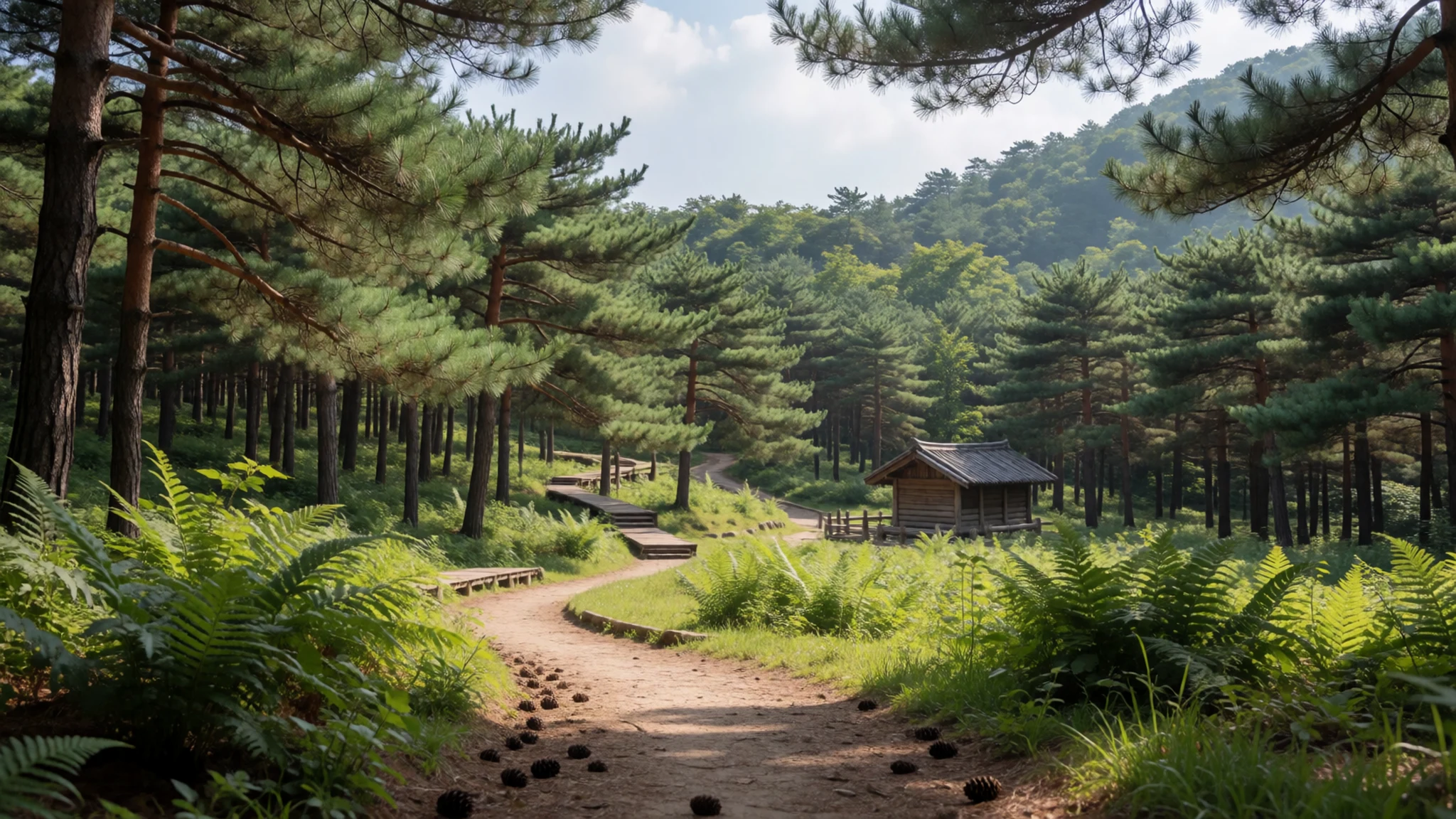
- Sunset on the western coast — Kkotji and the western beaches
The western coast faces open water, which makes late afternoon the time to be on the sand. The sun drops towards the horizon over the water and the sky turns orange and pink. Photographers gather at Kkotji, though quieter spots along the fourteen beaches suit anyone who prefers fewer people around.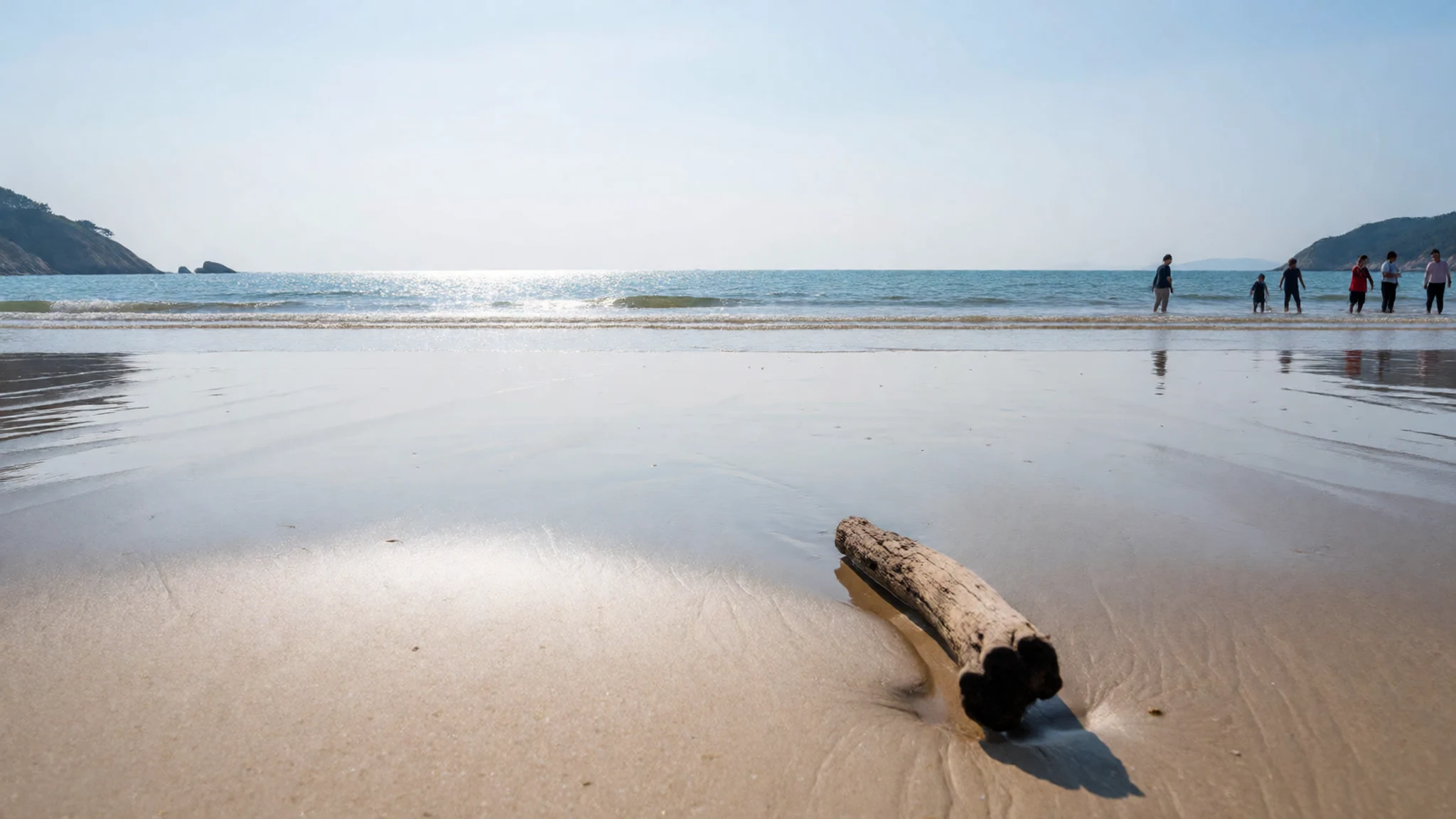
- Anmyeondo Recreation Forest — Island interior
The Anmyeondo Recreation Forest holds the island's pine woods, which have royal links back to the Goryeo era and trees about a century old. Paths run between the trunks, giving shade in summer and a calmer alternative to the beaches. Cabins and a recreation centre on site provide pots, burners and showers for people staying the night.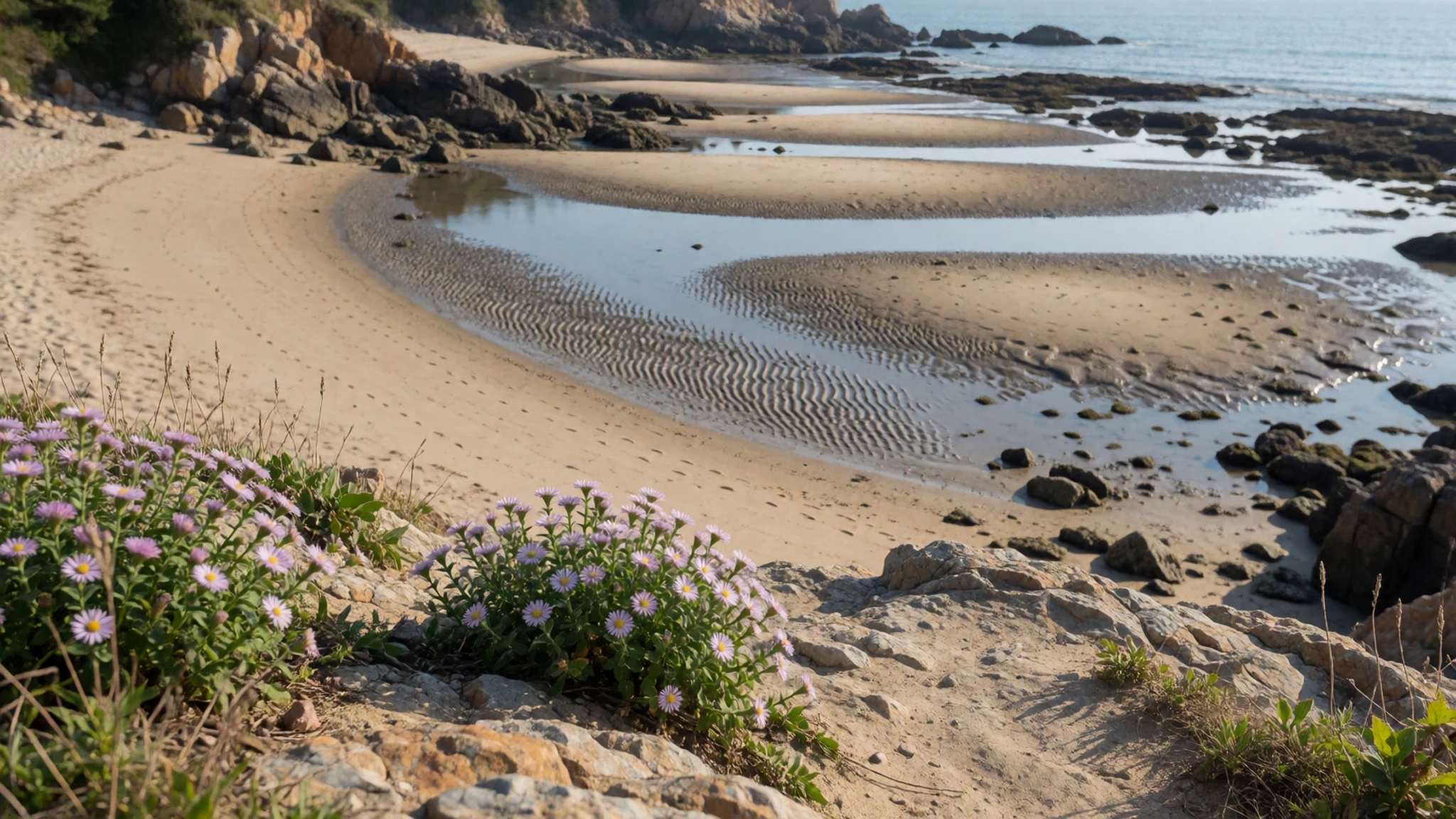
- Forest Exhibition Hall — Anmyeondo Recreation Forest
Inside the recreation forest, the Forest Exhibition Hall sets out how wood goes from tree to finished product and why woodland is worth protecting. The displays are pitched at ordinary visitors rather than specialists, so the hall makes a useful rainy-day stop with children. Check with the local tourist office for opening arrangements before making a special trip.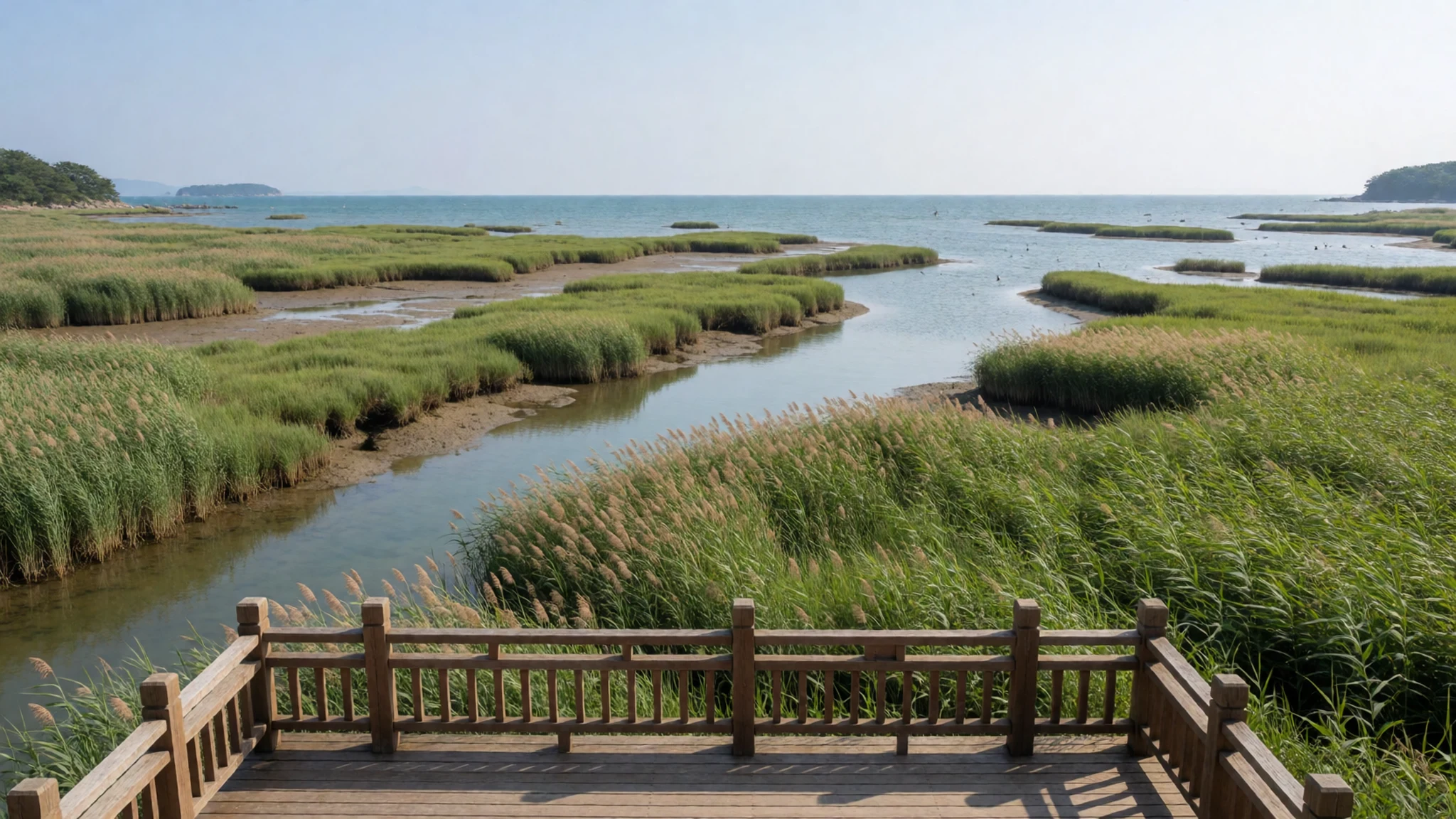
- Golden rain trees — Anmyeondo
A stand of golden rain trees on the island is protected as a natural monument, so it is a place to look at rather than to climb or picnic under. The species is a deciduous tree known for yellow summer flowers. Ask at the local tourist office for the current location and access, since the site is not on the usual beach circuit.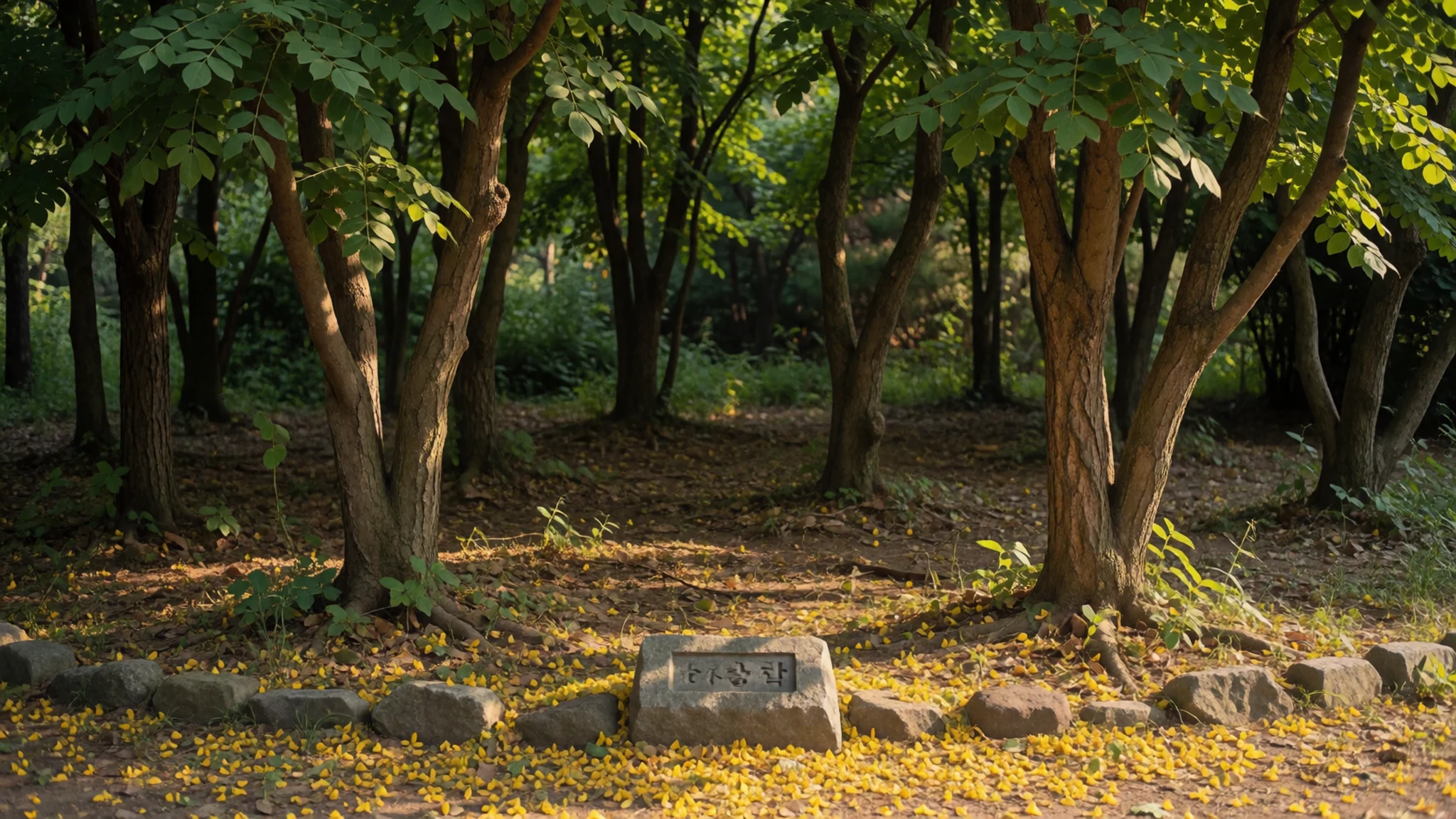
- Anmyeongyo bridge — Northern entrance to the island
The Anmyeongyo bridge, 208.5 metres long, links the island to the mainland and is a reminder of the channel that turned a peninsula into an island. Crossing it, the landscape shifts from mainland towns to lower, greener farmland. Drivers should expect queues here on summer weekends, and an early start helps.
Culture
Anmyeondo's culture is that of a Korean farming and holiday island, not a heritage showpiece. Its name, written 安眠島 in Hanja, means rest peacefully, and the island plays that part for families from Seoul and nearby cities who come to switch off. Weekend life centres on the sea and the pines: picnics on the sand, barbecues outside the cabins, slow evening walks towards the sunset. Farming matters more than fishing in the local economy, so village life follows the cycle of fields and harvests, and everyday habits reflect the land as much as the tide. Visitors will find people friendly but not performing for tourists; there is little staged culture, and conversation with older residents may lean on gestures and a translation app. The woods carry their own tradition of care, from royal management in the Goryeo era to provincial stewardship today, and local people tend to treat them as shared property. Everyday Korean courtesy applies: greet shopkeepers, accept food offered by a host with both hands, and expect shoes to come off at the door of cabins, guesthouses and many small eateries. Take every scrap of rubbish away from the beach and the forest, and keep voices low around the cabins after dark.
What to wear
Anmyeondo has no costume of its own; the traditional dress is the Korean hanbok. It combines a short jacket, the jeogori, with a wrap skirt, the chima, for women, or baggy trousers, the baji, for men. Summer versions use ramie and hemp, which breathe well in heat, while silk and cotton suit cooler months and formal occasions. Hanbok appear mainly at weddings and at festivals such as Seollal and Chuseok, and in photo shoots in the cities, not on the beach. On the island itself, people dress for work and weather: farmers in wide-brimmed hats, long sleeves and rubber boots, holidaymakers in shorts, sports sandals and quick-dry tops. Anyone working on the tidal flats wears waders. Visitors should dress for sun, wind and sand. In summer, light cotton, a hat, sunscreen and water shoes for the shallows make sense; in spring and autumn the sea breeze needs a windproof layer, and winter calls for proper warm clothes. Sturdy trainers or walking shoes suit the forest paths. No dress code applies at the beaches or in the forest, though covering shoulders and knees is polite if a temple or village shrine turns up on the route.
What to eat
- Blue crab stew (kkotge-tang) — Seafood restaurants near the island's harbours
Blue crab is a coastal staple of this part of the Yellow Sea, usually served as a spicy stew with vegetables, or marinated in soy sauce. Order it where crab is on the menu board, and ask about the season, since catches vary through the year. - Salt-grilled prawns (daeha sogeum-gui) — Seafood eateries by the harbours and beach roads
Large prawns grilled whole in a pan of coarse salt, eaten with the hands. They are an autumn favourite on the west coast of Korea, so ask whether they are in season on the day. Expect a smoky, sweet flavour and a bit of mess. - Clam noodle soup (bajirak kalguksu) — Noodle shops and seafood eateries along the coast road
Hand-cut wheat noodles served in a clear clam broth, light but savoury and a sensible choice on a windy day. Look for it on the menu at modest noodle shops and seafood eateries along the coast road. - Grilled shellfish (jogae-gui) — Beachside seafood eateries near the western beaches
Clams, scallops and other shellfish are set on a charcoal grill at the table and eaten as they open, usually with a dipping sauce. Groups tend to order a mixed platter, which lets everyone sample several kinds. - Raw fish (hoe) — Seafood restaurants with fish tanks near the harbours
Slices of raw fish served with lettuce leaves, chilli paste and garlic, followed by a clear fish soup made from the bones. Choose from the tank and ask the staff to suggest what is fresh and in season.
Plan it
Best time. April–May and September–October, when days are mild and the beaches are less packed; July and August bring heat, humidity and heavy weekend traffic from Seoul, and winter on the open coast is cold and windy.
How long. 2–3
Getting there. Fly into Incheon International Airport near Seoul, then take an intercity bus or hire a car to Taean and onward across the Anmyeongyo bridge; the journey from Seoul takes a few hours depending on traffic. Check current bus routes and timetables on the official Korean transport sites.
Budget. mid
Tips
- Book cabins and guesthouses well ahead for July and August weekends
- Go on weekdays or arrive early to avoid queues at the bridge and on the beaches
- Check tide times before walking out on the flats
- Carry some cash as well as a card for small village eateries
- Bring sun protection and a wind layer, as the sand has little shade
Etiquette
- Take all rubbish away from the beaches and the forest
- Keep noise down around cabins and campsites after dark
- Remove shoes where you see a raised floor or a shoe rack at guesthouses and eateries
Nearby
Sources
- Wikidata Q496473 (CC0)
- Wikipedia: Anmyeondo (rev 1325304543) (CC BY-SA 4.0)
- Wikivoyage: South Chungcheong (rev 5415917) (CC BY-SA 4.0)
- Kkotji Beach in Buan, Choi2451, via Wikimedia Commons (CC BY 3.0)
- 꽃지의석양 (충청남도 태안군 안면읍), HiHoHo, via Wikimedia Commons (CC BY 3.0)

