Cheongsando
Cheongsando, South Korea
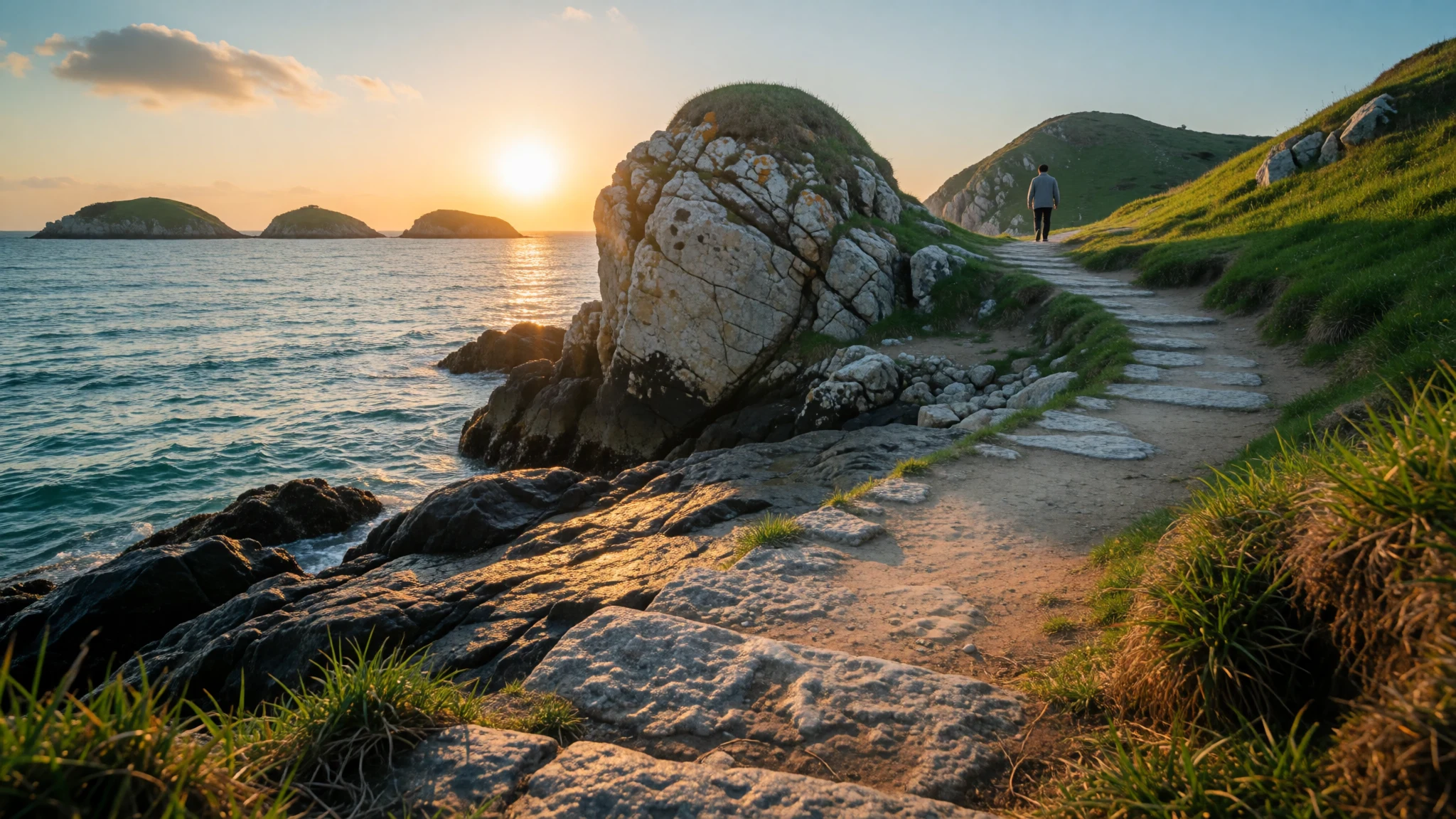
Cheongsando is a green island in South Korea's far south, where old farm paths have become a slow walking route past terraces and sea.
The place
Cheongsando is a small, green island on the far south coast of South Korea, reached by sea from Wando County in South Jeolla Province. The name translates as 'green mountain island', and the hills earn it, because the vegetation holds its colour through every season rather than only in summer. Older names, Seonsan and Seonwon, point to a local belief that a Taoist hermit settled here, drawn by the pairing of wooded slopes and clear blue water. The main island is the seat of Cheongsan-myeon, a township that also takes in Daemodo, Somodo, Yeoseodo and Jangdo, four smaller islands with people living on them, along with several that are empty. Life here runs at a different tempo from the mainland. Villages sit in folds of the coast, linked by lanes and footpaths that residents once used simply to reach fields, harbour and school. Those paths are now the island's main draw, so visitors mostly come to walk rather than to lie on a beach. Stone, wind and sea shape the look of the place: low walls, small terraced plots, boats drawn up near village harbours and a scatter of coves. The island feels quiet compared with mainland resorts, though spring weekends and festival days bring more people and the ferries fill up. It is compact and easy to cover on foot, and it rewards an unhurried plan better than a packed itinerary.
Its story
Cheongsando's story is mostly about making a living from awkward land. The island is steep and stony, with sandy soil that lets water drain away fast, which is a poor setup for rice, a crop that wants standing water. Islanders answered by reshaping the slopes into stone-walled terraced paddies known as Gudeuljangnon, built to squeeze more rice out of ground that did not want to give it. In 2013 the system was named Korea's Important Agricultural Heritage No. 1, a national listing modelled on the FAO's global scheme for agricultural heritage. A later chapter began when the footpaths that residents had always used to get around were reimagined as a walking route. It opened in 2010 as 11 courses totalling 42.195 km, the length of a marathon, and the idea was that scenery, neighbours and local stories would slow walkers down. The name Slow Walk stuck. In 2011 Cittaslow International designated it World Slow Walk No. 1, and the island is described as the first Slow City in Asia. Cinema added to the fame. Im Kwon-taek's film Seopyeonje was shot here, and the television dramas Spring Waltz and Scent of a Woman used the island for some scenes, with set buildings still sitting beside the trail. The result is an island whose reputation rests partly on farming and partly on film, with the walking route tying the two together.
What to see
- Beom-bawi rock — Cheongsando coast
Beom-bawi is a rocky outcrop on the island's coast, and its name is usually read as 'tiger rock'. It works as a viewpoint over the water and the neighbouring islets. Go on a clear day for the best outlook, and take care on the stone, which gets slippery when damp.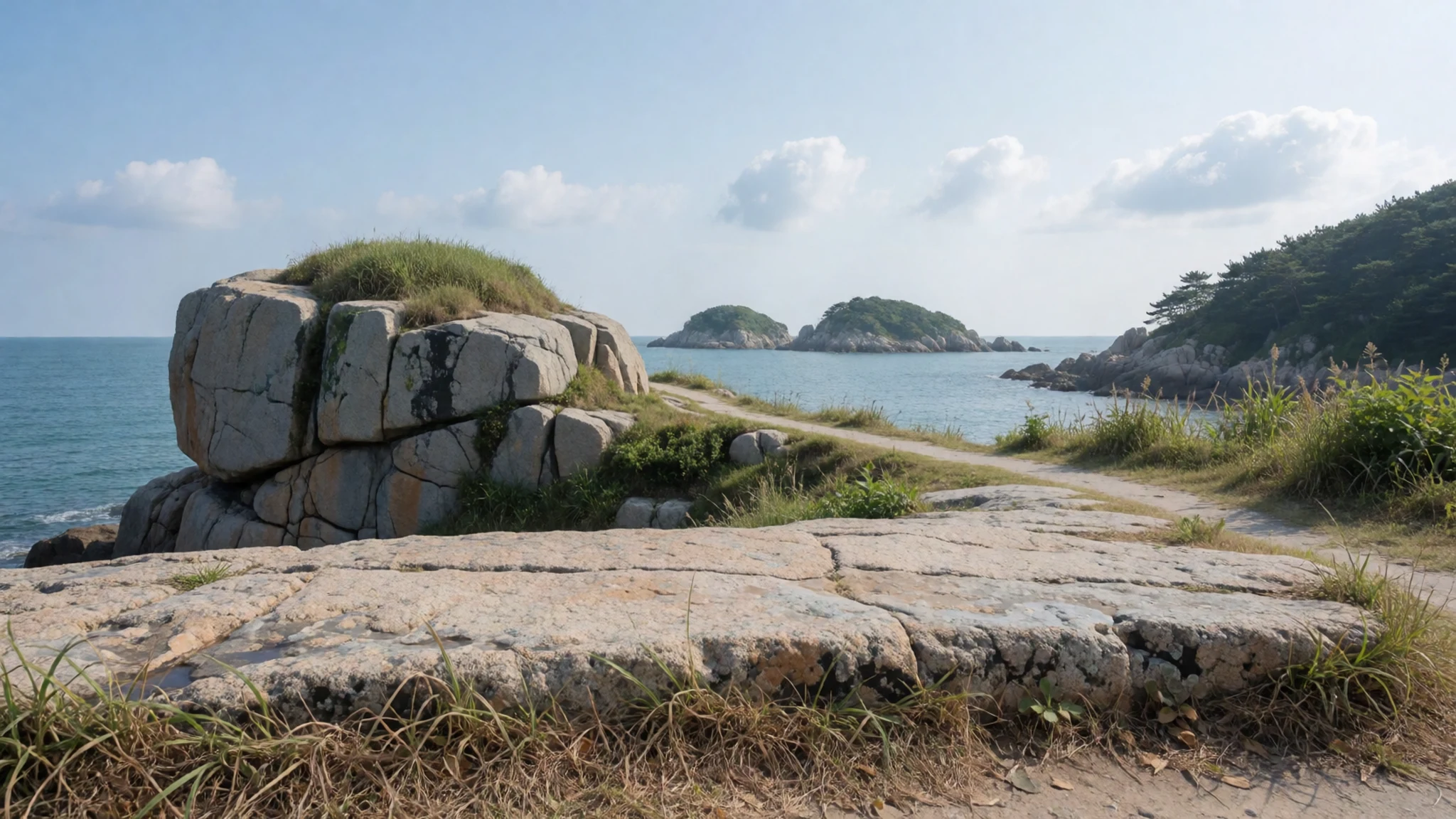
- Slow Walk courses — Footpaths across the island
The Slow Walk trails link villages, fields and shoreline along old residents' paths. Most visitors pick one or two courses rather than attempting all of them. Stop often: the points of interest are the stone walls, the neighbours at work and the changing sea views. Check route maps with the local tourist office or ferry terminal.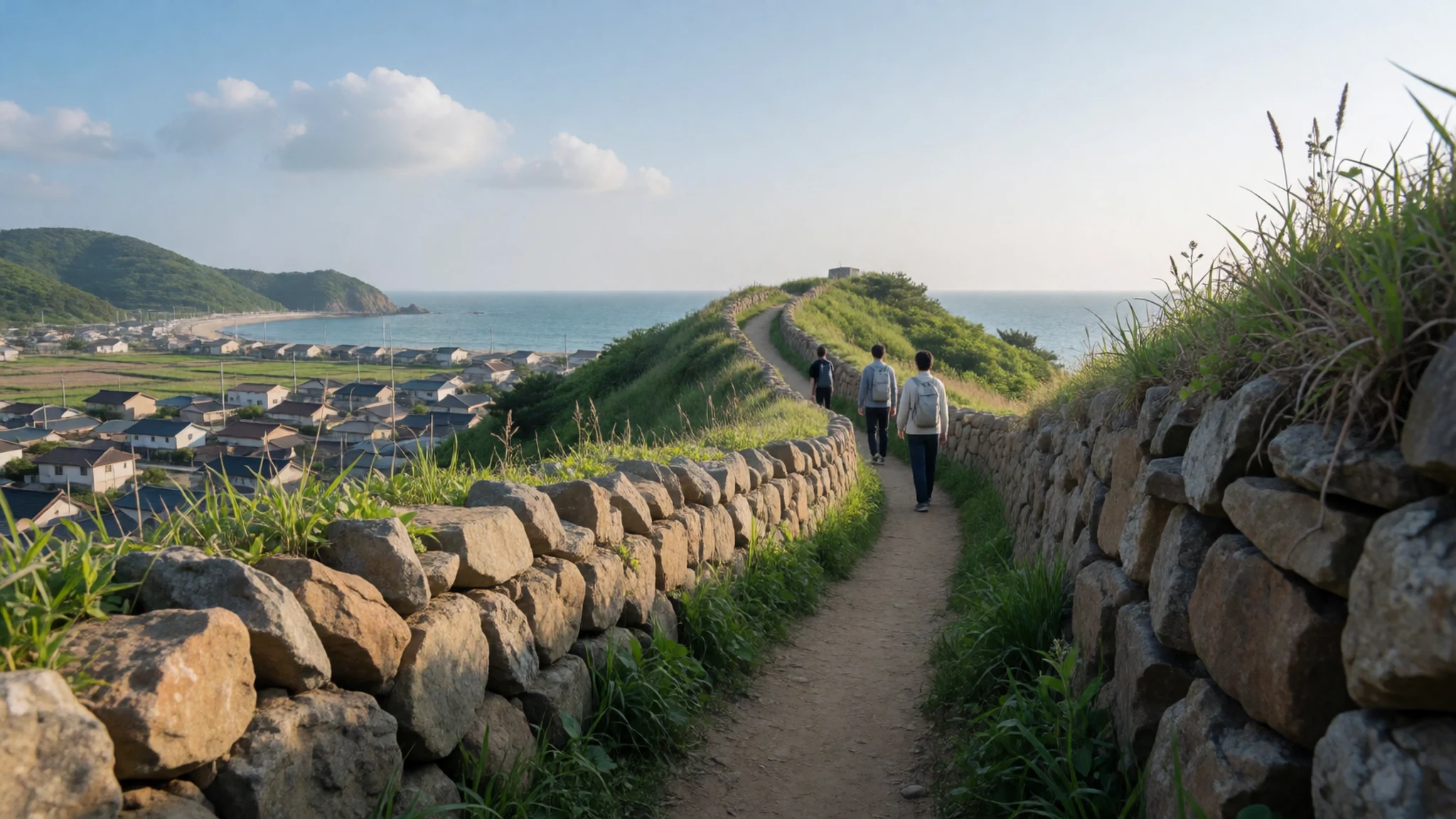
- Gudeuljangnon terraces — Farming slopes around the villages
These stone-walled paddy terraces were built to grow rice where soil drains quickly and water is scarce. They are best appreciated in spring and early autumn, when the fields hold colour against the sea. Stay on the paths, because the terraces are working farmland and the walls are fragile.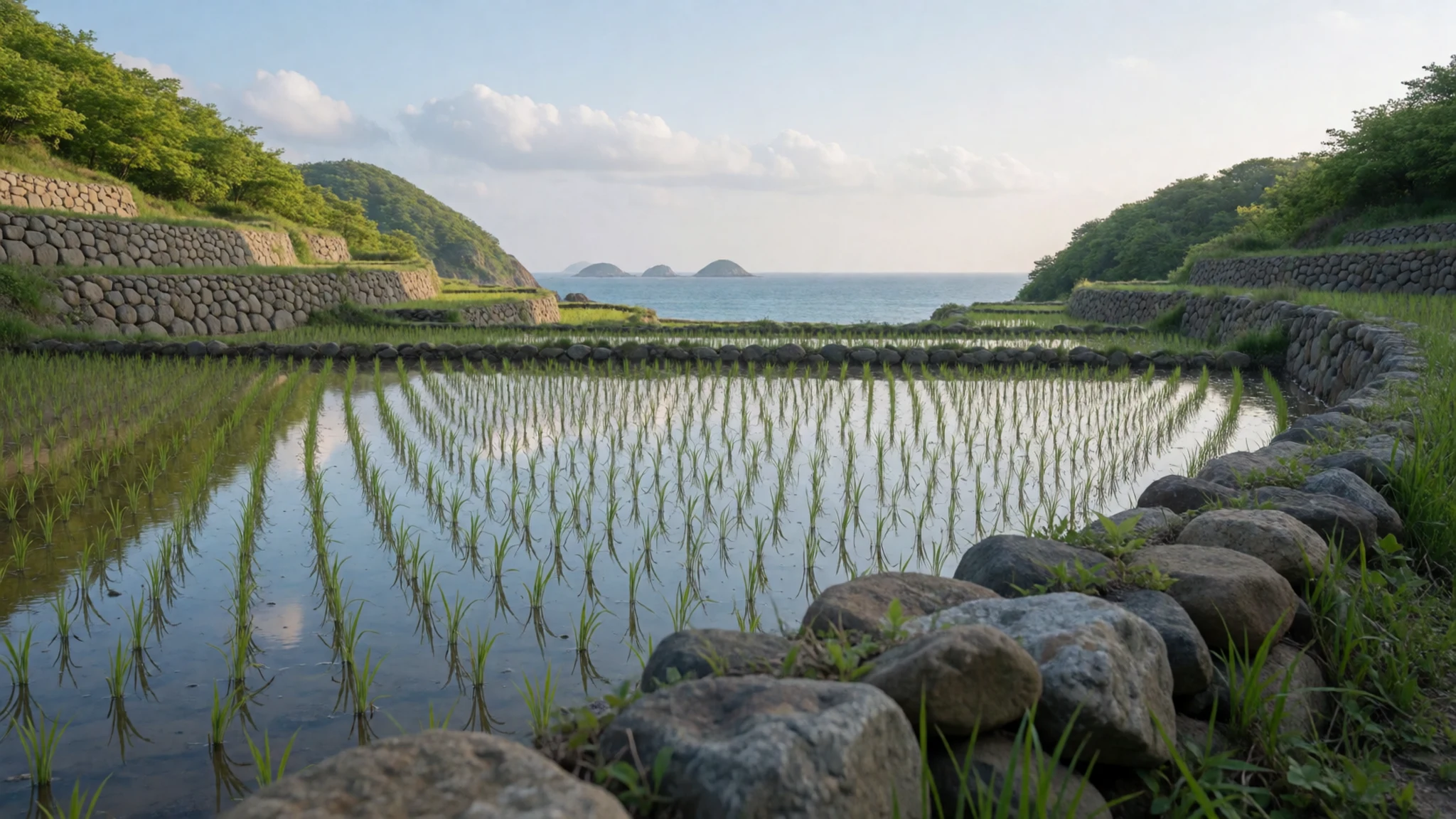
- Drama and film sets — Along the Slow Walk route
Set buildings from the television dramas Spring Waltz and Scent of a Woman stand beside the walking trail, and the island also served as a location for the film Seopyeonje. They are worth a short stop for the views and for the way the island has been photographed, even if you never saw the shows.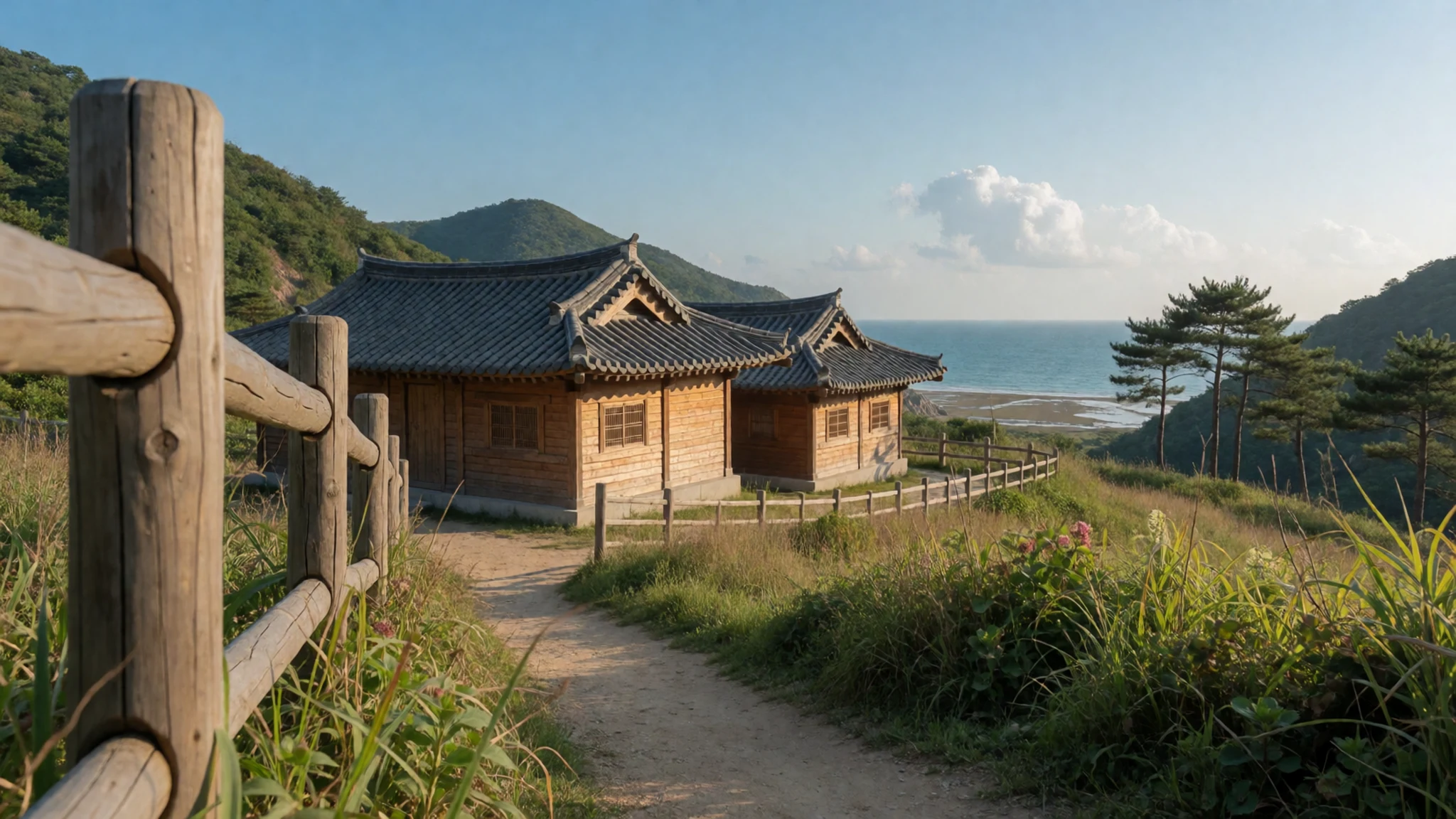
- Village lanes, school and post office — Island villages near the harbour
The island's villages are the best place to see everyday life: a primary school, a middle school, a small post office and lanes lined with stone walls. These are ordinary working buildings rather than attractions, so walk through quietly, keep to public paths and leave people's gardens and yards alone.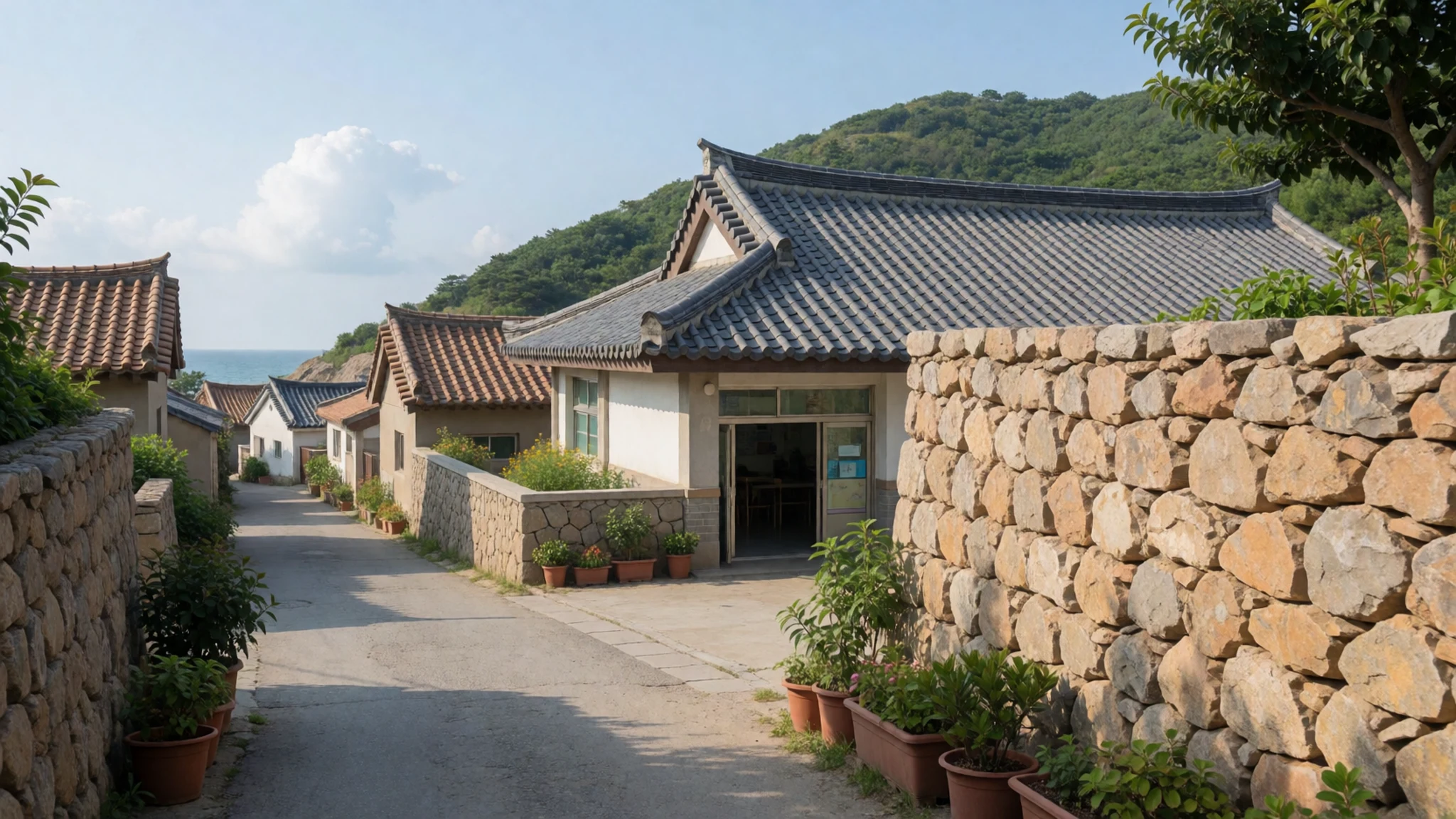
Culture
Cheongsando's culture grows out of farming on difficult ground. The Gudeuljangnon terraces are the clearest example, a landscape built by generations of islanders who had little flat land and little reliable water, and who still treat their fields as working property rather than scenery. That agricultural heritage was recognised nationally in 2013, and it sits alongside a quieter identity as a Slow City. The Slow Walk grew from paths that residents used for everyday errands, and the route is designed so that walkers meet the places and people along it, not only the views. Walking at a gentle pace is therefore part of the local idea of the island, not a marketing slogan. Island communities are small and close, with the school, post office and harbour acting as shared centres, and most residents depend on farming and the sea. Cinema has left its own layer: the film Seopyeonje and the dramas Spring Waltz and Scent of a Woman brought attention, and fans of those productions often seek out the locations. Even so, the island stays mainly a place where people live and work, with visitors fitting into that routine rather than replacing it. Festival days draw larger groups, and the mood shifts from quiet to lively, but the emphasis stays on walking, looking and talking. Keep to the marked paths and field edges, never step on terrace walls or through crops, and ask before photographing residents at work.
What to wear
Cheongsando shares the traditional dress of Korea, the hanbok, rather than a separate island costume. The classic form pairs a short jacket (jeogori) with a full skirt (chima) for women and trousers (baji) with a jacket for men, often with a long coat (durumagi) for formal occasions. Typical fabrics include silk for celebration, plain cotton for daily wear, and ramie or hemp for hot weather. Hanbok is now mostly kept for weddings, family holidays such as Seollal and Chuseok, and festivals. In everyday island life, people dress for work and weather: long sleeves and trousers in the fields, wide-brimmed hats or visors against the sun, rubber boots near the shore, and windproof jackets on exposed days. Younger residents wear much the same as people on the mainland, with an emphasis on practical outdoor clothing. Visitors should dress for walking. Comfortable shoes with a grip suit the stony paths and field edges, and a sun hat, sunglasses and a light layer help in the open. A windproof or rain jacket is wise in any season, because sea weather changes quickly. Cover-ups are not required for general sightseeing, but modest, tidy clothes are appropriate when walking through villages. Carry a small bag so your hands stay free on uneven ground.
What to eat
- Abalone porridge (jeonbok-juk) — Harbour-side eateries near the ferry landing
A smooth rice porridge cooked with abalone, a shellfish associated with the Wando area. It is mild, filling and popular after a morning on the paths. Ask the eatery what is in season, because the abalone may be local or brought from the mainland.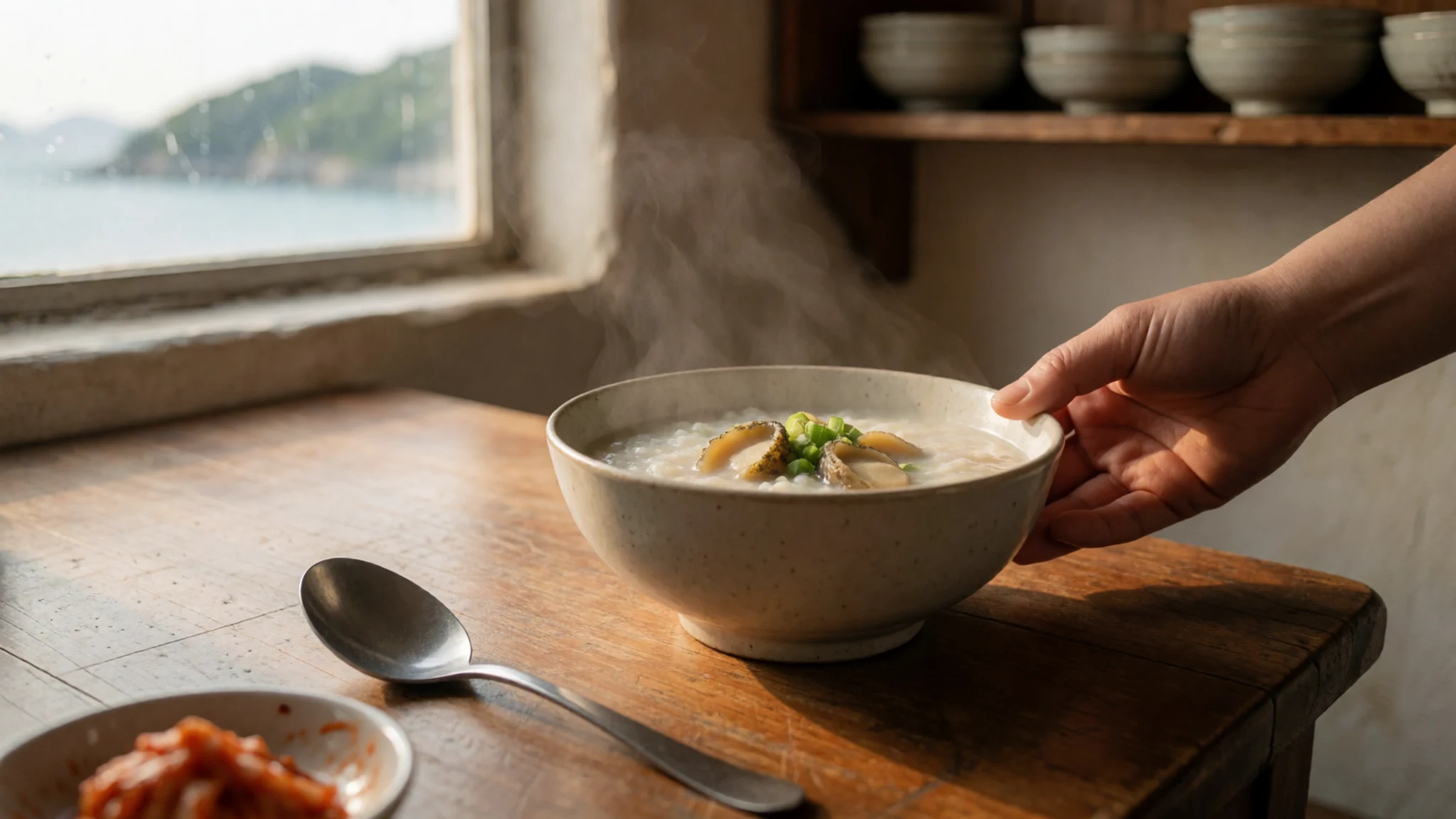
- Seaweed soup (miyeok-guk) — Village eateries and family-run kitchens
A clear soup of soft seaweed, often with a little beef or shellfish for depth. Seaweed is part of the local coastal diet, so it appears in many forms, from soup to side dishes. It is a gentle, warming choice on a windy day.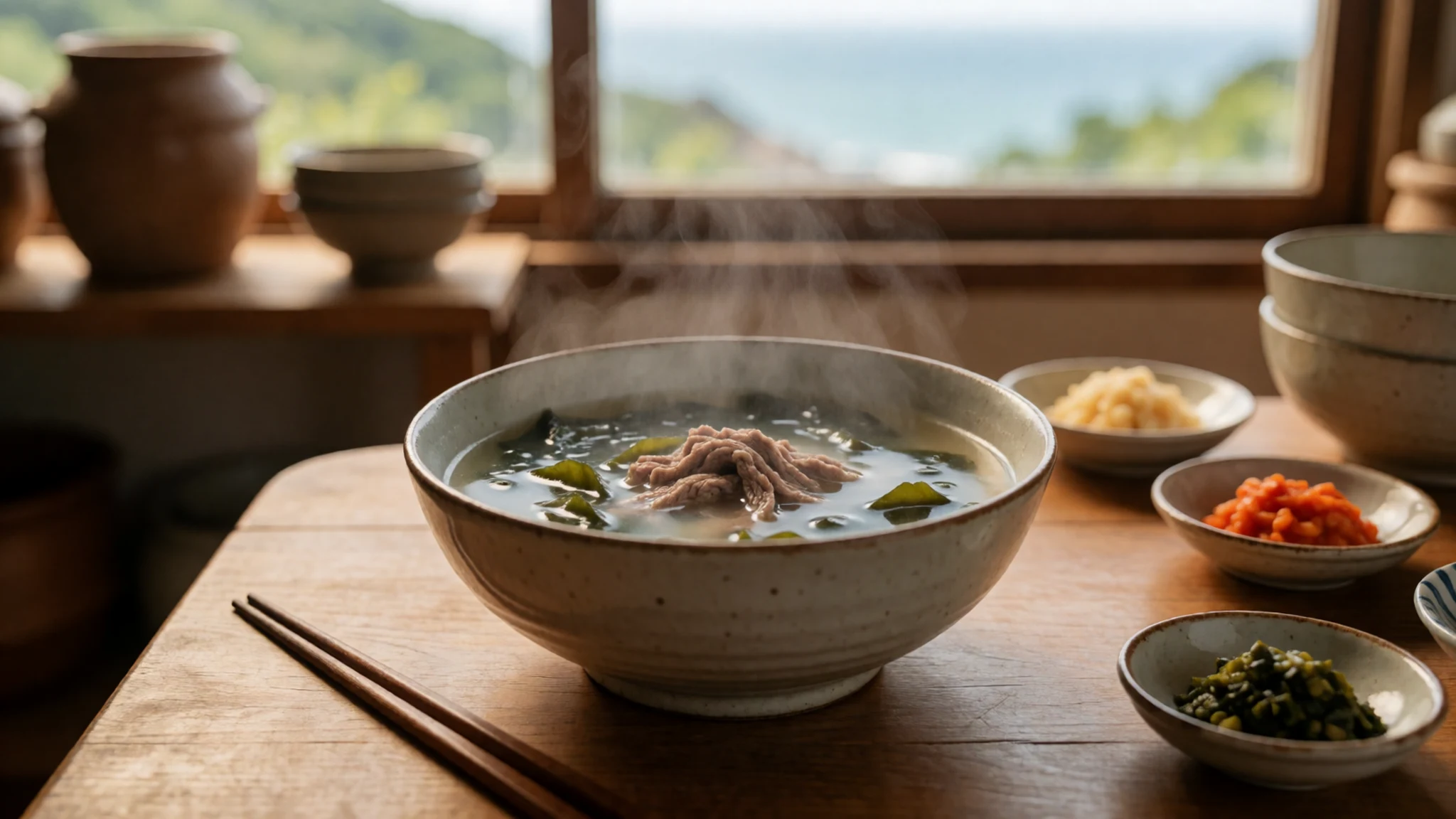
- Raw fish (hoe) — Harbour restaurants where catches are sold
Thin slices of fresh fish served with leafy wraps, sauces and side dishes. The fish depends on the season and the day's catch. Ask which fish is local, and expect a spread of small dishes arriving with the main plate. - Grilled or stewed fish — Small village eateries and harbour restaurants
Simple island cooking often turns the day's catch into a salt-grilled fillet or a spicy fish stew with radish and greens. The stew is hot and peppery, so ask for it milder if you are cautious about spice. Rice and side dishes come with it. - Island rice meal with side dishes (baekban) — Family-run eateries in the villages
A set meal of rice with soup and many small dishes, often featuring seasonal vegetables, seaweed and fish. It is a good way to taste what the island produces, including rice from terraced fields. Portions are generous, so share if you are travelling light.
Plan it
Best time. April–May for fresh green slopes and comfortable walking, and September–October for clearer, cooler days. Summer is hot and humid, with typhoon risk on the Korean coast, and winter can be windy and cold at sea. If the Slow Walking Festival matters to you, check the dates with the official county tourism site.
How long. 1–2
Getting there. Reach Wando by road from the mainland (long-distance buses and driving routes both serve it), then take the ferry from Wando harbour to Cheongsando. Check the ferry timetable and any weather cancellations with the ferry operator or the Wando County website before travelling. On the island, local buses run a circuit between villages and trail starts.
Budget. mid
Tips
- Check the ferry schedule the day before, because rough weather can delay or cancel sailings
- Book accommodation early for spring weekends and festival days, since the island has limited beds
- Start walking in the morning so you have daylight to spare and the wind is usually lighter
- Carry water, snacks and some cash, as shops and eateries are few and may not take cards
- Download offline maps, because mobile signal can be patchy on remote stretches
Etiquette
- Stay on marked paths and never step on terrace walls or through crops
- Ask before photographing residents or entering private yards
- Take your rubbish with you, since bins are scarce away from the villages
Nearby
Sources
- Wikidata Q18815767 (CC0)
- Wikipedia, Cheongsando (rev 1374691924) (CC BY-SA 4.0)
- Photo: 청산도 범바위 (김은아89) (CC BY 3.0)
- Photo: 청선여객 (hyolee2) (CC BY-SA 4.0)
- Photo: 청산도 순환버스 (hyolee2) (CC BY-SA 4.0)
- Photo: Aerial view of Cheongsan-do (Naturehead) (CC BY 3.0)
- Photo: 청산도 슬로길 (완도군청) (CC BY-SA 2.0 kr)
- Photo: 청산초등학교 (hyolee2) (CC BY-SA 4.0)
- Photo: 청산중학교 (hyolee2) (CC BY-SA 4.0)
- Photo: 청산도우체국 (hyolee2) (CC BY-SA 4.0)
- Wikivoyage (CC BY-SA 4.0)


