Bukhansan
Bukhansan, South Korea
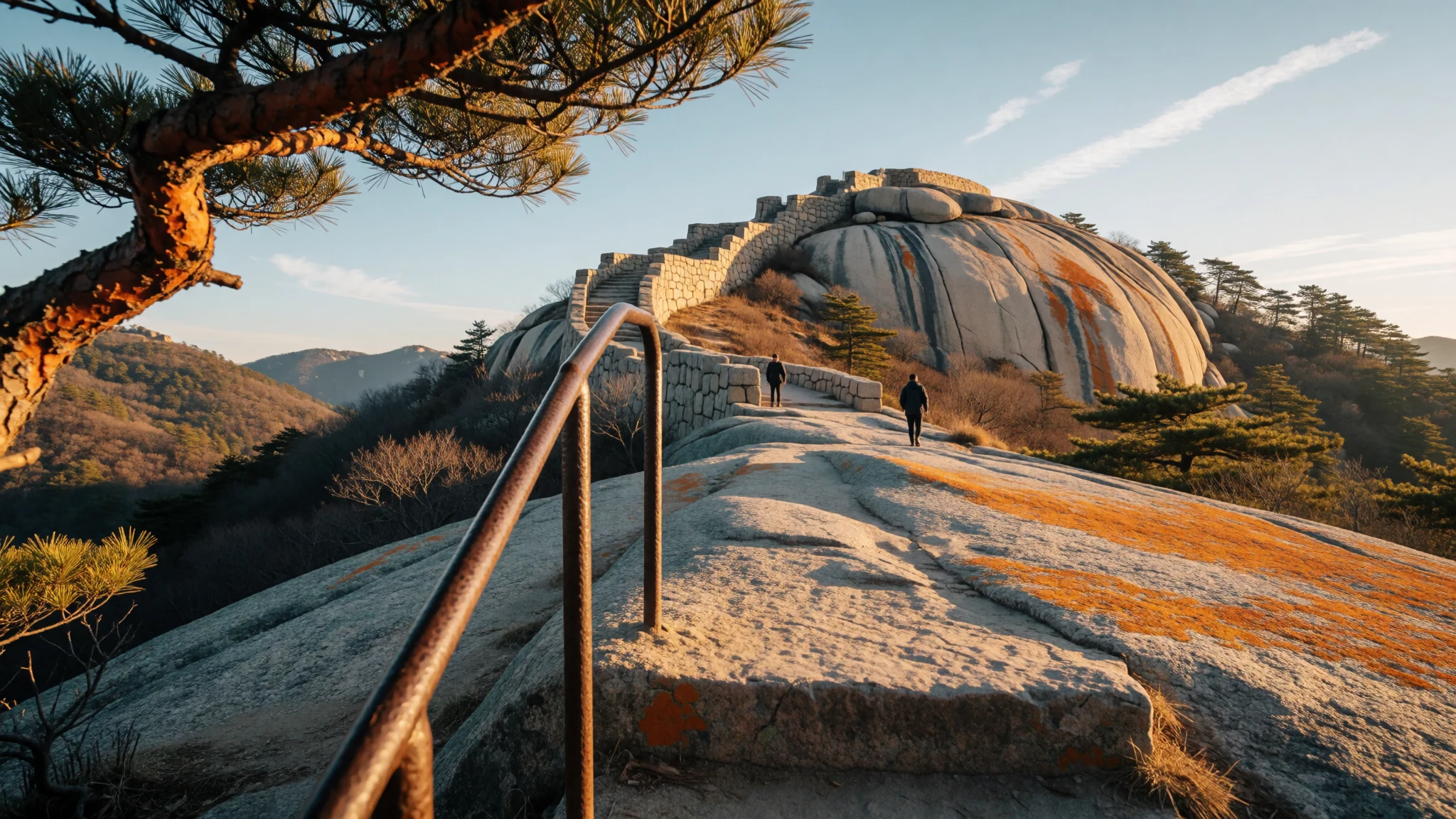
Bukhansan puts granite peaks, temple gates and old fortress walls on Seoul's northern edge, reached by ordinary city metro and bus.
The place
Bukhansan is the mountain that closes off the north side of Seoul, and it works as the capital's back garden. Bare granite domes and jagged ridges rise above wooded valleys, and on a clear day the skyline is visible from many city neighbourhoods. The area is protected as a national park, which is why building stops at the trailheads and the slopes stay green. What makes it unusual is how ordinary it feels. Office workers, retired friends in matching gear, school groups and couples on dates share the same paths, and the nearest metro stations and bus stops sit close to the start of the walking. Routes range from gentle valley walks beside streams to steep scrambles with fixed rails and iron steps across bare rock. Baegundae draws the most walkers, because its summit views take in the city, the ridgeline and the fortress wall snaking along the crest. The seasons change the mountain completely. Spring brings azaleas, autumn turns the slopes red and gold, and winter lays snow on the granite, which looks wonderful but makes the rock slippery. Weekends, especially in autumn, are crowded, with queues at narrow rock sections and rest spots full by mid-morning. Weekdays and early starts are far calmer. The main routes need no guide, but weather turns quickly and wet granite is unforgiving.
Its story
Bukhansan takes its name from its position north of the Han River, and for centuries that position made it part of the capital's defences. Under the Joseon dynasty, the ridges were treated as a natural wall behind the city, and a stone fortress was built along the crests so that the royal court had somewhere to retreat if Seoul came under threat. Sections of that wall still climb the ridges today, with gates and lookout points that walkers pass without noticing how old they are. Buddhism shaped the mountain too. Small temples and hermitages settled in the valleys, some of them inside the fortress perimeter, where monks tended shrines and in some periods helped with the garrison's upkeep. Over time the mountain turned from a military and religious landscape into a recreational one. As Seoul grew into a dense modern city, hiking became a mass habit, and Bukhansan became its obvious outlet. Protection as a national park followed, limiting development and giving the trails a degree of order, with marked routes, rangers and closed sections where erosion or nesting needs it. The result is layered: a defensive ridge, a pilgrimage valley and a weekend playground, all in one stretch of granite. Walkers often come for exercise and leave having crossed a gate that once guarded a kingdom.
What to see
- Baegundae summit — Bukhansan National Park, central ridge
Baegundae is the best-known high point in Bukhansan, a bare granite top reached by a final scramble with rails and steps. The view takes in Seoul to the south and rocky peaks all around. It is busy on clear weekends, so start early and avoid it in ice or heavy rain.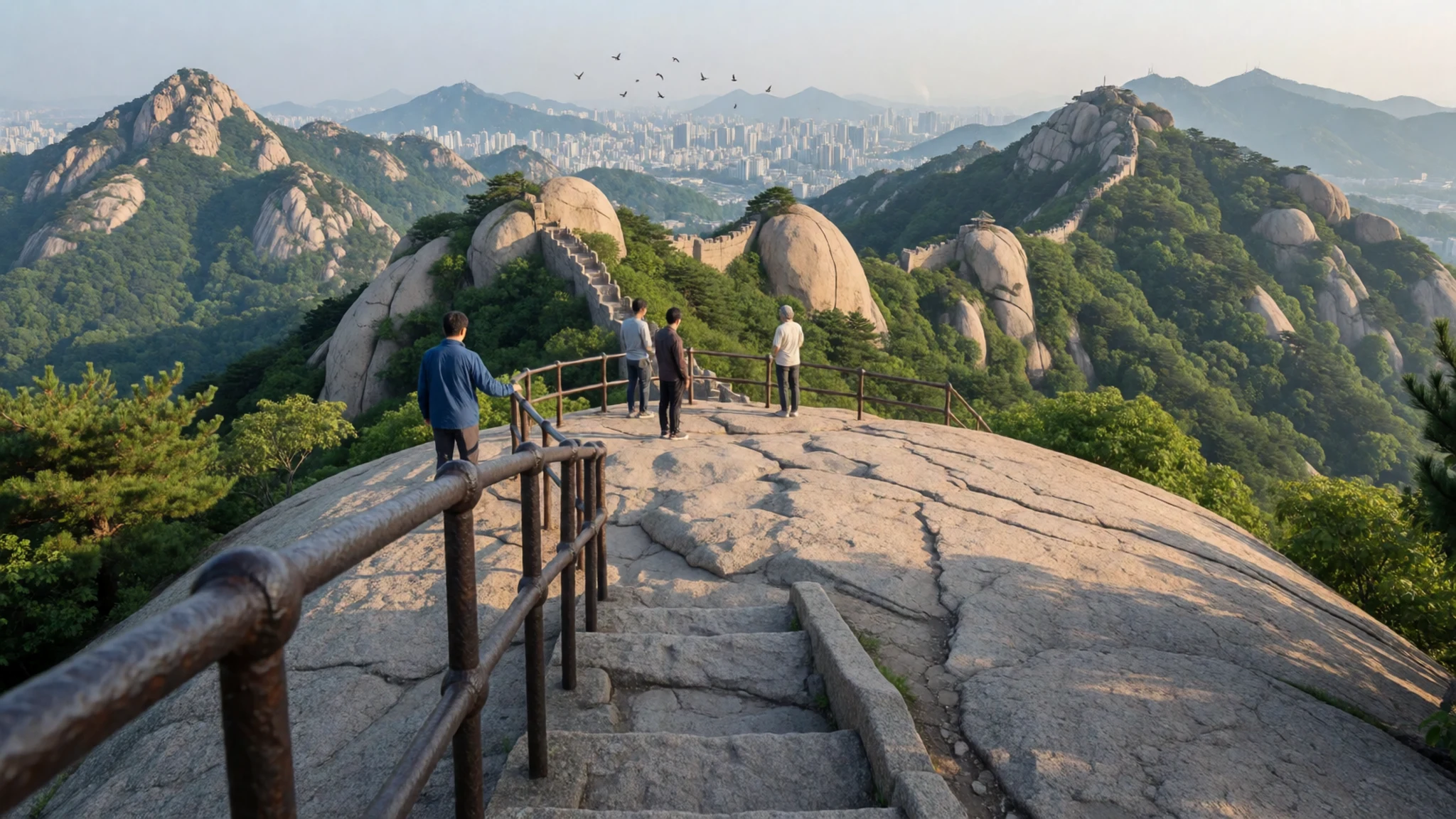
- Bukhansanseong fortress wall and gates — Along the ridgeline, above the Sanseong valley
The old fortress wall follows the ridges in long, uneven stretches, with stone gates at the passes. Walking a section shows how the mountain doubled as a defence line. Some parts are restored and tidy, others tumbled and half-covered in moss. Gates make good rest stops and photograph points.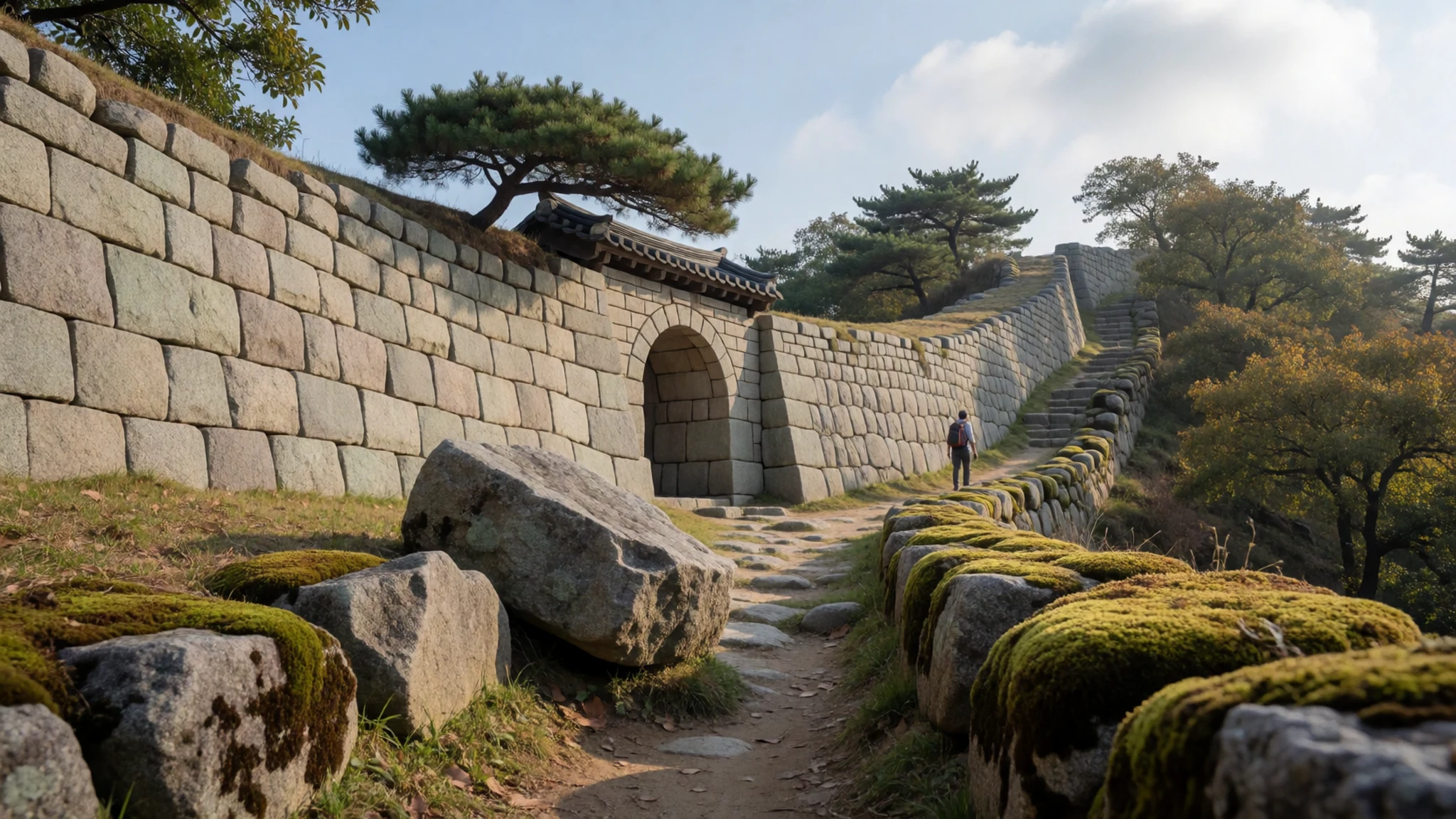
- Jungheungsa temple — Inside the fortress area, western side
Jungheungsa is a Buddhist temple set within the fortress area, reached by a steady valley walk through forest. It is a working place of worship rather than a museum, so the mood is quiet and monks may be at prayer. It makes a sensible, gentler goal for walkers who do not want summit scrambling.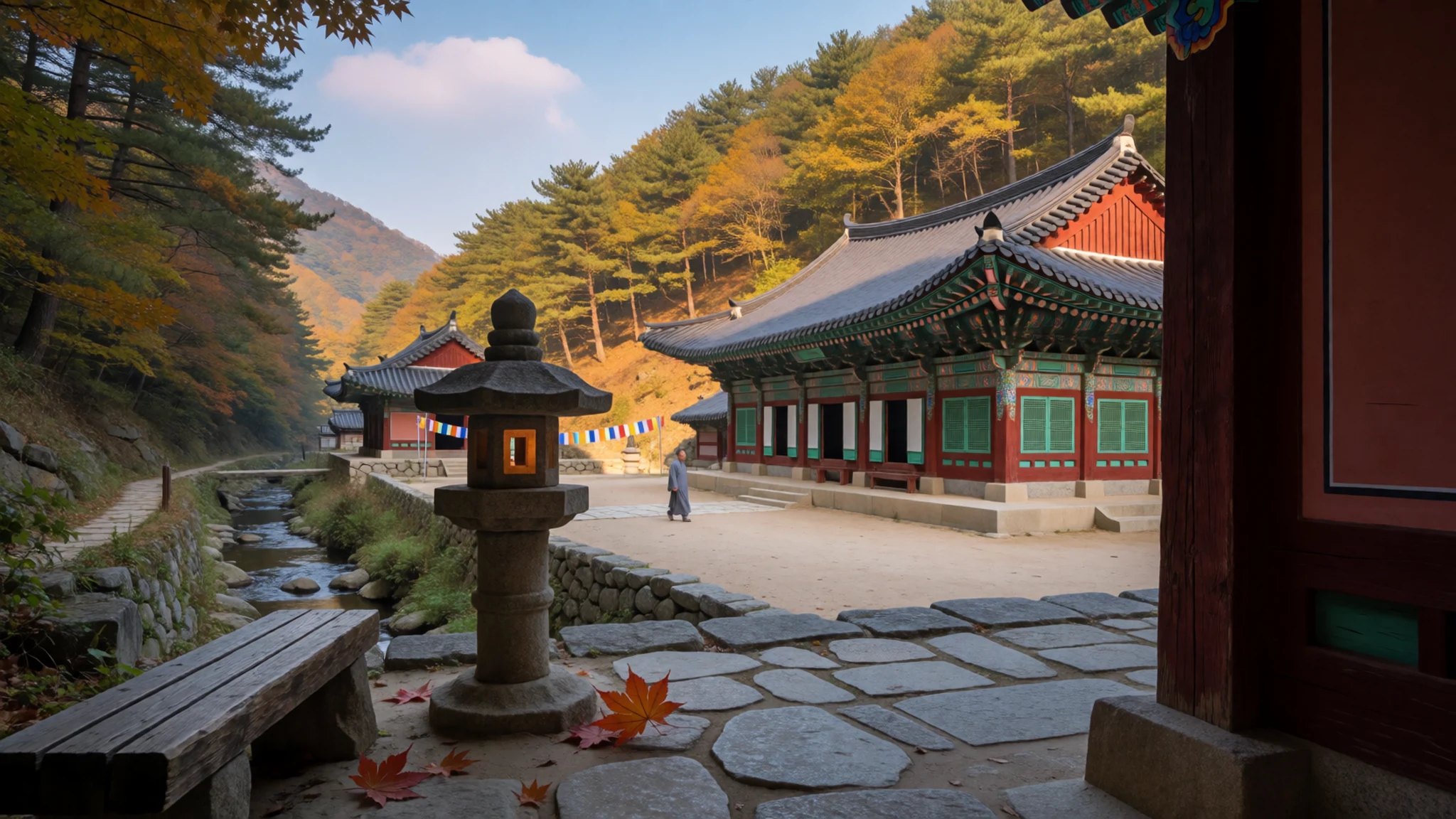
- Insubong granite face — Eastern part of the park
Insubong is a steep granite peak whose sheer rock face is a landmark for walkers, and a training ground for climbers. Most visitors admire it from the valley paths and viewpoints rather than climb it. Rules and access can change, so check with the national park service before planning anything technical.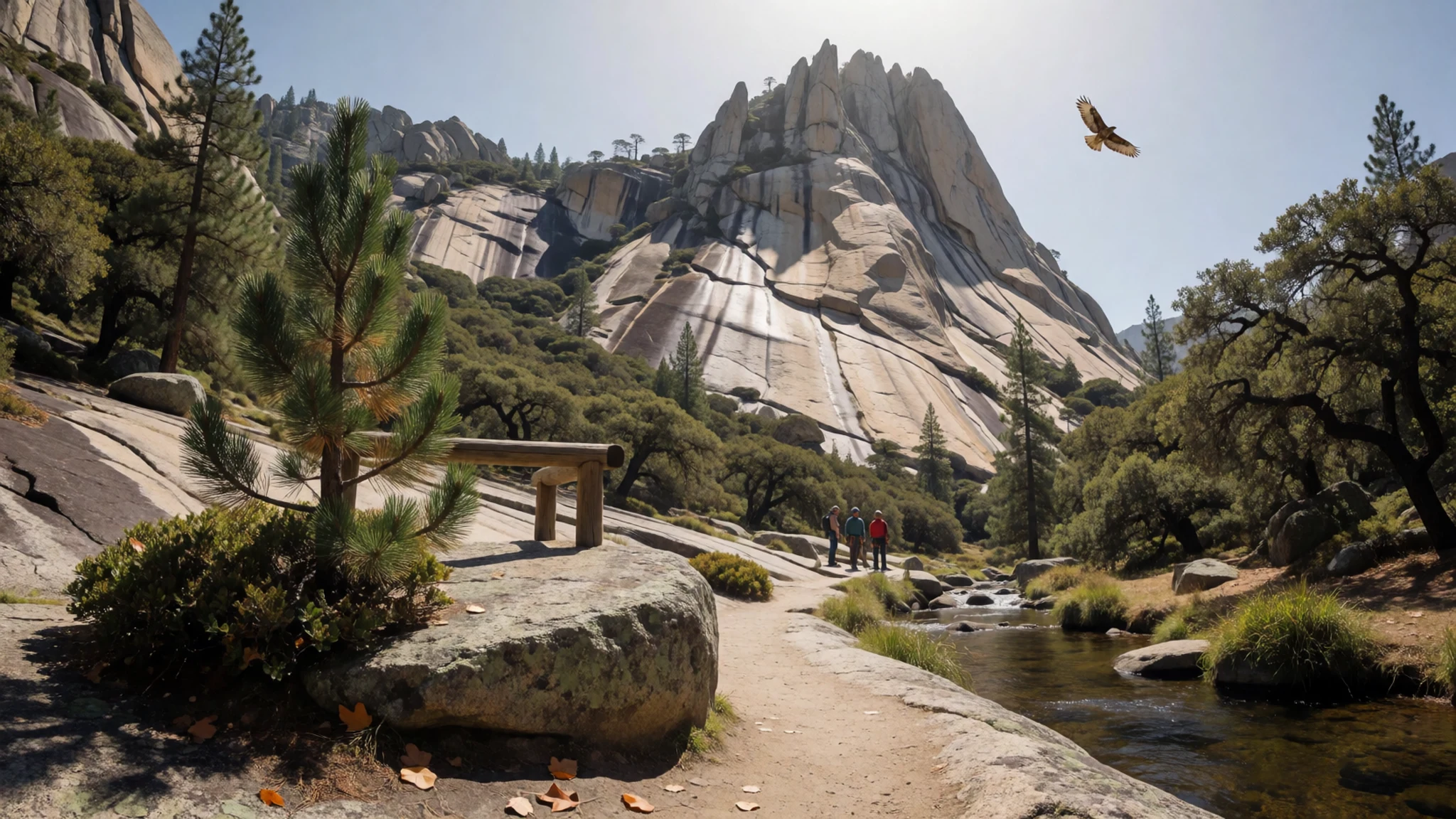
- Dobongsan ridge — Northern end of the park, Dobong district
Dobongsan lies at the northern end of the Bukhansan range and shares the same granite character with fewer crowds on weekdays. Ridge paths here are steep and exposed in places, with rails to hold. Spring azaleas and autumn colour are good, and the metro reaches the trailheads from central Seoul.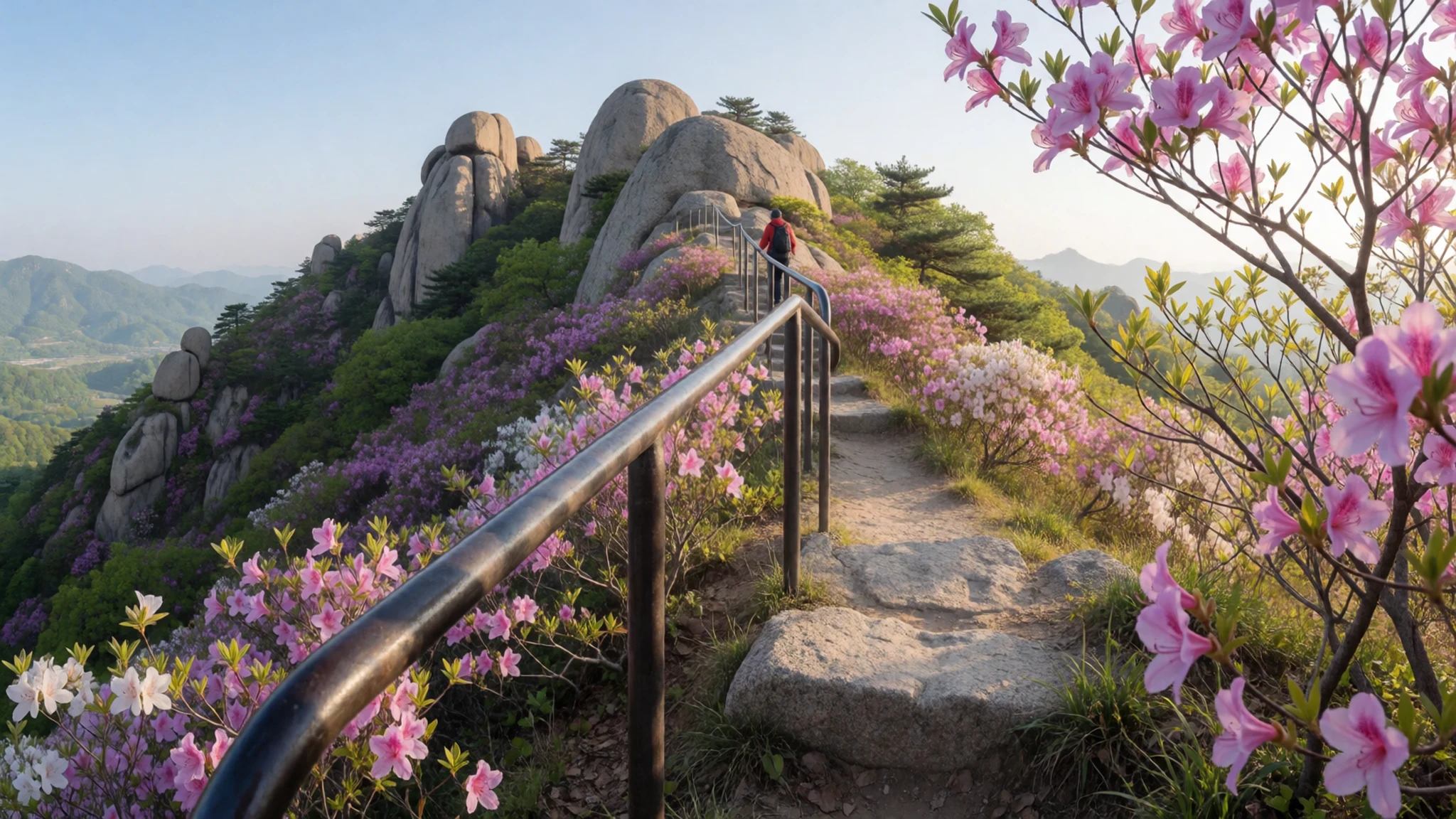
Culture
Bukhansan sits at the centre of everyday Korean hiking culture, where climbing a mountain is a normal weekend social event rather than a specialist pursuit. Groups of friends and colleagues set off together, often in matching gear, and stop on rocks and benches to share fruit, boiled eggs, rice rolls and flasks of tea. Walkers on the trail commonly nod or say a quiet greeting as they pass, and that small courtesy is easy for a visitor to copy. The after-hike meal matters as much as the walk. Trailhead eateries fill up with groups sharing pancakes, stews and rice wine, and the mood is cheerful rather than rowdy. Buddhism is part of the landscape too. Temples inside the park are active places, with monks, daily chanting and visitors who come to pray rather than sightsee, and lanterns hung in spring for a major Buddhist festival. The mountain is also a reminder of how close the city and its history sit together, with a defensive wall still running along the ridges. Park rangers enforce rules on closed paths, fire and rubbish, and most Koreans take them seriously. On the trail, carry your rubbish all the way back down, give way to walkers coming uphill on narrow sections, and keep your voice low and your camera away from monks and worshippers at temple grounds unless you have asked.
What to wear
Bukhansan is an outdoor mountain, but Korean dress still has a place in the story. The traditional hanbok, with its short jacket and full skirt for women and jacket and trousers for men, is made from silk for formal wear, and from lighter ramie or hemp for hot weather, with cotton for everyday use. It is worn today mainly at weddings, family holidays such as Seollal and Chuseok, and for photographs at Seoul's palaces, not on mountain trails. What people actually wear on Bukhansan is technical outdoor gear. Walkers of every age turn out in bright shell jackets, quick-dry trousers, caps or visors, buffs, gaiters, gloves and sturdy boots, often from well-known Korean outdoor brands, and trekking poles are common. Colour is cheerful, and even short walks tend to be dressed seriously. A visitor should do likewise. Wear shoes with real grip, because wet granite is slippery, and carry layers, since summits are cooler and windier than the city. Bring a rain shell in summer and gloves, a hat and traction aids in winter. Long trousers protect against scrapes on rock. For a temple visit, shoulders and knees should be covered, and a light scarf or jacket in the bag is enough.
What to eat
- Pajeon with makgeolli — Trailhead restaurants at the foot of the main routes
Pajeon is a crisp spring-onion pancake, often with seafood, eaten with milky, lightly sweet rice wine after a hike. It is the classic reward for tired legs and is served at almost every eatery near the trailheads.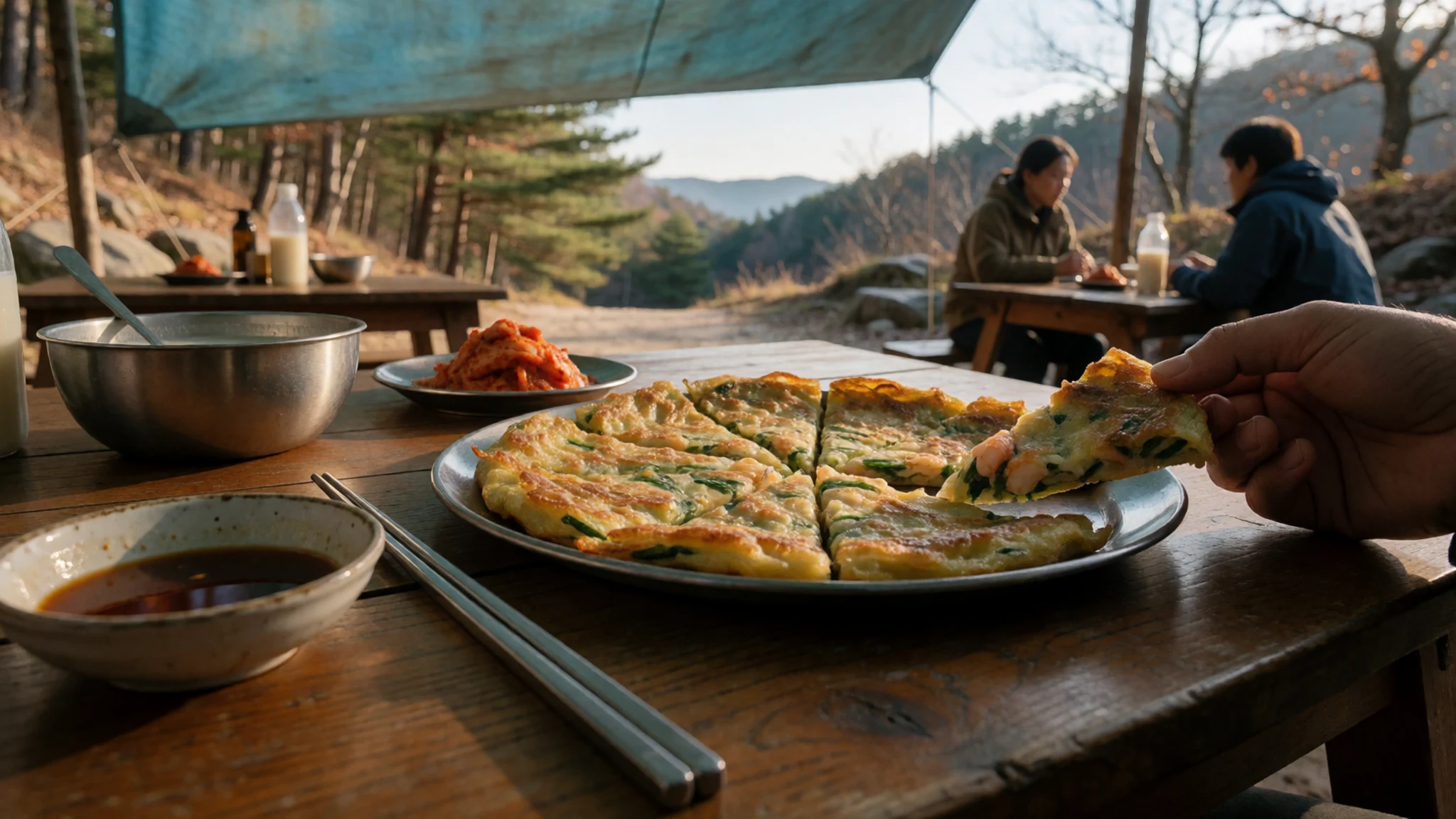
- Sanchae bibimbap — Eateries near temple entrances and valley paths
This rice bowl is topped with mountain greens and wild vegetables, mixed with chilli paste and sesame oil. It suits the setting and is a lighter choice than the meaty stews, which is useful for vegetarian visitors who ask about stock and egg.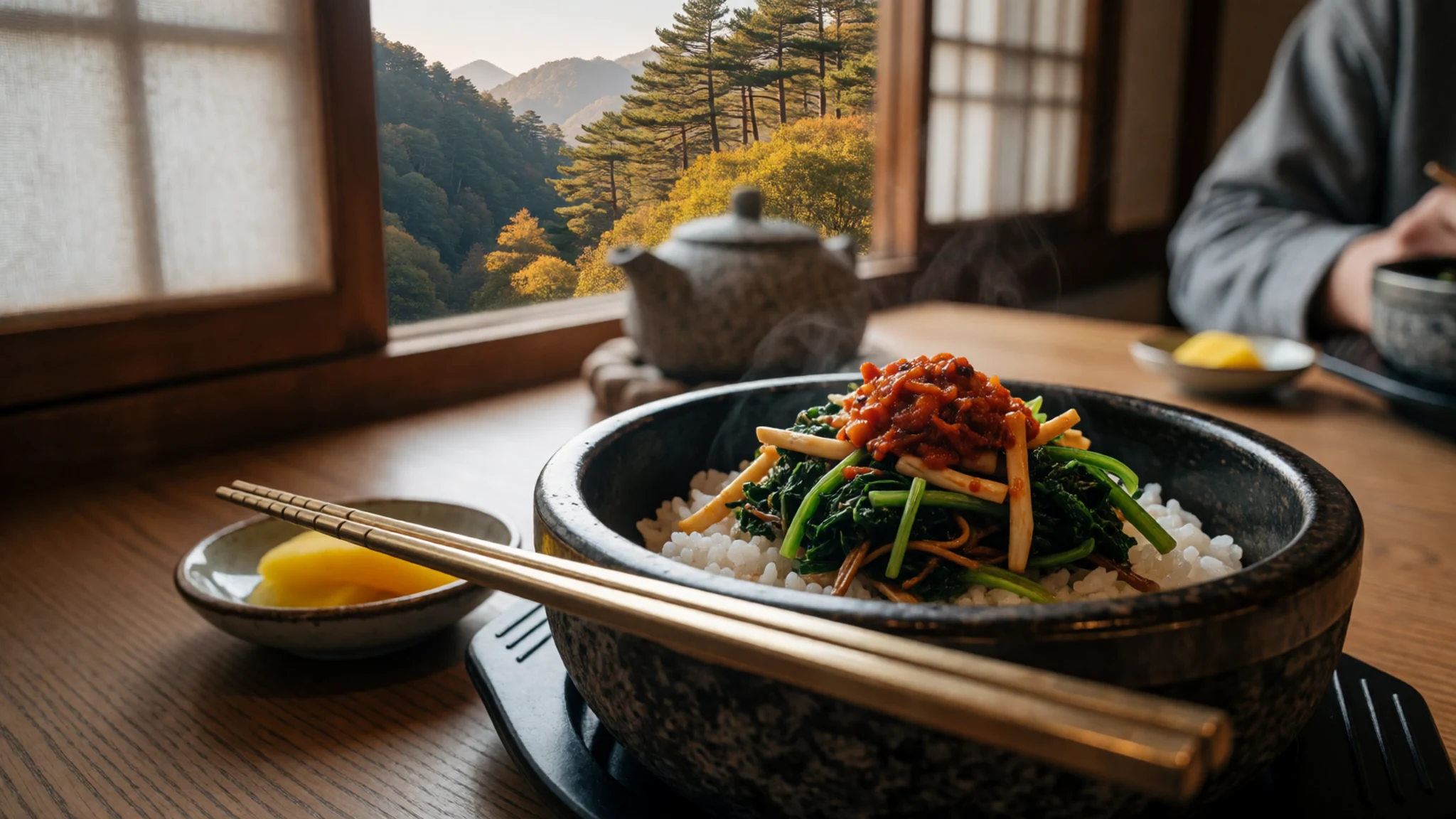
- Kimbap — Convenience stores and small kimbap counters near metro exits
Kimbap are seaweed rice rolls filled with vegetables, egg and sometimes ham or tuna. They are the standard trail snack, easy to pack and eat with one hand at a summit rest stop. - Dotorimuk — Trailside restaurants serving mountain-style dishes
Dotorimuk is acorn jelly, soft and slightly bitter, served in a cold seasoned broth or cut into a salad with soy and sesame. It has long been a mountain food in Korea and goes well with rice wine. - Sundubu-jjigae — Neighbourhood eateries near the park entrances
This is a bubbling stew of soft, uncurdled tofu, chilli and often seafood or pork, served in a stone pot with rice. It is warming on a cold day, so ask for it mild if you are not used to chilli.
Plan it
Best time. April–May for azaleas and mild walking weather, and October to early November for autumn colour. Summer is hot, humid and wet, with heavy rain making rock dangerous, and winter is cold, with snow and ice on the granite.
How long. 1–2
Getting there. Fly to Incheon International Airport, take the airport rail link into central Seoul, then use the metro and a local bus to the trailhead of your chosen route. Several entrances are served by city transport, so check the national park's official site for the route you want.
Budget. low
Tips
- Start before mid-morning on weekends, especially in autumn, to avoid queues on narrow rock sections
- Carry water and snacks, since the higher routes have no shops
- Check the weather and the park's official site for trail closures before setting out
- Carry some cash for trailhead eateries and small stalls
- Leave enough daylight to get down, because dusk falls quickly in the valleys
Etiquette
- Greet other walkers briefly and give way to those climbing uphill on narrow stretches
- Carry all your rubbish out and stay on marked paths
- Keep quiet and cover shoulders and knees at temples
Nearby
Sources
- Wikidata (CC0)
- Wikipedia: Bukhansan (CC BY-SA 4.0)
- Wikivoyage: Bukhansan (CC BY-SA 4.0)
- Wikimedia Commons photographs of Bukhansan (CC BY 3.0, CC BY-SA 2.0/4.0, CC0 1.0)